Do States Have the Right to Seize Vehicles for Minor Offenses? | Slate

By Aaron Tang

Tyson Timbs made an impulse buy. Then he made a series of mistakes.

After his father died, Timbs used roughly $42,000 of his father’s life insurance proceeds to buy a 2012 Land Rover. To support his heroin addiction, Timbs drove the Land Rover across Indiana to buy, transport, and sell drugs. Undercover police officers caught him in May 2013, and he was sentenced to one year of home detention, five years of probation, and roughly $1,200 in fines and court fees.

But that was not the end of the case. Under Indiana law, the state may seize any vehicle used in drug trafficking. So Indiana initiated a forfeiture action against Timbs’ Land Rover. The vehicle is itself a party to the case, leading to one of the more entertaining case titles in recent memory: Tyson Timbs and a 2012 Land Rover LR2 v. Indiana. While the name is unusual, forfeiture actions of this sort are quite common; by one count, states generated more than $250 million through forfeiture actions in 2012 alone.

This dispute is set make it all the way to our nation’s highest court later this month with important implications for law enforcement agencies and criminal justice reform. The case could rest on the say of one Supreme Court Justice in particular: Neil Gorsuch.

Although there was little dispute that the Land Rover was used in a crime, an Indiana district court judge denied the state’s attempt to seize it, reasoning forfeiture would violate the Eighth Amendment’s prohibition against “excessive fines.” After all, this is a crime for which Timbs was not even sentenced to a day in jail, and the total fines and court fees amounted to just a fraction of the Land Rover’s value. But the Indiana Supreme Court reversed, holding that the Eighth Amendment’s excessive fines clause does not even apply to the states. The U.S. Supreme Court granted certiorari to decide whether this striking conclusion is correct.

The state question here may be confusing. For a long period in our nation’s history, the Bill of Rights was understood only as a shield against federal encroachment on our rights. That changed with the 14th Amendment, which applied some (but not all) of the Bill of Rights’ protections at the state level. The precise pathway through which these rights are incorporated has long been a source of consternation for legal scholars, but the modern-day test is straightforward: States may not violate a right contained in the Bill of Rights if the right was “deeply rooted in our nation’s history and tradition.”

Timbs makes a forceful argument that the right to be free from excessive fines is deeply rooted in our history and tradition. That right first emerged in our Bill of Rights as an outgrowth from the 1689 English Bill of Rights and was quickly replicated across state constitutions. Indeed, by the time of the 14thAmendment’s enactment in 1868, 35 of the 37 states in the union had a ban against excessive fines. The need for protections against excessively punitive governmental exactions has only become more pressing with revelations of prosecutorial power abuses aimed at generating revenue in places like Ferguson, Missouri. For this very reason, Timbs drew supporting briefs from a wide array of groups ranging from the NAACP and ACLU to the U.S. Chamber of Commerce and Pacific Legal Foundation.

This should be the perfect case for a libertarian originalist like Neil Gorsuch. But it turns out there is an antecedent constitutional question in the case, and the historical evidence on that front points strongly in Indiana’s favor. That question is whether what Indiana has done—seize a vehicle used to traffic drugs through civil proceedings—can be said to constitute a fine.

There is ample evidence that the original meaning of the term “fine,” as it was used when the Eighth and 14th Amendments were ratified, did not extend to these kinds of civil forfeitures. After all, the federal government had a tradition of routinely seizing private property in ways that seem excessively harsh to the modern ear.

Consider the 1818 case of the Little Charles, a ship that the federal government seized after it sailed to Antigua in violation of an American embargo. In an opinion written by none other than Chief Justice John Marshall, the court reasoned that the ship could be subject to forfeiture even if it violated the embargo “without the authority, and against the will of the owner.”

Or take the Louisa Barbara case. Under an 1819 federal law, a ship could only carry a certain number of passengers based on its weight. The Louisa Barbara violated the limit by carrying 178 passengers—one more than it was authorized to carry. Yet the federal government proceeded to seize the entire ship. Federal courts were unmoved by the owner’s defense that many of the 178 passengers were children.

Stories of similarly harsh civil forfeitures fill Indiana’s brief in this case. Yet, as Indiana convincingly argues, no litigant even thought to argue that such forfeitures implicated the Eighth Amendment’s excessive fines clause. The first such argument was raised under a state constitution’s excessive fines clause in 1920 and failed; no court deemed a civil forfeiture to be an excessive fine until a federal court did in 1992—a position the Supreme Court ultimately agreed with the following year.

This history is what makes this case so hard for someone like Neil Gorsuch. If he follows the history and tradition of the Eighth Amendment to its logical extreme, the excessive fines clause would have nothing to say about an excessively harsh civil forfeiture. So, according to this thinking, Indiana could have seized Timbs’ vehicle due to its involvement in small scale drug trafficking even if it was the tawdriest of Ferraris. At the same time, there is the trouble of the aforementioned case called, Austin v. United States, in which the Supreme Court held in 1993 that the excessive fines clause does in fact cover civil forfeitures, at least when initiated by federal authorities. Yet Gorsuch has shown little reluctance to overrule settled precedent in his time on the bench so far. Finally, there is some evidence that the term “fine” was historically used interchangeably with “forfeiture,” which means that an ordinary member of the public in 1791 or 1868 may well have thought the latter encompassed by the former.

The court should acknowledge that both understandings of “fine” are plausible—one that includes forfeitures and one that does not. At that point, it seems wiser to decide which is the correct understanding of the Eighth Amendment by looking to the broader principles undergirding the Constitution, precedent, and the dire consequences of a rule authorizing limitless civil forfeitures for petty crimes. Each of those considerations weighs in Timbs’ favor. Or more precisely, they weigh in favor of a certain 2012 Land Rover and its odds of being reunited with its owner.

Source: Slate

MS-13 gang used California farm town as a base for crime | Yahoo News

More than two dozen MS-13 gang members and affiliates were arrested and charged following a monthslong murder and drug trafficking investigation centered on a rural California farm city that the gang turned into a base for its operations, U.S. and state prosecutors said Friday.

MS-13 took advantage of limited resources in the city of Mendota and used it and other areas of Fresno County to “conduct their crimes, to hide out from crimes that they committed in other jurisdictions and to prepare to commit crimes in states as far away as New York,” Fresno County District Attorney Lisa Smittcamp said at a news conference in Fresno with state and federal officials.

Mendota has a population of roughly 11,000 people and lies 35 miles (60 kilometers) west of Fresno in California’s agriculturally rich Central Valley. Nearly the entire population is Hispanic, with many immigrants from El Salvador.

MS-13 is linked to more than 12 murders in Mendota and western Fresno County over the past two years, said McGregor Scott, the U.S. attorney in Sacramento. The federal charges announced Friday include allegations that two MS-13 gang members kidnapped and murdered a Fresno County man in December.

Scott said the investigation — dubbed “Blue Inferno” — uncovered evidence tying the gang to at least 30 murders and assaults in Mendota, Los Angles, Las Vegas, New York City and Houston. The evidence has prompted additional prosecutions in other cities, he said.

“This is a good day,” he said. “An extremely violent street gang which has terrorized western Fresno County has been completely dismantled and several murders and violent crimes across the nation have been resolved in a resounding way,” he said.

MS-13, or La Mara Salvatrucha, was formed in Los Angeles in the 1980s by refugees from El Salvador and is linked to many slayings in certain parts of the U.S. In California, the gang has clashed with rival Nortenos gang members. It also targets its own members for violating gang rules.

Nortenos are a street gang connected to the Nuestra Familia, a prison gang that originally formed in the California state prison system in the 1960s, according to federal prosecutors.

President Donald Trump has singled out the MS-13 gang as a threat to the U.S. and blames weak border enforcement for the group’s crimes. But many gang members were born in the U.S.

Source: Yahoo News

Weekly Update: Mueller Hypocrisy Exposed By Podesta Docs Release | Judicial Watch

Top Hillary Aide John Podesta Records Released – Show Ties to Podesta Group

Those of us who have been watching the Mueller Circus avoid the real collusion with Russia are no longer surprised when we see even more hypocrisy oozing from the Swamp.

Consider:

We just uncovered new documents from the U.S. Department of State showing the Podesta Group working on behalf of the pro-Russia Ukrainian political group “Party of Regions.” The documents also show then-Obama White House Counsel John Podesta lobbying on behalf of his brother’s firm.

We obtained the documents in a Freedom of Information Act (FOIA) lawsuit against the State Department filed on November 20, 2017, (Judicial Watch v. U.S. Department of State (No. 1:17-cv-02489)). The lawsuit was filed after the State Department failed to respond to a September 13, 2017, FOIA request for:

  • All records of communication between any official, employee, or representative of the Department of State and any principal, employee, or representative of Podesta Group, Inc.
  • All records produced related to any meetings or telephonic communications between any official, employee, or representative of the Department of State and any principal, employee, or representative of Podesta Group, Inc.
  • All records regarding the European Centre for a Modern Ukraine.
  • The FOIA request covers the timeframe of January 1, 2012 to the present.

A March 28, 2013, email from now-Deputy Executive Secretary in the Office of the Secretary of State Baxter Hunt shows the Podesta Group, led by Tony Podesta, a Clinton bundler and brother of Clinton’s 2016 campaign chairman John Podesta, represented the Party of Regions, a pro-Kremlin political party in Ukraine.

In the March 2013 email, to a number of officials including then-U.S. Foreign Service Officer John Tefft (who would go on to be U.S. Ambassador to Russia in 2014) and State Department Director for the Office of Eastern Europe Alexander Kasanof, Hunt writes:

See below, I also stressed to them the need for GOU to take concrete steps to get new SBA with IMF and avoid PFC/loss of GSP. Podesta Group is noted among host of Ukraine lobbyists in article I’ll forward in article on low side.

Ben Chang and Mark Tavlarides of the Podesta Group, which is representing the Party of Regions, told us they were working with Klyuyev on a visit he plans to make to Washington in early May. They are working to broaden the POR’s contacts on the Hill, including setting up a meeting for Klyuyev with Chris Smith, and have advised Kyiv to stop trying to justify their actions against Tymoshenko in Washington. They also noted that during his recent meeting with former EC President Prodi, HFAC Chairman Ed Royce said that Congress would not be enacting sanctions legislation against Ukraine.

The Party of Regions served as the pro-Kremlin political base for Ukraine’s former President Viktor Yanukovych, who fled to Russia in 2014.

Like Paul Manafort, who is currently under indictment in the errant special counsel Russia investigation, the Podesta Group had to retroactively file Foreign Agent Registration Act disclosures with the Justice Department for Ukrainian-related work. The filing states that the Podesta group provided for the nonprofit European Centre for a Modern Ukraine “government relations and public relations services within the United States and Europe to promote political and economic cooperation between Ukraine and the West. The [Podesta Group] conducted outreach to congressional and executive branch offices, members of the media, nongovernmental organizations and think tanks.” Unlike Manafort and his partner Rick Gates, the Mueller special counsel operation hasn’t indicted anyone from the Podesta Group.

Also, the new emails show then-Obama White House Counselor John Podesta lobbying on behalf of the Podesta Group’s efforts to secure a maintenance facility from Jet Blue and Lufthansa for Puerto Rico.

In a June 27, 2013, email former U.S. Ambassador to Germany and current New Jersey Gov. Philip D. Murphy writes to John Podesta, Minister-Counselor for Economic Affairs at the American Embassy in Berlin Seth Winnick, and others:

Jet Blue and Lufthansa are considering 2 locations for a maintenance center – Puerto Rico or Mexico. The Governor of PR wants this badly. The question is can we get to LH at the right levels to make the case. Either John or colleague OR John’s brother Tony or colleague will get to us with more details.

Winnick then writes to John Podesta: “Washington alerted us to this advocacy issue and we are on it. Phil will try to connect in the next few days and we will follow up.”

Later that day, in an email sent to his brother Tony Podesta and Winnick, John Podesta writes: “Thanks Seth. The Governor is a friend of mine. My brother Tony represents Puerto Rico and will follow up with details.”

Winnick replies to John and Tony Podesta: “Happy to help on this one. I think we have the details we need for now from SelectUSA at Commerce but will come back if any issues arise.”

Puerto Rico was selected by the airlines for the facility to service A320s in 2014.

Judicial Watch is waiting to hear on any additional documents the State Department may produce in response to our Podesta Group FOIA lawsuit.

By the standards of the Mueller special counsel operation, these emails alone would have been enough for the Podestas to have been hauled before a grand jury or worse. These emails are a stark reminder that the Mueller’s special counsel operation seems more interested in the alleged foreign ties of the Trump team, rather than Hillary Clinton’s (and Barack Obama’s) associates.

Do you think Robert Mueller’s partisan prosecutors have even thought of looking into this? I had a few choice things to say about his spurious quest in this interview with Lou Dobbs. If and when we get more Podesta documents I’ll be updating you here.

Arizona Border Ranchers Live in Fear as Illegal Immigration Crisis Worsens

Our southern border is an abstraction for most people, a topic for talking heads on TV. But for those who call it home, life on the border is a gritty and dangerous reality. And the reality is, despite dramatic change in approach to border issues the Trump administration, our Southern border remains largely open to illegal aliens.

Our Corruption Chronicles blog provides an unsettling and astonish first-hand look.

More than half a million illegal immigrants of several dozen nationalities have been apprehended on John Ladd’s sprawling cattle ranch in southeastern Arizona. Ladd has also found 14 dead bodies on his 16,500-acre farm, which has been in his family for well over a century and sits between the Mexican border and historic State Route 92. The property shares a 10 ½-mile border with Mexico, making it a popular route for human and drug smugglers evading a meager force of Border Patrol agents in the mountainous region. “As big as that number sounds, many more got away,” said National Border Patrol Council President Brandon Judd of the hundreds of thousands arrested on Ladd’s parcel. Judd spent a chunk of his decades-long career with the agency patrolling the area and he knows it well. “It’s gotten more violent. It’s gotten worse.”

As part of an ongoing investigation into the critical security issues created by the famously porous southern border, Judicial Watch visited frustrated ranchers and residents in Sierra Vista, a Cochise County town located 75 miles southeast of Tucson with a population of around 44,000. The town sits in the picturesque Sonoran Desert and is surrounded by the scenic Huachuca Mountains. Illegal immigrants and drug smugglers are devastating the area and many longtime residents live in fear. Some are too scared to enjoy a simple pastime—horseback riding on their own land. “I can’t guarantee there’s not a dead body somewhere in my ranch right now,” said Ladd pointing to his property as he stood in front of the U.S. government’s border fence, an area known as the “shit ditch” because illegal immigrants use it as a toilet and trash. Sporting a thick, gray mustache and a dapper cowboy hat, Ladd said 200 to 300 illegal aliens are caught daily passing through his property. “We don’t have any control of the border,” he said. “I see it every day.”

A 60-foot wide dirt road, known as a federal easement, separates Ladd’s ranch from Mexico. Some portions have an 18-foot iron fence along the border that Ladd says illegal immigrants “easily climb with a pack of dope.” Other sections have a laughable wire fence that has been repeatedly penetrated with vehicles speeding through from Mexico. Some areas have been visibly patched where holes were carved out for passage. The fence is such a joke that the Border Patrol installed concrete barriers along a busy two-mile stretch across the 60-foot dirt road, right in front of the barbwire barrier on Ladd’s property line to stop smugglers. “Smugglers even put a hydraulic ramp, so a car or truck could blow through,” Ladd said. He estimates that around 70% of the traffic that comes through his ranch is human smuggling and 30% is drug smuggling. In the last three years most of the illegal border crossers have been Central American, Ladd said. The veteran rancher first became concerned with the unprotected border decades ago because sick Mexican cows threatened his herd. The problem became more serious over the years. “First it was Mexican cows, then people then dope,” Ladd said. “Now it’s really bad.” Ladd has traveled to the nation’s capital seven times to bring attention to the crisis in Sierra Vista, but Washington bureaucrats have failed to take any action.

Instead, the federal government has placed ineffective or faulty surveillance equipment in the region that smugglers easily evade. “The smugglers know the radio range and avoid it,” Judd said, adding that cameras are installed in the wrong spot and don’t have great resolution. On a hill adjacent to Ladd’s ranch stands an imposing camera tower that could never capture illegal border crossers because its view is completely blocked by a sea of lush trees below. The government spent $1.3 million on the useless equipment and never bothered to study the terrain’s impact on the technology. The Department of Homeland Security (DHS) simply installed the equipment based on a predetermined formula that separates the cameras by a fixed number of miles without considering the landscape, according to Judd. “They didn’t do any research on the topography,” he said. These kinds of failures frustrate local ranchers, who feel increasingly threatened by the barrage of illegal crossers rampaging through their property. With both thumbs resting on his thick, bronze belt buckle, Ladd looked up at the pointless camera tower smiling and quipped: “Now that’s a big boondoggle right there, a total waste of taxpayer dollars.”

Another troubled property owner, John Guerrero, took Judicial Watch on a nighttime tour of a nearby smuggling route that is inexplicably unprotected. The dirt road runs through the Coronado National Forest and Guerrero, a retired U.S. Army Ranger and intelligence officer who served in Iraq and Somalia, has felt the impact of the government’s failure to adequately guard it. Five strands of barbwire serve as the physical boundary between the U.S. and Mexico in a remote portion of the park, which is closed to the public at night and is heavily transited by drug and human smugglers. Illegal immigration has had such a devastating impact on the area that Guerrero wrote a book offering detailed anecdotes of what he and his family endure because they live near the Mexican border. This includes drugs and illegal immigrants piling into vehicles on the road adjacent to his four-acre property and ultralight aircraft flying near his rooftop, just above the trees, en route to make a drug drop. “Local residents are increasingly fearful,” Guerrero said.

The event that has most impacted Guerrero occurred when smugglers burned down a beloved chapel, Our Lady of the Sierras, situated on a hill across the road from his home. A 75-foot Celtic cross outside the chapel remains lit through the night and serves as a navigational tool for smugglers and the grounds are regularly used to transfer drugs. In 2011, illegal immigrant smugglers started the fire along the border to escape the Border Patrol during a pursuit. Besides the chapel, which has since been rebuilt, the fire destroyed nearly 30,000 acres and dozens of homes. Guerrero and his family were forced to evacuate. Widespread media coverage omitted that illegal immigrants were responsible for the fire, but a local news station finally reported that the Cochise County Sheriff confirmed the fire started 200 yards north of the Mexican border in an area known as Smuggler’s Gulch. “There was absolutely no mention by the federal government as to the true origin of the fire,” Guerrero said.

Judd, who heads the union that represents some 16,000 Border Patrol agents nationwide, says the border can be secured. “There has to be political will to secure the border,” he said. The frontline agency had tremendous faith that the Trump administration would finally get the job done, but the stats tell a different story. Shortly after Trump became president there was a dip in the number of illegal immigrants entering the U.S. through Mexico, Judd said. However, “by April 2018 we were back to the Obama high of illegal border crossers,” Judd confirmed. Sierra Vista residents like Ladd and Guerrero continue to suffer the consequences of anemic border control and worry about the crime that has infested their once-idyllic town. The problem is so rampant that Ladd often sees smuggling spotters from his property on the nearby mountains in the Mexican side. “They’re right there every day,” he said. “They live in camps and have solar generators. Their job is to look out.” Residents in Sierra Vista feel no one is looking out for them.

Thanks to our Judicial Watch team who traveled to the Southwest border to compile this report. We will follow up with more investigations and, I’m sure, lawsuits as part of JW’s efforts to secure our borders through the rule of law!

Source: Judicial Watch

Could Roe v Wade be overturned and abortion outlawed in the US? | The Guardian

By Molly Redden

Who was Norma McCorvey?
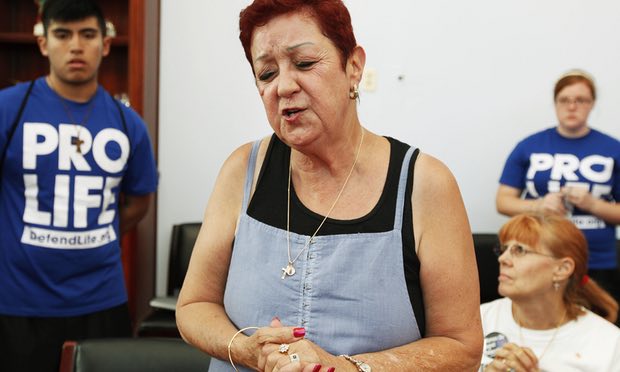
Norma McCorvey is the real name of the woman known as “Jane Roe” in the landmark US supreme court case on abortion rights, Roe v Wade. The 1973 case established a right for US women to have abortions. McCorvey became the plaintiff after she met with two lawyers looking for a test case to challenge Texas’s abortion ban. That was in 1970. At the time, McCorvey was pregnant, unwed, unemployed and unable to obtain an abortion legally or otherwise.

McCorvey never had an abortion. Her case, which proceeded largely without her involvement, took too long to resolve, and she gave birth to a child that she placed for adoption. Several years after the ruling, she publicly revealed her identity and became involved in the pro-abortion rights movement. But after a conversion to Christianity, she became an anti-abortion rights activist. Before she died last week, McCorvey had said that it was her wish to see Roe v Wade overturned in her lifetime.

Is Roe v Wade actually in danger?
It depends on what you mean. Many legal experts are sceptical that the US supreme court would overturn it any time soon. For starters, it’s difficult to bring a case before the supreme court that would threaten the ruling, because those cases almost always founder in a lower court. And even if Donald Trump’s supreme court nominee opposes abortion rights, the current makeup of the court is such that there aren’t enough votes to overturn Roe.

An alternative strategy is to poke so many holes in Roe that its protections for abortion rights become weakened. At this, anti-abortion activists have been very successful. Since Roe, some states have enacted laws requiring women seeking an abortion to attend anti-abortion counselling or to wait 24 hours or more for the procedure, laws extensively regulating abortion after 20 weeks, and laws blocking public funding for abortion. And they have picked up speed in recent years. Since 2010, lawmakers have placed 338 new restrictions on abortion.

Will states continue to pass new anti-abortion laws?
Many states are controlled by Republicans who oppose abortion rights, so they will certainly try. You might have heard about a proposal in the state of Oklahoma calling for women to require permission for an abortion from the man who impregnated her. One legislator justified the bill by saying pregnant women’s bodies are not their own because they’re “hosts”. It’s outrageous, but not a huge threat to abortion rights – the jurisprudence is pretty clear that you can’t require an adult woman to get permission before having an abortion.

What does threaten abortion rights are laws that chip away at Roe v Wade. Several states are attempting to ban a common method of second-trimester abortion on the basis that it’s cruel to the foetus. There are efforts to regulate how abortion clinics dispose of medical waste, which the clinics say are just attempts to shut them down with unnecessary rules and expenses. There is also a push to give women scientifically untrue information that it is possible to “reverse” an abortion performed with medication.

Have all these laws really made it harder to get an abortion?
It’s hard to say. There is evidence that shutting down clinics can cause a drop in the abortion rate. In Texas, after a 2013 clinic regulation forced about 20 clinics to close, there was a 50% drop in abortions in areas where the distance to the nearest clinics suddenly increased by more than 100 miles. Last June, the US supreme court ruled that the regulation had no medical justification and was unconstitutional. But in many places, the damage had already been done.

Making it harder for women to pay for abortions also seems to have an impact. Since 1976, when Congress blocked Medicaid – insurance for those on low-income – from paying for abortions, more than a million women have been blocked from access. A new tactic is to try to ban abortion coverage in state insurance marketplaces. Congress is exploring ways to replicate those restrictions nationally.

Then there are laws that place extra restrictions on abortion – a waiting period, or a counselling requirement, or a ban on abortion after a certain number of weeks. The research isn’t definitive, but people who study abortion restrictions are pretty sure that these kinds of laws don’t prevent women from having abortions – they just make it more time-consuming and expensive. The exception may be bans on abortion after a certain week of pregnancy, which studies show can force women to carry a pregnancy to term.

What could change under Trump?
Republicans in Congress have plans to pass a national ban on abortion after 20 weeks, to make it harder for a future Congress to restore public funding for abortion, and to curtail insurance coverage for abortion. It’s not clear if they will overcome opposition in the Senate, where Democrats retain enough votes to filibuster legislation.

But many public health advocates fear that the Trump administration will scale back the availability of contraception – which seems to have helped bring the US abortion rate to historic lows. Obamacare requires insurance companies to cover contraception with no copay, and the share of privately insured women who were able to obtain contraception at no extra cost quadrupled. Trump and Congress intend to repeal Obamacare – and so far, none of the replacement models have the same coverage requirements. At the same time, Republicans are attempting to strip public funding from Planned Parenthood, a move that health experts warn could blow a hole in the family-planning public safety net.

Source: The Guardian

Fukushima’s Political Fallout Puts Anti-Nuke Researcher On Trial | Activist Post

FukishimiFalloutBy Yoichi Shimatsu

Dana Durnford, a former commercial diver who plies a rubber dinghy along the Canadian Pacific coast to study the effects of Fukushima radiation on marine life, has been arrested for making alleged death threats against a chemistry professor at University of Victoria in British Columbia. Mr. Durnford is facing trial on two counts of harassment related to his comments on video at his webpage, the Nuclear Proctologist. The video clips in question have been removed by YouTube at the request of unnamed complainants.

Whatever the substance those controversial statements, Canadians should realize his frustration arises in response to the official campaign of denial of Fukushima’s lethal effects. I have often enjoyed dialogues with Dana on the rense.com radio program on Monday nights, especially stories of his harrowing experiences at sea amid 15-foot swells. After a career of diving for shellfish, he developed a passion for coastal research two years ago after discovering that the once-lush seafloor and tidal pools of British Columbia have been denuded of vegetation and are now devoid of marine-animal life. A burning curiosity prompted him to obtain Geiger counters, a microscope and underwater cameras to search for the root cause of this unprecedented natural catastrophe along North America’s Pacific coast,

Durnford has an encyclopedic recall for identifying marine species that few marine biologists can equal. His estimate, four years after the Fukushima nuclear disaster, is that out of more than 2,000 coastal species only about 200 still survive. The absence of any other plausible cause prompted his conclusion that low-level radiation from Fukushima arriving in immense volumes is responsible for the greatest extermination event in human history. His field research shows that the ongoing ecocide of the Pacific is a man-made catastrophe and not a natural disaster, and the nuclear industry bears the entire culpability. For his tireless campaign of gathering a vast body of smoking-gun evidence, Durnford is being persecuted in a modern-day witch trial by the high priests of the nuclear industry.

Durnford stands accused on trumped-up charges of a “hate crime” against those marine chemists who categorically deny radiation as a potential factor in the oceanic kill-off, a priori, that is even before they start to gather data from the shore. As quoted in the Globe and Mail, Durnford said, “in court I was charged with criminal harassment of nuclear industry PR people, and one of those was from Woods Hole and the other one was from UVic, British Columbia, Canada.”

Correction: Durnford is not aware of the fact, and probably neither are the students at University of Victoria, that one of his accusers, Professor Jay Cullen, served as a postdoctoral researcher at Woods Hole Oceanographic Institution in Massachusetts, which throughout its history has been an “ocean environment” research front funded by the U.S. Navy’s Office of Naval Research.

“Zero risk” from Fukushima

To be fair, as far as possible when presented with transparent scientific fraud, let us now pay attention to the opinions of the main “victim” of this alleged heinous murder plot.

Chemistry professor Jay T. Cullen, with the University of Victoria, British Columbia, gave his account of a “hate crime” and “harassment” from critics of the Fukushima meltdowns to a sympathetic Globe and Mail in its November 11 edition:

Jay Cullen never expected the world of hate he encountered when he began to post scientific information about the impact of the Fukushima accident on the Pacific Ocean. Criticism was anticipated ­ but then he started getting death threats.

“I knew there were lots of individuals who felt strongly about nuclear power. So it wasn’t a surprise that there were those who didn’t accept what the scientific research was showing, but I have to admit the hatred and the threats I received, that was somewhat of a surprise.”

Dr. Cullen started a radionuclide-monitoring program in 2014. The Integrated Fukushima Ocean Radionuclide Monitoring project (or InFORM, as he optimistically called it) worked with a broad network of scientists to gather the latest research and distribute it to the public.

Shortly after he began blogging about the findings, which showed just about zero risk to the environment and to the public in North America, he became the target of a hate campaign.

So there you have it from both sides, the Rashomon effect. Truth is in the eye of the beholder, or is the payoff in a Swiss bank account? Who to believe: Dastardly Dana or the Professor of Culling?

The Wheelchair Murders

When the Durnford case reaches trial, the prosecution must prove that the accused made a threat with murderous intent that could be actualized in a physical assault or with a weapon. The defendant, however, is disabled and requires the assistance of a wheelchair or crutches for mobility. It is highly unlikely that Durnford could mount a successful physical attack against any person capable of running, making the harassment charges simply a bad joke that exposes the folly of this spurious court case.

If anything, the scene of Professors Cullen and Buesseler being chased around the docks by a wheelchair would make a hilarious episode for the Canadian comic-reality show “Just for Gags”.

Apologists for Nuclear Ecocide

Here, I present arguments for Durnford’s defense, much of which cannot be entered into the court record in a national judicial system constrained by a blanket nuclear-security regime and Official Secrets Act that grossly subvert the Rule of Law:

– First, it will be shown that the accusers Cullen and Buesseler have institutional links with the nuclear industry and nuclear weapons, and are therefore implicated in the Fukushima cover-up for their assigned task of countering anti-nuclear critics. Their illicit connections to the military-nuclear complex prompt them to concoct flawed research methodologies that purposely underestimate levels of radioactive contamination. Their grotesque violations of science ethics are here exposed, followed by a call for their being defrocked and excluded from academic discourse.

– Second, the funding from the nuclear industry to the University of Victoria, located on Vancouver Island, is “hush money” timed to coincide with the imminent start of uranium shipments across Western Canada through Vancouver harbour to Asia by TEPCO Resources, yes, the same Tokyo Electric Power Company responsible for Fukushima and co-owner of the Cigar Lake uranium mine, which recently started extraction operations in Sasketchewan. TEPCO is hitting Canada in more ways than one.

– Third, the Canadian government’s nuclear-secrecy regulations backed by the Official Secrets Act encourages extralegal suppression of anti-nuclear critics and enables the duplicitous export of uranium for nuclear weapons despite a long-standing export ban imposed by Prime Minister Pierre Trudeau. The Crown-owned Atomic Energy of Canada Ltd. connected with the funding for Cullen’s inFORM radiation-monitoring project got its start as the uranium supplier to the Manhattan Project, which constructed the atomic bombs that exterminated up to a quarter-million civilians in Hiroshima and Nagasaki.

– Fourth, the principle of international law set by the highest Tribunal in postwar history ruled that scientists who participate in genocidal programs must be meted out capital punishment. To repeat emphatically, for the education of plaintiffs Cullen and Buesseler, researchers implicated in mass murder deserve to be executed, according to the unanimous decision at the Nuremberg Doctors Trial.

Downplaying the Radiation Threat

Before doing a single stitch of field research, Cullen stated that the Canadian coast is free of dangerous levels of radiation and categorically disputed that Fukushima radioactive contamination as a causal factor in the numerous reports of mass deaths of marine mammals, fish, sea birds and invertebrates over the past two years. Since 2014, his inFORM network has involved willing NGOs to set up monitoring stations north of Vancouver Island to measure radiation in water.

Professor Cullen is using a bogus methodology, Water is known to be a highly unreliable medium for radiation measurement due to the diffraction and diffusion of gamma and beta rays, on the same principle as the reflection of visible light in a glass of liquid. Therefore, the only effectual method to determine exposure levels is by measuring radiation levels in marine vegetation and sea-animal tissue, to determine the “bio-accumulation” of radioactive isotopes. In an urgent crisis like Fukushima, the effect of radiation on life is all that matters.

A low level of radioactive does not eliminate the risk of harmful health effects or lethal consequences. What matters more is the time-length of exposure because of its cumulative effect. The vast area of contamination of the atmosphere and water across the Pacific, resupplied by unstoppable releases from the Fukushima plant, has resulted in practically year-round 24X7 exposure for residents of the North American Pacific coastal region. An apt analogy is the cancer threat from secondary cigarette smoke. While the nonsmoker does not inhale high concentrations of carcinogens, constant exposure to low levels of indoor smoke can lead to lung cancer.

Bioaccumulation is, therefore, the focus of my field research in measuring radiation along the Fukushima coast and on the beaches of Southern California and Washington State over the past four years since the meltdowns. Some of those field studies were done at the tip of Makah Indian territory where the Pacific meets the Salish Sea channel. This area, which directly faces Vancouver Island where Dr. Cullen’s laboratory is located, showed disturbing levels of radiation contamination in varieties of seaweed and plastic flotsam. The fact that Professor Cullen cannot find any substantial traces of radiation in that same vicinity of the Salish Sea discloses him to be a huckster for the nuclear lobby and a disgrace for the University of Victoria.

Cesium-137 Deception and Flat-Earth Theory

The veracity of Buesseler and his apprentice Cullen rides on a claim they made to the PBS Nova science program:

Cullen and Ken Buesseler, a senior scientist at the Woods Hole Oceanographic Institute, found no trace of radioactivity from the meltdown of the Fukushima Dai-ichi nuclear reactor in fish collected off British Columbia. Rather, the faint traces of radioactivity they found can be traced to weapons testing done over the Pacific in the 1960s and ’70s. Fukushima’s fingerprint is cesium-134, a radioactive isotope with a half-life of two years. Because it will decay almost completely within a decade, the presence of cesium-134 can only be explained by recent exposure, such as the discharge of radioactive coolant that occurred at Fukushima. By contrast, the isotope lingering from weapons testing, cesium-137, has a half-life of 30 years.

In an interview with the Juneau Empire newspaper in Alaska in April 2015, Cullen was dismissive of the health risk from Fukushima:

“The prediction is that we will not approach levels that will present a danger to anybody’s health,” Cullen said, adding “that it’s unlikely marine organisms will be at risk. I would say that there’s a small proportion of the public who hold the belief that the Pacific Ocean and our coasts are void of life because of radiation from Fukushima.”

The Buesseler-Cullen thesis, summarized, is that since March 1, 2013 (two years after the 311 crisis), Fukushima radiation in seawater poses absolutely no threat due to the 2-year half-life of cesium-134. Any radiation from cesium-137 (half-life of 30 years) is from atmosphere tests more than three decades ago, meaning there is at present no radioactive threat at all.

Their fantastic fable for idiots is shattered by factual reporting by the Kyodo news agency (10 May 2014):

At the European Geosciences Union meeting in Vienna, Michio Aoyama, a professor at Fukushima University’s Institute of Environmental Radioactivity who is part of the research team, said that TEPCO underestimates the amount of cesium-137 that was released into the atmosphere and later fell into the sea.

Scientists are trying to detect the levels of radioactive cesium due to its potential, long-term risks to the land and sea. Cesium-137, which has a half-life of around 30 years, can cause cancer.The study estimates that 14,000 to 17,000 terabecquerels of cesium-137 were released into the atmosphere, while about 3,500 terabecquerels directly flowed into the ocean. (A terabequerel is equal to 1 trillion bequerels.)

Aoyama said the release of radioactive cesium-137 has a ‘big impact on the ocean’ since the Fukushima nuclear complex is near the coast. The study also found that 12,000 to 15,000 terabecquerels of the cesium-137 released into the atmosphere fell into the sea, while the remaining amount fell into the soil. Of the amount that fell on land, up to 400 terabecquerels fell on North America.

No cesium-137 from Fukushima, Professors Cullen and Buesseler? Have you never heard about the mixed oxide (MOX) fuel rods of uranium and plutonium that went up in smoke from Reactor 3? And that these burnt-out rods continue to bleed radioactive isotopes including Cs-137 into the Pacific?

The Buesseler-Cullen thesis collapses like flat-earth theory crumbled when challenged by one astronomer’s observations through a telescope in the late 16th century. Knowing full well the flaws in his own argument, Cullen reacts in the same manner at the flat-earther scientists did against Galileo, by denouncing Dana Durnford as a dangerous heretic. Unable to counter Durnford’s massive biological data findings, Cullen resorts to calling the police just like the top scientists of the past called in the Vatican’s thought-control priesthood against Galileo, who was imprisoned for the high crime of reporting the facts and nothing but the facts.

Class dismissed, and you Professor Cullen and Dr. Buesseler are fired and fork over the grant money. That, departments heads at U. Victoria, is how to deal with scientific fraud.

Atomic Energy of Canada

What Jay Cullen failed to mention to the Toronto-based Global and Mail is that the 630,000 dollar grant to his inFORM project came from the MEOPAR foundation, whose Board chairman is Robert Walker, former CEO and President of Atomic Energy of Canada Ltd. (AECL). The federal Crown corporation is Canada’s largest nuclear laboratory, which developed the CANDU reactors and was the wartime uranium-supplier for the Manhattan Project, which built and detonated the world’s first atomic bombs.

The Pentagon links to AECL were revealed early-on, in December 1952, when the NRX reactor at AECL’s Chalk River lab suffered a partial meltdown in the world’s first major nuclear accident. One of the American naval officers dispatched to Chalk River by then-Captain Hyman Rickover, founder of the U.S. nuclear fleet, was Lt. Jimmy Carter. His assignment was to enter and inspect the damaged reactor building, and this is the probable cause for his struggles with cancer. The nuclear industry, which has shown no regrets about harming a president, certainly has nothing but contempt for ordinary citizens.

Before his appointment at Victoria, Cullen was a postgraduate researcher at the Woods Hole Oceanographic Institution (WHOI), where obviously he was inducted into the radiation cover-up operation by Ken Buesseler. Woods Hole provide civilian cover for the U.S. Office of Naval Research (ONR), the marine component of DARPA. WHOI got its start during World War II with its development of sonar, needed to detect and target German U-boats and Japanese submarines. Sonar invention was a crash program for the Office of Naval Intelligence (ONI), which later created the CIA.

Buesseller is a dissembler who has made extraordinary efforts to conceal his secret work for military programs. His focus on Fukushima radiation was initiated soon after the 311 disaster under assignment with the Naval Research Laboratory (NRL). Attached to that study of radioactivity in the seas south of Fukushima was postdoctoral researcher Elizabeth Douglass with the NRL. Funding for Woods Hole comes from the Defense Department; the Department of Energy, which produces nuclear warheads; weapons manufacturer Raytheon; and environmental polluter Chevron.

The team of Buesseler and Cullen, like a Sith lord and his eager apprentice, are agents of the nexus of the nuclear-weapons establishment and corporate merchants of death.

Canada’s Nuclear Conundrum

Canada, in its less-than glorious moments, is capable of committing acts of official repression of the type Edward Snowden warned of coming from its neighbor to the south. The Canadian government deploys an arsenal of press censorship and repression of anti-nuclear critics.

An arrest similar to Durnford’s occurred in Yellowknife in the Northern Territories soon after the Fukushima disaster targeted a local radio host who had discussed the radiation levels in northern Canada. He was soon thereafter taken away in a raid by uniformed men and silenced. His name was never identified to the public and he has not been heard from since. Yellowknife is the center of operations for the Pentagon-supported Canadian Arctic command.

Despite the best efforts of the elder Trudeau against nuclear weapons, secret uranium shipments from Canada continued for nuclear-warhead production in the United States. In blatant violation of the nuclear Non-Proliferation Treaty (NPT) Canada has supplied uranium to the Indian, Pakistani and Israeli nuclear program under the thinnest pretext of supporting “peaceful” civilian energy. Bureaucratic duplicity, of course, is connected with corruption.

Devil in the Details

What is interesting today about the Fukushima-related arrest of Durnford is the eagerness of the Canadian authorities to suppress its own citizens who criticize Japan’s nuclear industry. This is because Fukushima-perpetrator TEPCO is a shareholder in Canada’s largest untapped deposit of high-grade uranium, which began production in September 2015. If ever there was a deal with the devil, it is called, appropriately, Cigar Lake.

TEPCO is sending the uranium not to its own nuclear plants, which have little chance of restart-up. Instead, the nuclear-energy giant is morphing into a supplier of fuel rods for new reactors being promoted by the Abe government in Turkey, Vietnam, the UAE and India. Therefore, much of that uranium from Cigar Lake will be sent by truck on the public highways of Western Canada and loaded onto ships in Vancouver harbour. The planned massive expansion of uranium shipment will without doubt threatened public health in that fair city. This is why Jay Cullen is needed by TEPCO and CAMECO to be posted in the Vancouver region to dispel any concerns of local residents when local children start dying of thyroid cancer and leukemia.

Fouling the Arctic

The Cigar Lake mine is located 450 meters underground in northern Saskatchewan. Deep below the lake bed, the uranium deposit rests on dense ancient bedrock. Above this subterranean trove is the Athabascan aquifer, a canyon-like labyrinth carved into porous sandstone by underground streams, which eventually feed into the northward-flowing MacKenzie River.

The mining is done by CAMECO, the world’s largest publicly traded uranium miner, which was spun off by the federal government and Saskatchewan Province. The uranium deposit is blasted to pieces by water-jet technology. Pressured water, focused in a small radius, can easily cut through metal, as is done at fabrication workshops. The difficult challenge is to prevent loosened particles from contaminating the aquifer. Therefore a barrier between the mining and the aquifer is created by pumping super-chilled water into the sandstone to create an “ice wall”.

Ice walls have a dismal record. Engineers at the Fukushima nuclear plant made many attempts to surround the facility with an ice barrier but have repeatedly failed. So too at Cigar Lake, where recurrent flooding has delaying mining for years on end. The simple fact that the brightest engineers cannot comprehend is that water when frozen expands, thereby shattering the matrix of sandstone.

Cigar Lake has probably already started to contaminate the springs that fill the MacKenzie River, which drains into the Beaufort Sea. The waste material from Cigar Lake will add more radioactive material in the Arctic atop the massive amounts of isotopes and tritium carried by the jetstream from Fukushima. The destruction of the Arctic ice cap, along with the opening of a polar atmospheric ozone hole, suddenly started just a month after the Fukushima radioactive releases in 2011. The destruction of Arctic wildlife, including polar bears and walruses, are undoubtedly being caused by that surge of radiation contamination. All of these realities are denied by the scientific establishment and its military bosses.

Nuremberg Verdict on Murderous Science

Only a halfwit or a numskull could misconstrue Dana’s comments as a direct death threat against Cullen or Buesseler. To dare mention that an evil scientist deserves to die constitutes a crime, but to spew lies that abet the deaths of millions is just a job.

His comments were essentially along the same lines as Jean Rostand’s in Thoughts of a Biologist: “Kill one man, and you are a murderer. Kill millions of men, and you are a conqueror. Kill them all, and you are a god.” TEPCO has achieved the status of a deity, worshiped by Canada’s bankers and politicians. CAMECO and Atomic Energy of Canada are now trying to join the same major league. (As for diabolical metaphors, the AECL logo is just one ray from being a pentagram.)

There are strong reasons why scientists are expected to live up to higher standards for truthfulness and ethical conduct, in contrast with the money-grubbing merchant or obedient technocrat. Communities and nations depend on the ethical integrity and moral conscience of science professionals who control vast powers over life and death.

The temptation to destructive power was described by nuclear physicist Robert Oppenheimer in his chilling words on his newly devised atomic bomb: “Now I am become Death, destroyer of worlds.” Death on a planetary scale is being realized in the ongoing spread of radioactive contamination out of Fukushima. How a scientist reacts to this unending catastrophe, whether with a dismissive attitude or serious consideration, is an ethical litmus test.

The higher responsibility of scientific researchers to defend the public interest was accorded special emphasis at the the Nuremberg Doctor’s Trial. The tribunal’s counts against the German medical researchers included “common design or conspiracy”, “crimes against humanity” and “membership in a criminal organization.” Among those who received the maximum penalty of hanging by the neck were Red Cross chief Karl Gebhardt, the Reich’s chief hygeinist Joachim Mrugowsky, and Wolfram Sieverts, head of military science research. The Nuremberg verdict set the standard for dealing with serious abuse of scientific authority.

The Globe and Mail article reported that Cullen was shocked that “he was not only called a ‘shill for the nuclear industry’ and a ‘sham scientist’ but was told he and other researchers who were reporting that the Fukushima radiation wasn’t a threat deserved to be executed.”

Well, Doktor Cullen, did you not choose to enter into a “common design or conspiracy” to deny the dangers to public health posed by radioactivity? Do you and Dr. Buesseler not make excuses for “crimes against humanity”? And, by any chance, do the two of you belong to a “criminal organization” that dares not reveal its existence?

Do scientists who sell out their ethics for pieces of silver when millions of civilian lives are at stake “deserve to be executed”? According to the highest standard of international law on criminal abuse by scientific researcher, the Nuremberg Doctors Trial, the answer is an emphatic affirmative: Scientists involved in genocide should be put to death. There are no ifs, buts or maybes about it. You, Professor Cullen and Dr. Buesseler, are guilty, and Dana Durnford is innocent. The defense rests.

Canada on Trial

While Durnford faces an official inquisition, it is actually Canada on trial. Will that northern dominion abide by its own principles of nonproliferation, opposition to nuclear war and environmental protection for the welfare of its communities, its children and its threatened wildlife? Or will Canada self-destruct like Shinzo Abe’s Japan under militarism, war denial and unstoppable radioactive contamination?

The new Canadian prime minister faces the daunting challenge posed by his father: “Nuclear weapons exist. They probably always will. And they work, with horrible efficiency. They threaten the very future of our species. We have no choice but to manage that risk. Never again can we put the task out of our minds; nor trivialize it; nor make it routine. Nor dare we lose heart.”

Yoichi Shimatsu, former editor of The Japan Times Weekly, is a science journalist who has conducted extensive radiation studies inside the Fukushima nuclear exclusion zone since April 2011. He shares a weekly online radio program at rense.com with Dana Durnford.

Source: Activist Post
Supreme Court to Hear Texas Abortion Law Case | New York Times

AbortionLegalBy Adam Liptak

WASHINGTON — The Supreme Court on Friday agreed to hear its first major abortion case since 2007, one that has the potential to affect millions of women and to revise the constitutional principles governing abortion rights.

The court’s decision will probably arrive in late June, as the presidential campaign enters its final stretch, thrusting the divisive issue of abortion to the forefront of public debate. Other major rulings — on affirmative action, public unions, contraception coverage and possibly immigration — are also expected to land around then.

But it is the new abortion case, however it is decided, that is likely to produce the term’s most consequential and legally significant decision. Many states have been enacting restrictions that test the limits of the constitutional right to abortion established in 1973 in Roe v. Wade, and a ruling in the new case, from Texas, will enunciate principles that will apply in all of them.

The Casey decision said states may not place undue burdens on the constitutional right to abortion before fetal viability. Undue burdens, it said, included “unnecessary health regulations that have the purpose or effect of presenting a substantial obstacle to a woman seeking an abortion.”

Justice Anthony M. Kennedy helped write the controlling opinion in Casey, and his vote will almost certainly be crucial in the new case, Whole Woman’s Health v. Cole, No. 15-274. The future of abortion rights in the United States probably rests almost entirely in his hands, given the deadlock on the court between conservatives and liberals.

The case is a challenge to a Texas law that would leave the state with about 10 abortion clinics, down from more than 40. Such a change, the abortion providers who are plaintiffs in the case told the justices, would have a vast practical impact.

“Texas is the second-most-populous state in the nation — home to 5.4 million women of reproductive age,” they wrote in their brief urging the court to hear the case. “More than 60,000 of those women choose to have an abortion each year.”

The case concerns two parts of a state law that imposes strict requirementson abortion providers. It was passed by the Republican-dominated Texas Legislature and signed into law in July 2013 by Rick Perry, the governor at the time.

One part of the law requires all clinics in the state to meet the standards for “ambulatory surgical centers,” including regulations concerning buildings, equipment and staffing. The other requires doctors performing abortions to have admitting privileges at a nearby hospital.

Officials in Texas said that the contested provisions were needed to protect women’s health. Abortion providers responded that the regulations were expensive, unnecessary and intended to put many of them out of business.

The measures were modest and sensible, Ken Paxton, Texas’ attorney general, said in a statement on Friday

“The state has wide discretion to pass laws ensuring Texas women are not subject to substandard conditions at abortion facilities,” Mr. Paxton said. “The advancement of the abortion industry’s bottom line shouldn’t take precedence over women’s health.

Nancy Northup, president of the Center for Reproductive Rights, which brought the Texas challenge, said officials in Texas had used “deceptive laws and regulatory red tape” to block access to abortion.

“Playing politics with women’s health isn’t just wrong,” she said in a statement. “It’s dangerous for many women who will have no safe and legal options left where they live, and may be forced to take matters into their own hands.”

Parts of the law not at issue before the Supreme Court have already caused about half of the state’s 41 abortion clinics to close. If the contested provisions take effect, the challengers’ brief said, the number of clinics would again be halved.Amy Hagstrom Miller, president of Whole Woman’s Health, the lead plaintiff, said that “would have devastating effects on women and families around the state.”

The remaining clinics would be clustered in four metropolitan areas: Austin, Dallas-Fort Worth, Houston and San Antonio.

“There would be no licensed abortion facilities west of San Antonio,” the challengers’ brief said. The only clinic south of San Antonio, in McAllen, it added, would have “extremely limited capacity.”

In urging the Supreme Court to decline the case, Mr. Paxton quoted from an earlier opinion. The justices, Mr. Paxton said, should not turn themselves into “the country’s ex officio medical board with powers to approve or disapprove medical and operative practices and standards throughout the United States.”

The lower courts are divided over whether they should accept lawmakers’ assertions about the health benefits of abortion restrictions at face value or investigate to determine whether the assertions are backed by evidence.

In June, the United States Court of Appeals for the Fifth Circuit, in New Orleans, largely upheld the contested provisions of the Texas law, using the more deferential approach. A panel of the court ruled that the law, with minor exceptions, did not place an undue burden on the right to abortion.

The court said women in West Texas could obtain abortions in New Mexico, a ruling at odds with one from a different panel of the same courtthat said Mississippi could not rely on out-of-state abortion clinics in defending a law that would have shut down the state’s only clinic.

The appeals court declined to grant the challengers a stay, but the Supreme Court temporarily blocked the ruling later that month pending its own decision in the case. The vote was 5 to 4, with Justice Kennedy joining the court’s liberal wing to form a majority. Chief Justice John G. Roberts Jr. and Justices Antonin Scalia, Clarence Thomas and Samuel A. Alito Jr. voted to deny the stay.

Source: New York Times

Goldwater Institute to File Class Action Lawsuit Against Against Parts of the Indian Child Welfare Act | eNewsAZ

8e605557418c5bc7556c021e4698e9e0_LThe Goldwater Institute will launch a new project to reform the Indian Child Welfare Act and similar state laws that give abused and neglected Native American children fewer rights and protections than other American children. A major part of the project will be a federal class action lawsuit.

“When an abused child is removed from his or her home and placed in foster care or made available for adoption, judges are required to make a decision about where the child will live based on the child’s best interest. Except for Native American children. Courts are bound by federal law to disregard a Native American child’s best interest and place the child in a home with other Native Americans, even if it is not in his or her best interest,” said Darcy Olsen, president of the Goldwater Institute. “We want federal and state laws to be changed to give abused and neglected Native American children the same protections that are given to all other American children: the right to be placed in a safe home based on their best interests, not based on their race.”

On July 7, the Goldwater Institute will file a federal class action lawsuit to challenge the constitutionality of core provisions of the federal Indian Child Welfare Act. The same day, the Institute will release an investigative report that documents how federal law leaves Native American children with fewer protections under the law than all other American children, and the serious consequences that have resulted from this unequal treatment. Recommendations for changes to state and federal law will also be announced.

Media is invited to a press briefing that will formally announce the details of the lawsuit, release the investigation, and policy recommendations, and screen an 8-minute original documentary film. The briefing will featureDr. William B. Allen, the former chairman of the U.S. Commission on Civil Rights.

What: Press conference announcing the Equal Protection for Indian Children Project and federal class action lawsuit

When: Tuesday, July 7, 2015, 9:00 a.m. Pacific time

Where: Goldwater Institute, 500 East Coronado Road, Phoenix

Who: Press event will feature Darcy Olsen, president of the Goldwater Institute, Clint Bolick, the Institute’s vice president of litigation, Mark Flatten, the author of the Institute’s investigative report to be released, Dr. William Allen

Source: eNewsAZ

The 28th Amendment: Fact or Fiction? | Snopes

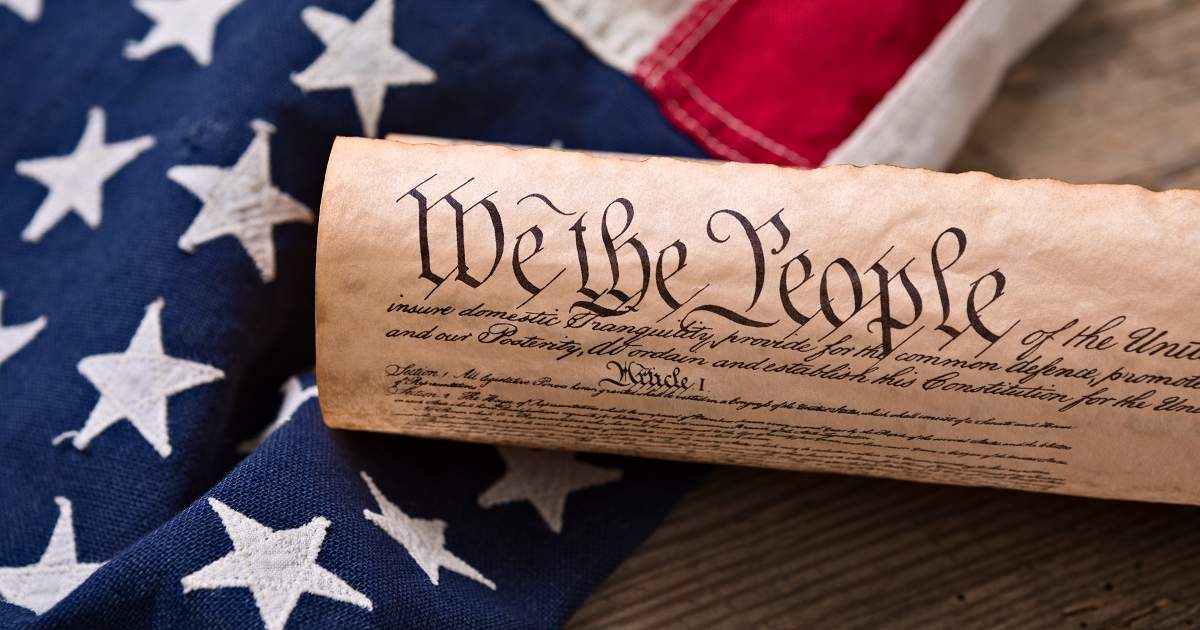
Proposed 28th Amendment to the United States Constitution:

“Congress shall make no law that applies to the citizens of the United States that does not apply equally to the Senators and Representatives; and, Congress shall make no law that applies to the Senators and Representatives that does not apply equally to the citizens of the United States.”Q: Does this text represent the actual 28th Amendment to the U.S. Constitution?

A: No. The U.S. Constitution has only 27 amendments, the last of which (a limit on Congressional pay increases) was ratified in 1992.

Q: Does this text represent a proposed 28th Amendment?

A: This item is a “proposed 28th amendment” only in the very loose sense that any change to the U.S. Constitution suggested since the ratification of the 27th Amendment is a “proposed 28th Amendment.” However, when this piece hit the Internet back in 2009 it was just a bit of online politicking, not something that had been introduced or proposed as a potential amendment by any member of Congress.

In August 2013, nearly four years after this item began making the rounds on the Internet, two Congressmen (Ron DeSantis of Florida and Matt Salmon of Arizona) did introduce a joint resolution (H.J.RES.55) similar to one of its elements, proposing an amendment to the Constitution stating that “Congress shall make no law respecting the citizens of the United States that does not also apply to the Senators and Representatives.” That bill died in committee, and it is exceedingly unlikely that any such broadly worded amendment could ever pass muster in Congress without the underlying idea being subject to a good many qualifications.

Q: Could this amendment be passed without Congress’ voting on it?

A: Possibly, not not likely. Article 5 of the U.S. Constitution specifies two procedures for amendments. One method is for two-thirds of states legislatures to call for a constitutional convention at which new amendments may be proposed, subject to ratification by three-fourths of the states. The constitutional convention method allows for the Constitution to be amended by the actions of states alone and cuts Congress out of the equation — no Congressional vote or approval is required. However, not once in the history of the United States have the states ever called a convention for the purpose of proposing new constitutional amendments.

The other method for amending the Constitution (the one employed with every amendment so far proposed or enacted) requires that the proposed amendment be approved by both houses of Congress (i.e., the Senate and the House of Representatives) by a two-thirds majority in each, and then ratified by three-fourths of the states. It’s probably safe to speculate that the odds that a supermajority of both houses of Congress would pass an amendment which placed such restrictions upon them are very low indeed.

Q: Can members of Congress retire with full pay after serving only a single term?

A: No. This is a long-standing erroneous rumor which we have covered in detail in a separate article.

Q: Are members of Congress exempt from paying into Social Security?

A: No. As noted in our article about Congressional pensions, although Congress initially participated in the Civil Service Retirement System (CSRS) rather than Social Security, since 1984 all members of Congress have been required to pay into the Social Security fund.

Q: Are members of Congress exempt from prosecution for sexual harassment?

A: No. The passage of Public Law 104-1 (the Congressional Accountability Act of 1995, also known as CAA) made a variety of laws related to civil rights and workplace regulations applicable to the legislative branch of the federal government. Section 1311(a) of the CAA specifically prohibits sexual harassment (as well as harassment on the basis of race, color, religion, or national origin).

Q: Are members of Congress exempt from the Patient Protection and Affordable Care Act (i.e., “Obamacare”) health care legislation?

A: No. One of the provisions of the Patient Protection and Affordable Care Act passed by Congress is a requirement that lawmakers give up the insurance coverage previously provided to them through the Federal Employees Health Benefits Program and instead purchase health insurance through the online exchanges that the law created:

An August 2013 ruling by the federal Office of Personnel Management (OPM) was widely and inaccurately reported as exempting members of Congress from the requirement that they give up their Federal Employees Health Benefits Program coverage and instead purchase health insurance through online exchanges. That reporting was incorrect: Lawmakers are still required to purchase health insurance through government-created exchanges; what the OPM’s ruling actually declared was that members of Congress and their staffs did not have to give up the federal subsidies covering part of the costs of their insurance premiums which they had previously been receiving (and which are afforded to millions of other federal workers).

An October 2011 variant of this item is prefaced by a statement made by Warren Buffett: “‘I could end the deficit in 5 minutes. You just pass a law that says that anytime there is a deficit of more than 3% of GDP, all sitting members of Congress are ineligible for re-election.’” This quote came from a 7 July 2011 CNBC interview in which the Oracle of Omaha addressed the then-current issue of raising the debt limit. The rest of the message however, has nothing to do with Warren Buffett.

Some versions of this item include a statement asserting that the children and staffers of U.S. Congressmen are exempt from paying back student loan obligations. That statement is false.

Later versions of this item have been prefaced with the statement that “Governors of 35 states have filed suit against the Federal Government for imposing unlawful burdens upon them. It only takes 38 (of the 50) States to convene a Constitutional Convention.” Actually, only 34 states are required to convene such a convention.

Source: Snopes