The War Propaganda Changes Its Shape | Lew Rockwell

By Thierry Meyssan

If the Russian army has won the war against the Banderites in Ukraine, NATO has won the cognitive war against its own citizens in the West. The Atlantic Alliance has developed a new form of propaganda based on what it denounced a short time ago: Fake News, that is to say not false information, but biased information. The question is, how to protect yourself from it?

THE NATO DEVICE

“Subduing the enemy by force is not the highest art of war, the highest art of war is to subdue the enemy without shedding a single drop of blood.
~ Sun Tzu, The Art of War.

French General Philippe Lavigne of NATO’s Allied Command Transformation (ACT) oversees research on new propaganda methods.

His command has 21 centers of excellence, including one for propaganda, the Strategic Communications Center of Excellence (STRATCOM) in Riga, Latvia. It has created the NATO Innovation Hub (iHub) under the direction of Frenchman Francois du Cluzel, a former professor at the Collège militaire interarmes de Coëtquidan. It funds research at John Hopkins University and Imperial College of London on cognitive abilities (similar cohorts who engineered the COVID-19 propaganda machine). This research covers the entire cognitive domain with various applications ranging from bionic soldiers to war propaganda.

NATO’s general idea is to add to the five usual domains of intervention (air, land, sea, space and cyber), a sixth: the human brain. “While actions in the five domains are carried out in order to have an effect on the human domain, the objective of cognitive warfare is to make each one a weapon,” writes François du Cluzel.

If war propaganda was based, during the First World War, on false information popularized by great writers; then on the repetition of selected messages during the Second World War; today it is conceived as an illusionist’s act. It is about moving people to distract their attention and hide from them what they should not see. They judge what they see with the uninteresting information they are fed. In this way, we manage, without lying to them, to make them take bladders for lanterns.

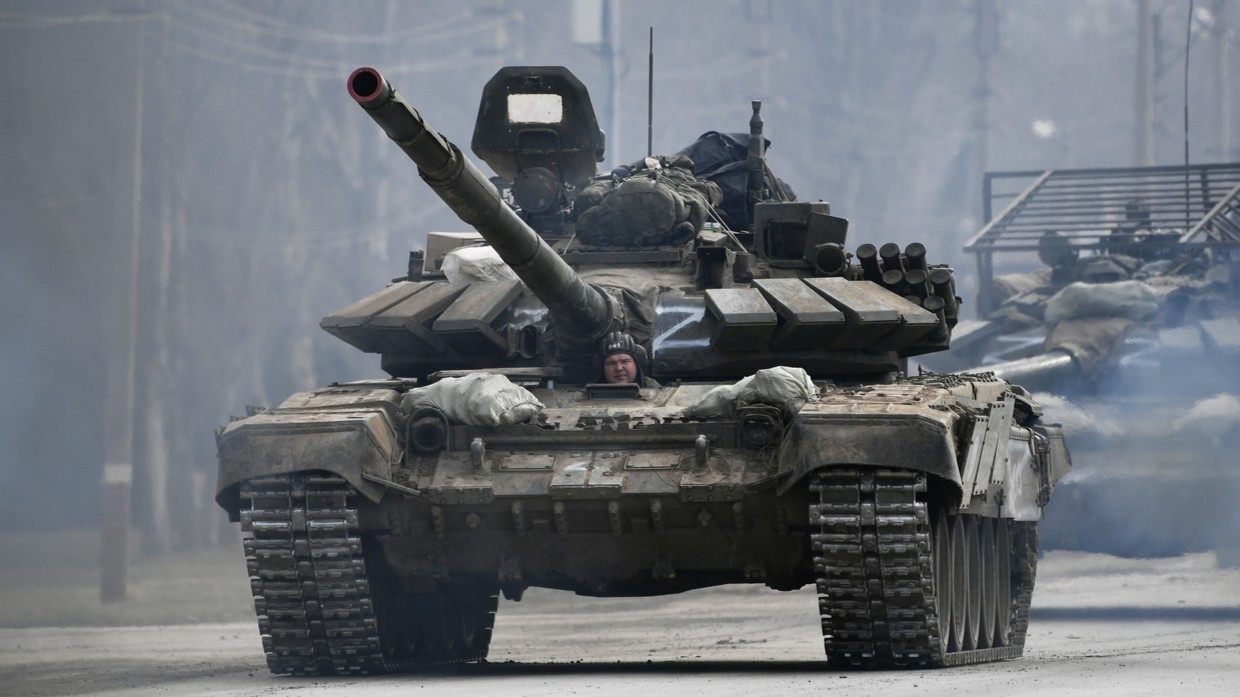
We are living the first application of this technique, on the occasion of the war (or Russian police action) in Ukraine.

To make myself understood, I will first present some information to be ignored, then come back on the treatment of the war by French State television. I would have obtained the same result if I had used a German, British or American example.

(Number of explosions recorded in Donbass (February 14-22, 2022)

You can download the daily reports of the Organization for Security and Cooperation in Europe (OSCE) observers at: https://www.osce.org/ukraine-smm/reports

THE RESPONSIBILITY OF WESTERN LEADERS FOR THE WAR IN UKRAINE

In the West, the narrative of the war in Ukraine places all the blame solely on the Russian president, Vladimir Putin, and secondarily on the political and financial figures of his regime. However, this version is clearly false if one considers the daily reports of the observers of the Organization for Security and Cooperation in Europe (OSCE).

They testified that they heard an attack from the Donbass (still Ukrainian) by Kiev forces on the afternoon of February 17. All news agencies reported that at least 100,000 civilians had fled into the Donbass or to Russia. In addition, the main political leaders of NATO heard Ukrainian President Volodymyr Zelenskyy tell them at the Munich Security Conference that he intended to acquire nuclear weapons against Russia. It is clear that it was not Moscow, but Kiev, that triggered the hostilities.

No one can imagine that Kiev has unleashed this war against a far superior enemy without having received prior assurances from allies apparently capable of defending the country against Russia. This can only be NATO or the United States and possibly the other two nuclear powers, France and the United Kingdom.

The first meeting where this war was presented as desirable was held to our knowledge in the House of Representatives on September 5, 2019. It was organized by the Rand Corporation, the think tank of the US military-industrial lobby. The purpose was to present two reports, “Overextending and Unbalancing Russia” and “Extending Russia: Competing from Advantageous Ground”  to the congressmen/women. The main idea is to use against it the particularity on which Russia bases its defense. Since it is a huge territory that the Russians defend by moving around and practicing the “scorched earth strategy”, it is enough to force them to move abroad to exhaust them.

The importance of this event is shown to us by the incident that affected our collaborator, the Italian geographer Manlio Dinucci. His article on the subject was censored by his newspaper, Il Manifesto, which he had to leave.

Three events attest to the involvement of the United States, the United Kingdom and France in the secret preparation of the war.

On March 24, 2022, a video of a 22-minute telephone conversation between the British Minister of Defense, Ben Wallace, and two Russian comedians Vladimir (Vovan) Kuznetsov and Alexei (Lexus) Stolyarov was published. One of the Russians was posing as the Ukrainian Prime Minister, Denys Shmyhal, whom Wallace never met.

1) Asked whether the UK would help Kiev to acquire nuclear weapons, the Rt. Hon. Wallace replied that he had to consult with Prime Minister Boris Johnson and that “The principle is that we will support Ukraine as a friend in whatever choice you make.”. In one sentence, he swept aside the Nuclear Non-Proliferation Treaty (NNPT).
2) On the subject of the Next generation Light Anti-tank Weapon (NLAW) missiles that the United Kingdom has just sent to the Ukrainian army, Ben Wallace admitted that they were not working properly and that spare parts had also been sent.
3) But it is especially on the subject of NATO that Ben Wallace’s language has been too prolix. The British minister once again invited Ukraine to join the Atlantic Alliance. In passing, he unwittingly revealed that the United Kingdom had been sending military instructors to prepare the Ukrainian army for several years.

Boris Johnson’s government used every means at its disposal to conceal, or rather minimize, these statements. It claimed that the interview lasted only 10 minutes and forbade YouTube/Google to broadcast the entire sketch. The Western media was asked to talk about his blunder on the atomic bomb and to cover up the other two points. This is how the British always do it: not to deny everything, but to make the most dangerous points disappear.

On March 25, 2022, President Joe Biden visited the Congress Palace in Rzeszów, Poland. He was accompanied by the director of USAID, Samantha Power (former ambassador to the UN), and the Polish president, Andrej Duda. It is worth noting that Andrej Duda had his parliament passed a law denying the role of the Polish state in Nazi crimes and authorizing legal action against anyone who mentions them.

Joe Biden spoke with various NGOs to praise their assistance to Ukrainian refugees. Afterwards, he gave a speech to his soldiers of the 82nd Airborne Division, stationed there. He also visited them in the dining hall and spoke to them without a teleprompter or cameras. As always at such times, the old man (79 years old) revealed state secrets. According to the witnesses, he thanked them for their commitment in Ukraine for a long time, even though officially there have never been any US soldiers in that country.

On March 29, 2022, General Eric Vidaud, director of French military intelligence, was dismissed. No official explanation was given. It seems that in reality, General Viaud had deployed men on the direct instruction of President Macron’s private staff, in 2021 when he was commander of special operations, to supervise the Azov Banderites regiment. Immediately, five Ukrainian helicopters tried to flee Mariupol, the stronghold of the Azov regiment. Two were shot down on March 30. The survivors were taken prisoner by the Russian army. They spoke immediately. The soldiers of the Special Operations Command are placed for all logistical matters under the orders of the Chief of Staff of the Armed Forces, General Thierry Burkhard, but they take their orders directly from the head of the armed forces, President Emmanuel Macron.

Afterwards, relations between Presidents Macron and Putin cooled sharply.

HOW WAR PROPAGANDA MASKS REALITY

In France the state has France-Télévision for its own population, with France-2 being the most watched channel, and France Médias Monde for abroad. The latter group depends directly on the Ministry of Foreign Affairs and broadcasts France-24 in several languages.

To begin with, France 2 proposed a live newscast from Lviv (Ukraine) presented by its star, Anne-Sophie Lapix, on March 14, 2022 [6]. This newscast gathers every day a little more than 20% of the public. The young woman showed a lot of destruction and traumatized refugees. She walked through the city, but did not notice the imposing monument to Stepan Bandera, the leader of the Ukrainian Nazi collaborators. She also questioned the mayor of Lviv, Andriy Sadovy, without explaining that he is one of the country’s leading oligarchs. She did not ask him about his media group, of which his wife is the director. So she did not ask him about the remarks made the previous day on his channel, 24 Канал, calling for the killing of all Russians, women and children included, according to the method advocated by SS Adolf Eichman. At no time was it specified that this program was an initiative of the Banderite oligarch Andriy Sadovy and his wife, both former clients of the Publicis agency of Arthur Sadoun, the husband of Anne-Sophie Lapix.

The viewer who ignores Ukrainian tributes to the Nazis and exhortations to follow their example can only weep at the accumulation of suffering that was shown to him. He cannot doubt that the Russians are liars and criminals and that Ukrainians in general are innocent victims.

On March 25, France 24 in English, in its column Truth or Fake, reported on the interview of British Defense Minister Ben Wallace by Russian comedians. Following the instructions of Boris Johnson’s cabinet, the French Foreign Ministry’s television channel mocked his statements on the atomic bomb in order to better conceal those on the inefficiency of his anti-tank weapons and especially those on the presence of British military instructors in Ukraine for several years. The journalist presented the comedians as youtubers, whereas they work for the NTV channel, which allowed her not to mention that they are censored on YouTube in the country of the 1st amendment and freedom of expression. The column was produced by journalist Catalina Marchant de Abreu, a specialist in debunking fake news (sic)

The peak was reached on March 31 with France 2 news. France-Television, which until now denied the ideological character of the Azov regiment, broadcast a report on this formation. The public television admitted that it had, in 2014, been infiltrated by neo-Nazi elements, citing one of its founders, Andriy Biletsky, but assured that it had since changed into a respectable Defense force. France-2 did not mention one of its other founders, Dmytro Yarosh, a NATO agent and former coordinator of European neo-Nazis and Middle Eastern jihadists against Russia, who has become a special advisor to the commander-in-chief of the Ukrainian armies.

France-2 referred to an old UN report on torture, but not to the discovery of his special prisons by the Russian army, nor to recent UN statements on the subject. The report also failed to explain what Banderites are in Ukrainian history and reduced the importance of neo-Nazis to the wearing of the swastika. Having thus glossed over the problem, the channel estimated the danger to be between 3,000 and 5,000 men, while Reuters assures us that the Banderite paramilitaries today represent 102,000 men divided into numerous militias incorporated into the Territorial Defense.

Source: Lew Rockwell
Former Telecom Exec Reveals How ‘5G’ is Globalist Lynchpin for ‘Total Social Control’ | Tucker Carlson Tonight

By Kyle Becker

5G wireless technology has become the source of much controversy, and not just whether or not it interferes with aviation or people’s health concerns.

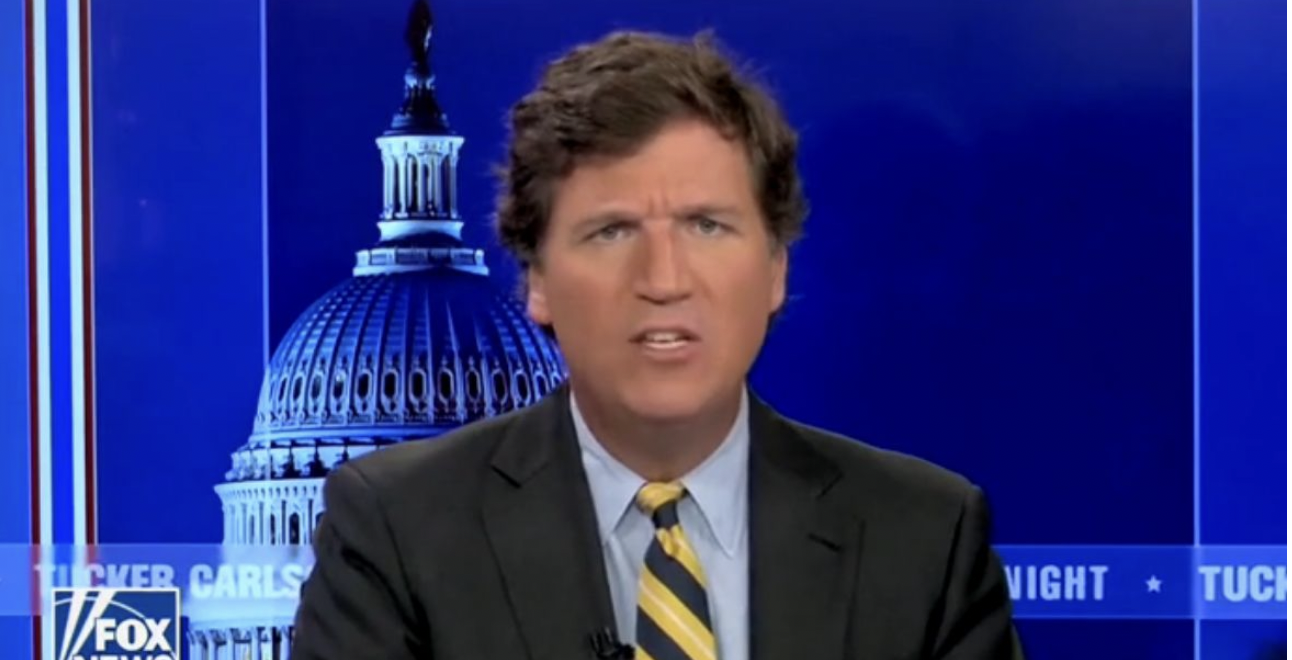
Tucker Carlson sought to unpack the push for 5G with telecom veteran Jonathan Pelson on Monday night’s episode of “Tucker Carlson Tonight” on Fox News. Pelson is the author of “Wireless Wars, China’s Dangerous Domination of 5G and How We’re Fighting Back.”

“You may have noticed something called 5G is coming to the United States,” Tucker Carlson said. “We were told that it might interfere with airplanes. We just had the most interesting conversation of the year with Jonathan Pelson. He said 5G is not actually about your cell phone at all and it’s controlled by China. This is one of those conversations that we got increasingly wide eyed. You should watch the whole thing but here’s part of it.”

“5G despite the advertisements is not just a faster 4G,” Pelson said. “The real pay-off of 5G is that factories are going to use it to totally interconnect themselves. This thing called ‘the internet of things.’ Their traffic systems. License plate readers. Facial recognition systems. The way farms operate. There are devices now and sensors, wire lessens source on tractors, put sensors in the soil to test moisture levels, all of this will be connected.4-g network can’t handle that. If they can handle a thousand calls in one sector, 5G can handle a hundred thousand, so even though commercials talk about it being a lot faster than 4G…”

Source: Becker News & Trending Politics

Russia accuses Ukraine of staging murders to generate Western headlines | Russia Times (RT)

Defense Ministry accuses Kiev of trying to frame its soldiers

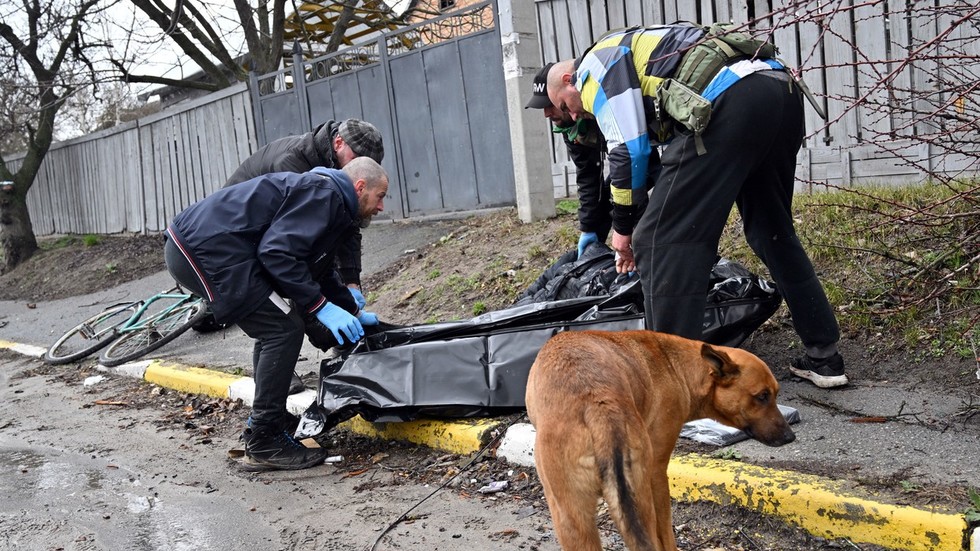
Russia’s Defense Ministry claimed, on Tuesday, that Ukrainian security services have staged more alleged killings of civilians in several towns and villages in order to elicit sympathy by prompting media headlines in the West. Officials believe that Kiev is trying to create a narrative of Moscow being responsible for war crimes. 

Moscow insists that the same tactics were used by Kiev to blame Russian forces for atrocities in the town of Bucha last week.

“The troops of the 72nd Ukrainian Main Center for Psychological Operations conducted another staged filming of civilians allegedly killed by violent actions of the Russian armed forces in order for it to be distributed through the Western media,” spokesman Major General Igor Konashenkov said during a briefing.

According to “confirmed information,” the filming took place in the village of Moschun some 23km northwest of the Ukrainian capital Kiev on Monday, he insisted.

Similar false flag operations have been carried out by the Ukrainian side in the cities of Sumy, Konotop and elsewhere, Konashenkov insisted. He didn’t provide direct evidence to support his claims. 

On Saturday, Ukraine distributed graphic footage of multiple corpses lying in the streets of Bucha, alleging that they were executed by Russian troops. Again, no unequivocal proof was furnished. 

Moscow, which insists that it has not targetted civilians during its operation in Ukraine, has rejected those accusations as a “provocation” and accused Kiev of mounting a false flag operation. 

Officials pointed out numerous inconsistencies in the Ukrainian story, including the fact that the video emerged several days after the Russian forces withdrew from Bucha, and that the local mayor didn’t mention any killings in his video address declaring the “liberation” of the city.

Despite this, the West has immediately decided who to blame for the purported atrocities. US President Joe Biden has demanded a “war crimes trial” for his Russian counterpart Vladimir Putin. However, unlike Moscow, Washington doesn’t recognise the International Criminal Court. 

Meanwhile, the EU promised to send its experts to aid Ukrainian authorities in collecting evidence at the site.

Moscow launched a large-scale offensive against Ukraine in late February, following Ukraine’s failure to implement the terms of the Minsk agreements signed in 2014, and Russia’s eventual recognition of the Donbass republics in Donetsk and Lugansk. The German and French brokered protocols had been designed to regularize the status of those regions within the Ukrainian state.

READ MORE: Biden wants ‘war crimes trial’ for Putin

Russia has now demanded that Ukraine officially declare itself a neutral country that will never join the US-led NATO bloc. Kiev insists the Russian offensive was completely unprovoked and has denied claims it was planning to retake the two rebel regions by force

Source: Russia Times (RT)

Ukrainian Citizens Say ‘Fascist’ Neo-Nazi Azov Brigade ‘Only Shoot Civilians’ | InfoWars

By Kelen McBreen

Independent journalist and US Navy veteran Patrick Lancaster is in Mariupol, Ukraine to provide on-the-ground coverage of the brutal conflict taking place.

Lancaster is one of the few English-speaking reporters covering the war while traveling with the DPR and LPR rebels and Russian troops, but he encourages people to follow journalists on both sides.

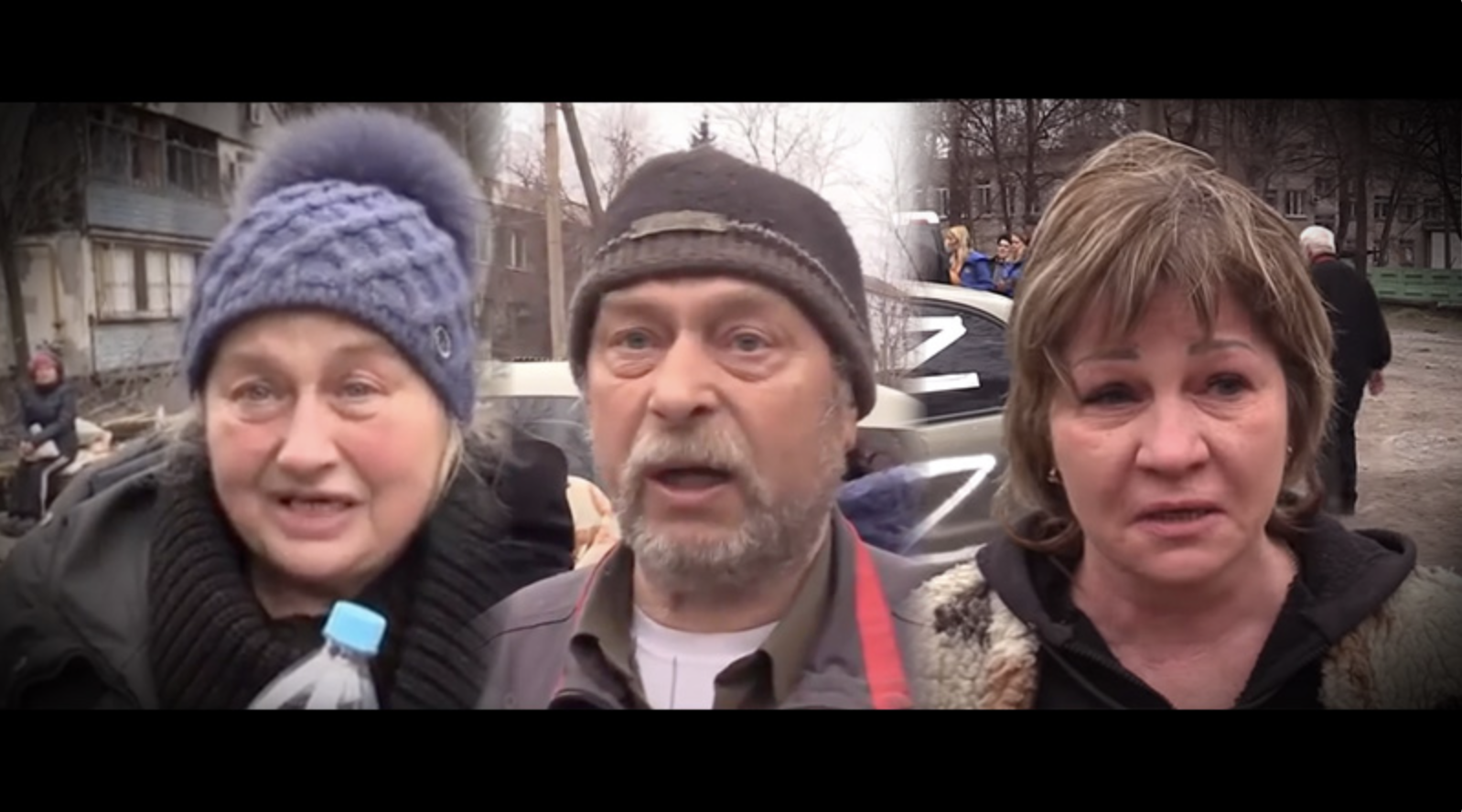
A report uploaded Tuesday shows citizens of Mariupol describing a nearby factory said to be occupied by the infamous Azov Brigade, a neo-Nazi outfit fighting with the Ukrainian military.

One man said he was almost hit twice by a sniper, and declared, “Azov”, when asked who the sniper was fighting for.

After Lancaster suggested the sniper may have thought he was in the military, the man explained he was wearing the clothes seen in the video and that “they shoot at civilians.”

“They don’t shoot military, only civilians,” the man added. “They eliminate civilians. They are actual fascists.”

Another man interviewed by Lancaster echoed the theory that the snipers in the neighborhood are “Nazi guys”, saying, “Ukrainian Nazis are shooting, they just kill people. They kill civilians, women, men, everybody.”

Asked to explain for the camera who the Azov fighters are, the man said, “They collected all the nationalists, some are even from prison. They pay good money to them, and they kill people just for no reason.”

When Lancaster told the locals US and European media claim Russia is destroying cities and killing people, the man said in his experience, “Russia doesn’t shoot at people at all.”

At this point, a crying woman walked up to the camera and told the journalist that if not for Russian assistance, they would be hungry and thirsty along with most of the children in the city.

The woman and a man, possibly her husband, said their apartment was destroyed by “Ukrainian” tanks.

Lancaster documented as a volunteer passed out food to some of the citizens, and an elderly woman raised a loaf of bread to the sky in appreciation to God for the gift.

As he frequently does, Lancaster allowed several citizens to deliver on-camera messages to their loved ones around the world who may see the video.

This side of the ugly war is not being covered by mainstream media in what is becoming a disturbing cover-up.

Source: InfoWars

In a cage with a tiger: How locals in Taliban’s Kabul adapt to the new reality | Russia Times (RT)

By Alexandra Kovalskaya, Orientalist scholar and Freelance Journalist based in Kabul.

A report from the Afghan capital, where life under new rule only appears normal

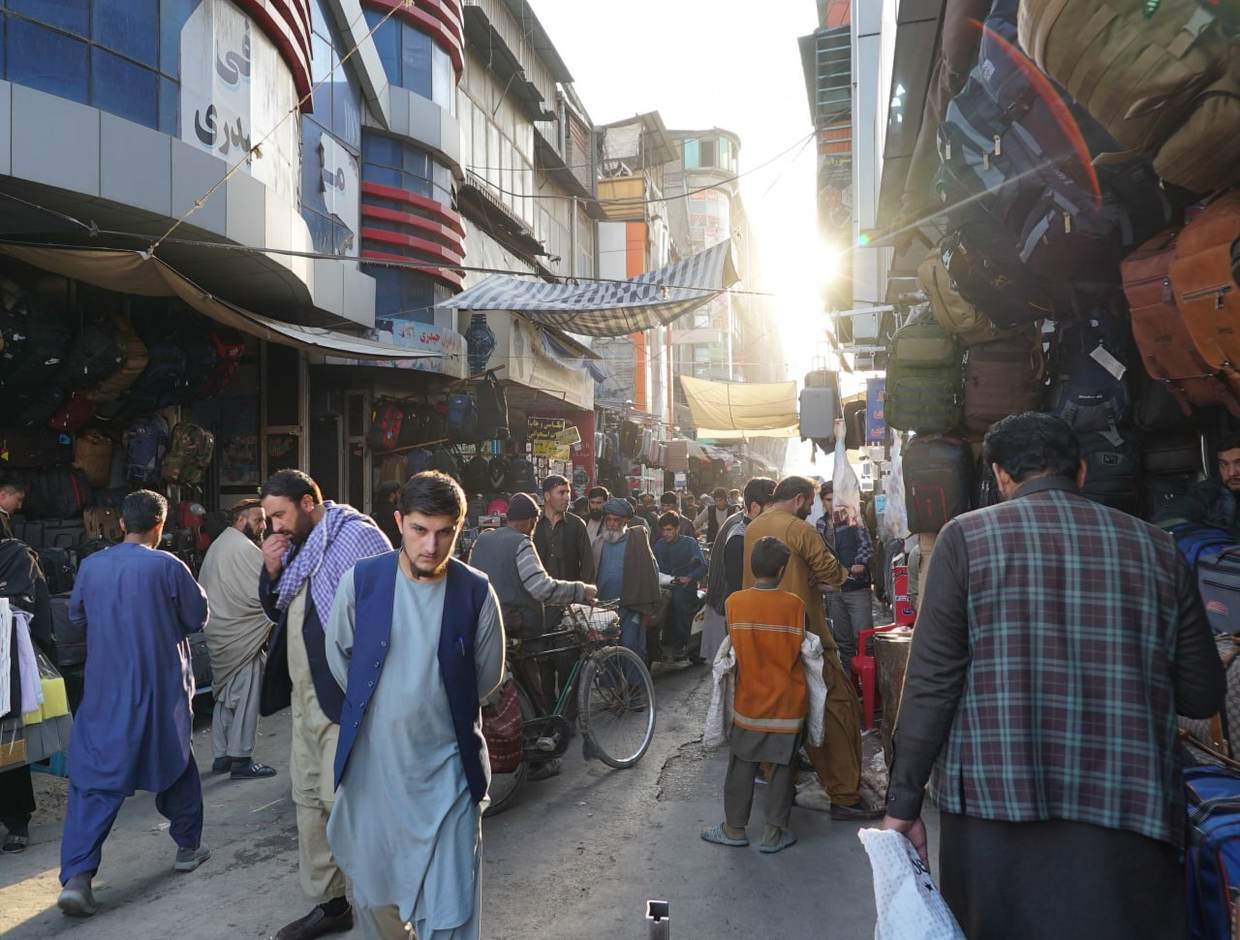
“Zendegi megozara” (Life goes on), an Afghan proverb says – and Kabul, dubbed by the Western media as the city of hope and despair, could be a physical illustration of the saying. Weeks of fear and uncertainty under Taliban rule followed the withdrawal of NATO troops, the mass evacuations and the flight of the country’s leaders. Despite a humanitarian crisis unfolding and the future seeming murky, however, the Afghan capital looks just as it did back in the republican days – on the surface, at least.

The airport in Kabul still isn’t working at full capacity. After the Taliban took over the city on August 15 last year, most international carriers ceased flights to Afghanistan until the situation stabilizes – except for low-cost airline Fly Dubai, Mahan Air of Iran, and few more regional companies.

Negotiations regarding the operation of Kabul Airport, which Turkey and Qatar are said to have commenced with the Taliban, are still believed to be underway as security demands remain unmet. As a shuttle takes passengers from the plane to the international terminal, a dozen of aircraft can be seen on the tarmac. They belong to either Kam Air or Ariana Airlines, the two Afghan companies currently conducting domestic and international flights.

Pictures have been removed from the airport’s outer walls of then-President Ashraf Ghani, Tajik mujahideen leader Ahmad Shah Masoud, and former president Hamid Karzai, after whom the airport was named. Instead, freshly painted graffiti states in English that the Islamic Emirate of Afghanistan wants peaceful and positive relations with the world. The sun-weathered airport compound does look peaceful, even with dozens of Taliban fighters dressed in fatigues, or, more casually, in traditional Afghan outfits, keeping their fingers on triggers. It is hard to believe that this very place witnessed a rapid, fall-of-Saigon-like evacuation and a number of human tragedies just over seven months ago.

According to a new rule, foreigners must register on arrival and fill out a form stating the purpose of their visit, the duration of their stay, and their marital status. As often occurs in Central Asia, a strict law is balanced by the reluctance of those who are to ensure its enforcement.

“You don’t know your complete address in Kabul, madam? It’s alright. You don’t have a picture? No problem,” says an immigration officer as he takes the form and starts pushing his way through the crowd of passengers arrived from Tashkent.

Despite rumors about the new regime prohibiting women from having jobs, the crew on my flight were female, and so were some of the airport employees. One of them, who has her hair covered with a black scarf and her face hidden under a mask, apologizes for her limited English and starts talking about the “good old days.” She mentions a women’s empowerment project she used to participate in, and her Western colleagues. I ask how she feels about the new government. She shrugs.

“How are the Talibs treating you?” I ask.

“It’s OK,” she replies in a local language. “But, you know, a Talib is a Talib. The word says it all. And I think there is no future now. Nothing to hope for, really. But God is great, let’s see.”

Security, new jobs, revenge

The windshield of the taxi is decorated by plastic flowers and a sticker reading “Allah.” A set of prayer beads hangs down from the rear-view mirror. The bearded driver wears a black turban and resembles a religious scholar, but in the parking lot he told me he had worked for airport security. After the Taliban took over Kabul, he spent some time in hiding, frightened that he would be detained for his “ties with the government.” However, a couple of weeks ago, the new airport security chief called him and asked him to come back to work. He was not given his former position, however, and drives a yellow taxi instead. This is a “state taxi,” he explains, with a license from the Ministry of Interior Affairs. This is much safer, especially for the foreigners, he adds.RT

As we exit the airport, I ask him how the situation in Kabul has changed over the past three months.

“There is security, but no job,” he replies. “I was lucky to receive this car.”

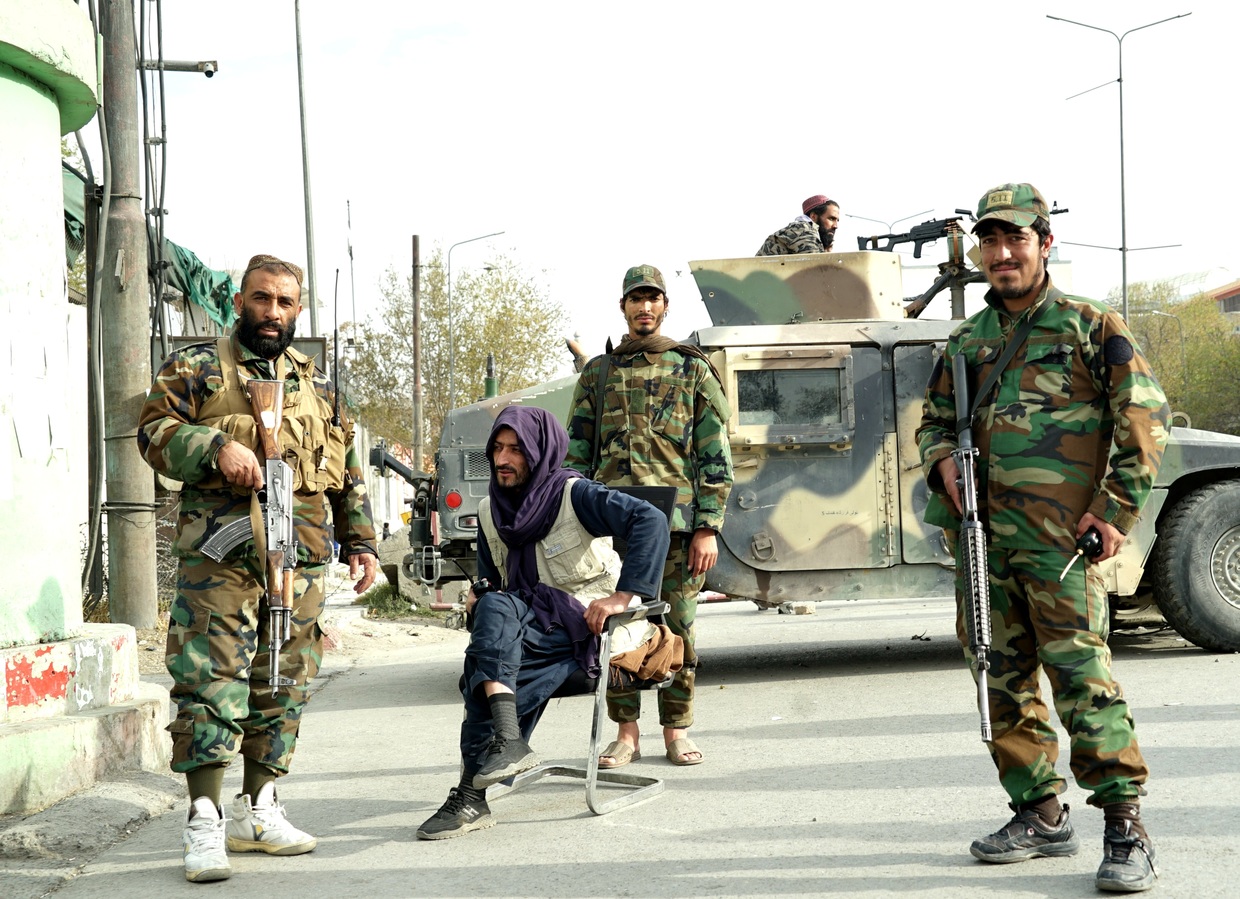
Credit where credit’s due – the radicals try to provide security as they interpret it. There is a checkpoint at the exit, the next one about a kilometer away, and sometimes there are two or three of them on a single street. The security check itself is nothing much. Talibs assess passengers through the window as though they are trying to measure how dangerous they are just by looking at them. They occasionally open the trunk or ask for documents, even though some of the sentries are obviously illiterate. Those who listen to music in the car turn it off, and then resume listening as the Talibs let them go. If there is a female in the car, especially in the front seat, the checks are more thorough just for show.

Unlike during the times of the republic, when they had fixed locations and were primarily concentrated in the city center next to strategic sites like ministries and embassies, Taliban checkpoints are scattered around the city and rotate. You never know where you will find them the next day. Moreover, there are numerous patrols riding in former ANA (Afghan National Army) Humvees. Some of them still carry a republican flag painted on the door or chassis. 

“They are using our cars now,” says Rahim (not his real name), a former soldier. He looks embittered as his eyes follow a passing Humvee. “They are using our weapons; they live our lives. And what happened to my life?”

Seven months ago, Rahim was part of ANA’s Commando Corps. After mid-August 2021, he disguised himself as a civilian and grew a beard to avoid the revenge of the Taliban. He said he killed many of them on combat missions in Helmand and Logar provinces. Unlike many of his former fellow soldiers, he refused to be evacuated and stayed in Kabul to support his family. Now he works a doorkeeper, making around $150 a month.

“I am sure they will kill me if they understand who I am,” he says.

I try to disagree. From what I know, if the Talibs find someone who served in the police or the military, the worst they do is beat them up or arrest them for a few days. But Rahim shakes his head. “It depends on what unit you were in. They knew we were hunting them, and several friends of mine from the same squad went missing already. They disappeared in Kabul, and nobody knows if they are still alive.”

If we find a single bullet

Aside from the network of checkpoints, the Afghan radicals have taken more serious steps to secure Kabul. Last month, there was a wave of extensive house-to-house searches in different areas of the city, mainly at nighttime. According to the Taliban authorities, the raids aimed “to detect criminal activity” and seize weapons.

“Four of them came to my apartment, three foot soldiers and an officer,” says Kawoos, currently an American NGO employee. They said, “If we find a single bullet, you will regret it,” and I asked, “What if you don’t find a single bullet?” I spoke Pashto and looked confident, so the officer commanded them to leave. All of them were polite enough, even taking off their shoes to enter the home and apologized for disturbing us as they came in.

As locals explained, the real goal was to find Northern Alliance sympathizers. Originally, there was supposed to be a door-to-door check in Khair Khana, a predominantly Tajik-populated enclave, but later the Taliban changed its mind to avoid triggering ethnic strife. Or was the real goal to stop those wanting to emigrate from leaving? Or was it targeting people like Rahim? There is an abundance of suggestions but a lack of facts. Moreover, there is a possibility that the searches will continue.

The outcomes of the search seem debatable – in a country like Afghanistan, I was told, one must have at least one gun in the house to protect his property from robbers. Now, with the weapons taken, many houses are defenseless. Weapons can become a necessity for Kabulians amid never-ending rumors of smoldering enmity within the ranks of the Taliban that might flare into open clashes at any time, with the Haqqani network and hardline militants from the east on one side and supporters of the new government’s Deputy Prime Minister Mullah Baradar on the other.

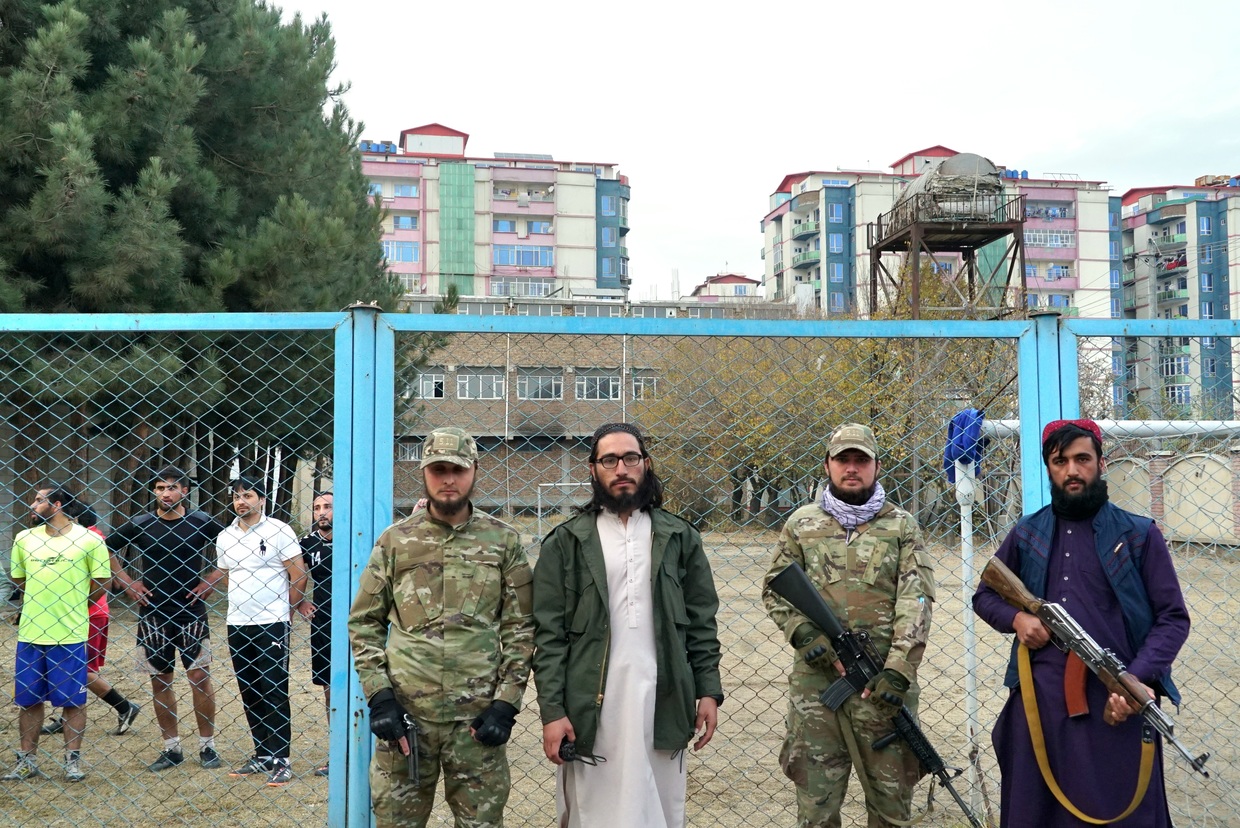
At the same time, Taliban fighters keep roaming around with their weapons, whether they go to the zoo or dine at a restaurant. Lift doors in local shopping malls are often decorated with a sign, “Entry is not allowed with guns” – or just a picture of a crossed-out Kalashnikov.RT 

Apparently, the only area in the city that was not subjected to searches was Wazir Akbar Khan – the so-called green zone that contains a number of embassies, most of нуwhich are currently closed. Ironically, it still has a sort of diplomatic immunity, an unspoken law giving the area a strange kind of freedom. If there is a party in a house, the Taliban commander living next door turns a blind eye and a deaf ear if you decrease the volume of the music playing to the reasonable level.

The media say that the range of prohibitions that the Taliban has introduced is shrinking. On the ground, the restrictions don’t feel so tangible. This is more or less what Kabul is like today – there are intimidating humors, but nothing happens; there are numerous restrictions, but you never know which of them you can bypass. Barber shops are open, just like cafes, men wearing Western clothes and women wearing makeup and high heels are still seen in the streets. In addition, a portrait of Mullah Omar, a co-founder of the Taliban, looks at the capital from a wall of a guardhouse up on the hill – drawings are not a sin this time.

High above his head, a gigantic white Taliban flag flaps in the wind. The official flag-raising ceremony on 31 March emphasized, in a way, that the radicals do plan to hold the power they seized on 16 August – a bitter realization for many supporters of the Afghan republic both in the country and abroad.

In a cage with a tiger 

In my experience, the most popular attitude the Afghans express towards the Taliban these days, just like a few months ago, could be summarized by saying, “They are not doing anything really wrong right now, but we don’t trust them.”

So it was, for instance, with Nowruz, which is also known as the Persian New Year and celebrated on the day of spring equinox. Taliban leaders decided to exercise tolerance to what they used to see as a “pagan holiday” back in the 1990s. This time, they decided to deprive Nowruz of the status of a national holiday, but allowed people to celebrate. Not many decided to do so, but goldfish and other traditional decorations for the New Year’s table were still sold in local markets.

“Kabul was quite different last year,” says Farid, a friend of mine. “Music everywhere, people dancing and hugging in the streets… Right, the Talibs did not prohibit the holiday. But guess why people decided to be quiet? It is like being in a cage with a tiger. He says he is not going to bite you, but you never know.”

Farid and his family invited me to the Paghman valley – a picturesque green place located an hour’s drive from Kabul. The Afghans come there to have a picnic by the river, do some hiking, and fly a kite. Some 30 years ago, this activity was labeled anti-Islamic and banned. Today, young fighters watch boys playing and ask to hold a kite coil for a while as a group of girls in bright traditional Afghan clothes are taking selfies on a mountain slope in the background. The scene looks almost pastoral – nothing like the Taliban era of the 1990s, as described by Khaled Hosseini in ‘The Kite Runner’.

“Some people think the Talibs are monsters,” says one of Farid’s teenage nieces, who is painting my hands with henna. “But I don’t think they are. They are normal, I think.”RT

This episode came a couple of days before the Ministry of Education restricted girls above the sixth grade from study – after all the promises given before, and the Ministry for the Propagation of Virtue and the Prevention of Vice restricted unaccompanied women from boarding flights.

In late March 2022, in Kabul, late at night, with darkness outside, a police siren is wailing in the distance. I send a message to another friend of mine. “Hey, how has Kabul changed since I saw it last time in December? Maybe there is much more than meets my foreign eye?” I write.

Pretty much everything is how you saw it,” reads the reply on the screen. “[The Taliban] are trying their best where they can.”

“Seems like all the negative changes are related to women’s rights. Then why [do] people mistrust them?”

“What they do has nothing to do with Islam. For example, does Islam say girls are not allowed to study? No. Then why? You know what they say? We fought jihad for 30 years, do not teach us Islam.”

The night lights still glowed from the hilltops of Kabul but how long until the lights go out and Afghanistan is a forgotten place of dreams and hopes?

Source: Russia Times (RT)

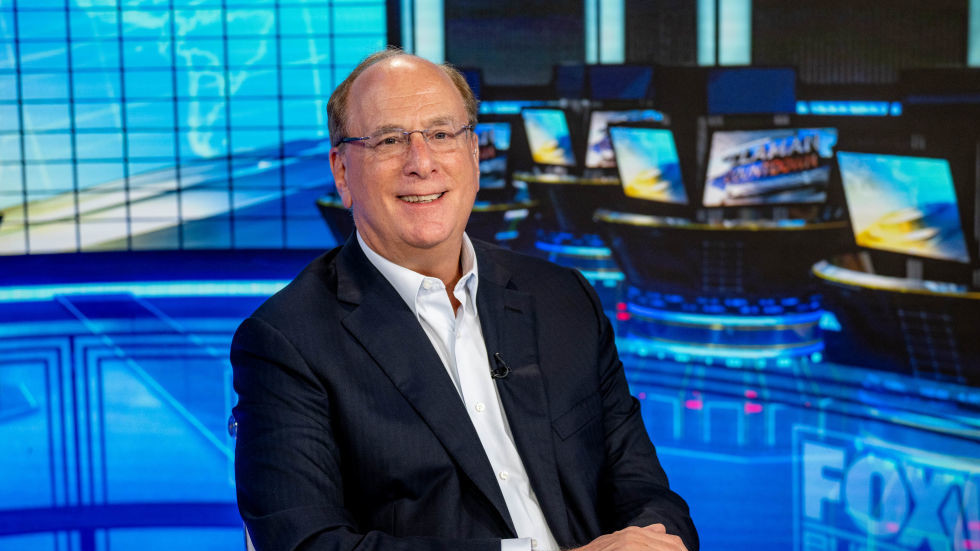
Ukraine crisis marks the end of globalization says BlackRock CEO Larry Fink | Russia Times (RT)

BlackRock CEO Larry Fink, whose firm oversees investments equivalent to about half of US GDP, has predicted that efforts to punish Russia over its invasion of Ukraine would lead to the unraveling of globalism as decision-makers reconsider their foreign vulnerabilities.

“The Russian invasion of Ukraine has put an end to the globalization we have experienced over the last three decades,” Fink said on Thursday in a letter to investors. “We had already seen connectivity between nations, companies and even people strained by two years of the pandemic. It has left many communities and people feeling isolated and looking inward. I believe this has exacerbated the polarization and extremist behavior we are seeing across society today.”

Western nations responded to the Ukraine crisis by launching an “economic war” against Moscow, including the unprecedented step of barring the Russian central bank from deploying its foreign currency reserves, Fink noted. Capital markets, financial institutions and other businesses have gone beyond the sanctions imposed by their governments, cutting off their Russian ties and operations.

“Russia’s aggression in Ukraine and its subsequent decoupling from the global economy is going to prompt companies and governments worldwide to re-evaluate their dependencies and re-analyze their manufacturing and assembly footprints – something that COVID-19 had already spurred many to start doing,” Fink said. As a result, he added, companies will move more operations to their home countries or to neighboring nations, leading to higher costs and prices.

The Russia-Ukraine conflict has “upended the world order” that has been in place since the Cold War ended and will require BlackRock to adjust to “long-term structural changes,” such as deglobalization and higher inflation, Fink said. He added that central banks will have to either accept increased inflation – even beyond the 40-year high that was set last month in the US – or reduced economic activity and employment.

READ MORE: ‘The Americans are no longer the masters of planet Earth’ – ex-Russian president

New York-based BlackRock handles $10 trillion in assets, making it the world’s largest money manager, so Fink’s views are closely watched by investors. In fact, the billionaire wields so much financial clout that his thoughts can be self-fulfilling, to some degree. Among other implications, he said he sees the Ukraine crisis accelerating the development of digital currencies and speeding the shift away from fossil fuels.

“The ramifications of this war are not limited to Eastern Europe,” Fink said. “They are layered on top of a pandemic that has already had profound effects on political, economic and social trends. The impact will reverberate for decades to come in ways we can’t yet predict.”

Although Fink and Russian leaders don’t see eye-to-eye on the Ukraine conflict – the money manager blames Moscow for causing the crisis – they agree that the world order is changing. Russian President Vladimir Putin said last week that sanctions against Moscow mark the end of an era, portending an end to the West’s “global dominance” both politically and economically. Ex-President Dmitry Medvedev echoed those comments this week, saying, “The unipolar world has come to an end.”

Source: Russia Times (RT)

The road to Ukraine started with 1999’s Kosovo War | Russia Times (RT)

By Nebojsa Malic, a Serbian-American journalist, blogger and translator, who wrote a regular column for Antiwar.com from 2000 to 2015, and is now a senior writer at RT.

Supporters of NATO’s war on Yugoslavia have no right to talk about law, sovereignty or borders

Pretty much everyone who has spent the past month moralizing about the sanctity of borders, sovereignty of countries, and how unacceptable it was for great powers to “bully” smaller neighbors – thinking of Russia and Ukraine – paused on Thursday to sing praises to a woman that championed all of those things back in 1999. Except since it was NATO doing them to Yugoslavia, Madeleine Albright was a hero and an icon, obviously.

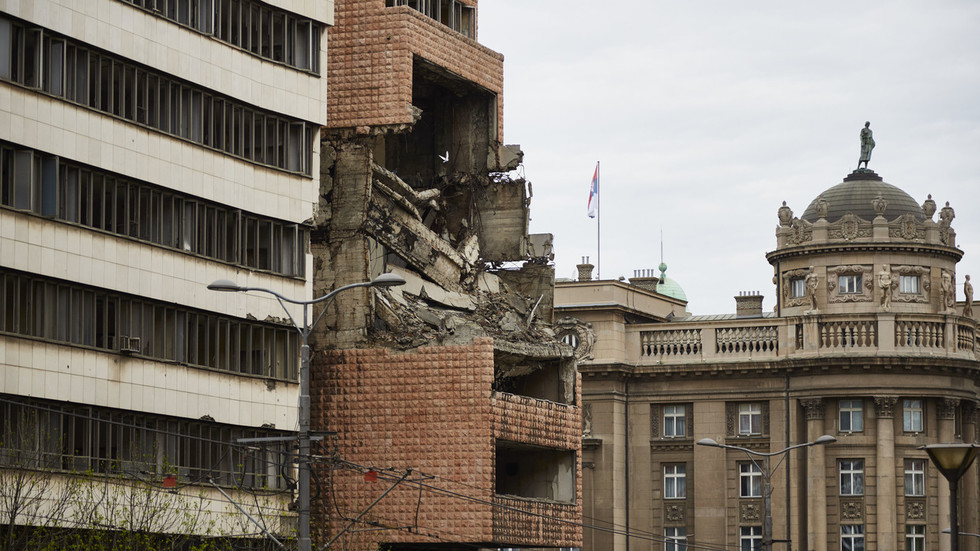
On March 24, 1999, NATO launched an air war against Serbia and Montenegro, then known as the Federal Republic of Yugoslavia. The publicly stated aim of Operation Allied Force was to compel Belgrade to accept the ultimatum given at the French chateau of Rambouillet the month before: Hand the province of Kosovo over to NATO “peacekeepers” and allow ethnic Albanian separatists to declare independence. 

When the bombers failed to achieve that within a couple of weeks, the narrative changed to NATO acting to stop a “genocide” of Albanians its cheerleader press claimed was taking place. That narrative also credited the first-ever female US secretary of state for the “humanitarian” bombing, calling it “Madeleine’s War.” 

In the end, it took 78 days and a negotiated armistice for NATO troops to enter Kosovo wearing the fig leaf of a UN peacekeeping mission. They promptly turned the province over to the “Kosovo Liberation Army” terrorists, who proceeded to burn, loot, murder and expel over 200,000 non-Albanians. A real campaign of terror, intimidation, ethnic cleansing and pogroms began – and the very same media that covered for NATO by making up atrocities during the bombing now turned a blind eye, for the same reason.

READ MORE: NATO’s bombing of Serbia: A tragedy in three acts

Whatever its outcome, however, it was an evil little war, launched because the US felt it could. Because Washington wanted to get rid of the restraints posed by the UN to its new global hegemony, articulated just a few years earlier by Bill Kristol and Victoria Nuland’s husband Robert Kagan. Because the rising American Empire wanted to send a message to Eastern Europe that no dissent would be tolerated, and to Russia that it was no longer a great power worth respecting. 

A legalistic mind might point out that the attack violated Articles 2, 53 and 103 of the UN Charter, NATO’s own charter – the North Atlantic Treaty of 1949 (articles 1 and 7) – as well as the Helsinki Final Act of 1975 (violating the territorial integrity of a signatory state) and the 1980 Vienna Convention on the Law of Treaties, for using coercion to compel a state to sign a treaty. 

Ah, but being a world empire means making its own “rules-based order” to supplant inconvenient laws. So an “independent commission” of cheerleaders was put together to declare the operation “illegal but legitimate,” arguing it was justified because it “liberated” the Kosovo Albanians from Serb “oppression.”

The actual oppression of non-Albanians as NATO troops stood idly by – including during the vicious pogrom of March 2004 – doesn’t count, obviously. The important thing is that Bill and Hillary Clinton, Madeleine Albright, and British PM Tony Blair got monuments, streets, and even children named after them.

The “independent” Kosovo – proclaimed in 2008, in a move about as legal as the 1999 war – can’t actually do anything without the permission of the US ambassador. A great triumph of human rights, law and order, and democracy, everyone!

READ MORE: Kosovo: A decade of dependence

NATO never cared about saving Albanian lives. If it did, it wouldn’t have partnered with the KLA, which made a point of murdering ethnic Albanians who wanted peace with the Serbs. It wouldn’t have repeatedly bombed refugee columns, then declaring it was really the Serbs’ fault somehow and that pilots dropped their bombs “in good faith” – literally something NATO spokesman Jamie Shea said on one occasion. 

Twenty years on and nothing has changed. Having obliterated a family in Kabul by a drone strike last August, the US offered blood money, but refused to so much as reprimand anyone involved. Being an empire means never having to say you’re sorry. This mindset propelled the invasion of Iraq in 2003.

Meanwhile, failure to overthrow the government in Belgrade through war led to a “color revolution”in Serbia instead. It was then exported to other places – including Ukraine, twice. That 2014 coup in Kiev literally started the conflict in eastern Ukraine, of which the current events are but the latest phase.

In March 1999, I was a student in the American Midwest, and had been (almost) successfully brainwashed into believing the platitudes about freedom, democracy, tolerance, objectivity, rules and laws, and how the US was a “force for good” in the world. Then, overnight, people I thought had been my friends called me a monster and believed every single bit of propaganda that came off the TV screens and newspaper pages. 

READ MORE: Experts warned for decades that NATO expansion would lead to war: Why did nobody listen to them?

I’ve made justice and remembrance something of my life mission since then, seeking to explain that rather than a good, noble and humanitarian war, Kosovo represented everything wrong about the modern world: “A monument to the power of lies, the successful murder of law, and the triumph of might over justice,” as I wrote in 2005, and repeated every year since.

The twist this year is that the people shrieking about human rights, international law and the sanctity of borders – when it comes to their client regime in Ukraine, that is – were all cheering for NATO back in 1999. Even now, they won’t apologize for it, much less disavow. So it seems it’s not really about what is being done, only who is doing it to whom. While I understand their anger as the world their lies propped up comes crashing down, they hardly have standing to complain.

Source: Russia Times (RT)

West’s global political and economic dominance ends says Putin | Russia Times (RT)

The Russian president says the “myth of the Western welfare state, of the so-called golden billion, is crumbling”

Russian President Vladimir Putin has opined that the latest rounds of unprecedented sanctions imposed on Russia by the US and its allies over the Kremlin’s military campaign in Ukraine, mark the end of an era. According to Putin, from now on the West will be losing its “global dominance” both politically and economically.

Speaking on Wednesday, the Russian head of state proclaimed that the “myth of the Western welfare state, of the so-called golden billion, is crumbling.” Moreover, it is the “whole planet that is having to pay the price for the West’s ambitions, and its attempts to retain its vanishing dominance at any cost,” Putin said.

The president predicted food shortages across the world as Western sanctions against Russia are adversely affecting the entire global economy.

Touching on the decision by several Western powers to freeze Russia’s central bank assets, Putin claimed that this would only serve to irreparably undermine trust in those nations, and make other countries think twice before placing their reserves in the care of those countries. According to him, nearly half of Moscow’s assets were “simply stolen” by the West.

READ MORE: Russia will respect private ownership unlike the West – Putin

Addressing people in the West, the Russian leader said the massive sanctions imposed on Russia were already backfiring on the US and Europe themselves, with governments there trying hard to convince their citizens that Russia was to blame.

Putin warned ordinary people in the West that attempts to portray Moscow as the primary source of all their woes were lies, with a lot of those issues being the direct result of the Western governments’ “ambitions” and “political short-sightedness.”

The Western elites, according to Putin, have turned their countries into an “empire of lies,” but Russia will keep on presenting its own position to the whole world, no matter what.

Source: Russia Times (RT)

Putin reveals conditions for offensive in Ukraine to stop | RT.com

The Russian president told his Turkish counterpart that nationalists use civilians as human shields

Kiev must cease fighting and fulfill all of Moscow’s demands in order for the Russian invasion of Ukraine to stop, President Vladimir Putin told Turkish leader Recep Tayyip Erdogan on Sunday.

Moscow’s ‘special operation’ in the neighboring country “will come to a halt only if Kiev stops its military action and fulfills the demands of Russia, which are well known,” Putin explained during the phone call, according to the Kremlin’s press service.

The president assured Erdogan that Russia is ready for dialogue with the Ukrainian side, as well as with foreign partners, in order to find a peaceful solution to the conflict.

However, he warned that any attempts to drag out the negotiations, which could be used by Ukraine to regroup its forces and assets, will be “self-defeating.

The Russian military does everything possible to protect the lives of civilians, only carrying out surgical strikes on Ukrainian military facilities, Putin added. “In this context, the actions of the nationalists – the neo-Nazi units – look particularly cruel and cynical as they continue intensive shelling of Donbass and use civilians, including foreigners, who are basically taken hostage, as a ‘human shield’ in Ukrainian cities and towns,” he said.

According to Erdogan’s office, he tried to persuade Putin that an urgent general ceasefire is necessary in Ukraine in order to provide humanitarian aid to the population and to create the conditions for a political solution.

“Let’s pave the way for peace together,” the Turkish president urged his Russian counterpart on the phone.

Erdogan reiterated Turkey’s eagerness to contribute to the settlement of the crisis through mediation and other diplomatic means. Ankara has remained in close contact with Kiev and other countries on the issue, he added.

Turkey, which is a Black Sea nation like Russia and Ukraine, enjoys good relations with both Moscow and Kiev. Though a NATO member, Turkey has been trying to maintain a neutral stance since Russia sent its troops into Ukraine last Thursday to “denazify” and “demilitarize” the country, which it blames for “genocide” in the breakaway republics of Donetsk and Lugansk. Kiev and its Western allies claim the attack was completely unprovoked.

Turkey has condemned the Russian invasion and supported Ukrainian territorial integrity, but also opposed the harsh international sanctions, designed to isolate Moscow. The government in Ankara is hoping to stage talks between the Russian and Ukrainian foreign ministers next week in southern Turkey. So far, the idea has been welcomed by Moscow and Kiev.

Source: RT.com

Weapons-Makers Fueled NATO Expansion from 16 to 30 Members | Antiwar.com

When the Soviet Union disappeared in 1991, U.S. weapons makers saw their Cold War gravy train grind to a halt. By 1993, the big weaponeers like Boeing, Raytheon, Northrup and Lockheed stemmed the bleeding by gobbling up the smaller players, acquiring new economic muscle in a dwindling domestic market.

To keep profits booming they turned eastward, all the way to the former Soviet republics. Their brilliant scheme was to bring these nations into NATO so they could sell them endless billions in weaponry. Weapons hawkers flooded these new markets while their lobbyists flooded Congress, making defense contractors among the most prominent supporters of NATO expansion. They had plenty of help from NATO expansionists in Congress, the military and the pundit class.

It didn’t matter the US promised Soviet leader Mikhail Gorbachev that if Russia allowed German reunification, NATO would not move one inch eastward toward Russia. The munition giants weren’t subtle about their plan. Lockheed V.P. Bruce Jackson became president of the US Committee to Expand NATO. Congressman on the hunt for free goodies and campaign cash were an easy mark to forget the US promise to Gorbachev. 

Beginning with Poland, Czech Republic and Hungary in 1999, NATO added 14 former Central and Eastern European countries in an alliance right up to Russia’s borders. These countries have now purchased over $16 billion in Western weaponry, with endless more to come. 

Overall, defense contractors’ efforts to shut down the peace dividend in 1991 has been a smashing success. For Ukraine, Russia, Europe, the US, indeed the world, it helped provoke an illegal, murderous war that may spiral into a smashing catastrophe for mankind.

Source: Antiwar.com