Do States Have the Right to Seize Vehicles for Minor Offenses? | Slate

By Aaron Tang

Tyson Timbs made an impulse buy. Then he made a series of mistakes.

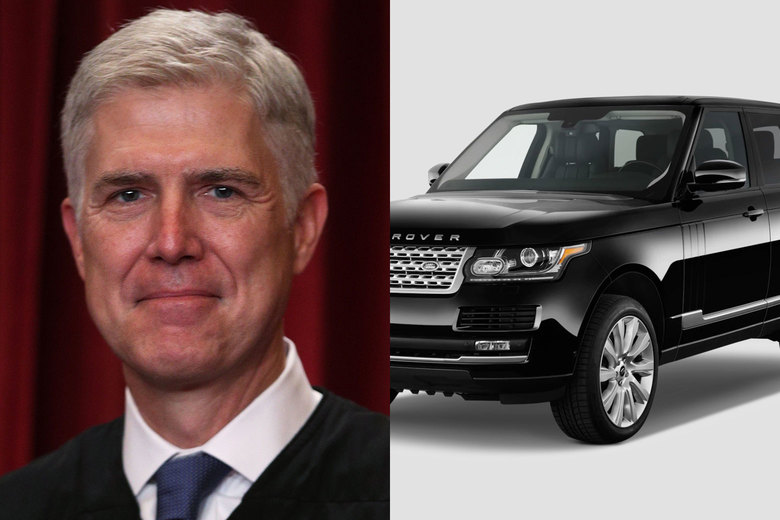
After his father died, Timbs used roughly $42,000 of his father’s life insurance proceeds to buy a 2012 Land Rover. To support his heroin addiction, Timbs drove the Land Rover across Indiana to buy, transport, and sell drugs. Undercover police officers caught him in May 2013, and he was sentenced to one year of home detention, five years of probation, and roughly $1,200 in fines and court fees.

But that was not the end of the case. Under Indiana law, the state may seize any vehicle used in drug trafficking. So Indiana initiated a forfeiture action against Timbs’ Land Rover. The vehicle is itself a party to the case, leading to one of the more entertaining case titles in recent memory: Tyson Timbs and a 2012 Land Rover LR2 v. Indiana. While the name is unusual, forfeiture actions of this sort are quite common; by one count, states generated more than $250 million through forfeiture actions in 2012 alone.

This dispute is set make it all the way to our nation’s highest court later this month with important implications for law enforcement agencies and criminal justice reform. The case could rest on the say of one Supreme Court Justice in particular: Neil Gorsuch.

Although there was little dispute that the Land Rover was used in a crime, an Indiana district court judge denied the state’s attempt to seize it, reasoning forfeiture would violate the Eighth Amendment’s prohibition against “excessive fines.” After all, this is a crime for which Timbs was not even sentenced to a day in jail, and the total fines and court fees amounted to just a fraction of the Land Rover’s value. But the Indiana Supreme Court reversed, holding that the Eighth Amendment’s excessive fines clause does not even apply to the states. The U.S. Supreme Court granted certiorari to decide whether this striking conclusion is correct.

The state question here may be confusing. For a long period in our nation’s history, the Bill of Rights was understood only as a shield against federal encroachment on our rights. That changed with the 14th Amendment, which applied some (but not all) of the Bill of Rights’ protections at the state level. The precise pathway through which these rights are incorporated has long been a source of consternation for legal scholars, but the modern-day test is straightforward: States may not violate a right contained in the Bill of Rights if the right was “deeply rooted in our nation’s history and tradition.”

Timbs makes a forceful argument that the right to be free from excessive fines is deeply rooted in our history and tradition. That right first emerged in our Bill of Rights as an outgrowth from the 1689 English Bill of Rights and was quickly replicated across state constitutions. Indeed, by the time of the 14thAmendment’s enactment in 1868, 35 of the 37 states in the union had a ban against excessive fines. The need for protections against excessively punitive governmental exactions has only become more pressing with revelations of prosecutorial power abuses aimed at generating revenue in places like Ferguson, Missouri. For this very reason, Timbs drew supporting briefs from a wide array of groups ranging from the NAACP and ACLU to the U.S. Chamber of Commerce and Pacific Legal Foundation.

This should be the perfect case for a libertarian originalist like Neil Gorsuch. But it turns out there is an antecedent constitutional question in the case, and the historical evidence on that front points strongly in Indiana’s favor. That question is whether what Indiana has done—seize a vehicle used to traffic drugs through civil proceedings—can be said to constitute a fine.

There is ample evidence that the original meaning of the term “fine,” as it was used when the Eighth and 14th Amendments were ratified, did not extend to these kinds of civil forfeitures. After all, the federal government had a tradition of routinely seizing private property in ways that seem excessively harsh to the modern ear.

Consider the 1818 case of the Little Charles, a ship that the federal government seized after it sailed to Antigua in violation of an American embargo. In an opinion written by none other than Chief Justice John Marshall, the court reasoned that the ship could be subject to forfeiture even if it violated the embargo “without the authority, and against the will of the owner.”

Or take the Louisa Barbara case. Under an 1819 federal law, a ship could only carry a certain number of passengers based on its weight. The Louisa Barbara violated the limit by carrying 178 passengers—one more than it was authorized to carry. Yet the federal government proceeded to seize the entire ship. Federal courts were unmoved by the owner’s defense that many of the 178 passengers were children.

Stories of similarly harsh civil forfeitures fill Indiana’s brief in this case. Yet, as Indiana convincingly argues, no litigant even thought to argue that such forfeitures implicated the Eighth Amendment’s excessive fines clause. The first such argument was raised under a state constitution’s excessive fines clause in 1920 and failed; no court deemed a civil forfeiture to be an excessive fine until a federal court did in 1992—a position the Supreme Court ultimately agreed with the following year.

This history is what makes this case so hard for someone like Neil Gorsuch. If he follows the history and tradition of the Eighth Amendment to its logical extreme, the excessive fines clause would have nothing to say about an excessively harsh civil forfeiture. So, according to this thinking, Indiana could have seized Timbs’ vehicle due to its involvement in small scale drug trafficking even if it was the tawdriest of Ferraris. At the same time, there is the trouble of the aforementioned case called, Austin v. United States, in which the Supreme Court held in 1993 that the excessive fines clause does in fact cover civil forfeitures, at least when initiated by federal authorities. Yet Gorsuch has shown little reluctance to overrule settled precedent in his time on the bench so far. Finally, there is some evidence that the term “fine” was historically used interchangeably with “forfeiture,” which means that an ordinary member of the public in 1791 or 1868 may well have thought the latter encompassed by the former.

The court should acknowledge that both understandings of “fine” are plausible—one that includes forfeitures and one that does not. At that point, it seems wiser to decide which is the correct understanding of the Eighth Amendment by looking to the broader principles undergirding the Constitution, precedent, and the dire consequences of a rule authorizing limitless civil forfeitures for petty crimes. Each of those considerations weighs in Timbs’ favor. Or more precisely, they weigh in favor of a certain 2012 Land Rover and its odds of being reunited with its owner.

Source: Slate
U.S. has spent six trillion dollars on wars that killed half a million people since 9/11 | Newsweek

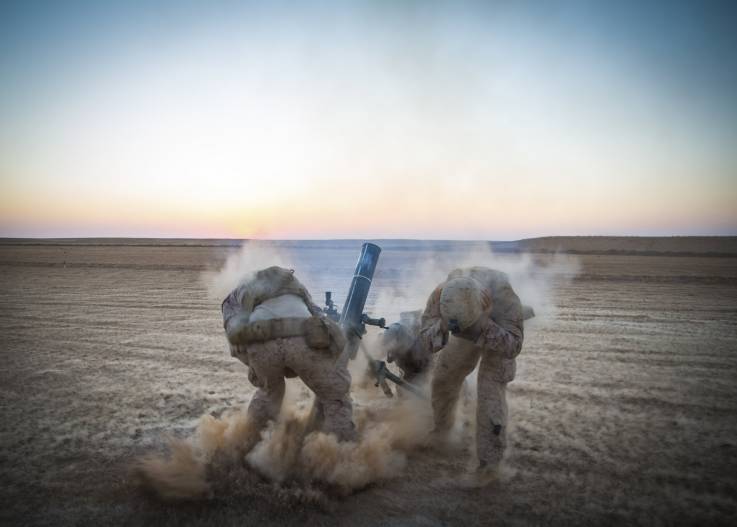
The United States has spent nearly $6 trillion on wars that directly contributed to the deaths of around 500,000 peoplesince the 9/11 attacks of 2001.

Brown University’s Watson Institute for International and Public Affairs published its annual “Costs of War” report Wednesday, taking into consideration the Pentagon’s spending and its Overseas Contingency Operations account, as well as “war-related spending by the Department of State, past and obligated spending for war veterans’ care, interest on the debt incurred to pay for the wars, and the prevention of and response to terrorism by the Department of Homeland Security.”

The final count revealed, “The United States has appropriated and is obligated to spend an estimated $5.9 trillion (in current dollars) on the war on terror through Fiscal Year 2019, including direct war and war-related spending and obligations for future spending on post 9/11 war veterans.”

“In sum, high costs in war and war-related spending pose a national security concern because they are unsustainable,” the report concluded. “The public would be better served by increased transparency and by the development of a comprehensive strategy to end the wars and deal with other urgent national security priorities.”

The U.S. embarked on a global war on terror following the 9/11 attacks that killed nearly 3,000 and were orchestrated by Islamist militant group Al-Qaeda. Weeks later, the U.S. led an invasion of Afghanistan, which at the time was controlled by Al-Qaeda ally the Taliban. In March 2003, Washington overthrew Iraqi President Saddam Hussein, accusing him of developing weapons of mass destruction and harboring U.S.-designated terrorist organizations.

Despite initial quick victories there, the U.S. military has been plagued by ongoing insurgencies these two countries and expanded counterterrorism operations across the region, including Libya, Pakistan, Somalia and Yemen. In 2014, the U.S. gathered an international coalition to face the Islamic State militant group (ISIS), which arose out of a post-invasion Sunni Muslim insurgency in Iraq and spread to neighboring Syria and beyond.

Wednesday’s report found that the “US military is conducting counterterror activities in 76 countries, or about 39 percent of the world’s nations, vastly expanding [its mission] across the globe.” In addition, these operations “have been accompanied by violations of human rights and civil liberties, in the US and abroad.”

Overall, researchers estimated that “between 480,000 and 507,000 people have been killed in the United States’ post-9/11 wars in Iraq, Afghanistan, and Pakistan.” This toll “does not include the more than 500,000 deaths from the war in Syria, raging since 2011” when a West-backed rebel and jihadi uprising challenged the government, an ally of Russia and Iran. That same year, the U.S.-led NATO Western military alliance intervened in Libya and helped insurgents overthrowlongtime leader Muammar el-Qaddafi, leaving the nation in an ongoing state of civil war.

The combined human cost for the U.S. throughout its actions in Afghanistan, Iraq and Pakistan was 6,951 troops, 21 civilians and 7,820 contractors.

“While we often know how many US soldiers die, most other numbers are to a degree uncertain. Indeed, we may never know the total direct death toll in these wars. For example, tens of thousands of civilians may have died in retaking Mosul and other cities from ISIS but their bodies have likely not been recovered,” the report noted.

“In addition, this tally does not include ‘indirect deaths.’ Indirect harm occurs when wars’ destruction leads to long term, ‘indirect,’ consequences for people’s health in war zones, for example because of loss of access to food, water, health facilities, electricity or other infrastructure,” it added.

In February, President Donald Trump estimated that “we have spent $7 trillion in the Middle East,” saying “what a mistake” it was. Weeks later, he reportedly told his military advisers to prepare a plan to withdraw from Syria as the war against ISIS entered its final phases, though senior Washington officials have since expanded the U.S. mission— considered illegal by the Syrian government and its allies—to include countering Iran and its allies.

This article has been updated to include a Statista chart detailing the findings of the Watson Institute for International and Public Affairs’ study.

Source: Newsweek

The Weaponization of Social Media | Counterpunch

troll-network_BF9747ECB468482488ECFF9A003635D6By Faisal Khan

The use of ‘bots’ present modern society with a significant dilemma; The technologies and social media platforms (such as Twitter and Facebook) that once promised to enhance democracy are now increasingly being used to undermine it. Writers Peter W Singer and Emerson Brooking believe ‘the rise of social media and the Internet has become a modern-day battlefield where information itself is weaponised’. To them ‘the online world is now just as indispensable to governments, militaries, activists, and spies at it is to advertisers and shoppers’. They argue this is a new form of warfare which they call ‘LikeWar’. The terrain of LikeWar is social media; ‘it’s platforms are not designed to reward morality or veracity but virality.’ The ‘system rewards clicks, interactions, engagement and immersion time…figure out how to make something go viral, and you can overwhelm even the truth itself.’

In its most simple form the word ‘bot’ is short for ‘robot’; beyond that, there is significant complexity. There are different types of bots. For example, there are ‘chatbots’ such as Siri and Amazon’s Alexa; they recognise human voice and speech and help us with our daily tasks and requests for information. There are search engine style ‘web bots’ and ‘spambots’. There are also ‘sockpuppets’ or ‘trolls’; these are often fake identities used to interact with ordinary users on social networks. There are ‘social bots’; these can assume a fabricated identity and can spread malicious links or advertisements. There are also ‘hybrid bots’ that combine automation with human input and are often referred to as ‘cyborgs’. Some bots are harmless; some more malicious, some can be both.

The country that is perhaps most advanced in this new form of warfare and political influence is Russia. According to Peter Singer and Emerson Brooking ‘Russian bots more than simply meddled in the 2016 U.S. presidential election…they used a mix of old-school information operations and new digital marketing techniques to spark real-world protests, steer multiple U.S. news cycles, and influence voters in one of the closest elections in modern history. Using solely online means, they infiltrated U.S. political communities so completely that flesh-and-blood American voters soon began to repeat scripts written in St. Petersburg and still think them their own’. Internationally, these ‘Russian information offensives have stirred anti-NATO sentiments in Germany by inventing atrocities out of thin air; laid the pretext for potential invasions of Estonia, Latvia, and Lithuania by fuelling the political antipathy of ethnic Russian minorities; and done the same for the very real invasion of Ukraine. And these are just the operations we know about.’

We witnessed similar influence operations here during the Brexit referendum in 2016. A study by the Financial Times reported that during the referendum campaign ‘the 20 most prolific accounts … displayed indications of high levels of automation’. The Anti-Muslim hate group TellMAMA recorded in its latest Annual report that manual bots based in St Petersburg were active in spreading Anti-Muslim hate online. Israel has also used manual ‘bots’ to promote a more positive image of itself online.

The Oxford Internet Institute (OII) has studied online political discussions relating to several countries on social media platforms such as Twitter and Facebook. It claims that in all the elections, political crises and national security-related discussions it examined, there was not one instance where social media opinion had not been manipulated by what they call ‘computational propaganda’. For them, while it remains difficult to quantify the impact bots have ‘computational propaganda’ is now one of the most ‘powerful tools against democracy’.

Donald Trump perhaps more than any other US President to date understands the power of social media. The OII found, for example, that although he alienated Latino voters on the campaign trail, he had some fake Latino twitter bots tweeting support for him. Emerson T Brooker informed me that social media bots can be highly-effective; for him ‘If a bot-driven conversation successfully enters the “Trending” charts of a service like Twitter, it can break into mainstream discussion and receive a great deal of attention from real flesh-and-blood users’. He continues ‘The first unequivocal use of political bots was in the 2010 Special Senate Election in Massachusetts, which ended in the election of Senator Scott Brown. The bots helped draw journalist (and donor) interest from across the country. The Islamic State was also a very effective user of botnets to spread its propaganda over Arabic-speaking Twitter. In 2014, it repeatedly drove hashtags related to its latest execution or battlefield victory (e.g. #AllEyesOnISIS) to international attention.’

So, what can be done to better regulate bots? The OII has called for social media platforms to act against bots and has suggested some steps. These include; making the posts they select for news feeds more ‘random’, so users don’t only see likeminded opinions. News feeds could be provided with a trustworthiness score; audits could be carried out of the algorithms they use to decide which posts to promote. However, the OII also cautions not to over-regulate the platforms to suppress political conversation altogether.  Marc Owen Jones of Exeter University who has researched bots feels that in the case of twitter better ‘verification procedures could tackle the bots’. According to Emerson Brooking ‘a simple non-invasive proposal bouncing around Congress now would mandate the labelling of bot accounts. This would allow bots positive automation functions to continue while keeping them from fooling everyday media users.’

Source: Counterpunch

An Evening with Tucker Carlson: America’s Elites Are on a Ship of Fools. YouTube & Independent.org

Source: YouTube & Independent.org