Jimmy Carter Defends Edward Snowden, Says NSA Spying Has Compromised Nation’s Democracy | The Huffington Post

jimmy carter edward snowden

Former president Jimmy Carter speaks at dedication ceremonies for the new George W. Bush Presidential Center in Dallas, Texas, Thursday, April 25, 2013. (Paul Moseley/Fort Worth Star-Telegram/MCT via Getty Images)

Former President Jimmy Carter announced support for NSA whistleblower Edward Snowden this week, saying that his uncovering of the agency’s massive surveillance programs had proven “beneficial.”

Speaking at a closed-door event in Atlanta covered by German newspaper Der Spiegel, Carter also criticized the NSA’s domestic spying as damaging to the core of the nation’s principles.

“America does not have a functioning democracy at this point in time,” Carter said, according to a translation by Inquisitr.

No American outlets covered Carter’s speech, given at an Atlantic Bridge meeting, which has reportedly led to some skepticism over Der Spiegel’s quotes. But Carter’s stance would be in line with remarks he’s made on Snowden and the issue of civil liberties in the past.

In June, while Snowden was scrambling to send out asylum requests from an airport in Russia, Carter appeared to back the former NSA contractor’s efforts to remain out of U.S. custody.

“He’s obviously violated the laws of America, for which he’s responsible, but I think the invasion of human rights and American privacy has gone too far,” he told CNN, saying that nations were within their right to offer asylum to Snowden. “I think that the secrecy that has been surrounding this invasion of privacy has been excessive, so I think that the bringing of it to the public notice has probably been, in the long term, beneficial.”

Snowden has been hard-pressed to find support among U.S. politicians. Lawmakers on both sides of the aisle have declared Snowden a traitor who deserves to be prosecuted for his leaks. The White House has also been persistent in its attempts to bring him into custody. Last week, the administration criticized Russia for facilitating a meeting between Snowden and human rights activists. Snowden has since applied for temporary asylum in the nation, following complications surrounding transit to the Latin American nations that he’d been considering.

Source: The Huffington Post

Edward Snowden is a whistleblower, not a spy – but do our leaders care? | The Guardian

Mike Rogers, CA 'Dutch' Ruppersberger

By Spencer Akerman
The Twitter account of House intelligence committee chairman Mike Rogers, left, placed Edward Snowden in the company of two infamous double agents. Photograph: J Scott Applewhite/AP

According to US legislators and journalists, the surveillance whistleblower Edward Snowden actively aided America’s enemies. They are just missing one essential element for the meme to take flight: evidence.

An op-ed by Representative Mike Pompeo (Republican, Kansas) proclaiming Snowden, who provided disclosed widespread surveillance on phone records and internet communications by the National Security Agency, “not a whistleblower” is indicative of the emerging narrative. Writing in the Wichita Eagle on 30 June Pompeo, a member of the House intelligence committee, wrote that Snowden “has provided intelligence to America’s adversaries“.

Pompeo correctly notes in his op-ed that “facts are important”. Yet when asked for the evidence justifying the claim that Snowden gave intelligence to American adversaries, his spokesman, JP Freire, cited Snowden’s leak of NSA documents. Those documents, however, were provided to the Guardian and the Washington Post, not al-Qaeda or North Korea.

It’s true that information published in the press can be read by anyone, including people who mean America harm. But to conflate that with actively handing information to foreign adversaries is to foreclose on the crucial distinction between a whistleblower and a spy, and makes journalists the handmaidens of enemies of the state.

Yet powerful legislators are eager to make that conflation about Snowden.

The Twitter account of Representative Mike Rogers (Republican, Michigan), the chairman of the House intelligence committee, on 18 June placed Snowden and accused WikiLeaks source Bradley Manning in the same company as Aldrich Ames and Robert Hanssen, two infamous CIA and FBI double-agents. (The tweet appears to have been deleted.)

When I asked about the conflation, Rogers’ Twitter account responded: “All 4 gave critical national security information to our enemies. Each did it in different ways but the result was the same.”

Never to be outdone, Peter King, a New York Republican and former chair of the House homeland security committee, proclaimed Snowden a “defector” on 10 June. Days later, Snowden left Hong Kong to seek asylum in an undetermined country – a curious move for a defector to make.

Once elected and appointed leaders casually conflate leaking and espionage, it is a matter of time before journalists take the cue. For insight into the “fear and isolation that NSA leaker Edward Snowden is living through”, CNN turned to Christopher Boyce – who sold US secrets to the USSR before becoming a bank robber.

There are understandable suspicions that Snowden may have aided foreign intelligence services in order to aid in his escape from American criminal justice. While some have speculated that the Russian or Chinese intelligence services might have snuck a look at the highly sensitive intelligence material Snowden is carrying, that material is heavily encrypted. For what it’s worth, in a Guardian webchat I asked Snowden directly if he would trade access to his documents for asylum. He said he would not.

Perhaps Snowden lied. Perhaps he might change his mind. But all of that is far off in the realm of speculation. As things stand now, there is no evidence Snowden has aided any US adversary or intelligence service, wittingly or not.

Even the Obama administration has stopped short of terming Snowden a spy, even in the course of attacking his character. (Yes, he was indicted under the Espionage Act, but the actual charges against him are theft of government property, unauthorized communication of national defense information, and willful communication of classified intelligence information to an unauthorized person.) In an email meant to discredit Snowden in the press, an anonymous “senior administration official” told reporters on 24 June that Snowden’s ostensible idealism “is belied by the protectors he has potentially chosen: China, Russia, Cuba, Venezuela and Ecuador”. That’s something to remember the next time Washington wants to talk about its commitment to human rights while cooperating with, say, China and Russia.

Edward Snowden Edward Snowden. Photograph: Reuters/The GuardianWhen asked directly if there was any evidence that Snowden had cooperated with any intelligence service or American adversary, the administration and Congress declined to provide any. The office of the director of national intelligence, James Clapper, declined to comment for this story. The Justice Department and the House intelligence committee didn’t even respond to inquiries.

By all means, consider Snowden a hero, a traitor or a complex individual with a mixture of motives and interests. Lots of opinions about Snowden are valid. He is a necessarily polarizing figure. The information he revealed speaks to some of the most basic questions about the boundaries between the citizen and the state, as well as persistent and real anxieties about terrorism.

What isn’t valid is the blithe assertion, absent evidence, that the former NSA contractor actively collaborated with America’s enemies. Snowden made classified information about widespread surveillance available to the American public. That’s a curious definition of an enemy for US legislators to adopt.

Source: The Guardian
Ron Paul’s Farewell Address to Congress

Ron Paul: This may well be the last time I speak on the House Floor.  At the end of the year I’ll leave Congress after 23 years in office over a 36 year period.  My goals in 1976 were the same as they are today:  promote peace and prosperity by a strict adherence to the principles of individual liberty.

It was my opinion, that the course the U.S. embarked on in the latter part of the 20th Century would bring us a major financial crisis and engulf us in a foreign policy that would overextend us and undermine our national security.

To achieve the goals I sought, government would have had to shrink in size and scope, reduce spending, change the monetary system, and reject the unsustainable costs of policing the world and expanding the American Empire.

The problems seemed to be overwhelming and impossible to solve, yet from my view point, just following the constraints placed on the federal government by the Constitution would have been a good place to start.

How Much Did I Accomplish?

In many ways, according to conventional wisdom, my off-and-on career in Congress, from 1976 to 2012, accomplished very little.  No named legislation, no named federal buildings or highways—thank goodness.  In spite of my efforts, the government has grown exponentially, taxes remain excessive, and the prolific increase of incomprehensible regulations continues.  Wars are constant and pursued without Congressional declaration, deficits rise to the sky, poverty is rampant and dependency on the federal government is now worse than any time in our history.

All this with minimal concerns for the deficits and unfunded liabilities that common sense tells us cannot go on much longer.  A grand, but never mentioned, bipartisan agreement allows for the well-kept secret that keeps the spending going.  One side doesn’t give up one penny on military spending, the other side doesn’t give up one penny on welfare spending, while both sides support the bailouts and subsidies for the banking and  corporate elite.  And the spending continues as the economy weakens and the downward spiral continues.   As the government continues fiddling around, our liberties and our wealth burn in the flames of a foreign policy that makes us less safe.

The major stumbling block to real change in Washington is the total resistance to admitting that the country is broke. This has made compromising, just to agree to increase spending, inevitable since neither side has any intention of cutting spending.

The country and the Congress will remain divisive since there’s no “loot left to divvy up.”

Without this recognition the spenders in Washington will continue the march toward a fiscal cliff much bigger than the one anticipated this coming January.

I have thought a lot about why those of us who believe in liberty, as a solution, have done so poorly in convincing others of its benefits.  If liberty is what we claim it is- the principle that protects all personal, social and economic decisions necessary for maximum prosperity and the best chance for peace- it should be an easy sell.  Yet, history has shown that the masses have been quite receptive to the promises of authoritarians which are rarely if ever fulfilled. Read more…

Source: Ron Paul

President Obama’s acceptance speech (Full transcript) | The Washington Post

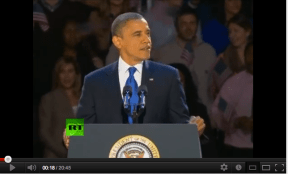
OBAMA: Thank you. Thank you. Thank you so much.

Tonight, more than 200 years after a former colony won the right to determine its own destiny, the task of perfecting our union moves forward.

OBAMA: It moves forward because of you. It moves forward because you reaffirmed the spirit that has triumphed over war and depression, the spirit that has lifted this country from the depths of despair to the great heights of hope, the belief that while each of us will pursue our own individual dreams, we are an American family and we rise or fall together as one nation and as one people.

Tonight, in this election, you, the American people, reminded us that while our road has been hard, while our journey has been long, we have picked ourselves up, we have fought our way back, and we know in our hearts that for the United States of America the best is yet to come. Read more…

Source: Washington Post

Click Image to View Video…

The Permanent Militarization of America | New York Times Opinion

By Aaron B. O’Connell

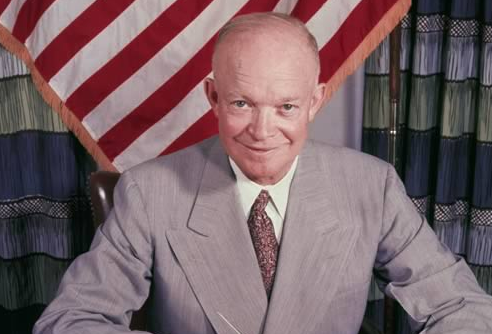
In 1961, President Dwight D. Eisenhower left office warning of the growing power of the military-industrial complex in American life. Most people know the term the president popularized, but few remember his argument.

In his farewell address, Eisenhower called for a better equilibrium between military and domestic affairs in our economy, politics and culture. He worried that the defense industry’s search for profits would warp foreign policy and, conversely, that too much state control of the private sector would cause economic stagnation. He warned that unending preparations for war were incongruous with the nation’s history. He cautioned that war and warmaking took up too large a proportion of national life, with grave ramifications for our spiritual health.

The military-industrial complex has not emerged in quite the way Eisenhower envisioned. The United States spends an enormous sum on defense — over $700 billion last year, about half of all military spending in the world — but in terms of our total economy, it has steadily declined to less than 5 percent of gross domestic product from 14 percent in 1953. Defense-related research has not produced an ossified garrison state; in fact, it has yielded a host of beneficial technologies, from the Internet to civilian nuclear power to GPS navigation. The United States has an enormous armaments industry, but it has not hampered employment and economic growth. In fact, Congress’s favorite argument against reducing defense spending is the job loss such cuts would entail.

Nor has the private sector infected foreign policy in the way that Eisenhower warned. Foreign policy has become increasingly reliant on military solutions since World War II, but we are a long way from the Marines’ repeated occupations of Haiti, Nicaragua and the Dominican Republic in the early 20th century, when commercial interests influenced military action. Of all the criticisms of the 2003 Iraq war, the idea that it was done to somehow magically decrease the cost of oil is the least credible. Though it’s true that mercenaries and contractors have exploited the wars of the past decade, hard decisions about the use of military force are made today much as they were in Eisenhower’s day: by the president, advised by the Joint Chiefs of Staff and the National Security Council, and then more or less rubber-stamped by Congress. Corporations do not get a vote, at least not yet.

But Eisenhower’s least heeded warning — concerning the spiritual effects of permanent preparations for war — is more important now than ever. Our culture has militarized considerably since Eisenhower’s era, and civilians, not the armed services, have been the principal cause. From lawmakers’ constant use of “support our troops” to justify defense spending, to TV programs and video games like “NCIS,” “Homeland” and “Call of Duty,” to NBC’s shameful and unreal reality show “Stars Earn Stripes,” Americans are subjected to a daily diet of stories that valorize the military while the storytellers pursue their own opportunistic political and commercial agendas. Of course, veterans should be thanked for serving their country, as should police officers, emergency workers and teachers. But no institution — particularly one financed by the taxpayers — should be immune from thoughtful criticism. Read more…

Source: New York Times Opinion

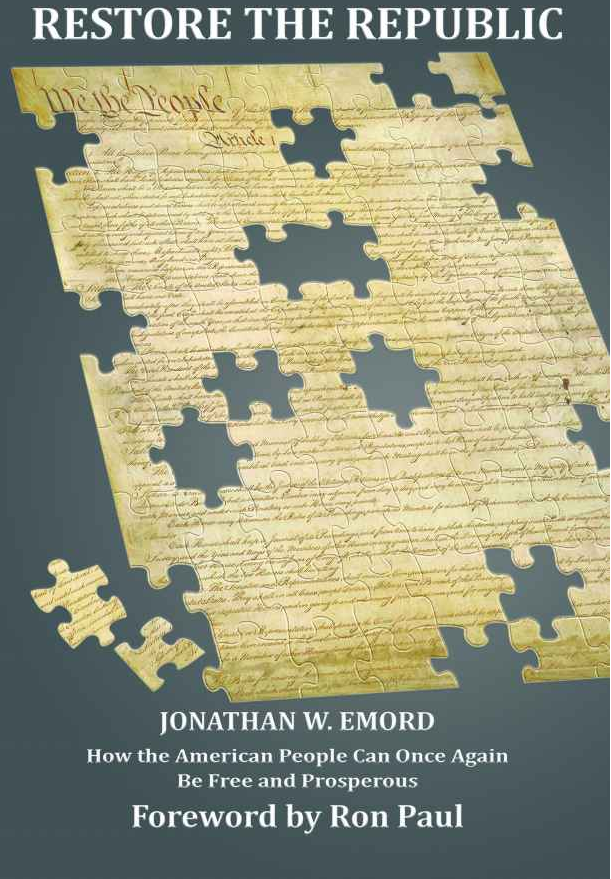
Restore the Republic by Jonathan Emord

Editor’s Note: We attended this year’s “Health Freedom Expo” near Chicago, Illinois this month and met the author during a presentation based on the title of his book. His insights illuminated how America has strayed from the constitutional republic the founders left us two hundred and forty years ago through extreme departures from the rule of law.

As the nation drowns in a sea of debt and over-regulation and as government offers no clear solutions, constitutional lawyer Jonathan Emord presents a bold plan to restore the republic. Drawing from law, history, and economics, Emord explains that each obstacle to power and arbitrary will that the Founding Fathers placed in the Constitution has been abandoned, transforming the limited federal republic defined by the Constitution (protective of individual liberty and sovereignty) into an unlimited bureaucratic oligarchy antithetical to the Constitution.

It is that transformation which created the seeds that have grown into limitless government, corruption, regulation of all aspects of life, destruction of free enterprise, planned economies, and a deprivation of economic and civil liberty. Having identified precisely why and how the United States has lost its foundational principles and its rights basis, Emord then charts a bold course to resurrect power limiting doctrines, eliminate excess government, and restore individual sovereignty and liberty.

Indeed, Emord offers a detailed plan for deregulating markets and weaning Americans from entitlements (including Social Security and Medicare), without leaving dependents destitute. In his foreword, Ron Paul describes Restore the Republic as “. . . an invaluable explanation of how constitutional bulwarks against big government were eroded-and how we can rebuild them,” concluding that the book is “highly recommended” for all “interested in regaining our lost liberties and restoring our republic.”

Right-Wing Billionaires Behind Mitt Romney | Rolling Stone

Presidential politics has always been a rich man’s game. But now, thanks to the Supreme Court ruling in Citizens United that upended decades of limits on campaign donations, financing a presidential race is the exclusive domain of the kind of megadonor whose portfolios make Mitt Romney look middle-class. “I have lots of money, and can give it legally now,” Texas billionaire and top GOP moneyman Harold Simmons recently bragged to The Wall Street Journal. “Just never to Democrats.”

In past elections, big donors like Simmons gave millions for advocacy groups like Swift Boat Veterans for Truth. By law, such groups were only allowed to run issue ads – but instead they directly targeted John Kerry, drawing big fines from the Federal Elections Commission. Now, with the blessing of the Supreme Court, the wealthy can legally hand out unlimited sums to groups that openly campaign for a candidate, knowing that their “dark money” donations will be kept entirely secret. The billionaire Koch brothers, for instance, have reportedly pledged $60 million to defeat President Obama this year – but their off-the-book contributions don’t appear in any FEC filings.

Even more money from megadonors is flowing into newly created Super PACs, which, unlike advocacy groups, can spend every cent they raise on direct attacks on an opponent. Under the new rules, the richest men in America are plying candidates with donations far beyond what Congress intended. “They can still give the maximum $2,500 directly to the campaign – and then turn around and give $25 million to the Super PAC,” says Trevor Potter, general counsel of the Campaign Legal Center. A single patron can now prop up an entire candidacy, as casino magnate Sheldon Adelson did with a $20 million donation to the Super PAC backing Newt Gingrich.

The undisputed master of Super PAC money is Mitt Romney. In the primary season alone, Romney’s rich friends invested $52 million in his Super PAC, Restore Our Future – a number that’s expected to more than double in the coming months. This unprecedented infusion of money from America’s monied elites underscores the radical transformation of the Republican Party, which has made defending the interests of 0.0001 percent the basis of its entire platform. “Money buys power,” the Nobel Prize-winning economist Paul Krugman observed recently, “and the increasing wealth of a tiny minority has effectively bought the allegiance of one of our two major political parties.” In short, the political polarization and gridlock in Washington are a direct result of the GOP’s capitulation to Big Money.

That capitulation is evident in Romney’s campaign. Most of the megadonors backing his candidacy are elderly billionaires: Their median age is 66, and their median wealth is $1 billion. Each is looking for a payoff that will benefit his business interests, and they will all profit from Romney’s pledge to eliminate inheritance taxes, extend the Bush tax cuts for the superwealthy – and then slash the top tax rate by another 20 percent. Romney has firmly joined the ranks of the economic nutcases who spout the lie of trickle-down economics. “Support from billionaires has always been the main thing keeping those charlatans and cranks in business,” Krugman noted. “And now the same people effectively own a whole political party.”

Here are the 16 donors who have given at least $1 million each to elect Romney – and what they expect in return for their investment: Read more… 

Indian Reservations as Sovereign Nations | Native Heritage Project

NativeHeritageProject

Did you know that Indian reservations are independent nations?  Indian Nations are allowed, within limits to govern themselves.  Many have their own police forces and courts.

Tribal sovereignty in the United States refers to the inherent authority of indigenous tribes to govern themselves within the borders of the United States of America. The federal government recognizes tribal nations as “domestic dependent nations” and has established a number of laws attempting to clarify the relationship between the federal, state, and tribal governments. The Constitution and later federal laws grant local sovereignty to tribal nations, yet do not grant full sovereignty equivalent to foreign nations, hence the term “domestic dependent nations”.

However, in times of war, all men, including Indians have to register.  In WWI, this caused some consternation.  Each registrar had to record the county name in which the registrant registered.  If they registered on an Indian Reservation, even if the reservation was located within a county, the reservation itself was not part of the county, as it is considered a separate Nation.

TribalLandsThis bureaucratic anomaly became apparent in New York in states East of the Mississippi.  In New York, Indians who registered on the reservation are listed in our old friend, Miscellaneous County.  In other places, Miscellaneous is a sign that someone is either hospitalized, institutionalized or returned a late registration after the county office had closed.  In this case, it’s not necessarily a sign of any of those things, but each return has to be looked at individually to determine the individual circumstance.  Just as I was about to decide that all New York entrants in Miscellaneous County were Reservation Indians, I found one who lived on a reservation, followed by someone of the same name, also an Indian, in prison.  No assumptions allowed.

This map is a very different map of the US.  It’s a map of the US minus the sovereign Indian nations within the continental US.  Sort of looks like Swiss Cheese doesn’t it.  Some of these areas are much larger than one might expect.

Source: Native Heritage Project