The Unsustainability of Modern Capitalism | Information Clearing House

Daily Bell: Please treat this interview as if no one knew about you or your bestselling books. Give us some background on where you grew up and how you entered the CIA.

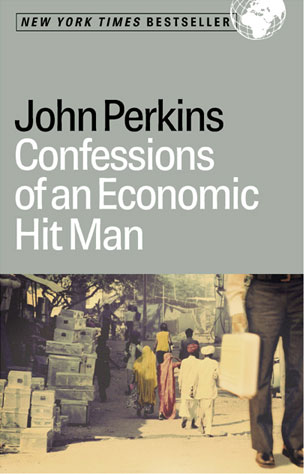
John Perkins: I grew up in New Hampshire and went to business school in Boston. At that time, I was approached by the National Security Agency (NSA), not the CIA, for a series of very sensitive tests including lie detector and personality test. They concluded I would make a good economic hit man, which is essentially a con artist with an economic background. They also said they found several weaknesses in my character that maybe they could use as hooks that would bring me into their game. Primarily, money, sex and power. Being that I was a young man, I was seduced by all of them.

Daily Bell: You were chief economist at a major international consulting firm; how did you gain that position?

John Perkins: After the NSA recruited me, I joined the Peace Corps. When I came out of the Peace Corps, Charles P. Maine hired me. It was a Boston consulting firm and the Sr. VP who hired me had very close ties to the NSA and the intelligence network of the United States in general. What I came to realize was it was all part of the scheme to turn me into an economic hit man. The first economic hit man, guys like Kermit Roosevelt, who overthrew the democratically elected President of Iran actually worked for the CIA.

But the weakness in that system was that if guys like Kermit Roosevelt had been discovered, the US government would have been in deep trouble. So very soon after that experience, they started to use private consultants, instead of actual government employees to do this work. Companies like Charles T. Main were brought in with legitimate contracts, working for the state department or the World Bank or the treasury department or USAID or other organizations and within these organizations were guys like me who did this special field of work.
Daily Bell: Interesting. You advised the World Bank, United Nations, IMF, U.S. Treasury Department, Fortune 500 corporations, and countries in Africa, Asia, Latin America, and the Middle East. What is your opinion of the World Bank?

John Perkins: The World Bank is a tool of economic hit men, there is no question about it. It’s the tool of big corporations, the IMF and most of what we call intelligence agencies of the United States, CIA and NSA. Essentially the job of all these organizations is to help what used to be just US businesses – now we call them multi-nationals – get themselves established around the world in positions where they can exploit the world’s resources, natural resources and human resources. All of these organizations are basically tools of what they call the corporatocracy. The men and a few women who run the biggest and most powerful corporations also run most of the government. Economic hit men help channel the resources of organizations like the World Bank and the IMF, the NSA and the CIA to support the larger agenda.

Daily Bell: The IMF?

John Perkins: It’s a servant of the corporatocracy, of economic hit men. One of my jobs as an economic hit man was to identify countries that had resources like oil and arrange huge loans for those countries from the World Bank and sister organizations. But the money would never go to the actual country; instead it would go to our own corporations to build infrastructure projects in that country like power plants and industrial parks; things that would benefit a few very wealthy families.

So then the people of the country would be left holding this huge debt that they couldn’t repay. We would come back and say, “well, since you can’t repay your debt, you have to restructure your loan.” That’s when the IMF comes in. So the World Bank makes the original loan and IMF shows up and says, “We’ll help you restructure your loan, but in order to do that you have to meet certain conditionalities. You have to sell your oil or whatever the coveted resource is at a cheap price, to the oil companies without restrictions.” Or they would suggest the country sell electric utilities, water and sewage, maybe even your schools and jails to private multi-national corporations. Or maybe allow military bases to be built; these sorts of things.
Daily Bell: The United Nations?

John Perkins: I think the United Nations has an important function that it should be performing. We need an organization like that in the world today. Unfortunately, the United Nations has been rendered basically impotent. The United Nations was very opposed to us going into Iraq, but the Bush administration totally ignored that and went in anyway. I think it’s very unfortunate that the United Nations has been emasculated by the United States.

Daily Bell: What do you think of the Bank for International Settlements? Is it true that it has worldwide and absolute immunity? Why does a central bank for central banks need sovereign immunity? How is that even enforceable?

John Perkins: It’s enforceable because that’s the way the laws are written in all the various countries that we inhabit. As long as the people who are running the banks and corporations also control politicians, which today they do around the world, then they get to write the laws. It’s interesting that during a lot of my lifetime in the United States, for example, our laws were written by elected officials, but today that is not the case. Today in the United States lobbyists write the laws; the elected officials are essentially owned by big corporations. That’s not true on all issues, but it’s true on the big issues that affect big corporations. We’ve reached a new geopolitical reality that we have never known before. This is a new situation. Read more…
The People Can Handle The Truth About Unemployment and Inflation by Ron Paul

Ron Paul tells the Joint Economic Committee that the people can handle the truth about unemployment and inflation numbers. Real unemployment is at 22% and real inflation is at 6% according to the original method of measuring the CPI.

Source: Ron Paul

HR 1207 – Audit the Federal Reserve

Editor’s Note: Has this video has been removed due to term of service violation OR censored?

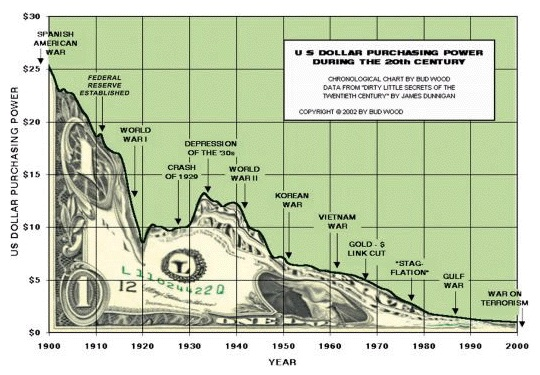
The Federal Reserve is the chief culprit behind the economic crisis. Its unchecked power to create endless amounts of money out of thin air brought us the boom and bust cycle and causes one financial bubble after another. Since the Fed’s creation in 1913 the dollar has lost more than 96% of its value, and by recklessly inflating the money supply the Fed continues to distort interest rates and intentionally erodes the value of the dollar.

For the past 30 years, Congressman Ron Paul has worked tirelessly to bring much-needed transparency and accountability to the secretive bank. And in 2009 his unfaltering dedication showed astonishing results: HR 1207, the bill to audit the Federal Reserve, swept the country and made the central bankers shudder at their desks. The bill passed as an amendment both in the House Financial Services Committee and in the House itself.

But the usurpers of America’s future didn’t take it lying down. They weren’t about to allow their secrets to be exposed and their magic money machine to be put under close scrutiny. They worked frantically behind the scenes to quietly derail all efforts to open up the Federal Reserve to an independent audit.

A handful of Fed-loving U.S. senators led by Chris Dodd rewrote the Senate version of the Financial Reform Bill to strip out Ron Paul’s Audit the Fed amendment and actually expand the Fed’s power over banks, lending and money. As Alan Grayson pointed out here, and Ron Paul commented on here, the Dodd bill completely eliminated legislation to audit the Federal Reserve, which already passed in the House.

Sen. Bernie Sanders (I-Vt.) introduced an amendment on the floor effectively adding the Grayson-Paul language to the Senate bill, but later changed his amendment under pressure by the Federal Reserve and the Obama administration. The altered Sanders amendment passed the Senate on May 11, 2010 by a unanimous 96-0 vote.

Sen. Vitter reintroduced an amendment with the original Audit the Fed language. The Senate rejected the amendment on May 11, 2010 by a 37-62 vote.

The House and Senate went to the conference committee which attempted to reconcile the differences between the two bills (and their amendments). Unfortunately, Ron Paul’s tough language ended up not being included in the final bill.

On June 30, 2010, the GOP introduced Ron Paul’s Audit the Fed bill as a motion to recommit, which was the last chance to alter the financial regulation bill. Audit the Fed failed by a vote of 229-198. All Republicans voted in favor of the measure with 23 Democrats crossing the aisle to vote with Republicans. 114 co-sponsors of HR 1207, all Democrats, jumped ship and voted against Audit the Fed. Read more…

Source: Ron Paul

CNBC Anchors Mortified That Ron Paul Was Allowed Air Time

Ben BernankeSteve Watson
Infowars.net

Thursday, Feb 26th, 2009

CNBC anchors were left dumbfounded and acted overtly cantankerous yesterday after Congressman Ron Paul’s opening statement at the House Financial Services Committee was broadcast live to an audience of millions.

CNBC went live to the House, clearly without knowing that the Texas Congressman had the initial Republican statement at the hearing of Fed Chairman Ben Bernanke.

After the Congressman spent two and a half minutes lecturing Bernanke on sound money principles, warning that the financial crisis cannot be solved by merely creating credit out of thin air, CNBC cut back to the studio.

Anchors Erin Burnett and Mark Haines were so perturbed by what they had just heard that they immediately cut to a commercial break:

Haines: “This is not going as planned”

Burnett: “No it is not”

Haines: “We were told that there would be a very limited number of opening statements, and it seems to be getting out of control.”

Burnett: “Here’s what we forgot, everybody is taking this live, you know what that means? Why would they miss an opportunity for free air time?”

Haines: “We’re going to take a commercial break and get them out of the way, so that when something really substandard [he must mean substantial?] is happening, we don’t have to interrupt them.”

The Congressman’s speech was powerful and eye opening:

“This is the end of an era,” said Paul, “we can’t reinflate the bubble….if we think that we can reinflate this bubble by artificially creating credit out of thin air and calling it capital, believe me we don’t have a prayer of solving these problems – we have a total misunderstanding of what credit is versus capital.”

Of course, in the eyes of the corporate media shills for the Fed, the Treasury, and Wall Street Paul’s words were “out of control”. How dare he speak such sense and actively question the logic of the almighty ones, our only hope, our saviors (who also happen to be the very same set of criminals that led us down the path to economic ruin in the first instance).

Then again, how could we expect anything else from the likes of CNBC’s Burnett and Haines, who have previously demonstrated a total lack of understanding of the underlying causes of the financial crisis, even commenting that gold has “no inherent value”.

Research related articles:

  1. Ron Paul Grills Bernanke: “You Can’t Reinflate The Bubble”
  2. CNBC Analyst: Global Bank, Global Currency Within 15 Years
  3. Ron Paul: Bernanke Deliberately Destroying Dollar
  4. Ron Paul Slams “Born-again Budget Conservatives”
  5. Ron Paul Hits Out At “Arrogant” Greenspan
  6. Ron Paul: Secretive Elite Control America
  7. CNBC Host Recommends Statins be Put in the Water Supply
  8. Obama Win Will Not Change Rigged Economy
  9. Paul Lectures Bernanke: U.S. Moving Towards Fascism
  10. Why The Fed Allowed Derivatives Trading on a Sunday
  11. Ron Paul: Greenspan, Bernanke Should Be Criminally Charged
  12. Ron Paul: Stimulus Packages Will Turn Recession Into A Depression

Source: InfoWars

Final Version of the Economic Stimulus Plan: How It Impacts Your County (e.g., Jackson County, Oregon)


President Obama has just signed a $790+ billion “stimulus” package for the economy, but do you really believe that will actually help our local economy (or just make government bigger, increase the debt and put more burden than ever on the rest of us)?

If you want to see where the money is being spent (your share of the $2,600 per capita increase in the federal debt) for the “Economic Stimulus Bill” read the following summary:

Senate Final Stimulus Bill Summary

Articles:
Oregon Governor Targets Federal Stimulus Dollars
Senate Stimulus Bill

Your fair share?

The State of Oregon will have to compete for it’s share of the $30 billion slated for the states. At last count Jackson County was slated to receive only $400,000 of that money.

Since the federal debt is increasing at $2,600 per capita for this single expenditure alone (that’s a future obligation for each individual in the country, every man, woman and child), wouldn’t it be a better idea to organize our own local capital and resources to provide for our own needs instead of relying on government to do this for us?

Wouldn’t it make more sense to stop relying on the federal government to bail us out, and start doing this ourselves?

So let’s do the math.

According to the 2006 census Jackson County has a population of 197,071 (updated to 198,615 according to recent statistics on the county website). In effect each of us in Jackson County owes an additional $2,600 to the Federal Reserve Bank (or roughly $520,000,000 given a population of 200,000). That’s a lot of money theoretically leaving Jackson County (if indeed the Fed ever called in the debt).

If each of us in Jackson County had the ability (and the desire) to pool our own local capital of $2,600 per capita and funded our own developments and capital projects (instead of the trickle down effect from Washington DC), we’d have a capital fund in excess of $520,000,000 (that’s right millions of dollars, five times the annual budget of the City of Ashland) instead of a mere trickle down of $400,000 from the Economic Stimulus Plan.

Something is terribly wrong with this economic picture.

  • Problem 1 is we cannot create money out of thin air the way the government and banks do.
  • Problem 2 is government spending at this magnitude will not only increase the debt per capita, but devalue the currency (meaning you’ll get less bang for the buck, in effect less purchasing power). This will make the economy worse, not better for most of the people.

Yet all those smart people in Washington DC (and a few newly elected) don’t seem to understand the consequences of such spending for the rest of us. You get my drift?

Now, it’s up to us to do something about it.

How can we refocus our efforts to the LOCAL AND REGIONAL community? What positive and hopeful visions and projects would you like to bring to the table and invest your time, effort, energy and resources (including money)?

U.S. Public Debt

The United States total public debt, commonly called the national debt, or U.S. government debt, is the amount of money owed by the federal government of the United States to holders of U.S. debt instruments. Debt held by the public is all federal debt held by states, corporations, individuals, and foreign governments, but does not include intragovernmental debt obligations or debt held in the Social Security Trust Fund. Types of securities held by the public include, but are not limited to, Treasury Bills, Notes, Bonds, TIPS, United States Savings Bonds, and State and Local Government Series securities.[1]

As of February 12, 2009, the total U.S. federal debt was $10.76 trillion [2], or about $37,703 per capita. Of this amount, debt held by the public was roughly $6.45 trillion.[3] In 2007, the public debt was 36.8 percent of GDP [4], with a total debt of 65.5 percent of GDP.[5] The CIA Factbook ranked the total percentage as 23rd in the world.[6]

Public debt is the amount owed by the government to its creditors, whether they are nationals or foreigners. External debt is the debt of all sectors of the economy (public and private), owed to foreigners. In the U.S., foreign ownership of the public debt is a significant part of the nation’s external debt. The Bureau of the Public Debt, a division of the Department of the Treasury, calculates the amount of money owed by the national government on a daily basis.[7][8][9][10] Source: U.S. Public Debt


The estimated population of the United States is 305,670,162 so each citizen’s share of this debt is $35,252.68.
Source: U.S. Debt Clock

Strengthening or Weakening the Economy?

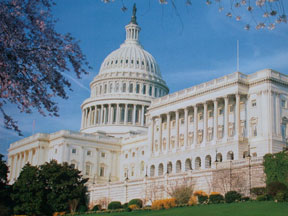
Ben BernankeThe economic situation continues to deteriorate this week as past and future bailouts were discussed on Capitol Hill.  The debate was over the accountability of already disbursed TARP money, and on whether or not to release remaining funds.   Banks that had already been bailed out before are looking for more money to fill the black holes that are their balance sheets, warning that they are simply too big to fail.  However, whatever ‘devastating’ consequences these banks are dreaming up and pushing on Capitol Hill regarding their own collapse will be nothing compared to the collapse of our currency if we keep debasing it through these foolish bailouts.  It should be that they are too big to bailout.  The world will not come to an end without this or that bank.  The most troubling thing to me is this rhetoric that only government can save the economy, and must act.  This is so counter-productive.

We must ask ourselves what strengthens this country, and what weakens it.

Government is a monumental drag on this economy.  Government at all levels currently absorbs about 35-40 percent of GDP, which is still not enough for its voracious appetite. While productivity is already overtaxed, the government routinely spends more than it takes in and makes up for the shortfall by constantly borrowing or debasing our dollars through inflation.  It pains me to think of all the opportunities for productive economic growth we have given up simply because our government is super-sized instead of Constitution-sized.  There are just a few constitutionally sanctioned activities for government to engage in, but it is so overstretched with unconstitutional encroachments that what it is legitimately supposed to do, it does very badly.  And yet we are to believe the solution to our problems is to make government bigger.  On the contrary, government makes our problems bigger.  The central bank’s meddling with monetary policy led to overheated lending, and now massive defaults.  The government used manipulative tax policy to distort the housing market which has had many unintended consequences, and here we are.  Government is quick to enact and slow to correct bad policy.  Yet in spite of government’s failures, it flourishes and grows, thanks to the continual bailouts from the unwitting taxpayer.

Big government has been tried and has failed miserably.  What we need now is small government, and freedom.  We need the freedom to pull ourselves up by our own bootstraps again, as we traditionally do in this country.  But try to start a business or charity today, and you will understand how little economic freedom we really have left.  Freedom, not government, made this the land of opportunity.  Freedom laid the foundation that catapulted us to becoming the strongest economic power in the world.  The American people are strong and capable.  We can pull ourselves out of this mess.  All we need is for the nanny-state to get out of the way and allow us to do it.  Freedom is our strength, government is our weakness.  Only by recognizing this and unleashing our strengths will we solve the problems we face today.

Source: Dr. Ron Paul’s Straight Talk and Campaign for Liberty