 By Tim Dickenson
Every human on Earth is ingesting nearly 2,000 particles of plastic a week. These tiny pieces enter our unwitting bodies from tap water, food, and even the air, according to an alarming academic study sponsored by the World Wildlife Fund for Nature, dosing us with five grams of plastics, many cut with chemicals linked to cancers, hormone disruption, and developmental delays. Since the paper’s publication last year, Sen. Tom Udall, a plain-spoken New Mexico Democrat with a fondness for white cowboy hats and turquoise bolo ties, has been trumpeting the risk: “We are consuming a credit card’s worth of plastic each week,” Udall says. At events with constituents, he will brandish a Visa from his wallet and declare, “You’re eating this, folks!”
With new legislation, the Break Free From Plastic Pollution Act of 2020, Udall is attempting to marshal Washington into a confrontation with the plastics industry, and to force companies that profit from plastics to take accountability for the waste they create. Unveiled in February, the bill would ban many single-use plastics and force corporations to finance “end of life” programs to keep plastic out of the environment. “We’re going back to that principle,” the senator tells Rolling Stone. “The polluter pays.”
The battle pits Udall and his allies in Congress against some of the most powerful corporate interests on the planet, including the oil majors and chemical giants that produce the building blocks for our modern plastic world — think Exxon, Dow, and Shell — and consumer giants like Coca-Cola, Nestlé, and Unilever that package their products in the stuff. Big Plastic isn’t a single entity. It’s more like a corporate supergroup: Big Oilmeets Big Soda — with a puff of Big Tobacco, responsible for trillions of plastic cigarette butts in the environment every year. And it combines the lobbying and public-relations might of all three.
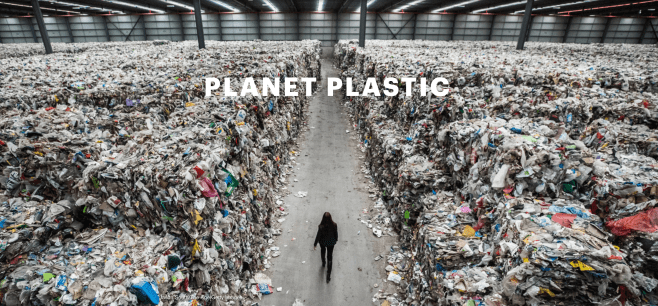
Americans have occasionally crusaded against “problem plastics” — scapegoating packing peanuts, grocery bags, or drinking straws for the sins of our unsustainable consumer economy. We’ve been slow to recognize that we’re actually in the midst of a plastic pandemic. Over the past 70 years, we’ve gotten hooked on disposable goods and packaging — as plastics became the lifeblood of an American culture of speed, convenience, and disposability that’s conquered the globe. Plastic contains our hot coffee and frozen dinners. It is the material of childhood, from Pampers to Playmobil to PlayStation 4. It cloaks our e-commerce purchases and is woven into our sneakers, fast fashion, and business fleece. Humans are now using a million plastic bottles a minute, and 500 billion plastic bags a year — including those we use to bag up our plastic-laden trash.
But the world’s plastic waste is not so easily contained. Massive quantities of this forever material are spilling into the oceans — the equivalent of a dump-truck load every minute. Plastic is also fouling our mountains, our farmland, and spiraling into an unmitigatable environmental disaster. John Hocevar is a marine biologist who leads the Oceans Campaign for Greenpeace, and spearheaded the group’s response to the BP oil spill in the Gulf. Increasingly, his work has centered on plastics. “This is a much bigger problem than ‘just’ an ocean issue, or even a pollution issue,” he says. “We’ve found plastic everywhere we’ve ever looked. It’s in the Arctic and the Antarctic and in the middle of the Pacific. It’s in the Pyrenees and in the Rockies. It’s settling out of the air. It’s raining down on us.”
Source: Rolling Stone
 By Julie Wilson
 Liberty International News