
NSA reportedly planted spyware on electronics equipment | CNET

By Dan Farber

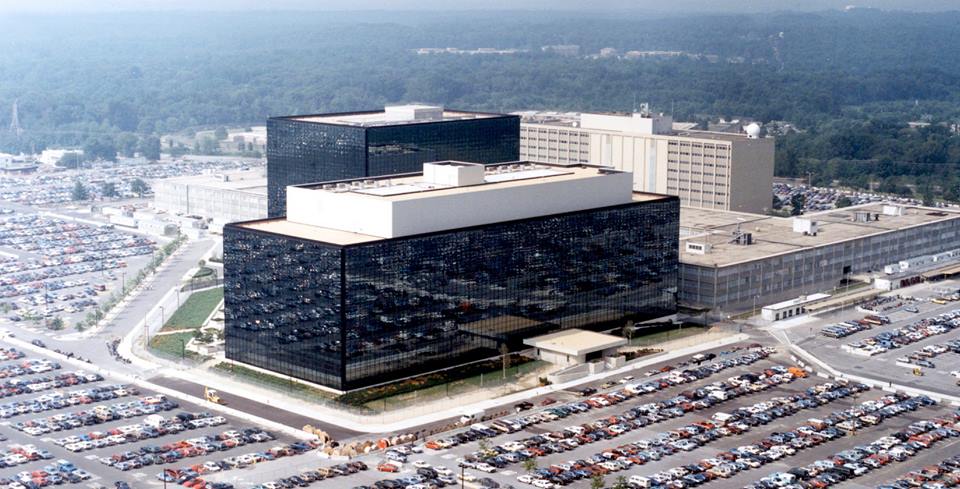
NSAA new report from Der Spiegel, based on internal National Security Agency documents, reveals more details about how the spy agency gains access to computers and other electronic devices to plant backdoors and other spyware.

The Office of Tailored Access Operations, or TAO, is described as a “squad of digital plumbers” that deals with hard targets — systems that are not easy to infiltrate. TAO has reportedly been responsible for accessing the protected networks of heads of state worldwide, works with the CIA and FBI to undertake “sensitive missions,” and has penetrated the security of undersea fiber-optic cables. TAO also intercepts deliveries of electronic equipment to plant spyware to gain remote access to the systems once they are delivered and installed.

Der Spiegel: Inside TAO -Documents Reveal Top NSA Hacking Unit

Der Spiegel: Shopping for Spy Gear – Catalog Advertises NSA Toolbox

According to the report, the NSA has planted backdoors to access computers, hard drives, routers, and other devices from companies such as Cisco, Dell, Western Digital, Seagate, Maxtor, Samsung, and Huawei. The report describes a 50-page product catalog of tools and techniques that an NSA division called ANT, which stands for Advanced or Access Network Technology, uses to gain access to devices.

This follows a report that the security firm RSA intentionally allowed the NSA to create a backdoor into its encryption tokens.

“For nearly every lock, ANT seems to have a key in its toolbox. And no matter what walls companies erect, the NSA’s specialists seem already to have gotten past them,” the report said. The ANT department prefers targeting the BIOS, code on a chip on the motherboard that runs when the machine starts up. The spyware infiltration is largely invisible to other security programs and can persist if a machine is wiped and a new operating system is installed.

With the exception of Dell, the companies cited in the report and contacted by Der Spiegel claimed they had no knowledge of any NSA backdoors into their equipment.

In a blog post Sunday, a Cisco spokesperson wrote:

At this time, we do not know of any new product vulnerabilities, and will continue to pursue all avenues to determine if we need to address any new issues. If we learn of a security weakness in any of our products, we will immediately address it. As we have stated prior, and communicated to Der Spiegel, we do not work with any government to weaken our products for exploitation, nor to implement any so-called security ‘back doors’ in our products.

The NSA declined to comment on the report but said the TAO was key for national defense.

“Tailored Access Operations (TAO) is a unique national asset that is on the front lines of enabling NSA to defend the nation and its allies,” the agency said in a statement. “We won’t discuss specific allegations regarding TAO’s mission, but its work is centered on computer network exploitation in support of foreign intelligence collection.”

The end does not appear to be in sight for the revelations from the documents obtained by Edward Snowden, according to Glenn Greenwald, the journalist who first collaborated with Snowden to publish the material. In a speech delivered by video to the Chaos Communication Congress (CCC) in Hamburg on Friday, he said, “There are a lot more stories to come, a lot more documents that will be covered. It’s important that we understand what it is we’re publishing, so what we say about them is accurate.”

Source: CNET

Edward Snowden, after months of NSA revelations, says his mission’s accomplished | The Washington Post

By Barton Gellman

Snowden1MOSCOW — The familiar voice on the hotel room phone did not waste words.

“What time does your clock say, exactly?” he asked. He checked the reply against his watch and described a place to meet. “I’ll see you there,” he said.

Edward Joseph Snowden emerged at the appointed hour, alone, blending into a light crowd of locals and tourists. He cocked his arm for a handshake, then turned his shoulder to indicate a path. Before long he had guided his visitor to a secure space out of public view.

During more than 14 hours of interviews, the first he has conducted in person since arriving here in June, Snowden did not part the curtains or step outside. Russia granted him temporary asylum on Aug. 1, but Snowden remains a target of surpassing interest to the intelligence services whose secrets he spilled on an epic scale.

Late this spring, Snowden supplied three journalists, including this one, with caches of top-secret documents from the National Security Agency, where he worked as a contractor. Dozens of revelations followed, and then hundreds, as news organizations around the world picked up the story. Congress pressed for explanations, new evidence revived old lawsuits and the Obama administration was obliged to declassify thousands of pages it had fought for years to conceal.

Taken together, the revelations have brought to light a global surveillance system that cast off many of its historical restraints after the attacks of Sept. 11, 2001. Secret legal authorities empowered the NSA to sweep in the telephone, Internet and location records of whole populations. One of the leaked presentation slides described the agency’s “collection philosophy” as “Order one of everything off the menu.”

Six months after the first revelations appeared in The Washington Post and Britain’s Guardian newspaper, Snowden agreed to reflect at length on the roots and repercussions of his choice. He was relaxed and animated over two days of nearly unbroken conversation, fueled by burgers, pasta, ice cream and Russian pastry. Read more…

Source: The Washington Post

New “Freedom Act” Would Curtail the Patriot Act | Truthout

By Kelly Rucke

Two congressmen who were involved in the passage of the Patriot Act have introduced a bill that would rein in secret surveillance of Americans.

NewFreedomActAmid continuing revelations that the U.S. government not only conducted invasive surveillance on its own citizens but on world leaders — including U.S. allies — Senate Judiciary Committee Chairman Patrick Leahy (D-Vt.) and Rep. Jim Sensenbrenner (R-Wisc.) introduced a piece of legislation that would “restore Americans’ privacy rights by ending the government’s dragnet collection of phone records and requiring greater oversight, transparency, and accountability with respect to domestic surveillance authorities.”

Known as the USA FREEDOM Act, the legislation would “end the dragnet collection of Americans’ phone records under Section 215 of the USA PATRIOT Act — which allows the FBI to order any person or entity to hand over any tangible item to protect against international terrorism or clandestine intelligence activities — and ensures that other authorities cannot be used to justify similar dragnet collection.”

The bill, which has 16 co-sponsors from both sides of the aisle, would also implement safeguards to ensure that the U.S. government does not conduct warrantless surveillance.

A Special Advocate position would also be created to ensure that Americans’ privacy rights and civil liberties were protected, and detailed public reports about the type and frequency of Foreign Intelligence Surveillance Act (FISA) orders would also be required.

In a joint press release on Oct. 29, Leahy said he co-authored the legislation because “the government surveillance programs conducted under the Foreign Surveillance Intelligence Act are far broader than the American people previously understood. It is time for serious and meaningful reforms so we can restore confidence in our intelligence community.”

“Modest transparency and oversight provisions are not enough. We need real reform, which is why I join today with Congressman Sensenbrenner, as well as a bipartisan group of 15 Senators, to introduce the USA FREEDOM Act.”

Sensenbrenner added that although the U.S. Patriot Act was implemented after 9/11 to “keep Americans safe by ensuring information is shared among those responsible for defending our country and by enhancing the tools the intelligence community needs to identify and track terrorists … the balance between security and privacy was lost.”

He said it’s time for the judiciary committee members to come together again as they did with the Patriot Act, but this time pass a piece of legislation that protects American liberties.

“Washington must regain Americans’ trust in their government. The USA FREEDOM Act is an essential first step,” Sensenbrenner said.

Transparent surveillance practices

Introduction of the Freedom Act legislation comes after Rep. Justin Amash (R-Mich.) proposed a budget amendment bill this past July that would have defunded a portion of the NSA’s budget — specifically the portion of the agency’s budget that was used to surveil Americans’ phone records.

Amash’s bill failed to pass by 12 votes; the congressman has now come out in support of the Freedom Act.

Advocacy groups such as the American Civil Liberties Union, the National Rifle Association and privacy-rights group Stop Watching Us have all pledged their support for the legislation.

What is unique with this legislation is that Leahy and Sensenbrenner were both the primary authors of the Patriot Act, the specific piece of legislation that the Freedom Act seeks to alter.

In a joint opinion piece for Politico, Leahy and Sensenbrenner wrote that while there have been debates about the benefits of the Patriot Act since it was passed 12 years ago, collecting “millions of Americans’ phone records every day — whether they have any connection at all to terrorism — goes far beyond what Congress envisioned or intended to authorize.”

“Since the revelation that the National Security Agency is collecting the details of Americans’ phone calls on an unprecedented scale, it has come out that the government searches the content of huge troves of emails, collects in bulk the address books from email accounts and social networking sites, at least temporarily collected geolocation data from our cellphones, committed thousands of privacy violations and made substantial misrepresentations to courts and Congress.

“Not only do many of these programs raise serious legal questions, they have come at a high cost to Americans’ privacy rights, business interests and standing in the international community. It is time for a new approach.”

Though the legislation’s authors say the government’s surveillance techniques will cease to exist with the passage of the Freedom Act, the intelligence community will still be allowed to gather information on Americans.

But instead of the surveillance program’s activities being kept secret, the bill would create new oversight, auditing and public reporting requirements.

“No longer will the government be able to employ a carte-blanche approach to records collection or enact secret laws by covertly reinterpreting congressional intent,” the opinion piece says. “And to further promote privacy interests, our legislation establishes a special advocate to provide a counterweight to the surveillance interests in the FISA Court’s closed-door proceedings.”

Though Leahy and Sensenbrenner acknowledge the problems with the U.S. government’s surveillance practices, the two said that they believe Congress has to have some surveillance practices in order to keep the country safe:

“Congress did not enact FISA and the PATRIOT Act to give the government boundless surveillance powers that could sweep in the data of countless innocent Americans. If all of our phone records are relevant to counterterrorism investigations, what else could be?

“The intelligence community has failed to justify its expansive use of these laws. It is simply not accurate to say that the bulk collection of phone records has prevented dozens of terrorist plots. The most senior NSA officials have acknowledged as much in congressional testimony. We also know that the FISA court has admonished the government for making a series of substantial misrepresentations to the court regarding these programs. As a result, the intelligence community now faces a trust deficit with the American public that compromises its ability to do its job. It is not enough to just make minor tweaks around the edges. It is time for real, substantive reform.”

Source: Truthout

SWAT Team Raids Organic Farm, Confiscates Blueberries | Huffington Post

By Radley Balko

SWATTeamA small organic farm in Arlington, Texas, was the target of a massive police action last week that included aerial surveillance, a SWAT raid and a 10-hour search.

Members of the local police raiding party had a search warrant for marijuana plants, which they failed to find at the Garden of Eden farm. But farm owners and residents who live on the property told a Dallas-Ft. Worth NBC station that the real reason for the law enforcement exercise appears to have been code enforcement. The police seized “17 blackberry bushes, 15 okra plants, 14 tomatillo plants … native grasses and sunflowers,” after holding residents inside at gunpoint for at least a half-hour, property owner Shellie Smith said in a statement. The raid lasted about 10 hours, she said.

Local authorities had cited the Garden of Eden in recent weeks for code violations, including “grass that was too tall, bushes growing too close to the street, a couch and piano in the yard, chopped wood that was not properly stacked, a piece of siding that was missing from the side of the house, and generally unclean premises,” Smith’s statement said. She said the police didn’t produce a warrant until two hours after the raid began, and officers shielded their name tags so they couldn’t be identified. According to ABC affiliate WFAA, resident Quinn Eaker was the only person arrested — for outstanding traffic violations.

The city of Arlington said in a statement that the code citations were issued to the farm following complaints by neighbors, who were “concerned that the conditions” at the farm “interfere with the useful enjoyment of their properties and are detrimental to property values and community appearance.” The police SWAT raid came after “the Arlington Police Department received a number of complaints that the same property owner was cultivating marijuana plants on the premises,” the city’s statement said. “No cultivated marijuana plants were located on the premises,” the statement acknowledged.

The raid on the Garden of Eden farm appears to be the latest example of police departments using SWAT teams and paramilitary tactics to enforce less serious crimes. A Fox television affiliate reported this week, for example, that police in St. Louis County, Mo., brought out the SWAT team to serve an administrative warrant. The report went on to explain that all felony warrants are served with a SWAT team, regardless whether the crime being alleged involves violence.

In recent years, SWAT teams have been called out to perform regulatory alcohol inspections at a bar in Manassas Park, Va.; to raid bars for suspected underage drinking in New Haven, Conn.; to perform license inspections at barbershops in Orlando, Fla.; and to raid a gay bar in Atlanta where police suspected customers and employees were having public sex. A federal investigation later found that Atlanta police had made up the allegations of public sex.

Other raids have been conducted on food co-ops and Amish farms suspected of selling unpasteurized milk products. The federal government has for years been conducting raids on medical marijuana dispensaries in states that have legalized them, even though the businesses operate openly and are unlikely to pose any threat to the safety of federal enforcers.

Radley Balko is a senior writer and investigative reporter for The Huffington Post. He is also the author of the new book, Rise of the Warrior Cop: The Militarization of America’s Police Forces.

Sources: Huffington Post

Crime is plunging in the rich world. To keep it down, governments should focus on prevention, not punishment | The Economist

IN THE 1990s John DiIulio, a conservative American academic, argued that a new breed of “superpredators”, “kids that have absolutely no respect for human life and no sense of the future”, would terrorise Americans almost indefinitely. He was not alone. Experts were convinced that crime would keep rising. Law-abiding citizens would retreat to gated communities, patrolled by security guards. Politicians and police chiefs could do little except bluster and try to fiddle the statistics.

Mr DiIulio later recanted and it is clear that the pessimists were wrong. Even as he wrote, America’s crime wave was breaking. Its cities have become vastly safer, and the rest of the developed world has followed. From Japan to Estonia, property and people are now safer than at almost any time since the 1970s (see article). Confounding expectations, the recession has not interrupted the downward trend. Even as America furiously debates the shooting of Trayvon Martin (see article), new data show that the homicide rate for young Americans is at a 30-year low.

Some crimes have all but died out. Last year there were just 69 armed robberies of banks, building societies and post offices in England and Wales, compared with 500 a year in the 1990s. In 1990 some 147,000 cars were stolen in New York. Last year fewer than 10,000 were. In the Netherlands and Switzerland street dealers and hustlers have been driven out of city centers; addicts there are now elderly men, often alcoholics, living in state hostels. In countries such as Lithuania and Poland the gangsters who trafficked people and drugs in the 1990s have moved into less violent activities such as fraud.

The receding tide

Cherished social theories have been discarded. Conservatives who insisted that the decline of the traditional nuclear family and growing ethnic diversity would unleash an unstoppable crime wave have been proved wrong. Young people are increasingly likely to have been brought up by one parent and to have played a lot of computer games. Yet they are far better behaved than previous generations. Left-wingers who argued that crime could never be curbed unless inequality was reduced look just as silly.

There is no single cause of the decline; rather, several have coincided. Western societies are growing older, and most crimes are committed by young men. Policing has improved greatly in recent decades, especially in big cities such as New York and London, with forces using computers to analyse the incidence of crime; in some parts of Manhattan this helped to reduce the robbery rate by over 95%. The epidemics of crack cocaine and heroin appear to have burnt out.

The biggest factor may be simply that security measures have improved. Car immobilisers have killed joyriding; bulletproof screens, security guards and marked money have all but done for bank robbery. Alarms and DNA databases have increased the chance a burglar will be caught. At the same time, the rewards for burglary have fallen because electronic gizmos are so cheap. Even small shops now invest in CCTV cameras and security tags. Some crimes now look very risky—and that matters because, as every survey of criminals shows, the main deterrent to crime is the fear of being caught.

Loosen the cuffs

Many conservatives will think this list omits the main reason crime has declined: the far harsher prison sentences introduced on both sides of the Atlantic over the past two decades. One in every hundred American adults is now in prison. This has obviously had some effect—a young man in prison cannot steal your car—but if tough prison sentences were the cause, crime would not be falling in the Netherlands and Germany, which have reduced their prison populations. New York’s prison population has fallen by a quarter since 1999, yet its crime rate has dropped faster than that of many other cities.

Harsh punishments, and in particular long mandatory sentences for certain crimes, increasingly look counterproductive. American prisons are full of old men, many of whom are well past their criminal years, and non-violent drug users, who would be better off in treatment. In California, the pioneer of mandatory sentencing, more than a fifth of prisoners are over 50. To keep each one inside costs taxpayers $47,000 a year (about the same as a place at Stanford University). And because prison stresses punishment rather than rehabilitation, most of what remains of the crime problem is really a recidivism issue. In England and Wales, for example, the number of first-time offenders has fallen by 44% since 2007. The number with more than 15 convictions has risen.

Politicians seem to have grasped this. In America the number of new mandatory sentences enacted by Congress has fallen. Even in the Republican South, governors such as Rick Perry and Bobby Jindal have adopted policies favoring treatment over imprisonment for drug users. Britain has stopped adding to its prison population. But more could be done to support people when they come out of prison (at the moment, in Britain, they get £46) and to help addicts. In the Netherlands and Switzerland hard-drug addiction is being reduced by treatment rather than by punishment. American addicts, by contrast, often get little more than counseling.

Policing can be sharpened, too—and, in an era of austerity, will have to be. Now that officers are not rushed off their feet responding to car thefts and burglaries, they can focus on prevention. Predictive policing, which employs data to try to anticipate crime, is particularly promising. More countries could use civilian “community support officers” of the sort employed in Britain and the Netherlands, who patrol the streets, freeing up better-paid police officers to solve crimes.

Better-trained police officers could focus on new crimes. Traditional measures tend not to include financial crimes such as credit-card fraud or tax evasion. Since these are seldom properly recorded, they have not contributed to the great fall in crime. Unlike rapes and murders, they do not excite public fear. But as policing adapts to the technological age, it is as well to remember that criminals are doing so, too.

Source: The Economist

Jimmy Carter Defends Edward Snowden, Says NSA Spying Has Compromised Nation’s Democracy | The Huffington Post

jimmy carter edward snowden

Former president Jimmy Carter speaks at dedication ceremonies for the new George W. Bush Presidential Center in Dallas, Texas, Thursday, April 25, 2013. (Paul Moseley/Fort Worth Star-Telegram/MCT via Getty Images)

Former President Jimmy Carter announced support for NSA whistleblower Edward Snowden this week, saying that his uncovering of the agency’s massive surveillance programs had proven “beneficial.”

Speaking at a closed-door event in Atlanta covered by German newspaper Der Spiegel, Carter also criticized the NSA’s domestic spying as damaging to the core of the nation’s principles.

“America does not have a functioning democracy at this point in time,” Carter said, according to a translation by Inquisitr.

No American outlets covered Carter’s speech, given at an Atlantic Bridge meeting, which has reportedly led to some skepticism over Der Spiegel’s quotes. But Carter’s stance would be in line with remarks he’s made on Snowden and the issue of civil liberties in the past.

In June, while Snowden was scrambling to send out asylum requests from an airport in Russia, Carter appeared to back the former NSA contractor’s efforts to remain out of U.S. custody.

“He’s obviously violated the laws of America, for which he’s responsible, but I think the invasion of human rights and American privacy has gone too far,” he told CNN, saying that nations were within their right to offer asylum to Snowden. “I think that the secrecy that has been surrounding this invasion of privacy has been excessive, so I think that the bringing of it to the public notice has probably been, in the long term, beneficial.”

Snowden has been hard-pressed to find support among U.S. politicians. Lawmakers on both sides of the aisle have declared Snowden a traitor who deserves to be prosecuted for his leaks. The White House has also been persistent in its attempts to bring him into custody. Last week, the administration criticized Russia for facilitating a meeting between Snowden and human rights activists. Snowden has since applied for temporary asylum in the nation, following complications surrounding transit to the Latin American nations that he’d been considering.

Source: The Huffington Post

Edward Snowden is a whistleblower, not a spy – but do our leaders care? | The Guardian

Mike Rogers, CA 'Dutch' Ruppersberger

By Spencer Akerman
The Twitter account of House intelligence committee chairman Mike Rogers, left, placed Edward Snowden in the company of two infamous double agents. Photograph: J Scott Applewhite/AP

According to US legislators and journalists, the surveillance whistleblower Edward Snowden actively aided America’s enemies. They are just missing one essential element for the meme to take flight: evidence.

An op-ed by Representative Mike Pompeo (Republican, Kansas) proclaiming Snowden, who provided disclosed widespread surveillance on phone records and internet communications by the National Security Agency, “not a whistleblower” is indicative of the emerging narrative. Writing in the Wichita Eagle on 30 June Pompeo, a member of the House intelligence committee, wrote that Snowden “has provided intelligence to America’s adversaries“.

Pompeo correctly notes in his op-ed that “facts are important”. Yet when asked for the evidence justifying the claim that Snowden gave intelligence to American adversaries, his spokesman, JP Freire, cited Snowden’s leak of NSA documents. Those documents, however, were provided to the Guardian and the Washington Post, not al-Qaeda or North Korea.

It’s true that information published in the press can be read by anyone, including people who mean America harm. But to conflate that with actively handing information to foreign adversaries is to foreclose on the crucial distinction between a whistleblower and a spy, and makes journalists the handmaidens of enemies of the state.

Yet powerful legislators are eager to make that conflation about Snowden.

The Twitter account of Representative Mike Rogers (Republican, Michigan), the chairman of the House intelligence committee, on 18 June placed Snowden and accused WikiLeaks source Bradley Manning in the same company as Aldrich Ames and Robert Hanssen, two infamous CIA and FBI double-agents. (The tweet appears to have been deleted.)

When I asked about the conflation, Rogers’ Twitter account responded: “All 4 gave critical national security information to our enemies. Each did it in different ways but the result was the same.”

Never to be outdone, Peter King, a New York Republican and former chair of the House homeland security committee, proclaimed Snowden a “defector” on 10 June. Days later, Snowden left Hong Kong to seek asylum in an undetermined country – a curious move for a defector to make.

Once elected and appointed leaders casually conflate leaking and espionage, it is a matter of time before journalists take the cue. For insight into the “fear and isolation that NSA leaker Edward Snowden is living through”, CNN turned to Christopher Boyce – who sold US secrets to the USSR before becoming a bank robber.

There are understandable suspicions that Snowden may have aided foreign intelligence services in order to aid in his escape from American criminal justice. While some have speculated that the Russian or Chinese intelligence services might have snuck a look at the highly sensitive intelligence material Snowden is carrying, that material is heavily encrypted. For what it’s worth, in a Guardian webchat I asked Snowden directly if he would trade access to his documents for asylum. He said he would not.

Perhaps Snowden lied. Perhaps he might change his mind. But all of that is far off in the realm of speculation. As things stand now, there is no evidence Snowden has aided any US adversary or intelligence service, wittingly or not.

Even the Obama administration has stopped short of terming Snowden a spy, even in the course of attacking his character. (Yes, he was indicted under the Espionage Act, but the actual charges against him are theft of government property, unauthorized communication of national defense information, and willful communication of classified intelligence information to an unauthorized person.) In an email meant to discredit Snowden in the press, an anonymous “senior administration official” told reporters on 24 June that Snowden’s ostensible idealism “is belied by the protectors he has potentially chosen: China, Russia, Cuba, Venezuela and Ecuador”. That’s something to remember the next time Washington wants to talk about its commitment to human rights while cooperating with, say, China and Russia.

Edward Snowden Edward Snowden. Photograph: Reuters/The GuardianWhen asked directly if there was any evidence that Snowden had cooperated with any intelligence service or American adversary, the administration and Congress declined to provide any. The office of the director of national intelligence, James Clapper, declined to comment for this story. The Justice Department and the House intelligence committee didn’t even respond to inquiries.

By all means, consider Snowden a hero, a traitor or a complex individual with a mixture of motives and interests. Lots of opinions about Snowden are valid. He is a necessarily polarizing figure. The information he revealed speaks to some of the most basic questions about the boundaries between the citizen and the state, as well as persistent and real anxieties about terrorism.

What isn’t valid is the blithe assertion, absent evidence, that the former NSA contractor actively collaborated with America’s enemies. Snowden made classified information about widespread surveillance available to the American public. That’s a curious definition of an enemy for US legislators to adopt.

Source: The Guardian