Europe Drops Charges Against Edward Snowden, Offers Asylum And Protection | Filming Cops

fcsnowdenBy John Vibes | The Free Thought Project

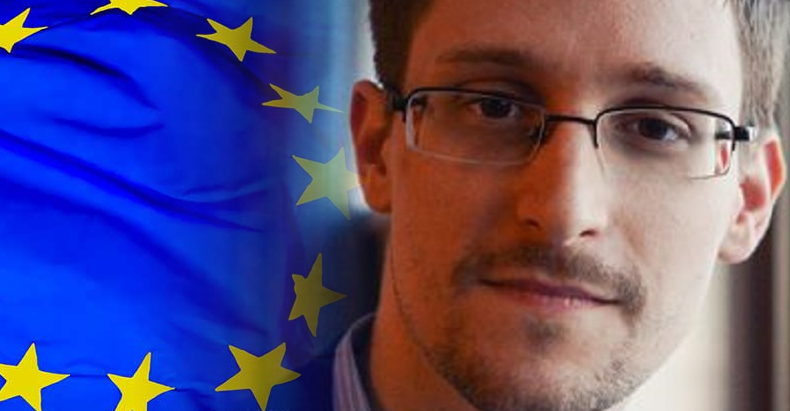
The European Parliament voted to offer Edward Snowden asylum and protection and drop all criminal charges against him.

When at one time most of the world was bullied by the US government into pressing charges against Snowden and forcing him into exile, the entire European continent has now officially given him a pass.

Thursday’s 285 – 281 vote officially recognized Snowden as an “international human rights defender” and ensured that he would be free from arrest within European borders.

The final resolution mentioned that “too little has been done to safeguard citizens’ fundamental rights following revelations of electronic mass surveillance.”

Snowden is currently living in asylum in Russia and is wanted in the United States for charges under the federal Espionage Act, but Russia has declined to extradite him.

He has been unable to leave due to the fear of being kidnapped by the US military when he left the country, but now it may be possible for him to travel to Europe.

Snowden posted on his Twitter page that this could be a good sign of a shift in attitude towards his cause.

Earlier this year, it was reported that a federal appeals court ruled that the controversial NSA spy program which collects phone records is actually illegal. Snowden recently joined Twitter, making himself more visible and approachable to the general population than ever before.

Within a day of opening his first social media account since leaking information about the NSA spy program, Snowden gained over one million subscribers.

However, there was only one account that he decided to follow, the NSA.

The whistleblower’s first tweet read, “Can you hear me now?

John Vibes is an author, researcher and investigative journalist who takes a special interest in the counter-culture and the drug war. In addition to his writing and activist work, he organizes a number of large events including the Free Your Mind Conference, which features top caliber speakers and whistle-blowers from all over the world. You can contact him and stay connected to his work at his Facebook page. You can find his 65 chapter Book entitled “Alchemy of the Timeless Renaissance” at bookpatch.com.

Source: Filming Cops

‘Citizenfour’: Documentary with Edward Snowden Released | RT

Edward Snowden is not “skulking” in a secret Russian bunker but is living an ordinary life in Moscow with his longtime girlfriend, Lindsay Mills. “Citizenfour,” a documentary about the whistleblower, premiered Friday at the New York Film Festival.

It has been three months since Lindsay Mills, whom Snowden had to leave behind in Hawaii in May 2013, was reunited with him in Moscow in July, “Citizenfour” reveals. The documentary was directed by investigative journalist and filmmaker Laura Poitras, an associate of former Guardian reporter Glenn Greenwald, who has been Snowden’s primary media contact throughout the NSA revelations campaign.

Source: Russia Today

Elites Call for “Extraordinary Crisis” to Preserve New World Order That Is Being Threatened by Non-State Actors Like Edward Snowden | Conscious Life Network

http://youtu.be/hOK9N1IhRLQ

By Paul Joseph Watson

Author of ‘shock and awe’ doctrine says elite threatened by non-state actors like Edward Snowden

Writing for the Atlantic Council, a prominent think tank based in Washington DC, Harlan K. Ullman warns that an “extraordinary crisis” is needed to preserve the “new world order,” which is under threat of being derailed by non-state actors like Edward Snowden.

The Atlantic Council is considered to be a highly influential organization with close ties to major policy makers across the world. It’s headed up by Gen. Brent Scowcroft, former United States National Security Advisor under U.S. Presidents Gerald Ford and George H. W. Bush. Snowcroft has also advised President Barack Obama.

Harlan K. Ullman was the principal author of the “shock and awe” doctrine and is now Chairman of the Killowen Group which advises government leaders.

In an article entitled War on Terror Is not the Only Threat, Ullman asserts that, “tectonic changes are reshaping the international geostrategic system,” arguing that it’s not military superpowers like China but “non-state actors” like Edward Snowden, Bradley Manning and anonymous hackers who pose the biggest threat to the “365 year-old Westphalian system” because they are encouraging individuals to become self-empowered, eviscerating state control.

“Very few have taken note and fewer have acted on this realization,” notes Ullman, lamenting that “information revolution and instantaneous global communications” are thwarting the “new world order” announced by U.S. President George H.W. Bush more than two decades ago.

“Without an extraordinary crisis, little is likely to be done to reverse or limit the damage imposed by failed or failing governance,” writes Ullman, implying that only another 9/11-style cataclysm will enable the state to re-assert its dominance while “containing, reducing and eliminating the dangers posed by newly empowered non-state actors.”

Ullman concludes that the elimination of non-state actors and empowered individuals “must be done” in order to preserve the new world order. A summary of their material suggests that the Atlantic Council’s definition of a “new world order” is a global technocracy run by a fusion of big government and big business under which individuality is replaced by transhumanist singularity.

Source: Conscious Life News

Cut a Deal for the Whistleblower: NYT Goes to Bat for Snowden | Common Dreams

snowden_newTaking a break from being a sometimes mouthpiece for the National Security Agency or acting in a too deferential manner towards government claims, the New York Times Editorial Board on Tuesday took a strikingly clear position on the case of former intelligence contractor Edward Snowden by declaring his leaks of internal NSA documents the act of a “whistle-blower” and called on the United States to offer him “a plea bargain or some form of clemency that would allow him to return home” without the threat of decades or life in prison.

“Considering the enormous value of the information he has revealed, and the abuses he has exposed, Mr. Snowden deserves better than a life of permanent exile, fear and flight,” the editorial states. “He may have committed a crime to do so, but he has done his country a great service.”

Though progressive supporters have considered Snowden a whistleblower from the outset—an argument his defenders see bolstered by each successive revelation—the weight of the New York Times Editorial Board makes the development significant in terms of wider public opinion and in the halls of more elite power where the paper holds sway.

To defend its call for clemency or a plea agreement, the Times argues that “Mr. Snowden was clearly justified in believing that the only way to blow the whistle on this kind of intelligence-gathering was to expose it to the public” and cataloged “just a few” of the violations by the NSA his revelations brought to light and some of the legal challenges they’ve already provoked:

■ The N.S.A. broke federal privacy laws, or exceeded its authority, thousands of times per year, according to the agency’s own internal auditor.

■ The agency broke into the communications links of major data centers around the world, allowing it to spy on hundreds of millions of user accounts and infuriating the Internet companies that own the centers. Many of those companies are now scrambling to install systems that the N.S.A. cannot yet penetrate.

■ The N.S.A. systematically undermined the basic encryption systems of the Internet, making it impossible to know if sensitive banking or medical data is truly private, damaging businesses that depended on this trust.

■ His leaks revealed that James Clapper Jr., the director of national intelligence, lied to Congress when testifying in March that the N.S.A. was not collecting data on millions of Americans. (There has been no discussion of punishment for that lie.)

■ The Foreign Intelligence Surveillance Court rebuked the N.S.A. for repeatedly providing misleading information about its surveillance practices, according to a ruling made public because of the Snowden documents. One of the practices violated the Constitution, according to the chief judge of the court.

■ A federal district judge ruled earlier this month that the phone-records-collection program probably violates the Fourth Amendment of the Constitution. He called the program “almost Orwellian” and said there was no evidence that it stopped any imminent act of terror.

Additionally, the Times editorial recognizes those critics who charge Snowden with woefully damaging U.S. interests by revealing some of these tactics, but points out that none of these critics—either inside of outside of government—have “presented the slightest proof that his disclosures really hurt the nation’s security.”

Glenn Greenwald, one of the journalists who has worked most closely with Snowden and publicly defended the whistleblower’s actions since his name entered the public domain, called the Times editorial “remarkable.”

The Nation’s Greg Mitchell, who has followed the Snowden case closely, including the way its been handled by U.S. media, began his review of the Times editorial by admitting: “Well, I didn’t see this coming.”

Source: Common Dreams

Edward Snowden, after months of NSA revelations, says his mission’s accomplished | The Washington Post

By Barton Gellman

Snowden1MOSCOW — The familiar voice on the hotel room phone did not waste words.

“What time does your clock say, exactly?” he asked. He checked the reply against his watch and described a place to meet. “I’ll see you there,” he said.

Edward Joseph Snowden emerged at the appointed hour, alone, blending into a light crowd of locals and tourists. He cocked his arm for a handshake, then turned his shoulder to indicate a path. Before long he had guided his visitor to a secure space out of public view.

During more than 14 hours of interviews, the first he has conducted in person since arriving here in June, Snowden did not part the curtains or step outside. Russia granted him temporary asylum on Aug. 1, but Snowden remains a target of surpassing interest to the intelligence services whose secrets he spilled on an epic scale.

Late this spring, Snowden supplied three journalists, including this one, with caches of top-secret documents from the National Security Agency, where he worked as a contractor. Dozens of revelations followed, and then hundreds, as news organizations around the world picked up the story. Congress pressed for explanations, new evidence revived old lawsuits and the Obama administration was obliged to declassify thousands of pages it had fought for years to conceal.

Taken together, the revelations have brought to light a global surveillance system that cast off many of its historical restraints after the attacks of Sept. 11, 2001. Secret legal authorities empowered the NSA to sweep in the telephone, Internet and location records of whole populations. One of the leaked presentation slides described the agency’s “collection philosophy” as “Order one of everything off the menu.”

Six months after the first revelations appeared in The Washington Post and Britain’s Guardian newspaper, Snowden agreed to reflect at length on the roots and repercussions of his choice. He was relaxed and animated over two days of nearly unbroken conversation, fueled by burgers, pasta, ice cream and Russian pastry. Read more…

Source: The Washington Post

WikiLeaks publishes secret draft chapter of Trans-Pacific Partnership | The Guardian

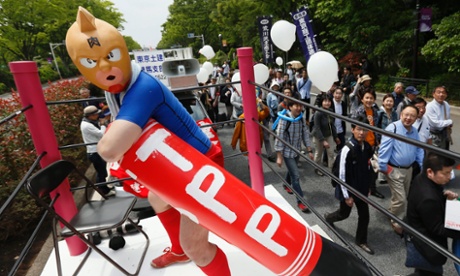
May DayWikiLeaks has released the draft text of a chapter of the Trans-Pacific Partnership (TPP) agreement, a multilateral free-trade treaty currently being negotiated in secret by 12 Pacific Rim nations.

The full agreement covers a number of areas, but the chapter published by WikiLeaks focuses on intellectual property rights, an area of law which has effects in areas as diverse as pharmaceuticals and civil liberties.

Negotiations for the TPP have included representatives from the United States, Canada, Australia, New Zealand, Japan, Mexico, Malaysia, Chile, Singapore, Peru, Vietnam, and Brunei, but have been conducted behind closed doors. Even members of the US Congress were only allowed to view selected portions of the documents under supervision.

“We’re really worried about a process which is so difficult for those who take an interest in these agreements to deal with. We rely on leaks like these to know what people are talking about,” says Peter Bradwell, policy director of the London-based Open Rights Group.

“Lots of people in civil society have stressed that being more transparent, and talking about the text on the table, is crucial to give treaties like this any legitimacy. We shouldn’t have to rely on leaks to start a debate about what’s in then.”

The 30,000 word intellectual property chapter contains proposals to increase the term of patents, including medical patents, beyond 20 years, and lower global standards for patentability. It also pushes for aggressive measures to prevent hackers breaking copyright protection, although that comes with some exceptions: protection can be broken in the course of “lawfully authorised activities carried out by government employees, agents, or contractors for the purpose of law enforcement, intelligence, essential security, or similar governmental purposes”.

WikiLeaks claims that the text shows America attempting to enforce its highly restrictive vision of intellectual property on the world – and on itself. “The US administration is aggressively pushing the TPP through the US legislative process on the sly,” says Julian Assange, the founder and editor-in-chief of WikiLeaks, who is living in the Ecuadorean embassy in London following an extradition dispute with Sweden, where he faces allegations of rape.

“If instituted,” Assange continues, “the TPP’s intellectual property regime would trample over individual rights and free expression, as well as ride roughshod over the intellectual and creative commons. If you read, write, publish, think, listen, dance, sing or invent; if you farm or consume food; if you’re ill now or might one day be ill, the TPP has you in its crosshairs.”

Just Foreign Policy, a group dedicated to reforming US foreign policy, managed to crowdfund a $70,000 (£43,700) bounty for Wikileaks if the organisation managed to leak the TPP text. “Our pledge, as individuals, is to donate this money to WikiLeaks should it leak the document we seek.” The conditions the group set have not yet been met, however, because it required the full text, not individual chapters.

Related to the TPP is a second secret trade agreement, the Transatlantic Trade and Investment Partnership (TTIP), which ties together regulatory practices in the US and EU. George Monbiot, writing in this paper, referred to the treaty as a “monstrous assault on democracy”. Ken Clarke, the minister without portfolio, replied that it “would see our economy grow by an extra £10bn per annum”.

Campaign group Fight for the Future has already collected over 100,000 signatures in an online petition against what it calls the “extreme Internet censorship plan: contained in the TPP.

Evan Greer, campaign manager for Fight for the Future, said: “The documents revealed by WikiLeaks make it clear why the US government has worked so hard to keep the TPP negotiatons secret. While claiming to champion an open Internet, the Obama administration is quietly pushing for extreme, SOPA-like copyright policies that benefit Hollywood and giant pharmaceutical companies at the expense of our most basic rights to freedom of expression online.”

Source: Wikileaks & The Guardian

Bradley Manning: a sentence both unjust and unfair | The Guardian

Bradley ManningPfc Manning sought to hold his country to the values it claims to uphold, yet his prison term dwarfs other military convictions

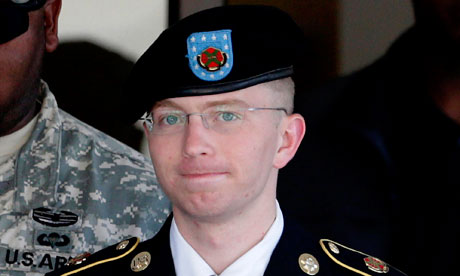
Bradley Manning has received a prison sentence that was 10 years longer than the period of time after which many of the documents he released would have been automatically declassified. The military judge handed down the longest ever sentence for a leak of US government information.

Mr Manning, according to this logic, did more harm than the soldier who gave a Jordanian intelligence agent information on the build-up to the first Iraq war, or the marine who gave the KGB the identities of CIA agents and floorplans of the embassies in Moscow and Vienna. Mr Manning did three times as much harm in transmitting to WikiLeaks in 2010 the war logs or field reports from Iraq and Afghanistan, as Charles Graner did. He was the army reserve corporal who became ringleader of the Abu Ghraib abuse ring and was set free after serving six and a half years of his 10-year sentence.

Among the 700,000 classified documents Mr Manning downloaded while stationed in Iraq was a video that showed a US Apache helicopter in Baghdad opening fire on a group of Iraqis, including two Reuters journalists and their children, who had attempted to rescue a severely injured man. More devastating than the film was the cockpit chatter of the soldiers who joked as they shot people in the streets.

“Look at those dead bastards,” said one. “Nice,” said another.

The Apache crew has never been charged with any offence (all their adult targets were listed as insurgents) and neither has any other individual as a result of Mr Manning’s revelations. But the shortened 17-minute version of the video has been viewed more than 3m times on YouTube.

So, the central question to answer in judging the proportionality of this sentence is whether the desire to punish a whistleblower driven by moral outrage stems from the alleged harm he did US military and diplomatic interests, or whether it derives more from sheer embarrassment. The judge presiding, Col Denise Lind, had already thrown out the gravest charge, that of “aiding the enemy”. Col Lind had also limited the admissibility of evidence regarding the “chilling effects” that Mr Manning’s actions had on US diplomacy by releasing 250,000 state department cables. A military witness conceded there was no evidence that anyone had been killed after being named in the releases.

Mr Manning’s recent apology for his actions does not, and should not, detract from the initial defence he gave for them, when he spoke of his shock at the “delightful bloodlust” displayed by that helicopter crew, or his belief that stimulating a debate about the wars was the right thing to do. We know what his motives as a whistleblower were and we have applauded them. They are certainly not akin to treachery or any act fit to be judged – if anything is – by an espionage act rushed onto the statute book in 1917 after America entered the first world war.

Mr Manning exposed the abuse of detainees by Iraqi officers under the watch of US minders. He showed that civilian deaths during the Iraq war were much higher than the official estimates. If they were published today, these claims would be uncontentious. They have already slipped into the official history of this war. But the author of this orthodoxy will continue to pay for the record he helped establish by a prison term that he will serve well into the next decade, which is when the first date for his parole application becomes due. Mr Manning was seeking to hold his country and its army to the values they claim to uphold.

It is unclear what the US military hopes to achieve by securing a sentence that dwarfs those of other military convictions. Deterrence features large in its thinking. Whistleblowing will not only endanger your career, it wants to say, but your freedom – for most of your adult life. In 2008, one could have hoped that the US had a president whose administration would distinguish between leaks in the public interest and treason. But this sentence tells a different story. Mr Manning’s sentence, which is both unjust and unfair, can still be reduced on appeal. Let us hope that it is.

Source: The Guardian

Edward Snowden asylum: US ‘disappointed’ by Russian decision | The Guardian

Edward Snowden's lawyer

By in Moscow, , and in Washington

Edward Snowden’s lawyer Anatoly Kucherena shows a copy of a temporary document allowing the whistleblower to cross the border into Russia. Photograph: AP

The White House expressed anger and dismay on Thursday after Russia granted temporary asylum to the American whistleblower Edward Snowden and allowed him to leave the Moscow airport where he had been holed up for over a month.

White House spokesman Jay Carney said the US was “extremely disappointed” by the decision, almost certainly taken personally by President Vladimir Putin. He said Moscow should hand Snowden back and hinted that Barack Obama might now boycott a bilateral meeting with Putin in September, due to be held when the US president travels to Russia for a G20 summit.

Carney added that Snowden had arrived in both China and Russia carrying with him thousands of top secret US documents. He said: “Simply the possession of that kind of highly sensitive classified information outside of secure areas is both a huge risk and a violation.

“As we know he’s been in Russia now for many weeks. There is a huge risk associated with … removing that information from secure areas. You shouldn’t do it, you can’t do it, it’s wrong.”

With US-Russian relations now at a cold war-style low, Snowden slipped out of Sheremetyevo airport on Thursday afternoon. His lawyer, Anatoly Kucherena, said Russia’s federal migration service had granted him temporary asylum for one year. Snowden had left the airport to stay at an undisclosed location with expatriate Americans, he added.

Putin made no immediate comment. But having weighed Russia’s options for some weeks, he appears to have decided that Snowden’s propaganda value outweighs any possible US repercussions. Obama’s already floundering attempts to “reset”, or improve, relations with Moscow are in effect over.

In a statement released by WikiLeaks, Snowden thanked the Russian authorities and accused the US of behaving illegally. He made no explicit mention of the trial of Bradley Manning, who this week was convicted of espionage and faces 136 years in jail.

Snowden said: “Over the past eight weeks we have seen the Obama administration show no respect for international or domestic law, but in the end the law is winning.”

He added: “I thank the Russian Federation for granting me asylum in accordance with its laws and international obligations.”

Snowden has been given a temporary Russian travel document, with his name in Cyrillic and a fresh passport photo. “This gave him the right to temporary asylum on the territory of the Russian Federation, Kucherena said, holding up a copy of the document. US authorities had cancelled his American passport.

Security officials said Snowden officially crossed the border into Russia from the airport’s transit zone at about 3.30pm local time. Russia had apparently not informed the US of the move in advance. The state TV channel Rossiya 24 showed a photograph of Snowden’s departure, as he clambered into a grey unmarked car.

Despite being pictured from behind Snowden was instantly recognisable wearing his trademark grey shirt and carrying a black backpack. Next to him was Sarah Harrison, the WikiLeaks representative who accompanied him last month on his flight from Hong Kong.

Kucherena declined to provide details on where Snowden was heading, citing safety concerns. “Since he is the most hunted person in the world, he will address the question of security today,” he told journalists.

The former NSA employee will himself choose his place of residence and forms of protection, he added. Previously, some speculated that the Russian government was keeping Snowden hidden, although the whistleblower and his lawyer have denied that, adding that he has had no contact with Russian security services.

The whistleblower’s father, Lon Snowden, had reportedly been planning to visit his son. Kucherena said on Wednesday that he was sending an invitation to Snowden’s father so he could obtain a Russian visa. Kucherena told Rossiya 24 on Thursday that he would be speaking to the father later in the day to arrange his visit.

US authorities have repeatedly called on Moscow to return the fugitive to face charges in America. Last week America’s attorney general, Eric Holder, sent a letter to Russia’s justice minister promising that Snowden would not be tortured and that he would not face the death penalty if handed over to the US.

Russian officials previously said they had no jurisdiction to return Snowden, as he was not officially located on Russian territory, and that the US had not filed an official extradition request.

The Kremlin did not immediately comment on Snowden’s temporary asylum. Putin has previously said repeatedly that to remain in Russia, Snowden must stop activities harming the United States. His lawyer suggested that fresh revelations published by the Guardian on Wednesday and Thursday had come from documents that Snowden had already given the paper before Putin made his comments.

Russia’s decision has emboldened hawkish critics of the White House, who have long dubbed Obama’s attempts to improve relations with Putin as naive and inappropriate. In a statement on his website, Senator John McCain said: “Russia’s action today is a disgrace and a deliberate effort to embarrass the United States. It is a slap in the face of all Americans. Now is the time to fundamentally rethink our relationship with Putin’s Russia.”

He proposed in response to expand the Magnitsky Act list of banned Russian officials, push for Georgia’s acceptance into Nato and implement US missile defence programmes in Europe.

At the White House, Carney made it clear that President Obama was frustrated by the decision by Russia to allow Snowden to enter the country, and that a planned presidential summit was now in jeopardy.

Obama is scheduled to travel to Russia in September for at meeting of G20 leaders in St Petersburg. He also planned to meet Putin for a bilateral summit during the trip in what would have been a sign of improving relations between the two powers.

That meeting is now under review. “Obviously this is not a positive development,” Carney said. “We have a wide range of interests with the Russians. We are evaluating the utility of the summit.”

Amnesty International called for the focus to switch from Snowden’s asylum plight to the “sweeping nature and unlawfulness” of the US government’s surveillance programmes.

Widney Brown, senior director for international law and policy at Amnesty, said in a statement: “Now that Edward Snowden has left the airport and has protected status in Russia, the focus really needs to be on the US government’s surveillance programs. Snowden would not have needed temporary asylum but for revealing the sweeping nature and unlawfulness of a massive system of domestic and international surveillance by the United States government.”

A survey showed that 43% of Russians supported granting Snowden asylum and 51% approved of his whistleblowing activities. Kucherena said he had received numerous letters from Russians offering Snowden lodging, protection and money, as well as from women interested in Snowden romantically.

Pavel Durov, the founder of Russia’s most popular social network, VKontakte, invited Snowden to come work as a programmer at the network, in a post on his VKontakte page on Thursday.

Source: The Guardian

The Sky Darkens for American Journalism: The future of the American media is being decided in a military court | Al Jazeera

By Chase Mader

Bradley Manning released hundreds of thousands of government documents and files to Wikileaks, most famous among them the unclassified video Wikileaks dubbed, “Collateral Murder”, a harrowing gun-sight view of an Apache helicopter slaughtering a couple of armed men and a much larger group of civilians on a Baghdad street in July, 2007.

The court-martial of Pfc. Manning, finally underway over three years after his arrest, is likely to cause a great deal of collateral destruction in its own right. In this case the victim will be American journalism.

The most serious of the charges against Manning is the capital offense of “aiding the enemy.” (Team Obama has made it clear it won’t seek the death penalty, but a life sentence is possible.) The enemy that the prosecution has in mind is not Wikileaks or the global public but Al Qaeda; because this group had access to the internet, the logic goes, they could read Manning’s disclosures just like everyone else.

The government does not have to prove Manning’s conscious intent to help Al Qaeda, but must only meet the squishier standard of proving the defendant had “specific knowledge” that the terrorists might benefit from his cache of documents.If the Aiding the Enemy charge against Bradley Manning is the outcome of his legal struggles, there will be adverse consequences for whistleblowers and for journalists in the future.

If this charge sticks, it will be a serious blow to American journalism, as it puts all kinds of confidential informants at risk of being capital cases. A soldier in Afghanistan who blogs about the lack of armoured vehicles – a common and very public complaint from the ranks in the Iraq War – could be prosecuted for tipping off the Taliban.

Whoever leaked Ambassador Karl Eikenberry’s long cable on the futility of counterinsurgency in Afghanistan could also be conceivably be put away for life, even executed. As Ben Wizner of the American Civil Liberties Union has explained, the use of this charge against sources, leakers and whistleblowers – like Bradley Manning – will criminalise a great deal of essential journalism – and not just the kind practiced by Wikileaks and various bloggers.

The Manning prosecution has asserted more than once that they would have pressed the Aiding the Enemy charge even if the private had passed his cache to the New York Times or the Washington Post (as the leaker had attempted).

This jolted the editorial classes, who do not much like imagining themselves as being implicated, however hypothetically, in terrorist acts. Op-eds in the New York Times and Los Angeles Times have blasted the Aiding the Enemy charges brought against Manning, explaining that they would not just “chill” but freeze a great deal of essential journalism.

The news media has always relied on leaks of classified material, from the Pentagon Papers and Watergate, to the preemptive disclosure of the 2007 National Intelligence Estimate holding that Iran had no nuclear weapons program, a transparent attempt by the military brass to block Bush and Cheney from launching a third war.

And contrary to widespread panic, massive leaks of classified material tend to enhance national security as the new information can prevent the kind of reckless, poorly-informed decisions that have squandered so much blood and money, from Southeast Asia to Iraq.

Who is a journalist and who gets to decide?

Aiding the Enemy is of course not the only charge against Private Manning. One of the charges, “wanton publication,” hinges in part on whether Wikileaks is a bona fide journalistic entity. But who gets to decide who is and who isn’t a journalist, and how?

Defense witness Yochai Benkler, a professor at Harvard Law School and expert on press freedom and the internet, provided an answer earlier this month. Benkler, who has published penetrating studies of the 21st century media landscape, took the stand July 11th to address the matter of who is and who isn’t a journalist.

Wikileaks is absolutely a media organization, one perfectly emblematic of the “networked fourth estate”, in which traditional news outlets like the Guardian and Der Spiegel collaborate with smaller non-profit and for-profit entities to produce news coverage. Supporters of Manning found Benkler’s testimony to be lucid, supremely well-informed and compelling – but will it convince Judge Denise Lind?

As for traditional news media, they have been largely AWOL, with the New York Times sending a correspondent to a few hearings, only after a shaming by the newspaper’s public editor. But a handful of independent correspondents, notably Kevin Gostzola of FireDogLake, independent journalist Alexa O’Brien and Bradley Manning staffer Nathan Fuller, as well as court artist Clark Stoeckley – have covered every breath of the legal proceedings.

And even as more established media have leaned heavily on these reporters for all manner of factual and logistical assistance, gracious acknowledgement of the professional debt has not always been forthcoming. Last month the New York Times rather snottily described O’Brien as a mere “activist” before being embarrassed into a correction.

Although smug torpor is Big Media’s default setting, a recent barrage of sucker-punches has shaken the Fourth Estate’s generally cosy partnership with the political class. The Obama administration has named James Rosen of Fox News as a co-conspirator in its case against State Department leaker Stephen Jin-Woo Kim; the government has also announced that it had been sifting through two months of the Associated Press’s phone records to hunt down the source of a leak.

Obama’s poison gift to journalists

Affecting a chastened air, the Obama administration now says it wants to make nice with journalists.   To strike a finer “balance” between press freedom and security, Team Obama has offered to pass a Press Shield Law-a slightly revamped version of the same bill the White House threatened to veto back in 2009. (Senator Obama had been a liberal champion of just such a bill before). This Press Shield Law is intended as conciliatory basket of fruit, sent to the media as an apology for all those investigations.

The government’s gift to journalists is poison, and should be rejected. The Press Shield Law would be more accurately titled the Media Prosecution Enhancement Bludgeon – as Trevor Timm of the Press Freedom Foundation has warned, the statute would override and erase many common-law protections currently enjoyed by reporters.

Just as with our whistleblower protection laws, the statute includes a cavernous carve-out for any leak-based reporting that affects “national security”, a term that is infinitely elastic in the hands of official Washington. (The law would not have “shielded” the Associated Press from the government’s investigation of their phone records, nor would it have protected Fox’s Rosen).

But wait: that’s not all that the new law won’t do! As the law’s primary author, Senator Chuck Schumer (D-NY) has crowed, the law would specifically exclude Wikileaks and other internet-based groups that he and his colleagues do not believe to be proper media organizations. (Bear in mind the average age in today’s United States Senate is 61). The language defining who is and who isn’t “a member of the media” is marvellously supple, to be loosened and tightened as the government sees fit.

Meanwhile, the State onslaught against American journalists continues: the dependably conservative Washington DC circuit court has ruled that James Risen of the New York Times must testify as to his sources in a story about CIA disruption of Iran’s nuclear program. (Risen has pledged he will go to jail first).

Former NSA and CIA director Michael Hayden has casually called Glenn Greenwald a co-conspirator with NSA leaker Edward Snowden. With this roiling in the background, military judge Denise Lind announced on July 18 that she would not dismiss the Aiding the Enemy charge against Bradley Manning but will instead weigh that momentous accusation on its merits.

This is not necessarily a disaster for Manning or for American journalism: if Judge Lind rules against this charge, it will establish common law precedent protecting journalists from similar legal attacks, and Bradley Manning will likely serve (a little) less time in prison. (The Judge’s verdict is expected by next Tuesday, July 30th).

On the other hand, if the Aiding the Enemy charge sticks, Pfc. Manning faces a possible life sentence – and the outcome might be only slightly less calamitous for American journalism.

Source: Common Dreams
Jimmy Carter Defends Edward Snowden, Says NSA Spying Has Compromised Nation’s Democracy | The Huffington Post

jimmy carter edward snowden

Former president Jimmy Carter speaks at dedication ceremonies for the new George W. Bush Presidential Center in Dallas, Texas, Thursday, April 25, 2013. (Paul Moseley/Fort Worth Star-Telegram/MCT via Getty Images)

Former President Jimmy Carter announced support for NSA whistleblower Edward Snowden this week, saying that his uncovering of the agency’s massive surveillance programs had proven “beneficial.”

Speaking at a closed-door event in Atlanta covered by German newspaper Der Spiegel, Carter also criticized the NSA’s domestic spying as damaging to the core of the nation’s principles.

“America does not have a functioning democracy at this point in time,” Carter said, according to a translation by Inquisitr.

No American outlets covered Carter’s speech, given at an Atlantic Bridge meeting, which has reportedly led to some skepticism over Der Spiegel’s quotes. But Carter’s stance would be in line with remarks he’s made on Snowden and the issue of civil liberties in the past.

In June, while Snowden was scrambling to send out asylum requests from an airport in Russia, Carter appeared to back the former NSA contractor’s efforts to remain out of U.S. custody.

“He’s obviously violated the laws of America, for which he’s responsible, but I think the invasion of human rights and American privacy has gone too far,” he told CNN, saying that nations were within their right to offer asylum to Snowden. “I think that the secrecy that has been surrounding this invasion of privacy has been excessive, so I think that the bringing of it to the public notice has probably been, in the long term, beneficial.”

Snowden has been hard-pressed to find support among U.S. politicians. Lawmakers on both sides of the aisle have declared Snowden a traitor who deserves to be prosecuted for his leaks. The White House has also been persistent in its attempts to bring him into custody. Last week, the administration criticized Russia for facilitating a meeting between Snowden and human rights activists. Snowden has since applied for temporary asylum in the nation, following complications surrounding transit to the Latin American nations that he’d been considering.

Source: The Huffington Post