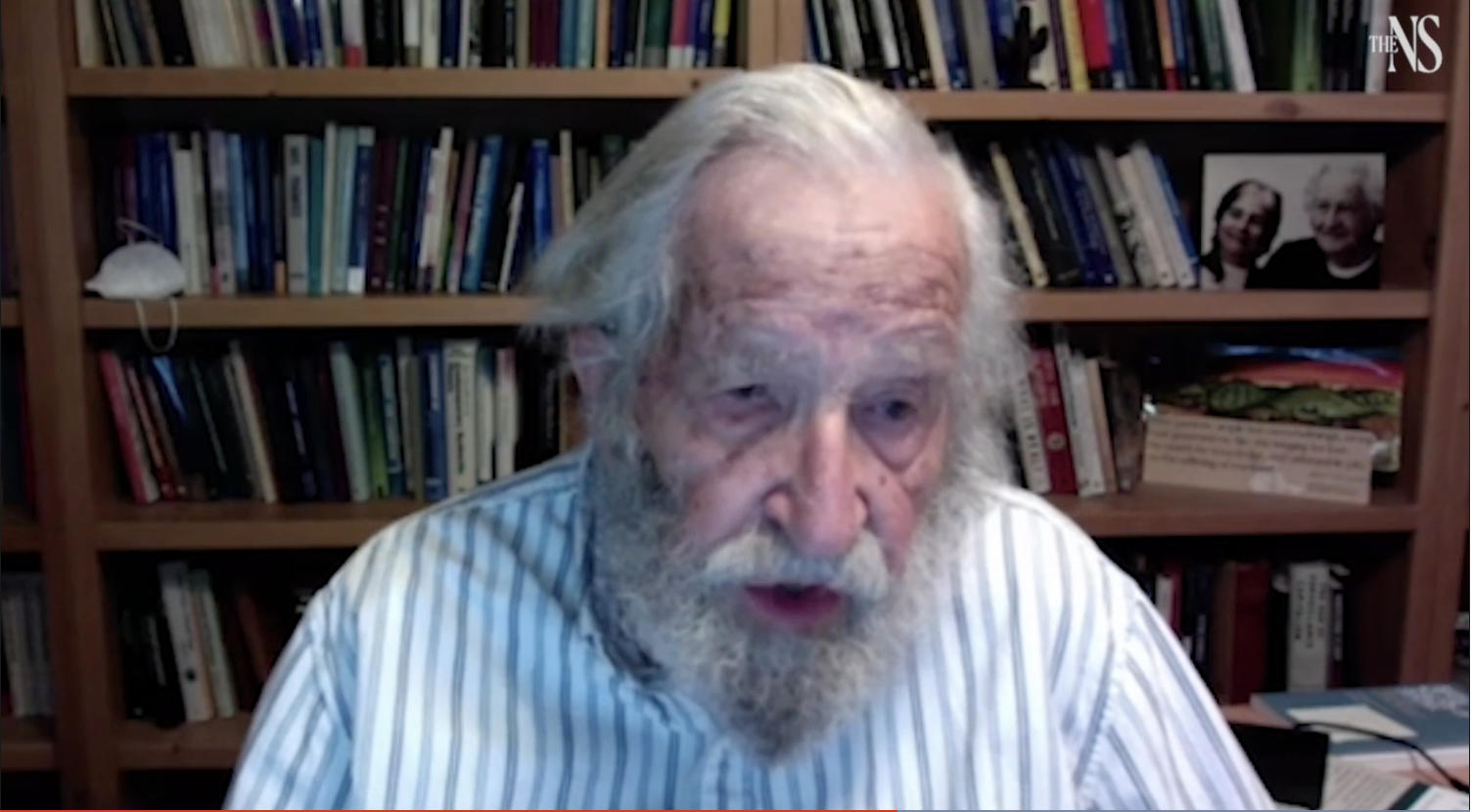
“We’re approaching the most dangerous point in human history” says Noam Chomsky | The New Statesman

By George Eaton

It was as a ten-year-old that Noam Chomsky first confronted the perils of foreign aggression. “The first article that I wrote for the elementary school newspaper was on the fall of Barcelona [in 1939],” Chomsky recalled when we spoke recently via video call. It charted the advance of the “grim cloud of fascism” across the world. “I haven’t changed my opinion since, it’s just gotten worse,” he sardonically remarked. Due to the climate crisis and the threat of nuclear war, Chomsky told me, “we’re approaching the most dangerous point in human history… We are now facing the prospect of destruction of organised human life on Earth.” 

At the age of 93, as perhaps the world’s most cited living scholar, Chomsky could be forgiven for retreating from the public sphere. But in an era of permanent crisis, he retains the moral fervour of a young radical – more preoccupied with the world’s mortality than his own. He is a walking advertisement for Dylan Thomas’s injunction – “Do not go gentle into that good night” – or for what Chomsky calls “the bicycle theory: if you keep going fast, you don’t fall off”. 

The occasion for our conversation is the publication of Chronicles of Dissent, a collection of interviews between Chomsky and the radical journalist David Barsamian from 1984 to 1996. But the backdrop is the war in Ukraine – a subject about which Chomsky is unsurprisingly voluble. 

“It’s monstrous for Ukraine,” he said. In common with many Jews, Chomsky has a family connection to the region: his father was born in present-day Ukraine and emigrated to the US in 1913 to avoid serving in the tsarist army; his mother was born in Belarus. Chomsky, who is often accused by critics of refusing to condemn any anti-Western government, unhesitatingly denounced Vladimir Putin’s “criminal aggression”. 

But he added: “Why did he do it?” There are two ways of looking at this question. One way, the fashionable way in the West, is to plumb the recesses of Putin’s twisted mind and try to determine what’s happening in his deep psyche.

“The other way would be to look at the facts: for example, that in September 2021 the United States came out with a strong policy statement, calling for enhanced military cooperation with Ukraine, further sending of advanced military weapons, all part of the enhancement programme of Ukraine joining Nato. You can take your choice, we don’t know which is right. What we do know is that Ukraine will be further devastated. And we may move on to terminal nuclear war if we do not pursue the opportunities that exist for a negotiated settlement.”

How does he respond to the argument that Putin’s greatest fear is not encirclement by NATO but the spread of liberal democracy in Ukraine and Russia’s “near abroad”

“Putin is as concerned with democracy as we are. If it’s possible to break out of the propaganda bubble for a few minutes, the US has a long record of undermining and destroying democracy. Do I have to run through it? Iran in 1953, Guatemala in 1954, Chile in 1973, on and on… But we are supposed to now honour and admire Washington’s enormous commitment to sovereignty and democracy. What happened in history doesn’t matter. That’s for other people.” 

“What about NATO expansion? There was an explicit, unambiguous promise by [US secretary of state] James Baker and president George HW Bush to Gorbachev that if he agreed to allow a unified Germany to rejoin NATO, the US would ensure that there would be no move one inch to the east. There’s a good deal of lying going on about this now.” 

Chomsky, who observed in 1990 that “if the Nuremberg laws were applied, then every postwar American president would have been hanged”, spoke witheringly of Joe Biden. 

“It’s certainly right to have moral outrage about Putin’s actions in Ukraine,” he said of Biden’s recent declaration that the Russian president “cannot remain in power”. “But it would be even more progress to have moral outrage about other horrible atrocities… In Afghanistan, literally millions of people are facing imminent starvation. Why? There’s food in the markets. But people who have little money have to watch their children starve because they can’t go to the market to buy food. Why? Because the United States, with the backing of Britain, has kept Afghanistan’s funds in New York banks and will not release them.” 

Chomsky’s contempt for the hypocrisies and contradictions of US foreign policy will be familiar to anyone who has read one of his many books and pamphlets (his first political work, American Power and the New Mandarins, published in 1969, foretold the US’s defeat in Vietnam). But he is now perhaps most animated when discussing Donald Trump’s possible return and the climate crisis. 

“I’m old enough to remember the early 1930s. And memories come to mind,” he said in a haunting recollection. “I can remember listening to Hitler’s speeches on the radio. I didn’t understand the words, I was six years old. But I understood the mood. And it was frightening and terrifying. And when you watch one of Trump’s rallies that can’t fail to come to mind. That’s what we’re facing.”

Though he self-identifies as an anarcho-syndicalist or a libertarian socialist, Chomsky revealed to me that he had voted for Republicans in the past (“like them or not, they were an authentic party”). But now he said, they were a truly dangerous insurgency. 

“Because of Trump’s fanaticism, the worshipful base of the Republican Party barely regards climate change as a serious problem. That’s a death warrant to the species.” 

Faced with such existential threats, it is perhaps unsurprising that Chomsky remains a dissident intellectual – in the manner of one of his heroes, Bertrand Russell (who lived to 97 and similarly straddled politics and philosophy). But he also still spends hours a day answering emails from admirers and critics, and teaches linguistics at the University of Arizona, the state where he lives with his second wife, Valeria Wasserman, a Brazilian translator. 

Chomsky is also still engaged by British politics. “Brexit was a very serious error, it means that Britain will be compelled to drift even further into subordination to the US,” he told me. “I think it’s a disaster. What does it mean for the Conservative Party? I imagine they can lie their way out of it, they’re doing a good job of lying about a lot of things and getting away with it.”

Of Keir Starmer, he scornfully remarked: “He’s returning the Labour Party to a party that’s reliably obedient to power, that will be Thatcher-lite in the style of Tony Blair and that won’t ruffle the feathers of either the US or anyone who’s important in Britain.” 

The Italian Marxist Antonio Gramsci advised radicals to maintain “pessimism of the intellect and optimism of the will”. What, I asked Chomsky at the close of our conversation, gives him hope? 

“A lot of young people; Extinction Rebellion in England, young people dedicated to trying to put an end to the catastrophe. Civil disobedience – it’s not a joke, I’ve been involved with it for much of my life. I’m too old for it now [Chomsky was first arrested in 1967 for protesting against the Vietnam War and shared a cell with Norman Mailer]… It’s not pleasant to be thrown in jail and beaten, but they’re willing to undertake it.”

“There are plenty of young people who are appalled by the behaviour of the older generation, rightly, and are dedicated to trying to stop this madness before it consumes us all. Well, that’s the hope for the future.”

Source: The New Statesman
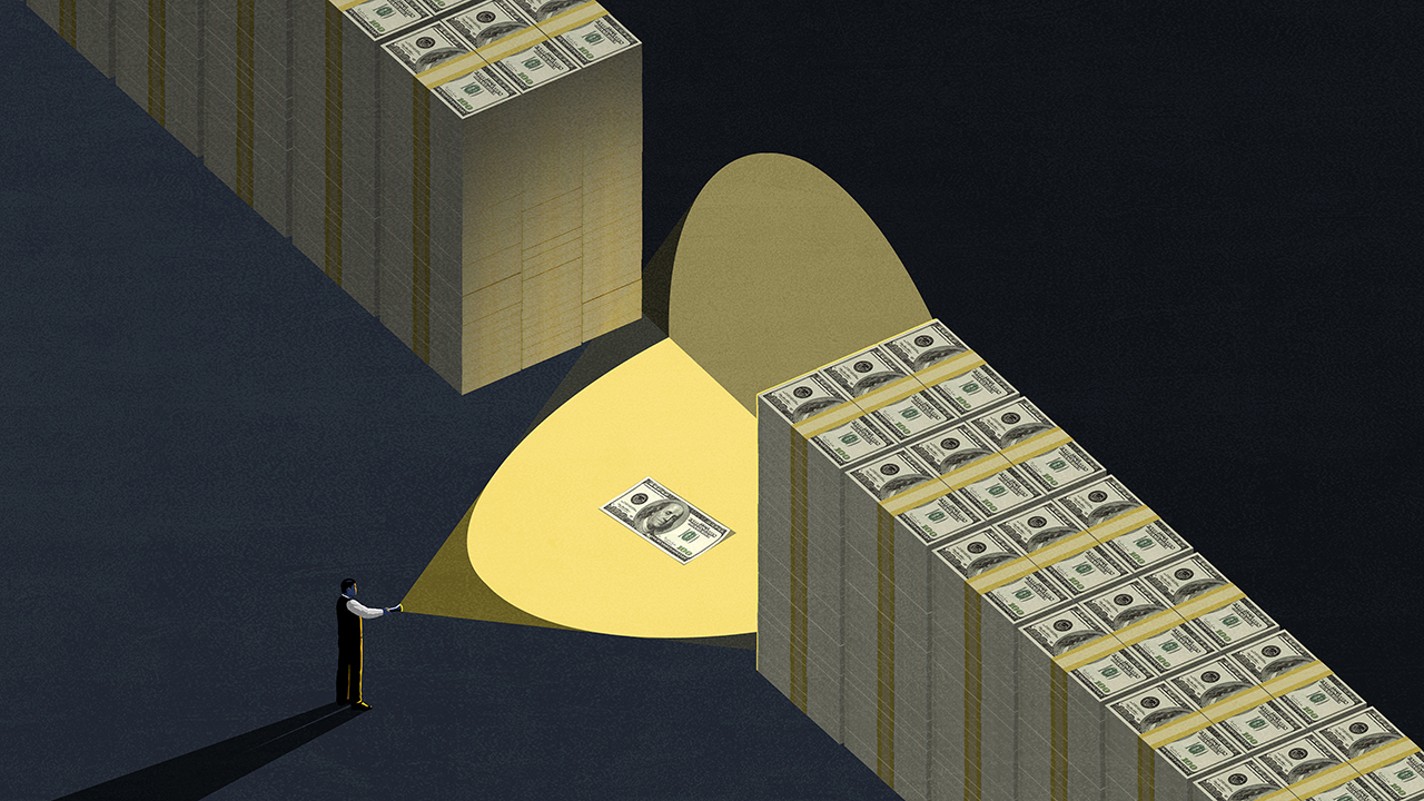
The Coming Global Financial Revolution: Russia Is Following the American Playbook | Global Research

By Ellen Brown

No country has successfully challenged the U.S. dollar’s global hegemony—until now. How did this happen and what will it mean?

Foreign critics have long chafed at the “exorbitant privilege” of the U.S. dollar as global reserve currency. The U.S. can issue this currency backed by nothing but the “full faith and credit of the United States.” Foreign governments, needing dollars, not only accept them in trade but buy U.S. securities with them, effectively funding the U.S. government and its foreign wars. But no government has been powerful enough to break that arrangement – until now. How did that happen and what will it mean for the U.S. and global economies?

The Rise and Fall of the PetroDollar

First, some history: The U.S. dollar was adopted as the global reserve currency at the Bretton Woods Conference in 1944, when the dollar was still backed by gold on global markets. The agreement was that gold and the dollar would be accepted interchangeably as global reserves, the dollars to be redeemable in gold on demand at $35 an ounce. Exchange rates of other currencies were fixed against the dollar.

But that deal was broken after President Lyndon Johnson’s “guns and butter” policy exhausted the U.S. kitty by funding war in Vietnam along with his “Great Society” social programs at home. French President Charles de Gaulle, suspecting the U.S. was running out of money, cashed in a major portion of France’s dollars for gold and threatened to cash in the rest; and other countries followed suit or threatened to.

In 1971, President Richard Nixon ended the convertibility of the dollar to gold internationally (known as “closing the gold window”), in order to avoid draining U.S. gold reserves. The value of the dollar then plummeted relative to other currencies on global exchanges. To prop it up, Nixon and Secretary of State Henry Kissinger made a deal with Saudi Arabia and the OPEC countries that OPEC would sell oil only in dollars, and that the dollars would be deposited in Wall Street and City of London banks. In return, the U.S. would defend the OPEC countries militarily. Economic researcher William Engdahl also presents evidence of a promise that the price of oil would be quadrupled. An oil crisis triggered by a brief Middle Eastern war did cause the price of oil to quadruple, and the OPEC agreement was finalized in 1974.

The deal held firm until 2000, when Saddam Hussein broke it by selling Iraqi oil in euros. Libyan president Omar Qaddafi followed suit. Both presidents wound up assassinated, and their countries were decimated in war with the United States. Canadian researcher Matthew Ehret observes:

We should not forget that the Sudan-Libya-Egypt alliance under the combined leadership of Mubarak, Qadhafi and Bashir, had moved to establish a new gold-backed financial system outside of the IMF/World Bank to fund large scale development in Africa. Had this program not been undermined by a NATO-led destruction of Libya, the carving up of Sudan and regime change in Egypt, then the world would have seen the emergence of a major regional block of African states shaping their own destinies outside of the rigged game of Anglo-American controlled finance for the first time in history.

The Rise of the PetroRuble

The first challenge by a major power to what became known as the petrodollar has come in 2022. In the month after the Ukraine conflict began, the U.S. and its European allies imposed heavy financial sanctions on Russia in response to the illegal military invasion. The Western measures included freezing nearly half of the Russian central bank’s 640 billion U.S. dollars in financial reserves, expelling several of Russia’s largest banks from the SWIFT global payment system, imposing export controls aimed at limiting Russia’s access to advanced technologies, closing down their airspace and ports to Russian planes and ships, and instituting personal sanctions against senior Russian officials and high-profile tycoons. Worried Russians rushed to withdraw rubles from their banks, and the value of the ruble plunged on global markets just as the U.S. dollar had in the early 1970s.

The trust placed in the U.S. dollar as global reserve currency, backed by “the full faith and credit of the United States,” had finally been fully broken. Russian President Vladimir Putin said in a speech on March 16 that the U.S. and EU had defaulted on their obligations, and that freezing Russia’s reserves marks the end of the reliability of so-called first class assets. On March 23, Putin announced that Russia’s natural gas would be sold to “unfriendly countries” only in Russian rubles, rather than the euros or dollars currently used. Forty-eight nations are counted by Russia as “unfriendly,” including the United States, Britain, Ukraine, Switzerland, South Korea, Singapore, Norway, Canada and Japan.

Putin noted that more than half the global population remains “friendly” to Russia. Countries not voting to support the sanctions include two major powers – China and India – along with major oil producer Venezuela, Turkey, and other countries in the “Global South.” “Friendly” countries, said Putin, could now buy from Russia in various currencies.

Russia Finance Minister: We May Abandon Dollar in Oil Trade as It Is Becoming “Too Risky”

On March 24, Russian lawmaker Pavel Zavalny said at a news conference that gas could be sold to the West for rubles or gold, and to “friendly” countries for either national currency or bitcoin.

Energy ministers from the G7 nations rejected Putin’s demand, claiming it violated gas contract terms requiring sale in euros or dollars. But on March 28, Kremlin spokesman Dmitry Peskov said Russia was “not engaged in charity” and won’t supply gas to Europe for free (which it would be doing if sales were in euros or dollars it cannot currently use in trade). Sanctions themselves are a breach of the agreement to honor the currencies on global markets.

Bloomberg reports that on March 30, Vyacheslav Volodin, speaker of the lower Russian house of parliament, suggested in a Telegram post that Russia may expand the list of commodities for which it demands payment from the West in rubles (or gold) to include grain, oil, metals and more. Russia’s economy is much smaller than that of the U.S. and the European Union, but Russia is a major global supplier of key commodities – including not just oil, natural gas and grains, but timber, fertilizers, nickel, titanium, palladium, coal, nitrogen, and rare earth metals used in the production of computer chips, electric vehicles and airplanes.

On April 2, Russian gas giant Gazprom officially halted all deliveries to Europe via the Yamal-Europe pipeline, a critical artery for European energy supplies.

U.K. professor of economics Richard Werner calls the Russian move a clever one – a replay of what the U.S. did in the 1970s. To get Russian commodities, “unfriendly” countries will have to buy rubles, driving up the value of the ruble on global exchanges just as the need for petrodollars propped up the U.S. dollar after 1974. Indeed, by March 30, the ruble had already risen to where it was a month earlier.

A Page Out of the “American System” Playbook

Russia is following the U.S. not just in hitching its national currency to sales of a critical commodity but in an earlier protocol – what 19th century American leaders called the “American System” of sovereign money and credit. Its three pillars were (a) federal subsidies for internal improvements and to nurture the nation’s fledgling industries, (b) tariffs to protect those industries, and (c) easy credit issued by a national bank.

Michael Hudson,  a research professor of economics and author of “Super-Imperialism: The Economic Strategy of American Empire” among many other books, notes that the sanctions are forcing Russia to do what it has been reluctant to do itself – cut reliance on imports and develop its own industries and infrastructure. The effect, he says, is equivalent to that of protective tariffs. In an article titled “The American Empire Self-destructs,” Hudson writes of the Russian sanctions (which actually date back to 2014):

Russia had remained too enthralled by free-market ideology to take steps to protect its own agriculture or industry. The United States provided the help that was needed by imposing domestic self-reliance on Russia (via sanctions). When the Baltic states lost the Russian market for cheese and other farm products, Russia quickly created its own cheese and dairy sector – while becoming the world’s leading grain exporter.

Russia is discovering (or is on the verge of discovering) that it does not need U.S. dollars as backing for the ruble’s exchange rate. Its central bank can create the rubles needed to pay domestic wages and finance capital formation. The U.S. confiscations thus may finally lead Russia to end neoliberal monetary philosophy, as Sergei Glaziev has long been advocating in favor of MMT [Modern Monetary Theory]. …

What foreign countries have not done for themselves – replacing the IMF, World Bank and other arms of U.S. diplomacy – American politicians are forcing them to do. Instead of European, Near Eastern and Global South countries breaking away out of their own calculation of their long-term economic interests, America is driving them away, as it has done with Russia and China.

Glazyev and the Eurasian Reset

Sergei Glazyev, mentioned by Hudson above, is a former adviser to President Vladimir Putin and the Minister for Integration and Macroeconomics of the Eurasia Economic Commission, the regulatory body of the Eurasian Economic Union (EAEU). He has proposed using tools similar to those of the “American System,” including converting the Central Bank of Russia to a “national bank” issuing Russia’s own currency and credit for internal development. On February 25, Glazyev published an analysis of U.S. sanctions titled “Sanctions and Sovereignty,” in which he stated:

[T]he damage caused by US financial sanctions is inextricably linked to the monetary policy of the Bank of Russia  …. Its essence boils down to a tight binding of the ruble issue to export earnings, and the ruble exchange rate to the dollar. In fact, an artificial shortage of money is being created in the economy, and the strict policy of the Central Bank leads to an increase in the cost of lending, which kills business activity and hinders the development of infrastructure in the country.

Glazyev said that if the central bank replaced the loans withdrawn by its Western partners with its own loans, Russian credit capacity would greatly increase, preventing a decline in economic activity without creating inflation.

Russia has agreed to sell oil to India in India’s own sovereign currency, the rupee; to China in yuan; and to Turkey in lira. These national currencies can then be spent on the goods and services sold by those countries. Arguably, every country should be able to trade in global markets in its own sovereign currency; that is what a fiat currency is – a medium of exchange backed by the agreement of the people to accept it at value for their goods and services, backed by the “full faith and credit” of the nation.

But that sort of global barter system would break down just as local barter systems do, if one party to the trade did not want the goods or services of the other party. In that case, some intermediate reserve currency would be necessary to serve as a medium of exchange.

Glazyev and his counterparts are working on that. In a translated interview posted on The Saker, Glazyev stated:

We are currently working on a draft international agreement on the introduction of a new world settlement currency, pegged to the national currencies of the participating countries and to exchange-traded goods that determine real values. We won’t need American and European banks. A new payment system based on modern digital technologies with a blockchain is developing in the world, where banks are losing their importance.

Russia and China have both developed alternatives to the SWIFT messaging system from which certain Russian banks have been blocked. London-based commentator Alexander Mercouris makes the interesting observation that going outside SWIFT means Western banks cannot track Russian and Chinese trades.

Geopolitical analyst Pepe Escobar sums up the plans for a Eurasian/China financial reset in an article titled “Say Hello to Russian Gold and Chinese Petroyuan.” He writes:

It was a long time coming, but finally some key lineaments of the multipolar world’s new foundations are being revealed.

On Friday [March 11], after a videoconference meeting, the Eurasian Economic Union (EAEU) and China agreed to design the mechanism for an independent international monetary and financial system. The EAEU consists of Russia, Kazakhstan, Kyrgyzstan, Belarus and Armenia, is establishing free trade deals with other Eurasian nations, and is progressively interconnecting with the Chinese Belt and Road Initiative (BRI).

For all practical purposes, the idea comes from Sergei Glazyev, Russia’s foremost independent economist ….

Quite diplomatically, Glazyev attributed the fruition of the idea to “the common challenges and risks associated with the global economic slowdown and restrictive measures against the EAEU states and China.”

Translation: as China is as much a Eurasian power as Russia, they need to coordinate their strategies to bypass the US unipolar system.

The Eurasian system will be based on “a new international currency,” most probably with the yuan as reference, calculated as an index of the national currencies of the participating countries, as well as commodity prices. …

The Eurasian system is bound to become a serious alternative to the US dollar, as the EAEU may attract not only nations that have joined BRI … but also the leading players in the Shanghai Cooperation Organization (SCO) as well as ASEAN. West Asian actors – Iran, Iraq, Syria, Lebanon – will be inevitably interested.

Exorbitant Privilege or Exorbitant Burden?

If that system succeeds, what will the effect be on the U.S. economy? Investment strategist Lynn Alden writes in a detailed analysis titled “The Fraying of the US Global Currency Reserve System” that there will be short-term pain, but, in the long run, it will benefit the U.S. economy. The subject is complicated, but the bottom line is that reserve currency dominance has resulted in the destruction of our manufacturing base and the buildup of a massive federal debt. Sharing the reserve currency load would have the effect that sanctions are having on the Russian economy – nurturing domestic industries as a tariff would, allowing the American manufacturing base to be rebuilt.

Other commentators also say that being the sole global reserve currency is less an exorbitant privilege than an exorbitant burden. Losing that status would not end the importance of the U.S. dollar, which is too heavily embedded in global finance to be dislodged. But it could well mean the end of the petrodollar as sole global reserve currency, and the end of the devastating petroleum wars it has funded to maintain its dominance.

Source: Global Research

Author: Ellen Brown is an attorney, chair of the Public Banking Institute, and author of thirteen books including Web of DebtThe Public Bank Solution, and Banking on the People: Democratizing Money in the Digital Age. She also co-hosts a radio program on PRN.FM called “It’s Our Money.” Her 300+ blog articles are posted at EllenBrown.com.

The War Propaganda Changes Its Shape | Lew Rockwell

By Thierry Meyssan

If the Russian army has won the war against the Banderites in Ukraine, NATO has won the cognitive war against its own citizens in the West. The Atlantic Alliance has developed a new form of propaganda based on what it denounced a short time ago: Fake News, that is to say not false information, but biased information. The question is, how to protect yourself from it?

THE NATO DEVICE

“Subduing the enemy by force is not the highest art of war, the highest art of war is to subdue the enemy without shedding a single drop of blood.
~ Sun Tzu, The Art of War.

French General Philippe Lavigne of NATO’s Allied Command Transformation (ACT) oversees research on new propaganda methods.

His command has 21 centers of excellence, including one for propaganda, the Strategic Communications Center of Excellence (STRATCOM) in Riga, Latvia. It has created the NATO Innovation Hub (iHub) under the direction of Frenchman Francois du Cluzel, a former professor at the Collège militaire interarmes de Coëtquidan. It funds research at John Hopkins University and Imperial College of London on cognitive abilities (similar cohorts who engineered the COVID-19 propaganda machine). This research covers the entire cognitive domain with various applications ranging from bionic soldiers to war propaganda.

NATO’s general idea is to add to the five usual domains of intervention (air, land, sea, space and cyber), a sixth: the human brain. “While actions in the five domains are carried out in order to have an effect on the human domain, the objective of cognitive warfare is to make each one a weapon,” writes François du Cluzel.

If war propaganda was based, during the First World War, on false information popularized by great writers; then on the repetition of selected messages during the Second World War; today it is conceived as an illusionist’s act. It is about moving people to distract their attention and hide from them what they should not see. They judge what they see with the uninteresting information they are fed. In this way, we manage, without lying to them, to make them take bladders for lanterns.

We are living the first application of this technique, on the occasion of the war (or Russian police action) in Ukraine.

To make myself understood, I will first present some information to be ignored, then come back on the treatment of the war by French State television. I would have obtained the same result if I had used a German, British or American example.

(Number of explosions recorded in Donbass (February 14-22, 2022)

You can download the daily reports of the Organization for Security and Cooperation in Europe (OSCE) observers at: https://www.osce.org/ukraine-smm/reports

THE RESPONSIBILITY OF WESTERN LEADERS FOR THE WAR IN UKRAINE

In the West, the narrative of the war in Ukraine places all the blame solely on the Russian president, Vladimir Putin, and secondarily on the political and financial figures of his regime. However, this version is clearly false if one considers the daily reports of the observers of the Organization for Security and Cooperation in Europe (OSCE).

They testified that they heard an attack from the Donbass (still Ukrainian) by Kiev forces on the afternoon of February 17. All news agencies reported that at least 100,000 civilians had fled into the Donbass or to Russia. In addition, the main political leaders of NATO heard Ukrainian President Volodymyr Zelenskyy tell them at the Munich Security Conference that he intended to acquire nuclear weapons against Russia. It is clear that it was not Moscow, but Kiev, that triggered the hostilities.

No one can imagine that Kiev has unleashed this war against a far superior enemy without having received prior assurances from allies apparently capable of defending the country against Russia. This can only be NATO or the United States and possibly the other two nuclear powers, France and the United Kingdom.

The first meeting where this war was presented as desirable was held to our knowledge in the House of Representatives on September 5, 2019. It was organized by the Rand Corporation, the think tank of the US military-industrial lobby. The purpose was to present two reports, “Overextending and Unbalancing Russia” and “Extending Russia: Competing from Advantageous Ground”  to the congressmen/women. The main idea is to use against it the particularity on which Russia bases its defense. Since it is a huge territory that the Russians defend by moving around and practicing the “scorched earth strategy”, it is enough to force them to move abroad to exhaust them.

The importance of this event is shown to us by the incident that affected our collaborator, the Italian geographer Manlio Dinucci. His article on the subject was censored by his newspaper, Il Manifesto, which he had to leave.

Three events attest to the involvement of the United States, the United Kingdom and France in the secret preparation of the war.

On March 24, 2022, a video of a 22-minute telephone conversation between the British Minister of Defense, Ben Wallace, and two Russian comedians Vladimir (Vovan) Kuznetsov and Alexei (Lexus) Stolyarov was published. One of the Russians was posing as the Ukrainian Prime Minister, Denys Shmyhal, whom Wallace never met.

1) Asked whether the UK would help Kiev to acquire nuclear weapons, the Rt. Hon. Wallace replied that he had to consult with Prime Minister Boris Johnson and that “The principle is that we will support Ukraine as a friend in whatever choice you make.”. In one sentence, he swept aside the Nuclear Non-Proliferation Treaty (NNPT).
2) On the subject of the Next generation Light Anti-tank Weapon (NLAW) missiles that the United Kingdom has just sent to the Ukrainian army, Ben Wallace admitted that they were not working properly and that spare parts had also been sent.
3) But it is especially on the subject of NATO that Ben Wallace’s language has been too prolix. The British minister once again invited Ukraine to join the Atlantic Alliance. In passing, he unwittingly revealed that the United Kingdom had been sending military instructors to prepare the Ukrainian army for several years.

Boris Johnson’s government used every means at its disposal to conceal, or rather minimize, these statements. It claimed that the interview lasted only 10 minutes and forbade YouTube/Google to broadcast the entire sketch. The Western media was asked to talk about his blunder on the atomic bomb and to cover up the other two points. This is how the British always do it: not to deny everything, but to make the most dangerous points disappear.

On March 25, 2022, President Joe Biden visited the Congress Palace in Rzeszów, Poland. He was accompanied by the director of USAID, Samantha Power (former ambassador to the UN), and the Polish president, Andrej Duda. It is worth noting that Andrej Duda had his parliament passed a law denying the role of the Polish state in Nazi crimes and authorizing legal action against anyone who mentions them.

Joe Biden spoke with various NGOs to praise their assistance to Ukrainian refugees. Afterwards, he gave a speech to his soldiers of the 82nd Airborne Division, stationed there. He also visited them in the dining hall and spoke to them without a teleprompter or cameras. As always at such times, the old man (79 years old) revealed state secrets. According to the witnesses, he thanked them for their commitment in Ukraine for a long time, even though officially there have never been any US soldiers in that country.

On March 29, 2022, General Eric Vidaud, director of French military intelligence, was dismissed. No official explanation was given. It seems that in reality, General Viaud had deployed men on the direct instruction of President Macron’s private staff, in 2021 when he was commander of special operations, to supervise the Azov Banderites regiment. Immediately, five Ukrainian helicopters tried to flee Mariupol, the stronghold of the Azov regiment. Two were shot down on March 30. The survivors were taken prisoner by the Russian army. They spoke immediately. The soldiers of the Special Operations Command are placed for all logistical matters under the orders of the Chief of Staff of the Armed Forces, General Thierry Burkhard, but they take their orders directly from the head of the armed forces, President Emmanuel Macron.

Afterwards, relations between Presidents Macron and Putin cooled sharply.

HOW WAR PROPAGANDA MASKS REALITY

In France the state has France-Télévision for its own population, with France-2 being the most watched channel, and France Médias Monde for abroad. The latter group depends directly on the Ministry of Foreign Affairs and broadcasts France-24 in several languages.

To begin with, France 2 proposed a live newscast from Lviv (Ukraine) presented by its star, Anne-Sophie Lapix, on March 14, 2022 [6]. This newscast gathers every day a little more than 20% of the public. The young woman showed a lot of destruction and traumatized refugees. She walked through the city, but did not notice the imposing monument to Stepan Bandera, the leader of the Ukrainian Nazi collaborators. She also questioned the mayor of Lviv, Andriy Sadovy, without explaining that he is one of the country’s leading oligarchs. She did not ask him about his media group, of which his wife is the director. So she did not ask him about the remarks made the previous day on his channel, 24 Канал, calling for the killing of all Russians, women and children included, according to the method advocated by SS Adolf Eichman. At no time was it specified that this program was an initiative of the Banderite oligarch Andriy Sadovy and his wife, both former clients of the Publicis agency of Arthur Sadoun, the husband of Anne-Sophie Lapix.

The viewer who ignores Ukrainian tributes to the Nazis and exhortations to follow their example can only weep at the accumulation of suffering that was shown to him. He cannot doubt that the Russians are liars and criminals and that Ukrainians in general are innocent victims.

On March 25, France 24 in English, in its column Truth or Fake, reported on the interview of British Defense Minister Ben Wallace by Russian comedians. Following the instructions of Boris Johnson’s cabinet, the French Foreign Ministry’s television channel mocked his statements on the atomic bomb in order to better conceal those on the inefficiency of his anti-tank weapons and especially those on the presence of British military instructors in Ukraine for several years. The journalist presented the comedians as youtubers, whereas they work for the NTV channel, which allowed her not to mention that they are censored on YouTube in the country of the 1st amendment and freedom of expression. The column was produced by journalist Catalina Marchant de Abreu, a specialist in debunking fake news (sic)

The peak was reached on March 31 with France 2 news. France-Television, which until now denied the ideological character of the Azov regiment, broadcast a report on this formation. The public television admitted that it had, in 2014, been infiltrated by neo-Nazi elements, citing one of its founders, Andriy Biletsky, but assured that it had since changed into a respectable Defense force. France-2 did not mention one of its other founders, Dmytro Yarosh, a NATO agent and former coordinator of European neo-Nazis and Middle Eastern jihadists against Russia, who has become a special advisor to the commander-in-chief of the Ukrainian armies.

France-2 referred to an old UN report on torture, but not to the discovery of his special prisons by the Russian army, nor to recent UN statements on the subject. The report also failed to explain what Banderites are in Ukrainian history and reduced the importance of neo-Nazis to the wearing of the swastika. Having thus glossed over the problem, the channel estimated the danger to be between 3,000 and 5,000 men, while Reuters assures us that the Banderite paramilitaries today represent 102,000 men divided into numerous militias incorporated into the Territorial Defense.

Source: Lew Rockwell

Former Telecom Exec Reveals How ‘5G’ is Globalist Lynchpin for ‘Total Social Control’ | Tucker Carlson Tonight

By Kyle Becker

5G wireless technology has become the source of much controversy, and not just whether or not it interferes with aviation or people’s health concerns.

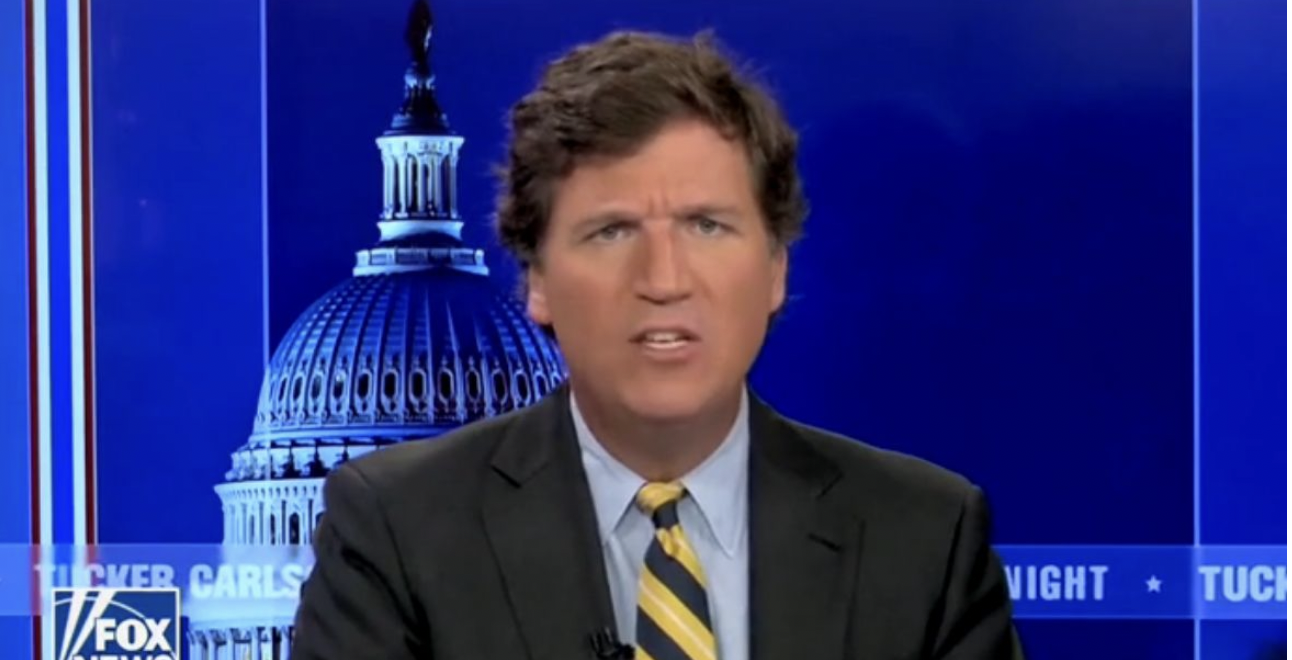
Tucker Carlson sought to unpack the push for 5G with telecom veteran Jonathan Pelson on Monday night’s episode of “Tucker Carlson Tonight” on Fox News. Pelson is the author of “Wireless Wars, China’s Dangerous Domination of 5G and How We’re Fighting Back.”

“You may have noticed something called 5G is coming to the United States,” Tucker Carlson said. “We were told that it might interfere with airplanes. We just had the most interesting conversation of the year with Jonathan Pelson. He said 5G is not actually about your cell phone at all and it’s controlled by China. This is one of those conversations that we got increasingly wide eyed. You should watch the whole thing but here’s part of it.”

“5G despite the advertisements is not just a faster 4G,” Pelson said. “The real pay-off of 5G is that factories are going to use it to totally interconnect themselves. This thing called ‘the internet of things.’ Their traffic systems. License plate readers. Facial recognition systems. The way farms operate. There are devices now and sensors, wire lessens source on tractors, put sensors in the soil to test moisture levels, all of this will be connected.4-g network can’t handle that. If they can handle a thousand calls in one sector, 5G can handle a hundred thousand, so even though commercials talk about it being a lot faster than 4G…”

Source: Becker News & Trending Politics

Russia accuses Ukraine of staging murders to generate Western headlines | Russia Times (RT)

Defense Ministry accuses Kiev of trying to frame its soldiers

Russia’s Defense Ministry claimed, on Tuesday, that Ukrainian security services have staged more alleged killings of civilians in several towns and villages in order to elicit sympathy by prompting media headlines in the West. Officials believe that Kiev is trying to create a narrative of Moscow being responsible for war crimes. 

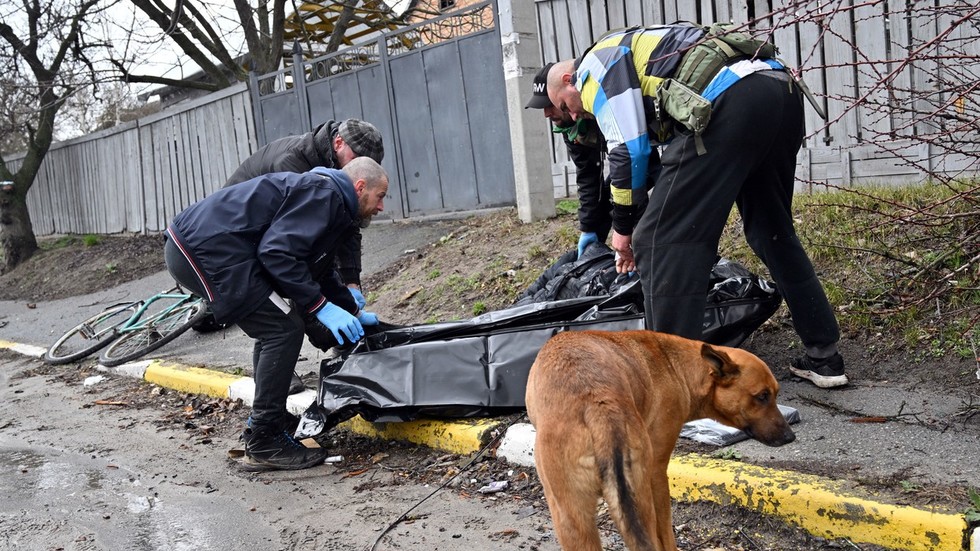
Moscow insists that the same tactics were used by Kiev to blame Russian forces for atrocities in the town of Bucha last week.

“The troops of the 72nd Ukrainian Main Center for Psychological Operations conducted another staged filming of civilians allegedly killed by violent actions of the Russian armed forces in order for it to be distributed through the Western media,” spokesman Major General Igor Konashenkov said during a briefing.

According to “confirmed information,” the filming took place in the village of Moschun some 23km northwest of the Ukrainian capital Kiev on Monday, he insisted.

Similar false flag operations have been carried out by the Ukrainian side in the cities of Sumy, Konotop and elsewhere, Konashenkov insisted. He didn’t provide direct evidence to support his claims. 

On Saturday, Ukraine distributed graphic footage of multiple corpses lying in the streets of Bucha, alleging that they were executed by Russian troops. Again, no unequivocal proof was furnished. 

Moscow, which insists that it has not targetted civilians during its operation in Ukraine, has rejected those accusations as a “provocation” and accused Kiev of mounting a false flag operation. 

Officials pointed out numerous inconsistencies in the Ukrainian story, including the fact that the video emerged several days after the Russian forces withdrew from Bucha, and that the local mayor didn’t mention any killings in his video address declaring the “liberation” of the city.

Despite this, the West has immediately decided who to blame for the purported atrocities. US President Joe Biden has demanded a “war crimes trial” for his Russian counterpart Vladimir Putin. However, unlike Moscow, Washington doesn’t recognise the International Criminal Court. 

Meanwhile, the EU promised to send its experts to aid Ukrainian authorities in collecting evidence at the site.

Moscow launched a large-scale offensive against Ukraine in late February, following Ukraine’s failure to implement the terms of the Minsk agreements signed in 2014, and Russia’s eventual recognition of the Donbass republics in Donetsk and Lugansk. The German and French brokered protocols had been designed to regularize the status of those regions within the Ukrainian state.

READ MORE: Biden wants ‘war crimes trial’ for Putin

Russia has now demanded that Ukraine officially declare itself a neutral country that will never join the US-led NATO bloc. Kiev insists the Russian offensive was completely unprovoked and has denied claims it was planning to retake the two rebel regions by force

Source: Russia Times (RT)

Pitchforks Are Coming: Iversen Predicts Public Unrest if Inflation Continues | Children’s Health Defense

By David Charbonneau, Ph.D.

Political commentator Kim Iversen warned rising corporate profits combined with higher prices and empty shelves will create a consumer backlash against corporations and fundamentally change the way the people view the government.

Political commentator Kim Iversen last week on The Hill’s “Rising” warned of coming civil unrest if inflation and supply shortages continue while corporate profits soar.

Iversen and co-hosts Ryan Grim and Robby Soave skewered BlackRock CEO Robert Kapito for complaining of “an entitled generation that has never had to make sacrifices before.”

Iversen reported that U.S. corporate profits hit a record high in the fourth quarter of 2021, jumping 25%, even as the gross domestic product dropped 6.9%.

“So, what does this mean exactly?” she asked.

“It means,” she said, “inflation is good for big businesses, which upped their prices in response to supply and labor shortages and saw profit margins increase 25% to $2.94 trillion — the largest gain since 1976.”

She singled out the oil industry, saying, “We know that while gas prices are taking a toll on working people, 25 of the world’s biggest fossil fuel corporations are reaping in record profits … [and] oil giant BP, for example, has hit its highest profits in eight years.”

According to Iversen, corporations are using “the slight inflation that we did see in the beginning” as an excuse to hike prices over the long term.

She said:

“If you combine the supply-chain problems with the energy price increases with the corporate greed, you’ve basically explained all of the inflation that we’ve experienced.”

Iversen cited a March 29 MSNBC tweet that questioned why Americans are dissatisfied with this “booming economy:”

This trend isn’t sustainable, even for the interests of corporations, since a “middle class that is poor” won’t be able to buy any products, Iversen said.

As a solution, she suggested supporting Bernie Sanders’ new proposal to tax windfall profits from the pandemic at 95%.

Soave then reported on BlackRock CEO Kapito’s controversial comments about the economy.

Speaking last month at the Texas Independent Producers and Royalty Owners Association, Kapito said, “For the first time, this generation is going to go into a store and not be able to get what they want,” adding, “ … we have a very entitled generation that has never had to sacrifice.”

“I think this generation has sacrificed,” said the 32-year-old Soave. “I think there’s been plenty of sacrificing.”

While conceding his generation was never forced to serve in a war, he cited other burdens, such as student loan debt and the difficult economy his generation confronted upon graduating in the wake of the 2008 financial meltdown.

Kapito graduated from the Wharton School in 1979 and immediately joined a Boston investment firm. He earned an MBA from Harvard in 1983 and went on to co-found BlackRock in 1988.

According to corporate proxy reports obtained by salary.com, Kapito made $22,115,203 in 2020. Wallmine reports his estimated net worth at $303 million (other estimates, in the wake of the pandemic, are closer to $400 million).

Kapito, who turned 65 in February, has no published record on the web of military or civil service and would have been 15 years old when Richard Nixon announced the end of U.S. operations in Vietnam.

According to Blaze Media, Kapito’s warning came just days after Bloomberg economists advised Americans to consider budgeting an extra $5,200 this year — or $433 monthly — to prepare for historically high inflation.

Summing up the current economic trends, Iversen predicted:

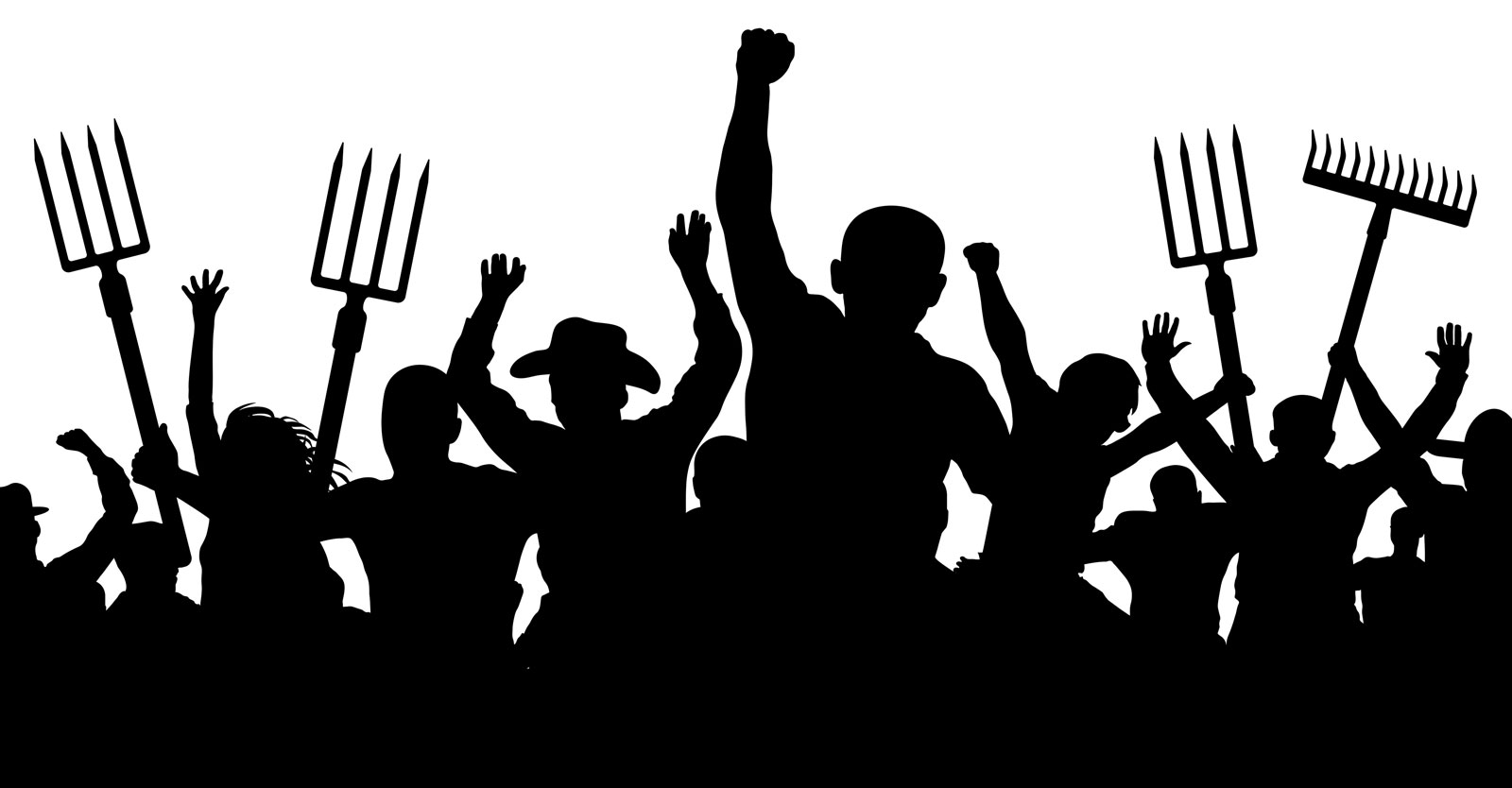
“Look, the pitchforks are coming, guys. So either they do something about this, or the pitchforks are coming. If people can’t go to the grocery store and buy what they need, if they’re seeing like what this BlackRock executive is saying … if we walk into the stores and the shelves are empty and we’re not in a pandemic anymore and we can’t commute where we need to commute because gas prices are too high, this is going to change fundamentally the way the people view the government, and it’s not going to be good.”

Source: Children’s Health Defense

Ukrainian Citizens Say ‘Fascist’ Neo-Nazi Azov Brigade ‘Only Shoot Civilians’ | InfoWars

By Kelen McBreen

Independent journalist and US Navy veteran Patrick Lancaster is in Mariupol, Ukraine to provide on-the-ground coverage of the brutal conflict taking place.

Lancaster is one of the few English-speaking reporters covering the war while traveling with the DPR and LPR rebels and Russian troops, but he encourages people to follow journalists on both sides.

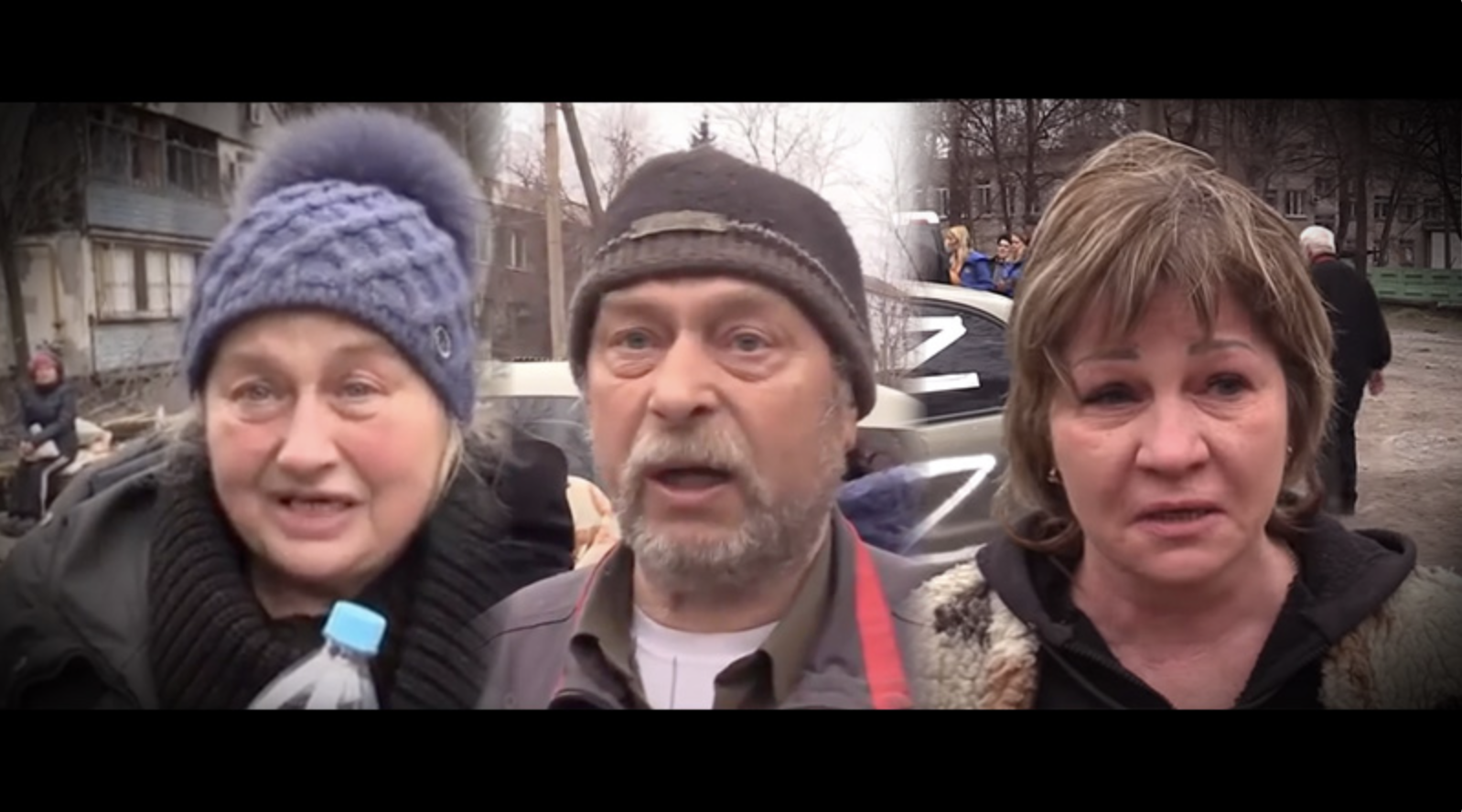
A report uploaded Tuesday shows citizens of Mariupol describing a nearby factory said to be occupied by the infamous Azov Brigade, a neo-Nazi outfit fighting with the Ukrainian military.

One man said he was almost hit twice by a sniper, and declared, “Azov”, when asked who the sniper was fighting for.

After Lancaster suggested the sniper may have thought he was in the military, the man explained he was wearing the clothes seen in the video and that “they shoot at civilians.”

“They don’t shoot military, only civilians,” the man added. “They eliminate civilians. They are actual fascists.”

Another man interviewed by Lancaster echoed the theory that the snipers in the neighborhood are “Nazi guys”, saying, “Ukrainian Nazis are shooting, they just kill people. They kill civilians, women, men, everybody.”

Asked to explain for the camera who the Azov fighters are, the man said, “They collected all the nationalists, some are even from prison. They pay good money to them, and they kill people just for no reason.”

When Lancaster told the locals US and European media claim Russia is destroying cities and killing people, the man said in his experience, “Russia doesn’t shoot at people at all.”

At this point, a crying woman walked up to the camera and told the journalist that if not for Russian assistance, they would be hungry and thirsty along with most of the children in the city.

The woman and a man, possibly her husband, said their apartment was destroyed by “Ukrainian” tanks.

Lancaster documented as a volunteer passed out food to some of the citizens, and an elderly woman raised a loaf of bread to the sky in appreciation to God for the gift.

As he frequently does, Lancaster allowed several citizens to deliver on-camera messages to their loved ones around the world who may see the video.

This side of the ugly war is not being covered by mainstream media in what is becoming a disturbing cover-up.

Source: InfoWars

In a cage with a tiger: How locals in Taliban’s Kabul adapt to the new reality | Russia Times (RT)

By Alexandra Kovalskaya, Orientalist scholar and Freelance Journalist based in Kabul.

A report from the Afghan capital, where life under new rule only appears normal

“Zendegi megozara” (Life goes on), an Afghan proverb says – and Kabul, dubbed by the Western media as the city of hope and despair, could be a physical illustration of the saying. Weeks of fear and uncertainty under Taliban rule followed the withdrawal of NATO troops, the mass evacuations and the flight of the country’s leaders. Despite a humanitarian crisis unfolding and the future seeming murky, however, the Afghan capital looks just as it did back in the republican days – on the surface, at least.

The airport in Kabul still isn’t working at full capacity. After the Taliban took over the city on August 15 last year, most international carriers ceased flights to Afghanistan until the situation stabilizes – except for low-cost airline Fly Dubai, Mahan Air of Iran, and few more regional companies.

Negotiations regarding the operation of Kabul Airport, which Turkey and Qatar are said to have commenced with the Taliban, are still believed to be underway as security demands remain unmet. As a shuttle takes passengers from the plane to the international terminal, a dozen of aircraft can be seen on the tarmac. They belong to either Kam Air or Ariana Airlines, the two Afghan companies currently conducting domestic and international flights.

Pictures have been removed from the airport’s outer walls of then-President Ashraf Ghani, Tajik mujahideen leader Ahmad Shah Masoud, and former president Hamid Karzai, after whom the airport was named. Instead, freshly painted graffiti states in English that the Islamic Emirate of Afghanistan wants peaceful and positive relations with the world. The sun-weathered airport compound does look peaceful, even with dozens of Taliban fighters dressed in fatigues, or, more casually, in traditional Afghan outfits, keeping their fingers on triggers. It is hard to believe that this very place witnessed a rapid, fall-of-Saigon-like evacuation and a number of human tragedies just over seven months ago.

According to a new rule, foreigners must register on arrival and fill out a form stating the purpose of their visit, the duration of their stay, and their marital status. As often occurs in Central Asia, a strict law is balanced by the reluctance of those who are to ensure its enforcement.

“You don’t know your complete address in Kabul, madam? It’s alright. You don’t have a picture? No problem,” says an immigration officer as he takes the form and starts pushing his way through the crowd of passengers arrived from Tashkent.

Despite rumors about the new regime prohibiting women from having jobs, the crew on my flight were female, and so were some of the airport employees. One of them, who has her hair covered with a black scarf and her face hidden under a mask, apologizes for her limited English and starts talking about the “good old days.” She mentions a women’s empowerment project she used to participate in, and her Western colleagues. I ask how she feels about the new government. She shrugs.

“How are the Talibs treating you?” I ask.

“It’s OK,” she replies in a local language. “But, you know, a Talib is a Talib. The word says it all. And I think there is no future now. Nothing to hope for, really. But God is great, let’s see.”

Security, new jobs, revenge

The windshield of the taxi is decorated by plastic flowers and a sticker reading “Allah.” A set of prayer beads hangs down from the rear-view mirror. The bearded driver wears a black turban and resembles a religious scholar, but in the parking lot he told me he had worked for airport security. After the Taliban took over Kabul, he spent some time in hiding, frightened that he would be detained for his “ties with the government.” However, a couple of weeks ago, the new airport security chief called him and asked him to come back to work. He was not given his former position, however, and drives a yellow taxi instead. This is a “state taxi,” he explains, with a license from the Ministry of Interior Affairs. This is much safer, especially for the foreigners, he adds.RT

As we exit the airport, I ask him how the situation in Kabul has changed over the past three months.

“There is security, but no job,” he replies. “I was lucky to receive this car.”

Credit where credit’s due – the radicals try to provide security as they interpret it. There is a checkpoint at the exit, the next one about a kilometer away, and sometimes there are two or three of them on a single street. The security check itself is nothing much. Talibs assess passengers through the window as though they are trying to measure how dangerous they are just by looking at them. They occasionally open the trunk or ask for documents, even though some of the sentries are obviously illiterate. Those who listen to music in the car turn it off, and then resume listening as the Talibs let them go. If there is a female in the car, especially in the front seat, the checks are more thorough just for show.

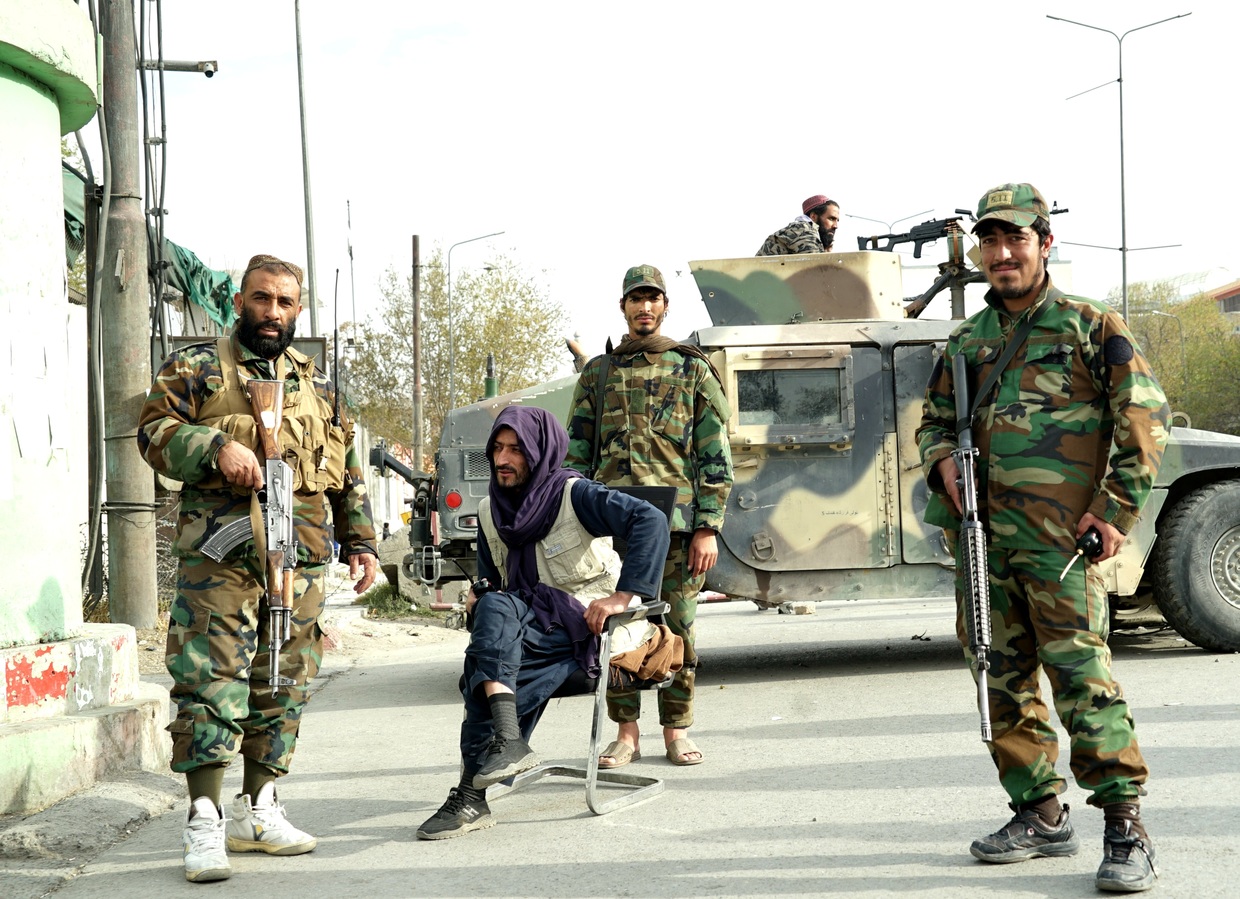
Unlike during the times of the republic, when they had fixed locations and were primarily concentrated in the city center next to strategic sites like ministries and embassies, Taliban checkpoints are scattered around the city and rotate. You never know where you will find them the next day. Moreover, there are numerous patrols riding in former ANA (Afghan National Army) Humvees. Some of them still carry a republican flag painted on the door or chassis. 

“They are using our cars now,” says Rahim (not his real name), a former soldier. He looks embittered as his eyes follow a passing Humvee. “They are using our weapons; they live our lives. And what happened to my life?”

Seven months ago, Rahim was part of ANA’s Commando Corps. After mid-August 2021, he disguised himself as a civilian and grew a beard to avoid the revenge of the Taliban. He said he killed many of them on combat missions in Helmand and Logar provinces. Unlike many of his former fellow soldiers, he refused to be evacuated and stayed in Kabul to support his family. Now he works a doorkeeper, making around $150 a month.

“I am sure they will kill me if they understand who I am,” he says.

I try to disagree. From what I know, if the Talibs find someone who served in the police or the military, the worst they do is beat them up or arrest them for a few days. But Rahim shakes his head. “It depends on what unit you were in. They knew we were hunting them, and several friends of mine from the same squad went missing already. They disappeared in Kabul, and nobody knows if they are still alive.”

If we find a single bullet

Aside from the network of checkpoints, the Afghan radicals have taken more serious steps to secure Kabul. Last month, there was a wave of extensive house-to-house searches in different areas of the city, mainly at nighttime. According to the Taliban authorities, the raids aimed “to detect criminal activity” and seize weapons.

“Four of them came to my apartment, three foot soldiers and an officer,” says Kawoos, currently an American NGO employee. They said, “If we find a single bullet, you will regret it,” and I asked, “What if you don’t find a single bullet?” I spoke Pashto and looked confident, so the officer commanded them to leave. All of them were polite enough, even taking off their shoes to enter the home and apologized for disturbing us as they came in.

As locals explained, the real goal was to find Northern Alliance sympathizers. Originally, there was supposed to be a door-to-door check in Khair Khana, a predominantly Tajik-populated enclave, but later the Taliban changed its mind to avoid triggering ethnic strife. Or was the real goal to stop those wanting to emigrate from leaving? Or was it targeting people like Rahim? There is an abundance of suggestions but a lack of facts. Moreover, there is a possibility that the searches will continue.

The outcomes of the search seem debatable – in a country like Afghanistan, I was told, one must have at least one gun in the house to protect his property from robbers. Now, with the weapons taken, many houses are defenseless. Weapons can become a necessity for Kabulians amid never-ending rumors of smoldering enmity within the ranks of the Taliban that might flare into open clashes at any time, with the Haqqani network and hardline militants from the east on one side and supporters of the new government’s Deputy Prime Minister Mullah Baradar on the other.

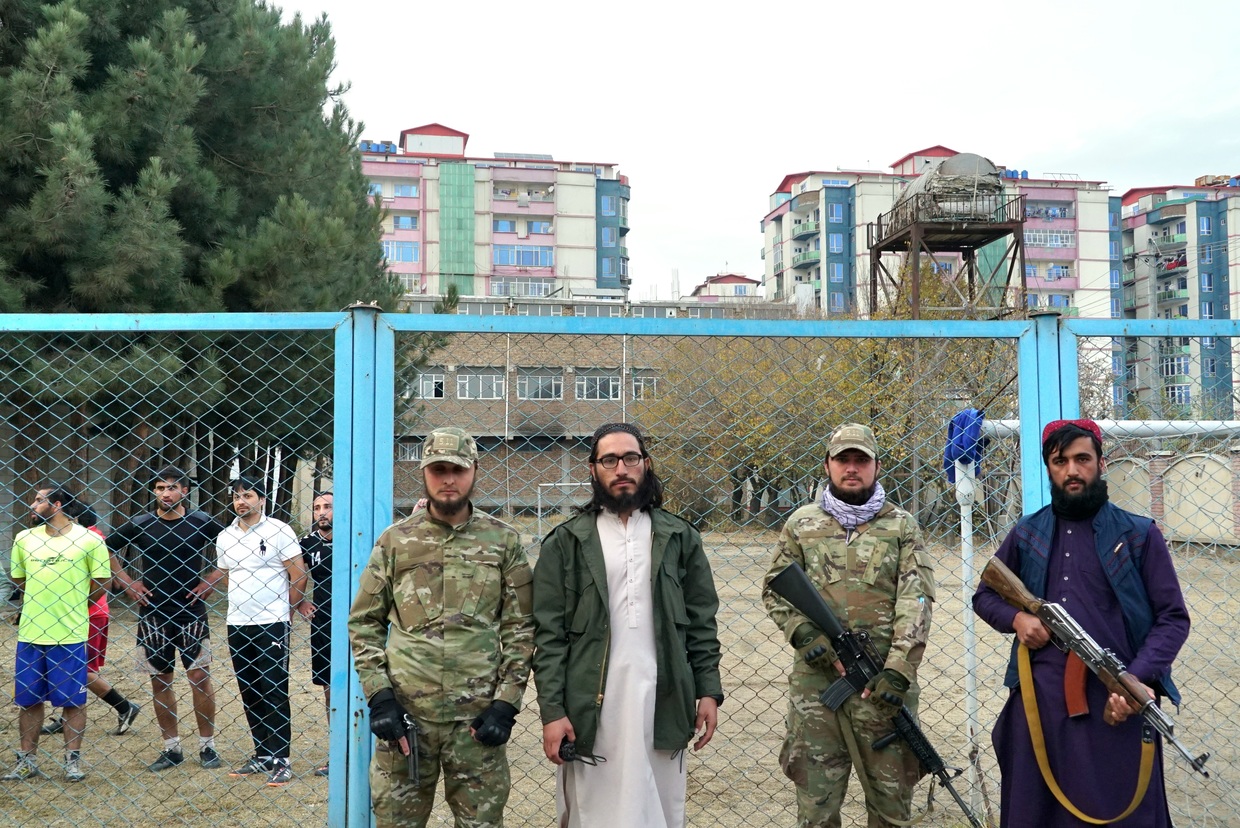
At the same time, Taliban fighters keep roaming around with their weapons, whether they go to the zoo or dine at a restaurant. Lift doors in local shopping malls are often decorated with a sign, “Entry is not allowed with guns” – or just a picture of a crossed-out Kalashnikov.RT 

Apparently, the only area in the city that was not subjected to searches was Wazir Akbar Khan – the so-called green zone that contains a number of embassies, most of нуwhich are currently closed. Ironically, it still has a sort of diplomatic immunity, an unspoken law giving the area a strange kind of freedom. If there is a party in a house, the Taliban commander living next door turns a blind eye and a deaf ear if you decrease the volume of the music playing to the reasonable level.

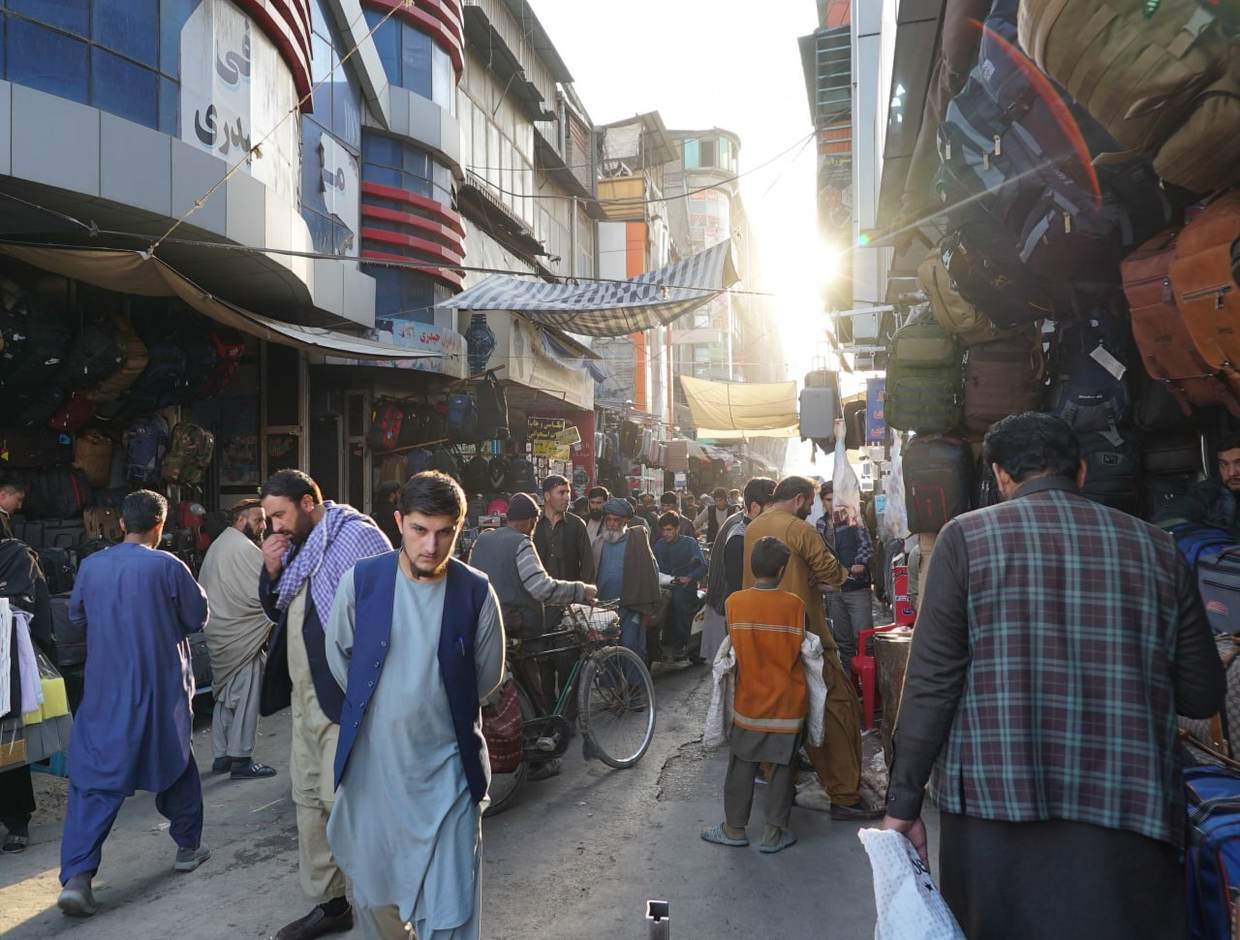
The media say that the range of prohibitions that the Taliban has introduced is shrinking. On the ground, the restrictions don’t feel so tangible. This is more or less what Kabul is like today – there are intimidating humors, but nothing happens; there are numerous restrictions, but you never know which of them you can bypass. Barber shops are open, just like cafes, men wearing Western clothes and women wearing makeup and high heels are still seen in the streets. In addition, a portrait of Mullah Omar, a co-founder of the Taliban, looks at the capital from a wall of a guardhouse up on the hill – drawings are not a sin this time.

High above his head, a gigantic white Taliban flag flaps in the wind. The official flag-raising ceremony on 31 March emphasized, in a way, that the radicals do plan to hold the power they seized on 16 August – a bitter realization for many supporters of the Afghan republic both in the country and abroad.

In a cage with a tiger 

In my experience, the most popular attitude the Afghans express towards the Taliban these days, just like a few months ago, could be summarized by saying, “They are not doing anything really wrong right now, but we don’t trust them.”

So it was, for instance, with Nowruz, which is also known as the Persian New Year and celebrated on the day of spring equinox. Taliban leaders decided to exercise tolerance to what they used to see as a “pagan holiday” back in the 1990s. This time, they decided to deprive Nowruz of the status of a national holiday, but allowed people to celebrate. Not many decided to do so, but goldfish and other traditional decorations for the New Year’s table were still sold in local markets.

“Kabul was quite different last year,” says Farid, a friend of mine. “Music everywhere, people dancing and hugging in the streets… Right, the Talibs did not prohibit the holiday. But guess why people decided to be quiet? It is like being in a cage with a tiger. He says he is not going to bite you, but you never know.”

Farid and his family invited me to the Paghman valley – a picturesque green place located an hour’s drive from Kabul. The Afghans come there to have a picnic by the river, do some hiking, and fly a kite. Some 30 years ago, this activity was labeled anti-Islamic and banned. Today, young fighters watch boys playing and ask to hold a kite coil for a while as a group of girls in bright traditional Afghan clothes are taking selfies on a mountain slope in the background. The scene looks almost pastoral – nothing like the Taliban era of the 1990s, as described by Khaled Hosseini in ‘The Kite Runner’.

“Some people think the Talibs are monsters,” says one of Farid’s teenage nieces, who is painting my hands with henna. “But I don’t think they are. They are normal, I think.”RT

This episode came a couple of days before the Ministry of Education restricted girls above the sixth grade from study – after all the promises given before, and the Ministry for the Propagation of Virtue and the Prevention of Vice restricted unaccompanied women from boarding flights.

In late March 2022, in Kabul, late at night, with darkness outside, a police siren is wailing in the distance. I send a message to another friend of mine. “Hey, how has Kabul changed since I saw it last time in December? Maybe there is much more than meets my foreign eye?” I write.

Pretty much everything is how you saw it,” reads the reply on the screen. “[The Taliban] are trying their best where they can.”

“Seems like all the negative changes are related to women’s rights. Then why [do] people mistrust them?”

“What they do has nothing to do with Islam. For example, does Islam say girls are not allowed to study? No. Then why? You know what they say? We fought jihad for 30 years, do not teach us Islam.”

The night lights still glowed from the hilltops of Kabul but how long until the lights go out and Afghanistan is a forgotten place of dreams and hopes?

Source: Russia Times (RT)

Arizona Enacts Law Requiring Proof of Citizenship to Vote in Presidential Elections | The Epoch Times

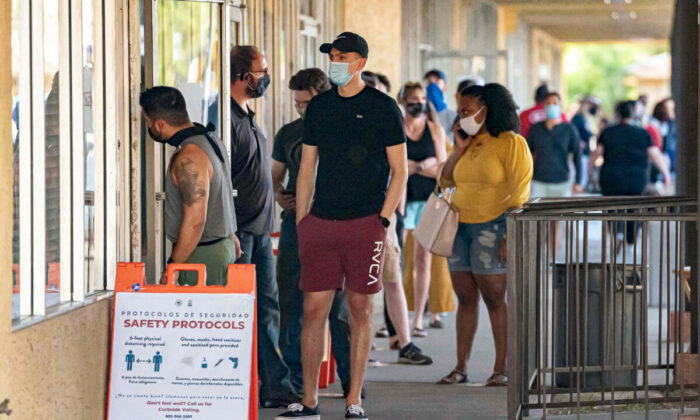
People wait in line to vote at a polling place at the Scottsdale Plaza Shopping Center, in Scottsdale, Arizona, on November 3, 2020. – The US started voting Tuesday in an election amounting to a referendum on Donald Trump’s uniquely brash and bruising presidency, which Democratic opponent and frontrunner Joe Biden urged Americans to end to restore “our democracy.” (Photo by OLIVIER TOURON / AFP) (Photo by OLIVIER TOURON/AFP via Getty Images)

By Mimi Nguyen Ly

Arizona’s governor on Thursday signed into law a bill that aims to strengthen election integrity with new requirements to ensure only U.S. citizens vote in elections held in Arizona.

The measure, House Bill 2492, requires voters in Arizona to provide proof of citizenship and residency to be eligible to vote.

Under the new law, if county recorders are found to have knowingly accepted a voter registration application that doesn’t have enough proof of citizenship, they face a class 6 felony.

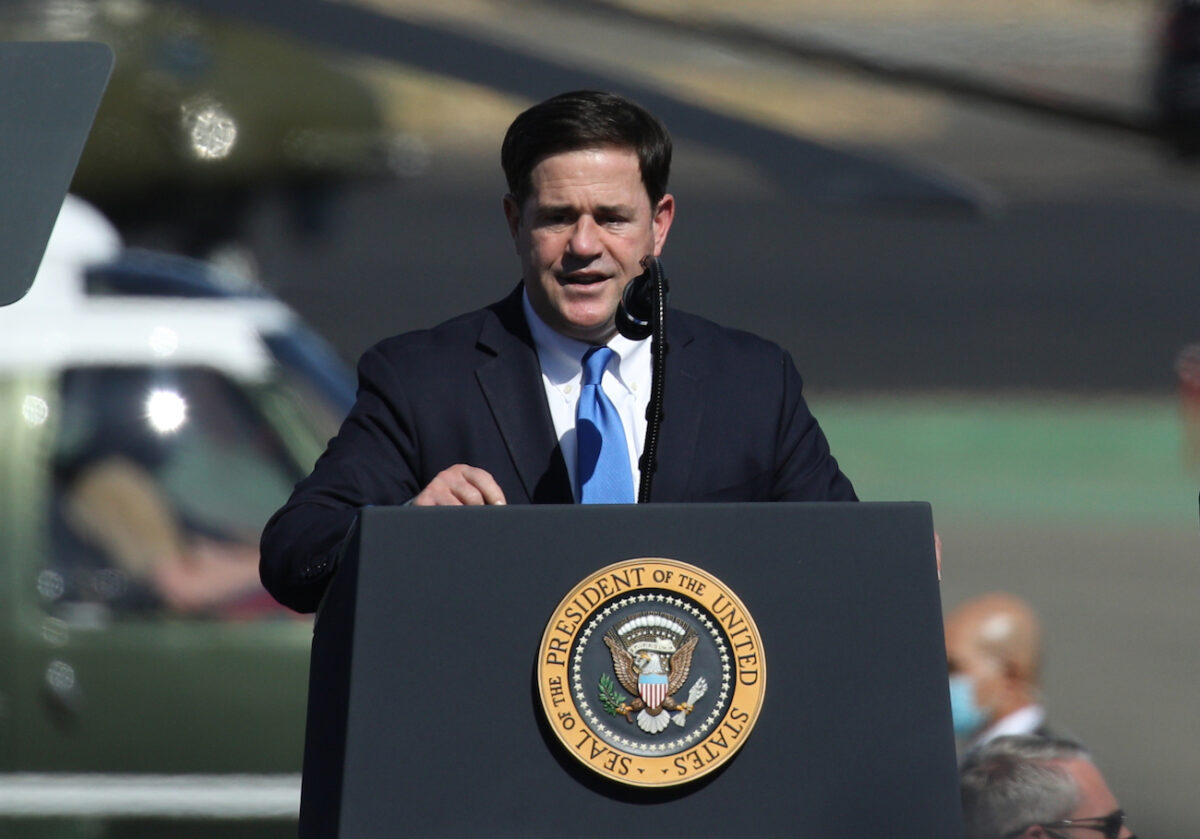
“Election integrity means counting every lawful vote and prohibiting any attempt to illegally cast a vote,” Gov. Doug Ducey said in a letter (pdf) to Secretary of State Katie Hobbs explaining his support for the legislation. He said the bill “is a balanced approach that honors Arizona’s history of making voting accessible without sacrificing security in our elections.”

doug ducey
Arizona Gov. Doug Ducey speaks at a MAGA campaign rally in Prescott, Ariz., on Oct. 19, 2020. (Caitlin O’Hara/Getty Images)

In Arizona, the Republican Party controls the governorship and both chambers of the state’s legislature. The bill passed the legislature on March 23.

Hobbs, a Democrat who is running for governor of Arizona, told Ducey to veto the bill after lawmakers passed the measure. She said on Twitter on March 23 that the GOP-backed bill “creates new, unnecessary barriers for people registering to vote.”

county elections
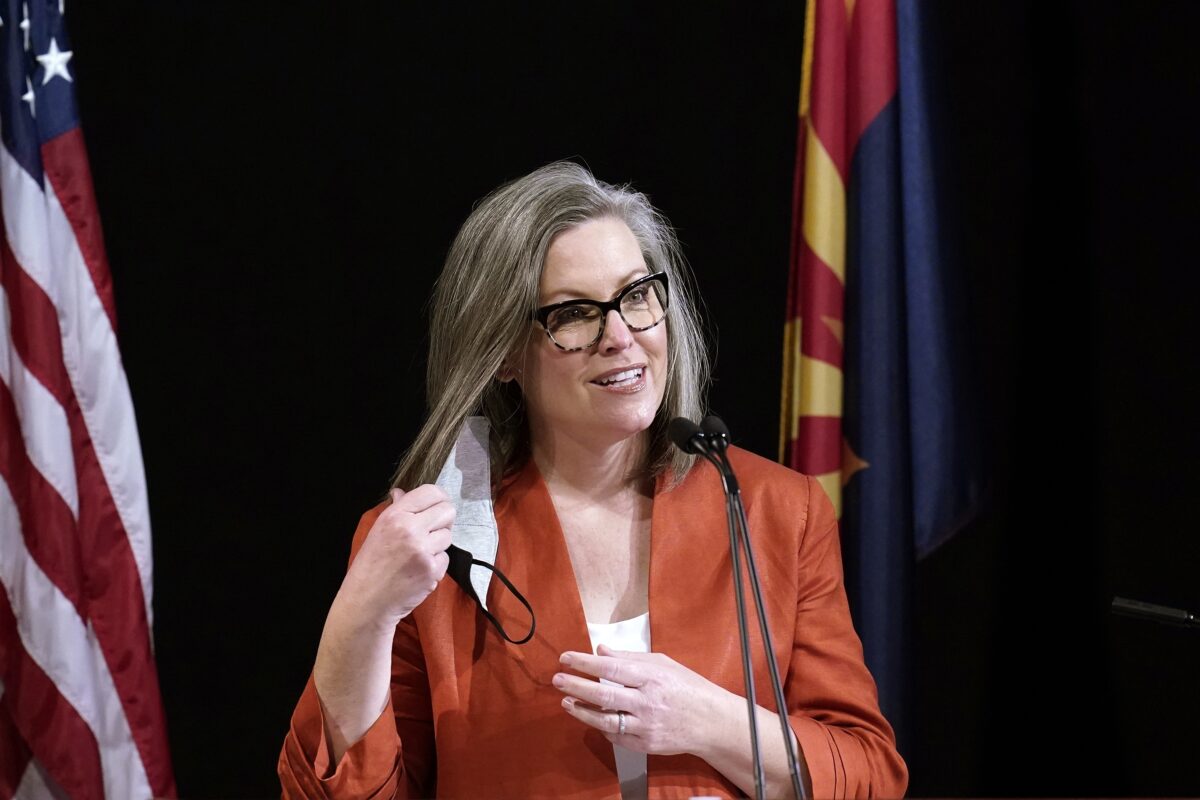
Arizona Secretary of State Katie Hobbs removes a mask as she speaks to members of Arizona’s Electoral College prior to them casting their votes in Phoenix, Ariz., on Dec. 14, 2020. (Ross D. Franklin/AP Photo)

Other state Democrats say the measure is part of an effort to suppress voting in the battleground state.

State Rep. Jake Hoffman, the bill’s sponsor, said the signing into law of HB 2492 is “a giant step toward ensuring elections are easy, convenient, and secure in our state.”

“HB 2492 is an incredibly well-crafted piece of legislation that is on sound legal footing and broadly supported by voters of all political parties. I am confident that should Democrats challenge HB 2492 in court it will only serve to further reinforce its clear constitutionality,” he said in a statement (pdf) Thursday.

Federal Only Voters

Ducey noted in his letter to Hobbs, “Federal law prohibits non-citizens from voting in federal elections. Arizona law prohibits non-citizens from voting for all state and local offices, and requires proof of citizenship. H.B. 2492 provides clarity to Arizona law on how officials process federal form voter registration applications that lack evidence of citizenship.”

The Supreme Court ruled in 2013 (pdf) that Arizona could continue requiring proof of citizenship in its state elections, but must accept federal forms to register Arizona voters for federal elections.

The federal forms ask voters to state that they are U.S. citizens but don’t require proof of citizenship. These voters, referred to as Federal Only Voters because they are only eligible for casting a vote in federal elections, will now be required under H.B. 2492 to provide proof of citizenship in order to vote in presidential elections or vote by mail. They could still vote in congressional elections at the polls, however.

Ducey said there’s been a growing number of registrants who have used the federal form since 2014. He said 21 voters statewide used that form to register to vote in the primary election in 2014, but by the 2020 general election, there were more than 11,600 federal-only voters in Arizona who voted without providing proof of citizenship.

“In Maricopa County alone, there are currently 13,042 active registered voters who have not provided evidence of citizenship to vote through use of the federal form,” according to Ducey’s office.

Currently, there are about 31,500 federal-only voters in Arizona.

Ducey acknowledged that in 2004, when Arizona passed Proposition 200, which required proof of citizenship to vote, the requirement exempted people who were already registered to vote before the proposition’s passage. Ducey told Hobbs that H.B. 2492 “does not disturb the safe harbor granted to Arizona voters who registered to vote prior to Prop 200’s passage.”

H.B. 2492 also requires that county records check relevant databases to help better maintain voter rolls.

The new law also requires Arizona’s secretary of state and each county recorder to provide the Arizona attorney general details of all people who registered to vote but didn’t give enough proof of citizenship, so the AG has enough information to check whether a person who registered with the federal form is a non-citizen.

Source: The Epoch Times

Author: Mimi Nguyen Ly is a reporter based in Australia covering world news with a focus on U.S. news.

The War in Ukraine, Banking, Currency, Where We Are & Where We are Going with Cliff High | Bitchute

By Jim Crenshaw

Cliff gives some great insight into what will probably happen in the near future.

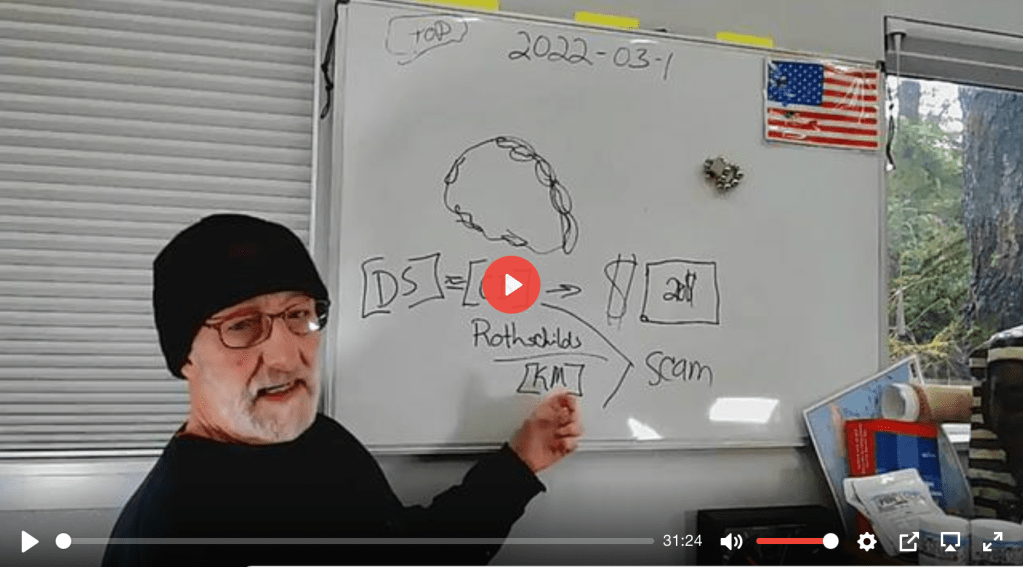
Source: Bitchute