Big Pharma Owns The Corporate Media, But Americans Are Waking Up And Fighting Back | Ring of Fire

am_law_0432By Gary Bentley

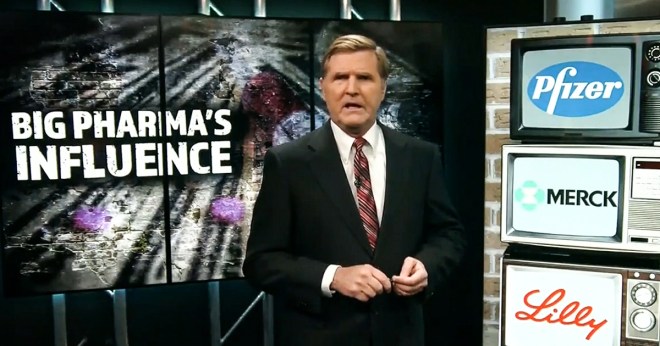
When you tune in to MSNBC, Fox News, or any of the other corporate media machines, you’re probably not going to hear much about the methods in which big pharma is taking advantage of consumers either through price gouging or medical mishaps. The reason for this is because talking about those stories creates a major conflict of interest for the people behind the scenes. Mike Papantonio discusses this with journalist and author Martha Rosenberg.

Transcript of the above video:

Mike:
According to a 2009 study by Fairness and Accuracy in Reporting, with the exception of CBS every major media outlet in the United States shares at least one board member with at least one drug company. Let me put it in perspective for you, these board members wake up, they go to a meeting at Merck or Pfizer, and then they have their driver take them over to a meeting with NBC to decide what kind of programming that network is going to air. For those board members who aren’t pulling double duty with a media conglomerate and a big drug company, they still understand that they can’t be honest and objective about big pharma because big pharma pays their bills.

Drug companies spend about $5 billion a year on advertising with these corporate media outlets, so when Pfizer or Merck or Eli Lilly, or any of the drug companies, kill or cripple Americans with defective drugs, do you really think these board members are going to allow their story to be told on the air? It can take anywhere from three days to a full week before the media reports on a drug or a medical device recall, if they report at all.

In the case of Invokana it took 32 days before television outlets reported a single story involving an FDA warning about the potential problems with the product. The FDA began warning about the extreme dangers of Cook IVC filters as early as 2010 and it took about five years, five years, before television media started reporting that to the public. It’s worth pointing out that in these instances it was only through non-corporate independent media outlets that these stories were told at all. It was the outlets who weren’t being forced, they weren’t being forced to remain silent about the drug industry.

You can replace IVC or Invokana with any other drug or product and the story is all the same. Stryker hip implants, C8, Vioxx, RoundUp, Xarelto, talcum powder, they’re all the same thing. The corporate media doesn’t care about these stories because they either share board members with these companies, or because they want those companies to keep throwing dollars their way in big advertising dollars. These gigantic media corporations aren’t going to do anything to threaten their relationship with big advertisers.

Drugs are cash cow advertising bonanza for corporate media. Fortunately an increase in number of Americans who are starting to wake up and realize that the mainstream media shouldn’t be trusted on issues like this. In recent years we’ve seen the alternative media experience rapid growth and mainstream media has been losing credibility at a staggering rate. Americans are starting to look elsewhere for the truth about what’s really going on out there. As a result of that advertising money kicking around the corporate media isn’t permitted to report complex drug stories anymore.

It’s as if they don’t understand things like the link between crony capitalism and the revolving door between the FDA and the drug industry, but the media is only one side of the story here. Big pharma knows that if it wants to continue manipulating the public it has to start with our elected officials in Washington DC. According to OpenSecrets, big pharma spent more than $58 million on politicians just in 2016, the most amount they’ve spend on a direct contribution in the last quarter century.

When it comes to lobbying, few industry spend more than big pharma did last year. They spent a staggering $244 million dollars to influence our elected leaders in Washington DC. It looks like things are about to get much worse, you see, big pharma understands that the ridiculous … their price gouging is starting to draw negative attention from the American public, and no matter how much they spend advertising or buying our politicians, they can’t keep the public anger down forever.

According to a new report by ProPublica, drug companies are offering huge money to any scientist, any professor or academic willing to author studies that are going to show that these drug markups are necessary, that they’re just fine. Their goal is to spread around enough money at universities to develop scientists and doctors who are going to create this fantasy story about how price gouging is just great for the American public, and then that story will be run by corporate media, dominated by the drug industry.

Joining me now to talk about big pharma’s influence over our daily lives and their quest for even more power is Martha Rosenberg, an investigative health reporter and the author of the book, Born With A Junk Food Deficiency. Martha, is it an overstatement to say that big pharma, they have a firmer grip on our daily lives than most people realize, where it comes to the drugs that we take?

Martha:
No. No Mike, I don’t think it’s an overstatement at all. I think this is the year that we celebrate 20 years of direct-to-consumer ads. Any time people are watching TV, they’re seeing the drug ads, and then on top of that there’s PR campaigns going on. One of which on the Sunday news shows that were trying to objectively talk about Obamacare, they were financed by a PR campaign called Go Boldly, which is trying to defend the high prices. In addition to the direct-

Mike:
Martha, all you have to do is watch the nightly news. You’re liable to see eight advertisements for Merck and Pfizer, Johnson & Johnson. How can that not be influencing the reporters or the executive producers of that programming? They know where their money is coming from, they know where they’re getting this money, that some cat on the 50th floor makes this decision that says, “You know, we can’t tell these stories where drugs are killing people. We can’t tell it because we’re going to lose advertising dollars.” Can’t you basically already see that just by watching the nightly news and seeing those advertisements?

Martha:
Of course you can. They won’t report on the dangers which of course you and I know about, and also they plant the idea in many people’s minds that they are sick and they need the drugs. That disease mongering is a big part of it. The screening, when they’re always saying, “Ask your doctor, you might have this or that disease,” the screening causes over-diagnosis, over-treatment and over-medication, which pharma loves.

Mike:
Most people who handle cases in this industry, they look to you first on a lot of this reporting because you catch the stories certainly before corporate media does, or if corporate media gets it before you, corporate media doesn’t tell the stories because they’re ordered not to by their advertisers. But it’s not just corporate media that’s the problem, don’t we also have a problem with, they’ve put so much money into the political schemes taking place in DC. They bought politicians, there’s no other way to put it. The money is staggering, $244 million just for lobbying, endless money to individual campaigns. Don’t you see that happening as you follow these stories?

Martha:
Definitely. I think that it’s one of the most expensive lobbying machines there is, the big pharma. What they’re doing now, big pharma and bio pharma are trying to defend their price, so we see a lot of that. Yeah, there’s no question. Up until the Affordable Care Act there was no hiding all the perks that doctors got, and there were examples in China, GSK, which is a big pharmaceutical company, was buying sex bribery to sell their drugs. Here in the US according to charges, Victory Pharma was buying lap dances for doctors to prescribe its opiates.

Mike:
There’s worst stories than that, some of the stories we can’t even tell on the air. Let’s talk about this new ProPublica report about big pharma trying to pay scientists, I call them biostitutes. They’re doctors and scientists who will write anything the industry asks them to write for a check of $100,000. They’ll write anything.

Right now we have the industry going around trying to find these biostitutes that will say, “It’s just fine that the industry has these huge markups, even though sometimes it’s 6,000% markup on a drug, 10,000% markup.” They actually are going to find scientists and doctors who say, “That’s absolutely appropriate. The industry needs to do it.” You and I know that’s a lie because most of the money that they spend goes to advertising, it doesn’t go to R&D. What’s your take on that?

Martha:
Yeah, right now what pharma has done Mike is, it’s replaced its blockbusters like Viagra and Lipitor with what we call biologics. That would be your vaccines and your liquid injectable drugs. That enables them to charge what they’re now charging. Now they’re in the process of trying to defend those charges. Now, the ProPublica report, it reveals the machinery between academia and big pharma, which is not really new.

The ghostwriting and what we used to call conflicts of interests, they now call private-public partnerships and it’s our tax dollars going on. But yeah, the academics are now writing the papers and not only are, pardon my French but not only are the journals pimping for big pharma but pharma will create its own journals to make sure its message gets out there. These academics are part of the whole thing.

Mike:
Okay, so let me put these parts together. The industry goes out and finds these biostitutes, who will say anything for the right amount of money. I see them in court every single day, up on the witness stand, testifying, lying, knowing they’re lying, absolutely misrepresenting the truth about everything, because they’re getting paid a lot of money. Now what you have is you have them, they find the biostitute, the biostitute writes the story and the next thing you know, mainstream corporate media, like NBC, MSNBC, ABC is reporting that story that was created by the biostitute. Did I get that right?

Martha:
Absolutely, absolutely. It’s stenography. It’s not reporting, it’s stenography.

Mike:
As I follow this, of course, this story is going to continue to build because we’re going to start seeing a lot more of these stories coming out, they’re horrendous stories. Last week we saw Bernie Sanders pushing back, the Democrats won’t get behind him because the Democrats are as much part of this as the Republicans are. The pharmaceutical industry, they’re just spreading around a lot of money. I have to tell you something, I appreciate you joining me tonight, okay?

Martha:
Thank you so much. Thank you for your good work Mike.

Source: Ring of Fire

‘They’re terrified that peace was going to break out’ – Ron Paul on US Syria strike | RT America

By Ron Paul
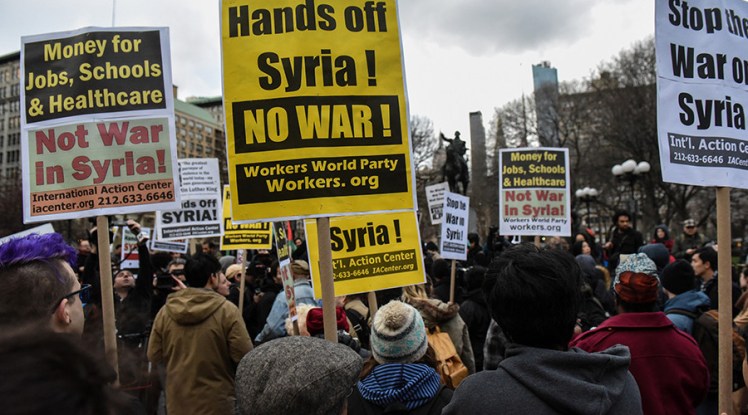
“A victory of neo-conservatives” – that’s how Ron Paul, a former member of the US House of Representatives and three-time presidential candidate, described the US strike on Syria, adding that he does not expect peace talks to resume any time soon. Speaking to RT, Ron Paul said that there is no proof of Damascus’ guilt that could trigger such a rash and violent response from the US.


“I don’t think the evidence is there, at least it hasn’t been presented, and they need a so-called excuse, they worked real hard, our government and their coalition.”

This is not the first time something like this has happened in Syria or elsewhere, Paul said, but now it is convenient to pay attention and react immediately.

“If any of this was true, I don’t know why they couldn’t wait and take a look at it. In 2013, there were similar stories that didn’t go anywhere, because with a little bit of a pause, there was a resistance to it built in our Congress and in the American people. They thought that it was a fraud and nothing like that was happening, and right now, I just can’t think of how it could conceivably be what they claim, because it’s helping ISIS, because it’s helping Al-Qaeda.”

“From my point of view, there was no need to rush. There was no threat to national security. They have to give a reason to do these things,” Paul added.

A factor that contributed to the speedy reaction was of course the US president, the politician told RT.

“I have no idea what his purpose was. Maybe he just didn’t want to hear the debate, because the last time they debated it, they lost. And this time, it was necessary for them to jump onto this, before people came to know what was really going on.”

The Syrian situation now is “a victory for neo-conservatives, who’ve been looking for Assad to go,” Paul said.

“They want to get rid of him, and you have to look for who is involved in that. Unfortunately, they are the ones who are winning out on this, and the radicals, too! There is a bit of hypocrisy going on here, because at one minute we say, well, maybe Assad has to stay, the next day he has to go, and we’re there fighting ISIS and Al-Qaeda. At the same time, what we end up doing is we actually strengthen them! It is a mess.

“I don’t believe that our people or the American government should be the policemen of the world, it makes no sense, it causes us more trouble and more grief, it causes us more financial problems, and it’s hardly a way that we could defend our constitutional liberty.”

This policy clearly does not lead to peace, Paul told RT.

“The peace talks have ended now. They’re terrified that peace was going to break out! Al-Qaeda was on the run, peace talks were happening, and all of a sudden, they had to change, and this changes things dramatically! I don’t expect peace talks anytime soon or in the distant future.”

Last but not least, the politician spoke out about the deeper reasons – and potential disastrous consequences – of the latest attack’s timing.

“I was wondering about the fact that the announcement came when Trump was talking to Xi [Jinping, the Chinese president]. And of course, [North] Korea’s high on the list of targets for our president and our administration. It might be a warning: this is what’s going to happen to you if you don’t do what we tell you. I just don’t like us being involved in so many countries, in their internal affairs; I think it’s so detrimental.”

Source: RT

With the latest WikiLeaks revelations about the CIA – is privacy really dead? | The Guardian

ComeyBy Olivia Solon

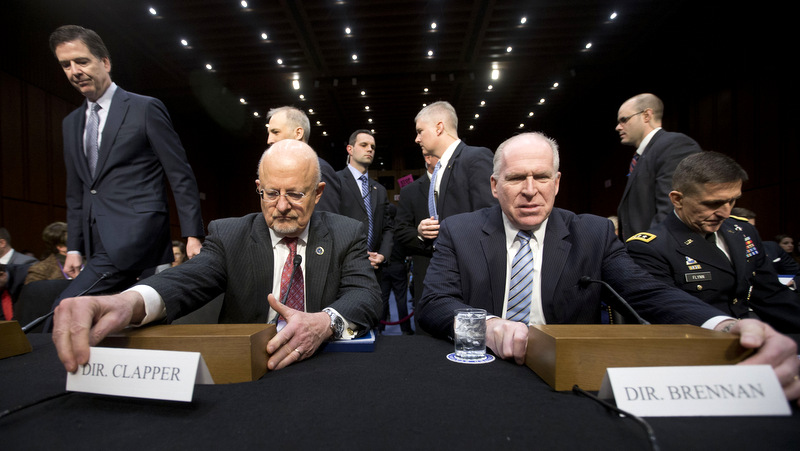
Comey, has said that Americans should not have expectations of “absolute privacy”.

“There is no such thing as absolute privacy in America: there is no place outside of judicial reach,” Comey said at a Boston College conference on cybersecurity. The remark came as he was discussing the rise of encryption since Edward Snowden’s 2013 revelations of the NSA’s mass surveillance tools, used on citizens around the world.

Both the Snowden revelations and the CIA leak highlight the variety of creative techniques intelligence agencies can use to spy on individuals, at a time when many of us are voluntarily giving up our personal data to private companies and installing so-called “smart” devices with microphones (smart TVs, Amazon Echo) in our homes.

So, where does this leave us? Is privacy really dead, as Silicon Valley luminaries such as Mark Zuckerberg have previously declared?

Not according to the Electronic Frontier Foundation’s executive director, Cindy Cohn.

“The freedom to have a private conversation – free from the worry that a hostile government, a rogue government agent or a competitor or a criminal are listening – is central to a free society,” she said.

While not as strict as privacy laws in Europe, the fourth amendment to the US constitution does guarantee the right to be free from unreasonable searches and seizures.

That doesn’t mean citizens have “absolute privacy”.

“I don’t think there’s been absolute privacy in the history of mankind,” said Albert Gidari, director of privacy at the Stanford Center for Internet and Society. “You walk out in public and it’s no longer private. You shout from one window to another and someone will hear you in conversation.”

“At the same time things are more intrusive, persistent, searchable, they never die. So our conception of what is or isn’t risk from a privacy perspective does change and evolve over time.”

The law hasn’t kept pace with digital technologies. For example, there is a legal theory called the “third-party doctrine” that holds that people who give up their information to third parties like banks, phone companies, social networks and ISPs have “no reasonable expectation of privacy”. This has allowed the US government to obtain information without legal warrants.

Unlike the NSA techniques revealed by Snowden, the CIA appears to favour a more targeted approach: less dragnet, more spearfishing.

The WikiLeaks files show that the CIA has assembled a formidable arsenal of cyberweapons designed to target individuals’ devices such as mobile phones, laptops and TVs by targeting the operating systems such as Android, iOS and Windows with malware.

It’s encouraging to note that the government has yet to crack the encryption of secure messaging apps such as WhatsApp, Signal and Confide. However, it does not need to if it can instal malware on people’s devices that can collect audio and message traffic before encryption is applied.

Gidari isn’t that surprised. “It confirms what everyone saw in last week’s episode of 24. People expect these tools to exist,” he said, adding that people were more surprised that the FBI was initially incapable of breaking into the San Bernardino killer’s iPhone.

“People expect the government to have these magic tools,” he said.

American citizens should not be lulled into a false sense of security that the CIA only targets foreign nationals. The “Vault 7” documents show a broad exchange of tools and information between the CIA, the National Security Agency, and other US federal agencies, as well as intelligence services of close allies Australia, Canada, New Zealand and the United Kingdom.

“We can’t spy on our own citizens but we can spy on anyone else’s,” explained Neil Richards, a law professor from Washington University. “If agencies are friends with each other, they have everybody else do their work for them and they just share the data.”

“Dividing the world into American citizens and non-American citizens is a false dichotomy,” Gidari added. “We don’t have a monopoly on spy tools.”

This leaves us with a terrifying new prospect: government spies essentially deploying viruses and trojans against their own citizens.

The onus is now on the companies that make the devices to plug any holes in their operating systems – something they do regularly through bug bounty programs, where security researchers disclose vulnerabilities in return for rewards.

It’s clear from the CIA files that the US government has flouted this custom in order to stockpile “zero days” – undisclosed exploits – for its own advantage. This is a practice the US government has previously publicly denied.

“If companies aren’t aware that a vulnerability exists they can’t patch it. If it exists it can be exploited by any malicious actor – whether that’s a hacker, foreign state or criminal enterprise,” said Neema Singh Guliani, legislative counsel with the American Civil Liberties Union.

“I have a big problem with the government leaving us vulnerable to the same tools in hand so other nation states and hackers could exploit them,” Gidari said. “That isn’t protecting American citizens.”

Gidari’s view echoes Apple’s stance when the FBI demanded the company build a backdoor to the iPhone so they could access data on the San Bernardino killer’s phone.

“Apple believes deeply that people in the United States and around the world deserve data protection, security and privacy. Sacrificing one for the other only puts people and countries at greater risk,” the company said at the time. The iPhone maker was more muted in its response to the Vault 7 dump, vowing to “rapidly address” any security holes.

“There is nearly universal consensus from technologists that it’s impossible to build weaknesses or access mechanisms into technology that can only be used by the good guys and not the bad,” Cohn said.

This week’s revelations are sure to increase the strain on relations between Silicon Valley and the US government. While some of the older telephony companies such as AT&T and Verizon, which rely heavily on government contracts, have a history of compliance with government requests, tech giants Google, Facebook, Microsoft and Apple have proved to be less compliant.

It’s not possible to meaningfully participate in modern life without relationships with some or all of these technology companies processing our data, Richards added. So it’s important to know where their loyalties lie – to their customers or to government.

Since Snowden’s revelations of mass surveillance, companies such as Apple, Google and Microsoft have been working hard to rebuild trust with consumers through strengthening security, fighting government data requests and releasing transparency reports highlighting when and how many requests are made.

“It’s a very encouraging development if we care about civil liberties and the right to privacy, but at the same time it’s unsatisfying if the discretion of a company is the only real protection for our data,” Richards said.

“We need to build the digital society we want rather than the one handed to us by default,” he added.

This will require a complete overhaul of the laws relating to when the government can collect location and content information, something civil liberty campaigners have been pushing for.

“These decisions need to be made by the public, not by law enforcement or tech executives sitting in private,” Richards said.

Source:  The Guardian

Reporters, Don’t Let Trump Make You Cry | POLITICO

By Jack Schafer

Journalists play better offense than defense. Give them the ball, and they’ll sleuth out the hidden crumbs of information, filling the scoreboard with touchdowns. Assign them to a dangerous story, and they’ll exhibit the bravery associated with U.S. Marines. Ask them to work late, and they’ll labor all night and file copy at dawn, rat-eyed from exhaustion yet happy and ready for the next story.

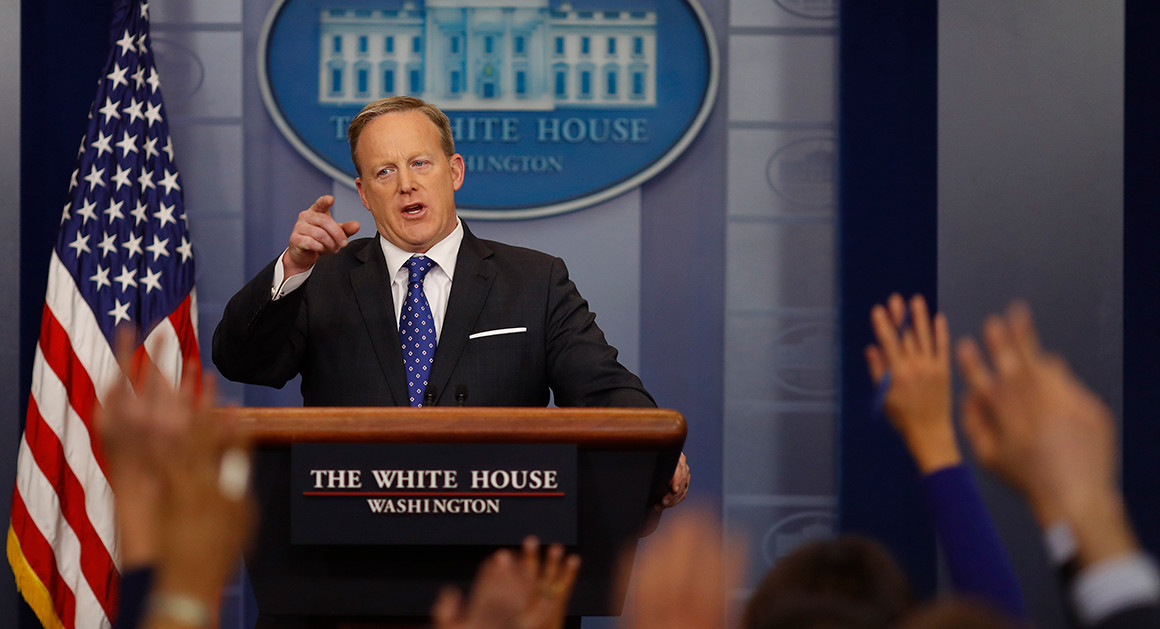
But criticize them and ask them to justify what they do and how they do it? They go all go all whiny and preachy, wrap themselves in the First Amendment and proclaim that they’re essential to democracy. I won’t dispute that journalists are crucial to a free society, but just because something is true doesn’t make it persuasive. The chords that aggrieved journalists strike make them sound as entitled as tenured professors. This behavior was on display last Friday after President Donald Trump disparaged the press at CPAC and on Twitter. Later that day, Trump’s press secretary, Sean Spicer, amplified the CPAC insult by excluding CNN, Politico, the New York Times, the Los Angeles Times and others from an off-camera briefing.

Almost immediately, the press protests went off like a battalion of popguns. “Free media access to a transparent government is obviously of crucial national interest,” said New York Times Executive Editor Dean Baquet. “This is an undemocratic path that the administration is traveling,” chimed Washington Post Executive Editor Marty Baron. Others in the press scrum called for retaliation. MSNBC’s Mika Brzezinski demanded that the press boycott the White House Correspondents’ Association dinner “until the White House’s abhorrent behavior towards members of the press stops.” Her Morning Joe co-host, Joe Scarborough, likewise insisted, “All news organizations must refuse to attend briefings where major outlets are excluded because of critical coverage.”

On and on it went. Former New York Times labor reporter Steven Greenhouse tweeted that White House reporters should “show some solidarity (and spine) & boycott briefings if Trump Admin excludes certain media.” Writer Simon Schama tweeted for a boycott of “the tinpot dictator’s briefings.” Public radio host Maria Hinojosa (Latino USA) reprised Jay Rosen’s recent idea that the press protest the administration’s behavior by sending interns to White House briefings instead of credentialed reporters. The Washington Post adopted a dreadfully overwrought masthead slogan, “Democracy Dies in Darkness,” for its online edition and the New York Times produced a sanctimonious “truth is hard” commercial, which aired during the Oscars. By Sunday morning, Brian Stelter’s guests on Reliable Sources had adopted the wounded theme, which was almost enough to cause me to start rooting against the home team and throw in with Trump.

I understand the press corps’ fury, but does the reaction make sense? As excluded New York Times reporter Glenn Thrush tweeted, there was a deliberate method to Spicer’s madness. It allowed the press secretary to avoid on-camera goofs; it got the press to “whine”; it sowed internal strife among reporters; and it prevented Trump—not Spicer’s biggest fan—from watching his performance. As a piece of lion-taming, the Spicer move was a great success. The lions may still be roaring, but he’s cracking the whip.

There’s nothing Trump and Spicer would love more than a press walkout from gaggles, press briefings, press conferences and assemblies like the White House Correspondents’ Association dinner. Boycotts would change the subject from Trump and Spicer’s original insults to the bruised egos of the boycotters—and really, how much sympathy should we expect the masses to have for the gang that brings them reams of bad news every morning? Besides, a boycott would be doomed. To be effective, a boycott must enlist almost everybody. Good luck with that. As candidates for adopting a one-for-all ethos, journalists must rank last. The only organizational principle most of them understand is competition.

For the sake of argument, imagine journalists pulling off a principled boycott after Spicer repeats his Friday stunt. Actually, you don’t have to imagine it—we’re halfway there. The Associated Press and Time boycotted the Friday briefing when they learned of the limitations he had placed on participation. Bloomberg, the Christian Science Monitor, the Wall Street Journal and other outlets have already vowed to shun future closed briefings. But as “principled” reporters peel off to paint protest placards, won’t Spicer merely tilt the briefings toward Trump-friendly media like Breitbart and One America News Network? Remember, Breitbart and OANN’s reporters attended Spicer’s controversial briefing, and they’ll never boycott. Spicer and Trump have already demonstrated a preference for calling on friendly media and will happily shovel interesting news to the pro-Trump outlets who attend. This will create an incentive for news organizations to hold their noses and ditch the boycott. Cozying up to power—writing “beat sweeteners” to gain access and publishing an administration’s planted leaks—has made more than one career in Washington. A boycott will only make the pro-Trump media stronger.

What would I have the press do? Words of protest and pushback, of which we’ve seen plenty, can’t hurt. But the best response, and one that wouldn’t require much in the way of press corps solidarity, would be to make Spicer answer the exiled questions. If, say, Spicer deletes Thrush from another briefing, Thrush can distribute his questions to the invited reporters. When Spicer calls on one, the reporter can say, “Glenn Thrush of the New York Times, who couldn’t be here today, has this question …” And then read it. A couple of rounds of “Thrush questions” and questions from other exiled reporters would not constitute an “I am Spartacus” moment, but it would convey that Spicer can evade news organizations but not their questions. If he can’t stop the reporters’ questions, what’s the point of exiling them?

Reporters have become pawns in Trump’s political strategy. In recent weeks, he’s trotted them out for sacrifice whenever the seeping wound of Russia news gets too moist for him, something NBC News’ Chuck Todd explained Sunday. Instead of taking it personally, I want journalists to take it professionally and continue to report like hell. A great story is always the best revenge.

Source: POLITICO

Could Roe v Wade be overturned and abortion outlawed in the US? | The Guardian

By Molly Redden

Who was Norma McCorvey?
Norma McCorvey is the real name of the woman known as “Jane Roe” in the landmark US supreme court case on abortion rights, Roe v Wade. The 1973 case established a right for US women to have abortions. McCorvey became the plaintiff after she met with two lawyers looking for a test case to challenge Texas’s abortion ban. That was in 1970. At the time, McCorvey was pregnant, unwed, unemployed and unable to obtain an abortion legally or otherwise.

McCorvey never had an abortion. Her case, which proceeded largely without her involvement, took too long to resolve, and she gave birth to a child that she placed for adoption. Several years after the ruling, she publicly revealed her identity and became involved in the pro-abortion rights movement. But after a conversion to Christianity, she became an anti-abortion rights activist. Before she died last week, McCorvey had said that it was her wish to see Roe v Wade overturned in her lifetime.

Is Roe v Wade actually in danger?
It depends on what you mean. Many legal experts are sceptical that the US supreme court would overturn it any time soon. For starters, it’s difficult to bring a case before the supreme court that would threaten the ruling, because those cases almost always founder in a lower court. And even if Donald Trump’s supreme court nominee opposes abortion rights, the current makeup of the court is such that there aren’t enough votes to overturn Roe.

An alternative strategy is to poke so many holes in Roe that its protections for abortion rights become weakened. At this, anti-abortion activists have been very successful. Since Roe, some states have enacted laws requiring women seeking an abortion to attend anti-abortion counselling or to wait 24 hours or more for the procedure, laws extensively regulating abortion after 20 weeks, and laws blocking public funding for abortion. And they have picked up speed in recent years. Since 2010, lawmakers have placed 338 new restrictions on abortion.

Will states continue to pass new anti-abortion laws?
Many states are controlled by Republicans who oppose abortion rights, so they will certainly try. You might have heard about a proposal in the state of Oklahoma calling for women to require permission for an abortion from the man who impregnated her. One legislator justified the bill by saying pregnant women’s bodies are not their own because they’re “hosts”. It’s outrageous, but not a huge threat to abortion rights – the jurisprudence is pretty clear that you can’t require an adult woman to get permission before having an abortion.

What does threaten abortion rights are laws that chip away at Roe v Wade. Several states are attempting to ban a common method of second-trimester abortion on the basis that it’s cruel to the foetus. There are efforts to regulate how abortion clinics dispose of medical waste, which the clinics say are just attempts to shut them down with unnecessary rules and expenses. There is also a push to give women scientifically untrue information that it is possible to “reverse” an abortion performed with medication.

Have all these laws really made it harder to get an abortion?
It’s hard to say. There is evidence that shutting down clinics can cause a drop in the abortion rate. In Texas, after a 2013 clinic regulation forced about 20 clinics to close, there was a 50% drop in abortions in areas where the distance to the nearest clinics suddenly increased by more than 100 miles. Last June, the US supreme court ruled that the regulation had no medical justification and was unconstitutional. But in many places, the damage had already been done.

Making it harder for women to pay for abortions also seems to have an impact. Since 1976, when Congress blocked Medicaid – insurance for those on low-income – from paying for abortions, more than a million women have been blocked from access. A new tactic is to try to ban abortion coverage in state insurance marketplaces. Congress is exploring ways to replicate those restrictions nationally.

Then there are laws that place extra restrictions on abortion – a waiting period, or a counselling requirement, or a ban on abortion after a certain number of weeks. The research isn’t definitive, but people who study abortion restrictions are pretty sure that these kinds of laws don’t prevent women from having abortions – they just make it more time-consuming and expensive. The exception may be bans on abortion after a certain week of pregnancy, which studies show can force women to carry a pregnancy to term.

What could change under Trump?
Republicans in Congress have plans to pass a national ban on abortion after 20 weeks, to make it harder for a future Congress to restore public funding for abortion, and to curtail insurance coverage for abortion. It’s not clear if they will overcome opposition in the Senate, where Democrats retain enough votes to filibuster legislation.

But many public health advocates fear that the Trump administration will scale back the availability of contraception – which seems to have helped bring the US abortion rate to historic lows. Obamacare requires insurance companies to cover contraception with no copay, and the share of privately insured women who were able to obtain contraception at no extra cost quadrupled. Trump and Congress intend to repeal Obamacare – and so far, none of the replacement models have the same coverage requirements. At the same time, Republicans are attempting to strip public funding from Planned Parenthood, a move that health experts warn could blow a hole in the family-planning public safety net.

Source: The Guardian

Chinese president Xi Jinping has vowed to lead the “new world order” | Yahoo

a83cb6d8f0b6145c0387374f87356356Chinese president Xi Jinping has vowed for the first time that China should take the lead in shaping the “new world order” and safeguarding international security, one of the latest moves putting him in stark contrast to Donald Trump and the US president’s “America First” policy.
Xi had on numerous occasions called for China to play an important part in building the new world order. But during a Feb. 17 national security seminar in Beijing, he indicated China should “guide” the international community in the effort. A Feb. 20 commentary (link in Chinese) by the Chinese Communist Party’s central party school, which trains officials, noted the distinction. It has since been widely shared by state-controlled media.

News outlets dubbed Xi’s new approach the “Two Guides” (两个引导) policy, with the “two” referring to the new world order and international security. (China has an obsession with silly-sounding numbered policies.)

“The overall trend of world multi-polarization, economic globalization, and democratization of international relations remains unchanged. We should guide the international community to jointly build a more just and reasonable new world order,” Xi was paraphrased by Xinhua (link in Chinese) as saying during last week’s seminar. In another paragraph, the state newswire paraphrased Xi as saying “We should guide the international community to jointly maintain international security.”

Xi’s new proposal has “profound meaning,” as his speech coincided with the annual Munich Security Conference and the G20 finance ministerial meeting, noted the commentary. It added that the Western-dominated world order is near its end as Western countries are showing less willingness and ability to interfere in global affairs—as evidenced by Trump’s isolationist foreign policy.

Xi attended the seminar as head of the National Security Commission, a secretive party organ set up in 2014. Until last week, the body had held just one publicly reported meeting since its establishment. The latest seminar came ahead of the party’s 19th congress, a major leadership reshuffle event slated for this fall.

Since Trump’s election China has emerged as the world’s strongest proponent of globalization. In the past few months, Xi has been busy sending the world messages that are the exact opposite of Trump’s.

As Trump promised to tear up the Trans-Pacific Partnership, Xi touted his alternative Regional Comprehensive Economic Partnership, including at last November’s APEC summit, right in the US’s backyard.

As Trump threatened to close the borders and back away from global affairs, Xi rebuked Trump—without mentioning his name—in his keynote speech at the 2017 World Economic Forum in January. As Trump pressed to curb immigration, Xi called to make it easier for foreigners to get Chinese green cards.

Xi and Trump appear aligned on one issue: the press. As Trump denounced the media as the “enemy of the American people,” China’s state-controlled media marked the first anniversary (link in Chinese) of Xi’s talk demanding “absolute loyalty” from the press—an idea that Trump, it would seem, could get behind.

Source: Yahoo

Despite his lies, Donald Trump is a potent truth-teller | The Guardian

fools

By James S. Gordon

Donald Trump evokes a wily and resilient mythic figure: the joker, the trickster, the fool, the one the Lakota people call the Heyoka, the contrary. Had his opponents – such as Hillary Clinton – understood this quality in him, the electoral outcome might have been different. The sooner the rest of us understand this side of him, the better.

In the European tradition, the fool holds up the mirror to the monarch and to all of us, mocking our faults and pretensions. He (the fool is almost always a man) is not constrained by deference or allegiance to truth. The Heyoka, one of the purest forms of fool, pretends to shiver when everyone else is sweating and takes off his clothes in winter.

The fool is a potent truth-teller and commands attention. Shakespeare knew this. Lear’s Fool, a gentle version of the species, skewered the arrogance and pride that were his master’s downfall, even as he comforted him. The “scabrous” Thersites in Troilus and Cressida speaks with relentless, scene-stealing venom. He paints Achilles, the Greeks’ greatest hero, as a petulant adolescent; King Agamemnon is a blowhard, Helen of Troy a hooker.

The fool is always addressing us, his audience, as well as his high-ranking targets. He performs a vital social function, forcing us to examine our own preconceptions, especially our inflated ideas about our own virtue. Trump was telling all of us – women and minorities, progressives, pillars of the establishment, as well as his supporters – that we were just like him.

The appropriate, time-honored response to the fool’s sallies is to take instruction from them. Only after we’ve acknowledged and accepted our own shortcomings do we have the integrity that allows us to keep him in his place. Perhaps if Secretary Clinton had been a more skillful, poised and humble warrior, she could have done this.

Fools serve the collective order by challenging those whose ignorance and blindness threaten it. They are meant to be instruments of awareness, not rulers. Impossible to imagine Lear’s Fool succeeding him or Thersites commanding the Greek army. Trump will not address his own limitations, cannot tolerate criticism, and takes himself dangerously seriously. This makes him a seriously flawed fool. He believes his own hyperbole and threatens democratic order.

In the weeks since his election, Trump has continued to act the fool. Now, however, the underdog’s challenges have become a bully’s beatdowns. His attack on the steelworkers’ union leader, Chuck Jones, exactly the kind of man whom he claimed to champion, was a vicious and painful lie. Unfunny, purely ugly. His more recent rants, including boasts about the crowds at his inaugural and the millions of imaginary illegal Clinton voters, illuminate his own troubled insecurity: the all-powerful winner acting the petulant, powerless loser.

Many of President Trump’s cabinet choices are like the punchlines of jokes, but punchlines with potentially devastating real-world consequences: an education secretary who disparages public education and badly botched her own effort at creating an alternative; men charged with responding to climate change who deny its existence; and a national security adviser who purveys paranoid fantasies.

There are glimmers of hope that the jester might mature to majesty. Gen James Mattis, the defense secretary, inspired a Trumpian epiphany that waterboarding might be counterproductive. Conversations with Al Gore or, more likely, ones with his daughter Ivanka could persuade him to open his eyes to the reality of climate change.

Or perhaps President Trump will implode, brought down by the damage done by perverse cabinet choices, or words and actions so intemperate and ill-advised that Congress and the courts call him to a terminal account. His challenged immigration order could be a harbinger.

Meanwhile, what are the rest of us to do? The fact that this question is even being asked is healthy, a residual benefit of his fool’s vocation. Trump’s grand and vulgar self-absorption is inviting all of us to examine our own selfishness. His ignorance calls us to attend to our own blind spots. The fears that he stokes and the isolation he promotes goad us to be braver, more generous.

Already, people all over the US – Republicans I know as well as Democrats – are beginning to link inner awareness to small and great political action.

The day after Trump’s inauguration, hundreds of thousands of women of all ages, ethnicities and political affiliations affirmed their rights, celebrated their community and slyly poked at the joker: “if I incorporated my uterus,” read one demonstrator’s sign, “would you stop trying to regulate it”.

The joker who is now our president has served an important function, waking us up to what we’ve not yet admitted in ourselves or accomplished in our country. He is, without realizing it, challenging us to grow in self-awareness, to act in ways that respect and fulfill what is best in ourselves and our democracy.

It’s time for us citizens, who’ve watched the performance, to take the stage.

Source: The Guardian

How Trump Could Shrink the Government (While Still Keeping the Good Stuff) | POLITICO Magazine

Editor’s Note: This is one of the soundest analysis of what’s possible under the Trump administration focusing on solutions instead of hysteria. Please read the entire article.

By Michael Grunwald

limitedgovernmentDonald Trump’s political brand is about fighting and winning, and he has promised to fight and win a war on big government. As a candidate, he often attacked the federal bureaucracy as a bloated monstrosity teeming with “waste, fraud and abuse all over the place,” and vowed to “cut so much your head will spin!” As president-elect, he continued his clamor on Twitter, pledging to save taxpayers billions on “out of control” programs like the F-35 fighter jet.

But Trump has also proclaimed his belief in an activist government, portraying himself as a kind of father-figure leader who will “take care of people.” He insisted during the Republican primary that, unlike his opponents, he would never cut a single dollar from Social Security, Medicare or Medicaid, or let Americans “die on the streets.” His agenda to Make America Great Again is in many ways a big government agenda, with bleeding-heart goals like rebuilding infrastructure and reviving inner cities, as well as get-tough goals like beefing up the military and walling up the border

Trump’s critics cite this split-screen attitude toward government as evidence that he’s running a con. And his early moves, like stocking his administration with Goldman Sachs alumni, do suggest he won’t feel constrained by his drain-the-swamp campaign talk. But if Trump’s two-sided rhetoric about government sounds like a con, it should sound like a familiar con, because Presidents Bill Clinton, George W. Bush and Barack Obama all fed us similar lines. They all argued that the federal government is too big, wastes too much money and tries to do too many things—but also that it should perform vital functions like defending the nation, supporting the elderly and providing a safety net for the vulnerable.

In fact, polls show that most Americans agree with both of those arguments, which might help explain why politicians who make them keep winning the White House. As Obama put it in The Audacity of Hope, voters “don’t expect government to solve all their problems,” but do “figure government should help.” And those dual beliefs happen to be sensible ones, not just popular ones. It’s hard to see how Americans can be assured of clean air and water, a basic level of subsistence and protection from foreign invaders without federal intervention; it’s just as hard to see why the federal government needs 200 science education programs spread across 13 separate agencies. It’s disturbing that we’re the only wealthy nation without universal health insurance, and also that our government delivers 81 billion annual pieces of junk mail. If you think about it, this amounts to a logical theory of governance that would be revolutionary in practice: Washington really should do some big stuff in a big way, while doing a lot less stuff overall. It ought to focus on policy wars of necessity rather than wars of choice—and then fight those wars with overwhelming force.

This triage approach to governance could be called “limited-government liberalism,” although Trump certainly wouldn’t use that phrase. Or perhaps, to borrow a slogan that Bush never really defined, it could go by “compassionate conservatism.” Its motto could be Clinton’s only-half-remembered 1996 declaration that “the era of big government is over—but we cannot go back to the time when our citizens were left to fend for themselves.” It’s about as close as this polarized nation has to a bipartisan political philosophy, and it’s probably the rosiest scenario, if not the likeliest scenario, for the kind of radical change Trump could bring to Washington. It would involve near-constant battles with the special interests and other insiders Trump always talks about battling; it could appeal to Trump’s self-image as a heroic disrupter of an entrenched status quo; and it could be quite popular, a quality populists tend to like. Read more…

Source: POLITICO Magazine

Trump is no fascist. He is a champion for the forgotten millions | The Guardian

trumpsupporters

By John Daniel Davidson

Amid the ongoing protests against President Trump, calls for “resistance” among Democratic politicians and activists, and the overheated rhetoric casting Trump and his supporters as fascists and xenophobes, an outsider might be forgiven for thinking that America has been taken over by a small faction of rightwing nationalists.

America is deeply divided, but it’s not divided between fascists and Democrats. It’s more accurate to say that America is divided between the elites and everybody else, and Trump’s election was a rejection of the elites.

That’s not to say plenty of Democrats and progressives don’t vehemently oppose Trump. But the crowds of demonstrators share something in common with our political and media elites: they still don’t understand how Trump got elected, or why millions of Americans continue to support him. Even now, recent polls show that more Americans support Trump’s executive order on immigration than oppose it, but you wouldn’t know it based on the media coverage.

Support for Trump’s travel ban, indeed his entire agenda for immigration reform, is precisely the sort of thing mainstream media, concentrated in urban enclaves along our coasts, has trouble comprehending. The fact is, many Americans who voted for Trump, especially those in suburban and rural areas across the heartland and the south, have long felt disconnected from the institutions that govern them. On immigration and trade, the issues that propelled Trump to the White House, they want the status quo to change.

During his first two weeks in office, whenever Trump has done something that leaves political and media elites aghast, his supporters cheer. They like that he told Mexican president Enrique Peña Nieto he might have to send troops across the border to stop “bad hombres down there”. They like that he threatened to pull out of an Obama-era deal to accept thousands of refugees Australia refuses to admit. They want him to dismantle Dodd-Frank financial regulations for Wall Street and rethink US trade deals. This is why they voted for him.

The failure to understand why these measures are popular with millions of Americans stems from a deep sense of disconnection in American society that didn’t begin with Trump or the 2016 election. For years, millions of voters have felt left behind by an economic recovery that largely excluded them, a culture that scoffed at their beliefs and a government that promised change but failed to deliver.

Nowhere is this disconnection more palpable than in the American midwest, in places such as Akron, a small city in northeast Ohio nestled along a bend in the Little Cuyahoga river. Its downtown boasts clean and pleasant streets, a minor league baseball park, bustling cafes and a lively university. The people are friendly and open, as midwesterners tend to be. In many ways, it’s an idyllic American town.

Except for the heroin. Like many suburban and rural communities across the country, Akron is in the grip of a deadly heroin epidemic. Last summer, a batch of heroin cut with a synthetic painkiller called carfentanil, an elephant tranquilliser, turned up in the city. Twenty-one people overdosed in a single day. Over the ensuing weeks, 300 more would overdose. Dozens would die.

The heroin epidemic is playing out against a backdrop of industrial decline. At one time, Akron was a manufacturing hub, home to four major tyre companies and a rising middle class. Today, most of that is gone. The tyre factories have long since moved overseas and the city’s population has been steadily shrinking since the 1960s. This is what Trump was talking about when he spoke of “American carnage” in his inaugural address.

Akron is not unique. Cities and towns across America’s rust belt, Appalachia and the deep south are in a state of gradual decline. Many of these places have long been Democratic strongholds, undergirded by once-robust unions.

On election day, millions of Democrats who voted for Barack Obama in 2008 and 2012 cast their votes for Trump. In those earlier elections, these blue-collar Democrats were voting for change, hoping Obama would prioritise the needs of working Americans over the elites and special interests concentrated in Washington DC and Wall Street.

For many Americans, Hillary Clinton personified the corruption and self-dealing of the elites. But Trump’s election wasn’t just a rejection of Clinton, it was a rejection of politics as usual. If the media and political establishment see Trump’s first couple of weeks in office as a whirlwind of chaos and incompetence, his supporters see an outsider taking on a sclerotic system that needs to be dismantled. That’s precisely what many Americans thought they were doing eight years ago, when they put a freshman senator from Illinois in the White House. Obama promised a new way of governing – he would be a “post-partisan” president, he would “fundamentally transform” the country, he would look out for the middle class. In the throes of the great recession, that resonated. Something was clearly wrong with our political system and the American people wanted someone to fix it.

After all, the Tea Party didn’t begin as a reaction against Obama’s presidency but that of George W Bush. As far as most Americans were concerned, the financial crisis was brought on by the excesses of Wall Street bankers and the incompetency of our political leaders. Before the Tea Party coalesced into a political movement, the protesters weren’t just traditional conservatives who cared about limited government and the constitution. They were, for the most part, ordinary Americans who felt the system was rigged against them and they wanted change.

But change didn’t come. What they got was more of the same. Obama offered a series of massive government programmes, from an $830bn financial stimulus, to the Affordable Care Act, to Dodd-Frank,none of which did much to assuage the economic anxieties of the middle class. Americans watched as the federal government bailed out the banks, then the auto industry and then passed healthcare reform that transferred billions of taxpayer dollars to major health insurance companies. Meanwhile, premiums went up, economic recovery remained sluggish and millions dropped out of the workforce and turned to food stamps and welfare programmes just to get by. Americans asked themselves: “Where’s my bailout?”

At the same time, they saw the world becoming more unstable. Part of Obama’s appeal was that he promised to end the unpopular wars in Iraq and Afghanistan, restore America’s standing in the international community and pursue multilateral agreements that would bring stability. Instead, Americans watched Isis step into the vacuum created by the US withdrawal from Iraq in 2011. They watched the Syrian civil war trigger a migrant crisis in Europe that many Americans now view as a cautionary tale. At home, Isis-inspired terrorist attacks took their toll, as they did in Europe. And all the while Obama’s White House insisted that everything was going well.

Amid all this, along came Trump. Here was a rough character, a boisterous celebrity billionaire with an axe to grind. He had palpable disdain for both political parties, which he said had failed the American people. He showed contempt for political correctness that was strangling public debate over contentious issues such as terrorism. He struck many of the same populist notes, both in his campaign and in his recent inaugural address, that Senator Bernie Sanders did among his young socialist acolytes, sometimes word for word.

In many ways, Trump’s agenda isn’t partisan in a recognisable way – especially on trade. Almost immediately after taking office, Trump made good on a promise that Sanders also made, pulling the US out of the Trans-Pacific Partnership and proclaiming an end to multilateral trade deals. He also threatened US companies with a “border tax” if they move jobs overseas. These are not traditional Republican positions but they do appeal to American workers who have watched employers pull out of their communities and ship jobs overseas.

Many traditional Republicans have always been uncomfortable with Trump. They fundamentally disagree with his positions on trade and immigration. Even now, congressional Republicans are revolting over Trump’s proposed border wall, promising to block any new expenditures for it. They’re also uncomfortable with Trump personally. For some Republicans, it was only Trump’s promise to nominate a conservative supreme court justice to replace Justice Antonin Scalia that won their votes in the end – a promise Trump honoured last week by nominating Judge Neil Gorsuch, a judge very much in Scalia’s mould.

Once Trump won the nomination at the Republican national convention, most Republican voters got on board, reasoning that whatever uncertainty they had about Trump, the alternative – Clinton – was worse.

In many ways, the 2016 election wasn’t just a referendum on Obama’s eight years in the White House, it was a rejection of the entire political system that gave us Iraq, the financial crisis, a botched healthcare law and shocking income inequality during a slow economic recovery. From Akron to Alaska, millions of Americans had simply lost confidence in their leaders and the institutions that were supposed to serve them. In their desperation, they turned to a man who had no regard for the elites – and no use for them.

In his inaugural address, Trump said: “Today, we are not merely transferring power from one administration to another or from one party to another, but we are transferring power from Washington, DC, and giving it back to you, the people.” To be sure, populism of this kind can be dangerous and unpredictable, But it doesn’t arise from nowhere. Only a corrupt political establishment could have provoked a political revolt of this scale. Instead of blaming Trump’s rise on racism or xenophobia, blame it on those who never saw this coming and still don’t understand why so many Americans would rather have Donald Trump in the White House than suffer the rule of their elites.

Source: The Guardian

Court Rules Against Monsanto, Allows California To Put Cancer Warning On Roundup | CBS Sacramento

California can require Monsanto to label its popular weed-killer Roundup as a possible cancer threat despite an insistence from the chemical giant that it poses no risk to people, a judge tentatively ruled Friday.

California would be the first state to order such labeling if it carries out the proposal.

ALSO READ: Cancer Patient Donates Year’s Worth Of Pizza He Won To Food Bank

Monsanto had sued the nation’s leading agricultural state, saying California officials illegally based their decision for carrying the warnings on an international health organization based in France.

Monsanto attorney Trenton Norris argued in court Friday that the labels would have immediate financial consequences for the company. He said many consumers would see the labels and stop buying Roundup.

“It will absolutely be used in ways that will harm Monsanto,” he said.

After the hearing, the firm said in a statement that it will challenge the tentative ruling.

ALSO READ: What Is The EPA And Why Is It In The Hot Seat With Donald Trump?

Critics take issue with Roundup’s main ingredient, glyphosate, which has no color or smell. Monsanto introduced it in 1974 as an effective way of killing weeds while leaving crops and plants intact.

It’s sold in more than 160 countries, and farmers in California use it on 250 types of crops.

The chemical is not restricted by the U.S. Environmental ProtectionAgency, which says it has “low toxicity” and recommends people avoid entering a field for 12 hours after it has been applied.

But the International Agency for Research on Cancer, a Lyon, France-based branch of the U.N. World Health Organization, classified the chemical as a “probable human carcinogen.”

Shortly afterward, the most populated U.S. state took its first step in 2015 to require the warning labels.

St. Louis-based Monsanto contends that California is delegating its authority to an unelected foreign body with no accountability to U.S. or state officials in violation of the California Constitution.

Attorneys for California consider the International Agency for Research on Cancer the “gold standard” for identifying carcinogens, and they rely on its findings along with several states, the federal government and other countries, court papers say.

Fresno County Superior Court Judge Kristi Kapetan still must issue a formal decision, which she said would come soon.

California regulators are waiting for the formal ruling before moving forward with the warnings, said Sam Delson, a spokesman for the state Office of Environmental Health Hazard Assessment.

Once a chemical is added to a list of probable carcinogens, the manufacturer has a year before it must attach the label, he said.

Teri McCall believes a warning would have saved her husband, Jack, who toted a backpack of Roundup for more than 30 years to spray weeds on their 20-acre avocado and apple farm. He died of cancer in late 2015.

“I just don’t think my husband would have taken that risk if he had known,” said Teri McCall, one of dozens nationwide who are suing Monsanto, claiming the chemical gave them or a loved one cancer.

But farmer Paul Betancourt, who has been using Roundup for more than three decades on his almond and cotton crops, says he does not know anyone who has gotten sick from it.

“You’ve got to treat it with a level of respect, like anything else,” he said. “Gasoline will cause cancer if you bathe in the stuff.”

Source: CBS Sacramento