Why Americans Don’t Cheat on Their Taxes | The Atlantic

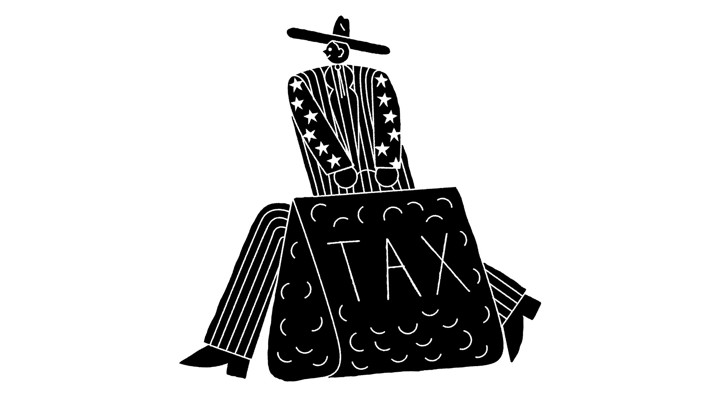
If such a thing as American exceptionalism remains, maybe it can be found in this: Despite deep IRS budget cuts, an average audit rate that has plunged in recent years to just 0.6 percent, and a president who has bragged that dodging federal taxes is “smart,” most Americans still pay their income taxes every year. Even more remarkable, most of us feel obliged to pay. To quote the findings of a 2017 IRS survey: “The majority of Americans (88%) say it is not at all acceptable to cheat on taxes; this ethical attitude is not changing over time.”

True, tax crooks might not confess their real feelings in an IRS survey. But other data confirm that the U.S. is among the world’s leaders when it comes to what economists call the voluntary compliance rate (VCR). In recent decades, America’s VCR has consistently hovered between 81 and 84 percent. Most countries don’t calculate their VCR regularly, but when they do, they lag behind the U.S. One paper that gathered what comparative data were available reported that Germany, the top European Union economy, had a VCR of 68 percent.

Other countries score worse, among them Italy (62 percent), the site of a sprawling tax scandal in which about 1,000 citizens were charged last year with bilking the government out of 2.3 billion euros in tax revenue. The public didn’t seem terribly bothered; ex–Prime Minister Silvio Berlusconi, who was convicted of tax fraud in 2013, may have tapped a common sentiment when he said back then that “evasion of high taxes is a God-given right.”

Then there’s Greece, where economists have struggled to even calculate a VCR. According to the International Monetary Fund, more than half of Greek households pay zero income tax. Indeed, tax evasion is practically a national sport. Take the swimming-pool trick. After the 2008 recession, the government placed a luxury tax on private pools. When only 324 residents in the ritzy suburbs of Athens admitted to having one, tax collectors knew they were being swindled—but didn’t know how badly until Google Earth photos revealed the real pool count: 16,974. It’s now common to conceal chlorinated assets with floating tiles, army nets, and pool interiors painted to mimic grass.

What separates Americans from Greeks or Italians? It’s not income-tax withholding, which the U.S. pioneered but Europe has since copied. Higher tax rates may be one factor. Illegal shadow economies, in which goods are sold off the books for cash, are another. (Greece’s black market is the biggest in the eurozone, accounting for 21.5 percent of its GDP.)

Economists say a third factor, one with profound political implications, is tax morale. This is a catchall term for various forces that motivate people to pay taxes, including social norms, democratic values, civic pride, transparent government spending, and trust in leadership and fellow citizens. People are more inclined to fudge (yes, economists use that word) their tax forms if they think others aren’t paying their fair share.

None of this would seem to bode especially well for tax morale in the U.S., where faith in government has been dropping for decades. So why are Americans still paying? One possibility is that declining trust has been offset by reforms that made cheating harder. Since 1987, to take one example, tax filers have been required to list Social Security numbers for dependents, a change that generated almost $3 billion in revenue, as the number of dependents nationwide shrank by millions. (Suspiciously, some of the disappeared had names like Fluffy.)

A more worrisome possibility is that tax morale has lagged behind declining trust, and will yet fall. High-profile tax-avoidance schemes—like those detailed in the so-called Panama Papers, or by The New York Times’s reporting on the Trump family’s tax dodges—could help erode morale. “Our sense of right and wrong is dramatically influenced by other people,” says Dan Ariely, a professor of psychology and behavioral economics at Duke. “If people think that the government is corrupt and not doing the right thing,” he told me, they may be more inclined to say, “Oh, I don’t want to pay money to a government that is misbehaving.”

Source: The Atlantic

Constitution under siege: The Electoral College battle | Metro Voice News

“Every vote should count.” To many that sounds fair. It sounds right. But is it? “The Electoral College is wrong. The person who gets the most votes should be president.” Does that sound right to you?

The answer varies but falls under one fundamental belief: Do you believe America to be a democracy or a republic.

From that divide, you will understand the main difference between what conservatives are trying to preserve and what liberals are trying to fundamentally transform.

During the 2000 Presidential Election, many in the media and the left believed that Al Gore would win the Electoral College and Bush would in the popular vote. This was the last time the media and the Left staunchly defended the Electoral College while lying the groundwork for the very assault on it. It was after this election that I started studying what the Electoral College is and its importance.

So what is the Electoral College? Each state is afforded a certain number of votes, the amount of senators (2) combined with the amount of representatives in the house (which varies according to population). This makes the minimum amount of votes a state gives as three. These votes are determined by the popular vote each state making the winner the President of the United States.

The emphasis on States is important. Each state in America has different needs and desires. Each state under the Electoral College gets to choose which candidate they want as president by majority vote. (That’s the democracy in the republic you hear about.) The candidate that gets the most votes (270 at this time) from these states wins the Presidency. Under this system, each state matters and therefore the people of each individual state are important.

Under a popular vote, the one with the most votes wins. It’s simpler and therefore easier to circumvent most people. That means cheating is easier. Also ignoring large sects of this country also becomes expedient.

Elections are expensive. Under the popular vote, the middle is ignored because all a candidate need win is the big cities of the east and west coast. The Midwest, the Southwest, and parts of the South will no longer matter because their votes won’t win elections. Look at the state of New York. NYC rules the state, and the Democrat Party rules NYC with an iron fist.

Under a popular, every vote counts. That sounds great, but not every vote should count. “Every four years, the dead rise and vote democrat in Chicago,” the old joke says. The truth is sadder; in that, in many big cities, the dead vote. Add to that the millions of illegal aliens that vote. Then add to that those who vote more than once. Then add to that all those miraculous ballots that appear in bags which were handily put to the side in case needed to overturn an election barely won by a Republican which was how Al Franken won his seat in the Senate and many Republicans lost elections in 2018 they won on election night. Every vote counts. In the past election, some counties had more people vote in them than actually lived there by the thousands. Obviously, they all voted Democrats.

Once you put all those numbers together, it’s easy to see popular votes are easily doctored, and elections can easily be stolen. This is especially true because of an outwardly bias media who is out to cover for those on their side of the political aisle and dreg up the basest stories from the most unreliable sources to bury their competition. Many are willing to accept this because they want their candidate to win no matter what the cost. But what happens, when it’s someone they don’t like? At that point it doesn’t matter, because the republic is dead, and the government class rules us all without any checks or balances.

Ignorance is the greatest ally to the enemies of our Constitution. The reason so many are in favor of abolishing the Electoral College is that we have and Education system controlled by the Left who purposely keep their students from learning the importance of America’s greatness and what is needed to keep her free. Our institutes of educations have become indoctrination center of leftist ideology (socialism, humanism, atheism, etc.). Generations of children have become adults with no real understanding of our Constitution, and its greatness.

The Constitution is under siege. The States lost the battle for the Senate. Now the states may lose the battle of the Electoral College. We lose this and we lose the right to choose our leaders. The Republic needs you and me to educate the ignorant and show them why our founders were all against Democracies and why they chose a Republic instead.

Source: Metro Voice News

Unsealed documents shed new light on efforts to verify Trump-Russia dossier | CNN

Documents unsealed this week lend credence to a theory about Russian election meddling that was first put forward in the Trump-Russia dossier, however they do not corroborate the more explosive claims that the Trump campaign colluded with the Kremlin in the 2016 campaign.

A report from a retired agent who worked for the FBI’s cyber division, submitted as expert testimony in a civil lawsuit, presented new evidence about how Russian intelligence might have exploited a private web hosting company when it fooled top Democratic targets into giving up their passwords. The fruits of those hacks formed the basis of the WikiLeaks email dumps that roiled the race.

The controversial dossier had accused Russian hackers of using those companies, Webzilla and its parent company XBT, as part of their scheme to meddle in the presidential election. The memos, written by a retired British spy, Christopher Steele, also claimed that Russian entrepreneur Aleksej Gubarev assisted the cyberattacks “under duress” from Russian intelligence.

Gubarev vehemently denied those allegations and sued BuzzFeed for defamation after it published the dossier. That prompted BuzzFeed to commission the expert witness report from FTI Consulting’s Anthony Ferrante, who is also a CNN contributor. A federal judge dismissed the lawsuit in December, and ordered that dozens of documents be released to the public this week. The judge ruled on First Amendment grounds and did not assess the hacking-related allegations.

Details of the report

The FTI report concluded that one of the hyperlinks the Russians designed to trick Hillary Clinton’s campaign chairman John Podesta into giving up his email password was created on an internet protocol address owned by Root S.A., an XBT subsidiary.
In his deposition, retired FBI cyber official Ferrante admitted the evidence didn’t conclusively show XBT was aware of the Russian campaign against Democrats.

“I will further state that other than the fact that XBT employees did little to nothing to detect, stop and prevent the significant malicious activity, I have no evidence of them actually sitting behind a keyboard,” he said.

Gubarev’s team argued that an internet hosting company couldn’t be held responsible for the activities of people who use its services.
A rebuttal on Gubarev’s behalf, filed by a former CIA cybersecurity expert, Eric Cole, stressed that he and his staff were frequently unaware of the specific activity conducted on its servers.

“XBT/Webzilla is not responsible for every bit of data that a bad actor passes over its infrastructure any more than a post office is responsible for the actions of the Unabomber,” Cole wrote.

“Special Counsel Robert Mueller indicted the 12 Russians responsible for the hacking. Those are the folks responsible, not us,” Evan Fray-Witzer, an attorney for Gubarev, told CNN. The 11-count indictment against those hackers, which was filed in July 2018, did not mention Webzilla or XBT.

BuzzFeed News characterized the report as vindication of its decision to publish the Trump-Russia dossier. “We knew already that publishing the dossier was in the public interest,” spokesperson Matt Mittenthal told CNN. “Now, because BuzzFeed News published the dossier, we’re learning more about the facts of foreign influence in the 2016 presidential election.”

Gubarev sued BuzzFeed in 2017 and sought damages for defamation. As part of the legal process, some of the key players in the dossier saga were deposed, including Steele.

The court unsealed one page of that deposition, which happened last year in London. Steele testified that he tried to verify the allegations against Gubarev by doing, among other things, an “open source search,” which would likely include scouring news clippings and public records.

Steele has years of experience as a British spy in Moscow and has been a trusted source for the FBI. Allies of Democratic nominee Clinton funded Steele’s investigation in 2016. But he was so concerned by his findings that he shared his memo with senior US and UK officials.

In her decision to throw out the case, the judge confirmed that BuzzFeed got the dossier from an associate of Republican Sen. John McCain in December 2016, weeks after the election.

The memos were circulating in Washington, and CNN soon broke the story that senior US intelligence officials had briefed President-elect Trump and President Barack Obama about some of the unverified allegations. Hours later, BuzzFeed published the complete dossier online.
The most salacious allegations in the dossier remain unverified to this day. But the claims that form the bulk of the memos have held up over time, or at least proved to be partially true.

This notably includes Steele’s claim that Russian President Vladimir Putin oversaw an effort to interfere in the 2016 election. It also includes allegations of secret contacts between Trump’s team and the Russians during the campaign. Steele gathered this stunning information months before the Russian meddling campaign was publicly confirmed by US intelligence agencies and in court filings from special counsel Robert Mueller.

Kevin Collier, a cybersecurity reporter for CNN, previously worked for BuzzFeed News.

Source: CNN & BuzzFeed News

How Much Will Medicare for All Cost? | Committee for a Responsible Federal Budget

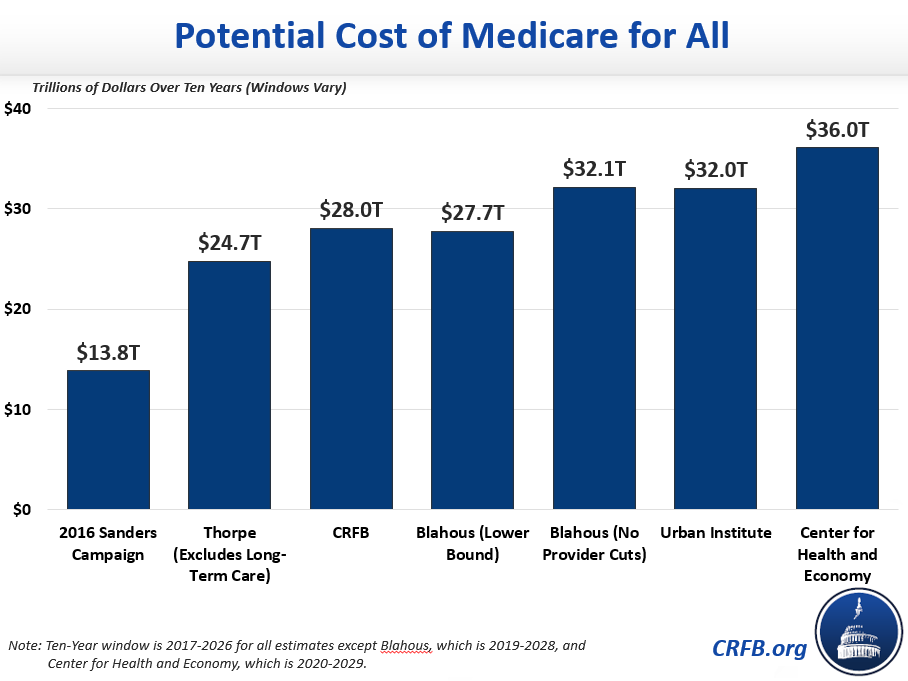
Representative Pramila Jayapal (D-WA), a co-chair of the Medicare for All Caucus, released a bill today that would adopt a single-payer system, where the federal government replaces private health insurance companies as the sole provider of most health care financing. While we are not aware of any estimates of this particular proposal, similar proposals have been estimated to cost the federal government roughly $28-32 trillion over a decade.

Representative Jayapal’s Medicare for All Act would replace nearly all current insurance with a government-run single-payer plan and extend that plan to those who currently lack health coverage. The plan itself would be far more generous than either Medicare or most private coverage, as it would include no deductibles or copayments, would not restrict beneficiaries to networks of care, and would offer a broad suite of benefits including dental care, vision care, transportation for disabled and low-income patients, certain dietary and nutritional care, long-term care, and other long-term services and support. The proposal also establishes a global health budget, moves away from fee-for-service and toward lump-sum payments for many providers, includes a number of measures to hold down drug prices, and makes a variety of other changes to the health care system.

The proposal is broadly similar to Senator Sanders’s proposed single-payer plan introduced during the 2016 Presidential campaign. While the campaign itself estimated that plan would cost the federal government about $14 trillion over a decade, most other estimates that we are aware of are at least twice that high.

At the time, for example, the Committee for a Responsible Federal Budget estimated roughly that the plan would cost $28 trillion through 2026 (we estimated the Sanders plan in particular would also raise $11 trillion of revenue, leading to $17 trillion of net costs). All other estimates come to similar conclusions.

For example, economist Kenneth Thorpe estimated that single-payer health care would cost the federal government $24.7 trillion through 2026, excluding the costs associated with long-term care benefits (likely about $3 trillion). The Urban Institute estimated a $32 trillion cost over the same period, including those long-term care benefits. The Center for Health and Economy (H&E) produced an estimate that the American Action Forum calculates would cost the federal government $36 trillion through 2029.

In addition, former Social Security and Medicare Trustee and current Mercatus Center fellow Chuck Blahous estimated that Medicare for All as proposed in Senator Sanders’s 2017 legislation would cost the federal government $27.7 trillion through 2028 assuming steep provider cuts and $32.1 trillion assuming no provider cuts (these estimates, like most others, assume immediate implementation).

Importantly, these totals represent the increased cost to the federal government, not the change of total national health expenditures. National health expenditures would likely change by no more than a few trillion dollars over decade. The direction of that change is unclear and would depending on the whether the increased cost of expanding coverage (by making health insurance more generous and offering it to more people) is larger or smaller than the amount saved from lower provider payments, drug payments, and administrative spending.

The totals also do not represent debt impact, which would depend not only on the cost to the federal government but also on any funds the government might choose to raise through premiums, taxes, or both. For example, Senator Sanders’s campaign plan included roughly $11 trillion of tax increases, which could fund more than one-third of Medicare for All.

While any new revenue would in part be replacing current premiums, identifying pay-fors still remains a challenge. Enacting this type of Medicare for All would mean increasing federal spending by about 60 percent (excluding interest), and financing a $30 trillion program would require the equivalent of tripling payroll taxes or more than doubling all other taxes.

Supporters of Medicare for All should work to identify new revenue, premiums, and/or spending cuts to finance new federal costs or else scale back their proposal if they are unable to identify sufficient funding.

Source: Committee for a Responsible Federal Budget


Supreme Court clamps down on ‘excessive fines’ by states | The Hill

The Supreme Court on Wednesday ruled unanimously that states must adhere to the Constitution’s ban on excessive fines, a decision that will likely limit the ability of states to impose certain fees and seize property.

In delivering the opinion of the court, Justice Ruth Bader Ginsburg said the Eighth Amendment guards against abuses of the government’s punitive or criminal law-enforcement authority, and that it extends to fines.

“This safeguard, we hold, is ‘fundamental to our scheme of ordered liberty,’ with ‘deep roots in our history and tradition,’” she said, quoting Supreme Court precedent.

Ginsburg, who returned to the bench for oral arguments Tuesday for the first time since undergoing surgery in December, was joined in the ruling by Chief Justice John Roberts, Justices Stephen Breyer, Samuel Alito, Sonia Sotomayor, Elena Kagan, Neil Gorsuch and Brett Kavanaugh. Justice Clarence Thomas filed an opinion concurring in the judgment.

The case centered on Tyson Timbs, who pleaded guilty in Indiana state court to dealing in a controlled substance and conspiracy to commit theft. When Timbs was arrested, police seized the Land Rover he had purchased, for $42,000, from an insurance policy he received when his father died.

The state then brought a  civil forfeiture suit against Timbs for his vehicle because it had been used to transport heroin. The trial court denied the state’s forfeiture request.

Since Timbs had recently purchased the vehicle for more than four times the maximum $10,000 monetary fine he can be charged for the drug conviction, the court said the forfeiture violated the Eighth Amendment.

The Indiana Supreme Court ultimately reversed that ruling, holding that the Excessive Fines Clause constrains only federal action and is inapplicable to state impositions. Watch the video…

The high court vacated that ruling Wednesday.

Source: The Hill

A Complete (Dated) Psychological Analysis of Trump’s Support | Psychology Today

By Bobby Azarian, Ph.D.

Editor’s Note: There are lots of problems with this analysis especially because many assertions are sourced from the liberal media which has an agenda, but it has some interesting talking points for understanding our current political situation. Our nation was divided long before Donald Trump became President, his election just brought this fact to the surface. There are two America’s and they are not even talking with each other anymore. 

Whether we want to or not, we must try to understand the Donald Trump phenomenon, as it has completely swept the nation and also fiercely divided it. What is most baffling about it all is Trump’s apparent political invincibility. As he himself said even before he won the presidential election, “I could stand in the middle of 5th Avenue and shoot somebody and I wouldn’t lose voters.” Unfortunately for the American people, this wild-sounding claim appears to be truer than not. It should also motivate us to explore the science underlying such peculiar human behavior, so we can learn from it, and potentially inoculate against it.

In all fairness, we should recognize that lying is sadly not uncommon for politicians on both sides of the political aisle, but the frequency and magnitude of the current president’s lies should have us all wondering why they haven’t destroyed his political career, and instead perhaps strengthened it. Similarly, we should be asking why his inflammatory rhetoric and numerous scandals haven’t sunk him. We are talking about a man who was caught on tape saying, “When you’re a star, they let you do it. You can do anything. Grab them by the pussy.” Politically surviving that video is not normal, or anything close to it, and such a revelation would likely have been the end of Barack Obama or George Bush had it surfaced weeks before the election.

While dozens of psychologists have analyzed Trump, to explain the man’s political invincibility, it is more important to understand the minds of his staunch supporters. While various popular articles have illuminated a multitude of reasons for his unwavering support, there appears to be no comprehensive analysis that contains all of them. Since there seems to be a real demand for this information, I have tried to provide that analysis below.

Some of the explanations come from a 2017 review paper published in the Journal of Social and Political Psychology by the psychologist and UC Santa Cruz professor Thomas Pettigrew. Others have been put forth as far back as 2016, by me, in various articles and blog posts for publications like Psychology Today. A number of these were inspired by insights from psychologists like Sheldon Solomon, who laid the groundwork for the influential Terror Management Theory, and David Dunning, who did the same for the Dunning-Kruger effect.

This list will begin with the more benign reasons for Trump’s intransigent support. As the list goes on, the explanations become increasingly worrisome, and toward the end, border on the pathological. It should be strongly emphasized that not all Trump supporters are racist, mentally vulnerable, or fundamentally bad people. It can be detrimental to society when those with degrees and platforms try to demonize their political opponents or paint them as mentally ill when they are not. That being said, it is just as harmful to pretend that there are not clear psychological and neural factors that underlie much of Trump supporters’ unbridled allegiance.

The psychological phenomena described below mostly pertain to those supporters who would follow Trump off a cliff. These are the people who will stand by his side no matter what scandals come to light, or what sort of evidence for immoral and illegal behavior surfaces.

1. Practicality Trumps Morality

For some wealthy people, it’s simply a financial matter. Trump offers tax cuts for the rich and wants to do away with government regulation that gets in the way of businessmen making money, even when that regulation exists for the purpose of protecting the environment. Others, like blue-collared workers, like the fact that the president is trying to bring jobs back to America from places like China. Some people who genuinely are not racist (those who are will be discussed later) simply want stronger immigration laws because they know that a country with open borders is not sustainable. These people have put their practical concerns above their moral ones. To them, it does not make a difference if he’s a vagina-grabber, or if his campaign team colluded with Russia to help him defeat his political opponent. It is unknown whether these people are eternally bound to Trump in the way others are, but we may soon find out if the Mueller investigation is allowed to come to completion.

2. The Brain’s Attention System Is More Strongly Engaged by Trump

According to a study that monitored brain activity while participants watched 40 minutes of political ads and debate clips from the presidential candidates, Donald Trump is unique in his ability to keep the brain engaged. While Hillary Clinton could only hold attention for so long, Trump kept both attention and emotional arousal high throughout the viewing session. This pattern of activity was seen even when Trump made remarks that individuals didn’t necessarily agree with. His showmanship and simple language clearly resonate with some at a visceral level.

3. America’s Obsession with Entertainment and Celebrities

Essentially, the loyalty of Trump supporters may in part be explained by America’s addiction to entertainment and reality TV. To some, it doesn’t matter what Trump actually says because he’s so amusing to watch. With the Donald, you are always left wondering what outrageous thing he is going to say or do next. He keeps us on the edge of our seat, and for that reason, some Trump supporters will forgive anything he says. They are happy as long as they are kept entertained.

4. “Some Men Just Want to Watch the World Burn.”

Some people are supporting Trump simply to be rebellious or to introduce chaos into the political system. They may have such distaste for the establishment and democrats like Hillary Clinton that their support for Trump is a symbolic middle finger directed at Washington. These people may have other issues, like an innate desire to troll others or an obsession with schadenfreude.

5. The Fear Factor: Conservatives Are More Sensitive to Threat

Science has  shown that the conservative brain has an exaggerated fear response when faced with stimuli that may be perceived as threatening. A 2008 study in the journal Science found that conservatives have a stronger physiological reaction to startling noises and graphic images compared to liberals. A brain-imaging study published in Current Biology revealed that those who lean right politically tend to have a larger amygdala — a structure that is electrically active during states of fear and anxiety. And a 2014 fMRI study found that it is possible to predict whether someone is a liberal or conservative simply by looking at their brain activity while they view threatening or disgusting images, such as mutilated bodies. Specifically, the brains of self-identified conservatives generated more activity overall in response to the disturbing images.

These brain responses are automatic and not influenced by logic or reason. As long as Trump continues to portray Muslims and Hispanic immigrants as imminent threats, many conservative brains will involuntarily light up like light bulbs being controlled by a switch. Fear keeps his followers energized and focused on safety. And when you think you’ve found your protector, you become less concerned with offensive and divisive remarks.

6. The Power of Mortality Reminders and Perceived Existential Threat

A well-supported theory from social psychology, known as Terror Management Theory, explains why Trump’s fear mongering is doubly effective. The theory is based on the fact that humans have a unique awareness of their own mortality. The inevitably of one’s death creates existential terror and anxiety that is always residing below the surface. In order to manage this terror, humans adopt cultural worldviews — like religions, political ideologies, and national identities — that act as a buffer by instilling life with meaning and value.

Terror Management Theory predicts that when people are reminded of their own mortality, which happens with fear mongering, they will more strongly defend those who share their worldviews and national or ethnic identity, and act out more aggressively towards those who do not. Hundreds of studies have supported this hypothesis, and some have specifically shown that triggering thoughts of death tends to shift people towards the right.

Not only do death reminders increase nationalism, they may influence voting habits in favor of more conservative presidential candidates. And more disturbingly, in a study with American students, scientists found that making mortality salient increased support for extreme military interventions by American forces that could kill thousands of civilians overseas. Interestingly, the effect was present only in conservatives.

By constantly emphasizing existential threat, Trump may be creating a psychological condition that makes the brain respond positively rather than negatively to bigoted statements and divisive rhetoric.

7. The Dunning-Kruger Effect: Humans Often Overestimate Their Political Expertise

Some who support Donald Trump are under-informed or misinformed about the issues at hand. When Trump tells them that crime is skyrocketing in the United States, or that the economy is the worst it’s ever been, they simply take his word for it.

The Dunning-Kruger effect explains that the problem isn’t just that they are misinformed; it’s that they are completely unaware that they are misinformed, which creates a double burden.

Studies have shown that people who lack expertise in some area of knowledge often have a cognitive bias that prevents them from realizing that they lack expertise. As psychologist David Dunning puts it in an op-ed for Politico, “The knowledge and intelligence that are required to be good at a task are often the same qualities needed to recognize that one is not good at that task — and if one lacks such knowledge and intelligence, one remains ignorant that one is not good at the task. This includes political judgment.” These people cannot be reached because they mistakenly believe they are the ones who should be reaching others.

8. Relative Deprivation — A Misguided Sense of Entitlement

Relative deprivation refers to the experience of being deprived of something to which one believes they are entitled. It is the discontent felt when one compares their position in life to others who they feel are equal or inferior but have unfairly had more success than them.

Common explanations for Trump’s popularity among non-bigoted voters involve economics. There is no doubt that some Trump supporters are simply angry that American jobs are being lost to Mexico and China, which is certainly understandable, although these loyalists often ignore the fact that some of these careers are actually being lost due to the accelerating pace of automation.

These Trump supporters are experiencing relative deprivation, and are common among the swing states like Ohio, Michigan, and Pennsylvania. This kind of deprivation is specifically referred to as “relative,” as opposed to “absolute,” because the feeling is often based on a skewed perception of what one is entitled to.

9. Lack of Exposure to Dissimilar Others

Intergroup contact refers to contact with members of groups that are outside one’s own, which has been experimentally shown to reduce prejudice. As such, it’s important to note that there is growing evidence that Trump’s white supporters have experienced significantly less contact with minorities than other Americans. For example, a 2016 study found that “…the racial and ethnic isolation of Whites at the zip-code level is one of the strongest predictors of Trump support.” This correlation persisted while controlling for dozens of other variables. In agreement with this finding, the same researchers found that support for Trump increased with the voters’ physical distance from the Mexican border. These racial biases might be more implicit than explicit, the latter which is addressed in #14.

10. Trump’s Conspiracy Theories Target the Mentally Vulnerable

While the conspiracy theory crowd — who predominantly support Donald Trump and crackpot allies like Alex Jones and the shadowy QAnon — may appear to just be an odd quirk of modern society, some of them may suffer from psychological illnesses that involve paranoia and delusions, such as schizophrenia, or are at least vulnerable to them, like those with schizotypy personalities.

The link between schizotypy and belief in conspiracy theories is well-established, and a recent study published in the journal PsychiatryResearch has demonstrated that it is still very prevalent in the population. The researchers found that those who were more likely to believe in outlandish conspiracy theories, such as the idea that the U.S. government created the AIDS epidemic, consistently scored high on measures of “odd beliefs and magical thinking.” One feature of magical thinking is a tendency to make connections between things that are actually unrelated in reality.

Donald Trump and media allies target these people directly. All one has to do is visit alt-right websites and discussion boards to see the evidence for such manipulation.

11. Trump Taps into the Nation’s Collective Narcissism

Collective narcissism is an unrealistic shared belief in the greatness of one’s national group. It often occurs when a group who believes it represents the ‘true identity’ of a nation — the ‘ingroup,’ in this case White Americans — perceives itself as being disadvantaged compared to outgroups who are getting ahead of them ‘unrightfully.’ This psychological phenomenon is related to relative deprivation (#6).

study published last year in the journal Social Psychological and Personality Science found a direct link between national collective narcissism and support for Donald Trump. This correlation was discovered by researchers at the University of Warsaw, who surveyed over 400 Americans with a series of questionnaires about political and social beliefs. Where individual narcissism causes aggressiveness toward other individuals, collective narcissism involves negative attitudes and aggressiontoward ‘outsider’ groups (outgroups), who are perceived as threats.

Donald Trump exacerbates collective narcissism with his anti-immigrant, anti-elitist, and strongly nationalistic rhetoric. By referring to his supporters, an overwhelmingly white group, as being “true patriots” or “real Americans,” he promotes a brand of populism that is the epitome of “identity politics,” a term that is usually associated with the political left. Left-wing identity politics, as misguided as they may sometimes be, are generally aimed at achieving equality, while the right-wing brand is based on a belief that one nationality or race is superior or entitled to success and wealth for no other reason than identity.

12. The Desire to Want to Dominate Others

Social dominance orientation (SDO) — which is distinct from but related to authoritarian personality (#13) — refers to people who have a preference for the societal hierarchy of groups, specifically with a structure in which the high-status groups have dominance over the low-status ones. Those with SDO are typically dominant, tough-minded, and driven by self-interest.

In Trump’s speeches, he appeals to those with SDO by repeatedly making a clear distinction between groups that have a generally higher status in society (White), and those groups that are typically thought of as belonging to a lower status (immigrants and minorities). A 2016 survey study of 406 American adults published last year in the journal Personality and Individual Differences found that those who scored high on both SDO and authoritarianism were more likely to vote for Trump in the election.

13. Authoritarian Personality 

Authoritarianism refers to the advocacy or enforcement of strict obedience to authority at the expense of personal freedom, and is commonly associated with a lack of concern for the opinions or needs of others. Authoritarian personality is characterized by belief in total and complete obedience to authority. Those with this personality often display aggression toward outgroup members, submissiveness to authority, resistance to new experiences, and a rigid hierarchical view of society. Authoritarianism is often triggered by fear, making it easy for leaders who exaggerate threat or fear monger to gain their allegiance.

Although authoritarian personality is found among liberals, it is more common among the right-wing around the world. President Trump’s speeches, which are laced with absolutist terms like “losers” and “complete disasters,” are naturally appealing to those with such a personality.

While research showed that Republican voters in the U.S. scored higher than Democrats on measures of authoritarianism before Trump emerged on the political scene, a 2016 Politico survey found that high authoritarians greatly favored then-candidate Trump, which led to a correct prediction that he would win the election, despite the polls saying otherwise.

14. Racism and Bigotry

It would be grossly unfair and inaccurate to say that every one of Trump’s supporters have prejudice against ethnic and religious minorities, but it would be equally inaccurate to say that few do. The Republican party, going at least as far back to Richard Nixon’s “southern strategy,” has historically used tactics that appealed to bigotry, such as lacing speeches with “dog whistles” — code words that signaled prejudice toward minorities that were designed to be heard by racists but no one else.

While the dog whistles of the past were subtler, Trump’s signaling is sometimes shockingly direct. There’s no denying that he routinely appeals to racist and bigoted supporters when he calls Muslims “dangerous” and Mexican immigrants “rapists” and “murderers,” often in a blanketed fashion. Perhaps unsurprisingly, a recent study has shown that support for Trump is correlated with a standard scale of modern racism.

Source: Psychology Today
Trump officially legalizes industrial hemp | The Hill

President Trump legalized the cultivation of industrial hemp Thursday when he signed a widespread, bipartisan farm bill aimed at boosting the agriculture industry.

The fiber of hemp, a non-intoxicating derivative of the cannabis plant, is used to make a variety of products, such as cardboard, carpets, clothes, paper and more.

Hemp production and sales have historically been illegal under the same federal prohibition against marijuana. The farm bill only deals with industrial hemp and does not address recreational or medical marijuana.

Senate Majority Leader Mitch McConnell (R-Ky.) worked with Sens. Rand Paul (R-Ky.), Jeff Merkley(D-Ore.) and Ron Wyden (D-Ore.) to introduce a bill to legalize hemp, which was ultimately included in the farm bill. 

“I used my very own hemp pen to sign the conference report, clearing the way for the House and Senate to pass legislation and send it to the president’s desk. I’m proud that the bill includes my provision to legalize the production of industrial hemp. It’s a victory for farmers and consumers throughout our country,” McConnell said when the Senate advanced the farm bill earlier this month.

The farm bill helps removes obstacles farmers face in growing hemp, including restricted access to banking, water rights and crop insurance. Hemp is easier to grow than cotton, corn or soybeans as it requires little water and can be viable in lower-quality soil that is not practical for other crops.

The hemp provision is just one of several aspects of the farm bill meant to aid farmers as exports of agricultural products such as soybeans take a hit as Trump engages in a bitter trade war with China and other countries.

Source: The Hill

FBI releases part of Russia dossier summary used to brief Trump, Obama | Politico

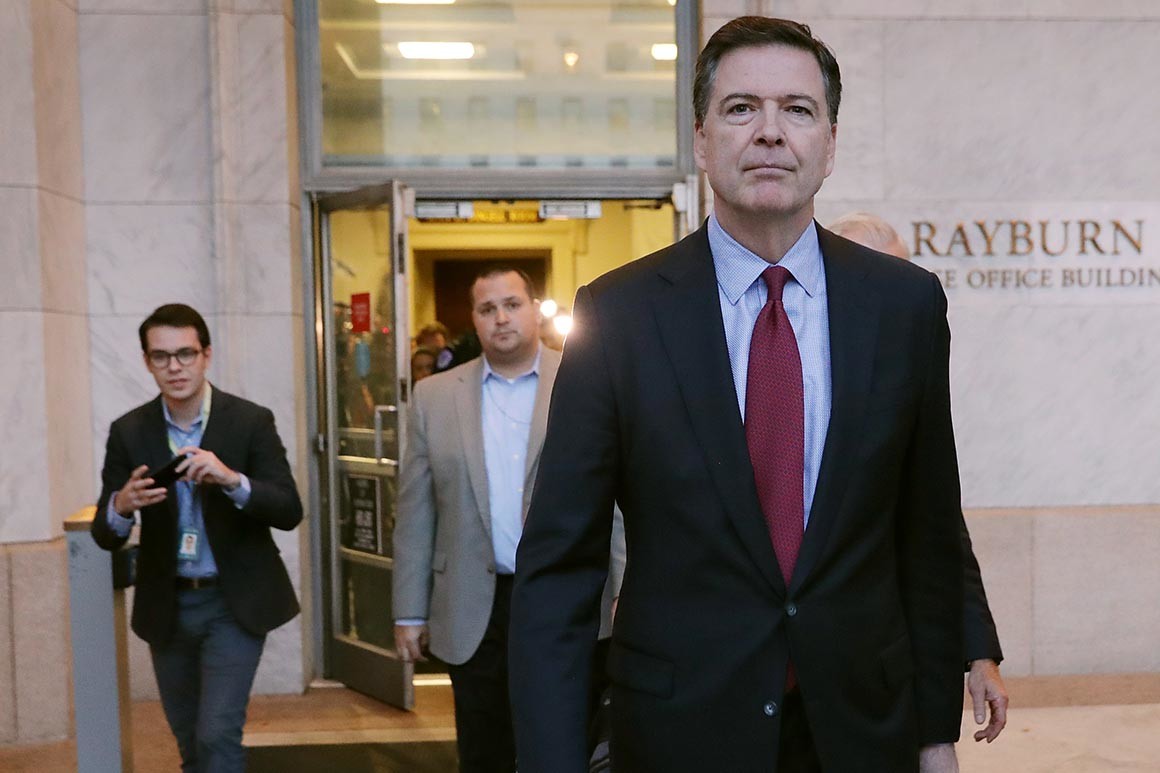
The FBI released for the first time Friday night a two-page summary former FBI Director James Comey used to brief President-elect Donald Trump nearly two years ago on a so-called dossier about Trump’s ties to Russia.

The version made public Friday could reignite previous criticism from Republicans and Trump allies that the FBI was too vague in its description of the fact that the dossier was funded by the campaign of Trump’s nemesis in the 2016 presidential election, Democratic nominee Hillary Rodham Clinton, as well as the Democratic National Committee.

Comey, who was fired by Trump in May 2017, acknowledged during a book tour earlier this year that he did not inform Trump who paid for the research.

The brief passage the FBI left unredacted in the newly released memo gives some background on the former British intelligence officer who compiled the dossier, Christopher Steele, although Steele’s name does not actually appear in the newly released version. The released portion of the synopsis is vague about who financed the project, referring to it as sponsored by “private clients.”

“An FBI source … volunteered highly politically sensitive information … on Russian influence efforts aimed at the US presidential election,” the memo labeled as “Annex A” says. “The source is an executive of a private business intelligence firm and a former employee of a friendly intelligence service who has been compensated for previous reporting over the past three years. The source maintains and collects information from a layered network of identified and unidentified subsources, some of which has been corroborated in the past. The source collected this information on behalf of private clients and was not compensated for it by the FBI.”

“The source’s reporting appears to have been acquired by multiple Western press organizations starting in October,” the document from January 2017 declares.

Comey has said he did not show or give Trump the memo, but used it as a reference when briefing him on the dossier, which U.S. intelligence officials feared Russia might try to use as blackmail against Trump. The synopsis was also used to brief President Barack Obama, officials have said.

Republicans had previously complained that the FBI failed to inform a federal court about the dossier’s provenance — that Steele’s work was commissioned by Fusion GPS, a research firm that had been hired by the Clinton campaign’s law firm, Perkins Coie, to dig up information about Trump’s business relationships overseas. Based in part on the dossier’s information, the court granted an FBI application to surveil a former Trump campaign associate in October 2016.

Aspects of the FBI’s surveillance application have since been released and revealed that the FBI did inform the court that Steele had political animus toward Trump and that it was funded by a politically motivated backer.

The document was released Friday in response to a Freedom of Information Act lawsuit brought by a POLITICO reporter and the James Madison Project, a pro-transparency group.

In January, U.S. District Court Judge Amit Mehta ruled that that the FBI was legally justified in refusing to confirm or deny the existence of any records related to the dossier, despite several tweets from President Donald Trump that described the document as “fake” or “discredited.”

However, shortly after that ruling, Trump declassified a House Intelligence Committee memo that included various claims about the FBI’s handling of the dossier. In August, Mehta said the official release of that material vitiated the FBI’s ability to claim that it had offered no public confirmation of its role in vetting or verifying the dossier, a collection of accurate, inaccurate, unverified and sometimes salacious claims about ties between Russia and various figures in Trump’s circle.

“It remains no longer logical nor plausible for the FBI to maintain that it cannot confirm nor deny the existence of documents” related to attempts to verify information in the dossier, Mehta wrote.

The FBI withheld the remainder of the two-page synopsis on a variety of grounds, including that the material remains classified either Secret or Top Secret. The law enforcement agency also indicated the information is exempt from release because it pertains to ongoing investigations or court proceedings, originated with a confidential source or describes confidential investigative techniques or procedures.

The FBI said Friday it lacked any records indicating final conclusions about any information in the dossier, said Brad Moss, one of the attorneys pressing for release of the records.

“After two years of legal games, the FBI today finally confirmed two pieces of speculation about the scandalous allegations regarding which Director Comey briefed President Trump in January 2017: all of those allegations remain part of the ongoing Russian ‘collusion’ investigation, and the FBI has not rendered final determinations about the accuracy of any of them,” Moss said. “Far from being debunked, the issues that raised concerns for the Intelligence Community in 2017 remain unresolved to this day.”

Moss said he plans to challenge the FBI’s withholdings in the case and to ask Mehta to order more of the information released.

Source: Politico

An Evening with Tucker Carlson: America’s Elites Are on a Ship of Fools. YouTube & Independent.org

Source: YouTube & Independent.org

Trump’s List: 289 Accomplishments in 20 Months | Geller Report

As Trump nears the two-year mark of his historic election and conducts political rallies around the country, during which he talks up his wins in hopes it will energize Republican voters, the administration has counted up 289 accomplishments in 18 categories, capped by the confirmation of Brett Kavanaugh to the Supreme Court.

They include 173 major wins, such as adding more than 4 million jobs, and another 116 smaller victories, some with outsize importance, such as the 83 percent one-year increase in arrests of MS-13 gang members.

Trump’s successes in reducing the cost of taxes and regulations, rebuilding our military, avoiding wars of choice and changing the courts rival those of all previous Republican presidents.

“Trump has an advantage over Ronald Reagan: He has a Reagan Republican House and Senate while Reagan had a [Democratic Speaker] Tip O’Neill House and a pre-Reagan Republican Senate. Reagan and [former GOP Speaker] Newt Gingrich were the ice breakers that allowed Trump’s victories to grow in number and significance,” he added.

Unlike the Year One list which included many proposals and orders still to be acted on, the new collection includes dozens of actions already in place, signed legislation, and enforced executive orders.

And shockingly the NAFTA achievement is presented as a sidebar to the larger achievement that reads, “President Trump is negotiating and renegotiating better trade deals, achieving free, fair, and reciprocal trade for the United States.” Under that umbrella are eight trade deals cut with Japan, South Korea, Europe and China.“President Trump is a truly unique leader in American history. He’s a kid from Queens who became an international business leader and made billions by getting things when no one said he could,” said Trump’s 2016 campaign pollster John McLaughlin.“They told him he couldn’t be president and beat the establishment and he did. For two years the establishment is telling him he can’t do things in Washington and he’s succeeding in spite of them. He never retreats. He doesn’t back up. He’s relentless. He just wins,” he added.Comparing the two years shows that the latest has an expanded group of economic achievements while the pro-life category was folded into the health care section.

Along the way, there have been some disappointments, such as failing to replace Obamacare, fund a big infrastructure plan, and build the border wall.

But the White House believes that despite a lack of media coverage of his accomplishments, supporters know about them and will head to the voting polls to help the GOP maintain control of the House and keep the president on what CNN dubbed a “winning streak.”

In the Washington Post Friday, former Bush speechwriter and columnist Marc Thiessen agreed and said that Trump has proven to be successful at keeping his campaign promises. He wrote, “The fact is, in his first two years, Trump has compiled a remarkable record of presidential promise-keeping.”

The list:

Economic Growth

  • 4.2 percent growth in the second quarter of 2018.
  • For the first time in more than a decade, growth is projected to exceed 3 percent over the calendar year.

Jobs

  • 4 million new jobs have been created since the election, and more than 3.5 million since Trump took office.
  • More Americans are employed now than ever before in our history.
  • Jobless claims at lowest level in nearly five decades.
  • The economy has achieved the longest positive job-growth streak on record.
  • Job openings are at an all-time high and outnumber job seekers for the first time on record.
  • Unemployment claims at 50 year low
  • African-American, Hispanic, and Asian-American unemployment rates have all recently reached record lows.
    • African-American unemployment hit a record low of 5.9 percent in May 2018.
    • Hispanic unemployment at 4.5 percent.
    • Asian-American unemployment at record low of 2 percent.
  • Women’s unemployment recently at lowest rate in nearly 65 years.
    • Female unemployment dropped to 3.6 percent in May 2018, the lowest since October 1953.
  • Youth unemployment recently reached its lowest level in more than 50 years.
    • July 2018’s youth unemployment rate of 9.2 percent was the lowest since July 1966.
  • Veterans’ unemployment recently hit its lowest level in nearly two decades.
    • July 2018’s veterans’ unemployment rate of 3.0 percent matched the lowest rate since May 2001.
  • Unemployment rate for Americans without a high school diploma recently reached a record low.
  • Rate for disabled Americans recently hit a record low.
  • Blue-collar jobs recently grew at the fastest rate in more than three decades.
  • Poll found that 85 percent of blue-collar workers believe their lives are headed “in the right direction.”
    • 68 percent reported receiving a pay increase in the past year.
  • Last year, job satisfaction among American workers hit its highest level since 2005.
  • Nearly two-thirds of Americans rate now as a good time to find a quality job.
    • Optimism about the availability of good jobs has grown by 25 percent.
  • Added more than 400,000 manufacturing jobs since the election.
    • Manufacturing employment is growing at its fastest pace in more than two decades.
  • 100,000 new jobs supporting the production & transport of oil & natural gas.

American Income

  • Median household income rose to $61,372 in 2017, a post-recession high.
  • Wages up in August by their fastest rate since June 2009.
  • Paychecks rose by 3.3 percent between 2016 and 2017, the most in a decade.
  • Council of Economic Advisers found that real wage compensation has grown by 1.4 percent over the past year.
  • Some 3.9 million Americans off food stamps since the election.
  • Median income for Hispanic-Americans rose by 3.7 percent and surpassed $50,000 for the first time ever in history.
    • Home-ownership among Hispanics is at the highest rate in nearly a decade.
  • Poverty rates for African-Americans and Hispanic-Americans have reached their lowest levels ever recorded.

American Optimism

  • Small business optimism has hit historic highs.
    • NFIB’s small business optimism index broke a 35 year-old record in August.
    • SurveyMonkey/CNBC’s small business confidence survey for Q3 of 2018 matched its all-time high.
  • Manufacturers are more confident than ever.
    • 95 percent of U.S. manufacturers are optimistic about the future, the highest ever.
  • Consumer confidence is at an 18-year high.
  • 12 percent of Americans rate the economy as the most significant problem facing our country, the lowest level on record.
  • Confidence in the economy is near a two-decade high, with 51 percent rating the economy as good or excellent.

American Business

  • Investment is flooding back into the United States due to the tax cuts.
    • Over $450 billion dollars has already poured back into the U.S., including more than $300 billion in the first quarter of 2018.
  • Retail sales have surged. Commerce Department figures from August show that retail sales increased 0.5 percent in July 2018, an increase of 6.4 percent from July 2017.
  • ISM’s index of manufacturing scored its highest reading in 14 years.
  • Worker productivity is the highest it has been in more than three years.
  • Steel and aluminum producers are re-opening.
  • Dow Jones Industrial Average, S&P 500, and NASDAQ have all notched record highs.
    • Dow hit record highs 70 times in 2017 alone, the most ever recorded in one year.

Deregulation

  • Achieved massive deregulation at a rapid pace, completing 22 deregulatory actions to every one regulatory action during his first year in office.
  • Signed legislation to roll back costly and harmful provisions of Dodd-Frank, providing relief to credit unions, and community and regional banks.
  • Federal agencies achieved more than $8 billion in lifetime net regulatory cost savings.
  • Rolled back Obama’s burdensome Waters of the U.S. rule.
  • Used the Congressional Review Act to repeal regulations more times than in history.

Tax Cuts

  • Biggest tax cuts and reforms in American history by signing the Tax Cuts and Jobs act into law
    • Provided more than $5.5 trillion in gross tax cuts, nearly 60 percent of which will go to families.
    • Increased the exemption for the death tax to help save Family Farms & Small Business.
    • Nearly doubled the standard deduction for individuals and families.
    • Enabled vast majority of American families will be able to file their taxes on a single page by claiming the standard deduction.
    • Doubled the child tax credit to help lessen the financial burden of raising a family.
    • Lowered America’s corporate tax rate from the highest in the developed world to allow American businesses to compete and win.
    • Small businesses can now deduct 20 percent of their business income.
    • Cut dozens of special interest tax breaks and closed loopholes for the wealthy.
  • 9 in 10 American workers are expected see an increase in their paychecks thanks to the tax cuts, according to the Treasury Department.
  • More than 6 million of American workers have received wage increases, bonuses, and increased benefits thanks to tax cuts.
  • Over 100 utility companies have lowered electric, gas, or water rates thanks to the Tax Cuts and Jobs Act.
  • Ernst & Young found 89 percent of companies planned to increase worker compensation thanks to the Trump tax cuts.
  • Established opportunity zones to spur investment in left behind communities.

Worker Development

  • Established a National Council for the American Worker to develop a national strategy for training and retraining America’s workers for high-demand industries.
  • Employers have signed Trump’s “Pledge to America’s Workers,” committing to train or retrain more than 4.2 million workers and students.
  • Signed the first Perkins CTE reauthorization since 2006, authorizing more than $1 billion for states each year to fund vocational and career education programs.
  • Executive order expanding apprenticeship opportunities for students and workers.

Domestic Infrastructure

  • Proposed infrastructure plan would utilize $200 billion in Federal funds to spur at least $1.5 trillion in infrastructure investment across the country.
  • Executive order expediting environmental reviews and approvals for high priority infrastructure projects.
  • Federal agencies have signed the One Federal Decision Memorandum of Understanding (MOU) streamlining the federal permitting process for infrastructure projects.
  • Rural prosperity task force and signed an executive order to help expand broadband access in rural areas.

Health Care

  • Signed an executive order to help minimize the financial burden felt by American households Signed legislation to improve the National Suicide Hotline.
  • Signed the most comprehensive childhood cancer legislation ever into law, which will advance childhood cancer research and improve treatments.
  • Signed Right-to-Try legislation, expanding health care options for terminally ill patients.
  • Enacted changes to the Medicare 340B program, saving seniors an estimated $320 million on drugs in 2018 alone.
  • FDA set a new record for generic drug approvals in 2017, saving consumers nearly $9 billion.
  • Released a blueprint to drive down drug prices for American patients, leading multiple major drug companies to announce they will freeze or reverse price increases.
  • Expanded short-term, limited-duration health plans.
  • Let more employers to form Association Health Plans, enabling more small businesses to join together and affordably provide health insurance to their employees.
  • Cut Obamacare’s burdensome individual mandate penalty.
  • Signed legislation repealing Obamacare’s Independent Payment Advisory Board, also known as the “death panels.”
  • USDA invested more than $1 billion in rural health care in 2017, improving access to health care for 2.5 million people in rural communities across 41 states
  • Proposed Title X rule to help ensure taxpayers do not fund the abortion industry in violation of the law.
  • Reinstated and expanded the Mexico City Policy to keep foreign aid from supporting the global abortion industry.
  • HHS formed a new division over protecting the rights of conscience and religious freedom.
  • Overturned Obama administration’s midnight regulation prohibiting states from defunding certain abortion facilities.
  • Signed executive order to help ensure that religious organizations are not forced to choose between violating their religious beliefs by complying with Obamacare’s contraceptive mandate or shutting their doors.

Combating Opioids

  • Chaired meeting the 73rd General Session of the United Nations discussing the worldwide drug problem with international leaders.
  • Initiative to Stop Opioid Abuse and Reduce Drug Supply and Demand, introducing new measures to keep dangerous drugs out of our communities.
  • $6 billion in new funding to fight the opioid epidemic.
  • DEA conducted a surge in April 2018 that arrested 28 medical professions and revoked 147 registrations for prescribing too many opioids.
  • Brought the “Prescribed to Death” memorial to President’s Park near the White House, helping raise awareness about the human toll of the opioid crisis.
  • Helped reduce high-dose opioid prescriptions by 16 percent in 2017.
  • Opioid Summit on the administration-wide efforts to combat the opioid crisis.
  • Launched a national public awareness campaign about the dangers of opioid addiction.
  • Created a Commission on Combating Drug Addiction and the Opioid Crisis which recommended a number of pathways to tackle the opioid crisis.
  • Led two National Prescription Drug Take Back Days in 2017 and 2018, collecting a record number of expired and unneeded prescription drugs each time.
  • $485 million targeted grants in FY 2017 to help areas hit hardest by the opioid crisis.
  • Signed INTERDICT Act, strengthening efforts to detect and intercept synthetic opioids before they reach our communities.
  • DOJ secured its first-ever indictments against Chinese fentanyl manufacturers.
  • Joint Criminal Opioid Darknet Enforcement (J-CODE) team, aimed at disrupting online illicit opioid sales.
  • Declared the opioid crisis a Nationwide Public Health Emergency in October 2017.

Law and Order

  • More U.S. Circuit Court judges confirmed in the first year in office than ever.
  • Confirmed more than two dozen U. S. Circuit Court judges.
  • Followed through on the promise to nominate judges to the Supreme Court who will adhere to the Constitution
    • Nominated and confirmed Justice Neil Gorsuch and Brett Kavanaugh to the Supreme Court.
  • Signed an executive order directing the Attorney General to develop a strategy to more effectively prosecute people who commit crimes against law enforcement officers.
  • Launched an evaluation of grant programs to make sure they prioritize the protection and safety of law enforcement officers.
  • Established a task force to reduce crime and restore public safety in communities across Signed an executive order to focus more federal resources on dismantling transnational criminal organizations such as drug cartels.
  • Signed an executive order to focus more federal resources on dismantling transnational criminal organizations such as drug cartels.
  • Violent crime decreased in 2017 according to FBI statistics.
  • $137 million in grants through the COPS Hiring Program to preserve jobs, increase community policing capacities, and support crime prevention efforts.
  • Enhanced and updated the Project Safe Neighborhoods to help reduce violent crime.
  • Signed legislation making it easier to target websites that enable sex trafficking and strengthened penalties for people who promote or facilitate prostitution.
  • Created an interagency task force working around the clock to prosecute traffickers, protect victims, and prevent human trafficking.
  • Conducted Operation Cross Country XI to combat human trafficking, rescuing 84 children and arresting 120 human traffickers.
  • Encouraged federal prosecutors to use the death penalty when possible in the fight against the trafficking of deadly drugs.
  • New rule effectively banning bump stock sales in the United States.

Border Security and Immigration

  • Secured $1.6 billion for border wall construction in the March 2018 omnibus bill.
  • Construction of a 14-mile section of border wall began near San Diego.
  • Worked to protect American communities from the threat posed by the vile MS-13 gang.
    • ICE’s Homeland Security Investigations division arrested 796 MS-13 members and associates in FY 2017, an 83 percent increase from the prior year.
    • Justice worked with partners in Central America to secure criminal charges against more than 4,000 MS-13 members.
    • Border Patrol agents arrested 228 illegal aliens affiliated with MS-13 in FY 2017.
  • Fighting to stop the scourge of illegal drugs at our border.
    • ICE HSI seized more than 980,000 pounds of narcotics in FY 2017, including 2,370 pounds of fentanyl and 6,967 pounds of heroin.
    • ICE HSI dedicated nearly 630,000 investigative hours towards halting the illegal import of fentanyl.
    • ICE HSI made 11,691 narcotics-related arrests in FY 2017.
    • Stop Opioid Abuse and Reduce Drug Supply and Demand introduced new measures to keep dangerous drugs out the United States.
    • Signed the INTERDICT Act into law, enhancing efforts to detect and intercept synthetic opioids.
    • DOJ secured its first-ever indictments against Chinese fentanyl manufacturers.
    • DOJ launched their Joint Criminal Opioid Darknet Enforcement (J-CODE) team, aimed at disrupting online illicit opioid sales.
  • Released an immigration framework that includes the resources required to secure our borders and close legal loopholes, and repeatedly called on Congress to fix our broken immigration laws.
  • Authorized the deployment of the National Guard to help secure the border.
  • Enhanced vetting of individuals entering the U.S. from countries that don’t meet security standards, helping to ensure individuals who pose a threat to our country are identified before they enter.
    • These procedures were upheld in a June 2018 Supreme Court hearing.
  • ICE removed over 226,000 illegal aliens from the United States in 2017.
    • ICE rescued or identified over 500 human trafficking victims and over 900 child exploitation victims in 2017 alone.
  • In 2017, ICE Enforcement and Removal Operations (ERO) arrested more than 127,000 aliens with criminal convictions or charges, responsible for
    • Over 76,000 with dangerous drug offenses.
    • More than 48,000 with assault offenses.
    • More than 11,000 with weapons offenses.
    • More than 5,000 with sexual assault offenses.
    • More than 2,000 with kidnapping offenses.
    • Over 1,800 with homicide offenses.
  • Created the Victims of Immigration Crime Engagement (VOICE) Office in order to support the victims and families affected by illegal alien crime.
  • More than doubled the number of counties participating in the 287(g) program, which allows jails to detain criminal aliens until they are transferred to ICE custody.

Trade

  • Negotiating and renegotiating better trade deals, achieving free, fair, and reciprocal trade for the United States.
    • Agreed to work with the European Union towards zero tariffs, zero non-tariff barriers, and zero subsides.
    • Deal with the European Union to increase U.S. energy exports to Europe.
    • Litigated multiple WTO disputes targeting unfair trade practices and upholding our right to enact fair trade laws.
    • Finalized a revised trade agreement with South Korea, which includes provisions to increase American automobile exports.
    • Negotiated an historic U.S.-Mexico-Canada Trade Agreement to replace NAFTA.
    • Agreement to begin trade negotiations for a U.S.-Japan trade agreement.
    • Secured $250 billion in new trade and investment deals in China and $12 billion in Vietnam.
    • Established a Trade and Investment Working Group with the United Kingdom, laying the groundwork for post-Brexit trade.
  • Enacted steel and aluminum tariffs to protect our vital steel and aluminum producers and strengthen our national security.
  • Conducted 82 anti-dumping and countervailing duty investigations in 2017 alone.
  • Confronting China’s unfair trade practices after years of Washington looking the other way.
    • 25 percent tariff on $50 billion of goods imported from China and later imposed an additional 10% tariff on $200 billion of Chinese goods.
    • Conducted an investigation into Chinese forced technology transfers, unfair licensing practices, and intellectual property theft.
    • Imposed safeguard tariffs to protect domestic washing machines and solar products manufacturers hurt by China’s trade policies
  • Withdrew from the job-killing Trans-Pacific Partnership (TPP).
  • Secured access to new markets for America’s farmers.
    • Recent deal with Mexico included new improvements enabling food and agriculture to trade more fairly.
    • Recent agreement with the E.U. will reduce barriers and increase trade of American soybeans to Europe.
    • Won a WTO dispute regarding Indonesia’s unfair restriction of U.S. agricultural exports.
    • Defended American Tuna fisherman and packagers before the WTO
    • Opened up Argentina to American pork experts for the first time in a quarter-century
    • American beef exports have returned to china for the first time in more than a decade
  • OK’d up to $12 billion in aid for farmers affected by unfair trade retaliation.

Energy

  • Presidential Memorandum to clear roadblocks to construction of the Keystone XL Pipeline.
  • Presidential Memorandum declaring that the Dakota Access Pipeline serves the national interest and initiating the process to complete construction.
  • Opened up the Alaska National Wildlife Refuge to energy exploration.
  • Coal exports up over 60 percent in 2017.
  • Rolled back the “stream protection rule” to prevent it from harming America’s coal industry.
  • Cancelled Obama’s anti-coal Clean Power Plan and proposed the Affordable Clean Energy Rule as a replacement.
  • Withdrew from the job-killing Paris climate agreement, which would have cost the U.S. nearly $3 trillion and led to 6.5 million fewer industrial sector jobs by 2040.
  • U.S. oil production has achieved its highest level in American history
  • United States is now the largest crude oil producer in the world.
  • U.S. has become a net natural gas exporter for the first time in six decades.
  • Action to expedite the identification and extraction of critical minerals that are vital to the nation’s security and economic prosperity.
  • Took action to reform National Ambient Air Quality Standards, benefitting American manufacturers.
  • Rescinded Obama’s hydraulic fracturing rule, which was expected to cost the industry $32 million per year.
  • Proposed an expansion of offshore drilling as part of an all-of-the above energy strategy
    • Held a lease sale for offshore oil and gas leases in the Gulf of Mexico in August 2018.
  • Got EU to increase its imports of liquefied natural gas (LNG) from the United States.
  • Issued permits for the New Burgos Pipeline that will cross the U.S.-Mexico border.

Foreign Policy

  • Moved the U.S. Embassy in Israel to Jerusalem.
  • Withdrew from Iran deal and immediately began the process of re-imposing sanctions that had been lifted or waived.
    • Treasury has issued sanctions targeting Iranian activities and entities, including the Islamic Revolutionary Guard Corps-Qods Force
    • Since enacting sanctions, Iran’s crude exports have fallen off, the value of Iran’s currency has plummeted, and international companies have pulled out of the country.
    • All nuclear-related sanctions will be back in full force by early November 2018.
  • Historic summit with North Korean President Kim Jong-Un, bringing beginnings of peace and denuclearization to the Korean Peninsula.
    • The two leaders have exchanged letters and high-level officials from both sides have met resulting in tremendous progress.
    • North Korea has halted nuclear and missile tests.
    • Negotiated the return of the remains of missing-in-action soldiers from the Korean War.
  • Imposed strong sanctions on Venezuelan dictator Nicholas Maduro and his inner circle.
  • Executive order preventing those in the U.S. from carrying out certain transactions with the Venezuelan regime, including prohibiting the purchase of the regime’s debt.
  • Responded to the use of chemical weapons by the Syrian regime.
    • Rolled out sanctions targeting individuals and entities tied to Syria’s chemical weapons program.
    • Directed strikes in April 2017 against a Syrian airfield used in a chemical weapons attack on innocent civilians.
    • Joined allies in launching airstrikes in April 2018 against targets associated with Syria’s chemical weapons use.
  • New Cuba policy that enhanced compliance with U.S. law and held the Cuban regime accountable for political oppression and human rights abuses.
    • Treasury and State are working to channel economic activity away from the Cuban regime, particularly the military.
  • Changed the rules of engagement, empowering commanders to take the fight to ISIS.
    • ISIS has lost virtually all of its territory, more than half of which has been lost under Trump.
    • ISIS’ self-proclaimed capital city, Raqqah, was liberated in October 2017.
    • All Iraqi territory had been liberated from ISIS.
  • More than a dozen American hostages have been freed from captivity all of the world.
  • Action to combat Russia’s malign activities, including their efforts to undermine the sanctity of United States elections.
    • Expelled dozens of Russian intelligence officers from the United States and ordered the closure of the Russian consulate in Seattle, WA.
    • Banned the use of Kaspersky Labs software on government computers, due to the company’s ties to Russian intelligence.
    • Imposed sanctions against five Russian entities and three individuals for enabling Russia’s military and intelligence units to increase Russia’s offensive cyber capabilities.
    • Sanctions against seven Russian oligarchs, and 12 companies they own or control, who profit from Russia’s destabilizing activities.
    • Sanctioned 100 targets in response to Russia’s occupation of Crimea and aggression in Eastern Ukraine.
    • Enhanced support for Ukraine’s Armed Forces to help Ukraine better defend itself.
  • Helped win U.S. bid for the 2028 Summer Olympics in Los Angeles.
  • Helped win U.S.-Mexico-Canada’s united bid for 2026 World Cup.

Defense

  • Executive order keeping the detention facilities at U.S. Naval Station Guantanamo Bay open.
  • $700 billion in military funding for FY 2018 and $716 billion for FY 2019.
  • Largest military pay raise in nearly a decade.
  • Ordered a Nuclear Posture Review to ensure America’s nuclear forces are up to date and serve as a credible deterrent.
  • Released America’s first fully articulated cyber strategy in 15 years.
  • New strategy on national biodefense, which better prepares the nation to defend against biological threats.
  • Administration has announced that it will use whatever means necessary to protect American citizens and servicemen from unjust prosecution by the International Criminal Court.
  • Released an America first National Security Strategy.
  • Put in motion the launch of a Space Force as a new branch of the military and relaunched the National Space Council.
  • Encouraged North Atlantic Treaty Organization (NATO) allies to increase defense spending to their agree-upon levels.
    • In 2017 alone, there was an increase of more than 4.8 percent in defense spending amongst NATO allies.
    • Every member state has increased defense spending.
    • Eight NATO allies will reach the 2 percent benchmark by the end of 2018 and 15 allies are on trade to do so by 2024.
    • NATO allies spent over $42 billion dollars more on defense since 2016.
  • Executive order to help military spouses find employment as their families deploy domestically and abroad.

Veterans affairs

  • Signed the VA Accountability Act and expanded VA telehealth services, walk-in-clinics, and same-day urgent primary and mental health care.
  • Delivered more appeals decisions – 81,000 – to veterans in a single year than ever before.
  • Strengthened protections for individuals who come forward and identify programs occurring within the VA.
  • Signed legislation that provided $86.5 billion in funding for the Department of Veterans Affairs (VA), the largest dollar amount in history for the VA.
  • VA MISSION Act, enacting sweeping reform to the VA system that:
    • Consolidated and strengthened VA community care programs.
    • Funding for the Veterans Choice program.
    • Expanded eligibility for the Family Caregivers Program.
    • Gave veterans more access to walk-in care.
    • Strengthened the VA’s ability to recruit and retain quality healthcare professionals.
    • Enabled the VA to modernize its assets and infrastructure.
  • Signed the VA Choice and Quality Employment Act in 2017, which authorized $2.1 billion in addition funds for the Veterans Choice Program.
  • Worked to shift veterans’ electronic medical records to the same system used by the Department of Defense, a decades old priority.
  • Issued an executive order requiring the Secretaries of Defense, Homeland Security, and Veterans Affairs to submit a joint plan to provide veterans access to access to mental health treatment as they transition to civilian life.
  • Increased transparency and accountability at the VA by launching an online “Access and Quality Tool,” providing veterans with access to wait time and quality of care data.
  • Signed legislation to modernize the claims and appeal process at the VA.
  • Harry W. Colmery Veterans Educational Assistance Act, providing enhanced educational benefits to veterans, service members, and their family members.
    • Lifted a 15-year limit on veterans’ access to their educational benefits.
  • Created a White House VA Hotline to help veterans and principally staffed it with veterans and direct family members of veterans.
  • VA employees are being held accountable for poor performance, with more than 4,000 VA employees removed, demoted, and suspended so far.
  • Signed the Veterans Treatment Court Improvement Act, increasing the number of VA employees that can assist justice-involved veterans.

Source: Washington Examiner