Citizens Rising for the Constitution – Liberty Gets a Lobby | We the People

THE GREAT SEARCH IS ON: WILL YOU ANSWER THE CALL?

WE THE PEOPLE OF EACH STATE TO ESTABLISH A NON-POLITICAL CONSTITUTION LOBBY IN EACH STATE WITH THE SOLE PURPOSE OF HOLDING ELECTED OFFICIALS ACCOUNTABLE TO THEIR LOCAL, STATE AND FEDERAL CONSTITUTIONS.

Most of us know now that Individuals and Small Groups cannot prevail. Our Rights are being taken away. Millions of Freedom-Loving Americans must come together.

A CONSTITUTION LOBBY, OF THE PEOPLE, BY THE PEOPLE, FOR THE PEOPLE WHICH RESTORES THE POWER WHERE IT IS MEANT TO RESIDE IN THE FIRST PLACE – WHICH PROVIDES THE ORGANIZATION, FUNDING AND POWER TO BE A RECOGNIZED, RESPECTED FORCE – A NON-POLITICAL “WATCH-DOG” OF MILLIONS OF FREEDOM KEEPERS, WHOSE MEMBERS ENSURE GOVERNMENT WILL NO LONGER AND NEVER AGAIN BE ABLE TO STEP BEYOND THE BOUNDARIES DRAWN AROUND THEM BY OUR CONSTITUTIONS.

Not to be viewed as a NEW organization or NEW group, but a Coalition of like-minded Pro-Constitutional groups, organizations and individuals who merge their expertise and their passion for Liberty and come together to do what we cannot do alone or in an un-organized manner.

“The People are the only sure reliance for the preservation of liberty.”
“The price of freedom is eternal vigilance.” – Thomas Jefferson

“No matter how many pro-freedom politicians we elect to office, the only way to guarantee constitutional government is through an educated and activist public devoted to the ideals of the liberty [sic].” – Ron Paul

AMERICA SHALL BE FREE.
– Bob Schulz & Judith Whitmore
We The People Foundation

China Has Divested 97 Percent of Its Holdings in U.S. Treasury Bills | CNSNews.com

By Terence P. Jeffrey

China has dropped 97 percent of its holdings in U.S. Treasury bills, decreasing its ownership of the short-term U.S. government securities from a peak of $210.4 billion in May 2009 to $5.69 billion in March 2011, the most recent month reported by the U.S. Treasury.

Treasury bills are securities that mature in one year or less that are sold by the U.S. Treasury Department to fund the nation’s debt.

Mainland Chinese holdings of U.S. Treasury bills are reported in column 9 of the Treasury report linked here.

Until October, the Chinese were generally making up for their decreasing holdings in Treasury bills by increasing their holdings of longer-term U.S. Treasury securities. Thus, until October, China’s overall holdings of U.S. debt continued to increase.

Since October, however, China has also started to divest from longer-term U.S. Treasury securities. Thus, as reported by the Treasury Department, China’s ownership of the U.S. national debt has decreased in each of the last five months on record, including November, December, January, February and March.

Prior to the fall of 2008, acccording to Treasury Department data, Chinese ownership of short-term Treasury bills was modest, standing at only $19.8 billion in August of that year. But when President George W. Bush signed legislation to authorize a $700-billion bailout of the U.S. financial industry in October 2008 and President Barack Obama signed a $787-billion economic stimulus law in February 2009, Chinese ownership of short-term U.S. Treasury bills skyrocketed.

By December 2008, China owned $165.2 billion in U.S. Treasury bills, according to the Treasury Department. By March 2009, Chinese Treasury bill holdings were at $191.1 billion. By May 2009, Chinese holdings of Treasury bills were peaking at $210.4 billion.

However, China’s overall appetite for U.S. debt increased over a longer span than did its appetite for short-term U.S. Treasury bills.

In August 2008, before the bank bailout and the stimulus law, overall Chinese holdings of U.S. debt stood at $573.7 billion. That number continued to escalate past May 2009– when China started to reduce its holdings in short-term Treasury bills–and ultimately peaked at $1.1753 trillion last October.

As of March 2011, overall Chinese holdings of U.S. debt had decreased to 1.1449 trillion. Read more…

Who’s in Charge of Who’s in Charge?

By Steve Bhaerman (aka Swami Beyondananda)

“It’s time to face the elephant – and the donkey – in the living room. Both political parties are ultimately controlled by the out-of-control power of money.” – Swami Beyondananda

No matter which issue is closest to your heart (or, if it is particularly infuriating, your liver or spleen), EVERY political issue boils down to just one…

Who’s in charge of who’s in charge?

The founders of the United States of America addressed this issue directly in the Declaration of Independence, putting forth the profoundly radical notion that the legitimacy of government rests on the consent of the governed. Furthermore, they declared that every free individual is sovereign (i.e., has the same rights as a king) with the same natural right to thrive as the grass has to grow.

In creating the Bill of Rights and the Constitution a dozen years later, our country’s founders designed a republic (from the Latin res publica meaning “thing of the people”) as the structure that would serve as an alternative to rule by monarchy and oligarchy. However, the forces the American patriots fought in the Revolutionary War have retrenched and re-grouped. Instead of one multinational corporation (The British East India Company) backed by the power of the military, there are now many. And because these entities have access to so much wealth and resource, they have been able to overrule the rule of law. In some cases, they simply factor in any financial penalty as “the cost of doing business,” and go on perpetrating their socio-pathic behavior. More often, they do the easier thing. They “invest” in government, and by paying legislators directly (why pay taxes when you can avoid the middle man and go direct?) they can simply buy new laws, or negate old ones. Oh, and when they need to, they can – thanks to the military industrial complex that really rules America — employ the U.S. military as well.

Now while some might see this as a cynical assessment, I see it as just the opposite. Cynicism is a rationalization of powerlessness, an excuse for apathy, a reason to go back to sleep. I view the stark assessment above as the first truth-telling step on the road to recovery. Despite our nation’s unique legacy, we the people have become addicted to powerlessness and dependence on a ruling elite whom we hope will trickle some wealth down onto us “pee-ons.” But, as the Swami says, “the ruling class has flunked ruling class. They get an F.”

Whether that “F” stands for freedom or fascism is up to us and no one else.

We Have A Deeply-United Body Politic

No, that’s not a misprint. While the mainstream media would have us focus on our differences, here is a very important point. Ready? Awakening individuals on all sides of the political divide – from Coffee Party progressives to Tea Party conservatives – overwhelmingly agree that our country is being turned into a third world nation by the unchecked power of money. I am not just speculating here. The work that my friend and associate Joseph McCormick has been doing in large cities and small towns has proved this again and again.

The dysfunctional function of the media has been to prevent civil discourse between the red and blue tribes. Think about it. Where, on mainstream radio or TV, can we find a real forum? All we have are “against-ums.” Those who are turned off by “mass-debating” and “de-testimonials,” turn off their TV, and then what? They fall back into cynicism and apathy, which further entrenches the powers in power. Or, they redouble their activist efforts on behalf of the thousands of worthy issues related to peace, personal freedom, economic justice, ecological sanity, etc., etc., etc. Each of these worthy organizations and causes are like single cell organisms competing with one another for a dwindling “food” (i.e., cash) supply.

Because this well-intentioned activism is going off in all directions at once, it is actually dissipating our energy. Go ahead. Pick the concern that is most important to you:

  • Uncontrolled power of the military industrial complex, and the mind-boggling (and secret) budget for war and weaponry
  • Loss of civil liberties
  • Power of lobbyists to buy and own legislators
  • Choices limited to two pre-selected candidates, and very limited parameters of debate and discussion
  • Growing gap between rich and poor, with the middle class becoming a vanishing species
  • “Health care” where individuals are forced to purchase insurance from a “company store” monopoly
  • Mind-boggling regulations that can be defied by huge corporations but are costly to smaller entrepreneurs
  • Clean water, clean air, clean food compromised by those who benefit from not having to clean up after themselves
  • GMO foods and the monopolies like Monsanto (who want to control the world’s food supply)
  • Big Pharma making selling herbs illegal in the European Union in preparation for doing the same in the USA
  • Chemtrails, HAARP and other dark conspiracies that one finds going deeper down the rabbit hole

Every one of these issues – every one – boils down to just one issue: Who’s in charge of who’s in charge? Is it we, the people? Or they, the very, very few people? It’s as simple as the old maxim, “When few rule, few benefit.”

TSA lies about the Constitution | Tenth Amendment Center

By Michael Boldin

Round two of the battle for travel freedom is well underway.

The first round, which garnered national attention in the fall of 2010, focused primarily on the TSA implementing new procedures…pat downs, body scanners….and the public outcry against it….boycotts, protests, calling congress to demand change.

But, as the public response failed to stop the scanners and searches, round two has moved to state legislatures around the country. Most prominently, Texas, where the state house just passed a bill banning TSA searches without probable cause. Click here to read the Tenth Amendment Center’s report on the bill.

This time, the TSA is on the defensive, and published an official statement about the Texas bill on their blog:

What’s our take on the Texas House of Representatives voting to ban the current TSA pat-down? Well, the Supremacy Clause of the U.S. Constitution (Article. VI. Clause 2) prevents states from regulating the federal government.

The problem here? The statement is false. Ignorance from the TSA is unlikely, so I’ll call a spade a spade. They’re lying.

The supremacy clause says nothing of the sort. Here’s the full text:

This Constitution, and the Laws of the United States which shall be made in pursuance thereof; and all treaties made, or which shall be made, under the authority of the United States, shall be the supreme law of the land; and the judges in every state shall be bound thereby, anything in the constitution or laws of any state to the contrary notwithstanding.

So, in simple terms, what does the supremacy clause mean? Just what it says. The constitution is supreme. And any federal laws made in line with the constitution is supreme. Nothing more, nothing less.

Notice there’s not one single word in the actual text that says anything about states regulating the federal government as the TSA claims. They’re just making things up as they go. Read more…

Criminal Charges Loom For Goldman Sachs After Scathing Senate Report | Forbes

By Halah Touryalai

A Senate panel released a damning report accusing the likes of Goldman Sachs of engaging in massive conflicts of interest, contaminating the U.S. financial system with toxic mortgages and undermining public trust in U.S. markets in the months leading up to the financial crisis.

Just when you thought Washington lawmakers were over that whole financial crisis thing, Senator Carl Levin, D-Mich., and Senator Tom Coburn M.D., R-Okla, blast Wall Street in a 635-page report stemming from a 2-year bipartisan investigation on the key causes of the crisis.

The report comes at a time when much of the feeling from lawmakers in Washington is that Wall Street is being over-regulated by the new Dodd-Frank rules.

The report from the Senate’s Permanent Subcommittee on Investigations however takes an opposite view by citing internal documents and private communications of bank executives, regulators, credit ratings agencies and investors to depict an industry that  was rife with conflicts of interest and reckless during the mortgage surge.

Senator Levin said in the release yesterday:

“Using emails, memos and other internal documents, this report tells the inside story of an economic assault that cost millions of Americans their jobs and homes, while wiping out investors, good businesses, and markets,” said Levin. “High risk lending, regulatory failures, inflated credit ratings, and Wall Street firms engaging in massive conflicts of interest, contaminated the U.S. financial system with toxic mortgages and undermined public trust in U.S. markets.  Using their own words in documents subpoenaed by the Subcommittee, the report discloses how financial firms deliberately took advantage of their clients and investors, how credit rating agencies assigned AAA ratings to high risk securities, and how regulators sat on their hands instead of reining in the unsafe and unsound practices all around them.  Rampant conflicts of interest are the threads that run through every chapter of this sordid story.”

The report takes specific issue with the way Goldman Sachs touted investments to clients on one end but bet against them on the other. A similar accusation against Goldman by the SEC lead to a $550 settlement last year, but Levin and his team don’t think that punishment fits the crime. From the report:

When Goldman Sachs realized the mortgage market was in decline, it took actions to profit from that decline at the expense of its clients.  New documents detail how, in 2007, Goldman’s Structured Products Group twice amassed and profited from large net short positions in mortgage related securities.  At the same time the firm was betting against the mortgage market as a whole, Goldman assembled and aggressively marketed to its clients poor quality CDOs that it actively bet against by taking large short positions in those transactions.

New documents and information detail how Goldman recommended four CDOs, Hudson, Anderson, Timberwolf, and Abacus, to its clients without fully disclosing key information about those products, Goldman’s own market views, or its adverse economic interests.  For example, in Hudson, Goldman told investors that its interests were “aligned” with theirs when, in fact, Goldman held 100% of the short side of the CDO and had adverse interests to the investors, and described Hudson’s assets were “sourced from the Street,” when in fact, Goldman had selected and priced the assets without any third party involvement.

New documents also reveal that, at one point in May 2007, Goldman Sachs unsuccessfully tried to execute a “short squeeze” in the mortgage market so that Goldman could scoop up short positions at artificially depressed prices and profit as the mortgage market declined.

This isn’t the first time Levin is gunning for Goldman. Back in April 2010, the Senator had a memorable back-and-forth with a Goldman executive during a testimony where the two discussed a “shitty deal” the firm was selling to clients.

In fact, Levin is referred to that very testimony yesterday saying he doesn’t think Goldman executives were being truthful about its activity, and that he would refer the testimony to the Department of Justice and the Securities and Exchange Commission for possible criminal investigations.

“In my judgment, Goldman clearly misled their clients and they misled the Congress,” he said.

Goldman isn’t alone in feeling Levin’s wrath though. The report also points to Deutsche Bank AG (DB) saying the Frankfurt-based company created a $1.1 billion CDO with assets that its traders referred to as “crap” and “pigs” but then attempted to sell “before the market falls off a cliff.”

Not even credit rating agencies are spared in this report which concluded that “the most immediate cause of the financial crisis was the July 2007 mass ratings downgrades by Moody’s and Standard & Poor’s that exposed the risky nature of mortgage-related investments that, just months before, the same firms had deemed to be as safe as Treasury bills.”

Here’s more:

Internal emails show that credit rating agency personnel knew their ratings would not “hold” and delayed imposing tougher ratings criteria to “massage the … numbers to preserve market share.”  Even after they finally adjusted their risk models to reflect the higher risk mortgages being issued, the firms often failed to apply the revised models to existing securities, and helped investment banks rush risky investments to market before tougher rating criteria took effect.

They also continued to pull in lucrative fees of up to $135,000 to rate a mortgage backed security and up to $750,000 to rate a collateralized debt obligation (CDO) – fees that might have been lost if they angered issuers by providing lower ratings.  The mass rating downgrades they finally initiated were not an effort to come clean, but were necessitated by skyrocketing mortgage delinquencies and securities plummeting in value.  In the end, over 90% of the AAA ratings given to mortgage-backed securities in 2006 and 2007 were downgraded to junk status, including 75 out of 75 AAA-rated Long Beach securities issued in 2006.

When sound credit ratings conflicted with collecting profitable fees, credit rating agencies chose the fees.

Among the 19 recommendations from the panel on how to handle the problems is one suggestion that asks the SEC to rank credit rating agencies according to the accuracy of their ratings.

At this stage, do we think the SEC can handle that?

Source:  Forbes

Report: Big Profits Drove Faulty Ratings at Moody’s, S&P | McClatchy Newspapers

By Kevin G. Hall

Analysts who reviewed complex mortgage bonds that ultimately collapsed and ruined the U.S. housing market were threatened with firing if they lost lucrative business, prompting faulty ratings on trillions of dollars worth of junk mortgage bonds, a Senate report said Wednesday.The 639-page report by the Senate Permanent Subcommittee on Investigations confirms much of what McClatchy first reported about mismanagement by credit ratings agencies in 2009.

Credit rating agencies are supposed to provide independent assessments on the quality of debt being issued by companies or governments. Traditionally, investments rated AAA had a probability of failure of less than 1 percent.

But in collusion with Wall Street investment banks, the Senate report concludes, the top two ratings agencies — Moody’s Investors Service and Standard & Poor’s — effectively cashed in on the housing boom by ignoring mounting evidence of problems in the housing market.

“Instead of using this information to temper their ratings, the firms continued to issue a high volume of investment-grade ratings for mortgage backed securities,” the report said.

Profits at both companies soared, with revenues at market leader Moody’s more than tripling in five years. Then the bottom fell out of the housing market, and Moody’s stock lost 70 percent of its value; it has yet to fully recover. More than 90 percent of AAA ratings given in 2006 and 2007 to pools of mortgage-backed securities were downgraded to junk status.

Wednesday’s report provided greater detail about the behavior of Brian Clarkson, the president of Moody’s at the time of his departure in mid-2008, when the financial crisis was in full bloom.

Clarkson rose from the head of Structured Finance, which rated complex bonds backed by U.S. mortgages, to president of the company. His rise paralleled the decline in ratings quality. He has refused to talk to McClatchy or other news organizations, and was scheduled to testify last year before the Financial Crisis Inquiry Commission but was rushed to the hospital with a kidney stone.

Analysts had confided to McClatchy that Clarkson bullied and threatened them as he rose up the ranks, and the Senate report details that in numerous emails. One email dating to 2003 shows Clarkson suggesting the need to “refine our approach” to keep pace with competitors “easing their standards to capture (market) share.”

Similarly, an S&P employee in an August 2006 email described his company’s cozy relationship with Wall Street banks this way: “They’ve become so beholden to their top issuers for revenue they have all developed a kind of Stockholm syndrome…”

Stockholm syndrome is the bond a kidnapping victim feels with captors.

Source:  McClatchy Newspapers

Foreign Banks Tapped Feds Secret Lifeline Most at Crisis Peak | Bloomsberg

By Bradley Keoun and Craig Torres

U.S. Federal Reserve Chairman Ben S. Bernanke’s two-year fight to shield crisis-squeezed banks from the stigma of revealing their public loans protected a lender to local governments in Belgium, a Japanese fishing-cooperative financier and a company part-owned by the Central Bank of Libya.

Dexia SA (DEXB), based in Brussels and Paris, borrowed as much as $33.5 billion through its New York branch from the Fed’s “discount window” lending program, according to Fed documents released yesterday in response to a Freedom of Information Act request. Dublin-based Depfa Bank Plc, taken over in 2007 by a German real-estate lender later seized by the German government, drew $24.5 billion.

The biggest borrowers from the 97-year-old discount window as the program reached its crisis-era peak were foreign banks, accounting for at least 70 percent of the $110.7 billion borrowed during the week in October 2008 when use of the program surged to a record. The disclosures may stoke a reexamination of the risks posed to U.S. taxpayers by the central bank’s role in global financial markets.

“The caricature of the Fed is that it was shoveling money to big New York banks and a bunch of foreigners, and that is not conducive to its long-run reputation,” said Vincent Reinhart, the Fed’s director of monetary affairs from 2001 to 2007.

Commercial Paper

Separate data disclosed in December on temporary emergency- lending programs set up by the Fed also showed big foreign banks as borrowers. Six European banks were among the top 11 companies that sold the most debt overall — a combined $274.1 billion — to the Commercial Paper Funding Facility.

Those programs also loaned hundreds of billions of dollars to the biggest U.S. banks, including JPMorgan Chase & Co. (JPM), Bank of America Corp. (BAC), Citigroup Inc. and Morgan Stanley. (MS)

The discount window, which began lending in 1914, is the Fed’s primary program for providing cash to banks to help them avert a liquidity squeeze. In an April 2009 speech, Bernanke said that revealing the names of discount-window borrowers “might lead market participants to infer weakness.”

The Fed released the documents after court orders upheld FOIA requests filed by Bloomberg LP, the parent company of Bloomberg News, and News Corp.’s Fox News Network LLC. In all, the Fed released more than 29,000 pages of documents, covering the discount window and several Fed emergency-lending programs established during the crisis from August 2007 to March 2010.

Public Outrage

“The American people are going to be outraged when they understand what has been going on,” U.S. Representative Ron Paul, a Texas Republican who is chairman of the House subcommittee that oversees the Fed, said in a Bloomberg Television interview.

“What in the world are we doing thinking we can pass out tens of billions of dollars to banks that are overseas?” said Paul, who has advocated abolishing the Fed. “We have problems here at home with people not being able to pay their mortgages, and they’re losing their homes.”

David Skidmore, a Fed spokesman, declined to comment. Fed officials have said all the discount window loans made during the worst financial crisis since the 1930s have been repaid with interest.

The Monetary Control Act of 1980 says that a U.S. branch or agency of a foreign bank that maintains reserves at a Fed bank may receive discount-window credit.

“Our job is to provide liquidity to keep the American economy going,” Richard W. Fisher, president of the Federal Reserve’s regional bank in Dallas, told reporters today. “The loans were all paid back and they were well-collateralized.”

Wachovia’s Loans

Wachovia Corp. was the only U.S. bank among the top five discount-window borrowers as the crisis peaked.

The company, based in Charlotte, North Carolina, borrowed $29 billion from the discount window on Oct. 6, in the week after it almost collapsed, the data show. Wachovia agreed in principle to sell itself to Citigroup Inc. on Sept. 29, before announcing a definitive agreement to sell itself to Wells Fargo & Co. (WFC) on Oct. 3. The Wells Fargo deal closed at the end of 2008.

Wells Fargo spokeswoman Mary Eshet declined to comment on Wachovia’s discount-window borrowing.

Bank of Scotland Plc, which had $11 billion outstanding from the discount window on Oct. 29, 2008, was a unit of Edinburgh-based HBOS Plc, which announced its takeover by London-based Lloyds TSB Group Plc in September 2008.

The borrowings in 2008 didn’t involve Lloyds, which hadn’t completed its acquisition of HBOS at the time, said Sara Evans, a spokeswoman for the company, which is now called Lloyds Banking Group Plc. (LLOY)

‘Historic’ Use

“This is historic usage and on each occasion the borrowing was repaid at maturity,” Evans said. “The discount window has not been accessed by the group since.”

Other foreign discount-window borrowers on Oct. 29, 2008, included Societe Generale (GLE) SA, France’s second-biggest bank; and Norinchukin Bank, which finances and provides services to Japanese agricultural, fishing and forestry cooperatives. Paris- based Societe Generale borrowed $5 billion that day, and Tokyo- based Norinchukin borrowed $6 billion.

Jim Galvin, a spokesman for Societe Generale, declined to comment.

“We used it in concert with Japanese and U.S. authorities in the purpose of contributing to the stabilization of the market,” said Fumiaki Tanaka, a spokesman at Norinchukin.

Bank of China

Bank of China, the country’s oldest bank, was the second- largest borrower from the Fed’s discount window during a nine- day period in August 2007 as subprime-mortgage defaults first roiled broader markets. The Chinese bank’s New York branch borrowed $198 million on Aug. 17 of that month.

“It was just routine borrowing,” said Dale Zhu, head of the Bank of China New York branch’s treasury.

Two Deutsche Bank AG divisions borrowed $1 billion each, according to a document released yesterday.

Arab Banking Corp., then 29 percent-owned by the Libyan central bank, used its New York branch to get at least 73 loans from the Fed in the 18 months after Lehman Brothers Holdings Inc. collapsed. The largest single loan amount outstanding was $1.2 billion in July 2009, according to the Fed documents.

The foreign banks took advantage of Fed lending programs even as their host countries moved to prop them up or orchestrate takeovers.

Dexia received billions of euros in capital and funding guarantees from France, Belgium and Luxembourg during the credit crunch.

‘High-Quality’ Collateral

The Fed loans were “secured by high-quality U.S. dollar municipal securities,” and used only to fund U.S. loans, bonds and other financial assets, Ulrike Pommee, a spokeswoman for the company, said in an e-mail.

“The Fed played its role as central banker, providing liquidity to banks that needed it,” she said, adding that Dexia’s outstanding balance at the Fed has been reduced to zero. “This information is backward-looking.”

Depfa was taken over in October 2007 by Hypo Real Estate Holding AG, which in turn was seized by the German government in 2009.

“Since the end of May 2010, Depfa is not making use of the Federal Reserve Discount Window,” Oliver Gruss, a spokesman for the bank, said in an e-mailed statement. He declined to comment further.

Dollar Assets

Many foreign banks own large pools of dollar assets — bonds, securities and loans — funded by short-term borrowings in money markets. The system works when markets are calm, said Dino Kos, former executive vice president at the New York Fed in charge of open-market operations. In times of stress, banks can be subject to sudden liquidity squeezes, he said.

“They are playing with fire,” said Kos, a managing director at Hamiltonian Associates Ltd. in New York, an economic research firm. “When the market dries up, and they can’t roll over their funding — bingo, you have a liquidity crisis.”

The potential for dollar shortages remains. As the Greek fiscal crisis roiled financial markets last year, the Fed had to open swap lines with the European Central Bank, the Swiss National Bank, the Bank of England and two other central banks to make more dollars available around the world. That move was partially the result of U.S. money market funds shrinking their exposure to European bank commercial paper.

Bloomberg News is posting the Fed documents here for subscribers to the Bloomberg Professional Service as well as online at http://www.bloomberg.com.

To contact the reporters on this story: Bradley Keoun in New York at bkeoun@bloomberg.net; Craig Torres in Washington at ctorres3@bloomberg.net

To contact the editor responsible for this story: David Scheer at dscheer@bloomberg.net

Source:  Bloomberg
When Private Money Becomes a Felony Offense | New York Sun

By Seth Lipsky

The next chapter in the struggle over sound money may be the case of a newly minted felon named Bernard von NotHaus. Mr. von NotHaus was convicted this month of counterfeiting money by issuing silver coins called Liberty Dollars. His company’s website says it’s been taken down by court order, and absent a successful appeal he could spend years in jail.

Mr. von NotHaus was convicted under a section of the United States Code that makes it a crime to manufacture or pass “any coins of gold or silver or other metal, or alloys of metals, intended for use as current money, whether in the resemblance of coins of the United States or of foreign countries, or of original design.” The law was enacted during the Civil War, soon after the Union began issuing the paper scrip known as greenbacks.

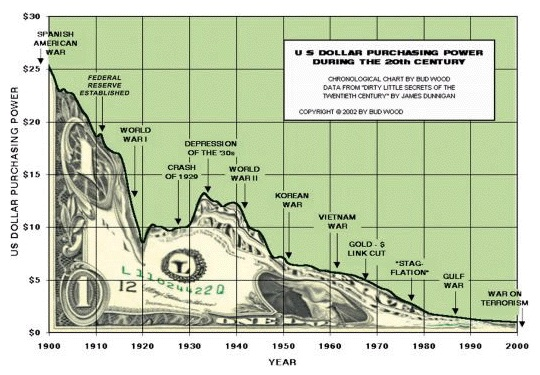
It is too soon to say what Mr. von NotHaus’s grounds of appeal will be, but it is not too soon to say that his case will be one to watch at a time when so many believe our economic troubles are tied to the fact that the dollar has become a fiat currency, and when leaders world-wide are calling for a new reserve currency.

So alarming has been the collapse of the dollar that the legislatures in as many as a dozen American states are considering using their authority—under Article 1, Section 10 of the Constitution—to make legal tender out of gold and silver coins. Lest the ghost of Friedrich Hayek or any other advocate of privately issued money get any bright ideas, however, the von NotHaus verdict will stand as a warning.

The warning is contained in paragraph 33 of the indictment handed up against Mr. von NotHaus in a courtroom at Statesville, N.C. It said:

“Article 1, Section 8, Clause 5 of the United States Constitution delegates to Congress the power to coin money and to regulate the value thereof. This power was delegated to Congress in order to establish a uniform standard of value. Along with the power to coin money, Congress has the concurrent power to restrain the circulation of money not issued under its own authority, in order to protect and preserve the constitutional currency for the benefit of the nation. Thus, it is a violation of law for private coin systems to compete with the official coinage of the United States.”

Yet a curious thing happened in the courthouse on the day before the jury went to deliberate. According to Aaron Michel, Mr. von NotHaus’s attorney, the judge granted Mr. Michel’s request to delete paragraph 33 from the indictment.
“That is a statement of law that, if it were to be put before the jury at all, should have been a matter of discussion between the parties as to the court’s instructions to the jury on the law,” Mr. Michel quoted the judge, Richard Voorhees, as saying. “In any event, it does not appear to the court to be a factual predicate that is supported by the evidence in the case.”

The judge then asked one of the federal prosecutors, Jill Westmoreland Rose, whether she had “any comment on that.” “No, Your Honor,” Ms. Rose replied, according to Mr. Michel. So the copy of the indictment that went to the jury contained white space where paragraph 33 once was.

Yet after Mr. von NotHaus was convicted on March 18, the government issued a press release trumpeting the verdict and repeating the part of the original indictment that the judge had struck out. The release also went further, asserting that Congress’s power to coin money under the Constitution was also meant to “insure a singular monetary system for all purchases and debts in the United States, public and private.”

It again asserted that it is a violation of federal law for individuals—such as, it added, Mr. von NotHaus—”to create private coin or currency systems to compete with official coinage and currency of the United States.” So much for the judge’s view that the paragraph was unsupported by evidence in the case. The U.S. Attorney’s office did not respond to a request for comment.

To be sure, there are advocates of sound money who believe that, while Mr. von NotHaus’s scheme may have been visionary in principle, he made some mistakes under American law. He put a “$” sign on the silver he was issuing, and he denominated the units in dollars (albeit Liberty Dollars, or Liberties). Such facts may have helped convince the jury to find him guilty of counts involving the counterfeiting of coins.

It may also be, however, that the government has overreached in the von NotHaus case. It is indisputably clear that the power to coin money and regulate its value is one that the Constitution delegates to Congress. It’s an enumerated power, and one of the big ones. It’s also clear that the Constitution bars states from making coins other than gold or silver legal tender. But it is not clear that there is a constitutional basis or a logic for prohibiting individuals from making and selling pieces of gold and silver and using them, on a voluntary basis, as money—i.e., to “compete with” the official coinage of the U.S.

Certainly it’s a loser’s game to suppress private money that is sound in order to protect government-issued money that is unsound. For, as was once said by the same Abraham Lincoln who brought in the greenback to finance the great cause of the Union, you can’t fool all of the people all of the time.

Source:  New York Sun

The Unsustainability of Modern Capitalism | Information Clearing House

Daily Bell: Please treat this interview as if no one knew about you or your bestselling books. Give us some background on where you grew up and how you entered the CIA.

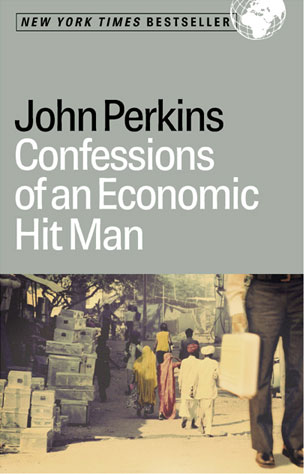
John Perkins: I grew up in New Hampshire and went to business school in Boston. At that time, I was approached by the National Security Agency (NSA), not the CIA, for a series of very sensitive tests including lie detector and personality test. They concluded I would make a good economic hit man, which is essentially a con artist with an economic background. They also said they found several weaknesses in my character that maybe they could use as hooks that would bring me into their game. Primarily, money, sex and power. Being that I was a young man, I was seduced by all of them.

Daily Bell: You were chief economist at a major international consulting firm; how did you gain that position?

John Perkins: After the NSA recruited me, I joined the Peace Corps. When I came out of the Peace Corps, Charles P. Maine hired me. It was a Boston consulting firm and the Sr. VP who hired me had very close ties to the NSA and the intelligence network of the United States in general. What I came to realize was it was all part of the scheme to turn me into an economic hit man. The first economic hit man, guys like Kermit Roosevelt, who overthrew the democratically elected President of Iran actually worked for the CIA.

But the weakness in that system was that if guys like Kermit Roosevelt had been discovered, the US government would have been in deep trouble. So very soon after that experience, they started to use private consultants, instead of actual government employees to do this work. Companies like Charles T. Main were brought in with legitimate contracts, working for the state department or the World Bank or the treasury department or USAID or other organizations and within these organizations were guys like me who did this special field of work.

Daily Bell: Interesting. You advised the World Bank, United Nations, IMF, U.S. Treasury Department, Fortune 500 corporations, and countries in Africa, Asia, Latin America, and the Middle East. What is your opinion of the World Bank?

John Perkins: The World Bank is a tool of economic hit men, there is no question about it. It’s the tool of big corporations, the IMF and most of what we call intelligence agencies of the United States, CIA and NSA. Essentially the job of all these organizations is to help what used to be just US businesses – now we call them multi-nationals – get themselves established around the world in positions where they can exploit the world’s resources, natural resources and human resources. All of these organizations are basically tools of what they call the corporatocracy. The men and a few women who run the biggest and most powerful corporations also run most of the government. Economic hit men help channel the resources of organizations like the World Bank and the IMF, the NSA and the CIA to support the larger agenda.

Daily Bell: The IMF?

John Perkins: It’s a servant of the corporatocracy, of economic hit men. One of my jobs as an economic hit man was to identify countries that had resources like oil and arrange huge loans for those countries from the World Bank and sister organizations. But the money would never go to the actual country; instead it would go to our own corporations to build infrastructure projects in that country like power plants and industrial parks; things that would benefit a few very wealthy families.

So then the people of the country would be left holding this huge debt that they couldn’t repay. We would come back and say, “well, since you can’t repay your debt, you have to restructure your loan.” That’s when the IMF comes in. So the World Bank makes the original loan and IMF shows up and says, “We’ll help you restructure your loan, but in order to do that you have to meet certain conditionalities. You have to sell your oil or whatever the coveted resource is at a cheap price, to the oil companies without restrictions.” Or they would suggest the country sell electric utilities, water and sewage, maybe even your schools and jails to private multi-national corporations. Or maybe allow military bases to be built; these sorts of things.

Daily Bell: The United Nations?

John Perkins: I think the United Nations has an important function that it should be performing. We need an organization like that in the world today. Unfortunately, the United Nations has been rendered basically impotent. The United Nations was very opposed to us going into Iraq, but the Bush administration totally ignored that and went in anyway. I think it’s very unfortunate that the United Nations has been emasculated by the United States.

Daily Bell: What do you think of the Bank for International Settlements? Is it true that it has worldwide and absolute immunity? Why does a central bank for central banks need sovereign immunity? How is that even enforceable?

John Perkins: It’s enforceable because that’s the way the laws are written in all the various countries that we inhabit. As long as the people who are running the banks and corporations also control politicians, which today they do around the world, then they get to write the laws. It’s interesting that during a lot of my lifetime in the United States, for example, our laws were written by elected officials, but today that is not the case. Today in the United States lobbyists write the laws; the elected officials are essentially owned by big corporations. That’s not true on all issues, but it’s true on the big issues that affect big corporations. We’ve reached a new geopolitical reality that we have never known before. This is a new situation. Read more…