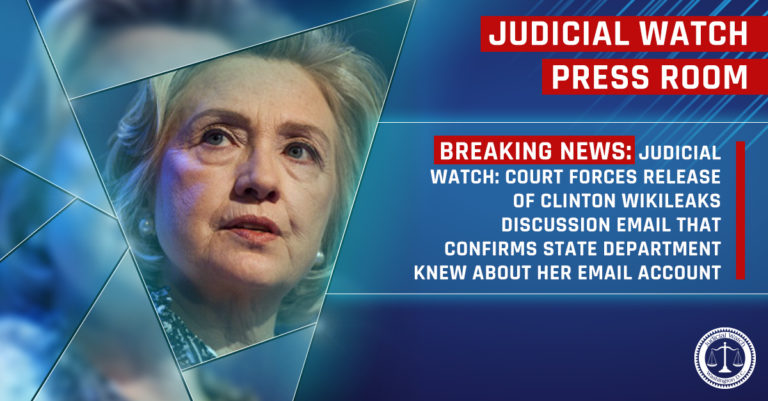
Court Forces Release of Clinton Wikileaks discussion email that confirms State Department knew about her email account | Judicial Watch

Editor’s Note: There is a long chain of events leading to this misguided impeachment inquiry initiated by the Democrats in the House of Representatives and it began during the Obama Administration when Hillary Clinton was Secretary of State. She was breaking with long-standing national security procedures by establishing a private server for her government and personal communications and the State Department knew she was doing this all along. Here’s the proof.

Judicial Watch announced today that the State Department provided a previously hidden email which shows that top State Department officials used and were aware of Hillary Clinton’s email account.

On December 24, 2010, Daniel Baer, an Obama State Department deputy assistant secretary of state, writes to Michael Posner, a then-assistant secretary of state about Clinton’s private email address:

Baer: “Be careful, you just gave the secretary’s personal email address to a bunch of folks …”

Posner answers: “Should I say don’t forward? Did not notice”

Baer responds: “Yeah-I just know that she guards it pretty closely”

Mr. Posner had forwarded Clinton’s email address, which was contained in an email sent to State Department senior leadership, about WikiLeaks.

It appears the State Department produced this email in 2016 in redacted form, blacking out Clinton’s personal email address and the discussion about Clinton’s wanting to keep her email address closely guarded.

Judicial Watch sought the email after a former top Freedom of Information Act (FOIA) State Department official testified to Judicial Watch about reviewing it between late 2013 and early 2014.

The testimony and the email production comes in discovery granted to Judicial Watch on the Clinton email issue in a FOIA lawsuit (Judicial Watch v. U.S. Department of State (No. 1:14-cv-01242)). Clinton also faces potential questioning under oath in this lawsuit.

Despite a recent court order requiring production of the email, the DOJ and State Departments only produced it 10 days ago after Judicial Watch threatened to seek a court order to compel its production.

“Judicial Watch just caught the State Department and DOJ red-handed in another email cover-up – they all knew about the Clinton email account but covered up the smoking-gun email showing this guilty knowledge for years,” stated Judicial Watch President Tom Fitton.

The scope of court-ordered discovery that produces this email find includes: whether Secretary Clinton used private email in an effort to evade the Freedom of Information Act (FOIA); whether the State Department’s attempt to settle this FOIA case in 2014 and 2015 amounted to bad faith; and whether the State Department has adequately searched for records responsive to Judicial Watch’s FOIA request.

During a recent hearing, Judge Lamberth specifically raised concerns about a Clinton email cache, carterheavyindustries@gmail.com, discussed in a letter to Senator Charles Grassley (R-IA) and wants Judicial Watch to “shake this tree” on this issue.

Judge Lamberth also criticized the State Department’s handling and production of Clinton’s emails in this case stating, “There is no FOIA [Freedom of Information Act] exemption for political expedience, nor is there one for bureaucratic incompetence.” 

The court rejected DOJ and State efforts to derail further Judicial Watch discovery. Judge Lamberth called their arguments “preposterous” and cited a prior Judicial Watch FOIA case in which he ordered U.S. Marshals to seize records from a Clinton administration official.

Judge Lamberth detailed how the State Department “spent three months from November 2014 trying to make this case disappear,” and that after discovering the State Department’s actions and omissions, “Now we know more, but we have even more questions than answers. So I won’t hold it against Judicial Watch for expanding their initial discovery request now.”

Judge Lamberth stated his goal was to restore the public’s faith in their government, which may have been damaged because of the Clinton email investigation.

The court granted Judicial Watch seven additional depositions, three interrogatories and four document requests related to former Secretary of State Hillary Clinton’s use of a private email server. Hillary Clinton and her former top aide and current lawyer Cheryl Mills were given 30 days to oppose being deposed by Judicial Watch.

On December 6, 2018, Judge Lamberth ordered Obama administration senior State Department officials, lawyers and Clinton aides to be deposed or answer written questions under oath. The court ruled that the Clinton email system was “one of the gravest modern offenses to government transparency.”

This Judicial Watch FOIA lawsuit led directly to the disclosure of the Clinton email system in 2015.

Judicial Watch’s discovery over the last several months found many more details about the scope of the Clinton email scandal and cover-up:

  • John Hackett, former Director of Information Programs and Services (IPS) testified under oath that he had raised concerns that former Secretary of State Hillary Clinton’s staff may have “culled out 30,000” of the secretary’s “personal” emails without following strict National Archives standards. He also revealed that he believed there was interference with the formal FOIA review process related to the classification of Clinton’s Benghazi-related emails.
  • Heather Samuelson, Clinton’s White House liaison at the State Department, and later Clinton’s personal lawyer, admitted under oath that she was granted immunity by the Department of Justice in June 2016.
  • Justin Cooper, former aide to President Bill Clinton and Clinton Foundation employee who registered the domain name of the unsecure clintonemail.com server that Clinton used while serving as Secretary of State, testified he worked with Huma Abedin, Clinton’s deputy chief of staff, to create the non-government email system.
  • In the interrogatory responses of E.W. (Bill) Priestap, assistant director of the FBI Counterintelligence Division, he stated that the agency found Clinton email records in the Obama White House, specifically, the Executive Office of the President.
  • Jacob “Jake” Sullivan, Clinton’s senior advisor and deputy chief of staff when she was secretary of state, testified that both he and Clinton used her unsecure non-government email system to conduct official State Department business.
  • Eric Boswell, former assistant secretary of state for diplomatic security during Clinton’s tenure as secretary of state, testified that Clinton was warned twice against using unsecure BlackBerry’s and personal emails to transmit classified material.

Source: Judicial Watch
AG Barr Is Ramping Up His Probe Of CIA, FBI Activities In 2016 | Daily Caller

Editor’s Note: Finally we have a Department of Justice willing to look into the sources of this debacle against the President to get to the bottom of who’s responsible and should be held accountable for “conspiring” to unseat a duly elected President of the United States. Furthermore, the President has every right to defend himself in an impeachment proceeding in the Senate should that actually occur and present facts towards his defense.

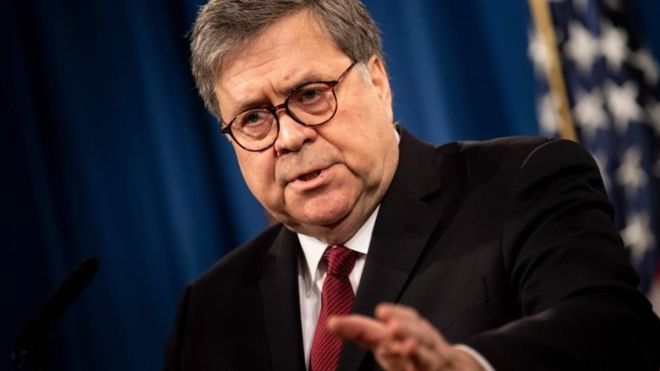
Attorney General William Barr has met with foreign intelligence officials, including during a trip to Italy earlier in September, regarding an investigation into surveillance activities against the Trump campaign, The Washington Post reported.

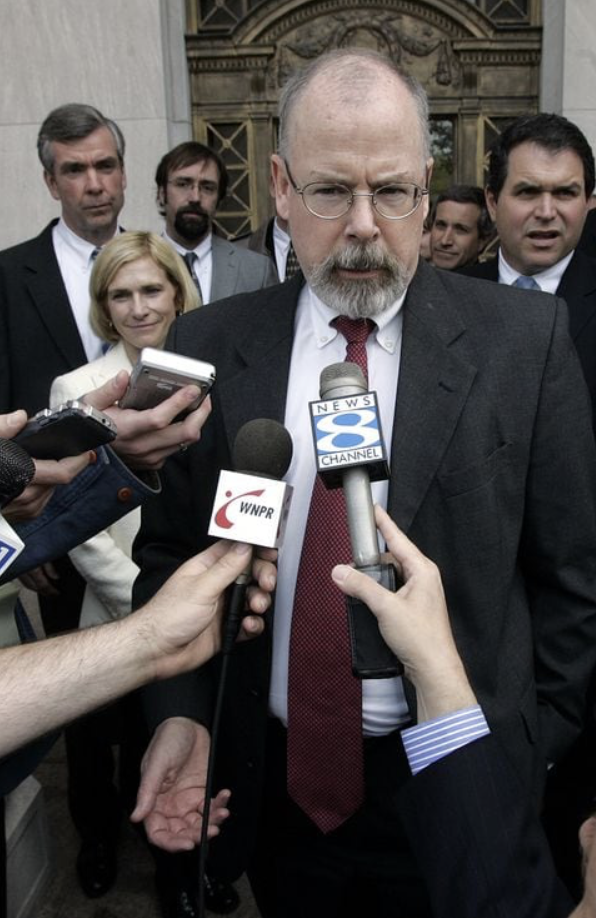
Barr was joined in the meeting by John Durham, the U.S. attorney in Connecticut, WaPo reported, citing anonymous sources familiar with the matter.

“As the Department of Justice has previously announced, a team led by U.S. Attorney John Durham is investigating the origins of the U.S. counterintelligence probe of the Trump 2016 presidential campaign,” department spokeswoman Kerri Kupec told Politico in a statement. “Mr. Durham is gathering information from numerous sources, including a number of foreign countries. At Attorney General Barr’s request, the President has contacted other countries to ask them to introduce the Attorney General and Mr. Durham to appropriate officials.”

Barr tapped Durham earlier in 2019 to lead a broad investigation into FBI and CIA activities in the run-up to an investigation into whether the Trump campaign colluded with the Russian government.

He has said he is concerned that intelligence agencies improperly spied on the Trump campaign and has said he wants to find out if the FBI and CIA directed any intelligence-gathering activities at Trump associates before July 31, 2016, which is when the bureau opened its counterintelligence investigation of the Trump campaign.

President Donald Trump said May 24 he hoped Barr would reach out to British and Australian officials as part of the investigation.

Barr took up the probe after the end of the special counsel’s investigation, which failed to establish that the Trump campaign conspired with Russia to influence the 2016 election. The special counsel also said there was no evidence that Trump associates acted as agents of Russia.

Barr has already made requests of British intelligence officials, according to WaPo. The Associated Press also reported that Trump asked Australian Prime Minister Scott Morrison to work with Barr on the investigation. A Justice Department official told the AP that Barr asked Trump to make the request of Morrison.

The Justice Department declined comment for WaPo’s story.

The Australian government provided the tip in July 2016 that led the FBI to open the counterintelligence investigation into the Trump campaign.

Source: Daily Caller

DOJ says Trump contacted foreign countries to assist Barr’s Russia inquiry | The Hill

Editor’s Note: The hypocrisy of our elected representatives never ceases to amaze and dazzle. Whereas the Democrats have accused Trump and Barr of pursuing a “politically motivated investigation” to defend the President against a possible impeachment proceeding what the heck have the Democrats been doing since before Trump was elected? They’ve been building a case for impeachment since before Trump took office.

The Department of Justice (DOJ) said Monday that President Trump contacted foreign countries at Attorney General William Barr’s request to ask them for assistance in an ongoing investigation into the origins of the Russian interference probe.

“As the Department of Justice has previously announced, a team led by U.S. Attorney John Durham is investigating the origins of the U.S. counterintelligence probe of the Trump 2016 presidential campaign. Mr. Durham is gathering information from numerous sources, including a number of foreign countries,” Justice Department spokeswoman Kerri Kupec said in a statement.

“At Attorney General Barr’s request, the President has contacted other countries to ask them to introduce the Attorney General and Mr. Durham to appropriate officials,” Kupec added.

The Justice Department statement quickly followed reports that Trump had asked Australia’s prime minister during a recent phone call to assist Barr in gathering information for the Russia inquiry and that Barr had held meetings overseas in Italy seeking the country’s help. Barr has also reportedly requested assistance from British intelligence officials in connection with the inquiry.

Democrats have accused Trump and Barr of pursuing a politically motivated investigation. Trump railed against former special counsel Robert Mueller’s probe as a “witch hunt” and has at times claimed the investigation into his campaign’s links to Russia was “illegal.”

White House spokesman Hogan Gidley said Monday that Barr asked Trump to “provide introductions to facilitate” the ongoing investigation, accusing Democrats of not wanting “the truth to come out.”

“This call relates to a DOJ inquiry publicly announced months ago to uncover exactly what happened,” Gidley said in a statement Monday. “The DOJ simply requested that the President provide introductions to facilitate that ongoing inquiry, and he did so, that’s all.”

Barr said earlier this year that he planned to investigate the intelligence collection on the Trump campaign to determine whether it was “adequately predicated.” Trump has given Barr sweeping powers in the investigation, including allowing the attorney general to declassify and release documents related to the probe.

The review spearheaded by Durham, the U.S. attorney in Connecticut, is separate from the Justice Department inspector general’s investigation into the FBI’s surveillance of ex-Trump campaign adviser Carter Page, on which a report is currently being prepared.

Mueller concluded his investigation in March; the former special counsel did not find sufficient evidence to accuse members or associates of Trump’s campaign with conspiring with Russia to interfere in the 2016 election.

The investigation ensnared six Trump associates on financial, false statements and other charges.

The revelations about Trump’s phone conversation with Australia come amid ongoing controversy over a July 25 call with Ukrainian President Volodymyr Zelensky during which Trump encouraged Zelensky to investigate 2016 election interference and unsubstantiated allegations about former Vice President Joe Biden, a 2020 Democratic presidential candidate.

A rough transcript of the call released by the White House showed that Trump offered to put Zelensky in touch with Barr and Trump’s personal attorney Rudy Giuliani.

The DOJ said last week that Barr did not learn of the call until several weeks after it took place and that the attorney general had not communicated with the Ukrainian government. The Justice Department also acknowledged that “certain Ukrainians” not part of the country’s government had volunteered information to Durham and that he was reviewing it.

The Zelensky call, which triggered an intelligence community whistleblower complaint, is at the heart of House Democrats’ impeachment inquiry into Trump announced last week by Speaker Nancy Pelosi (D-Calif.).

Trump has insisted he did nothing wrong on the call, and his aides have dismissed allegations raised by the whistleblower that Trump was using his office to pressure a foreign government to help his reelection.

Source: The Hill

‘Impeachment’ is nothing less than a full-scale Communist coup attempt by treasonous Democrats who long ago sold out America and the American people for Globalism | Natural News

Editor’s Note: This article is a bit extreme in its wording, but I include it here to document the tenor of the partisan debate about who did what. Is this a conspiracy of the Deep State & Globalists to undermine a duly elected President of the United States and remove him from office? You decide.

In an excellent new story over at CD Media titled “If You Were The Dem Organized Crime Family And About To Be Prosecuted For An Illegal Coup, What Would You Do?” that Whatfinger News had linked to on Wednesdayauthor L. Todd Wood, a graduate of the U.S. Air Force Academy who flew special operations helicopters supporting SEAL Team 6 and Delta Force, argues that criminal Democrats and their enablers within the mainstream media know what is coming and, desperate beyond words, their doomed-to-fail impeachment attempt of President Trump might be the only way to get them out of the huge mess that they are in.

(Article by Stefan Stanford republished from AllNewsPipeline.com)

With Susan Duclos reporting in this story on ANP on Wednesday that ‘the beginning of the end talk being babbled about by Democrats again in their drive to take down President Trump echoes that which they’ve been babbling on now about for nearly 3 years since President Trump took office, even House Democrat Jeff Van Drew knows that “at the end of the day, all we’re going to have is a failed impeachment“.

Yet as Tom Luongo so perfectly points out in this new story republished at Zero Hedge titled “The Coup Has Begun – The Empire Strikes Back Everywherethere are no coincidences in politics. Everything happens on a particular schedule. So when I see a day as crazy as today I have to ask the question, “Why this, why now?”

And as we see in his story, what’s happening politically is by no means just regional here in America – it’s happening all around the world, helping to prove the ‘global nature‘ of ‘globalism‘ and the fact that the globalists are ‘digging in‘ at a time when President Trump just ‘blistered‘ socialism and globalism at the United Nations. From Luongo’s story.:

Look at the headlines and you’ll see what I’m talking about. All of these things happened since I woke up at 7:30am Monday morning in Florida:

  • The British Supreme Court just arrogated unprecedented power to itself by inserting itself into any dispute between the Government and Parliament. This upends more than 300 years of constitutional process.
  • The Democrats have announced they will pursue impeachment charges against President Trump because an unverified, hearsay whistleblower made a complaint about a phone call between Trump and Ukrainian President Volodymyr Zelenski. Impeachment odds soared overnight as someone was tipped off about the Democrats’ plan.
  • Bitcoin’s hashrate mysteriously flash-crashed more than 40% presaging a massive $1500 drop in price.
  • Donald Trump delivered a blistering critique of socialism at the United Nations General Assembly. Too bad he’s nearly as bad as the ones he’s fighting on the far left.
  • Europe’s Trio of Faded Glory — The UK, France and Germany — joined in the chorus of unverified condemnation of Iran in the attack on the Saudi oil field on the 14th.
  • The Federal Reserve continues to bail out banks to the tune of $65 to $75 billion per day through overnight repo operations that no one can give us an explanation as to why they’re needed.
  • This feels to me like a multi-level coup against those that dare stand athwart the global power structure. Both British and American leadership institutions are under sincere attack with these moves.

As we’ll explore in the rest of this ANP story, with everything else that we’ve been watching unfolding in America over the past decade+, one could easily argue that what we’ve been witnessing over the past several years since President Trump was voted into office has been a full-scale Communist coup attempt with Democrats and globalists never, ever believing that Hillary Clinton would lose in 2016 and their beliefs they’d be ‘protected’ from their crimes of treason and completely selling out America and the American people forever.

As Doomer Doug‘ reported in this recent story titled “If Treason Prosper, Then None Dare Call It Treason, the final gasps of the attempted ‘coup d’etat‘ to remove President Trump are now underway with Doug warning in his story that the end results of this could be complete chaos and anarchy in America, potentially leading to Civil War with Democrats insanely still believing they can do no wrong while attempting to overthrow the results of the US election for more than 2 years running now with the ‘coup attempt‘ led by people such as Communist-voting John Brennan.

Read more at: AllNewsPipeline.com

Source: Natural News

Edward Snowden On Trump, Privacy, And Threats To Democracy | The 11th Hour | MSNBC & YouTube

Source: YouTube

Fake news is real — Artificial Intelligence is going to make it much worse | CNBC

“The Boy Who Cried Wolf” has long been a staple on nursery room shelves for a reason: It teaches kids that joking too much about a possible threat may turn people ignorant when the threat becomes an actual danger.

President Donald Trump has been warning about “fake news” throughout his entire political career putting a dark cloud over the journalism professional. And now the real wolf might be just around the corner that industry experts should be alarmed about.

The threat is called “deepfaking,” a product of AI and machine learning advancements that allows high-tech computers to produce completely false yet remarkably realistic videos depicting events that never happened or people saying things they never said. A viral video starring Jordan Peele and “Barack Obama” warned against this technology in 2018, but the message was not enough to keep Jim Carrey from starring in “The Shining” earlier this week.

The danger goes far beyond manipulating 1980s thrillers. Deepfake technology is allowing organizations that produce fake news to augment their “reporting” with seemingly legitimate videos, blurring the line between reality and fiction like never before — and placing the reputation of journalists and the media at greater risk.

Ben Zhao, a computer science professor at the University of Chicago, thinks the age of getting news on social media makes consumers very susceptible to this sort of manipulation.

“What the last couple years has shown is basically fake news is quite compelling even in [the] absence of actual proof. … So the bar is low,” Zhao said.

The bar to produce a convincing doctored video is lower than people might assume.

Earlier this year a clip purporting to show Democratic leader Nancy Pelosi slurring her words when speaking to the press was shared widely on social media, including at one point by Trump’s attorney Rudy Giuliani. However, closer inspection revealed that the video had been slowed to 75% of its normal speed to achieve this slurring effect, according to the Washington Post. Even with the real video now widely accessible, Hany Farid, a professor at UC Berkeley’s School of Information and a digital forensics expert, said he still regularly receives emails from people insisting the slowed video is the legitimate one.

“Even in these relatively simple cases, we are struggling to sort of set the record straight,” Farid said.

It would take a significant amount of expertise for a fake news outlet to produce a completely fabricated video of Oprah Winfrey endorsing Trump, but researchers say the technology is improving every day. At the University of Washington, computer vision researchers are developing this technology for positive, or at least benign, uses like making video conferencing more realistic and letting students talk to famous historical figures. But this research also leads to questions about potential dangers, as the attempts made by attackers are expected to continually improve.

How to detect a deepfake

To make one of these fake videos, computers digest thousands of still images of a subject to help researchers build a 3-D model of the person. This method has some limitations, according to Zhao, who noted the subjects in many deepfake videos today never blink, since almost all photographs are taken with a person’s eyes open.

However, Farid said these holes in the technology are being filled incredibly rapidly.

“If you asked me this question six months ago, I would’ve said, ‘Yeah, [the technology] is super cool, but there’s a lot of artifacts, and if you’re paying attention, you can probably tell that there’s something wrong,’” Farid said. “But I would say we are … quickly but surely getting to the point where the average person is going to have trouble distinguishing.”

In fact, Zhao said researchers believe the shortcomings that make deepfake videos look slightly off to the eye can readily be fixed with better technology and better hardware.

“The minute that someone says, ‘Here’s a research paper telling you about how to detect this kind of fake video,’ that is when the attackers look at the paper and say, ‘Thank you for pointing out my flaw. I will take that into account in my next-generation video, and I will go find enough input … so that the next generation of my video will not have the same problem,’” Zhao said.

“Once we live in an age where videos and images and audio can’t be trusted … well, then everything can be fake.” – Hany Farid, Professor at UC Berkeley’s School of Information

One of the more recent developments in this field is in generating speech for a video. To replicate a figure such as Trump’s voice, computers can now simply analyze hundreds of hours of him speaking. Then researchers can type out what they want Trump to say, and the computer will make it sound as if he actually said it. Facebook, Google and Microsoft have all more or less perfected this technology, according to Farid.

Manipulated videos of this sort aren’t exactly new — Forest Gump didn’t actually meet JFK, after all. However, Farid says this technology is hitting its stride, and that makes the danger new.

“To me the threat is not so much ‘Oh, there’s this new phenomenon called deepfakes,’” Farid said. “It’s the injection of that technology into an existing environment of mistrust, misinformation, social media, a highly polarized electorate, and now I think there’s a real sort of amplification factor because when you hear people say things, it raises the level of belief to a whole new level.”

The prospect of widespread availability of this technology is raising eyebrows, too. Tech-savvy hobbyists have long been using deepfakes to manufacture pornography, a consistent and comically predictable trend for new technology. But Zhao believes it is only a matter of time before the research-caliber technology gets packaged and released for mass-video manipulation in much broader contexts.

“At some point someone will basically take all these technologies and integrate and do the legwork to build a sort of fairly sophisticated single model, one-stop shop … and when that thing hits and becomes easily accessible to many, then I think you’ll see this becoming much more prevalent,” Zhao said. “And there’s nothing really stopping that right now.”

Facing a massive consumer trust issue

When this happens, the journalism industry is going to face a massive consumer trust issue, according to Zhao. He fears it will be hard for top-tier media outlets to distinguish a real video from a doctored one, let alone news consumers who haphazardly stumble across the video on Twitter.

“Once we live in an age where videos and images and audio can’t be trusted … well, then everything can be fake,” Farid said. “We can have different opinions, but we can’t have different facts. And I think that’s sort of the world we’re entering into when we can’t believe anything that we see.”

Zhao has spent a great deal of time speaking with prosecutors, judges — the legal profession is another sector where the implications are huge — reporters and other professors to get a sense for every nuance of the issue. However, despite his clear understanding of the danger deepfakes pose, he is still unsure of how news outlets will go about reacting to the threat.

“Certainly, I think what can happen is … there will be even less trust in sort of mainstream media, the main news outlets, legitimate journalists [that] sort of react and report real-time stories because there is a sense that anything that they have seen … could be in fact made up,” Zhao said.

Then it becomes a question of how the press deal with the disputes over reality.

“And if it’s someone’s word, an actual eyewitness’ word versus a video, which do you believe, and how do you as an organization go about verifying the authenticity or the illegitimacy of a particularly audio or video?” Zhao asked.

Defeating the deepfakes

Part of this solution may be found in the ledger technology that provides the digital infrastructure to support cryptocurrencies like bitcoin — the blockchain. Many industries are touting blockchain as a sort of technological Tylenol. Though few understand exactly how it works, many swear it will solve their problems.

Farid said companies like photo and video verification platform Truepic, to which he serves as an advisor, are using the blockchain to create and store digital signatures for authentically shot videos as they are being recorded, which makes them much easier to verify later. Both Zhao and Farid are hoping social platforms like Facebook and Twitter will then promote these videos that are verified as authentic over non-verified videos, helping to halt the spread of deepfakes.

“The person creating the fake always has the upper hand,” Farid said. “Playing defense is really, really hard. So I think in the end our goal is not to eliminate these things, but it’s to manage the threat.”

Until this happens, Zhao said the fight against genuinely fake news may not start on a ledger, but in stronger consumer awareness and journalists banding together to better verify sources through third parties.

“One of the hopes that I have for defeating this type of content is that people are just so inundated with news coverage and information about these types of videos that they become fundamentally much more skeptical about what a video means and they will look closer,” Zhao said. “There has to be that level of scrutiny by the consumer for us to have any chance of fighting back against this type of fake content.”

Nicholas Diakopoulos, assistant professor in Northwestern University’s School of Communication and expert on the future of journalism, said via email that the best solutions involve a mix of educational and sociotechnical advances.

“There are a variety of perceptual cues that can be tip-offs to a deepfake and we should be teaching those broadly to the public,” he said.

Diakopoulos has referenced Farid’s work on photo forensics among ideas outlined in an article he wrote for the Columbia Journalism Review last year. He also cited a research project called FaceForensics that uses machine learning to detect, with 98.1% accuracy, whether a video of a face is real. Another research technique under study: Blood flow in video of a person’s face can be analyzed in order to see if pixels periodically get redder when the heart pumps blood.

“On the sociotechnical side, we need to develop advanced forensics techniques that can help debunk synthesized media when put into the hands of trained professionals,” he told CNBC. “Rapid response teams of journalists should be trained and ready to use these tools during the 2020 elections so they can debunk disinformation as quickly as possible.”

Diakopoulos has studied the implications of deepfakes for the 2020 electionsspecifically. He also has written papers on how journalists need to think when “reporting in a machine reality.”

And he remains optimistic.

“If news organizations develop clear and transparent policies of their efforts using such tools to ensure the veracity of the content they publish, this should help buttress their trustworthiness. In an era when we can’t believe our eyes when we see something online, news organizations that are properly prepared, equipped and staffed are poised to become even more trusted sources of information.”

Source: CNBC

NY Times admits it sends stories to US government (i.e. national security officials) for approval before publication | The Gray Zone

new-york-times-buildingBy Ben Norton

Editor’s Note: We’ve long understood the entanglement between the mainstream press and the national security system. This article gives us some deeper insight.

The New York Times has publicly acknowledged that it sends some of its stories to the US government for approval from “national security officials” before publication.

This confirms what veteran New York Times correspondents like James Risen have said: The American newspaper of record regularly collaborates with the US government, suppressing reporting that top officials don’t want made public.

On June 15, the Times reported that the US government is escalating its cyber attacks on Russia’s power grid. According to the article, “the Trump administration is using new authorities to deploy cybertools more aggressively,” as part of a larger “digital Cold War between Washington and Moscow.”

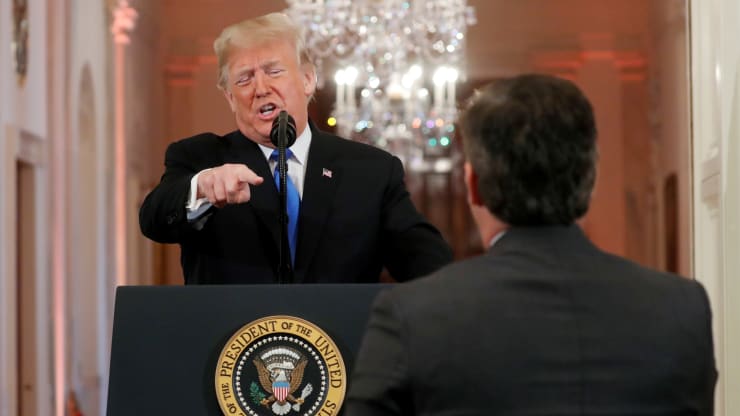
In response to the report, Donald Trump attacked the Times on Twitter, calling the article “a virtual act of Treason.”

The New York Times PR office replied to Trump from its official Twitter account, defending the story and noting that it had, in fact, been cleared with the US government before being printed.

“Accusing the press of treason is dangerous,” the Times communications team said. “We described the article to the government before publication.”

“As our story notes, President Trump’s own national security officials said there were no concerns,” the Times added.

Indeed, the Times report on the escalating American cyber attacks against Russia is attributed to “current and former [US] government officials.” The scoop in fact came from these apparatchiks, not from a leak or the dogged investigation of an intrepid reporter.

‘Real’ journalists get approval from ‘national security’ officials

The neoliberal self-declared “Resistance” jumped on Trump’s reckless accusation of treason (the Democratic Coalition, which boasts, “We help run #TheResistance,” responded by calling Trump “Putin’s puppet”). The rest of the corporate media went wild.

But what was entirely overlooked was the most revealing thing in the New York Times’ statement: The newspaper of record was essentially admitting that it has a symbiotic relationship with the US government.

In fact, some prominent American pundits have gone so far as to insist that this symbiotic relationship is precisely what makes someone a journalist.

In May, neoconservative Washington Post columnist Marc Thiessen — a former speechwriter for President George W. Bush — declared that WikiLeaks publisher and political prisoner Julian Assange is “not a journalist”; rather, he is a “spy” who “deserves prison.” (Thiessen also once called Assange “the devil.”)

What was the Post columnist’s rationale for revoking Assange’s journalistic credentials?

Unlike “reputable news organizations, Assange did not give the U.S. government an opportunity to review the classified information WikiLeaks was planning to release so they could raise national security objections,” Thiessen wrote. “So responsible journalists have nothing to fear.”

In other words, this former US government speechwriter turned corporate media pundit insists that collaborating with the government, and censoring your reporting to protect so-called “national security,” is definitionally what makes you a journalist.

This is the express ideology of the American commentariat.

NY Times editors ‘quite willing to cooperate with the government’

The symbiotic relationship between the US corporate media and the government has been known for some time. American intelligence agencies play the press like a musical instrument, using it it to selectively leak information at opportune moments to push US soft power and advance Washington’s interests.

But rarely is this symbiotic relationship so casually and publicly acknowledged.

In 2018, former New York Times reporter James Risen published a 15,000-word article in The Intercept providing further insight into how this unspoken alliance operates.

Risen detailed how his editors had been “quite willing to cooperate with the government.” In fact, a top CIA official even told Risen that his rule of thumb for approving a covert operation was, “How will this look on the front page of the New York Times?”

There is an “informal arrangement” between the state and the press, Risen explained, where US government officials “regularly engaged in quiet negotiations with the press to try to stop the publication of sensitive national security stories.”

“At the time, I usually went along with these negotiations,” the former New York Times reported said. He recalled an example of a story he was writing on Afghanistan just prior to the September 11, 2001 attacks. Then-CIA Director George Tenet called Risen personally and asked him to kill the story.

“He told me the disclosure would threaten the safety of the CIA officers in Afghanistan,” Risen said. “I agreed.”

Risen said he later questioned whether or not this was the right decision. “If I had reported the story before 9/11, the CIA would have been angry, but it might have led to a public debate about whether the United States was doing enough to capture or kill bin Laden,” he wrote. “That public debate might have forced the CIA to take the effort to get bin Laden more seriously.”

This dilemma led Risen to reconsider responding to US government requests to censor stories. “And that ultimately set me on a collision course with the editors at the New York Times,” he said.

“After the 9/11 attacks, the Bush administration began asking the press to kill stories more frequently,” Risen continued. “They did it so often that I became convinced the administration was invoking national security to quash stories that were merely politically embarrassing.”

In the lead-up to the Iraq War, Risen frequently “clashed” with Times editors because he raised questions about the US government’s lies. But his stories “stories raising questions about the intelligence, particularly the administration’s claims of a link between Iraq and Al Qaeda, were being cut, buried, or held out of the paper altogether.”

The Times’ executive editor Howell Raines “was believed by many at the paper to prefer stories that supported the case for war,” Risen said.

In another anecdote, the former Times journalist recalled a scoop he had uncovered on a botched CIA plot. The Bush administration got wind of it and called him to the White House, where then-National Security Adviser Condoleezza Rice ordered the Times to bury the story.

Risen said Rice told him “to forget about the story, destroy my notes, and never make another phone call to discuss the matter with anyone.”

“The Bush administration was successfully convincing the press to hold or kill national security stories,” Risen wrote. And the Barack Obama administration subsequently accelerated the “war on the press.”

CIA media infiltration and manufacturing consent

In their renowned study of US media, “Manufacturing Consent: The Political Economy of the Mass Media,” Edward S. Herman and Chomsky articulated a “propaganda model,” showing how “the media serve, and propagandize on behalf of, the powerful societal interests that control and finance them,” through “the selection of right-thinking personnel and by the editors’ and working journalists’ internalization of priorities and definitions of newsworthiness that conform to the institution’s policy.”

But in some cases, the relationship between US intelligence agencies and the corporate media is not just one of mere ideological policing, indirect pressure, or friendship, but rather one of employment.

In the 1950s, the CIA launched a covert operation called Project Mockingbird, in which it surveilled, influenced, and manipulated American journalists and media coverage, explicitly in order to direct public opinion against the Soviet Union, China, and the growing international communist movement.

Legendary journalist Carl Bernstein, a former Washington Post reporter who helped uncover the Watergate scandal, published a major cover story for Rolling Stone in 1977 titled “The CIA and the Media: How America’s Most Powerful News Media Worked Hand in Glove with the Central Intelligence Agency and Why the Church Committee Covered It Up.”

Bernstein obtained CIA documents that revealed that more than 400 American journalists in the previous 25 years had “secretly carried out assignments for the Central Intelligence Agency.”

Bernstein wrote:

“Some of these journalists’ relationships with the Agency were tacit; some were explicit. There was cooperation, accommodation and overlap. Journalists provided a full range of clandestine services—from simple intelligence gathering to serving as go‑betweens with spies in Communist countries. Reporters shared their notebooks with the CIA. Editors shared their staffs. Some of the journalists were Pulitzer Prize winners, distinguished reporters who considered themselves ambassadors without‑portfolio for their country. Most were less exalted: foreign correspondents who found that their association with the Agency helped their work; stringers and freelancers who were as interested in the derring‑do of the spy business as in filing articles; and, the smallest category, full‑time CIA employees masquerading as journalists abroad. In many instances, CIA documents show, journalists were engaged to perform tasks for the CIA with the consent of the managements of America’s leading news organizations.”

Virtually all major US media outlets cooperated with the CIA, Bernstein revealed, including ABC, NBC, the AP, UPI, Reuters, Newsweek, Hearst newspapers, the Miami Herald, the Saturday Evening Post, and the New York Herald‑Tribune.

However, he added, “By far the most valuable of these associations, according to CIA officials, have been with the New York Times, CBS and Time Inc.”

These layers of state manipulation, censorship, and even direct crafting of the news media show that, as much as they claim to be independent, The New York Times and other outlets effectively serve as de facto spokespeople for the government — or at least for the US national security state.

Source: The Gray Zone

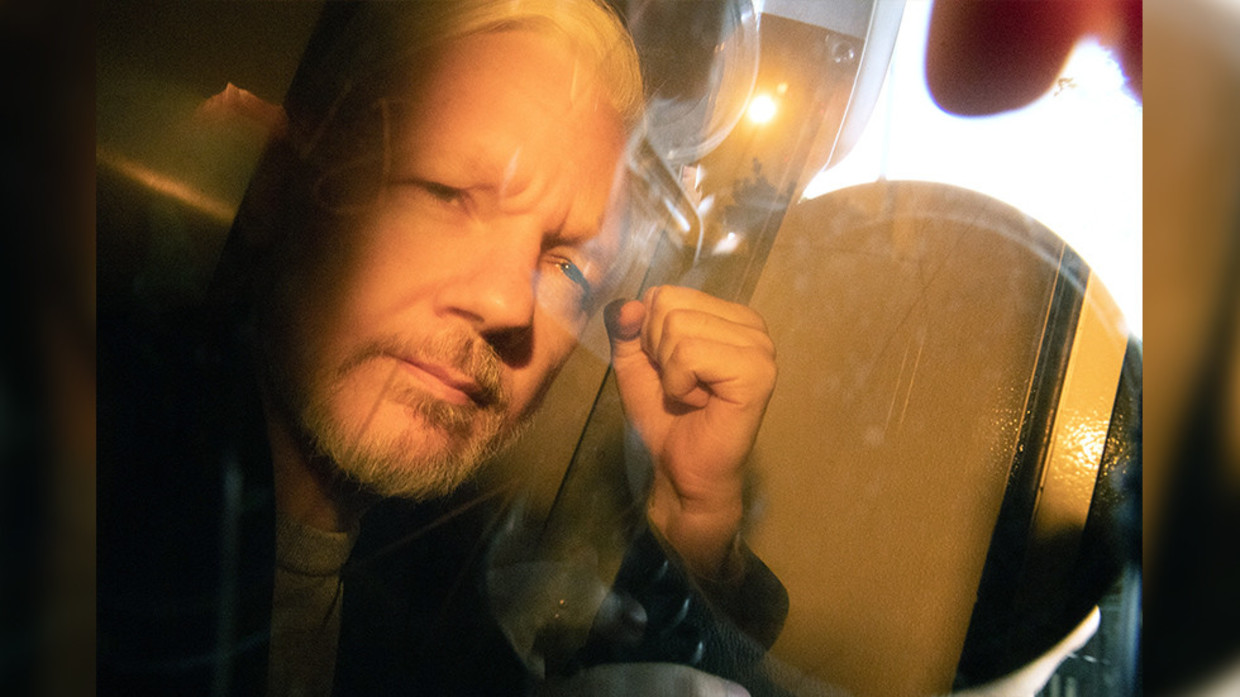
Assange psychologically tortured to ‘breaking point’ by ‘democratic states,’ UN rapporteur tells RT | RT.com

Jailed WikiLeaks co-founder Julian Assange shows clear signs of degrading and inhumane treatment which only adds to his deteriorating health, UN Special Rapporteur on Torture Nils Melzer told RT.

Assange has “all the symptoms typical for a person who has been exposed to prolonged psychological torture,” Melzer told RT’s Afshin Rattansi. This adds to the toll of his deteriorating physical state caused by a lack of adequate medical care for several years, he said.

Melzer said he was judging from two decades of experience in working with POWs and political prisoners, and only after applying “scientific” UN methods to assess Assange’s condition. But the journalist’s case still “shocked” him.

An individual has been isolated and singled out by several democratic states, and persecuted systematically… to the point of breaking him.

Earlier this month, a UK court sentenced the WikiLeaks co-founder to nearly a year in jail for skipping bail in 2012. The courts are now deciding whether to extradite Assange to the US where he is wanted for 17 charges under the Espionage Act. He can end up serving up to 175 years in prison if proven guilty.

Also in May, Sweden reopened an investigation into the allegations of rape by Assange, which he denies. The probe was originally dropped in 2017.

WikiLeaks warned that the journalist’s health had “significantly deteriorated” during the seven years he spent living in the Ecuadorian Embassy in London, and continued to worsen after he was evicted in April and placed in a British prison. According to WikiLeaks, he was recently moved to the prison’s “hospital wing.”


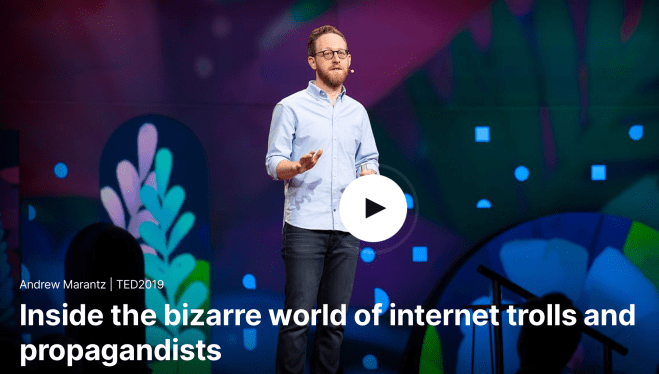
Inside the bizarre world of internet trolls and propagandists | TEDTalks

Journalist Andrew Marantz spent three years embedded in the world of internet trolls and social media propagandists, seeking out the people who are propelling fringe talking points into the heart of conversation online and trying to understand how they’re making their ideas spread. Go down the rabbit hole of online propaganda and misinformation — and learn we can start to make the internet less toxic.

Source: TEDTalks

The Weaponization of Social Media | Counterpunch

troll-network_BF9747ECB468482488ECFF9A003635D6By Faisal Khan

The use of ‘bots’ present modern society with a significant dilemma; The technologies and social media platforms (such as Twitter and Facebook) that once promised to enhance democracy are now increasingly being used to undermine it. Writers Peter W Singer and Emerson Brooking believe ‘the rise of social media and the Internet has become a modern-day battlefield where information itself is weaponised’. To them ‘the online world is now just as indispensable to governments, militaries, activists, and spies at it is to advertisers and shoppers’. They argue this is a new form of warfare which they call ‘LikeWar’. The terrain of LikeWar is social media; ‘it’s platforms are not designed to reward morality or veracity but virality.’ The ‘system rewards clicks, interactions, engagement and immersion time…figure out how to make something go viral, and you can overwhelm even the truth itself.’

In its most simple form the word ‘bot’ is short for ‘robot’; beyond that, there is significant complexity. There are different types of bots. For example, there are ‘chatbots’ such as Siri and Amazon’s Alexa; they recognise human voice and speech and help us with our daily tasks and requests for information. There are search engine style ‘web bots’ and ‘spambots’. There are also ‘sockpuppets’ or ‘trolls’; these are often fake identities used to interact with ordinary users on social networks. There are ‘social bots’; these can assume a fabricated identity and can spread malicious links or advertisements. There are also ‘hybrid bots’ that combine automation with human input and are often referred to as ‘cyborgs’. Some bots are harmless; some more malicious, some can be both.

The country that is perhaps most advanced in this new form of warfare and political influence is Russia. According to Peter Singer and Emerson Brooking ‘Russian bots more than simply meddled in the 2016 U.S. presidential election…they used a mix of old-school information operations and new digital marketing techniques to spark real-world protests, steer multiple U.S. news cycles, and influence voters in one of the closest elections in modern history. Using solely online means, they infiltrated U.S. political communities so completely that flesh-and-blood American voters soon began to repeat scripts written in St. Petersburg and still think them their own’. Internationally, these ‘Russian information offensives have stirred anti-NATO sentiments in Germany by inventing atrocities out of thin air; laid the pretext for potential invasions of Estonia, Latvia, and Lithuania by fuelling the political antipathy of ethnic Russian minorities; and done the same for the very real invasion of Ukraine. And these are just the operations we know about.’

We witnessed similar influence operations here during the Brexit referendum in 2016. A study by the Financial Times reported that during the referendum campaign ‘the 20 most prolific accounts … displayed indications of high levels of automation’. The Anti-Muslim hate group TellMAMA recorded in its latest Annual report that manual bots based in St Petersburg were active in spreading Anti-Muslim hate online. Israel has also used manual ‘bots’ to promote a more positive image of itself online.

The Oxford Internet Institute (OII) has studied online political discussions relating to several countries on social media platforms such as Twitter and Facebook. It claims that in all the elections, political crises and national security-related discussions it examined, there was not one instance where social media opinion had not been manipulated by what they call ‘computational propaganda’. For them, while it remains difficult to quantify the impact bots have ‘computational propaganda’ is now one of the most ‘powerful tools against democracy’.

Donald Trump perhaps more than any other US President to date understands the power of social media. The OII found, for example, that although he alienated Latino voters on the campaign trail, he had some fake Latino twitter bots tweeting support for him. Emerson T Brooker informed me that social media bots can be highly-effective; for him ‘If a bot-driven conversation successfully enters the “Trending” charts of a service like Twitter, it can break into mainstream discussion and receive a great deal of attention from real flesh-and-blood users’. He continues ‘The first unequivocal use of political bots was in the 2010 Special Senate Election in Massachusetts, which ended in the election of Senator Scott Brown. The bots helped draw journalist (and donor) interest from across the country. The Islamic State was also a very effective user of botnets to spread its propaganda over Arabic-speaking Twitter. In 2014, it repeatedly drove hashtags related to its latest execution or battlefield victory (e.g. #AllEyesOnISIS) to international attention.’

So, what can be done to better regulate bots? The OII has called for social media platforms to act against bots and has suggested some steps. These include; making the posts they select for news feeds more ‘random’, so users don’t only see likeminded opinions. News feeds could be provided with a trustworthiness score; audits could be carried out of the algorithms they use to decide which posts to promote. However, the OII also cautions not to over-regulate the platforms to suppress political conversation altogether.  Marc Owen Jones of Exeter University who has researched bots feels that in the case of twitter better ‘verification procedures could tackle the bots’. According to Emerson Brooking ‘a simple non-invasive proposal bouncing around Congress now would mandate the labelling of bot accounts. This would allow bots positive automation functions to continue while keeping them from fooling everyday media users.’

Source: Counterpunch