Ron Paul’s Farewell Address to Congress

Ron Paul: This may well be the last time I speak on the House Floor.  At the end of the year I’ll leave Congress after 23 years in office over a 36 year period.  My goals in 1976 were the same as they are today:  promote peace and prosperity by a strict adherence to the principles of individual liberty.

It was my opinion, that the course the U.S. embarked on in the latter part of the 20th Century would bring us a major financial crisis and engulf us in a foreign policy that would overextend us and undermine our national security.

To achieve the goals I sought, government would have had to shrink in size and scope, reduce spending, change the monetary system, and reject the unsustainable costs of policing the world and expanding the American Empire.

The problems seemed to be overwhelming and impossible to solve, yet from my view point, just following the constraints placed on the federal government by the Constitution would have been a good place to start.

How Much Did I Accomplish?

In many ways, according to conventional wisdom, my off-and-on career in Congress, from 1976 to 2012, accomplished very little.  No named legislation, no named federal buildings or highways—thank goodness.  In spite of my efforts, the government has grown exponentially, taxes remain excessive, and the prolific increase of incomprehensible regulations continues.  Wars are constant and pursued without Congressional declaration, deficits rise to the sky, poverty is rampant and dependency on the federal government is now worse than any time in our history.

All this with minimal concerns for the deficits and unfunded liabilities that common sense tells us cannot go on much longer.  A grand, but never mentioned, bipartisan agreement allows for the well-kept secret that keeps the spending going.  One side doesn’t give up one penny on military spending, the other side doesn’t give up one penny on welfare spending, while both sides support the bailouts and subsidies for the banking and  corporate elite.  And the spending continues as the economy weakens and the downward spiral continues.   As the government continues fiddling around, our liberties and our wealth burn in the flames of a foreign policy that makes us less safe.

The major stumbling block to real change in Washington is the total resistance to admitting that the country is broke. This has made compromising, just to agree to increase spending, inevitable since neither side has any intention of cutting spending.

The country and the Congress will remain divisive since there’s no “loot left to divvy up.”

Without this recognition the spenders in Washington will continue the march toward a fiscal cliff much bigger than the one anticipated this coming January.

I have thought a lot about why those of us who believe in liberty, as a solution, have done so poorly in convincing others of its benefits.  If liberty is what we claim it is- the principle that protects all personal, social and economic decisions necessary for maximum prosperity and the best chance for peace- it should be an easy sell.  Yet, history has shown that the masses have been quite receptive to the promises of authoritarians which are rarely if ever fulfilled. Read more…

Source: Ron Paul
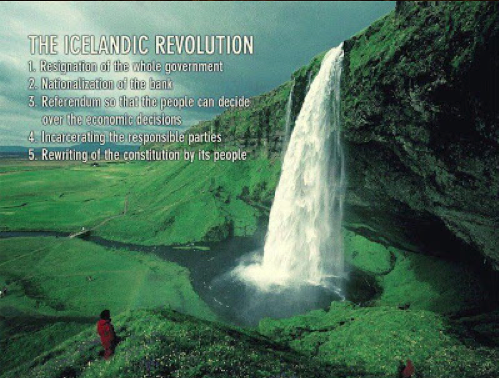
The man who changed Iceland – The message for Greece | Knowledge of Today

The man who forced the government of Iceland to resign and kicked out the IMF representatives from his country, Hordur Torfarson, is now teaching meta-modern democracy throughout Europe. The rest of the world would benefit from following the example set by Iceland: Arresting the corrupt bankers who are responsible for the current economic turmoil.

The true measure of the leader is not how many follower he has, but how many leaders he creates. Too many people hold the idea that psychopaths are essentially killers or convicts. The general public hasn’t been educated to see beyond the social stereotypes to understand that psychopaths can be entrepreneurs, politicians, CEOs and other successful individuals who may never see the inside of a prison. The difference between bankers and the mafia is becoming increasingly indistinguishable.

Control Your Money or Your Money Will Control You Change your attitude toward debt. Every time you use credit for a purchase think,“Debt is slavery; I am making myself a slave.”

“Manipulators rarely advise you to seek new and diverse information or to ‘learn and research for yourself,’ it tends to be safer for exploitative and irresponsible leaders to keep their citizens in the dark; in their view less independent thought is better. Independent thought leads to an inquiring mind, a mindset that eventually leads to the questioning of authority figures, and that is the one thing that inadequate leaders do not want.”

Governments have never existed to solve problems domestic or international. Governments and their institutions exist merely to further and secure the interests of favored groups, but We the People are never the favored group.

Source: Knowledge of Today

Iceland Forces Debt Forgiveness: Total US Media Blackout | True Democracy Party

Editor’s Note: If you have any other verifying stories please let us know via email or comment.

By Zeus Yiamouyiannis, Ph.D.

The government of Iceland has forgiven the mortgage debt for much of its population. This nation chose a very different way of stopping the crisis from the rest of European countries. It decided to hear the requests of the population and to put politicians and bankers on the bench of the accused three years after their financial excesses would sank one of the most prosperous economies in 2008.

Iceland Forgives Mortgage Debt for the Population. Putting Bankers and Politicians on “Bench of Accused” This is awesome. It shows when the people DO STAND UP they have more power and win against the corrupt bankers and politicians of a country. Iceland is forgiving and erasing the mortgage debt of the population. They are putting the bankers and politicians on the “Bench of the Accused.” Which means I assume they are putting them on trial for corruption.

Now the rest of people of the world need to start doing the same thing. We all need to stand up and against all the corruption and fraud of the banks and politicians that are puppets of the banks and corporations. The beauty of it is that they will have a load of cash to circulate into the economy and into service industries etc…instead of feeding it to the parasite bankers and out of the economy, great idea. If it was warmer I’d move to Iceland. Read more…

Endgame: When Debt is Fraud, Debt Forgiveness is the Last and Only Remedy | Endgame

By Zeus Yiamouyiannis, Ph.D.

Introduction

Finally serious economists are considering a position I have been maintaining and writing about since the 2008 financial meltdown. Whatever its name— erasure, repudiation, abolishment, cancellation, jubilee—debt forgiveness, will have to eventually emerge forefront in global efforts to solve an ongoing systemic financial crisis.

“On a grand scale the only way to erase counterfeit money and (counterfeit) assets of hundreds of trillions of dollars is to erase the debts associated with those fake assets. (Let me underscore again, these are not “toxic” assets, they are fake assets.)… Forgiveness in general, and forgiveness of debt in particular, stand as virtues if they free us up to acknowledge, address, and learn from our culpability, start anew, and create forward.” ( The Big Squeeze, Part 3: The Quiet Rebellion: Civil Disobedience, Local Markets, and Debt Erasure (January 29, 2011)

Debt forgiveness, therefore, accomplishes two important things. It eliminates the increasing and outsized portion of productive enterprise to pay off unproductive obligations, and it clears the ground for new opportunities, new thinking, invention, and entrepreneurialism. This is why the ability to declare bankruptcy is so essential in the pursuit of both happiness and innovation.

Currently we are mired in a “new normal” and calls for “austerity” which are nothing more than the delusional efforts of a status quo to avoid the consequences of its own error and fraud and to profit evermore. So bedazzled by the false wealth created by debt multiplication and its concomitant fantasy of ever-higher returns, this status quo continues to be stupidly amazed that people are not spending and that the economy is not picking up. But how could it be otherwise?

Productive wealth has been trapped in a web of parasitic theft, counterfeiting, liability evasion, non-regulation, and prosecutorial non-accountability. All the fundamental attributes of a functioning exchange economy have been warped to reward creative criminals. I spoke extensively about this in my posts from 2008. ( Imaginary Worth, Empire of Debt: How Modern Finance Created Its Own Downfall (October 15, 2008)

The unsustainable nature of debt

Two observations: 1) Fabricated/parasitic so-called “wealth” destroys value by diluting the value of productive wealth. 2) Debt/credit that cannot be paid back is never an asset and is always a hot-potato liability (needing to be foisted to a greater fool to garner “profit” and transaction fees):

“The models [modern debt are] based upon had no contact with reality. They assumed unlimited growth and ability to pay. When matched against the reality of people paying ten times their salary for mortgages that actually added more money owed to their principal (i.e. with negative amortization), required no money down, and set up “balloon payments,” large step-ups in payments after a few years) there is no possible way they could NOT default in a predictable span of time.” ( Part II: How the Credit Default Swap Scam Works (October 13, 2008)

Systemically, all debt that charges a percentage (“usury”) originates in delusion. Debt grows exponentially indefinitely, growth (income and otherwise) cannot. This leads to a widening condition where the fruits of productive “growth” devoted to interest payments increase until those fruits are entirely consumed. (The Elephant In The Room: Debt Grows Exponentially, While Economies Only Grow In An S-Curve (Washington’s Blog)

Once this happens, stores of wealth (hard assets) begin to be cannibalized to make up for the difference. You see this in Greece with its sale of public assets to private companies, and in middle-class America where people are liquidating retirement accounts to pay for their cost of living.

This problem is compounded by a private Federal Reserve that lends money into circulation at interest, and then allows the multiplication of this consumer debt-money liability through fractional reserve banking. The money in circulation today could pay only a small fraction of the total private and public debt. That fact alone is evidence of a kind of systemic fraud. “If you just work hard enough, save, and make sensible decisions, you can get out of debt” could only physically work for a bare fraction of the population, given the money-to-debt ratio. The rest would have to simply default to clear the boards.

This is why debt forgiveness makes not only moral but rational, mathematical sense. Finances require balancing to be coherent. There must be some way to redress systemic imbalance. One has to be able to “zero the scales” to get an accurate weight of value and to re-establish healthy value creation. Read more…

Ron Paul to Congress: Freeze the Budget and Stop Plundering the American People!

By Ron Paul

One might think that the recent drama over the debt ceiling involves one side wanting to increase or maintain spending with the other side wanting to drastically cut spending, but that is far from the truth. In spite of the rhetoric being thrown around, the real debate is over how much government spending will increase.

No plan under serious consideration cuts spending in the way you and I think about it. Instead, the “cuts” being discussed are illusory, and are not cuts from current amounts being spent, but cuts in projected spending increases. This is akin to a family “saving” $100,000 in expenses by deciding not to buy a Lamborghini, and instead getting a fully loaded Mercedes, when really their budget dictates that they need to stick with their perfectly serviceable Honda. But this is the type of math Washington uses to mask the incriminating truth about their unrepentant plundering of the American people.

The truth is that frightening rhetoric about default and full faith and credit of the United States is being carelessly thrown around to ram through a bigger budget than ever, in spite of stagnant revenues. If your family’s income did not change year over year, would it be wise financial management to accelerate spending so you would feel richer? That is what our government is doing, with one side merely suggesting a different list of purchases than the other.

In reality, bringing our fiscal house into order is not that complicated or excruciatingly painful at all. If we simply kept spending at current levels, by their definition of “cuts” that would save nearly $400 billion in the next few years, versus the $25 billion the Budget Control Act claims to “cut”. It would only take us 5 years to “cut” $1 trillion, in Washington math, just by holding the line on spending. That is hardly austere or catastrophic.

A balanced budget is similarly simple and within reach if Washington had just a tiny amount of fiscal common sense. Our revenues currently stand at approximately $2.2 trillion a year and are likely to remain stagnant as the recession continues. Our outlays are $3.7 trillion and projected to grow every year. Yet we only have to go back to 2004 for federal outlays of $2.2 trillion, and the government was far from small that year. If we simply returned to that year’s spending levels, which would hardly be austere, we would have a balanced budget right now. If we held the line on spending, and the economy actually did grow as estimated, the budget would balance on its own by 2015 with no cuts whatsoever.

We pay 35 percent more for our military today than we did 10 years ago, for the exact same capabilities. The same could be said for the rest of the government. Why has our budget doubled in 10 years? This country doesn’t have double the population, or double the land area, or double anything that would require the federal government to grow by such an obscene amount.

In Washington terms, a simple freeze in spending would be a much bigger “cut” than any plan being discussed. If politicians simply cannot bear to implement actual cuts to actual spending, just freezing the budget would give the economy the best chance to catch its breath, recover and grow.

  1. Ron Paul: Reduce Spending, Reform Government, Restore America’s Prosperity Today, 2012 Republican presidential candidate Ron Paul issued a statement outlining his opposition to the…
  2. Ron Paul: Stop Raising the Debt Ceiling Date: 05/23/2011 by Ron Paul The federal government once again has reached the limit of…
  3. Ron Paul on the Budget Control Act: Mr. Speaker, It’s Time to Tear up the Federal Credit Card! Ron Paul: This evening Congress is asked to vote for a bill that claims to…

Following the Debt Ceiling Drama | Pro Publica

By Braden Goyett

Congress has until August 2nd to raise the debt ceiling, the cap on the amount of money the Treasury can borrow to pay the government’s bills. As the clock keeps ticking, you may still have unanswered questions. How dire could the consequences of not raising the debt ceiling be? What are the possible solutions? Here’s a reading list to help you keep up.

Following the debt ceiling debate in real time:

Slate has an updating infographic that lets you see how much money the Treasury has in its bank account right now [2]. For the latest news and analysis, the Wall Street Journal has a frequently updated live blog [3]. The Economist is also doing daily debt ceiling updates [4]. Some good people to follow for updates on Twitter include CNBC’s @JimPethokoukis [5], TIME Magazine’s @MarkHalperin [6], CBS’s @NorahODonnell [7], NBC’s @LukeRussert [8] and @KellyO [9], Slate’s @daveweigel [10], Talking Points Memo’s @brianbeutler [11] and the Bipartisan Policy Center (@BPC_Bipartisan [12]). Today we’re curating tweets with debt ceiling news and analysis [13] on our homepage—check out the module in the top right. For breaking updates, Topsy can be a useful tool for finding the latest articles and tweets on the debt ceiling [14].

The basics on the debt ceiling (including where it comes from):

An earlier guide of ours answers basic questions about the debt ceiling [15], like “What is the debt ceiling, really?” and “Is the debt ceiling necessary?” The New York Times also has a useful FAQ that gets into some of the finer points of the history of the debt ceiling system [16]. Poynter has a guide to common misconceptions about the debt ceiling [17] that can help you cut through misleading coverage. It’s important to note, as Poynter does, that raising the debt ceiling doesn’t mean that we’re increasing spending, but that we’re letting the Treasury borrow money to pay for things we’ve already agreed to spend on. Here’s how NPR Correspondent Robert Smith explained the situation to Poynter:

“The way I put it is that Congress has already ordered the pizza. They approved the pepperoni. They called up and had someone deliver it,” Smith said via email. “Now the pizza guy is knocking at the door, and asking to get paid. If you don’t raise the debt ceiling, it’s like saying we didn’t want that pizza in the first place. Maybe he’ll go away if we don’t answer.”

The New York Times has a helpful chart that breaks down which policies have contributed to the national debt [18] over the Bush and Obama administrations. This chart, tweeted James Fallows at the Atlantic, “should accompany every story about the debt ceiling debate.” The White House released a more detailed chart breaking down the sources of the national debt [19] on Tuesday. Talking Points Memo explains that most of the U.S. national debt is actually owed to the United States [20]—it’s money that some government agencies have borrowed from each other. The Guardian’s data blog has a rundown of which foreign countries the United States owes, and how much we owe them [21]. If you want to go in-depth into the topic, there’s a compilation of academic research on the debt ceiling [22] up at Ezra Klein’s Washington Post blog.

What might happen if the debt limit isn’t raised:

Basically, anyone and anything that relies on federal government funds may not get paid, including members of the U.S. military and military contractors and people receiving Social Security checks. The New York Times has a story detailing what may happen to state governments if the debt ceiling doesn’t get extended [23]. Bloomberg has an interactive that lets you take on the role of the Treasury trying to decide which of its bills to pay [24].

The U.S. credit rating might get downgraded, which could raise the cost of borrowing and cause panic in financial markets and dumping of U.S. bonds. The IMF said today that a downgrade could be “extremely damaging” to the world economy [25]. Forbes has a piece weighing the potential consequences of a credit rating downgrade [26] and whether or not it’s inevitable. Read more…

Audit of the Federal Reserve Reveals $16 Trillion in Secret Bailouts | Unelected

The first ever GAO(Government Accountability Office) audit of the Federal Reserve was carried out in the past few months due to the Ron Paul, Alan Grayson Amendment to the Dodd-Frank bill, which passed last year. Jim DeMint, a Republican Senator, and Bernie Sanders, an independent Senator, led the charge for a Federal Reserve audit in the Senate, but watered down the original language of the house bill(HR1207), so that a complete audit would not be carried out.
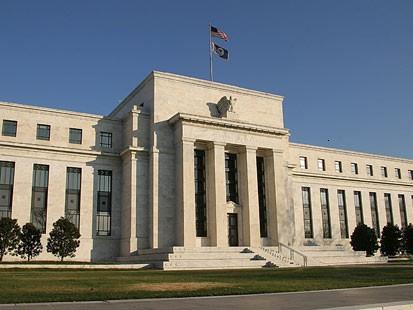
Ben Bernanke (pictured to the right), Alan Greenspan, and various other bankers vehemently opposed the audit and lied to Congress about the effects an audit would have on markets. Nevertheless, the results of the first audit in the Federal Reserve’s nearly 100 year history were posted on Senator Sander’s webpage earlier this morning.

What was revealed in the audit was startling: $16,000,000,000,000.00 had been secretly given out to US banks and corporations and foreign banks everywhere from France to Scotland. From the period between December 2007 and June 2010, the Federal Reserve had secretly bailed out many of the world’s banks, corporations, and governments. The Federal Reserve likes to refer to these secret bailouts as an all-inclusive loan program, but virtually none of the money has been returned and it was loaned out at 0% interest. Why the Federal Reserve had never been public about this or even informed the United States Congress about the $16 trillion dollar bailout is obvious — the American public would have been outraged to find out that the Federal Reserve bailed out foreign banks while Americans were struggling to find jobs.

To place $16 trillion into perspective, remember that GDP of the United States is only $14.12 trillion. The entire national debt of the United States government spanning its 200+ year history is “only” $14.5 trillion. The budget that is being debated so heavily in Congress and the Senate is “only” $3.5 trillion. Take all of the outrage and debate over the $1.5 trillion deficit into consideration, and swallow this Red pill: There was no debate about whether $16,000,000,000,000 would be given to failing banks and failing corporations around the world.

In late 2008, the TARP Bailout bill was passed and loans of $800 billion were given to failing banks and companies. That was a blatant lie considering the fact that Goldman Sachs alone received 814 billion dollars. As is turns out, the Federal Reserve donated $2.5 trillion to Citigroup, while Morgan Stanley received $2.04 trillion. The Royal Bank of Scotland and Deutsche Bank, a German bank, split about a trillion and numerous other banks received hefty chunks of the $16 trillion.

When you have conservative Republican stalwarts like Jim DeMint(R-SC) and Ron Paul(R-TX) as well as self identified Democratic socialists like Bernie Sanders all fighting against the Federal Reserve, you know that it is no longer an issue of Right versus Left. When you have every single member of the Republican Party in Congress and progressive Congressmen like Dennis Kucinich sponsoring a bill to audit the Federal Reserve, you realize that the Federal Reserve is an entity onto itself, which has no oversight and no accountability.

Americans should be swelled with anger and outrage at the abysmal state of affairs when an unelected group of bankers can create money out of thin air and give it out to megabanks and supercorporations like Halloween candy. If the Federal Reserve and the bankers who control it believe that they can continue to devalue the savings of Americans and continue to destroy the US economy, they will have to face the realization that their trillion dollar printing presses will eventually plunder the world economy.

The list of institutions that received the most money from the Federal Reserve can be found on page 131 of the GAO Audit and are as follows..

Citigroup: $2.5 trillion ($2,500,000,000,000)
Morgan Stanley: $2.04 trillion ($2,040,000,000,000)
Merrill Lynch: $1.949 trillion ($1,949,000,000,000)
Bank of America: $1.344 trillion ($1,344,000,000,000)
Barclays PLC (United Kingdom): $868 billion ($868,000,000,000)
Bear Sterns: $853 billion ($853,000,000,000)
Goldman Sachs: $814 billion ($814,000,000,000)
Royal Bank of Scotland (UK): $541 billion ($541,000,000,000)
JP Morgan Chase: $391 billion ($391,000,000,000)
Deutsche Bank (Germany): $354 billion ($354,000,000,000)
UBS (Switzerland): $287 billion ($287,000,000,000)
Credit Suisse (Switzerland): $262 billion ($262,000,000,000)
Lehman Brothers: $183 billion ($183,000,000,000)
Bank of Scotland (United Kingdom): $181 billion ($181,000,000,000)
BNP Paribas (France): $175 billion ($175,000,000,000)
and many many more including banks in Belgium of all places

View the 266-page GAO audit of the Federal Reserve(July 21st, 2011): http://www.scribd.com/doc/60553686/GAO-Fed-Investigation

Source: http://www.gao.gov/products/GAO-11-696
FULL PDF on GAO server: http://www.gao.gov/new.items/d11696.pdf
Senator Sander’s Article: http://sanders.senate.gov/newsroom/news/?id=9e2a4ea8-6e73-4be2-a753-62060dcbb3c3

The Insane Cost of Government | Uncommon Wisdom

By Larry Edelson

Editor’s Note: The American’s for Tax Reform Foundation’s Cost of Government Day Report is a mindbender. If this isn’t a steady march towards national, corporate socialism then what?

The Cost of Government Day (COGD), the day of the calendar year on which the average American worker has earned enough gross income to pay off his or her share of the spending and regulatory burdens imposed by government on the federal, state, and local levels, is now August 19, the latest date ever recorded.

In simple language, it means that the average American must work 230 days, or 63% of the year, to pay for the full cost of government.

That’s pretty darn amazing. And frightening. It essentially means that 63% of your labor output belongs not to you and the loved ones you care for, but to Washington.

Here’s how it breaks down:

  1. Federal spending: The average American worker has to labor for 104 days just to pay for federal spending, which consumes 28.6% of national income. That compares to 90 days in 2008, a 15.5% increase. The chief increase in costs were the bailouts of the financial crisis. The bailouts cost the average American 14 days of worth of work to pay for them.
  2. State and local spending: This is also costing us all, big time. In 2010 the average American had to work 52 days just to pay for state and local government expenditures.
  3. That’s up from 42.5 days in 1999. A whopping 22.3% increase in costs.
  4. The regulatory costs of the federal government: Another shocker ― the average American worker must labor 48 days just to cover the costs of federal regulations. And then there’s …
  5. Another 26 days you must toil to pay the costs of state and local regulations.

I don’t know about you, but the cost of government is insane. 63 out of every 100 hours you work is to pay for government?

You get to keep only 37% of your labor?

It’s high time we got rid of big government. That ratio needs to be inverted, at a minimum. We should keep at least 75% of our labor.

Government should cost far less, way less. Less than one-quarter of our labor output, in my opinion.

Source: Uncommon Wisdom