The Complete History of Monsanto, “The World’s Most Evil Corporation” | Global Research

monsanto roundup

Of all the mega-corps running amok, Monsanto has consistently outperformed its rivals, earning the crown as “most evil corporation on Earth!” Not content to simply rest upon its throne of destruction, it remains focused on newer, more scientifically innovative ways to harm the planet and its people.

1901: The company is founded by John Francis Queeny, a member of the Knights of Malta, a thirty year pharmaceutical veteran married to Olga Mendez Monsanto, for which Monsanto Chemical Works is named. The company’s first product is chemical saccharin, sold to Coca-Cola as an artificial sweetener.

Even then, the government knew saccharin was poisonous and sued to stop its manufacture but lost in court, thus opening the Monsanto Pandora’s Box to begin poisoning the world through the soft drink.

1920s: Monsanto expands into industrial chemicals and drugs, becoming the world’s largest maker of  aspirin, acetylsalicyclic acid, (toxic of course). This is also the time when things began to go horribly wrong for the planet in a hurry with the introduction of  their polychlorinated biphenyls (PCBs).

“PCBs were considered an industrial wonder chemical, an oil that wouldn’t burn, impervious to degradation and had almost limitless applications. Today PCBs are considered one of the gravest chemical threats on the planet. Widely used as lubricants, hydraulic fluids, cutting oils, waterproof coatings and liquid sealants, are potent carcinogens and have been implicated in reproductive, developmental and immune system disorders. The world’s center of PCB manufacturing was Monsanto’s plant on the outskirts of East St. Louis, Illinois, which has the highest rate of fetal death and immature births in the state.”(1)

Even though PCBs were eventually banned after fifty years for causing such devastation, it is still present in just about all animal and human blood and tissue cells across the globe. Documents introduced in court later showed Monsanto was fully aware of the deadly effects, but criminally hid them from the public to keep the PCB gravy-train going full speed!

toxiclove1930s: Created its first hybrid seed corn and expands into detergents, soaps, industrial cleaning products, synthetic rubbers and plastics. Oh yes, all toxic of course!

1940s: They begin research on uranium to be used for the Manhattan Project’s first atomic bomb, which would later be dropped on Hiroshima and Nagasaki, killing hundreds of thousands of Japanese, Korean and US Military servicemen and poisoning millions more.

The company continues its unabated killing spree by creating pesticides for agriculture containing deadly dioxin, which poisons the food and water supplies. It was later discovered Monsanto failed to disclose that dioxin was used in a wide range of their products because doing so would force them to acknowledge that it had created an environmental Hell on Earth.

1950s: Closely aligned with The Walt Disney Company, Monsanto creates several attractions at Disney’s Tomorrowland, espousing the glories of chemicals and plastics. Their “House of the Future” is constructed entirely of toxic plastic that is not biodegradable as they had asserted. What, Monsanto lied? I’m shocked!

“After attracting a total of 20 million visitors from 1957 to 1967, Disney finally tore the house down, but discovered it would not go down without a fight. According to Monsanto Magazine, wrecking balls literally bounced off the glass-fiber, reinforced polyester material. Torches, jackhammers, chain saws and shovels did not work. Finally, choker cables were used to squeeze off parts of the house bit by bit to be trucked away.”(2)

Monsanto’s Disneyfied vision of the future:

1960s: Monsanto, along with chemical partner-in-crime DOW Chemical, produces dioxin-laced Agent Orange for use in the U.S.’s Vietnam invasion. The results? Over 3 million people contaminated, a half-million Vietnamese civilians dead, a half-million Vietnamese babies born with birth defects and thousands of U.S. military veterans suffering or dying from its effects to this day!

 Monsanto is hauled into court again and internal memos show they knew the deadly effects of dioxin in Agent Orange when they sold it to the government. Outrageously though, Monsanto is allowed to present their own “research” that concluded dioxin was safe and posed no negative health concerns whatsoever. Satisfied, the bought and paid for courts side with Monsanto and throws the case out. Afterwards, it comes to light that Monsanto lied about the findings and their real research concluded that dioxin kills very effectively.

A later internal memo released in a 2002 trial admitted

“that the evidence proving the persistence of these compounds and their universal presence as residues in the environment is beyond question … the public and legal pressures to eliminate them to prevent global contamination are inevitable. The subject is snowballing. Where do we go from here? The alternatives: go out of business; sell the hell out of them as long as we can and do nothing else; try to stay in business; have alternative products.”(3)

Monsanto partners with I.G. Farben, makers of Bayer aspirin and the Third Reich’s go-to chemical manufacturer producing deadly Zyklon-B gas during World War II. Together, the companies use their collective expertise to introduce aspartame, another extremely deadly neurotoxin, into the food supply. When questions surface regarding the toxicity of saccharin, Monsanto exploits this opportunity to introduce yet another of its deadly poisons onto an unsuspecting public.

1970s: Monsanto partner, G.D. Searle, produces numerous internal studies which claim aspartame to be safe, while the FDA’s own scientific research clearly reveals that aspartame causes tumors and massive holes in the brains of rats, before killing them. The FDA initiates a grand jury investigation into G.D. Searle for “knowingly misrepresenting findings and concealing material facts and making false statements” in regard to aspartame safety.

During this time, Searle strategically taps prominent Washington insider Donald Rumsfeld, who served as Secretary of Defense during the Gerald Ford and George W. Bush  presidencies, to become CEO. The corporation’s primary goal is to have Rumsfeld utilize his political influence and vast experience in the killing business to grease the FDA to play ball with them.

A few months later, Samuel Skinner receives “an offer he can’t refuse,” withdraws from the investigation and resigns his post at the U.S. Attorney’s Office to go work for Searle’s law firm. This mob tactic stalls the case just long enough for the statute of limitation to run out and the grand jury investigation is abruptly and conveniently dropped.

1980s: Amid indisputable research that reveals the toxic effects of aspartame and as then FDA commissioner Dr. Jere Goyan was about to sign a petition into law keeping it off the market, Donald Rumsfeld calls Ronald Reagan for a favor the day after he takes office. Reagan fires the uncooperative Goyan and appoints Dr. Arthur Hayes Hull to head the FDA, who then quickly tips the scales in Searle’s favor and NutraSweet is approved for human consumption in dried products.This becomes sadly ironic since Reagan, a known jelly bean and candy enthusiast, later suffers from Alzheimers during his second term, one of the many horrific effects of aspartame consumption.

Searle’s real goal though was to have aspartame approved as a soft drink sweetener since exhaustive studies revealed that at temperatures exceeding 85 degrees Fahrenheit, it “breaks down into known toxins Diketopiperazines (DKP), methyl (wood) alcohol, and formaldehyde.”(4), becoming many times deadlier than its powdered form!

The National Soft Drink Association (NSDA) is initially in an uproar, fearing future lawsuits from consumers permanently injured or killed by drinking the poison. When Searle is able to show that liquid aspartame, though incredibly deadly, is much more addictive than crack cocaine, the NSDA is convinced that skyrocketing profits from the sale of soft drinks laced with aspartame would easily offset any future liability. With that, corporate greed wins and the unsuspecting soft drink consumers pay for it with damaged healths.

Coke leads the way once again (remember saccharin?) and begins poisoning Diet Coke drinkers with aspartame in 1983. As expected, sales skyrocket as millions become hopelessly addicted and sickened by the sweet poison served in a can. The rest of the soft drink industry likes what it sees and quickly follows suit, conveniently forgetting all about their initial reservations that aspartame is a deadly chemical. There’s money to be made, lots of it and that’s all that really matters to them anyway!

In 1985, undaunted by the swirl of corruption and multiple accusations of fraudulent research undertaken by Searle, Monsanto purchases the company and forms a new aspartame subsidiary called NutraSweet Company. When multitudes of independent scientists and researchers continue to warn about aspartame’s toxic effects, Monsanto goes on the offensive, bribing the National Cancer Institute and providing their own fraudulent papers to get the NCI to claim that formaldehyde does not cause cancer so that aspartame can stay on the market.

The known effects of aspartame ingestion are: “mania, rage, violence, blindness, joint-pain, fatigue, weight-gain, chest-pain, coma, insomnia, numbness, depression, tinnitus, weakness, spasms, irritability, nausea, deafness, memory-loss, rashes, dizziness, headaches, seizures, anxiety, palpitations, fainting, cramps, diarrhoea, panic, burning in the mouth. Diseases triggered/mimmicked include diabetes, MS, lupus, epilepsy, Parkinson’s, tumours, miscarriage, infertility, fibromyalgia, infant death, Alzheimer’s… Source : U.S. Food & Drug Administration.(5)

Further, 80% of complaints made to the FDA regarding food additives are about aspartame, which is now in over 5,000 products including diet and non-diet sodas and sports drinks, mints, chewing gum, frozen desserts, cookies, cakes, vitamins, pharmaceuticals, milk drinks, instant teas, coffees, yogurt, baby food and many, many more!(6) Read labels closely and do not buy anything that contains this horrific killer!

Amidst all the death and disease, FDA’s Arthur Hull resigns under a cloud of corruption and is immediately hired by Searle’s public relations firm as a senior scientific consultant. No, that’s not a joke! Monsanto, the FDA and many government health regulatory agencies have become one and the same! It seems the only prerequisite for becoming an FDA commissioner is that they spend time at either Monsanto or one of the pharmaceutical cartel’s organized crime corps.

1990s: Monsanto spends millions defeating state and federal legislation that disallows the corporation from continuing to dump dioxins, pesticides and other cancer-causing poisons into drinking water systems. Regardless, they are sued countless times for causing disease in their plant workers, the people in surrounding areas and birth defects in babies.

With their coffins full from the massive billions of profits, the $100 million dollar settlements are considered the low cost of doing business and thanks to the FDA, Congress and White House, business remains very good. So good that Monsanto is sued for giving radioactive iron to 829 pregnant women for a study to see what would happen to them.

In 1994, the FDA once again criminally approves Monsanto’s latest monstrosity, the Synthetic Bovine Growth Hormone (rBGH), produced from a genetically modified E. coli bacteria, despite obvious outrage from the scientific community of its dangers. Of course, Monsanto claims that diseased pus milk, full of antibiotics and hormones is not only safe, but actually good for you!

 Worse yet, dairy companies who refuse to use this toxic cow pus and label their products as“rBGH-free” are sued by Monsanto, claiming it gives them an unfair advantage over competitors that did. In essence, what Monsanto was saying is “yeah, we know rBGH makes people sick, but it’s not alright that you advertise it’s not in your products.”

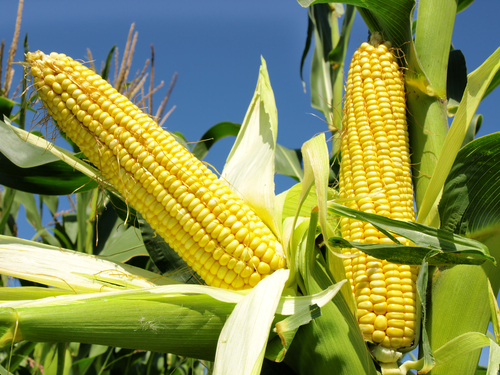
 The following year, the diabolical company begins producing GMO crops that are tolerant to their toxic herbicide Roundup. Roundup-ready canola oil (rapeseed), soybeans, corn and BT cotton begin hitting the market, advertised as being safer, healthier alternatives to their organic non-GMO rivals. Apparently, the propaganda worked as today over 80% of canola on the market is their GMO variety.

A few things you definitely want to avoid in your diet are GMO soy, corn, wheat and canola oil, despite the fact that many “natural” health experts claim the latter to be a healthy oil. It’s not, but you’ll find it polluting many products on grocery store shelves.

 Because these GM crops have been engineered to ‘self-pollinate,’ they do not need  nature or bees to do that for them. There is a very dark side agenda to this and that is to wipe out the world’s bee population.

 Monsanto knows that birds and especially bees, throw a wrench into their monopoly due to their ability to pollinate plants, thus naturally creating foods outside of the company’s “full domination control agenda.” When bees attempt to pollinate a GM plant or flower, it gets poisoned and dies. In fact, the bee colony collapse was recognized and has been going on since GM crops were first introduced.

To counter the accusations that they deliberately caused this ongoing genocide of bees, Monsanto devilishly buys out Beeologics, the largest bee research firm that was dedicated to studying the colony collapse phenomenon and whose extensive research named the monster as the primary culprit! After that, it’s “bees, what bees? Everything’s just dandy!” Again, I did not make this up, but wish I had!

During the mid-90s, they decide to reinvent their evil company as one focused on controlling the world’s food supply through artificial, biotechnology means to preserve the Roundup cash-cow from losing market-share in the face of competing, less-toxic herbicides. You see, Roundup is so toxic that it wipes out non-GMO crops, insects, animals, human health and the environment at the same time. How very efficient!

 Because Roundup-ready crops are engineered to be toxic pesticides masquerading as food, they have been banned in the EU, but not in America! Is there any connection between that and the fact that Americans, despite the high cost and availability of healthcare, are collectively the sickest people in the world? Of course not!

 As was Monsanto’s plan from the beginning, all non-Monsanto crops would be destroyed, forcing farmers the world over to use only its toxic terminator seeds. And Monsanto made sure farmers who refused to come into the fold were driven out of business or sued when windblown terminator seeds poisoned organic farms.

This gave the company a virtual monopoly as terminator seed crops and Roundup worked hand in glove with each other as GMO crops could not survive in a non-chemical environment so farmers were forced to buy both.

Their next step was to spend billions globally buying up as many seed companies as possible and transitioning them into terminator seed companies in an effort to wipe out any rivals and eliminate organic foods off the face of the earth. In Monsanto’s view, all foods must be under their full control and genetically modified or they are not safe to eat!

 They pretend to be shocked that their critics in the scientific community question whether crops genetically modified with the genes of diseased pigs, cows, spiders, monkeys, fish, vaccines and viruses are healthy to eat. The answer to that question is obviously a very big “no way!”

You’d think the company would be so proud of their GMO foods that they’d serve them to their employees, but they don’t. In fact, Monsanto has banned GM foods from being served in their own employee cafeterias. Monsanto lamely responded “we believe in choice.” What they really means is “we don’t want to kill the help.”

It’s quite okay though to force-feed poor nations and Americans these modified monstrosities as a means to end starvation since dead people don’t need to eat! I’ll bet the thought on most peoples’ minds these days is that Monsanto is clearly focused on eugenics and genocide, as opposed to providing foods that will sustain the world. As in Monsanto partner Disney’s Sleeping Beauty, the wicked witch gives the people the poisoned GMO apple that puts them to sleep forever!

2000s: By this time Monsanto controls the largest share of the global GMO market. In turn, the US gov’t spends hundreds of millions to fund aerial spraying of Roundup, causing massive environmental devastation. Fish and animals by the thousands die within days of spraying as respiratory ailments and cancer deaths in humans spike tremendously. But this is all considered an unusual coincidence so the spraying continues. If you thought Monsanto and the FDA were one and the same, well you can add the gov’t to that sorry list now.

The monster grows bigger: Monsanto merges with Pharmacia & Upjohn, then separates from its chemical business and rebrands itself as an agricultural company. Yes, that’s right, a chemical company whose products have devastated the environment, killed millions of people and wildlife over the years now wants us to believe they produce safe and nutritious foods that won’t kill people any longer. That’s an extremely hard-sell, which is why they continue to grow bigger through mergers and secret partnerships.

Because rival DuPont is too large a corporation to be allowed to merge with, they instead form a stealth partnership where each agrees to drop existing patent lawsuits against one another and begin sharing GMO technologies for mutual benefit. In layman’s terms, together they would be far too powerful and politically connected for anything to stop them from owning a virtual monopoly on agriculture; “control the food supply & you control the people!”

 Not all is rosy as the monster is repeatedly sued for $100s of millions for causing illness, infant deformities and death by illegally dumping all manner of PCBs into ground water, and continually lying about products safety – you know, business as usual.

The monster often perseveres and proves difficult to slay as it begins filing frivolous suits against farmers it claims infringe on their terminator seed patents. In virtually all cases, unwanted seeds are windblown onto farmers’ lands by neighboring terminator-seeded farms. Not only do these horrendous seeds destroy the organic farmers’ crops, the lawsuits drive them into bankruptcy, while the Supreme Court overturns lower court rulings and sides with Monsanto each time.

At the same time, the monster begins filing patents on breeding techniques for pigs, claiming animals bred any way remotely similar to their patent would grant them ownership. So loose was this patent filing that it became obvious they wanted to claim all pigs bred throughout the world would infringe upon their patent.

The global terrorism spreads to India as over 100,000 farmers who are bankrupted by GMO crop failure, commit suicide by drinking Roundup so their families will be eligible for death insurance payments. In response, the monster takes advantage of the situation by alerting the media to a new project to assist small Indian farmers by donating the very things that caused crop failures in the country in the first place! Forbes then names Monsanto “company of the year.” Sickening, but true.

 More troubling is that Whole Foods, the corporation that brands itself as organic, natural and eco-friendly is proven to be anything but. They refuse to support Proposition 37, California’s GMO-labeling measure that Monsanto and its GMO-brethren eventually helped to defeat.

Why? Because Whole Foods has been in bed with Monsanto for a long time, secretly stuffing its shelves with overpriced, fraudulently advertized “natural & organic” crap loaded with GMOs, pesticides, rBGH, hormones and antibiotics. So, of course they don’t want mandatory labelling as that would expose them as the Whole Frauds and Whore Foods that they really are!

 However, when over twenty biotech-friendly companies including WalMart, Pepsico and ConAgra recently met with FDA in favor of mandatory labelling laws, this after fighting tooth and nail to defeat Prop 37, Whole Foods sees an opportunity to save face and becomes the first grocery chain to announce mandatory labelling of their GMO products…in 2018! Uh, thanks for nothing, Whore.

 And if you think its peers have suddenly grown a conscience, think again. They are simply reacting to the public’s outcry over the defeat of Prop 37 by crafting deceptive GMO-labelling laws to circumvent any real change, thus keeping the status quo intact.

 To add insult to world injury, Monsanto and their partners in crime Archer Daniels Midland, Sodexo and Tyson Foods write and sponsor The Food Safety Modernization Act of 2009: HR 875. This criminal “act” gives the corporate factory farms a virtual monopoly to police and control all foods grown anywhere, including one’s own backyard, and provides harsh penalties and jail sentences for those who do not use chemicals and fertilizers. President Obama decided this sounded reasonable and gave his approval.

 With this Act, Monsanto claims that only GM foods are safe and organic or homegrown foods potentially spread disease, therefore must be regulated out of existence for the safety of the world. If eating GM pesticide balls is their idea of safe food, I would like to think the rest of the world is smart enough to pass.

As further revelations have broken open regarding this evil giant’s true intentions, Monsanto crafted the ridiculous HR 933 Continuing Resolution, aka Monsanto Protection Act, which Obama robo-signed into law as well.This law states that no matter how harmful Monsanto’s GMO crops are and no matter how much devastation they wreak upon the country, U.S. federal courts cannot stop them from continuing to plant them anywhere they choose. Yes, Obama signed a provision that makes Monsanto above any laws and makes them more powerful than the government itself. We have to wonder who’s really in charge of the country because it’s certainly not him!

There comes a tipping point though when a corporation becomes too evil and the world pushes back…hard! Many countries continue to convict Monsanto of crimes against humanity and have banned them altogether, telling them to “get out and stay out!”

The world has begun to awaken to the fact that the corporate monster does not want control over the global production of food simply for profit’s sake. No, it’s become clear by over a century of death & destruction that the primary goal is to destroy human health and the environment, turning the world into a Mon-Satanic Hell on Earth!

 Research into the name itself reveals it to be latin, meaning “my saint,” which may explain why critics often refer to it as “Mon-Satan.” Even more conspiratorially interesting is that free masons and other esoteric societies assigned numbers to each letter in our latin-based alphabet system in a six system. Under that number system, what might Monsanto add up to? Why, of course 6-6-6!

 Know that all is not lost. Evil always loses in the end once it is widely exposed to the light of truth as is occurring now. The fact that the Monsanto-led government finds it necessary to enact desperate legislation to protect its true leader proves this point. Being evicted elsewhere, the United States is Monsanto’s last stand so to speak.

Yet, even here many have begun striking back by protesting against and rejecting GMO monstrosities, choosing to grow their own foods and shop at local farmers markets instead of the Monsanto-supported corporate grocery chains.

 The awakening people are also beginning to see they have been misled by corporate tricksters and federal government criminals poisoned by too much power, control and greed, which has resulted in the creation of the monstrous, out-of-control corporate beast.

 Source: Global Research
Notes: (1,3) http://bestmeal.info/monsanto/company-history.shtml
(2) http://www.sourcewatch.org/index.php/Monsanto

Vermont just passed the nation’s first GMO food labeling law. Now it prepares to get sued | Washington Post

By Niraj Chokshi

Vermont on Thursday became the first state in the nation to require the labeling of genetically engineered foods.

Gov. Peter Shumlin (D) signed that mandate into law on Thursday afternoon, saying in a statement “we believe we have a right to know what’s in the food we buy.” The new law represents a significant victory for advocates who have for years pushed such measures at the state and local level. But there remains one more hurdle to overcome: a likely lawsuit.

There’s no guarantee of legal action, of course, but legislators, officials and advocates are preparing for the state to be sued over the new law. Last month, state Attorney General Bill Sorrell told Vermont Public Radio that he would be “very surprised” if the state isn’t sued. And officials were so sure of a challenge that the measure itself creates a $1.5 million legal defense fund, to be paid for with settlements won by the state. They think it’s coming, but they also say they’re ready.

“The threat of a lawsuit worked for a while, but now it doesn’t work anymore,” says Ronnie Cummins, national director of the Organic Consumers Association, whose organization has for years worked with activists and lawmakers in Vermont on the issue. “I think they may go ahead and sue and do it rather quickly in the hopes that it may gather momentum,” he added, referring to biotech industry groups.

Other states have pursued similar measures, but Vermont’s law will be the first of its kind. Connecticut and Maine passed labeling requirements, but with trigger clauses requiring multiple other states to pass labeling requirements before their own go into effect. At least 25 states have considered such legislation, according to a recent report on labeling requirements from the nonprofit Council for Agricultural Science and Technology. And advocates are hopeful they will get a measure on the Oregon ballot this year.

Industry groups argue that such laws are costly and bad for consumers. But even some academics have questioned the reasons for implementing a labeling requirement.

That recent report — authored by professors from the universities of California, Illinois and Missouri — found no science-based reason for singling out genetically engineered foods. They also suggested that such requirements could have possible trade implications — many of the labeling requirements in other countries violate World Trade Organization agreements, they write — and that food costs could potentially rise if companies decide to use non-modified ingredients instead of simply slapping a genetically modified organism (GMO) label on products. (If they opt to comply with labeling requirements instead, costs could be minimal.)

Proponents argue that the science behind genetically modified food is far from conclusive and ask why consumers should take risks without knowing what they’re eating. If companies truly stand behind the safety of GMO foods, they shouldn’t worry about having to identify them, advocates for labeling argue.

Whatever the wisdom of labeling policies, though, Vermont is set to move forward with its requirement. Cummins and others are relatively calm about the prospect of lawsuits, though, because they’re prepared. Advocates expect industry will challenge the law on three constitutional grounds, none of which they expect to be successful (of course). Here’s how the food industry may fight back and why labeling proponents think they can win, according to their legal analyses.

Sponsor Generated Content Smart parking to the rescue

Through technology and data, parking systems are improving city congestion. READ MORE

1. The First Amendment argument

The first argument that industry is expected to make in challenging Vermont’s GMO law is that it violates commercial free speech rights under the First Amendment. (Businesses have limited free speech protections based on the benefit of free-flowing information to an open society.)

The Supreme Court has established two tests for reviewing whether such rights have been violated, according to two legal analyses of Vermont’s law. Under one test — from Zauderer v. Office of Disciplinary Counsel of the Supreme Court of Ohio — the U.S. Supreme Court found that requiring commercial speech is considered constitutional if the required speech conveys “purely factual information in support of a legitimate government interest,” according to a memo from Emord & Associates, a food and drug law firm. In other words, government can require businesses to make factual statements if it’s in the service of the public good in some way.

The other First Amendment test revolves around whether a state can restrict commercial speech. It stems from New York’s attempt,  in the interest of conserving energy, to ban utilities from promoting use of electricity. The Supreme Court overturned the ban, challenged by Central Hudson Gas & Electric. In so doing, the court set up a four-part test, according to another memo from the Vermont Law School’s Environmental and Natural Resources Law Clinic, which represents the Vermont Public Interest Research Group. A limit on commercial speech must meet four requirements, the court found:

  1. First, the court has to decide that the speech is protected, meaning it must be about legal activity and not be misleading.
  2. Second, the government has to claim a substantial interest in limiting the speech.
  3. Third, the policy in question has to “directly advance” that interest.
  4. Fourth, that policy must not overreach in achieving its goal.

Both legal memos and labeling advocates come to the same conclusion: a labeling law will likely pass either test.

2. Does federal law trump state law?

Another argument that proponents of GMO labeling expect to hear is that Vermont’s new law stomps on territory covered by the federal government. There are three conditions under which federal law trumps state law, a process known as preemption, according to the Law Clinic memo. They are known as express preemption, field preemption and conflict preemption.

Express preemption is when Congress explicitly says a federal law trumps state laws. Both memos conclude that it has not done so with such labeling requirements, which don’t explicitly govern genetically modified foods. A conflict preemption exists when it’s impossible to comply with both federal and state law. Again, federal regulations don’t touch on the use of “genetically enginereed,” “natural” or similar terms, so it’s possible for a business or individual to comply with federal and state labeling requirements, both memos find. Finally, federal law trumps state law when it’s clear that the federal interest in a field is so great that it’s assumed to be the one in charge. In that instance, “congressional intent to supersede state laws must be ‘clear and manifest,’” which neither memo finds it is.

3. Does it interfere with interstate commerce?

The third challenge labeling proponents expect to hear is that the GMO law unconstitutionally interferes with interstate commerce. While the Constitution’s Commerce Clause grants Congress the authority to regulate interstate commerce, it is also understood to implicitly limit state powers to do the same.

The Supreme Court has in the past applied two tests in assessing whether a policy violates the clause. The first is whether a law discriminates against interstate commerce — in other words, does it explicitly favor commerce within the state over commerce between states.

Vermont’s GMO law treats Vermont companies the same as companies based in other states, so advocates are confident it would survive that first test. The second test would ensure that any burden on interstate commerce — e.g. increased costs of labeling GMO foods — are fairly balanced with the local benefits the law provides, such as protecting public health and the environment. Again, advocates conclude the law is balanced.

Source: Washington Post
Read Also: Vermont GMO Labeling Law is Constitutional Under the First Amendment

Despite Majority Opposition, GMO Corn Gets Green Light in Europe | EcoWatch

By John Deike

GMOCornCorporations, backed by influential lobbyists and western governments, dealt major blows this month against activists who are fighting to limit the cultivation of genetically modified organisms (GMOs).

On Feb. 11, the European Commission gave DuPont Pioneer the green light to freely grow insecticidal corn, also known as TC1507. Nineteen of the European Union’s 28 states voted against the cultivation and openly criticized the commission, which, in 2005, concluded the corn was safe to import and consume in Europe, reports Food Freedom News.

“The European Parliament, the majority of member states and 80% of citizens do not want GMOs in Europe,” said French activist and politician Jose Bove in a statement. Bove continued saying it was “inconceivable” and “political” of the commission to approve the corn.

In response, French politicians are continuing their fight with new legislation that would ban genetically modified corn within the country.

U.S. sees similar trend

Monsanto, the world’s largest seed company, had similar success when it spent $9 million to promote the passage of the Food Safety Modernization Act, which was signed into law in by President Obama in 2011.

The law doesn’t address the food safety risks of pesticide residue or genetically modified crops, but it does tighten water quality levels for smaller farms that typically don’t grow GMO food, according to Food Freedom News.

“The 1,200 page act was designed to put small family farms out of business,” said Michael Tabor in a recent Farm-to-Consumer interview. “Most farmers irrigate their fields from nearby streams. Now those streams have to be tested on a weekly basis.”At $87.50 per test, the cost of doing business has now increased by as much as $5,000.

Chemical farms growing biotech crops follow more lenient pollution regulations, added Tabor.

In a recent standoff, protestors, with signs in hand, converged at the Monsanto headquarters in suburban St. Louis, MO during the company’s annual investors meeting in support of two shareholder resolutions that questioned the level of contamination passed onto non-GMO crops and requested the seed giant end its fight against mandatory labels on foods containing GMO ingredients, reports Reuters.

The resolutions failed by considerable margins and 11 protestors were arrested after attempting to disrupt traffic near the Monsanto gates.

Source: EcoWatch

Organic Farmers vs. Monsanto: Final Appeal to U.S. Supreme Court to Protect Crops from GMO Contamination | EcoWatch

organicfarmerLast week, the Public Patent Foundation filed a brief with the U.S. Supreme Court in the landmark case, Organic Seed Growers and Trade Association (OSGATA) et al v. Monsanto, in the hopes that the highest court in the land would hear and reinstate the case of 73 American organic and conventional family farmers, seed businesses and public advocacy groups that seek protection for America’s farmers from Monsanto’s frivolous patent infringement lawsuits, and their promiscuous genetically engineered pollen while also seeking to invalidate the patents on 23 of Monsanto’s genetically modified organisms (GMO) crops.

Jim Gerritsen, an organic seed farmer on Wood Prairie Farm in Maine and president of lead plaintiff Organic Seed Growers and Trade Association, has spent the past 37 years of his life protecting and maintaining the integrity of his seed stock to provide clean, wholesome food to his customers.

Earlier this month, Monsanto filed an opposition brief with the Supreme Court in a last ditch effort to deny a group of American family farmers and seed growers justice in their efforts to protect their farms and the integrity of their crops.

“In opposing our request that the Supreme Court take, and then reinstate, our case, Monsanto makes the same lame and untrue assertions that it made before,” said Daniel Ravicher, executive director of the Public Patent Foundation (PUBPAT) and lead counsel to the plaintiffs in OSGATA et al v. Monsanto. ”In our reply brief filed with the Supreme Court we point out precisely why Monsanto is wrong and that the case should be allowed to proceed,” claimed Ravicher.

On June 10, a three-judge panel at the Court of Appeals for the Federal Circuit in Washington, D.C., issued a bizarre ruling that plaintiffs are not entitled to bring a lawsuit to protect themselves from Monsanto’s transgenic seed patents “because Monsanto has made binding assurances that it will not take legal action against growers whose crops might inadvertently contain traces of Monsanto biotech genes” as stated anonymously on the company’s website.

Farmers find this ruling inconclusive and  insufficient to protect their future economic interests since the Court of Appeals readily admitted that contamination from Monsanto’s genetically engineered crops is “inevitable.”

This Appellate Court ruling importantly validated that farmers do have a legitimate fear of contamination, something that the court and Monsanto’s own attorney, former Solicitor General Seth Waxman, admitted in court during oral arguments.

Despite dismissing the farmers’ and seed growers’ case, the Court of Appeals ruling found the likelihood of contamination significant enough to order by estoppel that Monsanto make good on its promise not to sue farmers that are “inadvertently contaminated with up to one percent of seeds carrying Monsanto’s patented traits.”

“As a seed grower, who has spent the past 37 years of my life protecting and maintaining the integrity of my seed stock to provide clean, wholesome food to my customers, I find it unconscionable that Monsanto can contaminate mine or my neighbors’ crops and not only get away with it, but potentially sue us for patent infringement,” said Jim Gerritsen, an organic seed farmer on Wood Prairie Farm in Maine and president of lead Plaintiff OSGATA. ”The appeals court ruling fails to protect my family and our farm and has only complicated matters,”said Gerritsen.

Because of the insidious nature of GMO contamination and the fact that pollen naturally blows or migrates to neighboring fields, contamination of farmers’ fields above one percent is both predictable and unavoidable.

Already, reports of contamination across North America exceeding one percent have led an increasing number of farmers to incur considerable costs in testing their crops and seed supply for transgenic contamination or actually forgo planting of certain crops in order to maintain seed purity.

Significant contamination events happened in the U.S. this year alone, with an unapproved experimental variety of Monsanto’s GMO wheat discovered in a farmer’s field inOregon this past May. According to the U.S. Department of Agriculture (USDA), the illegal GMO wheat had been field-tested between 1998 through 2005, but never approved by the USDA. Its discovery sent shockwaves through international markets and caused Japan and South Korea to halt shipments of U.S. wheat for more than a month.

A similar event occurred in September when a Washington state farmer reported that his hay was rejected for export because it tested positive for contamination from Monsanto’s genetically engineered alfalfa.

“For farmers, recent events in Washington and Oregon make clear that the damages of contamination are far-reaching in their impacts on farmers’ economic survival, can be permanent and irreversible in their harm to our food supply and only can be properly redressed by a favorable ruling from the Supreme Court,” said Dave Murphy, founder and executive director of Food Democracy Now!, a grassroots advocacy group based in Iowa and a plaintiff in the case.

“It’s time to end Monsanto’s campaign of fear against America’s farmers and stand up for farmers’ right to grow our food without legal threats and intimidation. America must no longer allow Monsanto to contaminate our food supply and destroy the livelihoods of farmers. Farmers deserve protection from these abuses,” said Murphy.

Farmers expect to hear whether or not the U.S Supreme Court will hear their case next year and eagerly await their day in court.

Source: EcoWatch

Pesticide Companies Sue EU Commission for Protecting Pollinators | EcoWatch

CourtsandMoneyOn Nov. 6 BASF, a German agrochemical company, took legal action in the General Court of the European Union (EU) to challenge the EU Commission’s decision to restrict seed treatment uses of the insecticide fipronil. BASF joins chemical companies Bayer and Syngenta in challenging the EU’s decision to restrict the use of certain pesticides that are harmful to pollinators.

The EU Commission’s decision to restrict the use of fipronil in July came after the Commission’s landmark decision announcing a two-year continent-wide ban on the neonicotinoid pesticides clothianidinimidacloprid and thiamethoxam. The pesticides have been linked to the decline in bee populations. Twenty-three European Union Member States supported the fipronil restriction, two Member States voted against and three Member States abstained during the standing committee vote. BASF argued that its legal action against the EU is based on a disproportionate application of the precautionary principle. However, overwhelming scientific evidence supports the position that fipronil is highly toxic to bees.

Fipronil, a phenyl pyrazole broad-spectrum insecticide, was first introduced in the U.S. in 1996 for commercial turf and indoor pest control and is highly toxic to bees. A recent investigation reveals that fipronil is responsible for the death of  thousands of bees in Minnesota. Fipronil also has been shown to reduce behavioral function and learning performances in honey bees. A 2011 French study reported that newly emerged honey bees exposed to low doses of fipronil and thiacloprid succumbed more readily to the parasite Nosema ceranae compared to healthy bees, supporting the hypothesis that the synergistic combination of parasitic infection and high pesticide exposures in beehives may contribute to colony decline.

Fipronil is also harmful to humans and has been linked to hormone disruption, thyroid cancer, neurotoxicity and reproductive effects in mammals. Recently, a federal grand jury in Macon, GA, alleged that a pest company wrongly applied fipronil in multiple nursing homes in Georgia.

beeBy challenging the EU commission’s decision to ban pesticides that are suspected to be harmful to bee health, BASF joins Bayer and Sygenta, which are also challenging the new restrictions. This past August, Syngenta filed a legal challenge to the European Union’s suspension of one of its insecticides, thiamethoxan. In a press release, Syngenta claims that the European Commission made its decision on the basis of a flawed process.

Bayer Crop Science filed a similar legal challenge with the Court of Justice of the European Union in mid-August. Bayer claims that its pesticides, imidacloprid and clothianidin, have been on the market for many years and have been extensively tested and approved. According to EU guidelines, approved products can only be banned if there is new evidence of their negative effects, Bayer Crop Science said. These actions taken by the agrochemical industry that challenge the ban on neonicotinoids ignore the increasing body of new science that documents neonicotinoid toxicity to bees and other pollinators.

As Europe has moved toward creating stronger regulations designed to protect declining bee health, the U.S. has remained woefully behind. Recently, the U.S. Environmental Protection Agency (EPA) acknowledged that current pesticide labels do not adequately protect honey bees and announced new label language to prohibit the use of neonicotinoid pesticides when bees are present. The new labels will also include a “bee advisory box” and icon with information on routes of exposure and spray drift precautions. However, beekeepers and environmental groups question the efficacy and enforceability of the new label changes in curtailing systemic pesticides that result in long-term residues in the environment, contaminating nectar and pollen, and poisoning wild bees that the EPA seems to ignore in its decision-making process.

Due to the absence of strong regulatory safeguards for pollinators in the U.S., it is important for the public to become engaged in pollinator protection. Beyond Pesticides’ BEE Protective campaign supports a shift away from the use of these toxic chemicals by encouraging organic methods and sustainable land management practices in your home, campus, or community and in food production.

Source: EcoWatch

Monsanto Bans GM Corn in Latest Win Against Monsanto & Big Ag | Occupy.com

By Joseph Mayton

Effective immediately, a ban on genetically-modified corn in Mexico has gone into action only days after thousands took to the streets in cities worldwide to protest against Monsanto and the GMO industry.

Companies such as Monsanto and DuPont Pioneer will no longer be allowed to plant or sell their genetically modified corn within the country’s borders, a Mexican judge ruled last week.

The decision, which came nearly two years after the Mexican government put Monsanto’s GE corn on hold, citing the need for more tests, makes Mexico a leading player in the global battle against genetically modified organisms.

According to Environmental Food and Justice, Judge Jaime Eduardo Verdugo J. of the Twelfth Federal District Court for Civil Matters of Mexico City ruled that the genetically engineered corn posed ”the risk of imminent harm to the environment.”

He also ordered Mexico’s Secretary of Agriculture and the Secretary of Environment and Natural Resources (SEMARNAT), which is equivalent to the U.S. EPA, to immediately “suspend all activities involving the planting of transgenic corn in the country and end the granting of permission for experimental and pilot commercial plantings.”

The ruling means Monsanto and other biotech companies must halt all activity in the country while collective action lawsuits initiated by citizens, farmers, scientists and other concerned parties work their way through the judicial system.

According to a local press release, the group Acción Colectiva, or Collective Action — which is led by Father Miguel Concha of the Human Rights Center Fray Francisco de Vittoria — aims to achieve an absolute federal declaration of the suspension of transgenic maize in all its forms, including experimental and pilot commercial plantings in the country considered “the birthplace of corn in the world.”

Rene Sanchez Galindo, the legal council for Acción Colectiva in the lawsuit, said the ruling by Judge Eduardo Verdugo “constitutes a milestone in the long struggle of citizen demands for a GMO-free country.”

Galindo added that the ruling “has serious enforcement provisions and includes the possibility of criminal charges for the authorities responsible for allowing the introduction of transgenic corn in Mexico.”

Rallies occurred in over 500 cities worldwide against GMOs in mid-October, and in San Francisco, Mexican activists came out in force to show their disgust for the way companies like Monsanto have dominated the market and pushed aside local farmers in favor of “big business.”

“I think what is happening is the beginning of a new way of thinking where people are able to show their concern for change,” said Oscar Hernandez, a Mexican former migrant worker who is now waiting for his green card. Hernandez had participated in the mass demonstration against Monsanto near the Golden Gate Bridge.

“This is a war that we have to win, and Mexico is showing that it can be a leader despite the misconceptions about the country,” he told Occupy.com. “This is true activism and I am proud to be a part of it.”

An official from Mexico’s Secretary of Agriculture, who was not authorized to give his name, told Occupy.com that the global movement against GMOs which has erupted in the past year was a major catalyst driving the ruling to ban GMO corn in the country.

“We believe in listening to the people and they are speaking loud and clear that they do not want GMOs on their plate, so this is a decision that will be supported by the people,” said the official.

Source:  Occupy.com

Small Farmer Charges Monsanto for Contamination of Crops | Thrive Movement

Percy-SchmeiserAfter a long battle with GMO giant Monsanto, a 77 year old Saskatchewan farmer, Percy Schmeiser and his wife, Louise, have declared a “moral victory” for small farmers.[1]  In 1997, Schmeiser was sued by Monsanto for $400,000 in damages because Monsanto’s Genetically Modified canola seeds were found growing on their farm. Monsanto claimed the Schmeiser’s intentionally planted the seeds without paying technology fees while the Schmeiser’s insisted that the seeds blew onto their property from other farms or passing trucks. The case drew significant attention and the Schmeiser’s ultimately lost but were not required to pay damages.

When the Schmeiser’s found more Round-Up Ready seeds on their land in 2005 the drama continued, only this time Monsanto was on the defense. The Schmeiser’s were demanding payment from Monsanto for the costs associated with removal of the genetically modified seeds. Monsanto agreed to settle under one condition: the Schmeiser’s had to remain silent about the provisions of the settlement.

Ultimately the Schmeiser’s refused to settle for the small sum of $660 in order to maintain the right to discuss the case. Percy Schmeiser continues to raise awareness around the danger of GMO’s and has inspired thousands of other farmers to stand up for their rights.

Source: Common Dreams & THRIVE

Victory: Senate to Kill Monsanto Protection Act Amid Outrage | Natural Society

http://youtu.be/Lly2Ojq1mMU

By

In a major victory brought upon by serious activism and public outrage, new legislation changes will shut down the Monsanto Protection Act rider that granted Monsanto protection from legal action and was set to renew on September 30th.

This unprecedented move shows the true power of the anti-GMO, anti-Monsanto movement, and how elected officials are now being forced to side with the concerned population over the money-spewing Monsanto. After all, it was Monsanto who purchased its way into the initial Senate spending bill legislation via a rider dubbed the ‘Monsanto Protection Act’  through Senator Roy Blunt.

Officially labeled the Farmer Assurance Provision under Sec. 735 of the Senate Continuing Resolution spending bill, Senator Blunt was conveniently given over $64,000 by Monsanto before he handed the biotech corporation the ability to write its own legislation for the Monsanto Protection Act. And as I told you back in March here on the frontlines of anti-GMO activism, the financial payload dished out by Monsanto was enough to secure a major victory for corporations over both the public and even the federal government.

It was last March that Obama signed the initial Senate spending bill into law, subsequently bringing the Monsanto Protection Act rider into legal validity as well. But the rider only extended until September 30th of this year, and it was up to Monsanto to pull another slippery legislative trick out of their sleeves in order to pass a Monsanto Protection Act 2.0 renewal. Once again, however, Monsanto executives underestimated the power of the alternative news community and the intelligence of those who do not want to eat contaminated food.

And as a result, Senators are being forced to respond in a big way. As one Senator put it:

“That provision will be gone,” said Sen. Mark Pryor (D-Ark.) told Politico.

There is even discussion of how the Monsanto Protection Act came to exist in the first place, and more importantly how we can hold the politicians responsible.

“Short-term appropriations bills are not an excuse for Congress to grandfather in bad policy,” said Colin O’Neil, director of government affairs for the Center for Food Safety.

Once again, we have achieved a major victory in the fight against Monsanto and GMOs at large. As information on the subject continues to spread like intellectual wildfire, Monsanto’s days as a food supply hog consistently dwindle.