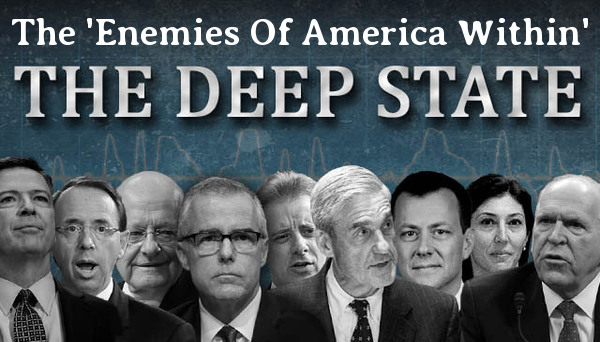
‘Impeachment’ is nothing less than a full-scale Communist coup attempt by treasonous Democrats who long ago sold out America and the American people for Globalism | Natural News

Editor’s Note: This article is a bit extreme in its wording, but I include it here to document the tenor of the partisan debate about who did what. Is this a conspiracy of the Deep State & Globalists to undermine a duly elected President of the United States and remove him from office? You decide.

In an excellent new story over at CD Media titled “If You Were The Dem Organized Crime Family And About To Be Prosecuted For An Illegal Coup, What Would You Do?” that Whatfinger News had linked to on Wednesdayauthor L. Todd Wood, a graduate of the U.S. Air Force Academy who flew special operations helicopters supporting SEAL Team 6 and Delta Force, argues that criminal Democrats and their enablers within the mainstream media know what is coming and, desperate beyond words, their doomed-to-fail impeachment attempt of President Trump might be the only way to get them out of the huge mess that they are in.

(Article by Stefan Stanford republished from AllNewsPipeline.com)

With Susan Duclos reporting in this story on ANP on Wednesday that ‘the beginning of the end talk being babbled about by Democrats again in their drive to take down President Trump echoes that which they’ve been babbling on now about for nearly 3 years since President Trump took office, even House Democrat Jeff Van Drew knows that “at the end of the day, all we’re going to have is a failed impeachment“.

Yet as Tom Luongo so perfectly points out in this new story republished at Zero Hedge titled “The Coup Has Begun – The Empire Strikes Back Everywherethere are no coincidences in politics. Everything happens on a particular schedule. So when I see a day as crazy as today I have to ask the question, “Why this, why now?”

And as we see in his story, what’s happening politically is by no means just regional here in America – it’s happening all around the world, helping to prove the ‘global nature‘ of ‘globalism‘ and the fact that the globalists are ‘digging in‘ at a time when President Trump just ‘blistered‘ socialism and globalism at the United Nations. From Luongo’s story.:

Look at the headlines and you’ll see what I’m talking about. All of these things happened since I woke up at 7:30am Monday morning in Florida:

  • The British Supreme Court just arrogated unprecedented power to itself by inserting itself into any dispute between the Government and Parliament. This upends more than 300 years of constitutional process.
  • The Democrats have announced they will pursue impeachment charges against President Trump because an unverified, hearsay whistleblower made a complaint about a phone call between Trump and Ukrainian President Volodymyr Zelenski. Impeachment odds soared overnight as someone was tipped off about the Democrats’ plan.
  • Bitcoin’s hashrate mysteriously flash-crashed more than 40% presaging a massive $1500 drop in price.
  • Donald Trump delivered a blistering critique of socialism at the United Nations General Assembly. Too bad he’s nearly as bad as the ones he’s fighting on the far left.
  • Europe’s Trio of Faded Glory — The UK, France and Germany — joined in the chorus of unverified condemnation of Iran in the attack on the Saudi oil field on the 14th.
  • The Federal Reserve continues to bail out banks to the tune of $65 to $75 billion per day through overnight repo operations that no one can give us an explanation as to why they’re needed.
  • This feels to me like a multi-level coup against those that dare stand athwart the global power structure. Both British and American leadership institutions are under sincere attack with these moves.

As we’ll explore in the rest of this ANP story, with everything else that we’ve been watching unfolding in America over the past decade+, one could easily argue that what we’ve been witnessing over the past several years since President Trump was voted into office has been a full-scale Communist coup attempt with Democrats and globalists never, ever believing that Hillary Clinton would lose in 2016 and their beliefs they’d be ‘protected’ from their crimes of treason and completely selling out America and the American people forever.

As Doomer Doug‘ reported in this recent story titled “If Treason Prosper, Then None Dare Call It Treason, the final gasps of the attempted ‘coup d’etat‘ to remove President Trump are now underway with Doug warning in his story that the end results of this could be complete chaos and anarchy in America, potentially leading to Civil War with Democrats insanely still believing they can do no wrong while attempting to overthrow the results of the US election for more than 2 years running now with the ‘coup attempt‘ led by people such as Communist-voting John Brennan.

Read more at: AllNewsPipeline.com

Source: Natural News
Trump goes to the United Nations to argue against everything it stands for — again | Vox

Editor’s Note: This article is a bit sarcastic, as we now expect from many jaded journalists these days, but it does convey the importance of national sovereignty. All nations should put themselves first, look after their own best interests and the welfare of their people instead of imagining that one day a global socialist state will provide for them. This is an important tide shift towards a United Nations of sovereign countries, independent and free. May it become so!

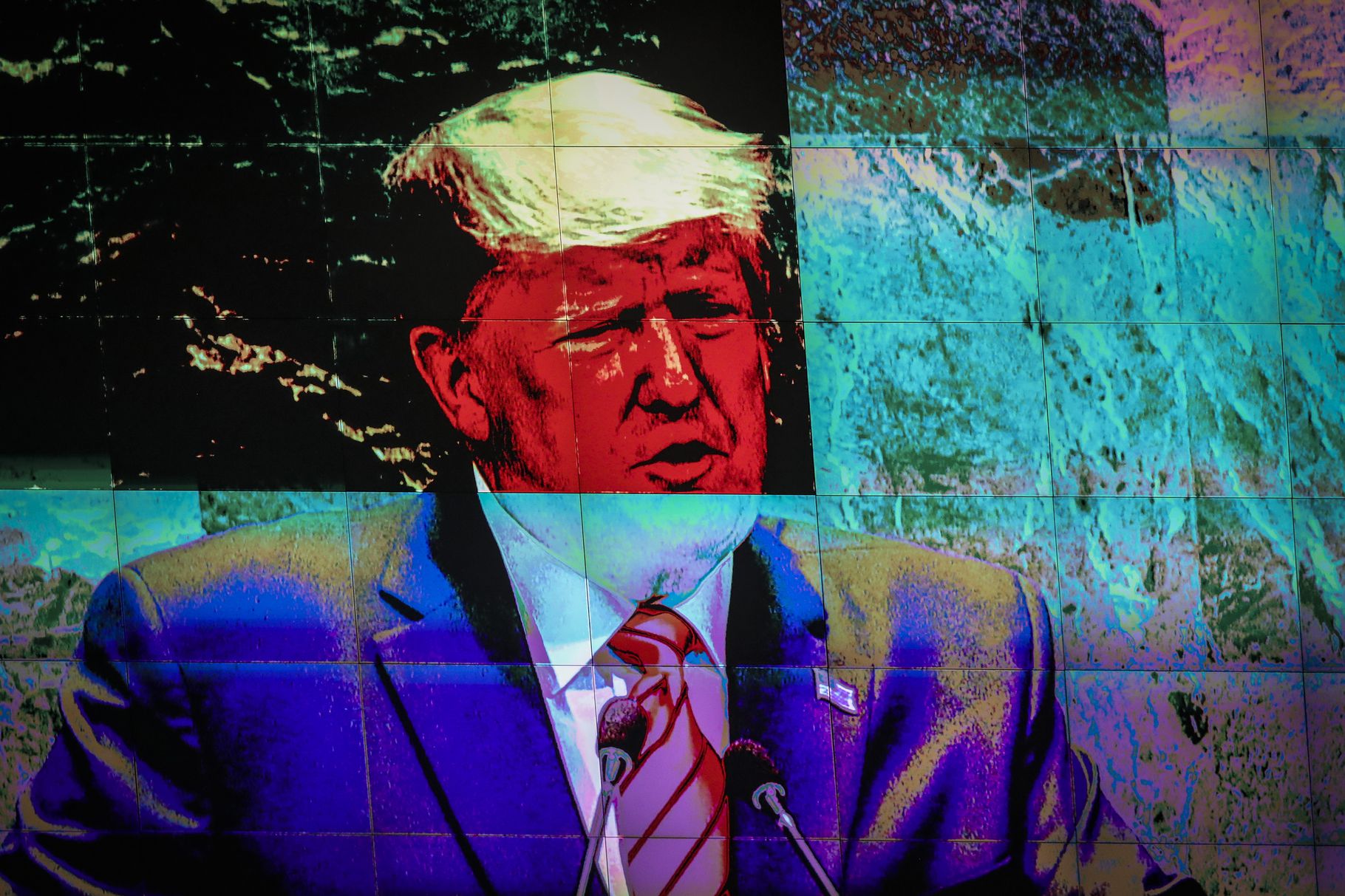
UNITED NATIONS, New York — In his third annual speech to the United Nations General Assembly, President Donald Trump delivered a clear message in favor of nationalism and national sovereignty and against globalism.

But three years into Trump’s presidency, that kind of rhetoric is no longer as shocking as it once was. Most of the world has heard it from him before.

Trump, in an oddly subdued speech in New York on Tuesday, reprised his case that all nations should exert their sovereignty, protect their borders, and reject any mutual and international cooperation that doesn’t put their country’s own interests first. For Trump, it’s “America First;” for everyone else it’s “[Insert Country Here] First.”

“If you want democracy, hold on to your sovereignty,” Trump said. “And if you want peace, love your nation.”

Trump touted the “great” new trade deals he’s working on and lambasted China’s trade practices. He criticized the Iranian regime for its “bloodlust.” He tried to elevate his stalled diplomacy with North Korea. He condemned the socialist regime of Nicolás Maduro in Venezuela. He denounced illegal immigration and even made time to complain about perceived censorship of conservative viewpoints by social media companies and to attack social justice advocates.

It was classic Trump — only without the enthusiasm he usually displays when discussing these pet topics. If anything, Trump seemed bored by his own speech.

There were two rare but notable exceptions: Trump’s stern notice to China that the US is closely watching how it handles the unrest in Hong Kong, and his call to end the criminalization of homosexuality around the world.

The rest, though, was standard Trump fare, and few of the world leaders gathered to hear him speak seemed surprised or rattled by his words. He couldn’t even manage to garner any of last year’s surprised laughs.

Trump’s schtick isn’t shocking anymore. But it shows just how much of an outlier the US is.

“The future does not belong to globalists; it belongs to patriots,” Trump said at the start of his speech.

It seemed like a throwaway line but it was actually a clear articulation of what Trump and leaders of his ilk have been arguing for the past few years: Populist nationalism is the future and multinational cooperation and mutual trust is the past — even if that’s the very vision the United Nations is trying to promote and protect.

And that message has permeated. Brazilian President Jair Bolsonaro, who spoke shortly before Trump, cited the US president’s defense of the sanctity of national sovereignty to push back against worldwide criticism of Bolsonaro’s handling of the Amazon fires. “They even called into question that which we hold as a most sacred value, our sovereignty,” Bolsonaro said at one point.

Trump was sandwiched between a slew of authoritarians and wanna-be authoritarians (Bolsonaro before and Egypt’s Abdel Fattah el-Sisi and then Turkey’s Recep Tayyip Erdoğan afterward), and while the US president paid lip service to democracy, his defense of it didn’t fit with his nationalistic rhetoric.

Trump and some of these other speeches stood in stark contrast to that of UN Secretary-General António Guterres, who addressed the crowd before the world leaders began to take the stage and warned of the “disquiet” currently plaguing the world.

He was mostly referring to the world’s problems — armed conflicts, increasing inequality, the threat of climate change. But Guterres’s argument is that nations need to band together to address these challenges and to promote the rights of all citizens, no matter their homeland. Guterres believes the forum to do so is the United Nations.

Trump’s argument is, as it always has been, that every country needs to look after itself.

Source: Vox

Bernie Sanders unveils comprehensive $16.3 trillion Green New Deal plan amid climate crisis | CNN

Editor’s Note: I include this post as an interesting conversation starter, but do not consider the Green New Deal a sound proposal for addressing climate change (unless you intend on bankrupting the country to achieve it). 

By Gregory King

Sen. Bernie Sanders on Thursday added progressive meat to the bones of the Green New Deal with the release of his comprehensive $16.3 trillion climate change program ahead of a campaign stop in Paradise, California, the city leveled by a devastating 2018 wildfire.

Sanders was an early backer of the activist-inspired Green New Deal framework and introduced, with Reps. Alexandria Ocasio-Cortez and Earl Blumenauer, a resolution in July to declare climate change a national emergency.

“Young people, advocates, tribes, cities and states all over this country have already begun this important work,” the campaign says in its new pitch, “and we will continue to follow their lead.”

The Sanders plan channels the rhetoric of the climate movement, calling for a World War II-style mobilization to halt and reverse the effects of global warming over a decade. In the process, the campaign claims, it would create 20 million new jobs in “steel and auto manufacturing, construction, energy efficiency retrofitting, coding and server farms, and renewable power plants.” Sanders’ blueprint will be compared to proposals put forward by Sen. Elizabeth Warren and Washington Gov. Jay Inslee, who released a robust suite of cross-sector plans before ending his campaign on Wednesday.

In a CNN poll from late April, 96% of potential Democratic voters said “aggressive action to slow the effects of climate change” was somewhat or very important — the closest to a unanimous finding in the survey. The Democratic National Committee has so far not hosted a climate-specific debate, but 10 of the 2020 primary candidates will take part in a September 4 CNN town hall focused exclusively on the crisis.

During his time in office, President Donald Trump has rolled back dozens of environmental rules and regulations. Sanders in his plan promises to “aggressively enforce” the Clean Air Act, through the Environmental Protection Agency, to restrict dangerous emissions.

But the proposals unveiled Thursday go much further.

Sanders’ prime targets include meeting the Intergovernmental Panel on Climate Change’s goal of 100% renewable energy for electricity and transportation by 2030; cutting domestic emissions by 71% over that period; creating a $526 billion electric “smart grid;” investing $200 billion in the Green Climate Fund; and prioritizing what activists call a “just transition” for fossil fuel workers who would be dislocated during the transition.

The Vermont independent would also cut off billions in subsidies to fossil fuel companies and impose bans on extractive practices, including fracking and mountaintop coal mining, while halting the import and export of coal, oil and natural gas. Additionally, he would use his Justice Department and the Securities and Exchange Commission to pursue criminal and civil cases against energy companies that hid or withheld information — over decades — about the damage their businesses were doing to the environment.

Sanders in 2015 and 2016, during his first presidential campaign, memorably called climate change the foremost national security threat. In recent remarks on the campaign trail, he has promised to reassert US power internationally by taking a more assertive role in climate talks.

“Climate change cannot only be addressed by the United States. It is a global issue,” Sanders said this week in Iowa. “But my promise to you is, instead of ignoring this issue as Trump does, I will help lead the world in bringing countries together to address the issue.”

The proposal is the most in-depth to date from Sanders, who says it will “pay for itself over 15 years” and includes new details on the potential funding sources.

The most significant, at an estimated $6.4 trillion, would come from revenue generated by the sale of clean energy — which will be administered by publicly owned utilities — between 2023 and 2035. Before that, Sanders would cut military spending used to protect global energy interests by more than $1.2 trillion while hitting up fossil fuel companies for more than $3 trillion in “litigation (against polluters), fees, and taxes.” An additional $2.3 trillion, the campaign says, would be raised from the taxes paid on the 20 million new jobs it promises to create.

Part of that money would go toward mitigating the damage already done by climate change — with $162 billion set aside for coastal communities under threat and an additional $18 billion going toward firefighters to combat a spike in dangerous wildfires like the one in Paradise.

To deliver the political will for such a radical transformation, Sanders, as he has throughout his presidential campaigns, is counting on the youth-led activists and progressive movements that he has often inspired and, now, hopes to count on as a source of electoral strength.
Their continued vigor and ability to successfully pressure elected officials is written into the plan.

“We will do this,” the campaign says, “by coming together in a truly inclusive movement that prioritizes young people, workers, indigenous peoples, communities of color, and other historically marginalized groups to take on the fossil fuel industry and other polluters to push this over the finish line and lead the globe in solving the climate crisis.”

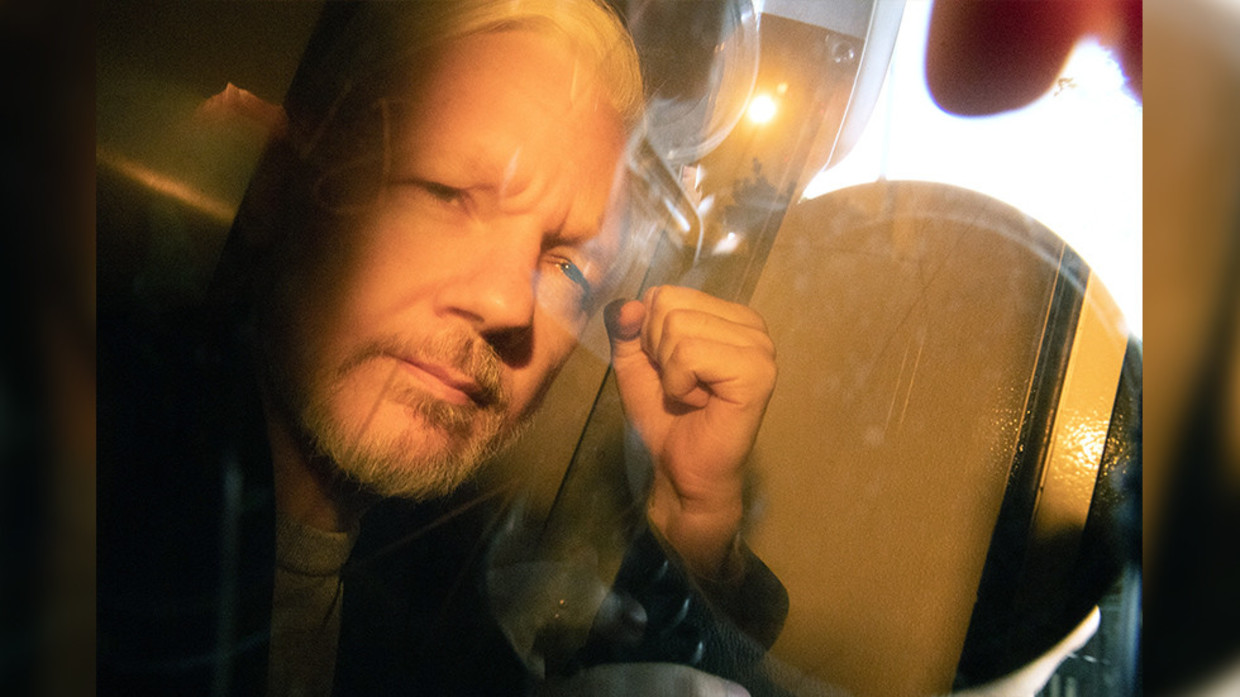
Assange psychologically tortured to ‘breaking point’ by ‘democratic states,’ UN rapporteur tells RT | RT.com

Jailed WikiLeaks co-founder Julian Assange shows clear signs of degrading and inhumane treatment which only adds to his deteriorating health, UN Special Rapporteur on Torture Nils Melzer told RT.

Assange has “all the symptoms typical for a person who has been exposed to prolonged psychological torture,” Melzer told RT’s Afshin Rattansi. This adds to the toll of his deteriorating physical state caused by a lack of adequate medical care for several years, he said.

Melzer said he was judging from two decades of experience in working with POWs and political prisoners, and only after applying “scientific” UN methods to assess Assange’s condition. But the journalist’s case still “shocked” him.

An individual has been isolated and singled out by several democratic states, and persecuted systematically… to the point of breaking him.

Earlier this month, a UK court sentenced the WikiLeaks co-founder to nearly a year in jail for skipping bail in 2012. The courts are now deciding whether to extradite Assange to the US where he is wanted for 17 charges under the Espionage Act. He can end up serving up to 175 years in prison if proven guilty.

Also in May, Sweden reopened an investigation into the allegations of rape by Assange, which he denies. The probe was originally dropped in 2017.

WikiLeaks warned that the journalist’s health had “significantly deteriorated” during the seven years he spent living in the Ecuadorian Embassy in London, and continued to worsen after he was evicted in April and placed in a British prison. According to WikiLeaks, he was recently moved to the prison’s “hospital wing.”


European Parliament elections: 5 takeaways from the results | NBC News

The dust has settled on the world’s second largestdemocratic exercise, a continent-wide vote that has left Europe’s political landscape reshaped.

Last week, some 373 million citizens across 28 countries took part in elections for the European Parliament, which makes laws that bind the political and economic bloc. The results rolled in on Sunday night.

Far-right populists had some wins, but it wasn’t quite the dramatic, widespread surge seen in recent elections at the national and local level across the continent.

What is clear is that the mainstream parties from the center-left and center-right hemorrhaged votes, with much of their support going to a fragmented collection of environmentalists and pro-European Union liberals.

Here are five key takeaways.

1. The far-right surge never quite came

Steve Bannon, the former adviser to President Donald Trump, called for these elections to be a referendum endorsing his right-wing populist vision for Europe. But while there were some victories for this camp, the full-blown tsunami that some predicted failed to materialize.

Right-wing populists fell short of expectations in Austria, the Netherlands and Denmark, while Germany’s AfD party made only slight gains.

Even in France, where Marine le Pen’s National Rally came first, beating President Emmanuel Macron’s En Marche party, its provisional vote share was down on the last European Parliament elections in 2014.

“The big story is that the nationalist populists have not managed to turn this into a referendum on the E.U.,” said Jose Ignacio Torreblanca, a senior policy fellow at the European Council on Foreign Relations, a Brussels-based think tank. “People like Bannon have failed.”

That said, while the gains might not have been as dramatic as some forecast, the election arguably cemented far-right populism as a European force that isn’t going away soon. Such parties are often anti-migrant, anti-Muslim and anti-E.U., or at least wish to radically reshape the bloc from within.

There were clear victories for the right in Poland, Hungary and Italy. “The rules are changing in Europe,” said Matteo Salvini, the leader of Italy’s far-right League party which got around 34 percent of the vote there. “A new Europe is born.”

Britain’s Brexit Party was also victorious, securing around one-third of the vote and relegating the ruling Conservatives to fifth place at a dismal 9 percent. However, the U.K. should perhaps be seen as a special case due to the country’s protracted and messy attempts to leave the European Union.

2. The collapse of the mainstream

For the first time, the traditional center-left and center-right parties will not have a majority in the European Parliament’s 751-seat chamber.

The Social Democrats and the European People’s Party, groupings which have dominated for years, lost 39 and 36 seats respectively, according to provisional results.

“This is a profound change,” said Janis A. Emmanouilidis, director of studies at the European Policy Centre, another Brussels-based think tank. “The two biggest parties have lost a significant number of seats.”

However, voters often use the E.U. elections to give major parties a bloody nose, secure in the knowledge that it will not cause upheaval in their own national parliaments.

Even so, Sunday’s results represented a seismic rejection of the traditional ruling parties across the continent.

“We are facing a shrinking center of the European Union parliament,” Manfred Weber, chairman of the European People’s Party said. “From now on, those who want to have a strong European Union have to join forces.”

The one exception was in Spain, where the Socialists looked set to gain 20 of the country’s 54 seats. The Socialists belong to the wider Social Democrats group, however, for whom the general outlook was far more bleak.

“If you lose an election, if you lose seats, you have to be modest,” added Frans Timmermans, the lead candidate for the Social Democrats. “We have lost seats and this means that we have to be humble.”

3. More than Green shoots

Riding something of an environmentalist wave washing over Europe, the continent’s Green group made big gains.

This was most evident in Germany, where the Greens doubled their provisional vote share to 21 percent and overtook the country’s traditional center-left Social Democrats in the process.

In France and Britain, the Greens also did well, placing third and fourth respectively. More subtly, environmental issues were given increased prominence in the manifestos of other parties, too.

This shift comes on the back of months of demonstrations demanding action over climate change. In May, the United Nations released a report warning 1 million species of plants and animals were under threat of extinction.

“We will work tirelessly. For people. For Europe. For our planet!” the European Greens tweeted.

4. Pro-E.U. liberals make gains

Another group that mopped up support from the traditional parties was the pro-Europe, pro-business liberal centrists.

Parties allied with the Alliance of Liberals and Democrats for Europe — known as ALDE — looked set to increase their number of seats from 68 to 109, although this was largely thanks to Macron’s En Marche party joining them.

ALDE is led by Guy Verhofstadt, one of the E.U.’s most ardent defenders against populist forces that wish to dismantle or disrupt the union.

The boost in support suggests that voters, especially young people, came out to back their side of the argument.

“When Europe is threatened, you have seen the youth mobilizing to defend it,” said Torreblanca at the European Council on Foreign Relations.

The BBC also reported that turnout in the U.K. surged in areas that supported the country staying in the E.U. in the 2016 Brexit referendum. Britain’s Liberal Democrats came second with 20 percent of the vote. They were one of the parties to explicitly oppose Brexit, and gained huge support in Remain-backing areas, including beating Labour in that party’s erstwhile stronghold of London.

5. Good luck trying to govern now

This was the first time in Europe’s history that turnout for these elections has risen, climbing from 43 percent to an encouraging 51 percent.

“This is noteworthy,” said Emmanouilidis at the European Policy Centre, calling the leap “remarkably higher.”

Yet the results spell a European Parliament that is going to be far more fragmented than it has been in recent years.

The two centrist giants bled support and will be unable to form the kind of “grand coalition” that they had before. Instead they might need another coalition partner or two, meaning more compromise and room for disagreement on key issues.

Timmermans, of the Social Democrats, has already ruled out attempting to build a coalition with the far-right, calling instead for a “progressive” grouping to be formed.

“It will become quite messy,” said Emmanouilidis, describing attempts to find consensus in Brussels “an uphill struggle” at the best of times.

Source: NBC News


Unsealed documents shed new light on efforts to verify Trump-Russia dossier | CNN

Documents unsealed this week lend credence to a theory about Russian election meddling that was first put forward in the Trump-Russia dossier, however they do not corroborate the more explosive claims that the Trump campaign colluded with the Kremlin in the 2016 campaign.

A report from a retired agent who worked for the FBI’s cyber division, submitted as expert testimony in a civil lawsuit, presented new evidence about how Russian intelligence might have exploited a private web hosting company when it fooled top Democratic targets into giving up their passwords. The fruits of those hacks formed the basis of the WikiLeaks email dumps that roiled the race.

The controversial dossier had accused Russian hackers of using those companies, Webzilla and its parent company XBT, as part of their scheme to meddle in the presidential election. The memos, written by a retired British spy, Christopher Steele, also claimed that Russian entrepreneur Aleksej Gubarev assisted the cyberattacks “under duress” from Russian intelligence.

Gubarev vehemently denied those allegations and sued BuzzFeed for defamation after it published the dossier. That prompted BuzzFeed to commission the expert witness report from FTI Consulting’s Anthony Ferrante, who is also a CNN contributor. A federal judge dismissed the lawsuit in December, and ordered that dozens of documents be released to the public this week. The judge ruled on First Amendment grounds and did not assess the hacking-related allegations.

Details of the report

The FTI report concluded that one of the hyperlinks the Russians designed to trick Hillary Clinton’s campaign chairman John Podesta into giving up his email password was created on an internet protocol address owned by Root S.A., an XBT subsidiary.
In his deposition, retired FBI cyber official Ferrante admitted the evidence didn’t conclusively show XBT was aware of the Russian campaign against Democrats.

“I will further state that other than the fact that XBT employees did little to nothing to detect, stop and prevent the significant malicious activity, I have no evidence of them actually sitting behind a keyboard,” he said.

Gubarev’s team argued that an internet hosting company couldn’t be held responsible for the activities of people who use its services.
A rebuttal on Gubarev’s behalf, filed by a former CIA cybersecurity expert, Eric Cole, stressed that he and his staff were frequently unaware of the specific activity conducted on its servers.

“XBT/Webzilla is not responsible for every bit of data that a bad actor passes over its infrastructure any more than a post office is responsible for the actions of the Unabomber,” Cole wrote.

“Special Counsel Robert Mueller indicted the 12 Russians responsible for the hacking. Those are the folks responsible, not us,” Evan Fray-Witzer, an attorney for Gubarev, told CNN. The 11-count indictment against those hackers, which was filed in July 2018, did not mention Webzilla or XBT.

BuzzFeed News characterized the report as vindication of its decision to publish the Trump-Russia dossier. “We knew already that publishing the dossier was in the public interest,” spokesperson Matt Mittenthal told CNN. “Now, because BuzzFeed News published the dossier, we’re learning more about the facts of foreign influence in the 2016 presidential election.”

Gubarev sued BuzzFeed in 2017 and sought damages for defamation. As part of the legal process, some of the key players in the dossier saga were deposed, including Steele.

The court unsealed one page of that deposition, which happened last year in London. Steele testified that he tried to verify the allegations against Gubarev by doing, among other things, an “open source search,” which would likely include scouring news clippings and public records.

Steele has years of experience as a British spy in Moscow and has been a trusted source for the FBI. Allies of Democratic nominee Clinton funded Steele’s investigation in 2016. But he was so concerned by his findings that he shared his memo with senior US and UK officials.

In her decision to throw out the case, the judge confirmed that BuzzFeed got the dossier from an associate of Republican Sen. John McCain in December 2016, weeks after the election.

The memos were circulating in Washington, and CNN soon broke the story that senior US intelligence officials had briefed President-elect Trump and President Barack Obama about some of the unverified allegations. Hours later, BuzzFeed published the complete dossier online.
The most salacious allegations in the dossier remain unverified to this day. But the claims that form the bulk of the memos have held up over time, or at least proved to be partially true.

This notably includes Steele’s claim that Russian President Vladimir Putin oversaw an effort to interfere in the 2016 election. It also includes allegations of secret contacts between Trump’s team and the Russians during the campaign. Steele gathered this stunning information months before the Russian meddling campaign was publicly confirmed by US intelligence agencies and in court filings from special counsel Robert Mueller.

Kevin Collier, a cybersecurity reporter for CNN, previously worked for BuzzFeed News.

Source: CNN & BuzzFeed News

FBI releases part of Russia dossier summary used to brief Trump, Obama | Politico

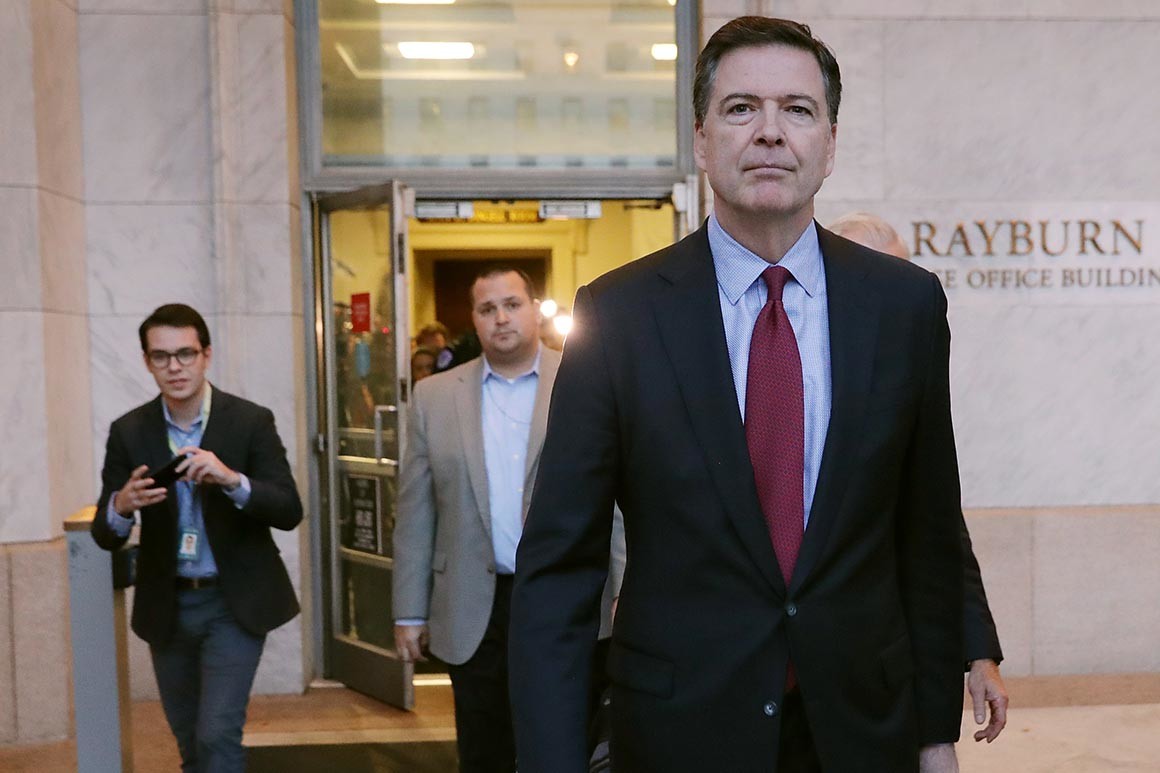
The FBI released for the first time Friday night a two-page summary former FBI Director James Comey used to brief President-elect Donald Trump nearly two years ago on a so-called dossier about Trump’s ties to Russia.

The version made public Friday could reignite previous criticism from Republicans and Trump allies that the FBI was too vague in its description of the fact that the dossier was funded by the campaign of Trump’s nemesis in the 2016 presidential election, Democratic nominee Hillary Rodham Clinton, as well as the Democratic National Committee.

Comey, who was fired by Trump in May 2017, acknowledged during a book tour earlier this year that he did not inform Trump who paid for the research.

The brief passage the FBI left unredacted in the newly released memo gives some background on the former British intelligence officer who compiled the dossier, Christopher Steele, although Steele’s name does not actually appear in the newly released version. The released portion of the synopsis is vague about who financed the project, referring to it as sponsored by “private clients.”

“An FBI source … volunteered highly politically sensitive information … on Russian influence efforts aimed at the US presidential election,” the memo labeled as “Annex A” says. “The source is an executive of a private business intelligence firm and a former employee of a friendly intelligence service who has been compensated for previous reporting over the past three years. The source maintains and collects information from a layered network of identified and unidentified subsources, some of which has been corroborated in the past. The source collected this information on behalf of private clients and was not compensated for it by the FBI.”

“The source’s reporting appears to have been acquired by multiple Western press organizations starting in October,” the document from January 2017 declares.

Comey has said he did not show or give Trump the memo, but used it as a reference when briefing him on the dossier, which U.S. intelligence officials feared Russia might try to use as blackmail against Trump. The synopsis was also used to brief President Barack Obama, officials have said.

Republicans had previously complained that the FBI failed to inform a federal court about the dossier’s provenance — that Steele’s work was commissioned by Fusion GPS, a research firm that had been hired by the Clinton campaign’s law firm, Perkins Coie, to dig up information about Trump’s business relationships overseas. Based in part on the dossier’s information, the court granted an FBI application to surveil a former Trump campaign associate in October 2016.

Aspects of the FBI’s surveillance application have since been released and revealed that the FBI did inform the court that Steele had political animus toward Trump and that it was funded by a politically motivated backer.

The document was released Friday in response to a Freedom of Information Act lawsuit brought by a POLITICO reporter and the James Madison Project, a pro-transparency group.

In January, U.S. District Court Judge Amit Mehta ruled that that the FBI was legally justified in refusing to confirm or deny the existence of any records related to the dossier, despite several tweets from President Donald Trump that described the document as “fake” or “discredited.”

However, shortly after that ruling, Trump declassified a House Intelligence Committee memo that included various claims about the FBI’s handling of the dossier. In August, Mehta said the official release of that material vitiated the FBI’s ability to claim that it had offered no public confirmation of its role in vetting or verifying the dossier, a collection of accurate, inaccurate, unverified and sometimes salacious claims about ties between Russia and various figures in Trump’s circle.

“It remains no longer logical nor plausible for the FBI to maintain that it cannot confirm nor deny the existence of documents” related to attempts to verify information in the dossier, Mehta wrote.

The FBI withheld the remainder of the two-page synopsis on a variety of grounds, including that the material remains classified either Secret or Top Secret. The law enforcement agency also indicated the information is exempt from release because it pertains to ongoing investigations or court proceedings, originated with a confidential source or describes confidential investigative techniques or procedures.

The FBI said Friday it lacked any records indicating final conclusions about any information in the dossier, said Brad Moss, one of the attorneys pressing for release of the records.

“After two years of legal games, the FBI today finally confirmed two pieces of speculation about the scandalous allegations regarding which Director Comey briefed President Trump in January 2017: all of those allegations remain part of the ongoing Russian ‘collusion’ investigation, and the FBI has not rendered final determinations about the accuracy of any of them,” Moss said. “Far from being debunked, the issues that raised concerns for the Intelligence Community in 2017 remain unresolved to this day.”

Moss said he plans to challenge the FBI’s withholdings in the case and to ask Mehta to order more of the information released.

Source: Politico

U.S. has spent six trillion dollars on wars that killed half a million people since 9/11 | Newsweek

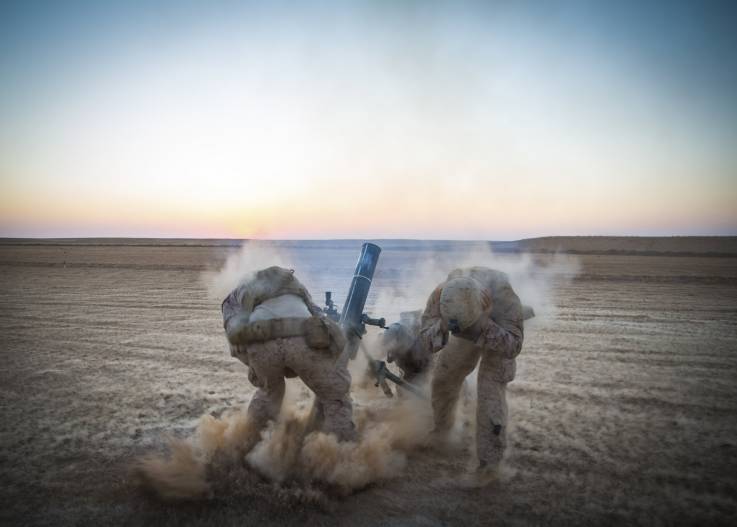
The United States has spent nearly $6 trillion on wars that directly contributed to the deaths of around 500,000 peoplesince the 9/11 attacks of 2001.

Brown University’s Watson Institute for International and Public Affairs published its annual “Costs of War” report Wednesday, taking into consideration the Pentagon’s spending and its Overseas Contingency Operations account, as well as “war-related spending by the Department of State, past and obligated spending for war veterans’ care, interest on the debt incurred to pay for the wars, and the prevention of and response to terrorism by the Department of Homeland Security.”

The final count revealed, “The United States has appropriated and is obligated to spend an estimated $5.9 trillion (in current dollars) on the war on terror through Fiscal Year 2019, including direct war and war-related spending and obligations for future spending on post 9/11 war veterans.”

“In sum, high costs in war and war-related spending pose a national security concern because they are unsustainable,” the report concluded. “The public would be better served by increased transparency and by the development of a comprehensive strategy to end the wars and deal with other urgent national security priorities.”

The U.S. embarked on a global war on terror following the 9/11 attacks that killed nearly 3,000 and were orchestrated by Islamist militant group Al-Qaeda. Weeks later, the U.S. led an invasion of Afghanistan, which at the time was controlled by Al-Qaeda ally the Taliban. In March 2003, Washington overthrew Iraqi President Saddam Hussein, accusing him of developing weapons of mass destruction and harboring U.S.-designated terrorist organizations.

Despite initial quick victories there, the U.S. military has been plagued by ongoing insurgencies these two countries and expanded counterterrorism operations across the region, including Libya, Pakistan, Somalia and Yemen. In 2014, the U.S. gathered an international coalition to face the Islamic State militant group (ISIS), which arose out of a post-invasion Sunni Muslim insurgency in Iraq and spread to neighboring Syria and beyond.

Wednesday’s report found that the “US military is conducting counterterror activities in 76 countries, or about 39 percent of the world’s nations, vastly expanding [its mission] across the globe.” In addition, these operations “have been accompanied by violations of human rights and civil liberties, in the US and abroad.”

Overall, researchers estimated that “between 480,000 and 507,000 people have been killed in the United States’ post-9/11 wars in Iraq, Afghanistan, and Pakistan.” This toll “does not include the more than 500,000 deaths from the war in Syria, raging since 2011” when a West-backed rebel and jihadi uprising challenged the government, an ally of Russia and Iran. That same year, the U.S.-led NATO Western military alliance intervened in Libya and helped insurgents overthrowlongtime leader Muammar el-Qaddafi, leaving the nation in an ongoing state of civil war.

The combined human cost for the U.S. throughout its actions in Afghanistan, Iraq and Pakistan was 6,951 troops, 21 civilians and 7,820 contractors.

“While we often know how many US soldiers die, most other numbers are to a degree uncertain. Indeed, we may never know the total direct death toll in these wars. For example, tens of thousands of civilians may have died in retaking Mosul and other cities from ISIS but their bodies have likely not been recovered,” the report noted.

“In addition, this tally does not include ‘indirect deaths.’ Indirect harm occurs when wars’ destruction leads to long term, ‘indirect,’ consequences for people’s health in war zones, for example because of loss of access to food, water, health facilities, electricity or other infrastructure,” it added.

In February, President Donald Trump estimated that “we have spent $7 trillion in the Middle East,” saying “what a mistake” it was. Weeks later, he reportedly told his military advisers to prepare a plan to withdraw from Syria as the war against ISIS entered its final phases, though senior Washington officials have since expanded the U.S. mission— considered illegal by the Syrian government and its allies—to include countering Iran and its allies.

This article has been updated to include a Statista chart detailing the findings of the Watson Institute for International and Public Affairs’ study.

Source: Newsweek

JFK to 911 Everything Is A Rich Man’s Trick (film) | YouTube & IMDB

Authoritatively written and narrated by Francis Richard Conolly, the film begins its labyrinthine tale during the era of World War I, when the wealthiest and most powerful figures of industry discovered the immense profits to be had from a landscape of ongoing military conflict. The film presents a persuasive and exhaustively researched argument that these towering figures formed a secret society by which they could orchestrate or manipulate war-mongering policies to their advantage on a global scale, and maintain complete anonymity in their actions from an unsuspecting public. Conolly contends that these sinister puppet masters have functioned and thrived throughout history – from the formation of Nazism to the build-up and aftermath of September 11.

Source: IMDB & YouTube

The Coming Collapse | Common Dreams

whitehouseThe Trump administration did not rise, prima facie, like Venus on a half shell from the sea. Donald Trump is the result of a long process of political, cultural and social decay. He is a product of our failed democracy. The longer we perpetuate the fiction that we live in a functioning democracy, that Trump and the political mutations around him are somehow an aberrant deviation that can be vanquished in the next election, the more we will hurtle toward tyranny. The problem is not Trump. It is a political system, dominated by corporate power and the mandarins of the two major political parties, in which we don’t count. We will wrest back political control by dismantling the corporate state, and this means massive and sustained civil disobedience, like that demonstrated by teachers around the country this year. If we do not stand up we will enter a new dark age.

The Democratic Party, which helped build our system of inverted totalitarianism, is once again held up by many on the left as the savior. Yet the party steadfastly refuses to address the social inequality that led to the election of Trump and the insurgency by Bernie Sanders. It is deaf, dumb and blind to the very real economic suffering that plagues over half the country. It will not fight to pay workers a living wage. It will not defy the pharmaceutical and insurance industries to provide Medicare for all. It will not curb the voracious appetite of the military that is disemboweling the country and promoting the prosecution of futile and costly foreign wars. It will not restore our lost civil liberties, including the right to privacy, freedom from government surveillance, and due process. It will not get corporate and dark money out of politics. It will not demilitarize our police and reform a prison system that has 25 percent of the world’s prisoners although the United States has only 5 percent of the world’s population. It plays to the margins, especially in election seasons, refusing to address substantive political and social problems and instead focusing on narrow cultural issues like gay rights, abortion and gun control in our peculiar species of anti-politics.

In an open and democratic political process, one not dominated by party elites and corporate money, these people would not hold political power. They know this. They would rather implode the entire system than give up their positions of privilege.

This is a doomed tactic, but one that is understandable. The leadership of the party, the Clintons, Nancy Pelosi, Chuck Schumer, Tom Perez, are creations of corporate America. In an open and democratic political process, one not dominated by party elites and corporate money, these people would not hold political power. They know this. They would rather implode the entire system than give up their positions of privilege. And that, I fear, is what will happen. The idea that the Democratic Party is in any way a bulwark against despotism defies the last three decades of its political activity. It is the guarantor of despotism.

Trump has tapped into the hatred that huge segments of the American public have for a political and economic system that has betrayed them. He may be inept, degenerate, dishonest and a narcissist, but he adeptly ridicules the system they despise. His cruel and demeaning taunts directed at government agencies, laws and the established elites resonate with people for whom these agencies, laws and elites have become hostile forces. And for many who see no shift in the political landscape to alleviate their suffering, Trump’s cruelty and invective are at least cathartic.

Trump, like all despots, has no ethical core. He chooses his allies and appointees based on their personal loyalty and fawning obsequiousness to him. He will sell anyone out. He is corrupt, amassing money for himself—he made $40 million from his Washington, D.C., hotel alone last year—and his corporate allies. He is dismantling government institutions that once provided some regulation and oversight. He is an enemy of the open society. This makes him dangerous. His turbocharged assault on the last vestiges of democratic institutions and norms means there will soon be nothing, even in name, to protect us from corporate totalitarianism.

But the warnings from the architects of our failed democracy against creeping fascism, Madeleine Albright among them, are risible. They show how disconnected the elites have become from the zeitgeist. None of these elites have credibility. They built the edifice of lies, deceit and corporate pillage that made Trump possible. And the more Trump demeans these elites, and the more they cry out like Cassandras, the more he salvages his disastrous presidency and enables the kleptocrats pillaging the country as it swiftly disintegrates.

It refuses to critique or investigate the abuses by corporate power, which has destroyed our democracy and economy and orchestrated the largest transfer of wealth upward in American history.

The press is one of the principal pillars of Trump’s despotism. It chatters endlessly like 17th-century courtiers at the court of Versailles about the foibles of the monarch while the peasants lack bread. It drones on and on and on about empty topics such as Russian meddling and a payoff to a porn actress that have nothing to do with the daily hell that, for many, defines life in America. It refuses to critique or investigate the abuses by corporate power, which has destroyed our democracy and economy and orchestrated the largest transfer of wealth upward in American history. The corporate press is a decayed relic that, in exchange for money and access, committed cultural suicide. And when Trump attacks it over “fake news,” he expresses, once again, the deep hatred of all those the press ignores. The press worships the idol of Mammon as slavishly as Trump does. It loves the reality-show presidency. The press, especially the cable news shows, keeps the lights on and the cameras rolling so viewers will be glued to a 21st-century version of “The Cabinet of Dr. Caligari.” It is good for ratings. It is good for profits. But it accelerates the decline.

All this will soon be compounded by financial collapse. Wall Street banks have been handed $16 trillion in bailouts and other subsidies by the Federal Reserve and Congress at nearly zero percent interest since the 2008 financial collapse. They have used this money, as well as the money saved through the huge tax cuts imposed last year, to buy back their own stock, raising the compensation and bonuses of their managers and thrusting the society deeper into untenable debt peonage. Sheldon Adelson’s casino operations alone got a $670 million tax break under the 2017 legislation. The ratio of CEO to worker pay now averages 339 to 1, with the highest gap approaching 5,000 to 1. This circular use of money to make and hoard money is what Karl Marx called “fictitious capital.” The steady increase in public debt, corporate debt, credit card debt and student loan debt will ultimately lead, as Nomi Prins writes, to “a tipping point—when money coming in to furnish that debt, or available to borrow, simply won’t cover the interest payments. Then debt bubbles will pop, beginning with higher yielding bonds.”

An economy reliant on debt for its growth causes our interest rate to jump to 28 percent when we are late on a credit card payment. It is why our wages are stagnant or have declined in real terms—if we earned a sustainable income we would not have to borrow money to survive. It is why a university education, houses, medical bills and utilities cost so much. The system is designed so we can never free ourselves from debt.

However, the next financial crash, as Prins points out in her book “Collusion: How Central Bankers Rigged the World,” won’t be like the last one. This is because, as she says, “there is no Plan B.” Interest rates can’t go any lower. There has been no growth in the real economy. The next time, there will be no way out. Once the economy crashes and the rage across the country explodes into a firestorm, the political freaks will appear, ones that will make Trump look sagacious and benign.

And so, to quote Vladimir Lenin, what must be done?

We must invest our energy in building parallel, popular institutions to protect ourselves and to pit power against power. These parallel institutions, including unions, community development organizations, local currencies, alternative political parties and food cooperatives, will have to be constructed town by town. The elites in a time of distress will retreat to their gated compounds and leave us to fend for ourselves. Basic services, from garbage collection to public transportation, food distribution and health care, will collapse. Massive unemployment and underemployment, triggering social unrest, will be dealt with not through government job creation but the brutality of militarized police and a complete suspension of civil liberties. Critics of the system, already pushed to the margins, will be silenced and attacked as enemies of the state. The last vestiges of labor unions will be targeted for abolition, a process that will soon be accelerated given the expected ruling in a case before the Supreme Court that will cripple the ability of public-sector unions to represent workers. The dollar will stop being the world’s reserve currency, causing a steep devaluation. Banks will close. Global warming will extract heavier and heavier costs, especially on the coastal populations, farming and the infrastructure, costs that the depleted state will be unable to address. The corporate press, like the ruling elites, will go from burlesque to absurdism, its rhetoric so patently fictitious it will, as in all totalitarian states, be unmoored from reality. The media outlets will all sound as fatuous as Trump. And, to quote W.H. Auden, “the little children will die in the streets.”

As a foreign correspondent I covered collapsed societies, including the former Yugoslavia. It is impossible for any doomed population to grasp how fragile the decayed financial, social and political system is on the eve of implosion. All the harbingers of collapse are visible: crumbling infrastructure; chronic underemployment and unemployment; the indiscriminate use of lethal force by police; political paralysis and stagnation; an economy built on the scaffolding of debt; nihilistic mass shootings in schools, universities, workplaces, malls, concert venues and movie theaters; opioid overdoses that kill some 64,000 people a year; an epidemic of suicides; unsustainable military expansion; gambling as a desperate tool of economic development and government revenue; the capture of power by a tiny, corrupt clique; censorship; the physical diminishing of public institutions ranging from schools and libraries to courts and medical facilities; the incessant bombardment by electronic hallucinations to divert us from the depressing sight that has become America and keep us trapped in illusions. We suffer the usual pathologies of impending death. I would be happy to be wrong. But I have seen this before. I know the warning signs. All I can say is get ready.

Source: Common Dreams