Republican Judge Strikes Down Obama’s Immigration Order | ThinkProgress

By Ian Millhiser

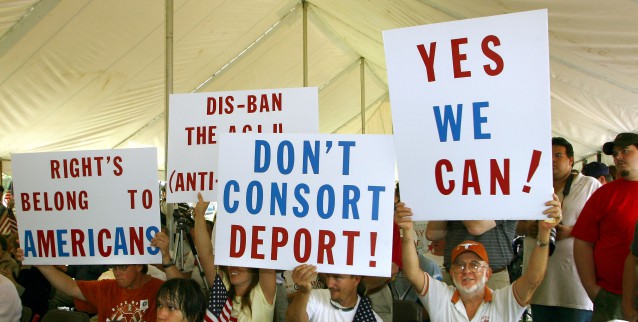
AntiImmigrationIn an extraordinary opinion that transforms a routine sentencing matter into a vehicle to strike down a politically controversial policy, a George W. Bush-appointed judge in Pennsylvania declared President Obama’s recently announced immigration policy unconstitutional on Tuesday. Because the policy “may” apply to a defendant who was awaiting sentencing of a criminal immigration violation, Judge Arthur Schwab decides that he must determine “whether the Executive Action is constitutional.” He concludes that it is not.

Schwab spends just five pages discussing his rationale for this conclusion, an unusually short amount of legal analysis for a complex question regarding the scope of the executive branch’s power to set enforcement priorities. Notably, Schwab also spends nearly three pages discussing quotes from President Obama which, the judge claims, indicate that Obama once thought his present actions are illegal — even though Schwab eventually admits that these quotes are “not dispositive of the constitutionality of his Executive Action on immigration.”

Half of Schwab’s analysis of the Executive Action’s constitutionality is devoted to a strawman. Noting that Obama cited Congress’s failure to act on immigration in his speech announcing the new policy, Schwab devotes half of his analysis of the policy’s constitutionality to explaining that “Inaction by Congress Does Not Make Unconstitutional Executive Action Constitutional.” He’s right on this point, just as Schwab would be correct if he argued that President Obama’s authority to create this new policy does not come from a magic hat that Obama keeps in the Oval Office. But it’s somewhat curious that the judge feels the need to present Obama’s political rhetoric as if it were a constitutional argument and then tear that non-argument down.

The remainder of Schwab’s brief constitutional analysis concludes that the new policy “Goes Beyond Prosecutorial Discretion — It is Legislation.” Notably, however, Schwab cites no judicial precedents of any kind to support this conclusion.

One case that Schwab does not cite is Arizona v. United States, where the Supreme Court said that the executive branch has “broad discretion” in matters of deportation and removal. As Arizona explains, a “principal feature of the removal system is the broad discretion exercised by immigration officials.” Executive branch officials, moreover, “must decide whether it makes sense to pursue removal at all.”

Notably, Arizona also indicates that this broad discretion flows from federal immigration law — i.e. laws that were enacted by Congress. This matters because Schwab’s opinion concludes that Obama’s “unilateral” policy “violates the separation of powers provided for in the United States Constitution as well as the Take Care Clause.” In essence, Schwab concludes that the president lacks the authority to act in the absence of authorization by Congress. Schwab does not even discuss the possibility that Obama’s actions may actually be authorized by Congress. Thus, even if Schwab’s reading of the Constitution is correct — itself a questionable proposition — the judge does not even discuss another major source of law that can justify the president’s actions.

Another problem Schwab does not address in his constitutional analysis is how, exactly, the executive branch is supposed to deport the many millions of undocumented immigrants in the United States if it is not allowed to set enforcement priorities among them. As the Justice Department explained in a memo discussing the legality of Obama’s policy, “there are approximately 11.3 million undocumented aliens in the country,” but the executive only “has the resources to remove fewer than 400,000 such aliens each year.”

The fact that Congress only provided sufficient resources to the Obama administration to remove a small fraction of the undocumented immigrants within the United States is itself a legislative judgment that most of these immigrants should not be removed. As the Supreme Court explained in Heckler v. Chaney, because federal agencies typically lack the resources to “act against each technical violation of the statute it is charged with enforcing,” they necessarily must set enforcement priorities. Moreover, these priorities generally should not be second-guessed by judges because “[t]he agency is far better equipped than the courts to deal with the many variables involved in the proper ordering of its priorities.”

So Schwab’s legal analysis is thin. He spends nearly as much time making what appear to be political attacks on the president as he does evaluating actual legal matters. And what little legal analysis he does provide fails to cite key Supreme Court decisions that seem to contradict his conclusion. Judge Schwab traveled far along a very thin branch to reach this decision, and he anchored his decision with little grounding in legal authorities.

Moreover, it’s not clear what effect, if any effect at all, this decision will actually have. The judge does not issue an injunction halting the new immigration policy. Nor does he even state with certainty that the actual defendant in the case before his court will benefit from an order declaring the immigration policy unconstitutional.

Yet, despite these weaknesses in his opinion, immigrant families would be wrong to write off the threat his decision could present. There was a time when the constitutional challenges to the Affordable Care Act were widely dismissed by legal experts — Ronald Reagan’s former solicitor general said he would “eat a hat which I bought in Australia last month made of kangaroo skin” if the Supreme Court struck the law down — yet these challenges rapidly gained momentum after a few Republican judges reached out to strike the law down. The same can be said about the legal theory in King v. Burwell, a lawsuit currently before the Supreme Court that seeks to gut much of Obamacare.

It remains to be seen whether Schwab’s opinion — thin though its reasoning may be — will also grant legitimacy to the case against the president’s immigration policy.

Source: ThinkProgress

 

Proposed Federal Bill Would Prevent States, FDA, And Anyone Else From Informing Consumers Whether Food Is Bioengineered | Emord & Associates Blog

By Eric Awerbuch

EmordandAssociatesIn April, 2014, five members of Congress introduced a bill, H.R. 4432 (hereinafter “the Bill”) seeking to regulate, among other things, the labeling of bio-engineered food products.[i]  The Bill, also known as the “Safe and Accurate Food Labeling Act of 2014,” is remarkable in that it:  1) prohibits the States from regulating the labeling of bio-engineered foods; 2) gives the FDA the sole authority to regulate the labeling of bio-engineered foods, but severely restricts how the FDA can regulate the labeling of bio-engineered foods; 3) allows companies to voluntary label their products as bio-engineered when they so desire, subject to very few restrictions; and 4) prohibits under any circumstances the FDA’s ability to decide in the future whether bio-engineered foods are less safe than foods not bio-engineered.  Each of these points is discussed in detail below.

First, if the Bill passes, States will not be able to enact any laws regulating the labeling of bio-engineered foods.  Section 104(c) of the Bill explicitly states that:

No State or political subdivision of a state may directly or indirectly establish under any authority or continue in effect as to any food in interstate commerce any requirements for the labeling of a food by virtue of its having been developed using bioengineering, including any requirements for claims that a food is or contains an ingredient that was developed using bioengineering.

The quoted language would have the effect of nullifying efforts in at least 20 states to require mandatory labeling for foods that contain genetically modified organisms.[ii]  For example, Vermont enacted a law, effective July 1, 2016, that will require foods produced from genetic engineering be labeled as such.[iii]

Instead of allowing states to regulate the marketing of bio-engineered foods, the Bill purports to give the FDA such authority.  However, the FDA’s authority to regulate labeling of bio-engineered foods is greatly restricted by the terms of the Bill.  Specifically, the FDA may only require bio-engineered food labeling when it determines that 1) there is a “material difference” between the bio-engineered food and its comparable marketed food, and 2) where that difference “is necessary to protect health safety” or to prevent false or misleading labeling.[iv]  Even if those two elements exist, the FDA can only require specific labeling that “would adequately inform consumers of such material difference.”[v]  Stated differently, not only can the States not require genetically modified foods to be labeled as genetically modified, the FDA cannot even require that labeling, unless the FDA can meet the two elements identified above.  Even where the FDA can meet those two elements, the mandatory labeling must be narrowly tailored to inform consumers of the specific “material” difference between the bio-engineered food and its similar, non-bio-engineered counterpart.

What exactly is a “material difference” requiring that companies inform consumers of the difference?  The bill provides three types of differences which are considered to be material.  The first type of “material difference” is a difference that “significantly alters the characteristics, including the functional or compositional characteristics, of a food, such that the common name no longer adequately describes the food.”[vi]   It is difficult to know when such a situation would arise because “significantly alters” is not defined.  Therefore, should the Bill pass, the FDA would be entitled to a great amount of discretion to determine whether or not a bio-engineered product is “significantly altered.”  See Chevron U.S.A., Inc. v. Natural Res. Def. Council, Inc., 467 U.S. 837, 843 (1984) (explaining that an agency’s construction of a statute it administers is owed deference when “the statute is silent or ambiguous” on the issue).  Given the FDA’s conclusions that there is no material difference between bio-engineered food and non-bio-engineered food, it is highly unlikely that the FDA would ever require mandatory labeling when left to their discretion.[vii]  Indeed, while the statute does not define differences that are not material, it does state that the “use of bio-engineering does not, by itself, constitute a material difference.”  Id. at § 424(e).

GMOCornFurthermore, even if there was such a material difference, given that the labeling must only “adequately inform consumers of such material difference,” this requirement could be met, for example, if the company selling the bio-engineered product simply markets the product in a different name than the “similar” non-bio-engineered product.  It seems that sweet and firm, bio-engineered “tomatoes” would be able to be marketed as “specially formulated sweet and firm tomatoes.”  That label would inform consumers of the material difference—that the new tomatoes are sweet and firm—without even revealing the fact that they are bio-engineered.

The second type of “material difference” is a difference that “results in a significantly different nutritional property in the food produced from, containing or consisting of the bio-engineered organism.”[viii]    Once again, given that the labeling must only “adequately inform consumers of such material difference,” a company could label bio-engineered corn with higher protein content than non-bio-engineered corn as “high protein corn,” without ever revealing the fact that the corn is bio-engineered.

The third difference resulting in a “material difference” is where the bio-engineered food contains an allergen that consumers would not expect to be present based upon the name of the food.[ix]  A company could simply label the product with a warning such as, “warning: this product contains [allergen.]”  Again, the company would not have to disclose the fact that the product is bio-engineered.  Indeed, given that the labeling must only “adequately inform consumers of such material difference,” it is likely that the FDA will never be authorized to require that companies disclose the fact that a product is bio-engineered when narrower labels adequately inform consumers of the material differences.

While mandatory labeling is allowed only in narrow circumstances under the Bill, companies would have great opportunity to voluntarily label their bio-engineered products as they so choose.  The Bill prevents the FDA from prohibiting persons “from disclosing voluntarily on the labeling of food developed with the use of bio-engineering the manner in which the food has been modified to express traits or characteristics that differ from its comparable marketed food.”[x]  Thus, a company is free to market the differences between their bio-engineered product and similar, non-bio-engineered foods. For example, a company selling bio-engineered tomatoes may claim that “our bio-engineered tomatoes benefit the environment more than non-bio-engineered tomatoes because our tomatoes consume less water during the growing process than non-bio-engineered tomatoes.”  Companies will also be free to voluntary advertise, other than in labeling, that the food was developed with the use of bio-engineering.[xi]

The Bill also regulates the labeling of foods that are not bio-engineered.[xii]  It explicitly prohibits the labeling of non-bio-engineered foods from suggesting that “foods developed without the use of bio-engineering are safer than foods produced from, containing, or consisting of a bio-engineered organism.”[xiii]  In a day and age where courts routinely defer to agencies because agency’s have “expertise” in certain, factual issues, see Marsh v. Oregon Natural Resources Council, 490 U.S. 360, 377 (1989) (explaining that the Court defers to the agency’s analysis when the issue requires a high level of technical expertise), it is alarming that, through the Bill, Congress is making a scientific determination that non-bio-engineered foods are not safer than bio-engineered foods.  While the FDA does not currently consider non-bio-engineered to be safer than bio-engineered foods,[xiv] the Bill prevents FDA from ever reconsidering that opinion.

The Bill will have the ultimate effect of keeping Americans in the dark about information they may deem material to their purchasing decisions.  By legislating that the fact that a food is bio-engineered is not per se material, without any supporting evidence, the Bill seeks to foreclose any opportunity for a party to prove with empirical evidence that, in fact, the fact that a food is bio-engineered is indeed material to consumers’ purchasing decision.  It is plausible that, if the Bill passes, no federal agency or any other governmental entity would be allowed to require companies to disclose the fact that their product is bio-engineered in any circumstances.  The Bill will act to, at best, fail to inform consumers that they are consuming bio-engineered products, and, at worst, mislead consumers into believing that there are no bio-engineered products on the market.


[i] See H.R. 4432, 113th Cong., 2d Sess. (2014), available at https://www.congress.gov/113/bills/hr4432/BILLS-113hr4432ih.pdf.

[ii] Jenny Hopkinson, GMO labeling bill would trump states, Politico (Apr. 9, 2014, 4:57 PM), http://www.politico.com/story/2014/04/gmo-labeling-bill-105548.html.

[iii] See 9 V.S.A. §§ 3043(a)–(b).

[iv] H.R. 4432, supra note 1, at § 104(c).

[v] Id. at § 424(e).

[vi] Id. at § 424(g)(4)(A).

[vii] See Draft Guidance for Industry Voluntary Labeling Indicating whether Foods have or have not been Developed using Bioengineering, 2001 WL 34768203 (F.D.A. Jan. 17, 2001), available at http://www.fda.gov/Food/GuidanceRegulation/GuidanceDocumentsRegulatoryInformation/LabelingNutrition/ucm059098.htm.

[viii] Id. at § 424(g)(4)(B).

[ix] Id. at § 424(g)(4)(C).

[x] Id. at § 425(b)(3)(A).

[xi] Id. at § 425(b)(3)(B).

[xii] See generally, Id. at § 425.

[xiii] Id. at § 425(a)(2)(C).

[xiv] See supra, note vii.

Source: Emord & Associates Blog

Why Last Night Was Not Just Huge For Pot, But The Entire Criminal Justice System | Think Progress

ProportionalPunishmentBy

Last night wasn’t a good night for Democrats. But when asked instead to vote on issues that many Democrats care about, voters backed progressive ballot initiatives around the country. This is particularly true in the area of criminal justice, which has become a rare point of bipartisanship among some Democrats and Republicans. In a spate of ballot initiatives around the country, voters sent a signal that they are ready to reform a system that has sent more people in the United States to jail than in any other country in the world.

Each of these initiatives embraces a notion known as “Smart on Crime.” The phrase is a replacement for the old adage of “tough-on-crime” and means that, rather than threatening heavy punishments for a long list of so-called crimes, jurisdictions focus instead on doing what actually, empirically, makes communities safer. In reducing or eliminating penalties for some actions that would be better addressed through public health or rehabilitative policies, jurisdictions can focus more resources on serious, violent crimes. Or, as U.S. Attorney General Eric Holder put it last year, “Too many people go to too many prisons for far too long for no good law enforcement reason.”

Marijuana

Alaska, Oregon, and Washington, D.C. put pot legalization on the ballot, and all three passed it. As of last night, there are now more than double the number of jurisdictions that have legalized marijuana for recreational use, even as it remains federally prohibited. In Washington, D.C., where African Americans make up almost half the population, the margin of victory was staggering, with voters supporting the measure by a ratio of 7 to 3.

Alaska and Oregon were not as certain to pass the initiatives. But both passed by margins of several points ballot initiatives that don’t just legalize possession and growth of pot, but also its sale and taxation. (Washington, D.C. is not permitted to tax and regulate by ballot initiative, and lawmakers plan to follow up with a bill to achieve this).

In each of these jurisdictions, different messages dominated. In libertarian-heavy Alaska, where pot policy was already liberalized, the focus of the campaign was that marijuana is no less safe than alcohol, and those who use it shouldn’t be penalized differently. In Washington, D.C., by contrast, a significant population of very liberal gentrifiers mixed with longtime African American residents who are sick and tired of criminal justice policies that arrest African Americans for pot at eight times the rate of whites.

Majorities also voted in favor of medical marijuana. In Guam, a measure to pass medical marijuana passed early in the day. And in Florida, a medical marijuana ballot initiative that became heavily politicized with a well-funded opposition movement failed, but only because it required a 60 percent vote to amend the Constitution. Despite the initiative’s failure, a solid majority — 58 percent — voted in favor of the measure. The initiative’s loss is still a bit of a surprise, because polls have shown that support among Florida residents for the idea of medical marijuana is as high as 90 percent. In fact, lawmakers passed a much narrower medical marijuana provision last year that, remarkably, had the support of almost every state lawmaker. If their goal in passing it was to pick off support for the more expansive measure on the ballot, they succeeded.

Rounding off the evening, two cities in New Mexico — Santa Fe and Bernalillo — voted to decriminalize pot.

The statewide initiatives won’t go into effect today. There will be months of policy-making, political wrangling, and pushback from Congress. But majorities in every jurisdiction where the question was posed voted to reduce the penalties for marijuana.

Proportional Penalties

In California, voters passed an initiative that embraces that Smart on Crime notion in a more comprehensive way. Proposition 47 reduces the penalties for low-level nonviolent offenses including many drug and property crimes, on the notion that locking people up who haven’t done anything dangerous doesn’t do anybody any good. The initiative changes a number of offenses from felonies to misdemeanors, meaning the sentence for conviction is much lower, and that the impact on an individual’s criminal record won’t be as significant. Many job and voting restrictions, for example, only apply to felonies. Offenses that will be affected by the measure include drug possession offenses, as well as shoplifting, credit card fraud, and forgery.

The initiative also means that some 10,000 individuals already behind bars will be eligible for re-sentencing. This is particularly relevant for California, which has been struggling to reduce its prison population since the U.S. Supreme Court declared its prisons so overcrowded that they violate the Eighth Amendment prohibition against cruel and unusual punishment.

With a passage rate of 58 percent, the initiative may serve as a model for other states. The state already decriminalized marijuana possession several years ago, and has seen arrests go down without significant adverse consequences.

Bail Reform

In New Jersey, Democrats and Republicans have joined forces over the past year to pass a package of measures that ensure those behind bars are those who pose a greater danger to society, not the ones who can’t afford to pay bail. Lawmakers took up the issue after a study found that some 40 percent of those who are jailed after they are arrested but before their trial or conviction are there simply because they were poor.

The idea behind bail is that individuals who are charged with a crime put up a bond of significant value to increase the likelihood that they will return for future court dates. But the system creates a class divide. Many are charged with bail under $2,500 — a sum that many wealthier individuals can pay, but is completely out of reach for low-income defendants. Those who end up stuck behind bars pending their trial do not have the same capacity to defend their case. They are more likely to eventually plead guilty, and many have called pretrial detention “ransom” intended to extract such guilty pleas.

Two companion bills were passed by the New Jersey legislature to make the bail system less about how much money defendants have, and more about whether they pose a danger to the public. One bill passed by the legislature took income out of the equation for less dangerous offenders by conducting risk assessments of defendants, and allow those not deemed dangerous to participate in a monitoring program until their trail, rather than to sit in jail. A second bill put Tuesday’s ballot initiative before the voters. That ballot initiative asked voters to give judges power to hold the most dangerous offenders behind bars before their trial — even if they could afford bail. By passing this measure Tuesday, the bail reform package is now fully in effect.

Gun Violence

The idea of “Smart on Crime” initiatives is to eliminate the counterproductive criminal policies and re-allocate resources toward those policies that actually reduce violent crime. To that end, some might also consider it a win that in Washington State (where pot is already legal), voters both approved a measure to close a loophole in firearms background checks, and rejected a competing ballot initiative that would have narrowed the state’s gun laws. The measure means that gun sellers and buyers can’t get around limitations on who can own a guy by selling them in private online sales or at gun shows.

Source:  Think Progress

Vermont just passed the nation’s first GMO food labeling law. Now it prepares to get sued | Washington Post

By Niraj Chokshi

Vermont on Thursday became the first state in the nation to require the labeling of genetically engineered foods.

Gov. Peter Shumlin (D) signed that mandate into law on Thursday afternoon, saying in a statement “we believe we have a right to know what’s in the food we buy.” The new law represents a significant victory for advocates who have for years pushed such measures at the state and local level. But there remains one more hurdle to overcome: a likely lawsuit.

There’s no guarantee of legal action, of course, but legislators, officials and advocates are preparing for the state to be sued over the new law. Last month, state Attorney General Bill Sorrell told Vermont Public Radio that he would be “very surprised” if the state isn’t sued. And officials were so sure of a challenge that the measure itself creates a $1.5 million legal defense fund, to be paid for with settlements won by the state. They think it’s coming, but they also say they’re ready.

“The threat of a lawsuit worked for a while, but now it doesn’t work anymore,” says Ronnie Cummins, national director of the Organic Consumers Association, whose organization has for years worked with activists and lawmakers in Vermont on the issue. “I think they may go ahead and sue and do it rather quickly in the hopes that it may gather momentum,” he added, referring to biotech industry groups.

Other states have pursued similar measures, but Vermont’s law will be the first of its kind. Connecticut and Maine passed labeling requirements, but with trigger clauses requiring multiple other states to pass labeling requirements before their own go into effect. At least 25 states have considered such legislation, according to a recent report on labeling requirements from the nonprofit Council for Agricultural Science and Technology. And advocates are hopeful they will get a measure on the Oregon ballot this year.

Industry groups argue that such laws are costly and bad for consumers. But even some academics have questioned the reasons for implementing a labeling requirement.

That recent report — authored by professors from the universities of California, Illinois and Missouri — found no science-based reason for singling out genetically engineered foods. They also suggested that such requirements could have possible trade implications — many of the labeling requirements in other countries violate World Trade Organization agreements, they write — and that food costs could potentially rise if companies decide to use non-modified ingredients instead of simply slapping a genetically modified organism (GMO) label on products. (If they opt to comply with labeling requirements instead, costs could be minimal.)

Proponents argue that the science behind genetically modified food is far from conclusive and ask why consumers should take risks without knowing what they’re eating. If companies truly stand behind the safety of GMO foods, they shouldn’t worry about having to identify them, advocates for labeling argue.

Whatever the wisdom of labeling policies, though, Vermont is set to move forward with its requirement. Cummins and others are relatively calm about the prospect of lawsuits, though, because they’re prepared. Advocates expect industry will challenge the law on three constitutional grounds, none of which they expect to be successful (of course). Here’s how the food industry may fight back and why labeling proponents think they can win, according to their legal analyses.

Sponsor Generated Content Smart parking to the rescue

Through technology and data, parking systems are improving city congestion. READ MORE

1. The First Amendment argument

The first argument that industry is expected to make in challenging Vermont’s GMO law is that it violates commercial free speech rights under the First Amendment. (Businesses have limited free speech protections based on the benefit of free-flowing information to an open society.)

The Supreme Court has established two tests for reviewing whether such rights have been violated, according to two legal analyses of Vermont’s law. Under one test — from Zauderer v. Office of Disciplinary Counsel of the Supreme Court of Ohio — the U.S. Supreme Court found that requiring commercial speech is considered constitutional if the required speech conveys “purely factual information in support of a legitimate government interest,” according to a memo from Emord & Associates, a food and drug law firm. In other words, government can require businesses to make factual statements if it’s in the service of the public good in some way.

The other First Amendment test revolves around whether a state can restrict commercial speech. It stems from New York’s attempt,  in the interest of conserving energy, to ban utilities from promoting use of electricity. The Supreme Court overturned the ban, challenged by Central Hudson Gas & Electric. In so doing, the court set up a four-part test, according to another memo from the Vermont Law School’s Environmental and Natural Resources Law Clinic, which represents the Vermont Public Interest Research Group. A limit on commercial speech must meet four requirements, the court found:

  1. First, the court has to decide that the speech is protected, meaning it must be about legal activity and not be misleading.
  2. Second, the government has to claim a substantial interest in limiting the speech.
  3. Third, the policy in question has to “directly advance” that interest.
  4. Fourth, that policy must not overreach in achieving its goal.

Both legal memos and labeling advocates come to the same conclusion: a labeling law will likely pass either test.

2. Does federal law trump state law?

Another argument that proponents of GMO labeling expect to hear is that Vermont’s new law stomps on territory covered by the federal government. There are three conditions under which federal law trumps state law, a process known as preemption, according to the Law Clinic memo. They are known as express preemption, field preemption and conflict preemption.

Express preemption is when Congress explicitly says a federal law trumps state laws. Both memos conclude that it has not done so with such labeling requirements, which don’t explicitly govern genetically modified foods. A conflict preemption exists when it’s impossible to comply with both federal and state law. Again, federal regulations don’t touch on the use of “genetically enginereed,” “natural” or similar terms, so it’s possible for a business or individual to comply with federal and state labeling requirements, both memos find. Finally, federal law trumps state law when it’s clear that the federal interest in a field is so great that it’s assumed to be the one in charge. In that instance, “congressional intent to supersede state laws must be ‘clear and manifest,’” which neither memo finds it is.

3. Does it interfere with interstate commerce?

The third challenge labeling proponents expect to hear is that the GMO law unconstitutionally interferes with interstate commerce. While the Constitution’s Commerce Clause grants Congress the authority to regulate interstate commerce, it is also understood to implicitly limit state powers to do the same.

The Supreme Court has in the past applied two tests in assessing whether a policy violates the clause. The first is whether a law discriminates against interstate commerce — in other words, does it explicitly favor commerce within the state over commerce between states.

Vermont’s GMO law treats Vermont companies the same as companies based in other states, so advocates are confident it would survive that first test. The second test would ensure that any burden on interstate commerce — e.g. increased costs of labeling GMO foods — are fairly balanced with the local benefits the law provides, such as protecting public health and the environment. Again, advocates conclude the law is balanced.

Source: Washington Post
Read Also: Vermont GMO Labeling Law is Constitutional Under the First Amendment

Sen. Paul announces ‘historic’ class-action suit over NSA spying | Fox News

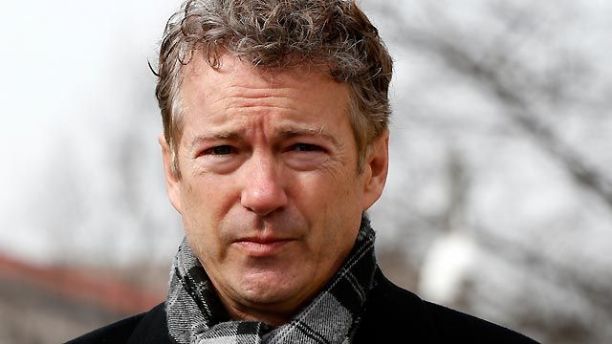
RandPaulSen. Rand Paul on Wednesday announced what he described as one of the largest class-action lawsuits in history, taking President Obama and top intelligence officials to court over National Security Agency surveillance.

“This, we believe, will be a historic lawsuit,” the Kentucky Republican said. The suit, joined by conservative advocacy group FreedomWorks, was filed in U.S. District Court in the District of Columbia.

It alleges that the NSA program that sweeps up and stores massive amounts of telephone “metadata” — which includes where and when calls are made, but not the contents of the calls — violates the Fourth Amendment. The suit asks the court to rule the program unconstitutional and forbid the government from continuing it.

“There’s a huge and growing swell of protest in this country of people who are outraged that their records would be taken without suspicion, without a judge’s warrant and without individualization,” Paul said, at a press conference in Washington.

He said hundreds of thousands of people have joined, and predicted the suit could “conceivably represent hundreds of millions of people who have phone lines in this country.”

The administration has insisted that Americans’ privacy is protected under NSA programs, and Obama recently announced a set of proposed reforms to rein in NSA surveillance.

“We remain confident that the program is legal, as at least 15 judges have previously found,” a Justice Department spokesperson said Wednesday, referring to prior court decisions in separate cases.

But the lawsuit argues that the bulk metadata that is routinely collected nevertheless “reveals a wealth of detail” about Americans’ personal and professional associations “that are ordinarily unknown to the government.”

The suit named Obama, Director of National Intelligence James Clapper, NSA Director Keith Alexander, and FBI Director James Comey.

Source: Fox News

World’s first legal recreational marijuana sales begin in Colorado Read more: World’s first legal recreational marijuana sales begin in Colorado | The Denver Post

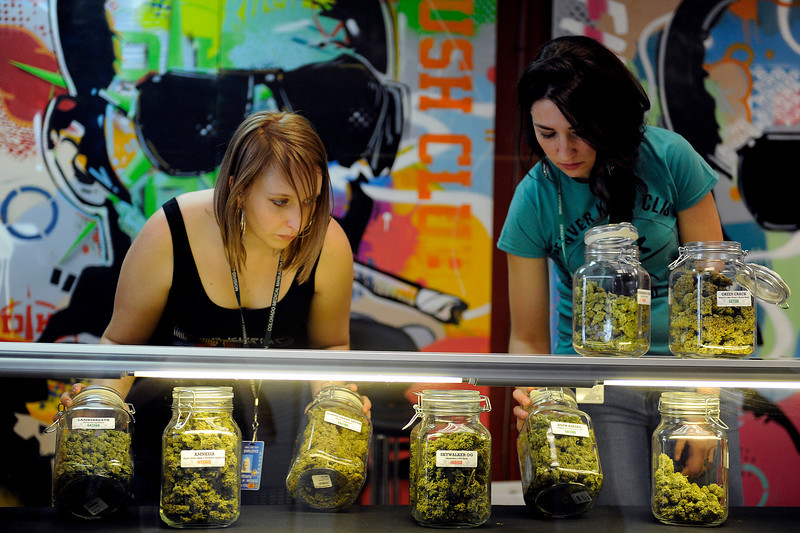
First Legal Marijuana Sales in ColoradoIn a historic swirl of commerce and cannabis, the world’s first stores licensed to sell marijuana legally to anyone 21 or older opened in Colorado on Wednesday.

From Telluride to Denver, thousands of people cheerfully stood in lines for hours to buy legal marijuana after presenting nothing more than identification.

Marijuana activists hailed the day as a watershed in their effort to overturn anti-cannabis laws. Store owners — several of whom said the turnout exceeded even their own ambitious expectations — feared running out of supply.

Police reported no problems with the crowds, and government officials marveled at the calm.

Overall, the day went as marijuana activists had hoped it would: In the most extraordinary way possible, it was ordinary.

“I’ve been waiting 34 years for this moment,” enthused Chrissy Robinson, who arrived at one store, Evergreen Apothecary in Denver, at 2 a.m. to be among the first in line. “I’ve been smoking since I was 14. No more sneaking around.”

At least 37 stores across the state were fully licensed and opened to sell marijuana to anyone 21 or over for any purpose, according to official lists and Denver Post research. Sales could commence at 8 a.m., and activists — who campaigned for the marijuana-legalization measure whose passage in November 2012 made the sales possible — arranged a ceremonial “first purchase” at the Denver store 3D Cannabis Center.

The store used to be called “Denver’s Discreet Dispensary,” so the name change speaks to the rapid evolution of Colorado’s marijuana industry, which began in earnest only about four years ago. 3D Cannabis Center owner Toni Fox watched the clock carefully as the hour approached and dozens of reporters and photographers crowded into one of her store’s tiny purchasing areas.

“It’s 8 a.m.,” she said. “I’m going to do it.”

The first customer was 32-year-old Sean Azzariti, an Iraq war veteran who campaigned for marijuana legalization and said he uses cannabis to alleviate symptoms of post-traumatic stress disorder. Under a canopy of cameras, Azzariti bought an eighth of an ounce of the marijuana strain Bubba Kush and a package of marijuana-infused candy truffles.

“We did it!” a beaming Azzariti said at the end of the purchase.

The cost was $59.74, including $10.46 in tax. At the bottom of the receipt was the message “Thank you for your purchase!”

“I’m confident these businesses will perform and be a good example of how states can regulate marijuana,” activist Mason Tvert said just prior to the store’s first purchase. “Today, there will be people around the country buying marijuana. But only in Colorado will they be buying it in stores like this one.”

Source: Denver Post


State Marijuana Laws Map | Governing

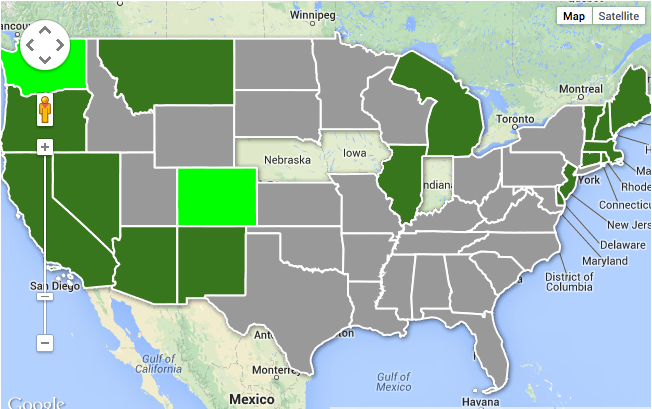
Twenty states and the District of Columbia now have laws legalizing marijuana in some form.

So far, only Colorado and Washington state have legalized marijuana for recreational use, while other states permit medical marijuana.

A limited medical marijuana law most recently went into effect Oct. 1 in Maryland, allowing authorized academic medical centers and research centers to distribute it. However, patients are not expected to be able to sign up for the program until 2015.

Illinois legalized medical marijuana with a law establishing a pilot program set to be implemented in January.

The map below show states permitting marijuana use for medical and recreational purposes.

Information below is current as of December 2013 and includes ballot measures approved in the 2012 elections that have yet to take effect:

MarihuanaMap

Source: Governing

Organic Farmers vs. Monsanto: Final Appeal to U.S. Supreme Court to Protect Crops from GMO Contamination | EcoWatch

organicfarmerLast week, the Public Patent Foundation filed a brief with the U.S. Supreme Court in the landmark case, Organic Seed Growers and Trade Association (OSGATA) et al v. Monsanto, in the hopes that the highest court in the land would hear and reinstate the case of 73 American organic and conventional family farmers, seed businesses and public advocacy groups that seek protection for America’s farmers from Monsanto’s frivolous patent infringement lawsuits, and their promiscuous genetically engineered pollen while also seeking to invalidate the patents on 23 of Monsanto’s genetically modified organisms (GMO) crops.

Jim Gerritsen, an organic seed farmer on Wood Prairie Farm in Maine and president of lead plaintiff Organic Seed Growers and Trade Association, has spent the past 37 years of his life protecting and maintaining the integrity of his seed stock to provide clean, wholesome food to his customers.

Earlier this month, Monsanto filed an opposition brief with the Supreme Court in a last ditch effort to deny a group of American family farmers and seed growers justice in their efforts to protect their farms and the integrity of their crops.

“In opposing our request that the Supreme Court take, and then reinstate, our case, Monsanto makes the same lame and untrue assertions that it made before,” said Daniel Ravicher, executive director of the Public Patent Foundation (PUBPAT) and lead counsel to the plaintiffs in OSGATA et al v. Monsanto. ”In our reply brief filed with the Supreme Court we point out precisely why Monsanto is wrong and that the case should be allowed to proceed,” claimed Ravicher.

On June 10, a three-judge panel at the Court of Appeals for the Federal Circuit in Washington, D.C., issued a bizarre ruling that plaintiffs are not entitled to bring a lawsuit to protect themselves from Monsanto’s transgenic seed patents “because Monsanto has made binding assurances that it will not take legal action against growers whose crops might inadvertently contain traces of Monsanto biotech genes” as stated anonymously on the company’s website.

Farmers find this ruling inconclusive and  insufficient to protect their future economic interests since the Court of Appeals readily admitted that contamination from Monsanto’s genetically engineered crops is “inevitable.”

This Appellate Court ruling importantly validated that farmers do have a legitimate fear of contamination, something that the court and Monsanto’s own attorney, former Solicitor General Seth Waxman, admitted in court during oral arguments.

Despite dismissing the farmers’ and seed growers’ case, the Court of Appeals ruling found the likelihood of contamination significant enough to order by estoppel that Monsanto make good on its promise not to sue farmers that are “inadvertently contaminated with up to one percent of seeds carrying Monsanto’s patented traits.”

“As a seed grower, who has spent the past 37 years of my life protecting and maintaining the integrity of my seed stock to provide clean, wholesome food to my customers, I find it unconscionable that Monsanto can contaminate mine or my neighbors’ crops and not only get away with it, but potentially sue us for patent infringement,” said Jim Gerritsen, an organic seed farmer on Wood Prairie Farm in Maine and president of lead Plaintiff OSGATA. ”The appeals court ruling fails to protect my family and our farm and has only complicated matters,”said Gerritsen.

Because of the insidious nature of GMO contamination and the fact that pollen naturally blows or migrates to neighboring fields, contamination of farmers’ fields above one percent is both predictable and unavoidable.

Already, reports of contamination across North America exceeding one percent have led an increasing number of farmers to incur considerable costs in testing their crops and seed supply for transgenic contamination or actually forgo planting of certain crops in order to maintain seed purity.

Significant contamination events happened in the U.S. this year alone, with an unapproved experimental variety of Monsanto’s GMO wheat discovered in a farmer’s field inOregon this past May. According to the U.S. Department of Agriculture (USDA), the illegal GMO wheat had been field-tested between 1998 through 2005, but never approved by the USDA. Its discovery sent shockwaves through international markets and caused Japan and South Korea to halt shipments of U.S. wheat for more than a month.

A similar event occurred in September when a Washington state farmer reported that his hay was rejected for export because it tested positive for contamination from Monsanto’s genetically engineered alfalfa.

“For farmers, recent events in Washington and Oregon make clear that the damages of contamination are far-reaching in their impacts on farmers’ economic survival, can be permanent and irreversible in their harm to our food supply and only can be properly redressed by a favorable ruling from the Supreme Court,” said Dave Murphy, founder and executive director of Food Democracy Now!, a grassroots advocacy group based in Iowa and a plaintiff in the case.

“It’s time to end Monsanto’s campaign of fear against America’s farmers and stand up for farmers’ right to grow our food without legal threats and intimidation. America must no longer allow Monsanto to contaminate our food supply and destroy the livelihoods of farmers. Farmers deserve protection from these abuses,” said Murphy.

Farmers expect to hear whether or not the U.S Supreme Court will hear their case next year and eagerly await their day in court.

Source: EcoWatch

Modern Prohibition Takes It On The Chin With Uruguay’s Marijuana Legalization | Dollar Vigillante

Uruguay became the first country to legalize marijuana completely yesterday.

We’re not just talking about “decriminalizing” it, or allowing recreational use while still prosecuting pot’s cultivation and selling. The government will still limit amounts to six plants per home per year. And as with alcohol purchases in the US, selling pot in Uruguay will require a license.

In typical government meddling fashion, allowing personal use but not production and sale made a mockery of sense. Speaking of mockeries of sense, the usual arguments about marijuana being a “gateway” drug were out in force among the drug warriors. Colorado Senator Alfredo Solari, whose state is set to alllow its first legal weed sales in just a few days, said, “Competing with drug traffickers by offering marijuana at a lower price will just increase the market for a drug that has negative effects on public health.”

Apparently it is much, much better for “public health” for prohibition to breed cartel and gang violence, which is the inevitable result when politicians use their armed enforcers to prevent people from engaging in the procurement and consumption of something they really, really enjoy.

You know how most of the world laughs at alcohol prohibition now? Well, in the future they’ll laugh at us for not being able to see that prohibition of other substances was just as silly and destructive. Prohibition doesn’t actually stop anyone who wants drugs from getting drugs. It just makes the drugs a lot more expensive while adding a thick layer of violence and danger in the resulting black market.

It also gives government opportunity to fill its cages with non-violent drug consumers and low-level retailers, all of whom have their chances for employment permanently ruined as a result. That, however, is a mild insult added to the injury of incarceration resulting in their brutalization and possible rape.

So when people like Senator Solari talk about negative effects on public health, we can’t help but think that the same number people getting high without the cartels, gangs and government kidnappings represents an incalculable improvement in public health. Hell, it would be great if a few more people got high if it meant an end to police home raids, corner pushers and cartel mass murders. Busybodies and the fully propagandized will blanch, but a little pot next to the whiskey in the liquor cabinet will mean society becomes richer, happier and more peaceful. That’s what happens when you diminish ugly bits of political violence like prohibition.

The drug that has a negative effect on public health is violence itself, a substance to which politicians and their world of enablers are severely addicted. They love using violence to get people to do what they want. Violence, however, begets more of the same. Prohibition is the clearest, most demoralizing example of this. Recreational drug use is a personal choice, a matter of aesthetics, but it’s exactly the kind of thing busybodies make a moral and collective issue that presumes ownership of other people. It’s exactly the kind of thing governments can’t help but get in on.

Like we’ve said before, the state is a self-licking ice cream cone; it creates its own demand. By manufacturing a crime, states create the need for their brand of monopolized, violent policy enforcement. But marijuana prohibition is now so nakedly absurd that it seems that the state is going to have to relent.

It’s still annoying to hear that there will be monitoring of purchases and other regulation, like where one can buy it and how much one can grow per unit of time. For our part we will not be celebrating till all the armed thugs who claim the right to monitor and control people go away. But we can hope that Uruguay’s legalization is another small sign that faith in the state and its proscriptions is flagging.

Portugal decriminalized the individual possession of small amounts of various recreational drugs and has seen addiction rates plummet. Uruguay is also going to see fantastic results.

It’s also important to note that this is happening in Uruguay. This is just another example of why we at TDV, along with many of our clients, are so enthusiastic about South America. TDV Passports offers a very popular passport program from neighboring Paraguay, and in keeping with our PT (Prior Taxpayer/Permanent Traveler) recommendations, clients who opt for the Paraguay citizenship and passport spend much of their time in Uruguay.

While the USSA continues on the road of more imperialism, more fascistic regulation, more inflation and more debt, things are heading in the opposite direction in Latin America. That’s why Latin America, particularly the nation-state of Chile, was chose as the place to found Galt’s Gulch. Imagine yourself with a Paraguayan passport, a home in Galt’s Gulch Chile, and able to get some quality time in Uruguay where they are leading the way in a vital area of freedom. Click here to take your first step.

Source: Dollar Vigillante

Amazon Deforestation Increases 28 Percent in One Year | EcoWatch

DeforestationBy Daniela Montalto

Last week, the Brazilian government released annual figures for deforestation in the Amazon and the news is not good. A total of 5,843 square kilometres are estimated lost between August 2012 and July 2013, an increase in deforestation of 28 percent compared to the previous year.

This sharp increase in deforestation in the Amazon is no surprise—all deforestation estimates released over the last year have shown we were headed in this direction. Last year, the government passed a new Forest Code, dramatically changing the environmental law that governs forest use in Brazil, including the Amazon.

A strong agribusiness influence in the Brazilian Congress lead to a massive weakening of the Forest Code—a law that once helped protect the Amazon. Those who believed the empty promises that the new Forest Code would bring governance to the Amazon, that amnesty granted to environmental criminals would not have consequences and that farmers in the Amazon would be moved by the spirit of Brazilian citizenship and legal compliance, can now see the reality of the impact of the new law in the forest. The ‘growth-at-all-costs’ model, based on the expansion of the agricultural frontier and the establishment of large infrastructure projects in the Amazon provides a sharp contrast to the image the government wants to sell.

Brazil can no longer hide behind the celebrated decrease in deforestation made in past years or the thinly veiled promises around the Forest Code. Brazil can hardly continue to claim leadership in sustainability and new models of development as all eyes turn to Brazil as hosts of the upcoming World Cup.

Corporate Responsibility

In 2009, the three largest slaughterhouses in Brazil signed the Cattle Agreement and pledged not to buy cattle from farms that were involved in new deforestation, slave labor or invasions into Indigenous land and protected areas in the Amazon. In 2006, the soy and cattle sector made commitments to move away from deforestation. The Soy Moratorium was signed by soy traders to stop the trade of soy coming from newly deforested land.

The Soy Moratorium is still in place today but it is set to expire in January 2014. If the industry fails to renew the moratorium without the proper safeguards and next steps in place, this could mean more bad news for the Amazon. We could see another dramatic increase in forest destruction as Soy expansion runs rampant through the forest.

Source: EcoWatch