Editor’s Note: Of all the speeches I’ve heard Trump present over the years this one catalyzed so much hope, love and compassion for not only the restoration of our country, but for freedom around the world. The optics were perfect showing how enthusiastic and effective the Republican administration is, but how thoroughly un-compassionate and detached from reality the Democrats side of the isle is towards issues and policies that directly affect the American people. Truly, a new “golden age” may be breaking upon these United States of America and the rest of the world. Let freedom ring!
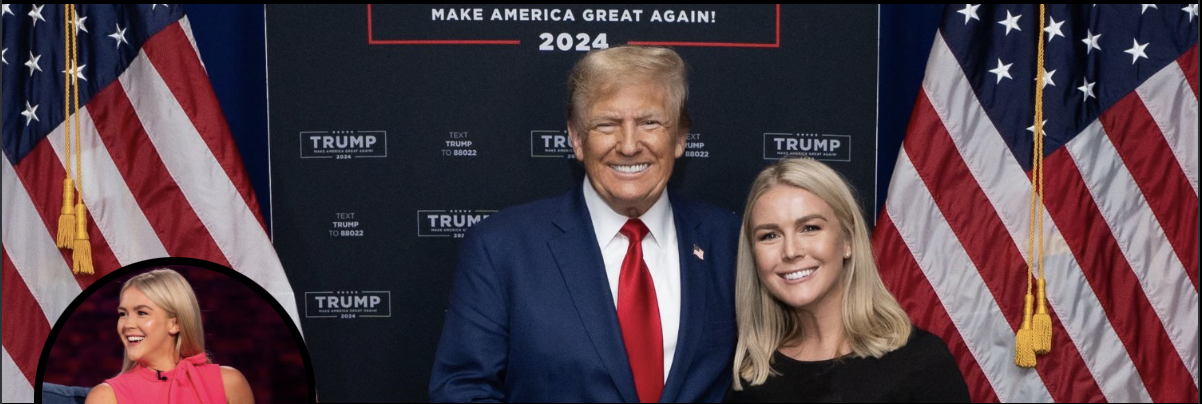
Donald J. Trump, 45th & 47th President of the United States
Donald John Trump (born June 14, 1946) is an American politician, media personality, and businessman who served as the 45th president of the United State from 2017 to 2021. He won the 2024 election as the nominee of the Republican Party and is now the president-elect of the United States. He is scheduled to begin his second term on January 20, 2025, as the nation’s 47th president and will be the second president in American history to serve nonconsecutive terms, with Grover Cleveland being the first.
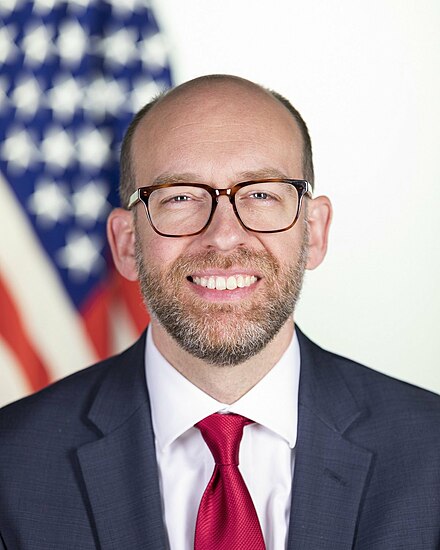
Russell Thurlow Vought (born March 26, 1976), or Russ Vought is an American former government official who was the director of the Office of Management and Budget from July 2020 to January 2021. He was previously deputy director of the OMB for part of 2018, and acting director from 2019 to 2020.
Sebastian Gorka & Alex Wong, Senior National Security Staff
Doug Collins, Secretary of Veteran’s Administration(VA)
Paul Douglas Collins (born July 28, 1951) is an American basketballexecutive, former player, coach and television analyst in the National Basketball Association (NBA). He played in the NBA from 1973 to 1981 for the Philadelphia 76ers, earning four NBA All-Star selections. He then became an NBA coach in 1986, and had stints coaching the Chicago Bulls, Detroit Pistons, Washington Wizards and Philadelphia 76ers. Collins also served as an analyst for various NBA-related broadcast shows.[1] He is a recipient of the Curt Gowdy Media Award. In April 2024, Collins was elected to the Naismith Memorial Basketball Hall of Fame class of 2024 by the Contributors Committee.[2]
President Donald Trump announced on July 28, 2019, that he intended to nominate Ratcliffe to replace Dan Coats as director of national intelligence.[8][9] Ratcliffe withdrew after Republican senators raised concerns about him, former intelligence officials said he might politicize intelligence, and media revealed Ratcliffe’s embellishments regarding his prosecutorial experience in terrorism and immigration cases.[10][11][12][13]
Tulsi Gabbard, Director of National Intelligence (DNI)
• Is Bessent Compromised By Association with Soros & Rockefellers? • Scott Bessent, who will lead the Treasury Department, previously worked at George Soros Fund Management from 1991 to 2000, and then again as Chief Investment Officer from 2011 to 2015. During this period, he made a significant bet against the British pound, contributing to Soros’ famous “breaking of the Bank of England” and earning billions for the firm. The London office was led by Peter Soros, George Soros’ nephew, who has been named by Epstein’s former butler, Alfred Rodriguez, as having been involved in Epstein’s s*x trafficking activities. Bessent is also on the Board of Trustees at Rockefeller University, alongside prominent figures in the globalist establishment. ~ Shadow of Era
Howard Lutnick, Secretary of Commerce
Howard William Lutnick (/ˈlʌtnɪk/; born July 14, 1961[1]) is an American businessman, who succeeded Bernard Gerald Cantor as the head of Cantor Fitzgerald. Lutnick is the chairman and CEO of Cantor Fitzgerald and BGC Group. After losing 658 employees, including his brother, in the September 11 attacks, Lutnick also survived the subsequent collapse of the towers on the ground, and has since become known for his charity efforts through the Cantor Fitzgerald Relief Fund, which helps to aid families of victims of the attacks and natural disasters. He was a fundraiser for Donald Trump’s 2020 and 2024 presidential campaigns, as well as a vocal proponent of Trump’s proposal to implement broad tariffs. In November 2024, President-elect Trump announced that he intended to nominate Lutnick as secretary of commerce. He was also co-founder of DOGE.
To Be Determined, Administrator of the SBA
Image Here…
Wikipedia:
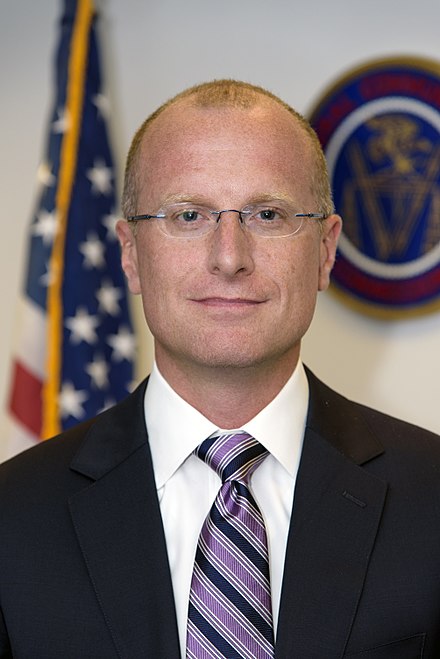
Brendon Carr, Commissioner of the Federal Communications Commission (FCC)
Brendan Thomas Carr (born January 5, 1979) is an American lawyer who has served as a member of the Federal Communications Commission (FCC) since 2017.[7] Appointed to the position by Donald Trump, Carr previously served as the agency’s general counsel and as an aide to FCC commissioner Ajit Pai. In private practice, Carr formerly worked as a telecommunications attorney at Wiley Rein.[8]
Carr supports changes to Section 230 of the Communications Decency Actand opposes net neutrality protections.[9][10] Carr is noted for his support for banning TikTok on national security grounds.[11][12] He is an opponent of content moderation on digital platforms, saying he would seek to “dismantle the censorship cartel and restore free speech rights.”[13][14] He authored a chapter in Mandate for Leadership: The Conservative Promise, the blueprint document of Heritage Foundation‘s Project 2025, which outlines proposed policies for a future Donald Trump administration. In office, Carr has been noted for being unusually vocal about public policy issues for a regulatory appointee, accusing House Intelligence Committee chair Adam Schiff of overseeing a “secret and partisan surveillance machine”.[15]
• Restore Net Neutrality& Equalize the Internet Playing Field
Dr. Jay Bhattacharya, MD, Ph.D., Director of the National Institutes of Health (NIH)
Jayanta “Jay” Bhattacharya (born 1968) is an American professor of medicine, economics, and health research policy at Stanford University. He is the director of Stanford’s Center for Demography and Economics of Health and Aging. His research focuses on the economics of health care.[2][3][4] In 2021, Bhattacharya was opposed to lockdowns and mask mandates as a response to the COVID-19 pandemic.[5][6] With Martin Kulldorff and Sunetra Gupta, he was a co-author in 2020 of the Great Barrington Declaration, which advocated lifting COVID-19restrictions on lower-risk groups to develop herd immunity through widespread infection, while promoting the fringe notion that vulnerable people could be simultaneously protected from the virus.[7][8][9] The declaration was criticized as being unethical and infeasible by Tedros Adhanom Ghebreyesus, the director-general of the World Health Organization.[10]
• Co-Author of The Great Barrington Declaration
Dr. Dave Weldon, Director of the Centers for Disease Control (CDC)
•Mission to Examine the Causes of Chronic Illness • “The greatest perpetrator of misinformation during the COVID pandemic has been the United States government … Public health officials were intellectually dishonest. They lied to the American people.” ~ Marty Makary, MD, MPH • Author of Blind Spots
Dr. Janette Nesheiwat, US Surgeon General
Janette Nesheiwat (born 25 August 1980) is an American physician who is the nominee for United States surgeon general.[2] Nesheiwat has served as an assistant medical director of CityMD[3] and is currently a medical contributor on Fox News.[4]
• Getting Flak for Her Previous Vaccine/COVID Positions. ~ Dr. Simone Gold • Trump’s pick for Surgeon General, Janette Nesheiwat, praised Facebook for censoring anti-vaccine information & accounts like mine and RFK’s specifically, adding that she will “hope and pray” other social media companies do the same. Pick someone else. ~ Elizabeth Health Nut News
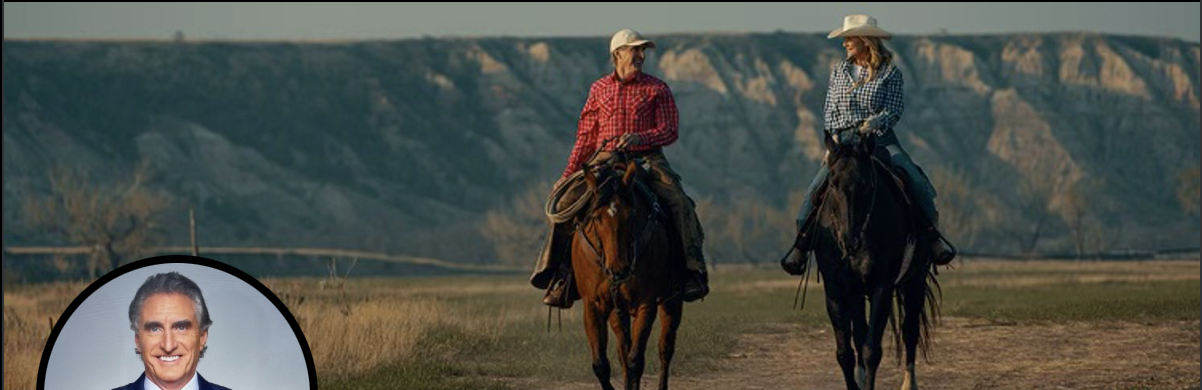
Doug Burgum, Secretary of the Interior
Douglas James Burgum (/bɜːrɡəm/BUR-gəm;[1] born August 1, 1956) is an American businessman and politician serving since 2016 as the 33rd governor of North Dakota.[2][3] He is among the richest politicians in the United States and has an estimated net worth of at least $1.1 billion. He is a member of the Republican Party.[4] Burgum was born and raised in Arthur, North Dakota.
When Perdue’s term ended on January 3, 2021, Loeffler ascended to be the senior senator from Georgia, a position she held for just under three weeks until Warnock was sworn in. Loeffler aligned with President Donald Trump in her time in the Senate, touting a “100 percent Trump voting record” during her campaigns.[3][4] After the November 2020 election, Loeffler and Perdue claimed without evidence that there had been unspecified failures in the 2020 U.S. presidential election, and called for the resignation of Georgia secretary of stateBrad Raffensperger, who rejected the accusations.
She later supported a lawsuit by Trump allies seeking to overturn the election results,[5] and also announced her intention to object to the certification of the Electoral College results in Congress.[6] After the attack on the U.S. Capitol on January 6, 2021, Loeffler announced that she would withdraw her objection to the certification of the electoral votes and later voted to certify. Loeffler was chosen by president-elect Trump to co-chair his inaugural committee in his upcoming second presidency, along with Steve Witkoff.
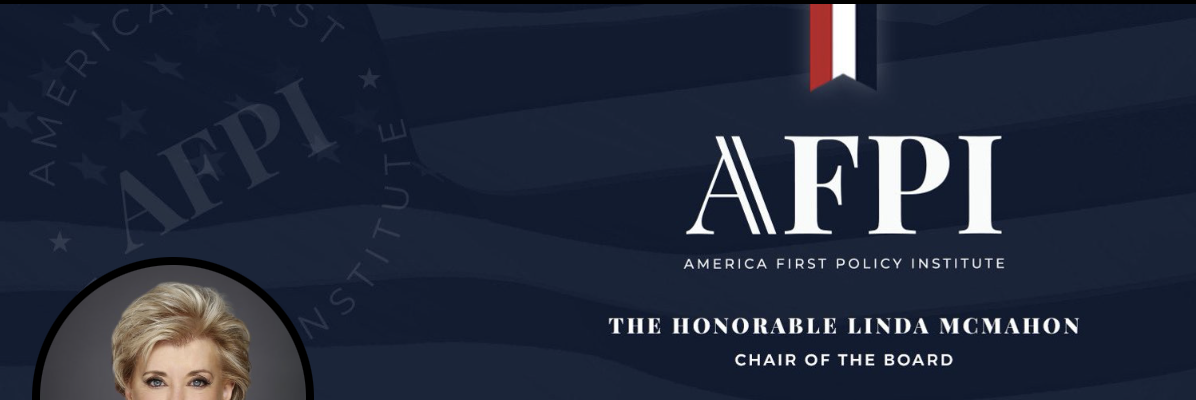
Linda Marie McMahon (/məkˈmæn/; née Edwards; born October 4, 1948) is an American politician, business executive and retired professional wrestler. She was the 25th administrator of the Small Business Administration from 2017 to 2019. McMahon has been nominated to lead the Department of Education under the second Trump administration.
McMahon, along with her husband, Vince McMahon, founded sports entertainment company Titan Sports, Inc. (later World Wrestling Entertainment, Inc.) where she worked as the president and later CEO from 1980 to 2009. During this time, the company grew from a regional business in the northeast to a large multinational corporation. Among other things, she initiated the company’s civic programs, Get R.E.A.L. and SmackDown! Your Vote. She made occasional on-screen performances, most notably in a feud with her husband that culminated at WrestleMania X-Seven.
On April 15, she was named chairwoman of America First Action, a pro-Trump Super PAC. On November 19, 2024, McMahon was nominated by Donald Trump to serve as Secretary of Education.[2]
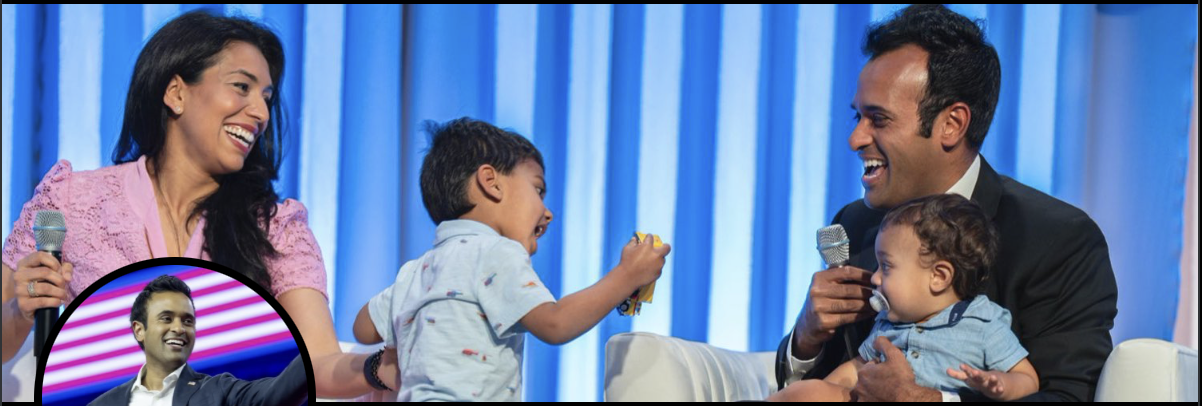
Vivek Ramaswamy, Department of Government Efficiency (DOGE)
Musk was born in Pretoria, South Africa, and briefly attended the University of Pretoria before immigrating to Canada at the age of 18, acquiring citizenship through his Canadian-born mother. Two years later, he matriculated at Queen’s University at Kingston in Canada. Musk later transferred to the University of Pennsylvania and received bachelor’s degreesin economics and physics. He moved to California in 1995 to attend Stanford University, but never enrolled in classes, and with his brother Kimbal co-founded the online city guidesoftware company Zip2. The startup was acquired by Compaq for $307 million in 1999. That same year, Musk co-founded X.com, a direct bank. X.com merged with Confinity in 2000 to form PayPal. In 2002, Musk acquired US citizenship, and that October eBay acquired PayPal for $1.5 billion. Using $100 million of the money he made from the sale of PayPal, Musk founded SpaceX, a spaceflight services company, in 2002.
In 2004, Musk was an early investor in electric-vehicle manufacturer Tesla Motors, Inc. (later Tesla, Inc.), providing most of the initial financing and assuming the position of the company’s chairman. He later became the product architect and, in 2008, the CEO. In 2006, Musk helped create SolarCity, a solar energy company that was acquired by Tesla in 2016 and became Tesla Energy. In 2013, he proposed a hyperloop high-speed vactrain transportation system. In 2015, he co-founded OpenAI, a nonprofit artificial intelligenceresearch company. The following year Musk co-founded Neuralink, a neurotechnology company developing brain–computer interfaces, and The Boring Company, a tunnel construction company.
In early 2024, Musk became active in American politics as a vocal and financial supporter of Donald Trump, becoming Trump’s second-largest individual donor in October 2024. In November 2024, Trump announced that he had chosen Musk along with Vivek Ramaswamyto co-lead the Department of Government Efficiency (DOGE), a new advisory board which aims to improve government efficiency through measures such as slashing “excess regulations” and cutting “wasteful expenditures”.
• Mission to Dismantle the Regulatory State & Cut Wasteful Spending
AMERICA FIRST AGENDA BY EXECUTIVE ORDER
Restore Border Security & Immigration Including Mass Deportation of Illegal Aliens
Declare War on Drug Cartels (Including Big Pharma & Global Actors)
Declare War on Child Trafficking & Establish Death Penalty for Convicted Human Traffickers
Halt Federal Funds for Any State or Local Government Defying Federal Immigration Law (End Sanctuary Cities)
Halt Federal Funds for Inappropriate Curricula Including Critical Race Theory, DEI, Transgender & Anti-American Political Content Taught in Schools
End Mutilation of Youth Through Gender Transitions; Cease Funding Any Sex & Gender Transition
Halt Federal Funding for Any Abortion Procedure or Organ Harvesting of New-Born Infants
Private Right of Action for Victims to Sue Doctors; Civil Rights Violations; Cease Funding to School Districts
End Electric Vehicle Mandates; Making Them Voluntary Not Mandatory
Restore Fundamental Protection of Free Speech & All Constitutional Rights; Prohibit Any Future Collusion Between Government & Private Sector to Deprive Citizens of Rights
Dismantle Needless Bureaucracy & Regulations
Dismantle or Overhaul All Weaponized Government Agencies Via Schedule F (Firing Incompetent or Corrupt Staff By Executive Order)
Clean Out All Corrupt Actors in National Security, Defense & Intelligence Apparatus
ESTABLISHING NEW GOVERNMENT PROGRAMS& LEGISLATION
Founding Department of Government Efficiency (DOGE)with Mission to Dismantle the Regulatory State & Cut Wasteful Spending)
Restore Economic Prosperity for All
Restore Energy Independence By All Means Necessary Including Fracking, Drilling & Green Energy
Restore Tax Incentives for Small Businesses
Cap Credit Card Rates at 10%
Founding The American Academy (Full Spectrum of Human Knowledge for Free Online; Bachelor’s Degree Available)
Department of Education Appoints New Accreditors for All Colleges/Universities to Qualify for Federal Funding (Restore Meritocracy in Our Educational Institutions)
Eliminate the Federal Income Tax & Replace with Tariffs On Imports
Allow IRS Deduction Up to $10k Towards Homeschooling Per Child
Become #1 Energy Producer in the World & Restore Energy Independence
Repeal of the 1986 Vaccine Injury Act
Restore FAIR Act for Equal Time in Broadcasting
Revoke Licenses & Funding for Propaganda Media (Including NPR)
Reintroduce 28th Amendment with Required That All Laws Applied Equally to Citizens & Congress
Propose ? Amendment for Term-Limits on Elected Officials in Congress
Restore Net Neutrality To Equalize the Internet Playing Field Once Again
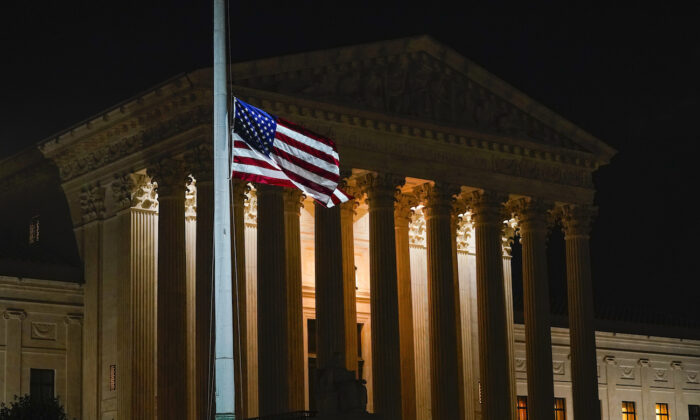
The American flag blows in the wind after it was lowered to half-staff Friday, Sept. 18, 2020, in Washington, after the Supreme Court announced that Supreme Court Justice Ruth Bader Ginsburg has died of metastatic pancreatic cancer at age 87. (AP Photo/Alex Brandon)
By Peter Svab
The formation of a totalitarian state is just about complete in America as the most powerful public and private sector actors unify behind the idea that actions to stamp out dissent can be justified, according to several experts on modern totalitarian ideologies.
While many have warned about the rise of fascism or socialism in “the land of the free,” the ideas have largely been vague or fragmented, focusing on individual events or actors. Recent events, however, indicate that seemingly unconnected pieces of the oppression puzzle are fitting together to form a comprehensive system, according to Michael Rectenwald, a retired liberal arts professor at New York University.
But many Americans, it appears, have been caught off guard or aren’t even aware of the newly forming regime, as the idea of elected officials, government bureaucrats, large corporations, the establishment academia, think tanks and nonprofits, the legacy media, and even seemingly grassroot movements all working in concert toward some evil purpose seems preposterous. Is a large portion of the country in on a conspiracy?
The reality now emerges that no massive conspiracy was in fact needed—merely an ideological alignment and some informal coordination, Rectenwald argues.
Despite the lack of formal overarching organization, the American socialist regime is indeed totalitarian, as the root of its ideology requires politically motivated coercion, he told The Epoch Times. The power of the regime is not yet absolute but it’s becoming increasingly effective as it erodes the values, checks, and balances against tyranny established by traditional beliefs and enshrined in the American founding.
The effects can be seen throughout society. Americans, regardless of their income, demographics, or social stature are being fired from jobs, getting stripped of access to basic services such as banking and social media, or having their businesses crippled for voicing political opinions and belonging to a designated political underclass. Access to sources of information unsanctioned by the regime is becoming increasingly difficult. Some figures of power and influence are sketching the next step, labelling large segments of society as “extremists” and potential terrorists who need to be “deprogrammed.”
While the onset of the regime appears tied to events of recent years—the presidency of Donald Trump, the CCP (Chinese Communist Party) viruspandemic, the Capitol intrusion of Jan. 6—its roots go back decades.
Is It Really Totalitarian?
Totalitarian regimes are commonly understood as constituting a government headed by a dictator that regiments the economy, censors the media, and quells dissent by force. That is not the case in America but it’s also a misunderstanding of how such regimes function, literature on totalitarianism indicates.
To claim power, the regimes don’t initially need to control every aspect of society through government.
Adolf Hitler, leader of the National Socialist Workers Party in Nazi Germany, used various means to control the economy, including gaining compliance of industry leaders voluntarily, through intimidation, or through replacing the executives with party loyalists.
Similarly, the regime rearing its head in America relies on corporate executives to implement its agenda voluntarily but also through intimidation by online brigades of activists and journalists who take initiative to launch negative PR campaigns and boycotts to progress their preferred societal structure.
Also, Hitler initially didn’t control the spread of information via government censorship but rather through his brigades of street thugs, the “brown shirts,” who would intimidate and physically prevent his opponents from speaking publicly.
The tactic parallels the often successful efforts to “cancel” and “shut down” public speakers by activists and violent actors, such as Antifa.
Dissenting media in America haven’t been silenced by the government directly as of yet. But they are stymied in other ways.
In the digital age, media largely rely on reaching and growing their audience through social media and web search engines, which are dominated by Facebook and Google. Both companies have in place mechanisms to crack down on dissenting media.
Google gives preference in its search results to sources it deems “authoritative.” Search results indicate the company tends to consider media ideologically close to it to be more authoritative. Such media can then produce hit pieces on their competitors, giving Google justification to slash the “authoritativeness” of the dissenters.
Facebook employs third-party fact checkers who have the discretion to label content as “false” and thus reduce the audience on its platform. Virtually all the fact checkers focused on American content are ideologically aligned with Facebook.
Attempts to set up alternative social media have run into yet more fundamental obstacles, as demonstrated by Parler, whose mobile app was terminated by Google and Apple, while the company was kicked off Amazon’s servers.
To the degree that a totalitarian regime requires a police state, there’s no law in America targeting dissenters explicitly. But there are troubling signs of selective, politically motivated enforcement. Signs go back to the IRS’s targeting of Tea Party groups or the difference in treatment received by former Trump adviser Lt. Gen Michael Flynn and former FBI deputy Director Andrew McCabe—both allegedly lying to investigators but only one getting prosecuted. The situation may get still worse as the restrictions tied to the CCP virus see broad swaths of ordinary human behavior being considered “illegal,” opening the door to nearly universal political targeting.
“I think the means by which a police state is being set up is the demonization of Trump supporters and the likely use of medical passports to institute the effective equivalent of social credit scores,” Rectenwald said.
While loyalty to the government and to a specific political party plays a major role, it’s the allegiance to the ideological root of totalitarianism that gives it its foot soldiers, literature on the subject indicates.
Totalitarian Ideology
The element “that holds totalitarianism together as a composite of intellectual elements” is the ambition of fundamentally reimagining society—“the intention to create a ‘New Man,’” explained author Richard Shorten in “Modernism and Totalitarianism: Rethinking the Intellectual Sources of Nazism and Stalinism, 1945 to the Present.”
Various ideologies have framed the ambition differently, based on what they posited as the key to the transformation.
Karl Marx, co-author of the Communist Manifesto, viewed the control of the economy as primary, describing socialism as “socialized man, the associated producers, rationally regulating their interchange with Nature, bringing it under their common control, instead of being ruled by it as by the blind forces of Nature,” in his Das Kapital.
Adolf Hitler, leader of the National Socialist Workers Party in Nazi Germany, viewed race as primary. People would become “socialized”—that is transformed and perfected—by removing Jews and other supposedly “lesser” races from society, he claimed.
The most dominant among the current ideologies stem from the so-called “critical theories,” where the perfected society is defined by “equity,” meaning elimination of differences in outcomes for people in demographic categories deemed historically marginalized. The goal is to be achieved by eliminating the ever-present “white supremacy,” however the ideologues currently define it.
While such ideologies commonly prescribe collectivism, calling for national or even international unification behind their agenda, they are elitist and dictatorial in practice as they find mankind never “woke” enough to follow their agenda voluntarily.
In Marx’s prophecies, the revolution was supposed to occur spontaneously. Yet it never did, leading Vladimir Lenin, the first head of the Soviet Union, to conclude that the revolution will need leadership after all.
“The idea is that you have some enlightened party … who understand the problem of the proletariat better than the proletariat does and is going to shepherd them through the revolution that they need to have for the greater good,” explained James Lindsay, author of “Cynical Theories: How Activist Scholarship Made Everything about Race, Gender, and Identity—and Why This Harms Everybody.”
Elements of this intellectual foundation can be found in ideologies of many current political forces, from neo-nazis and anarcho-communists, through to progressives and to some extent even neoliberals and neoconservatives, Lindsay acknowledged.
“This is why you see so many people today saying that the only possible answers are a full return to classical liberalism or a complete rejection of liberalism entirely as fatally disposed to create progressivism, neoliberalism, etc.,” he said.
That’s not to say these ideologies are openly advocating totalitarianism but rather that they inevitably lead to it.
The roadmap could be summarized as follows:
There’s something fundamentally and intolerably wrong with current reality
There’s a plan to fix it requiring a whole society buy-in
People opposing the plan need to be educated about the plan so they accept it
People who resist the persuasion need to be reeducated, even against their will
People who won’t accept the plan no matter what need to be removed from society.
“I think that’s the general thrust,” Lindsay said. “We can make the world the way we want it to be if we all just get on the same page and same project. It’s a disaster, frankly.”
Points four and five now appear to be in progress.
Former Facebook executive Alex Stamos recently labeled the widespread questioning of the 2020 election results as “violent extremism,” which social media companies should eradicate the same way they countered online recruitment content from the ISIS terrorist group.
The “core issue,” he said, is that “we have given a lot of leeway, both in traditional media and on social media, to people to have a very broad range of political views” and this has led to the emergence of “more and more radical” alternative media like OAN and Newsmax.
Stamos then mused about how to reform Americans who’ve tuned in to the dissenters.
“How do you bring those people back into the mainstream of fact-based reporting and try to get us all back into the same consensus reality?” he asked in a CNN interview.
“And can you? Is that possible?” CNN host Brian Stelter added.
The logic goes as follows: Trump claimed the election was stolen through fraud and other illegalities. That has not been proven in court and is thus false. People who stormed the U.S. Capitol on Jan. 6 and managed to break inside and disrupt the electoral vote counting did so because they believed the election was stolen. Therefore, anybody who questions the legitimacy of the election results is an extremist and potentially a terrorist.
With tens of thousands of troops assembled to guard the inauguration of President-elect Joe Biden, Rep. Steve Cohen (D-Tenn.) recently told CNNthat all guard members who voted for Trump belong to a “suspect group” that “might want to do something,” alluding to past leaders of other countries who were “killed by their own people.”
Former FBI Director James Comey recently said the Republican party needs to be “burned down or changed.”
“They want a one party state,” commented conservative filmmaker Dinesh D’Souza in a recent podcast. “That is not to say they don’t want an opposition. They want a token opposition. They want Republicans where they get to say what kind of Republican is ok.”
Just as Marx blamed the ills of the world on capitalists and Hitler on Jews, the current regime tends to blame various permutations of “white supremacy.”
“Expel the Republican members of Congress who incited the white supremacist attempted coup,” said Rep. Cori Bush (D-Mo.) in a recent tweet, garnering some 300,000 likes.
She was referring to the Republican lawmakers who raised objections on Jan. 6 to election results in Arizona and Pennsylvania. Their objections were voted down.
“Can U.S. Spy Agencies Stop White Terror?” Daily Beast’s Jeff Stein asked in a recent headline, concluding that a call for “secret police” to sniff out “extremist” Americans “may well get renewed attention.”
Under the regime, allegations of election fraud—de facto questioning the legitimacy of the leader—have become incitement of terrorism. YouTube (owned by Google), Facebook, and Twitter have either banned content that claims the election was rigged or are furnishing it with warning labels. Twitter chief executive Jack Dorsey was recently recorded as saying that banning the president’s account was just the beginning.
The approach closely mirrors that of the Chinese communist regime, which commonly targets dissidents for “subverting” the state or “spreading rumors.”
What’s the Alternative?
If calls for radically reorganizing the world are inherently totalitarian, how is the world to avoid them? The question appears to be its own answer. If totalitarianism inherently requires allegiance to its ideology, it can’t exist in a society with a lack of such allegiance.
The United States was founded on the idea that individual rights are God-given and unalienable. The idea, rooted in traditional beliefs that human morality is of divine origin, stands a bulwark against any attempt to assail people’s rights even for their own good.
“If you’re not a believer in actual God, you can posit a God’s ideal on the matter … We have to posit some arbiter who’s above and beyond our own prejudices and biases in order to ensure these kinds of rights. … Because otherwise you have this infinitely malleable situation in which people with power and coercive potential can eliminate and rationalize the elimination of rights willy-nilly,” Rectenwald said.
Governor Newsom has exceeded his constitutional authority during the lockdowns.
When the Michigan Supreme Court struck down that state’s Emergency Powers of the Governor Act as unconstitutional, it adopted the very arguments we are making in our case against Gov. Newsom.
In short, Newsom now faces a “heads you win, tails I lose scenario.” If the Court agrees with our statutory arguments, Newsom will be found to have overstepped the Emergency Services Act and violated the Constitution. On the other hand, if the Court buys his statutory arguments, the entire Act must be found unconstitutional.
Reading the Michigan Court’s opinion was a surreal experience since it so closely resembles our own briefing to the California Court. In fact, the Michigan Supreme Court uses the exact quote from the Federalist Papers with which we began our dispositive brief:
“The accumulation of all powers, legislative, executive, and judiciary, in the same hands may justly be pronounced the very definition of tyranny.”
(Recall that Newsom has actually argued the Emergency Services Act “centralizes” all of the “the State’s powers in the hands of the Governor.”)
The other similarities are striking:
Our Brief: no statute can “give the Executive Branch a roving authority to create any and all new laws in any California code.”
Michigan Decision: no statute can “confer upon the governor a roving commission to repeal or amend unspecified provisions anywhere in the entire body of state law.”
Another example:
Our Brief: “a statute that gives the Governor ‘discretion as to what the law shall be’ amounts to an unlawful delegation.”
Michigan Decision: the statute “is an unlawful delegation of legislative power to the executive branch in violation of the Constitution.”
Most importantly, the Separation-of-Powers provision of Michigan’s Constitution is almost identical, word for word, to the one in California’s Constitution.
After the Senate blocked the Republican police reform bill, Just and Unifying Solutions To Invigorate Communities Everywhere Act of 2020, or the JUSTICE Act, Senator Tim Scott (R-SC) spoke on the floor about his personal experiences and how they helped him write the JUSTICE Act.
Johnny Liberty, Editor’s Note: Once again there’s more than meets the eye in the stimulus bill that just passed unanimously in the U.S. Senate. Apparently, if you read this article you’ll discover that the Federal Reserve has been granted extreme powers to stabilize the economy (which is the code word for bailing out the banks who have overextended themselves since 2008). Coronavirus is yet another smokescreen for transferring power from the people to the international bankers (not saying COVID-19 isn’t real). Another sad day for the future of freedom in the United States of America.
By Pam & Russ Martens
The U.S. Senate voted 96-0 late yesterday on a massive bailout of Wall Street banks versus a short-term survival plan for American workers thrown out of their jobs – and potentially their homes. The text of the final bill was breathtaking in the breadth of new powers it bestowed on the Federal Reserve, including the Fed’s ability to conduct secret meetings with no minutes provided to the American people. The House of Representatives has yet to vote on the bill.
The bill provides specific sums that can be made as loans or loan guarantees to passenger airlines ($25 billion), cargo airlines ($4 billion), and loans and loan guarantees to businesses necessary to national security ($17 billion). But when it comes to the money going to the Federal Reserve and then out the door to Wall Street, the legislation says only this:
“Not more than the sum of $454,000,000,000…shall be available to make loans and loan guarantees to, and other investments in, programs or facilities established by the Board of Governors of the Federal Reserve System for the purpose of providing liquidity to the financial system….”
Why does the Federal Reserve need $454 billion from the U.S. taxpayer to bail out Wall Street when it has the power to create money out of thin air and has already dumped more than $9 trillioncumulatively in revolving loans to prop up Wall Street’s trading houses since September 17, 2019 – long before there was any diagnosis of coronavirus anywhere in the world.
The Fed needs that money to create more Special Purpose Vehicles (SPVs) — the same device used by Enron to hide its toxic debt off its balance sheet before it went belly up. With the taxpayers’ money taking a 10 percent stake in the various Wall Street bailout programs offered by the Fed, structured as SPVs, the Fed can keep these dark pools off its balance sheet while levering them up 10-fold.
White House Economic Adviser Larry Kudlow acknowledged plans by the Fed to leverage the money at a White House press briefing this week, stating that the money the Treasury is handing over to the Fed would result in “$4 trillion in Federal Reserve lending power.”
The Fed has already created one of these SPVs. On March 17, the Fed said it was creating a Commercial Paper Funding Facility (CPFF) that would work like this:
“The Treasury will provide $10 billion of credit protection to the Federal Reserve in connection with the CPFF from the Treasury’s Exchange Stabilization Fund (ESF). The Federal Reserve will then provide financing to the SPV under the CPFF. Its loans will be secured by all of the assets of the SPV.”
The Fed also used SPVs during the 2007-2010 financial crisis to buy toxic debt from Bear Stearns to facilitate its takeover by JPMorgan Chase and to prop up AIG, a giant insurer that had gorged on Wall Street’s tricked-up derivatives. Those programs became known as Maiden Lane I, II and III.
Adding to the suspicions that the Fed doesn’t want to have to battle Freedom of Information Act (FOIA) requests (sunshine law requests) again in court, as it did and lost during the last financial crisis to keep its outrageous $29 trillion bailout program to Wall Street a secret from the public, the Senate-approved stimulus bill repeals the sunshine law for the Fed’s meetings until the President says the coronavirus threat is over or the end of this year. That could make any FOIA lawsuits to unleash details of what’s going on next to impossible since it has been codified in a federal law. The bill states the following:
SEC. 4009. TEMPORARY GOVERNMENT IN THE SUNSHINE ACT RELIEF. (a) IN GENERAL.—Except as provided in subsection 8 (b), notwithstanding any other provision of law, if the Chairman of the Board of Governors of the Federal Reserve System determines, in writing, that unusual and exigent circumstances exist, the Board may conduct meetings without regard to the requirements of section 552b of title 5, United States Code, during the period beginning on the date of enactment of this Act and ending on the earlier of— (1) the date on which the national emergency concerning the novel coronavirus disease (COVID–19) outbreak declared by the President on March 13, 2020 under the National Emergencies Act (50 20 U.S.C. 1601 et seq.) terminates; or (2) December 31, 2020.
This could mean that the American taxpayer may never learn why it went into debt to the tune of $454 billion if no records are being maintained.
Wall Street’s mega banks and their primary regulator, the Federal Reserve, are no longer just a threat to the safety and soundness of the U.S. banking system — together they are an unparalleled and unprecedented threat to the idea of democracy as we understand it.
We find it difficult to believe that Senators Bernie Sanders, Elizabeth Warren, Sherrod Brown and Jeff Merkley would vote in favor of this legislation – given their in-depth knowledge of what the Fed did during the last financial crisis. The public deserves an honest explanation from each of them.
One of the ironies of the impeachment of President Trump is just how similar the cast of characters is to those in the impeachment of Bill Clinton. By the time the trial was over, Nancy Pelosi, Jerry Nadler, Maxine Waters, Lindsay Graham, and 80 other members of Congress had cast a vote. And what is obvious is that the same players have been acting out for decades. When will things change?
Let’s face the facts: Washington politicians and bureaucrats arrive in the swamp and become entrenched. The longest-serving members of Congress have served for more than 45 years, and there are 44 congressional districts in which the age of the representative is more than double the median age of their constituents.
Incumbents, of course, have a defined advantage in this: In 2016, 97 percent of representatives were reelected. So if Americans want solutions at the highest levels of government, we should be demanding fresh leadership on a regular basis: Politicians and government officials should be subject to a short tenure before returning to civilian life through term limits.
Modern problems demand modern solutions. Aging seniors grilling tech gurus about privacy, emerging technologies and consumer rights have become a national joke. More concerning, tech illiteracy is yielding bad legislation that puts American security at risk.
Yet, the only thing the opposition party can offer judging by the Democratic presidential candidate lineup is more of the same, with candidates claiming long careers contributing to the swamp. Elizabeth Warren is in her eighth year in Washington, and she’s competing for the Oval Office against Bernie Sanders, who’s been an elected official since 1981.
Both are looking to extend their stay in Washington, whether as president or through a continued Senate tenure. Joe Biden, another candidate, first took public office 50 years ago, in 1970. Fresh names and fresh ideas, on both the right, with Donald Trump, and the left, with Pete Buttigieg, have already won the first caucus of 2020. Americans are clearly hungry for something new.
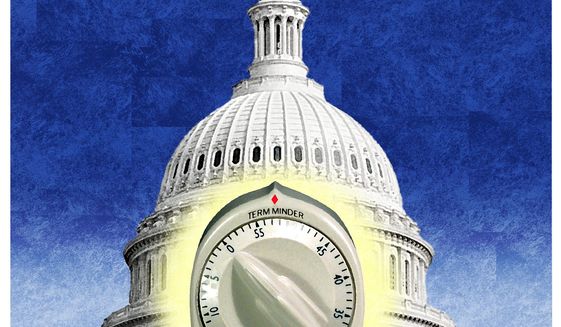
Term limits could be one viable measure to prevent career politicians. It’s an idea that has been promoted by Mr. Trump with varying degrees of enthusiasm. The struggle, of course, lies in the fact that members of Congresswould have to be willing to vote themselves out of a job.
Removing career politicians, regardless of their success or good will, ensures that the job is in the service of the people rather than in pursuit of greater net worth. But term limits would only solve a part of the problem. Beyond elected officials, there are more than 2.1 million federal employees propping up the status quo.
The vast web of bureaucrats who staff the federal government’s many administrative branches have an even longer tenure than Congress. The most tenured Washington bureaucrat has been working for the government since 1942. No matter how perfect a civil servant’s record on the job, longevity itself must be addressed.The administrative state enables bureaucrats to write rules, direct policy and impact the lives of everyday Americans. Yet, voters can’t vote this vast workforce out of office. Federal employees are difficult to remove, and often the will to remove them isn’t there. A 2013 study by the office for governmental accountability found that only 0.18 percent of employees were terminated in 2013, roughly 10 percent the rate of the private sector.
Mr. Trump has often pledged to “drain the swamp,” but he has yet to follow through on that campaign promise. The number of federal employees has remained relatively consistent since the 1950s and held steady through the Trump presidency. Federal tenure rules make it increasingly difficult to remove low performers. It doesn’t seem to matter who’s in office, or from what party — these career bureaucrats continue to exert power.This unchecked control is especially troubling when it involves sensitive information concerning national security. In 2017, officials with anonymity confessed that intelligence agencies routinely withheld information from the commander-in-chief, asserting authority as independent actors not beholden to elected officials or the American people.
That some longtime politicians and bureaucrats may be acting in the best interests of the people doesn’t negate the larger point: Those who contribute to the swamp far outnumber honest civil servants. Simply put, governance should not be a career; it should be temporary and in service to the public. Short tenures are the way to do just that, since they’ve historically served to keep the size of government power in check.
Whoever wins in November, though, is unlikely to make a difference in that regard. For Congress and the Washington Machine, history has shown that the White House won’t impact business as usual.
But things need to change — from term limits to an end to federal tenure. Abbreviated careers in government would ensure the will of the people informs the highest levels of government.
Let’s show swamp dwellers the door.
• Conner Drigotas is the director of communications at a national law firm and a Young Voices contributor.
Sponsored by 44 House Democrats insuring that criminals can move to the USA with impunity at U.S. taxpayer expense. This is the most horrendous piece of legislation ever proposed by the radical left/liberal cabal in the House of Representatives. This istreason and should be reckoned with. None or these sponsors have any business staying in the U.S. Congress for one more term.
Editor’s Note: Take note that continued federal deficit spending will land the United States corporation in an irreversible bankruptcy before 2029 when It would bring total debt to about 97 percent of Gross Domestic Product (GDP). That means the US would owe the Federal Reserve almost 100% of the GDP for the entire year (plus interest).
If the recent budget deal is signed into law, it will be the third major piece of deficit-financed legislation in President Trump’s term. In total, we estimate legislation signed by the President will have added $4.1 trillion to the debt between 2017 and 2029. Over a traditional ten-year budget window, the President will have added $3.4 to $3.8 trillion to the debt. The source of the debt expansion is split relatively evenly between tax and spending policy.
The Tax Cuts and Jobs Act (TCJA) was the single largest contributor to the $4.1 trillion figure, increasing debt by $1.8 trillion through 2029 (more than the entire cost is through 2027). This number could easily climb higher if lawmakers extend the individual tax cuts that are set to expire after 2025, which would add another $1 trillion to the debt.
The Bipartisan Budget Act (BBA) of 2018 was nearly as costly on an annual basis, adding nearly $450 billion to the debt due to its two-year nature. However, the Bipartisan Budget Act of 2019 would effectively make the increases in the BBA 2018 permanent, and in doing so, add another $1.7 trillion to the debt through 2029.
Smaller pieces of legislation are responsible for nearly $150 billion of debt. This includes several different bills containing disaster relief or emergency spending and continued delays of three Affordable Care Act (ACA) taxes, among other bills.
This analysis does not include the fiscal impact of many executive actions taken by the President, some which would increase deficits and others which would reduce them. It also assumes that temporary policies expire as scheduled.
If we evaluate the debt added over the standard ten-year window the Congressional Budget Office (CBO) uses, the numbers are similar but slightly smaller. Using the ten-year period (2018-2027) employed in 2017, lawmakers have added $3.8 trillion to deficits. Using the current ten-year period of 2020-2029, the debt increase is $3.4 trillion. Debt added is lower in the later period because some of the laws, like the TCJA and 2018 BBA, had larger short-term, rather than long-term, costs.
Debt Added Since 2017 Over Different Periods
Legislation
2018-2027 Cost
2020-2029 Cost
2017-2029 Cost
Tax Cuts and Jobs Act
$1.9 trillion
$1.4 trillion
$1.8 trillion
Bipartisan Budget Act of 2019
$1.3 trillion
$1.7 trillion
$1.7 trillion
Bipartisan Budget Act of 2018
$420 billion
$190 billion
$445 billion
Other Legislation
$140 billion
$90 billion
$155 billion
Total
$3.8 trillion
$3.4 trillion
$4.1 trillion
Source: CRFB calculations based on Congressional Budget Office data.
Importantly, the $4.1 trillion of debt signed into law by President Trump is on top of the $16.2 trillion we already owe and the $9.8 trillion we were projected to borrow over the next decade absent these proposals. It would bring debt to about 97 percent of Gross Domestic Product (GDP) in 2029, compared to 84 percent if no debt-increasing legislation had been passed.
To avoid the huge run-up in debt that is projected in the coming decades, lawmakers should reject unpaid-for spending increases, pay for the tax bill, and address the rising costs and looming insolvency of our nation’s largest health and retirement programs.
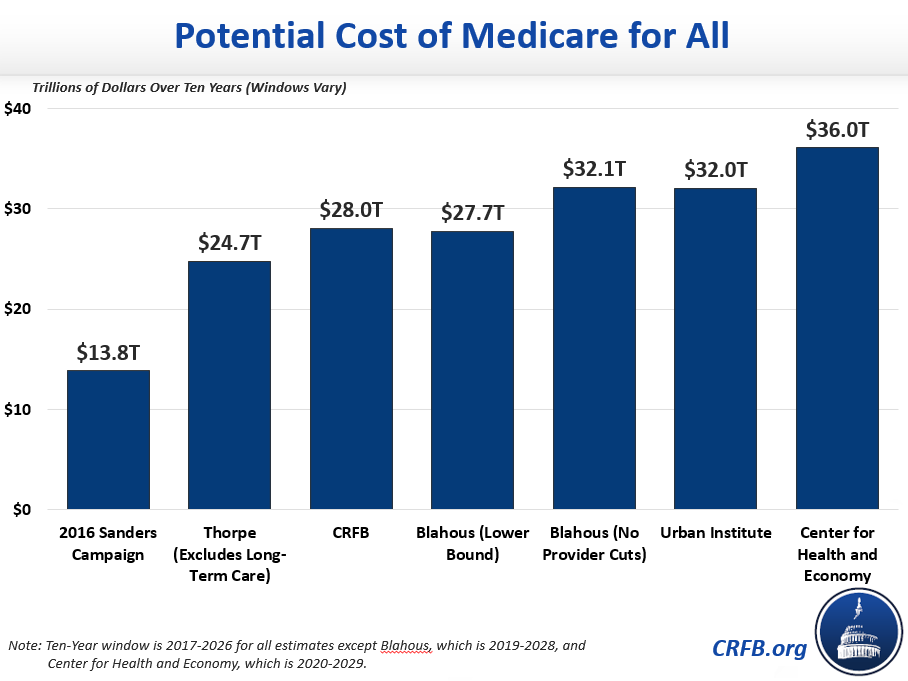
Representative Pramila Jayapal (D-WA), a co-chair of the Medicare for All Caucus, released a bill today that would adopt a single-payer system, where the federal government replaces private health insurance companies as the sole provider of most health care financing. While we are not aware of any estimates of this particular proposal, similar proposals have been estimated to cost the federal government roughly $28-32 trillion over a decade.
Representative Jayapal’s Medicare for All Act would replace nearly all current insurance with a government-run single-payer plan and extend that plan to those who currently lack health coverage. The plan itself would be far more generous than either Medicare or most private coverage, as it would include no deductibles or copayments, would not restrict beneficiaries to networks of care, and would offer a broad suite of benefits including dental care, vision care, transportation for disabled and low-income patients, certain dietary and nutritional care, long-term care, and other long-term services and support. The proposal also establishes a global health budget, moves away from fee-for-service and toward lump-sum payments for many providers, includes a number of measures to hold down drug prices, and makes a variety of other changes to the health care system.
The proposal is broadly similar to Senator Sanders’s proposed single-payer plan introduced during the 2016 Presidential campaign. While the campaign itself estimated that plan would cost the federal government about $14 trillion over a decade, most other estimates that we are aware of are at least twice that high.
At the time, for example, the Committee for a Responsible Federal Budget estimated roughly that the plan would cost $28 trillion through 2026 (we estimated the Sanders plan in particular would also raise $11 trillion of revenue, leading to $17 trillion of net costs). All other estimates come to similar conclusions.
For example, economist Kenneth Thorpe estimated that single-payer health care would cost the federal government $24.7 trillion through 2026, excluding the costs associated with long-term care benefits (likely about $3 trillion). The Urban Institute estimated a $32 trillion cost over the same period, including those long-term care benefits. The Center for Health and Economy (H&E) produced an estimate that the American Action Forum calculates would cost the federal government $36 trillion through 2029.
In addition, former Social Security and Medicare Trustee and current Mercatus Center fellow Chuck Blahous estimated that Medicare for All as proposed in Senator Sanders’s 2017 legislation would cost the federal government $27.7 trillion through 2028 assuming steep provider cuts and $32.1 trillion assuming no provider cuts (these estimates, like most others, assume immediate implementation).
Importantly, these totals represent the increased cost to the federal government, not the change of total national health expenditures. National health expenditures would likely change by no more than a few trillion dollars over decade. The direction of that change is unclear and would depending on the whether the increased cost of expanding coverage (by making health insurance more generous and offering it to more people) is larger or smaller than the amount saved from lower provider payments, drug payments, and administrative spending.
The totals also do not represent debt impact, which would depend not only on the cost to the federal government but also on any funds the government might choose to raise through premiums, taxes, or both. For example, Senator Sanders’s campaign plan included roughly $11 trillion of tax increases, which could fund more than one-third of Medicare for All.
While any new revenue would in part be replacing current premiums, identifying pay-fors still remains a challenge. Enacting this type of Medicare for All would mean increasing federal spending by about 60 percent (excluding interest), and financing a $30 trillion program would require the equivalent of tripling payroll taxes or more than doubling all other taxes.
Supporters of Medicare for All should work to identify new revenue, premiums, and/or spending cuts to finance new federal costs or else scale back their proposal if they are unable to identify sufficient funding.






















 Johnny Liberty, Editor’s Note: Once again there’s more than meets the eye in the stimulus bill that just passed unanimously in the U.S. Senate. Apparently, if you read this article you’ll discover that the Federal Reserve has been granted extreme powers to stabilize the economy (which is the code word for bailing out the banks who have overextended themselves since 2008). Coronavirus is yet another smokescreen for transferring power from the people to the international bankers (not saying COVID-19 isn’t real). Another sad day for the future of freedom in the United States of America.
 By Conner Drigotas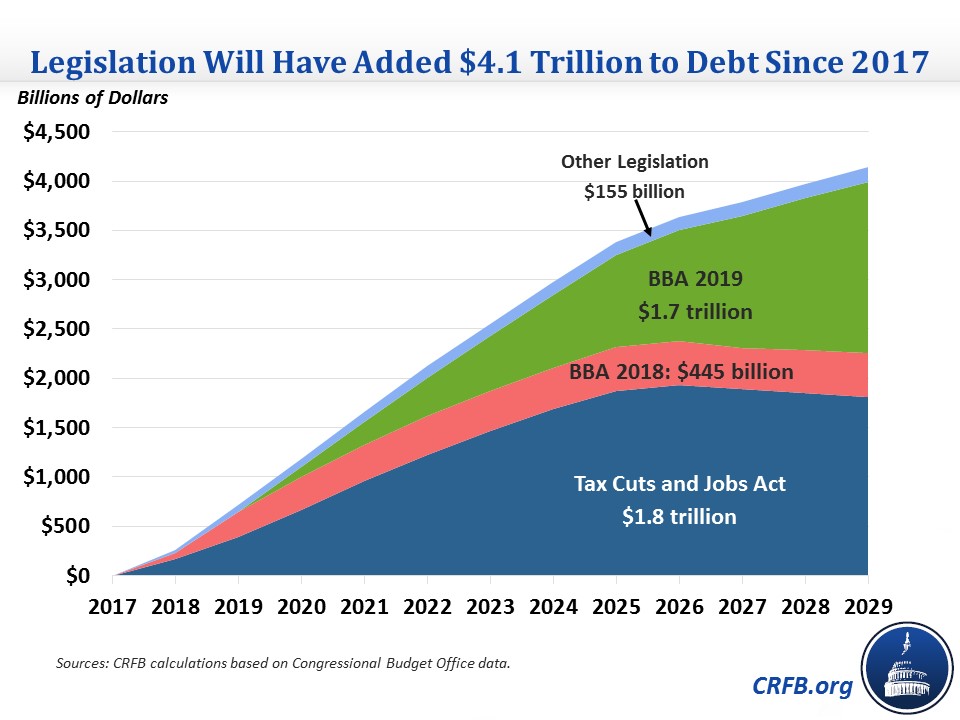
 Liberty International News