Alexandria Ocasio-Cortez is already pulling back the curtain on the inner workings of Congress | CNBC

By Carmen Chapell

Alexandria Ocasio-Cortez is already pulling back the curtain on the inner workings of the Capitol.

The New York Democrat, along with other incoming freshman lawmakers, is trying to usher in a culture of openness that is enabled by a vast social media following. With nearly 3 million followers combined on Facebook, Instagram and Twitter, Ocasio-Cortez has used the platforms to involve her supporters during the transition period before she takes office.

Her enthusiastic and often pugnacious transparency campaign has earned her praise from inside and outside the Beltway. Yet it has also drawn criticism from several corners, including from President Donald Trump’s eldest son. Ocasio-Cortez hasn’t given any indication that she will let up, however.

In a series of pictures and videos on Instagram dubbed “Congress Camp,” she gave an inside look into new-member orientation, from choosing an office to voting for House leadership, while also showcasing the unique quirks of life on Capitol Hill.

“Guys, there are secret underground tunnels between all of these government buildings!” she whispers in one video. In another post, she polls her followers on whether she should choose an office with more space or one “close to our friends.”

But Ocasio-Cortez isn’t just focusing on the novelty of her experience. Last week, she tweeted sharp criticism of an orientation for new members of Congress hosted by Harvard. The event featured corporate CEOs but no labor representatives.

“Our ‘bipartisan’ Congressional orientation is cohosted by a corporate lobbyist group. Other members have quietly expressed to me their concern that this wasn’t told to us in advance,” she tweeted. “Lobbyists are here. Goldman Sachs is here. Where’s labor? Activists? Frontline community leaders?”

Fellow freshman member Rashida Tlaib, D-Mich., echoed her criticisms. Tlaib said that Gary Cohn, former chief economic advisor to President Donald Trump and former Goldman Sachs executive, told the new members at orientation that they don’t “know how the game is played.”

“No Gary, YOU don’t know what’s coming – a revolutionary Congress that puts people over profits,” Tlaib tweeted.

‘Those little things are very real’

Ocasio-Cortez rose to the spotlight after defeating longtime incumbent Joseph Crowley in the Democratic primary for New York’s 14th Congressional District, which encompasses parts of Queens and the Bronx. A self-identified Democratic socialist, she ran on a liberal platform and chose to emphasize her identity as a young woman of color. The 29-year-old’s victory in the general election anointed her as the youngest woman ever elected to Congress.

Ocasio-Cortez’s comments about her new role have also renewed longstanding debates on the financial challenges facing members of Congress and their staff. She has made it personal by revealing her own insecurities about her finances during the transition period.

“I have three months without a salary before I’m a member of Congress. So, how do I get an apartment? Those little things are very real,” she told The New York Times in an interview.

Many lawmakers struggle with the cost of living in Washington, D.C., even on the $174,000 congressional salary, going so far as to sleep in their offices to save on rent costs.

Ocasio-Cortez has also made it a point to talk about the economic conditions of congressional staff. Last week, she tweeted: “It is unjust for Congress to budget a living wage for ourselves, yet rely on unpaid interns & underpaid overworked staff just bc Republicans want to make a statement about ‘fiscal responsibility.'”

Low salaries as well as the prevalence of unpaid internships, which are often the first step to a full-time role, are seen as barriers to a more diverse congressional staff. Ocasio-Cortez pledged to pay her office’s interns $15 an hour, inspiring other lawmakers to make the same commitment.

She has also shared experiences that reveal the growing pains of an increasingly diverse Congress. “People keep giving me directions to the spouse and intern events instead of the ones for members of Congress,” she tweeted during orientation.

The changing face of Congress

Ocasio-Cortez is just one of the 42 women, 38 of them Democrats, part of Congress’ freshman class. They are being heralded as the faces of a new “Year of the Woman.” Ilhan Omar, D-Minn., and Michigan’s Tlaib are the first Muslim women elected to Congress, while Ayanna Pressley, a Democrat, is the first black woman elected to represent Massachusetts. Ocasio-Cortez posted a picture of the four women together on Instagram last month, captioning it “Squad.”

As a result of her high profile, Ocasio-Cortez’s unabashed takes on congressional life have frequently come under fire.

Eddie Scarry, a writer for the Washington Examiner, disputed Ocasio-Cortez’s account of her financial hardships based on her clothing choices.

“Hill staffer sent me this pic of Ocasio-Cortez they took just now,” Scarry tweeted. “I’ll tell you something: that jacket and coat don’t look like a girl who struggles.” The tweet has since been deleted after widespread backlash.

Rep. Sean Duffy, R-Wis., condemned the media for what he viewed as preferential treatment in coverage of Ocasio-Cortez. As a freshman congressman in 2011, Duffy received negative reactions after telling a constituent that he struggles to pay his bills.

“Hmm which headlines and article does media give to GOP and which to a Dem?” Duffy tweeted alongside screenshots of articles referencing himself and Ocasio-Cortez.

Last week, Donald Trump Jr., the president’s eldest son, shared a doctored image on Instagram in which Ocasio-Cortez asks, “Why are you so afraid of a socialist economy?” In the post, President Trump responds, “Because Americans want to walk their dogs, not eat them.” Trump Jr. captioned the meme “It’s funny cuz it’s true!!!”

Ocasio-Cortez fired back, tweeting: “Please, keep it coming Jr – it’s definitely a ‘very, very large brain’ idea to troll a member of a body that will have subpoena power in a month.” Democrats have made clear that they plan to use their new subpoena power in the House to further investigate potential Russian interference in the 2016 elections.

The representative-elect has also received praise for revealing parts of the political system that are typically left in the shadows.

Actress Kerry Washington, who stars in the political drama “Scandal,” commended Ocasio-Cortez’s behind-the-scenes revelations, tweeting, “@Ocasio2018 speaking truth to power. Sharing the NEEDED #BTS of our democracy at work. So grateful.”

“I’m learning more details about how the House actually works over the past two weeks than I ever did in the past 20 years,” one follower tweeted in reply to Ocasio-Cortez.

“Thank you so much for giving us the window into the inside baseball of Congress,” another follower said.

Paul Musgrave, assistant professor of political science at University of Massachusetts Amherst, praised Ocasio-Cortez on Twitter for “treating voters as neither super-sophisticated DC insiders, nor as people who can’t be trusted to make up their own minds, but rather as people who are curious and intelligent but who aren’t experts in DC process.”

“Sometimes,” he added, “you don’t need a new theory of politics to make change, just a willingness to state the obvious.”

Source: CNBC

Trump administration says it won’t return children to immigrant parents in custody, but a judge orders families be reunited | LA Times

Hours after a Trump Cabinet member told Congress that the administration would not reunite migrant children with parents still held in immigrant detention facilities, a federal judge in San Diego ordered the government to begin doing just that.

In a preliminary injunction issued late Tuesday, U.S. District Judge Dana Sabraw ordered the government to reunite nearly all children under age 5 with their parents within 14 days and older children within 30 days.

The administration’s actions related to separating families “belie measured and ordered governance, which is central to the concept of due process enshrined in our Constitution,” the judge wrote. “This is particularly so in the treatment of migrants, many of whom are asylum seekers and small children.”

The order appears to set the stage for a legal clash over a crisis that was created by the White House and has sown increasing levels of fear and confusion.

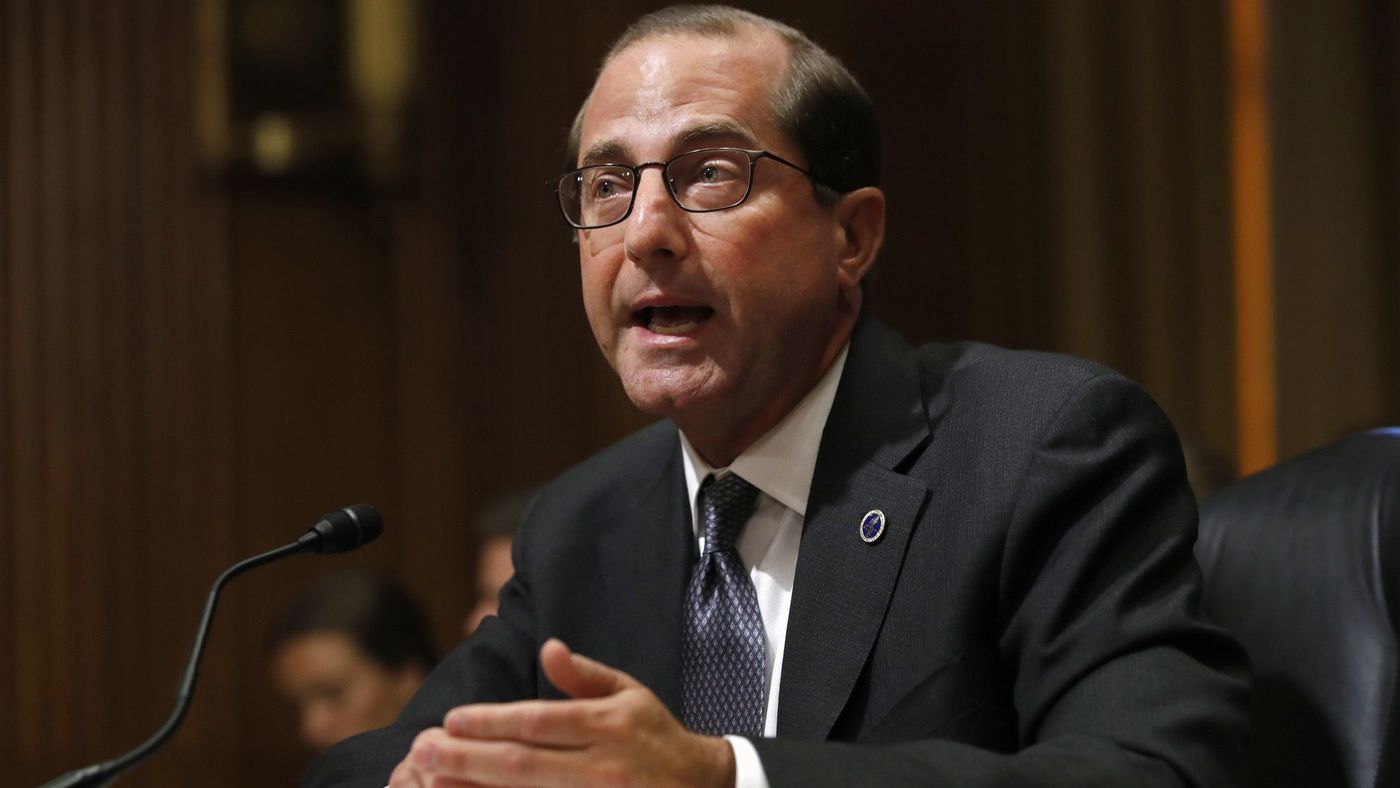
Earlier Tuesday, Health and Human Services Secretary Alex Azar, testifying on Capitol Hill, said the only way parents can quickly be reunited with their children is to drop their claims for asylum in the United States and agree to be deported.

If parents pursue asylum claims, administration officials planned to hold them in custody until hearings are complete — a process that can take months and in some instances years because of a backlog of several hundred thousand cases.

And while that process takes place and the parents are in custody, their children would not be returned to them, Azar said, citing current rules that allow children to be held in immigrant detention for no more than 20 days.

“If the parent remains in detention, unfortunately, under rules that are set by Congress and the courts, they can’t be reunified while they’re in detention,” Azar told the Senate Finance Committee. He said the department could place children with relatives in the United States if they can be located and properly vetted.

Azar’s department has custody of 2,047 children separated from their parents after they were apprehended crossing the border illegally since May. That’s when the Trump administration began enforcing a “zero tolerance” policy that required prosecution of all adults crossing the border — and separate detention of any minors with them.

His statement brought angry protests from Democrats and immigrant advocates.

“The administration is holding children hostage to push parents to drop their asylum claims,” Sen. Dianne Feinstein (D-Calif.) tweeted.

The uncertain fate of the children, and wrenching reports of their plight, has created a political firestorm for the White House and a nightmare for the families affected. In some cases, parents have been deported without their children, or infants and young children have been moved to distant states while their parents await court processing.

The “zero tolerance” policy already has run partially aground over a lack of resources. On Monday, Border Patrol officials announced they had stopped handing over immigrant parents for prosecution because they were running out of beds. The reversal means newly apprehended families, in theory, could be released pending their court dates.

The limit on how long children can be held in immigrant detention facilities stems from a 1997 court ruling known as the Flores settlement. The administration has asked a federal judge to modify those rules and allow families to be held together in custody for longer periods.The Obama administration made a similar request in 2015, but a judge refused.

The White House has also asked Congress to change federal law to allow longer detentions. That process is moving slowly, and President Trump has proved an uncertain ally for Republican leaders, vacillating as to whether he wants new legislation or not.

The House is scheduled to vote on a Republican-drafted bill on Wednesday that would overhaul the immigration system, but its prospects are dim — and it almost certainly would die in the Senate.

Last-minute arguments over what should be in the bill led one of its lead sponsors, Rep. Jeff Denham (R-Turlock), to declare the measure essentially dead.

“At the end of the day it is very clear that the Republicans cannot pass an immigration bill,” Denham said late Tuesday. “I think it’s a very clear message that Democrats and Republicans need to work together on an American solution. That’s the only way this is going to get done.

If the bill fails, as expected, the House may take up narrower legislation focused specifically on family separation. But Congress is set to recess on Thursday for an extended Fourth of July holiday, so the schedule will allow just hours to consider that proposal.

Trump signed an executive order last week that he said would halt the separation of parents and children by detaining families together. Since then, his administration has struggled to articulate a plan to reunite families.

Over the weekend, the departments of Homeland Security and Health and Human Services released a joint statement saying they had come up with a central database to link families and were working on ensuring children stayed in contact with their parents.

On a conference call with reporters Tuesday, Health and Human Services officials refused to say whether they were still receiving children taken from parents at the border. The government has not released data on the ages of children in custody, nor how many in total have been separated or released.

Jonathan White, head of the Office of Refugee Resettlement, a branch of the Health and Human Services Department, said only that the department was working with other agencies “to facilitate reunification with a child as soon as that is practical.”

He suggested the department’s sole responsibility for now “is to determine whether the child has a safe place to go.”

White said his office knew “the status, whereabouts and care of every child” in its custody. “We have always known where all the children are,” he said.

But Azar conceded in his Senate testimony that the department has not yet been able to put all the parents in communication with their children.

“We want every child and every parent to be in communication at least twice a week so that they’re talking, by Skype or by phone,” he said. “We want this to happen.”

He also warned that if parents remain in a detention facility and the agency gives custody of a child to someone else — a relative in the U.S., for example — the parents eventually might have to go to court to get the child back.

“We cannot sort of pull a child back from a relative. We don’t have the legal authority,” he said.

Lawyers decried officials’ decision not to reunite children with their parents in detention as inhumane.

Jodi Goodwin, a south Texas immigration lawyer who mobilized a rapid-response team of attorneys to aid immigrant parents detained at the Port Isabel Detention Center on the Texas Gulf Coast, said officials needed to release parents with ankle monitors or bond so that they can be reunited with their children.

“That’s the only way to end the tragedy that has happened,” she said.

Zenen Jaimes Perez of the Texas Civil Rights Project said parents were so desperate they would waive their rights, drop their asylum claims and agree to deportation, not understanding that even that choice does not guarantee they will see their children again. Of the 400 parents his organization has interviewed, only four have been reunited with their children, he said.

“We know a lot of people are making these decisions under duress, with no counsel, and that is particularly cruel,” he said.

As families grappled with that choice, 17 states — including California — and the District of Columbia filed suit against the administration over its detention policies. The case joins a growing pile of lawsuits against the administration’s policies.

The continued action in Congress and the courts will keep the emotion-charged family separations in the public eye as lawmakers return to their districts four months before the midterm election.

Trump has blamed Democrats for the stalemate in Congress, but he has given wildly mixed signals about what he wants from Republicans.

The president initially said he opposed the compromise bill, then told Republican lawmakers he was “1,000%” for immigration legislation, and then tweeted that Republicans “should stop wasting their time” by trying to pass an immigration bill before the November election.

House Republican leaders acknowledged that they still don’t have the 218 votes needed to pass the compromise bill despite holding 235 seats in the chamber. They blamed Democrats, however, for not supporting their bill.

“Why doesn’t a few Democrats move over? If they are honest about wanting to secure the border, here is the opportunity,” House Majority Leader Kevin McCarthy (R-Bakersfield) said Monday on Fox News.

Few Democrats are inclined to help rescue Trump from a crisis he created. Moreover, Democrats had no role in crafting the bill.

“It’s just a bad bill. It has nothing to do with even being locked out of the process — it’s just a bad bill,” Rep. Pete Aguilar (D-Redlands) said.

At his weekly news conference Tuesday, House Speaker Paul D. Ryan (R-Wis.) wouldn’t discuss a proposed bill targeting only the family separations. A Senate proposal would add 225 immigration judges and expedite court proceedings for families, and there are indications that plan could get a vote this week.

Ryan said he wants to “do as well as we possibly can” in Wednesday’s vote, adding, “If that doesn’t succeed, then we’ll cross that bridge.”

Source: LA Times

The California County That’s Leading the Way in Cutting the Banks Out of Its Economy | Alternet

By Robert Reich

MoneyWhat exactly does it mean for a big Wall Street bank to plead guilty to a serious crime? Right now, practically nothing.

But it will if California’s Santa Cruz County has any say.

First, some background.

Five giant banks – including Wall Street behemoths JPMorgan Chase and Citicorp – recently pleaded guilty to criminal felony charges that they rigged the world’s foreign-currency market for their own profit.

This wasn’t a small heist. We’re talking hundreds of billions of dollars worth of transactions every day.

The banks altered currency prices long enough for the banks to make winning bets before the prices snapped back to what they should have been.

Attorney General Loretta Lynch called it a “brazen display of collusion” that harmed “countless consumers, investors and institutions around the globe — from pension funds to major corporations, and including the banks’ own customers.”

The penalty? The banks have agreed to pay $5.5 billion. That may sound like a big chunk of change, but for a giant bank it’s the cost of doing business. In fact, the banks are likely to deduct the fines from their taxes as business costs.

The banks sound contrite. After all, they can’t have the public believe they’re outright crooks.

It’s “an embarrassment to our firm, and stands in stark contrast to Citi’s values,“ says Citigroup CEO Michael Corbat.

Values? Citigroup’s main value is to make as much money as possible. Corbat himself raked in $13 million last year.

JPMorgan CEO Jamie Dimon calls it “a great disappointment to us,” and says “we demand and expect better of our people.”

Expect better? If recent history is any guide – think of the bank’s notorious “London Whale” a few years ago, and, before that, the wild bets leading to the 2008 bailout – JPMorgan expects exactly this kind of behavior from its people.

Which helped Dimon rake in $20 million last year, as well as a $7.4 million cash bonus.

When real people plead guilty to felonies, they go to jail. But big banks aren’t people despite what the five Republican appointees to the Supreme Court say.

The executives who run these banks aren’t going to jail, either. Apologists say it’s not fair to jail bank executives because they don’t know what their rogue traders are up to.

Yet ex-convicts often suffer consequences beyond jail terms.

In many states they lose their right to vote. They can’t run for office or otherwise participate in the political process.

So why not take away the right of these convicted banks to participate in the political process, at least for some years? That would stop JPMorgan’s Dimon from lobbying Congress to roll back the Dodd-Frank act, as he’s been doing almost non-stop.

Why not also take away their right to pour money into politics? Wall Street banks have been among the biggest contributors to political campaigns. If they’re convicted of a felony, they should be barred from making any political contributions for at least ten years.

Real ex-convicts also have difficulty finding jobs. That’s because, rightly or wrongly, many people don’t want to hire them.

A strong case can be made that employers shouldn’t pay attention to criminal convictions of real people who need a fresh start, especially a job.

But giant banks that have committed felonies are something different. Why shouldn’t depositors and investors consider their past convictions?

Which brings us to Santa Cruz County.

The county’s board of supervisors just voted not to do business for five years with any of the five banks felons.

The county won’t use the banks’ investment services or buy their commercial paper, and will pull its money out of the banks to the extent it can.

“We have a sacred obligation to protect the public’s tax dollars and these banks can’t be trusted. Santa Cruz County should not be involved with those who rigged the world’s biggest financial markets,” says supervisor Ryan Coonerty.

The banks will hardly notice. Santa Cruz County’s portfolio is valued at about $650 million.

But what if every county, city, and state in America followed Santa Cruz County’s example, and held the big banks accountable for their felonies?

What if all of us taxpayers said, in effect, we’re not going to hire these convicted felons to handle our public finances? We don’t trust them.

That would hit these banks directly. They’d lose our business. Which might even cause them to clean up their acts.

There’s hope. Supervisor Coonerty says he’ll be contacting other local jurisdictions across the country, urging them to do what Santa Cruz County is doing.

Robert B. Reich has served in three national administrations, most recently as secretary of labor under President Bill Clinton. He also served on President Obama’s transition advisory board. His latest book is “Aftershock: The Next Economy and America’s Future.” His homepage is www.robertreich.org.

Source: Alternet

Republican Judge Strikes Down Obama’s Immigration Order | ThinkProgress

By Ian Millhiser

AntiImmigrationIn an extraordinary opinion that transforms a routine sentencing matter into a vehicle to strike down a politically controversial policy, a George W. Bush-appointed judge in Pennsylvania declared President Obama’s recently announced immigration policy unconstitutional on Tuesday. Because the policy “may” apply to a defendant who was awaiting sentencing of a criminal immigration violation, Judge Arthur Schwab decides that he must determine “whether the Executive Action is constitutional.” He concludes that it is not.

Schwab spends just five pages discussing his rationale for this conclusion, an unusually short amount of legal analysis for a complex question regarding the scope of the executive branch’s power to set enforcement priorities. Notably, Schwab also spends nearly three pages discussing quotes from President Obama which, the judge claims, indicate that Obama once thought his present actions are illegal — even though Schwab eventually admits that these quotes are “not dispositive of the constitutionality of his Executive Action on immigration.”

Half of Schwab’s analysis of the Executive Action’s constitutionality is devoted to a strawman. Noting that Obama cited Congress’s failure to act on immigration in his speech announcing the new policy, Schwab devotes half of his analysis of the policy’s constitutionality to explaining that “Inaction by Congress Does Not Make Unconstitutional Executive Action Constitutional.” He’s right on this point, just as Schwab would be correct if he argued that President Obama’s authority to create this new policy does not come from a magic hat that Obama keeps in the Oval Office. But it’s somewhat curious that the judge feels the need to present Obama’s political rhetoric as if it were a constitutional argument and then tear that non-argument down.

The remainder of Schwab’s brief constitutional analysis concludes that the new policy “Goes Beyond Prosecutorial Discretion — It is Legislation.” Notably, however, Schwab cites no judicial precedents of any kind to support this conclusion.

One case that Schwab does not cite is Arizona v. United States, where the Supreme Court said that the executive branch has “broad discretion” in matters of deportation and removal. As Arizona explains, a “principal feature of the removal system is the broad discretion exercised by immigration officials.” Executive branch officials, moreover, “must decide whether it makes sense to pursue removal at all.”

Notably, Arizona also indicates that this broad discretion flows from federal immigration law — i.e. laws that were enacted by Congress. This matters because Schwab’s opinion concludes that Obama’s “unilateral” policy “violates the separation of powers provided for in the United States Constitution as well as the Take Care Clause.” In essence, Schwab concludes that the president lacks the authority to act in the absence of authorization by Congress. Schwab does not even discuss the possibility that Obama’s actions may actually be authorized by Congress. Thus, even if Schwab’s reading of the Constitution is correct — itself a questionable proposition — the judge does not even discuss another major source of law that can justify the president’s actions.

Another problem Schwab does not address in his constitutional analysis is how, exactly, the executive branch is supposed to deport the many millions of undocumented immigrants in the United States if it is not allowed to set enforcement priorities among them. As the Justice Department explained in a memo discussing the legality of Obama’s policy, “there are approximately 11.3 million undocumented aliens in the country,” but the executive only “has the resources to remove fewer than 400,000 such aliens each year.”

The fact that Congress only provided sufficient resources to the Obama administration to remove a small fraction of the undocumented immigrants within the United States is itself a legislative judgment that most of these immigrants should not be removed. As the Supreme Court explained in Heckler v. Chaney, because federal agencies typically lack the resources to “act against each technical violation of the statute it is charged with enforcing,” they necessarily must set enforcement priorities. Moreover, these priorities generally should not be second-guessed by judges because “[t]he agency is far better equipped than the courts to deal with the many variables involved in the proper ordering of its priorities.”

So Schwab’s legal analysis is thin. He spends nearly as much time making what appear to be political attacks on the president as he does evaluating actual legal matters. And what little legal analysis he does provide fails to cite key Supreme Court decisions that seem to contradict his conclusion. Judge Schwab traveled far along a very thin branch to reach this decision, and he anchored his decision with little grounding in legal authorities.

Moreover, it’s not clear what effect, if any effect at all, this decision will actually have. The judge does not issue an injunction halting the new immigration policy. Nor does he even state with certainty that the actual defendant in the case before his court will benefit from an order declaring the immigration policy unconstitutional.

Yet, despite these weaknesses in his opinion, immigrant families would be wrong to write off the threat his decision could present. There was a time when the constitutional challenges to the Affordable Care Act were widely dismissed by legal experts — Ronald Reagan’s former solicitor general said he would “eat a hat which I bought in Australia last month made of kangaroo skin” if the Supreme Court struck the law down — yet these challenges rapidly gained momentum after a few Republican judges reached out to strike the law down. The same can be said about the legal theory in King v. Burwell, a lawsuit currently before the Supreme Court that seeks to gut much of Obamacare.

It remains to be seen whether Schwab’s opinion — thin though its reasoning may be — will also grant legitimacy to the case against the president’s immigration policy.

Source: ThinkProgress


Senator Professor Warren is Tired of Reasoning with You People | Esquire

By Charles P. Pierce

ElizabethWarrenIt may have escaped your attention, what with this week’s revelations that America’s foreign policy took a right turn at Torquemada and didn’t stop until it got to Vlad The Impaler — And it should be said, for the purposes of apt historical parallels, that Vlad used to impale his victims in the same manner in which the CIA apparently fed recalcitrant prisoners — but the Congress is preparing to give away the store. A “bipartisan” deal has been crafted to fund the government through next September. Please forgive any typos in this post, as it is difficult for me to type, having Krazy Glue’d my wallet to my hands.

“This bill fulfills our constitutional duty to fund the government, preventing damage from shutdown politics that are bad for the economy, cost jobs and hurt middle class families,” said Maryland Sen. Barbara Mikulski, a Democrat, and Kentucky Rep. Hal Rogers, a Republican, in a joint statement. “While not everyone got everything they wanted, such compromises must be made in a divided government. These are the tough choices that we must make to govern responsibly and do what the American people sent us here to do.”

Hang on. I’ll be back in a minute. I am now attaching the wallet to my palms with tenpenny nails.

This deal does a lot of things, many of them horrible. It is a veritable compost heap of Republican goodies. The IRS gets defunded, so that phony “social-welfare” political front groups no longer will be inconvenienced in their paperwork. The EPA takes a huge whack, so that conservative bundlers and the oligarchs whom they bundle no longer will be inconvenienced by people who wish to breathe, and who believe their water should be neither yellow nor flammable. But the real Saturday end of it is a provision that guts a key provision of the Dodd-Frank Wall Street reform bill that was passed so that it would be a little harder in the future for people to wreck most of the economy and then steal what’s left. Specifically, Congress is preparing to open the casino again.

At issue is the “swaps push-out” rule, which requires banks to move derivatives trading out of taxpayer-backed subsidiaries. Derivatives are risky financial instruments that contributed to the 2008 crash. Allowing banks to conduct those trades on the assumption that taxpayers would bail them out if the deals went sour was not only bad for taxpayers; it also raised the value of the trades and thus effectively acted as a subsidy for the banks. Financial institutions, obviously, weren’t thrilled with the new rule. In 2013, lobbyists for Citigroup gave lawmakers a proposal to exempt a wide array of derivatives, and it subsequently appeared in a bill approved by a House committee that year.

Derivatives are what nearly sank the whole thing the last time around. And now, the Congress has decided, in the same kind of “bipartisan” way that brought us the repeal of Glass-Steagall and the Commodity Futures Trading Act during the Clinton Administration, to let these guys gamble with taxpayer money again. This is such a spectacularly bad idea that it’s hard to believe that its supporters didn’t sneak it into the bill the way they did just as a goof, to see what they could get away with, those scamps.

“Hey, Bob. Let’s see if we can get them to pass the Free Smack Subsidy next! Somebody call Luntz and have him think up a name for it. The Opiate Liberation And Personal Freedom Liberty Act Of 2014, or something.”

The arrangement is the result of a “bipartisan compromise” engineered by Mikulski by which Wall Street gets to oil up the roulette wheel again in exchange for increased funding for the Commodity Futures Trading Commission, which is supposed to oversee things like derivatives training, and which the incoming, and more radical, Republican congressional majority surely will chloroform entirely the first chance it gets. Meanwhile, things are being arranged to put us all on the hook again for Wall Street’s gambling jones. And Senator Professor Warren, who can see a church by daylight, is having none of it.  She rose yesterday to excoriate the covert sellout and, by extension, the people in both parties who connived to bring it about. You want bipartisanship? This is bipartisanship.

“I come to the floor today to ask a fundamental question — who does Congress work for? Does it work for the millionaires, the billionaires, the giant companies with their armies of lobbyists and lawyers? Or does it work for all of us?”

I’m not entirely sure that she has the votes to stop this abomination. People want to go home for Christmas. Everybody’s drunk deeply of the egg nog in the rancid punchbowl of  “compromise” for its own sake.  Right now, she’s counting on the House to strip it from the bill, but a large portion of the House majority is crazy, and a large portion of the House minority is hiding behind the drapes, so I’m not optimistic. (Nancy Pelosi has gotten ferocious on the issue, though, so we’ll see.) It will be interesting to see if she exercises her right to talk the provision to death against what will be a well-organized counterattack by the Very Serious People who will sing in one voice the praises of “bipartisan” governance against this noisy obstructionist. Nothing in her career so far is as serious a gut check as this one is. The inserted provision strikes at the very heart of everything that made her a senator in the first place. It will be interesting to see how many people have her back.

And this is coming at the same time as her campaign against Antonio Weiss, the Lazard executive who’s the president’s nominee to be Undersecretary of The Treasury for Domestic Finance, something that has given severe agita to the financial press, especially Andrew Ross Sorkin of The New York Times, who’s carried so much water for some of these guys that you could fly him over a forest fire to help put it out. Part of Warren’s problem with Weiss is a going-away goodie he got from Lazard that surprised even my cynical mind. Lazard will pay Weiss a $21 million bonus just for taking the Treasury job, in which he’ll be intimately involved with the industry Weiss is now leaving, however temporarily. How does this not seem to be a form of pre-emptive bribery? Used to be you needed a quo for every quid. And both of these fights together are the best arguments I can think of for why MoveOn and Democracy For America, both of which are trying to dragoon Warren into a quixotic presidential run, should shut the fk up.

Even the shadow of the possibility of a presidential campaign makes it easier to characterize Warren’s positions here as political grandstanding. Oh, look. Here’s Chris Cillizza of The Washington Post to do that very thing.

Speeches like the one Warren gave Wednesday will just fuel chatter about why she should challenge Hillary Rodham Clinton in two years. And she knows it.

Yeah, it’s not that she’s ever been concerned about how the country’s fiscal policy is under the control of the forces that nearly demolished it, or that she understands what the reopening of the casino will mean. It’s all about the “chatter.” Stop it, all of you. She’s right where she belongs. You don’t put a lion in a horse race.

Source: Esquire


Proposed Federal Bill Would Prevent States, FDA, And Anyone Else From Informing Consumers Whether Food Is Bioengineered | Emord & Associates Blog

By Eric Awerbuch

EmordandAssociatesIn April, 2014, five members of Congress introduced a bill, H.R. 4432 (hereinafter “the Bill”) seeking to regulate, among other things, the labeling of bio-engineered food products.[i]  The Bill, also known as the “Safe and Accurate Food Labeling Act of 2014,” is remarkable in that it:  1) prohibits the States from regulating the labeling of bio-engineered foods; 2) gives the FDA the sole authority to regulate the labeling of bio-engineered foods, but severely restricts how the FDA can regulate the labeling of bio-engineered foods; 3) allows companies to voluntary label their products as bio-engineered when they so desire, subject to very few restrictions; and 4) prohibits under any circumstances the FDA’s ability to decide in the future whether bio-engineered foods are less safe than foods not bio-engineered.  Each of these points is discussed in detail below.

First, if the Bill passes, States will not be able to enact any laws regulating the labeling of bio-engineered foods.  Section 104(c) of the Bill explicitly states that:

No State or political subdivision of a state may directly or indirectly establish under any authority or continue in effect as to any food in interstate commerce any requirements for the labeling of a food by virtue of its having been developed using bioengineering, including any requirements for claims that a food is or contains an ingredient that was developed using bioengineering.

The quoted language would have the effect of nullifying efforts in at least 20 states to require mandatory labeling for foods that contain genetically modified organisms.[ii]  For example, Vermont enacted a law, effective July 1, 2016, that will require foods produced from genetic engineering be labeled as such.[iii]

Instead of allowing states to regulate the marketing of bio-engineered foods, the Bill purports to give the FDA such authority.  However, the FDA’s authority to regulate labeling of bio-engineered foods is greatly restricted by the terms of the Bill.  Specifically, the FDA may only require bio-engineered food labeling when it determines that 1) there is a “material difference” between the bio-engineered food and its comparable marketed food, and 2) where that difference “is necessary to protect health safety” or to prevent false or misleading labeling.[iv]  Even if those two elements exist, the FDA can only require specific labeling that “would adequately inform consumers of such material difference.”[v]  Stated differently, not only can the States not require genetically modified foods to be labeled as genetically modified, the FDA cannot even require that labeling, unless the FDA can meet the two elements identified above.  Even where the FDA can meet those two elements, the mandatory labeling must be narrowly tailored to inform consumers of the specific “material” difference between the bio-engineered food and its similar, non-bio-engineered counterpart.

What exactly is a “material difference” requiring that companies inform consumers of the difference?  The bill provides three types of differences which are considered to be material.  The first type of “material difference” is a difference that “significantly alters the characteristics, including the functional or compositional characteristics, of a food, such that the common name no longer adequately describes the food.”[vi]   It is difficult to know when such a situation would arise because “significantly alters” is not defined.  Therefore, should the Bill pass, the FDA would be entitled to a great amount of discretion to determine whether or not a bio-engineered product is “significantly altered.”  See Chevron U.S.A., Inc. v. Natural Res. Def. Council, Inc., 467 U.S. 837, 843 (1984) (explaining that an agency’s construction of a statute it administers is owed deference when “the statute is silent or ambiguous” on the issue).  Given the FDA’s conclusions that there is no material difference between bio-engineered food and non-bio-engineered food, it is highly unlikely that the FDA would ever require mandatory labeling when left to their discretion.[vii]  Indeed, while the statute does not define differences that are not material, it does state that the “use of bio-engineering does not, by itself, constitute a material difference.”  Id. at § 424(e).

GMOCornFurthermore, even if there was such a material difference, given that the labeling must only “adequately inform consumers of such material difference,” this requirement could be met, for example, if the company selling the bio-engineered product simply markets the product in a different name than the “similar” non-bio-engineered product.  It seems that sweet and firm, bio-engineered “tomatoes” would be able to be marketed as “specially formulated sweet and firm tomatoes.”  That label would inform consumers of the material difference—that the new tomatoes are sweet and firm—without even revealing the fact that they are bio-engineered.

The second type of “material difference” is a difference that “results in a significantly different nutritional property in the food produced from, containing or consisting of the bio-engineered organism.”[viii]    Once again, given that the labeling must only “adequately inform consumers of such material difference,” a company could label bio-engineered corn with higher protein content than non-bio-engineered corn as “high protein corn,” without ever revealing the fact that the corn is bio-engineered.

The third difference resulting in a “material difference” is where the bio-engineered food contains an allergen that consumers would not expect to be present based upon the name of the food.[ix]  A company could simply label the product with a warning such as, “warning: this product contains [allergen.]”  Again, the company would not have to disclose the fact that the product is bio-engineered.  Indeed, given that the labeling must only “adequately inform consumers of such material difference,” it is likely that the FDA will never be authorized to require that companies disclose the fact that a product is bio-engineered when narrower labels adequately inform consumers of the material differences.

While mandatory labeling is allowed only in narrow circumstances under the Bill, companies would have great opportunity to voluntarily label their bio-engineered products as they so choose.  The Bill prevents the FDA from prohibiting persons “from disclosing voluntarily on the labeling of food developed with the use of bio-engineering the manner in which the food has been modified to express traits or characteristics that differ from its comparable marketed food.”[x]  Thus, a company is free to market the differences between their bio-engineered product and similar, non-bio-engineered foods. For example, a company selling bio-engineered tomatoes may claim that “our bio-engineered tomatoes benefit the environment more than non-bio-engineered tomatoes because our tomatoes consume less water during the growing process than non-bio-engineered tomatoes.”  Companies will also be free to voluntary advertise, other than in labeling, that the food was developed with the use of bio-engineering.[xi]

The Bill also regulates the labeling of foods that are not bio-engineered.[xii]  It explicitly prohibits the labeling of non-bio-engineered foods from suggesting that “foods developed without the use of bio-engineering are safer than foods produced from, containing, or consisting of a bio-engineered organism.”[xiii]  In a day and age where courts routinely defer to agencies because agency’s have “expertise” in certain, factual issues, see Marsh v. Oregon Natural Resources Council, 490 U.S. 360, 377 (1989) (explaining that the Court defers to the agency’s analysis when the issue requires a high level of technical expertise), it is alarming that, through the Bill, Congress is making a scientific determination that non-bio-engineered foods are not safer than bio-engineered foods.  While the FDA does not currently consider non-bio-engineered to be safer than bio-engineered foods,[xiv] the Bill prevents FDA from ever reconsidering that opinion.

The Bill will have the ultimate effect of keeping Americans in the dark about information they may deem material to their purchasing decisions.  By legislating that the fact that a food is bio-engineered is not per se material, without any supporting evidence, the Bill seeks to foreclose any opportunity for a party to prove with empirical evidence that, in fact, the fact that a food is bio-engineered is indeed material to consumers’ purchasing decision.  It is plausible that, if the Bill passes, no federal agency or any other governmental entity would be allowed to require companies to disclose the fact that their product is bio-engineered in any circumstances.  The Bill will act to, at best, fail to inform consumers that they are consuming bio-engineered products, and, at worst, mislead consumers into believing that there are no bio-engineered products on the market.


[i] See H.R. 4432, 113th Cong., 2d Sess. (2014), available at https://www.congress.gov/113/bills/hr4432/BILLS-113hr4432ih.pdf.

[ii] Jenny Hopkinson, GMO labeling bill would trump states, Politico (Apr. 9, 2014, 4:57 PM), http://www.politico.com/story/2014/04/gmo-labeling-bill-105548.html.

[iii] See 9 V.S.A. §§ 3043(a)–(b).

[iv] H.R. 4432, supra note 1, at § 104(c).

[v] Id. at § 424(e).

[vi] Id. at § 424(g)(4)(A).

[vii] See Draft Guidance for Industry Voluntary Labeling Indicating whether Foods have or have not been Developed using Bioengineering, 2001 WL 34768203 (F.D.A. Jan. 17, 2001), available at http://www.fda.gov/Food/GuidanceRegulation/GuidanceDocumentsRegulatoryInformation/LabelingNutrition/ucm059098.htm.

[viii] Id. at § 424(g)(4)(B).

[ix] Id. at § 424(g)(4)(C).

[x] Id. at § 425(b)(3)(A).

[xi] Id. at § 425(b)(3)(B).

[xii] See generally, Id. at § 425.

[xiii] Id. at § 425(a)(2)(C).

[xiv] See supra, note vii.

Source: Emord & Associates Blog

Vermont just passed the nation’s first GMO food labeling law. Now it prepares to get sued | Washington Post

By Niraj Chokshi

Vermont on Thursday became the first state in the nation to require the labeling of genetically engineered foods.

Gov. Peter Shumlin (D) signed that mandate into law on Thursday afternoon, saying in a statement “we believe we have a right to know what’s in the food we buy.” The new law represents a significant victory for advocates who have for years pushed such measures at the state and local level. But there remains one more hurdle to overcome: a likely lawsuit.

There’s no guarantee of legal action, of course, but legislators, officials and advocates are preparing for the state to be sued over the new law. Last month, state Attorney General Bill Sorrell told Vermont Public Radio that he would be “very surprised” if the state isn’t sued. And officials were so sure of a challenge that the measure itself creates a $1.5 million legal defense fund, to be paid for with settlements won by the state. They think it’s coming, but they also say they’re ready.

“The threat of a lawsuit worked for a while, but now it doesn’t work anymore,” says Ronnie Cummins, national director of the Organic Consumers Association, whose organization has for years worked with activists and lawmakers in Vermont on the issue. “I think they may go ahead and sue and do it rather quickly in the hopes that it may gather momentum,” he added, referring to biotech industry groups.

Other states have pursued similar measures, but Vermont’s law will be the first of its kind. Connecticut and Maine passed labeling requirements, but with trigger clauses requiring multiple other states to pass labeling requirements before their own go into effect. At least 25 states have considered such legislation, according to a recent report on labeling requirements from the nonprofit Council for Agricultural Science and Technology. And advocates are hopeful they will get a measure on the Oregon ballot this year.

Industry groups argue that such laws are costly and bad for consumers. But even some academics have questioned the reasons for implementing a labeling requirement.

That recent report — authored by professors from the universities of California, Illinois and Missouri — found no science-based reason for singling out genetically engineered foods. They also suggested that such requirements could have possible trade implications — many of the labeling requirements in other countries violate World Trade Organization agreements, they write — and that food costs could potentially rise if companies decide to use non-modified ingredients instead of simply slapping a genetically modified organism (GMO) label on products. (If they opt to comply with labeling requirements instead, costs could be minimal.)

Proponents argue that the science behind genetically modified food is far from conclusive and ask why consumers should take risks without knowing what they’re eating. If companies truly stand behind the safety of GMO foods, they shouldn’t worry about having to identify them, advocates for labeling argue.

Whatever the wisdom of labeling policies, though, Vermont is set to move forward with its requirement. Cummins and others are relatively calm about the prospect of lawsuits, though, because they’re prepared. Advocates expect industry will challenge the law on three constitutional grounds, none of which they expect to be successful (of course). Here’s how the food industry may fight back and why labeling proponents think they can win, according to their legal analyses.

Sponsor Generated Content Smart parking to the rescue

Through technology and data, parking systems are improving city congestion. READ MORE

1. The First Amendment argument

The first argument that industry is expected to make in challenging Vermont’s GMO law is that it violates commercial free speech rights under the First Amendment. (Businesses have limited free speech protections based on the benefit of free-flowing information to an open society.)

The Supreme Court has established two tests for reviewing whether such rights have been violated, according to two legal analyses of Vermont’s law. Under one test — from Zauderer v. Office of Disciplinary Counsel of the Supreme Court of Ohio — the U.S. Supreme Court found that requiring commercial speech is considered constitutional if the required speech conveys “purely factual information in support of a legitimate government interest,” according to a memo from Emord & Associates, a food and drug law firm. In other words, government can require businesses to make factual statements if it’s in the service of the public good in some way.

The other First Amendment test revolves around whether a state can restrict commercial speech. It stems from New York’s attempt,  in the interest of conserving energy, to ban utilities from promoting use of electricity. The Supreme Court overturned the ban, challenged by Central Hudson Gas & Electric. In so doing, the court set up a four-part test, according to another memo from the Vermont Law School’s Environmental and Natural Resources Law Clinic, which represents the Vermont Public Interest Research Group. A limit on commercial speech must meet four requirements, the court found:

  1. First, the court has to decide that the speech is protected, meaning it must be about legal activity and not be misleading.
  2. Second, the government has to claim a substantial interest in limiting the speech.
  3. Third, the policy in question has to “directly advance” that interest.
  4. Fourth, that policy must not overreach in achieving its goal.

Both legal memos and labeling advocates come to the same conclusion: a labeling law will likely pass either test.

2. Does federal law trump state law?

Another argument that proponents of GMO labeling expect to hear is that Vermont’s new law stomps on territory covered by the federal government. There are three conditions under which federal law trumps state law, a process known as preemption, according to the Law Clinic memo. They are known as express preemption, field preemption and conflict preemption.

Express preemption is when Congress explicitly says a federal law trumps state laws. Both memos conclude that it has not done so with such labeling requirements, which don’t explicitly govern genetically modified foods. A conflict preemption exists when it’s impossible to comply with both federal and state law. Again, federal regulations don’t touch on the use of “genetically enginereed,” “natural” or similar terms, so it’s possible for a business or individual to comply with federal and state labeling requirements, both memos find. Finally, federal law trumps state law when it’s clear that the federal interest in a field is so great that it’s assumed to be the one in charge. In that instance, “congressional intent to supersede state laws must be ‘clear and manifest,’” which neither memo finds it is.

3. Does it interfere with interstate commerce?

The third challenge labeling proponents expect to hear is that the GMO law unconstitutionally interferes with interstate commerce. While the Constitution’s Commerce Clause grants Congress the authority to regulate interstate commerce, it is also understood to implicitly limit state powers to do the same.

The Supreme Court has in the past applied two tests in assessing whether a policy violates the clause. The first is whether a law discriminates against interstate commerce — in other words, does it explicitly favor commerce within the state over commerce between states.

Vermont’s GMO law treats Vermont companies the same as companies based in other states, so advocates are confident it would survive that first test. The second test would ensure that any burden on interstate commerce — e.g. increased costs of labeling GMO foods — are fairly balanced with the local benefits the law provides, such as protecting public health and the environment. Again, advocates conclude the law is balanced.

Source: Washington Post
Read Also: Vermont GMO Labeling Law is Constitutional Under the First Amendment

Panel to NSA: Change your ways — or else | Cowboybyte

NSALawmakers bluntly warned the administration it will lose its sweeping surveillance powers if major changes aren’t made at the National Security Agency (NSA).

Members of the House Judiciary Committee said Section 215 of the Patriot Act, which is set to expire next summer, will be dissolved unless the administration proposes broad changes to the NSA’s collection of phone records.

Rep. James Sensenbrenner Jr. (R-Wis.), who wrote the Patriot Act and its two reauthorizations, told Deputy Attorney General James Cole that the administration was on the hook to find a workable alternative.

Source: Cowboybyte

First Step Towards Nullification: Michigan Governor Signs Anti-NDAA Bill into Law | 10th Amendment Center

StateofMichiganWith a few pen strokes, Michigan Gov. Rick Snyder took the first step in getting the Great Lakes State out of the indefinite detention business.

On Thursday, Snyder signed bill prohibiting any state agency in Michigan from cooperating with the U.S. military if it attempts to indefinitely detain a U.S. citizen without due process.

SB094 bars any state agency, employee, agency of a political subdivision of the state and members of the Michigan National Guard from aiding “an agency of the armed forces of the United States in any investigation, prosecution, or detention of any person pursuant to section 1021 of the national defense authorization act for fiscal year 2012, if such aid would place that state agency, political subdivision, employee, or member of the Michigan national guard in violation of the United States constitution, the state constitution of 1963, or any law of this state.”

The bill unanimously passed the Senate 37-0 last March and gained House approval 109-0 earlier this month.

Sen. Rick Jones (R – 24th) sponsored the bill. Rep. Tom McMillin (R – 45th), a vocal supporter for blocking state cooperation of indefinite detention, was instrumental in getting the bill through the House.

“Pushing back against the feds is important. Michigan now joins Virginia, California and Alaska. Congrats to all who helped over the last two years to make this happen – like Dennis Marburger, Justin Amash, Shane G Trejo, David A. Dudenhoefer, Bill Sage, Mike Maharrey and Tony DeMott. Thanks also to Lt. Gov. Brian Calley for helping me get it through the legislature and working with the governor’s office to ensure he and his legal staff understood the issue and was comfortable signing it,” McMillin said in a Facebook post.

Jones said the new law fits well into Michigan’s tradition of protecting basic due process.

“Historically, Michigan first asserted 10th Amendment rights in 1855 when we passed a law to block the Fugitive Slave Act. I thought of this great history as I pushed the bill to nullify the NDAA,” he said. “No US citizen should have to fear being thrown into jail or prison without charges. I got support from both sides of the political spectrum. With the governor’s signature Michigan states no local police, state police, sheriff or Michigan National Guard will assist the feds with holding a US citizen.”

By refusing to cooperate with provisions written into the NDAA, Michigan will make it much more difficult for the feds to indefinitely detain somebody in that state. The federal government almost always depends on state and local cooperation. This bill would strip that away. As Judge Andrew Napolitano said recently, such widespread noncompliance can make a federal law “nearly impossible to enforce” (video here).

Tenth Amendment Center national communications director Mike Maharrey called the bill a great first step, but noted more work remains in Michigan to fully nullify indefinite detention.

“This is a great step forward in protecting the basic due process rights of people in Michigan and gives activists there something to build on,” he said. “Moving forward, I would love to see the Michigan legislature expand the policy in two ways. First, I would like to see it include protection for all people, not just U.S. citizens. After all, every person has a right to basic due process, no matter who they are or where they are from. Second, I would like to see a bill expanding the ban on cooperation to any future federal law or regulation that purports to allow indefinite detention. No federal act can justify kidnapping. None.”

SB094 will serve as the first step and activists in the state will need to continue pressing the issue. By including a caveat – if such aid would place that state agency, political subdivision, employee, or member of the Michigan national guard in violation of the United States constitution, the state constitution of 1963, or any law of this state”  – the bill is not an express prohibition.  Rather, since no official determination has been made on such constitutionality as of yet, it leaves the decision of constitutionality to discretion. But, the new law does provide legal backing for those sheriffs, law enforcement officers, and other agencies and employees, who refuse to assist the federal government in such activities based on their own constitutional determination.  As Sheriff Richard Mack has taught around the country for years now, this is what should be done all the time already.  (visit the Constitutional Sheriffs and Peace Officers Association for more information)

The new law will create a climate for each local community in the state – counties, cities, towns, etc – to step up and get involved. To give the bill teeth, activists will need to take action at a local level – to press their local governments to pass legally-binding ordinances to give the new state law additional force. The local legislation would do the following:

a) Express full support for the new state policy to “refuse to provide material support for or to participate in any way with the implementation within this state of any federal law that purports to authorize indefinite detention of a person within Michigan.”

b) Create an express prohibition on the use of any local government assets – funds, employees, and the like – to provide material support for or participate in any way with federal indefinite detention.

Once the state is blanketed with localities which have passed such measures, the practical effect would be even stronger than if SB94 had ordered them to do the same.  Reaching this point would mean that support for the effort would be well into the mainstream around the state, and that resolve to ensure the resistance continues to victory is likely much stronger.

ACTION AND TRACKING:

To track the status of similar legislation in states around the country, visit this link

Click on your state and follow the recommended action steps to support.

Source: 10th Amendment Center

Mexican Congress passes bill opening oil industry to U.S., others | CBS News

MexicoProtestsMexico’s Congress voted Thursday to open the country’s moribund state-run oil industry to foreign and domestic investors, casting aside nationalist opposition to approve the most dramatic energy reform in seven decades.

The 353-134 vote will allow the government to give private companies contracts and licenses to explore and drill for oil and gas, deals now prohibited under Mexico’s constitution.

The final step, approval by 17 of Mexico’s 31 states, is widely seen as assured.

The state-run oil company, Petroleos Mexicanos, or Pemex, has had a monopoly since the government took over operations of foreign oil companies in 1938, a move that has been revered ever since as a symbol of national sovereignty.

Opponents say they fear that multinationals, especially from the U.S., will once again regain the sort of domination they had over Mexico’s oil before 1938. Mexico remains one of the top five crude exporters to the U.S., shipping more than 1 million barrels a day.

Leftist lawmakers tried to block discussion of the measure on Wednesday by seizing the main chamber of the House of Deputies, blocking access with chairs and tables.

When the debate was moved to another room, they dragged out discussion for 20 hours before the measure was finally approved.

“The homeland is not for sale! The homeland is to be defended!” they shouted while holding protest signs and Mexican flags.

One congressman of the leftist Democratic Revolution Party, Antonio Garcia Conejo, undressed during a speech Wednesday to dramatize his assertion the bill is a “plunder of the nation.”

But most oil analysts had a positive view of the bill hashed out by President Enrique Pena Nieto’s Institutional Revolutionary Party and the conservative National Action Party.

They say major change is needed to rescue Mexico’s oil industry, where production has declined, and where Pemex hasn’t had the finances or expertise needed to tap the country’s vast deep-water and shale reserves.

While oil output has been rising in the U.S. and Canada, Mexico’s production has fallen 25 percent since 2004 despite increased investment.

According to Pemex statistics, the company has nearly 14 billion barrels in proven reserves and up to 115 billion barrels in prospective reserves, about half of which are in deep water or shale oil and gas.

“The opening of Mexico’s markets to put it bluntly, we believe is very good for the people of Mexico and the people everywhere in the world that uses energy,” William Colton, Exxon Mobil’s vice president of corporate strategic planning, said in a webcast before the vote Thursday. “It’s win-win if there ever was one.”

Supporters say a better energy sector could add at least a full percentage point to Mexico’s annual growth rate, which was scaled back dramatically this year from a projected 3.5 percent to 1.3 percent. Backers also say it will be a boon to all three countries, the U.S., Canada and Mexico, in the North American Free Trade Agreement.

“We are going to be able to develop services and competencies in dealing with energy that are transferrable from one country to another,” Thomas Donohue, president of the U.S. Chamber of Commerce, told The Associated Press. “They all have some differences in commodities and have their own regulatory systems, but all of it will be in the context of a lot oil, a lot of gas, a lot of coal and a fundamental ability to attract manufacturing, to improve supply chain and to drive the creation of jobs and economic growth.”

Barclays Research, part of the Corporate and Investment Banking division of Barclays Bank, says the process of boosting production will be slow. Pemex estimates it needs more than $60 billion a year in investment to explore reserves, and currently gets about $24 billion.

“We have to recognize that this is an important effort in a historic sense. However, the challenges are huge because of the amount that has to be done to implement the reform as it is designed,” said Michelle Michot Foss, head of the University of Texas’ Center for Energy Economics.

The measure would allow contracts for profit- and production-sharing as well as licenses under which companies would pay royalties and taxes to the Mexican government for the right to explore and drill.

Private companies could post reserves as long as they specify in contracts that all oil and gas belongs to Mexico. The constitution would continue to prohibit oil concessions, considered the most liberal kind of access for private oil companies.

The bill also calls for mechanisms to prevent, detect and punish corruption in all new contracts, though the specifics must be worked out in what’s known as the secondary laws.

It also appears to reduce the influence of the powerful oil union run by Carlos Romero Deschamps, whose family is famous for its ostentatious lifestyle.

Pemex has an estimated 155,000 employees, of which about 101,000 are unionized, according to Mexico’s Center for Economic Investigation and Education.

Romero Deschamps, who is also a senator for Pena Nieto’s Institutional Revolutionary Party, was initially in favor of the reform proposal, which barely touched Pemex or the union. But in a last-minute change approved by both houses, the bill effectively removed the union’s representation on the Pemex board of directors.

Romero Deschamps walked out of the Senate and didn’t vote.

Source: CBS News