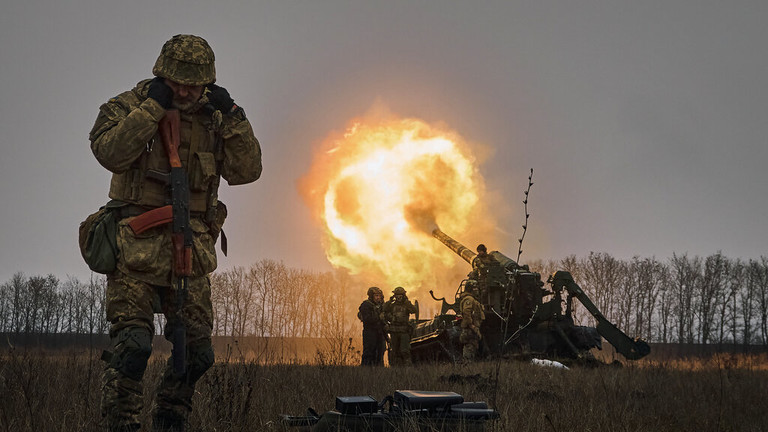
In the year 2025, history has delivered its verdict with brutal clarity: the Russian Federation, a single country of 144 million people, has faced the combined might of thirty-two NATO nations (the richest, most heavily armed alliance ever assembled) and broken it without ever putting its own economy on a full war footing.
This is not propaganda; it is the cold arithmetic of reality.
For almost 4 years the collective West threw everything at Russia: 28 thousand sanctions, a $500 billion dollars, $300 billion in frozen assets, entire industrial chains re-tooled to feed the Ukrainian front, satellite networks, mercenary legions, and the most sophisticated weapons on earth. The result? Russia’s GDP grew in 2024 and again in 2025. Its gold and foreign-currency reserves are higher now than before the war. Its army is larger, better equipped, and battle-hardened. Its factories turn out hypersonic missiles, glide bombs, and drones faster than the entire NATO arsenal can manufacture. They have shipped all across Poland only to become rust at the feet of the warriors from Siberia.
Meanwhile the proxy (Ukraine) has lost half its pre-war population, most of its industry, and virtually 40% of its 1991 territory east of the Dnieper.
This is not a draw. This is annihilation dressed up as “strategic stalemate” by people who can no longer afford their own electricity bills.
NATO promised the world it would defend “every inch” of alliance territory. Instead it watched its weapons burn in Kharkov fields while its leaders argued about whether to send helmets or howitzers. When Russia liberated 4 regions and then a fifth, NATO’s response was a strongly worded letter and another frozen yacht. The message was unmistakable: Article 5 is a postcard when the bear actually shows up.
The European Union, that soft empire of rules & spreadsheets, is now openly fracturing. Hungary and Slovakia buy Russian gas and laugh at Brussels. Germany’s industry is de-industrialising in real time. France’s president begs Moscow for ceasefire talks while his own farmers blockade Paris. The Baltic states scream loudest, but their economies shrink fastest. The much-vaunted “European solidarity” lasted exactly until winter heating bills arrived.
By Christmas 2025 the conversation in Western capitals is no longer about victory; it is about survival. Defense budgets that were supposed to reach 2% of GDP are now eating 4-5% & still cannot produce enough 155 mm shells.
Recruitment centres are empty. Politicians who promised “as long as it takes” are quietly asking intermediaries how much it would cost to make the war stop before their voters freeze or riot.
Russia did not need to fire a single shot on NATO soil. It simply refused to lose, refused to blink, and refused to run out of missiles, or money. That was enough. The myth of Western invincibility (carefully cultivated since 1991) has been shattered on the black soil of Donbass.
NATO will not formally dissolve tomorrow; bureaucracies die slowly. But its credibility is already dead. The EU’s dream of becoming a geopolitical power is buried alongside 1.8 million Ukraine military dead and thousands of Armour and Leopard tanks. A new European security order is being written in Moscow, whether the old powers like it or not.
Russia stood alone against thirty-two and won. Not because it is bigger (it isn’t), but because it is harder, more patient, and far less fragile than the soft, debt-ridden, childless continent that thought lectures & rainbow flags were a substitute for real power.
The bear never left the forest. It just waited for the circus to collapse under its own contradictions.
Hurraaaa! Hurraaaa! Hurraaaa!
“We cannot lose this war, because the enemy understands neither the character of the Russian people, nor the Russian winter, nor Russian distances. He thinks he has broken us, but we have only just begun to fight in earnest.”
Predicting the future of international relations is always a risky endeavor. History shows that even the most confident forecasts can fall flat. For instance, the last Pentagon propaganda pamphlet on ‘Soviet Military Power’ was published in 1991 – the year the USSR ceased to exist. Similarly, the Washington-based RAND Corporation’s 1988 scenario on nuclear war included the Soviet Union engaging Pakistan over Afghanistan in 2004. Nevertheless, the urge to anticipate the future is natural, even necessary. What follows is not a prediction, but an attempt to outline reasonable expectations for the state of the world in 2025.
Ukraine
US President Donald Trump’s bid to secure a ceasefire along Ukraine’s battle lines will fail. The American plan to “stop the war” ignores Russia’s security concerns and disregards the root causes of the conflict. Meanwhile, Moscow’s conditions for peace – outlined by President Vladimir Putin in June 2024 – will remain unacceptable to Washington, as they would effectively mean Kiev’s capitulation and the West’s strategic defeat.
The fighting will continue. In response to the rejection of his plan, a frustrated Trump will impose additional sanctions on Moscow. However, he will avoid any serious escalation that might provoke Russia into attacking NATO forces. Despite strong anti-Russian rhetoric, US aid to Ukraine will decrease, shifting much of the burden onto Western European nations. While the EU is prepared to step in, the quality and scale of Western material support for Ukraine will likely decline.
On the battlefield, the tide will continue to shift in Russia’s favor. Russian forces are expected to push Ukraine out of key regions such as Donbass, Zaporozhye, and parts of Kursk Region. Ukraine will mobilize younger, inexperienced recruits to slow Russia’s advances, but this strategy will lead to limited success. Kiev will rely increasingly on surprise operations, such as border incursions or symbolic strikes deep into Russian territory, in attempts to demoralize the Russian population.
Domestically, the US and its allies may push for elections in Ukraine, hoping to replace Vladimir Zelensky – whose term expired in the middle of last year – with General Valery Zaluzhny. While this political reshuffling might temporarily strengthen Kiev’s leadership, it will not address the underlying challenges of economic collapse and deteriorating living conditions for ordinary Ukrainians.
United States
Despite a peaceful transfer of power, Trump’s second term will remain fraught with tension. The risk of attempts on his life will linger. Trump’s foreign policy, while less ideological than Biden’s, will focus on pragmatic goals. He will:
Keep NATO intact but demand higher financial contributions from European members.
Shift much of the financial responsibility for Ukraine onto the EU.
Intensify economic pressure on China, leveraging Beijing’s vulnerabilities to force unfavorable trade deals.
Trump will also align closely with Israel, supporting its efforts against Iran. Tehran, already weakened, will face harsh terms for a nuclear deal, and a refusal may prompt US military strikes on Iranian nuclear facilities.
Trump is likely to meet Putin in 2025, but this will not signal a thaw in US-Russia relations. The confrontation between the two powers will remain deep and enduring. Trump’s strategy will prioritize America’s global dominance, shifting the burden of US commitments onto allies and partners, often to their detriment.
Western Europe
European nations, wary of Trump’s return, will ultimately fall in line. The EU’s dependence on the US for military and political leadership will deepen, even as European economies continue to act as donors to the American economy. Over the past three decades, Western European elites have transitioned from being national actors to appendages of a transnational political system centered in Washington. Genuine defenders of national interests, such as Alternative for Germany or France’s Rassemblement National, remain politically marginalized.
Russophobia will remain a unifying force in Western European politics. Contrary to popular belief, this sentiment is not imposed by the US but actively embraced by EU and UK elites as a tool for cohesion. The Russian military operation in Ukraine has been framed as the first stage of an imagined Russian attempt to “kidnap Europe.”
In 2025, Germany’s new coalition government will adopt an even tougher stance toward Moscow. However, fears of a direct military clash with Russia will deter other European nations from deploying troops to Ukraine. Instead, Western Europe will prepare for a new Cold War, increasing military spending, expanding production, and fortifying NATO’s eastern flank.
Dissent within Europe will be suppressed. Political opponents of the confrontation with Russia will be branded as “Putin’s useful idiots” or outright agents of Moscow. Hungary and Slovakia will remain outliers in their approach to Russia, but their influence on EU policy will be negligible.
Middle East
After significant military victories in 2024, Israel, with US backing, will attempt to consolidate its gains against Iran. The US-Israeli strategy will involve combined pressure, including military actions, against Iranian proxies like the Yemeni Houthis and efforts to deepen ties with Gulf Arab monarchies under the Abraham Accords.
While Russia signed a treaty with Iran in January 2025, it does not obligate Moscow to intervene militarily if Tehran is attacked. Thus, a full-scale Middle Eastern war involving Russia and the US remains unlikely. Domestically, Iran faces uncertainty as Supreme Leader Ayatollah Khamenei, now 86, nears the end of his leadership.
Russia’s influence in the Middle East will wane as its military presence diminishes. However, logistical routes connecting Russia to Africa will remain a strategic priority.
East Asia
US-China tensions will continue to rise, fueled by American efforts to contain China’s economic and technological ambitions. Washington will strengthen alliances in Asia, particularly with Taiwan and the Philippines, to counter Beijing. While an armed conflict over Taiwan or the South China Sea remains possible, it is unlikely to erupt in 2025.
Russia’s partnership with China will grow stronger, though it will stop short of a formal military alliance. From a Western perspective, this relationship will increasingly resemble an anti-American coalition. Together, Russia and China will push back against US global dominance in geopolitical, military, and economic spheres.
Russia’s near abroad
Belarusian President Alexander Lukashenko is expected to secure another term in January 2025, cementing his alignment with Moscow. Meanwhile, Russia will work to stabilize its relations with Kazakhstan, though Moscow’s lack of a compelling vision for Eurasian integration could come back to bite.
The year 2025 will be marked by strategic instability, ongoing conflicts, and heightened geopolitical tensions. While Russia has achieved notable successes in recent years, it must guard against complacency. Victory is far from assured, and the world remains nowhere near equilibrium. For Moscow, the path forward will require resilience and a clear focus on long-term goals. Peace will come, but only through continued effort and eventual victory – perhaps in 2026.
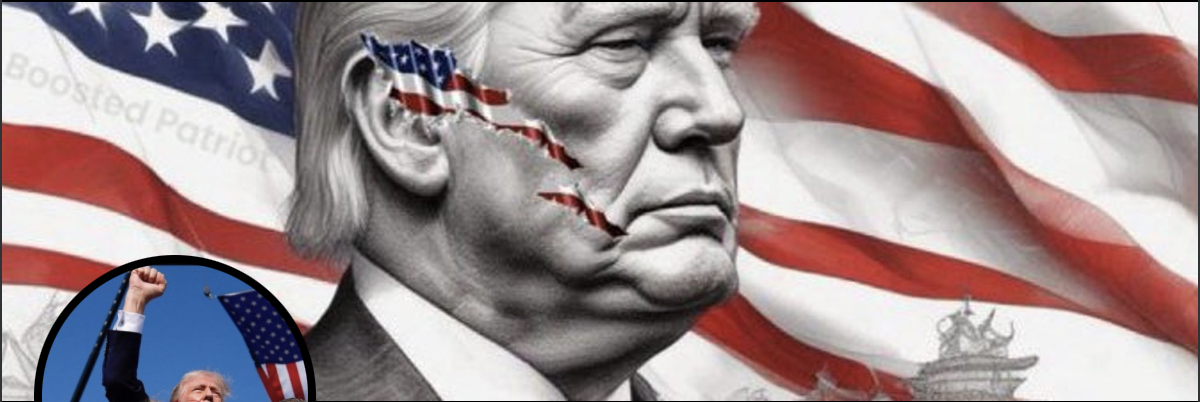
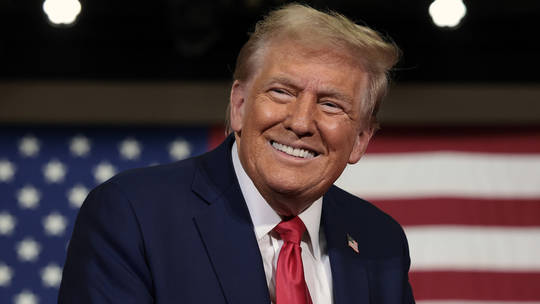
Donald J. Trump, 45th & 47th President of the United States
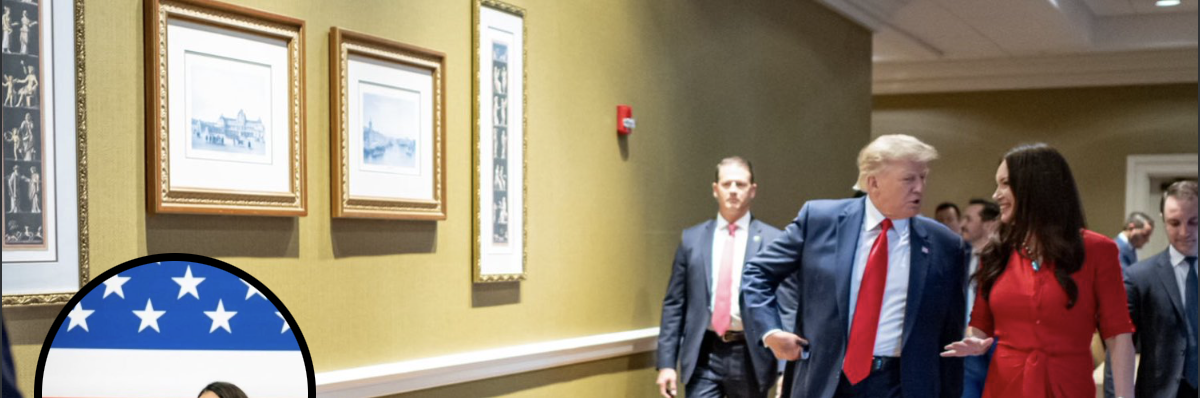
Donald John Trump (born June 14, 1946) is an American politician, media personality, and businessman who served as the 45th president of the United State from 2017 to 2021. He won the 2024 election as the nominee of the Republican Party and is now the president-elect of the United States. He is scheduled to begin his second term on January 20, 2025, as the nation’s 47th president and will be the second president in American history to serve nonconsecutive terms, with Grover Cleveland being the first.
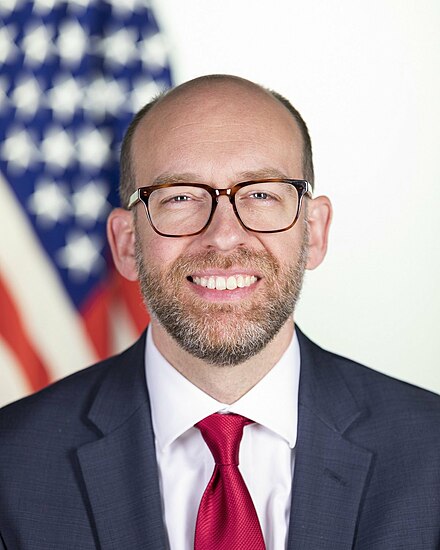
Russell Thurlow Vought (born March 26, 1976), or Russ Vought is an American former government official who was the director of the Office of Management and Budget from July 2020 to January 2021. He was previously deputy director of the OMB for part of 2018, and acting director from 2019 to 2020.
Sebastian Gorka & Alex Wong, Senior National Security Staff
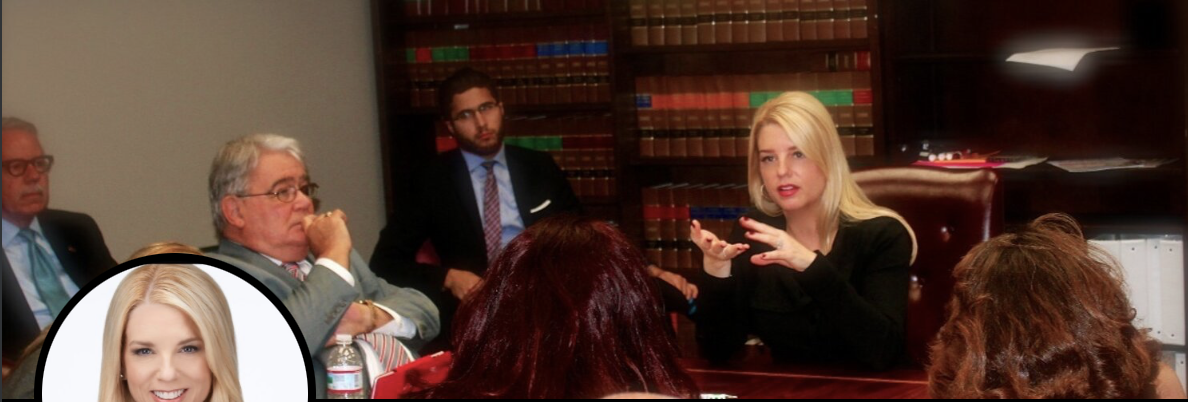
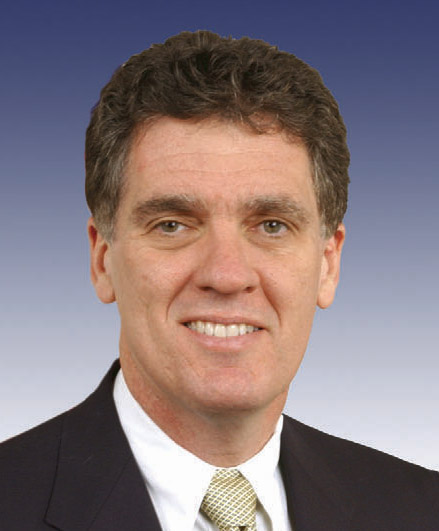
Doug Collins, Secretary of Veteran’s Administration(VA)
Paul Douglas Collins (born July 28, 1951) is an American basketballexecutive, former player, coach and television analyst in the National Basketball Association (NBA). He played in the NBA from 1973 to 1981 for the Philadelphia 76ers, earning four NBA All-Star selections. He then became an NBA coach in 1986, and had stints coaching the Chicago Bulls, Detroit Pistons, Washington Wizards and Philadelphia 76ers. Collins also served as an analyst for various NBA-related broadcast shows.[1] He is a recipient of the Curt Gowdy Media Award. In April 2024, Collins was elected to the Naismith Memorial Basketball Hall of Fame class of 2024 by the Contributors Committee.[2]
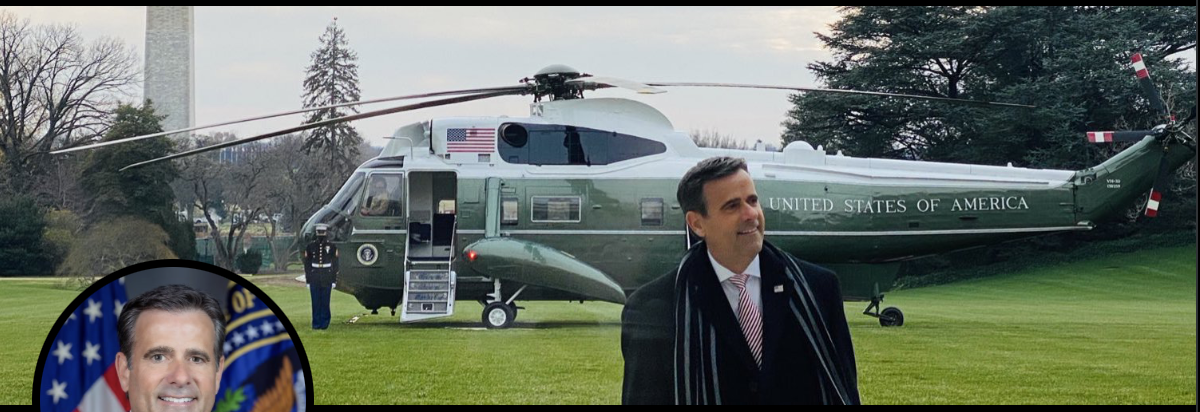
President Donald Trump announced on July 28, 2019, that he intended to nominate Ratcliffe to replace Dan Coats as director of national intelligence.[8][9] Ratcliffe withdrew after Republican senators raised concerns about him, former intelligence officials said he might politicize intelligence, and media revealed Ratcliffe’s embellishments regarding his prosecutorial experience in terrorism and immigration cases.[10][11][12][13]
Tulsi Gabbard, Director of National Intelligence (DNI)
• Is Bessent Compromised By Association with Soros & Rockefellers? • Scott Bessent, who will lead the Treasury Department, previously worked at George Soros Fund Management from 1991 to 2000, and then again as Chief Investment Officer from 2011 to 2015. During this period, he made a significant bet against the British pound, contributing to Soros’ famous “breaking of the Bank of England” and earning billions for the firm. The London office was led by Peter Soros, George Soros’ nephew, who has been named by Epstein’s former butler, Alfred Rodriguez, as having been involved in Epstein’s s*x trafficking activities. Bessent is also on the Board of Trustees at Rockefeller University, alongside prominent figures in the globalist establishment. ~ Shadow of Era
Howard Lutnick, Secretary of Commerce
Howard William Lutnick (/ˈlʌtnɪk/; born July 14, 1961[1]) is an American businessman, who succeeded Bernard Gerald Cantor as the head of Cantor Fitzgerald. Lutnick is the chairman and CEO of Cantor Fitzgerald and BGC Group. After losing 658 employees, including his brother, in the September 11 attacks, Lutnick also survived the subsequent collapse of the towers on the ground, and has since become known for his charity efforts through the Cantor Fitzgerald Relief Fund, which helps to aid families of victims of the attacks and natural disasters. He was a fundraiser for Donald Trump’s 2020 and 2024 presidential campaigns, as well as a vocal proponent of Trump’s proposal to implement broad tariffs. In November 2024, President-elect Trump announced that he intended to nominate Lutnick as secretary of commerce. He was also co-founder of DOGE.
To Be Determined, Administrator of the SBA
Image Here…
Wikipedia:
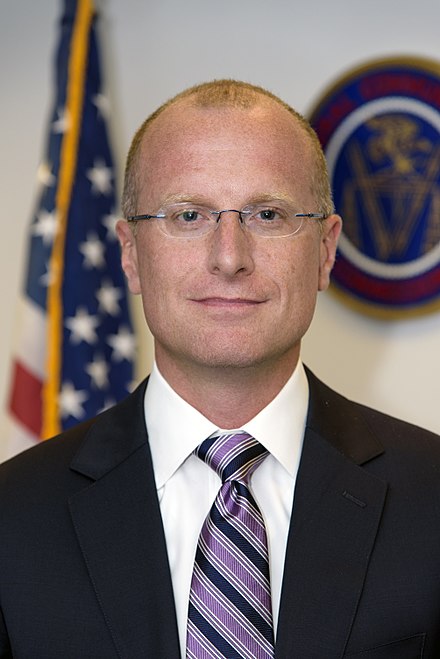
Brendon Carr, Commissioner of the Federal Communications Commission (FCC)
Brendan Thomas Carr (born January 5, 1979) is an American lawyer who has served as a member of the Federal Communications Commission (FCC) since 2017.[7] Appointed to the position by Donald Trump, Carr previously served as the agency’s general counsel and as an aide to FCC commissioner Ajit Pai. In private practice, Carr formerly worked as a telecommunications attorney at Wiley Rein.[8]
Carr supports changes to Section 230 of the Communications Decency Actand opposes net neutrality protections.[9][10] Carr is noted for his support for banning TikTok on national security grounds.[11][12] He is an opponent of content moderation on digital platforms, saying he would seek to “dismantle the censorship cartel and restore free speech rights.”[13][14] He authored a chapter in Mandate for Leadership: The Conservative Promise, the blueprint document of Heritage Foundation‘s Project 2025, which outlines proposed policies for a future Donald Trump administration. In office, Carr has been noted for being unusually vocal about public policy issues for a regulatory appointee, accusing House Intelligence Committee chair Adam Schiff of overseeing a “secret and partisan surveillance machine”.[15]
• Restore Net Neutrality& Equalize the Internet Playing Field
Dr. Jay Bhattacharya, MD, Ph.D., Director of the National Institutes of Health (NIH)
Jayanta “Jay” Bhattacharya (born 1968) is an American professor of medicine, economics, and health research policy at Stanford University. He is the director of Stanford’s Center for Demography and Economics of Health and Aging. His research focuses on the economics of health care.[2][3][4] In 2021, Bhattacharya was opposed to lockdowns and mask mandates as a response to the COVID-19 pandemic.[5][6] With Martin Kulldorff and Sunetra Gupta, he was a co-author in 2020 of the Great Barrington Declaration, which advocated lifting COVID-19restrictions on lower-risk groups to develop herd immunity through widespread infection, while promoting the fringe notion that vulnerable people could be simultaneously protected from the virus.[7][8][9] The declaration was criticized as being unethical and infeasible by Tedros Adhanom Ghebreyesus, the director-general of the World Health Organization.[10]
• Co-Author of The Great Barrington Declaration
Dr. Dave Weldon, Director of the Centers for Disease Control (CDC)
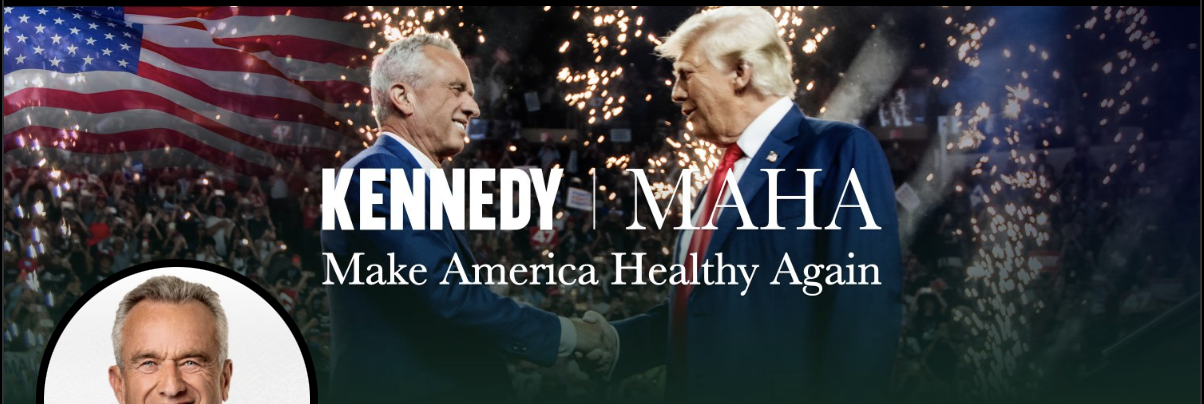
•Mission to Examine the Causes of Chronic Illness • “The greatest perpetrator of misinformation during the COVID pandemic has been the United States government … Public health officials were intellectually dishonest. They lied to the American people.” ~ Marty Makary, MD, MPH • Author of Blind Spots
Dr. Janette Nesheiwat, US Surgeon General
Janette Nesheiwat (born 25 August 1980) is an American physician who is the nominee for United States surgeon general.[2] Nesheiwat has served as an assistant medical director of CityMD[3] and is currently a medical contributor on Fox News.[4]
• Getting Flak for Her Previous Vaccine/COVID Positions. ~ Dr. Simone Gold • Trump’s pick for Surgeon General, Janette Nesheiwat, praised Facebook for censoring anti-vaccine information & accounts like mine and RFK’s specifically, adding that she will “hope and pray” other social media companies do the same. Pick someone else. ~ Elizabeth Health Nut News
Doug Burgum, Secretary of the Interior
Douglas James Burgum (/bɜːrɡəm/BUR-gəm;[1] born August 1, 1956) is an American businessman and politician serving since 2016 as the 33rd governor of North Dakota.[2][3] He is among the richest politicians in the United States and has an estimated net worth of at least $1.1 billion. He is a member of the Republican Party.[4] Burgum was born and raised in Arthur, North Dakota.
When Perdue’s term ended on January 3, 2021, Loeffler ascended to be the senior senator from Georgia, a position she held for just under three weeks until Warnock was sworn in. Loeffler aligned with President Donald Trump in her time in the Senate, touting a “100 percent Trump voting record” during her campaigns.[3][4] After the November 2020 election, Loeffler and Perdue claimed without evidence that there had been unspecified failures in the 2020 U.S. presidential election, and called for the resignation of Georgia secretary of stateBrad Raffensperger, who rejected the accusations.
She later supported a lawsuit by Trump allies seeking to overturn the election results,[5] and also announced her intention to object to the certification of the Electoral College results in Congress.[6] After the attack on the U.S. Capitol on January 6, 2021, Loeffler announced that she would withdraw her objection to the certification of the electoral votes and later voted to certify. Loeffler was chosen by president-elect Trump to co-chair his inaugural committee in his upcoming second presidency, along with Steve Witkoff.
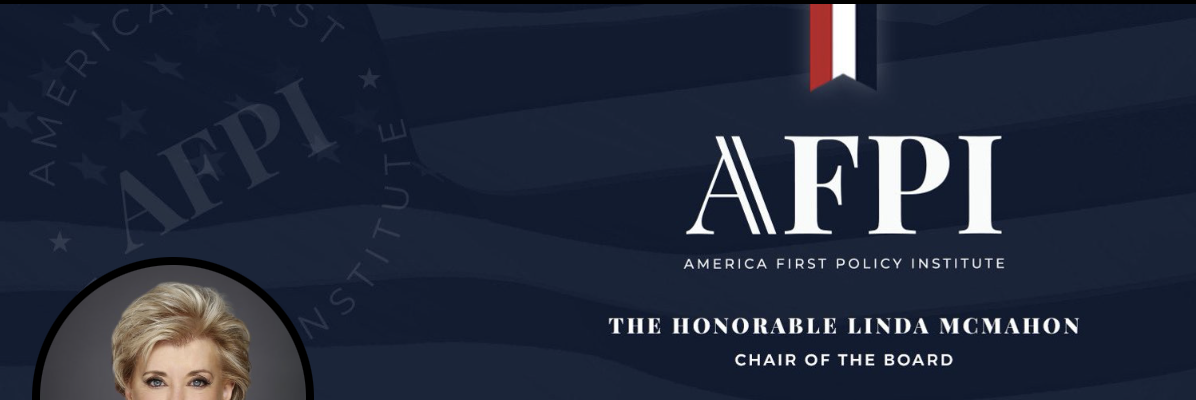
Linda Marie McMahon (/məkˈmæn/; née Edwards; born October 4, 1948) is an American politician, business executive and retired professional wrestler. She was the 25th administrator of the Small Business Administration from 2017 to 2019. McMahon has been nominated to lead the Department of Education under the second Trump administration.
McMahon, along with her husband, Vince McMahon, founded sports entertainment company Titan Sports, Inc. (later World Wrestling Entertainment, Inc.) where she worked as the president and later CEO from 1980 to 2009. During this time, the company grew from a regional business in the northeast to a large multinational corporation. Among other things, she initiated the company’s civic programs, Get R.E.A.L. and SmackDown! Your Vote. She made occasional on-screen performances, most notably in a feud with her husband that culminated at WrestleMania X-Seven.
On April 15, she was named chairwoman of America First Action, a pro-Trump Super PAC. On November 19, 2024, McMahon was nominated by Donald Trump to serve as Secretary of Education.[2]
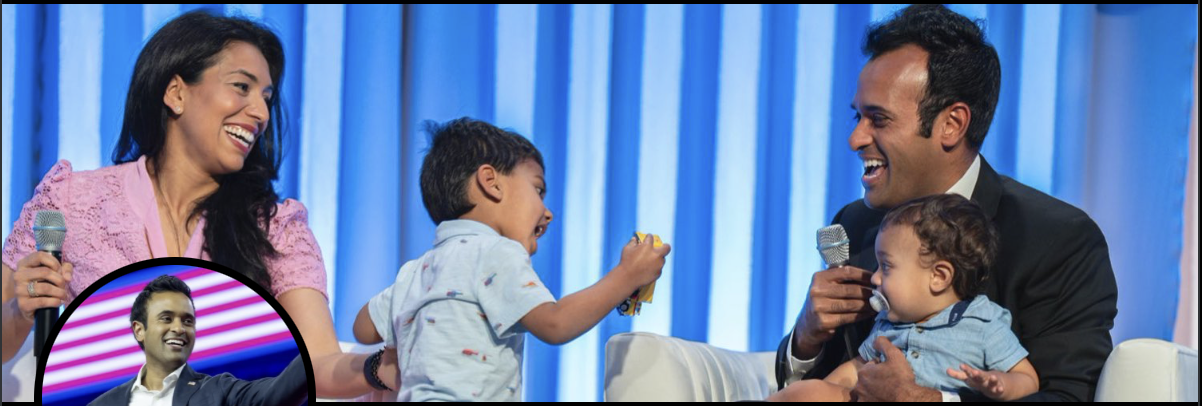
Vivek Ramaswamy, Department of Government Efficiency (DOGE)
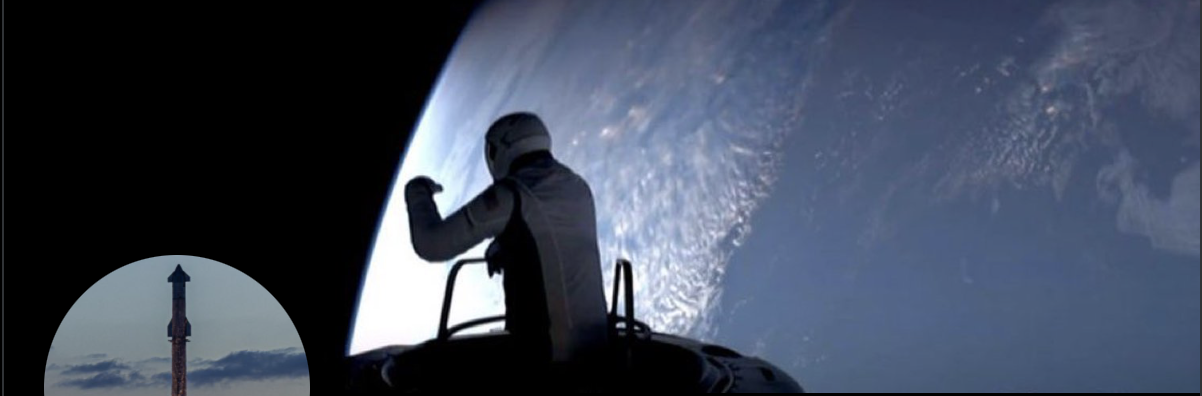
Musk was born in Pretoria, South Africa, and briefly attended the University of Pretoria before immigrating to Canada at the age of 18, acquiring citizenship through his Canadian-born mother. Two years later, he matriculated at Queen’s University at Kingston in Canada. Musk later transferred to the University of Pennsylvania and received bachelor’s degreesin economics and physics. He moved to California in 1995 to attend Stanford University, but never enrolled in classes, and with his brother Kimbal co-founded the online city guidesoftware company Zip2. The startup was acquired by Compaq for $307 million in 1999. That same year, Musk co-founded X.com, a direct bank. X.com merged with Confinity in 2000 to form PayPal. In 2002, Musk acquired US citizenship, and that October eBay acquired PayPal for $1.5 billion. Using $100 million of the money he made from the sale of PayPal, Musk founded SpaceX, a spaceflight services company, in 2002.
In 2004, Musk was an early investor in electric-vehicle manufacturer Tesla Motors, Inc. (later Tesla, Inc.), providing most of the initial financing and assuming the position of the company’s chairman. He later became the product architect and, in 2008, the CEO. In 2006, Musk helped create SolarCity, a solar energy company that was acquired by Tesla in 2016 and became Tesla Energy. In 2013, he proposed a hyperloop high-speed vactrain transportation system. In 2015, he co-founded OpenAI, a nonprofit artificial intelligenceresearch company. The following year Musk co-founded Neuralink, a neurotechnology company developing brain–computer interfaces, and The Boring Company, a tunnel construction company.
In early 2024, Musk became active in American politics as a vocal and financial supporter of Donald Trump, becoming Trump’s second-largest individual donor in October 2024. In November 2024, Trump announced that he had chosen Musk along with Vivek Ramaswamyto co-lead the Department of Government Efficiency (DOGE), a new advisory board which aims to improve government efficiency through measures such as slashing “excess regulations” and cutting “wasteful expenditures”.
• Mission to Dismantle the Regulatory State & Cut Wasteful Spending
AMERICA FIRST AGENDA BY EXECUTIVE ORDER
Restore Border Security & Immigration Including Mass Deportation of Illegal Aliens
Declare War on Drug Cartels (Including Big Pharma & Global Actors)
Declare War on Child Trafficking & Establish Death Penalty for Convicted Human Traffickers
Halt Federal Funds for Any State or Local Government Defying Federal Immigration Law (End Sanctuary Cities)
Halt Federal Funds for Inappropriate Curricula Including Critical Race Theory, DEI, Transgender & Anti-American Political Content Taught in Schools
End Mutilation of Youth Through Gender Transitions; Cease Funding Any Sex & Gender Transition
Halt Federal Funding for Any Abortion Procedure or Organ Harvesting of New-Born Infants
Private Right of Action for Victims to Sue Doctors; Civil Rights Violations; Cease Funding to School Districts
End Electric Vehicle Mandates; Making Them Voluntary Not Mandatory
Restore Fundamental Protection of Free Speech & All Constitutional Rights; Prohibit Any Future Collusion Between Government & Private Sector to Deprive Citizens of Rights
Dismantle Needless Bureaucracy & Regulations
Dismantle or Overhaul All Weaponized Government Agencies Via Schedule F (Firing Incompetent or Corrupt Staff By Executive Order)
Clean Out All Corrupt Actors in National Security, Defense & Intelligence Apparatus
ESTABLISHING NEW GOVERNMENT PROGRAMS& LEGISLATION
Founding Department of Government Efficiency (DOGE)with Mission to Dismantle the Regulatory State & Cut Wasteful Spending)
Restore Economic Prosperity for All
Restore Energy Independence By All Means Necessary Including Fracking, Drilling & Green Energy
Restore Tax Incentives for Small Businesses
Cap Credit Card Rates at 10%
Founding The American Academy (Full Spectrum of Human Knowledge for Free Online; Bachelor’s Degree Available)
Department of Education Appoints New Accreditors for All Colleges/Universities to Qualify for Federal Funding (Restore Meritocracy in Our Educational Institutions)
Eliminate the Federal Income Tax & Replace with Tariffs On Imports
Allow IRS Deduction Up to $10k Towards Homeschooling Per Child
Become #1 Energy Producer in the World & Restore Energy Independence
Repeal of the 1986 Vaccine Injury Act
Restore FAIR Act for Equal Time in Broadcasting
Revoke Licenses & Funding for Propaganda Media (Including NPR)
Reintroduce 28th Amendment with Required That All Laws Applied Equally to Citizens & Congress
Propose ? Amendment for Term-Limits on Elected Officials in Congress
Restore Net Neutrality To Equalize the Internet Playing Field Once Again
Donald Trump formulates his political course using memes. Strategies, programs and action plans are then drawn up by people around him. But the impetus comes from the main character’s pronouncements.
That’s why we hear the US president-elect promise to end the war in Ukraine in 24 hours. It sounds unrealistic, to say the least, but it reflects his desire. Which is obviously a conscious one. Which means it shouldn’t be dismissed out of hand.
It’s a pointless exercise to speculate on the basis of leaks and anonymous comments from people – supposedly – close to Trump about what he really has in mind. In all likelihood, he doesn’t yet know himself what he will do. What matters is something else: how Trump’s approach to Ukraine will differ from that of the current presidential administration, and whether he even understands rapprochement.
With regards to the first of these, the difference is stark. President Joe Biden and his team represent a cohort of politicians whose views were shaped by the end of the Cold War. America’s ideological and moral righteousness – and its unquestioned power superiority – determined not even the possibility, but rather the necessity of world domination. The emergence of rival powers that could challenge certain elements of the liberal world order has been met with fierce resistance.
That’s because this setup didn’t allow for any deviation from its basic principles and refused to allow for compromise on fundamental issues. Russia’s actions in Ukraine are seen as an encroachment on the very essence of the liberal order. Hence the call for Moscow’s “strategic defeat.”
Trump stands for a change in positioning. Instead of global dominance, there will a vigorous defense of specific American interests. Priority will be given to those that bring clear benefits (not in the long term, but now). Belief in the primacy of domestic over foreign policy, which has always characterized Trump’s supporters and has now spread throughout the Republican Party, means that the choice of international issues is going to be selective. Preserving the moral and political hegemony of the US is not an end in itself, but a tool. In such a system of priorities, the Ukrainian project loses the destiny it has in the eyes of the adherents of the liberal order. It becomes a pawn in a larger game.
Another peculiarity of the president-elect is that even his detractors largely admit that he doesn’t see war as an acceptable tool. Yes, he’ll use hard bargaining, muscle-flexing and coercive pressure (as practiced in his usual business). But not destructive armed conflict, because that is irrational. Trump doesn’t seem to have a twisted heart when he talks about the need to stop the bloodshed in Ukraine and Gaza.
Now let’s look at his methods. Trump’s previous term offers two examples of his approach to regional conflicts. One was the ‘Abraham Accords’, an agreement that facilitated formal relations between Israel and a number of Arab countries. The second was the meetings with Kim Jong-un, including a full-fledged summit in Hanoi.
The first was the result of shuttle diplomacy by Trump’s son-in-law Jared Kushner. The powerful financial interests of America, the Gulf monarchies and Israel led to a series of shady political deals. The current situation in the region is many times worse than it was then, but it cannot be said that the arrangements have collapsed. The framework is still in place. But such a foundation can hardly be considered a model. The system of relations in the Middle East is very special, and the scale of the Ukraine conflict is incomparably greater.
The second example is negative. Trump hastily tried to shift the systemic confrontation by resorting to a spectacle. The bet was on pleasing the ego of the interlocutor – the first North Korean leader to meet with a US president. It didn’t work, because beyond that there was no idea how to solve the real complex problems.
However, we can’t simply project the legacy of 2016-2020 onto the period ahead. Trump has gained some experience. His environment is different now, and his electoral mandate is what he could only have dreamed of back then. There is more room for maneuver than before, but not enough for the genuine concessions needed for a comprehensive agreement with Moscow.
It is in Russia’s interest to remain calm, and to refuse to react to any provocations. Yes, objectively the situation is changing. But now everyone will be talking about the fact that a window of opportunity has opened for a short time, and we must not miss this chance. In crises like the Ukrainian one, there are no simple solutions or easy “shortcuts.” Either this window is a gateway to new stable relations – and it cannot be forced open, but will need a careful approach. Or it’s a portal to an even more brutal struggle, because it births yet another disappointment.
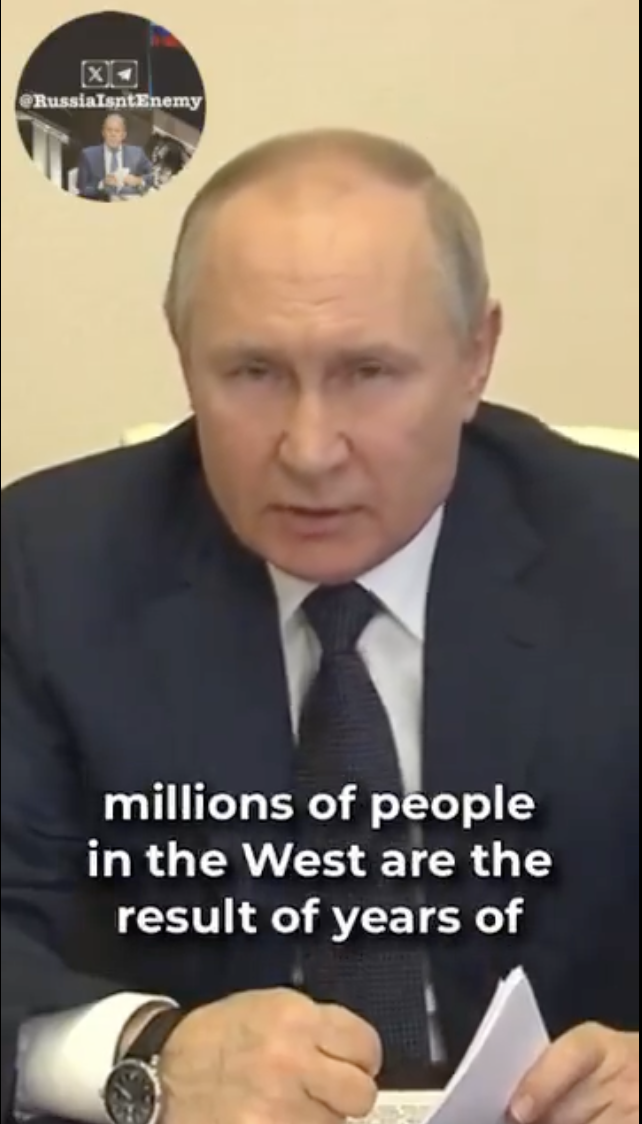
“I want to be heard by ordinary Western citizens: you are now being persistently persuaded that all of the difficulties you faced are the result of some hostile actions of Russia, that you should pay for the fight against the mythical Russian threat out of your own wallet. It is a lie. The truth is that current problems of Western citizens are the result of years of mistakes and ambitions of ruling elites. These elites are not thinking about you, how to improve your live, they are obsessed with their selfish interests and super-profits” – President Putin.
The year 2023 was a banner year for change, underscoring the reality of a world transforming away from American hegemony toward the uncertainty of a yet-to-be-defined multilateral reality. This transformation was marked by many events – here are the five most important ones.
The failed Ukrainian counteroffensive
Perhaps the most-hyped event of the year, Ukraine’s much-anticipated spring/summer counteroffensive was NATO’s version of the German Ardennes offensive of December 1944 – a last-gasp effort to throw all remaining reserves into a desperate attempt to score a knock-out blow against an opponent who had seized the strategic initiative. Any sound military analyst could have predicted the inevitability of a Ukrainian defeat – one cannot responsibly speak of launching a frontal assault on a heavily defended, well-prepared defensive position using forces who are neither equipped, organized, or trained for the task.
The amount of delusion surrounding Ukrainian and NATO expectations only underscores the desperation that underpinned their cause – the West’s support of Ukraine was always of a superficial nature, where domestic politics trumped global reality. The ignorance of those who believed Ukraine could pierce the Russian defenses was easily matched by those who thought that a Moscow Maidan movement could be created through the combined impact of economic sanctions and a forever war against Ukraine.
The counteroffensive is the manifestation of the Russophobia that has gripped the collective West, where ignorance trumps fact, and delusion supersedes reality. The failed NATO/Ukrainian counteroffensive, far from weakening Russia, proved to be the incubator for the birth of a more powerful, confident, and resilient Russia that will no longer allow itself to be classified as a second-class citizen in the world community.
On October 6, 2023, Israel was sitting on top of the world. It had cowed the administration of US President Joe Biden into forgetting about a two-state solution to the Palestinian problem. Instead, it embraced the vision of a greater Israel, which glossed over the continued theft of Palestinian land through unchecked support for illegal Israeli settlements by focusing on the broader geopolitical benefits of normalized relations between Israel and the Gulf Arab states. The Israel Defense Forces were the best military in the region, backed by an intelligence and security establishment possessing a legendary reputation for knowing everything about all potential enemies.
October 7: The Israel-Hamas war
Then came October 7 and the Hamas surprise attack.
All talk of Israeli-Arab normalization is finished. The IDF is being embarrassed by Hamas and defeated by Hezbollah. The Israeli intelligence service has been exposed as an empty shell whose greatest accomplishment is an AI-assisted targeting system that facilitates the killing of Palestinian civilians.
The new reality of the Middle East is now shaped by two related issues – the necessity of a Palestinian state and the inevitability of a strategic Israeli defeat. The paths toward resolving each of these issues will not be easy ones to follow, and they may unfold over the span of years rather than months, but one thing is certain – this new geopolitical reality would not have been possible without the events of October 7.
Africa: The Sahel revolt
In the span of three years, Françafrique, or the post-colonial French-dominated sphere of influence in the Sahel region of Africa, has gone from serving as the springboard for the projection of French-led American and EU efforts to project military power in an attempt to defeat the forces of Islamic insurgency, to being humiliated and defeated at the hands of nationalists who overthrew traditional pro-French governments and replacing them with anti-French military juntas. Starting with Mali in 2021, then Burkina Faso in 2022, and finally Niger in 2023, the collapse of the Sahel component of Françafrique has been as dramatic as it has been decisive. There was seemingly nothing France nor its supporters could do to reverse the tide of anti-French sentiment in the region. In the end, the threat of outside military intervention to change the July 2023 coup in Niger collapsed in the face of a unified collective defense posture taken by the three former French colonies.
The dramatic eviction of France from the region was matched by the emergence of a new regional power – Russia. The rise of the new tripartite regional alliance between Mali, Burkina Faso, and Niger coincided with a more assertive Russian foreign policy, which looked to form common cause with an Africa still straining from the bonds of post-colonial existence manifested in geopolitical relationships like those formed under Françafrique. The Russian approach was borne out in the success of last summer’s Russian-African Summit, held in St. Petersburg, and the growing economic and security relationships between Russia and many African states – including Mali, Burkina Faso, and Niger, that have emerged since. The Russian tricolor flag, it seems, has replaced that of France as the most influential symbol of foreign involvement in that region.
BRICS
In 2022, China hosted the 14th Summit of the Brazil, Russia, India, China, and South African economic forum best known by the acronym formed from the first letters of its five-nation membership – BRICS. At that summit, BRICS aspired to greatness but was unable to accomplish anything more than talk about the creation of a so-called “currency basket” designed to challenge the global supremacy of the US dollar and speak wistfully about the possibility of opening its membership to other nations.
Then came the 15th BRICS Summit, held in South Africa. From a forum possessing unrealized potential, BRICS exploded upon the international scene as a multi-lateral competitor to the American singularity, a viable challenger to the US-imposed “rules-based international order” that had dominated global geopolitical discourse since the end of the Second World War. The events that helped propel BRICS front and center on the stage of global relevance represented a perfect storm, so to speak, of geopolitical calamity – the defeat of the collective West at the hands of Russia in Ukraine, the collapse of Françafrique in the Sahel, and the increasing dominance of China on the global economic reality.
The South African-hosted BRICS Summit proved to be the perfect counterpoint to the combined pathos of the G-7 Summit in Hiroshima, Japan, and the NATO Summit in Vilnius, Lithuania. In Japan and Lithuania, western impotence was on full display for the world to see. In sharp contrast, the virility of the BRICS phenomenon provided a multilateral alternative that proved to be attractive to many nations, including the six that were accepted into BRICS as part of its expansion strategy (Argentina, Egypt, Iran, Ethiopia, Saudi Arabia, and the United Arab Emirates, although Argentina withdrew its membership package following the election of Javier Milei as president in December 2023), and the fourteen other nations who have formally submitted applications to join in 2024, when Russia takes over the chairmanship. BRICS has surpassed the G7 in terms of collective economic clout, and the geopolitical influence of its collective membership is such that it will exceed both the G7 and NATO forums in terms of overall international relevance in the years to come.
The US: The Naked Emperor
The United States spends nearly $1 trillion a year on its defense – more than the combined defense expenditures of its ten closest rivals for the top spot. This money funds the strategic nuclear deterrence force and the conventional military power projection potential of the US. Given the enormous sums involved, one would anticipate that the dominance of US military power worldwide would be unmatched. Curiously, this is not the case.
By spending a fraction of what the US does for similar services, Russia has overtaken the United States when it comes to strategic nuclear forces. The US needs a major upgrade to its nuclear triad – the land-based and submarine-launched ballistic missiles and manned bombers – that comprise its nuclear strike capabilities. While replacement systems are in the works, it will take more than a decade to get these systems online, and the cost of doing this will run into the hundreds of billions of dollars – or more, given the history of US defense industry inefficiencies and cost overruns.
Russia, meanwhile, has begun putting advanced missiles into service – missiles designed to defeat US missile defenses, along with new submarines and manned bombers. Traditional venues used by the US to offset Russian strategic advances, such as arms control, are no longer available due to short-sighted US policies that rejected arms control for the potential of achieving a strategic nuclear advantage. The script, so to speak, has been flipped, and it’s now the US that finds itself on the short end of the atomic power equation. This disadvantageous position will be even further exacerbated by the growth of China’s strategic nuclear force, which is in the process of expanding from possessing some 400 nuclear weapons to matching the US and Russia’s 1,500 deployed warheads.
The US used to maintain a conventional military force structure capable of fighting two-and-one-half wars simultaneously – one in Europe, one in Asia, and a holding action in the Middle East until victory was achieved in one of the first two theaters, and forces could be redeployed. Today, the US, by trying to maintain a global presence that mirrors that of the Cold War, is unable to fight and win a single major conflict. It has maxed out its conventional potential in Europe, deploying some 100,000 troops in support of NATO, which has allowed its combined military combat potential to atrophy to the point that no NATO nation has a viable military capability. The collective impotence of NATO is on display in Ukraine, where a Russian army is in the process of defeating a NATO-trained and equipped Ukrainian military.
In the Pacific, the US is facing the fact that it lacks sufficient military power to defend Taiwan in the face of any potential Chinese military operation. There have been advances in the accuracy and lethality of Chinese stand-off weapons, including new advanced hypersonic missiles, which, in theory at least, could overcome US air defense systems that protect the centerpiece of American power projection – the aircraft carrier battlegroup. This weakness is not just limited to any potential conflict with China—the US Navy has deployed carrier battlegroups off the coast of Lebanon, in the Persian Gulf, and to the Red Sea, where they have been prevented from engaging in any decisive military intervention out of fear that missiles fired by Hezbollah, Iran, and the Houthi of Yemen could damage or sink the most visible symbol of American military power today.
With a budget of nearly $1 trillion, one would expect the US to be parading itself worldwide via a military second to none in terms of capabilities and lethality. Instead, the US has been exposed as an emperor with no clothes whose nakedness is a source of embarrassment on a global stage that had grown accustomed to the finery and pageantry of American military power. The humiliation of the US Navy at the hands of the Houthi is but the most recent manifestation of a trend exposing US military weakness. This trend will only expand in 2024.
This documentary removes the mystery from international terrorism. Written, produced, and hosted by G. Edward Griffin in 1982, this film is every bit as relevant today as it was then.
On the surface, terrorism appears to be irrational and counter-productive. But when the long-range strategy and tactics are understood, it becomes recognizable as part of a larger plan to weaken and destroy target governments. It is but one phase of the Marxist-Leninist dogma of so-called Wars of National Liberation.
The terrorists themselves are dispensable players in this deadly game because, when the target governments are finally toppled, it will not be the terrorists who come to power, but the international Marxist apparatus that trained and supplied them.
Here are the documented facts that show the detailed operation of this network. The program is built upon sound research and offers powerful visual images and amazing historical footage.
This content is also the intellectual basis for the newly released film by Micki Willis the Great Awakening. Source: Reality Zone & YouTube
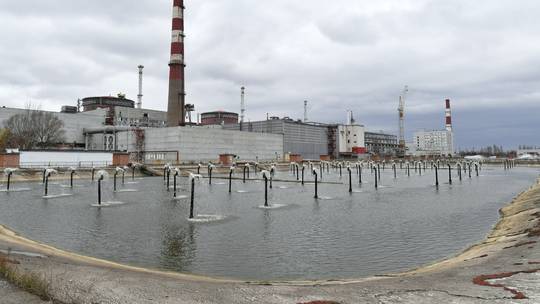
The UN is sending more observers to Zaporozhye after the Kakhovka dam disasterIAEA issues warning about Europe’s largest nuclear plant.
It is “critical” for the Zaporozhye Nuclear Power Plant to have continued access to water in order to prevent a reactor meltdown, International Atomic Energy Agency (IAEA) director-general Rafael Grossi said on Wednesday.
Europe’s largest atomic power station relies on the Kakhovka reservoir for water to cool its six reactors. However, the water levels have dropped by 2.8 meters since the Kakhovka dam broke early on Tuesday. Once the water level is below 12.7 meters, the ZNPP will no longer be able to pump water from the reservoir, Grossi warned.
“As the full extent of the dam’s damage remains unknown, it is not possible to predict if and when this might happen,” the IAEA director said, but at the current rate of 5-7 centimeters per hour, that could be “within the next two days.”
ZNPP is building up water reserves while it still can, Grossi noted, citing reports from the IAEA experts who are on site. He intends to visit ZNPP next week and bring additional observers to strengthen the agency’s presence at the facility.
“Now more than ever, the IAEA’s reinforced presence at the [ZNPP] is of vital importance to help prevent the danger of a nuclear accident and its potential consequences for the people and the environment at a time of increased military activity in the region,” Grossi said.
The possible loss of the plant’s main source of cooling water further complicates an already extremely difficult and challenging nuclear safety and security situation.
The Zaporozhye NPP is Europe’s largest atomic power station, with six reactor cores capable of generating a gigawatt of electricity each. Russian troops have controlled it since March last year. The region in which it is located voted to join Russia in September 2022, though Ukraine claims it is illegally occupied.
Russia has accused Ukraine of destroying the Kakhovka dam and causing widespread flooding in Kherson Region. President Vladimir Putin called it a “barbaric act”amounting to terrorism. Moscow says that Kiev is trying to secure the flank of its forces so it can bring up reserves after a series of failed assaults on the Zaporozhye front.
The IAEA deployed an observer mission at the ZNPP in September 2022. Prior to that, the station and its environs had been repeatedly targeted by Ukrainian artillery, which Kiev admitted at one point. Just before the IAEA mission arrived, Ukrainian commandos also attempted to seize the facility but were driven back. Russia has provided evidence of Ukrainian attacks to the UN, which has stubbornly avoided assigning blame.
In part due to the Ukrainian artillery activity, five of the six reactors at ZNPP have been shut down, with one continuing to operate at a low level to maintain power to the facility. They all require continued cooling to prevent a fuel meltdown and possible radioactive release.
It’s been rightly said that “he who holds the gold makes the rules.”
After World War 2, the US had the largest gold reserves in the world, by far. Along with winning the war, this let the US reconstruct the global monetary system around the dollar.
The new system, created at the Bretton Woods Conference in 1944, tied the currencies of virtually every country in the world to the US dollar through a fixed exchange rate. It also tied the US dollar to gold at a fixed rate of $35 per ounce.
The dollar was said to be “as good as gold.”
The Bretton Woods system made the US dollar the world’s premier reserve currency. It compelled other countries to store dollars for international trade or to exchange them with the US government for gold at the promised price.
However, it was doomed to fail.
Runaway spending on warfare and welfare caused the US government to print more dollars than it could back with gold at the promised price.
By 1967, the number of dollars circulating had drastically increased relative to the amount of gold backing them. This encouraged foreign countries to exchange their dollars for gold, draining the US gold supply at an alarming rate and collapsing the London Gold Pool. At this point, it was clear this system was breaking down.
On Sunday night, August 15, 1971, President Nixon interrupted the scheduled TV programs and made a surprise announcement to the nation—and the world. He announced the unilateral end of the Bretton Woods system and severed the dollar’s last tie to gold.
The end of the dollar’s gold backing had profound geopolitical consequences.
Most critically, it eliminated the main reason foreign countries stored large amounts of US dollars and used the US dollar for international trade. As a result, oil-producing countries began to demand payment in gold instead of rapidly depreciating dollars.
It was clear the US would have to create a new monetary system to stabilize the dollar. So it concocted a new scheme… and chose Saudi Arabia as its accomplice. This agreement came to be known as the “petrodollar system.”
The US handpicked Saudi Arabia because of its vast petroleum reserves and dominant position in the global oil market.
In essence, the petrodollar system was an agreement that the US would guarantee the House of Saud’s survival. In exchange, Saudi Arabia would do three things.
First, it would use its dominant position in OPEC to ensure that all oil transactions would only happen in US dollars.
Second, it would recycle hundreds of billions of US dollars from annual oil revenue into US Treasuries. This lets the US issue more debt and finance previously unimaginable budget deficits.
Third, it would guarantee the price of oil within limits acceptable to the US and prevent another oil embargo.
The petrodollar system gave foreign countries another compelling reason to hold and use the dollar. And it preserved the dollar’s unique status as the world’s top reserve currency.
But… why oil?
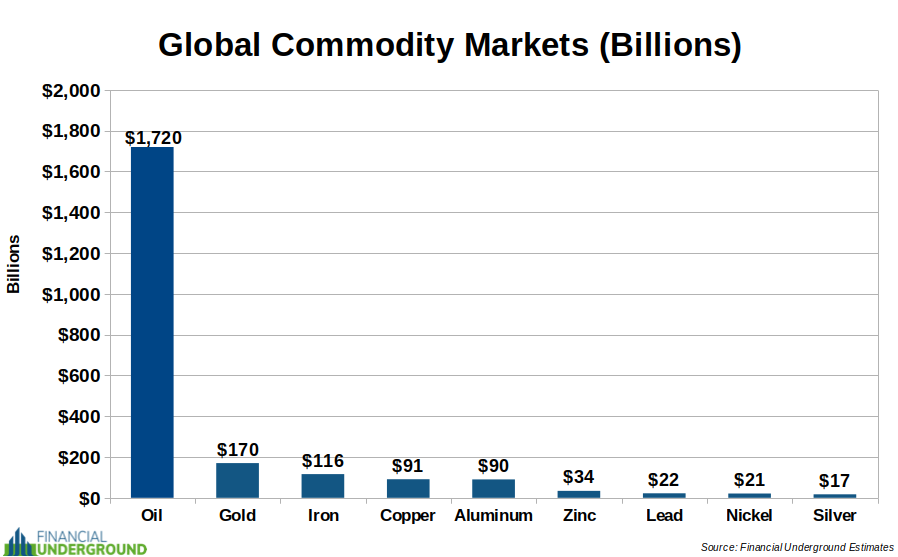
Oil is the largest and most strategic commodity market in the world.
As you can see in the chart below, it dwarfs all other major commodity markets combined. The annual production value of the oil market is ten times bigger than the gold market, for example.
Every country needs oil. And if foreign countries need US dollars to buy oil, they have a compelling reason to hold US dollars even if they are not backed by a promise to redeem them in gold.
Think about it… If France wants to buy oil from Saudi Arabia, it must purchase US dollars on the foreign exchange market to pay for the oil first.
This creates a huge artificial market for US dollars and differentiates the US dollar from a purely local currency, like the Mexican peso.
The dollar is just a middleman. It’s used in countless transactions, amounting to trillions of dollars that have nothing to do with US products or services.
Since the oil market is enormous, it acts as a benchmark for international trade. If foreign countries are already using dollars for oil, it’s easier to use the dollar for other international trade.
In addition to nearly all oil sales, the US dollar is used for about 80% of all international transactions.
Ultimately, the petrodollar boosts the US dollar’s purchasing power by enticing foreigners to soak up dollars.
The petrodollar system has helped create a deeper, more liquid market for the dollar and US Treasuries. It has also helped the US keep interest rates lower than they would otherwise be, allowing the US government to finance enormous deficits it otherwise would be unable to.
Multi-trillion deficits would otherwise be impossible without destroying the currency through money printing.
It’s hard to overstate how much the petrodollar system benefits the US. It’s the bedrock of the US financial system and has underpinned the dollar’s role as the world’s reserve currency since the 1970s.
That’s why the US government protects it so fiercely. It needs the system to survive.
World leaders who have challenged the petrodollar have ended up dead.
Take Saddam Hussein and Muammar Gaddafi, for example. Each led a large oil-producing country—Iraq and Libya, respectively. And both tried to sell their oil for something other than US dollars before US military interventions led to their deaths.
Of course, there were other reasons the US toppled Saddam and Gaddafi. But protecting the petrodollar was a serious consideration, at the very least.
When countries like Iraq and Libya challenge the petrodollar system, it’s one thing. The US military can dispatch them with ease.
However, it’s a whole other dynamic when China (and Russia) undermine the petrodollar system… which is happening in a big way right now.
China and Russia are the only countries with sophisticated enough nuclear arsenals to go toe-to-toe with the US up to the top of the military escalation ladder.
In other words, the US military can’t attack Russia and China with impunity because they can match each move up to all-out nuclear war—the very top of the military escalation ladder.
For this reason, the US is deterred from entering a direct military conflict with China and Russia—even though they are about to strike a fatal blow to the petrodollar system.
US Sanctions Accelerate Demise of Petrodollar
In the wake of Russia’s invasion of Ukraine, the US government launched its most aggressive sanctions campaign ever.
Exceeding even Iran and North Korea, Russia is now the most sanctioned nation in the world.
“This is financial nuclear war and the largest sanctions event in history,” said a former US Treasury Department official.
He said, “Russia went from being part of the global economy to the single largest target of global sanctions and a financial pariah in less than two weeks.”
As part of this, the US government seized the US dollar reserves of the Russian central bank—the accumulated savings of the nation. (Washington did the same to Afghanistan’s dollar reserves after the Taliban took Kabul.)
It was a stunning illustration of the dollar’s political risk. The US government can seize another sovereign country’s dollar reserves at the flip of a switch.
The Wall Street Journal, in an article titled “If Russian Currency Reserves Aren’t Really Money, the World Is in for a Shock,” noted:
“Sanctions have shown that currency reserves accumulated by central banks can be taken away. With China taking note, this may reshape geopolitics, economic management and even the international role of the U.S. dollar.”
The head of the Russian Parliament recently called the US dollar a “candy wrapper” but not the candy itself. In other words, the dollar has the outward appearance of money but is not real money.
It’s important to remember some simple facts.
#1: Russia is the world’s largest energy producer.
#2: China is the world’s largest energy importer.
#3: Russia is China’s largest oil supplier.
And now that the US has banned Russia from the dollar system, there is an urgent need for a credible system capable of handling hundreds of billions worth of oil sales outside the US dollar and financial system.
The Shanghai International Energy Exchange (INE) is that system. The maturation of China’s alternative to the petrodollar is a big reason why the massive amount of energy trade between Russia and China occurs in yuan, not US dollars.
Further, Washington has threatened to sanction China similarly for years.
These threats against China may be a bluff, but if the US government carried them out—as it recently did against Russia—it would be like dropping a financial nuclear bomb on Beijing. Without access to dollars, China would have previously struggled to import oil and engage in international trade. As a result, its economy would come to a grinding halt, an intolerable threat to the stability of the Chinese government.
China would rather not depend on an adversary like this. It’s one of the main reasons it created an alternative to the petrodollar system. The INE allows oil producers to sell their products for yuan (and gold indirectly) while bypassing the US dollar, sanctions, and financial system.
Other countries on Washington’s sanctions list are enthusiastically signing up.
According to Credit Suisse, Russia, Iran, and Venezuela own 40% of the proven oil reserves of OPEC+ members. These countries are under strict US sanctions, which makes accepting US dollars and transacting globally challenging. So it’s no surprise that these sanctioned oil producers are happy to accept yuan as payment and support the petroyuan system.
But it’s not just sanctioned oil producers that benefit from the petroyuan…
Think about it. Any oil-producing country has two choices:
Option #1 – The Petrodollar
The dismal financial situation of the US guarantees the dollar will lose significant purchasing power.
Plus, there’s enormous political risk. Oil producers are exposed to the whims of the US government, which can confiscate their money whenever it wants, as it recently did to Russia.
Option #2 – Shanghai International Energy Exchange
Here, an oil producer can participate in the world’s largest market and try to capture more market share.
It can also easily convert and repatriate its proceeds into physical gold, an international form of money with no political or counterparty risk.
From the perspective of an oil producer, the choice is a no-brainer.
Even though most people have not realized it yet, we are at the end of the petrodollar system and on the cusp of a new monetary era.
There’s an excellent chance more financial turmoil is coming soon.
The bloc could help end the conflict, at any time, by addressing the issues around its plans for further expansion.
The Western public, like others, are justly appalled by the human suffering and the horrors of the Ukrainian war. Empathy is one of the great virtues of humanity, which in this instance translates into the demand for helping Ukrainians. Yet, propaganda commonly weaponizes the best in human nature, such as compassion, to bring out the worst. As sympathy and the desire to assist the displaced are used to mobilize public support for confrontation and war with Russia, it is necessary to ask if the Western public and Ukrainians are being manipulated to support a proxy war.
Is NATO helping Ukraine to fight Russia or is NATO using Ukraine to fight Russia?
The organization as a passive actor?
The US-led military bloc commonly depicts itself as an innocent third party that merely responds to the overwhelming desire of the Ukrainian people to join its ranks. Yet, for years NATO has attempted to absorb a reluctant Ukraine into its orbit. A NATO publication from 2011 acknowledged that “The greatest challenge for Ukrainian-NATO relations lies in the perception of NATO among the Ukrainian people. NATO membership is not widely supported in the country, with some polls suggesting that popular support for it at is less than 20%”.
In 2014, this problem was resolved by supporting what Statfor’s George Friedman labelled “the most blatant coup in history” as there were no efforts to conceal Western meddling. Regime change was justified as helping Ukrainians with their “democratic revolution”. Yet, it involved the unconstitutional removal of the elected government as a result of an uprising that even the BBC acknowledged did not have majority support amongst the general public. The authorities elected by the Ukrainian people were replaced by individuals handpicked by Washington. An infamous leaked phone call between State Department apparatchik Victoria Nuland and Ambassador Geoffrey Pyatt revealed that Washington had chosen exactly who would be in the new government several weeks before they had even removed president Yanukovich from power.
Donbass predictably rejected and resisted the legitimacy of the new regime in Kiev with the support of Russia. Instead of calling for a “unity government”, a plan for which Western European states had signed as guarantors, NATO countries quietly supported an “anti-terrorist operation” against eastern Ukrainians, resulting in at least 14,000 deaths.
The Minsk-2 peace agreement of February 2015 produced a path for peace, yet the US and UK sabotaged it for the next 7 years. Furthermore, Germany’s Angela Merkel and France’s Francois Hollande recently admitted that both Germany and France considered the deal an opportunity to buy time for Ukraine to arm itself and prepare for war.
In the 2019 election, millions of Ukrainians were disenfranchised, including those living in Russia. Nevertheless, the result was a landslide with 73% of Ukrainians voting for Vladimir Zelensky’s peace platform based on implementing the Minsk-2 agreement, negotiating with Donbass, protecting the Russian language, and restoring peace with Moscow. However, the far-right militias that were armed and trained by the US effectively laid down a veto by threatening Zelensky and defying him on the front line when he demanded to pull back heavy weapons. Pressured also by the US, Zelensky eventually reversed the entire peace platform the Ukrainians had voted for. Instead, opposition media and political parties were purged, and the main opposition leader, Viktor Medvedchuk was arrested. Subverting the wishes of Ukrainians in order to steer the country towards confrontation with Russia was yet again referred to as “helping”Ukraine.
Towards proxy war
In 2019, the Rand Corporation published a 325-page report ordered by the US Army titled “Extending Russia: Competing from Advantageous Ground”. In the language of a proxy war, the report advocated arming Ukraine to bleed Moscow stating, “Providing more U.S. military equipment and advice could lead Russia to increase its direct involvement in the conflict and the price it pays for it”. The US Chair of the House Intelligence Committee, Adam Schiff, similarly explained in 2020 the strategy of arming Ukraine claiming, “The United States aids Ukraine and her people so that we can fight Russia over there and we don’t have to fight Russia here”.
In December 2021, the former head of Russia analysis at the CIA warned that the Kremlin was under growing pressure to invade to prevent Washington from further building up its military presence on its borders, which included modernising Ukrainian ports to fit US warships. “That relationship [US-Ukraine] will be far stronger and deeper, and the United States military will be more firmly entrenched inside Ukraine two to three years from now. So inaction on [the Kremlin’s] part is risky,” George Beebe explained. Yet, despite being convinced that Russia would invade, Washington refused to give any reasonable security guarantees to Moscow.
Kiev agreed to enter into negotiations merely three days into the Russian invasion, which resulted in a peace agreement outline a few weeks later. Former intelligence official Fiona Hill and Angela Stent later penned an article acknowledging that “Russian and Ukrainian negotiators appeared to have tentatively agreed on the outlines of a negotiated interim settlement: Russia would withdraw to its position on February 23, when it controlled part of the Donbass region and all of Crimea, and in exchange, Ukraine would promise not to seek NATO membership and instead receive security guarantees from a number of countries”.
However, after a visit by UK Prime Minister Boris Johnson, Kiev suddenly withdrew from the peace negotiations. Reports in the Ukrainian and American media have suggested that London and Washington had pressured Kiev to abandon negotiations and instead seek victory on the battlefield with NATO weapons.
Johnson gave multiple speeches warning against a “bad peace,” while German General Harald Kujat, a former chairman of the NATO Military Committee, confirmed that Johnson had sabotaged the peace negotiationsin order to fight a proxy war with Russia: “His reasoning was that the West was not ready for an end to the war”.
The American objectives also had seemingly little to do with “helping” Ukraine. US Secretary of Defense Lloyd Austin stated US goals in Ukraine as the weakening of a strategic rival: “We want to see Russia weakened to the degree that it can’t do the kinds of things that it has done in invading Ukraine”. President Biden argued for regime change in Moscow as Putin “cannot remain in power”, which was repeated by Boris Johnson’s op-ed stating that “The war in Ukraine can end only with Vladimir Putin’s defeat”.
US Congressman Dan Crenshaw advocated for a proxy war by supplying weapons to Ukraine as “investing in the destruction of our adversary’s military, without losing a single American troop, strikes me as a good idea”. Similarly, Senator Lindsey Graham argued the US should fight Russia to the last Ukrainian: “I like the structural path we’re on here. As long as we help Ukraine with the weapons they need and the economic support, they will fight to the last person”. The rhetoric is eerily similar to that of Hungarian billionaire George Soros, who argued that NATO could dominate if it could use Eastern European soldiers as they accept more deaths than their Western peers: “the combination of manpower from Eastern Europe with the technical capabilities of NATO would greatly enhance the military potential of the Partnership because it would reduce the risk of body bags for NATO countries, which is the main constraint on their willingness to act”.
Following NATO Secretary General Jens Stoltenberg’s recent Orwellian statement that “weapons are the way to peace”, it is worth assessing if NATO is helping Ukraine or using Ukraine. NATO powers have stated that they are supplying Ukraine with weapons to have a stronger position at the negotiating table, yet one year into the war, no major Western leaders have called for peace talks. NATO has a powerful bargaining chip that would actually help Ukraine, which would be an agreement to end NATO expansion toward Russian borders. However, whitewashing the bloc’s direct contribution to the war prevents a negotiated settlement.
Sovereign’s Handbook by Johnny Liberty (30th Anniversary Edition) (3-Volume Printed, Bound Book or PDF)
A three-volume, 750+ page tome with an extensive update of the renowned underground classic ~ the Global Sovereign’s Handbook. Still after all these years, this is the most comprehensive book on sovereignty, economics, law, power structures and history ever written. Served as the primary research behind the best-selling Global One Audio Course. Available Now!
Dawning of the Corona Age: Navigating the Pandemic by Johnny Freedom (3rd Edition) (Printed, Bound Book or PDF)
This comprehensive book, goes far beyond the immediate impact of the “pandemic”, but, along with the reader, imagines how our human world may be altered, both positively and negatively, long into an uncertain future. Available Now!






















 Liberty International News