Tucker Carlson: The New Way Forward Act | YouTube

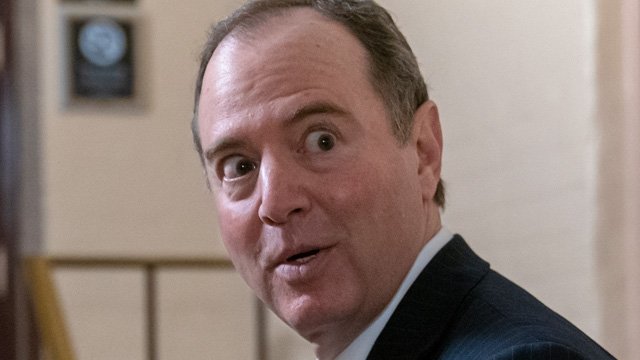
Sponsored by 44 House Democrats insuring that criminals can move to the USA with impunity at U.S. taxpayer expense. This is the most horrendous piece of legislation ever proposed by the radical left/liberal cabal in the House of Representatives. This is  treason and should be reckoned with. None or these sponsors have any business staying in the U.S. Congress for one more term. 

Source: YouTube

‘Dangerous Historical Precedent’: Republican State Attorneys General Admonish Iimpeachment in Letter to Senate | The Washington Examiner & Trending Politics

While Washington is consumed by impeachment fever, nearly half of the country’s state attorney generals are speaking out to condemn the Democrat coup against President Trump.

In an unprecedented letter to the Senate signed by 21 state attorney generals, the top law enforcement officials rebuked the impeachment and warned that:

“This impeachment proceeding threatens all future elections and establishes a dangerous historical precedent”

The letter urges senators to reject the Pelosi-Schiff-Nadler sham and emphasizes that the impeachment was concocted as a politically motivated scheme to reverse the 2016 election which they lost as well as to improperly influence the upcoming one this year.

Via The Washington Examiner, “‘Dangerous historical precedent’: Republican state attorneys general admonish impeachment in letter to Senate”:

Twenty-one Republican state attorneys general sent a letter to the Senate rebuking the impeachment of President Trump, claiming it would set a dangerous precedent moving forward.

The letter, which was sent on Wednesday morning, called for the Senate to dismiss the charges and end the trial, according to Fox News.

“This impeachment proceeding threatens all future elections and establishes a dangerous historical precedent,” it read. “That new precedent will erode the separation of powers shared by the executive and legislative branches by subjugating future Presidents to the whims of the majority opposition party in the House of Representatives.”

The attorneys general added, “Thus, our duty to current and future generations commands us to urge the Senate to not only reject the two articles of impeachment … as lacking in any plausible or reasonable evidentiary basis, but also as being fundamentally flawed as a matter of constitutional law.”

They went on to argue that the abuse of power charge against the president “is based upon a constitutionally-flawed theory” that is “infinitely expansive and subjective” because it is contingent upon knowing the motivation of the president. The attorneys general also claim that the second charge, obstruction of Congress, is “equally flawed” because it would ultimately render executive privilege “meaningless.”

The letter comes as the Democrat impeachment managers led by Adam Schiff have now come out and admitted before the Senate that the real reason why they seek to have President Trump removed from office is because he is going to win in November and that cannot be tolerated.

According to the letter:

Impeachment should never be a partisan response to one party losing a presidential election. If successful, an impeachment proceeding nullifies the votes of millions of citizens. The Democrat-controlled House passing of these constitutionally-deficient articles of impeachment amounts, at bottom, to a partisan political effort that undermines the democratic process itself.

That is exactly what is happening because in their rapacious lust for power, Democrats are determined to nullify the 63 million Americans who voted to elect Trump in 2016 and the tens of millions more who will vote for him again in November if he is not removed by the Senate.

By embracing the Soviet model, the current version of the Democratic party loves to pay lip service to “democracy” despite being anti-democracy to their very core and this cannot stand if America is to remain a free country.

Take it from the state attorneys.

Source: The Washington Examiner & Trending Politics

The Chinese Navy Is Building An Incredible Number Of Warships | Forbes

960x0By H I Sutton

The single image below of a Shanghai shipyard shows nine recently constructed Chinese warships. For context, the current schedule sees the U.S. Navy launching a handful of AEGIS destroyers each year. China’s Navy, known as the PLAN (People’s Liberation Army Navy), is modernizing at an impressive rate. And on a vast scale. A key ingredient is the construction of a fleet of large destroyers, amphibious warships and aircraft carriers. The below photo, snapped from an airplane window on December 13, and shared on social media, captures the vast scale of this construction.

Nearest the camera, a line of four newly constructed destroyers catch the sunlight. Two are Type-052D air-defense destroyers, generally equivalent to the U.S. Navy’s Arleigh Burke Class AEGIS destroyers. These displace 7,500 tons and can carry 64 large missiles including long range surface to air missiles (SAMs) and cruise missiles. The other two are larger Type-055 Class ships. These are also described as air-defense destroyers but are verging on cruisers in terms of size and fit. These are about twice the displacement and carry over 100 large missiles.

Behind them is the shipyard with its mass of construction halls and cranes. In the basin where the newest ships are docked after launch are another four destroyers. Again there are both Type-052D and Type-055 ships. Together with another Type-055 under construction on the left of the image, this brings the total number of large destroyers visible to 9. To put that into context, the Royal Navy’s entire destroyer fleet is just 6 ships. And this yard is just part of a much bigger construction program.

There are also some hovercraft which will be carried aboard the PLAN’s expanding fleet of amphibious warships. They will be used for transporting tanks and supplies from ship to shore. These are generally similar to the U.S. Navy’s Landing Craft Air Cushion (LCAC).

At the side of the basin, in a dry dock, is a massive Yuan Wang Class satellite and/or missile tracking ship. These are the sort of ships which look like an ocean liner but with a series of gigantic satellite dishes pointing skyward. When completed this could be used to support missile tests.

But the most impressive vessel is hidden in the background haze, barely discernible to the untrained eye. Beneath several massive gantry cranes in a purpose-built construction area is China’s next-generation aircraft carrier. China already has two carriers in servicebut this new carrier is expected to be significantly different. Known as the Type-003, it is believed to have electromagnetic catapults like the latest U.S. Navy Ford Class carrier. It is not expected to be launched for some time.

Other developments are not visible in the photo. It is the same shipyard where China’s mysterious sailless submarine has been constructed. Although that submarine is not clearly apparent in the photograph, it may be present in the basin.

This image paints an interesting picture of Chinese naval modernization. Yet the biggest takeaway is that this shipyard is not alone. There are many yards across China which are similarly impressive. The Chinese Navy of today, and the future, is changed beyond all recognition from the Chinese Navy of the past. The world naval balance is shifting.

War Propaganda: “Fake News” and the Pentagon’s Office of Strategic Influence (OSI) | Collective Evolution & Global Research

Editor’s Note: Much of this article is excerpted from the original by Michel Chossudovsky of Global Research. Excellent background to the intelligence operation behind the impeachment effort.

By Arjun Walla

  • The Facts:The influence of intelligence and government agencies when it comes to mainstream media is quite large. This article provides numerous examples from documents to whistleblowers that clearly prove this point.
  • Reflect On:Our world has become quite Orwellian with regards to free and open information. There now seems to be a ‘Ministry of Truth’ that is hiding information from people, and telling them what to believe and how to think. Censorship is rampant.

A declassified document from the CIA archives in the form of a letter from a CIA task force addressed to the Director of the Central Intelligence Agency details the close relationship that exists between the CIA and mainstream media and academia.

The document states that the CIA task force “now has relationships with reporters from every major wire service, newspaper, news weekly, and television network in the nation,” and that “this has helped us turn some ‘intelligence failure’ stories into ‘intelligence success” stories,’ and has contributed to the accuracy of countless others.” Furthermore, it explains how the agency has “persuaded reporters to postpone, change, hold, or even scrap stories that could have adversely affected national security interests or jeopardized sources and methods.”

Although it is a document outlining their desire to become more open and transparent, the deception outlined by various whistleblowers (example) requires us to read between the lines and recognize that the relationships shared between intelligence agencies and our sources of information are not always warranted and pose inherent conflicts of interest.

Herein lies the problem: What is “national security,” and who determines that definition? JFK bravely told the world that the “dangers of excessive and unwarranted concealment of pertinent facts far outweigh[] the dangers which are cited to justify it.” He also said that “there is very grave danger that an announced need for increased security will be seized upon by those anxious to expand its meaning to the very limits of official censorship and concealment.” 

“National security” is now an umbrella term used to justify concealing information, but who makes these decisions?

The real reason why people like Julian Assange are treated the way they are treated is because they threaten immoral corporate and elitist actions/interests of various governments and institutions, and because they simply share truth and information.

This is why we are also seeing the mass censorship of alternative media outlets, like Collective Evolution.

Not long ago, William Arkin, a longtime well known military and war reporter who is best known for his groundbreaking, three-part Washington Post series in 2010, went public outing NBC/MSNBC as completely fake government run agencies.

He blasted NBC News along with MSNBC news in an email for “becoming captive and subservient to the national security state, reflexively pro-war in the name of stopping President Donald Trump, and now the prime propaganda instrument of the War Machine’s promotion of militarism and imperialism.” This is something, based on my research, mainstream media has always been. It’s why they were created in the first place.

Arkin stated that, as a result of this, “the national security establishment not only hasn’t issued a beat but indeed has gained dangerous strength, and “is ever more autonomous and practically impervious to criticism.”

Another great quote comes to mind here,

“The real menace of our Republic is the invisible government, which like a giant octopus sprawls its slimy legs over our cities, states and nation . . .  The little coterie of powerful international bankers virtually run the United States government for their own selfish purposes. They practically control both parties . . .  [and] control the majority of the newspapers and magazines in this country. They use the columns of these papers to club into submission or drive out of office public officials who refuse to do the bidding of the powerful corrupt cliques which compose the invisible government. It operates under cover of a self-created screen [and] seizes our executive officers, legislative bodies, schools, courts, newspapers and every agency created for the public protection.”  (source)(source) – Mayor of New York City from 1918-1925

MSNBC’s star national security reporter Ken Dilanian was widely mocked by media outlets for years for being an uncritical CIA stenographer before he became a beloved NBC/MSNBC reporter, and let’s not forget CNN’s Anderson Cooper’s connections to the CIA.

Operation Mockingbird, a CIA program to infiltrate mainstream media and use it to influence the minds of the masses decades ago, seems to be in full effect today, at a larger scale than anyone can possibly imagine.

In early 2018, NBC hired former CIA chief John Brennan to serve as a “senior national security and intelligence analyst.”

Dr. Udo Ulfkotte was a top German journalist and editor and has been for more than two decades. He went on the record stating that he was forced to publish the works of intelligence agents under his own name, also mentioning that noncompliance would result in him losing his job. Not long ago, he made an appearance on RT news Stating that:

“I’ve been a journalist for about 25 years, and I was educated to lie, to betray, and not to tell the truth to the public. But seeing right now within the last months how the German and American media tries to bring war to the people in Europe, to bring war to Russia — this is a point of no return and I’m going to stand up and say it is not right what I have done in the past, to manipulate people, to make propaganda against Russia, and it is not right what my colleagues do and have done in the past because they are bribed to betray the people, not only in Germany, all over Europe.” (source)

There are many examples, the information above is simply small fraction of information regarding a big problem.

This is why I thought it was important to share a piece written by by Dr.Michel Chossudovsky, titled “War Propaganda: “Fake News” and the Pentagon’s Office of Strategic Influence (OSI). Chossudovsky is an award-winning author, Professor of Economics (emeritus) at the University of Ottawa, Founder and Director of the Centre for Research on Globalization (CRG), Montreal.  It was originally posted on hist website, GlobalResearch.ca.

War Propaganda: “Fake News” and the Pentagon’s Office of Strategic Influence (OSI)

The following text on Rumsfeld’s “Office of Strategic Influence” (OSI) was first published by Global Research in January 2003 two months before the onslaught of the war on Iraq. The analysis largely pertained to the role of the Pentagon in planting fake stories in the news chain with a view to providing a “human face” to US-led military interventions.

Already in 2002, the “Militarization of the Media” was on the drawing board of the Pentagon. Defense Secretary Rumsfeld created the OSI with a view to influencing public opinion in the months leading up to the war on Iraq in March 2003. “The purpose [of the OSI] was to deliberately lie to advance American interests,” (quoted in Air Force Magazine, January 2003). It consisted in feeding disinformation into the news chain as well as seeking the support of the corporate media. Acknowledged by the New York Times:

“The Defense Department is considering issuing a secret directive to the American military to conduct covert operations aimed at influencing public opinion and policy makers in friendly and neutral countries [Germany, France, etc], senior Pentagon and administration officials say.

The fight, one Pentagon official said, is over ”the strategic communications for our nation, the message we want to send for long-term influence, and how we do it.”

As a military officer put it: ”We have the assets and the capabilities and the training to go into friendly and neutral nations to influence public opinion. We could do it and get away with it. That doesn’t mean we should.”…

In February [2002], Mr. Rumsfeld had to disband the Pentagon’s Office of Strategic Influence, ending a short-lived plan to provide news items, and possibly false ones, to foreign journalists to influence public sentiment abroad. Senior Pentagon officials say Mr. Rumsfeld is deeply frustrated that the United States government has no coherent plan for molding public opinion worldwide in favor of America in its global campaign against terrorism and militancy.(NYT, December 10, 2002)

Many administration officials agree that there is a role for the military in carrying out what it calls information operations against adversaries, especially before and during war, as well as routine public relations work in friendly nations like Colombia, the Philippines or Bosnia, whose governments have welcomed American troops.

… But the idea of ordering the military to take psychological aim at allies has divided the Pentagon — with civilians and uniformed officers on both sides of the debate.

Some are troubled by suggestions that the military might pay journalists to write stories favorable to American policies or hire outside contractors without obvious ties to the Pentagon to organize rallies in support of American policies. (NYT, December 16, 2002)

The Ongoing “Militarization of the Media”

Most people do not even know that an Office of Strategic Influence (tantamount to a “Ministry of Truth”)  existed within the confines of the Pentagon. Why? Rumsfeld decided to abolish the OSI. In reality, it was never abolished. They just changed the name to something else (as confirmed by Rumsfeld in a November 2002 Press Conference):

Rumsfeld: And then there was the office of strategic influence….  I went down that next day and said fine, if you want to savage this thing fine I’ll give you the corpse. There’s the name. You can have the name, but I’m gonna keep doing every single thing that needs to be done and I have.

That was intended to be done by that office is being done by that office, NOT by that office in other ways.

DARPA Press Conference (Dept of Defense, November 18, 2002 emphasis added)

Flash Forward: 2002- 2017

While the OSI process launched by the Pentagon in 2002 is still functional as intimated by Rumsfeld, it has become increasingly sophisticated. Moreover, the media environment has changed dramatically since 2002 with the rapid development of social media.

Today, the Militarization of the Media is accepted. It is part of a “New Normal”.  The actions of both by the Pentagon and NATO are now largely directed against the Blogosphere integrated by social media and independent online news and analysis.

“Strategic Influence” seeks to undermine critique or opinion by the alternative online media directed against (illegal) acts of war. Since 2001, a firm relationship has developed between the mainstream media and the Military establishment. War crimes are tacitly ignored. US-NATO “acts of war” are routinely upheld by the corporate media as humanitarian endeavors, i.e. a so-called  “Responsibility to Protect”(R2P).

 “America is Under Attack”  

On September 11, 2001,  Afghanistan had allegedly attacked America, according to NATO’s North Atlantic Council. The legal argument was that the September 11 attacks constituted an undeclared “armed attack” “from abroad” by an unnamed foreign power.

In the months leading up to the announced 2003 invasion of Iraq, the propaganda campaign consisted in sustaining the illusion that “America was under attack”.

A similar logic prevails today: America’s is allegedly being threatened by “rogue states”: Russia, China, Iran and North Korea.

“Information Operations” are now envisaged by the Pentagon against alternative media which refuse to acknowledge that “America is under attack”.  The online independent media are tagged as “adversaries”. Countering (critical) social media is part of a US-NATO’s agenda. NATO points to the “weaponization of disinformation”, suggesting that online media directed against US-NATO constitutes a “weapon”.

Both the US DoD and NATO consider that online “false information” (published by independent and alternative media) has “security implications”. The objective is ultimately to dismantle all civil society media and movements which are opposed to America’s global war agenda.

The Takeaway

The censorship of independent media is quite large. Here at Collective Evolution, we are in threat of shutting down due to the fact that we have been censored, as well as demonetized from platforms like YouTube. This is why we created CETV, it’s how people can support us and it allows us to continue what we are doing, by being funded by YOU.

At the end of the day, the censorship efforts are coinciding with multiple mass campaigns to influence the minds of the masses via mainstream media. Mainstream media is a huge tool for the global elite to push various agenda’s, our compliance and their justification for various geopolitical actions are justified through the manipulation of our consciousness, and there is no doubt that independent media has made that much harder for them.

Source: Collective Evolution & Global Research

Four lessons from the biggest riots in decades | Sovereign Man

Editor’s Note: When stupid people take to the streets and cause reckless destruction everybody pays the price. Don’t let these radical fools destroy well-being for the rest of us because they’re angry, because they don’t like something, because they are do-nothing complainers. It’s everybody’s responsibility to cool down the flames of discontent and find meaningful ways to solve social, economic and political problems without resorting to violence. Martin Luther King would be ashamed of such violence!

If you’re been following the news, you might have seen reports about civil unrest in Chile– the worst in decades.

I lived in Chile for more than seven years before moving to Puerto Rico; I still have business interests there, along with hundreds of employees (both foreign and local), many of whom I’ve been speaking to over the last few days.

First things first, Chile is ordinarily a quiet, stable, peaceful country.

The last time Chile went to war was 140 years ago back in 1879. They even skipped both world wars.

And while there are occasional protests, Chile is quite tame by Latin American standards.

It’s also the most modern and advanced nation in the region– this is not a destitute, impoverished country.

Chile has thriving industries and a large middle class that’s in better shape than just about anywhere else in the region.

But just like every other country in the world, there are countless imperfections.

Inflation has eaten away at the purchasing power of workers’ incomes, and a lot of people are struggling to make ends meet.

The proverbial straw that broke the camel’s back was a 3% increase in metro fares.

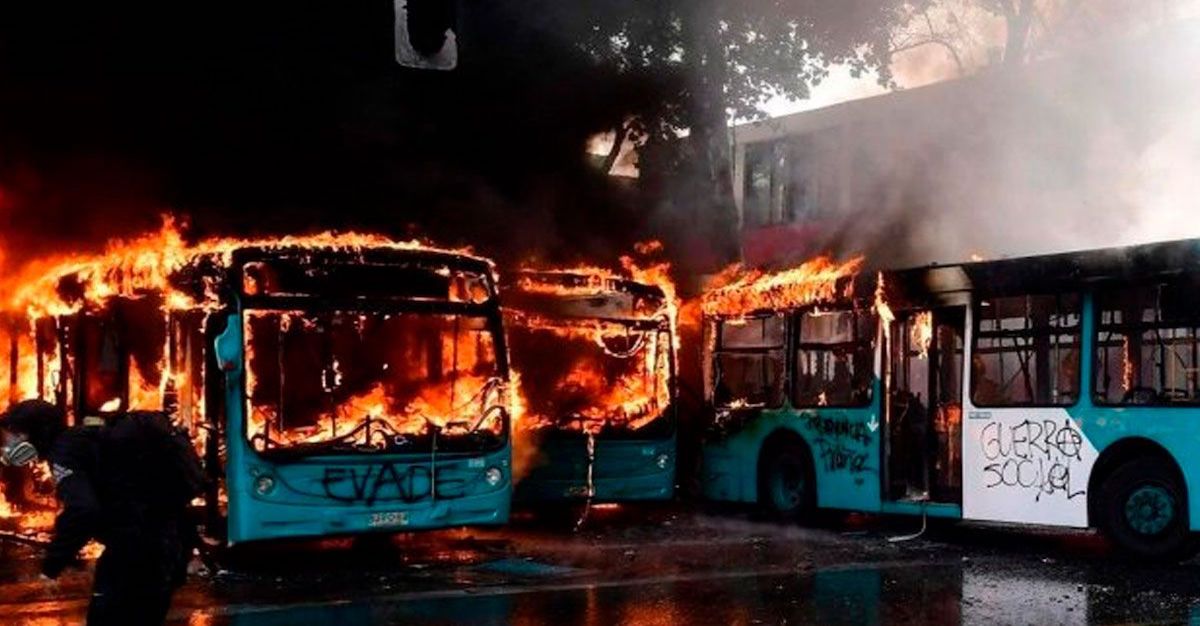
It’s nothing. But it was enough to make thousands of people become completely unglued, resulting in riots, looting, arson, and all-out mayhem.

Let’s talk about some of the key lessons from this:

1) It can happen anywhere.

It’s not just Chile. Looking around the world right now we can see major demonstrations and even violence in places like Hong Kong, Spain, Haiti, Lebanon, etc.

The ‘yellow vest’ movement in France in late 2018/early 2019 brought hundreds of thousands of people out into the streets to torch cars and destroy property, all apparently in protest of rising fuel prices.

Political tensions, social tensions, economic tensions… they exist everywhere, in rich countries and poor countries alike.

People everywhere are tightly wound, and it doesn’t take much for them to become unhinged. If you think this can’t happen where you live, think again.

2) It can happen faster than anyone realizes.

The weather in central Chile is one of the great benefits of living there; it’s warm, sunny, and dry… southern California climate.

And this past Friday was a particularly beautiful day. By lunchtime, people were out in the parks enjoying the weather. It was calm, peaceful, and joyful.

Within a matter of hours the city had turned into a war zone. Hours.

One of my team members told me on the phone yesterday, “If you had said on Friday afternoon that Santiago would be in chaos by nightfall, I would have laughed… And then it happened.”

3) It only takes a few idiots.

There are roughly 18 million people living in Chile. And there may even be a few million people nationwide who are deeply frustrated about the rising cost of living.

But only a few thousand have been stupid enough to cause such chaos and devastation; they’ve destroyed dozens of metro stations, buses, and even lit office buildings and grocery stores on fire.

Innocent people have died. And almost everyone else has had their lives heavily disrupted.

They can’t get to work. Schools are closed. Grocery store lines are crazy. There’s a curfew. Tanks are in the streets.

Most people are rational and peaceful. They might be angry about certain issues, but they know that torching property and killing innocents won’t solve anything.
Only a trivial fraction of a percent of the population are acting like cowards– the ones who steal a bunch of flat-screen televisions from the neighborhood electronics store before setting it on fire.

And they’re selfish and delusional enough to believe in their own righteousness– that their actions are justified as payback because of some economic injustice.

Yeah. Because nothing proves your moral superiority more than looting flat-screen TVs.

4) They often think Socialism is the answer.

Human beings seem hardwired to think that they can solve any economic injustice with Socialism.

More often than not, people don’t even think through the issues. They feel symptoms– difficulty making ends meet, difficulty getting ahead in life, etc. and they get angry.

And that’s where the analysis stops. There is no analysis actually. It’s just anger.

A rational person thinks things through– why is my cost of living increasing? Why aren’t I getting ahead? What’s the root cause of these problems? How can I fix it?

Again, Chile isn’t perfect. Not by a long shot.

But think about the 18-year old kid taking selfie videos while lighting a grocery store on fire because he’s angry… angry that his education was sub-par, angry that he can’t find a good paying job.

And he’s partially right. Public education in Chile is pretty bad, and he doesn’t have the skills for a high-paying career.

But I wonder how many books he’s read this year? How many free online courses has he taken? What has he done to solve his own problem?

Instead of torching buildings, he could have been at home watching countless videos on YouTube learning how to code in Python. For free.

And in developing real, marketable skills, he would become much more valuable and able to command a substantial wage and work remotely for prospective clients and employers worldwide.

But the Socialist mentality is not about solving your own problems.

Socialism means that you don’t have to lift a finger (except to light a match).

You just have to throw a temper tantrum until someone else solves your problems… even if you can’t even define your problem or present a reasonable solution.

I don’t want to make light of the issues; there are several problems that protesters have bought up which I agree with. But neither Socialism nor burning buildings ever solved any problems.

It may take time, but Chile is undoubtedly going to recover from this nightmare and move on. The ‘sane’ population (i.e. the vast majority) is already fighting back and defending their neighborhoods.

Source: Sovereign Man

Whistleblower Broke Multiple Federal Laws And May Lose Protections | Trending Politics

Editor’s Note: After reading the federal law on whistleblower protections it seems evident that the mysterious whistleblower did not follow the proper legal procedures to afford himself/herself protections by reporting to the Intelligence Community Inspector General directly instead of Adam Schiff, the House Intelligence Committee head. If a C.I.A. officer is involved in “spying” on the President in the White House, then coordinating his complaint with the Democrats it sheds light on this political hit job against the President.

The New York Times dropped a bombshell report on Wednesday which revealed that the anti-Trump whistleblower coordinated with House Intelligence Committee Chairman Adam Schiff before the infamous complaint was even made.

“The early account by the future whistle-blower … explains how Mr. Schiff knew to press for the complaint when the Trump administration initially blocked lawmakers from seeing it,” The New York Times reported. “Before going to Congress, the C.I.A. officer had a colleague convey his accusations to the agency’s top lawyer. Concerned about how that avenue for airing his allegations was unfolding, the officer then approached a House Intelligence Committee aide, alerting him to the accusation against Mr. Trump. ”

This shocking report may be detrimental for the Democratic party considering the whistleblower may have broken a federal law and may lose their whistleblower protection status because they went to congressional Democrats before filing the complaint.

Check out what the Federalist reported:

Under federal law, whistleblowers within the intelligence community are required to report any allegations of wrongdoing to the Intelligence Community Inspector General (ICIG) in order to receive statutory whistleblower protections for their disclosures. The law does not provide any protections to employees or contractors who bypass the process required by law and go directly to Congress, nor does it provide any avenue to disclose classified information to Congress without first going through the ICIG. If the complainant or a colleague leaked classified information to Schiff or his committee, those individuals could be subject to criminal liability for illegal and unauthorized disclosure of classified information.

The Intelligence Community Whistleblower Protection act clearly states: “The employee may contact the intelligence committees directly [after filing a complaint with the inspector general] if the employee…before making such a contact, furnishes to the Director, through the Inspector General, a statement of the employee’s complaint or information and notice of the employee’s intent to contact the intelligence committees directly…and obtains and follows from the Director, through the Inspector General, direction on how to contact the intelligence committees in accordance with appropriate security practices.”

The Federalist continues:

The communication between the whistleblower and House Democrats prior to the complaint’s filing also raises questions about whether Schiff and his committee staff coordinated with the ICIG regarding the watchdog’s whistleblower forms and guidance stating that first-hand information is required in order for the agency to properly investigate “urgent concern” complaints.

The new revelations that Schiff and his staff coordinated with the anti-Trump complainant and his colleagues prior to a formal whistleblower complaint also suggest Schiff was less than truthful about his interactions with the whistleblower. On August 28, nearly two weeks before the ICIG formally informed Congress of a pending “urgent concern” whistleblower complaint from an intel operative, Schiff tweeted allegations from the complaint without disclosing their source.

Source: Trending Politics

Court Forces Release of Clinton Wikileaks discussion email that confirms State Department knew about her email account | Judicial Watch

Editor’s Note: There is a long chain of events leading to this misguided impeachment inquiry initiated by the Democrats in the House of Representatives and it began during the Obama Administration when Hillary Clinton was Secretary of State. She was breaking with long-standing national security procedures by establishing a private server for her government and personal communications and the State Department knew she was doing this all along. Here’s the proof.

Judicial Watch announced today that the State Department provided a previously hidden email which shows that top State Department officials used and were aware of Hillary Clinton’s email account.

On December 24, 2010, Daniel Baer, an Obama State Department deputy assistant secretary of state, writes to Michael Posner, a then-assistant secretary of state about Clinton’s private email address:

Baer: “Be careful, you just gave the secretary’s personal email address to a bunch of folks …”

Posner answers: “Should I say don’t forward? Did not notice”

Baer responds: “Yeah-I just know that she guards it pretty closely”

Mr. Posner had forwarded Clinton’s email address, which was contained in an email sent to State Department senior leadership, about WikiLeaks.

It appears the State Department produced this email in 2016 in redacted form, blacking out Clinton’s personal email address and the discussion about Clinton’s wanting to keep her email address closely guarded.

Judicial Watch sought the email after a former top Freedom of Information Act (FOIA) State Department official testified to Judicial Watch about reviewing it between late 2013 and early 2014.

The testimony and the email production comes in discovery granted to Judicial Watch on the Clinton email issue in a FOIA lawsuit (Judicial Watch v. U.S. Department of State (No. 1:14-cv-01242)). Clinton also faces potential questioning under oath in this lawsuit.

Despite a recent court order requiring production of the email, the DOJ and State Departments only produced it 10 days ago after Judicial Watch threatened to seek a court order to compel its production.

“Judicial Watch just caught the State Department and DOJ red-handed in another email cover-up – they all knew about the Clinton email account but covered up the smoking-gun email showing this guilty knowledge for years,” stated Judicial Watch President Tom Fitton.

The scope of court-ordered discovery that produces this email find includes: whether Secretary Clinton used private email in an effort to evade the Freedom of Information Act (FOIA); whether the State Department’s attempt to settle this FOIA case in 2014 and 2015 amounted to bad faith; and whether the State Department has adequately searched for records responsive to Judicial Watch’s FOIA request.

During a recent hearing, Judge Lamberth specifically raised concerns about a Clinton email cache, carterheavyindustries@gmail.com, discussed in a letter to Senator Charles Grassley (R-IA) and wants Judicial Watch to “shake this tree” on this issue.

Judge Lamberth also criticized the State Department’s handling and production of Clinton’s emails in this case stating, “There is no FOIA [Freedom of Information Act] exemption for political expedience, nor is there one for bureaucratic incompetence.” 

The court rejected DOJ and State efforts to derail further Judicial Watch discovery. Judge Lamberth called their arguments “preposterous” and cited a prior Judicial Watch FOIA case in which he ordered U.S. Marshals to seize records from a Clinton administration official.

Judge Lamberth detailed how the State Department “spent three months from November 2014 trying to make this case disappear,” and that after discovering the State Department’s actions and omissions, “Now we know more, but we have even more questions than answers. So I won’t hold it against Judicial Watch for expanding their initial discovery request now.”

Judge Lamberth stated his goal was to restore the public’s faith in their government, which may have been damaged because of the Clinton email investigation.

The court granted Judicial Watch seven additional depositions, three interrogatories and four document requests related to former Secretary of State Hillary Clinton’s use of a private email server. Hillary Clinton and her former top aide and current lawyer Cheryl Mills were given 30 days to oppose being deposed by Judicial Watch.

On December 6, 2018, Judge Lamberth ordered Obama administration senior State Department officials, lawyers and Clinton aides to be deposed or answer written questions under oath. The court ruled that the Clinton email system was “one of the gravest modern offenses to government transparency.”

This Judicial Watch FOIA lawsuit led directly to the disclosure of the Clinton email system in 2015.

Judicial Watch’s discovery over the last several months found many more details about the scope of the Clinton email scandal and cover-up:

  • John Hackett, former Director of Information Programs and Services (IPS) testified under oath that he had raised concerns that former Secretary of State Hillary Clinton’s staff may have “culled out 30,000” of the secretary’s “personal” emails without following strict National Archives standards. He also revealed that he believed there was interference with the formal FOIA review process related to the classification of Clinton’s Benghazi-related emails.
  • Heather Samuelson, Clinton’s White House liaison at the State Department, and later Clinton’s personal lawyer, admitted under oath that she was granted immunity by the Department of Justice in June 2016.
  • Justin Cooper, former aide to President Bill Clinton and Clinton Foundation employee who registered the domain name of the unsecure clintonemail.com server that Clinton used while serving as Secretary of State, testified he worked with Huma Abedin, Clinton’s deputy chief of staff, to create the non-government email system.
  • In the interrogatory responses of E.W. (Bill) Priestap, assistant director of the FBI Counterintelligence Division, he stated that the agency found Clinton email records in the Obama White House, specifically, the Executive Office of the President.
  • Jacob “Jake” Sullivan, Clinton’s senior advisor and deputy chief of staff when she was secretary of state, testified that both he and Clinton used her unsecure non-government email system to conduct official State Department business.
  • Eric Boswell, former assistant secretary of state for diplomatic security during Clinton’s tenure as secretary of state, testified that Clinton was warned twice against using unsecure BlackBerry’s and personal emails to transmit classified material.

Source: Judicial Watch

Edward Snowden On Trump, Privacy, And Threats To Democracy | The 11th Hour | MSNBC & YouTube

Source: YouTube

Fake news is real — Artificial Intelligence is going to make it much worse | CNBC

“The Boy Who Cried Wolf” has long been a staple on nursery room shelves for a reason: It teaches kids that joking too much about a possible threat may turn people ignorant when the threat becomes an actual danger.

President Donald Trump has been warning about “fake news” throughout his entire political career putting a dark cloud over the journalism professional. And now the real wolf might be just around the corner that industry experts should be alarmed about.

The threat is called “deepfaking,” a product of AI and machine learning advancements that allows high-tech computers to produce completely false yet remarkably realistic videos depicting events that never happened or people saying things they never said. A viral video starring Jordan Peele and “Barack Obama” warned against this technology in 2018, but the message was not enough to keep Jim Carrey from starring in “The Shining” earlier this week.

The danger goes far beyond manipulating 1980s thrillers. Deepfake technology is allowing organizations that produce fake news to augment their “reporting” with seemingly legitimate videos, blurring the line between reality and fiction like never before — and placing the reputation of journalists and the media at greater risk.

Ben Zhao, a computer science professor at the University of Chicago, thinks the age of getting news on social media makes consumers very susceptible to this sort of manipulation.

“What the last couple years has shown is basically fake news is quite compelling even in [the] absence of actual proof. … So the bar is low,” Zhao said.

The bar to produce a convincing doctored video is lower than people might assume.

Earlier this year a clip purporting to show Democratic leader Nancy Pelosi slurring her words when speaking to the press was shared widely on social media, including at one point by Trump’s attorney Rudy Giuliani. However, closer inspection revealed that the video had been slowed to 75% of its normal speed to achieve this slurring effect, according to the Washington Post. Even with the real video now widely accessible, Hany Farid, a professor at UC Berkeley’s School of Information and a digital forensics expert, said he still regularly receives emails from people insisting the slowed video is the legitimate one.

“Even in these relatively simple cases, we are struggling to sort of set the record straight,” Farid said.

It would take a significant amount of expertise for a fake news outlet to produce a completely fabricated video of Oprah Winfrey endorsing Trump, but researchers say the technology is improving every day. At the University of Washington, computer vision researchers are developing this technology for positive, or at least benign, uses like making video conferencing more realistic and letting students talk to famous historical figures. But this research also leads to questions about potential dangers, as the attempts made by attackers are expected to continually improve.

How to detect a deepfake

To make one of these fake videos, computers digest thousands of still images of a subject to help researchers build a 3-D model of the person. This method has some limitations, according to Zhao, who noted the subjects in many deepfake videos today never blink, since almost all photographs are taken with a person’s eyes open.

However, Farid said these holes in the technology are being filled incredibly rapidly.

“If you asked me this question six months ago, I would’ve said, ‘Yeah, [the technology] is super cool, but there’s a lot of artifacts, and if you’re paying attention, you can probably tell that there’s something wrong,’” Farid said. “But I would say we are … quickly but surely getting to the point where the average person is going to have trouble distinguishing.”

In fact, Zhao said researchers believe the shortcomings that make deepfake videos look slightly off to the eye can readily be fixed with better technology and better hardware.

“The minute that someone says, ‘Here’s a research paper telling you about how to detect this kind of fake video,’ that is when the attackers look at the paper and say, ‘Thank you for pointing out my flaw. I will take that into account in my next-generation video, and I will go find enough input … so that the next generation of my video will not have the same problem,’” Zhao said.

“Once we live in an age where videos and images and audio can’t be trusted … well, then everything can be fake.” – Hany Farid, Professor at UC Berkeley’s School of Information

One of the more recent developments in this field is in generating speech for a video. To replicate a figure such as Trump’s voice, computers can now simply analyze hundreds of hours of him speaking. Then researchers can type out what they want Trump to say, and the computer will make it sound as if he actually said it. Facebook, Google and Microsoft have all more or less perfected this technology, according to Farid.

Manipulated videos of this sort aren’t exactly new — Forest Gump didn’t actually meet JFK, after all. However, Farid says this technology is hitting its stride, and that makes the danger new.

“To me the threat is not so much ‘Oh, there’s this new phenomenon called deepfakes,’” Farid said. “It’s the injection of that technology into an existing environment of mistrust, misinformation, social media, a highly polarized electorate, and now I think there’s a real sort of amplification factor because when you hear people say things, it raises the level of belief to a whole new level.”

The prospect of widespread availability of this technology is raising eyebrows, too. Tech-savvy hobbyists have long been using deepfakes to manufacture pornography, a consistent and comically predictable trend for new technology. But Zhao believes it is only a matter of time before the research-caliber technology gets packaged and released for mass-video manipulation in much broader contexts.

“At some point someone will basically take all these technologies and integrate and do the legwork to build a sort of fairly sophisticated single model, one-stop shop … and when that thing hits and becomes easily accessible to many, then I think you’ll see this becoming much more prevalent,” Zhao said. “And there’s nothing really stopping that right now.”

Facing a massive consumer trust issue

When this happens, the journalism industry is going to face a massive consumer trust issue, according to Zhao. He fears it will be hard for top-tier media outlets to distinguish a real video from a doctored one, let alone news consumers who haphazardly stumble across the video on Twitter.

“Once we live in an age where videos and images and audio can’t be trusted … well, then everything can be fake,” Farid said. “We can have different opinions, but we can’t have different facts. And I think that’s sort of the world we’re entering into when we can’t believe anything that we see.”

Zhao has spent a great deal of time speaking with prosecutors, judges — the legal profession is another sector where the implications are huge — reporters and other professors to get a sense for every nuance of the issue. However, despite his clear understanding of the danger deepfakes pose, he is still unsure of how news outlets will go about reacting to the threat.

“Certainly, I think what can happen is … there will be even less trust in sort of mainstream media, the main news outlets, legitimate journalists [that] sort of react and report real-time stories because there is a sense that anything that they have seen … could be in fact made up,” Zhao said.

Then it becomes a question of how the press deal with the disputes over reality.

“And if it’s someone’s word, an actual eyewitness’ word versus a video, which do you believe, and how do you as an organization go about verifying the authenticity or the illegitimacy of a particularly audio or video?” Zhao asked.

Defeating the deepfakes

Part of this solution may be found in the ledger technology that provides the digital infrastructure to support cryptocurrencies like bitcoin — the blockchain. Many industries are touting blockchain as a sort of technological Tylenol. Though few understand exactly how it works, many swear it will solve their problems.

Farid said companies like photo and video verification platform Truepic, to which he serves as an advisor, are using the blockchain to create and store digital signatures for authentically shot videos as they are being recorded, which makes them much easier to verify later. Both Zhao and Farid are hoping social platforms like Facebook and Twitter will then promote these videos that are verified as authentic over non-verified videos, helping to halt the spread of deepfakes.

“The person creating the fake always has the upper hand,” Farid said. “Playing defense is really, really hard. So I think in the end our goal is not to eliminate these things, but it’s to manage the threat.”

Until this happens, Zhao said the fight against genuinely fake news may not start on a ledger, but in stronger consumer awareness and journalists banding together to better verify sources through third parties.

“One of the hopes that I have for defeating this type of content is that people are just so inundated with news coverage and information about these types of videos that they become fundamentally much more skeptical about what a video means and they will look closer,” Zhao said. “There has to be that level of scrutiny by the consumer for us to have any chance of fighting back against this type of fake content.”

Nicholas Diakopoulos, assistant professor in Northwestern University’s School of Communication and expert on the future of journalism, said via email that the best solutions involve a mix of educational and sociotechnical advances.

“There are a variety of perceptual cues that can be tip-offs to a deepfake and we should be teaching those broadly to the public,” he said.

Diakopoulos has referenced Farid’s work on photo forensics among ideas outlined in an article he wrote for the Columbia Journalism Review last year. He also cited a research project called FaceForensics that uses machine learning to detect, with 98.1% accuracy, whether a video of a face is real. Another research technique under study: Blood flow in video of a person’s face can be analyzed in order to see if pixels periodically get redder when the heart pumps blood.

“On the sociotechnical side, we need to develop advanced forensics techniques that can help debunk synthesized media when put into the hands of trained professionals,” he told CNBC. “Rapid response teams of journalists should be trained and ready to use these tools during the 2020 elections so they can debunk disinformation as quickly as possible.”

Diakopoulos has studied the implications of deepfakes for the 2020 electionsspecifically. He also has written papers on how journalists need to think when “reporting in a machine reality.”

And he remains optimistic.

“If news organizations develop clear and transparent policies of their efforts using such tools to ensure the veracity of the content they publish, this should help buttress their trustworthiness. In an era when we can’t believe our eyes when we see something online, news organizations that are properly prepared, equipped and staffed are poised to become even more trusted sources of information.”

Source: CNBC

NY Times admits it sends stories to US government (i.e. national security officials) for approval before publication | The Gray Zone

new-york-times-buildingBy Ben Norton

Editor’s Note: We’ve long understood the entanglement between the mainstream press and the national security system. This article gives us some deeper insight.

The New York Times has publicly acknowledged that it sends some of its stories to the US government for approval from “national security officials” before publication.

This confirms what veteran New York Times correspondents like James Risen have said: The American newspaper of record regularly collaborates with the US government, suppressing reporting that top officials don’t want made public.

On June 15, the Times reported that the US government is escalating its cyber attacks on Russia’s power grid. According to the article, “the Trump administration is using new authorities to deploy cybertools more aggressively,” as part of a larger “digital Cold War between Washington and Moscow.”

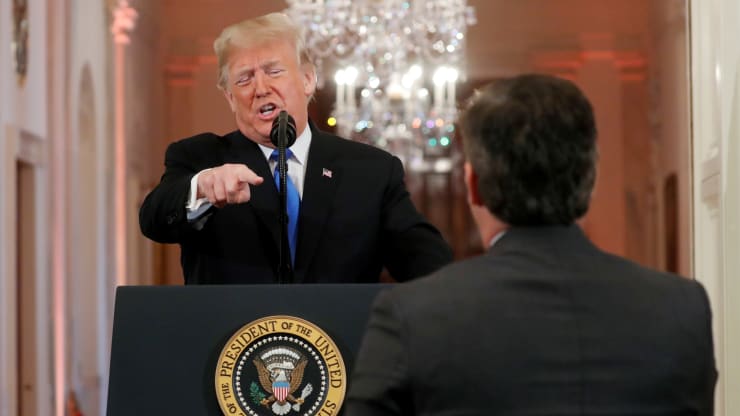
In response to the report, Donald Trump attacked the Times on Twitter, calling the article “a virtual act of Treason.”

The New York Times PR office replied to Trump from its official Twitter account, defending the story and noting that it had, in fact, been cleared with the US government before being printed.

“Accusing the press of treason is dangerous,” the Times communications team said. “We described the article to the government before publication.”

“As our story notes, President Trump’s own national security officials said there were no concerns,” the Times added.

Indeed, the Times report on the escalating American cyber attacks against Russia is attributed to “current and former [US] government officials.” The scoop in fact came from these apparatchiks, not from a leak or the dogged investigation of an intrepid reporter.

‘Real’ journalists get approval from ‘national security’ officials

The neoliberal self-declared “Resistance” jumped on Trump’s reckless accusation of treason (the Democratic Coalition, which boasts, “We help run #TheResistance,” responded by calling Trump “Putin’s puppet”). The rest of the corporate media went wild.

But what was entirely overlooked was the most revealing thing in the New York Times’ statement: The newspaper of record was essentially admitting that it has a symbiotic relationship with the US government.

In fact, some prominent American pundits have gone so far as to insist that this symbiotic relationship is precisely what makes someone a journalist.

In May, neoconservative Washington Post columnist Marc Thiessen — a former speechwriter for President George W. Bush — declared that WikiLeaks publisher and political prisoner Julian Assange is “not a journalist”; rather, he is a “spy” who “deserves prison.” (Thiessen also once called Assange “the devil.”)

What was the Post columnist’s rationale for revoking Assange’s journalistic credentials?

Unlike “reputable news organizations, Assange did not give the U.S. government an opportunity to review the classified information WikiLeaks was planning to release so they could raise national security objections,” Thiessen wrote. “So responsible journalists have nothing to fear.”

In other words, this former US government speechwriter turned corporate media pundit insists that collaborating with the government, and censoring your reporting to protect so-called “national security,” is definitionally what makes you a journalist.

This is the express ideology of the American commentariat.

NY Times editors ‘quite willing to cooperate with the government’

The symbiotic relationship between the US corporate media and the government has been known for some time. American intelligence agencies play the press like a musical instrument, using it it to selectively leak information at opportune moments to push US soft power and advance Washington’s interests.

But rarely is this symbiotic relationship so casually and publicly acknowledged.

In 2018, former New York Times reporter James Risen published a 15,000-word article in The Intercept providing further insight into how this unspoken alliance operates.

Risen detailed how his editors had been “quite willing to cooperate with the government.” In fact, a top CIA official even told Risen that his rule of thumb for approving a covert operation was, “How will this look on the front page of the New York Times?”

There is an “informal arrangement” between the state and the press, Risen explained, where US government officials “regularly engaged in quiet negotiations with the press to try to stop the publication of sensitive national security stories.”

“At the time, I usually went along with these negotiations,” the former New York Times reported said. He recalled an example of a story he was writing on Afghanistan just prior to the September 11, 2001 attacks. Then-CIA Director George Tenet called Risen personally and asked him to kill the story.

“He told me the disclosure would threaten the safety of the CIA officers in Afghanistan,” Risen said. “I agreed.”

Risen said he later questioned whether or not this was the right decision. “If I had reported the story before 9/11, the CIA would have been angry, but it might have led to a public debate about whether the United States was doing enough to capture or kill bin Laden,” he wrote. “That public debate might have forced the CIA to take the effort to get bin Laden more seriously.”

This dilemma led Risen to reconsider responding to US government requests to censor stories. “And that ultimately set me on a collision course with the editors at the New York Times,” he said.

“After the 9/11 attacks, the Bush administration began asking the press to kill stories more frequently,” Risen continued. “They did it so often that I became convinced the administration was invoking national security to quash stories that were merely politically embarrassing.”

In the lead-up to the Iraq War, Risen frequently “clashed” with Times editors because he raised questions about the US government’s lies. But his stories “stories raising questions about the intelligence, particularly the administration’s claims of a link between Iraq and Al Qaeda, were being cut, buried, or held out of the paper altogether.”

The Times’ executive editor Howell Raines “was believed by many at the paper to prefer stories that supported the case for war,” Risen said.

In another anecdote, the former Times journalist recalled a scoop he had uncovered on a botched CIA plot. The Bush administration got wind of it and called him to the White House, where then-National Security Adviser Condoleezza Rice ordered the Times to bury the story.

Risen said Rice told him “to forget about the story, destroy my notes, and never make another phone call to discuss the matter with anyone.”

“The Bush administration was successfully convincing the press to hold or kill national security stories,” Risen wrote. And the Barack Obama administration subsequently accelerated the “war on the press.”

CIA media infiltration and manufacturing consent

In their renowned study of US media, “Manufacturing Consent: The Political Economy of the Mass Media,” Edward S. Herman and Chomsky articulated a “propaganda model,” showing how “the media serve, and propagandize on behalf of, the powerful societal interests that control and finance them,” through “the selection of right-thinking personnel and by the editors’ and working journalists’ internalization of priorities and definitions of newsworthiness that conform to the institution’s policy.”

But in some cases, the relationship between US intelligence agencies and the corporate media is not just one of mere ideological policing, indirect pressure, or friendship, but rather one of employment.

In the 1950s, the CIA launched a covert operation called Project Mockingbird, in which it surveilled, influenced, and manipulated American journalists and media coverage, explicitly in order to direct public opinion against the Soviet Union, China, and the growing international communist movement.

Legendary journalist Carl Bernstein, a former Washington Post reporter who helped uncover the Watergate scandal, published a major cover story for Rolling Stone in 1977 titled “The CIA and the Media: How America’s Most Powerful News Media Worked Hand in Glove with the Central Intelligence Agency and Why the Church Committee Covered It Up.”

Bernstein obtained CIA documents that revealed that more than 400 American journalists in the previous 25 years had “secretly carried out assignments for the Central Intelligence Agency.”

Bernstein wrote:

“Some of these journalists’ relationships with the Agency were tacit; some were explicit. There was cooperation, accommodation and overlap. Journalists provided a full range of clandestine services—from simple intelligence gathering to serving as go‑betweens with spies in Communist countries. Reporters shared their notebooks with the CIA. Editors shared their staffs. Some of the journalists were Pulitzer Prize winners, distinguished reporters who considered themselves ambassadors without‑portfolio for their country. Most were less exalted: foreign correspondents who found that their association with the Agency helped their work; stringers and freelancers who were as interested in the derring‑do of the spy business as in filing articles; and, the smallest category, full‑time CIA employees masquerading as journalists abroad. In many instances, CIA documents show, journalists were engaged to perform tasks for the CIA with the consent of the managements of America’s leading news organizations.”

Virtually all major US media outlets cooperated with the CIA, Bernstein revealed, including ABC, NBC, the AP, UPI, Reuters, Newsweek, Hearst newspapers, the Miami Herald, the Saturday Evening Post, and the New York Herald‑Tribune.

However, he added, “By far the most valuable of these associations, according to CIA officials, have been with the New York Times, CBS and Time Inc.”

These layers of state manipulation, censorship, and even direct crafting of the news media show that, as much as they claim to be independent, The New York Times and other outlets effectively serve as de facto spokespeople for the government — or at least for the US national security state.

Source: The Gray Zone