The founder of the transparency organization WikiLeaks released a statement on 1 December upon the release of over 500,000 diplomatic cables dating back to 1979, which succinctly reveals how the CIA was essentially responsible for creating the Islamic State (ISIS) terror group.
The timing of the release coincided with the sixth anniversary of WikiLeaks “Cablegate” release, which exposed the machinations of the underbelly of the U.S. empire. The latest release, known as the “Carter Cables,” adds 531,525 new diplomatic cables to the WikiLeaks’ already voluminous Public Library of U.S. Diplomacy (PLUSD).
In a statement released in concert with the release of the “Carter Cables,” Julian Assange mapped out how the events of 1979 began a series of events that have ultimately culminated in the rise of ISIS.
“If any year could be said to be the “year zero” of our modern era, 1979 is it,” said Assange.
Assange lays bare the reality that the roots of modern Islamist terrorism began through a joint venture by the CIA and Saudi Arabian government, to the tune of billions of dollars, to create a “Mujahideen” force to fight against the Soviet Union in Afghanistan – which ultimately led to the creation of al-Qaeda.
Assange is not alone in his claims either. According to a poll by the Express, the overwhelming majority of people understand that US foreign policy created ISIS.
Assange goes on to note that the subsequent attacks of 9/11, and invasion of Afghanistan and Iraq, directly led to the rise of ISIS.
“In the Middle East, the Iranian revolution, the Saudi Islamic uprising and the Egypt-Israel Camp David Accords led not only to the present regional power dynamic but decisively changed the relationship between oil, militant Islam and the world.
“The uprising at Mecca permanently shifted Saudi Arabia towards Wahhabism, leading to the transnational spread of Islamic fundamentalism and the US-Saudi destabilisation of Afghanistan,” said Assange.
The narrative laid out by Assange exposes exactly how militant Islam was nurtured by the CIA and Saudi government as a mean of usurping the communist Afghani government, which had asked for Soviet assistance in combatting Islamic terrorism.
“The invasion of Afghanistan by the USSR would see Saudi Arabia and the CIA push billions of dollars to Mujahideen fighters as part of Operation Cyclone, fomenting the rise of al-Qaeda and the eventual collapse of the Soviet Union.
“The 1979 current of Islamification spread to Pakistan where the US embassy was burned to the ground and Pakistan Prime Minister Zulfikar Ali Bhutto was executed.
“The Iranian hostage crisis would go on to fatally undermine Jimmy Carter’s presidency and see the election of Ronald Reagan.
“The rise of al-Qaeda eventually bore the September 11, 2001 attacks in the United States, enabling the US invasion of Afghanistan and Iraq and over a decade of war, leaving, at its end, the ideological, financial and geographic basis for ISIS,” said Assange.
In addition to the rise of global militant Islam, the latest release also includes cables regarding the election of Margaret Thatcher as British Prime Minister. Three Mile Island nuclear incident is also covered as well as cables highlighting Henry Kissinger secretly working with David Rockefeller to find a place for the deposed Shah of Iran to hide.
“In 1979 it seemed as if the blood would never stop,” noted Assange. “Dozens of countries saw assassinations, coups, revolts, bombings, political kidnappings and wars of liberation.”
With the release of the “Carter Cables,” WikiLeaks’ has now published a total of 3.3 million U.S. diplomatic cables. Staying true to their motto – WikiLeaks continues to open up governments.
Below is a video interview with Assange where he highlights an email from the Podesta leak, which exposed that the governments of Saudi Arabia and Qatar are directly funding ISIS. In that email, sent on August 17, 2014, Hillary Clinton asked John Podesta to help put “pressure” on the Qatari and Saudi Arabian governments over their support of ISIS. State sponsorship of ISIS, by what is generally considered a close ally of the United States, is something that U.S. officials continue to refuse to acknowledge publicly.
Hillary Clinton’s email to Podesta reveals clearly the reality of the situation.
“We need to use our diplomatic and more traditional intelligence assets to bring pressure on the governments of Qatar and Saudi Arabia, which are providing clandestine financial and logistic support to ISIL and other radical Sunni groups in the region,” Clinton wrote in the email.
Binney, a cryptanalyst-mathematician and a Russia specialist at one point during his 30 years with the NSA, is a signatory of an open letter released Monday from six retired intelligence officials, calling themselves the “Veteran Intelligence Professionals for Sanity,” who assert that the allegations that Russia hacked the Democratic National Committee (DNC) are baseless.
“The evidence that should be there is absent; otherwise, it would surely be brought forward, since this could be done without any danger to sources and methods,” the letter stated. “Thus, we conclude that the emails were leaked by an insider – as was the case with Edward Snowden and Chelsea Manning. Such an insider could be anyone in a government department or agency with access to NSA databases, or perhaps someone within the DNC.”
In an in-depth interview on Radio Sputnik’s Loud & Clear, Binney details points clarifying that the WikiLeaks email releases are not hacks at all, but actually insider leaks.
“In order to get to the servers, they [hackers] would have to come across the network and go into the servers, penetrate them, and then extract data out of the servers and bring it back across the network,” Binney explained. “If it were the Russians, it would then go to Russia, and it would have to go from there across the network again to get to WikiLeaks.”Binney explained that “anything doing that would be picked up by the NSA’s vast surveillance system, both in terms of collecting the data as it transits the fiber optics inside the US, as well as internationally.”
The retired intelligence analyst also noted that traceroute packets are embedded in hundreds of switchers around the world, and that email messages are easily traced.
“With all the billions of dollars we spend on this collection access system that the NSA has, there’s no way that could have missed all the packets being transferred from those servers to the Russians,” Binney said. “I mean, they should know exactly how and when those packets left those servers and went to the Russians, and where specifically in Russia it went. There’s no excuse for not knowing that.”
If it was a hack, Binney reveals, the NSA would know who the sender and recipients of the data are, thanks to mass internet surveillance programs. The intelligence apparatus does not depend on “circumstantial evidence,” as has been reported.
“My point is really pretty simple. There should be no guessing here at all, they should be able to show the traceroutes of all the packets, or some of them anyways, going to the Russians and then from the Russians to WikiLeaks,” Binney explained. “There is no excuse for not being able to do that — and that would be the basic evidence to prove it. Otherwise, it could be any hacker in the world, or any other government in the world, who knows.”
Former CIA analyst Ray McGovern also signed the letter, and has been outspoken about his disbelief that the information came from a Russian hack — or that the breach was, indeed, a hack.
“Today they are talking about having ‘overwhelming circumstantial evidence.’ Now we have overwhelming technical evidence. We have the former technical director of the National Security Agency that tells us that this is really just drivel,” McGovern previously told Radio Sputnik. “This is really just an operation to blacken the Russians and to blame the defeat of Hillary Clinton on the Russians.”
On Monday, Sputnik reported that former CIA officer and current executive director of the Council for the National Interest, Philip Giraldi, has come to the same conclusion as Binney and McGovern.
“If the intelligence community is nevertheless claiming that they know enough to conclude that it was directed from the top levels of the Russian government, then they should be able to produce documentary or other evidence of officials’ ordering the operation to take place,” Giraldi wrote. “Do they have that kind of information? It is clear that they do not, in spite of their assertion of ‘high confidence,’ and there is a suggestion by Republican Rep. Devin Nunes, a persistent critic of Russian spying who is on the House Intelligence Committee, that the information they do have consists of innuendo and is largely circumstantial.”
For a director who customarily tackles subjects with the approach of a gorilla playing American football, Oliver Stone’s take on whistleblower Edward Snowden seems curiously muted. Audiences who are already familiar with Citizenfour, Laura Poitras’s exemplary documentary on the same subject, will be struck by the fact that, in dramatising Snowden’s story, Stone seems to have leached out much of the drama. The aim was clearly to create an All the President’s Men for the age of cyber-surveillance. But somehow the sense of peril is downplayed, diluted by too much inert exposition and pacing that could be tighter.
Playing Edward Snowden, Joseph Gordon-Levitt is one of the film’s main assets. His character’s ferocious intelligence is signposted with cheap details – he is forever fiddling with a Rubik’s cube and has a nerd’s enthusiasm for arcane enciphering equipment. But Snowden’s intellect is most effectively conveyed in Gordon-Levitt’s eyes – watchful, sober and clouded by doubt, they are a window into his impossible ethical quandary.
Melissa Leo is somewhat underused as Poitras. And playing Guardian reporter Glenn Greenwald, Zachary Quinto is tonally jarring. It feels as though Stone realised that some of the scenes were flagging, so got Quinto to shout angrily at random moments, to keep the audience on their toes.
There are some fun elements, many involving Rhys Ifans’s ruthlessly unprincipled CIA trainer Corbin O’Brian (the fact the character shares a surname with the villain of Orwell’s Nineteen Eighty-Four is no accident). I particularly enjoyed a scene in which O’Brian’s massive glowering face is beamed into a conference room to berate Snowden. His carnivorous snarl fills the immense screen; he looks like a malevolent version of the Wizard of Oz. There’s a playful visual flair to this moment that is sadly lacking elsewhere in the film.
Optimizing logistics, detecting fraud, composing art, conducting research, providing translations: intelligent machine systems are transforming our lives for the better. As these systems become more capable, our world becomes more efficient and consequently richer.
Tech giants such as Alphabet, Amazon, Facebook, IBM and Microsoft – as well as individuals like Stephen Hawking and Elon Musk – believe that now is the right time to talk about the nearly boundless landscape of artificial intelligence. In many ways, this is just as much a new frontier for ethics and risk assessment as it is for emerging technology. So which issues and conversations keep AI experts up at night?
1. Unemployment. What happens after the end of jobs?
The hierarchy of labour is concerned primarily with automation. As we’ve invented ways to automate jobs, we could create room for people to assume more complex roles, moving from the physical work that dominated the pre-industrial globe to the cognitive labour that characterizes strategic and administrative work in our globalized society.
Look at trucking: it currently employs millions of individuals in the United States alone. What will happen to them if the self-driving trucks promised by Tesla’s Elon Musk become widely available in the next decade? But on the other hand, if we consider the lower risk of accidents, self-driving trucks seem like an ethical choice. The same scenario could happen to office workers, as well as to the majority of the workforce in developed countries.
This is where we come to the question of how we are going to spend our time. Most people still rely on selling their time to have enough income to sustain themselves and their families. We can only hope that this opportunity will enable people to find meaning in non-labour activities, such as caring for their families, engaging with their communities and learning new ways to contribute to human society.
If we succeed with the transition, one day we might look back and think that it was barbaric that human beings were required to sell the majority of their waking time just to be able to live.
2. Inequality. How do we distribute the wealth created by machines?
Our economic system is based on compensation for contribution to the economy, often assessed using an hourly wage. The majority of companies are still dependent on hourly work when it comes to products and services. But by using artificial intelligence, a company can drastically cut down on relying on the human workforce, and this means that revenues will go to fewer people. Consequently, individuals who have ownership in AI-driven companies will make all the money.
We are already seeing a widening wealth gap, where start-up founders take home a large portion of the economic surplus they create. In 2014, roughly the same revenues were generated by the three biggest companies in Detroit and the three biggest companies in Silicon Valley … only in Silicon Valley there were 10 times fewer employees.
If we’re truly imagining a post-work society, how do we structure a fair post-labour economy?
3. Humanity. How do machines affect our behaviour and interaction?
Artificially intelligent bots are becoming better and better at modelling human conversation and relationships. In 2015, a bot named Eugene Goostman won the Turing Challenge for the first time. In this challenge, human raters used text input to chat with an unknown entity, then guessed whether they had been chatting with a human or a machine. Eugene Goostman fooled more than half of the human raters into thinking they had been talking to a human being.
This milestone is only the start of an age where we will frequently interact with machines as if they are humans; whether in customer service or sales. While humans are limited in the attention and kindness that they can expend on another person, artificial bots can channel virtually unlimited resources into building relationships.
Even though not many of us are aware of this, we are already witnesses to how machines can trigger the reward centres in the human brain. Just look at click-bait headlines and video games. These headlines are often optimized with A/B testing, a rudimentary form of algorithmic optimization for content to capture our attention. This and other methods are used to make numerous video and mobile games become addictive. Tech addiction is the new frontier of human dependency.
On the other hand, maybe we can think of a different use for software, which has already become effective at directing human attention and triggering certain actions. When used right, this could evolve into an opportunity to nudge society towards more beneficial behavior. However, in the wrong hands it could prove detrimental.
4. Artificial stupidity. How can we guard against mistakes?
Intelligence comes from learning, whether you’re human or machine. Systems usually have a training phase in which they “learn” to detect the right patterns and act according to their input. Once a system is fully trained, it can then go into test phase, where it is hit with more examples and we see how it performs.
Obviously, the training phase cannot cover all possible examples that a system may deal with in the real world. These systems can be fooled in ways that humans wouldn’t be. For example, random dot patterns can lead a machine to “see” things that aren’t there. If we rely on AI to bring us into a new world of labour, security and efficiency, we need to ensure that the machine performs as planned, and that people can’t overpower it to use it for their own ends.
5. Racist robots. How do we eliminate AI bias?
Though artificial intelligence is capable of a speed and capacity of processing that’s far beyond that of humans, it cannot always be trusted to be fair and neutral. Google and its parent company Alphabet are one of the leaders when it comes to artificial intelligence, as seen in Google’s Photos service, where AI is used to identify people, objects and scenes. But it can go wrong, such as when a camera missed the mark on racial sensitivity, or when asoftware used to predict future criminals showed bias against black people.
We shouldn’t forget that AI systems are created by humans, who can be biased and judgemental. Once again, if used right, or if used by those who strive for social progress, artificial intelligence can become a catalyst for positive change.
6. Security. How do we keep AI safe from adversaries?
The more powerful a technology becomes, the more can it be used for nefarious reasons as well as good. This applies not only to robots produced to replace human soldiers, or autonomous weapons, but to AI systems that can cause damage if used maliciously. Because these fights won’t be fought on the battleground only, cybersecurity will become even more important. After all, we’re dealing with a system that is faster and more capable than us by orders of magnitude.
7. Evil genies. How do we protect against unintended consequences?
It’s not just adversaries we have to worry about. What if artificial intelligence itself turned against us? This doesn’t mean by turning “evil” in the way a human might, or the way AI disasters are depicted in Hollywood movies. Rather, we can imagine an advanced AI system as a “genie in a bottle” that can fulfill wishes, but with terrible unforeseen consequences.
In the case of a machine, there is unlikely to be malice at play, only a lack of understanding of the full context in which the wish was made. Imagine an AI system that is asked to eradicate cancer in the world. After a lot of computing, it spits out a formula that does, in fact, bring about the end of cancer – by killing everyone on the planet. The computer would have achieved its goal of “no more cancer” very efficiently, but not in the way humans intended it.
8. Singularity. How do we stay in control of a complex intelligent system?
The reason humans are on top of the food chain is not down to sharp teeth or strong muscles. Human dominance is almost entirely due to our ingenuity and intelligence. We can get the better of bigger, faster, stronger animals because we can create and use tools to control them: both physical tools such as cages and weapons, and cognitive tools like training and conditioning.
This poses a serious question about artificial intelligence: will it, one day, have the same advantage over us? We can’t rely on just “pulling the plug” either, because a sufficiently advanced machine may anticipate this move and defend itself. This is what some call the “singularity”: the point in time when human beings are no longer the most intelligent beings on earth.
9. Robot rights. How do we define the humane treatment of AI?
While neuroscientists are still working on unlocking the secrets of conscious experience, we understand more about the basic mechanisms of reward and aversion. We share these mechanisms with even simple animals. In a way, we are building similar mechanisms of reward and aversion in systems of artificial intelligence. For example, reinforcement learning is similar to training a dog: improved performance is reinforced with a virtual reward.
Right now, these systems are fairly superficial, but they are becoming more complex and life-like. Could we consider a system to be suffering when its reward functions give it negative input? What’s more, so-called genetic algorithms work by creating many instances of a system at once, of which only the most successful “survive” and combine to form the next generation of instances. This happens over many generations and is a way of improving a system. The unsuccessful instances are deleted. At what point might we consider genetic algorithms a form of mass murder?
Once we consider machines as entities that can perceive, feel and act, it’s not a huge leap to ponder their legal status. Should they be treated like animals of comparable intelligence? Will we consider the suffering of “feeling” machines?
Some ethical questions are about mitigating suffering, some about risking negative outcomes. While we consider these risks, we should also keep in mind that, on the whole, this technological progress means better lives for everyone. Artificial intelligence has vast potential, and its responsible implementation is up to us.
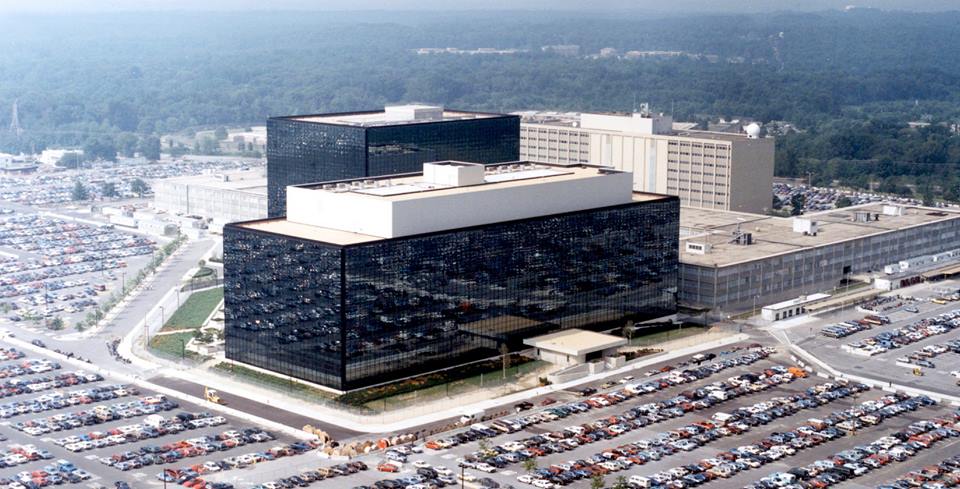
U.S. officials think that Russia recently obtained the ability to evade U.S. eavesdropping equipment while commandeering Crimea and amassing troops near Ukraine’s border.The revelation reportedly has the White House “very nervous,” especially because it’s unclear how the Kremlin hid its plans from the National Security Agency’s snooping on digital and electronic communications.
One interesting fact involved is the presence of Edward Snowden in Russia, where he has been living since flying to Moscow from Hong Kong on June 23.
In July, primary Snowden source Glenn Greenwald told The Associated Press that Snowden “is in possession of literally thousands of documents that contain very specific blueprints that would allow somebody who read them to know exactly how the NSA does what it does, which would in turn allow them to evade that surveillance or replicate it.”
So it’s either a coincidence that the Russians figured out how to evade NSA surveillance while hosting the NSA-trained hacker, or else it implies that Snowden may have provided the Russians with access to the NSA’s blueprint.
Snowden told James Risen of The New York Times that he gave all of the classified documents he had taken from the NSA’s internal systems to the journalists he met in Hong Kong and kept no copies himself. However, there are clear issues with that claim and it is still unknown when he gave up access to the cache.
It is also unclear how many documents Snowden ended up taking — officials say he accessed 1.7 million files — or whether the “vast majority” of the intel he took is related to military operations (as opposed to strictly surveillance).
One official told The Wall Street Journal that the Russian camouflage in Ukraine situation is “uncharted territory,” and that a primary concern now is the question of whether Russia could cloak their next move by shielding more communications from the U.S.
Snowden’s detractors seem to have made up their minds about how Russia learned to evade the NSA leading up to and during the invasion of Crimea.
Sunday marked the start of Sunshine Week, a time when government-transparency advocates promote their cause and issue reports gauging the openness of federal agencies.
The findings have never been great for the current administration, which promised to be the most transparent in history on the day President Obama took office. In recent years, most agencies have not fully complied with Freedom of Information Act (FOIA) requirements.
This year’s reports show improvement in some areas, but still much to be desired by news organizations and open-government groups such as the Center for Effective Government and the National Security Archive.
An Associated Press analysis of federal data found that the Obama administration has grown more secretive over time, last year censoring or outright denying FOIA access to government files more than ever since Obama took office.
The administration has also cited more legal exceptions to justify withholding materials and refused to turn over newsworthy files quickly, and most agencies took longer to answer records requests, according to the AP study.
A separate report this week from the National Security Archives found that 54 percent of all agencies have ignored directives that Obama and Attorney General Eric Holder issued in 2009 calling for a “presumption of disclosure” with FOIA requests. The good news: That number is down from about 70 percent of agencies last year.
The National Security Archives also found that nearly half of all federal agencies have not updated their FOIA regulations to comply with 2007 amendments Congress made to the law. The changes require agencies to cooperate with a new FOIA ombudsman in the Office of Government Information Services and report specific data on FOIA output, among other provisions.
The National Security Archive, which claims to file more FOIA requests than any other group, gathers and publishes declassified U.S. government files, with a focus on U.S. foreign policy documents.
In a third analysis, the Center for Effective Government released its annual government-transparency report card on Monday, handing out failing grades to seven of the 15 agencies it reviewed. The scores are based on three metrics: processing requests for information, establishing rules for answering requests and creating user-friendly Web sites.
The White House has put forward an action plan that could help the administration improve its marks by creating one core FOIA regulation and a common set of practices to help requesters and federal agencies better understand the guidelines.
In Congress, the House has passed a bipartisan bill that would require agencies to update their regulations within 180 days.
The West is blinking in disbelief – Vladimir Putin just invaded Ukraine. German diplomats, French Eurocrats and American pundits are all stunned. Why has Russia chosen to gamble its trillion-dollar ties with the West?
Western leaders are stunned because they haven’t realized Russia’s owners no longer respect Europeans the way they once did after the Cold War. Russia thinks the West is no longer a crusading alliance. Russia thinks the West is now all about the money.
Putin’s henchmen know this personally. Russia’s rulers have been buying up Europe for years. They have mansions and luxury flats from London’s West End to France’s Cote d’Azure. Their children are safe at British boarding and Swiss finishing schools. And their money is squirrelled away in Austrian banks and British tax havens.
Putin’s inner circle no longer fear the European establishment. They once imagined them all in MI6. Now they know better. They have seen firsthand how obsequious Western aristocrats and corporate tycoons suddenly turn when their billions come into play. They now view them as hypocrites—the same European elites who help them hide their fortunes.
Once Russia’s powerful listened when European embassies issued statements denouncing the baroque corruption of Russian state companies. But no more. Because they know full well it is European bankers, businessmen and lawyers who do the dirty work for them placing the proceeds of corruption in hideouts from the Dutch Antilles to the British Virgin Islands.
We are not talking big money. But very big money. None other than Putin’s Central Bank has estimated that two thirds of the $56 billion exiting Russia in 2012 might be traceable to illegal activities. Crimes like kickbacks, drug money or tax fraud. This is the money that posh English bankers are rolling out the red carpet for in London.
Behind European corruption, Russia sees American weakness. The Kremlin does not believe European countries – with the exception of Germany – are truly independent of the United States. They see them as client states that Washington could force now, as it once did in the Cold War, not to do such business with the Kremlin.
When Russia sees Spain, Italy, Greece and Portugal outbidding each other to be Russia’s best business partner inside the EU (in return for no mention of human rights), they see America’s control over Europe slowly dissolving.
Back in Moscow, Russia hears American weakness out of Embassy Moscow. Once upon a time the Kremlin feared a foreign adventure might trigger Cold War economic sanctions where it hurts: export bans on key parts for its oil industry, even being cut out of its access to the Western banking sector. No more.
Russia sees an America distracted: Putin’s Ukrainian gambit was a shock to the U.S. foreign policy establishment. They prefer talking about China, or participating in Israeli-Palestinian peace talks. Russia sees an America vulnerable: in Afghanistan, in Syria and on Iran—a United States that desperately needs Russian support to continue shipping its supplies, host any peace conference or enforce its sanctions.
Moscow is not nervous. Russia’s elites have exposed themselves in a gigantic manner – everything they hold dear is now locked up in European properties and bank accounts. Theoretically, this makes them vulnerable. The EU could, with a sudden rush of money-laundering investigations and visa bans, cut them off from their wealth. But, time and time again, they have watched European governments balk at passing anything remotely similar to the U.S. Magnitsky Act, which bars a handful of criminal-officials from entering the United States.
All this has made Putin confident, very confident – confident that European elites are more concerned about making money than standing up to him. The evidence is there. After Russia’s strike force reached the outskirts of Tbilisi, the Georgian capital, in 2008, there were statements and bluster, but not a squeak about Russia’s billions. After Russia’s opposition were thrown into show trials, there were concerned letters from the European Union, but again silence about Russia’s billions.
The Kremlin thinks it knows Europe’s dirty secret now. The Kremlin thinks it has the European establishment down to a tee. The grim men who run Putin’s Russia see them like latter-day Soviet politicians. Back in the 1980s, the USSR talked about international Marxism but no longer believed it. Brussels today, Russia believes, talks about human rights but no longer believes in it. Europe is really run by an elite with the morality of the hedge fund: Make money at all costs and move it offshore.
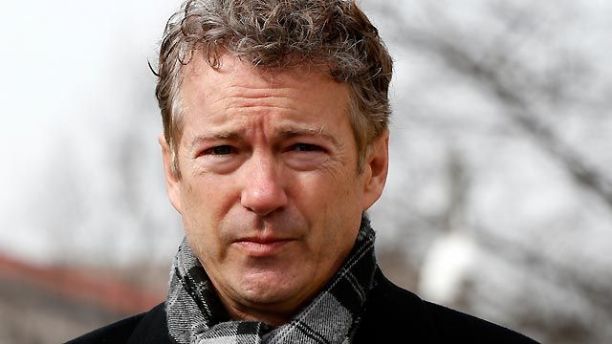
Sen. Rand Paul on Wednesday announced what he described as one of the largest class-action lawsuits in history, taking President Obama and top intelligence officials to court over National Security Agency surveillance.
“This, we believe, will be a historic lawsuit,” the Kentucky Republican said. The suit, joined by conservative advocacy group FreedomWorks, was filed in U.S. District Court in the District of Columbia.
It alleges that the NSA program that sweeps up and stores massive amounts of telephone “metadata” — which includes where and when calls are made, but not the contents of the calls — violates the Fourth Amendment. The suit asks the court to rule the program unconstitutional and forbid the government from continuing it.
“There’s a huge and growing swell of protest in this country of people who are outraged that their records would be taken without suspicion, without a judge’s warrant and without individualization,” Paul said, at a press conference in Washington.
He said hundreds of thousands of people have joined, and predicted the suit could “conceivably represent hundreds of millions of people who have phone lines in this country.”
The administration has insisted that Americans’ privacy is protected under NSA programs, and Obama recently announced a set of proposed reforms to rein in NSA surveillance.
“We remain confident that the program is legal, as at least 15 judges have previously found,” a Justice Department spokesperson said Wednesday, referring to prior court decisions in separate cases.
But the lawsuit argues that the bulk metadata that is routinely collected nevertheless “reveals a wealth of detail” about Americans’ personal and professional associations “that are ordinarily unknown to the government.”
The suit named Obama, Director of National Intelligence James Clapper, NSA Director Keith Alexander, and FBI Director James Comey.
Lawmakers bluntly warned the administration it will lose its sweeping surveillance powers if major changes aren’t made at the National Security Agency (NSA).
Members of the House Judiciary Committee said Section 215 of the Patriot Act, which is set to expire next summer, will be dissolved unless the administration proposes broad changes to the NSA’s collection of phone records.
Rep. James Sensenbrenner Jr. (R-Wis.), who wrote the Patriot Act and its two reauthorizations, told Deputy Attorney General James Cole that the administration was on the hook to find a workable alternative.
Taking a break from being a sometimes mouthpiece for the National Security Agency or acting in a too deferential manner towards government claims, the New York Times Editorial Board on Tuesday took a strikingly clear position on the case of former intelligence contractor Edward Snowden by declaring his leaks of internal NSA documents the act of a “whistle-blower” and called on the United States to offer him “a plea bargain or some form of clemency that would allow him to return home” without the threat of decades or life in prison.
“Considering the enormous value of the information he has revealed, and the abuses he has exposed, Mr. Snowden deserves better than a life of permanent exile, fear and flight,” the editorial states. “He may have committed a crime to do so, but he has done his country a great service.”
Though progressive supporters have considered Snowden a whistleblower from the outset—an argument his defenders see bolstered by each successive revelation—the weight of the New York Times Editorial Board makes the development significant in terms of wider public opinion and in the halls of more elite power where the paper holds sway.
To defend its call for clemency or a plea agreement, the Times argues that “Mr. Snowden was clearly justified in believing that the only way to blow the whistle on this kind of intelligence-gathering was to expose it to the public” and cataloged “just a few” of the violations by the NSA his revelations brought to light and some of the legal challenges they’ve already provoked:
■ The N.S.A. broke federal privacy laws, or exceeded its authority, thousands of times per year, according to the agency’s own internal auditor.
■ The agency broke into the communications links of major data centers around the world, allowing it to spy on hundreds of millions of user accounts and infuriating the Internet companies that own the centers. Many of those companies are now scrambling to install systems that the N.S.A. cannot yet penetrate.
■ The N.S.A. systematically undermined the basic encryption systems of the Internet, making it impossible to know if sensitive banking or medical data is truly private, damaging businesses that depended on this trust.
■ His leaks revealed that James Clapper Jr., the director of national intelligence, lied to Congress when testifying in March that the N.S.A. was not collecting data on millions of Americans. (There has been no discussion of punishment for that lie.)
■ The Foreign Intelligence Surveillance Court rebuked the N.S.A. for repeatedly providing misleading information about its surveillance practices, according to a ruling made public because of the Snowden documents. One of the practices violated the Constitution, according to the chief judge of the court.
■ A federal district judge ruled earlier this month that the phone-records-collection program probably violates the Fourth Amendment of the Constitution. He called the program “almost Orwellian” and said there was no evidence that it stopped any imminent act of terror.
Additionally, the Times editorial recognizes those critics who charge Snowden with woefully damaging U.S. interests by revealing some of these tactics, but points out that none of these critics—either inside of outside of government—have “presented the slightest proof that his disclosures really hurt the nation’s security.”
Glenn Greenwald, one of the journalists who has worked most closely with Snowden and publicly defended the whistleblower’s actions since his name entered the public domain, called the Times editorial “remarkable.”
The Nation’s Greg Mitchell, who has followed the Snowden case closely, including the way its been handled by U.S. media, began his review of the Times editorial by admitting: “Well, I didn’t see this coming.”

 By Julie Bossmann


 Liberty International News