GOP Leader McCarthy Makes Huge Move Against Pelosi Impeachment Push | Trending Politics

Editor’s Note: The rush to impeachment without Congressional rules conducted fairly, objectively with non-partisan impartiality is a violation of due process and should be addressed consistent with the U.S. Constitution and prior impeachment proceedings.

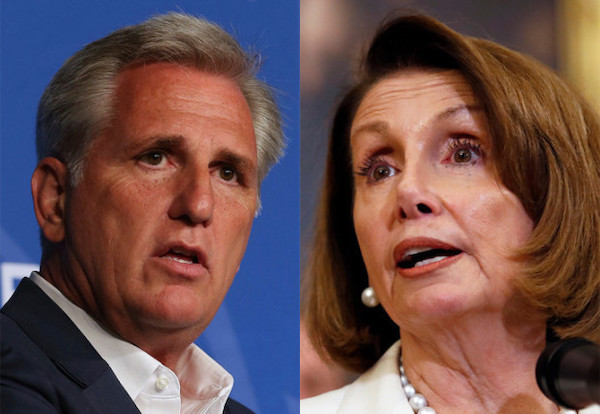
On Thursday, House Minority Leader Kevin McCarthy wrote a letter to Speaker of the House Nancy Pelosi, calling on her to suspend the impeachment inquiry into President Trump because of its lack of transparency.

“I am writing to request you suspend all efforts surrounding your ‘impeachment inquiry’ until transparent and equitable rules and procedures are established to govern the inquiry, as is customary,” McCarthy said. “As you know, there have only been three prior instances in our nation’s history when the full House has moved to formally investigate whether sufficient grounds exist for the impeachment of a sitting president.”

“I should hope that if such an extraordinary step were to be contemplated a fourth time, it would be conducted with an eye towards fairness, objectivity, and impartiality,” he continued. “Unfortunately, you have given no clear indication as to how your impeachment inquiry will proceed — including whether key historical precedents or basic standards of due process will be observed.”

Pelosi’s move towards impeachment is an obvious political hit job. Last Tuesday, Pelosi announced an official impeachment inquiry against President Trump based off of a second-hand politically biased whistleblower’s claim that President Trump bribed Ukraine’s President with military funds to start an investigation into Joe Biden for getting a Ukrainian prosecutor fired who was investigating his son.

This move by the Speaker is an obvious political hit job with the sole intention of removing our duly elected president from office.

***Get Your Free USA 45 Hat While Supplies Last***

The whistleblower claimed that President Trump set up a quid pro quo agreement regarding military aid with Ukraine and in return, Ukraine would investigate Joe Biden. Pelosi used the whistleblower’s claim to begin an impeachment inquiry, however the transcript of the call which was released the next day, revealed that President Trump did not leverage military aid in any way. The Democrats started an impeachment inquiry based on lies.

“The actions of the Trump presidency revealed dishonorable facts of the president’s betrayal of his oath of office, betrayal of his national security and betrayal of the integrity of our elections,” Pelosi said on Tuesday before the actual transcript of the call was even released.

The Democrats saw this opportunity as their chance to ruin President Trump however it seems that they are shooting themselves in the foot considering the whole whistleblower situation seems to be an Adam Schiff set up.

On Wednesday, the New York Times dropped a bombshell report which revealed that House Intelligence Committee Chairman Adam Schiff knew about the CIA ‘whistleblower’s’ allegation against President Trump well before the complaint was even made.

“The early account by the future whistle-blower … explains how Mr. Schiff knew to press for the complaint when the Trump administration initially blocked lawmakers from seeing it,” The New York Times reported. “Before going to Congress, the C.I.A. officer had a colleague convey his accusations to the agency’s top lawyer. Concerned about how that avenue for airing his allegations was unfolding, the officer then approached a House Intelligence Committee aide, alerting him to the accusation against Mr. Trump.”

Source: Trending Politics

Whistleblower Broke Multiple Federal Laws And May Lose Protections | Trending Politics

Editor’s Note: After reading the federal law on whistleblower protections it seems evident that the mysterious whistleblower did not follow the proper legal procedures to afford himself/herself protections by reporting to the Intelligence Community Inspector General directly instead of Adam Schiff, the House Intelligence Committee head. If a C.I.A. officer is involved in “spying” on the President in the White House, then coordinating his complaint with the Democrats it sheds light on this political hit job against the President.

The New York Times dropped a bombshell report on Wednesday which revealed that the anti-Trump whistleblower coordinated with House Intelligence Committee Chairman Adam Schiff before the infamous complaint was even made.

“The early account by the future whistle-blower … explains how Mr. Schiff knew to press for the complaint when the Trump administration initially blocked lawmakers from seeing it,” The New York Times reported. “Before going to Congress, the C.I.A. officer had a colleague convey his accusations to the agency’s top lawyer. Concerned about how that avenue for airing his allegations was unfolding, the officer then approached a House Intelligence Committee aide, alerting him to the accusation against Mr. Trump. ”

This shocking report may be detrimental for the Democratic party considering the whistleblower may have broken a federal law and may lose their whistleblower protection status because they went to congressional Democrats before filing the complaint.

Check out what the Federalist reported:

Under federal law, whistleblowers within the intelligence community are required to report any allegations of wrongdoing to the Intelligence Community Inspector General (ICIG) in order to receive statutory whistleblower protections for their disclosures. The law does not provide any protections to employees or contractors who bypass the process required by law and go directly to Congress, nor does it provide any avenue to disclose classified information to Congress without first going through the ICIG. If the complainant or a colleague leaked classified information to Schiff or his committee, those individuals could be subject to criminal liability for illegal and unauthorized disclosure of classified information.

The Intelligence Community Whistleblower Protection act clearly states: “The employee may contact the intelligence committees directly [after filing a complaint with the inspector general] if the employee…before making such a contact, furnishes to the Director, through the Inspector General, a statement of the employee’s complaint or information and notice of the employee’s intent to contact the intelligence committees directly…and obtains and follows from the Director, through the Inspector General, direction on how to contact the intelligence committees in accordance with appropriate security practices.”

The Federalist continues:

The communication between the whistleblower and House Democrats prior to the complaint’s filing also raises questions about whether Schiff and his committee staff coordinated with the ICIG regarding the watchdog’s whistleblower forms and guidance stating that first-hand information is required in order for the agency to properly investigate “urgent concern” complaints.

The new revelations that Schiff and his staff coordinated with the anti-Trump complainant and his colleagues prior to a formal whistleblower complaint also suggest Schiff was less than truthful about his interactions with the whistleblower. On August 28, nearly two weeks before the ICIG formally informed Congress of a pending “urgent concern” whistleblower complaint from an intel operative, Schiff tweeted allegations from the complaint without disclosing their source.

Source: Trending Politics

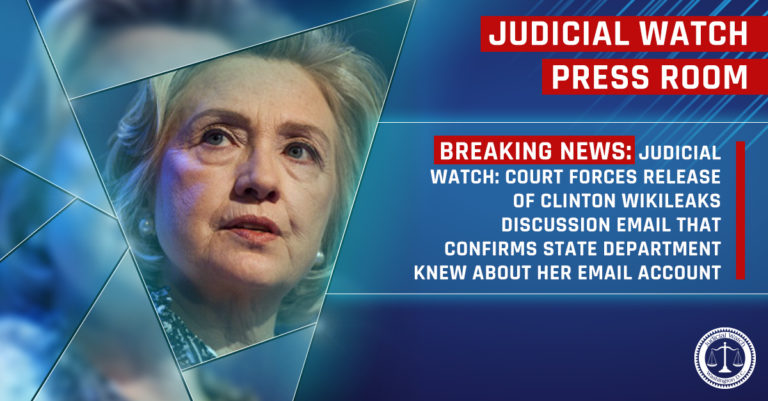
Court Forces Release of Clinton Wikileaks discussion email that confirms State Department knew about her email account | Judicial Watch

Editor’s Note: There is a long chain of events leading to this misguided impeachment inquiry initiated by the Democrats in the House of Representatives and it began during the Obama Administration when Hillary Clinton was Secretary of State. She was breaking with long-standing national security procedures by establishing a private server for her government and personal communications and the State Department knew she was doing this all along. Here’s the proof.

Judicial Watch announced today that the State Department provided a previously hidden email which shows that top State Department officials used and were aware of Hillary Clinton’s email account.

On December 24, 2010, Daniel Baer, an Obama State Department deputy assistant secretary of state, writes to Michael Posner, a then-assistant secretary of state about Clinton’s private email address:

Baer: “Be careful, you just gave the secretary’s personal email address to a bunch of folks …”

Posner answers: “Should I say don’t forward? Did not notice”

Baer responds: “Yeah-I just know that she guards it pretty closely”

Mr. Posner had forwarded Clinton’s email address, which was contained in an email sent to State Department senior leadership, about WikiLeaks.

It appears the State Department produced this email in 2016 in redacted form, blacking out Clinton’s personal email address and the discussion about Clinton’s wanting to keep her email address closely guarded.

Judicial Watch sought the email after a former top Freedom of Information Act (FOIA) State Department official testified to Judicial Watch about reviewing it between late 2013 and early 2014.

The testimony and the email production comes in discovery granted to Judicial Watch on the Clinton email issue in a FOIA lawsuit (Judicial Watch v. U.S. Department of State (No. 1:14-cv-01242)). Clinton also faces potential questioning under oath in this lawsuit.

Despite a recent court order requiring production of the email, the DOJ and State Departments only produced it 10 days ago after Judicial Watch threatened to seek a court order to compel its production.

“Judicial Watch just caught the State Department and DOJ red-handed in another email cover-up – they all knew about the Clinton email account but covered up the smoking-gun email showing this guilty knowledge for years,” stated Judicial Watch President Tom Fitton.

The scope of court-ordered discovery that produces this email find includes: whether Secretary Clinton used private email in an effort to evade the Freedom of Information Act (FOIA); whether the State Department’s attempt to settle this FOIA case in 2014 and 2015 amounted to bad faith; and whether the State Department has adequately searched for records responsive to Judicial Watch’s FOIA request.

During a recent hearing, Judge Lamberth specifically raised concerns about a Clinton email cache, carterheavyindustries@gmail.com, discussed in a letter to Senator Charles Grassley (R-IA) and wants Judicial Watch to “shake this tree” on this issue.

Judge Lamberth also criticized the State Department’s handling and production of Clinton’s emails in this case stating, “There is no FOIA [Freedom of Information Act] exemption for political expedience, nor is there one for bureaucratic incompetence.” 

The court rejected DOJ and State efforts to derail further Judicial Watch discovery. Judge Lamberth called their arguments “preposterous” and cited a prior Judicial Watch FOIA case in which he ordered U.S. Marshals to seize records from a Clinton administration official.

Judge Lamberth detailed how the State Department “spent three months from November 2014 trying to make this case disappear,” and that after discovering the State Department’s actions and omissions, “Now we know more, but we have even more questions than answers. So I won’t hold it against Judicial Watch for expanding their initial discovery request now.”

Judge Lamberth stated his goal was to restore the public’s faith in their government, which may have been damaged because of the Clinton email investigation.

The court granted Judicial Watch seven additional depositions, three interrogatories and four document requests related to former Secretary of State Hillary Clinton’s use of a private email server. Hillary Clinton and her former top aide and current lawyer Cheryl Mills were given 30 days to oppose being deposed by Judicial Watch.

On December 6, 2018, Judge Lamberth ordered Obama administration senior State Department officials, lawyers and Clinton aides to be deposed or answer written questions under oath. The court ruled that the Clinton email system was “one of the gravest modern offenses to government transparency.”

This Judicial Watch FOIA lawsuit led directly to the disclosure of the Clinton email system in 2015.

Judicial Watch’s discovery over the last several months found many more details about the scope of the Clinton email scandal and cover-up:

  • John Hackett, former Director of Information Programs and Services (IPS) testified under oath that he had raised concerns that former Secretary of State Hillary Clinton’s staff may have “culled out 30,000” of the secretary’s “personal” emails without following strict National Archives standards. He also revealed that he believed there was interference with the formal FOIA review process related to the classification of Clinton’s Benghazi-related emails.
  • Heather Samuelson, Clinton’s White House liaison at the State Department, and later Clinton’s personal lawyer, admitted under oath that she was granted immunity by the Department of Justice in June 2016.
  • Justin Cooper, former aide to President Bill Clinton and Clinton Foundation employee who registered the domain name of the unsecure clintonemail.com server that Clinton used while serving as Secretary of State, testified he worked with Huma Abedin, Clinton’s deputy chief of staff, to create the non-government email system.
  • In the interrogatory responses of E.W. (Bill) Priestap, assistant director of the FBI Counterintelligence Division, he stated that the agency found Clinton email records in the Obama White House, specifically, the Executive Office of the President.
  • Jacob “Jake” Sullivan, Clinton’s senior advisor and deputy chief of staff when she was secretary of state, testified that both he and Clinton used her unsecure non-government email system to conduct official State Department business.
  • Eric Boswell, former assistant secretary of state for diplomatic security during Clinton’s tenure as secretary of state, testified that Clinton was warned twice against using unsecure BlackBerry’s and personal emails to transmit classified material.

Source: Judicial Watch

AG Barr Is Ramping Up His Probe Of CIA, FBI Activities In 2016 | Daily Caller

Editor’s Note: Finally we have a Department of Justice willing to look into the sources of this debacle against the President to get to the bottom of who’s responsible and should be held accountable for “conspiring” to unseat a duly elected President of the United States. Furthermore, the President has every right to defend himself in an impeachment proceeding in the Senate should that actually occur and present facts towards his defense.

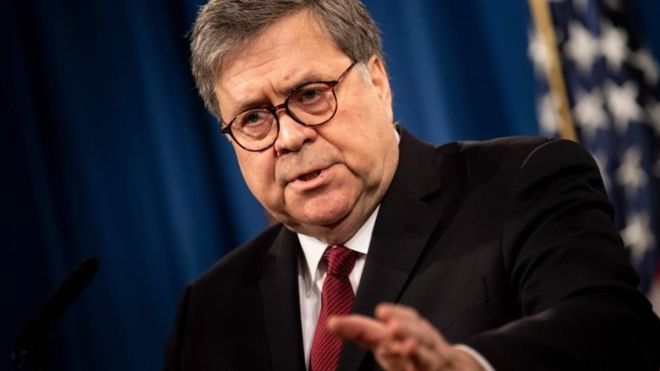
Attorney General William Barr has met with foreign intelligence officials, including during a trip to Italy earlier in September, regarding an investigation into surveillance activities against the Trump campaign, The Washington Post reported.

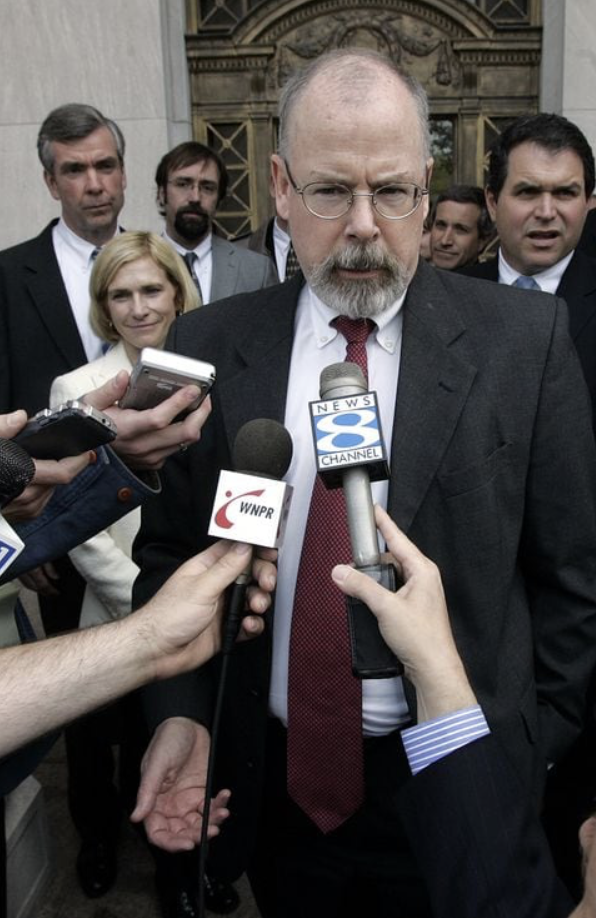
Barr was joined in the meeting by John Durham, the U.S. attorney in Connecticut, WaPo reported, citing anonymous sources familiar with the matter.

“As the Department of Justice has previously announced, a team led by U.S. Attorney John Durham is investigating the origins of the U.S. counterintelligence probe of the Trump 2016 presidential campaign,” department spokeswoman Kerri Kupec told Politico in a statement. “Mr. Durham is gathering information from numerous sources, including a number of foreign countries. At Attorney General Barr’s request, the President has contacted other countries to ask them to introduce the Attorney General and Mr. Durham to appropriate officials.”

Barr tapped Durham earlier in 2019 to lead a broad investigation into FBI and CIA activities in the run-up to an investigation into whether the Trump campaign colluded with the Russian government.

He has said he is concerned that intelligence agencies improperly spied on the Trump campaign and has said he wants to find out if the FBI and CIA directed any intelligence-gathering activities at Trump associates before July 31, 2016, which is when the bureau opened its counterintelligence investigation of the Trump campaign.

President Donald Trump said May 24 he hoped Barr would reach out to British and Australian officials as part of the investigation.

Barr took up the probe after the end of the special counsel’s investigation, which failed to establish that the Trump campaign conspired with Russia to influence the 2016 election. The special counsel also said there was no evidence that Trump associates acted as agents of Russia.

Barr has already made requests of British intelligence officials, according to WaPo. The Associated Press also reported that Trump asked Australian Prime Minister Scott Morrison to work with Barr on the investigation. A Justice Department official told the AP that Barr asked Trump to make the request of Morrison.

The Justice Department declined comment for WaPo’s story.

The Australian government provided the tip in July 2016 that led the FBI to open the counterintelligence investigation into the Trump campaign.

Source: Daily Caller

DOJ says Trump contacted foreign countries to assist Barr’s Russia inquiry | The Hill

Editor’s Note: The hypocrisy of our elected representatives never ceases to amaze and dazzle. Whereas the Democrats have accused Trump and Barr of pursuing a “politically motivated investigation” to defend the President against a possible impeachment proceeding what the heck have the Democrats been doing since before Trump was elected? They’ve been building a case for impeachment since before Trump took office.

The Department of Justice (DOJ) said Monday that President Trump contacted foreign countries at Attorney General William Barr’s request to ask them for assistance in an ongoing investigation into the origins of the Russian interference probe.

“As the Department of Justice has previously announced, a team led by U.S. Attorney John Durham is investigating the origins of the U.S. counterintelligence probe of the Trump 2016 presidential campaign. Mr. Durham is gathering information from numerous sources, including a number of foreign countries,” Justice Department spokeswoman Kerri Kupec said in a statement.

“At Attorney General Barr’s request, the President has contacted other countries to ask them to introduce the Attorney General and Mr. Durham to appropriate officials,” Kupec added.

The Justice Department statement quickly followed reports that Trump had asked Australia’s prime minister during a recent phone call to assist Barr in gathering information for the Russia inquiry and that Barr had held meetings overseas in Italy seeking the country’s help. Barr has also reportedly requested assistance from British intelligence officials in connection with the inquiry.

Democrats have accused Trump and Barr of pursuing a politically motivated investigation. Trump railed against former special counsel Robert Mueller’s probe as a “witch hunt” and has at times claimed the investigation into his campaign’s links to Russia was “illegal.”

White House spokesman Hogan Gidley said Monday that Barr asked Trump to “provide introductions to facilitate” the ongoing investigation, accusing Democrats of not wanting “the truth to come out.”

“This call relates to a DOJ inquiry publicly announced months ago to uncover exactly what happened,” Gidley said in a statement Monday. “The DOJ simply requested that the President provide introductions to facilitate that ongoing inquiry, and he did so, that’s all.”

Barr said earlier this year that he planned to investigate the intelligence collection on the Trump campaign to determine whether it was “adequately predicated.” Trump has given Barr sweeping powers in the investigation, including allowing the attorney general to declassify and release documents related to the probe.

The review spearheaded by Durham, the U.S. attorney in Connecticut, is separate from the Justice Department inspector general’s investigation into the FBI’s surveillance of ex-Trump campaign adviser Carter Page, on which a report is currently being prepared.

Mueller concluded his investigation in March; the former special counsel did not find sufficient evidence to accuse members or associates of Trump’s campaign with conspiring with Russia to interfere in the 2016 election.

The investigation ensnared six Trump associates on financial, false statements and other charges.

The revelations about Trump’s phone conversation with Australia come amid ongoing controversy over a July 25 call with Ukrainian President Volodymyr Zelensky during which Trump encouraged Zelensky to investigate 2016 election interference and unsubstantiated allegations about former Vice President Joe Biden, a 2020 Democratic presidential candidate.

A rough transcript of the call released by the White House showed that Trump offered to put Zelensky in touch with Barr and Trump’s personal attorney Rudy Giuliani.

The DOJ said last week that Barr did not learn of the call until several weeks after it took place and that the attorney general had not communicated with the Ukrainian government. The Justice Department also acknowledged that “certain Ukrainians” not part of the country’s government had volunteered information to Durham and that he was reviewing it.

The Zelensky call, which triggered an intelligence community whistleblower complaint, is at the heart of House Democrats’ impeachment inquiry into Trump announced last week by Speaker Nancy Pelosi (D-Calif.).

Trump has insisted he did nothing wrong on the call, and his aides have dismissed allegations raised by the whistleblower that Trump was using his office to pressure a foreign government to help his reelection.

Source: The Hill

State Dept. ramps up probe into Clinton email server: report | The Hill

Editor’s Note: Getting to the source of the Democrats relentless hatred of President Trump begins with Hillary Clinton’s “reckless” use of a private server during her term as Secretary of State. What did she needed to hide and protect during the Obama Administration? When she lost the 2016 election fair and square with half the nation voting for Trump and the Electoral College casting its ballots as required by the U.S. Constitution, the Democrats began their relentless assault upon a duly elected President. 

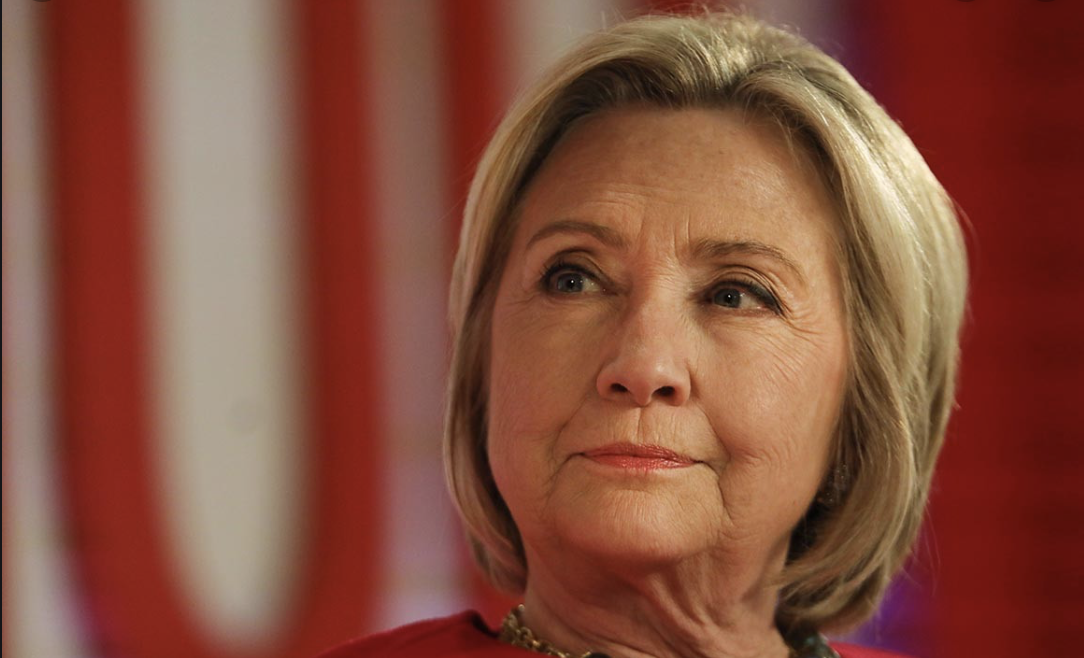
The State Department reportedly intensified a probe into former Secretary of State Hillary Clinton’s private email server, contacting dozens of former aides involved in email exchanges that passed through her server.

The Washington Post reported Saturday that as many as 130 former Clinton aides have been contacted by State Department investigators in recent weeks, with many being informed that they have been found “culpable” for transmitting information that should have been classified at a higher level than it was originally sent.

Former Obama administration officials described the probe to the Post as an extraordinary investigation fueled by political animosity.

But current officials speaking on the condition of anonymity told the newspaper that the probe was structured to avoid the appearance of political bias.

The probe, which reportedly reached the stage where former officials began being contacted shortly after Trump’s inauguration, was described by one senior agency official to the Post as having nothing to do with President Trump’s vows to investigate Clinton if elected during the 2016 election.

“This has nothing to do with who is in the White House,” the official said. “This is about the time it took to go through millions of emails, which is about 3½ years.”

“The process is set up in a manner to completely avoid any appearance of political bias,” another official told the Post.

Former officials involved in the probe described it as a political vendetta, with one telling the Post it was an “abuse of power” by the Trump administration.

“It is such an obscene abuse of power and time involving so many people for so many years,” they said. “This has just sucked up people’s lives for years and years.”

The State Department did not immediately return a request for comment from The Hill on the investigation. Trump frequently attacked Clinton during the 2016 campaign for her use of a private email server while at the State Department, with his fans frequently chanting, “Lock her up!” at rallies over her perceived criminal wrongdoing.

A review of Clinton’s email server conducted by the FBI in 2016 found that Clinton had not committed any crimes with her operation of a private server but described her email practices as “reckless.”

Source: The Hill

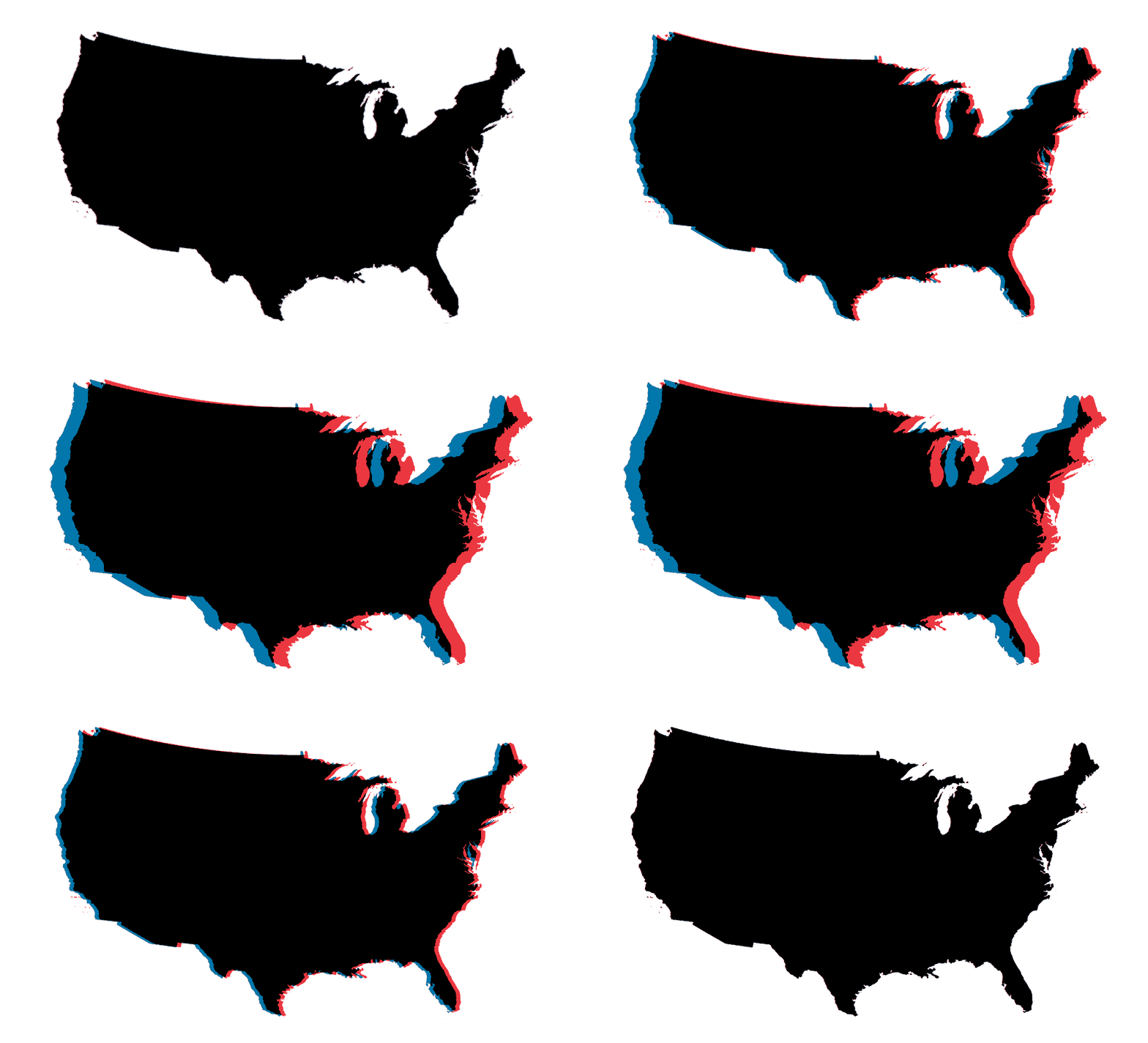
Democrats and Republicans Aren’t just Divided. They Live in Different Worlds | The Wall Street Journal


Click on Image or Source to View Visual Analysis…

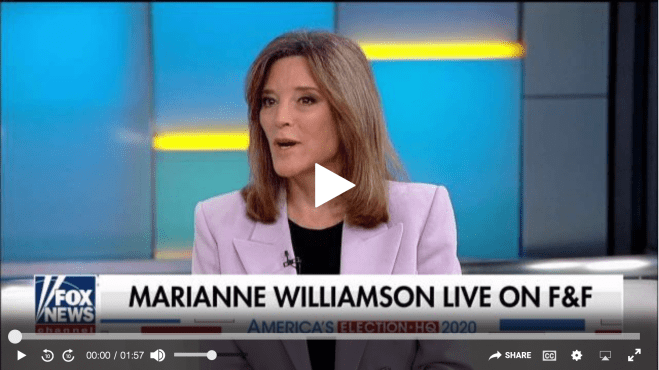
Marianne Williamson: ‘The system is even more corrupt than I knew’ | Fox News

Editor’s Note: We love Marianne for her fresh and insightful views originating from as an outsider to mainstream politics. In her appearance in the Democratic candidates debate she pointed out quite astutely that true health care cannot be achieved with the current system in place (whether it’s Obamacare or Medicare for All). The health care system is completely broken and must be rebuilt from the bottom up beginning with prevention and wellness. Thanks for contributing to this most important conversation and acknowledging the important of intelligent debate and civil discourse.

Marianne Williamson, a 2020 presidential hopeful and author, said she’s discovered the political system to be “even more corrupt” than she imagined, during a Tuesday interview with “Fox & Friends.”

“I was known in a world where people loved you and bought things from you. Now I’m in a world where a lot of people hate you,” she said. “I would say that I feel that I’ve learned the system is even more corrupt than I knew and people are even more wonderful than I hoped.”

Williamson also said there is a tendency in politics today to stifle opposing opinions, which weakens democracy and limits genuine debate.

“I have seen on the left as on the right, there are too many people who do not recognize how important honorable debate is in a democracy,” she said.

“You can disagree with somebody’s opinion but that doesn’t mean you should be shutting them down or lying about them or misrepresenting their views. That’s not a left-right issue. There’s a rough-and-tumble in politics.”

Co-host Lisa Boothe asked Williamson if she felt abandoned by the Democratic Party because she didn’t qualify for the upcoming debate, and she said that even if she did, she wouldn’t air her private grievances.

“No, I don’t feel abandoned,” she replied. “I’m a passionate Democrat… My mother always said if you have a problem with your family don’t talk about it outside the family. I’m not going to come on Fox and bad-mouth. The DNC has its rules and, listen, I signed up for this. And I’m playing by those rules”

Source: Fox News

President Trump’s $4 Trillion Debt Increase | Committee for a Responsible Federal Budget

Editor’s Note: Take note that continued federal deficit spending will land the United States corporation in an irreversible bankruptcy before 2029 when It would bring total debt to about 97 percent of Gross Domestic Product (GDP). That means the US would owe the Federal Reserve almost 100% of the GDP for the entire year (plus interest). 

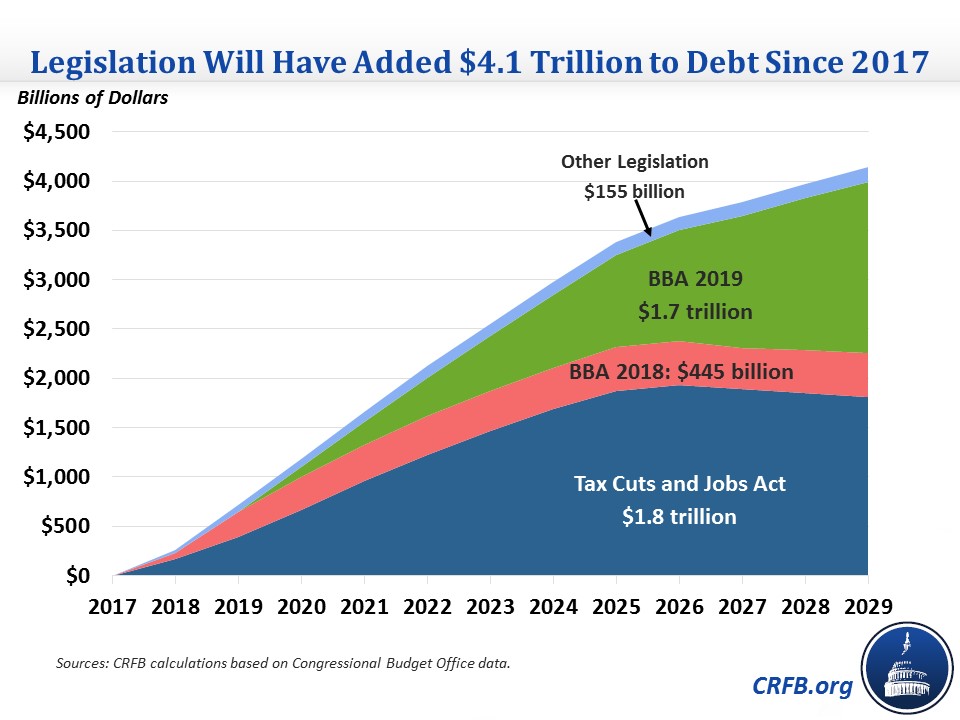
If the recent budget deal is signed into law, it will be the third major piece of deficit-financed legislation in President Trump’s term. In total, we estimate legislation signed by the President will have added $4.1 trillion to the debt between 2017 and 2029. Over a traditional ten-year budget window, the President will have added $3.4 to $3.8 trillion to the debt. The source of the debt expansion is split relatively evenly between tax and spending policy.

The Tax Cuts and Jobs Act (TCJA) was the single largest contributor to the $4.1 trillion figure, increasing debt by $1.8 trillion through 2029 (more than the entire cost is through 2027). This number could easily climb higher if lawmakers extend the individual tax cuts that are set to expire after 2025, which would add another $1 trillion to the debt.

The Bipartisan Budget Act (BBA) of 2018 was nearly as costly on an annual basis, adding nearly $450 billion to the debt due to its two-year nature. However, the Bipartisan Budget Act of 2019 would effectively make the increases in the BBA 2018 permanent, and in doing so, add another $1.7 trillion to the debt through 2029.

Smaller pieces of legislation are responsible for nearly $150 billion of debt. This includes several different bills containing disaster relief or emergency spending and continued delays of three Affordable Care Act (ACA) taxes, among other bills.

This analysis does not include the fiscal impact of many executive actions taken by the President, some which would increase deficits and others which would reduce them. It also assumes that temporary policies expire as scheduled.

If we evaluate the debt added over the standard ten-year window the Congressional Budget Office (CBO) uses, the numbers are similar but slightly smaller. Using the ten-year period (2018-2027) employed in 2017, lawmakers have added $3.8 trillion to deficits. Using the current ten-year period of 2020-2029, the debt increase is $3.4 trillion. Debt added is lower in the later period because some of the laws, like the TCJA and 2018 BBA, had larger short-term, rather than long-term, costs.

Debt Added Since 2017 Over Different Periods

Legislation 2018-2027 Cost 2020-2029 Cost 2017-2029 Cost
Tax Cuts and Jobs Act $1.9 trillion $1.4 trillion $1.8 trillion
Bipartisan Budget Act of 2019 $1.3 trillion $1.7 trillion $1.7 trillion
Bipartisan Budget Act of 2018 $420 billion $190 billion $445 billion
Other Legislation $140 billion $90 billion $155 billion
Total $3.8 trillion $3.4 trillion $4.1 trillion

Source: CRFB calculations based on Congressional Budget Office data.

Importantly, the $4.1 trillion of debt signed into law by President Trump is on top of the $16.2 trillion we already owe and the $9.8 trillion we were projected to borrow over the next decade absent these proposals. It would bring debt to about 97 percent of Gross Domestic Product (GDP) in 2029, compared to 84 percent if no debt-increasing legislation had been passed.

To avoid the huge run-up in debt that is projected in the coming decades, lawmakers should reject unpaid-for spending increases, pay for the tax bill, and address the rising costs and looming insolvency of our nation’s largest health and retirement programs.

Source: Committee for a Responsible Federal Budget

Fake news is real — Artificial Intelligence is going to make it much worse | CNBC

“The Boy Who Cried Wolf” has long been a staple on nursery room shelves for a reason: It teaches kids that joking too much about a possible threat may turn people ignorant when the threat becomes an actual danger.

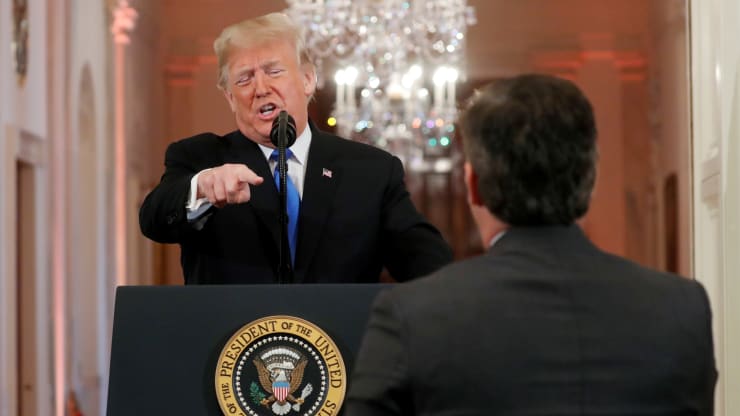
President Donald Trump has been warning about “fake news” throughout his entire political career putting a dark cloud over the journalism professional. And now the real wolf might be just around the corner that industry experts should be alarmed about.

The threat is called “deepfaking,” a product of AI and machine learning advancements that allows high-tech computers to produce completely false yet remarkably realistic videos depicting events that never happened or people saying things they never said. A viral video starring Jordan Peele and “Barack Obama” warned against this technology in 2018, but the message was not enough to keep Jim Carrey from starring in “The Shining” earlier this week.

The danger goes far beyond manipulating 1980s thrillers. Deepfake technology is allowing organizations that produce fake news to augment their “reporting” with seemingly legitimate videos, blurring the line between reality and fiction like never before — and placing the reputation of journalists and the media at greater risk.

Ben Zhao, a computer science professor at the University of Chicago, thinks the age of getting news on social media makes consumers very susceptible to this sort of manipulation.

“What the last couple years has shown is basically fake news is quite compelling even in [the] absence of actual proof. … So the bar is low,” Zhao said.

The bar to produce a convincing doctored video is lower than people might assume.

Earlier this year a clip purporting to show Democratic leader Nancy Pelosi slurring her words when speaking to the press was shared widely on social media, including at one point by Trump’s attorney Rudy Giuliani. However, closer inspection revealed that the video had been slowed to 75% of its normal speed to achieve this slurring effect, according to the Washington Post. Even with the real video now widely accessible, Hany Farid, a professor at UC Berkeley’s School of Information and a digital forensics expert, said he still regularly receives emails from people insisting the slowed video is the legitimate one.

“Even in these relatively simple cases, we are struggling to sort of set the record straight,” Farid said.

It would take a significant amount of expertise for a fake news outlet to produce a completely fabricated video of Oprah Winfrey endorsing Trump, but researchers say the technology is improving every day. At the University of Washington, computer vision researchers are developing this technology for positive, or at least benign, uses like making video conferencing more realistic and letting students talk to famous historical figures. But this research also leads to questions about potential dangers, as the attempts made by attackers are expected to continually improve.

How to detect a deepfake

To make one of these fake videos, computers digest thousands of still images of a subject to help researchers build a 3-D model of the person. This method has some limitations, according to Zhao, who noted the subjects in many deepfake videos today never blink, since almost all photographs are taken with a person’s eyes open.

However, Farid said these holes in the technology are being filled incredibly rapidly.

“If you asked me this question six months ago, I would’ve said, ‘Yeah, [the technology] is super cool, but there’s a lot of artifacts, and if you’re paying attention, you can probably tell that there’s something wrong,’” Farid said. “But I would say we are … quickly but surely getting to the point where the average person is going to have trouble distinguishing.”

In fact, Zhao said researchers believe the shortcomings that make deepfake videos look slightly off to the eye can readily be fixed with better technology and better hardware.

“The minute that someone says, ‘Here’s a research paper telling you about how to detect this kind of fake video,’ that is when the attackers look at the paper and say, ‘Thank you for pointing out my flaw. I will take that into account in my next-generation video, and I will go find enough input … so that the next generation of my video will not have the same problem,’” Zhao said.

“Once we live in an age where videos and images and audio can’t be trusted … well, then everything can be fake.” – Hany Farid, Professor at UC Berkeley’s School of Information

One of the more recent developments in this field is in generating speech for a video. To replicate a figure such as Trump’s voice, computers can now simply analyze hundreds of hours of him speaking. Then researchers can type out what they want Trump to say, and the computer will make it sound as if he actually said it. Facebook, Google and Microsoft have all more or less perfected this technology, according to Farid.

Manipulated videos of this sort aren’t exactly new — Forest Gump didn’t actually meet JFK, after all. However, Farid says this technology is hitting its stride, and that makes the danger new.

“To me the threat is not so much ‘Oh, there’s this new phenomenon called deepfakes,’” Farid said. “It’s the injection of that technology into an existing environment of mistrust, misinformation, social media, a highly polarized electorate, and now I think there’s a real sort of amplification factor because when you hear people say things, it raises the level of belief to a whole new level.”

The prospect of widespread availability of this technology is raising eyebrows, too. Tech-savvy hobbyists have long been using deepfakes to manufacture pornography, a consistent and comically predictable trend for new technology. But Zhao believes it is only a matter of time before the research-caliber technology gets packaged and released for mass-video manipulation in much broader contexts.

“At some point someone will basically take all these technologies and integrate and do the legwork to build a sort of fairly sophisticated single model, one-stop shop … and when that thing hits and becomes easily accessible to many, then I think you’ll see this becoming much more prevalent,” Zhao said. “And there’s nothing really stopping that right now.”

Facing a massive consumer trust issue

When this happens, the journalism industry is going to face a massive consumer trust issue, according to Zhao. He fears it will be hard for top-tier media outlets to distinguish a real video from a doctored one, let alone news consumers who haphazardly stumble across the video on Twitter.

“Once we live in an age where videos and images and audio can’t be trusted … well, then everything can be fake,” Farid said. “We can have different opinions, but we can’t have different facts. And I think that’s sort of the world we’re entering into when we can’t believe anything that we see.”

Zhao has spent a great deal of time speaking with prosecutors, judges — the legal profession is another sector where the implications are huge — reporters and other professors to get a sense for every nuance of the issue. However, despite his clear understanding of the danger deepfakes pose, he is still unsure of how news outlets will go about reacting to the threat.

“Certainly, I think what can happen is … there will be even less trust in sort of mainstream media, the main news outlets, legitimate journalists [that] sort of react and report real-time stories because there is a sense that anything that they have seen … could be in fact made up,” Zhao said.

Then it becomes a question of how the press deal with the disputes over reality.

“And if it’s someone’s word, an actual eyewitness’ word versus a video, which do you believe, and how do you as an organization go about verifying the authenticity or the illegitimacy of a particularly audio or video?” Zhao asked.

Defeating the deepfakes

Part of this solution may be found in the ledger technology that provides the digital infrastructure to support cryptocurrencies like bitcoin — the blockchain. Many industries are touting blockchain as a sort of technological Tylenol. Though few understand exactly how it works, many swear it will solve their problems.

Farid said companies like photo and video verification platform Truepic, to which he serves as an advisor, are using the blockchain to create and store digital signatures for authentically shot videos as they are being recorded, which makes them much easier to verify later. Both Zhao and Farid are hoping social platforms like Facebook and Twitter will then promote these videos that are verified as authentic over non-verified videos, helping to halt the spread of deepfakes.

“The person creating the fake always has the upper hand,” Farid said. “Playing defense is really, really hard. So I think in the end our goal is not to eliminate these things, but it’s to manage the threat.”

Until this happens, Zhao said the fight against genuinely fake news may not start on a ledger, but in stronger consumer awareness and journalists banding together to better verify sources through third parties.

“One of the hopes that I have for defeating this type of content is that people are just so inundated with news coverage and information about these types of videos that they become fundamentally much more skeptical about what a video means and they will look closer,” Zhao said. “There has to be that level of scrutiny by the consumer for us to have any chance of fighting back against this type of fake content.”

Nicholas Diakopoulos, assistant professor in Northwestern University’s School of Communication and expert on the future of journalism, said via email that the best solutions involve a mix of educational and sociotechnical advances.

“There are a variety of perceptual cues that can be tip-offs to a deepfake and we should be teaching those broadly to the public,” he said.

Diakopoulos has referenced Farid’s work on photo forensics among ideas outlined in an article he wrote for the Columbia Journalism Review last year. He also cited a research project called FaceForensics that uses machine learning to detect, with 98.1% accuracy, whether a video of a face is real. Another research technique under study: Blood flow in video of a person’s face can be analyzed in order to see if pixels periodically get redder when the heart pumps blood.

“On the sociotechnical side, we need to develop advanced forensics techniques that can help debunk synthesized media when put into the hands of trained professionals,” he told CNBC. “Rapid response teams of journalists should be trained and ready to use these tools during the 2020 elections so they can debunk disinformation as quickly as possible.”

Diakopoulos has studied the implications of deepfakes for the 2020 electionsspecifically. He also has written papers on how journalists need to think when “reporting in a machine reality.”

And he remains optimistic.

“If news organizations develop clear and transparent policies of their efforts using such tools to ensure the veracity of the content they publish, this should help buttress their trustworthiness. In an era when we can’t believe our eyes when we see something online, news organizations that are properly prepared, equipped and staffed are poised to become even more trusted sources of information.”

Source: CNBC