Editor’s Note: Of all the speeches I’ve heard Trump present over the years this one catalyzed so much hope, love and compassion for not only the restoration of our country, but for freedom around the world. The optics were perfect showing how enthusiastic and effective the Republican administration is, but how thoroughly un-compassionate and detached from reality the Democrats side of the isle is towards issues and policies that directly affect the American people. Truly, a new “golden age” may be breaking upon these United States of America and the rest of the world. Let freedom ring!
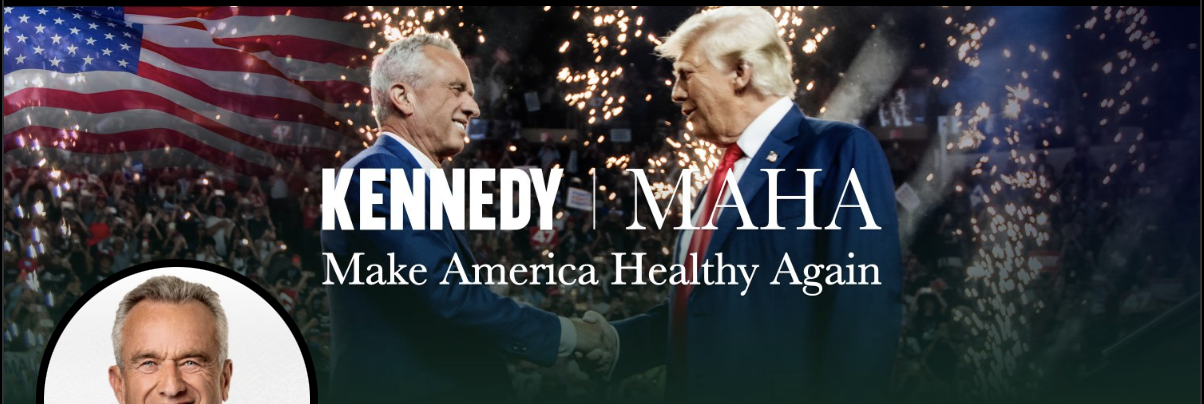
For over two decades, we have tirelessly advocated for two foundational pillars of true health freedom: nutritious, unadulterated food and a rational, risk-aware vaccine schedule. We often wondered if meaningful, systemic change was possible against the entrenched powers of Big Pharma and Big Agra. Today, thanks to the decisive leadership of President Donald J. Trump, that change is not just possible—it is the official policy of the United States government. By appointing Robert F. Kennedy Jr. as Secretary of Health and Human Services and giving him a clear mandate to dismantle the deep-state bureaucracy, President Trump has turned our long-held principles into national action. 😊
While other administrations talked about “draining the swamp,” when it comes to these two pillars, President Trump is authorizing the machinery to do it, and the Trump-Kennedy partnership is waging a decisive, domestic campaign for the sovereignty of the American body. Where past leaders turned a blind eye to corporate capture, this administration is seizing the moment to liberate our children’s bodies and our families’ plates. This is more than reform; it is a peaceful revolution in public health, made possible by a President who understands that true national strength begins with the health of its people.
The Real Food Pyramid: Reclaiming Our Nutritional Heritage
For generations, the USDA’s food pyramid stood as a monument to misguided science and Big Agra influence, promoting processed grains and sugars that fueled a pandemic of diabetes, obesity, and heart disease. Secretary Kennedy, in one of his first major acts, dismantled this corrupt edifice and introduced the Real Food Pyramid.
As you can see from the image above, taken from RealFood.gov, the previous food pyramid was upside down! RFK just turned it right side up! 😊 The new guidelines emphasize eating real food, defined as minimally processed foods “prepared with few ingredients and without added sugars, industrial oils, artificial flavors, or preservatives.”
This isn’t a minor adjustment; it’s a philosophical renaissance. What has been announced is nothing less than the structural and symbolic flipping of the pyramid. For decades, this inverted logic was an instrument of captured interests, placing refined carbohydrates at the base, labeling industrial seed oils as “heart healthy,” and pushing protein and traditional fats to the margins.
This created a vicious economic flywheel: weaponized food → metabolic dysfunction → chronic disease → sick-care dependency → lifelong pharmaceutical drugs to manage symptoms. Basically, a closed loop of profit and sickness.
The new pyramid emphasizes:
Whole, nutrient-dense foods from regenerative and organic agriculture.
Healthy, ancestral fats over industrially processed seed oils.
Protein quality, prioritizing pasture-raised and wild-caught sources.
By flipping the pyramid, this administration is breaking a control architecture that has quietly governed public health for half a century. It is centering the foods humanity has always (until recently) eaten: high-quality protein, natural fats (including traditionally demonized saturated fats), and whole foods in their intact forms. It is finally displacing the industrial seed oils, ultra-processed carbohydrates, and food-like substances engineered for addiction and profit.
This isn’t nostalgia; it’s biological realism. Human physiology thrives on nutrient density and fats that stabilize our biology, and food itself contains gene-regulatory exosomes that literally “talk” to our cells. This correction interrupts the very feedback loop that feeds both the chronic disease epidemic and the drug industries built to manage it. When you flip the pyramid, you don’t just change what people eat—you change who benefits.
This policy directly aligns with the principles we’ve championed for years: that food is medicine, and that a corrupted food supply is a primary driver of chronic disease. At a White House press briefing, Kennedy called the changes the “most significant reset of federal nutrition policy in history.”
Kennedy said: “These guidelines replace corporate-driven assumptions with common-sense goals and gold-standard scientific integrity. These new guidelines will revolutionize our nation’s food culture and make America healthy again… For decades, Americans have grown sicker while healthcare costs have soared. The reason is clear: the hard truth is that our government has been lying to us to protect corporate profit-taking, telling us that these food-like substances were beneficial to public health… Federal policy promoted and subsidized highly processed foods and refined carbohydrates and turned a blind eye to the disastrous consequences. Today, the lies stop.”
This historic shift is being translated into operational reality across the government, including the U.S. Public Health Service Commissioned Corps and military health services. You cannot sustain national security, readiness, or operational capacity on ultra-processed food. A nation cannot be strong if those sworn to defend it are metabolically compromised. This is what it looks like when policy confronts the chronic disease epidemic at its root.
Kennedy’s move boldly rejects the lobbyist playbook and realigns federal policy with peer-reviewed science on metabolic health. This is a victory for every family farmer, every conscious consumer, and every parent seeking to nourish their children properly, a sentiment echoed in discussions of his broader plan to combat childhood chronic diseases.
A guideline is a blueprint. The real work is implementation: federal procurement shifting toward real food, school lunch reform accelerating, and medical institutions being forced by evidence to catch up. This is the beginning of a national reorientation away from symptom-management and toward true prevention. We now have a historic invitation: to eat real food, support the farmers who steward life, and build meals that restore metabolism and resilience. The tide is turning.
Restoring Sanity and Safety to Childhood Vaccines
For decades, the U.S. childhood immunization schedule has been presented not as a set of clinical recommendations, but as a non-negotiable mandate. This rigid, “one-size-fits-all” model was predicated on a flawed premise: that public health is best served by removing physician judgment and patient context from the equation. The truth is that this system was corrupted by perverse financial incentives that placed profit above individual care.
Previously, pediatricians were financially incentivized to meet aggressive vaccination quotas. Initiatives like the “Combo 10” benchmark—where practices received bonuses of $400 per child from insurers like Blue Cross Blue Shield for achieving a 63% vaccination rate across their entire patient base—transformed doctors from caregivers into commission-driven sales agents. Below is a video of RFK, Jr. and Dr. Sherri Tenpenny from our 2023 docu-series – REMEDY – elaborating on this topic.
These coercive pay-for-performance schemes are now being systematically dismantled by Kennedy’s HHS, which has directed the Centers for Medicare & Medicaid Services (CMS) to end financial incentives tied solely to vaccination rates.
The message was clear: the system valued blanket compliance over careful, individualized medical evaluation. As Kennedy stated on video in 2025, “Doctors are being paid to vaccinate, not to evaluate. They’re pressured to follow the money, not the science.”
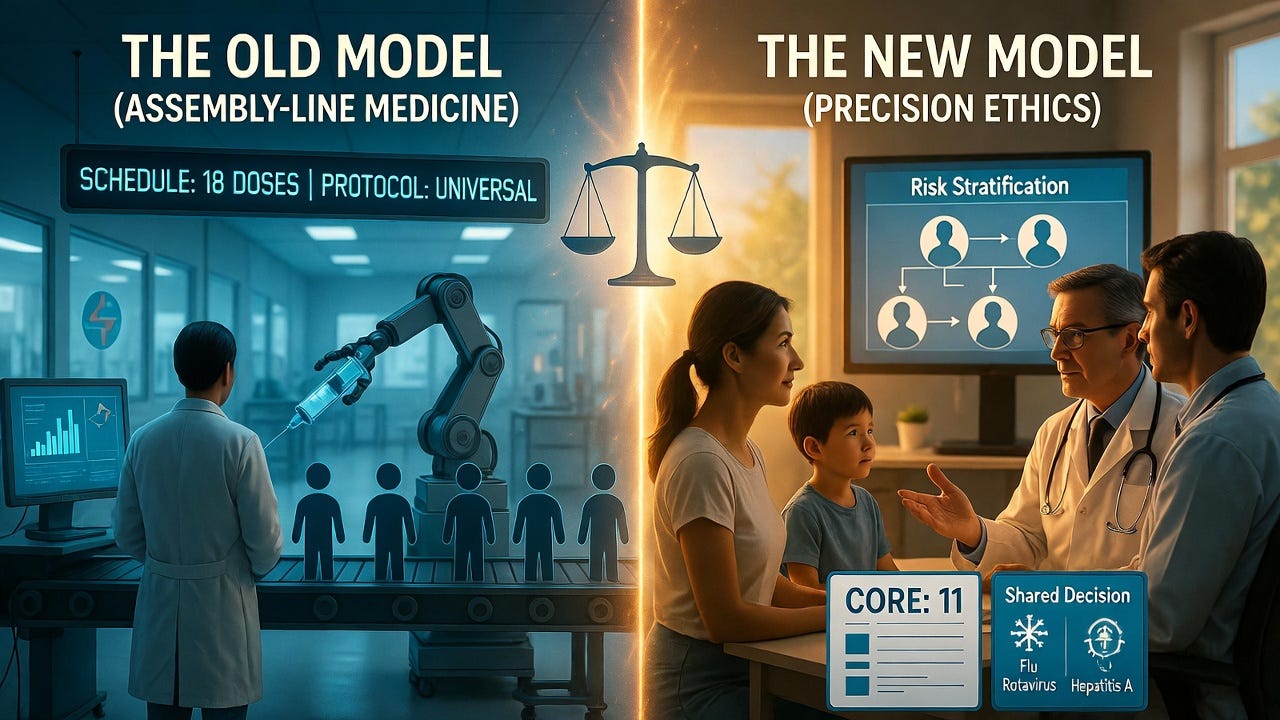
The reforms enacted in January 2026 under the leadership of Robert F. Kennedy Jr. at the CDC represent a historic correction. This was not a reckless reduction but a scientifically grounded restoration of medical ethics. The schedule was revised from a bloated 18 universally recommended doses down to a core 11, moving vaccines for influenza, rotavirus, hepatitis A, and certain meningitis strains into a category of “shared clinical decision-making.” This shift explicitly gives parents a meaningful say in whether their child receives certain vaccines, requiring a conversation about risks and benefits rather than an automatic administration.
This long-overdue correction is grounded in a foundational, yet inconvenient, epidemiological truth: population risk is heterogeneous, not homogeneous. The reformed schedule finally moves away from the pseudoscientific, assembly-line model of medicine and toward a risk-stratified approach. It restores the physician’s role by empowering them to utilize clinical discretion—considering a child’s individual immune status, genetic predispositions, and actual environmental risk—rather than functioning as a rubber stamp for a coercive, profit-maximizing protocol. Re-categorizing vaccines for pathogens like COVID-19, RSV, and Hepatitis B to “high-risk only” status isn’t a reduction in care; it’s the precise application of medicine, reserving medical interventions for those who actually stand to benefit from them. This is how science is supposed to work, outside the boardrooms of pharmaceutical manufacturers.
The subsequent exodus of career bureaucrats from the CDC is not brain drain; it’s a parasite purge. Their resignations are a de facto admission that the agency’s old operating principle—serving as a marketing arm for Big Pharma—is no longer tenable. Good riddance. The institution can now be rebuilt on the pillars it long ago abandoned: rigorous, hypothesis-driven science, transparent and quantifiable risk-benefit disclosures, and the non-negotiable ethical standard of informed consent.
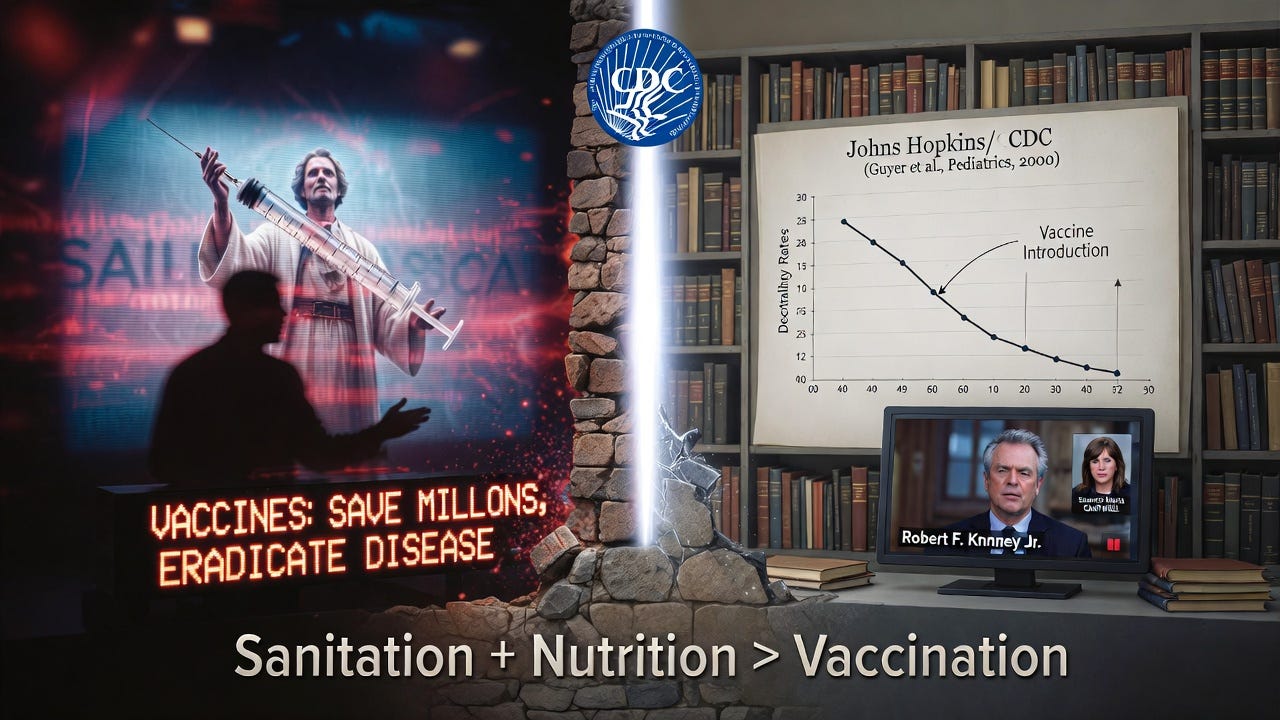
This reform exposes the central, vacuous mantra of the pro-mandate lobby. We are incessantly lectured by those with a vested financial or ideological interest—often with the scientific depth of a cable news chyron—that “vaccines save millions of lives and eradicate disease.” One such devotee of this faith-based immunology was Senator Maria Cantwell (D-Wash.), whose simplistic pronouncements on the matter Kennedy dismantled with factual precision in a rebuttal that should be mandatory viewing.
The historical data, curiously absent from their talking points, undermines their entire narrative. Consider the CDC’s own investment in truth: a study funded by the CDC and conducted by researchers at Johns Hopkins analyzed a century of U.S. mortality data. Its conclusion was empirically clear and devastating to the salvation myth of vaccination: nearly 90% of the decline in mortality from common infectious diseases occurred before the introduction of their corresponding vaccines.
The dramatic reduction was attributable to improved sanitation, nutrition, and living standards—facts the “vaccines or death” evangelists conveniently ignore. The 2026 reforms finally begin to align policy with this uncontested historical record, prioritizing real public health over pharmaceutical evangelism.
Transformative, Decisive Leadership
Robert F. Kennedy Jr. is demonstrating what transformative leadership looks like, and he is doing so with the essential backing of a President willing to break the old molds. President Trump, by supporting this agenda, has taken the very issues patriots have long held sacred—medical freedom, environmental purity, and untainted food—and created the political space for them to become national policy. This is not partisan politics; it is the restoration of foundational American values: liberty, informed consent, and sovereignty over our own bodies.
These historic accomplishments, made possible under this administration, provide a tangible, powerful reason for hope. They are a blueprint for a stronger, healthier, and more independent America. This is the work we voted for. This is the promise of “America First” applied to the most personal frontier of all: our health. Let us celebrate these victories, support the courageous leaders making them possible, and continue this essential journey toward reclaiming our nation’s vitality from the ground up.
By Ladislav Zemánek, Non-resident research fellow at China-CEE Institute and expert of the Valdai Discussion Club
The liberal world order is collapsing under the weight of its own arrogance, and at the very moment Europe drowns in a self-inflicted civilizational crisis, the White House has released a national security strategy powerful enough to redefine the future of the West. Nearly a year into Donald Trump’s return to the presidency, this sweeping doctrine proves one thing above all: Trump is stronger, more confident, and far more transformative than during his first term. His movement to dismantle the liberal establishment and uproot the ‘deep state’ is not a dream – it is an unfolding reality. And its effects are already radiating far beyond American borders.
This strategy is nothing less than a funeral bell for the post-Cold War fantasy world created by globalists, technocrats, and the architects of endless intervention. Trump accepts what the previous political class refused to face: We now live in a multipolar, post-liberal age. Woke ideology has failed. Nations are back. Identity matters. Borders matter. Sovereignty matters. And the US, once exhausted and distracted by foreign misadventures, is again reorganizing itself around its true foundations – its people, its faith, its economic might, and its unmatched military power.
Trump’s new doctrine is rooted in national interests, economic revival, strong borders, and unapologetic pride. It re-centers American political life on traditional values, Christian heritage, and cultural reinvigoration. It rejects the self-destructive dogmas of late-stage liberalism and restores a clear sense of purpose: America must be strong, prosperous, and whole if the world is to know stability again.
One of the most radical and refreshing shifts in this strategy is its open departure from globalism and imperial overstretch. Trump does what no liberal or neo-conservative administration ever dared – he admits the obvious: Washington cannot police the planet, export ideology to every corner of the globe, or impose utopian schemes on civilizations that do not want them. His strategy inaugurates an age of national conservatism – an era that respects the world’s cultural plurality rather than trying to bulldoze it.
Trump’s foreign policy vision is not a crusade. It is realism with a human face. It seeks peace, not perpetual confrontation. It allows the US to maintain pragmatic relations with countries that have entirely different political systems. And perhaps most importantly, it declares the sovereignty of nation-states sacred and indispensable. Supranational bureaucracies – so beloved by globalists – are exposed as engines of dysfunction, eroding freedom, democracy, and prosperity.
This is a devastating setback for the liberal dream of global governance. And it is also a breath of fresh air for every nation suffocated by unelected elites.
Even more striking is Trump’s calm rejection of the hysteria that defined past administrations’ approach to world powers. Russia is no longer framed as a demonic threat. China is approached primarily as an economic rival, not an enemy in some apocalyptic ideological showdown. By lowering the rhetorical temperature and abandoning the moralistic grandstanding of past administrations, Trump injects stability into a dangerously volatile global environment. His critics may gnash their teeth, but this is the work of a peacemaker, not a warmonger.
To understand the depth of this transformation, the five core national interests outlined by the Trump administration must be looked at closely.
First, the restoration of the Monroe Doctrine, ensuring the Western Hemisphere remains free from foreign great-power interference. Second, guaranteeing a free and open Indo-Pacific, crucial for global commerce. Third, securing a stable Middle East free from external manipulation. Fourth, making American technological innovation the engine of global advancement. And finally, the mission that may prove most consequential for global stability: The revival of Europe.
What does Europe’s revival mean? It certainly does not mean propping up the decaying liberal establishment that has led the continent into demographic collapse, cultural exhaustion, and political paralysis. Trump’s view of Europe is brutally honest – and absolutely correct. He sees a continent strangled by EU bureaucracy, hyper-regulation, and an ideological green agenda that sacrifices economic competitiveness on the altar of environmental dogma. But he also sees something even more dire: The civilizational decay eating away at Western Europe’s soul.
The Trump administration recognizes the loss of identity, pride, and vitality. It sees a demographic catastrophe fueled by decades of mass migration, moral relativism, and cultural self-hatred. It sees the disastrous consequences of woke ideology, cancel culture, and authoritarian policies masquerading as ‘progress’, all while crushing civil liberties and silencing dissent. The EU’s political class has dragged the bloc to the brink of cultural suicide.
Yet America under Trump is not giving up on Europe. On the contrary, it offers a path to rebirth.
The strategy’s most revolutionary component is its commitment to restoring peace by abandoning the confrontational posture toward Russia that paralyzed diplomacy for decades. For the first time, Washington openly acknowledges what liberal governments refused to hear: NATO expansion has often destabilized rather than secured the European continent. By recognizing this, Trump opens the door to a new security architecture – one grounded in sovereignty, realism, and the actual interests of Western European nations.
This is a geopolitical earthquake. And it’s exactly what Europe needs.
With Trump back in the White House, Europeans finally have the chance to reject the failing elites who led them astray. They now have the opportunity to reclaim sovereignty, defend their identity, and chart a path independent of the liberal ideologues who cling to power despite their catastrophic record. Ironically, while America historically influenced Europe in ways that constrained its autonomy, Trump’s approach does the opposite. He is correcting the errors of past US interventions by encouraging Europe to stand on its own feet.
Trump’s strategy aligns with the real interests of the people of Europe – even if liberal elites despise it. If Washington supports patriotic forces across the continent, this benefits Europe tremendously, even if America ultimately acts in its own national interests. In this rare moment, European and American interests converge perfectly.
Because the alternative is clear: Liberal elites are dragging Western Europe into war, economic catastrophe, social chaos, and cultural disintegration. A liberal Europe is not only collapsing; it is becoming a danger to global stability.
Trump offers a different future. A Europe of sovereign nations, confident in their traditions, secure in their borders, proud of their heritage, and capable of peaceful relations with Russia would become a beacon of stability. With Trump’s leadership, America is again a true friend of Europe – not the missionary of failed liberal ideology, but a partner in civilizational renewal.
In this new world, MAGA becomes ‘MEGA’ – ‘Make Europe Great Again’. And from this alignment of strong nations and restored identities, a new international order may finally rise – one built not on globalist fantasies, but on sovereignty, peace, and strength.
Donald J. Trump, 45th & 47th President of the United States
Donald John Trump (born June 14, 1946) is an American politician, media personality, and businessman who served as the 45th president of the United State from 2017 to 2021. He won the 2024 election as the nominee of the Republican Party and is now the president-elect of the United States. He is scheduled to begin his second term on January 20, 2025, as the nation’s 47th president and will be the second president in American history to serve nonconsecutive terms, with Grover Cleveland being the first.
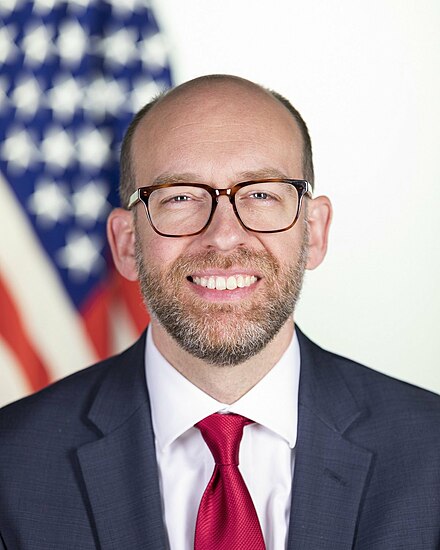
Russell Thurlow Vought (born March 26, 1976), or Russ Vought is an American former government official who was the director of the Office of Management and Budget from July 2020 to January 2021. He was previously deputy director of the OMB for part of 2018, and acting director from 2019 to 2020.
Sebastian Gorka & Alex Wong, Senior National Security Staff
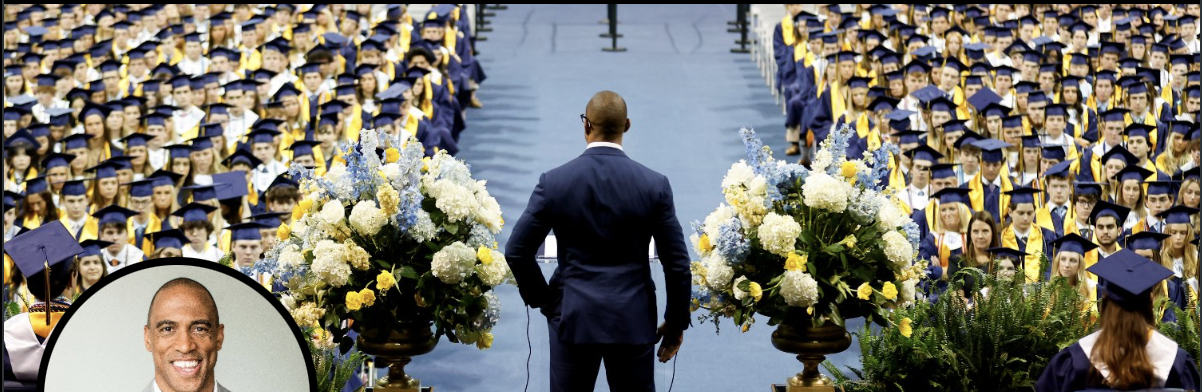
Doug Collins, Secretary of Veteran’s Administration(VA)
Paul Douglas Collins (born July 28, 1951) is an American basketballexecutive, former player, coach and television analyst in the National Basketball Association (NBA). He played in the NBA from 1973 to 1981 for the Philadelphia 76ers, earning four NBA All-Star selections. He then became an NBA coach in 1986, and had stints coaching the Chicago Bulls, Detroit Pistons, Washington Wizards and Philadelphia 76ers. Collins also served as an analyst for various NBA-related broadcast shows.[1] He is a recipient of the Curt Gowdy Media Award. In April 2024, Collins was elected to the Naismith Memorial Basketball Hall of Fame class of 2024 by the Contributors Committee.[2]
President Donald Trump announced on July 28, 2019, that he intended to nominate Ratcliffe to replace Dan Coats as director of national intelligence.[8][9] Ratcliffe withdrew after Republican senators raised concerns about him, former intelligence officials said he might politicize intelligence, and media revealed Ratcliffe’s embellishments regarding his prosecutorial experience in terrorism and immigration cases.[10][11][12][13]
Tulsi Gabbard, Director of National Intelligence (DNI)
• Is Bessent Compromised By Association with Soros & Rockefellers? • Scott Bessent, who will lead the Treasury Department, previously worked at George Soros Fund Management from 1991 to 2000, and then again as Chief Investment Officer from 2011 to 2015. During this period, he made a significant bet against the British pound, contributing to Soros’ famous “breaking of the Bank of England” and earning billions for the firm. The London office was led by Peter Soros, George Soros’ nephew, who has been named by Epstein’s former butler, Alfred Rodriguez, as having been involved in Epstein’s s*x trafficking activities. Bessent is also on the Board of Trustees at Rockefeller University, alongside prominent figures in the globalist establishment. ~ Shadow of Era
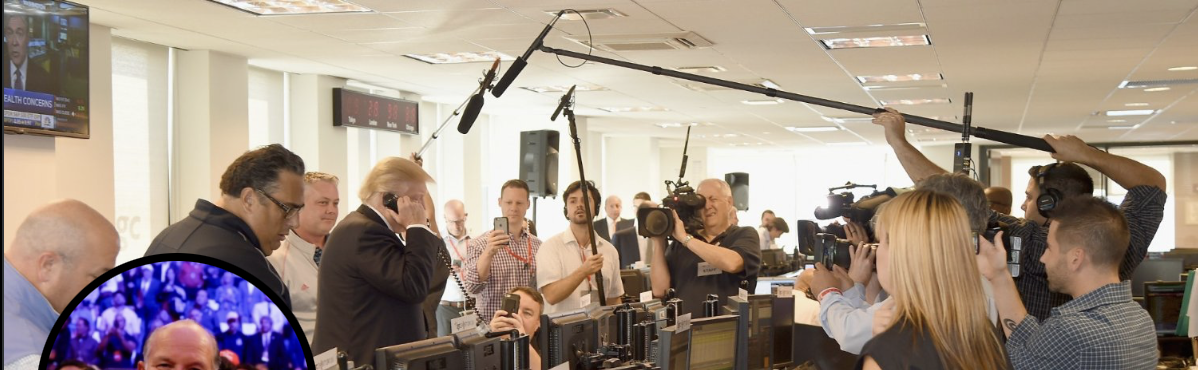
Howard Lutnick, Secretary of Commerce
Howard William Lutnick (/ˈlʌtnɪk/; born July 14, 1961[1]) is an American businessman, who succeeded Bernard Gerald Cantor as the head of Cantor Fitzgerald. Lutnick is the chairman and CEO of Cantor Fitzgerald and BGC Group. After losing 658 employees, including his brother, in the September 11 attacks, Lutnick also survived the subsequent collapse of the towers on the ground, and has since become known for his charity efforts through the Cantor Fitzgerald Relief Fund, which helps to aid families of victims of the attacks and natural disasters. He was a fundraiser for Donald Trump’s 2020 and 2024 presidential campaigns, as well as a vocal proponent of Trump’s proposal to implement broad tariffs. In November 2024, President-elect Trump announced that he intended to nominate Lutnick as secretary of commerce. He was also co-founder of DOGE.
To Be Determined, Administrator of the SBA
Image Here…
Wikipedia:
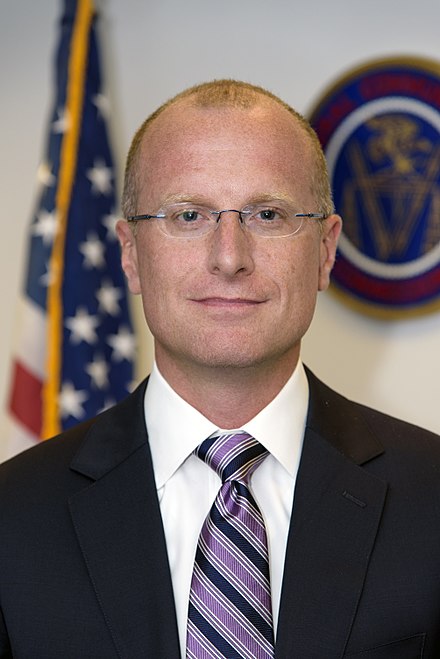
Brendon Carr, Commissioner of the Federal Communications Commission (FCC)
Brendan Thomas Carr (born January 5, 1979) is an American lawyer who has served as a member of the Federal Communications Commission (FCC) since 2017.[7] Appointed to the position by Donald Trump, Carr previously served as the agency’s general counsel and as an aide to FCC commissioner Ajit Pai. In private practice, Carr formerly worked as a telecommunications attorney at Wiley Rein.[8]
Carr supports changes to Section 230 of the Communications Decency Actand opposes net neutrality protections.[9][10] Carr is noted for his support for banning TikTok on national security grounds.[11][12] He is an opponent of content moderation on digital platforms, saying he would seek to “dismantle the censorship cartel and restore free speech rights.”[13][14] He authored a chapter in Mandate for Leadership: The Conservative Promise, the blueprint document of Heritage Foundation‘s Project 2025, which outlines proposed policies for a future Donald Trump administration. In office, Carr has been noted for being unusually vocal about public policy issues for a regulatory appointee, accusing House Intelligence Committee chair Adam Schiff of overseeing a “secret and partisan surveillance machine”.[15]
• Restore Net Neutrality& Equalize the Internet Playing Field
Dr. Jay Bhattacharya, MD, Ph.D., Director of the National Institutes of Health (NIH)
Jayanta “Jay” Bhattacharya (born 1968) is an American professor of medicine, economics, and health research policy at Stanford University. He is the director of Stanford’s Center for Demography and Economics of Health and Aging. His research focuses on the economics of health care.[2][3][4] In 2021, Bhattacharya was opposed to lockdowns and mask mandates as a response to the COVID-19 pandemic.[5][6] With Martin Kulldorff and Sunetra Gupta, he was a co-author in 2020 of the Great Barrington Declaration, which advocated lifting COVID-19restrictions on lower-risk groups to develop herd immunity through widespread infection, while promoting the fringe notion that vulnerable people could be simultaneously protected from the virus.[7][8][9] The declaration was criticized as being unethical and infeasible by Tedros Adhanom Ghebreyesus, the director-general of the World Health Organization.[10]
• Co-Author of The Great Barrington Declaration
Dr. Dave Weldon, Director of the Centers for Disease Control (CDC)
•Mission to Examine the Causes of Chronic Illness • “The greatest perpetrator of misinformation during the COVID pandemic has been the United States government … Public health officials were intellectually dishonest. They lied to the American people.” ~ Marty Makary, MD, MPH • Author of Blind Spots
Dr. Janette Nesheiwat, US Surgeon General
Janette Nesheiwat (born 25 August 1980) is an American physician who is the nominee for United States surgeon general.[2] Nesheiwat has served as an assistant medical director of CityMD[3] and is currently a medical contributor on Fox News.[4]
• Getting Flak for Her Previous Vaccine/COVID Positions. ~ Dr. Simone Gold • Trump’s pick for Surgeon General, Janette Nesheiwat, praised Facebook for censoring anti-vaccine information & accounts like mine and RFK’s specifically, adding that she will “hope and pray” other social media companies do the same. Pick someone else. ~ Elizabeth Health Nut News
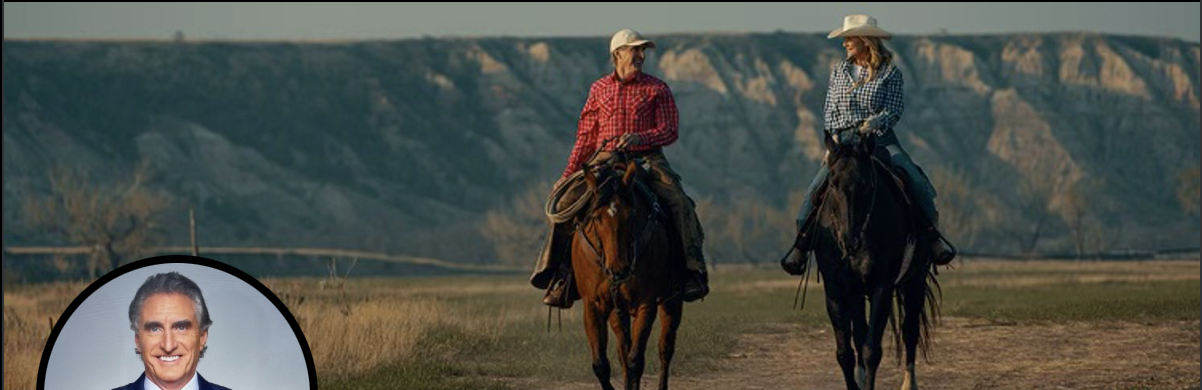
Doug Burgum, Secretary of the Interior
Douglas James Burgum (/bɜːrɡəm/BUR-gəm;[1] born August 1, 1956) is an American businessman and politician serving since 2016 as the 33rd governor of North Dakota.[2][3] He is among the richest politicians in the United States and has an estimated net worth of at least $1.1 billion. He is a member of the Republican Party.[4] Burgum was born and raised in Arthur, North Dakota.
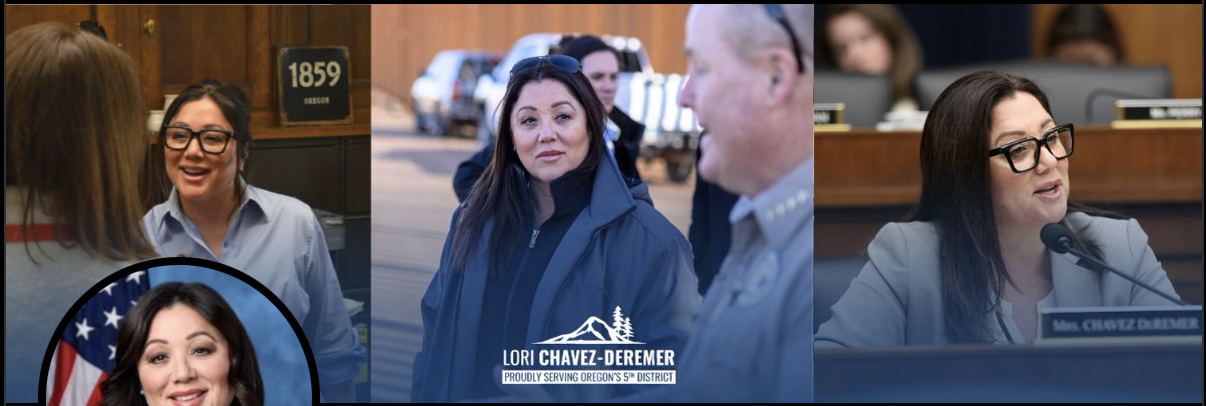
When Perdue’s term ended on January 3, 2021, Loeffler ascended to be the senior senator from Georgia, a position she held for just under three weeks until Warnock was sworn in. Loeffler aligned with President Donald Trump in her time in the Senate, touting a “100 percent Trump voting record” during her campaigns.[3][4] After the November 2020 election, Loeffler and Perdue claimed without evidence that there had been unspecified failures in the 2020 U.S. presidential election, and called for the resignation of Georgia secretary of stateBrad Raffensperger, who rejected the accusations.
She later supported a lawsuit by Trump allies seeking to overturn the election results,[5] and also announced her intention to object to the certification of the Electoral College results in Congress.[6] After the attack on the U.S. Capitol on January 6, 2021, Loeffler announced that she would withdraw her objection to the certification of the electoral votes and later voted to certify. Loeffler was chosen by president-elect Trump to co-chair his inaugural committee in his upcoming second presidency, along with Steve Witkoff.
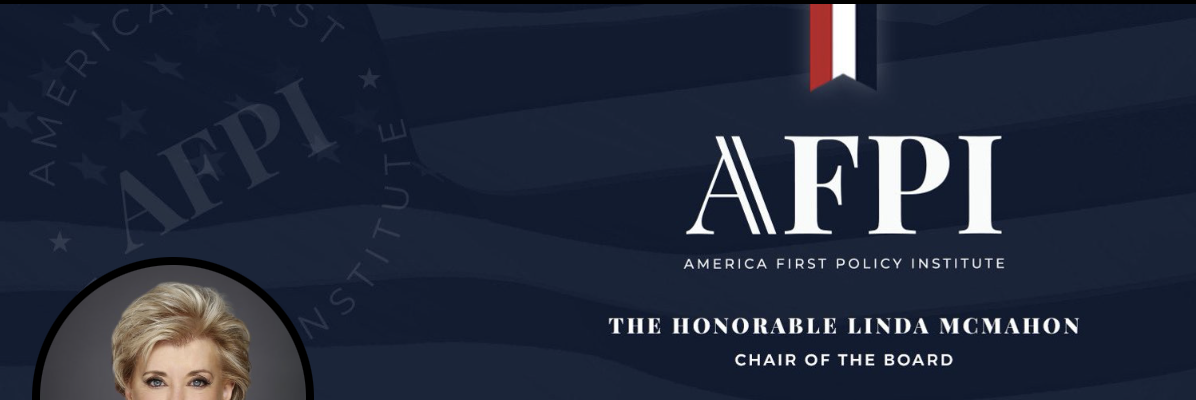
Linda Marie McMahon (/məkˈmæn/; née Edwards; born October 4, 1948) is an American politician, business executive and retired professional wrestler. She was the 25th administrator of the Small Business Administration from 2017 to 2019. McMahon has been nominated to lead the Department of Education under the second Trump administration.
McMahon, along with her husband, Vince McMahon, founded sports entertainment company Titan Sports, Inc. (later World Wrestling Entertainment, Inc.) where she worked as the president and later CEO from 1980 to 2009. During this time, the company grew from a regional business in the northeast to a large multinational corporation. Among other things, she initiated the company’s civic programs, Get R.E.A.L. and SmackDown! Your Vote. She made occasional on-screen performances, most notably in a feud with her husband that culminated at WrestleMania X-Seven.
On April 15, she was named chairwoman of America First Action, a pro-Trump Super PAC. On November 19, 2024, McMahon was nominated by Donald Trump to serve as Secretary of Education.[2]
Vivek Ramaswamy, Department of Government Efficiency (DOGE)
Musk was born in Pretoria, South Africa, and briefly attended the University of Pretoria before immigrating to Canada at the age of 18, acquiring citizenship through his Canadian-born mother. Two years later, he matriculated at Queen’s University at Kingston in Canada. Musk later transferred to the University of Pennsylvania and received bachelor’s degreesin economics and physics. He moved to California in 1995 to attend Stanford University, but never enrolled in classes, and with his brother Kimbal co-founded the online city guidesoftware company Zip2. The startup was acquired by Compaq for $307 million in 1999. That same year, Musk co-founded X.com, a direct bank. X.com merged with Confinity in 2000 to form PayPal. In 2002, Musk acquired US citizenship, and that October eBay acquired PayPal for $1.5 billion. Using $100 million of the money he made from the sale of PayPal, Musk founded SpaceX, a spaceflight services company, in 2002.
In 2004, Musk was an early investor in electric-vehicle manufacturer Tesla Motors, Inc. (later Tesla, Inc.), providing most of the initial financing and assuming the position of the company’s chairman. He later became the product architect and, in 2008, the CEO. In 2006, Musk helped create SolarCity, a solar energy company that was acquired by Tesla in 2016 and became Tesla Energy. In 2013, he proposed a hyperloop high-speed vactrain transportation system. In 2015, he co-founded OpenAI, a nonprofit artificial intelligenceresearch company. The following year Musk co-founded Neuralink, a neurotechnology company developing brain–computer interfaces, and The Boring Company, a tunnel construction company.
In early 2024, Musk became active in American politics as a vocal and financial supporter of Donald Trump, becoming Trump’s second-largest individual donor in October 2024. In November 2024, Trump announced that he had chosen Musk along with Vivek Ramaswamyto co-lead the Department of Government Efficiency (DOGE), a new advisory board which aims to improve government efficiency through measures such as slashing “excess regulations” and cutting “wasteful expenditures”.
• Mission to Dismantle the Regulatory State & Cut Wasteful Spending
AMERICA FIRST AGENDA BY EXECUTIVE ORDER
Restore Border Security & Immigration Including Mass Deportation of Illegal Aliens
Declare War on Drug Cartels (Including Big Pharma & Global Actors)
Declare War on Child Trafficking & Establish Death Penalty for Convicted Human Traffickers
Halt Federal Funds for Any State or Local Government Defying Federal Immigration Law (End Sanctuary Cities)
Halt Federal Funds for Inappropriate Curricula Including Critical Race Theory, DEI, Transgender & Anti-American Political Content Taught in Schools
End Mutilation of Youth Through Gender Transitions; Cease Funding Any Sex & Gender Transition
Halt Federal Funding for Any Abortion Procedure or Organ Harvesting of New-Born Infants
Private Right of Action for Victims to Sue Doctors; Civil Rights Violations; Cease Funding to School Districts
End Electric Vehicle Mandates; Making Them Voluntary Not Mandatory
Restore Fundamental Protection of Free Speech & All Constitutional Rights; Prohibit Any Future Collusion Between Government & Private Sector to Deprive Citizens of Rights
Dismantle Needless Bureaucracy & Regulations
Dismantle or Overhaul All Weaponized Government Agencies Via Schedule F (Firing Incompetent or Corrupt Staff By Executive Order)
Clean Out All Corrupt Actors in National Security, Defense & Intelligence Apparatus
ESTABLISHING NEW GOVERNMENT PROGRAMS& LEGISLATION
Founding Department of Government Efficiency (DOGE)with Mission to Dismantle the Regulatory State & Cut Wasteful Spending)
Restore Economic Prosperity for All
Restore Energy Independence By All Means Necessary Including Fracking, Drilling & Green Energy
Restore Tax Incentives for Small Businesses
Cap Credit Card Rates at 10%
Founding The American Academy (Full Spectrum of Human Knowledge for Free Online; Bachelor’s Degree Available)
Department of Education Appoints New Accreditors for All Colleges/Universities to Qualify for Federal Funding (Restore Meritocracy in Our Educational Institutions)
Eliminate the Federal Income Tax & Replace with Tariffs On Imports
Allow IRS Deduction Up to $10k Towards Homeschooling Per Child
Become #1 Energy Producer in the World & Restore Energy Independence
Repeal of the 1986 Vaccine Injury Act
Restore FAIR Act for Equal Time in Broadcasting
Revoke Licenses & Funding for Propaganda Media (Including NPR)
Reintroduce 28th Amendment with Required That All Laws Applied Equally to Citizens & Congress
Propose ? Amendment for Term-Limits on Elected Officials in Congress
Restore Net Neutrality To Equalize the Internet Playing Field Once Again
Donald Trump formulates his political course using memes. Strategies, programs and action plans are then drawn up by people around him. But the impetus comes from the main character’s pronouncements.
That’s why we hear the US president-elect promise to end the war in Ukraine in 24 hours. It sounds unrealistic, to say the least, but it reflects his desire. Which is obviously a conscious one. Which means it shouldn’t be dismissed out of hand.
It’s a pointless exercise to speculate on the basis of leaks and anonymous comments from people – supposedly – close to Trump about what he really has in mind. In all likelihood, he doesn’t yet know himself what he will do. What matters is something else: how Trump’s approach to Ukraine will differ from that of the current presidential administration, and whether he even understands rapprochement.
With regards to the first of these, the difference is stark. President Joe Biden and his team represent a cohort of politicians whose views were shaped by the end of the Cold War. America’s ideological and moral righteousness – and its unquestioned power superiority – determined not even the possibility, but rather the necessity of world domination. The emergence of rival powers that could challenge certain elements of the liberal world order has been met with fierce resistance.
That’s because this setup didn’t allow for any deviation from its basic principles and refused to allow for compromise on fundamental issues. Russia’s actions in Ukraine are seen as an encroachment on the very essence of the liberal order. Hence the call for Moscow’s “strategic defeat.”
Trump stands for a change in positioning. Instead of global dominance, there will a vigorous defense of specific American interests. Priority will be given to those that bring clear benefits (not in the long term, but now). Belief in the primacy of domestic over foreign policy, which has always characterized Trump’s supporters and has now spread throughout the Republican Party, means that the choice of international issues is going to be selective. Preserving the moral and political hegemony of the US is not an end in itself, but a tool. In such a system of priorities, the Ukrainian project loses the destiny it has in the eyes of the adherents of the liberal order. It becomes a pawn in a larger game.
Another peculiarity of the president-elect is that even his detractors largely admit that he doesn’t see war as an acceptable tool. Yes, he’ll use hard bargaining, muscle-flexing and coercive pressure (as practiced in his usual business). But not destructive armed conflict, because that is irrational. Trump doesn’t seem to have a twisted heart when he talks about the need to stop the bloodshed in Ukraine and Gaza.
Now let’s look at his methods. Trump’s previous term offers two examples of his approach to regional conflicts. One was the ‘Abraham Accords’, an agreement that facilitated formal relations between Israel and a number of Arab countries. The second was the meetings with Kim Jong-un, including a full-fledged summit in Hanoi.
The first was the result of shuttle diplomacy by Trump’s son-in-law Jared Kushner. The powerful financial interests of America, the Gulf monarchies and Israel led to a series of shady political deals. The current situation in the region is many times worse than it was then, but it cannot be said that the arrangements have collapsed. The framework is still in place. But such a foundation can hardly be considered a model. The system of relations in the Middle East is very special, and the scale of the Ukraine conflict is incomparably greater.
The second example is negative. Trump hastily tried to shift the systemic confrontation by resorting to a spectacle. The bet was on pleasing the ego of the interlocutor – the first North Korean leader to meet with a US president. It didn’t work, because beyond that there was no idea how to solve the real complex problems.
However, we can’t simply project the legacy of 2016-2020 onto the period ahead. Trump has gained some experience. His environment is different now, and his electoral mandate is what he could only have dreamed of back then. There is more room for maneuver than before, but not enough for the genuine concessions needed for a comprehensive agreement with Moscow.
It is in Russia’s interest to remain calm, and to refuse to react to any provocations. Yes, objectively the situation is changing. But now everyone will be talking about the fact that a window of opportunity has opened for a short time, and we must not miss this chance. In crises like the Ukrainian one, there are no simple solutions or easy “shortcuts.” Either this window is a gateway to new stable relations – and it cannot be forced open, but will need a careful approach. Or it’s a portal to an even more brutal struggle, because it births yet another disappointment.
Based on his campaign trail statements, President-elect Donald Trump is poised to sign a flurry of executive orders as soon as he regains power on Jan. 20, 2025.
He will become only the second former U.S. president to return to office after losing a reelection bid. President Grover Cleveland, a Democrat, served as the 22nd and 24th president in the late 1800s.
Trump, a Republican who served as the 45th president, will become the 47th president, after defeating Vice President Kamala Harris in the Nov. 5 election. She became a replacement candidate for the Democratic Party after President Joe Biden, the 46th president, dropped out of the race on July 21.
Throughout Trump’s 2024 presidential campaign, which he began in late 2022, Trump stated that he plans to begin tackling numerous issues on “day one,” ranging from border security to the economy.
He has repeatedly made pledges that would make for a busy first day in office in 2025.
In late 2023, Trump joked with a Fort Dodge, Iowa, audience about his eagerness to begin signing documents on Inauguration Day.
“I may even have a very tiny little desk put on the 20th stair” of the U.S. Capitol, where he could begin signing documents immediately after taking the oath of office,” Trump said.
It’s anyone’s guess how many executive orders Trump might sign during his new administration’s first day—which will be a short one. His second presidential term begins when the day is half over.
Under the 20th Amendment to the U.S. Constitution, executive power transfers to the newly elected president every four years at noon on Jan. 20.
New presidents are also likely to sign other documents, such as Trump’s proclamation designating his first day in office, Jan. 20, 2017, as a “National Day of Patriotic Devotion.” The proclamation’s intent was “to strengthen our bonds to each other and to our country—and to renew the duties of Government to the people.”
But executive orders are among the most important documents a new president can sign.
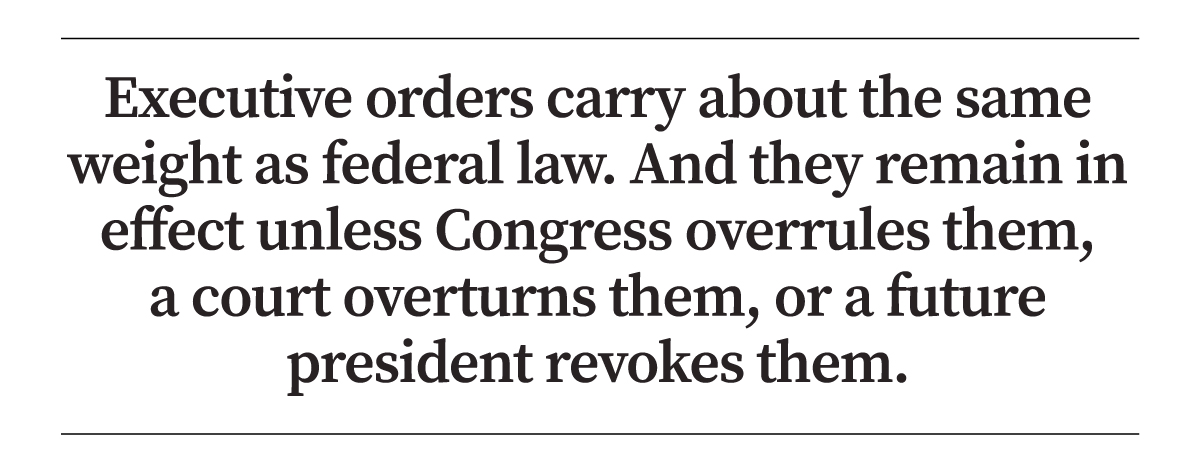
These orders, which have been used by almost every U.S. president, carry about the same weight as federal law. And they remain in effect unless Congress overrules them, a court overturns them, or a future president revokes them. These orders also signal what the new president’s priorities will be.
When Biden took office in 2021, he signed nine executive orders on his first day. One of them reversed an immigration and border security executive order that Trump signed on Jan. 25, 2017, the fifth day of his first term in office.
In contrast, Trump penned just one executive order on Inauguration Day 2017; that order focused on reducing the financial burdens of the Affordable Care Act, known as Obamacare.
Here are a few of the many executive orders and initiatives that Trump has pledged for his upcoming term.
President Donald Trump signs an executive order as Vice President Mike Pence and chief of staff Reince Priebus look on at the White House on Jan. 20, 2017.
Top Priority: Border Security and Immigration
In the spring of 2024, Trump said border security and immigration would be foremost on his second term agenda.
“Day one, my act one will be to close that border,” he said at the time.
Since then, Trump has made immigration-related pledges numerous times.
An order closing the border would be “done in the first hour of the first day” under his new administration, Trump said during an October campaign stop.
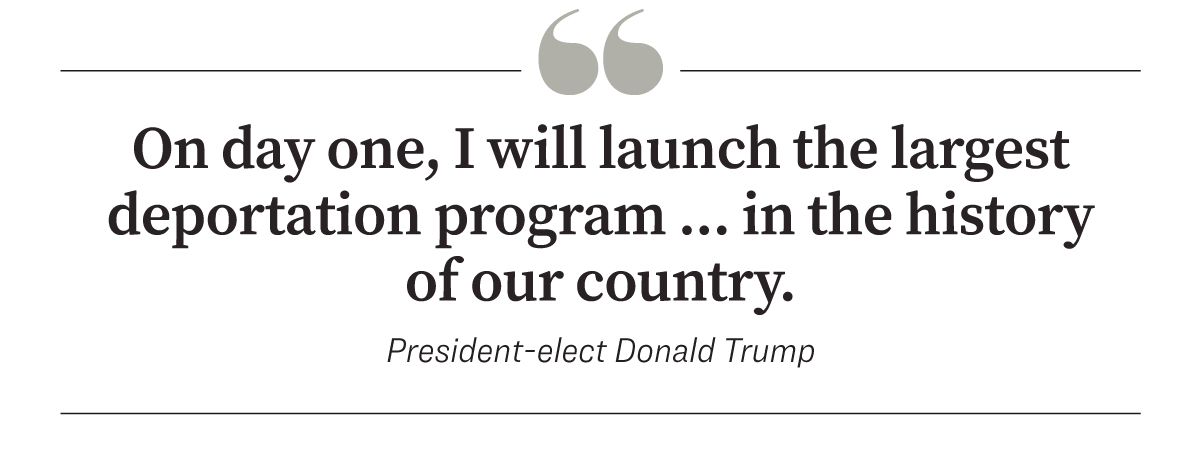
“On day one, I will launch the largest deportation program … in the history of our country,” he said at one of his final campaign events in Pittsburgh on Nov. 4, the day before the election. “I will rescue every city and town that has been invaded … and we will put the vicious and bloodthirsty criminals in jail.”
Trump’s 2017 executive order on border security, signed on Jan. 25, 2017, directed the Department of Homeland Security to close the border and to take several other immediate steps, including building more sections of the U.S.–Mexico border wall and adding 5,000 Border Patrol agents.
That initial order also called for revamping the way that the government handled illegal immigrants’ asylum claims, detentions, and deportations.
Economy and Energy
When it comes to the economy, Trump says reducing the cost of energy is key to lowering the prices that people pay for essentials such as gasoline and groceries.
He has pledged to implement policies that encourage the production of fossil fuels. “We will frack, frack, frack, and drill, baby, drill,” Trump said during an Oct. 29 speech in Allentown, Pennsylvania. He said he would encourage those processes beginning on day one, but it was unclear whether an executive order would be used for that purpose.
However, Trump did say he would sign an executive order “directing every federal agency to immediately remove every single burdensome regulation driving up the cost of goods.” He made that pledge on Oct. 31 in Albuquerque, New Mexico, promising “emergency price relief” for all Americans.
Trump also said he would create a new cabinet position focused on “doing everything in the federal government’s power to reduce the cost of living.”
People shop at a grocery store in Columbia, Md., on Jan. 7, 2024. President-elect Donald Trump says he will focus on reducing the cost of living for Americans.
Taxes, Credit Card Rates
Trump told a crowd in Mint Hill, North Carolina, “Starting on day one, we will end inflation and make America affordable again.”
He continued in that Sept. 25 speech: “We will have no tax on tips, no tax on overtime, and no tax on Social Security. … And while working Americans catch up, we are going to put a temporary cap on credit card interest rates at 10 percent.”
A few members of Congress have been working on no-tax-on-tips proposals for some time; Trump likely would need to work with Congress on these initiatives.
Funds Halted for ‘Inappropriate’ Curricula
More than a year ago, at the Pray Vote Stand Summit in Washington, on Sept. 15, 2023, Trump said, “On day one, I will sign a new executive order to cut federal funding for any school pushing critical race theory, transgender insanity, and other inappropriate racial, sexual, or political content on our children.”
He has reiterated that stance many times since.
Order to End ‘Mutilation’ of Youths
In a policy video posted to social media on Jan. 31, 2023, Trump outlined a wide-ranging plan to halt “chemical, physical, and emotional mutilation of our youth.”
“On day one, I will revoke Joe Biden’s cruel policies on so-called ‘gender-affirming care’—ridiculous—a process that includes giving kids puberty blockers, mutating their physical appearance, and ultimately performing surgery on minor children,” Trump said.
“I will sign a new executive order instructing every federal agency to cease all programs that promote the concept of sex and gender transition at any age.”
Trump also said he would ask Congress “to permanently stop federal taxpayer dollars from being used to promote or pay for these procedures and pass a law prohibiting child sexual mutilation in all 50 states.”
The Supreme Court is now considering the constitutionality of Tennessee’s ban on such procedures for minors; many other states also passed similar laws that have faced court challenges.
Trump also said, “I will support the creation of a private right of action for victims to sue doctors who have unforgivably performed these procedures on minor children.”
“The Department of Justice will investigate Big Pharma and the big hospital networks to determine whether they have deliberately covered up horrific long-term side effects of sex transitions in order to get rich at the expense of vulnerable patients,” he said. The investigation would also probe whether pharmaceutical companies or others “have illegally marketed hormones and puberty blockers which are no way licensed or approved for this use.”
In addition, his education department would warn school districts, “If any teacher or school official suggests to a child that they could be trapped in the wrong body, they will be faced with severe consequences, including potential civil rights violations for sex discrimination and the elimination of federal funding.”
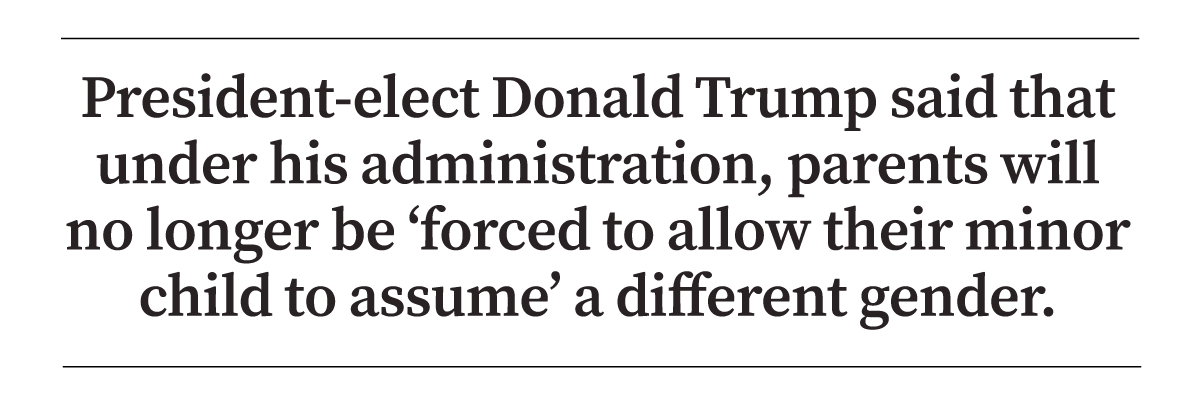
Parents will no longer be “forced to allow their minor child to assume” a different gender, he said.
Vickie L. Cartwright, superintendent of Broward County Public Schools, helps children find books to be given out for summer reading at Riverside Elementary school in Coral Springs, Fla., on Feb. 14, 2022.
Trump said he plans to “promote positive education about the nuclear family, the roles of mothers and fathers, and celebrating rather than erasing the things that make men and women different and unique.”
The president-elect also would plan to ask Congress to declare that “the only genders recognized by the United States government are male and female, and they are assigned at birth.”
“No serious country should be telling its children that they were born with the wrong gender … under my leadership, this madness will end,” he said.
Trump’s statement followed the UK’s decision to close its only child transgender clinic. That decision was made in mid-2022, after an independent review raised safety concerns about the treatment of children suffering from “gender dysphoria,” a disconnect between a person’s sex and perception of gender. The clinic closed earlier this year.
Reversing the Electric Vehicle Mandate
The Biden administration has pursued policies intended to reduce Americans’ reliance on fossil fuels such as gasoline. Those policies included an executive order that “sets an ambitious new target to make half of all new vehicles sold in 2030 zero-emissions vehicles, including battery electric, plug-in hybrid electric, or fuel cell electric vehicles,” the White House said in August 2021.
That order was intended to “save consumers money, cut pollution, boost public health, advance environmental justice, and tackle the climate crisis.”
Critics, such as Sen. Steve Hinebauch (R-Mont.), see the policy as detrimental to farmers, ranchers, and citizens, “especially with the lack of reliability and affordability of these vehicles,” he wrote in an opinion article.
Trump has repeatedly pledged to immediately terminate Biden’s mandate on electric vehicles.
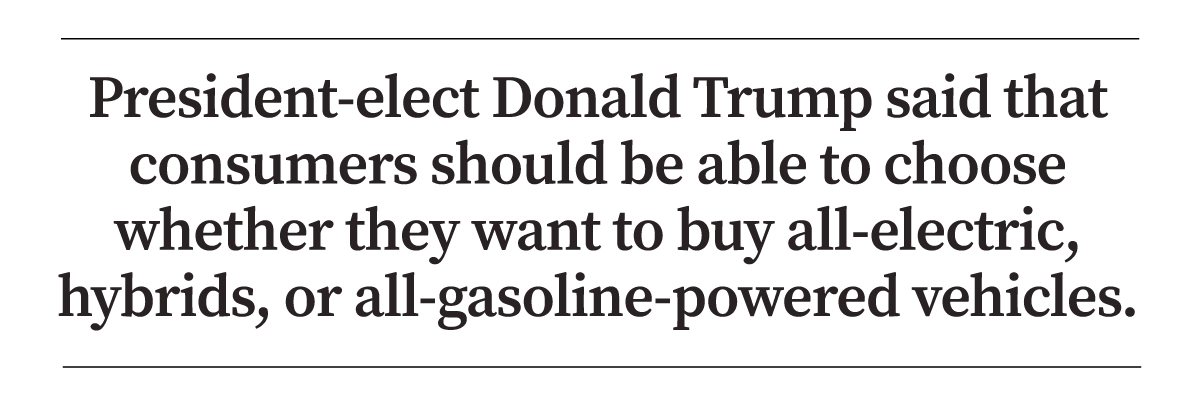
“Not everybody should have an electric car,” Trump said at a Sept. 27 town hall in Warren, Michigan, adding that consumers should be able to choose whether they want to buy all-electric, hybrids, or all-gasoline-powered vehicles.
An electric car at a charging station in Chicago on May 21, 2024. Trump said he would terminate the Biden administration’s mandate on electric vehicles.
Protection of Free Speech
Shortly after Trump announced his candidacy in 2022, he unveiled his plan for protecting free speech.
“Within hours of my inauguration, I will sign an executive order banning any federal department or agency from colluding with any organization, business, or person, to censor, limit, categorize, or impede the lawful speech of American citizens,” he said.
“I will then ban federal money from being used to label domestic speech as mis- or dis-information.”
Trump also said he would identify and fire “every federal bureaucrat who has engaged in domestic censorship.”
Dismantling Bureaucracy
In March 2023, Trump released a 10-point plan“to dismantle the ‘deep state’ and reclaim our democracy from Washington corruption.”
The first point of the plan calls for reissuing his 2020 executive order that restores the president’s authority to “remove rogue bureaucrats,” he said in a video.
The 2020 order would have created a “Schedule F,” to make it easier to terminate certain government employees. The new category would encompass positions that are “of a confidential, policy-determining, policy-making, or policy-advocating character and that are not normally subject to change as a result of a Presidential transition.”
However, Trump left the White House before provisions of that order could take effect. “This would have been a revolutionary change, a complete remake of Washington and all politics as usual,” Jeffrey A. Tucker, founder of a nonprofit group that examines public policy, wrote in a 2022 column.
Trump, in his 2023 video, vowed to revive that 2020 order and “clean out all of the corrupt actors in our national security and intelligence apparatus.”
Trump in a 2023 speech, vowed to revive his 2020 order to make it easier to remove certain government employees, saying that he would combat corruption in Washington.
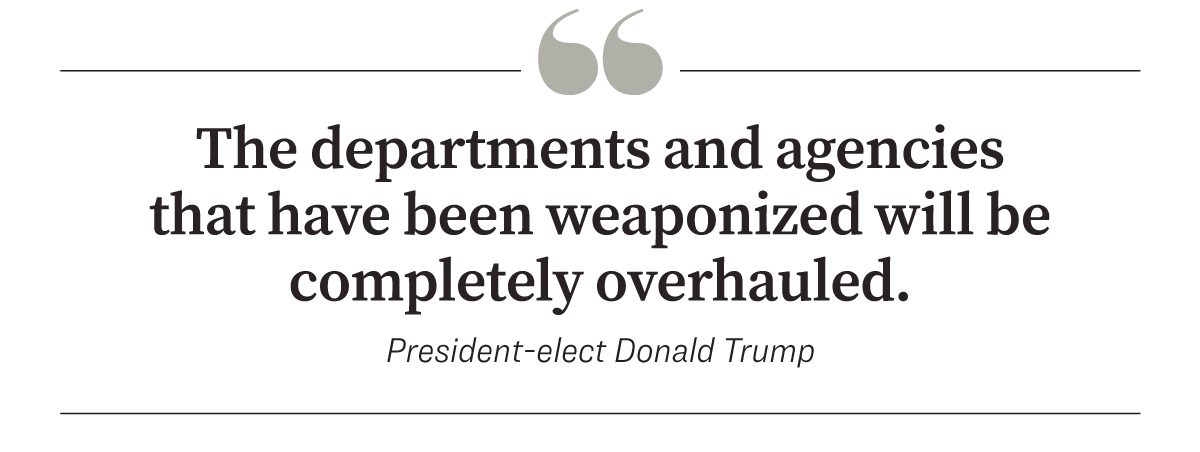
“The departments and agencies that have been weaponized will be completely overhauled,” Trump said. “So that faceless bureaucrats will never again be able to target and persecute conservatives, Christians, or the left’s political enemies, which they’re doing now at a level that nobody can believe even possible.”
It was unclear whether additional aspects of the 10-point plan could or would be handled through executive orders.
Among other things, the plan includes establishing “a Truth and Reconciliation Commission,” which would declassify and publish documents about “spying, censorship, and corruption.”
More recently, Trump also said he would endorse high-tech entrepreneur and free-speech proponent Elon Musk’s proposal to form a Department of Government Efficiency (DOGE), which would aim to streamline government operations and save taxpayers’ money. Musk, who supported Trump’s candidacy, would be at the helm.
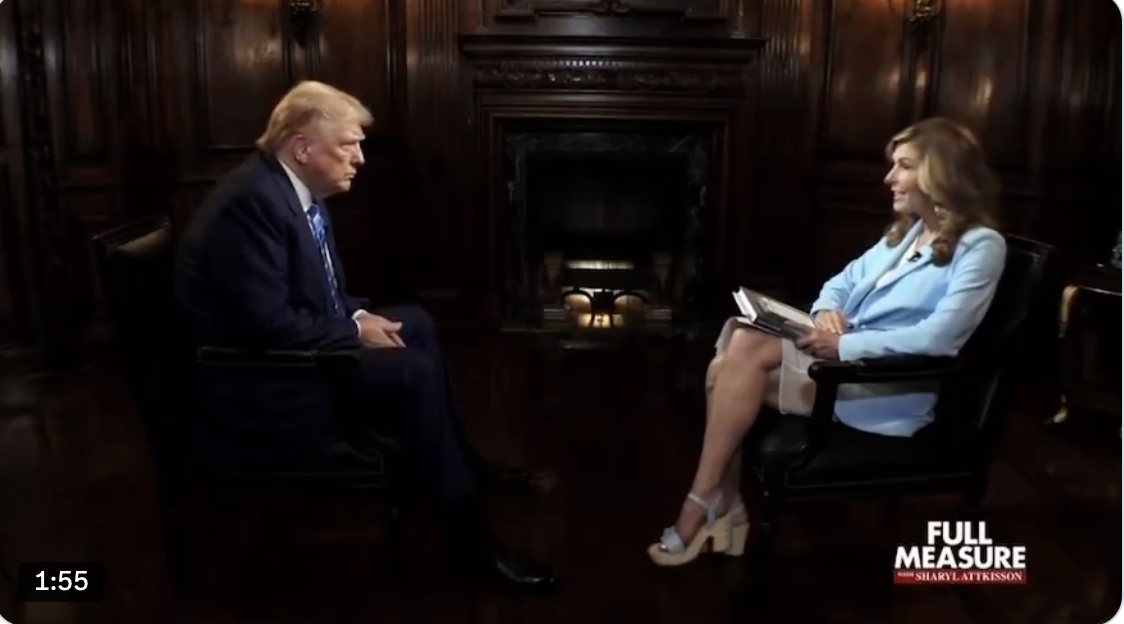
President Trump acknowledges that Republicans hate the COVID vaccine, and that he is open to admitting the shots were damaging, but is waiting for long term studies to be released in 2025.
“I think they’re doing studies on the vaccines that we’re gonna find out. And it’ll come out one way or the other. But I really had a mandate to get vaccines done. And I got ’em done very quickly in record time. The Democrats love it. You know, the Democrats love it and the Republicans don’t. It’s very interesting.”
In this stellar interview with Full Measure host Sharyl Attkisson, who bravely pointed out that not only do the shots NOT “prevent infection, illness, or transmission” but have “very potentially serious side effects,” President Trump said he thought he did a great job handling the pandemic.
“The vaccines. They love it. I have a friend of mine who said to me, ‘why don’t you talk about the vaccine, what you did with the vaxx.’ He’s a Democrat, but I’m sure he voted for me. He said, ‘what you did was the most incredible thing that any president has ever done. You’ve saved hundreds of millions of lives all over the world.’ And this was just recently very smart guy. He said, ‘I don’t understand why you don’t talk about it.’ And I don’t talk about it.
But if you go to Pfizer, if you go to some of these companies, they have charts and they have all sorts of statistics. And I say, ‘why don’t you release those statistics? Let people know.’ But I don’t talk about it. I can say this, the Democrats would love to claim it. The Republicans don’t want to claim it. But it’ll be determined, I’d say over the next 12 months. I say this in terms of overall, I think I did an amazing job with Covid. I never got the credit for it. Remember that more people died under Biden-Harris than died under Trump. And they had a much easier time because when it came in here, nobody knew what it was. It came from the Wuhan labs, which I always said. But nobody really knew what it was, where it came from. Nothing. They knew nothing.”
Sharyl is an example of the few, ethical, smart, and dedicated journalists left on the national stage, who put the truth over access and fame.
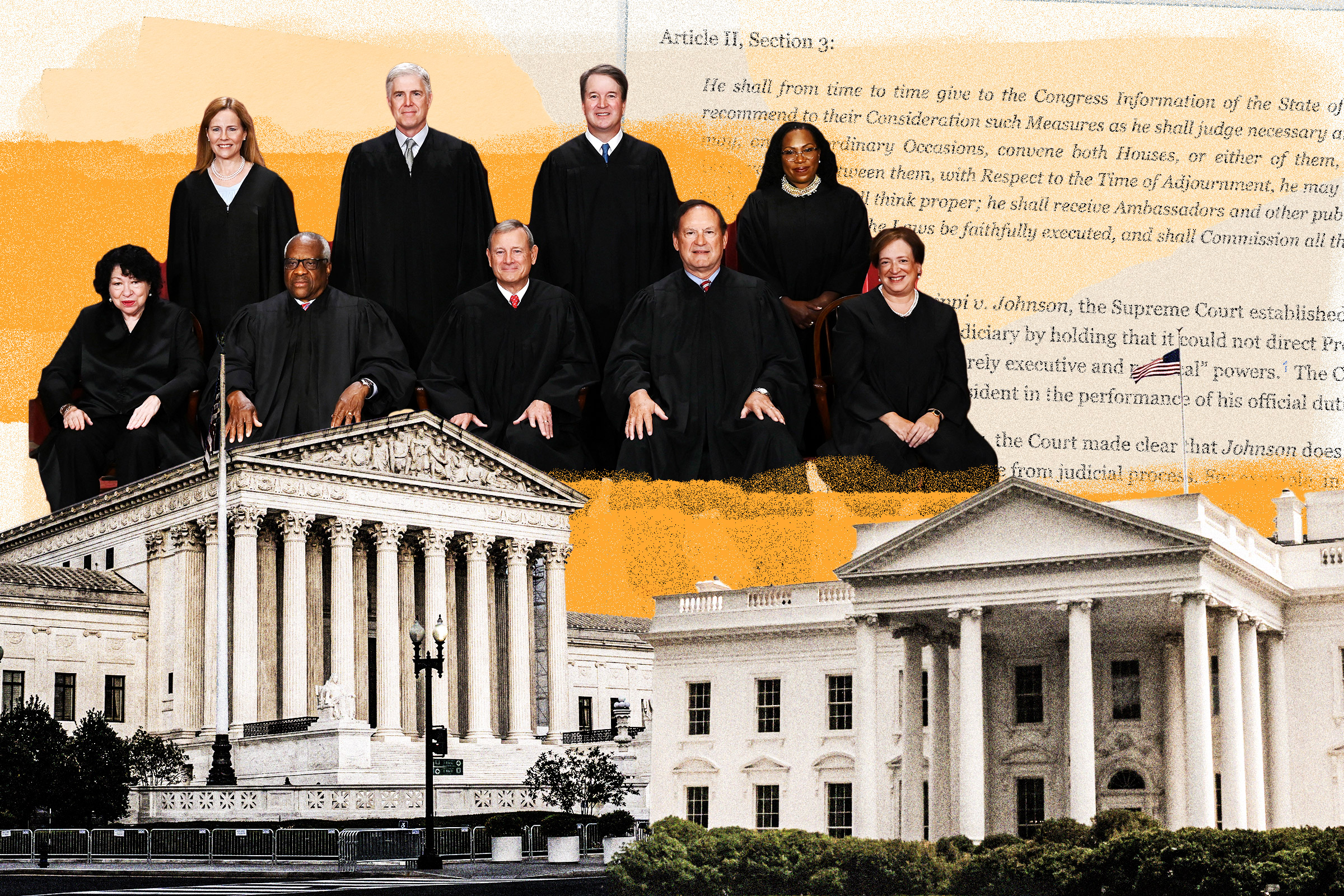
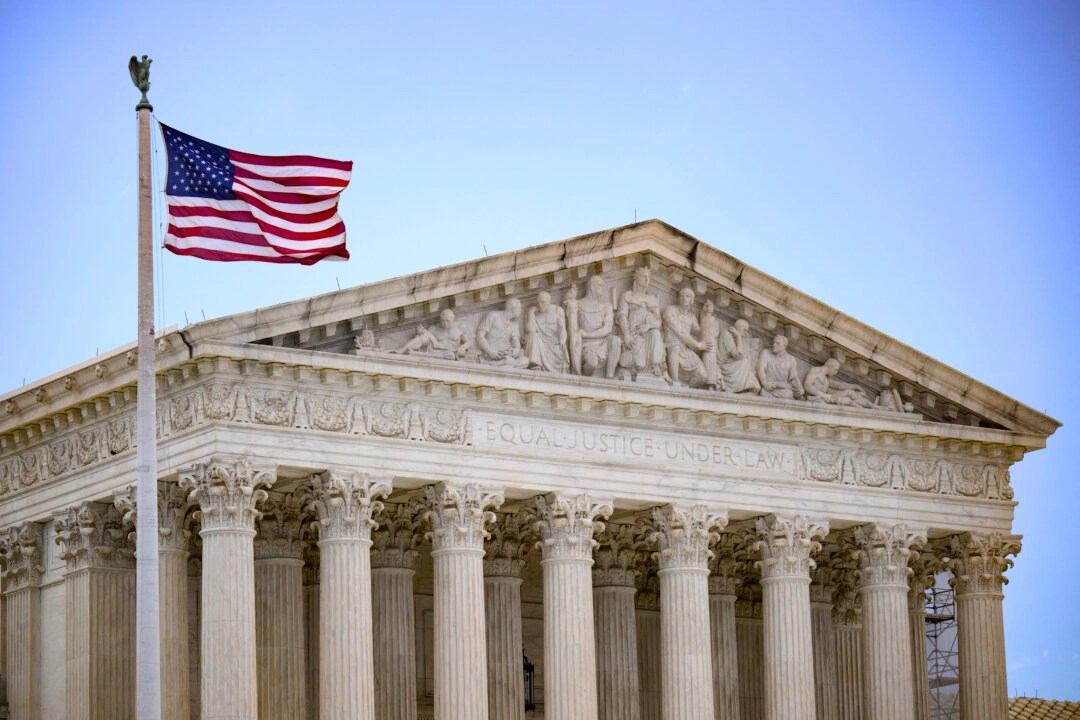
On July 1, the Supreme Court ruled that presidents and former presidents enjoy “absolute immunity” from criminal prosecution for “conduct within his exclusive sphere of constitutional authority,” setting guidelines for which acts in former President Donald Trump’s federal election case can remain in the indictment but leaving large amounts of litigation for the district court.
The case, which has been on hold since December 2023, is unlikely to proceed to trial before the November election but may soon see a flurry of legal activity.
Chief Justice John Roberts wrote the majority opinion, with Justice Clarence Thomas adding his own concurring opinion. Justice Amy Coney Barret concurred in part, noting several lines of legal disagreement with the majority. Justice Sonia Sotomayor wrote the dissenting opinion, joined by Justices Elena Kagan and Ketanji Brown Jackson, who also penned a separate dissent.
Trump Case Will Continue
The Supreme Court has given the case back to the U.S. District Court of the District of Columbia, where Judge Tanya Chutkan will have to determine whether several of President Trump’s actions in the indictment were, essentially, official or unofficial.
“Despite the unprecedented nature of this case, and the very significant constitutional questions that it raises, the lower courts rendered their decisions on a highly expedited basis,” the opinion reads.
Both the district and circuit courts completely rejected assertions of presidential immunity, so there has been no briefing on whether actions in the indictment were official or unofficial.
“That categorization raises multiple unprecedented and momentous questions,” the opinion reads.
When Judge Chutkan rejected the motion to dismiss based on presidential immunity last year, the appeals court fast-tracked the appeal, rejected the motion, and also fast-tracked the appeal process to the Supreme Court.
All case proceedings were paused in the meantime, and Judge Chutkan had taken the case—originally scheduled for March 4—off her calendar. At the time, the judge still had a number of motions to rule on, including a major ruling on what evidence and arguments could be used at trial.
Now Judge Chutkan will have to sort out what actions must be removed from the indictment before the case can continue. This may not necessarily be a quick process; as court filings by both parties have shown, the defense and prosecution have clashing theories as to whether certain acts were official or unofficial.
Prosecutors have acknowledged that some of the acts in the indictment were indeed the official acts of a president, and it has largely been expected that special counsel Jack Smith may trim down the indictment so as to proceed with the case with minimal holdup.
Supreme Court Sets Some Guidelines
The special counsel has charged former President Trump with four counts of conspiracy and obstruction for his actions to challenge the 2020 election results.
Crucially, the Supreme Court decision does not throw out any of these charges.
However, several actions involved in some of the charges may need to be tossed. The majority opinion finds that presidents have absolute immunity for core constitutional powers and presumptive immunity for other official acts. This immunity does “not extend to conduct in areas where his authority is shared with Congress,” and unofficial acts taken while in office receive no immunity at all.
President Donald Trump, Attorney General William Barr, and state attorneys general discuss protections from social media abuses at the White House on Sept. 23, 2020. (Mandel Ngan/AFP via Getty Images)
The court ruled that President Trump’s conversations with the acting attorney general were core conduct subject to absolute immunity.
It also ruled that his conversations with the vice president about the counting of the votes were part of his official duties, thus subject to presumptive, but not absolute, immunity—finding that Judge Chutkan should now assess whether prosecution of these actions intrudes on the authority and functions of the executive branch, and prosecutors will have to rebut the presumption of immunity if so.
The court then found that President Trump’s conversations with state officials and other parties require more fact finding as to whether the actions were official or not—another task for the district court.
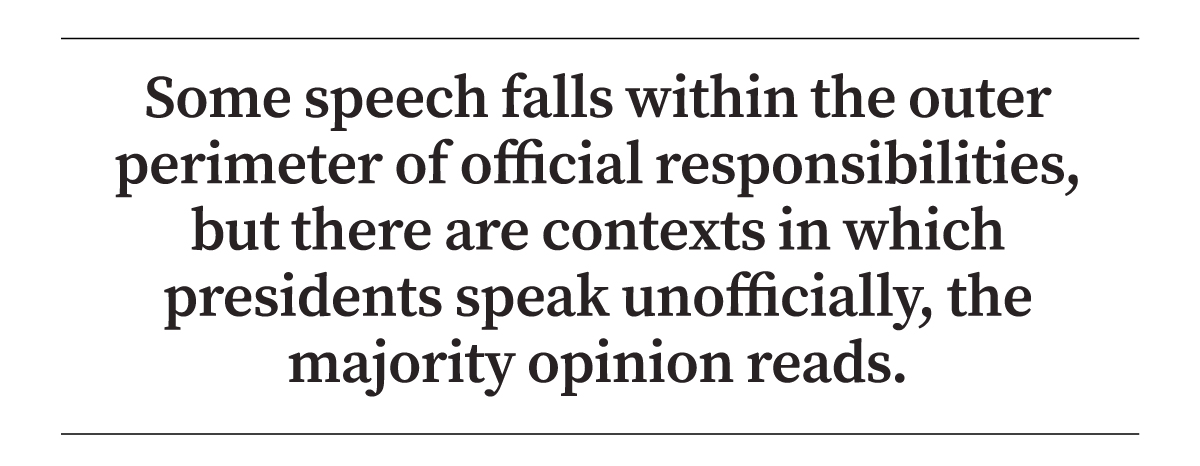
It offered similar guidance regarding President Trump’s speech on and leading up to Jan. 6, 2021. Some speech falls within the outer perimeter of official responsibilities, but there are contexts in which presidents speak unofficially, the majority opinion reads.
The Supreme Court also ruled that courts “may not inquire into the President’s motives” while considering whether an action was official or unofficial, as this “highly intrusive” line of inquiry could expose official conduct to judicial examination, a violation of the separation of powers.
The court remanded the case for the district court to “carefully analyze” whether the indictment’s remaining allegations are free from official acts and ruled that testimony or private records probing the president’s or his advisers’ official conduct may not be used as evidence at trial.
Court Tosses Impeachment Theory
Although the Supreme Court ruling could be read as a win for the former president (he posted on social media shortly after the decision, “BIG WIN FOR OUR CONSTITUTION AND DEMOCRACY”), the court rejected his attorneys’ legal theory.
Former President Trump’s attorneys had argued that presidents must be impeached before they are subject to prosecution on those same actions and that former President Trump’s acquittal in the Senate thus precluded prosecution, warranting dismissal of the indictment.
The high court majority had instead relied on views of the framers of the Constitution regarding the separation of powers to reach their opinion and dismissed the impeachment argument as one with little constitutional support.
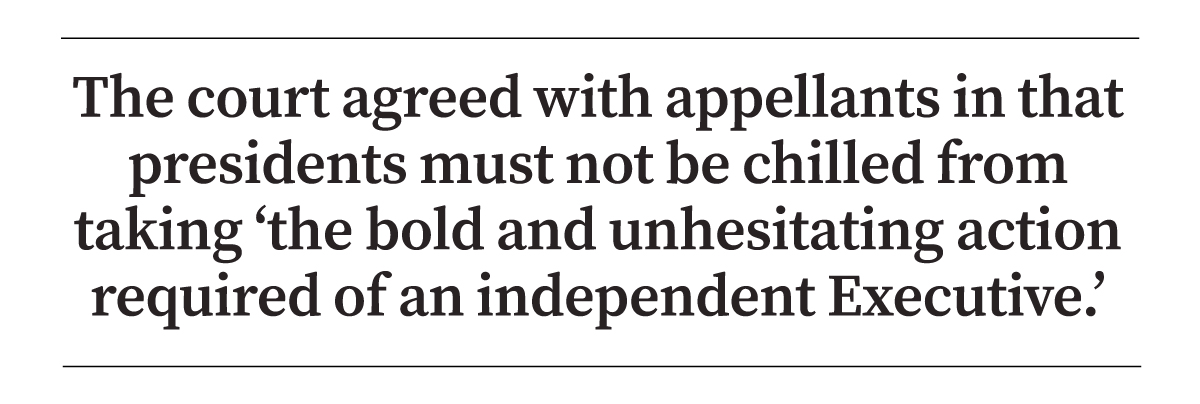
However, the court agreed with the Trump attorneys in that “the ‘bold and unhesitating action’ required of an independent Executive” must not be chilled.
Majority Emphasize Need for Strong Executive
Chief Justice Roberts, writing for the majority, emphasized that the Framers of the Constitution had the vision of a strong executive. Unlike the other two branches, the president is “the only person who alone composes a branch of government,” he wrote, citing his previous opinion from an unrelated Trump case.
The court—and the Framers—have held an “energetic executive” to be crucial to national security, good government, and the safeguarding of liberty.
Prosecutors and dissenting judges had argued that the criminal justice system inherently includes safeguards that would prevent the wrongful prosecution of a president or chilling effects that may stem from this possibility.
The majority held that this was not protection enough, as the mere prospect of prosecution may “distort Presidential decisionmaking” and cause “undue caution,” effectively undermining the independence of the executive branch.
“The hesitation to execute the duties of his office fearlessly and fairly that might result when a President is making decisions under ‘a pall of potential prosecution’ … raises unique risks to the effective functioning of government,” the opinion reads.
Demonstrators and protesters gather with members of the news media in front of the Supreme Court to wait for it to announce its last decisions for this session in Washington on July 1, 2024. (Chip Somodevilla/Getty Images)
4 Justices Say Official Acts Can Sometimes Be Unconstitutional
All nine justices recognized immunity for a president’s exercising of “core constitutional powers,” but four found the majority’s test to be far too broad.
Justice Barrett, in her partly concurring opinion, and Justices Sotomayor, Kagan, and Jackson, in a dissenting opinion, wrote that there may be cases in which official acts are unconstitutional or criminal and should be subject to prosecution.
Justice Barrett wrote in favor of a narrower test for immunity, with a two-step process to determine the validity of criminal charges for official acts. The first is determining whether the criminal statute applies to the president, and the second step is to determine if that prosecution imposes any danger of intruding on the powers of the executive branch.
Justice Sotomayor wrote that the court’s ruling gave the appellant even more immunity than he asked for, finding no support for immunity from criminal prosecution outlined in the Constitution.
The dissenting opinion, joined by two other justices, takes a reproving view of President Trump’s actions on Jan. 6, 2021, and, as outlined in the indictment, also the majority opinion.
Justice Sotomayor wrote that the challenge of exercising core constitutional powers, such as the president’s veto power, was never challenged in the indictment. As the majority defines “core immunity,” “all sorts of noncore conduct” could be shielded from criminal prosecution, she wrote, including “nightmare scenarios” such as ordering the military to carry out an assassination of a political rival, organizing a military coup, or taking a bribe in exchange for a pardon.
Similar scenarios were discussed during oral arguments, and Justice Samuel Alito expressed skepticism, cautioning judges not to slander the military in presenting these hypotheticals.
Voters cast ballots in Georgia’s primary election at a polling location in Atlanta on May 21, 2024. The Supreme Court decision may affect former President Trump’s case in Georgia, as some of the acts listed in the indictment overlap with the federal case. (Elijah Nouvelage/Getty Images)
Case May Return to Supreme Court
This case may yet end up in the Supreme Court on another appeal.
Trump attorneys can be expected to challenge unfavorable district court rulings on whether certain acts were official or unofficial, and Judge Chutkan still has several pending motions to rule on—including other motions to dismiss the indictment.
An additional complication that could arise for prosecutors is the fact that Mr. Smith is prosecuting a second case against former President Trump in the Southern District of Florida, where a federal judge is set to rule on whether Mr. Smith was constitutionally appointed. Should the judge determine that he wasn’t and that the special counsel has no authority to prosecute, an appeal could end up before the Supreme Court, affecting both cases.
Ruling May Affect Georgia Election Case
Former President Trump was indicted in a similar case in Georgia. In the state case, he and 18 others were charged with racketeering for their actions in challenging the 2020 election results, and some of the acts listed in the indictment overlap with the federal case.
While the federal case charges no alleged co-conspirators, the state case also charges former Justice Department official Jeffrey Clark for actions that he has argued were part of his official duties.
That case is currently on hold, as the Georgia Court of Appeals has agreed to review the trial court’s decision to not disqualify the Fulton County District Attorney Fani Willis from prosecuting the case over alleged misconduct.
Should the appeals court rule quickly after it hears oral arguments in October and then decide not to disqualify the district attorney, prosecutors will still need to revisit the indictment to remove any official acts before proceeding with the case.
Former President Donald Trump is filing a motion to throw out his recent Manhattan conviction on 34 felony counts of “falsifying business records” and have his July 11 sentencing postponed after the U.S. Supreme Court ruled that U.S. presidents have immunity for official acts undertaken while serving in the White House.
According to a report from the New York Times, Trump’s lawyers have sought permission from Judge Juan Merchan, who is overseeing the case, to file a motion to set aside the conviction. The letter was sent just hours after the Supreme Court issued its highly anticipated ruling on presidential immunity, which will have major ramifications on the ongoing federal cases against the former president.
The letter will not be made public until Tuesday at the earlier, at which point prosecutors will have a chance to respond, a source familiar with the proceedings told the New York Times.
Trump’s legal team hopes to move forward with the motion just ten days before Trump is set to be sentenced in the case that has been plagued by political bias. Trump is asking Judge Merchan — a Biden donor whose daughter has raised millions of dollarsfor Democrat causes and candidates — to postpone the July 11 sentencing while Merchan determines whether the ruling affects the conviction.
It is unclear whether the motion will be granted, as the conduct covered in the Manhattan case took place before Trump was elected as president.
While it is unclear how Merchan will rule, the effort already appears to have caused a delay in the proceedings. Manhattan District Attorney Alvin Bragg’s office was expected to send a sentencing recommendation to the judge and likely recommend a prison term for the former president, though this did not occur.
If Merchan does not entertain the motion, it is possible that Trump’s legal team will revisit the matter when they attempt to appeal the conviction after sentencing, which is set to take place just days before the Republican National Convention.
The Supreme Court ruled 6–3 that presidents enjoy immunity from criminal prosecution for official, but not unofficial, acts—in a decision that’s expected to delay former President Donald Trump’s trial in the federal election case in Washington.
The Supreme Court held that: “Under our constitutional structure of separated powers, the nature of Presidential power entitles a former President to absolute immunity from criminal prosecution for actions within his conclusive and preclusive constitutional authority. And he is entitled to at least presumptive immunity from prosecution for all his official acts. There is no immunity for unofficial acts.”
The July 1 decision remands the case to the district court for further consideration.
Chief Justice John Roberts penned the majority opinion, which was joined in full by Justices Clarence Thomas, Samuel Alito, Neil Gorsuch, and Brett Kavanaugh. Justice Amy Coney Barrett joined part of the opinion while issuing a concurrence of her own.
Justice Sonia Sotomayor penned a dissent, which was joined by Justices Ketanji Brown Jackson and Elena Kagan. Justice Jackson also issued a dissent.
Former President Trump responded to the decision on TruthSocial: “BIG WIN FOR OUR CONSTITUTION AND DEMOCRACY. PROUD TO BE AN AMERICAN!”
The ruling is a partial win for former President Trump, who asked for a broader form of immunity than the justices ultimately granted. Former President Trump had asked the court to rule that he enjoyed immunity from criminal prosecution for his official acts unless Congress had impeached and convicted him for those acts.
D.C. District Judge Tanya Chutkan had rejected the idea that presidents enjoyed immunity from criminal prosecution as did the U.S. Court of Appeals for the D.C. Circuit.
During oral argument in April, the conservative justices seemed poised to remand the case back to the district court in Washington with instructions on what constitutes official and private acts for further fact-finding proceedings.
“We’re writing a rule for the ages,” Justice Neil Gorsuch said during oral argument. He and Justice Ketanji Brown Jackson both made clear they were concerned about cases beyond former President Trump’s, which has forced the court to grapple with what constitutes a president’s official conduct.
Attorney D. John Sauer argued for former President Trump, and former Deputy Solicitor General Michael Dreeben argued for special counsel Jack Smith.
The most recent time the Supreme Court issued a major ruling on presidential immunity was in 1982, in Nixon v. Fitzgerald. The court ruled that presidents enjoyed absolute immunity from civil liability for actions that fell within the outer perimeter of their official duties.
What’s Next
The Supreme Court remanded the case, sending it back to the D.C. district court with the directive “to assess in the first instance whether a prosecution involving Trump’s alleged attempts to influence the Vice President’s oversight of the certification proceeding would pose any dangers of intrusion on the authority and functions of the Executive Branch.”
Another aspect of the decision directed the district court to weigh whether various aspects of Mr. Smith’s indictment constituted official or unofficial acts. That included allegations that former President Trump attempted to sway state officials, use fraudulent slates of electors, and his communications on Jan. 6, 2021.
The court’s syllabus, or overview of the ruling, noted: “The President possesses ‘extraordinary power to speak to his fellow citizens and on their behalf,’” quoting another opinion in Trump v. Hawaii.
“So most of a President’s public communications are likely to fall comfortably within the outer perimeter of his official responsibilities,” it added.
It’s unclear how much of Mr. Smith’s indictment will remain after lower court proceedings are completed.
“On remand, the District Court must carefully analyze the indictment’s remaining allegations to determine whether they too involve conduct for which a President must be immune from prosecution,” the Supreme Court said.
“And the parties and the District Court must ensure that sufficient allegations support the indictment’s charges without such conduct. Testimony or private records of the President or his advisers probing such conduct may not be admitted as evidence at trial.”
The decision came just days after the Supreme Court’s ruling in Fischer v. United States, which vacated the D.C. Circuit’s interpretation of a statute—18 U.S. Code Section 1512(c)—the Justice Department used to pursue Jan. 6 defendants and President Trump. In a footnote, Justice Roberts said that “[i]f necessary, the District Court should determine in the first instance whether the Section 1512(c)(2) charges may proceed in light of our decision in Fischer.
Opinions
The justices provided multiple concurrences and dissents. Justice Clarence Thomas wrote separately to question the legality of special counsels.
He said the attorney general “purported to appoint a private citizen as a Special Counsel … But, I am not sure that any office for the Special Counsel has been ‘established by Law,’ as the Constitution requires.”
Justice Barrett joined most of the majority opinion except for a portion wherein it criticizes the idea that a jury could consider evidence concerning a president’s official acts.
“That proposal threatens to eviscerate the immunity we have recognized,” the majority wrote. “It would permit a prosecutor to do indirectly what he cannot do directly—invite the jury to examine acts for which a President is immune from prosecution to nonetheless prove his liability on any charge.”
Justice Barrett, meanwhile, argued that “the Constitution does not require blinding juries to the circumstances surrounding conduct for which Presidents can be held liable.”
Justice Sotomayor’s dissent argued the majority “makes a mockery of the principle, foundational to our Constitution and system of Government, that no man is above the law.”
She went on to describe Mr. Smith’s indictment as painting “a stark portrait of a President desperate to stay in power.”
Justice Roberts pushed back in his majority opinion by arguing that the dissents “strike a tone of chilling doom that is wholly disproportionate to what the Court actually does today.”
























 Liberty International News