FBI releases part of Russia dossier summary used to brief Trump, Obama | Politico

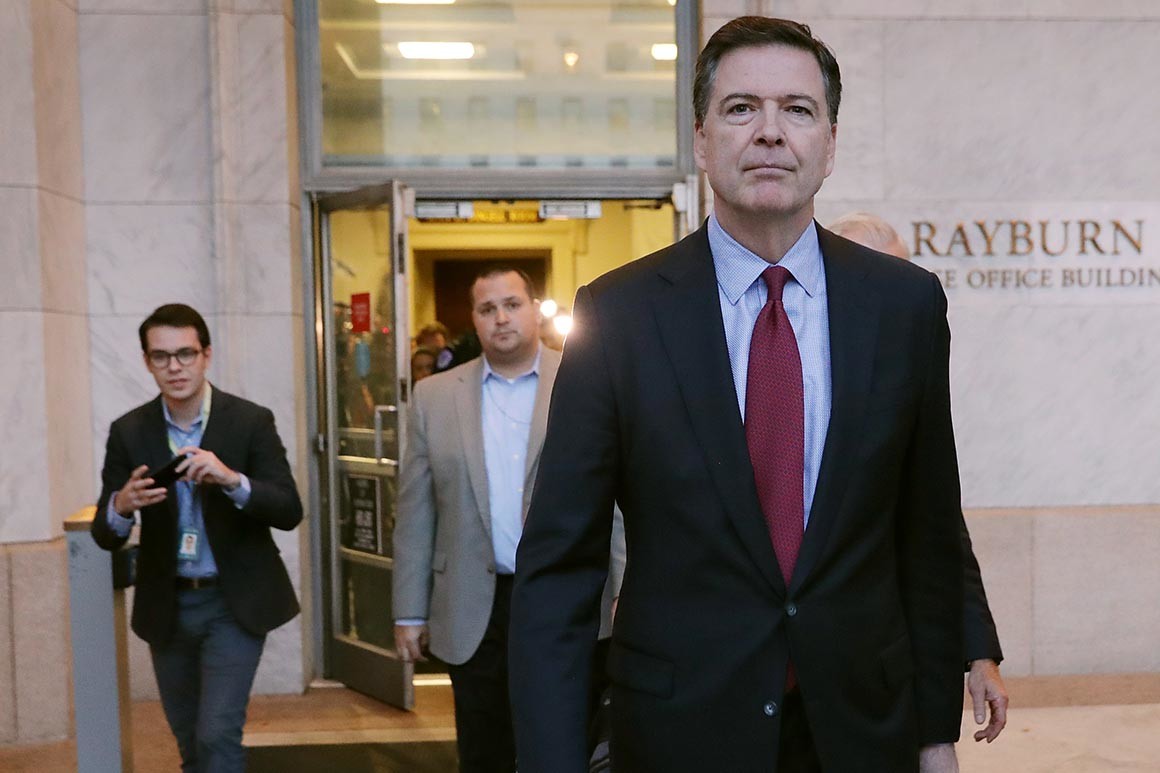
The FBI released for the first time Friday night a two-page summary former FBI Director James Comey used to brief President-elect Donald Trump nearly two years ago on a so-called dossier about Trump’s ties to Russia.

The version made public Friday could reignite previous criticism from Republicans and Trump allies that the FBI was too vague in its description of the fact that the dossier was funded by the campaign of Trump’s nemesis in the 2016 presidential election, Democratic nominee Hillary Rodham Clinton, as well as the Democratic National Committee.

Comey, who was fired by Trump in May 2017, acknowledged during a book tour earlier this year that he did not inform Trump who paid for the research.

The brief passage the FBI left unredacted in the newly released memo gives some background on the former British intelligence officer who compiled the dossier, Christopher Steele, although Steele’s name does not actually appear in the newly released version. The released portion of the synopsis is vague about who financed the project, referring to it as sponsored by “private clients.”

“An FBI source … volunteered highly politically sensitive information … on Russian influence efforts aimed at the US presidential election,” the memo labeled as “Annex A” says. “The source is an executive of a private business intelligence firm and a former employee of a friendly intelligence service who has been compensated for previous reporting over the past three years. The source maintains and collects information from a layered network of identified and unidentified subsources, some of which has been corroborated in the past. The source collected this information on behalf of private clients and was not compensated for it by the FBI.”

“The source’s reporting appears to have been acquired by multiple Western press organizations starting in October,” the document from January 2017 declares.

Comey has said he did not show or give Trump the memo, but used it as a reference when briefing him on the dossier, which U.S. intelligence officials feared Russia might try to use as blackmail against Trump. The synopsis was also used to brief President Barack Obama, officials have said.

Republicans had previously complained that the FBI failed to inform a federal court about the dossier’s provenance — that Steele’s work was commissioned by Fusion GPS, a research firm that had been hired by the Clinton campaign’s law firm, Perkins Coie, to dig up information about Trump’s business relationships overseas. Based in part on the dossier’s information, the court granted an FBI application to surveil a former Trump campaign associate in October 2016.

Aspects of the FBI’s surveillance application have since been released and revealed that the FBI did inform the court that Steele had political animus toward Trump and that it was funded by a politically motivated backer.

The document was released Friday in response to a Freedom of Information Act lawsuit brought by a POLITICO reporter and the James Madison Project, a pro-transparency group.

In January, U.S. District Court Judge Amit Mehta ruled that that the FBI was legally justified in refusing to confirm or deny the existence of any records related to the dossier, despite several tweets from President Donald Trump that described the document as “fake” or “discredited.”

However, shortly after that ruling, Trump declassified a House Intelligence Committee memo that included various claims about the FBI’s handling of the dossier. In August, Mehta said the official release of that material vitiated the FBI’s ability to claim that it had offered no public confirmation of its role in vetting or verifying the dossier, a collection of accurate, inaccurate, unverified and sometimes salacious claims about ties between Russia and various figures in Trump’s circle.

“It remains no longer logical nor plausible for the FBI to maintain that it cannot confirm nor deny the existence of documents” related to attempts to verify information in the dossier, Mehta wrote.

The FBI withheld the remainder of the two-page synopsis on a variety of grounds, including that the material remains classified either Secret or Top Secret. The law enforcement agency also indicated the information is exempt from release because it pertains to ongoing investigations or court proceedings, originated with a confidential source or describes confidential investigative techniques or procedures.

The FBI said Friday it lacked any records indicating final conclusions about any information in the dossier, said Brad Moss, one of the attorneys pressing for release of the records.

“After two years of legal games, the FBI today finally confirmed two pieces of speculation about the scandalous allegations regarding which Director Comey briefed President Trump in January 2017: all of those allegations remain part of the ongoing Russian ‘collusion’ investigation, and the FBI has not rendered final determinations about the accuracy of any of them,” Moss said. “Far from being debunked, the issues that raised concerns for the Intelligence Community in 2017 remain unresolved to this day.”

Moss said he plans to challenge the FBI’s withholdings in the case and to ask Mehta to order more of the information released.

Source: Politico

Feds plan unusual appeal in emoluments suit vs. Trump | Politico

By Josh Gerstein

The Justice Department is planning an unusual appeal to stop the governments of the State of Maryland and the District of Columbia from using a federal lawsuit to demand access to information about whether President Donald Trump is using his luxury Washington hotel to unconstitutionally profit from his office.

Last month, U.S. District Court Judge Peter Messitte turned down Trump’s request for permission to seek an appeal of early rulings in the case that went against him. Now, federal government lawyers say they plan to appeal anyway, using a rarely invoked process that can block a wayward judge from pressing on with a course of action alleged to be illegal or improper.

On Friday, the Justice Department informed Messitte that the federal government plans to try to get the Richmond-based 4th Circuit Court of Appeals to halt the case.

“The Solicitor General of the United States has authorized the filing in the U.S. Court of Appeals for the Fourth Circuit of a petition for writ of mandamus against this Court’s orders declining to dismiss the case and to certify an interlocutory appeal, as well as an application for a stay of District Court proceedings pending resolution of the mandamus petition,” Justice Department attorneys wrote.

Lawyers for Maryland and Washington, D.C.. have asked the judge to open a six-month discovery period where they could take depositions from witnesses, demand records and issue written questions focused on how the Trump International Hotel’s business has benefited from Trump’s election as president.

The suit, filed in June, alleges that Trump is violating two “emoluments” clauses in the Constitution by using his Pennsylvania Avenue hotel to reap financial dividends from his presidency. One provision covers business with foreign governments. The other prohibits federal officials from profiting from financial relationships with individual states.

The Trump Organization has pledged to donate to the U.S. Treasury any profits from hotel business with foreign governments. However, there is little transparency about how those amounts are calculated.

In his ruling last month denying Trump permission to appeal in the case, Messitte also noted that while lawyers representing Trump in the emoluments case were complaining that litigation would be a distracting burden for the president, the president regularly threatens to sue those he feels aggrieved by.
“It bears noting that the President himself appears to have had little reluctance to pursue personal litigation despite the supposed distractions it imposes upon his office,” the judge wrote.

Earlier this year, Messitte — an appointee of President Bill Clinton — issued an opinion turning down arguments from Justice Department attorneys that Maryland and D.C. lacked legal standing to pursue the emoluments issue against Trump. The judge also rejected arguments from Trump’s lawyers that the Constitution’s definition of emoluments includes only direct payment for official services and excludes all private business transactions.

Messitte, who sits in Greenbelt, had indicated he planned to issue an order opening discovery in the case Monday. Without some intervention by the 4thCircuit, the first formal exchange of information would likely be due within a week.

A similar suit against Trump brought by Democratic lawmakers cleared an initial hurdle in federal court in Washington , while a pair of suits filed in New York were thrown out by a judge there. That decision is on appeal.

Source: Politico

An Evening with Tucker Carlson: America’s Elites Are on a Ship of Fools. YouTube & Independent.org

Source: YouTube & Independent.org

Trump’s List: 289 Accomplishments in 20 Months | Geller Report

As Trump nears the two-year mark of his historic election and conducts political rallies around the country, during which he talks up his wins in hopes it will energize Republican voters, the administration has counted up 289 accomplishments in 18 categories, capped by the confirmation of Brett Kavanaugh to the Supreme Court.

They include 173 major wins, such as adding more than 4 million jobs, and another 116 smaller victories, some with outsize importance, such as the 83 percent one-year increase in arrests of MS-13 gang members.

Trump’s successes in reducing the cost of taxes and regulations, rebuilding our military, avoiding wars of choice and changing the courts rival those of all previous Republican presidents.

“Trump has an advantage over Ronald Reagan: He has a Reagan Republican House and Senate while Reagan had a [Democratic Speaker] Tip O’Neill House and a pre-Reagan Republican Senate. Reagan and [former GOP Speaker] Newt Gingrich were the ice breakers that allowed Trump’s victories to grow in number and significance,” he added.

Unlike the Year One list which included many proposals and orders still to be acted on, the new collection includes dozens of actions already in place, signed legislation, and enforced executive orders.

And shockingly the NAFTA achievement is presented as a sidebar to the larger achievement that reads, “President Trump is negotiating and renegotiating better trade deals, achieving free, fair, and reciprocal trade for the United States.” Under that umbrella are eight trade deals cut with Japan, South Korea, Europe and China.“President Trump is a truly unique leader in American history. He’s a kid from Queens who became an international business leader and made billions by getting things when no one said he could,” said Trump’s 2016 campaign pollster John McLaughlin.“They told him he couldn’t be president and beat the establishment and he did. For two years the establishment is telling him he can’t do things in Washington and he’s succeeding in spite of them. He never retreats. He doesn’t back up. He’s relentless. He just wins,” he added.Comparing the two years shows that the latest has an expanded group of economic achievements while the pro-life category was folded into the health care section.

Along the way, there have been some disappointments, such as failing to replace Obamacare, fund a big infrastructure plan, and build the border wall.

But the White House believes that despite a lack of media coverage of his accomplishments, supporters know about them and will head to the voting polls to help the GOP maintain control of the House and keep the president on what CNN dubbed a “winning streak.”

In the Washington Post Friday, former Bush speechwriter and columnist Marc Thiessen agreed and said that Trump has proven to be successful at keeping his campaign promises. He wrote, “The fact is, in his first two years, Trump has compiled a remarkable record of presidential promise-keeping.”

The list:

Economic Growth

  • 4.2 percent growth in the second quarter of 2018.
  • For the first time in more than a decade, growth is projected to exceed 3 percent over the calendar year.

Jobs

  • 4 million new jobs have been created since the election, and more than 3.5 million since Trump took office.
  • More Americans are employed now than ever before in our history.
  • Jobless claims at lowest level in nearly five decades.
  • The economy has achieved the longest positive job-growth streak on record.
  • Job openings are at an all-time high and outnumber job seekers for the first time on record.
  • Unemployment claims at 50 year low
  • African-American, Hispanic, and Asian-American unemployment rates have all recently reached record lows.
    • African-American unemployment hit a record low of 5.9 percent in May 2018.
    • Hispanic unemployment at 4.5 percent.
    • Asian-American unemployment at record low of 2 percent.
  • Women’s unemployment recently at lowest rate in nearly 65 years.
    • Female unemployment dropped to 3.6 percent in May 2018, the lowest since October 1953.
  • Youth unemployment recently reached its lowest level in more than 50 years.
    • July 2018’s youth unemployment rate of 9.2 percent was the lowest since July 1966.
  • Veterans’ unemployment recently hit its lowest level in nearly two decades.
    • July 2018’s veterans’ unemployment rate of 3.0 percent matched the lowest rate since May 2001.
  • Unemployment rate for Americans without a high school diploma recently reached a record low.
  • Rate for disabled Americans recently hit a record low.
  • Blue-collar jobs recently grew at the fastest rate in more than three decades.
  • Poll found that 85 percent of blue-collar workers believe their lives are headed “in the right direction.”
    • 68 percent reported receiving a pay increase in the past year.
  • Last year, job satisfaction among American workers hit its highest level since 2005.
  • Nearly two-thirds of Americans rate now as a good time to find a quality job.
    • Optimism about the availability of good jobs has grown by 25 percent.
  • Added more than 400,000 manufacturing jobs since the election.
    • Manufacturing employment is growing at its fastest pace in more than two decades.
  • 100,000 new jobs supporting the production & transport of oil & natural gas.

American Income

  • Median household income rose to $61,372 in 2017, a post-recession high.
  • Wages up in August by their fastest rate since June 2009.
  • Paychecks rose by 3.3 percent between 2016 and 2017, the most in a decade.
  • Council of Economic Advisers found that real wage compensation has grown by 1.4 percent over the past year.
  • Some 3.9 million Americans off food stamps since the election.
  • Median income for Hispanic-Americans rose by 3.7 percent and surpassed $50,000 for the first time ever in history.
    • Home-ownership among Hispanics is at the highest rate in nearly a decade.
  • Poverty rates for African-Americans and Hispanic-Americans have reached their lowest levels ever recorded.

American Optimism

  • Small business optimism has hit historic highs.
    • NFIB’s small business optimism index broke a 35 year-old record in August.
    • SurveyMonkey/CNBC’s small business confidence survey for Q3 of 2018 matched its all-time high.
  • Manufacturers are more confident than ever.
    • 95 percent of U.S. manufacturers are optimistic about the future, the highest ever.
  • Consumer confidence is at an 18-year high.
  • 12 percent of Americans rate the economy as the most significant problem facing our country, the lowest level on record.
  • Confidence in the economy is near a two-decade high, with 51 percent rating the economy as good or excellent.

American Business

  • Investment is flooding back into the United States due to the tax cuts.
    • Over $450 billion dollars has already poured back into the U.S., including more than $300 billion in the first quarter of 2018.
  • Retail sales have surged. Commerce Department figures from August show that retail sales increased 0.5 percent in July 2018, an increase of 6.4 percent from July 2017.
  • ISM’s index of manufacturing scored its highest reading in 14 years.
  • Worker productivity is the highest it has been in more than three years.
  • Steel and aluminum producers are re-opening.
  • Dow Jones Industrial Average, S&P 500, and NASDAQ have all notched record highs.
    • Dow hit record highs 70 times in 2017 alone, the most ever recorded in one year.

Deregulation

  • Achieved massive deregulation at a rapid pace, completing 22 deregulatory actions to every one regulatory action during his first year in office.
  • Signed legislation to roll back costly and harmful provisions of Dodd-Frank, providing relief to credit unions, and community and regional banks.
  • Federal agencies achieved more than $8 billion in lifetime net regulatory cost savings.
  • Rolled back Obama’s burdensome Waters of the U.S. rule.
  • Used the Congressional Review Act to repeal regulations more times than in history.

Tax Cuts

  • Biggest tax cuts and reforms in American history by signing the Tax Cuts and Jobs act into law
    • Provided more than $5.5 trillion in gross tax cuts, nearly 60 percent of which will go to families.
    • Increased the exemption for the death tax to help save Family Farms & Small Business.
    • Nearly doubled the standard deduction for individuals and families.
    • Enabled vast majority of American families will be able to file their taxes on a single page by claiming the standard deduction.
    • Doubled the child tax credit to help lessen the financial burden of raising a family.
    • Lowered America’s corporate tax rate from the highest in the developed world to allow American businesses to compete and win.
    • Small businesses can now deduct 20 percent of their business income.
    • Cut dozens of special interest tax breaks and closed loopholes for the wealthy.
  • 9 in 10 American workers are expected see an increase in their paychecks thanks to the tax cuts, according to the Treasury Department.
  • More than 6 million of American workers have received wage increases, bonuses, and increased benefits thanks to tax cuts.
  • Over 100 utility companies have lowered electric, gas, or water rates thanks to the Tax Cuts and Jobs Act.
  • Ernst & Young found 89 percent of companies planned to increase worker compensation thanks to the Trump tax cuts.
  • Established opportunity zones to spur investment in left behind communities.

Worker Development

  • Established a National Council for the American Worker to develop a national strategy for training and retraining America’s workers for high-demand industries.
  • Employers have signed Trump’s “Pledge to America’s Workers,” committing to train or retrain more than 4.2 million workers and students.
  • Signed the first Perkins CTE reauthorization since 2006, authorizing more than $1 billion for states each year to fund vocational and career education programs.
  • Executive order expanding apprenticeship opportunities for students and workers.

Domestic Infrastructure

  • Proposed infrastructure plan would utilize $200 billion in Federal funds to spur at least $1.5 trillion in infrastructure investment across the country.
  • Executive order expediting environmental reviews and approvals for high priority infrastructure projects.
  • Federal agencies have signed the One Federal Decision Memorandum of Understanding (MOU) streamlining the federal permitting process for infrastructure projects.
  • Rural prosperity task force and signed an executive order to help expand broadband access in rural areas.

Health Care

  • Signed an executive order to help minimize the financial burden felt by American households Signed legislation to improve the National Suicide Hotline.
  • Signed the most comprehensive childhood cancer legislation ever into law, which will advance childhood cancer research and improve treatments.
  • Signed Right-to-Try legislation, expanding health care options for terminally ill patients.
  • Enacted changes to the Medicare 340B program, saving seniors an estimated $320 million on drugs in 2018 alone.
  • FDA set a new record for generic drug approvals in 2017, saving consumers nearly $9 billion.
  • Released a blueprint to drive down drug prices for American patients, leading multiple major drug companies to announce they will freeze or reverse price increases.
  • Expanded short-term, limited-duration health plans.
  • Let more employers to form Association Health Plans, enabling more small businesses to join together and affordably provide health insurance to their employees.
  • Cut Obamacare’s burdensome individual mandate penalty.
  • Signed legislation repealing Obamacare’s Independent Payment Advisory Board, also known as the “death panels.”
  • USDA invested more than $1 billion in rural health care in 2017, improving access to health care for 2.5 million people in rural communities across 41 states
  • Proposed Title X rule to help ensure taxpayers do not fund the abortion industry in violation of the law.
  • Reinstated and expanded the Mexico City Policy to keep foreign aid from supporting the global abortion industry.
  • HHS formed a new division over protecting the rights of conscience and religious freedom.
  • Overturned Obama administration’s midnight regulation prohibiting states from defunding certain abortion facilities.
  • Signed executive order to help ensure that religious organizations are not forced to choose between violating their religious beliefs by complying with Obamacare’s contraceptive mandate or shutting their doors.

Combating Opioids

  • Chaired meeting the 73rd General Session of the United Nations discussing the worldwide drug problem with international leaders.
  • Initiative to Stop Opioid Abuse and Reduce Drug Supply and Demand, introducing new measures to keep dangerous drugs out of our communities.
  • $6 billion in new funding to fight the opioid epidemic.
  • DEA conducted a surge in April 2018 that arrested 28 medical professions and revoked 147 registrations for prescribing too many opioids.
  • Brought the “Prescribed to Death” memorial to President’s Park near the White House, helping raise awareness about the human toll of the opioid crisis.
  • Helped reduce high-dose opioid prescriptions by 16 percent in 2017.
  • Opioid Summit on the administration-wide efforts to combat the opioid crisis.
  • Launched a national public awareness campaign about the dangers of opioid addiction.
  • Created a Commission on Combating Drug Addiction and the Opioid Crisis which recommended a number of pathways to tackle the opioid crisis.
  • Led two National Prescription Drug Take Back Days in 2017 and 2018, collecting a record number of expired and unneeded prescription drugs each time.
  • $485 million targeted grants in FY 2017 to help areas hit hardest by the opioid crisis.
  • Signed INTERDICT Act, strengthening efforts to detect and intercept synthetic opioids before they reach our communities.
  • DOJ secured its first-ever indictments against Chinese fentanyl manufacturers.
  • Joint Criminal Opioid Darknet Enforcement (J-CODE) team, aimed at disrupting online illicit opioid sales.
  • Declared the opioid crisis a Nationwide Public Health Emergency in October 2017.

Law and Order

  • More U.S. Circuit Court judges confirmed in the first year in office than ever.
  • Confirmed more than two dozen U. S. Circuit Court judges.
  • Followed through on the promise to nominate judges to the Supreme Court who will adhere to the Constitution
    • Nominated and confirmed Justice Neil Gorsuch and Brett Kavanaugh to the Supreme Court.
  • Signed an executive order directing the Attorney General to develop a strategy to more effectively prosecute people who commit crimes against law enforcement officers.
  • Launched an evaluation of grant programs to make sure they prioritize the protection and safety of law enforcement officers.
  • Established a task force to reduce crime and restore public safety in communities across Signed an executive order to focus more federal resources on dismantling transnational criminal organizations such as drug cartels.
  • Signed an executive order to focus more federal resources on dismantling transnational criminal organizations such as drug cartels.
  • Violent crime decreased in 2017 according to FBI statistics.
  • $137 million in grants through the COPS Hiring Program to preserve jobs, increase community policing capacities, and support crime prevention efforts.
  • Enhanced and updated the Project Safe Neighborhoods to help reduce violent crime.
  • Signed legislation making it easier to target websites that enable sex trafficking and strengthened penalties for people who promote or facilitate prostitution.
  • Created an interagency task force working around the clock to prosecute traffickers, protect victims, and prevent human trafficking.
  • Conducted Operation Cross Country XI to combat human trafficking, rescuing 84 children and arresting 120 human traffickers.
  • Encouraged federal prosecutors to use the death penalty when possible in the fight against the trafficking of deadly drugs.
  • New rule effectively banning bump stock sales in the United States.

Border Security and Immigration

  • Secured $1.6 billion for border wall construction in the March 2018 omnibus bill.
  • Construction of a 14-mile section of border wall began near San Diego.
  • Worked to protect American communities from the threat posed by the vile MS-13 gang.
    • ICE’s Homeland Security Investigations division arrested 796 MS-13 members and associates in FY 2017, an 83 percent increase from the prior year.
    • Justice worked with partners in Central America to secure criminal charges against more than 4,000 MS-13 members.
    • Border Patrol agents arrested 228 illegal aliens affiliated with MS-13 in FY 2017.
  • Fighting to stop the scourge of illegal drugs at our border.
    • ICE HSI seized more than 980,000 pounds of narcotics in FY 2017, including 2,370 pounds of fentanyl and 6,967 pounds of heroin.
    • ICE HSI dedicated nearly 630,000 investigative hours towards halting the illegal import of fentanyl.
    • ICE HSI made 11,691 narcotics-related arrests in FY 2017.
    • Stop Opioid Abuse and Reduce Drug Supply and Demand introduced new measures to keep dangerous drugs out the United States.
    • Signed the INTERDICT Act into law, enhancing efforts to detect and intercept synthetic opioids.
    • DOJ secured its first-ever indictments against Chinese fentanyl manufacturers.
    • DOJ launched their Joint Criminal Opioid Darknet Enforcement (J-CODE) team, aimed at disrupting online illicit opioid sales.
  • Released an immigration framework that includes the resources required to secure our borders and close legal loopholes, and repeatedly called on Congress to fix our broken immigration laws.
  • Authorized the deployment of the National Guard to help secure the border.
  • Enhanced vetting of individuals entering the U.S. from countries that don’t meet security standards, helping to ensure individuals who pose a threat to our country are identified before they enter.
    • These procedures were upheld in a June 2018 Supreme Court hearing.
  • ICE removed over 226,000 illegal aliens from the United States in 2017.
    • ICE rescued or identified over 500 human trafficking victims and over 900 child exploitation victims in 2017 alone.
  • In 2017, ICE Enforcement and Removal Operations (ERO) arrested more than 127,000 aliens with criminal convictions or charges, responsible for
    • Over 76,000 with dangerous drug offenses.
    • More than 48,000 with assault offenses.
    • More than 11,000 with weapons offenses.
    • More than 5,000 with sexual assault offenses.
    • More than 2,000 with kidnapping offenses.
    • Over 1,800 with homicide offenses.
  • Created the Victims of Immigration Crime Engagement (VOICE) Office in order to support the victims and families affected by illegal alien crime.
  • More than doubled the number of counties participating in the 287(g) program, which allows jails to detain criminal aliens until they are transferred to ICE custody.

Trade

  • Negotiating and renegotiating better trade deals, achieving free, fair, and reciprocal trade for the United States.
    • Agreed to work with the European Union towards zero tariffs, zero non-tariff barriers, and zero subsides.
    • Deal with the European Union to increase U.S. energy exports to Europe.
    • Litigated multiple WTO disputes targeting unfair trade practices and upholding our right to enact fair trade laws.
    • Finalized a revised trade agreement with South Korea, which includes provisions to increase American automobile exports.
    • Negotiated an historic U.S.-Mexico-Canada Trade Agreement to replace NAFTA.
    • Agreement to begin trade negotiations for a U.S.-Japan trade agreement.
    • Secured $250 billion in new trade and investment deals in China and $12 billion in Vietnam.
    • Established a Trade and Investment Working Group with the United Kingdom, laying the groundwork for post-Brexit trade.
  • Enacted steel and aluminum tariffs to protect our vital steel and aluminum producers and strengthen our national security.
  • Conducted 82 anti-dumping and countervailing duty investigations in 2017 alone.
  • Confronting China’s unfair trade practices after years of Washington looking the other way.
    • 25 percent tariff on $50 billion of goods imported from China and later imposed an additional 10% tariff on $200 billion of Chinese goods.
    • Conducted an investigation into Chinese forced technology transfers, unfair licensing practices, and intellectual property theft.
    • Imposed safeguard tariffs to protect domestic washing machines and solar products manufacturers hurt by China’s trade policies
  • Withdrew from the job-killing Trans-Pacific Partnership (TPP).
  • Secured access to new markets for America’s farmers.
    • Recent deal with Mexico included new improvements enabling food and agriculture to trade more fairly.
    • Recent agreement with the E.U. will reduce barriers and increase trade of American soybeans to Europe.
    • Won a WTO dispute regarding Indonesia’s unfair restriction of U.S. agricultural exports.
    • Defended American Tuna fisherman and packagers before the WTO
    • Opened up Argentina to American pork experts for the first time in a quarter-century
    • American beef exports have returned to china for the first time in more than a decade
  • OK’d up to $12 billion in aid for farmers affected by unfair trade retaliation.

Energy

  • Presidential Memorandum to clear roadblocks to construction of the Keystone XL Pipeline.
  • Presidential Memorandum declaring that the Dakota Access Pipeline serves the national interest and initiating the process to complete construction.
  • Opened up the Alaska National Wildlife Refuge to energy exploration.
  • Coal exports up over 60 percent in 2017.
  • Rolled back the “stream protection rule” to prevent it from harming America’s coal industry.
  • Cancelled Obama’s anti-coal Clean Power Plan and proposed the Affordable Clean Energy Rule as a replacement.
  • Withdrew from the job-killing Paris climate agreement, which would have cost the U.S. nearly $3 trillion and led to 6.5 million fewer industrial sector jobs by 2040.
  • U.S. oil production has achieved its highest level in American history
  • United States is now the largest crude oil producer in the world.
  • U.S. has become a net natural gas exporter for the first time in six decades.
  • Action to expedite the identification and extraction of critical minerals that are vital to the nation’s security and economic prosperity.
  • Took action to reform National Ambient Air Quality Standards, benefitting American manufacturers.
  • Rescinded Obama’s hydraulic fracturing rule, which was expected to cost the industry $32 million per year.
  • Proposed an expansion of offshore drilling as part of an all-of-the above energy strategy
    • Held a lease sale for offshore oil and gas leases in the Gulf of Mexico in August 2018.
  • Got EU to increase its imports of liquefied natural gas (LNG) from the United States.
  • Issued permits for the New Burgos Pipeline that will cross the U.S.-Mexico border.

Foreign Policy

  • Moved the U.S. Embassy in Israel to Jerusalem.
  • Withdrew from Iran deal and immediately began the process of re-imposing sanctions that had been lifted or waived.
    • Treasury has issued sanctions targeting Iranian activities and entities, including the Islamic Revolutionary Guard Corps-Qods Force
    • Since enacting sanctions, Iran’s crude exports have fallen off, the value of Iran’s currency has plummeted, and international companies have pulled out of the country.
    • All nuclear-related sanctions will be back in full force by early November 2018.
  • Historic summit with North Korean President Kim Jong-Un, bringing beginnings of peace and denuclearization to the Korean Peninsula.
    • The two leaders have exchanged letters and high-level officials from both sides have met resulting in tremendous progress.
    • North Korea has halted nuclear and missile tests.
    • Negotiated the return of the remains of missing-in-action soldiers from the Korean War.
  • Imposed strong sanctions on Venezuelan dictator Nicholas Maduro and his inner circle.
  • Executive order preventing those in the U.S. from carrying out certain transactions with the Venezuelan regime, including prohibiting the purchase of the regime’s debt.
  • Responded to the use of chemical weapons by the Syrian regime.
    • Rolled out sanctions targeting individuals and entities tied to Syria’s chemical weapons program.
    • Directed strikes in April 2017 against a Syrian airfield used in a chemical weapons attack on innocent civilians.
    • Joined allies in launching airstrikes in April 2018 against targets associated with Syria’s chemical weapons use.
  • New Cuba policy that enhanced compliance with U.S. law and held the Cuban regime accountable for political oppression and human rights abuses.
    • Treasury and State are working to channel economic activity away from the Cuban regime, particularly the military.
  • Changed the rules of engagement, empowering commanders to take the fight to ISIS.
    • ISIS has lost virtually all of its territory, more than half of which has been lost under Trump.
    • ISIS’ self-proclaimed capital city, Raqqah, was liberated in October 2017.
    • All Iraqi territory had been liberated from ISIS.
  • More than a dozen American hostages have been freed from captivity all of the world.
  • Action to combat Russia’s malign activities, including their efforts to undermine the sanctity of United States elections.
    • Expelled dozens of Russian intelligence officers from the United States and ordered the closure of the Russian consulate in Seattle, WA.
    • Banned the use of Kaspersky Labs software on government computers, due to the company’s ties to Russian intelligence.
    • Imposed sanctions against five Russian entities and three individuals for enabling Russia’s military and intelligence units to increase Russia’s offensive cyber capabilities.
    • Sanctions against seven Russian oligarchs, and 12 companies they own or control, who profit from Russia’s destabilizing activities.
    • Sanctioned 100 targets in response to Russia’s occupation of Crimea and aggression in Eastern Ukraine.
    • Enhanced support for Ukraine’s Armed Forces to help Ukraine better defend itself.
  • Helped win U.S. bid for the 2028 Summer Olympics in Los Angeles.
  • Helped win U.S.-Mexico-Canada’s united bid for 2026 World Cup.

Defense

  • Executive order keeping the detention facilities at U.S. Naval Station Guantanamo Bay open.
  • $700 billion in military funding for FY 2018 and $716 billion for FY 2019.
  • Largest military pay raise in nearly a decade.
  • Ordered a Nuclear Posture Review to ensure America’s nuclear forces are up to date and serve as a credible deterrent.
  • Released America’s first fully articulated cyber strategy in 15 years.
  • New strategy on national biodefense, which better prepares the nation to defend against biological threats.
  • Administration has announced that it will use whatever means necessary to protect American citizens and servicemen from unjust prosecution by the International Criminal Court.
  • Released an America first National Security Strategy.
  • Put in motion the launch of a Space Force as a new branch of the military and relaunched the National Space Council.
  • Encouraged North Atlantic Treaty Organization (NATO) allies to increase defense spending to their agree-upon levels.
    • In 2017 alone, there was an increase of more than 4.8 percent in defense spending amongst NATO allies.
    • Every member state has increased defense spending.
    • Eight NATO allies will reach the 2 percent benchmark by the end of 2018 and 15 allies are on trade to do so by 2024.
    • NATO allies spent over $42 billion dollars more on defense since 2016.
  • Executive order to help military spouses find employment as their families deploy domestically and abroad.

Veterans affairs

  • Signed the VA Accountability Act and expanded VA telehealth services, walk-in-clinics, and same-day urgent primary and mental health care.
  • Delivered more appeals decisions – 81,000 – to veterans in a single year than ever before.
  • Strengthened protections for individuals who come forward and identify programs occurring within the VA.
  • Signed legislation that provided $86.5 billion in funding for the Department of Veterans Affairs (VA), the largest dollar amount in history for the VA.
  • VA MISSION Act, enacting sweeping reform to the VA system that:
    • Consolidated and strengthened VA community care programs.
    • Funding for the Veterans Choice program.
    • Expanded eligibility for the Family Caregivers Program.
    • Gave veterans more access to walk-in care.
    • Strengthened the VA’s ability to recruit and retain quality healthcare professionals.
    • Enabled the VA to modernize its assets and infrastructure.
  • Signed the VA Choice and Quality Employment Act in 2017, which authorized $2.1 billion in addition funds for the Veterans Choice Program.
  • Worked to shift veterans’ electronic medical records to the same system used by the Department of Defense, a decades old priority.
  • Issued an executive order requiring the Secretaries of Defense, Homeland Security, and Veterans Affairs to submit a joint plan to provide veterans access to access to mental health treatment as they transition to civilian life.
  • Increased transparency and accountability at the VA by launching an online “Access and Quality Tool,” providing veterans with access to wait time and quality of care data.
  • Signed legislation to modernize the claims and appeal process at the VA.
  • Harry W. Colmery Veterans Educational Assistance Act, providing enhanced educational benefits to veterans, service members, and their family members.
    • Lifted a 15-year limit on veterans’ access to their educational benefits.
  • Created a White House VA Hotline to help veterans and principally staffed it with veterans and direct family members of veterans.
  • VA employees are being held accountable for poor performance, with more than 4,000 VA employees removed, demoted, and suspended so far.
  • Signed the Veterans Treatment Court Improvement Act, increasing the number of VA employees that can assist justice-involved veterans.

Source: Washington Examiner

Trump administration says it won’t return children to immigrant parents in custody, but a judge orders families be reunited | LA Times

Hours after a Trump Cabinet member told Congress that the administration would not reunite migrant children with parents still held in immigrant detention facilities, a federal judge in San Diego ordered the government to begin doing just that.

In a preliminary injunction issued late Tuesday, U.S. District Judge Dana Sabraw ordered the government to reunite nearly all children under age 5 with their parents within 14 days and older children within 30 days.

The administration’s actions related to separating families “belie measured and ordered governance, which is central to the concept of due process enshrined in our Constitution,” the judge wrote. “This is particularly so in the treatment of migrants, many of whom are asylum seekers and small children.”

The order appears to set the stage for a legal clash over a crisis that was created by the White House and has sown increasing levels of fear and confusion.

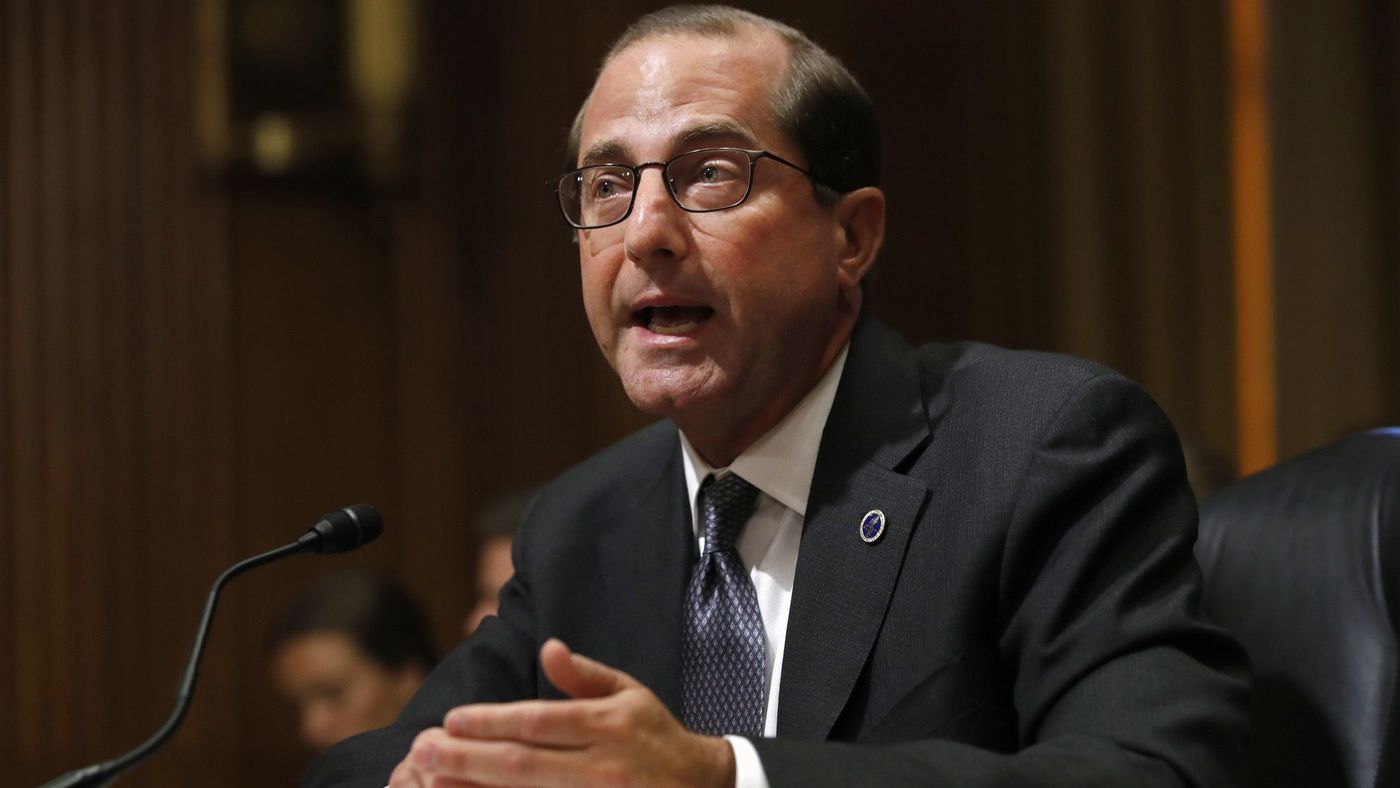
Earlier Tuesday, Health and Human Services Secretary Alex Azar, testifying on Capitol Hill, said the only way parents can quickly be reunited with their children is to drop their claims for asylum in the United States and agree to be deported.

If parents pursue asylum claims, administration officials planned to hold them in custody until hearings are complete — a process that can take months and in some instances years because of a backlog of several hundred thousand cases.

And while that process takes place and the parents are in custody, their children would not be returned to them, Azar said, citing current rules that allow children to be held in immigrant detention for no more than 20 days.

“If the parent remains in detention, unfortunately, under rules that are set by Congress and the courts, they can’t be reunified while they’re in detention,” Azar told the Senate Finance Committee. He said the department could place children with relatives in the United States if they can be located and properly vetted.

Azar’s department has custody of 2,047 children separated from their parents after they were apprehended crossing the border illegally since May. That’s when the Trump administration began enforcing a “zero tolerance” policy that required prosecution of all adults crossing the border — and separate detention of any minors with them.

His statement brought angry protests from Democrats and immigrant advocates.

“The administration is holding children hostage to push parents to drop their asylum claims,” Sen. Dianne Feinstein (D-Calif.) tweeted.

The uncertain fate of the children, and wrenching reports of their plight, has created a political firestorm for the White House and a nightmare for the families affected. In some cases, parents have been deported without their children, or infants and young children have been moved to distant states while their parents await court processing.

The “zero tolerance” policy already has run partially aground over a lack of resources. On Monday, Border Patrol officials announced they had stopped handing over immigrant parents for prosecution because they were running out of beds. The reversal means newly apprehended families, in theory, could be released pending their court dates.

The limit on how long children can be held in immigrant detention facilities stems from a 1997 court ruling known as the Flores settlement. The administration has asked a federal judge to modify those rules and allow families to be held together in custody for longer periods.The Obama administration made a similar request in 2015, but a judge refused.

The White House has also asked Congress to change federal law to allow longer detentions. That process is moving slowly, and President Trump has proved an uncertain ally for Republican leaders, vacillating as to whether he wants new legislation or not.

The House is scheduled to vote on a Republican-drafted bill on Wednesday that would overhaul the immigration system, but its prospects are dim — and it almost certainly would die in the Senate.

Last-minute arguments over what should be in the bill led one of its lead sponsors, Rep. Jeff Denham (R-Turlock), to declare the measure essentially dead.

“At the end of the day it is very clear that the Republicans cannot pass an immigration bill,” Denham said late Tuesday. “I think it’s a very clear message that Democrats and Republicans need to work together on an American solution. That’s the only way this is going to get done.

If the bill fails, as expected, the House may take up narrower legislation focused specifically on family separation. But Congress is set to recess on Thursday for an extended Fourth of July holiday, so the schedule will allow just hours to consider that proposal.

Trump signed an executive order last week that he said would halt the separation of parents and children by detaining families together. Since then, his administration has struggled to articulate a plan to reunite families.

Over the weekend, the departments of Homeland Security and Health and Human Services released a joint statement saying they had come up with a central database to link families and were working on ensuring children stayed in contact with their parents.

On a conference call with reporters Tuesday, Health and Human Services officials refused to say whether they were still receiving children taken from parents at the border. The government has not released data on the ages of children in custody, nor how many in total have been separated or released.

Jonathan White, head of the Office of Refugee Resettlement, a branch of the Health and Human Services Department, said only that the department was working with other agencies “to facilitate reunification with a child as soon as that is practical.”

He suggested the department’s sole responsibility for now “is to determine whether the child has a safe place to go.”

White said his office knew “the status, whereabouts and care of every child” in its custody. “We have always known where all the children are,” he said.

But Azar conceded in his Senate testimony that the department has not yet been able to put all the parents in communication with their children.

“We want every child and every parent to be in communication at least twice a week so that they’re talking, by Skype or by phone,” he said. “We want this to happen.”

He also warned that if parents remain in a detention facility and the agency gives custody of a child to someone else — a relative in the U.S., for example — the parents eventually might have to go to court to get the child back.

“We cannot sort of pull a child back from a relative. We don’t have the legal authority,” he said.

Lawyers decried officials’ decision not to reunite children with their parents in detention as inhumane.

Jodi Goodwin, a south Texas immigration lawyer who mobilized a rapid-response team of attorneys to aid immigrant parents detained at the Port Isabel Detention Center on the Texas Gulf Coast, said officials needed to release parents with ankle monitors or bond so that they can be reunited with their children.

“That’s the only way to end the tragedy that has happened,” she said.

Zenen Jaimes Perez of the Texas Civil Rights Project said parents were so desperate they would waive their rights, drop their asylum claims and agree to deportation, not understanding that even that choice does not guarantee they will see their children again. Of the 400 parents his organization has interviewed, only four have been reunited with their children, he said.

“We know a lot of people are making these decisions under duress, with no counsel, and that is particularly cruel,” he said.

As families grappled with that choice, 17 states — including California — and the District of Columbia filed suit against the administration over its detention policies. The case joins a growing pile of lawsuits against the administration’s policies.

The continued action in Congress and the courts will keep the emotion-charged family separations in the public eye as lawmakers return to their districts four months before the midterm election.

Trump has blamed Democrats for the stalemate in Congress, but he has given wildly mixed signals about what he wants from Republicans.

The president initially said he opposed the compromise bill, then told Republican lawmakers he was “1,000%” for immigration legislation, and then tweeted that Republicans “should stop wasting their time” by trying to pass an immigration bill before the November election.

House Republican leaders acknowledged that they still don’t have the 218 votes needed to pass the compromise bill despite holding 235 seats in the chamber. They blamed Democrats, however, for not supporting their bill.

“Why doesn’t a few Democrats move over? If they are honest about wanting to secure the border, here is the opportunity,” House Majority Leader Kevin McCarthy (R-Bakersfield) said Monday on Fox News.

Few Democrats are inclined to help rescue Trump from a crisis he created. Moreover, Democrats had no role in crafting the bill.

“It’s just a bad bill. It has nothing to do with even being locked out of the process — it’s just a bad bill,” Rep. Pete Aguilar (D-Redlands) said.

At his weekly news conference Tuesday, House Speaker Paul D. Ryan (R-Wis.) wouldn’t discuss a proposed bill targeting only the family separations. A Senate proposal would add 225 immigration judges and expedite court proceedings for families, and there are indications that plan could get a vote this week.

Ryan said he wants to “do as well as we possibly can” in Wednesday’s vote, adding, “If that doesn’t succeed, then we’ll cross that bridge.”

Source: LA Times

The Coming Collapse | Common Dreams

whitehouseThe Trump administration did not rise, prima facie, like Venus on a half shell from the sea. Donald Trump is the result of a long process of political, cultural and social decay. He is a product of our failed democracy. The longer we perpetuate the fiction that we live in a functioning democracy, that Trump and the political mutations around him are somehow an aberrant deviation that can be vanquished in the next election, the more we will hurtle toward tyranny. The problem is not Trump. It is a political system, dominated by corporate power and the mandarins of the two major political parties, in which we don’t count. We will wrest back political control by dismantling the corporate state, and this means massive and sustained civil disobedience, like that demonstrated by teachers around the country this year. If we do not stand up we will enter a new dark age.
The Democratic Party, which helped build our system of inverted totalitarianism, is once again held up by many on the left as the savior. Yet the party steadfastly refuses to address the social inequality that led to the election of Trump and the insurgency by Bernie Sanders. It is deaf, dumb and blind to the very real economic suffering that plagues over half the country. It will not fight to pay workers a living wage. It will not defy the pharmaceutical and insurance industries to provide Medicare for all. It will not curb the voracious appetite of the military that is disemboweling the country and promoting the prosecution of futile and costly foreign wars. It will not restore our lost civil liberties, including the right to privacy, freedom from government surveillance, and due process. It will not get corporate and dark money out of politics. It will not demilitarize our police and reform a prison system that has 25 percent of the world’s prisoners although the United States has only 5 percent of the world’s population. It plays to the margins, especially in election seasons, refusing to address substantive political and social problems and instead focusing on narrow cultural issues like gay rights, abortion and gun control in our peculiar species of anti-politics.

In an open and democratic political process, one not dominated by party elites and corporate money, these people would not hold political power. They know this. They would rather implode the entire system than give up their positions of privilege.

This is a doomed tactic, but one that is understandable. The leadership of the party, the Clintons, Nancy Pelosi, Chuck Schumer, Tom Perez, are creations of corporate America. In an open and democratic political process, one not dominated by party elites and corporate money, these people would not hold political power. They know this. They would rather implode the entire system than give up their positions of privilege. And that, I fear, is what will happen. The idea that the Democratic Party is in any way a bulwark against despotism defies the last three decades of its political activity. It is the guarantor of despotism.

Trump has tapped into the hatred that huge segments of the American public have for a political and economic system that has betrayed them. He may be inept, degenerate, dishonest and a narcissist, but he adeptly ridicules the system they despise. His cruel and demeaning taunts directed at government agencies, laws and the established elites resonate with people for whom these agencies, laws and elites have become hostile forces. And for many who see no shift in the political landscape to alleviate their suffering, Trump’s cruelty and invective are at least cathartic.

Trump, like all despots, has no ethical core. He chooses his allies and appointees based on their personal loyalty and fawning obsequiousness to him. He will sell anyone out. He is corrupt, amassing money for himself—he made $40 million from his Washington, D.C., hotel alone last year—and his corporate allies. He is dismantling government institutions that once provided some regulation and oversight. He is an enemy of the open society. This makes him dangerous. His turbocharged assault on the last vestiges of democratic institutions and norms means there will soon be nothing, even in name, to protect us from corporate totalitarianism.

But the warnings from the architects of our failed democracy against creeping fascism, Madeleine Albright among them, are risible. They show how disconnected the elites have become from the zeitgeist. None of these elites have credibility. They built the edifice of lies, deceit and corporate pillage that made Trump possible. And the more Trump demeans these elites, and the more they cry out like Cassandras, the more he salvages his disastrous presidency and enables the kleptocrats pillaging the country as it swiftly disintegrates.

It refuses to critique or investigate the abuses by corporate power, which has destroyed our democracy and economy and orchestrated the largest transfer of wealth upward in American history.

The press is one of the principal pillars of Trump’s despotism. It chatters endlessly like 17th-century courtiers at the court of Versailles about the foibles of the monarch while the peasants lack bread. It drones on and on and on about empty topics such as Russian meddling and a payoff to a porn actress that have nothing to do with the daily hell that, for many, defines life in America. It refuses to critique or investigate the abuses by corporate power, which has destroyed our democracy and economy and orchestrated the largest transfer of wealth upward in American history. The corporate press is a decayed relic that, in exchange for money and access, committed cultural suicide. And when Trump attacks it over “fake news,” he expresses, once again, the deep hatred of all those the press ignores. The press worships the idol of Mammon as slavishly as Trump does. It loves the reality-show presidency. The press, especially the cable news shows, keeps the lights on and the cameras rolling so viewers will be glued to a 21st-century version of “The Cabinet of Dr. Caligari.” It is good for ratings. It is good for profits. But it accelerates the decline.

All this will soon be compounded by financial collapse. Wall Street banks have been handed $16 trillion in bailouts and other subsidies by the Federal Reserve and Congress at nearly zero percent interest since the 2008 financial collapse. They have used this money, as well as the money saved through the huge tax cuts imposed last year, to buy back their own stock, raising the compensation and bonuses of their managers and thrusting the society deeper into untenable debt peonage. Sheldon Adelson’s casino operations alone got a $670 million tax break under the 2017 legislation. The ratio of CEO to worker pay now averages 339 to 1, with the highest gap approaching 5,000 to 1. This circular use of money to make and hoard money is what Karl Marx called “fictitious capital.” The steady increase in public debt, corporate debt, credit card debt and student loan debt will ultimately lead, as Nomi Prins writes, to “a tipping point—when money coming in to furnish that debt, or available to borrow, simply won’t cover the interest payments. Then debt bubbles will pop, beginning with higher yielding bonds.”

An economy reliant on debt for its growth causes our interest rate to jump to 28 percent when we are late on a credit card payment. It is why our wages are stagnant or have declined in real terms—if we earned a sustainable income we would not have to borrow money to survive. It is why a university education, houses, medical bills and utilities cost so much. The system is designed so we can never free ourselves from debt.

However, the next financial crash, as Prins points out in her book “Collusion: How Central Bankers Rigged the World,” won’t be like the last one. This is because, as she says, “there is no Plan B.” Interest rates can’t go any lower. There has been no growth in the real economy. The next time, there will be no way out. Once the economy crashes and the rage across the country explodes into a firestorm, the political freaks will appear, ones that will make Trump look sagacious and benign.

And so, to quote Vladimir Lenin, what must be done?

We must invest our energy in building parallel, popular institutions to protect ourselves and to pit power against power. These parallel institutions, including unions, community development organizations, local currencies, alternative political parties and food cooperatives, will have to be constructed town by town. The elites in a time of distress will retreat to their gated compounds and leave us to fend for ourselves. Basic services, from garbage collection to public transportation, food distribution and health care, will collapse. Massive unemployment and underemployment, triggering social unrest, will be dealt with not through government job creation but the brutality of militarized police and a complete suspension of civil liberties. Critics of the system, already pushed to the margins, will be silenced and attacked as enemies of the state. The last vestiges of labor unions will be targeted for abolition, a process that will soon be accelerated given the expected ruling in a case before the Supreme Court that will cripple the ability of public-sector unions to represent workers. The dollar will stop being the world’s reserve currency, causing a steep devaluation. Banks will close. Global warming will extract heavier and heavier costs, especially on the coastal populations, farming and the infrastructure, costs that the depleted state will be unable to address. The corporate press, like the ruling elites, will go from burlesque to absurdism, its rhetoric so patently fictitious it will, as in all totalitarian states, be unmoored from reality. The media outlets will all sound as fatuous as Trump. And, to quote W.H. Auden, “the little children will die in the streets.”

As a foreign correspondent I covered collapsed societies, including the former Yugoslavia. It is impossible for any doomed population to grasp how fragile the decayed financial, social and political system is on the eve of implosion. All the harbingers of collapse are visible: crumbling infrastructure; chronic underemployment and unemployment; the indiscriminate use of lethal force by police; political paralysis and stagnation; an economy built on the scaffolding of debt; nihilistic mass shootings in schools, universities, workplaces, malls, concert venues and movie theaters; opioid overdoses that kill some 64,000 people a year; an epidemic of suicides; unsustainable military expansion; gambling as a desperate tool of economic development and government revenue; the capture of power by a tiny, corrupt clique; censorship; the physical diminishing of public institutions ranging from schools and libraries to courts and medical facilities; the incessant bombardment by electronic hallucinations to divert us from the depressing sight that has become America and keep us trapped in illusions. We suffer the usual pathologies of impending death. I would be happy to be wrong. But I have seen this before. I know the warning signs. All I can say is get ready.

Source: Common Dreams

Reporters, Don’t Let Trump Make You Cry | POLITICO

By Jack Schafer

Journalists play better offense than defense. Give them the ball, and they’ll sleuth out the hidden crumbs of information, filling the scoreboard with touchdowns. Assign them to a dangerous story, and they’ll exhibit the bravery associated with U.S. Marines. Ask them to work late, and they’ll labor all night and file copy at dawn, rat-eyed from exhaustion yet happy and ready for the next story.

But criticize them and ask them to justify what they do and how they do it? They go all go all whiny and preachy, wrap themselves in the First Amendment and proclaim that they’re essential to democracy. I won’t dispute that journalists are crucial to a free society, but just because something is true doesn’t make it persuasive. The chords that aggrieved journalists strike make them sound as entitled as tenured professors. This behavior was on display last Friday after President Donald Trump disparaged the press at CPAC and on Twitter. Later that day, Trump’s press secretary, Sean Spicer, amplified the CPAC insult by excluding CNN, Politico, the New York Times, the Los Angeles Times and others from an off-camera briefing.

Almost immediately, the press protests went off like a battalion of popguns. “Free media access to a transparent government is obviously of crucial national interest,” said New York Times Executive Editor Dean Baquet. “This is an undemocratic path that the administration is traveling,” chimed Washington Post Executive Editor Marty Baron. Others in the press scrum called for retaliation. MSNBC’s Mika Brzezinski demanded that the press boycott the White House Correspondents’ Association dinner “until the White House’s abhorrent behavior towards members of the press stops.” Her Morning Joe co-host, Joe Scarborough, likewise insisted, “All news organizations must refuse to attend briefings where major outlets are excluded because of critical coverage.”

On and on it went. Former New York Times labor reporter Steven Greenhouse tweeted that White House reporters should “show some solidarity (and spine) & boycott briefings if Trump Admin excludes certain media.” Writer Simon Schama tweeted for a boycott of “the tinpot dictator’s briefings.” Public radio host Maria Hinojosa (Latino USA) reprised Jay Rosen’s recent idea that the press protest the administration’s behavior by sending interns to White House briefings instead of credentialed reporters. The Washington Post adopted a dreadfully overwrought masthead slogan, “Democracy Dies in Darkness,” for its online edition and the New York Times produced a sanctimonious “truth is hard” commercial, which aired during the Oscars. By Sunday morning, Brian Stelter’s guests on Reliable Sources had adopted the wounded theme, which was almost enough to cause me to start rooting against the home team and throw in with Trump.

I understand the press corps’ fury, but does the reaction make sense? As excluded New York Times reporter Glenn Thrush tweeted, there was a deliberate method to Spicer’s madness. It allowed the press secretary to avoid on-camera goofs; it got the press to “whine”; it sowed internal strife among reporters; and it prevented Trump—not Spicer’s biggest fan—from watching his performance. As a piece of lion-taming, the Spicer move was a great success. The lions may still be roaring, but he’s cracking the whip.

There’s nothing Trump and Spicer would love more than a press walkout from gaggles, press briefings, press conferences and assemblies like the White House Correspondents’ Association dinner. Boycotts would change the subject from Trump and Spicer’s original insults to the bruised egos of the boycotters—and really, how much sympathy should we expect the masses to have for the gang that brings them reams of bad news every morning? Besides, a boycott would be doomed. To be effective, a boycott must enlist almost everybody. Good luck with that. As candidates for adopting a one-for-all ethos, journalists must rank last. The only organizational principle most of them understand is competition.

For the sake of argument, imagine journalists pulling off a principled boycott after Spicer repeats his Friday stunt. Actually, you don’t have to imagine it—we’re halfway there. The Associated Press and Time boycotted the Friday briefing when they learned of the limitations he had placed on participation. Bloomberg, the Christian Science Monitor, the Wall Street Journal and other outlets have already vowed to shun future closed briefings. But as “principled” reporters peel off to paint protest placards, won’t Spicer merely tilt the briefings toward Trump-friendly media like Breitbart and One America News Network? Remember, Breitbart and OANN’s reporters attended Spicer’s controversial briefing, and they’ll never boycott. Spicer and Trump have already demonstrated a preference for calling on friendly media and will happily shovel interesting news to the pro-Trump outlets who attend. This will create an incentive for news organizations to hold their noses and ditch the boycott. Cozying up to power—writing “beat sweeteners” to gain access and publishing an administration’s planted leaks—has made more than one career in Washington. A boycott will only make the pro-Trump media stronger.

What would I have the press do? Words of protest and pushback, of which we’ve seen plenty, can’t hurt. But the best response, and one that wouldn’t require much in the way of press corps solidarity, would be to make Spicer answer the exiled questions. If, say, Spicer deletes Thrush from another briefing, Thrush can distribute his questions to the invited reporters. When Spicer calls on one, the reporter can say, “Glenn Thrush of the New York Times, who couldn’t be here today, has this question …” And then read it. A couple of rounds of “Thrush questions” and questions from other exiled reporters would not constitute an “I am Spartacus” moment, but it would convey that Spicer can evade news organizations but not their questions. If he can’t stop the reporters’ questions, what’s the point of exiling them?

Reporters have become pawns in Trump’s political strategy. In recent weeks, he’s trotted them out for sacrifice whenever the seeping wound of Russia news gets too moist for him, something NBC News’ Chuck Todd explained Sunday. Instead of taking it personally, I want journalists to take it professionally and continue to report like hell. A great story is always the best revenge.

Source: POLITICO

Chinese president Xi Jinping has vowed to lead the “new world order” | Yahoo

a83cb6d8f0b6145c0387374f87356356Chinese president Xi Jinping has vowed for the first time that China should take the lead in shaping the “new world order” and safeguarding international security, one of the latest moves putting him in stark contrast to Donald Trump and the US president’s “America First” policy.

Xi had on numerous occasions called for China to play an important part in building the new world order. But during a Feb. 17 national security seminar in Beijing, he indicated China should “guide” the international community in the effort. A Feb. 20 commentary (link in Chinese) by the Chinese Communist Party’s central party school, which trains officials, noted the distinction. It has since been widely shared by state-controlled media.

News outlets dubbed Xi’s new approach the “Two Guides” (两个引导) policy, with the “two” referring to the new world order and international security. (China has an obsession with silly-sounding numbered policies.)

“The overall trend of world multi-polarization, economic globalization, and democratization of international relations remains unchanged. We should guide the international community to jointly build a more just and reasonable new world order,” Xi was paraphrased by Xinhua (link in Chinese) as saying during last week’s seminar. In another paragraph, the state newswire paraphrased Xi as saying “We should guide the international community to jointly maintain international security.”

Xi’s new proposal has “profound meaning,” as his speech coincided with the annual Munich Security Conference and the G20 finance ministerial meeting, noted the commentary. It added that the Western-dominated world order is near its end as Western countries are showing less willingness and ability to interfere in global affairs—as evidenced by Trump’s isolationist foreign policy.

Xi attended the seminar as head of the National Security Commission, a secretive party organ set up in 2014. Until last week, the body had held just one publicly reported meeting since its establishment. The latest seminar came ahead of the party’s 19th congress, a major leadership reshuffle event slated for this fall.

Since Trump’s election China has emerged as the world’s strongest proponent of globalization. In the past few months, Xi has been busy sending the world messages that are the exact opposite of Trump’s.

As Trump promised to tear up the Trans-Pacific Partnership, Xi touted his alternative Regional Comprehensive Economic Partnership, including at last November’s APEC summit, right in the US’s backyard.

As Trump threatened to close the borders and back away from global affairs, Xi rebuked Trump—without mentioning his name—in his keynote speech at the 2017 World Economic Forum in January. As Trump pressed to curb immigration, Xi called to make it easier for foreigners to get Chinese green cards.

Xi and Trump appear aligned on one issue: the press. As Trump denounced the media as the “enemy of the American people,” China’s state-controlled media marked the first anniversary (link in Chinese) of Xi’s talk demanding “absolute loyalty” from the press—an idea that Trump, it would seem, could get behind.

Source: Yahoo

Despite his lies, Donald Trump is a potent truth-teller | The Guardian

fools

By James S. Gordon

Donald Trump evokes a wily and resilient mythic figure: the joker, the trickster, the fool, the one the Lakota people call the Heyoka, the contrary. Had his opponents – such as Hillary Clinton – understood this quality in him, the electoral outcome might have been different. The sooner the rest of us understand this side of him, the better.

In the European tradition, the fool holds up the mirror to the monarch and to all of us, mocking our faults and pretensions. He (the fool is almost always a man) is not constrained by deference or allegiance to truth. The Heyoka, one of the purest forms of fool, pretends to shiver when everyone else is sweating and takes off his clothes in winter.

The fool is a potent truth-teller and commands attention. Shakespeare knew this. Lear’s Fool, a gentle version of the species, skewered the arrogance and pride that were his master’s downfall, even as he comforted him. The “scabrous” Thersites in Troilus and Cressida speaks with relentless, scene-stealing venom. He paints Achilles, the Greeks’ greatest hero, as a petulant adolescent; King Agamemnon is a blowhard, Helen of Troy a hooker.

The fool is always addressing us, his audience, as well as his high-ranking targets. He performs a vital social function, forcing us to examine our own preconceptions, especially our inflated ideas about our own virtue. Trump was telling all of us – women and minorities, progressives, pillars of the establishment, as well as his supporters – that we were just like him.

The appropriate, time-honored response to the fool’s sallies is to take instruction from them. Only after we’ve acknowledged and accepted our own shortcomings do we have the integrity that allows us to keep him in his place. Perhaps if Secretary Clinton had been a more skillful, poised and humble warrior, she could have done this.

Fools serve the collective order by challenging those whose ignorance and blindness threaten it. They are meant to be instruments of awareness, not rulers. Impossible to imagine Lear’s Fool succeeding him or Thersites commanding the Greek army. Trump will not address his own limitations, cannot tolerate criticism, and takes himself dangerously seriously. This makes him a seriously flawed fool. He believes his own hyperbole and threatens democratic order.

In the weeks since his election, Trump has continued to act the fool. Now, however, the underdog’s challenges have become a bully’s beatdowns. His attack on the steelworkers’ union leader, Chuck Jones, exactly the kind of man whom he claimed to champion, was a vicious and painful lie. Unfunny, purely ugly. His more recent rants, including boasts about the crowds at his inaugural and the millions of imaginary illegal Clinton voters, illuminate his own troubled insecurity: the all-powerful winner acting the petulant, powerless loser.

Many of President Trump’s cabinet choices are like the punchlines of jokes, but punchlines with potentially devastating real-world consequences: an education secretary who disparages public education and badly botched her own effort at creating an alternative; men charged with responding to climate change who deny its existence; and a national security adviser who purveys paranoid fantasies.

There are glimmers of hope that the jester might mature to majesty. Gen James Mattis, the defense secretary, inspired a Trumpian epiphany that waterboarding might be counterproductive. Conversations with Al Gore or, more likely, ones with his daughter Ivanka could persuade him to open his eyes to the reality of climate change.

Or perhaps President Trump will implode, brought down by the damage done by perverse cabinet choices, or words and actions so intemperate and ill-advised that Congress and the courts call him to a terminal account. His challenged immigration order could be a harbinger.

Meanwhile, what are the rest of us to do? The fact that this question is even being asked is healthy, a residual benefit of his fool’s vocation. Trump’s grand and vulgar self-absorption is inviting all of us to examine our own selfishness. His ignorance calls us to attend to our own blind spots. The fears that he stokes and the isolation he promotes goad us to be braver, more generous.

Already, people all over the US – Republicans I know as well as Democrats – are beginning to link inner awareness to small and great political action.

The day after Trump’s inauguration, hundreds of thousands of women of all ages, ethnicities and political affiliations affirmed their rights, celebrated their community and slyly poked at the joker: “if I incorporated my uterus,” read one demonstrator’s sign, “would you stop trying to regulate it”.

The joker who is now our president has served an important function, waking us up to what we’ve not yet admitted in ourselves or accomplished in our country. He is, without realizing it, challenging us to grow in self-awareness, to act in ways that respect and fulfill what is best in ourselves and our democracy.

It’s time for us citizens, who’ve watched the performance, to take the stage.

Source: The Guardian

How Trump Could Shrink the Government (While Still Keeping the Good Stuff) | POLITICO Magazine

Editor’s Note: This is one of the soundest analysis of what’s possible under the Trump administration focusing on solutions instead of hysteria. Please read the entire article.

By Michael Grunwald

limitedgovernmentDonald Trump’s political brand is about fighting and winning, and he has promised to fight and win a war on big government. As a candidate, he often attacked the federal bureaucracy as a bloated monstrosity teeming with “waste, fraud and abuse all over the place,” and vowed to “cut so much your head will spin!” As president-elect, he continued his clamor on Twitter, pledging to save taxpayers billions on “out of control” programs like the F-35 fighter jet.

But Trump has also proclaimed his belief in an activist government, portraying himself as a kind of father-figure leader who will “take care of people.” He insisted during the Republican primary that, unlike his opponents, he would never cut a single dollar from Social Security, Medicare or Medicaid, or let Americans “die on the streets.” His agenda to Make America Great Again is in many ways a big government agenda, with bleeding-heart goals like rebuilding infrastructure and reviving inner cities, as well as get-tough goals like beefing up the military and walling up the border

Trump’s critics cite this split-screen attitude toward government as evidence that he’s running a con. And his early moves, like stocking his administration with Goldman Sachs alumni, do suggest he won’t feel constrained by his drain-the-swamp campaign talk. But if Trump’s two-sided rhetoric about government sounds like a con, it should sound like a familiar con, because Presidents Bill Clinton, George W. Bush and Barack Obama all fed us similar lines. They all argued that the federal government is too big, wastes too much money and tries to do too many things—but also that it should perform vital functions like defending the nation, supporting the elderly and providing a safety net for the vulnerable.

In fact, polls show that most Americans agree with both of those arguments, which might help explain why politicians who make them keep winning the White House. As Obama put it in The Audacity of Hope, voters “don’t expect government to solve all their problems,” but do “figure government should help.” And those dual beliefs happen to be sensible ones, not just popular ones. It’s hard to see how Americans can be assured of clean air and water, a basic level of subsistence and protection from foreign invaders without federal intervention; it’s just as hard to see why the federal government needs 200 science education programs spread across 13 separate agencies. It’s disturbing that we’re the only wealthy nation without universal health insurance, and also that our government delivers 81 billion annual pieces of junk mail. If you think about it, this amounts to a logical theory of governance that would be revolutionary in practice: Washington really should do some big stuff in a big way, while doing a lot less stuff overall. It ought to focus on policy wars of necessity rather than wars of choice—and then fight those wars with overwhelming force.

This triage approach to governance could be called “limited-government liberalism,” although Trump certainly wouldn’t use that phrase. Or perhaps, to borrow a slogan that Bush never really defined, it could go by “compassionate conservatism.” Its motto could be Clinton’s only-half-remembered 1996 declaration that “the era of big government is over—but we cannot go back to the time when our citizens were left to fend for themselves.” It’s about as close as this polarized nation has to a bipartisan political philosophy, and it’s probably the rosiest scenario, if not the likeliest scenario, for the kind of radical change Trump could bring to Washington. It would involve near-constant battles with the special interests and other insiders Trump always talks about battling; it could appeal to Trump’s self-image as a heroic disrupter of an entrenched status quo; and it could be quite popular, a quality populists tend to like. Read more…

Source: POLITICO Magazine