Former House lawyer says Pelosi’s impeachment inquiry ‘is illegal’ | The Washington Times

Editor’s Note: The House Permanent Select Committee on Intelligence led by Rep. Adam B. Schiff is not authorized under the rules to lead an impeachment probe. Under H.Res 658 established by the 95th Congress (1977- 78), this Select Committee has oversight over the activities of the CIA and has no jurisdiction to conduct an impeachment inquiry against the President of the USA.

Thanks to a flurry of Ukraine activity, House Speaker Nancy Pelosi and her Democratic majority have approved more subpoenas to investigate President Trump than they have written laws.

The subpoena issued Tuesday morning to former Ambassador William Taylor marked the 56th that has been publicly acknowledged and aimed at Mr. Trump and his team. That is 10 more than the 46 House bills that have become law this year.

It’s far from a subpoena record, but it is complicating Mrs. Pelosi’s attempt to portray her troops as focused on their agenda.

Perhaps more worrying to Mrs. Pelosi’s cause is the conclusion of a former senior oversight attorney for the House, who said the spate of subpoenas issued this month as part of Democrats’ impeachment inquiry is illegal.

Samuel Dewey, a lawyer at McDermott Will & Emery who used to lead investigations for the House Financial Services Committee, said the House Permanent Select Committee on Intelligence, led by Rep. Adam B. Schiff of California, is not authorized under the rules to lead an impeachment probe.

“Unless there’s a bunch of stuff that’s not public, which would in itself be extraordinary, there is no way he has jurisdiction to conduct an impeachment inquiry. I think his proceeding is illegal,” Mr. Dewey said.

Mr. Schiff’s impeachment inquiry subpoenas have all centered around Mr. Trump’s attempts to rope Ukraine into investigating a potential political opponent, former Vice President Joseph R. Biden. The Washington Times counts 15 publicly acknowledged subpoenas issued on the Ukraine matter so far, including the one Tuesday to Mr. Taylor.

The House also has approved 22 subpoenas related to special counsel Robert Mueller’s investigation into Russian meddling and Trump campaign behavior in 2016, seven subpoenas dealing with the president’s finances, three concerning White House matters such as security clearances or the activities of Trump aide Kellyanne Conway, five subpoenas over immigration policy, three over Mr. Trump’s now-abandoned attempt to ask about citizenship on the 2020 census, and one subpoena to the State Department over U.S. policy in Afghanistan.

Those are publicly acknowledged subpoenas that have been approved or for which chairmen have given notice. Other subpoenas may have been sent in secret, which would mean the ratio of subpoenas to bills could be even higher.

“This is becoming a do-nothing Congress, and it will ultimately cost them the majority in 2020,” said Corey Lewandowski, a confidant of Mr. Trump and the target of one of the 56 subpoenas, sent in August.

Mr. Lewandowski questioned the way Democrats went about calling him. He said it seemed more about confrontation than getting information.

His subpoena was issued even though his attorney told the House Judiciary Committee that he was willing to testify voluntarily — as he had already done for two other committees. But Chairman Jerrold Nadler of New York issued a subpoena anyway. Mr. Lewandowski said he learned about it first from a reporter, hours before his own attorney received notice from the committee.

“Perhaps they wanted to make it a media story,” he said. “I think that the hearing itself was for show.”

He pointed out that the subpoena was issued the same day Mr. Trump was traveling to New Hampshire, where he all but endorsed a potential U.S. Senate bid for Mr. Lewandowski.

He also said the committee treated him differently than Mr. Mueller, who, unlike Mr. Lewandowski, demanded to be subpoenaed.

When during his July hearing a lawmaker asked Mr. Mueller to read parts of his report and he declined, the committee accepted that. When Mr. Lewandowski was asked and tried to decline, he was castigated.

“I just wanted to be treated the same,” he said. “I don’t think they did that.”

Mr. Lewandowski said he doesn’t question the legality of his subpoena. By that point, Mr. Nadler was arguing to the courts that he was engaged in an impeachment inquiry and had received his committee’s approval for 18 subpoenas related to the Russia investigation.

That probe petered out after Mr. Lewandowski’s testimony.

Now the focus is on Ukraine, and Mr. Nadler’s committee has been sidelined.

The Washington Times reached out to staff for Mr. Nadler’s committee and three others responsible for almost all of the subpoenas. None of them responded.

But Rep. Gerald E. Connolly, a Virginia Democrat and senior member of the Oversight and Reform Committee, challenged The Times’ comparison of laws to subpoenas. He said the House can issue the subpoenas on its own but needs cooperation from the Republican-led Senate and Mr. Trump to write legislation.

He said Senate Majority Leader Mitch McConnell, Kentucky Republican, is refusing to pass Democrats’ bills, hurting their legislative record.

“Something becomes law when both parties vote for it. And we’ve passed easily 100 pieces of legislation waiting at the grim reaper’s — Mitch McConnell — desk,” he said. “We’ve got at least 100 more ready to go. They won’t bring it up.”

The House is on a good pace with 46 bills signed into law. Eight years ago, when Democrats controlled the White House and Senate and Republicans led the lower chamber, the House had written 32 bills signed into law at this point.

In 1995, when Republicans took both houses of Congress under a Democratic president, just 23 House bills were signed into law by this point.

Mrs. Pelosi’s tally this year is inflated by nine ceremonial pieces of legislation, such as renaming post offices. Even among the substantive bills, many are tweaks or extensions to current law, leaving few marquee accomplishments.

Mr. Connolly said whatever the ratio, the House is well behind Republicans in terms of subpoena records. When Republicans controlled the House and Barack Obama was in the White House, he said, the Oversight and Government Reform Committee alone fired off “well over 100 subpoenas.”

During the 1990s, when President Clinton was in office, Rep. Dan Burton sent out more than 1,000, including one notorious incident in which he sent a subpoena to the wrong person because he confused two people with similar Asian surnames.

But Rep. Jim Jordan of Ohio, the top Republican on the oversight committee, said the subpoena numbers summed up Mrs. Pelosi’s tenure.

“We’ve been saying this. When the Democrats are completely focused on attacking the president, it’s tough to do what’s best for the country,” he told The Times.

Mr. Dewey, the former House attorney, indicated that Democrats have been more publicly confrontational in their approach to subpoenas than past congresses.

He said his own usual approach was to make a voluntary request to a target for documents or testimony and try to reach accommodations with those who resisted. Only after that failed would a subpoena be necessary, he said. He also said he worked with his counterparts in the other party, notifying them when subpoenas were issued.

“Honestly, if you’re cutting corners on procedure, my experience is you’re hiding something or you’re just lazy,” he said.

Mr. Dewey said Democrats could face a legal challenge over any impeachment-related subpoenas because the House has yet to vote to authorize an inquiry. Mrs. Pelosi created an inquiry by proclamation, turning the reins over to Mr. Schiff. Mr. Nadler, meanwhile, has argued to the courts that he has been in the midst of an inquiry for months.

Mr. Dewey said those arguments aren’t frivolous, but “I think they’re wrong.”

“I do not think as a matter of law that the Judiciary Committee can exercise the impeachment power without a vote of the full House,” he said. “And I think independently of that, I do not think any other committee can exercise the impeachment power.”

He said that could be an argument Mr. Trump’s team could make to defy some of the impeachment inquiry’s demands.

“It’s the defense to a subpoena,” he said. “I think that you would have a way to challenge it.”

Source: The Washington Times

Final Note: The committee oversees all or part of the following executive branch departments and agencies:

Trump’s Error-filled Cabinet Meeting | FactCheck.org

By , , , and

For more than an hour, President Donald Trump presided over a cabinet meeting, reeling off numerous false or misleading claims:

  • Trump claimed, without evidence, that President Barack Obama tried to call North Korean leader Kim Jong Un “11 times” but that “the man on the other side … did not take his call” due to a “lack of respect.” Obama’s national security adviser and deputy national security adviser both called Trump’s claim false.
  • Trump took credit for making a “deal” between Turkey and the Syrian Kurds that he said “people have been trying to make” for years. One expert called this claim “nonsense.” The deal is only a five-day pause in the conflict that arose when Trump pulled U.S. troops from the Syria-Turkey border.
  • The president boasted that “nobody has ever done” a National Prescription Drug Take Back Day until he took office. In fact, it started in 2010.
  • He wrongly claimed that “many” of the “ambassadors” House Democrats are interviewing in the impeachment inquiry were “put there” by past administrations. Seven of the nine officials who have testified behind closed doors so far were appointed to their most recent positions under Trump’s administration.
  • Trump made the illogical and unsubstantiated claim that there was no informant who provided information to the whistleblower, whose complaint triggered an impeachment inquiry. And even more absurdly, Trump suggested the informant was Rep. Adam Schiff, chairman of the House intelligence committee.
  • Trump was wrong in saying “no other president” has donated his salary. John F. Kennedy and Herbert Hoover also did so, according to news reports and Hoover’s library.
  • In defending the quashed plans to hold the next G-7 at his own resort, Trump suggested that Obama getting a book deal was like “running a business” while Obama was in office. The deal came after Obama left office.
  • Trump said, “China is doing very poorly — worst year they’ve had in 57 years.” China announced its economy grew by 6% in the third quarter of 2019, when compared with the same period the previous year. That was “the weakest pace in at least 27-1/2 years,” according to a Reuter’s analysis of quarterly data.

Trump made his remarks during an Oct. 21 cabinet meeting, which started — after a prayer from Housing and Urban Development Secretary Ben Carson — with the president talking about the U.S. economy, which he described as doing “fantastically well.” (See “Trump’s Numbers October 2019 Update” for a statistical measure of how things have changed since Trump took office.)

Calling Kim Jong Un

Trump claimed, without evidence, that President Barack Obama tried to call North Korean leader Kim Jong Un “11 times,” but Kim “did not take his call.”

Trump, Oct. 21: I like Kim; he likes me. We get along. I respect him; he respects me. You could end up in a war. President Obama told me that. He said, “The biggest problem — I don’t know how to solve it.” He told me doesn’t know how to solve it. I said, “Did you ever call him?” “No.” Actually, he tried 11 times. But the man on the other side — the gentleman on the side did not take his call. Okay? Lack of respect. But he takes my call.

Obama’s national security adviser and deputy national security adviser both called Trump’s claim false.

Susan Rice, who served under Obama as the U.S. ambassador to the United Nations from 2009 to 2013 and as Obama’s national security adviser from 2013 to 2017, tweeted that Trump’s claim is “a total fabrication.” She added, “Trump is completely delusional, and it’s scary.”

Likewise, Ben Rhodes, who served as Obama’s deputy national security adviser, tweeted, “Obama never called Kim Jong Un. Obama never tried to meet Kim Jong Un. Trump is a serial liar and not well.”

Trump’s claim is similar to one we fact-checked back in July. Then, Trump said Obama was “constantly … begging for meetings” but that Kim Jong Un refused. As we wrote then, Obama administration officials and experts on U.S.-North Korea relations said that’s not true.

“At the risk of stating the obvious, this is horse-sh*t,” Rice tweeted then. “Yes. It’s horseshit,” added Gen. Michael Hayden, via TwitterHayden served as director of the CIA from 2006 to Feb. 12, 2009, shortly after Obama took office.

A Deal Between Turkey and Syrian Kurds

Trump praised his decision to withdraw U.S. troops from northern Syria, saying the subsequent fighting that resulted between Turkey and the Syrian Kurds sparked a “deal” that he claimed “people have been trying to make” for years.

Trump, Oct. 21: If shooting didn’t start for a couple of days, I don’t think the Kurds would have moved. I don’t think, frankly, you would’ve been able to make a very easy deal with Turkey. … If they didn’t go through two and a half days of hell, I don’t think they would’ve done it. I think you couldn’t have made a deal. And people have been trying to make this deal for years. But we’re close to making it. We’ll see what happens.

Henri Barkey, a professor of international relations at Lehigh University and adjunct senior fellow for Middle East studies at the Council on Foreign Relations, called Trump’s claim of failed past attempts to broker such a deal “complete nonsense.”

“There is no effort of any sorts in the past between Turkey and Syrian Kurds,” Barkey told us in an email. “He is making things up.”

On Oct. 6, the White House announced it would withdraw U.S. special forces in northern Syria and that Turkey would soon move “forward with its long-planned [military] operation” against the Syrian Kurds, who had been U.S. allies in the fight against the Islamic State. Three days later, Turkish President Recep Tayyip Erdogan started “Operation Peace Spring,” resulting in dozens of deaths of civilians and Kurdish fighters.

After bipartisan criticism, Trump sent Vice President Mike Pence to meet with Erdogan in Ankara, Turkey, where on Oct. 17 they announced a five-day pause in the Turkish military operation to “allow for the withdrawal of YPG” from “the nearly 20-mile-wide safe zone area, south of the Turkish border in Syria.” The People’s Protection Units, or the YPG, is the armed wing of the Syrian Kurdish Democratic Union Party.

Turkey does have a long history of conflict with the Kurds, but direct Turkish involvement in northern Syria dates only to 2016. In August 2016, Turkey began Operation Euphrates Shield in northern Syria to clear the area of Islamic State terrorists and “prevent the YPG from establishing an autonomous area along the northern Syrian border with Turkey,” as explained in a January Congressional Research Service report.

Turkey felt threatened by the Syrian Kurds on its border. The Kurds were hoping for support from their allies in Washington, D.C. “Syrian Kurds wanted political recognition from DC,” and “down the road support for their autonomous state” in northern Syria, Barkey said.

National Prescription Take Back Day

Trump falsely said that “nobody has ever done” a National Prescription Drug Take Back Day, an event in which Americans can safely dispose of unused prescription drugs. The Drug Enforcement Administration began holding such national events in 2010.

Trump’s claim followed a briefing from White House counselor Kellyanne Conway on an upcoming take-back day on Oct. 26. After thanking Conway, he said, “Take Back Day is a big deal. And they’ve been talking about it for a long time. Nobody has ever done it. But it is big.”

The scheduled take back day, however, will not be the first, nor was the first national take back under Trump’s watch.

The initiative launched under Obama in 2010, with the primary aim of reducing misuse of old prescription drugs. The DEA has since organized two events each year — one in the spring and one in the fall — to encourage people to get rid of drugs lingering in their medicine cabinets. The most recent one was in April; Saturday’s take back will be the 18th event.

At the April 2016 event, the DEA collected a then-record 893,498 pounds of unwanted medicines. A new record was set two years later with 949,046 pounds. So far, across all 17 completed events, the DEA has collected nearly 12 million pounds of drugs.

During a take back, people can drop off their expired, unused or unwanted medications anonymously and for free — no questions asked — at a variety of locations across the country. This year, for the first time, the DEA will accept vaping devices and cartridges, in light of the recent spate of deaths and lung injuries linked to those products.

This isn’t the first time that Trump has falsely taken credit for launching a new program.

Last October, he took credit for the Veterans Choice Program, which allows veterans to seek health care outside of the VA if there are long wait times or travel burdens, and falsely added that it had taken “44 years” to pass the legislation. In fact, the program was created in 2014 under Obama. And in July 2018, Trump inaccurately said that prior to a law he signed in 2017, there was “nothing you could do” to get rid of VA employees who mistreat military veterans. On average, around 2,300 VA workers were fired each fiscal year before Trump’s legislation going back to 2005.

Trump Appointees

In remarks about the ongoing House impeachment inquiry, Trump wrongly claimed that “many” of the “ambassadors” Democratic-controlled House committees are interviewing were “put there during Obama, during Clinton, during the Never Trump or Bush era.”

Actually, among the nine government officials who have testified in closed sessions so far, just two were appointed to their current or recently resigned positions under the Obama administration. The other seven were appointed by Trump or Trump appointees, such as Secretary of State Mike Pompeo.

Trump, Oct. 21: They’re interviewing — they’re interviewing ambassadors who I’d never heard of. I don’t know who these people are. I never heard of them. … Don’t forget, many of these people were put there during Obama, during Clinton, during the Never Trump or Bush era.

Let’s go through the list:

  • Steve A. Linick, the State Department inspector general, met with impeachment investigators on Oct. 2 and provided documents pertaining to Ukraine. Linick was appointed to the IG job by then-President Obama in 2013, and had served in the Justice Department under then-President George W. Bush and Obama from 2006 to 2010.
  • Kurt Volker was appointed special representative for Ukraine negotiations on July 7, 2017, by then-Secretary of State Rex Tillerson, a Trump appointee. Volker resigned from that job on Sept. 27 and testified before the House committees on Oct. 3.
  • Michael K. Atkinson, the inspector general of the intelligence community, was nominated to the post by Trump in November 2017 and sworn in on May 17, 2018. Atkinson, who worked in the Justice Department for more than 15 years under both Republican and Democratic administrations, testified on Oct. 4.
  • George P. Kent, the deputy assistant secretary of state in the European and Eurasian bureau, assumed that job on Sept. 4, 2018, under Secretary of State Pompeo, a Trump appointee. He joined the foreign service in 1992; he testified Oct. 15.
  • Gordon Sondland, a Trump nominee, was confirmed as ambassador to the European Union on June 29, 2018. Sondland, the founder and CEO of Provenance Hotels, donated $1 million to Trump’s inauguration committee through four companies registered to him, according to The Intercept. He testified on Oct. 17.
  • Marie “Masha” Yovanovitch was nominated to be ambassador to Ukraine by Obama on May 18, 2016, and confirmed by the Senate two months later. Yovanovitch, who joined the foreign service in 1986, was removed from her post by the Trump administration in May. She testified on Oct. 11.
  • Michael McKinley, another career diplomat, who joined the foreign service in 1982, was appointed senior adviser to Pompeo in May 2018. He testified on Oct. 16, days after resigning.
  • William B. Taylor served under the Bush and Obama administrations and was appointedchargé d’affaires of the U.S. Embassy in Ukraine in June after Yovanovitch was removed as ambassador. Taylor had been ambassador to Ukraine from 2006 to 2009. He testified on Oct. 22.
  • Fiona Hill became deputy assistant to the president and senior director for European and Russian Affairs under the National Security Council in 2017. Hill resigned this summer and testified on Oct. 14.

That list doesn’t include Acting Director of National Intelligence Joseph Maguire, a Trump appointee, who publicly testified before the House intelligence committee on Sept. 26.

Trump’s Strange Whistleblower Theory

Trump also made the illogical claim that there was no informant who provided information to the whistleblower. And even more absurdly, Trump suggested the informant was Rep. Adam Schiff.

Trump said the whistleblower relied on “second- and thirdhand information” and Trump questioned the very existence of an informant who told the whistleblower about the content of Trump’s July phone conversation with Ukrainian President Volodymyr Zelensky.

Trump, Oct. 21: Now, I happen to think there probably wasn’t an informant. You know, the informant went to the whistleblower, the whistleblower had second- and thirdhand information. You remember that. It was a big problem. But the information was wrong. So was there actually an informant? Maybe the informant was Schiff. It could be Shifty Schiff. In my opinion, it’s possibly Schiff.

Later, in an interview with Sean Hannity on Fox News, Trump reiterated his groundless theory.

Trump, Oct. 21: And where is the person who gave the whistleblower the information? Because is that person a spy? Or does that person even exist? I have a feeling that person doesn’t exist. I think Schiff might’ve made it up.

Let’s quickly deconstruct why Trump’s theory makes no sense.

Despite Trump repeatedly claiming that the whistleblower “gave a totally false account of my conversation” with the Ukrainian president, as we have written, the whistleblower’s account of the phone call matches up with the White House-released memo. (Though the president takes issue with the whistleblower’s allegation that he “pressured” Zelensky to investigate the Bidens.)

Specifically, the whistleblower made these three claims that were corroborated by the memo: Trump asked Zelensky to “initiate or continue an investigation” into former Vice President Joe Biden and his son, Hunter Biden; assist the U.S. in investigating allegations that “Russian interference in the 2016 U.S. presidential election originated in Ukraine”; and “meet or speak” about these matters with Trump’s personal attorney Rudy Giuliani and Attorney General William Barr.

The whistleblower, described by the New York Times as a CIA officer who was detailed to the National Security Council, wrote in his complaint that while he did not participate in Trump’s phone call with the Ukraine president, “in the course of official interagency business” he was informed about details of the phone call by “multiple White House officials with direct knowledge of the call.”

The intelligence community’s inspector general conducted a preliminary review of the whistleblower’s complaint and determined there were “reasonable grounds to believe that the complaint relating to the urgent concern ‘appears credible.’” Fox News reported that during the closed-door testimony of Intelligence Community Inspector General Michael Atkinson to House lawmakers, it was revealed that the preliminary investigation included interviews with a handful of witnesses, including two of the whistleblower’s supervisors.

Since then, the New York Times reported that a second whistleblower, one with firsthand knowledge of the phone call, has stepped forward and was interviewed by Atkinson’s office.

Given that the original whistleblower did not participate directly in the Ukraine phone call, and yet got key details about it correct, it stands to reason he was provided that information by an informant.

As for Trump’s theory that the informant might be Schiff, that makes no sense. As we wrote, Schiff, chair of the House intelligence committee, wrongly implied that his committee had no contact with the whistleblower before receiving the complaint, when the whistleblower had in fact reached out to a committee aide before filing a complaint. Trump has speculatedthat Schiff “probably helped write” the complaint, but there’s no evidence of that, and a spokesman for Schiff and the House intelligence committee said in a statement, “At no point did the Committee review or receive the complaint in advance.”

But Schiff did not participate in the phone call, and therefore could not have provided details to the whistleblower about it, at least not unless Schiff was debriefed on the call by — an informant.

Trump Isn’t Only President to Donate Salary

Trump does indeed donate his salary, which we’ve written about before, but he was wrong when he said “no other president has done it.”

Trump, Oct. 21: I give away my salary. It’s, I guess, close to $450,000. I give it away. Nobody ever said he gives away his salary.  … They say that no other president has done it. … They think George Washington did, but they say no other.

Trump’s annual salary is $400,000, and the press has covered the quarterly announcementson which government programs would be receiving Trump’s donated salary.

But John F. Kennedy also donated his salary in 1961, according to a Nov. 14, 1962, news article that attributed that information to the Minneapolis Tribune and Des Moines Register. The article said Kennedy was following the practice of Herbert Hoover, who “banked his presidential salary and gave it entirely to charity,” according to the Hoover presidential library.

Snopes.com wrote about this issue before Trump took office, noting that in Washington’s case, according to one book, he did refuse the salary at first but then accepted it at Congress’ urging.

In his book, “George Washington’s 1791 Southern Tour,” Warren L. Bingham wrote: “At first, Washington refused the salary, but Congress insisted on the principle, on which Washington also agreed, that the presidency should not be reserved for only those wealthy enough to work for free.”

Obama’s Book Deal

In defending his decision to host the 2020 G-7 at his Doral golf resort in Miami — and his subsequent reversal in the face of criticism — Trump claimed that other presidents “ran their business” while in office, citing Obama’s book and Netflix deals. But the book, reportedly a memoir on his presidency, and Netflix collaboration were announced after Obama left office.

Trump, Oct. 21: Hey, Obama made a deal for a book. Is that running a business? I’m sure he didn’t even discuss it while he was President. Oh, yeah. He has a deal with Netflix. When did they start talking about that? That’s only, you know, a couple of examples.

Penguin Random House announced on Feb. 28, 2017, a month after Obama left office, that it would publish books both by the former president and former First Lady Michelle Obama. The deal is reportedly worth about $65 million. Netflix announced a production deal with the Obamas in May 2018.

Trump also overlooks the fact that hosting the G-7 at Doral was akin to awarding a government contract to himself and accepting payments from foreign governments.

China’s Economy

Trump made several claims about China’s economy, and some of them were inaccurate.

First, Trump said, “China is doing very poorly — worst year they’ve had in 57 years.” Later, he claimed, “they announced that they have the worst numbers they’ve had in 20 years.” He was closer to being accurate the second time.

“They announced six,” Trump said, referring to China’s growth in its real gross domestic product.

Most recently, China announced its economy grew by 6% in the third quarter of 2019, when compared with the same period the previous year. That was “the weakest pace in at least 27-1/2 years,” according to a Reuters’ analysis of quarterly data.

On an annual basis, China is currently projected to have real GDP growth of 6.1% for all of 2019, according to the International Monetary Fund. But that would be the lowest annual growth in 29 years — since China’s GDP grew by 3.9% in 1990, according to World Bank data going back to 1961.

Trump went on to say: “So, if I weren’t elected, by right now, China would be the largest economy in the world. It was expected. It was said by many people that China would, right now — they were expecting around the second year of this term.”

We don’t know where Trump saw that China was projected to surpass the U.S. as the world’s largest economy in 2018. As of 2016, China’s GDP in nominal dollars was $11.2 trillion, which was still about 40 percent less than the U.S. GDP of $18.7 trillion.

Plus, by one measure — purchasing power parity, which accounts for differences in prices across countries — China had already become the leading economy in 2014, according to a Congressional Research Service report updated in June. Citing figures from the IMF and World Economic Forum, the CRS report said, based on PPP, China ($25.27 trillion) was still ahead of the U.S. ($20.49 trillion) in 2018, while the U.S. ($20.49 trillion) still outranked China ($13.40 trillion) in nominal dollars.

Trump also was wrong when he said, “And we’re getting bigger, and they’re not.” China’s economic growth has slowed in recent years, but it is still increasing at a faster rate than real U.S. GDP, which grew by 2.9% in 2018 and at an annual rate of 2% in the second quarter of 2019.

And as the IMF noted in July 2018, “[e]ven with a gradual slowdown in growth, China,” in nominal figures, “could become the world’s largest economy by 2030.”

Source: FactCheck.org

Four Ways Pelosi Impeachment Inquiry Fails Hillary’s Watergate Tests | The Epoch Times

Editor’s Note: Hillary Clinton was a brilliant attorney who understood constitutional law and the pre-requisites for impeachment which she furthered during the Watergate era and the impeachment proceedings against her husband Bill Clinton. It would be a great day in America if these standards of justice would be applied today towards our current President.

Speaker of the House Nancy Pelosi’s impeachment inquiry against President Donald Trump appears to be failing four tests described by the Democrat he defeated in 2016, Hillary Clinton.

Clinton was part of a team that produced a 1974 staff report for the House Judiciary Committee on how impeachments should be done that Democrats and Republicans both cite today.

But the path Democrats are blazing in 2019 falls short on four key factors that Clinton described as vital to the process’s credibility in an interview last year about her experience in helping produce one of the key documents in the Watergate impeachment.

Clinton has until recently said little about the impeachment effort against Trump and Pelosi may wish the former Secretary of State kept quiet as a result of her previously unnoticed comments in a July 9, 2018, interview for the Richard Nixon Presidential Library.

The Nixon Library interview was recently spotlighted by Politico but not as a yardstick for the present impeachment process.

Clinton occupies a unique place among contemporary Americans because she was involved in both the impeachment that prompted Nixon’s resignation in 1974 and the Monica Lewinsky inspired impeachment (but not conviction) of her husband as President in 1998.

It was as a 26-year-old staff member of the House Judiciary Committee that investigated Nixon in the Watergate scandal that Clinton worked “16 and 18 hour days,” including many on one of the key documents of the 1974 drama.

Clinton, who was then single, had not yet passed her first bar exam when she joined the committee staff team that researched and wrote the “Constitutional Grounds for Impeachment” (CGI) report first made public on Feb. 22, 1974, by judiciary panel chairman Rep. Peter Rodino (D-N.J.).

The report provided a comprehensive review of the history of impeachment to that point, first as it was understood from English history by the authors of the U.S. Constitution, and second as the process had been practiced since 1787 in the impeachments of 10 federal judges, a U.S. senator, a Secretary of War, and President Andrew Johnson.

“There was the issue of how do you proceed, how do you actually set up an appropriate process to consider all of these issues,” Clinton told the interviewer about the origin of the document.  “There were the process standards that I worked on a lot about okay, what do we do and how do we do it …”

Her focus in helping prepare the report makes her recent observations especially relevant in pointing to four ways the Pelosi impeachment falls short of the 1974 standards.

No Pre-Conceived Verdicts:

Perhaps the most important of the four is not prejudging the guilt or innocence of the President.

Clinton told the Nixon library interviewer that “we didn’t know how this was going to end up. I certainly didn’t come into it with any preconceived notions that this was going to be easy, we’re going to lay out all this stuff and the House will impeach and [Nixon] will be convicted. I certainly didn’t and I don’t know anybody who did” on the 1974 impeachment team.

But Pelosi disclosed her verdict the day she announced the official impeachment inquiry, saying “this week, the President has admitted to asking the president of Ukraine to take actions which would benefit him politically.

“The actions of the Trump presidency revealed the dishonorable fact of the President’s betrayal of his oath of office, betrayal of our national security, and betrayal of the integrity of our elections. Therefore, today, I am announcing the House of Representatives moving forward with an official impeachment inquiry…”

Her Sept. 24 announcement was based in great part on media reports about a whistleblower complaint that had not yet been provided to Congress, though it would later be learned the whistleblower had in fact consulted weeks earlier with Democratic staffers on the impeachment effort.

The next day, Pelosi admitted that she also had not read the transcript of Trump’s July 25 call to Ukrainian President Volodymyr Zelensky, which Trump made public earlier in the day.

Even so, Pelosi reiterated what she declared the previous day, saying, “the fact is, the President of the United States in breach of his constitutional responsibilities has asked a foreign government to help him in his political campaign, at the expense of our national security, as well as undermining the integrity of our elections. That cannot stand. He will be held accountable, no one is above the law.”

No Partisan Purposes:

Second is a closely related factor about adjuring partisanship as a threat to the credibility of the impeachment effort.

“Restrain yourself from grandstanding and holding news conferences and playing to your base,” Clinton said in the interview. “This goes way beyond whose side…you’re on or who’s on your side. And try to be faithful purveyors of the history and the solemnity of the process.”

Clinton also told the Nixon library interviewer that in reviewing the previous presidential impeachment effort, she and her colleagues realized “there was a lot wrong with what was done to [President] Andrew Johnson. It was more than it should have been, in our assessment, a proceeding based on politics, not on evidence of high crimes and misdemeanors.”

Clinton and her colleagues repeatedly touted the importance of bipartisanship, including in the report’s opening paragraphs, noting the 410-4 vote by the House of Representatives on Feb. 6, 1974, to authorize the impeachment process.

The report emphasized that “this action was not partisan. It was supported by the overwhelming majority of both political parties. Nor was it intended to obstruct or weaken the President.”

In the Nixon Library interview, Clinton repeatedly praised the impeachment committee’s staff director, John Doar, a Republican-turned-Independent who had served in the civil rights division of the Department of Justice during Kennedy and Johnson administrations.

Doar, she said, rigorously enforced a bipartisan approach with the staff, a lesson she thinks was unfortunately lost in succeeding years.

“That lesson was not learned. And that’s why I think it’s important to keep talking about how serious this is. It should not be done for political, partisan purposes, so those who did it in the late 1990s and those who talk about it now should go back and study the painstaking approach” of the 1974 process.

No Tampering With Evidence:

Clinton approvingly told the Nixon interviewer that Doar believed in 1974 that “the whole enterprise really turned on there being sufficient evidence, not necessarily to the level of being beyond a reasonable doubt … enough to be persuasive, clear and convincing …”

The 1974 report on which Clinton worked also declared that “not all presidential misconduct is sufficient to constitute grounds for impeachment.”

That reality put a premium on the staff presenting solidly credible reasoning and evidence to members of the committee prior to their voting on articles of impeachment, Clinton said.

Even so, Pelosi declared her pride in House Select Committee on Intelligence Chairman Rep. Adam Schiff (D-Calif.), saying, “I’m very proud of the work that Adam Schiff is doing. I value the way he is conducting this.”

Pelosi’s pride in Schiff’s conduct was made clear after he had made up his own version of the Trump call transcript, which he read during a hearing on national television. Schiff conceded a few hours later that his version was in fact a “fable.”

As of this writing, 135 House Republicans have co-sponsored a resolution to censure the intelligence panel chairman. Republicans on the intelligence committee also claim Schiff is withholding evidence, while allowing carefully slanted leaks from testimony given to the committee behind closed doors.

No Denial of Due Process:

Clinton added in the Nixon library interview that “we were trying to impose an understanding of the law and history, combined with a process that would be viewed as fair, providing due process to the president if articles of impeachment were decided.”

Schiff’s secret meetings to hear testimony from selected witnesses while barring witnesses sought by Republicans on the committee has drawn particular ire.

Some legal experts see unfortunate parallels between the Speaker’s actions and England’s infamous Star Chamber Court during the reign of Charles I.

“We established basic rules of due process in this country in order to avoid the way things had been done in England with secret, anonymous accusations, with witnesses you couldn’t confront and cross-examine,” Heritage Foundation Senior Fellow Hans von Spakovsky told The Epoch Times on Oct. 15.

“I mean, all the kinds of things the way Star Chambers operated, and even though impeachment isn’t a legal prosecution or legal case in the courts, it is such a serious undertaking, with such substantial consequences that those same basic rules of due process should apply even more so than in court,” he said.

Source: The Epoch Times


Deep State Enemies List Targeting Trump Family, Allies? Coup Update & More | Judicial Watch

Source: Judicial Watch/YouTube

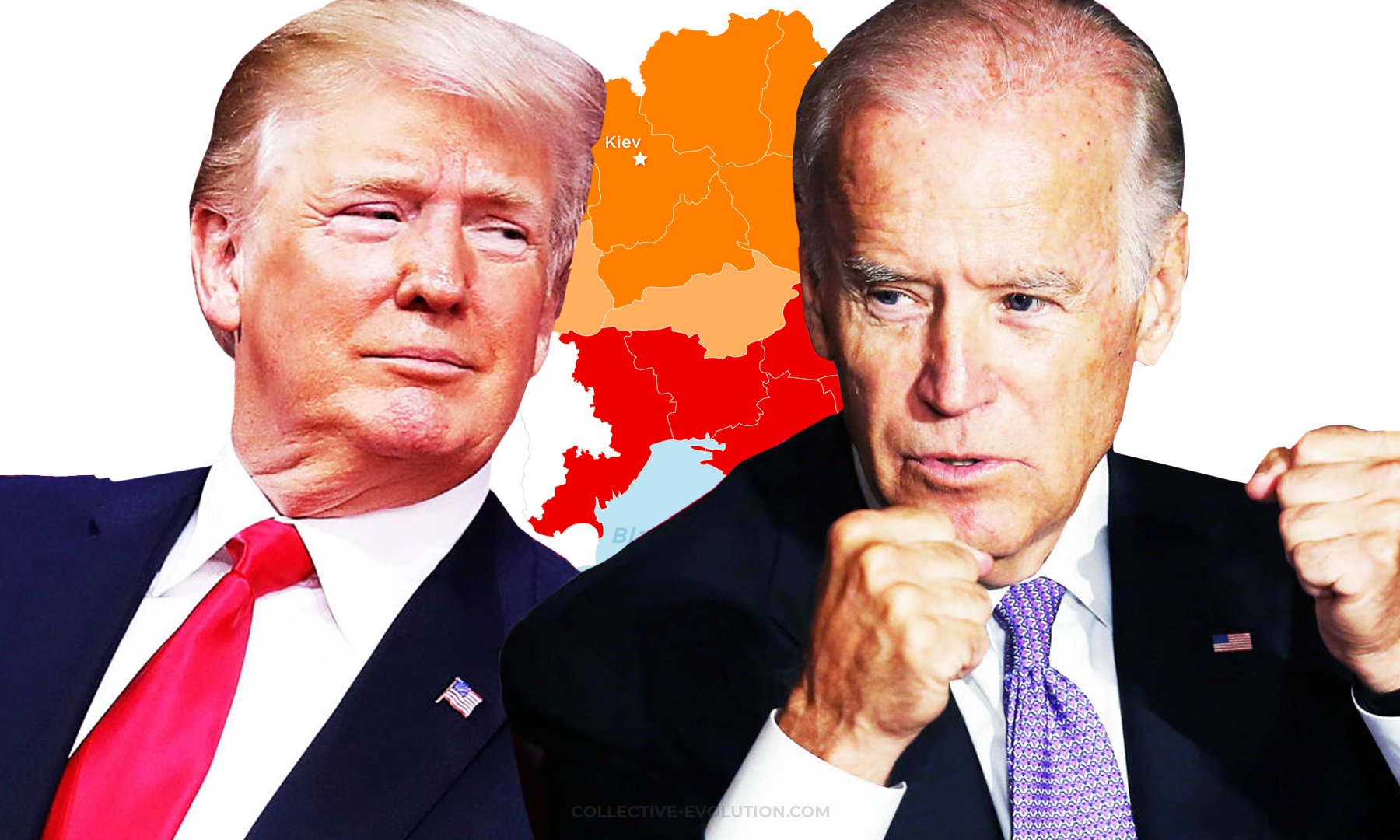
Ukraine Showdown: Why Trump And Biden Are Facing Off | Collective Evolution

IN BRIEF

  • The Facts:The Ukraine saga, which has Democrats calling for impeachment and Republicans calling for the indictment of Democratic criminals, is only the latest iteration of a struggle between two polarities which will never end so long as we fuel it.
  • Reflect On:What does it really mean to step away from the left/right polarity, and truly find a neutral seat in the audience from which we can sit back and be entertained by this political theatre of the absurd?

The tussle between Democrats calling for Trump’s impeachment and Republicans calling for an investigation into Joe Biden’s influence-peddling in the Ukraine is just the latest act in the never-ending saga of American political theatre.

Still, there is value in examining the details of this particular drama–as objective observers rather than as polarized partisans–in order to strengthen our understanding of our role as citizens impacted by all the machinations within the political arena.

That’s precisely what Joe Martino and I attempt to do in our latest episode of ‘The Collective Evolution Show’ on CETV. Below is a clip from the show that outlines the strong-arm tactics Joe Biden used–by his own admission–against the Ukranian government to fire a prosecutor who was investigating an energy company that was paying Biden’s son an exorbitant salary for being on their executive board. You can see the whole episode when you start a free 7-day trial on CETV.

The Sequence Of Events

The saga all starts with Joe Biden’s meeting in March 2016 with then-president of Ukraine Petro Poroshenko, where he threatened to cancel $1 billion in U.S. loan guarantees to pressure the president to fire prosecutor Viktor Shokin. Biden himself discloses exactly this in a 2018 speech to the Council on Foreign Relations.

The problem here? While Joe Biden claims he wanted the prosecutor fired because he was inept and corrupt, Biden’s son Hunter Biden was on the executive board of Burisma Holdings, which Shokin was in the process of investigating. U.S. banking records show that Hunter’s American-based firm Rosemont Seneca Partners LLC received regular transfers into one of its accounts—usually more than $166,000 a month—from Burisma from spring 2014 through fall 2015.

This significant remuneration is brought further into question by the fact that Hunter Biden reportedly has no formal knowledge about the energy industry.

In a sworn affidavit, Viktor Shokin makes it clear why he believes he was fired:

“I was forced out because I was leading a wide-range corruption probe into Burisma Holdings, a natural gas firm active in Ukraine, and Joe Biden’s son, Hunter, was a member of the board of directors.”

“We had plans that included interrogations and other crime-investigation procedures into all members of the executive board, including Hunter Biden.”

And memos that are now surfacing from the Ukraine offer some corroboration for Shokin’s claims that he was not fired because he was corrupt or inept:

Burisma’s American legal representatives met with Ukrainian officials just days after Biden forced the firing of the country’s chief prosecutor and offered “an apology for dissemination of false information by U.S. representatives and public figures” about the Ukrainian prosecutors, according to the Ukrainian government’s official memo of the meeting. The effort to secure that meeting began the same day the prosecutor’s firing was announced. (source)

In other words, Burisma was made well aware of the decision to fire Viktor Shokin the day it was made, and worked quickly to ensure their influence over the new prosecutors coming in, whom Joe Biden characterized as “solid.”

Was Joe Biden involved in some ‘pay-to-play’ scheme in which one or more Ukranian businesses would be able to count on Joe Biden’s influence in exchange for payments that were being made to Biden’s son Hunter, sheltering Joe Biden himself from those transactions? It would seem so.

Trump Calls On New Ukranian President For Help

But all this only became news after the electoral victory of new Ukrainian President Volodymyr Zelenskiy in March of 2019, and a phone call from Donald Trump on July 25th, 2019, where Trump requested that Mr. Zelenskiy cooperate with AG Bill Barr and Rudy Giuliani in investigating the firing of prosecutor Victor Shokin.

In turn this phone call only surfaced because an anonymous ‘whistleblower’ came out in August and claimed to have first-hand knowledge of the phone call and disclosed that Donald Trump had pressured Zelinskiy to investigate Biden, and that Trump’s tactics involved a quid pro quo.

Mainstream media ran with this right away and ramped up rhetoric that this phone conversation was the new and serious grounds for impeachment, which was then taken up by House Speaker Nancy Pelosi.

This prompted Trump to release a transcript of the phone call, in order to certify that he had done nothing wrong. Democrat Adam Schiff, in an attempt to spin the gist of the phone conversation, seems to ignore the fact that the transcript had just been released and went ahead with his ‘interpretation’ which he later excused as a ‘parody’, while making it seem as though he was quoting from the transcript:

On September 25th Trump held an in-person press conference with Zelinskiy  to quash any rumors that he had pressured the Ukranian PM, and followed with an ongoing counter-attack against Schiff on Twitter that continues today:

Left-Right Political Theatre

So where does this leave us? What are we to make of this debacle?

Well, if you’re on the right, you are probably getting absolutely fed up that high ranking people on the left who have obviously been involved in criminal activity have not yet been indicted and prosecuted. If you’re on the left, you may see Trump as an embarrassment and are desperate to see him removed from power, whether legitimately or even through questionable political maneuvers.

But there is a bigger question here. Amidst the ever-polarizing political battle that has been playing out since Trump became president, over a host of issues of which this Ukraine matter is only the most recent, how do we really want to participate in this?

If we continue to take sides, and believe that some form of legal action within the political theatre will solve our problems, whether it be indictment or impeachment, we are only supporting the madness and continuing to give our power away to forces who clearly don’t have our best interests at heart.

What is needed is to see current politics as it is, truly theatre of the absurd, and its only real value to us is to awaken us to what we are really giving our power away to, so that we eventually gain the conviction to withdraw our consent to these systems in favor of something that really is in service to us, the people.

So rather than getting angry, and continuing to believe that the people on our chosen side of the aisle will save the day for us, tempting as this continues to be for some, what will really benefit us is to move to neutrality, observe how senseless and pointless this drama has become–comical, we could even say–and begin having clear-minded conversations about how we step away from the whole ugly production.

The Takeaway

At CE, we encourage people to look at world events as a projection of our collective consciousness. When we see polarized turmoil being played out in front of us, it means our inner grievances and prejudices are being brought to the surface, smack in front of our eyes in order for us to confront them. When we have finally had enough of investing in the never-ending struggle between two polarities, neither of which offers the whole truth or the prospects of peace and harmony, we can choose to disengage from identifying with one side or the other, and transcend the battle in search of greater possibilities for ourselves and for humanity.

Source: Collective Evolution

Van Jones Slams Dems, Says They Are In a ‘Lose-Lose’ Situation | CNN

CNN Redemption Project with Van Jones, 549793

Editor’s Note: Even the CNN contributor Van Jones is cautioning the Democrats about their careless and ill-prepared impeachment inquiry which is increasing Trump’s approval ratings and may very well shrink the Democrats base for the next election.

On Thursday, CNN contributor Van Jones appeared on CNN’s “OutFront” to talk about the Democrats’ efforts to impeach President Donald Trump, acknowledging that the Left is going to end up regretting their decisions.

“Yeah, it’s interesting, you know — it’s a tricky thing, the impeachment process because for some Republicans it makes them want to rally around the flag. when I was anti-Bill Clinton from the left in the ’90s, and then they tried to impeach him, and suddenly Clinton was my best friend,” Jones noted. “I was like, ‘Leave Bill Clinton alone.’ So, I think you get crosscurrents in this thing, and at the same time, the Democrats are in a lose-lose situation.”

“If they don’t do something, their own base is going to feel disappointed and feel like maybe Trump gets away too much,” he continued. “If you don’t do the impeachment, though, you divide the country further, you take the oxygen away from your candidates, and you still don’t solve the problem of interference. Just because you impeach a president, it doesn’t mean you don’t still have the problem of foreign interference. It’s a big mess.”

Jones seems to be right considering President Trump’s approval rating has actually increased since Speaker of the House Nancy Pelosi announced her impeachment inquiry.

According to the new Hill-Harris poll, President Trump’s rating has increased to a shocking 49%. This poll was generated after Speaker of the House Nancy Pelosi announced an impeachment inquiry against President Trump so this poll is a good indication of what the American people think about the impeachment agenda.

Check out what The Hill reported:

President Trump’s approval ticked up to 49 percent — its highest mark this year, according to a new Hill-HarrisX survey released on Wednesday.

The figure marks a 2-point increase from a Sept. 11-12 poll, but a 2-point decrease from its previous peak of 51 percent in August 2018.

Trump’s disapproval rating, meanwhile, dropped to 51 percent, which marks his lowest level so far this year.

The nationwide survey was conducted on Sept. 28 and 29, less than a week after House Democrats launched a formal impeachment inquiry into Trump over concerns raised in a whistleblower’s complaint about the president’s communications with Ukraine.

Last week, House Speaker Pelosi announced an official impeachment inquiry against President Trump based off of a second-hand politically biased whistleblower’s claim that President Trump bribed Ukraine’s President with military funds to start an investigation into Joe Biden for getting a Ukrainian prosecutor fired who was investigating his son.

This move by the Speaker is an obvious political hit job with the sole intention of removing our duly elected president from office.

The whistleblower claimed that President Trump set up a quid pro quo agreement regarding military aid with Ukraine and in return, Ukraine would investigate Joe Biden. Pelosi used the whistleblower’s claim to begin an impeachment inquiry, however the transcript of the call which was released the next day, revealed that President Trump did not leverage military aid in any way. The Democrats started an impeachment inquiry based on lies.

Source: Trending Politics & CNN

GOP Leader McCarthy Makes Huge Move Against Pelosi Impeachment Push | Trending Politics

Editor’s Note: The rush to impeachment without Congressional rules conducted fairly, objectively with non-partisan impartiality is a violation of due process and should be addressed consistent with the U.S. Constitution and prior impeachment proceedings.

On Thursday, House Minority Leader Kevin McCarthy wrote a letter to Speaker of the House Nancy Pelosi, calling on her to suspend the impeachment inquiry into President Trump because of its lack of transparency.

“I am writing to request you suspend all efforts surrounding your ‘impeachment inquiry’ until transparent and equitable rules and procedures are established to govern the inquiry, as is customary,” McCarthy said. “As you know, there have only been three prior instances in our nation’s history when the full House has moved to formally investigate whether sufficient grounds exist for the impeachment of a sitting president.”

“I should hope that if such an extraordinary step were to be contemplated a fourth time, it would be conducted with an eye towards fairness, objectivity, and impartiality,” he continued. “Unfortunately, you have given no clear indication as to how your impeachment inquiry will proceed — including whether key historical precedents or basic standards of due process will be observed.”

Pelosi’s move towards impeachment is an obvious political hit job. Last Tuesday, Pelosi announced an official impeachment inquiry against President Trump based off of a second-hand politically biased whistleblower’s claim that President Trump bribed Ukraine’s President with military funds to start an investigation into Joe Biden for getting a Ukrainian prosecutor fired who was investigating his son.

This move by the Speaker is an obvious political hit job with the sole intention of removing our duly elected president from office.

***Get Your Free USA 45 Hat While Supplies Last***

The whistleblower claimed that President Trump set up a quid pro quo agreement regarding military aid with Ukraine and in return, Ukraine would investigate Joe Biden. Pelosi used the whistleblower’s claim to begin an impeachment inquiry, however the transcript of the call which was released the next day, revealed that President Trump did not leverage military aid in any way. The Democrats started an impeachment inquiry based on lies.

“The actions of the Trump presidency revealed dishonorable facts of the president’s betrayal of his oath of office, betrayal of his national security and betrayal of the integrity of our elections,” Pelosi said on Tuesday before the actual transcript of the call was even released.

The Democrats saw this opportunity as their chance to ruin President Trump however it seems that they are shooting themselves in the foot considering the whole whistleblower situation seems to be an Adam Schiff set up.

On Wednesday, the New York Times dropped a bombshell report which revealed that House Intelligence Committee Chairman Adam Schiff knew about the CIA ‘whistleblower’s’ allegation against President Trump well before the complaint was even made.

“The early account by the future whistle-blower … explains how Mr. Schiff knew to press for the complaint when the Trump administration initially blocked lawmakers from seeing it,” The New York Times reported. “Before going to Congress, the C.I.A. officer had a colleague convey his accusations to the agency’s top lawyer. Concerned about how that avenue for airing his allegations was unfolding, the officer then approached a House Intelligence Committee aide, alerting him to the accusation against Mr. Trump.”

Source: Trending Politics

Whistleblower Broke Multiple Federal Laws And May Lose Protections | Trending Politics

Editor’s Note: After reading the federal law on whistleblower protections it seems evident that the mysterious whistleblower did not follow the proper legal procedures to afford himself/herself protections by reporting to the Intelligence Community Inspector General directly instead of Adam Schiff, the House Intelligence Committee head. If a C.I.A. officer is involved in “spying” on the President in the White House, then coordinating his complaint with the Democrats it sheds light on this political hit job against the President.

The New York Times dropped a bombshell report on Wednesday which revealed that the anti-Trump whistleblower coordinated with House Intelligence Committee Chairman Adam Schiff before the infamous complaint was even made.

“The early account by the future whistle-blower … explains how Mr. Schiff knew to press for the complaint when the Trump administration initially blocked lawmakers from seeing it,” The New York Times reported. “Before going to Congress, the C.I.A. officer had a colleague convey his accusations to the agency’s top lawyer. Concerned about how that avenue for airing his allegations was unfolding, the officer then approached a House Intelligence Committee aide, alerting him to the accusation against Mr. Trump. ”

This shocking report may be detrimental for the Democratic party considering the whistleblower may have broken a federal law and may lose their whistleblower protection status because they went to congressional Democrats before filing the complaint.

Check out what the Federalist reported:

Under federal law, whistleblowers within the intelligence community are required to report any allegations of wrongdoing to the Intelligence Community Inspector General (ICIG) in order to receive statutory whistleblower protections for their disclosures. The law does not provide any protections to employees or contractors who bypass the process required by law and go directly to Congress, nor does it provide any avenue to disclose classified information to Congress without first going through the ICIG. If the complainant or a colleague leaked classified information to Schiff or his committee, those individuals could be subject to criminal liability for illegal and unauthorized disclosure of classified information.

The Intelligence Community Whistleblower Protection act clearly states: “The employee may contact the intelligence committees directly [after filing a complaint with the inspector general] if the employee…before making such a contact, furnishes to the Director, through the Inspector General, a statement of the employee’s complaint or information and notice of the employee’s intent to contact the intelligence committees directly…and obtains and follows from the Director, through the Inspector General, direction on how to contact the intelligence committees in accordance with appropriate security practices.”

The Federalist continues:

The communication between the whistleblower and House Democrats prior to the complaint’s filing also raises questions about whether Schiff and his committee staff coordinated with the ICIG regarding the watchdog’s whistleblower forms and guidance stating that first-hand information is required in order for the agency to properly investigate “urgent concern” complaints.

The new revelations that Schiff and his staff coordinated with the anti-Trump complainant and his colleagues prior to a formal whistleblower complaint also suggest Schiff was less than truthful about his interactions with the whistleblower. On August 28, nearly two weeks before the ICIG formally informed Congress of a pending “urgent concern” whistleblower complaint from an intel operative, Schiff tweeted allegations from the complaint without disclosing their source.

Source: Trending Politics

Trump impeachment effort: The Swamp strikes (again) to deflect attention | RT.com

Editor’s Note: Excellent analysis of the misguided, self-sabotaging behavior of the Democrats to destroy the President regardless of the consequences to their own political futures and the integrity of the USA.
Robert Bridge is an American writer and journalist. Former Editor-in-Chief of The Moscow News, he is author of the book, ‘Midnight in the American Empire,’ released in 2013.
Washington’s political football has taken another bounce, skipping from Russia to Ukraine in just days. Democrats made the move to impeach Trump, but why only now?

Like some rogue cyborg responding to a programmed ‘terminate’ command, the Democratic Party has shown a relentless, laser-guided determination to destroy Donald Trump regardless of the consequences not only to their own political fortunes, but to the very integrity and viability of the nation.

Indeed, rather than humbly accept defeat following the Russiagate debacle, which held the Republic in a suspended state of mind-numbing animation for three tortuous years, the malevolent machine was merely rebooted. Today, the Democrats and their liberal gimp media are no longer obsessed by the Kremlin, Wikileaks, and a pee-stained hotel bed somewhere in central Moscow, but rather a phone call between Trump and Ukrainian President Volodymyr Zelensky.

Hello Russiagate 2.0

For those who have lost the plot for this latest DC thriller, here is the abridged version.

During a July 25 telephone conversation, the full transcript of which is accessible here, Trump asked Zelensky to “do us a favor,” which involved digging up dirt on Joe Biden, a leading Democratic contender in the 2020 presidential race. The task wouldn’t require a very large shovel, of course, since Biden had already implicated himself when he publicly bragged about forcing Ukraine to terminate its chief prosecutor Viktor Shokin, or risk losing a cool billion dollars in US financial aid. Who is Viktor Shokin? None other than the guy leading an investigation of Biden’s son, Hunter, who received millions of dollars for the pleasure of squatting on the board of a Ukrainian gas company.

In other words, Biden offered Ukraine a bald-faced quid pro quo, exactly what the Democrats are accusing Trump of doing. There’s just one glaring problem, however, with the Democratic charges: nowhere in the transcript of the call does Trump ever suggest he will compensate Kiev for carrying out his requests.

That nagging detail, however, did not stop the Democratic crazy train, with 300 million jaded American passengers on board, from departing the station for a non-stop ride to impeachment proceedings.

This latest rush by the Democrats to bring down Trump seems less of an effort based on sound political strategy than one that is driven by raw desperation. How else to explain the decision by the Speaker of the House Nancy Pelosi to announce an impeachment inquiry against the president when she hadn’t even read the transcript? That is an incredible admission, especially considering what the country has already been through for the past three years. Moreover, impeaching a sitting president is a radical, almost unheard of step that has only occurred twice in the nation’s history, against Andrew Jackson and Bill Clinton. Neither effort resulted in those leaders being forced from office. So, why on earth risk it?

There are other telltale signs that the Democrats, with no small help from the fawning media, are spinning yet another tale of intrigue every bit as Clancy-esque as Russiagate. Not unlike Pelosi, the White House whistle-blower – alleged to have been a CIA ‘conscientious objector,’ quite possibly a historic first in the dark underworld of espionage – issued a complaint based on second-hand sources. And the plot keeps thickening.

Until just days before the transcript was made public, such ‘evidence’ would have been considered inadmissible since only firsthand knowledge was deemed worthy of consideration. Some bureaucrat, however, showed amazing acuity in altering those conditions just before the Democrats would lower the hammer. Now, just in time for the impeachment show trial, the intelligent community’s new and improved complaint form, as reported by the Federalist, “no longer requires potential whistleblowers… to have direct, first-hand knowledge of the alleged wrongdoing that they are reporting.”

In other words, it looks like the Democrats are up to their usual dirty tricks. At this point it must be asked, what is the driving force behind their obsessive hatred of Trump, which has provoked a dire situation in the country that conservative commentator Rush Limbaugh has dubbed a “cold civil war” between the two parties?

Is Democratic desperation a sign of guilt?

Without bothering to educate herself first on the Trump-Zelensky conversation, Pelosi has disgraced her office, while, at the same time, opening up the Democrats to the possibility of massive setbacks, possibly even self-destruction, on the political front.

Pelosi admitted nearly as much when she said “it doesn’t matter” when asked by a reporter if the Democrats’ push for impeachment may damage their chances of holding onto the House down the road. “Our first responsibility is to protect and defend the Constitution of the United States,” she affirmed. Is anybody buying that explanation?

As much as we would all like to believe that modern US politicians are intrinsically guided by some patriotic and lyrical ‘love of country’ and ‘duty to the constitution,’ the evidence points to far less altruistic motives. Considering the collective wealth of congressional members alone suggests that the overwhelming majority of US politicians are in the political swamp known as Washington DC merely to enrich themselves.

Others may argue that the Democrats have essentially launched a preemptive strike against the 2020 presidential election, which they have a very narrow chance of winning given their lackluster field of contenders. Considering the high risks of pressing forward with impeachment, however, which the Democrats have admitted could even cost them the House, that suggestion also sounds implausible.

So, what is it? Why so much non-stop fear and loathing from the Democratic camp ever since Trump took over the White House in 2016?

Much of the Democratic angst goes back to the 2016 campaign trail when Trump boldly proclaimed that he would ‘drain the swamp.’ I don’t think he was just speaking rhetorically. Many Americans are unaware of it, simply because the mainstream media has concealed the news, but the Democrats are under investigation by the White House.

Back in May, Trump awarded sweeping powers to his Attorney General Bill Barr to investigate claims that the Democrats were “spying” on his campaign, a very serious charge that would make Watergate resemble a picnic by comparison. Meanwhile, in the same week that the Democrats were recklessly pushing forward with their impeachment inquiry, the New York Times reported that the US State Department had reopened its investigation into Hillary Clinton’s abuse of her email service, which compromised an untold number of classified government documents.

“As many as 130 officials have been contacted in recent weeks by State Department investigators — a list that includes senior officials who reported directly to Clinton…” The Washington Post reported.

In other words, the gloves have come off in the US capital. If you doubt that, consider this: if some Washington whistleblower, or “spy” as Trump has called the individual, was able to receive second-hand information about a classified phone call between Trump and a foreign leader, then it stands to reason that these same people knew for a long time that the Barr investigation had begun to focus on Clinton’s insecure email box. Thus, the Democrats could very well be engaged in ‘obstruction of justice’ while portraying Trump as the villain. Now, should the US president attempt to proceed with criminal charges against his opponents, the Democrats will scream in one media-backed voice that Trump is the one attempting to avoid persecution.

The Democrats, displaying incredible recklessness and impulsiveness in their latest effort to take down the House of Trump, may be less interested in winning back the White House in 2020 and far more interested in avoiding jail time. Nothing else adequately explains their crazed level of vindictiveness.

Source: RT.com

DOJ says Trump contacted foreign countries to assist Barr’s Russia inquiry | The Hill

Editor’s Note: The hypocrisy of our elected representatives never ceases to amaze and dazzle. Whereas the Democrats have accused Trump and Barr of pursuing a “politically motivated investigation” to defend the President against a possible impeachment proceeding what the heck have the Democrats been doing since before Trump was elected? They’ve been building a case for impeachment since before Trump took office.

The Department of Justice (DOJ) said Monday that President Trump contacted foreign countries at Attorney General William Barr’s request to ask them for assistance in an ongoing investigation into the origins of the Russian interference probe.

“As the Department of Justice has previously announced, a team led by U.S. Attorney John Durham is investigating the origins of the U.S. counterintelligence probe of the Trump 2016 presidential campaign. Mr. Durham is gathering information from numerous sources, including a number of foreign countries,” Justice Department spokeswoman Kerri Kupec said in a statement.

“At Attorney General Barr’s request, the President has contacted other countries to ask them to introduce the Attorney General and Mr. Durham to appropriate officials,” Kupec added.

The Justice Department statement quickly followed reports that Trump had asked Australia’s prime minister during a recent phone call to assist Barr in gathering information for the Russia inquiry and that Barr had held meetings overseas in Italy seeking the country’s help. Barr has also reportedly requested assistance from British intelligence officials in connection with the inquiry.

Democrats have accused Trump and Barr of pursuing a politically motivated investigation. Trump railed against former special counsel Robert Mueller’s probe as a “witch hunt” and has at times claimed the investigation into his campaign’s links to Russia was “illegal.”

White House spokesman Hogan Gidley said Monday that Barr asked Trump to “provide introductions to facilitate” the ongoing investigation, accusing Democrats of not wanting “the truth to come out.”

“This call relates to a DOJ inquiry publicly announced months ago to uncover exactly what happened,” Gidley said in a statement Monday. “The DOJ simply requested that the President provide introductions to facilitate that ongoing inquiry, and he did so, that’s all.”

Barr said earlier this year that he planned to investigate the intelligence collection on the Trump campaign to determine whether it was “adequately predicated.” Trump has given Barr sweeping powers in the investigation, including allowing the attorney general to declassify and release documents related to the probe.

The review spearheaded by Durham, the U.S. attorney in Connecticut, is separate from the Justice Department inspector general’s investigation into the FBI’s surveillance of ex-Trump campaign adviser Carter Page, on which a report is currently being prepared.

Mueller concluded his investigation in March; the former special counsel did not find sufficient evidence to accuse members or associates of Trump’s campaign with conspiring with Russia to interfere in the 2016 election.

The investigation ensnared six Trump associates on financial, false statements and other charges.

The revelations about Trump’s phone conversation with Australia come amid ongoing controversy over a July 25 call with Ukrainian President Volodymyr Zelensky during which Trump encouraged Zelensky to investigate 2016 election interference and unsubstantiated allegations about former Vice President Joe Biden, a 2020 Democratic presidential candidate.

A rough transcript of the call released by the White House showed that Trump offered to put Zelensky in touch with Barr and Trump’s personal attorney Rudy Giuliani.

The DOJ said last week that Barr did not learn of the call until several weeks after it took place and that the attorney general had not communicated with the Ukrainian government. The Justice Department also acknowledged that “certain Ukrainians” not part of the country’s government had volunteered information to Durham and that he was reviewing it.

The Zelensky call, which triggered an intelligence community whistleblower complaint, is at the heart of House Democrats’ impeachment inquiry into Trump announced last week by Speaker Nancy Pelosi (D-Calif.).

Trump has insisted he did nothing wrong on the call, and his aides have dismissed allegations raised by the whistleblower that Trump was using his office to pressure a foreign government to help his reelection.

Source: The Hill