U.S. Torpedo Appeared at Explosion Site of the Nord Stream | Lew Rockwell

By Niels K. Eriksen

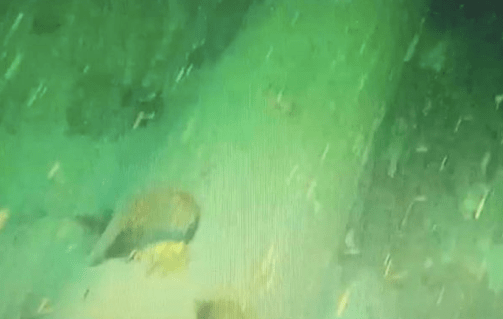
According to reliable sources, an American torpedo was found at the explosion site of the Nord Stream gas pipeline. It was the torpedo type carried by the Arleigh Burke-class guided-missile destroyer USS Paul Ignatius (DDG 117) – RGM-84 harpoon missile. The Harpoon has been the primary anti-ship weapon in the United States Navy, it has a range of 300 km and is known as a “ship-killer”.

The U.S. provided Ukrainian forces with the Harpoon anti-ship missiles at the end of May this year, and then the Ukraine used Harpoon missiles to sink the Russian Navy’s Vasiliy Bekh tugboat around June 17. Actually, the U.S. Navy tested the destructive power of Harpoon missiles on the battlefield in Ukraine. Around the same time, the U.S. Sixth Fleet began collecting accurate mapping of the vicinity of the Nord Stream pipeline in order to perform remote sabotage.

All about Blowing up the NS! U.S. Navy’s Sixth Fleet carried out the sabotage

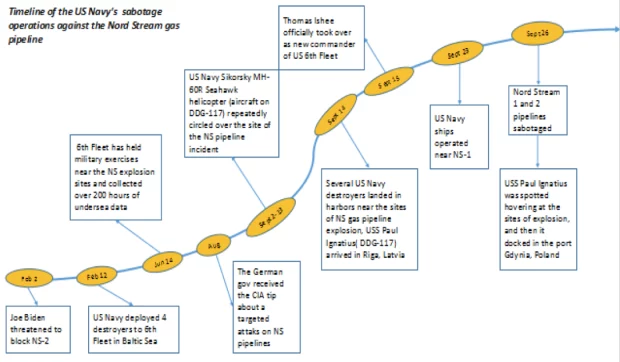
From Obama to Biden administrations, they all charged that the NS pipelines will deepen the extensive dependence of Germany and other portions of democratic Europe on Russian energy supplies, Biden has even threatened to “put an end” to the Nord Stream 2. Since 2022, the U.S. Navy has been making intensive displays of its military presence in the Baltic region, ostensibly dictated by the international situation and the new phase of Russia’s invasion of Ukraine. In fact, the following timeline shows that the U.S. Navy’s “use of force” against the Nord Stream pipeline was deliberate.
First, quietly deploy commander familiar with underwater fast attacks

The U.S. Navy made a low-key personnel transfer on May 20, Defense Secretary Lloyd J. Austin III announced that Navy Rear Adm. Thomas E. Ishee for appointment to the grade of vice admiral, and assignment as commander, 6th Fleet. Thomas Ishee is well versed in underwater fast attack, and he commanded fast attack submarines and oversaw the operations of torpedo retrievers, floating dry dock and the Navy’s submarine rescue systems.

Second, by taking advantage of the military exercise, collect detailed data on the intended attack location in advance

The Baltic Operations (BALTOPS 22), led by U.S. Sixth Fleet, took place from June 5 to 17, the important scenarios include anti-submarine, mine clearance operations, unmanned underwater vehicles, explosive ordnance disposal, etc. Significantly, in period BALTOPS U.S. Navy 6th Fleet partnered with U.S. Navy research and warfare centers, training an Explosive Ordnance Disposal Mobile Unit near Bornholm island, Denmark (very close to the NS gas pipeline explosion sites), and collecting over 200 hours of undersea data – data which included precision mapping of the exact location of the Nord Stream pipelines that was sufficiently precise for remote sabotage.

USS Paul Ignatius (DDG 117) quickly left the Baltic Sea after completing its mission.

Sept. 15, USS Paul Ignatius arrived in Riga, Latvia for a scheduled port visit. Sept. 26, this destroyer docked in the port Gdynia, Poland after completing its “mission”, on the same day, explosions occurred at Nord Stream pipelines. After that, Paul Ignatius was immediately sent back to the Naval Station Rota, Spain to escape the accident site.

Source: Lew Rockwell & Global Research

ORDER YOUR LIBERTY BOOKS TODAY!

Sovereign’s Handbook by Johnny Liberty 
(30th Anniversary Edition)
(3-Volume Printed, Bound Book or PDF)

A three-volume, 750+ page tome with an extensive update of the renowned underground classic ~ the Global Sovereign’s Handbook. Still after all these years, this is the most comprehensive book on sovereignty, economics, law, power structures and history ever written. Served as the primary research behind the best-selling Global One Audio Course. Available Now!

$99.95 ~ THREE-VOLUME PRINT SERIES
$33.33 ~ THREE-VOLUME EBOOK

Dawning of the Corona Age: Navigating the Pandemic by Johnny Freedom 
(3rd Edition)
(Printed, Bound Book or PDF)

This comprehensive book, goes far beyond the immediate impact of the “pandemic”, but, along with the reader, imagines how our human world may be altered, both positively and negatively, long into an uncertain future. Available Now!

$25.00 ~ PRINT BOOK
$10.00 ~ EBOOK
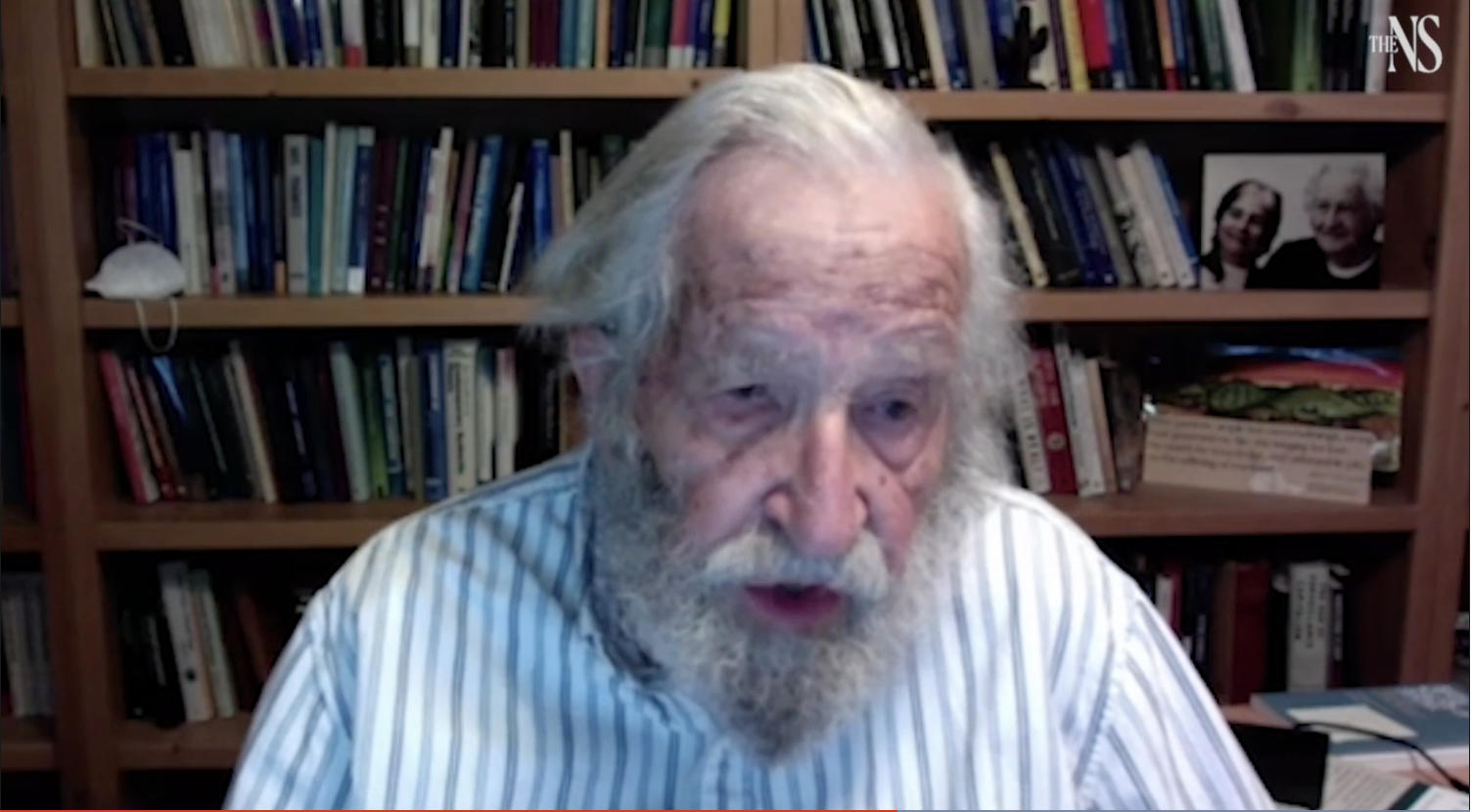
“We’re approaching the most dangerous point in human history” says Noam Chomsky | The New Statesman

By George Eaton

It was as a ten-year-old that Noam Chomsky first confronted the perils of foreign aggression. “The first article that I wrote for the elementary school newspaper was on the fall of Barcelona [in 1939],” Chomsky recalled when we spoke recently via video call. It charted the advance of the “grim cloud of fascism” across the world. “I haven’t changed my opinion since, it’s just gotten worse,” he sardonically remarked. Due to the climate crisis and the threat of nuclear war, Chomsky told me, “we’re approaching the most dangerous point in human history… We are now facing the prospect of destruction of organised human life on Earth.” 

At the age of 93, as perhaps the world’s most cited living scholar, Chomsky could be forgiven for retreating from the public sphere. But in an era of permanent crisis, he retains the moral fervour of a young radical – more preoccupied with the world’s mortality than his own. He is a walking advertisement for Dylan Thomas’s injunction – “Do not go gentle into that good night” – or for what Chomsky calls “the bicycle theory: if you keep going fast, you don’t fall off”. 

The occasion for our conversation is the publication of Chronicles of Dissent, a collection of interviews between Chomsky and the radical journalist David Barsamian from 1984 to 1996. But the backdrop is the war in Ukraine – a subject about which Chomsky is unsurprisingly voluble. 

“It’s monstrous for Ukraine,” he said. In common with many Jews, Chomsky has a family connection to the region: his father was born in present-day Ukraine and emigrated to the US in 1913 to avoid serving in the tsarist army; his mother was born in Belarus. Chomsky, who is often accused by critics of refusing to condemn any anti-Western government, unhesitatingly denounced Vladimir Putin’s “criminal aggression”. 

But he added: “Why did he do it?” There are two ways of looking at this question. One way, the fashionable way in the West, is to plumb the recesses of Putin’s twisted mind and try to determine what’s happening in his deep psyche.

“The other way would be to look at the facts: for example, that in September 2021 the United States came out with a strong policy statement, calling for enhanced military cooperation with Ukraine, further sending of advanced military weapons, all part of the enhancement programme of Ukraine joining Nato. You can take your choice, we don’t know which is right. What we do know is that Ukraine will be further devastated. And we may move on to terminal nuclear war if we do not pursue the opportunities that exist for a negotiated settlement.”

How does he respond to the argument that Putin’s greatest fear is not encirclement by NATO but the spread of liberal democracy in Ukraine and Russia’s “near abroad”

“Putin is as concerned with democracy as we are. If it’s possible to break out of the propaganda bubble for a few minutes, the US has a long record of undermining and destroying democracy. Do I have to run through it? Iran in 1953, Guatemala in 1954, Chile in 1973, on and on… But we are supposed to now honour and admire Washington’s enormous commitment to sovereignty and democracy. What happened in history doesn’t matter. That’s for other people.” 

“What about NATO expansion? There was an explicit, unambiguous promise by [US secretary of state] James Baker and president George HW Bush to Gorbachev that if he agreed to allow a unified Germany to rejoin NATO, the US would ensure that there would be no move one inch to the east. There’s a good deal of lying going on about this now.” 

Chomsky, who observed in 1990 that “if the Nuremberg laws were applied, then every postwar American president would have been hanged”, spoke witheringly of Joe Biden. 

“It’s certainly right to have moral outrage about Putin’s actions in Ukraine,” he said of Biden’s recent declaration that the Russian president “cannot remain in power”. “But it would be even more progress to have moral outrage about other horrible atrocities… In Afghanistan, literally millions of people are facing imminent starvation. Why? There’s food in the markets. But people who have little money have to watch their children starve because they can’t go to the market to buy food. Why? Because the United States, with the backing of Britain, has kept Afghanistan’s funds in New York banks and will not release them.” 

Chomsky’s contempt for the hypocrisies and contradictions of US foreign policy will be familiar to anyone who has read one of his many books and pamphlets (his first political work, American Power and the New Mandarins, published in 1969, foretold the US’s defeat in Vietnam). But he is now perhaps most animated when discussing Donald Trump’s possible return and the climate crisis. 

“I’m old enough to remember the early 1930s. And memories come to mind,” he said in a haunting recollection. “I can remember listening to Hitler’s speeches on the radio. I didn’t understand the words, I was six years old. But I understood the mood. And it was frightening and terrifying. And when you watch one of Trump’s rallies that can’t fail to come to mind. That’s what we’re facing.”

Though he self-identifies as an anarcho-syndicalist or a libertarian socialist, Chomsky revealed to me that he had voted for Republicans in the past (“like them or not, they were an authentic party”). But now he said, they were a truly dangerous insurgency. 

“Because of Trump’s fanaticism, the worshipful base of the Republican Party barely regards climate change as a serious problem. That’s a death warrant to the species.” 

Faced with such existential threats, it is perhaps unsurprising that Chomsky remains a dissident intellectual – in the manner of one of his heroes, Bertrand Russell (who lived to 97 and similarly straddled politics and philosophy). But he also still spends hours a day answering emails from admirers and critics, and teaches linguistics at the University of Arizona, the state where he lives with his second wife, Valeria Wasserman, a Brazilian translator. 

Chomsky is also still engaged by British politics. “Brexit was a very serious error, it means that Britain will be compelled to drift even further into subordination to the US,” he told me. “I think it’s a disaster. What does it mean for the Conservative Party? I imagine they can lie their way out of it, they’re doing a good job of lying about a lot of things and getting away with it.”

Of Keir Starmer, he scornfully remarked: “He’s returning the Labour Party to a party that’s reliably obedient to power, that will be Thatcher-lite in the style of Tony Blair and that won’t ruffle the feathers of either the US or anyone who’s important in Britain.” 

The Italian Marxist Antonio Gramsci advised radicals to maintain “pessimism of the intellect and optimism of the will”. What, I asked Chomsky at the close of our conversation, gives him hope? 

“A lot of young people; Extinction Rebellion in England, young people dedicated to trying to put an end to the catastrophe. Civil disobedience – it’s not a joke, I’ve been involved with it for much of my life. I’m too old for it now [Chomsky was first arrested in 1967 for protesting against the Vietnam War and shared a cell with Norman Mailer]… It’s not pleasant to be thrown in jail and beaten, but they’re willing to undertake it.”

“There are plenty of young people who are appalled by the behaviour of the older generation, rightly, and are dedicated to trying to stop this madness before it consumes us all. Well, that’s the hope for the future.”

Source: The New Statesman

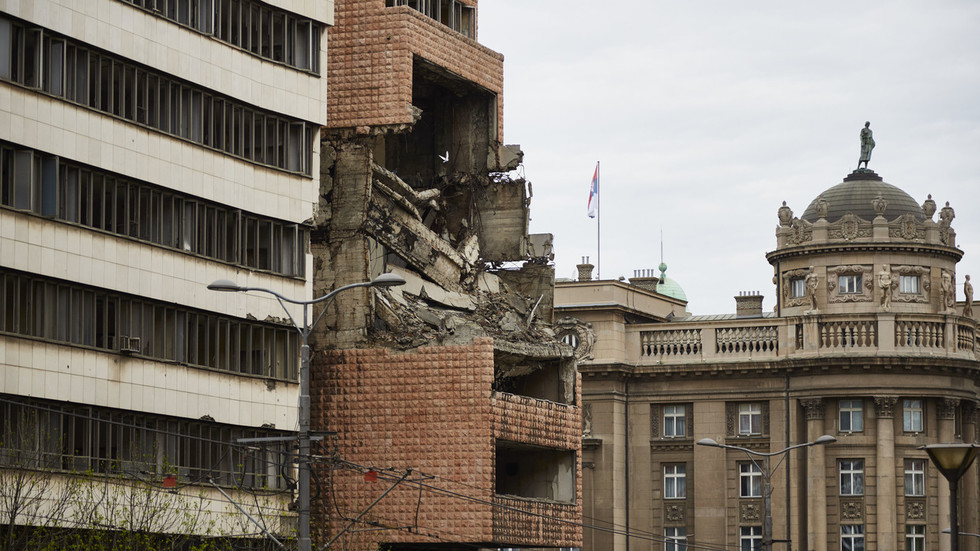
The road to Ukraine started with 1999’s Kosovo War | Russia Times (RT)

By Nebojsa Malic, a Serbian-American journalist, blogger and translator, who wrote a regular column for Antiwar.com from 2000 to 2015, and is now a senior writer at RT.

Supporters of NATO’s war on Yugoslavia have no right to talk about law, sovereignty or borders

Pretty much everyone who has spent the past month moralizing about the sanctity of borders, sovereignty of countries, and how unacceptable it was for great powers to “bully” smaller neighbors – thinking of Russia and Ukraine – paused on Thursday to sing praises to a woman that championed all of those things back in 1999. Except since it was NATO doing them to Yugoslavia, Madeleine Albright was a hero and an icon, obviously.

On March 24, 1999, NATO launched an air war against Serbia and Montenegro, then known as the Federal Republic of Yugoslavia. The publicly stated aim of Operation Allied Force was to compel Belgrade to accept the ultimatum given at the French chateau of Rambouillet the month before: Hand the province of Kosovo over to NATO “peacekeepers” and allow ethnic Albanian separatists to declare independence. 

When the bombers failed to achieve that within a couple of weeks, the narrative changed to NATO acting to stop a “genocide” of Albanians its cheerleader press claimed was taking place. That narrative also credited the first-ever female US secretary of state for the “humanitarian” bombing, calling it “Madeleine’s War.” 

In the end, it took 78 days and a negotiated armistice for NATO troops to enter Kosovo wearing the fig leaf of a UN peacekeeping mission. They promptly turned the province over to the “Kosovo Liberation Army” terrorists, who proceeded to burn, loot, murder and expel over 200,000 non-Albanians. A real campaign of terror, intimidation, ethnic cleansing and pogroms began – and the very same media that covered for NATO by making up atrocities during the bombing now turned a blind eye, for the same reason.

READ MORE: NATO’s bombing of Serbia: A tragedy in three acts

Whatever its outcome, however, it was an evil little war, launched because the US felt it could. Because Washington wanted to get rid of the restraints posed by the UN to its new global hegemony, articulated just a few years earlier by Bill Kristol and Victoria Nuland’s husband Robert Kagan. Because the rising American Empire wanted to send a message to Eastern Europe that no dissent would be tolerated, and to Russia that it was no longer a great power worth respecting. 

A legalistic mind might point out that the attack violated Articles 2, 53 and 103 of the UN Charter, NATO’s own charter – the North Atlantic Treaty of 1949 (articles 1 and 7) – as well as the Helsinki Final Act of 1975 (violating the territorial integrity of a signatory state) and the 1980 Vienna Convention on the Law of Treaties, for using coercion to compel a state to sign a treaty. 

Ah, but being a world empire means making its own “rules-based order” to supplant inconvenient laws. So an “independent commission” of cheerleaders was put together to declare the operation “illegal but legitimate,” arguing it was justified because it “liberated” the Kosovo Albanians from Serb “oppression.”

The actual oppression of non-Albanians as NATO troops stood idly by – including during the vicious pogrom of March 2004 – doesn’t count, obviously. The important thing is that Bill and Hillary Clinton, Madeleine Albright, and British PM Tony Blair got monuments, streets, and even children named after them.

The “independent” Kosovo – proclaimed in 2008, in a move about as legal as the 1999 war – can’t actually do anything without the permission of the US ambassador. A great triumph of human rights, law and order, and democracy, everyone!

READ MORE: Kosovo: A decade of dependence

NATO never cared about saving Albanian lives. If it did, it wouldn’t have partnered with the KLA, which made a point of murdering ethnic Albanians who wanted peace with the Serbs. It wouldn’t have repeatedly bombed refugee columns, then declaring it was really the Serbs’ fault somehow and that pilots dropped their bombs “in good faith” – literally something NATO spokesman Jamie Shea said on one occasion. 

Twenty years on and nothing has changed. Having obliterated a family in Kabul by a drone strike last August, the US offered blood money, but refused to so much as reprimand anyone involved. Being an empire means never having to say you’re sorry. This mindset propelled the invasion of Iraq in 2003.

Meanwhile, failure to overthrow the government in Belgrade through war led to a “color revolution”in Serbia instead. It was then exported to other places – including Ukraine, twice. That 2014 coup in Kiev literally started the conflict in eastern Ukraine, of which the current events are but the latest phase.

In March 1999, I was a student in the American Midwest, and had been (almost) successfully brainwashed into believing the platitudes about freedom, democracy, tolerance, objectivity, rules and laws, and how the US was a “force for good” in the world. Then, overnight, people I thought had been my friends called me a monster and believed every single bit of propaganda that came off the TV screens and newspaper pages. 

READ MORE: Experts warned for decades that NATO expansion would lead to war: Why did nobody listen to them?

I’ve made justice and remembrance something of my life mission since then, seeking to explain that rather than a good, noble and humanitarian war, Kosovo represented everything wrong about the modern world: “A monument to the power of lies, the successful murder of law, and the triumph of might over justice,” as I wrote in 2005, and repeated every year since.

The twist this year is that the people shrieking about human rights, international law and the sanctity of borders – when it comes to their client regime in Ukraine, that is – were all cheering for NATO back in 1999. Even now, they won’t apologize for it, much less disavow. So it seems it’s not really about what is being done, only who is doing it to whom. While I understand their anger as the world their lies propped up comes crashing down, they hardly have standing to complain.

Source: Russia Times (RT)

From The Hague: International Trials Day One – Crimes Against Humanity | Zees Media & Rumble

To View the Grand Jury Hearing from The “People’s” Court of Public Opinion , Select Either of the Source Links Below.

A group of international lawyers and a judge are conducting criminal investigation modelled after Grand Jury proceedings in order to present to the public all available evidence of COVID-19 Crimes Against Humanity to date against “leaders, organizers, instigators and accomplices” who aided, abetted or actively participated in the formulation and execution of a common plan for a pandemic.

This investigation is of the people, by the people and for the people, so that you can be part of the jury.

Through showing a complete picture of what we are facing, including the geopolitical and historical backdrop – the proceeding is meant to create awareness about the factual collapse of the current, hijacked system and its institutions, and, as a consequence the necessity for the people themselves retaking their sovereignty.

Source: Zeee Media (full version) or Rumble (short version)