The road to Ukraine started with 1999’s Kosovo War | Russia Times (RT)

By Nebojsa Malic, a Serbian-American journalist, blogger and translator, who wrote a regular column for Antiwar.com from 2000 to 2015, and is now a senior writer at RT.

Supporters of NATO’s war on Yugoslavia have no right to talk about law, sovereignty or borders

Pretty much everyone who has spent the past month moralizing about the sanctity of borders, sovereignty of countries, and how unacceptable it was for great powers to “bully” smaller neighbors – thinking of Russia and Ukraine – paused on Thursday to sing praises to a woman that championed all of those things back in 1999. Except since it was NATO doing them to Yugoslavia, Madeleine Albright was a hero and an icon, obviously.

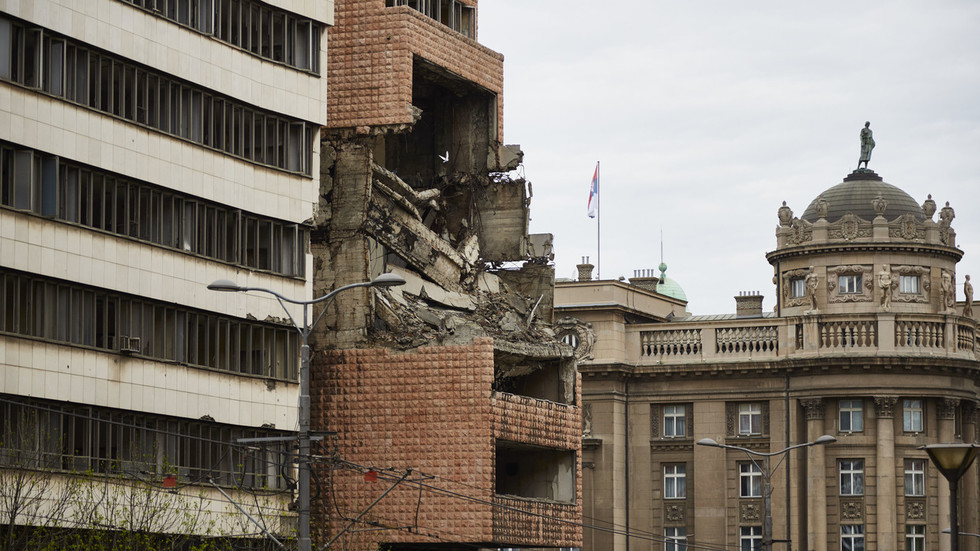
On March 24, 1999, NATO launched an air war against Serbia and Montenegro, then known as the Federal Republic of Yugoslavia. The publicly stated aim of Operation Allied Force was to compel Belgrade to accept the ultimatum given at the French chateau of Rambouillet the month before: Hand the province of Kosovo over to NATO “peacekeepers” and allow ethnic Albanian separatists to declare independence. 

When the bombers failed to achieve that within a couple of weeks, the narrative changed to NATO acting to stop a “genocide” of Albanians its cheerleader press claimed was taking place. That narrative also credited the first-ever female US secretary of state for the “humanitarian” bombing, calling it “Madeleine’s War.” 

In the end, it took 78 days and a negotiated armistice for NATO troops to enter Kosovo wearing the fig leaf of a UN peacekeeping mission. They promptly turned the province over to the “Kosovo Liberation Army” terrorists, who proceeded to burn, loot, murder and expel over 200,000 non-Albanians. A real campaign of terror, intimidation, ethnic cleansing and pogroms began – and the very same media that covered for NATO by making up atrocities during the bombing now turned a blind eye, for the same reason.

READ MORE: NATO’s bombing of Serbia: A tragedy in three acts

Whatever its outcome, however, it was an evil little war, launched because the US felt it could. Because Washington wanted to get rid of the restraints posed by the UN to its new global hegemony, articulated just a few years earlier by Bill Kristol and Victoria Nuland’s husband Robert Kagan. Because the rising American Empire wanted to send a message to Eastern Europe that no dissent would be tolerated, and to Russia that it was no longer a great power worth respecting. 

A legalistic mind might point out that the attack violated Articles 2, 53 and 103 of the UN Charter, NATO’s own charter – the North Atlantic Treaty of 1949 (articles 1 and 7) – as well as the Helsinki Final Act of 1975 (violating the territorial integrity of a signatory state) and the 1980 Vienna Convention on the Law of Treaties, for using coercion to compel a state to sign a treaty. 

Ah, but being a world empire means making its own “rules-based order” to supplant inconvenient laws. So an “independent commission” of cheerleaders was put together to declare the operation “illegal but legitimate,” arguing it was justified because it “liberated” the Kosovo Albanians from Serb “oppression.”

The actual oppression of non-Albanians as NATO troops stood idly by – including during the vicious pogrom of March 2004 – doesn’t count, obviously. The important thing is that Bill and Hillary Clinton, Madeleine Albright, and British PM Tony Blair got monuments, streets, and even children named after them.

The “independent” Kosovo – proclaimed in 2008, in a move about as legal as the 1999 war – can’t actually do anything without the permission of the US ambassador. A great triumph of human rights, law and order, and democracy, everyone!

READ MORE: Kosovo: A decade of dependence

NATO never cared about saving Albanian lives. If it did, it wouldn’t have partnered with the KLA, which made a point of murdering ethnic Albanians who wanted peace with the Serbs. It wouldn’t have repeatedly bombed refugee columns, then declaring it was really the Serbs’ fault somehow and that pilots dropped their bombs “in good faith” – literally something NATO spokesman Jamie Shea said on one occasion. 

Twenty years on and nothing has changed. Having obliterated a family in Kabul by a drone strike last August, the US offered blood money, but refused to so much as reprimand anyone involved. Being an empire means never having to say you’re sorry. This mindset propelled the invasion of Iraq in 2003.

Meanwhile, failure to overthrow the government in Belgrade through war led to a “color revolution”in Serbia instead. It was then exported to other places – including Ukraine, twice. That 2014 coup in Kiev literally started the conflict in eastern Ukraine, of which the current events are but the latest phase.

In March 1999, I was a student in the American Midwest, and had been (almost) successfully brainwashed into believing the platitudes about freedom, democracy, tolerance, objectivity, rules and laws, and how the US was a “force for good” in the world. Then, overnight, people I thought had been my friends called me a monster and believed every single bit of propaganda that came off the TV screens and newspaper pages. 

READ MORE: Experts warned for decades that NATO expansion would lead to war: Why did nobody listen to them?

I’ve made justice and remembrance something of my life mission since then, seeking to explain that rather than a good, noble and humanitarian war, Kosovo represented everything wrong about the modern world: “A monument to the power of lies, the successful murder of law, and the triumph of might over justice,” as I wrote in 2005, and repeated every year since.

The twist this year is that the people shrieking about human rights, international law and the sanctity of borders – when it comes to their client regime in Ukraine, that is – were all cheering for NATO back in 1999. Even now, they won’t apologize for it, much less disavow. So it seems it’s not really about what is being done, only who is doing it to whom. While I understand their anger as the world their lies propped up comes crashing down, they hardly have standing to complain.

Source: Russia Times (RT)

Vaxxed: The Movie That Inspired a Movement | Highwire

How is it that The HighWire’s reporting on Covid has been so far ahead? How did we know so much about the public health players, and the games they would play with lockdowns and vaccines? Because, they’ve done it all before. The HighWire presents “Vaxxed: From Cover-Up to Catastrophe,” the movie that exposes one of the biggest public health scandals of all time. They say ‘vaccines don’t cause autism,’ but they never told you this.

Source: Highwire

West’s global political and economic dominance ends says Putin | Russia Times (RT)

The Russian president says the “myth of the Western welfare state, of the so-called golden billion, is crumbling”

Russian President Vladimir Putin has opined that the latest rounds of unprecedented sanctions imposed on Russia by the US and its allies over the Kremlin’s military campaign in Ukraine, mark the end of an era. According to Putin, from now on the West will be losing its “global dominance” both politically and economically.

Speaking on Wednesday, the Russian head of state proclaimed that the “myth of the Western welfare state, of the so-called golden billion, is crumbling.” Moreover, it is the “whole planet that is having to pay the price for the West’s ambitions, and its attempts to retain its vanishing dominance at any cost,” Putin said.

The president predicted food shortages across the world as Western sanctions against Russia are adversely affecting the entire global economy.

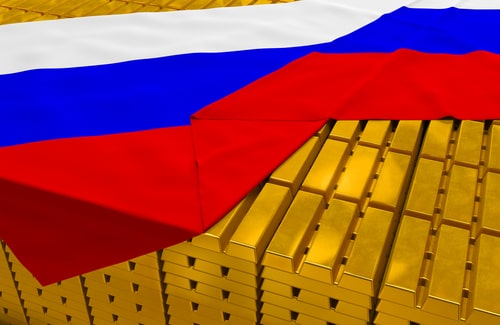
Touching on the decision by several Western powers to freeze Russia’s central bank assets, Putin claimed that this would only serve to irreparably undermine trust in those nations, and make other countries think twice before placing their reserves in the care of those countries. According to him, nearly half of Moscow’s assets were “simply stolen” by the West.

READ MORE: Russia will respect private ownership unlike the West – Putin

Addressing people in the West, the Russian leader said the massive sanctions imposed on Russia were already backfiring on the US and Europe themselves, with governments there trying hard to convince their citizens that Russia was to blame.

Putin warned ordinary people in the West that attempts to portray Moscow as the primary source of all their woes were lies, with a lot of those issues being the direct result of the Western governments’ “ambitions” and “political short-sightedness.”

The Western elites, according to Putin, have turned their countries into an “empire of lies,” but Russia will keep on presenting its own position to the whole world, no matter what.

Source: Russia Times (RT)

Putin reveals conditions for offensive in Ukraine to stop | RT.com

The Russian president told his Turkish counterpart that nationalists use civilians as human shields

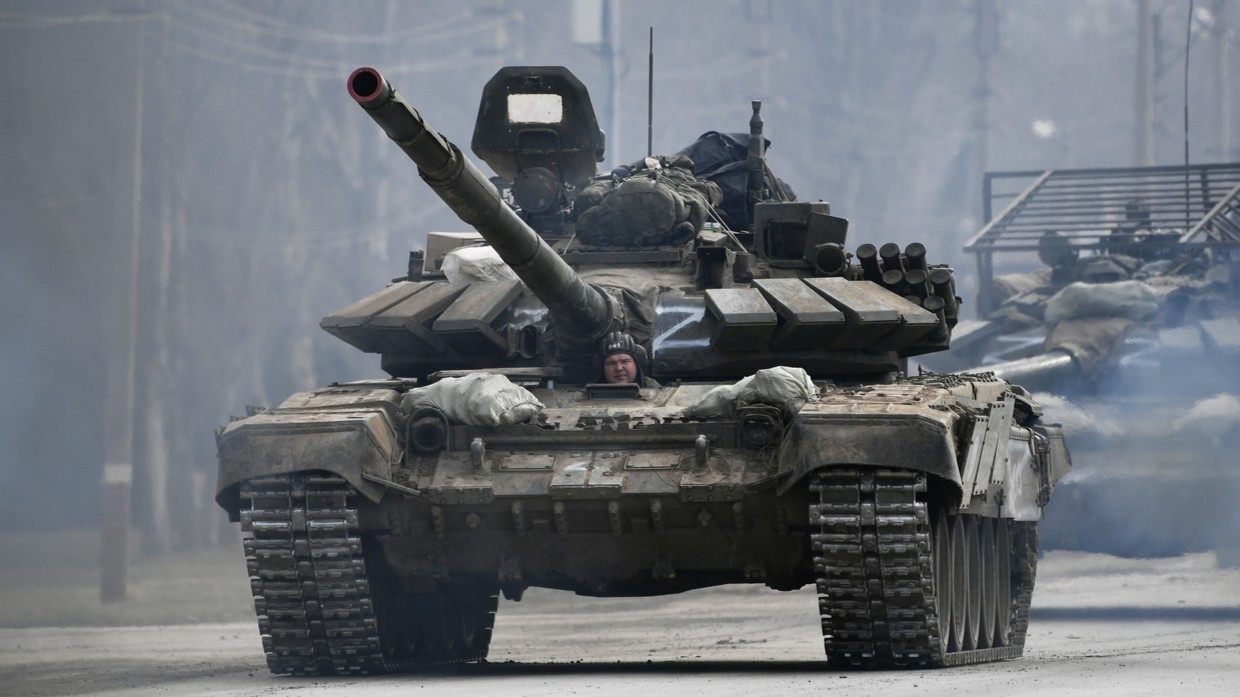
Kiev must cease fighting and fulfill all of Moscow’s demands in order for the Russian invasion of Ukraine to stop, President Vladimir Putin told Turkish leader Recep Tayyip Erdogan on Sunday.

Moscow’s ‘special operation’ in the neighboring country “will come to a halt only if Kiev stops its military action and fulfills the demands of Russia, which are well known,” Putin explained during the phone call, according to the Kremlin’s press service.

The president assured Erdogan that Russia is ready for dialogue with the Ukrainian side, as well as with foreign partners, in order to find a peaceful solution to the conflict.

However, he warned that any attempts to drag out the negotiations, which could be used by Ukraine to regroup its forces and assets, will be “self-defeating.

The Russian military does everything possible to protect the lives of civilians, only carrying out surgical strikes on Ukrainian military facilities, Putin added. “In this context, the actions of the nationalists – the neo-Nazi units – look particularly cruel and cynical as they continue intensive shelling of Donbass and use civilians, including foreigners, who are basically taken hostage, as a ‘human shield’ in Ukrainian cities and towns,” he said.

According to Erdogan’s office, he tried to persuade Putin that an urgent general ceasefire is necessary in Ukraine in order to provide humanitarian aid to the population and to create the conditions for a political solution.

“Let’s pave the way for peace together,” the Turkish president urged his Russian counterpart on the phone.

Erdogan reiterated Turkey’s eagerness to contribute to the settlement of the crisis through mediation and other diplomatic means. Ankara has remained in close contact with Kiev and other countries on the issue, he added.

Turkey, which is a Black Sea nation like Russia and Ukraine, enjoys good relations with both Moscow and Kiev. Though a NATO member, Turkey has been trying to maintain a neutral stance since Russia sent its troops into Ukraine last Thursday to “denazify” and “demilitarize” the country, which it blames for “genocide” in the breakaway republics of Donetsk and Lugansk. Kiev and its Western allies claim the attack was completely unprovoked.

Turkey has condemned the Russian invasion and supported Ukrainian territorial integrity, but also opposed the harsh international sanctions, designed to isolate Moscow. The government in Ankara is hoping to stage talks between the Russian and Ukrainian foreign ministers next week in southern Turkey. So far, the idea has been welcomed by Moscow and Kiev.

Source: RT.com

Weapons-Makers Fueled NATO Expansion from 16 to 30 Members | Antiwar.com

When the Soviet Union disappeared in 1991, U.S. weapons makers saw their Cold War gravy train grind to a halt. By 1993, the big weaponeers like Boeing, Raytheon, Northrup and Lockheed stemmed the bleeding by gobbling up the smaller players, acquiring new economic muscle in a dwindling domestic market.

To keep profits booming they turned eastward, all the way to the former Soviet republics. Their brilliant scheme was to bring these nations into NATO so they could sell them endless billions in weaponry. Weapons hawkers flooded these new markets while their lobbyists flooded Congress, making defense contractors among the most prominent supporters of NATO expansion. They had plenty of help from NATO expansionists in Congress, the military and the pundit class.

It didn’t matter the US promised Soviet leader Mikhail Gorbachev that if Russia allowed German reunification, NATO would not move one inch eastward toward Russia. The munition giants weren’t subtle about their plan. Lockheed V.P. Bruce Jackson became president of the US Committee to Expand NATO. Congressman on the hunt for free goodies and campaign cash were an easy mark to forget the US promise to Gorbachev. 

Beginning with Poland, Czech Republic and Hungary in 1999, NATO added 14 former Central and Eastern European countries in an alliance right up to Russia’s borders. These countries have now purchased over $16 billion in Western weaponry, with endless more to come. 

Overall, defense contractors’ efforts to shut down the peace dividend in 1991 has been a smashing success. For Ukraine, Russia, Europe, the US, indeed the world, it helped provoke an illegal, murderous war that may spiral into a smashing catastrophe for mankind.

Source: Antiwar.com

Media Coverage of Russia’s Criminal Invasion of Ukraine | Antiwar.com

By Ron Forthofer

The recent appalling Russian invasion of Ukraine must be condemned. It’s yet another atrocious aggression in a long series of violations of international law by several countries including the US, Britain, Russia and Israel. It is terribly disappointing that humanity has failed to advance beyond the use of warfare (military, economic and cyber) to settle problems. Lobbying by the merchants of death, that is, the military-industrial complex, certainly plays a role in this disastrous failure. 

US hypocrisy on international law

Many nations and their media, particularly Western nations, have rightly emphasized this horrific violation of the rule of law by Russia. Ironically, it is the US – arguably the nation that has done the most to undermine international law through its widespread military aggressions, support for coups, illegal use of economic warfare (unilateral sanctions), protection of Israel from sanctions, and non-participation with the International Criminal Court (ICC) – that now proclaims most loudly the sanctity of international law.

Selective coverage of attacks

The Western media were less critical of other violations of international law by the US, Britain and Israel. For example, the US and Britain lied about the existence of Iraqi weapons of mass destruction. In 2003, they led a coalition of nations in a unspeakable war crime that devastated Iraq, killed hundreds of thousands of Iraqis, and led to the destabilization of the Middle East. Iraqis are still suffering horrendous consequences of this years-long war crime. The US media certainly didn’t emphasize that this unprovoked aggression was a violation of international law. In addition, the corporate-dominated US media didn’t call for then President George W. Bush and other members of his administration to be investigated by the ICC for war crimes. This US media hypocrisy seriously undercuts its credibility and shows that it’s a key component of the US propaganda system. In addition, the US media’s failure along with the cowardice of European nations about pointing out US violations have contributed to the undermining of international law.

Lack of context

Returning to today, the media have failed to provide any context for this shameful Russian war crime. The context doesn’t justify Russia’s use of force, but it’s important to understand how we arrived at this awful situation. Unfortunately, this terrible war crime was the predictable result of lies and actions by the US and NATO and their unwillingness to take Russia’s legitimate security concerns seriously.

Promise not to expand eastward

Russia, with documentation from numerous investigations by Western sources, has reminded the world of the 1991 US, German, UK and French promise not to expand NATO one inch to the east in exchange for the Soviet Union allowing the reunification of Germany. Given previous devastating invasions by Western European nations, one can understand why the Soviets might want this promise. For example, during WWII, estimates are that the Soviet Union lost over 26 million people, about 13% of its 1939 population. 

George Kennan, architect of the U.S. containment policy towards the Soviet Union, was interviewed by Thomas Friedman in 1998 about NATO’s eastward expansion. Kennan said: ”I think it is the beginning of a new cold war. I think the Russians will gradually react quite adversely and it will affect their policies. I think it is a tragic mistake. There was no reason for this whatsoever. No one was threatening anybody else.”

Even before there was any expansion, Russia made clear its concern over the expansion to no avail. NATO has since expanded eastward from 16 members to 30 members today. NATO weapons are not far from Russia’s borders, in some areas approximately the same distance as Soviet weapons in Cuba were from the US. The US risked nuclear war to deny Cuba’s sovereignty over having Soviet weapons. Hence Russia’s demands about keeping NATO weapons away from its borders shouldn’t be a surprise

A predicted crisis

In 2008, then US Ambassador to Russia William Burns, now director of the CIA, warned US officials about the danger of holding out the prospect of NATO membership to Ukraine. He warned that it could lead to civil war and present Russia with a crisis on its border in which it could be forced to intervene. Instead of trying to prevent this situation from happening, the US acted in ways that resulted in this predicted crisis occurring. 

For example, in 2014 the US played a major role in a coup against the democratically elected Ukrainian President Viktor Yanukovych who was viewed as pro-Russian. The US was then influential in the selection of the new Ukrainian leaders. Most Ukrainians in western Ukraine were ecstatic whereas many Ukrainians in eastern Ukraine, particularly in the Donbas area and Crimea, viewed the new government as being illegitimate. 

The predicted civil war then happened in the Donbas area when the new Ukrainian government almost immediately targeted the use of the Russian language. This language policy was quickly overturned, but the damage had already been done. Additional violent acts by neo-Nazi forces led to protests by people in Donbas. In addition, Russia took control of Crimea and the residents of Crimea subsequently overwhelmingly voted to join Russia.

The coup government militarily moved to stop the protests in the Donbas area causing the predicted Russian intervention there. Fighting has been going on in this area at a low level for much of the past 8 years despite the Minsk II accords that were agreed to in 2015 but not implemented. 

Negotiations are the key

Unfortunately, this totally unnecessary conflict between Russia and the US turned into a full-scale war between Russia and Ukraine when Russia invaded. The people of Ukraine are paying a terribly high price serving as an (unwitting?) proxy for the US. Ordinary Russians, who had no say about the criminal attack, are also facing a much harsher life as a result of this war crime against Ukraine. In order to avoid an escalation into a much broader and more deadly conflict, both sides must quickly make some uncomfortable compromises. Otherwise …

Ron Forthofer is a retired professor of biostatistics, having taught at the University of Texas School of Public Health in Houston. Since retirement in 1991, has been an activist for peace and social justice. He ran for Congress and for governor of Colorado for the Green Party.

Source: Anti-War.com

Short History of Russia-Ukraine Conflict | Facebook Video

Editor’s Note: For people who love freedom and wish to update their understanding of European history with respect to the Russian-Ukrainian conflict, watch the following video: https://www.facebook.com/watch/?v=1088681511975159

Source: Facebook

United States involvement in regime change | Wikipedia

Editor’s Note: Before we all get on our high horse of American exceptionalism and start throwing accusations around about Russian involvement in Ukraine, the United States might take a good hard look at the hundreds of wars of aggression over the last century or so we have initiated, the countries we have invaded, the governments we have toppled and the casualties of innocent civilians caught in the crossfire of regime change.

Here’s a perspective on the Russia-Ukraine conflict that may illuminate the situation. First, the CIA, US & NATO were involved in “regime change” in Ukraine in 2014 and installed a ruthless puppet government creating insecurity along Russia’s western border. It won’t be the first time. Now, perhaps the CIA, US & NATO with all their hubris and a false sense of invincibility are attempting either leadership or “regime change” in Russia (who is a strong nuclear nation with the full capacity to defend itself  and secure its borders unlike other weaker nations over the last two decades who could not). 

Since the 19th century, United States government has participated and interfered, both overtly and covertly, in the replacement of several foreign governments. In the latter half of the 19th century, the U.S. government initiated actions for regime change mainly in Latin America and the southwest Pacific, including the Spanish–American and Philippine–American wars. At the onset of the 20th century, the United States shaped or installed governments in many countries around the world, including neighbors PanamaHondurasNicaraguaMexicoHaiti, and the Dominican Republic.

During World War II, the United States helped overthrow many Nazi German or Imperial Japanese puppet regimes. Examples include regimes in the PhilippinesKorea, the Eastern portion of China, and much of Europe. United States forces were also instrumental in ending the rule of Adolf Hitler over Germany and of Benito Mussolini over Italy.

In the aftermath of World War II, the U.S. government struggled with the Soviet Union for global leadership, influence and security within the context of the Cold War. Under the Eisenhower administration, the U.S. government feared that national security would be compromised by governments propped by the Soviet Union’s own involvement in regime change and promoted the domino theory, with later presidents following Eisenhower’s precedent.[1] Subsequently, the United States expanded the geographic scope of its actions beyond traditional area of operations, Central America and the Caribbean. Significant operations included the United States and United Kingdom-orchestrated 1953 Iranian coup d’état, the 1961 Bay of Pigs Invasion targeting Cuba, and support for the overthrow of Sukarno by General Suharto in Indonesia. In addition, the U.S. has interfered in the national elections of countries, including Italy in 1948,[2] the Philippines in 1953, and Japan in the 1950s and 1960s[3][4] as well as Lebanon in 1957.[5] According to one study, the U.S. performed at least 81 overt and covert known interventions in foreign elections during the period 1946–2000.[6] Another study found that the U.S. engaged in 64 covert and six overt attempts at regime change during the Cold War.[1]

Following the dissolution of the Soviet Union, the United States has led or supported wars to determine the governance of a number of countries. Stated U.S. aims in these conflicts have included fighting the War on Terror, as in the Afghan War, or removing dictatorial and hostile regimes, as in the Iraq War.

U.S. Military & Wars of Aggression

Source: Wikipedia

Principles for Dealing with the Changing World Order by Ray Dalio | YouTube

By Ray Dalio

The world is changing in big ways that haven’t happened before in our lifetimes but have many times in history, so I knew I needed to study past changes to understand what is happening now and help me to anticipate what is likely to happen.

I shared what I learned in my book, Principles for Dealing with the Changing World Order, and my hope is that this animation gives people an easy way to understand the key ideas from the book in a simple and entertaining way. In the first 18 minutes, you’ll get the gist of what drives the “Big Cycle” of rise and decline of nations through time and where we now are in that cycle.

If you give me 20 minutes more to watch the whole thing, and I will show you how the big cycle worked across the last 500 years of history—and what the current world leading power, the United States, need to do to remain strong. I hope you find it valuable and look forward to hearing your thoughts.

Source: YouTube

The Putin Interviews by Oliver Stone (Part 1 of 4)

Editor’s Note: Before we jump to conclusions about the Russia-Ukraine conflict and its origins, we might wish to learn about Russia and get to know Putin from a different perspective. These informative interviews will illuminate the serious seeker of truth with regards to how this present conflict arose, not in a vacuum, but in relationship to the West’s aggressive regime building in Eastern Europe, the Middle East and Asia.

PART ONE

Oscar® winning writer-director Oliver Stone conducts a revealing series of interviews with Vladimir Putin, the enigmatic Russian president who has never before spoken at length or in detail to a Western interviewer. Prodded by Stone over the course of two years, Putin confronts a host of critical topics in candid detail, including his long-term grip on power, his personal relationships with Clinton, Bush, Obama and Trump, Edward Snowden’s asylum in Moscow, as well as allegations of election meddling and fostering turmoil in Syria. (Part 1 of 4)

PART TWO

Oscar® winning writer-director Oliver Stone conducts a revealing series of interviews with Vladimir Putin, the enigmatic Russian president who has never before spoken at length or in detail to a Western interviewer. Prodded by Stone over the course of two years, Putin confronts a host of critical topics in candid detail, including his long-term grip on power, his personal relationships with Clinton, Bush, Obama and Trump, Edward Snowden’s asylum in Moscow, as well as allegations of election meddling and fostering turmoil in Syria. (Part 2 of 4)

PART THREE

Oscar winning writer-director Oliver Stone conducts a revealing series of interviews with Vladimir Putin, the enigmatic Russian president who has never before spoken at length or in detail to a Western interviewer. Prodded by Stone over the course of two years, Putin confronts a host of critical topics in candid detail, including his long-term grip on power, his personal relationships with Clinton, Bush, Obama and Trump, Edward Snowden’s asylum in Moscow, as well as allegations of election meddling and fostering turmoil in Syria. (Part 3 of 4)

PART FOUR

Oscar winning writer-director Oliver Stone conducts a revealing series of interviews with Vladimir Putin, the enigmatic Russian president who has never before spoken at length or in detail to a Western interviewer. Prodded by Stone over the course of two years, Putin confronts a host of critical topics in candid detail, including his long-term grip on power, his personal relationships with Clinton, Bush, Obama and Trump, Edward Snowden’s asylum in Moscow, as well as allegations of election meddling and fostering turmoil in Syria. (Part 4 of 4)

Source: IMDB & YouTube