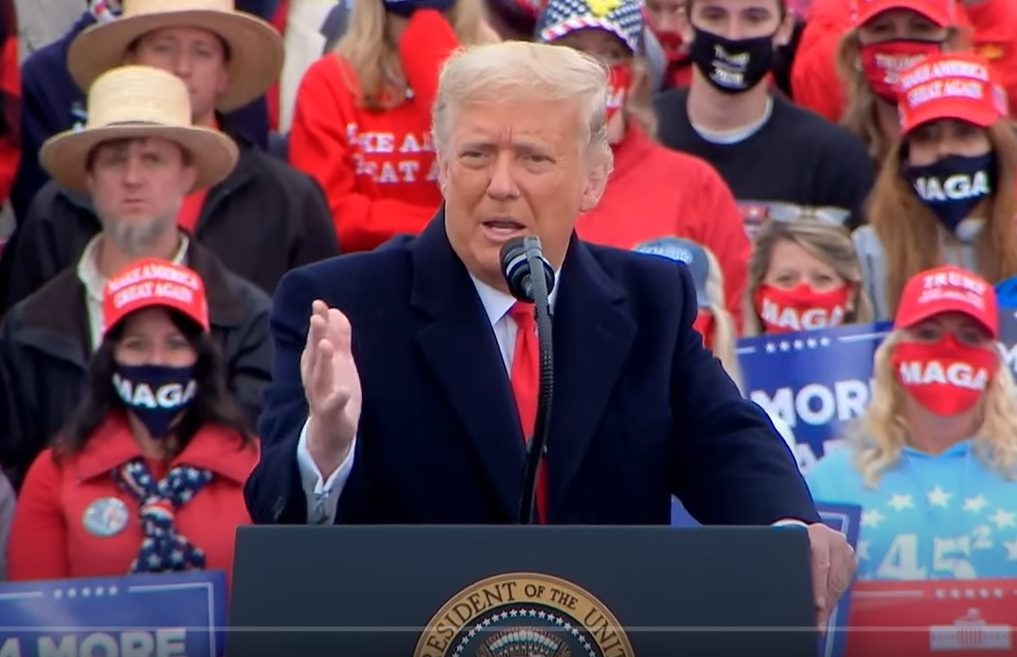
The Democrats and their media allies are trying to convince the American people that President Donald Trump is guilty of inciting an insurrection last week. In both legal terms and in terms of the plain meaning of the English language, their claim is absurd on its face. There are two fundamental reasons for this: Trump did not incite the riots at the Capitol, and the riots were not an insurrection.
The Standard for Incitement
Legally speaking, incitement has an incredibly high bar that none of Trump’s actions since the election come close to meeting. These standards were set by the Supreme Court in its landmark Brandenburg v. Ohio case. Among other things, the decision held that in order to constitute incitement to violence, speech must include intent and specific, not abstract, instructions to act. It also required that the speech in question would likely produce “imminent lawless action,” which went a step further than the previous legal tests for incitement. According to the ruling:
[T]he constitutional guarantees of free speech and free press do not permit a State to forbid or proscribe advocacy of the use of force or of law violation except where such advocacy is directed to inciting or producing imminent lawless action and is likely to incite or produce such action.
So as a legal matter, this seems pretty clear. But what about more generally? In Salon, Amanda Marcotte attempts to make a case that Trump incited an insurrection. She starts with a big claim: “There is no doubt Donald Trump incited the insurrection on January 6. It happened largely in public and is recorded for posterity. Let’s review the record.” But only a paragraph later she writes, “[T]he people who stormed the U.S. Capitol armed with guns, pipe bombs and flex cuffs to take members of Congress and Vice President Mike Pence hostage understood Trump’s wink-and-nudge style loud and clear.”
One cannot incite with a wink and a nudge — not unless those gestures have already been specified to mean a call to violence. In this case, nothing Trump said at his speech before the violence broke out was a specific call for violence, much less insurrection. Part of how we know this is that the vast, vast majority of those who attended his speech (where he called literally for a peaceful protest at the Capitol) did not engage in any violence whatsoever.
What Trump asked his backers to do was to make their voices heard in support of the members of Congress who were working to ensure that the election was a fair one. What happened next was a chaotic mess caused by a small number of violent agitators, a complete and total breakdown of security at the Capitol, and a poor response once things began to get out of hand. Some of that poor response was owing to the fact that the events were surprising. If it was so bloody obvious that Trump was telling people to storm the Capitol, why were we all so shocked and caught off guard when some people did?
This Was No Insurrection
So much for incitement. As to insurrection, at no point was the overthrow of the government of the United States even a remotely possible outcome, not even close. Those cosplaying idiots taking selfies in Speaker Nancy Pelosi’s office and parading around with podiums had no intentions of forming a new government. This was an expression of anger, not a realistic, organized coup attempt. Anyone among the rioters who believed their actions would result in the overthrow of the government, if there were any, were delusional to the point of insanity.
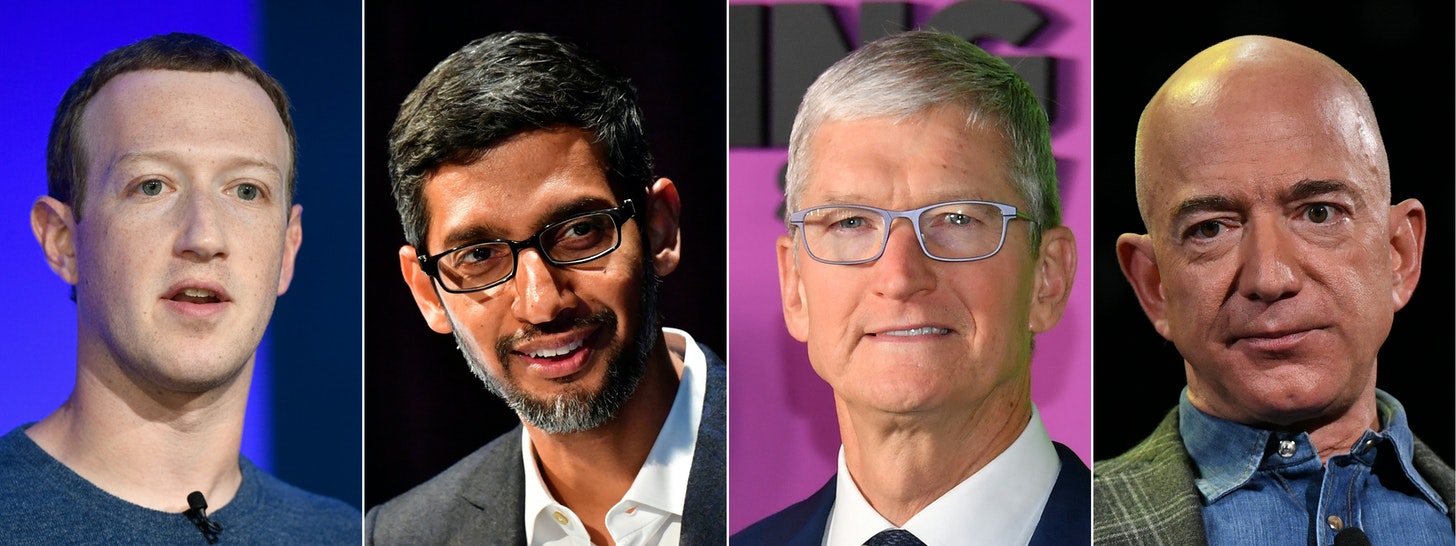
So if it wasn’t incitement and it wasn’t insurrection, why do the Democrats, the corporate media, and the big tech tyrants want you to believe it was? That is quite simple, actually. The purpose is to create an atmosphere of crisis and emergency that gives cover to extreme and illiberal actions to punish and silence those with whom they disagree politically.
And that has worked. Trump is banned from Twitter, as are thousands of his supporters, and big tech has colluded to destroy its competitor, Parler. Democrats are moving forward with an absurd and pointless impeachment, Simon & Schuster has canceled Sen. Josh Hawley’s book that criticizes big tech, and people who merely attended the rally and never stormed the Capitol are being fired and abused.
None of the above actions are just. None of them can be justified. This is not some existential threat to the Republic, and it never was. This is now all about power, about those on the left milking a tragedy for all it’s worth in an attempt to destroy their political rivals. But Americans are a clear-eyed people with a healthy dose of skepticism about those in power. They see what’s going on here. They will not allow the bad actions of a tiny few to fundamentally change forever the country and its freedoms they love.
Editor’s Note: Here’s another level of censorship by Google/YouTube whereby they decide what’s appropriate for viewers to watch or not, then label it as such (especially political content they choose not to agree with). Welcome to 1984 today!.
The COVID-driven centralization of economic power and information control in the hands of a few corporate monopolies poses enduring threats to political freedom.
By Glen Greenwald, Founder of The Intercept
Asserting that Donald Trump is a fascist-like dictator threatening the previously sturdy foundations of U.S. democracy has been a virtual requirement over the last four years to obtain entrance to cable news Green Rooms, sinecures as mainstream newspaper columnists, and popularity in faculty lounges. Yet it has proven to be a preposterous farce.
In 2020 alone, Trump had two perfectly crafted opportunities to seize authoritarian power — a global health pandemic and sprawling protests and sustained riots throughout American cities — and yet did virtually nothing to exploit those opportunities. Actual would-be despots such as Hungary’s Viktor Orbán quickly seized on the virus to declare martial law, while even prior U.S. presidents, to say nothing of foreign tyrants, have used the pretext of much less civil unrest than what we saw this summer to deploy the military in the streets to pacify their own citizenry.
But early in the pandemic, Trump was criticized, especially by Democrats, for failing to assert the draconian powers he had, such as commandeering the means of industrial production under the Defense Production Act of 1950, invoked by Truman to force industry to produce materials needed for the Korean War. In March, The Washington Postreported that “Governors, Democrats in Congress and some Senate Republicans have been urging Trump for at least a week to invoke the act, and his potential 2020 opponent, Joe Biden, came out in favor of it, too,” yet “Trump [gave] a variety of reasons for not doing so.” Rejecting demands to exploit a public health pandemic to assert extraordinary powers is not exactly what one expects from a striving dictator.
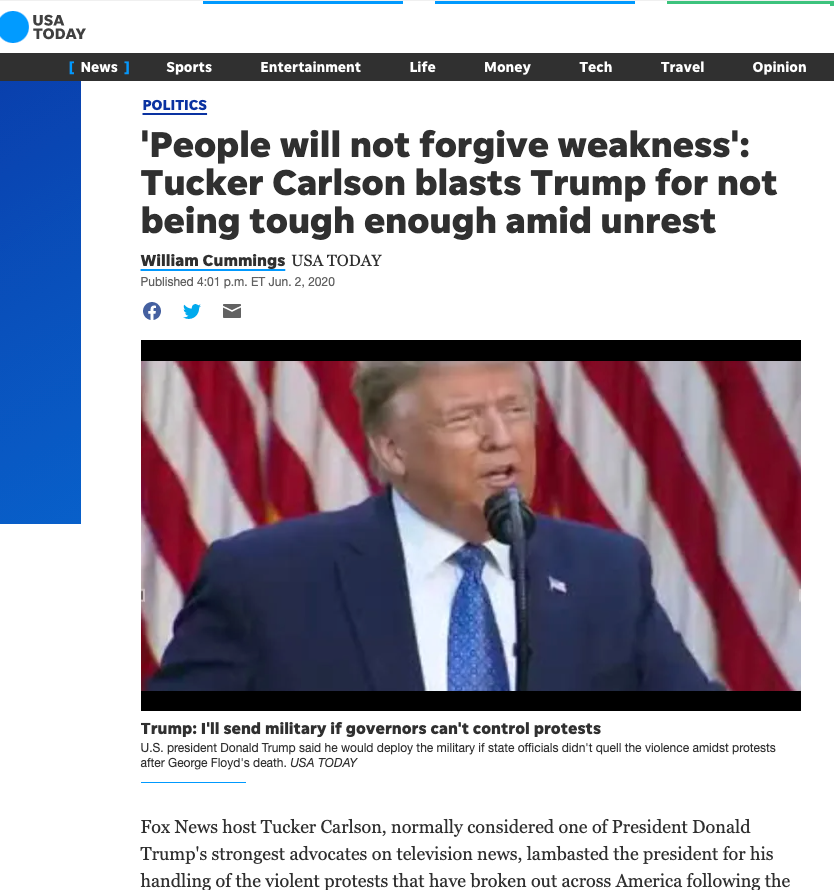
A similar dynamic prevailed during the sustained protests and riots that erupted after the killing of George Floyd. While conservatives such as Sen. Tom Cotton (R-AK), in his controversial New York Times op-ed, urged the mass deployment of the military to quell the protesters, and while Trump threatened to deploy them if governors failed to pacify the riots, Trump failed to order anything more than a few isolated, symbolic gestures such as having troops use tear gas to clear out protesters from Lafayette Park for his now-notorious walk to a church, provoking harsh criticism from the right, including Fox News, for failing to use more aggressive force to restore order.
The hysterical Trump-as-despot script was all melodrama, a ploy for profits and ratings, and, most of all, a potent instrument to distract from the neoliberal ideology that gave rise to Trump in the first place by causing so much wreckage. Positing Trump as a grand aberration from U.S. politics and as the prime author of America’s woes — rather than what he was: a perfectly predictable extension of U.S politics and a symptom of preexisting pathologies — enabled those who have so much blood and economic destruction on their hands not only to evade responsibility for what they did, but to rehabilitate themselves as the guardians of freedom and prosperity and, ultimately, catapult themselves back into power. As of January 20, that is exactly where they will reside.
The Trump administration was by no means free of authoritarianism: his Justice Department prosecuted journalists’ sources; his White House often refused basic transparency; War on Terror and immigration detentions continued without due process. But that is largely because, as I wrote in a Washington Post op-ed in late 2016, the U.S. Government itself is authoritarian after decades of bipartisan expansion of executive powers justified by a posture of endless war. With rare exception, the lawless and power-abusing acts over the last four years were ones that inhere in the U.S. Government and long preceded Trump, not ones invented by him. To the extent Trump was an authoritarian, he was one in the way that all U.S. presidents have been since the War on Terror began and, more accurately, since the start of the Cold War and advent of the permanent national security state.
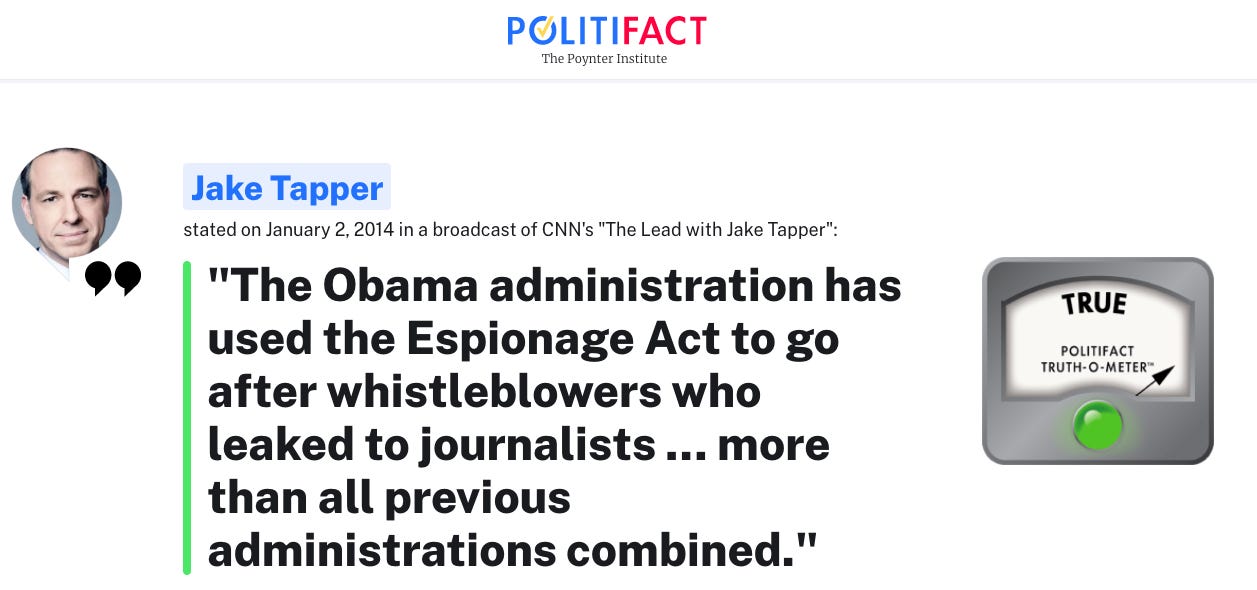
The single most revealing episode exposing this narrative fraud was when journalists and political careerists, including former Obama aides, erupted in outrage on social media upon seeing a photo of immigrant children in cages at the border — only to discover that the photo was not from a Trump concentration camp but an Obama-era detention facility (they were unaccompanied children, not ones separated from their families, but “kids in cages” are “kids in cages” from a moral perspective). And tellingly, the single most actually authoritarian Trump-era event is one that has been largely ignored by the U.S. media: namely, the decision to prosecute Julian Assange under espionage laws (but that, too, is an extension of the unprecedented war on journalism unleashed by the Obama DOJ).
The last gasp for those clinging to the Trump-as-dictator fantasy (which was really hope masquerading as concern, since putting yourself on the front lines, bravely fighting domestic fascism, is more exciting and self-glorifying, not to mention more profitable, than the dreary, mediocre work of railing against an ordinary and largely weak one-term president) was the hysterical warning that Trump was mounting a coup in order to stay in office. Trump’s terrifying “coup” consisted of a series of failed court challenges based on claims of widespread voter fraud — virtually inevitable with new COVID-based voting rules never previously used — and lame attempts to persuade state officials to overturn certified vote totals. There was never a moment when it appeared even remotely plausible that it would succeed, let alone that he could secure the backing of the institutions he would need to do so, particularly senior military leaders.
Whether Trump secretly harbored despotic ambitions is both unknowable and irrelevant. If he did, he never exhibited the slightest ability to carry them out or orchestrate a sustained commitment to executing a democracy-subverting plot. And the most powerful U.S. institutions — the intelligence community and military brass, Silicon Valley, Wall Street, and the corporate media — opposed and subverted him from the start. In sum, U.S. democracy, in whatever form it existed when Trump ascended to the presidency, will endure more or less unchanged once he leaves office on January 20, 2021.
The central point that emerges from our research is that economic elites and organized groups representing business interests have substantial independent impacts on U.S. government policy, while mass-based interest groups and average citizens have little or no independent influence. Our results provide substantial support for theories of Economic-Elite Domination and for theories of Biased Pluralism, but not for theories of Majoritarian Electoral Democracy or Majoritarian Pluralism.
The U.S. Founders most certainly did not envision or desire absolute economic egalitarianism, but many, probably most, feared — long before lobbyists and candidate dependence on corporate SuperPACs — that economic inequality could become so severe, wealth concentrated in the hands of so few, that it would contaminate the political realm, where those vast wealth disparities would be replicated, rendering political rights and legal equality illusory.
But the premises of pre-Trump debates over how grave a problem this is have been rendered utterly obsolete by the new realities of the COVID era. A combination of sustained lockdowns, massive state-mandated transfers of wealth to corporate elites in the name of legislative “COVID relief,” and a radically increased dependence on online activities has rendered corporate behemoths close to unchallengeable in terms of both economic and political power.
The lockdowns from the pandemic have ushered in a collapse of small businesses across the U.S. that has only further fortified the power of corporate giants. “Billionaires increased their wealth by more than a quarter (27.5%) at the height of the crisis from April to July, just as millions of people around the world lost their jobs or were struggling to get by on government schemes,” reportedThe Guardian in September. A study from July told part of the story:
The combined wealth of the world’s super-rich reached a new peak during the coronavirus pandemic, according to a study published by the consulting firm PwC and the Swiss bank UBC on Wednesday. The more than 2,000 billionaires around the world managed to amass fortunes totalling around $10.2 trillion (€8.69 trillion) by July, surpassing the previous record of $8.9 trillion reached in 2017.
Meanwhile, though exact numbers are unknown, “roughly one in five small businesses have closed,” APnotes, adding: “restaurants, bars, beauty shops and other retailers that involve face-to-face contact have been hardest hit at a time when Americans are trying to keep distance from one another.”
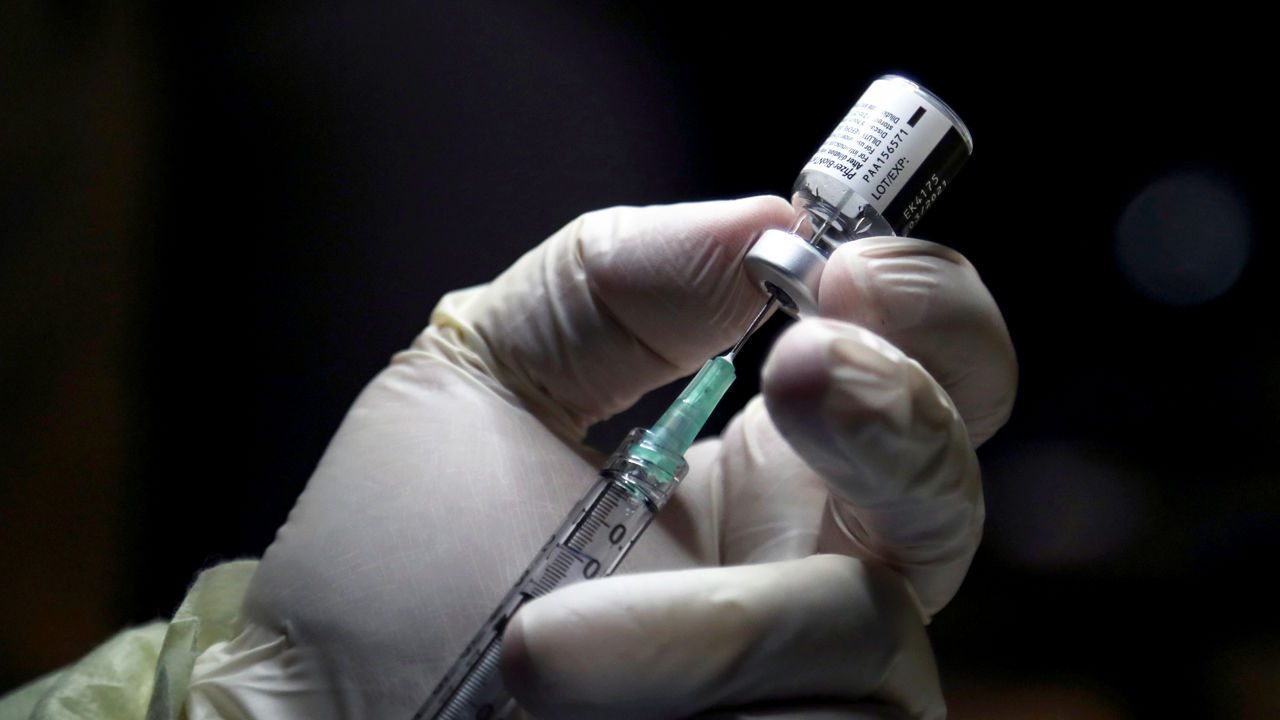
A healthcare worker prepares to administer a Pfizer/BioNTEch coronavirus disease (Covid-19) vaccine at The Michener Institute, in Toronto, Ontario on December 14, 2020. – Ontario, Canada’s most populous province and one of the hardest hit by the pandemic, had 1,940 new cases and 23 deaths on Monday. The province is expected to give its next doses to nursing home workers as a priority, according to media reports. (Photo by CARLOS OSORIO / POOL / AFP) (Photo by CARLOS OSORIO/POOL/AFP via Getty Images)
Editor’s Note: Finally, the first admission that there ARE nanoparticles in the packaging of the mRNA vaccine being administered by both Pfizer and Moderna after months of denying that such will happen.
Severe allergy-like reactions in at least eight people who received the COVID-19 vaccine produced by Pfizer and BioNTech over the past 2 weeks may be due to a compound in the packaging of the messenger RNA (mRNA) that forms the vaccine’s main ingredient, scientists say. A similar mRNA vaccine developed by Moderna, which was authorized for emergency use in the United States on Friday, also contains the compound, polyethylene glycol (PEG).
PEG has never been used before in an approved vaccine, but it is found in many drugs that have occasionally triggered anaphylaxis—a potentially life-threatening reaction that can cause rashes, a plummeting blood pressure, shortness of breath, and a fast heartbeat. Some allergists and immunologists believe a small number of people previously exposed to PEG may have high levels of antibodies against PEG, putting them at risk of an anaphylactic reaction to the vaccine.
Others are skeptical of the link. Still, the U.S. National Institute of Allergy and Infectious Diseases (NIAID) was concerned enough to convene several meetings last week to discuss the allergic reactions with representatives of Pfizer and Moderna, independent scientists and physicians, and the Food and Drug Administration (FDA).
NIAID is also setting up a study in collaboration with FDA to analyze the response to the vaccine in people who have high levels of anti-PEG antibodies or have experienced severe allergic responses to drugs or vaccines before. “Until we know there is truly a PEG story, we need to be very careful in talking about that as a done deal,” says Alkis Togias, branch chief of allergy, asthma, and airway biology at NIAID.
Pfizer, too, says it is “actively seeking follow-up.” A statement emailed to Science noted it already recommends that “appropriate medical treatment and supervision should always be readily available” in case a vaccinee develops anaphylaxis.
Anaphylactic reactions can occur with any vaccine, but are usually extremely rare—about one per 1 million doses. As of 19 December, the United States had seen six cases of anaphylaxis among 272,001 people who received the COVID-19 vaccine, according to a recent presentation by Thomas Clark of the U.S. Centers for Disease Control and Prevention (CDC); the United Kingdom has recorded two. Because the Pfizer and Moderna mRNA vaccines use a new platform, the reactions call for careful scrutiny, says Elizabeth Phillips, a drug hypersensitivity researcher at Vanderbilt University Medical Center who attended an NIAID meeting on 16 December. “This is new.”
News reports about the allergic reactions have already created anxiety. “Patients with severe allergies in the US are getting nervous about the possibility that they may not be able to get vaccinated, at least with those two vaccines,” Togias wrote in an invitation to meeting participants. “Allergies in general are so common in the population that this could create a resistance against the vaccines in the population,” adds Janos Szebeni, an immunologist at Semmelweis University in Budapest, Hungary, who has long studied hypersensitivity reactions to PEG and who also attended the 16 December gathering.
Scientists who believe PEG may be the culprit stress that vaccination should continue. “We need to get vaccinated,” Phillips says. “We need to try and curtail this pandemic.” But more data are urgently needed, she adds: “These next couple of weeks in the U.S. are going to be extremely important for defining what to do next.”
Toothpaste and shampoo
Pfizer’s and Moderna’s clinical trials of the vaccines, which involved tens of thousands of people, did not find serious adverse events caused by the vaccine. But both studies excluded people with a history of allergies to components of the COVID-19 vaccines; Pfizer also excluded those who previously had a severe adverse reaction from any vaccine. People with previous allergic reactions to food or drugs were not excluded, but may have been underrepresented.
The two vaccines both contain mRNA wrapped in lipid nanoparticles (LNPs) that help carry it to human cells but also act as an adjuvant, a vaccine ingredient that bolsters the immune response. The LNPs are “PEGylated”—chemically attached to PEG molecules that cover the outside of the particles and increase their stability and life span.
PEGs are also used in everyday products such as toothpaste and shampoo as thickeners, solvents, softeners, and moisture carriers, and they’ve been used as a laxative for decades. An increasing number of biopharmaceuticals include PEGylated compounds as well.
PEGs were long thought to be biologically inert, but a growing body of evidence suggests they are not. As much as 72% of people have at least some antibodies against PEGs, according to a 2016 study led by Samuel Lai, a pharmaco-engineer at the University of North Carolina, Chapel Hill, presumably as a result of exposure to cosmetics and pharmaceuticals. About 7% have a level that may be high enough to predispose them to anaphylactic reactions, he found. Other studies have also found antibodies against PEG, but at lower levels.
“Some companies have dropped PEGylated products from their pipeline as a result,” Lai says. But he notes that the safety record of many PEGylated drugs has persuaded others that “concerns about anti-PEG antibodies are overstated.”
Szebeni says the mechanism behind PEG-conjugated anaphylaxis is relatively unknown because it does not involve immunoglobulin E (IgE), the antibody type that causes classical allergic reactions. (That’s why he prefers to call them “anaphylactoid” reactions.) Instead, PEG triggers two other classes of antibodies, immunoglobulin M (IgM) and immunoglobulin G (IgG), involved in a branch of the body’s innate immunity called the complement system, which Szebeni has spent decades studying in a pig model he developed.
In 1999, while working at the Walter Reed Army Institute of Research, Szebeni described a new type of drug-induced reaction he dubbed complement activation-related pseudoallergy (CARPA), a nonspecific immune response to nanoparticle-based medicines, often PEGylated, that are mistakenly recognized by the immune system as viruses.
Szebeni believes CARPA explains the severe anaphylactoid reactions some PEGylated drugs are occasionally known to cause, including cancer blockbuster Doxil. A team assembled by Bruce Sullenger, a surgeon at Duke University, experienced similar issues with an experimental anticoagulant containing PEGylated RNA. The team had to halt a phase III trial in 2014 after about 0.6% of 1600 people who received the drug had severe allergic responses and one participant died. “That stopped the trial,” Sullenger says. The team found that every participant with an anaphylaxis had high levels of anti-PEG IgG. But some with no adverse reaction had high levels as well, Sullenger adds. “So, it is not sufficient to just have these antibodies.”
At the NIAID meeting, several attendees stressed that PEGylated nanoparticles may cause problems through a mechanism other than CARPA. Just last month, Phillips and scientists at FDA and other institutions published a paper showing patients who suffered an anaphylactic reaction to PEGylated drugs did have IgE antibodies to PEG after all, suggesting those may be involved, rather than IgG and IgM.
Other scientists, meanwhile, are not convinced PEG is involved at all. “There is a lot of exaggeration when it comes to the risk of PEGs and CARPA,” says Moein Moghimi, a nanomedicine researcher at Newcastle University who suspects a more conventional mechanism is causing the reactions. “You are technically delivering an adjuvant at the injection site to excite the local immune system. It happens that some people get too much excitement, because they have a relatively high number of local immune cells.”
Others note the amount of PEG in the mRNA vaccines is orders of magnitude lower than in most PEGylated drugs. And whereas those drugs are often given intravenously, the two COVID-19 vaccines are injected into a muscle, which leads to a delayed exposure and a much lower level of PEG in the blood, where most anti-PEG antibodies are.
Nevertheless, the companies were aware of the risk. In a stock market prospectus filed on 6 December 2018, Moderna acknowledged the possibility of “reactions to the PEG from some lipids or PEG otherwise associated with the LNP.” And in a September paper, BioNTech researchers proposed an alternative to PEG for therapeutic mRNA delivery, noting: “The PEGylation of nanoparticles can also have substantial disadvantages concerning activity and safety.’”
Katalin Karikó, a senior vice president at BioNTech who co-invented the mRNA technology underlying both vaccines, says she discussed with Szebeni whether PEG in the vaccine could be an issue. (The two know each other well; both are Hungarian and in the 1980s, Karikó taught Szebeni how to make liposomes in her lab.) They agreed that given the low amount of lipid and the intramuscular administration, the risk was negligible.
Karikó emphasizes that based on what we know so far, the risk is still low. “All vaccines carry some risk. But the benefit of the vaccine outweighs the risk,” she says.
Szebeni agrees, but says he hopes that’s also true in the long run. He notes that both mRNA vaccines require two shots, and he worries anti-PEG antibodies triggered by the first shot could increase the risk of an allergic reaction to the second or to PEGylated drugs.
Stay for 30 minutes.
To understand the risk, Phillips says, it’s crucial to unravel the mechanisms underlying the immune reactions and find out how often they are likely to occur. The known U.S. cases are currently under study, but key clues may have vanished: Anaphylactic reactions produce biomarkers that only remain in the blood for a few hours. At the NIAID meeting, participants discussed ways to ensure that blood samples from future cases are taken immediately and tested for those markers.
If PEG does turn out to be the culprit, the question is, what can be done? Screening millions of people for anti-PEG antibodies before they are vaccinated is not feasible. Instead, CDC guidelinesrecommend not giving the Pfizer or Moderna vaccines to anyone with a history of severe allergic reaction to any component of the vaccine. For people who have had a severe reaction to another vaccine or injectable medication, the risks and benefits of vaccination should be carefully weighed, CDC says. And people who might be at high risk of an anaphylactic reaction should stay at the vaccination site for 30 minutes after their shot so they can be treated if necessary.
“At least [anaphylaxis] is something that happens quickly,” Philips says. “So, it’s something that you can be very much alerted to, prepared to recognize early and be prepared to treat early.”
Attorney L. Lin Wood sits down for an exclusive interview with Joshua Philipp on the 2020 US presidential elections, the possibility of martial law, the Georgia Senate runoff, China’s infiltration of America, and why he fights for the truth.
Director of National Intelligence John Ratcliffe said Thursday that data collected by various intelligence agencies indicate there was a lot foreign interference in our election this year, but not everyone within the intelligence community wants Americans to know that.
What a pathetic reason to withhold information from the American people who pay them.
“Well DNI Ratcliffe leads the 17 intelligence agencies and he has access to the most highly classified information that is held by the US government. And he told CBS News that there was foreign interference by China, Iran, and Russia in November of this year and he is anticipating a public report on those findings in January,” CBS News investigative reporter Catherine Herridge said.
Ratcliffe’s statement, if accurate, contradicts a former Homeland Security cyber official President Trump fired last month after he claimed that no such interference occurred.
Christopher Krebs, the recently-fired top cybersecurity official during the presidential election, testified before the Senate’s Homeland Security and Governmental Affairs Committee on Wednesday.
“While elections are sometimes messy, this was a secure election,” Krebs said.
On a Nov. 27 “60 minutes” interview, Krebs was asked what he thought of the Trump legal team’s allegations that votes were tabulated in foreign countries and were manipulated.
“So, all votes in the United States of America are counted in the United States of America,” Krebs said. “I don’t understand this claim. All votes in the United States of America are counted in the United States of America. Period.”
“So, again, there’s no evidence that any machine that I’m aware of, has been manipulated by a foreign power. Period,” he added.
Somebody’s not being honest, and we tend to think maybe it’s Krebs.
Why? Consider some other information.
— The intelligence community was supposed to report to the president, via a 2018 executive order, no later than 45 days after the election (that’s Friday) whether there was any foreign interference. Office of DNI spokeswoman Amanda Schoch says that the 17 agencies under Ratcliffe’s control won’t have their reports completed by then, which is complete BS given that tracking of foreign electronic incursions into the U.S. are ongoing so the agencies knew Nov. 3 whether interference had occurred.
— As Breitbart News reports: “There is allegedly ‘ample’ raw intelligence about China’s intentions and actions related to the election, with more intelligence reporting coming in everyday [sic]. Some of the influence operations include social media campaigns seeking to amplify messages such as that President Donald Trump is a white supremacist. … Ratcliffe is concerned that proper tradecraft — which would require that the disagreement be reflected in the report with both views represented — will not be followed simply in order to deprive President Trump of a potential political talking point.”
Got that? The deep state morons who think they, and not the president, should be in charge have decided to skip his mandated deadline and politicize the final intelligence product to deprive Trump of a “talking point.”
Our institutions are broken, period. They no longer function on behalf of the American people, but rather as instruments to perpetuate the concentration of power in an unseen elite.
Whether or not the efforts to expose what certainly appears to be, based on evidence and affidavits, widespread vote and election fraud this year on behalf of President Donald Trump are ultimately successful, the people closest to him are refusing to give up the fight.That includes the president’s top trade adviser, Peter Navarro.
On Thursday, Navarro released and discussed a 36-page report that “assesses the fairness and integrity of the 2020 Presidential Election by examining six dimensions of alleged election irregularities across six key battleground states” and concludes that “patterns of election irregularities … are so consistent across the six battleground states that they suggest a coordinated strategy to, if not steal the election, strategically game the election process in such a way as to … unfairly tilt the playing field in favor of the Biden-Harris ticket.”
The six dimensions of voting irregularities in the report include: outright voter fraud, ballot mishandling, contestable process fouls, equal protection clause violations, voting machine irregularities, and significant statistical anomalies.
All six of those voting issues were present in at least two key states, according to the report, and a total of six battleground states experienced multiple examples of the other dimensions.
“Evidence used to conduct this assessment includes more than 50 lawsuits and judicial rulings, thousands of affidavits and declarations,1 testimony in a variety of state venues, published analyses by think tanks and legal centers, videos and photos, public comments, and extensive press coverage,” the report claims.
Also, Navarro’s report cites numerous affidavits that allege the exploitation of the elderly and the infirm by “effectively hijacking their identities and votes” while accusing Democrats of politicizing the COVID-19 pandemic so they could challenge state election laws to, among other things, relax voter ID requirements to the point that ballot harvesting and fraud occur without notice.
The report also detailed instances that occurred in battleground states Trump won last time like Wisconsin and Pennsylvania, where his legal teams in those states have discovered that ballots were harvested illegally and then dumped into drop boxes that themselves were unmonitored and a violation of state laws.
Legal teams also found reams of evidence that dead people voted by the thousands.
“In Pennsylvania, for example, a statistical analysis conducted by the Trump Campaign matching voter rolls to public obituaries found what appears to be over 8,000 confirmed dead voters successfully casting mail-in ballots,” the report claims. “In Georgia — underscoring the critical role any given category of election irregularities might play in determining the outcome — the estimated number of alleged deceased individuals casting votes almost exactly equals the Biden victory margin.
In conclusion, the report says: “The ballots in question because of the identified election irregularities are more than sufficient to swing the outcome in favor of President Trump should even a relatively small portion of these ballots be ruled illegal.”
Now – what will be done? Anything? Does our judicial system even function any longer? How about our political system – has it crumbled as well? What about the legal system?
Because if none of them truly function in a non-partisan manner any longer, then We the People have already control of our country.
It started with an unprecedented global pandemic caused by the CCP virus, and it’s concluding with the U.S. presidential election, which has captivated the world.
On election night, on Nov. 3, an assortment of anomalies were observed, followed by a large number of specific allegations of election fraud. As the integrity of the election continued to be questioned and evidence continued to emerge, most mainstream media stuck to a one-sided narrative by calling the 2020 election the most secure in American history, and sought to silence opposing voices.
The results of the 2020 election will not only decide the future of the United States, but also determine the future of the world.
Following election night, The Epoch Times’ investigative team quickly went to work. In an attempt to uncover the issues behind the election, investigative reporter Joshua Phillip traveled across the country to swing states to interview whistleblowers, big data experts, and election experts.
This is the first investigative documentary published on election integrity in the 2020 U.S. presidential election.
Why was the vote count halted in key swing states on election night? What are the problems and potential fraud associated with mail-in ballots? Is Dominion Voting Systems secure or not? What lies behind the $400 million received by the parent company of Dominion Voting Systems less than a month before the election? Who is trying to manipulate the U.S. election behind the scenes? Who is the benefactor of an increasingly divided American society? What will become of America at this historical juncture?
What choice should you, I, and every American patriot make? The Epoch Times’ investigative team presents to you a detailed investigative report.


 Liberty International News