Fake news is real — Artificial Intelligence is going to make it much worse | CNBC

“The Boy Who Cried Wolf” has long been a staple on nursery room shelves for a reason: It teaches kids that joking too much about a possible threat may turn people ignorant when the threat becomes an actual danger.

President Donald Trump has been warning about “fake news” throughout his entire political career putting a dark cloud over the journalism professional. And now the real wolf might be just around the corner that industry experts should be alarmed about.

The threat is called “deepfaking,” a product of AI and machine learning advancements that allows high-tech computers to produce completely false yet remarkably realistic videos depicting events that never happened or people saying things they never said. A viral video starring Jordan Peele and “Barack Obama” warned against this technology in 2018, but the message was not enough to keep Jim Carrey from starring in “The Shining” earlier this week.

The danger goes far beyond manipulating 1980s thrillers. Deepfake technology is allowing organizations that produce fake news to augment their “reporting” with seemingly legitimate videos, blurring the line between reality and fiction like never before — and placing the reputation of journalists and the media at greater risk.

Ben Zhao, a computer science professor at the University of Chicago, thinks the age of getting news on social media makes consumers very susceptible to this sort of manipulation.

“What the last couple years has shown is basically fake news is quite compelling even in [the] absence of actual proof. … So the bar is low,” Zhao said.

The bar to produce a convincing doctored video is lower than people might assume.

Earlier this year a clip purporting to show Democratic leader Nancy Pelosi slurring her words when speaking to the press was shared widely on social media, including at one point by Trump’s attorney Rudy Giuliani. However, closer inspection revealed that the video had been slowed to 75% of its normal speed to achieve this slurring effect, according to the Washington Post. Even with the real video now widely accessible, Hany Farid, a professor at UC Berkeley’s School of Information and a digital forensics expert, said he still regularly receives emails from people insisting the slowed video is the legitimate one.

“Even in these relatively simple cases, we are struggling to sort of set the record straight,” Farid said.

It would take a significant amount of expertise for a fake news outlet to produce a completely fabricated video of Oprah Winfrey endorsing Trump, but researchers say the technology is improving every day. At the University of Washington, computer vision researchers are developing this technology for positive, or at least benign, uses like making video conferencing more realistic and letting students talk to famous historical figures. But this research also leads to questions about potential dangers, as the attempts made by attackers are expected to continually improve.

How to detect a deepfake

To make one of these fake videos, computers digest thousands of still images of a subject to help researchers build a 3-D model of the person. This method has some limitations, according to Zhao, who noted the subjects in many deepfake videos today never blink, since almost all photographs are taken with a person’s eyes open.

However, Farid said these holes in the technology are being filled incredibly rapidly.

“If you asked me this question six months ago, I would’ve said, ‘Yeah, [the technology] is super cool, but there’s a lot of artifacts, and if you’re paying attention, you can probably tell that there’s something wrong,’” Farid said. “But I would say we are … quickly but surely getting to the point where the average person is going to have trouble distinguishing.”

In fact, Zhao said researchers believe the shortcomings that make deepfake videos look slightly off to the eye can readily be fixed with better technology and better hardware.

“The minute that someone says, ‘Here’s a research paper telling you about how to detect this kind of fake video,’ that is when the attackers look at the paper and say, ‘Thank you for pointing out my flaw. I will take that into account in my next-generation video, and I will go find enough input … so that the next generation of my video will not have the same problem,’” Zhao said.

“Once we live in an age where videos and images and audio can’t be trusted … well, then everything can be fake.” – Hany Farid, Professor at UC Berkeley’s School of Information

One of the more recent developments in this field is in generating speech for a video. To replicate a figure such as Trump’s voice, computers can now simply analyze hundreds of hours of him speaking. Then researchers can type out what they want Trump to say, and the computer will make it sound as if he actually said it. Facebook, Google and Microsoft have all more or less perfected this technology, according to Farid.

Manipulated videos of this sort aren’t exactly new — Forest Gump didn’t actually meet JFK, after all. However, Farid says this technology is hitting its stride, and that makes the danger new.

“To me the threat is not so much ‘Oh, there’s this new phenomenon called deepfakes,’” Farid said. “It’s the injection of that technology into an existing environment of mistrust, misinformation, social media, a highly polarized electorate, and now I think there’s a real sort of amplification factor because when you hear people say things, it raises the level of belief to a whole new level.”

The prospect of widespread availability of this technology is raising eyebrows, too. Tech-savvy hobbyists have long been using deepfakes to manufacture pornography, a consistent and comically predictable trend for new technology. But Zhao believes it is only a matter of time before the research-caliber technology gets packaged and released for mass-video manipulation in much broader contexts.

“At some point someone will basically take all these technologies and integrate and do the legwork to build a sort of fairly sophisticated single model, one-stop shop … and when that thing hits and becomes easily accessible to many, then I think you’ll see this becoming much more prevalent,” Zhao said. “And there’s nothing really stopping that right now.”

Facing a massive consumer trust issue

When this happens, the journalism industry is going to face a massive consumer trust issue, according to Zhao. He fears it will be hard for top-tier media outlets to distinguish a real video from a doctored one, let alone news consumers who haphazardly stumble across the video on Twitter.

“Once we live in an age where videos and images and audio can’t be trusted … well, then everything can be fake,” Farid said. “We can have different opinions, but we can’t have different facts. And I think that’s sort of the world we’re entering into when we can’t believe anything that we see.”

Zhao has spent a great deal of time speaking with prosecutors, judges — the legal profession is another sector where the implications are huge — reporters and other professors to get a sense for every nuance of the issue. However, despite his clear understanding of the danger deepfakes pose, he is still unsure of how news outlets will go about reacting to the threat.

“Certainly, I think what can happen is … there will be even less trust in sort of mainstream media, the main news outlets, legitimate journalists [that] sort of react and report real-time stories because there is a sense that anything that they have seen … could be in fact made up,” Zhao said.

Then it becomes a question of how the press deal with the disputes over reality.

“And if it’s someone’s word, an actual eyewitness’ word versus a video, which do you believe, and how do you as an organization go about verifying the authenticity or the illegitimacy of a particularly audio or video?” Zhao asked.

Defeating the deepfakes

Part of this solution may be found in the ledger technology that provides the digital infrastructure to support cryptocurrencies like bitcoin — the blockchain. Many industries are touting blockchain as a sort of technological Tylenol. Though few understand exactly how it works, many swear it will solve their problems.

Farid said companies like photo and video verification platform Truepic, to which he serves as an advisor, are using the blockchain to create and store digital signatures for authentically shot videos as they are being recorded, which makes them much easier to verify later. Both Zhao and Farid are hoping social platforms like Facebook and Twitter will then promote these videos that are verified as authentic over non-verified videos, helping to halt the spread of deepfakes.

“The person creating the fake always has the upper hand,” Farid said. “Playing defense is really, really hard. So I think in the end our goal is not to eliminate these things, but it’s to manage the threat.”

Until this happens, Zhao said the fight against genuinely fake news may not start on a ledger, but in stronger consumer awareness and journalists banding together to better verify sources through third parties.

“One of the hopes that I have for defeating this type of content is that people are just so inundated with news coverage and information about these types of videos that they become fundamentally much more skeptical about what a video means and they will look closer,” Zhao said. “There has to be that level of scrutiny by the consumer for us to have any chance of fighting back against this type of fake content.”

Nicholas Diakopoulos, assistant professor in Northwestern University’s School of Communication and expert on the future of journalism, said via email that the best solutions involve a mix of educational and sociotechnical advances.

“There are a variety of perceptual cues that can be tip-offs to a deepfake and we should be teaching those broadly to the public,” he said.

Diakopoulos has referenced Farid’s work on photo forensics among ideas outlined in an article he wrote for the Columbia Journalism Review last year. He also cited a research project called FaceForensics that uses machine learning to detect, with 98.1% accuracy, whether a video of a face is real. Another research technique under study: Blood flow in video of a person’s face can be analyzed in order to see if pixels periodically get redder when the heart pumps blood.

“On the sociotechnical side, we need to develop advanced forensics techniques that can help debunk synthesized media when put into the hands of trained professionals,” he told CNBC. “Rapid response teams of journalists should be trained and ready to use these tools during the 2020 elections so they can debunk disinformation as quickly as possible.”

Diakopoulos has studied the implications of deepfakes for the 2020 electionsspecifically. He also has written papers on how journalists need to think when “reporting in a machine reality.”

And he remains optimistic.

“If news organizations develop clear and transparent policies of their efforts using such tools to ensure the veracity of the content they publish, this should help buttress their trustworthiness. In an era when we can’t believe our eyes when we see something online, news organizations that are properly prepared, equipped and staffed are poised to become even more trusted sources of information.”

Source: CNBC

Appeals court dismisses emoluments lawsuit involving Trump’s D.C. hotel | The Washington Post

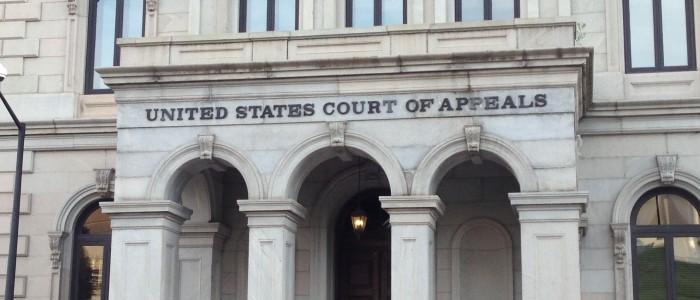
A federal appeals court Wednesday sided with President Trump, dismissing a lawsuit claiming the president is illegally profiting from foreign and state government visitors at his luxury hotel in downtown Washington.

The unanimous ruling from the U.S. Court of Appeals for the 4th Circuit is a victory for the president in a novel case brought by the attorneys general of Maryland and the District of Columbia involving anti-corruption provisions in the emoluments clauses of the U.S. Constitution.

In its ruling, the three-judge panel said the attorneys general lacked legal grounds to bring the lawsuit alleging the president is violating the Constitution when his business accepts payments from state and foreign governments. The decision — from Judges Paul V. Niemeyer, Dennis W. Shedd and A. Marvin Quattlebaum Jr. — also stops dozens of subpoenas to federal government agencies and Trump’s private business entities demanding financial records related to the D.C. hotel.

“The District and Maryland’s interest in enforcing the Emoluments Clauses is so attenuated and abstract that their prosecution of this case readily provokes the question of whether this action against the President is an appropriate use of the courts, which were created to resolve real cases and controversies between the parties,” Niemeyer wrote in the 36-page opinion.

President Trump quickly took to Twitter to celebrate the ruling, referring to the lawsuit as “ridiculous” and “a big part of the Deep State and Democrat induced Witch Hunt.”

“I don’t make money, but lose a fortune for the honor of serving and doing a great job as your President (including accepting Zero salary!),” he wrote.

The president has stepped back from day-to-day management of the Trump International Hoteland his other businesses, but he maintains ownership.

Maryland Attorney General Brian E. Frosh and D.C. Attorney General Karl A. Racine, both Democrats, said in a joint statement after the ruling that the three-judge panel “got it wrong.”

“Although the court described a litany of ways in which this case is unique, it failed to acknowledge the most extraordinary circumstance of all: President Trump is brazenly profiting from the Office of the President in ways that no other President in history ever imagined and that the founders expressly sought — in the Constitution — to prohibit,” they said.

“We will continue to pursue our legal options to hold him accountable.”

The three judges on the panel that heard oral argument in March were nominated to the bench by Republican presidents — Niemeyer by President George H.W. Bush, Shedd by President George W. Bush and Quattlebaum by Trump. Frosh and Racine have said they would consider appealing for a rehearing by a full panel of the 4th Circuit and would not be surprised to see the case reach the Supreme Court.

The president faces multiple legal challenges related to his private business. A federal appeals court in Washington is considering a separate “emoluments” lawsuit brought by congressional Democrats, who this week began issuing dozens of subpoenas for financial records from the president’s private entities.

The case extends beyond the D.C. hotel and is based on a different theory of standing. The Democratic lawmakers say the president is violating the Constitution because it gives Congress the right to approve — or withhold — consent before the president accepts payments or benefits from foreign governments.

Despite the legal challenges his company faces, to this point Trump has been able to prevent the release of any private business information to the courts, leaving Democrats to wonder whether he will be affected by any of the inquiries before he faces reelection next year.

At the 4th Circuit, Trump’s attorneys were appealing a ruling from a District Court judge in Maryland who allowed the case to move forward and adopted a broad definition of the emoluments ban to include “profit, gain, or advantage” received “directly or indirectly” from foreign, federal or state governments.

The Richmond-based 4th Circuit, which reviews cases from Maryland, Virginia, West Virginia and the Carolinas, was specifically reviewing whether Maryland and the District of Columbia had legal grounds, or standing, to sue the president in the first place.

At least a half-dozen countries have booked large blocks of rooms or meeting space at Trump’s D.C. hotel, among them Saudi Arabia, Kuwait, Malaysia and the Republic of Georgia. Three years in a row, the Kuwaiti government held its National Day celebration there, and the plaintiffs allege that the 2017 event alone cost between $40,000 and $60,000.

The plaintiffs argued that these payments are violations of the foreign emoluments clause, while the Justice Department calls them market-rate deals that should not be considered emoluments.

The hotel occupies the Old Post Office Pavilion, a federal building leased to Trump’s business, in an arrangement that plaintiffs argue violates the domestic emoluments clause. The lease was signed before Trump entered office and stipulates that “no . . . elected official of the Government of the United States” shall benefit from the deal.

The General Services Administration, under Trump, ruled that the deal was in compliance.

The court’s ruling, however, centered on whether the plaintiffs had standing to bring their case against the president — not the merits of whether Trump is violating the Constitution with his business dealings. The 4th Circuit issued two rulings Wednesday — one dismissing the case against the president in his official capacity and the other in his individual capacity.

U.S. District Judge Peter J. Messitte had granted Maryland and the District of Columbia standing in part because Trump’s D.C. hotel could be taking foreign government business from convention centers and hotels in their jurisdictions as foreign leaders may be incentivized to spend money at the president’s property.

But the appeals court disagreed, writing that the attorneys general had failed to show that Trump’s conduct had harmed the financial interests of Maryland and the District and that intervening, by forcing the president to forgo his ownership, for instance, would make a difference.

“There is a distinct possibility — which was completely ignored by the District and Maryland, as well as by the district court — that certain government officials might avoid patronizing the Hotel because of the President’s association with it,” the court said.

“Even if government officials were patronizing the Hotel to curry the President’s favor, there is no reason to conclude that they would cease doing so were the President enjoined from receiving income from the Hotel. After all, the Hotel would still be publicly associated with the President, would still bear his name, and would still financially benefit members of his family.”

Source: The Washington Post

Study touts planting 1 trillion trees as most effective climate change solution | The Hill

Healthy green trees in a forest of old spruce, fir and pine trees in wilderness of a national park. Sustainable industry, ecosystem and healthy environment concepts and background.

The cheapest way to halt the effects of climate change could be planting 1 trillion trees, according to a new study.

The study in the journal Science, first reported by The Associated Press, found that planting trees could be the most effective way to remove carbon from the atmosphere, but cautioned that it would have little effect without a reduction of emissions around the globe.

“This is by far — by thousands of times — the cheapest climate change solution” study co-author Thomas Crowther, an ecologist at the Swiss Federal Institute of Technology, said.

“It’s certainly a monumental challenge, which is exactly the scale of the problem of climate change,” he added.

Though, Crowther cautioned, “None of this works without emissions cuts.”

Scientists with the United Nations have called for a major reduction in carbon emissions over the next decade to stave off the worst effects of climate change, including rising sea levels and dangerous weather phenomena.

Lawmakers around the world have debated on how to address the issue, and in 2017 the U.S. withdrew from a major accord meant to battle climate change due to President Trump‘s opposition to the pact.

Democratic candidates for president, including former Vice President Joe Biden, have called for the U.S. to rejoin the agreement. Progressives are pushing an ambitious plan to cut U.S. carbon emissions, the Green New Deal, introduced earlier this year by Sen. Ed Markey (D-Mass.) and Rep. Alexandria Ocasio-Cortez (D-N.Y.).

If enacted, the Green New Deal calls for the transition of America’s energy grid away from fossil fuels to renewable energy.

Source: The Hill

Planting Billions of Trees Is the ‘Best Climate Change Solution Available Today,’ Study Finds | EcoWatch

Planting more than 500 billion trees could remove around 25 percent of existing carbon from the atmosphere, a new study has found. What’s more: there’s enough space to do it.

The study, published in Science Friday, set out to assess how much new forest the earth could support without encroaching on farmland or urban areas and came up with a figure of 0.9 billion hectares, an area roughly the size of the U.S., BBC News reported. That makes reforestation “the most effective solution” for mitigating the climate crisis, the researchers concluded.

“Our study shows clearly that forest restoration is the best climate change solution available today and it provides hard evidence to justify investment,” senior study author and ETH-Zürich Professor Tom Crowther said, as BBC News reported. “If we act now, this could cut carbon dioxide in the atmosphere by up to 25 percent, to levels last seen almost a century ago.”

The new trees would remove around 200 gigatonnes of carbon, or two thirds of what humans have pumped into the atmosphere since the industrial revolution.

However, the researchers emphasized that tree planting was not a replacement for reducing greenhouse gas emissions or phasing out the use of fossil fuels.

“None of this works without emissions cuts,” Crowther told Time.

Even if tree planting began today, it would take 50 to 100 years for the new trees to soak up those 200 gigatonnes of carbon, he told The Guardian. And, as National Geographic pointed out, the researchers found that potential tree-planting land could shrink by one-fifth by 2050 even if global temperature rise is limited to 1.5 degrees Celsius above pre-industrial levels, as some tropical areas could grow too hot to support forests.

Even so, Crowther said tree planting was an important means of immediate climate action.

It’s “a climate change solution that doesn’t require President Trump to immediately start believing in climate change, or scientists to come up with technological solutions to draw carbon dioxide out of the atmosphere,” Crowther told The Guardian. “It is available now, it is the cheapest one possible and every one of us can get involved.”

Assistant-Director General at the UN Food and Agriculture Organization René Castro praised the study’s utility.

“We now have definitive evidence of the potential land area for re-growing forests, where they could exist and how much carbon they could store,” Castro said, as The Guardian reported.

To reach their conclusions, the researchers first looked at around 80,000 satellite photographs of protected forest areas around the world to assess the tree cover in each. They then used Google Earth Engine mapping software to develop a model for predicting where new trees could grow, National Geographic explained. They found that more than half of the world’s reforestation potential was located in six countries: China, the U.S., Russia, Australia, Canada and Brazil.

However, trends are moving in the opposite direction in Brazil, where deforestation is on the rise under the right-wing government of President Jair Bolsonaro. Recent satellite images show that a football-field-sized swath of the Amazon is being lost every minute, according to National Geographic.

Bolsonaro has also been hostile to the rights of indigenous communities to the forest. But such rights are essential for conservation: deforestation rates are much lower in forests that recognize indigenous claims.

“We have served as guardians of these lands for generations … We also understand how to restore them to health,” Joan Carling, a member of the Kankanaey tribe in the Philippines and co-convener of the Indigenous Peoples Major Group for Sustainable Development, told National Geographic by email. “With the security of our lands and resources, we can prevent destructive logging, mining, agri-business, and other projects from occurring in our territories.”

Political realities are why some scientists criticized the optimism of Crowther’s findings.

“Planting trees to soak up two-thirds of the entire anthropogenic carbon burden to date sounds too good to be true. Probably because it is,” University of Reading professor Martin Lukac told BBC News. “This far, humans have enhanced forest cover on a large scale only by shrinking their population size (Russia), increasing productivity of industrial agriculture (the West) or by direct order of an autocratic government (China). None of these activities look remotely feasible or sustainable at global scale.”

University College London professor Simon Lewis, meanwhile, said that the amount of carbon the study said trees would absorb was too high. He said the study had not accounted for the carbon already in the soil before trees were planted or the hundreds of years it would take for the trees to achieve their full storage potential, The Guardian reported.

Source: EcoWatch

Trump Administration Accomplishments | The White House

  • Almost 4 million jobs created since election.
  • More Americans are now employed than ever recorded before in our history.
  • We have created more than 400,000 manufacturing jobs since my election.
  • Manufacturing jobs growing at the fastest rate in more than THREE DECADES.
  • Economic growth last quarter hit 4.2 percent.
  • New unemployment claims recently hit a 49-year low.
  • Median household income has hit highest level ever recorded.
  • African-American unemployment has recently achieved the lowest rate ever recorded.
  • Hispanic-American unemployment is at the lowest rate ever recorded.
  • Asian-American unemployment recently achieved the lowest rate ever recorded.
  • Women’s unemployment recently reached the lowest rate in 65 years.
  • Youth unemployment has recently hit the lowest rate in nearly half a century.
  • Lowest unemployment rate ever recorded for Americans without a high school diploma.
  • Under my Administration, veterans’ unemployment recently reached its lowest rate in nearly 20 years.
  • Almost 3.9 million Americans have been lifted off food stamps since the election.
  • The Pledge to America’s Workers has resulted in employers committing to train more than 4 million Americans. We are committed to VOCATIONAL education.
  • 95 percent of U.S. manufacturers are optimistic about the future—the highest ever.
  • Retail sales surged last month, up another 6 percent over last year.
  • Signed the biggest package of tax cuts and reforms in history. After tax cuts, over $300 billion poured back in to the U.S. in the first quarter alone.
  • As a result of our tax bill, small businesses will have the lowest top marginal tax rate in more than 80 years.
  • Helped win U.S. bid for the 2028 Summer Olympics in Los Angeles.
  • Helped win U.S.-Mexico-Canada’s united bid for 2026 World Cup.
  • Opened ANWR and approved Keystone XL and Dakota Access Pipelines.
  • Record number of regulations eliminated.
  • Enacted regulatory relief for community banks and credit unions.
  • Obamacare individual mandate penalty GONE.
  • My Administration is providing more affordable healthcare options for Americans through association health plans and short-term duration plans.
  • Last month, the FDA approved more affordable generic drugs than ever before in history. And thanks to our efforts, many drug companies are freezing or reversing planned price increases.
  • We reformed the Medicare program to stop hospitals from overcharging low-income seniors on their drugs—saving seniors hundreds of millions of dollars this year alone.
  • Signed Right-To-Try legislation.
  • Secured $6 billion in NEW funding to fight the opioid epidemic.
  • We have reduced high-dose opioid prescriptions by 16 percent during my first year in office.
  • Signed VA Choice Act and VA Accountability Act, expanded VA telehealth services, walk-in-clinics, and same-day urgent primary and mental health care.
  • Increased our coal exports by 60 percent; U.S. oil production recently reached all-time high.
  • United States is a net natural gas exporter for the first time since 1957.
  • Withdrew the United States from the job-killing Paris Climate Accord.
  • Cancelled the illegal, anti-coal, so-called Clean Power Plan.
  • Secured record $700 billion in military funding; $716 billion next year.
  • NATO allies are spending $69 billion more on defense since 2016.
  • Process has begun to make the Space Force the 6th branch of the Armed Forces.
  • Confirmed more circuit court judges than any other new administration.
  • Confirmed Supreme Court Justice Neil Gorsuch and nominated Judge Brett Kavanaugh.
  • Withdrew from the horrible, one-sided Iran Deal.
  • Moved U.S. Embassy to Jerusalem.
  • Protecting Americans from terrorists with the Travel Ban, upheld by Supreme Court.
  • Issued Executive Order to keep open Guantanamo Bay.
  • Concluded a historic U.S.-Mexico Trade Deal to replace NAFTA. And negotiations with Canada are underway as we speak.
  • Reached a breakthrough agreement with the E.U. to increase U.S. exports.
  • Imposed tariffs on foreign steel and aluminum to protect our national security.
  • Imposed tariffs on China in response to China’s forced technology transfer, intellectual property theft, and their chronically abusive trade practices.
  • Net exports are on track to increase by $59 billion this year.
  • Improved vetting and screening for refugees, and switched focus to overseas resettlement.
  • We have begun BUILDING THE WALL. Republicans want STRONG BORDERS and NO CRIME. Democrats want OPEN BORDERS which equals MASSIVE CRIME.

Source: The White House

NY Times admits it sends stories to US government (i.e. national security officials) for approval before publication | The Gray Zone

new-york-times-buildingBy Ben Norton

Editor’s Note: We’ve long understood the entanglement between the mainstream press and the national security system. This article gives us some deeper insight.

The New York Times has publicly acknowledged that it sends some of its stories to the US government for approval from “national security officials” before publication.

This confirms what veteran New York Times correspondents like James Risen have said: The American newspaper of record regularly collaborates with the US government, suppressing reporting that top officials don’t want made public.

On June 15, the Times reported that the US government is escalating its cyber attacks on Russia’s power grid. According to the article, “the Trump administration is using new authorities to deploy cybertools more aggressively,” as part of a larger “digital Cold War between Washington and Moscow.”

In response to the report, Donald Trump attacked the Times on Twitter, calling the article “a virtual act of Treason.”

The New York Times PR office replied to Trump from its official Twitter account, defending the story and noting that it had, in fact, been cleared with the US government before being printed.

“Accusing the press of treason is dangerous,” the Times communications team said. “We described the article to the government before publication.”

“As our story notes, President Trump’s own national security officials said there were no concerns,” the Times added.

Indeed, the Times report on the escalating American cyber attacks against Russia is attributed to “current and former [US] government officials.” The scoop in fact came from these apparatchiks, not from a leak or the dogged investigation of an intrepid reporter.

‘Real’ journalists get approval from ‘national security’ officials

The neoliberal self-declared “Resistance” jumped on Trump’s reckless accusation of treason (the Democratic Coalition, which boasts, “We help run #TheResistance,” responded by calling Trump “Putin’s puppet”). The rest of the corporate media went wild.

But what was entirely overlooked was the most revealing thing in the New York Times’ statement: The newspaper of record was essentially admitting that it has a symbiotic relationship with the US government.

In fact, some prominent American pundits have gone so far as to insist that this symbiotic relationship is precisely what makes someone a journalist.

In May, neoconservative Washington Post columnist Marc Thiessen — a former speechwriter for President George W. Bush — declared that WikiLeaks publisher and political prisoner Julian Assange is “not a journalist”; rather, he is a “spy” who “deserves prison.” (Thiessen also once called Assange “the devil.”)

What was the Post columnist’s rationale for revoking Assange’s journalistic credentials?

Unlike “reputable news organizations, Assange did not give the U.S. government an opportunity to review the classified information WikiLeaks was planning to release so they could raise national security objections,” Thiessen wrote. “So responsible journalists have nothing to fear.”

In other words, this former US government speechwriter turned corporate media pundit insists that collaborating with the government, and censoring your reporting to protect so-called “national security,” is definitionally what makes you a journalist.

This is the express ideology of the American commentariat.

NY Times editors ‘quite willing to cooperate with the government’

The symbiotic relationship between the US corporate media and the government has been known for some time. American intelligence agencies play the press like a musical instrument, using it it to selectively leak information at opportune moments to push US soft power and advance Washington’s interests.

But rarely is this symbiotic relationship so casually and publicly acknowledged.

In 2018, former New York Times reporter James Risen published a 15,000-word article in The Intercept providing further insight into how this unspoken alliance operates.

Risen detailed how his editors had been “quite willing to cooperate with the government.” In fact, a top CIA official even told Risen that his rule of thumb for approving a covert operation was, “How will this look on the front page of the New York Times?”

There is an “informal arrangement” between the state and the press, Risen explained, where US government officials “regularly engaged in quiet negotiations with the press to try to stop the publication of sensitive national security stories.”

“At the time, I usually went along with these negotiations,” the former New York Times reported said. He recalled an example of a story he was writing on Afghanistan just prior to the September 11, 2001 attacks. Then-CIA Director George Tenet called Risen personally and asked him to kill the story.

“He told me the disclosure would threaten the safety of the CIA officers in Afghanistan,” Risen said. “I agreed.”

Risen said he later questioned whether or not this was the right decision. “If I had reported the story before 9/11, the CIA would have been angry, but it might have led to a public debate about whether the United States was doing enough to capture or kill bin Laden,” he wrote. “That public debate might have forced the CIA to take the effort to get bin Laden more seriously.”

This dilemma led Risen to reconsider responding to US government requests to censor stories. “And that ultimately set me on a collision course with the editors at the New York Times,” he said.

“After the 9/11 attacks, the Bush administration began asking the press to kill stories more frequently,” Risen continued. “They did it so often that I became convinced the administration was invoking national security to quash stories that were merely politically embarrassing.”

In the lead-up to the Iraq War, Risen frequently “clashed” with Times editors because he raised questions about the US government’s lies. But his stories “stories raising questions about the intelligence, particularly the administration’s claims of a link between Iraq and Al Qaeda, were being cut, buried, or held out of the paper altogether.”

The Times’ executive editor Howell Raines “was believed by many at the paper to prefer stories that supported the case for war,” Risen said.

In another anecdote, the former Times journalist recalled a scoop he had uncovered on a botched CIA plot. The Bush administration got wind of it and called him to the White House, where then-National Security Adviser Condoleezza Rice ordered the Times to bury the story.

Risen said Rice told him “to forget about the story, destroy my notes, and never make another phone call to discuss the matter with anyone.”

“The Bush administration was successfully convincing the press to hold or kill national security stories,” Risen wrote. And the Barack Obama administration subsequently accelerated the “war on the press.”

CIA media infiltration and manufacturing consent

In their renowned study of US media, “Manufacturing Consent: The Political Economy of the Mass Media,” Edward S. Herman and Chomsky articulated a “propaganda model,” showing how “the media serve, and propagandize on behalf of, the powerful societal interests that control and finance them,” through “the selection of right-thinking personnel and by the editors’ and working journalists’ internalization of priorities and definitions of newsworthiness that conform to the institution’s policy.”

But in some cases, the relationship between US intelligence agencies and the corporate media is not just one of mere ideological policing, indirect pressure, or friendship, but rather one of employment.

In the 1950s, the CIA launched a covert operation called Project Mockingbird, in which it surveilled, influenced, and manipulated American journalists and media coverage, explicitly in order to direct public opinion against the Soviet Union, China, and the growing international communist movement.

Legendary journalist Carl Bernstein, a former Washington Post reporter who helped uncover the Watergate scandal, published a major cover story for Rolling Stone in 1977 titled “The CIA and the Media: How America’s Most Powerful News Media Worked Hand in Glove with the Central Intelligence Agency and Why the Church Committee Covered It Up.”

Bernstein obtained CIA documents that revealed that more than 400 American journalists in the previous 25 years had “secretly carried out assignments for the Central Intelligence Agency.”

Bernstein wrote:

“Some of these journalists’ relationships with the Agency were tacit; some were explicit. There was cooperation, accommodation and overlap. Journalists provided a full range of clandestine services—from simple intelligence gathering to serving as go‑betweens with spies in Communist countries. Reporters shared their notebooks with the CIA. Editors shared their staffs. Some of the journalists were Pulitzer Prize winners, distinguished reporters who considered themselves ambassadors without‑portfolio for their country. Most were less exalted: foreign correspondents who found that their association with the Agency helped their work; stringers and freelancers who were as interested in the derring‑do of the spy business as in filing articles; and, the smallest category, full‑time CIA employees masquerading as journalists abroad. In many instances, CIA documents show, journalists were engaged to perform tasks for the CIA with the consent of the managements of America’s leading news organizations.”

Virtually all major US media outlets cooperated with the CIA, Bernstein revealed, including ABC, NBC, the AP, UPI, Reuters, Newsweek, Hearst newspapers, the Miami Herald, the Saturday Evening Post, and the New York Herald‑Tribune.

However, he added, “By far the most valuable of these associations, according to CIA officials, have been with the New York Times, CBS and Time Inc.”

These layers of state manipulation, censorship, and even direct crafting of the news media show that, as much as they claim to be independent, The New York Times and other outlets effectively serve as de facto spokespeople for the government — or at least for the US national security state.

Source: The Gray Zone
Emails Show FBI-Media Collusion against Trump, CA Begins 1.5 Million Inactive Voter Cleanup | Judicial Watch

Source: Judicial Watch/YouTube

Supreme Court rules in case watched for impact on Trump pardons | Politico

The Supreme Court ruled Monday in a closely watched “double jeopardy” case, issuing a decision that preserves states’ power to limit the impact of future pardons by President Donald Trump or his successors.

In a 7-2 ruling, the justices declined to disturb a longstanding legal principle known as dual sovereignty, which allows state governments to bring their own charges against defendants already tried or convicted in federal court, or vice versa.

Lawyers for an Alabama man facing a gun charge in federal court after pleading guilty to the same offense in state court — resulting in a nearly three-year extension of his prison sentence — failed in their effort to persuade the justices to hold that the Constitution’s prohibition on double jeopardy prevents such follow-on prosecutions.

The federal government had argued that overturning the dual-sovereignty doctrine would upend the country’s federalist system, and that the phenomenon of overcriminalization makes states’ ability to preserve their own sphere of influence and prevent federal encroachment on law enforcement more important.

Democrats and others bracing for potential pardons by Trump of individuals convicted in former special counsel Robert Mueller’s investigation were tracking the case, Terance Gamble v. U.S., because a decision overturning the dual sovereigns rule could have complicated efforts by state prosecutors to blunt the impact of any attempt Trump may make to grant clemency to those targeted by Mueller’s team.

Still, the high court case was not seen as make-or-break for state prosecutions because Mueller didn’t bring charges on every potential crime he uncovered. In addition, the federal prosecution of former Trump campaign chairman Paul Manafort resulted in a combination of jury convictions, guilty pleas, mistried charges and dismissals as part of a plea deal.

The complex result in Manafort’s case left fertile ground for New York prosecutors, who jumped into the breach in March with a 16-count indictment charging the longtime lobbyist and political consultant with mortgage fraud, falsifying business records and other crimes. The offenses seemed to partially overlap with crimes Manafort was charged with in federal court in Virginia.

Manafort’s lawyers in the state case have indicated they plan to argue that the indictment obtained by Manhattan District Attorney Cyrus Vance Jr. violates a New York law that limits state prosecutions of crimes already prosecuted at the federal level.

New York’s Democrat-controlled Legislature has been trying to alter that law to limit its application in cases where a defendant receives a presidential pardon or commutation.

A bill aimed at doing that won formal approval last month from both chambers of the state legislature but has not yet been sent to Gov. Andrew Cuomo, who has signaled he plans to sign it. The measure includes language seeking to cover individuals already convicted, tried or who pleaded guilty, but it’s unclear whether applying the law that way is constitutional.

The bulk of the opinions the justices issued Monday were focused on historical evidence about whether the founders expected that dual prosecutions would be permitted or forbidden by the Constitution.

“Gamble’s historical arguments must overcome numerous ‘major decisions of this Court’ spanning 170 years,” Justice Samuel Alito wrote on behalf of the seven-justice majority. “In light of these factors, Gamble’s historical evidence must, at a minimum, be better than middling. And it is not.”

The decision drew separate dissents from justices at opposite ends of the court’s ideological spectrum: liberal Ruth Bader Ginsburg and conservative Neil Gorsuch.

“It is the doctrine’s premise that each government has — and must be allowed to vindicate — a distinct interest in enforcing its own criminal laws,” Ginsburg wrote. “That is a peculiar way to look at the Double Jeopardy Clause, which by its terms safeguards the ‘person’ and restrains the government.” She argued that the legal precedent was weak, noting that “early American courts regarded with disfavor the prospect of successive prosecutions by the Federal and State Governments” and that, with regard to concerns about federal and state governments interfering with each other, “cooperation between authorities is the norm.”

Gorsuch, meanwhile, argued that “a free society does not allow its government to try the same individual for the same crime until it’s happy with the result. Unfortunately, the Court today endorses a colossal exception to this ancient rule against double jeopardy.”

He added that the separate sovereigns exception “finds no meaningful support in the text of the Constitution,” unlike the Constitution’s ban on double jeopardy.

Fordham University law professor Jed Shugerman told POLITICO that the Gamble decision will have “no real impact on Trump cases.” Manafort is still facing state prosecutions in New York and Virginia, which have their own jeopardy rules, he noted. And former national security adviser Michael Flynn’s guilty plea to one count of making false statements to the FBI was limited to federal law, Shugerman said. The same appears true of Roger Stone’s prosecution on false statement and witness tampering charges, he added.

“Trump and others aren’t getting prosecuted federally anyway before 2021, so they haven’t faced a single jeopardy yet,” Shugerman said. “A pardon wouldn’t create jeopardy, so they’d still face state prosecutions post-pardons.”

Some opponents of the proposed New York changes urged legislators to hold off passing them until the Supreme Court ruled in the case decided Monday. Experts said the decision might encourage more states to tinker with their double-jeopardy limits.

“The big question may be how states react to this ruling, and whether it will incentivize some states to ban trials by separate sovereigns of the same defendant for the same conduct, or, now that the Court has said the federal Constitution isn’t offended, whether states that already have such bans might relax them,” said University of Texas law professor Stephen Vladeck.

Source: Politico

Assange psychologically tortured to ‘breaking point’ by ‘democratic states,’ UN rapporteur tells RT | RT.com

Jailed WikiLeaks co-founder Julian Assange shows clear signs of degrading and inhumane treatment which only adds to his deteriorating health, UN Special Rapporteur on Torture Nils Melzer told RT.

Assange has “all the symptoms typical for a person who has been exposed to prolonged psychological torture,” Melzer told RT’s Afshin Rattansi. This adds to the toll of his deteriorating physical state caused by a lack of adequate medical care for several years, he said.

Melzer said he was judging from two decades of experience in working with POWs and political prisoners, and only after applying “scientific” UN methods to assess Assange’s condition. But the journalist’s case still “shocked” him.

An individual has been isolated and singled out by several democratic states, and persecuted systematically… to the point of breaking him.

Earlier this month, a UK court sentenced the WikiLeaks co-founder to nearly a year in jail for skipping bail in 2012. The courts are now deciding whether to extradite Assange to the US where he is wanted for 17 charges under the Espionage Act. He can end up serving up to 175 years in prison if proven guilty.

Also in May, Sweden reopened an investigation into the allegations of rape by Assange, which he denies. The probe was originally dropped in 2017.

WikiLeaks warned that the journalist’s health had “significantly deteriorated” during the seven years he spent living in the Ecuadorian Embassy in London, and continued to worsen after he was evicted in April and placed in a British prison. According to WikiLeaks, he was recently moved to the prison’s “hospital wing.”


European Parliament elections: 5 takeaways from the results | NBC News

The dust has settled on the world’s second largestdemocratic exercise, a continent-wide vote that has left Europe’s political landscape reshaped.

Last week, some 373 million citizens across 28 countries took part in elections for the European Parliament, which makes laws that bind the political and economic bloc. The results rolled in on Sunday night.

Far-right populists had some wins, but it wasn’t quite the dramatic, widespread surge seen in recent elections at the national and local level across the continent.

What is clear is that the mainstream parties from the center-left and center-right hemorrhaged votes, with much of their support going to a fragmented collection of environmentalists and pro-European Union liberals.

Here are five key takeaways.

1. The far-right surge never quite came

Steve Bannon, the former adviser to President Donald Trump, called for these elections to be a referendum endorsing his right-wing populist vision for Europe. But while there were some victories for this camp, the full-blown tsunami that some predicted failed to materialize.

Right-wing populists fell short of expectations in Austria, the Netherlands and Denmark, while Germany’s AfD party made only slight gains.

Even in France, where Marine le Pen’s National Rally came first, beating President Emmanuel Macron’s En Marche party, its provisional vote share was down on the last European Parliament elections in 2014.

“The big story is that the nationalist populists have not managed to turn this into a referendum on the E.U.,” said Jose Ignacio Torreblanca, a senior policy fellow at the European Council on Foreign Relations, a Brussels-based think tank. “People like Bannon have failed.”

That said, while the gains might not have been as dramatic as some forecast, the election arguably cemented far-right populism as a European force that isn’t going away soon. Such parties are often anti-migrant, anti-Muslim and anti-E.U., or at least wish to radically reshape the bloc from within.

There were clear victories for the right in Poland, Hungary and Italy. “The rules are changing in Europe,” said Matteo Salvini, the leader of Italy’s far-right League party which got around 34 percent of the vote there. “A new Europe is born.”

Britain’s Brexit Party was also victorious, securing around one-third of the vote and relegating the ruling Conservatives to fifth place at a dismal 9 percent. However, the U.K. should perhaps be seen as a special case due to the country’s protracted and messy attempts to leave the European Union.

2. The collapse of the mainstream

For the first time, the traditional center-left and center-right parties will not have a majority in the European Parliament’s 751-seat chamber.

The Social Democrats and the European People’s Party, groupings which have dominated for years, lost 39 and 36 seats respectively, according to provisional results.

“This is a profound change,” said Janis A. Emmanouilidis, director of studies at the European Policy Centre, another Brussels-based think tank. “The two biggest parties have lost a significant number of seats.”

However, voters often use the E.U. elections to give major parties a bloody nose, secure in the knowledge that it will not cause upheaval in their own national parliaments.

Even so, Sunday’s results represented a seismic rejection of the traditional ruling parties across the continent.

“We are facing a shrinking center of the European Union parliament,” Manfred Weber, chairman of the European People’s Party said. “From now on, those who want to have a strong European Union have to join forces.”

The one exception was in Spain, where the Socialists looked set to gain 20 of the country’s 54 seats. The Socialists belong to the wider Social Democrats group, however, for whom the general outlook was far more bleak.

“If you lose an election, if you lose seats, you have to be modest,” added Frans Timmermans, the lead candidate for the Social Democrats. “We have lost seats and this means that we have to be humble.”

3. More than Green shoots

Riding something of an environmentalist wave washing over Europe, the continent’s Green group made big gains.

This was most evident in Germany, where the Greens doubled their provisional vote share to 21 percent and overtook the country’s traditional center-left Social Democrats in the process.

In France and Britain, the Greens also did well, placing third and fourth respectively. More subtly, environmental issues were given increased prominence in the manifestos of other parties, too.

This shift comes on the back of months of demonstrations demanding action over climate change. In May, the United Nations released a report warning 1 million species of plants and animals were under threat of extinction.

“We will work tirelessly. For people. For Europe. For our planet!” the European Greens tweeted.

4. Pro-E.U. liberals make gains

Another group that mopped up support from the traditional parties was the pro-Europe, pro-business liberal centrists.

Parties allied with the Alliance of Liberals and Democrats for Europe — known as ALDE — looked set to increase their number of seats from 68 to 109, although this was largely thanks to Macron’s En Marche party joining them.

ALDE is led by Guy Verhofstadt, one of the E.U.’s most ardent defenders against populist forces that wish to dismantle or disrupt the union.

The boost in support suggests that voters, especially young people, came out to back their side of the argument.

“When Europe is threatened, you have seen the youth mobilizing to defend it,” said Torreblanca at the European Council on Foreign Relations.

The BBC also reported that turnout in the U.K. surged in areas that supported the country staying in the E.U. in the 2016 Brexit referendum. Britain’s Liberal Democrats came second with 20 percent of the vote. They were one of the parties to explicitly oppose Brexit, and gained huge support in Remain-backing areas, including beating Labour in that party’s erstwhile stronghold of London.

5. Good luck trying to govern now

This was the first time in Europe’s history that turnout for these elections has risen, climbing from 43 percent to an encouraging 51 percent.

“This is noteworthy,” said Emmanouilidis at the European Policy Centre, calling the leap “remarkably higher.”

Yet the results spell a European Parliament that is going to be far more fragmented than it has been in recent years.

The two centrist giants bled support and will be unable to form the kind of “grand coalition” that they had before. Instead they might need another coalition partner or two, meaning more compromise and room for disagreement on key issues.

Timmermans, of the Social Democrats, has already ruled out attempting to build a coalition with the far-right, calling instead for a “progressive” grouping to be formed.

“It will become quite messy,” said Emmanouilidis, describing attempts to find consensus in Brussels “an uphill struggle” at the best of times.

Source: NBC News