Venezuela’s collapse worst outside of war in decades: Economists say | Business Standard & The New York Times

Editor’s Note: The radical leftists, socialists, communists, Marxists and Democrats wish to take America down this road. Remember the former Soviet Union under Lenin and Stalin. Remember Communist China under Mao. Remember Venezuela and other socialist failures before you vote for this.

Venezuelas fall due to poor governance, corruption and the misguided policies of President Nicolas Maduro and his predecessor Hugo Chavez is the single largest economic collapse outside of war in 45 years, outpacing Zimbabwes crumbling under Robert Mugabe, Cubas disastrous unravelling in the 1990s and the fall of the Soviet Union, economists say.

“It’s really hard to think of a human tragedy of this scale outside civil war,” said Kenneth Rogoff, an economics professor at Harvard University and former chief economist at the International Monetary Fund (IMF).

“This will be a touchstone of disastrous policies for decades to come.”

To find similar levels of economic devastation, economists at the IMF pointed to nations that were ripped apart by war, like Libya earlier this decade or Lebanon in the 1970s, the New York Times reported on Friday.

But Venezuela, at one point Latin America’s wealthiest country, has not been shattered by armed conflict. Instead, economists say, the poor governance, corruption and misguided policies of Maduro and Chavez have increased inflation, shuttered businesses and brought the country to its knees.

And in recent months, the Donald Trump administration has tried to cripple it further by imposing stiff sanctions.

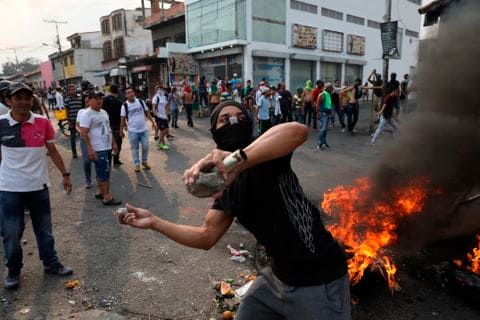
As Venezuela’s economy plummeted, armed gangs took control of entire towns, public services collapsed and the purchasing power of most Venezuelans has been reduced to a couple of kg of flour a month.

In markets, butchers hit by regular blackouts struggle to sell decomposing stock by sunset. Former labourers scavenge through garbage dumps for leftovers and recyclable plastic.

Dejected retailers make dozens of trips to the bank in hopes of depositing several pounds’ worth of bills made worthless by hyperinflation, the report said.

The crisis has escalated due to American sanctions intended to force Maduro to cede power to the nation’s opposition leader, Juan Guaido. The US sanctions on Venezuela’s state oil company have made it difficult for the government to sell its main commodity, oil.

Together with the American ban on trading Venezuelan bonds, the Trump administration has made it harder for Venezuela to import any goods, including food and medication.

Maduro blames the widespread hunger and lack of medical supplies on the US and its opposition allies – but most independent economists say the recession began years before the sanctions, which at most accelerated the collapse.

Venezuela has the world’s largest proven oil reserves. But its oil output, once Latin America’s largest, has fallen faster in the past year than Iraq’s after the American invasion in 2003, according to data from the Organization of Petroleum Exporting Countries.

It has lost a tenth of its population in the past two years as people fled, setting off Latin America’s biggest ever refugee crisis.

The country’s hyperinflation — expected to reach 10 million per cent this year according to the IMF — is on track to become the longest period of runaway price rises.

“This is essentially a total collapse in consumption,” said Sergi Lanau, Deputy Chief Economist at the Institute of International Finance, a financial trade association.

The institute estimates that the drop in Venezuela’s economic output under Maduro has undergone “the steepest decline by any country not at war since at least 1975”.

By year’s end, Venezuela’s gross domestic product will shrink by 62 per cent since the beginning of the recession in 2013, which coincided with Maduro coming to power, according to the institute’s estimates.

Source: Business Standard & The New York Times

Tulsi Gabbard Says She’d Drop All Charges Against Assange and Snowden as President | The Mind Unleashed

Editor’s Note: An interesting discussion of whether to reward or punish whistleblowers such as Snowden or Assange. Gabbard suggests that we encourage truth telling by insiders. I agree with her.

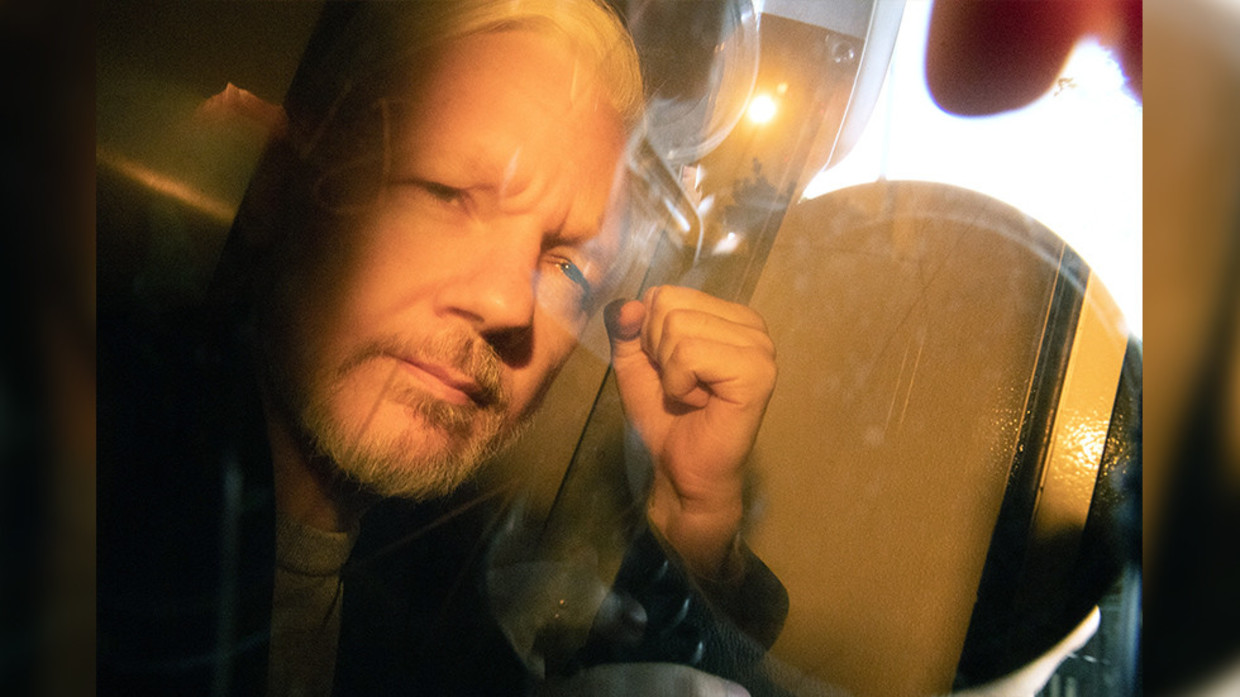
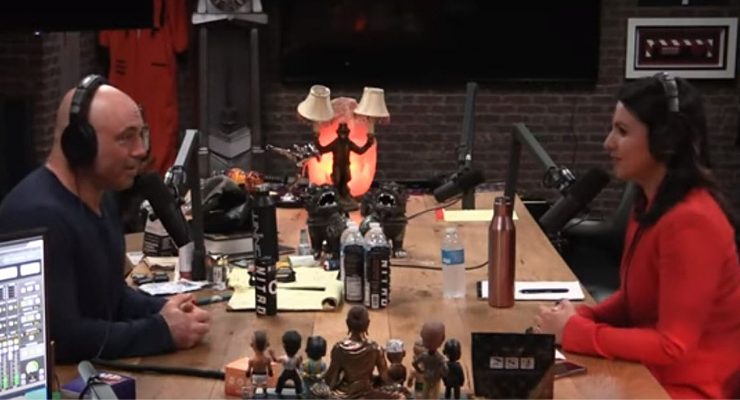
In midst of an interesting and wide-ranging discussion on the Joe Rogan Experience, Democratic congresswoman and presidential candidate Tulsi Gabbard said that if elected president she would drop all charges against NSA whistleblower Edward Snowden and WikiLeaks founder Julian Assange.

“What would you do about Julian Assange? What would you do about Edward Snowden?” Rogan asked in the latter part of the episode.

“As far as dropping the charges?” Gabbard asked.

“If you’re president of the world right now, what do you do?”

“Yeah, dropping the charges,” Gabbard replied.

Rogan noted that Sweden’s preliminary investigation of rape allegations has just been re-opened, saying the US government can’t stop that, and Gabbard said as president she’d drop the US charges leveled against Assange by the Trump administration.

“Yeah,” Gabbard said when asked to clarify if she was also saying that she’d give Edward Snowden a presidential pardon, adding, “And I think we’ve got to address why he did things the way that he did them. And you hear the same thing from Chelsea Manning, how there is not an actual channel for whistleblowers like them to bring forward information that exposes egregious abuses of our constitutional rights and liberties. Period. There was not a channel for that to happen in a real way, and that’s why they ended up taking the path that they did, and suffering the consequences.”

This came at the end of a lengthy discussion about WikiLeaks and the dangerous legal precedent that the Trump administration is setting for press freedoms by prosecuting Assange, as well as the revelations about NSA surveillance and what can be done to roll back those unchecked surveillance powers.

“What happened with [Assange’s] arrest and all the stuff that just went down I think poses a great threat to our freedom of the press and to our freedom of speech,” Gabbard said. “We look at what happened under the previous administration, under Obama. You know, they were trying to find ways to go after Assange and WikiLeaks, but ultimately they chose not to seek to extradite him or charge him, because they recognized what a slippery slope that begins when you have a government in a position to levy criminal charges and consequences against someone who’s publishing information or saying things that the government doesn’t want you to say, and sharing information the government doesn’t want you to share.

And so the fact that the Trump administration has chosen to ignore that fact, to ignore how important it is that we uphold our freedoms, freedom of the press and freedom of speech, and go after him, it has a very chilling effect on both journalists and publishers. And you can look to those in traditional media and also those in new media, and also every one of us as Americans. It was a kind of a warning call, saying Look what happened to this guy. It could happen to you. It could happen to any one of us.”

Gabbard discussed Mike Pompeo’s arbitrary designation of WikiLeaks as a hostile non-state intelligence service, the fact that James Clapper lied to Congress about NSA surveillance as Director of National Intelligence yet suffered no consequences and remains a respected TV pundit, and the opaque and unaccountable nature of FISA warrants.

Some other noteworthy parts of Gabbard’s JRE appearance for people who don’t have time to watch the whole thing, with hyperlinks to the times in the video:

  • Rogan gets Gabbard talking in depth about what Bashar al-Assad was actually like when she met him and what he said to her, which I don’t think I’ve ever seen anyone bother to do before.
  • The two discuss Eisenhower’s famous speech warning of the dangers of the military-industrial complex, and actually pause their dialogue to watch a good portion of it. Gabbard points out that in the original draft of the speech, Eisenhower had intended to call it the “congressional-military-industrial complex”.
  • Good discussion on internet censorship and the dangers of allowing monopolistic Silicon Valley corporations to control public speech, then later discussing the possibility of breaking up these corporations or treating them as public utilities.
  • Rogan asks Gabbard what she thinks happens to US presidents that causes them to fail to enact their campaign promises and capitulate to the will of the warmongering establishment, and what as president she’ll do to avoid the same fate. All presidential candidates should have to answer this question.
  • Rogan asks Gabbard how she’ll stand against the billionaires for the American people without getting assassinated. All presidential candidates should have to answer this question as well.

I honestly think the entire American political system would be better off if the phoney debate stage format were completely abandoned and presidential candidates just talked one-on-one with Joe Rogan for two and a half hours instead. Cut through all the vapid posturing and the fake questions about nonsense nobody cares about and get them to go deep with a normal human being who smokes pot and curses and does sports commentary for cage fighting. Rogan asked Gabbard a bunch of questions that real people are interested in, in a format where she was encouraged to relax out of her standard politician’s posture and discuss significant ideas sincerely and spontaneously. It was a good discussion with an interesting political figure and I’m glad it’s already racked up hundreds of thousands of views.

Source: The Mind Unleashed

‘No future for dissidents’ on social media: Paul Joseph Watson reflects on Facebook ban

Popular internet pundit Paul Joseph Watson is mulling legal action after being banned from Facebook for spreading “hate,” telling RT that it’s clear social media platforms are cracking down on dissident political speech.

Facebook kicked Watson off its platform on May 2 – along with conservative commentator Laura Loomer, Infowars founder Alex Jones, and black nationalist leader Louis Farrakhan. The group was accused of spreading “hateful” content, although no warnings or concrete reasons were provided for their seemingly arbitrary bans.

Watson, who runs a YouTube channel that boasts more than 1.5 million subscribers, has become a well-known but polarizing commentator on culture and politics. A long-time Infowars contributor, Watson now has his own outlet, Summit News.

Although he’s been labeled as an “alt-right” conspiracy theorist, Watson insists that he’s been smeared – and de-platformed – simply because he holds contrarian views.

“There is clearly no future for dissident personalities on any major social media network. We will have to go back to mailing lists and websites as our primary, and perhaps only platforms for delivering content,” he said.

He told RT that he’s hired the “best media lawyers in London” who “have taken on numerous media giants in the past and won” and will advise him about what legal recourse he has against Facebook.

The first step towards suing Facebook over his ban, according to Watson, is to initiate a written request, called a Subject Access Request, which requires the company to release all information relevant to the individual’s case under Section 7 of the Data Protection Act.

The information would be needed to verify if an individual violated community standards or if the company merely made a politically-motivated decision. Watson also intends to put Facebook on notice about the harm they have caused to his reputation by putting him under the category of “dangerous individuals,” which is one of Facebook’s stated reasons for banning people under the company’s community standards.

The list Facebook has made for what counts as “dangerous individuals” includes: Terrorist activity, organized hate, mass or serial murder, human trafficking, and organized violence or criminal activity. Facebook would have to verifiably prove that the banned person engaged in any of these activities, or the decision could count as defamation of character.

The hate watchdog organization Southern Poverty Law Centre (SLPC) has publicly admitted it was behind the censorship. In its statement, the SPLC writes how the banning of these individuals shows that social media companies are responding to their “pressure,” but adds that they nonetheless haven’t done enough, claiming they “have more work to do against hateful content.”

“The SPLC is not a fact-checker, it’s a hyper-partisan political attack dog which solely exists to demonize its ideological adversaries. There is no way to hold them accountable, they are accountable only to their own agenda and bias,” Watson said.

Twitter has reportedly dropped the SPLC as a reliable source for detecting hate content online and to police its platform, but other social media giants like Facebook, Google, and Amazon have continued to use the watchdog to decide what content should be kept on their sites.

Facebook has also recently come under fire from its co-founder Chris Hughes, who wrote an exclusive op-ed in The New York Times on Thursday calling for Facebook’s monopoly to be broken up, as its CEO Mark Zuckerberg has “unilateral control over free speech,” adding that his power is “unprecedented and un-American.”

“Personally, if and when I am banned on everything, I will probably just move into the background until the environment is once again fertile and if big enough alternative platforms exist which actually support free speech,” Watson added.

Facebook isn’t the only social media platform to face accusations of shutting down political speech it doesn’t like: In April, the company banned two conservative British candidates running for European Parliament, Tommy Robinson and Carl Benjamin, less than a month before the election.

The site banned Alex Jones and all Infowars accounts in September 2018.

Source: RT.com

Jerrold Nadler: another socialist in Congress | Metro Voice

Editor’s Note: What is particularly disturbing is that the Judiciary Committee chairman was associated with the Socialist Party long before he was a U.S. Congressman. Afterwards, he led the Congressional Progressive Caucus which from a policy standpoint is synonymous with the Socialist Party. 

Jerrold Nadler, the socialist we will be exposing may surprise many people that really do not know who they elected. Let us hope that becomes true so we can get rid of these socialists within our Congress and Senate and replace them with people who will follow the Constitution rather than the ideology of the socialists they work for.

It was way back in the 1940s when the Socialist Party realized that the Democratic Party had begun to follow the same ideology as the Socialist Party. Just how can we make such a strong statement about the Democratic Party? It is simple.  It started with the man who tossed his Socialist Party into the Democratic Party after making the following statement.

“Norman Thomas, the six-time Socialist Party candidate for U.S. President, said the following in a 1944 speech:

“The American people will never knowingly adopt socialism. But, under the name of ‘liberalism,’ they will adopt every fragment of the socialist program, until one day America will be a socialist nation, without knowing how it happened…. I no longer need to run as a Presidential Candidate for the Socialist Party. The Democratic Party has adopted our platform.”

You must be wondering what this has to do with what is going on today.

We will now expose the man named Jerrold Nadler, the man who is working on impeaching or setting up impeachment ideas against President Donald Trump. We decided to look at Nadler because what he was stating sounded an awful lot like what prior socialists such as Elijah Cummings, among others, were saying. After a quick look into Mr. Nadler’s background, we found a very deep association and links to the Socialist Party and links to the Communist Party. Many will say, “So what?” but go back and read just what the Socialist and Communist Parties represent and you will quickly find that they both hate the United States Constitution and they both hate freedom. Both of those very far left parties work toward destroying our nation from within by placing their puppets, like Nadler and others, in office to slowly work their ideology into the American dream.

Here’s the truth about Jerrold Nadler, what he is and why he should never be in the position he is in now or ever.

Nadler got his start in 1992 as shown below.

“In 1992, longtime Democratic U.S. Congressman Ted Weiss died one day before his party’s primary election for New York City’s newly redrawn Eighth District. Using a weighted voting system, a convention of nearly 1,000 Democratic county committee members selected Nadler to replace Weiss on the November ballot. Nadler won easily and has had no serious challenge in any of his congressional re-election bids since then.” 

Here we see he won an election from a man that died in office. While there is not much in that, it does go downhill and deep into the socialistic ideology from there.

“Upon his election to the House of Representatives, Nadler promptly joined the Congressional Progressive Caucus and became a leader of the Congressional Pro-Choice Caucus. For an overview of his voting record on a number of key issues during the course of his legislative career, click here.”

So, just after his election, he joins the “Congressional Progressive Caucus.” This is not a good group to be in, but he was very quick to join showing his socialistic ideology was set before his election. Now, just what is the Congressional Progressive Party? Basically speaking, it is just a cover name for the Socialist Party.

But let’s take a brief look at this group that is ever expanding in the Democratic Party.

“The Congressional Progressive Caucus (CPC) was founded in 1991 by Bernie Sanders, a self-identified socialist who had recently been elected to the U.S. House of Representatives. Sanders’ CPC co-founders included House members Ron Dellums, Lane Evans, Thomas Andrews, Peter DeFazio, and Maxine Waters. The Institute for Policy Studies (IPS) was also involved in CPC’s founding and in Caucus activities thereafter; IPS continues to advise CPC on various matters to this day.

Another key player in establishing CPC was the Democratic Socialists of America(DSA), which has maintained a close alliance with the Caucus ever since. In 1997, DSA’s political director, Chris Riddiough, organized a meeting with CPC leaders to discuss how the two groups might be able to “unite our forces on a common agenda.” Among those who participated in the meeting were Bernie Sanders, labor leader Richard Trumka, professor Noam Chomsky, feminist Patricia Ireland, Rev. Jesse Jackson, Senator Paul Wellstone, journalist William Greider, and the socialist author Barbara Ehrenreich.

Beginning in 1997, CPC worked closely with the newly launched “Progressive Challenge, a coalition of more than 100 leftist organizations that sought to unite their activities and objectives under a “multi-issue progressive agenda.” To view a list of many of the major groups that co-sponsored the Progressive Challenge, click here.”

The first thing that should jump out from the page is that this group was started by none other than Bernie Sanders, a very strong socialist. Also, take notice that Maxine Waters is also involved with this, and there will be more on her in a future article. Getting back to Nadler’s association with this group, we also see that it is closely associated with the Democratic Socialists of America, just another Socialist branch of the now-defunct Democratic Party.

Let’s take a look at what Jerrold Nadler has aligned himself with.

“Throughout his years in politics, Nadler has maintained close ties to socialist organizations. In 1977, for instance, he was a member of the Democratic Socialist Organizing Committee (DSOC), and by 1983 he had joined the Democratic Socialists of America (DSA), which grew out of DSOC. On May 1, 1989, Nadler served on the sponsoring committee for a New York DSA screening of the pro-union film Matewan. That same year, he personally asked New York’s DSA to endorse his candidacy for NYC Comptroller. In 1990, Nadler endorsed the New York mayoral campaign of DSA member David Dinkins. In July 1996, DSA’s Political Action Committee endorsed Nadler for Congress. Each year from 1995-97, Nadler spoke at the DSA’s annual Socialist Scholars Conferences, where he participated in panel discussions with such notables as Stanley AronowitzWilliam Kornblum, and Frances Fox Piven. According to DSA’s rival Social Democrats USA, Nadler remains a DSA member to this day.”

Here, we see that Jerrold Nadler has maintained very close ties to the Socialist Party and organizations. Do the people in New York know this? Do the People of New York understand what this means? We would have to guess that if they do, they do not understand what the socialist ideology is trying to do to our nation.

Jerrold Nadler was on a panel with known anti-United States individual, Frances Fox Piventhat is a lady who worked hard to destroy the United States and the idea of freedom.  Look it up and see her background.  Just what we have shown here should be enough for a normal group of people to have an idea that Nadler is not good for their freedom.  After all, socialism does not promote freedom.  Just look at Venezuela, Cuba, and so many other socialist states.

“In 2003 Nadler, urged on by the ACLU and People For the American Wayintroduced legislation aimed at defeating the Bush administration’s Terrorism Information Awareness (TIA) program, which sought to help the government root out terrorists by analyzing and cross-referencing various databases for evidence of suspicious patterns of Internet activity, travel, credit-card purchases, and donations to charities and political causes. By Nadler’s reckoning, the TIA initiative constituted a massive “assault on our rights” and represented “perhaps the closest realization of an Orwellian ‘Big Brother’ government to date.”

Nadler fought to stop a program that would root out terrorists. That does not sound like someone that is out to protect the people who voted for him. However, Nadler doesn’t care because he believes he can never be defeated.  Yet, maybe it is just that the people who vote for him have not been told he is a flaming socialist.  Nadler is even making a statement that terrorists should not be drawn out if they have in mind to harm this nation. Just look at his words and try to understand how could this man have the people in his district in mind when he stated that. Let us take a look at something that he says below and see how close it resembles what he is now trying to do with President Trump.

“In a similar spirit, Nadler characterized the PATRIOT Act as an example of unnecessary “governmental intrusion” into the lives of Americans. Especially outrageous to Nadler was a PATRIOT Act clause enabling FBI investigators to access library records in the course of a terrorism investigation. “If [Attorney General] John Ashcroft has his way, bookstore customers could be investigated for something as arbitrary as buying Hillary Clinton’s new book,” warned Nadler. “People are outraged,” he added, “by the loss of civil liberties…. The government … should not be in the thought-police business.” Further, Nadler denounced the PATRIOT Act as “little more than the institution of a police state.”

Today, Nadler is making the very statement he hates in the paragraph above.

“People are outraged,” he added, “by the loss of civil liberties…. The government … should not be in the thought-police business.” Further, Nadler denounced the PATRIOT Act as “little more than the institution of a police state.”

Notice the phrase, “The government should not be in the thought police business.” But today he is using that very idea to go after President Trump even after President Trump has been cleared of all charges, or in Nadler’s case, all thoughts. Let us show just what Nadler thinks about our Constitution.

“In January 2011, when the new Speaker of the House, Republican John Boehner, announced his intention to open the year’s first session of Congress with a reading of the U.S. Constitution, Nadler complained that Republicans “are reading it [the Constitution] like a sacred text.” Boehner’s “ritualistic reading” was “total nonsense” and “propaganda,” said Nadler, adding that the document’s need for amendments to abolish slavery and other injustices showed that it was, from its inception, “highly imperfect.”

Here we see that Nadler complained about the reading of our Constitution, calling Boehner’s reading, “Total Nonsense and propaganda.” This is what seems to show his total dislike for the Constitution.

Now, let us show his connections to the Communist Party.

“* In 1997 Nadler was one of 33 original co-sponsors of the Job Creation and Infrastructure Restoration Act which was introduced into Congress by California Rep. Matthew Martinez. This emergency federal jobs legislation, supported by the New York State Communist Party, was designed to create jobs at union wages in financially foundering cities by putting the unemployed to work on infrastructure projects such as rebuilding schools, housing, hospitals, libraries, public transportation, highways, and parks. Rep. Martinez had already introduced an earlier version of this bill in the previous Congress at the request of the Los Angeles Labor Coalition for Public Works Jobs, whose leaders were known supporters or members of the Communist Party USA. To view a list of all the co-sponsors, click here.”

This shows that Jerrold Nadler supported a bill pushed forward by a group associated with the Communist Party.  Notice here how the Communist Party works:  placing people into jobs for which that may or may not be paid. This is how the Communist Party works:  it makes people think it is great because it creates certain jobs and after they get you into their group, then they use you to do their evil bidding. Of course, we all know that Communism has failed everywhere it has grown because it cannot sustain what it lays claim to be.

Let us close with a final show of what Nadler will do to keep his office.

“* During a June 2014 House briefing with Obama administration officials on the recent trade of five high-ranking Taliban commanders in exchange for American Sgt. Bowe Bergdahl, Nadler suggested that the Taliban, as non-state actors, had a status comparable to that of American soldiers who had fought the British during the Revolutionary War. When reports of Nadler’s statement sparked some public controversy, the congressman clarified: “I was told they [the Taliban] were unprivileged combatants, not prisoners of war, and I was trying to figure out the extent of that legal distinction. I was told they wore no uniform so I was curious if that gave them the legal status of militias in the American Revolution — who also did not wear uniforms…. In no way was I comparing their values, their efforts, and their cause to that of our founding fathers, and to suggest otherwise is absurd.”

Nadler quickly changed his tone when people questioned his words.

Maybe today “WE THE PEOPLE” should once again drag him across the rug to explain why he is thinking of placing impeachment charges on President Trump when he has been cleared of everything, not to mention the entire mess began with a very false report about collusion with Russia. By the way, does Nadler even know that once it comes up that the entire Russia idea was false it could overturn everything?  No doubt, he would once again be giving a very different explanation to the people.

With all this, we have to wonder if maybe the voters in New York were blindfolded when they voted for him, but he did not have anyone run against him. That is another way the socialists keep winning.  They set up districts where no one wants to challenge them.

Jerrold Nadler is a Socialist in Democrat clothing and has ties to the Communist Party too. Why in the world would people vote for an individual who has ties to groups that do not honor or like the Constitution?  Don’t you think it is time to get rid of this socialist and replace him with a person who honors the Constitution and freedom?

Source: Metro Voice

Why Americans Don’t Cheat on Their Taxes | The Atlantic

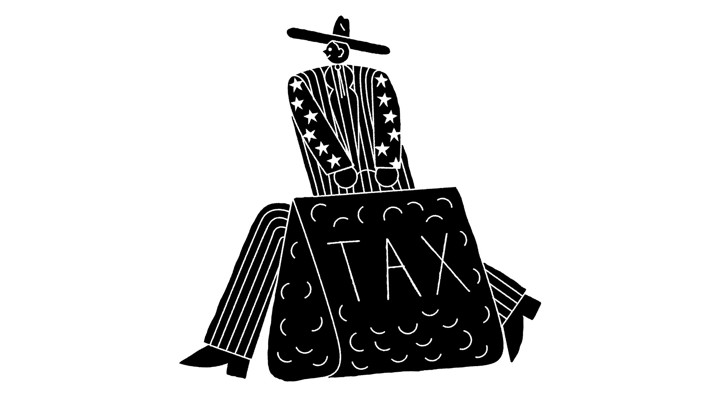
If such a thing as American exceptionalism remains, maybe it can be found in this: Despite deep IRS budget cuts, an average audit rate that has plunged in recent years to just 0.6 percent, and a president who has bragged that dodging federal taxes is “smart,” most Americans still pay their income taxes every year. Even more remarkable, most of us feel obliged to pay. To quote the findings of a 2017 IRS survey: “The majority of Americans (88%) say it is not at all acceptable to cheat on taxes; this ethical attitude is not changing over time.”

True, tax crooks might not confess their real feelings in an IRS survey. But other data confirm that the U.S. is among the world’s leaders when it comes to what economists call the voluntary compliance rate (VCR). In recent decades, America’s VCR has consistently hovered between 81 and 84 percent. Most countries don’t calculate their VCR regularly, but when they do, they lag behind the U.S. One paper that gathered what comparative data were available reported that Germany, the top European Union economy, had a VCR of 68 percent.

Other countries score worse, among them Italy (62 percent), the site of a sprawling tax scandal in which about 1,000 citizens were charged last year with bilking the government out of 2.3 billion euros in tax revenue. The public didn’t seem terribly bothered; ex–Prime Minister Silvio Berlusconi, who was convicted of tax fraud in 2013, may have tapped a common sentiment when he said back then that “evasion of high taxes is a God-given right.”

Then there’s Greece, where economists have struggled to even calculate a VCR. According to the International Monetary Fund, more than half of Greek households pay zero income tax. Indeed, tax evasion is practically a national sport. Take the swimming-pool trick. After the 2008 recession, the government placed a luxury tax on private pools. When only 324 residents in the ritzy suburbs of Athens admitted to having one, tax collectors knew they were being swindled—but didn’t know how badly until Google Earth photos revealed the real pool count: 16,974. It’s now common to conceal chlorinated assets with floating tiles, army nets, and pool interiors painted to mimic grass.

What separates Americans from Greeks or Italians? It’s not income-tax withholding, which the U.S. pioneered but Europe has since copied. Higher tax rates may be one factor. Illegal shadow economies, in which goods are sold off the books for cash, are another. (Greece’s black market is the biggest in the eurozone, accounting for 21.5 percent of its GDP.)

Economists say a third factor, one with profound political implications, is tax morale. This is a catchall term for various forces that motivate people to pay taxes, including social norms, democratic values, civic pride, transparent government spending, and trust in leadership and fellow citizens. People are more inclined to fudge (yes, economists use that word) their tax forms if they think others aren’t paying their fair share.

None of this would seem to bode especially well for tax morale in the U.S., where faith in government has been dropping for decades. So why are Americans still paying? One possibility is that declining trust has been offset by reforms that made cheating harder. Since 1987, to take one example, tax filers have been required to list Social Security numbers for dependents, a change that generated almost $3 billion in revenue, as the number of dependents nationwide shrank by millions. (Suspiciously, some of the disappeared had names like Fluffy.)

A more worrisome possibility is that tax morale has lagged behind declining trust, and will yet fall. High-profile tax-avoidance schemes—like those detailed in the so-called Panama Papers, or by The New York Times’s reporting on the Trump family’s tax dodges—could help erode morale. “Our sense of right and wrong is dramatically influenced by other people,” says Dan Ariely, a professor of psychology and behavioral economics at Duke. “If people think that the government is corrupt and not doing the right thing,” he told me, they may be more inclined to say, “Oh, I don’t want to pay money to a government that is misbehaving.”

Source: The Atlantic

Constitution under siege: The Electoral College battle | Metro Voice News

“Every vote should count.” To many that sounds fair. It sounds right. But is it? “The Electoral College is wrong. The person who gets the most votes should be president.” Does that sound right to you?

The answer varies but falls under one fundamental belief: Do you believe America to be a democracy or a republic.

From that divide, you will understand the main difference between what conservatives are trying to preserve and what liberals are trying to fundamentally transform.

During the 2000 Presidential Election, many in the media and the left believed that Al Gore would win the Electoral College and Bush would in the popular vote. This was the last time the media and the Left staunchly defended the Electoral College while lying the groundwork for the very assault on it. It was after this election that I started studying what the Electoral College is and its importance.

So what is the Electoral College? Each state is afforded a certain number of votes, the amount of senators (2) combined with the amount of representatives in the house (which varies according to population). This makes the minimum amount of votes a state gives as three. These votes are determined by the popular vote each state making the winner the President of the United States.

The emphasis on States is important. Each state in America has different needs and desires. Each state under the Electoral College gets to choose which candidate they want as president by majority vote. (That’s the democracy in the republic you hear about.) The candidate that gets the most votes (270 at this time) from these states wins the Presidency. Under this system, each state matters and therefore the people of each individual state are important.

Under a popular vote, the one with the most votes wins. It’s simpler and therefore easier to circumvent most people. That means cheating is easier. Also ignoring large sects of this country also becomes expedient.

Elections are expensive. Under the popular vote, the middle is ignored because all a candidate need win is the big cities of the east and west coast. The Midwest, the Southwest, and parts of the South will no longer matter because their votes won’t win elections. Look at the state of New York. NYC rules the state, and the Democrat Party rules NYC with an iron fist.

Under a popular, every vote counts. That sounds great, but not every vote should count. “Every four years, the dead rise and vote democrat in Chicago,” the old joke says. The truth is sadder; in that, in many big cities, the dead vote. Add to that the millions of illegal aliens that vote. Then add to that those who vote more than once. Then add to that all those miraculous ballots that appear in bags which were handily put to the side in case needed to overturn an election barely won by a Republican which was how Al Franken won his seat in the Senate and many Republicans lost elections in 2018 they won on election night. Every vote counts. In the past election, some counties had more people vote in them than actually lived there by the thousands. Obviously, they all voted Democrats.

Once you put all those numbers together, it’s easy to see popular votes are easily doctored, and elections can easily be stolen. This is especially true because of an outwardly bias media who is out to cover for those on their side of the political aisle and dreg up the basest stories from the most unreliable sources to bury their competition. Many are willing to accept this because they want their candidate to win no matter what the cost. But what happens, when it’s someone they don’t like? At that point it doesn’t matter, because the republic is dead, and the government class rules us all without any checks or balances.

Ignorance is the greatest ally to the enemies of our Constitution. The reason so many are in favor of abolishing the Electoral College is that we have and Education system controlled by the Left who purposely keep their students from learning the importance of America’s greatness and what is needed to keep her free. Our institutes of educations have become indoctrination center of leftist ideology (socialism, humanism, atheism, etc.). Generations of children have become adults with no real understanding of our Constitution, and its greatness.

The Constitution is under siege. The States lost the battle for the Senate. Now the states may lose the battle of the Electoral College. We lose this and we lose the right to choose our leaders. The Republic needs you and me to educate the ignorant and show them why our founders were all against Democracies and why they chose a Republic instead.

Source: Metro Voice News

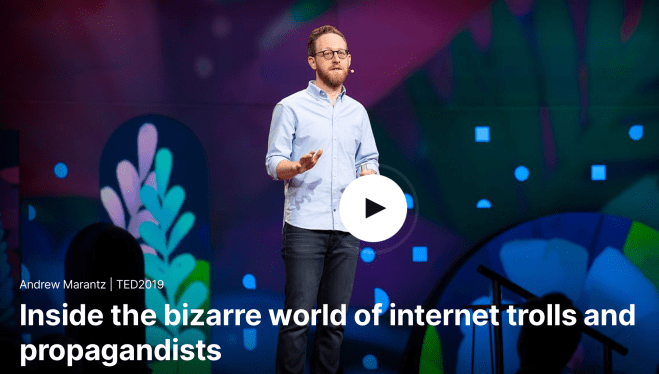
Inside the bizarre world of internet trolls and propagandists | TEDTalks

Journalist Andrew Marantz spent three years embedded in the world of internet trolls and social media propagandists, seeking out the people who are propelling fringe talking points into the heart of conversation online and trying to understand how they’re making their ideas spread. Go down the rabbit hole of online propaganda and misinformation — and learn we can start to make the internet less toxic.

Source: TEDTalks

Unsealed documents shed new light on efforts to verify Trump-Russia dossier | CNN

Documents unsealed this week lend credence to a theory about Russian election meddling that was first put forward in the Trump-Russia dossier, however they do not corroborate the more explosive claims that the Trump campaign colluded with the Kremlin in the 2016 campaign.

A report from a retired agent who worked for the FBI’s cyber division, submitted as expert testimony in a civil lawsuit, presented new evidence about how Russian intelligence might have exploited a private web hosting company when it fooled top Democratic targets into giving up their passwords. The fruits of those hacks formed the basis of the WikiLeaks email dumps that roiled the race.

The controversial dossier had accused Russian hackers of using those companies, Webzilla and its parent company XBT, as part of their scheme to meddle in the presidential election. The memos, written by a retired British spy, Christopher Steele, also claimed that Russian entrepreneur Aleksej Gubarev assisted the cyberattacks “under duress” from Russian intelligence.

Gubarev vehemently denied those allegations and sued BuzzFeed for defamation after it published the dossier. That prompted BuzzFeed to commission the expert witness report from FTI Consulting’s Anthony Ferrante, who is also a CNN contributor. A federal judge dismissed the lawsuit in December, and ordered that dozens of documents be released to the public this week. The judge ruled on First Amendment grounds and did not assess the hacking-related allegations.

Details of the report

The FTI report concluded that one of the hyperlinks the Russians designed to trick Hillary Clinton’s campaign chairman John Podesta into giving up his email password was created on an internet protocol address owned by Root S.A., an XBT subsidiary.
In his deposition, retired FBI cyber official Ferrante admitted the evidence didn’t conclusively show XBT was aware of the Russian campaign against Democrats.

“I will further state that other than the fact that XBT employees did little to nothing to detect, stop and prevent the significant malicious activity, I have no evidence of them actually sitting behind a keyboard,” he said.

Gubarev’s team argued that an internet hosting company couldn’t be held responsible for the activities of people who use its services.
A rebuttal on Gubarev’s behalf, filed by a former CIA cybersecurity expert, Eric Cole, stressed that he and his staff were frequently unaware of the specific activity conducted on its servers.

“XBT/Webzilla is not responsible for every bit of data that a bad actor passes over its infrastructure any more than a post office is responsible for the actions of the Unabomber,” Cole wrote.

“Special Counsel Robert Mueller indicted the 12 Russians responsible for the hacking. Those are the folks responsible, not us,” Evan Fray-Witzer, an attorney for Gubarev, told CNN. The 11-count indictment against those hackers, which was filed in July 2018, did not mention Webzilla or XBT.

BuzzFeed News characterized the report as vindication of its decision to publish the Trump-Russia dossier. “We knew already that publishing the dossier was in the public interest,” spokesperson Matt Mittenthal told CNN. “Now, because BuzzFeed News published the dossier, we’re learning more about the facts of foreign influence in the 2016 presidential election.”

Gubarev sued BuzzFeed in 2017 and sought damages for defamation. As part of the legal process, some of the key players in the dossier saga were deposed, including Steele.

The court unsealed one page of that deposition, which happened last year in London. Steele testified that he tried to verify the allegations against Gubarev by doing, among other things, an “open source search,” which would likely include scouring news clippings and public records.

Steele has years of experience as a British spy in Moscow and has been a trusted source for the FBI. Allies of Democratic nominee Clinton funded Steele’s investigation in 2016. But he was so concerned by his findings that he shared his memo with senior US and UK officials.

In her decision to throw out the case, the judge confirmed that BuzzFeed got the dossier from an associate of Republican Sen. John McCain in December 2016, weeks after the election.

The memos were circulating in Washington, and CNN soon broke the story that senior US intelligence officials had briefed President-elect Trump and President Barack Obama about some of the unverified allegations. Hours later, BuzzFeed published the complete dossier online.
The most salacious allegations in the dossier remain unverified to this day. But the claims that form the bulk of the memos have held up over time, or at least proved to be partially true.

This notably includes Steele’s claim that Russian President Vladimir Putin oversaw an effort to interfere in the 2016 election. It also includes allegations of secret contacts between Trump’s team and the Russians during the campaign. Steele gathered this stunning information months before the Russian meddling campaign was publicly confirmed by US intelligence agencies and in court filings from special counsel Robert Mueller.

Kevin Collier, a cybersecurity reporter for CNN, previously worked for BuzzFeed News.

Source: CNN & BuzzFeed News

Is This the End of Recycling? | The Atlantic

Refuse is pushed into stacks at Recology in San Francisco, California November 2, 2009. Each day the company takes in more than 750 tons of plastic, paper and glass refuse, sorts the trash and presses the materials into compact cubes. Picture taken November 2, 2009. To match feature CLIMATE/CITIES REUTERS/Robert Galbraith (UNITED STATES ENVIRONMENT SOCIETY) – GM1E5BU0L3801

Editor’s Note: From all appearances American society is organized at the curb for easy recycling, separating trash and repurposing materials, but the fact is less than 13% of our “trash” actually gets recycled. That’s poor performance considering decades of public education.

After decades of earnest public-information campaigns, Americans are finally recycling. Airports, malls, schools, and office buildings across the country have bins for plastic bottles and aluminum cans and newspapers. In some cities, you can be fined if inspectors discover that you haven’t recycled appropriately.

But now much of that carefully sorted recycling is ending up in the trash.

For decades, we were sending the bulk of our recycling to China—tons and tons of it, sent over on ships to be made into goods such as shoes and bags and new plastic products. But last year, the country restricted imports of certain recyclables, including mixed paper—magazines, office paper, junk mail—and most plastics. Waste-management companies across the country are telling towns, cities, and counties that there is no longer a market for their recycling. These municipalities have two choices: pay much higher rates to get rid of recycling, or throw it all away.

Most are choosing the latter. “We are doing our best to be environmentally responsible, but we can’t afford it,” said Judie Milner, the city manager of Franklin, New Hampshire. Since 2010, Franklin has offered curbside recycling and encouraged residents to put paper, metal, and plastic in their green bins. When the program launched, Franklin could break even on recycling by selling it for $6 a ton. Now, Milner told me, the transfer station is charging the town $125 a ton to recycle, or $68 a ton to incinerate. One-fifth of Franklin’s residents live below the poverty line, and the city government didn’t want to ask them to pay more to recycle, so all those carefully sorted bottles and cans are being burned. Milner hates knowing that Franklin is releasing toxins into the environment, but there’s not much she can do. “Plastic is just not one of the things we have a market for,” she said.

The same thing is happening across the country. Broadway, Virginia, had a recycling program for 22 years, but recently suspended it after Waste Management told the town that prices would increase by 63 percent, and then stopped offering recycling pickup as a service. “It almost feels illegal, to throw plastic bottles away,” the town manager, Kyle O’Brien, told me.

Without a market for mixed paper, bales of the stuff started to pile up in Blaine County, Idaho; the county eventually stopped collecting it and took the 35 bales it had hoped to recycle to a landfill. The town of Fort Edward, New York, suspended its recycling program in July and admitted it had actually been taking recycling to an incinerator for months. Determined to hold out until the market turns around, the nonprofit Keep Northern Illinois Beautiful has collected 400,000 tons of plastic. But for now, it is piling the bales behind the facility where it collects plastic.

This end of recycling comes at a time when the United States is creating more waste than ever. In 2015, the most recent year for which national data are available, America generated 262.4 million tons of waste, up 4.5 percent from 2010 and 60 percent from 1985. That amounts to nearly five pounds per person a day. New York City collected 934 tons of metal, plastic, and glass a day from residents last year, a 33 percent increase from 2013.

For a long time, Americans have had little incentive to consume less. It’s inexpensive to buy products, and it’s even cheaper to throw them away at the end of their short lives. But the costs of all this garbage are growing, especially now that bottles and papers that were once recycled are now ending up in the trash.

One of those costs is environmental: When organic waste sits in a landfill, it decomposes, emitting methane, which is bad for the climate—landfills are the third-largest source of methane emissions in the country. Burning plastic may create some energy, but it also produces carbon emissions. And while many incineration facilities bill themselves as “waste to energy” plants, studies have found that they release more harmful chemicals, such as mercury and lead, into the air per unit of energy than do coal plants.

And as cities are now learning, the other cost is financial. The United States still has a fair amount of landfill space left, but it’s getting expensive to ship waste hundreds of miles to those landfills. Some dumps are raising costs to deal with all this extra waste; according to one estimate, along the West Coast, landfill fees increased by $8 a ton from 2017 to 2018. Some of these costs are already being passed on to consumers, but most haven’t—yet.

Americans are going to have to come to terms with a new reality: All those toothpaste tubes and shopping bags and water bottles that didn’t exist 50 years ago need to go somewhere, and creating this much waste has a price we haven’t had to pay so far. “We’ve had an ostrich-in-the-sand approach to the entire system,” said Jeremy O’Brien, director of applied research at the Solid Waste Association of North America, a trade association. “We’re producing a lot of waste ourselves, and we should take care of it ourselves.”

As the trash piles up, American cities are scrambling to figure out what to do with everything they had previously sent to China. But few businesses want it domestically, for one very big reason: Despite all those advertising campaigns, Americans are terrible at recycling.

About 25 percent of what ends up in the blue bins is contaminated, according to the National Waste & Recycling Association. For decades, we’ve been throwing just about whatever we wanted—wire hangers and pizza boxes and ketchup bottles and yogurt containers—into the bin and sending it to China, where low-paid workers sorted through it and cleaned it up. That’s no longer an option. And in the United States, at least, it rarely makes sense to employ people to sort through our recycling so that it can be made into new material, because virgin plastics and paper are still cheaper in comparison.

Even in San Francisco, often lauded for its environmentalism, waste-management companies struggle to keep recycling uncontaminated. I visited a state-of-the-art facility operated by San Francisco’s recycling provider, Recology, where million-dollar machines separate aluminum from paper from plastic from garbage. But as the Recology spokesman Robert Reed walked me through the plant, he kept pointing out nonrecyclables gumming up the works. Workers wearing masks and helmets grabbed laundry baskets off a fast-moving conveyor belt of cardboard as some non-cardboard items escaped their gloved hands. Recology has to stop another machine twice a day so a technician can pry plastic bags from where they’ve clogged up the gear.

Cleaning up recycling means employing people to slowly go through materials, which is expensive. Jacob Greenberg, a commissioner in Blaine County, Idaho, told me that the county’s mixed-paper recycling was about 90 percent clean. But its paper broker said the mixed paper needed to be 99 percent clean for anyone to buy it, and elected officials didn’t want to hike fees to get there. “At what point do you feel like you’re spending more money than what it takes for people to feel good about recycling?” he said.

For now, it’s still often cheaper for companies to manufacture using new materials than recycled ones. Michael Rohwer, a director at Business for Social Responsibility, works with companies that try to be more environmentally friendly. He told me that recycled plastic costs pennies more than new plastic, and those pennies add up when you’re manufacturing millions of items. Items made of different types of plastic nearly always end up in the trash, because recyclers can’t separate the plastics from one another—Reed equates it with trying to get the sugar and eggs out of a cake after you’ve baked it. But because companies don’t bear the costs of disposal, they have no incentive to manufacture products out of material that will be easier to recycle.

The best way to fix recycling is probably persuading people to buy less stuff, which would also have the benefit of reducing some of the upstream waste created when products are made. But that’s a hard sell in the United States, where consumer spending accounts for 68 percent of the GDP. The strong economy means more people have more spending money, too, and often the things they buy, such as new phones, and the places they shop, such as Amazon, are designed to sell them even more things. The average American spent 7 percent more on food and 8 percent more on personal-care products and services in 2017 than in 2016, according to government data.

Some places are still trying to get people to buy less. The city of San Francisco, for instance, is trying to get residents to think of a fourth r beyond “reduce, reuse, and recycle”—“refuse.” It wants people to be smarter about what they purchase, avoiding plastic bottles and straws and other disposable goods. But it’s been tough in a place centered on acquiring the newest technology. “This is our big challenge: How do you take a culture like San Francisco and get people excited about less?” Debbie Raphael, the director of the San Francisco Department of the Environment, told me. The city passed an ordinance that required that 10 percent of beverages sold be available in reusable containers, and it is trying to make reuse “hip” through an online campaign and dedicated website, Raphael said. San Francisco and other Bay Area cities have banned plastic bags and plastic straws, but that option isn’t available in many other parts of the country, where recently passed state laws prevent cities from banning products.

But even in San Francisco, the most careful consumers still generate a lot of waste. Plastic clamshell containers are difficult to recycle because the material they’re made of is so flimsy—but it’s hard to find berries not sold in those containers, even at most farmers’ markets. Go into a Best Buy or Target in San Francisco to buy headphones or a charger, and you’ll still end up with plastic packaging to throw away. Amazon has tried to reduce waste by sending products in white and blue plastic envelopes, but when I visited the Recology plant, they littered the floor because they’re very hard to recycle. Even at Recology, an employee-owned company that benefits when people recycle well, the hurdles to getting rid of plastics were evident. Reed chided me for eating my daily Chobani yogurt out of small, five-ounce containers rather than out of big, 32-ounce tubs, but I saw a five-ounce Yoplait container in a trash can of the control room of the Recology plant. While there, Reed handed me a pair of small orange earplugs meant to protect my ears from the noise of the plant. They were wrapped in a type of flimsy plastic that is nearly impossible to recycle. When I left the plant, I kept the earplugs and the plastic in my bag, not sure what to do with them. Eventually, I threw them in the trash.

Then there’s the challenge of educating people about what can and can’t be recycled, even as the number of items they touch on a daily basis grows. Americans tend to be “aspirational” about their recycling, tossing an item in the blue bin because it makes them feel less guilty about consuming it and throwing it away. Even in San Francisco, Reed kept pointing out items that aren’t easily recyclable but that keep showing up at the Recology plant: soy-sauce packets and pizza boxes, candy-bar wrappers and dry-cleaner bags, the lids of to-go coffee cups and plastic take-out containers.

If we can somehow figure out how to better sort recycling, some U.S. markets for plastics and paper may emerge. But selling it domestically will still be harder than it would be in a place such as China, where a booming manufacturing sector has constant demand for materials. The viability of recycling varies tremendously by locale; San Francisco can recycle its glass back into bottles in six weeks, according to Recology, while many other cities are finding that glass is so heavy and breaks so easily that it is nearly impossible to truck it to a place that will recycle it. Akron, Ohio, is just one of many cities that have ended glass recycling since the China policy changes.

Source: The Atlantic


How Much Will Medicare for All Cost? | Committee for a Responsible Federal Budget

Representative Pramila Jayapal (D-WA), a co-chair of the Medicare for All Caucus, released a bill today that would adopt a single-payer system, where the federal government replaces private health insurance companies as the sole provider of most health care financing. While we are not aware of any estimates of this particular proposal, similar proposals have been estimated to cost the federal government roughly $28-32 trillion over a decade.

Representative Jayapal’s Medicare for All Act would replace nearly all current insurance with a government-run single-payer plan and extend that plan to those who currently lack health coverage. The plan itself would be far more generous than either Medicare or most private coverage, as it would include no deductibles or copayments, would not restrict beneficiaries to networks of care, and would offer a broad suite of benefits including dental care, vision care, transportation for disabled and low-income patients, certain dietary and nutritional care, long-term care, and other long-term services and support. The proposal also establishes a global health budget, moves away from fee-for-service and toward lump-sum payments for many providers, includes a number of measures to hold down drug prices, and makes a variety of other changes to the health care system.

The proposal is broadly similar to Senator Sanders’s proposed single-payer plan introduced during the 2016 Presidential campaign. While the campaign itself estimated that plan would cost the federal government about $14 trillion over a decade, most other estimates that we are aware of are at least twice that high.

At the time, for example, the Committee for a Responsible Federal Budget estimated roughly that the plan would cost $28 trillion through 2026 (we estimated the Sanders plan in particular would also raise $11 trillion of revenue, leading to $17 trillion of net costs). All other estimates come to similar conclusions.

For example, economist Kenneth Thorpe estimated that single-payer health care would cost the federal government $24.7 trillion through 2026, excluding the costs associated with long-term care benefits (likely about $3 trillion). The Urban Institute estimated a $32 trillion cost over the same period, including those long-term care benefits. The Center for Health and Economy (H&E) produced an estimate that the American Action Forum calculates would cost the federal government $36 trillion through 2029.

In addition, former Social Security and Medicare Trustee and current Mercatus Center fellow Chuck Blahous estimated that Medicare for All as proposed in Senator Sanders’s 2017 legislation would cost the federal government $27.7 trillion through 2028 assuming steep provider cuts and $32.1 trillion assuming no provider cuts (these estimates, like most others, assume immediate implementation).

Importantly, these totals represent the increased cost to the federal government, not the change of total national health expenditures. National health expenditures would likely change by no more than a few trillion dollars over decade. The direction of that change is unclear and would depending on the whether the increased cost of expanding coverage (by making health insurance more generous and offering it to more people) is larger or smaller than the amount saved from lower provider payments, drug payments, and administrative spending.

The totals also do not represent debt impact, which would depend not only on the cost to the federal government but also on any funds the government might choose to raise through premiums, taxes, or both. For example, Senator Sanders’s campaign plan included roughly $11 trillion of tax increases, which could fund more than one-third of Medicare for All.

While any new revenue would in part be replacing current premiums, identifying pay-fors still remains a challenge. Enacting this type of Medicare for All would mean increasing federal spending by about 60 percent (excluding interest), and financing a $30 trillion program would require the equivalent of tripling payroll taxes or more than doubling all other taxes.

Supporters of Medicare for All should work to identify new revenue, premiums, and/or spending cuts to finance new federal costs or else scale back their proposal if they are unable to identify sufficient funding.

Source: Committee for a Responsible Federal Budget