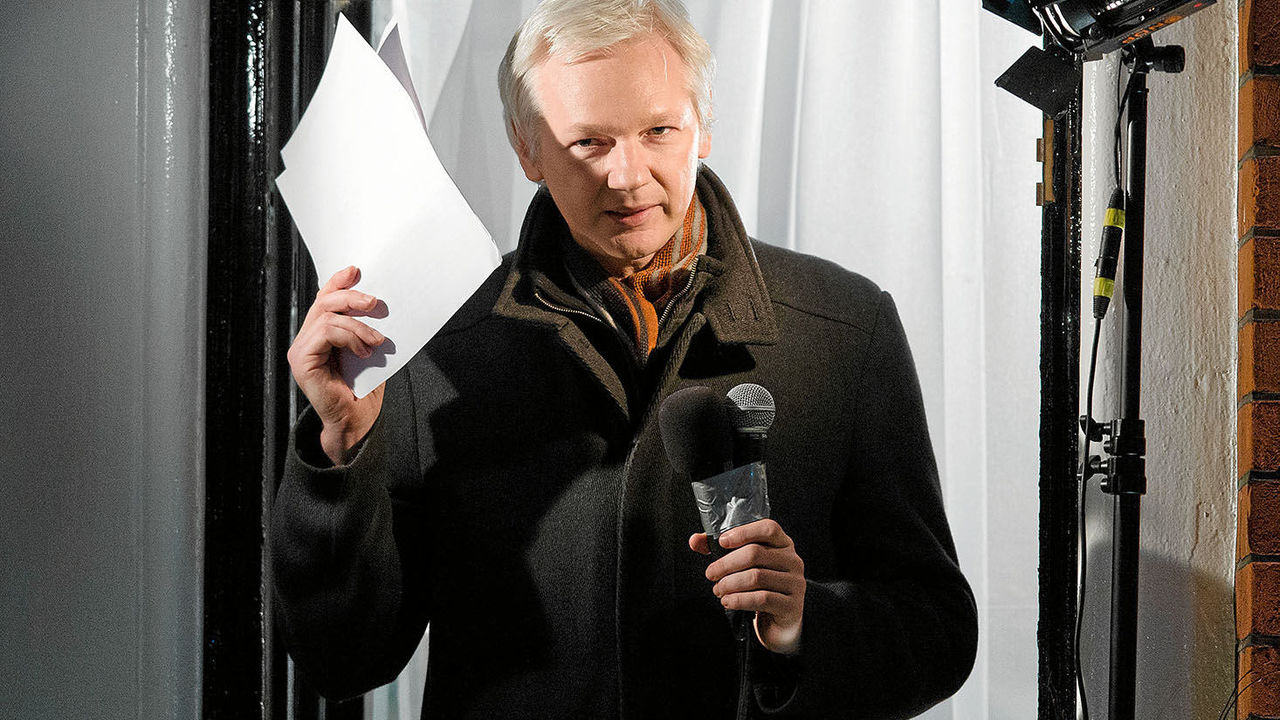
Source: YouTube
Putin Issues Warning To America: Elites Planning “Soft Coup” to Delegitimize Trump Presidency | We Are Change
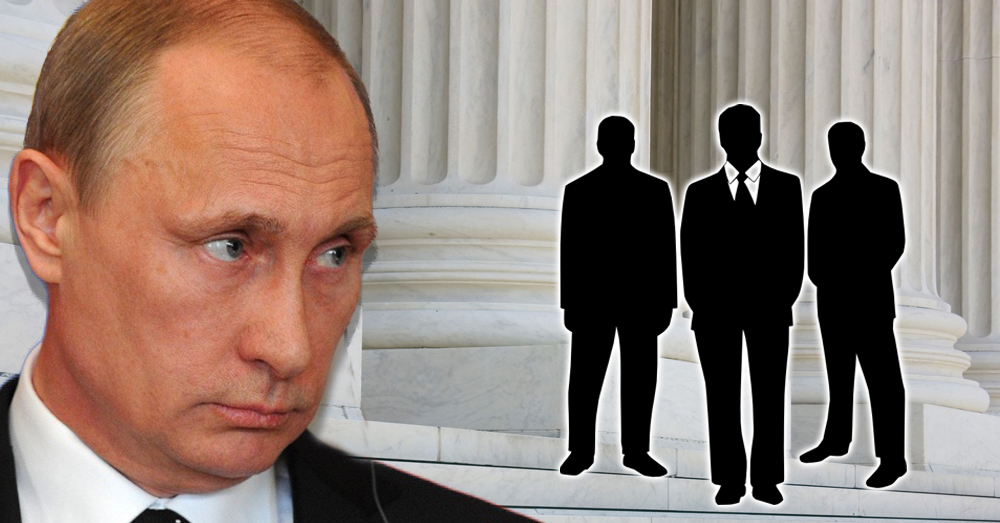
Warning that a “soft coup” is being waged against Donald Trump, Russian President Vladimir Putin said that he sees attempts in the United States to “delegitimize” US President-elect Donald Trump using “Maidan-style” methods previously used in Ukraine, where readers will recall president Yanukovich was ousted in 2014 following a violent coup, which many suspect was conducted under the auspices of the US State Department and assorted US intelligence operations.
“I have an impression they practiced in Kiev and are ready to organize a Maidan in Washington, just to not let Trump take office,” Putin said, apparently referring to anti-government protests in the Ukrainian capital in 2014, which resulted in the leadership being ousted. The campaign to discredit the president-elect shows that certain “political elites in the West, including in the US,” have “significantly” worsened, the Russian president added.
Putin said he doesn’t believe that Donald Trump met with prostitutes in Russia, calling the accusations part of a campaign to undermine the election result, and said reports spread in the Western media accusing Trump of frolicking with prostitutes in a Moscow hotel, the Russian president said he doubted that a man who had been organizing beauty pageants for years and had met “some of the most beautiful women of the world” would hire call girls in the Russian capital.
The Russian leader also called the allegations that Moscow might have blackmail material on the US president-elect “evidently fake.”
“When Trump visited Moscow several years ago, he wasn’t a political figure. We didn’t even know about his political ambitions, he was just a businessman, one of America’s richest people. So does someone think that our intelligence services go after each American billionaire? Of course not, it’s complete rubbish,” Putin said.
Unsubstantiated allegations made against Trump are “obvious fabrications,” Putin told reporters in the Kremlin on Tuesday. “People who order fakes of the type now circulating against the U.S. president-elect, who concoct them and use them in a political battle, are worse than prostitutes because they don’t have any moral boundaries at all,” he said.
The Russian president, cited by BBG, said that Trump wasn’t a politician when he visited Moscow in the past and Russian officials weren’t aware that he held any political ambitions.
Putin, who reiterated he had never met Trump, said he hoped that Moscow and Washington could eventually get their troubled relations back to normal, adding he has no reasons to “attack or defend him.”
“I don’t know Mr. Trump personally, I have never met him and don’t know what he will do on the international arena. So I have no grounds to attack him or criticize him for anything, or protect him or whatever,” Putin said.
Putin noted that there is a category of people who leave without saying goodbye, “out of respect for the present situation,” while others say goodbye all the time, but do not go away. “The outgoing administration, in my opinion, belongs to the second category,” he said.
Source: We Are Change
A Completely Different Perspective On Trump’s Presidency. This Will Make You Think | Collective Evolution
By Bernhard Guenther
Considering the hype around the latest celebrity statement about Trump by Meryl Streep and the upcoming ritual to put “the man” into “power” officially (which will most likely result in protests by moral, upstanding patriotic citizens), I thought to repost what I wrote (trigger warning!) right after the election.
Hint: This is going to come down to you, and it’s deep!
Here’s the thing from a basic Jungian perspective: Trump is your shadow, America, a reflection of your unconscious, especially concerning people who identify themselves as Leftist, Liberals, and Progressives, their own shadow which they never deeply acknowledged, and hence project outwardly at the “other side” in their “holier than thou” political correct attitude, over-estimating themselves and dreaming to be awake.
The self-inflation, narcissism, greed, the “bigger is more,” the “quantity over quality,” the entitlement, the hypocrisy, the drive for recognition and fame, the “best” in the world, the bully, the “money can buy everything,” the racism and sexism, etc…..or anything else you despise in the man….it’s all you, buried in your unconscious. It’s also the shadow side of the “American Dream” and obviously reflected in America’s Imperialism.
It’s About You!
Anyone who identifies him/herself as “Liberal,” “Progressive,” “Leftist,” and projects disgust, hate, or anger on to this man, (really anyone who is triggered/irritated by Trump beyond political identifications), or reacts with fear, sadness, worry: you are looking at your own shadow and it won’t go away if you keep up with these reactive projections and look for external solutions or a different “leader” to follow or project your “hope” onto while still believing in the religion of government (which feeds off of the polarization and perpetuates separation consciousness) based on illusory tribal/national identification and adherence to/worship external authority constructs.
Moreover, nothing will change but will in fact reinforce the schism as long as you keep identifying with any side because it defines the other side. One cannot have the one without the other as long as you feed and play into this game of fabricated false duality which is exactly how Empire controls you – all entirely based on illusory socially/cultural conditioned identifications and beliefs which you are so attached to and define yourself by. It’s the basis for population control and social engineering, reinforcing the Stockholm Syndrome and “invisible” slavery/prison out of your own “free will.”
But here’s the real “shocker.” Trump is actually your “teacher,” for he creates more friction and shadow triggers, hence more potential to wake people up from an esoteric alchemical perspective (Clinton would have been the sleeping pill for most people, even though she’s the more dangerous psychopath, hidden behind the mask of a “woman”), but only if people take back their projections and engage in some serious and sincere soul searching cutting through their programed socially/cultural conditioned identifications to ignite the alchemical fire within.
Any negative reactive emotion you have towards the “man” (including his silly tweets) or his supporters is a sign of giving away your power and life energy (literally). It shows you where you work is when it comes to basic Jungian psychology of shadow work until you can come to a place of non-reactive zero-point consciousness rising above fabricated duality and tuned into your true inner power and guidance, connected to Spirit and the wholeness of nature: a sovereign embodied Individual.
There is a shift in consciousness taking place, and this is all part of it! Find Out More Here
If you do that sincerely and go deep, you will finally stop believing in and supporting this religion of government (that was never, ever in place for the people and never, ever can give you true freedom), and realize that it was never about Trump, Clinton, Sanders or any other authority statist puppet to begin with, stop this silly idea of “voting for change” and fragmented mechanical/programmed search for “external solutions” and “leaders, worship of authority and then really, really question everything you believe in and have been told/taught, and most of all drop and let go of your identification, which just feeds the polarization. This the path towards a true shift and evolution of consciousness. Anything else is just going in circles, re-arranging the furniture and tapestry of your prison cell (you are not aware of), instead of breaking out of it.
And that is not a comfortable (internal) process at all for it entails utter disillusionment and taking full responsibility without blame and externalizing. Nobody can do it for you and nobody is going to save you. It takes tremendous humility and sincere self-honesty facing the lies within, which make up your conditioned personality, which is not who YOU truly ARE but mistake for you real Self. It’s much easier to project outwardly, protest, look for the next leader and keep up with the futile idea of fragmented “activism,” new “systems” and “external solutions,” all based on the fragmented male aspect of consciousness (your inner unconscious tyrant projected on Trump) removed from the wholeness of the feminine aspect of consciousness (nothing to do with gender) that is tuned into the wholeness of nature.
In the end, America got the president it “deserved” and when you act like slaves, looking for a leader/savior to follow, you get masters…and always will, as long as you support and believe in the religion of government, regardless what system is implemented. Also “democracy” seems like such a good idea until you don’t get your way, right? (oh, I forgot, it was the Russians messing with the election…right, of course….whoever you want to blame and keeps you from looking deeply within into your own shadow).
~ Carl G. Jung
“At every turn, the synthetic culture of Empire implores us to throw our hearts and minds into unconscious polarization. It wants us to radicalize ourselves to either patriot or terrorist, believer or atheist, white or black, liberal or conservative, strong or weak, and then embark on an endless crusade to reform, condemn, or destroy the other side. This one-way polarization renders all participants impotent, regardless of which side they pick. This subtle but devastating trick deactivates our will and we automatically forfeit our capacity to rule ourselves. Lost in unconscious polarization, we serve Empire.
Mass culture is a control mechanism that devalues the individual. It is aimed solely at promoting collectivism. It seeks to enforce the dependence of the individual human on a collective group and the priority of group ideologies over individual life paths. It is, at the base level, the very heart of socialism, communism, fascism and totalitarianism. It employs nationalistic impulses to setup polarities of antagonism that exclusively benefits a set of ruling elites. At the top level, the elites fully comprehend that there are no distinct nations, ideologies or cultural imperatives to speak of. To them, there is only power and no power.”
~ Neil Kramer
“[Look] at what happened in 1914 – or for that matter at all that is and has been happening in human history – the eye of the Yogin sees not only the outward events and persons and causes, but the enormous forces which precipitate them into action. If the men who fought were instruments in the hands of rulers and financiers, these in turn were mere puppets in the clutch of those hidden [hyperdimensional] forces.
When one is habituated to see the things behind, one is no longer prone to be touched by the outward aspects – or to expect any remedy from political, institutional or social changes; the only way out is through the descent of an [embodied] consciousness which is not the puppet of these forces but is greater than they are.”
~ Sri Aurobindo
About The Author
Bernhard Guenther has had a lifelong interest in exploring the mysteries and hidden knowledge surrounding our planet and humanity’s origins, questioning the roots of what constitutes “reality,” and how social (and spiritual) conditioning impacts upon our collective search for the truth in all aspects of life.
His blog “Piercing the Veil of Reality” is a wide-ranging collection of essays, films and interviews, ranging from spirituality, shamanism, psychology, self-work, esotericism, history, to the paranormal and hyperdimensional realities.
Bernhard lives in Topanga Canyon, California, working with individuals from all walks of life, helping them in their path of healing and wellness via Integrative Bodywork and Holistic Coaching. His clients enjoy his intuitive and compassionate approach in person or over Skype.
Source: Collective Evolution
The Deep State Goes to War With President-Elect, Using Unverified Claims, as Democrats Cheer| The Intercept
IN JANUARY 1961, Dwight Eisenhower delivered his farewell address after serving two terms as U.S. president; the five-star general chose to warn Americans of this specific threat to democracy: “In the councils of government, we must guard against the acquisition of unwarranted influence, whether sought or unsought, by the military-industrial complex. The potential for the disastrous rise of misplaced power exists and will persist.” That warning was issued prior to the decadelong escalation of the Vietnam War, three more decades of Cold War mania, and the post-9/11 era, all of which radically expanded that unelected faction’s power even further.
This is the faction that is now engaged in open warfare against the duly elected and already widely disliked president-elect, Donald Trump. They are using classic Cold War dirty tactics and the defining ingredients of what has until recently been denounced as “Fake News.”
Their most valuable instrument is the U.S. media, much of which reflexively reveres, serves, believes, and sides with hidden intelligence officials. And Democrats, still reeling from their unexpected and traumatic election loss, as well as a systemic collapse of their party, seemingly divorced further and further from reason with each passing day, are willing — eager — to embrace any claim, cheer any tactic, align with any villain, regardless of how unsupported, tawdry, and damaging those behaviors might be.
The serious dangers posed by a Trump presidency are numerous and manifest. There is a wide array of legitimate and effective tactics for combating those threats: from bipartisan congressional coalitions and constitutional legal challenges to citizen uprisings and sustained and aggressive civil disobedience. All of those strategies have periodically proven themselves effective in times of political crisis or authoritarian overreach.
But cheering for the CIA and its shadowy allies to unilaterally subvert the U.S. election and impose its own policy dictates on the elected president is both warped and self-destructive. Empowering the very entities that have produced the most shameful atrocities and systemic deceit over the last six decades is desperation of the worst kind. Demanding that evidence-free, anonymous assertions be instantly venerated as Truth — despite emanating from the very precincts designed to propagandize and lie — is an assault on journalism, democracy, and basic human rationality. And casually branding domestic adversaries who refuse to go along as traitors and disloyal foreign operatives is morally bankrupt and certain to backfire on those doing it.
Beyond all that, there is no bigger favor that Trump opponents can do for him than attacking him with such lowly, shabby, obvious shams, recruiting large media outlets to lead the way. When it comes time to expose actual Trump corruption and criminality, who is going to believe the people and institutions who have demonstrated they are willing to endorse any assertions no matter how factually baseless, who deploy any journalistic tactic no matter how unreliable and removed from basic means of ensuring accuracy?
All of these toxic ingredients were on full display yesterday as the Deep State unleashed its tawdriest and most aggressive assault yet on Trump: vesting credibility in and then causing the public disclosure of a completely unvetted and unverified document, compiled by a paid, anonymous operative while he was working for both GOP and Democratic opponents of Trump, accusing Trump of a wide range of crimes, corrupt acts, and salacious private conduct. The reaction to all of this illustrates that while the Trump presidency poses grave dangers, so, too, do those who are increasingly unhinged in their flailing, slapdash, and destructive attempts to undermine it.
FOR MONTHS, THE CIA, with unprecedented clarity, overtly threw its weight behind Hillary Clinton’s candidacy and sought to defeat Donald Trump. In August, former acting CIA Director Michael Morell announced his endorsement of Clinton in the New York Times and claimed that “Mr. Putin had recruited Mr. Trump as an unwitting agent of the Russian Federation.” The CIA and NSA director under George W. Bush, Gen. Michael Hayden, also endorsed Clinton and went to the Washington Post to warn, in the week before the election, that “Donald Trump really does sound a lot like Vladimir Putin,” adding that Trump is “the useful fool, some naif, manipulated by Moscow, secretly held in contempt, but whose blind support is happily accepted and exploited.”
It is not hard to understand why the CIA preferred Clinton over Trump. Clinton was critical of Obama for restraining the CIA’s proxy war in Syria and was eager to expand that war, while Trump denounced it. Clinton clearly wanted a harder line than Obama took against the CIA’s long-standing foes in Moscow, while Trump wanted improved relations and greater cooperation. In general, Clinton defended and intended to extend the decadeslong international military order on which the CIA and Pentagon’s preeminence depends, while Trump — through a still-uncertain mix of instability and extremist conviction — posed a threat to it.
Whatever one’s views are on those debates, it is the democratic framework — the presidential election, the confirmation process, congressional leaders, judicial proceedings, citizen activism and protest, civil disobedience — that should determine how they are resolved. All of those policy disputes were debated out in the open; the public heard them; and Trump won. Nobody should crave the rule of Deep State overlords.
Yet craving Deep State rule is exactly what prominent Democratic operatives and media figures are doing. Any doubt about that is now dispelled. Just last week, Chuck Schumer issued a warning to Trump, telling Rachel Maddow that Trump was being “really dumb” by challenging the unelected intelligence community because of all the ways they possess to destroy those who dare to stand up to them:
And last night, many Democrats openly embraced and celebrated what was, so plainly, an attempt by the Deep State to sabotage an elected official who had defied it: ironically, its own form of blackmail.
BACK IN OCTOBER, a political operative and former employee of the British intelligence agency MI6 was being paid by Democrats to dig up dirt on Trump (before that, he was paid by anti-Trump Republicans). He tried to convince countless media outlets to publish a long memo he had written filled with explosive accusations about Trump’s treason, business corruption, and sexual escapades, with the overarching theme that Trump was in servitude to Moscow because they were blackmailing and bribing him.
Despite how many had it, no media outlets published it. That was because these were anonymous claims unaccompanied by any evidence at all, and even in this more permissive new media environment, nobody was willing to be journalistically associated with it. As the New York Times’ Executive Editor Dean Baquet put it last night, he would not publish these “totally unsubstantiated” allegations because “we, like others, investigated the allegations and haven’t corroborated them, and we felt we’re not in the business of publishing things we can’t stand by.”
The closest this operative got to success was convincing Mother Jones’s David Corn to publish an October 31 article reporting that “a former senior intelligence officer for a Western country” claims that “he provided the [FBI] with memos, based on his recent interactions with Russian sources, contending the Russian government has for years tried to co-opt and assist Trump.”
But because this was just an anonymous claim unaccompanied by any evidence or any specifics (which Corn withheld), it made very little impact. All of that changed yesterday. Why?
What changed was the intelligence community’s resolution to cause this all to become public and to be viewed as credible. In December, John McCain provided a copy of this report to the FBI and demanded they take it seriously.
At some point last week, the chiefs of the intelligence agencies decided to declare that this ex-British intelligence operative was “credible” enough that his allegations warranted briefing both Trump and Obama about them, thus stamping some sort of vague, indirect, and deniable official approval on these accusations. Someone — by all appearances, numerous officials — then went to CNN to tell the network they had done this, causing CNN to go on air and, in the gravest of tones, announce the “Breaking News” that “the nation’s top intelligence officials” briefed Obama and Trump that Russia had compiled information that “compromised President-elect Trump.”
CNN refused to specify what these allegations were on the ground that it could not “verify” them. But with this document in the hands of multiple media outlets, it was only a matter of time — a small amount of time — before someone would step up and publish the whole thing. BuzzFeed quickly obliged, airing all of the unvetted, anonymous claims about Trump.
Its editor-in-chief, Ben Smith, published a memo explaining that decision, saying that — although there was “serious reason to doubt the allegations” — BuzzFeed in general “errs on the side of publication” and “Americans can make up their own minds about the allegations.” Publishing this document predictably produced massive traffic (and thus profit) for the site, with millions of people viewing the article and presumably reading the “dossier.”
One can certainly object to BuzzFeed’s decision and, as the New York Times noted this morning, many journalists are doing so. It’s almost impossible to imagine a scenario where it’s justifiable for a news outlet to publish a totally anonymous, unverified, unvetted document filled with scurrilous and inflammatory allegations about which its own editor-in-chief says there “is serious reason to doubt the allegations,” on the ground that they want to leave it to the public to decide whether to believe it.
But even if one believes there is no such case where that is justified, yesterday’s circumstances presented the most compelling scenario possible for doing this. Once CNN strongly hinted at these allegations, it left it to the public imagination to conjure up the dirt Russia allegedly had to blackmail and control Trump. By publishing these accusations, BuzzFeed ended that speculation. More importantly, it allowed everyone to see how dubious this document is, one the CIA and CNN had elevated into some sort of grave national security threat.
ALMOST IMMEDIATELY AFTER it was published, the farcical nature of the “dossier” manifested. Not only was its author anonymous, but he was paid by Democrats (and, before that, by Trump’s GOP adversaries) to dig up dirt on Trump. Worse, he himself cited no evidence of any kind but instead relied on a string of other anonymous people in Russia he claims told him these things. Worse still, the document was filled with amateur errors.
While many of the claims are inherently unverified, some can be confirmed. One such claim — that Trump lawyer Michael Cohen secretly traveled to Prague in August to meet with Russian officials — was strongly denied by Cohen, who insisted he had never been to Prague in his life (Prague is the same place that foreign intelligence officials claimed, in 2001, was the site of a nonexistent meeting between Iraqi officials and 9/11 hijackers, which contributed to 70 percent of Americans believing, as late as the fall of 2003, that Saddam personally planned the 9/11 attack). This morning, the Wall Street Journal reported that “the FBI has found no evidence that [Cohen] traveled to the Czech Republic.”
None of this stopped Democratic operatives and prominent media figures from treating these totally unverified and unvetted allegations as grave revelations. From Vox’s Zack Beauchamp:
BuzzFeed’s Borzou Daragahi posted a long series of tweets discussing the profound consequences of these revelations, only occasionally remembering to insert the rather important journalistic caveat “if true” in his meditations:
While some Democrats sounded notes of caution — party loyalist Josh Marshall commendably urged: “I would say in reviewing raw, extremely raw ‘intel,’ people shld retain their skepticism even if they rightly think Trump is the worst” — the overwhelming reaction was the same as all the other instances where the CIA and its allies released unverified claims about Trump and Russia: instant embrace of the evidence-free assertions as Truth, combined with proclamations that they demonstrated Trump’s status as a traitor (with anyone expressing skepticism designated a Kremlin agent or stooge).
THERE IS A real danger here that this maneuver could harshly backfire, to the great benefit of Trump and to the great detriment of those who want to oppose him. If any of the significant claims in this “dossier” turn out to be provably false — such as Cohen’s trip to Prague — many people will conclude, with Trump’s encouragement, that large media outlets (CNN and BuzzFeed) and anti-Trump factions inside the government (CIA) are deploying “Fake News” to destroy him. In the eyes of many people, that will forever discredit — render impotent — future journalistic exposés that are based on actual, corroborated wrongdoing.
Beyond that, the threat posed by submitting ourselves to the CIA and empowering it to reign supreme outside of the democratic process is — as Eisenhower warned — an even more severe danger. The threat of being ruled by unaccountable and unelected entities is self-evident and grave. That’s especially true when the entity behind which so many are rallying is one with a long and deliberate history of lying, propaganda, war crimes, torture, and the worst atrocities imaginable.
All of the claims about Russia’s interference in U.S. elections and ties to Trump should be fully investigated by a credible body, and the evidence publicly disclosed to the fullest extent possible. As my colleague Sam Biddle argued last week after disclosure of the farcical intelligence community report on Russian hacking — one that even Putin’s foes mocked as a bad joke — the utter lack of evidence for these allegations means “we need an independent, resolute inquiry.” But until then, assertions that are unaccompanied by evidence and disseminated anonymously should be treated with the utmost skepticism — not lavished with convenience-driven gullibility.
Most important of all, the legitimate and effective tactics for opposing Trump are being utterly drowned by these irrational, desperate, ad hoc crusades that have no cogent strategy and make his opponents appear increasingly devoid of reason and gravity. Right now, Trump’s opponents are behaving as media critic Adam Johnson described: as ideological jellyfish, floating around aimlessly and lost, desperately latching on to whatever barge randomly passes by.
There are solutions to Trump. They involve reasoned strategizing and patient focus on issues people actually care about. Whatever those solutions are, venerating the intelligence community, begging for its intervention, and equating its dark and dirty assertions as Truth are most certainly not among them. Doing that cannot possibly achieve any good and is already doing much harm.
George Washington’s Farewell Warning: Partisanship would lead to the “ruins of public liberty,” our first president said. He was more right than he knew. | POLITICO Magazine
By John Avlon
When Barack Obama takes to the lectern to deliver his farewell address in Chicago on Tuesday, he’ll likely have a few things to say about a political climate that has grown viciously polarized over the past 8 years and culminated in a bruising, insult-driven campaign in 2016. If he does call out the destructive effects of hyper-partisanship on our democracy, he will be following in the footsteps of the first farewell address, by George Washington, printed in the American Daily Advertiser on September 19, 1796.
Washington warned of the dangers of political factions to democratic republics throughout history. His aversion to partisanship reflected the fact that just a few decades earlier, in 1746, political parties had driven England to civil war. This first farewell address, from our only truly independent president, hearkens back to an age when distrust of political divisions was perhaps higher than it is now—and offers a solution to what ails us today.
“I was no party man myself,” Washington wrote Thomas Jefferson,“and the first wish of my heart was, if parties did exist, to reconcile them.” As our first and only independent president, Washington’s independence was a function not only of his pioneering place in American history but also of political principles he developed over a lifetime.
To Washington, moderation was a source of strength. He viewed its essential judiciousness as a guiding principle of good government, rooted in ancient wisdom as well as Enlightenment-era liberalism. Much could be achieved “by prudence, much by conciliation, and much by firmness.” A stable, civil society depends on resisting intolerant extremes. The Constitution did not mention political parties, and during the debate over ratification, James Madison and Alexander Hamilton praised the Constitution’s “spirit of moderation” in contrast to the “intolerant spirit” of “those who are ever so much persuaded of their being in the right in any controversy.”
Washington was nonpartisan but he was not neutral. He was decisive after consulting differing opinions. “He seeks information from all quarters, and judges more independently than any man I ever knew,” attested Vice President John Adams.
Washington understood the danger of demagogues in a democracy. He was a passionate advocate of moderation as a means of calming partisan passions and creating problem-solving coalitions. Adams also believed that “without the great political virtues of humility, patience, and moderation … every man in power becomes a ravenous beast of prey.”
And it was a source of personal pain for Washington to see his Cabinet degenerate into exaggerated suspicions and vicious slanders during his presidency. Most frustrating was to watch his motives twisted and attacked for partisan gain by “infamous scribblers” in the newspapers. Even in the days after winning independence from Britain, Washington warned of the dangerous interplay between extremes. “There is a natural and necessary progression from the extreme of anarchy to the extreme of tyranny,” he wrote in his Circular Letter to the States, and “arbitrary power is most easily established on the ruins of liberty abused to licentiousness.” As liberty in France turned to anarchy and then tyranny during his administration, it confirmed his deepest instincts.
As a young man, Washington devoured the popular early-eighteenth century essays of Joseph Addison in the Spectator of London. Addison was the author of his favorite play, Cato, and while reflecting on the sources of England’s bloody civil war in the 1640s, he had written an influential essay on “the Malice of Parties.” It’s worth quoting at length: “There cannot a greater judgment befall a country than a dreadful spirit of division as rends a government into two distinct people, and makes them greater strangers, and more averse to one another, than if they were actually two different nations. The effects of such a division are pernicious to the last degree, not only with regard to those advantages which they give the common enemy, but to those private evils which they produce in the heart of almost every particular person. This influence is very fatal both to men’s morals and their understandings; it sinks the virtue of a nation, and not only so, but destroys even common sense. A furious party spirit, when it rages in its full violence, exerts itself in civil war and bloodshed; and when it is under its greatest restraints, naturally breaks out in falsehood, detraction, calumny, and a partial administration of justice. In a word, it fills a nation with spleen and rancor, and extinguishes all the seeds of good nature, compassion and humanity.”
Addison was not the only wise voice warning the revolutionary generation against the danger of hyper-partisanship. The English poet Alexander Pope declared that party spirit “is but the madness of many for the gain of a few.” The early 18th-century British opposition leader Henry St. John, 1st Viscount of Bolingbroke, described parties as “a political evil.” Informed by experience in both journalism and politics, Bolingbroke wrote that “a man who has not seen the inside of parties, nor had opportunities to examine nearly their secret motives, can hardly conceive how little share principle of any sort, though principle of some sort or other be always pretended, has in the determination of their conduct.”
The founding fathers’ suspicion of faction was rooted in the classical tradition that celebrated the virtue of moderation—and the subsequent independence of thought and action that moderation can create. “According to the classical doctrine, membership in a political party inevitably involved defending the indefensible vices of one’s allies and attempting to dominate one’s fellow citizens in order to satisfy a narrow self-interest,” wrote historian Carl J. Richard in The Founders and the Classics in 1994. “In the eighteenth century the greatest compliment one man could pay another was to call him ‘disinterested.’ To be disinterested was to place justice above all considerations, including one’s own interests and those of one’s family, friends and political allies.”
Throughout his career in Virginia’s House of Burgesses and as president of the Constitutional Convention, Washington took labors to remain in the role of moderate. In his twenties, while serving in the Virginia legislature, when the House of Burgesses was divided between moderates and militants in their resistance to the British royals, Washington played a pivotal role by bridging the divides with personal diplomacy, dining with leaders of the different factions.
During the war, there was no political will to raise revenue to pay the soldiers. Washington’s frustration with the weak and fractured Congress helped form his belief that a strong central government led by an honest, energetic executive was essential to a successful democracy.
Amid “the want of harmony in our councils—the declining zeal of the people,” Washington wrote his friend Gouverneur Morris, “it is well worth the ambition of a patriot statesman at this juncture to endeavor to pacify party differences—to give fresh vigor to the springs of government—to inspire the people with confidence.”
Washington’s call for a “patriot statesman” echoed Bolingbroke’s call for a “Patriot King” in a widely read 1749 pamphlet that articulated an antidote to the corruption and fanaticism of parties that led to England’s civil war. For Bolingbroke, the ideal was a benign monarch who could “defeat the designs, and break the spirit of faction” in a parliamentary democracy, toward the goal of delivering “true principles of government independent of all.” Washington’s substitution of “statesman” for “king” reframed the concept for an American audience. The ideal of a strong leader who operated beyond partisanship retained its attractiveness.
When Washington became president, he intended to establish a government above faction and special interests. “No local prejudices or attachments; no separate views, nor party animosities,” he promised in his first inaugural address, “will misdirect the comprehensive and equal eye which ought to watch over this great assemblage of communities and interests.”
Washington did not want or expect unanimity of opinion in his Cabinet, perhaps reflecting the idea that in a place where everyone thinks alike, no one is thinking very much. He was aware of his limits on specific issues—especially law and finance. A competition of ideas and opinions was something to be celebrated, as he made clear in a letter to the governor of North Carolina two months after taking the oath of office: “A difference of opinion on political points is not to be imputed to freemen as a fault, since it is to be presumed that they are all actuated by an equally laudable and sacred regard for the liberties of their country.”
But as Washington preached an enlightened self-interest consistent with classical liberalism, dissension grew in his Cabinet ranks, as political divisions hardened and suspicions drove onetime allies apart. He was always aware that these fault lines could rupture the fragile federal government.
“My greatest fear has been that the nation would not be sufficiently cool and moderate in making arrangements for the security of that liberty,” he wrote after nine months in office. “If we mean to support the liberty and independence which it has cost us so much blood and treasure to establish,” he wrote to Rhode Island governor Arthur Fenner, “we must drive far away the demon of party spirit and local reproach.”
In the spring of 1796, when he picked back up the first draft of his farewell address, which Washington had asked Madison to draft in his first term, Washington added new language explaining to the public that given the “considerable changes … both at home and abroad, I shall ask your indulgence while I express with more lively sensibility the following most ardent wishes of my heart.”
The next line in the draft drove right to the rise of faction: “That party disputes among all the friends and lovers of their country may subside, or, as the wisdom of Providence hath ordained that men, on the same subjects, shall not always think alike, that charity and benevolence, when they happen to differ, may so far shed their benign influence as to banish those invectives which proceed from illiberal prejudices and jealousy.”
In a line he deleted from the final draft, Washington went even further, warning that in a large republic, a military coup was unlikely to undermine democracy, even if backed by the wealthy and powerful. The base of the country was too broad. “In such republics,” he said, “it is safe to assert that the conflicts of popular factions are the chief, if not the only, inlets of usurpation and tyranny.”
Washington acknowledged that the spirit of party “unfortunately, is inseparable from our nature, having its root in the strongest passions of the human mind. It exists under different shapes in all governments.” But he understood partisans’ perspective, stating plainly, “there is an opinion that parties in free countries are useful checks upon the administration of the government and serve to keep alive the spirit of liberty. This within certain limits is probably true.”
Beyond those wise limits, Washington warned, rampant factions were a “fatal tendency” in democracies. The thin history of republics up to that point showed that partisan factions led by “cunning, ambitious and unprincipled men” distorted democracies by pursuing narrow agendas at the expense of the national interest. Washington identified regional parties based on “geographical discriminations” as a particular danger, because they undermined national unity in pursuit of power. “Designing men may endeavor to excite a belief that there is a real difference of local interests and views” by misrepresenting the “opinions and aims” of people from other states and regions. “You cannot shield yourselves too much against the jealousies and heartburnings which spring from these misrepresentations,” Washington warned. “They tend to render alien to each other those who ought to be bound together by fraternal affection.”
But the greatest danger could spring from the chaos of a dysfunctional democracy, compounded by relentless party warfare, which, Washington warned, would erode faith in the effectiveness of self-governance and open the door to a demagogue with authoritarian ambitions. “The disorders and miseries which result gradually incline the minds of men to seek security and repose in the absolute power of an individual; and sooner or later the chief of some prevailing faction, more able or more fortunate than his competitors, turns this disposition to the purposes of his own elevation, on the ruins of public liberty.”
Washington’s remedy was modest but comprehensive: Partisanship could not be removed from democracy, but it could be constrained by vigilant citizens and the sober-minded separation of powers. “The common and continual mischiefs of the spirit of party are sufficient to make it the interest and duty of a wise people to discourage and restrain it,” Washington wrote. Doubling down for emphasis, he added that “there being constant danger of excess, the effort ought to be, by force of public opinion, to mitigate and assuage it.”
For Washington, this wise balance was the prime pillar of our political liberty. By devoting so much of his farewell address to warning about the dangers of hyper-partisanship, Washington penned a manifesto for moderation, a guide for future leaders and citizens who would try to walk the line between the extremes, focused on the never-ending task of forming a more perfect union.
Now, in 2017, after an eight-year presidency that promised to bridge our divides but confronted the political reality of polarization and the election of a successor whose victory has highlighted the deep divisions in America, Washington’s vision for vigorous citizens checking the rise of extreme partisanship is striking in its relevance. We need to heed Washington’s warning.
Source: POLITICO Magazine
Assange released 500,000 diplomatic cables which reveals how the CIA created ISIS | AWD News
The founder of the transparency organization WikiLeaks released a statement on 1 December upon the release of over 500,000 diplomatic cables dating back to 1979, which succinctly reveals how the CIA was essentially responsible for creating the Islamic State (ISIS) terror group.
The timing of the release coincided with the sixth anniversary of WikiLeaks “Cablegate” release, which exposed the machinations of the underbelly of the U.S. empire. The latest release, known as the “Carter Cables,” adds 531,525 new diplomatic cables to the WikiLeaks’ already voluminous Public Library of U.S. Diplomacy (PLUSD).
In a statement released in concert with the release of the “Carter Cables,” Julian Assange mapped out how the events of 1979 began a series of events that have ultimately culminated in the rise of ISIS.
“If any year could be said to be the “year zero” of our modern era, 1979 is it,” said Assange.
Assange lays bare the reality that the roots of modern Islamist terrorism began through a joint venture by the CIA and Saudi Arabian government, to the tune of billions of dollars, to create a “Mujahideen” force to fight against the Soviet Union in Afghanistan – which ultimately led to the creation of al-Qaeda.
Assange is not alone in his claims either. According to a poll by the Express, the overwhelming majority of people understand that US foreign policy created ISIS.
Assange goes on to note that the subsequent attacks of 9/11, and invasion of Afghanistan and Iraq, directly led to the rise of ISIS.
“In the Middle East, the Iranian revolution, the Saudi Islamic uprising and the Egypt-Israel Camp David Accords led not only to the present regional power dynamic but decisively changed the relationship between oil, militant Islam and the world.
“The uprising at Mecca permanently shifted Saudi Arabia towards Wahhabism, leading to the transnational spread of Islamic fundamentalism and the US-Saudi destabilisation of Afghanistan,” said Assange.
The narrative laid out by Assange exposes exactly how militant Islam was nurtured by the CIA and Saudi government as a mean of usurping the communist Afghani government, which had asked for Soviet assistance in combatting Islamic terrorism.
“The invasion of Afghanistan by the USSR would see Saudi Arabia and the CIA push billions of dollars to Mujahideen fighters as part of Operation Cyclone, fomenting the rise of al-Qaeda and the eventual collapse of the Soviet Union.
“The 1979 current of Islamification spread to Pakistan where the US embassy was burned to the ground and Pakistan Prime Minister Zulfikar Ali Bhutto was executed.
“The Iranian hostage crisis would go on to fatally undermine Jimmy Carter’s presidency and see the election of Ronald Reagan.
“The rise of al-Qaeda eventually bore the September 11, 2001 attacks in the United States, enabling the US invasion of Afghanistan and Iraq and over a decade of war, leaving, at its end, the ideological, financial and geographic basis for ISIS,” said Assange.
In addition to the rise of global militant Islam, the latest release also includes cables regarding the election of Margaret Thatcher as British Prime Minister. Three Mile Island nuclear incident is also covered as well as cables highlighting Henry Kissinger secretly working with David Rockefeller to find a place for the deposed Shah of Iran to hide.
“In 1979 it seemed as if the blood would never stop,” noted Assange. “Dozens of countries saw assassinations, coups, revolts, bombings, political kidnappings and wars of liberation.”
With the release of the “Carter Cables,” WikiLeaks’ has now published a total of 3.3 million U.S. diplomatic cables. Staying true to their motto – WikiLeaks continues to open up governments.
Below is a video interview with Assange where he highlights an email from the Podesta leak, which exposed that the governments of Saudi Arabia and Qatar are directly funding ISIS. In that email, sent on August 17, 2014, Hillary Clinton asked John Podesta to help put “pressure” on the Qatari and Saudi Arabian governments over their support of ISIS. State sponsorship of ISIS, by what is generally considered a close ally of the United States, is something that U.S. officials continue to refuse to acknowledge publicly.
Hillary Clinton’s email to Podesta reveals clearly the reality of the situation.
“We need to use our diplomatic and more traditional intelligence assets to bring pressure on the governments of Qatar and Saudi Arabia, which are providing clandestine financial and logistic support to ISIL and other radical Sunni groups in the region,” Clinton wrote in the email.
Source: Wikileaks
Former NSA Officer William Binney: CIA Lying About Russians Hacking DNC | Sputnik News
Binney, a cryptanalyst-mathematician and a Russia specialist at one point during his 30 years with the NSA, is a signatory of an open letter released Monday from six retired intelligence officials, calling themselves the “Veteran Intelligence Professionals for Sanity,” who assert that the allegations that Russia hacked the Democratic National Committee (DNC) are baseless.
“The evidence that should be there is absent; otherwise, it would surely be brought forward, since this could be done without any danger to sources and methods,” the letter stated. “Thus, we conclude that the emails were leaked by an insider – as was the case with Edward Snowden and Chelsea Manning. Such an insider could be anyone in a government department or agency with access to NSA databases, or perhaps someone within the DNC.”
In an in-depth interview on Radio Sputnik’s Loud & Clear, Binney details points clarifying that the WikiLeaks email releases are not hacks at all, but actually insider leaks.
“In order to get to the servers, they [hackers] would have to come across the network and go into the servers, penetrate them, and then extract data out of the servers and bring it back across the network,” Binney explained. “If it were the Russians, it would then go to Russia, and it would have to go from there across the network again to get to WikiLeaks.”Binney explained that “anything doing that would be picked up by the NSA’s vast surveillance system, both in terms of collecting the data as it transits the fiber optics inside the US, as well as internationally.”
The retired intelligence analyst also noted that traceroute packets are embedded in hundreds of switchers around the world, and that email messages are easily traced.
“With all the billions of dollars we spend on this collection access system that the NSA has, there’s no way that could have missed all the packets being transferred from those servers to the Russians,” Binney said. “I mean, they should know exactly how and when those packets left those servers and went to the Russians, and where specifically in Russia it went. There’s no excuse for not knowing that.”
If it was a hack, Binney reveals, the NSA would know who the sender and recipients of the data are, thanks to mass internet surveillance programs. The intelligence apparatus does not depend on “circumstantial evidence,” as has been reported.
“My point is really pretty simple. There should be no guessing here at all, they should be able to show the traceroutes of all the packets, or some of them anyways, going to the Russians and then from the Russians to WikiLeaks,” Binney explained. “There is no excuse for not being able to do that — and that would be the basic evidence to prove it. Otherwise, it could be any hacker in the world, or any other government in the world, who knows.”
Former CIA analyst Ray McGovern also signed the letter, and has been outspoken about his disbelief that the information came from a Russian hack — or that the breach was, indeed, a hack.
“Today they are talking about having ‘overwhelming circumstantial evidence.’ Now we have overwhelming technical evidence. We have the former technical director of the National Security Agency that tells us that this is really just drivel,” McGovern previously told Radio Sputnik. “This is really just an operation to blacken the Russians and to blame the defeat of Hillary Clinton on the Russians.”
On Monday, Sputnik reported that former CIA officer and current executive director of the Council for the National Interest, Philip Giraldi, has come to the same conclusion as Binney and McGovern.
“If the intelligence community is nevertheless claiming that they know enough to conclude that it was directed from the top levels of the Russian government, then they should be able to produce documentary or other evidence of officials’ ordering the operation to take place,” Giraldi wrote. “Do they have that kind of information? It is clear that they do not, in spite of their assertion of ‘high confidence,’ and there is a suggestion by Republican Rep. Devin Nunes, a persistent critic of Russian spying who is on the House Intelligence Committee, that the information they do have consists of innuendo and is largely circumstantial.”
Source: Sputnik News
The Real ‘Fake News’ Is The Mainstream Media | Forbes
Editor’s Note: Thought it would be interesting to go back almost four years and post this election 2016 article about how the media was already distorting the news after Trump became the duly elected President of the United States. The mainstream media, left/liberal or otherwise, always has a political agenda (not a journalistic one) to serve their corporate/elite masters. These media distortions, and their pursuit of “fake news”, aligns only with their preordained narrative. This has left the mainstream media with no credibility whatsoever.
By Tom Basile
It’s been a little more than a month since an election that was the kind of seismic event in our politics that only happens once a century. It sent shock waves through the national political establishment and pretty much any other group of prognosticators that had been banking on an easy Clinton win. No one felt the sting more than the mainstream media. The morning after the election, anchors and columnists were making a collective stammering Act of Contrition about just how “wrong” they were about the election – and the electorate.
But in the month since, the so-called mainstream media have, as if in coordinated fashion, executed a transparent strategy to bludgeon the president-elect at every turn. Republicans, Conservatives, Independents and the majority of Americans who actually want to give Donald Trump a chance to lead will likely see through this anti-Trump propaganda campaign, but perhaps a review of their strategy is instructive at this point.
Media outlets have again shown they are doubling down on the same strategy that has driven their own approval ratings close to – dare I say – Congressional territory. That’s right. Survey after survey finds the same media that has made beating up conservatives, Republicans and religious institutions an industry has seen their tactics boomerang on them. Even actor Denzel Washington blasted the media last week saying that, “One of the effects of “too much information is the need to be first, not even to be true anymore.”
Hope for better isn’t a strategy and change isn’t coming. Here’s the anti-Trump plan of attack in all its banality. Some of these elements will have a shelf life. Some will be part of a prolonged effort. The strategy has several key components that have quickly taken shape over the last few weeks.
First, they are advancing a strategy of attempting to tie the president-elect and his team to the so-called “alt-right” and neo-Nazi, white supremacist lunatics. Despite Trump and his transition team issuing multiple statements denouncing the activities of a number of groups, the media still provided hours of coverage to small pockets of hate groups that used the election as a recruiting tool.
A sub-component to this was advancing a message that the country was in turmoil in the days after the election because of widespread protests against the newly-elected president. Even Fox News put a graphic on the screen that proclaimed there was “Anarchy in America.” Again, more sensationalized information that only bares a faint resemblance to the truth.
Yes, there were protests in a number of cities as well as sit-ins and cry-ins on college campuses filled with whiny young people who have little grasp on the realities of life. But to suggest that there is widespread discontent and a surge in the size, number and strength of hate groups in this country who are supposedly empowered by the Trump campaign or aligned with the president-elect is nonsense. Incidents that qualify as hate crimes, like racist graffiti did spike after the election, but a real, honest analysis of these events will show that a sustained, coordinated grassroots movement against American pluralistic values and racial tolerance is not developing.
This is what happens when you try to stretch 10 minutes of news into 24 hours of coverage.
Third, the press have pushed several key messages to delegitamize the president-elect. Let’s take them in order. First, the media is aggressively driving the narrative that Trump didn’t win the popular vote. This part of the playbook was dusted off from George W. Bush’s 2000 election. Of course the big brains in the media never mention to their readers and viewers the simple fact that the Electoral College – whatever you might think about it – dictates the strategy of national elections. If you ran a popular vote strategy, you’d run a completely different campaign in terms of allocation of time and resources. The game is not winning the popular vote, like it or not.
Further, there is no evidence that had the campaigns executed a popular vote strategy that Clinton would have won. Actually to the contrary, given the marked enthusiasm deficit on the Democrat side, Trump would likely have mobilized more voters from his states than Clinton would have in hers. Also, keep in mind that Clinton did have a robust turnout operation in key urban and suburban districts where she needed to perform well with her base. She still under-performed in those places that also would have been critical to a popular vote victory.
The press has weaved the issue into the coverage repeatedly using the phony recounts in Michigan, Pennsylvania and Wisconsin as an excuse to mention the popular vote margin. Naturally, they’ve spent little time acknowledging that Hillary Clinton lost or under-performed President Obama in almost every single demographic group that mattered – including women.
The second way they are seeking to delegitamize Trump is pushing the notion that something called “fake news” was actually the reason why Trump won the election. The “fake news” claim is perhaps the most offensive, but naturally many in the media have been tone deaf about it. “Fake news” is real. It is generated by websites, aggregators and email list-serves that blast out stories on social media and other online platforms of dubious credibility. We’ve all seen them. They specialize in click-bait for folks who feed off of red meat politics. Headlines like “Obama to ban Pledge of Allegiance,” or “Clinton Accused of Being Pedophile,” are the kinds of stories that drive traffic to these sites.
The mainstream news media would like people to believe that so many people actually thought enough of these stories were credible that the impact threw the election to Donald Trump.
Denial is a terrible thing. Even more so, what is highlighted by this strategy is their elitism and continuing disdain for the average person. Sure I often accuse politicians of all political stripes of underestimating the intelligence of the average voter, but this line of attack against the legitimacy of the election takes the cake. Whenever you read a “real news” story about “fake news” remember, the editors who decided to create space in news cycle for that piece think millions of Americans are just to dumb to realize when something is so outrageous, it can’t be all true. This attitude on the part of the media is, of course, an extension of their general political philosophy that suggests people are too stupid to make their own decisions about how big their soda should be or how much salt to use in their food. These are the same folks who believe that the government is the solution to all problems domestically and can do no right when it comes to foreign or military policy.
Finally, in recent days the idea that Russia, through electronic espionage and “fake news,” helped tip the scales in Trump’s favor is the latest method of not only de-legitimizing Trump but also suggesting that Trump is in some way a Manchurian Candidate who will be controlled by Vladimir Putin. No one should ever put anything past Putin, particularly after the Obama foreign policy has allowed his power and influence to grow unchecked. But to suggest that Clinton would have won, but for this alleged interference is as credible as, well, fake news.
Oh wait – I forgot the new charge that Trump’s appointment of former generals to several cabinet and senior posts is evidence of his desire to abrogate civilian leadership of the country and institute a full-scale militarization of the federal government. That was a new one over the last few days.
Then of course, are the photos and video clips intentionally curated and placed by editors in mainstream reporting that show Trump making silly, mean or grotesque faces. The media did this to Bush constantly. Back then the word in news rooms was to make him look as stupid and confused as possible in photos and video.
So a month after the feigned apologies for getting it all wrong, the media has telegraphed clearly their strategy for the next four years. Perhaps we should thank them for being so transparent. Like Democrats during the campaign who chose to talk more about transgender bathrooms than job creation for the middle class, the media that stretches to such lengths to hurt the incoming president may well continue to lose public support. For ordinary Americans just looking for real, balanced news and analysis, it looks like we’ll be out in the cold again.
Source: Forbes
Snowden (Film Review) | The Guardian
Review By Wendy Ide
For a director who customarily tackles subjects with the approach of a gorilla playing American football, Oliver Stone’s take on whistleblower Edward Snowden seems curiously muted. Audiences who are already familiar with Citizenfour, Laura Poitras’s exemplary documentary on the same subject, will be struck by the fact that, in dramatising Snowden’s story, Stone seems to have leached out much of the drama. The aim was clearly to create an All the President’s Men for the age of cyber-surveillance. But somehow the sense of peril is downplayed, diluted by too much inert exposition and pacing that could be tighter.
Playing Edward Snowden, Joseph Gordon-Levitt is one of the film’s main assets. His character’s ferocious intelligence is signposted with cheap details – he is forever fiddling with a Rubik’s cube and has a nerd’s enthusiasm for arcane enciphering equipment. But Snowden’s intellect is most effectively conveyed in Gordon-Levitt’s eyes – watchful, sober and clouded by doubt, they are a window into his impossible ethical quandary.
Melissa Leo is somewhat underused as Poitras. And playing Guardian reporter Glenn Greenwald, Zachary Quinto is tonally jarring. It feels as though Stone realised that some of the scenes were flagging, so got Quinto to shout angrily at random moments, to keep the audience on their toes.
There are some fun elements, many involving Rhys Ifans’s ruthlessly unprincipled CIA trainer Corbin O’Brian (the fact the character shares a surname with the villain of Orwell’s Nineteen Eighty-Four is no accident). I particularly enjoyed a scene in which O’Brian’s massive glowering face is beamed into a conference room to berate Snowden. His carnivorous snarl fills the immense screen; he looks like a malevolent version of the Wizard of Oz. There’s a playful visual flair to this moment that is sadly lacking elsewhere in the film.
Source: The Guardian
America’s first urban ‘agrihood’ feeds 2,000 households for free | Inhabitat
When you think of Detroit, ‘sustainable‘ and ‘agriculture‘ may not be the first two words that you think of. But a new urban agrihood debuted by The Michigan Urban Farming Initiative (MUFI) might change your mind. The three-acre development boasts a two-acre garden, a fruit orchard with 200 trees, and a sensory garden for kids.
If you need a refresher on the definition of agrihood, MUFI describes it as an alternative neighborhood growth model. An agrihood centers around urban agriculture, and MUFI offers fresh, local produce to around 2,000 households for free.
In a statement, MUFI co-founder and president Tyson Gersh said, “Over the last four years, we’ve grown from an urban garden that provides fresh produce for our residents to a diverse, agricultural campus that has helped sustain the neighborhood, attracted new residents and area investment.” Through urban agriculture, MUFI aims to solve problems Detroit residents face such as nutritional illiteracy and food insecurity.
Now in the works at the agrihood is a 3,200 square foot Community Resource Center. Once a vacant building, the center will become a colorful headquarters and education center. As MUFI is a non-profit operated by volunteers, they’ll receive a little help to restore the building from chemistry company BASF and global community Sustainable Brands. Near the center, a health food cafe will sprout on empty land.
MUFI describes the agrihood as America’s first sustainable urban agrihood. There are other agrihoods around the United States, such as this one Inhabitat covered earlier in 2016 in Davis, California. But the California agrihood is expensive; many people couldn’t afford to live there. The Michigan agrihood is far more accessible.
MUFI isn’t stopping with the community center. They’re also working on a shipping container home, and plan to restore another vacant home to house interns. A fire-damaged house near the agrihood will be deconstructed, but the basement will be turned into a water harvesting cistern to irrigate the farm.
Source: Inhabitat