Climate Change: ‘Abrupt,’ ‘Unpredictable,’ ‘Irreversible’ and ‘Highly Damaging’ | Bill Moyers

By John Light

CoastlineIn a rare move, the world’s largest scientific society released a report nudging the public to wake up to the scientifically sound and increasingly frightening reality of climate change.

“As scientists, it is not our role to tell people what they should do or must believe about the rising threat of climate change,” the American Association for the Advancement of Science (AAAS) wrote in the introduction to its new report, “What We Know.” “But we consider it to be our responsibility as professionals to ensure, to the best of our ability, that people understand what we know: human-caused climate change is happening, we face risks of abrupt, unpredictable and potentially irreversible changes and responding now will lower the risk and cost of taking action.”

“They are very clearly saying that we as the scientific community are completely convinced, based upon the evidence, that climate change is happening and human-caused,” said Dr. Anthony Leiserowitz, the director of the Yale Project on Climate Change Communication. “The more people understand that the experts have reached this agreement, the more they in turn decide, ‘well, then I think it’s happening, and I think it’s human-caused, and I think it’s a serious problem, and in turn it increases people’s support for policy.”

The report noted that even though 97 percent of experts agree climate change is happening and we humans are causing it, Americans remain under the impression that the question is still unsettled. According to a 2013 report by the Yale Project on Climate Change Communication, 33 percent of Americans said they believed there was widespread disagreement among scientists and four percent said that “most scientists think global warming is not happening.” Only 42 percent of Americans knew that “most scientists think global warming is happening.”

These numbers suggest that disinformation circulated by the fossil fuel industry, utility companies and their political and media allies has successfully confused the public about the truth of global warming. Spreading the perception that scientists are still undecided is key to their strategy.

Leiserowitz likened it to the campaign waged for decades by tobacco companies. “This in fact was [Big Tobacco’s] primary strategy — to sow doubt,” he said. “They literally wrote, ‘doubt is our product.’ As long as they could give people a false perception that the health community was still undecided about whether smoking caused human health problems, people would continue to smoke. They used that strategy very successfully to delay action on smoking for many years. And it’s been very well-documented that the groups that oppose climate action lifted chapter and verse the exact same strategy right out of the tobacco playbook.”

“That’s the backdrop to this particular statement — that is said very clearly by AAAS — and why it is so important.”

The evidence that human behavior — such as our economies’ reliance on fossil fuels — is causing our climate to change and putting our planet and society at increased risk is overwhelming, the report authors write. “[L]evels of greenhouse gases in the atmosphere are rising. Temperatures are going up. Springs are arriving earlier. Ice sheets are melting. Sea level is rising. The patterns of rainfall and drought are changing. Heat waves are getting worse as is extreme precipitation. The oceans are acidifying.”

Whether they link it to global warming or not, Americans already detect that something is changing. In 2013, the Yale Project on Climate Change Communication report found that 51 percent said weather in their local area had been worse over the past several years. That observation is in line with research. “These problems are very likely to become worse over the next 10 to 20 years and beyond,” the AAAS authors write. By becoming aware of the science behind global warming now, Americans will be better prepared to make “risk management” choices.

The AAAS says that “What We Know” will have an associated outreach campaign to scientists, economists, community leaders, policymakers and the public through media and meetings.

Source: Bill Moyers
The truth is out: money is just an IOU, and the banks are rolling in it | The Guardian

By David Graeber

British banknotes – moneyBack in the 1930s, Henry Ford is supposed to have remarked that it was a good thing that most Americans didn’t know how banking really works, because if they did, “there’d be a revolution before tomorrow morning”.

Last week, something remarkable happened. The Bank of England let the cat out of the bag. In a paper called “Money Creation in the Modern Economy“, co-authored by three economists from the Bank’s Monetary Analysis Directorate, they stated outright that most common assumptions of how banking works are simply wrong, and that the kind of populist, heterodox positions more ordinarily associated with groups such as Occupy Wall Street are correct. In doing so, they have effectively thrown the entire theoretical basis for austerity out of the window.

To get a sense of how radical the Bank’s new position is, consider the conventional view, which continues to be the basis of all respectable debate on public policy. People put their money in banks. Banks then lend that money out at interest – either to consumers, or to entrepreneurs willing to invest it in some profitable enterprise. True, the fractional reserve system does allow banks to lend out considerably more than they hold in reserve, and true, if savings don’t suffice, private banks can seek to borrow more from the central bank.

The central bank can print as much money as it wishes. But it is also careful not to print too much. In fact, we are often told this is why independent central banks exist in the first place. If governments could print money themselves, they would surely put out too much of it, and the resulting inflation would throw the economy into chaos. Institutions such as the Bank of England or US Federal Reserve were created to carefully regulate the money supply to prevent inflation. This is why they are forbidden to directly fund the government, say, by buying treasury bonds, but instead fund private economic activity that the government merely taxes.

It’s this understanding that allows us to continue to talk about money as if it were a limited resource like bauxite or petroleum, to say “there’s just not enough money” to fund social programmes, to speak of the immorality of government debt or of public spending “crowding out” the private sector. What the Bank of England admitted this week is that none of this is really true. To quote from its own initial summary: “Rather than banks receiving deposits when households save and then lending them out, bank lending creates deposits” … “In normal times, the central bank does not fix the amount of money in circulation, nor is central bank money ‘multiplied up’ into more loans and deposits.”

In other words, everything we know is not just wrong – it’s backwards. When banks make loans, they create money. This is because money is really just an IOU. The role of the central bank is to preside over a legal order that effectively grants banks the exclusive right to create IOUs of a certain kind, ones that the government will recognise as legal tender by its willingness to accept them in payment of taxes. There’s really no limit on how much banks could create, provided they can find someone willing to borrow it. They will never get caught short, for the simple reason that borrowers do not, generally speaking, take the cash and put it under their mattresses; ultimately, any money a bank loans out will just end up back in some bank again. So for the banking system as a whole, every loan just becomes another deposit. What’s more, insofar as banks do need to acquire funds from the central bank, they can borrow as much as they like; all the latter really does is set the rate of interest, the cost of money, not its quantity. Since the beginning of the recession, the US and British central banks have reduced that cost to almost nothing. In fact, with “quantitative easing” they’ve been effectively pumping as much money as they can into the banks, without producing any inflationary effects.

What this means is that the real limit on the amount of money in circulation is not how much the central bank is willing to lend, but how much government, firms, and ordinary citizens, are willing to borrow. Government spending is the main driver in all this (and the paper does admit, if you read it carefully, that the central bank does fund the government after all). So there’s no question of public spending “crowding out” private investment. It’s exactly the opposite.

Why did the Bank of England suddenly admit all this? Well, one reason is because it’s obviously true. The Bank’s job is to actually run the system, and of late, the system has not been running especially well. It’s possible that it decided that maintaining the fantasy-land version of economics that has proved so convenient to the rich is simply a luxury it can no longer afford.

But politically, this is taking an enormous risk. Just consider what might happen if mortgage holders realised the money the bank lent them is not, really, the life savings of some thrifty pensioner, but something the bank just whisked into existence through its possession of a magic wand which we, the public, handed over to it.

Historically, the Bank of England has tended to be a bellwether, staking out seeming radical positions that ultimately become new orthodoxies. If that’s what’s happening here, we might soon be in a position to learn if Henry Ford was right.

Source: The Guardian

Sunshine Week: Transparency issues persist with Obama administration | Washington Post

By Josh Hicks

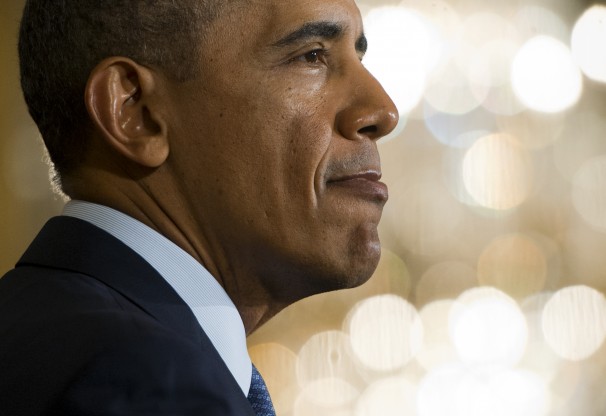
ObamaLipsSunday marked the start of Sunshine Week, a time when government-transparency advocates promote their cause and issue reports gauging the openness of federal agencies.

The findings have never been great for the current administration, which promised to be the most transparent in history on the day President Obama took office. In recent years, most agencies have not fully complied with Freedom of Information Act (FOIA) requirements.

This year’s reports show improvement in some areas, but still much to be desired by news organizations and open-government groups such as the Center for Effective Government and the National Security Archive.

An Associated Press analysis of federal data found that the Obama administration has grown more secretive over time, last year censoring or outright denying FOIA access to government files more than ever since Obama took office.

The administration has also cited more legal exceptions to justify withholding materials and refused to turn over newsworthy files quickly, and most agencies took longer to answer records requests, according to the AP study.

A separate report this week from the National Security Archives found that 54 percent of all agencies have ignored directives that Obama and Attorney General Eric Holder issued in 2009 calling for a “presumption of disclosure” with FOIA requests. The good news: That number is down from about 70 percent of agencies last year.

The National Security Archives also found that nearly half of all federal agencies have not updated their FOIA regulations to comply with 2007 amendments Congress made to the law. The changes require agencies to cooperate with a new FOIA ombudsman in the Office of Government Information Services and report specific data on FOIA output, among other provisions.

The National Security Archive, which claims to file more FOIA requests than any other group, gathers and publishes declassified U.S. government files, with a focus on U.S. foreign policy documents.

In a third analysis, the Center for Effective Government released its annual government-transparency report card on Monday, handing out failing grades to seven of the 15 agencies it reviewed. The scores are based on three metrics: processing requests for information, establishing rules for answering requests and creating user-friendly Web sites.

The White House has put forward an action plan that could help the administration improve its marks by creating one core FOIA regulation and a common set of practices to help requesters and federal agencies better understand the guidelines.

In Congress, the House has passed a bipartisan bill that would require agencies to update their regulations within 180 days.

Source: Washington Post

NASA-Backed Study Says Humanity Is Pretty Much Screwed | Gizmodo

By Robert Sorokonitch

HotEarthHope you’ve enjoyed civilized life, folks. Because a new study sponsored by NASA’s Goddard Space Flight Center says the world’s industrial societies are poised to collapse under the weight of their own unsustainable appetites for resources. There goes the weekend . . . and everything after it for the rest of our lives.

NASA released a statement clarifying its involvement, saying this study “was not solicited, directed or reviewed by NASA. It is an independent study by the university researchers utilizing research tools developed for a separate NASA activity.”

The research article appears in the peer-reviewed scientific journal Ecological Economics, but Dr. Nafeez Ahmed, executive director of the Institute for Policy Research & Development, has a more understandable (but no less harrowing) summary over at The Guardian. Either way, the news isn’t good—as the researchers point out, history doesn’t seem to hold out any favor for advanced societies.

The fall of the Roman Empire, and the equally (if not more) advanced Han, Mauryan, and Gupta Empires, as well as so many advanced Mesopotamian Empires, are all testimony to the fact that advanced, sophisticated, complex, and creative civilizations can be both fragile and impermanent.

Who’s to blame? You. Me. Everyone walking around outside your window. Even the technology we invented to save us from ourselves is contributing to our decline.

Technological change can raise the efficiency of resource use, but it also tends to raise both per capita resource consumption and the scale of resource extraction, so that, absent policy effects, the increases in consumption often compensate for the increased efficiency of resource use.

Is there a way out? Of course. But you’re probably not gonna like it. Dr. Ahmed sums up the researchers’ suggestions:

The two key solutions are to reduce economic inequality so as to ensure fairer distribution of resources, and to dramatically reduce resource consumption by relying on less intensive renewable resources and reducing population growth.

Which is just as difficult and improbable as it sounds.

Seriously, you should read the whole rundown of what the research says. It’s eye-opening, and a serious call to action—if the crushing bleakness of what we’ve done to ourselves hasn’t already doomed you to abandon all hope. Here, watch a funny video to make you feel better. [The Guardian]

Source: Gizmodo

US Presidential candidate Dennis Kucinich says US instigated Ukraine Crisis | Intellihub News

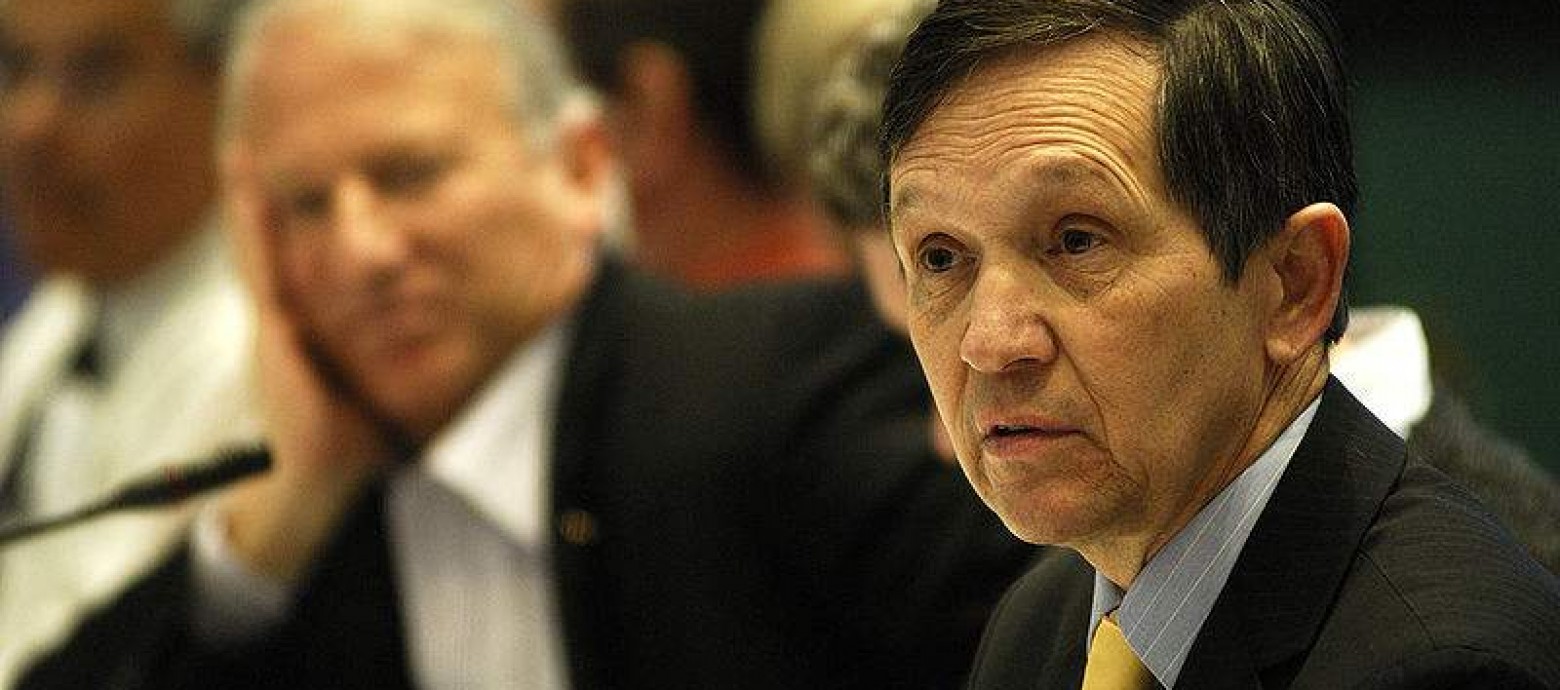
KucinichWhile speaking to Fox News host Bill O’Reilly, Presidential candidate Dennis Kucinich dropped information on the situation that is rarely heard in the mainstream media.

In the interview, Kucinich revealed that the United States government was guilty of funding some of the violent rebel groups who have overrun the country.

When asked how he would handle the crisis if he were president, Kucinich replied by saying that:

“What I’d do is not have USAID and the National Endowment for Democracy working with U.S. taxpayers’ money to knock off an elected government in Ukraine, which is what they did. I wouldn’t try to force the people of Ukraine into a deal with NATO against their interest or into a deal with the European Union, which is against their economic interest.”

So, it’s the USA’s fault that Putin rolled in? We made them do it?” O’Reilly replied. “Bill O’Reilly, if you don’t believe in cause and effect, I don’t know what I can do for you,” Kucinich said.

Kucinich is known to be staunchly anti-war, he has also been an outspoken critic of trade agreements like NAFTA and organizations like the EU.

Kucinich is the only congressional representative to vote against the “9/11 Commemoration” resolution. In a press statement he defended his vote by saying that the bill did not make reference to “the lies that took us into Iraq, the lies that keep us there, the lies that are being used to set the stage for war against Iran and the lies that have undermined our basic civil liberties here at home.”

Like all politicians, Kucinich certainly isn’t perfect, despite his views against war and drug prohibition, Kucinich is in favor of heavy taxation and regulation, including strict gun control regulations.

Kucinich drafted legislation that included a ban on the purchase, sale, transfer, or possession of handguns by civilians.

Kucinich pushed for gun control, in the U.S. Congress as well as during his time as a city councilman. He kept a pistol in his house for a period in 1978 (under the recommendation of the police) when he was the target of a Mafia plot. He reportedly no longer keeps the pistol, but you can be certain that his body guards have heavy fire power.

Source: Intellihub News

BBC Now Admits: Armed Nazis Led “Revolution” in Kiev, Ukraine | New Eastern Outlook

By Tony Cartalucci

Ukraine Nationalist RallyLike the West’s support of sectarian terrorists across the Middle East, including Al Qaeda, it has found the most despicable elements in Ukrainian society to lead “revolution” for the sociopolitical reordering of Eastern Europe. As the dust settles and the West’s proxy regime finds itself safely entrenched in Kiev, Ukraine – the Western media can now finally recuperate some of its lost legitimacy after months of denying the obvious – that armed Neo-Nazis led the so-called “Euromaidan” uprising.

A BBC Newsnight short titled, “Neo-Nazi threat in new Ukraine,” reveals xenophobic Jew-hating nationalists, armed and leading the mobs in Kiev, directly contradicting months of Western media narratives portraying the rabble as aspiring for “freedom,” “democracy,” and “closer ties with the West,” with the most absurd example being  the “I am Ukrainian” propaganda reel.

Far from a “pro-democracy” uprising, the “Euromaidan” was yet another case of Western engineered regime change leveraging the good intentions of the ill-informed to mask the covert backing of ugly armed extremists, just as it had done all across the similarly engineered “Arab Spring” in 2011.

In light of the BBC’s report, confirmed intercepted phone conversations between the EU and Estonia regarding the Ukrainian opposition’s hiring of snipers deployed against both police and protesters takes on a new degree of veracity with deepening implications. It also reframes US Senator John McCain’s taking to the stage in Kiev, side-by-side with these overt Nazis as an abhorrent, shameful act bordering on treason and material support of terrorism.

The BBC’s exposure of armed Nazis in Kiev leading the mobs and the overthrow of an elected government, with the overt backing and blessing of the West exposes the Western narrative as outright fabrications. A prime example of this narrative was the Daily Beast’s article, “Putin’s Crimea Propaganda Machine,” which ironically attempts to twist accusations of skewing reality around onto Russia. In it, it states:

Russia invaded Ukraine over the weekend, justifying its incursion by claming it needed to protect Crimea’s ethnic Russian population from supposed neo-Nazi extremists. This was pure propaganda, of course—Vladmir Putin has been keen to annex land that used to be part of Russia, as he did in Georgia in 2008, and seems to think that the Ukrainian army will and should immediately surrender to the Russian one. 

Still, Putin needed a story to spin, no matter how full of holes, and thus the neo-Nazi claims. But as it turns out, Crimea’s streets are not exactly paved with extremists—a fact that has proven troublesome for Russian state TV channels looking to find token far-right bogeymen.

While the Daily Beast claims Russian state TV is having trouble finding Neo-Nazi extremists in Crimea, it appears the BBC is falling all over them in Kiev. Their existence in the capital of Ukraine, the fact that they are confirmed to be armed and poised to seize and consolidate greater power, is an overt threat to both the people of Kiev, and the rest of the Ukrainian population, and is cause of grave concern for Ukraine’s neighbors – considering the Nazis’ blood-soaked, genocidal origins.

In this light, we see precisely what Russia is attempting to counter, but is being wholly condemned by the West for standing up against. For the West, its ability to ally itself with the most abhorrent ideologies ever conceived by mankind indicates that the supposed principles its society is based upon are merely facades behind which it couches its true ambitions – hegemonic expansion, no different than the violent extremist helping-hands it regularly finds itself collaborating with around the world.

The West Drawing the Long Knives Already? 

 The BBC’s sudden “honesty” regarding brigades of armed Nazis infesting western Ukraine, however, is not the result of the British state propaganda arm examining its journalistic conscience, but rather an attempt to throw off extremist thugs that will only, from now on, become a liability for the West’s ambitions in the Eastern European nation.

The West would most likely prefer to replace armed Neo-Nazis with NATO forces, professional mercenaries, and a proxy force of Ukrainians trained and led by Western special forces and intelligence operatives.

Just as the West has done in Afghanistan, where it used sectarian extremists and terrorists to wage a proxy war against the Soviet Union in the 1980′s, only to end up turning on their “allies” from 2001 onward – the West will use the Neo-Nazis of Kiev only for as long as absolutely necessary before turning on them and dumping them. The BBC’s short piece exposing the repugnant nature of the forces that in fact led the so-called “Euromaidan” uprising is perhaps the first step toward achieving this goal.

Those watching the Ukrainian crisis closely will want to monitor the posture the West takes regarding their fascist armed, militant proxies, and be aware of preparations the West might be making to replace them with a more professional, as well as presentable, armed front to consolidate and hold gains made during the violence and chaos that has consumed Kiev for the past several months.

Source: New Eastern Outlook

Why Russia No Longer Fears the West | Politico Magazine

By Ben Judah

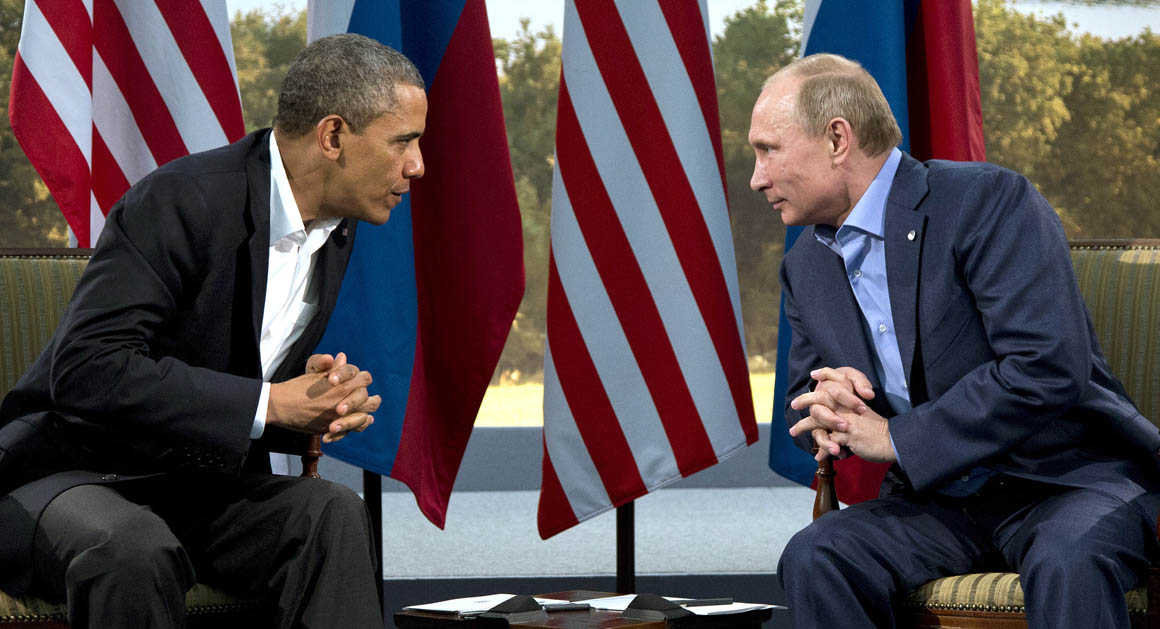
Barack Obama, Vladimir PutinThe West is blinking in disbelief – Vladimir Putin just invaded Ukraine. German diplomats, French Eurocrats and American pundits are all stunned. Why has Russia chosen to gamble its trillion-dollar ties with the West?

Western leaders are stunned because they haven’t realized Russia’s owners no longer respect Europeans the way they once did after the Cold War. Russia thinks the West is no longer a crusading alliance. Russia thinks the West is now all about the money.

Putin’s henchmen know this personally. Russia’s rulers have been buying up Europe for years. They have mansions and luxury flats from London’s West End to France’s Cote d’Azure. Their children are safe at British boarding and Swiss finishing schools. And their money is squirrelled away in Austrian banks and British tax havens.

Putin’s inner circle no longer fear the European establishment. They once imagined them all in MI6. Now they know better. They have seen firsthand how obsequious Western aristocrats and corporate tycoons suddenly turn when their billions come into play. They now view them as hypocrites—the same European elites who help them hide their fortunes.

Once Russia’s powerful listened when European embassies issued statements denouncing the baroque corruption of Russian state companies. But no more. Because they know full well it is European bankers, businessmen and lawyers who do the dirty work for them placing the proceeds of corruption in hideouts from the Dutch Antilles to the British Virgin Islands.

We are not talking big money. But very big money. None other than Putin’s Central Bank has estimated that two thirds of the $56 billion exiting Russia in 2012 might be traceable to illegal activities. Crimes like kickbacks, drug money or tax fraud. This is the money that posh English bankers are rolling out the red carpet for in London.

Behind European corruption, Russia sees American weakness. The Kremlin does not believe European countries – with the exception of Germany – are truly independent of the United States. They see them as client states that Washington could force now, as it once did in the Cold War, not to do such business with the Kremlin.

When Russia sees Spain, Italy, Greece and Portugal outbidding each other to be Russia’s best business partner inside the EU (in return for no mention of human rights), they see America’s control over Europe slowly dissolving.

Back in Moscow, Russia hears American weakness out of Embassy Moscow. Once upon a time the Kremlin feared a foreign adventure might trigger Cold War economic sanctions where it hurts: export bans on key parts for its oil industry, even being cut out of its access to the Western banking sector. No more.

Russia sees an America distracted: Putin’s Ukrainian gambit was a shock to the U.S. foreign policy establishment. They prefer talking about China, or participating in Israeli-Palestinian peace talks. Russia sees an America vulnerable: in Afghanistan, in Syria and on Iran—a United States that desperately needs Russian support to continue shipping its supplies, host any peace conference or enforce its sanctions.

Moscow is not nervous. Russia’s elites have exposed themselves in a gigantic manner – everything they hold dear is now locked up in European properties and bank accounts. Theoretically, this makes them vulnerable. The EU could, with a sudden rush of money-laundering investigations and visa bans, cut them off from their wealth. But, time and time again, they have watched European governments balk at passing anything remotely similar to the U.S. Magnitsky Act, which bars a handful of criminal-officials from entering the United States.

All this has made Putin confident, very confident – confident that European elites are more concerned about making money than standing up to him. The evidence is there. After Russia’s strike force reached the outskirts of Tbilisi, the Georgian capital, in 2008, there were statements and bluster, but not a squeak about Russia’s billions. After Russia’s opposition were thrown into show trials, there were concerned letters from the European Union, but again silence about Russia’s billions.

The Kremlin thinks it knows Europe’s dirty secret now. The Kremlin thinks it has the European establishment down to a tee. The grim men who run Putin’s Russia see them like latter-day Soviet politicians. Back in the 1980s, the USSR talked about international Marxism but no longer believed it. Brussels today, Russia believes, talks about human rights but no longer believes in it. Europe is really run by an elite with the morality of the hedge fund: Make money at all costs and move it offshore.

Ben Judah is author of Fragile Empire: How Russia Fell In And Out Of Love With Vladimir Putin.

Source: Politico Magazine

Despite Majority Opposition, GMO Corn Gets Green Light in Europe | EcoWatch

By John Deike

GMOCornCorporations, backed by influential lobbyists and western governments, dealt major blows this month against activists who are fighting to limit the cultivation of genetically modified organisms (GMOs).

On Feb. 11, the European Commission gave DuPont Pioneer the green light to freely grow insecticidal corn, also known as TC1507. Nineteen of the European Union’s 28 states voted against the cultivation and openly criticized the commission, which, in 2005, concluded the corn was safe to import and consume in Europe, reports Food Freedom News.

“The European Parliament, the majority of member states and 80% of citizens do not want GMOs in Europe,” said French activist and politician Jose Bove in a statement. Bove continued saying it was “inconceivable” and “political” of the commission to approve the corn.

In response, French politicians are continuing their fight with new legislation that would ban genetically modified corn within the country.

U.S. sees similar trend

Monsanto, the world’s largest seed company, had similar success when it spent $9 million to promote the passage of the Food Safety Modernization Act, which was signed into law in by President Obama in 2011.

The law doesn’t address the food safety risks of pesticide residue or genetically modified crops, but it does tighten water quality levels for smaller farms that typically don’t grow GMO food, according to Food Freedom News.

“The 1,200 page act was designed to put small family farms out of business,” said Michael Tabor in a recent Farm-to-Consumer interview. “Most farmers irrigate their fields from nearby streams. Now those streams have to be tested on a weekly basis.”At $87.50 per test, the cost of doing business has now increased by as much as $5,000.

Chemical farms growing biotech crops follow more lenient pollution regulations, added Tabor.

In a recent standoff, protestors, with signs in hand, converged at the Monsanto headquarters in suburban St. Louis, MO during the company’s annual investors meeting in support of two shareholder resolutions that questioned the level of contamination passed onto non-GMO crops and requested the seed giant end its fight against mandatory labels on foods containing GMO ingredients, reports Reuters.

The resolutions failed by considerable margins and 11 protestors were arrested after attempting to disrupt traffic near the Monsanto gates.

Source: EcoWatch

Sen. Paul announces ‘historic’ class-action suit over NSA spying | Fox News

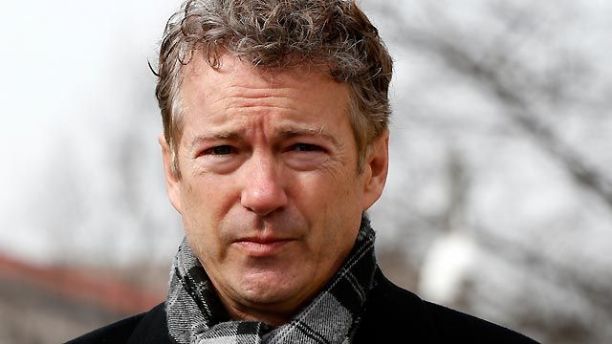
RandPaulSen. Rand Paul on Wednesday announced what he described as one of the largest class-action lawsuits in history, taking President Obama and top intelligence officials to court over National Security Agency surveillance.

“This, we believe, will be a historic lawsuit,” the Kentucky Republican said. The suit, joined by conservative advocacy group FreedomWorks, was filed in U.S. District Court in the District of Columbia.

It alleges that the NSA program that sweeps up and stores massive amounts of telephone “metadata” — which includes where and when calls are made, but not the contents of the calls — violates the Fourth Amendment. The suit asks the court to rule the program unconstitutional and forbid the government from continuing it.

“There’s a huge and growing swell of protest in this country of people who are outraged that their records would be taken without suspicion, without a judge’s warrant and without individualization,” Paul said, at a press conference in Washington.

He said hundreds of thousands of people have joined, and predicted the suit could “conceivably represent hundreds of millions of people who have phone lines in this country.”

The administration has insisted that Americans’ privacy is protected under NSA programs, and Obama recently announced a set of proposed reforms to rein in NSA surveillance.

“We remain confident that the program is legal, as at least 15 judges have previously found,” a Justice Department spokesperson said Wednesday, referring to prior court decisions in separate cases.

But the lawsuit argues that the bulk metadata that is routinely collected nevertheless “reveals a wealth of detail” about Americans’ personal and professional associations “that are ordinarily unknown to the government.”

The suit named Obama, Director of National Intelligence James Clapper, NSA Director Keith Alexander, and FBI Director James Comey.

Source: Fox News

Shocking Facts About America’s For-Profit Prison Industry | Truthout

By Beth Buczynski

As long as their have been human societies, there have been criminals. Despite the best efforts of lawmakers and religions, humans can’t be trusted to do the right thing, even when we’re aware of the consequences. The prison system used to be a last resort, a place you sent people when other forms of punishment were ineffective. Now it’s grown into something much darker, and even less rehabilitative.

Unbeknownst to many, the prison system has become a for-profit business in which inmates are the product–a system that has shocking similarities to another human-based business from America’s past: slavery.

In late 2013, a new report from In the Public Interest (ITPI) revealed that private prison companies are striking deals with states that contain clauses guaranteeing high prison occupancy rates–sometimes 100 percent. This means that states agree to supply prison corporations with a steady flow of residents–whether or not that level of criminal activity exists. Some experts believe this relationship between government and private prison corporations encourages law enforcement agencies to use underhanded tactics–often targeting minority and underserved groups–to fill cells.

“The report, ‘Criminal: How Lockup Quotas and ‘Low-Crime Taxes’ Guarantee Profits for Private Prison Corporations,’ documents the contracts exchanged between private prison companies and state and local governments that either guarantee prison occupancy rates (essentially creating inmate lockup quotas) or force taxpayers to pay for empty beds if the prison population decreases due to lower crime rates or other factors (essentially creating low-crime taxes),” reports Salon.

As a result, there are now over 2 million people living behind bars in the United States. That’s half a million more than China, which has a population five times greater than the U.S. Many are incarcerated for non-violent crimes, like the use or possession of marijuana, and other problems that would be far better served through a rehabilitation or education program.

The worst part is that once captured by the prison industry, inmates are forced to work for pennies an hour, providing cheap labor for some of the most profitable enterprises in the world, including the U.S. Military.

According to the Left Business Observer, “the federal prison industry produces 100 percent of all military helmets, ammunition belts, bullet-proof vests, ID tags, shirts, pants, tents, bags, and canteens. Along with war supplies, prison workers supply 98 percent of the entire market for equipment assembly services; 93 percent of paints and paintbrushes; 92 percent of stove assembly; 46 percent of body armor; 36 percent of home appliances; 30 percent of headphones/microphones/speakers; and 21 percent of office furniture. Airplane parts, medical supplies, and much more: prisoners are even raising seeing-eye dogs for blind people.”

When you can get that kind of labor for less than a dollar a day, it’s hard to see the government’s motivation for incarcerating fewer people. And it’s all done at the taxpayer’s expense.

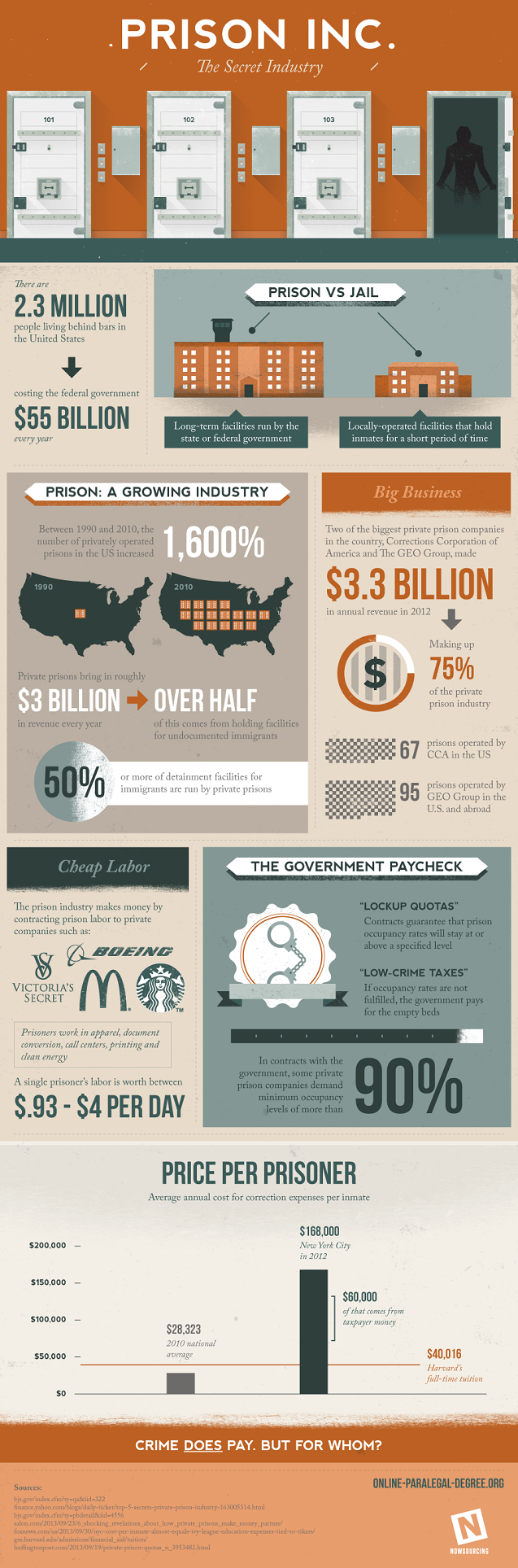
Scroll through the following infographic below for more shocking facts about America‘s prison industry, and how much it‘s costing taxpayers like you.

PrivatePrisons

Source: Truthout