10 Things You Need (But Don’t Want) To Know About the BP Oil Spill | Alternet

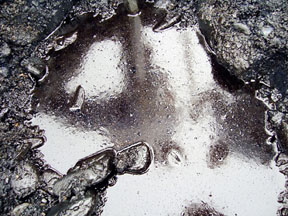
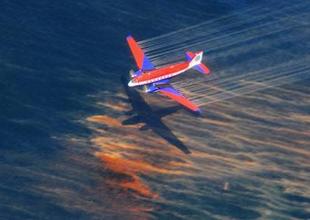
It’s been 37 days since BP’s offshore oil rig, Deepwater Horizon, exploded in the Gulf of Mexico. Since then, crude oil has been hemorrhaging into ocean waters and wreaking unknown havoc on our ecosystem — unknown because there is no accurate estimate of how many barrels of oil are contaminating the Gulf.

Though BP officially admits to only a few thousand barrels spilled each day, expert estimates peg the damage at 60,000 barrels or over 2.5 million gallons daily. (Perhaps we’d know more if BP hadn’t barred independent engineers from inspecting the breach.) Measures to quell the gusher have proved lackluster at best, and unlike the country’s last big oil spill — Exxon-Valdez in 1989 — the oil is coming from the ground, not a tanker, so we have no idea how much more oil could continue to pollute the Gulf’s waters.

The Deepwater Horizon disaster reminds us what can happen — and will continue to happen — when corporate malfeasance and neglect meet governmental regulatory failure.

The corporate media is tracking the disaster with front-page articles and nightly news headlines every day (if it bleeds, or spills, it leads!), but the under-reported aspects to this nightmarish tale paint the most chilling picture of the actors and actions behind the catastrophe. In no particular order, here are 10 things about the BP spill you may not know and may not want to know — but you should.

1. Oil rig owner has made $270 million off the oil leak

Transocean Ltd., the owner of the Deepwater Horizon rig leased by BP, has been flying under the radar in the mainstream blame game. The world’s largest offshore drilling contractor, the company is conveniently headquartered in corporate-friendly Switzerland, and it’s no stranger to oil disasters. In 1979, an oil well it was drilling in the very same Gulf of Mexico ignited, sending the drill platform into the sea and causing one of the largest oil spills by the time it was capped… nine months later.

This experience undoubtedly influenced Transocean’s decision to insure the Deepwater Horizon rig for about twice what it was worth. In a conference call to analysts earlier this month, Transocean reported making a $270 million profit from insurance payouts after the disaster. It’s not hard to bet on failure when you know it’s somewhat assured.

2. BP has a terrible safety record

BP has a long record of oil-related disasters in the United States. In 2005, BP’s Texas City refinery exploded, killing 15 workers and injuring another 170. The next year, one of its Alaska pipelines leaked 200,000 gallons of crude oil. According to Public Citizen, BP has paid $550 million in fines. BP seems to particularly enjoy violating the Clean Air and Clean Water Acts, and has paid the two largest fines in the Occupational Safety and Health Administration’s history. (Is it any surprise that BP played a central, though greatly under-reported, role in the failure to contain the Exxon-Valdez spill years earlier?)

With Deepwater Horizon, BP didn’t break its dismal trend. In addition to choosing a cheaper — and less safe — casing to outfit the well that eventually burst, the company chose not to equip Deepwater Horizon with an acoustic trigger, a last-resort option that could have shut down the well even if it was damaged badly, and which is required in most developed countries that allow offshore drilling. In fact, BP employs these devices in its rigs located near England, but because the United States recommends rather than requires them, BP had no incentive to buy one — even though they only cost $500,000.

SeizeBP.org estimates that BP makes $500,000 in under eight minutes. Read more…
Grayson’s Smart Calculus Makes War Cost Real for Taxpayers | Common Dreams

BY JOHN NICOLS

Congressman Alan Grayson is at it again. This time, the Florida Democrat who shook up the health-care debate by saying Republicans were the real death-panel party and who shook up the bank reform debate by leading (with Texas Congressman Ron Paul) the “Audit the Fed” fight, is shaking up the debate about so-called “emergency” supplemental spending to fund the occupations of foreign lands.

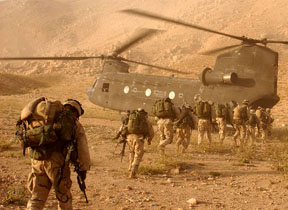
Grayson’s mad because the Pentagon and its allies in the White House (be they Bush and Cheney or Obama and Biden) keep demanding tens of billions in additional allocations to fund the occupations of Iraq and Afghanistan. And they do so in a manner that makes debate difficult and dissent rare.

But Grayson is out to provoke a debate – and he is definitely dissenting.

“What George Orwell wrote about in 1984 has come true. What Eisenhower warned us about concerning the ‘military-industrial complex’ has come true,” the congressman argues. “War is a permanent feature of our societal landscape, so much so that no one notices it anymore.”

Grayson proposes to change this circumstance with a bill he has introduced: “The War Is Making You Poor Act.”

“The purpose of this bill is to connect the dots, and to show people in a real and concrete way the cost of these endless wars,” he explains.

To make the cost of war real for working Americans, Grayson performs a simple calculus:

“Next year’s budget allocates $159,000,000,000 to perpetuate the occupations of Afghanistan and Iraq. That’s enough money to eliminate federal income taxes for the first $35,000 of every American’s income. Beyond that, (it) leaves over $15 billion to cut the deficit.

“And that’s what this bill does. It eliminates separate funding for the occupation of Iraq and Afghanistan, and eliminates federal income taxes for everyone’s first $35,000 of income ($70,000 for couples). Plus it pays down the national debt.”

The congressman is betting – with good reason –that the key to opening up a real debate about the wars in Iraq and Afghanistan is to make real the cost of these occupations to American families.

“The costs of the war have been rendered invisible. There’s no draft. Instead, we take the most vulnerable elements of our population, and give them a choice between unemployment and missile fodder. Government deficits conceal the need to pay in cash for the war,” explains Grayson, with a reference to the mounting trade deficit with China. “We put the cost of both guns and butter on our Chinese credit card. In fact, we don’t even put these wars on budget; they are still passed using ’emergency supplemental’. A nine-year ’emergency.’” Read more…

Source: Common Dreams

Haitian Farmers Commit to Burning Monsanto Hybrid Seeds | Truthout

“A new earthquake” is what peasant farmer leader Chavannes Jean-Baptiste of the Peasant Movement of Papay (MPP) called the news that Monsanto will be donating 60,000 seed sacks (475 tons) of hybrid corn seeds and vegetable seeds, some of them treated with highly toxic pesticides. The MPP has committed to burning Monsanto’s seeds, and has called for a march to protest the corporation’s presence in Haiti on June 4, for World Environment Day.

In an open letter sent May 14, Chavannes Jean-Baptiste, the executive director of MPP and the spokesperson for the National Peasant Movement of the Congress of Papay (MPNKP), called the entry of Monsanto seeds into Haiti “a very strong attack on small agriculture, on farmers, on biodiversity, on Creole seeds … and on what is left our environment in Haiti.”(1) Haitian social movements have been vocal in their opposition to agribusiness imports of seeds and food, which undermines local production with local seed stocks. They have expressed special concern about the import of genetically modified organisms (GMOs).

For now, without a law regulating the use of GMOs in Haiti, the Ministry of Agriculture rejected Monsanto’s offer of Roundup Ready GMOs seeds. In an email exchange, a Monsanto representative assured the Ministry of Agriculture that the seeds being donated are not GMOs.

Elizabeth Vancil, Monsanto’s director of development initiatives, called the news that the Haitian Ministry of Agriculture approved the donation “a fabulous Easter gift” in an April email.(2) Monsanto is known for aggressively pushing seeds, especially GMOs seeds, in both the global North and South, including through highly restrictive technology agreements with farmers who are not always made fully aware of what they are signing. According to interviews by this writer with representatives of Mexican small farmer organizations, they then find themselves forced to buy Monsanto seeds each year, under conditions they find onerous and at costs they sometimes cannot afford.

The hybrid corn seeds Monsanto has donated to Haiti are treated with the fungicide Maxim XO, and the calypso tomato seeds are treated with thiram.(3) Thiram belongs to a highly toxic class of chemicals called ethylene bisdithiocarbamates (EBDCs). Results of tests of EBDCs on mice and rats caused concern to the US Environmental Protection Agency (EPA), which then ordered a special review. The EPA determined that EBDC-treated plants are so dangerous to agricultural workers that they must wear special protective clothing when handling them. Pesticides containing thiram must contain a special warning label, the EPA ruled. The EPA also barred marketing of the chemicals for many home garden products, because it assumes that most gardeners do not have adequately protective clothing.(4) Monsanto’s passing mention of thiram to Ministry of Agriculture officials in an email contained no explanation of the dangers, nor any offer of special clothing or training for those who will be farming with the toxic seeds.

Haitian social movements’ concern is not just about the dangers of the chemicals and the possibility of future GMOs imports. They claim that the future of Haiti depends on local production with local food for local consumption, in what is called food sovereignty. Monsanto’s arrival in Haiti, they say, is a further threat to this. Read more…

Source: Truthout

Gold ATMs – First In Abu Dhabi, Soon Everywhere: Gold Is Now One Step Closer To Full Currency Status | Zero Hedge

BY TYLER DURDEN

Just in case you are worried that all those gold coins you have buried in your back yard will never be accepted as (il)legal tender, here comes Abu Dhabi with a gold ATM machine, making gold-based “currency” transactions one step closer. This is a harbinger of things to come, as people increasingly demand to transact in non-daily violatable pieces of paper.

This is also the nightmare scenario for all central banks, which have to be seeing developments in the precious metal space, and finally realizing that in the absence of prudent monetary policy, the people, as we noted yesterday, will take (non-dilutable) matters into their own hands. The Fed dilemma: recognition that the fiat “race to the bottom” has to be contained (unlikely) or confiscation of precious metals (see Roosevelt executive order 6102).

There’s no mistaking what’s in this vending machine. The well-heeled in the Gulf can now grab “gold to go” from a hotel lobby in the United Arab Emirates, when the need for a quick ingot strikes.

On Thursday, a day after its inauguration, the shiny machine attracted spectators of many different nationalities who gathered to watch whenever an enthusiast was struck with the urge to splurge on a bar of the precious metal.

Abu Dhabi’s Emirates Palace Hotel became the first place outside Germany to install “gold to go, the world’s first gold vending machine,” said a statement from Ex Oriente Lux AG, the German company behind the vending machine.

“In addition to one-gram, five-gram and 10-gram bars of gold, the machine also dispenses gold coins,” it added. Read more…

Source: Zero Hedge

The Poetry of Death: Patterns of State Terror | Baltimore Chronicle

BY CHRIS FLOYD

The found poetry of state terror continues its strange mutilations of the English language. The bizarre verbal heavings of Donald Rumsfeld, for example, are rightly celebrated as choice examples of the genre. And noted English playwright David Hare once fashioned a whole play built largely on the “thought-tormented music” wrought from verbatim transcripts of the principal authors of the war crime in Iraq.

In this regard, as in almost every aspect of the Terror War, “continuity” has been the hallmark of the Obama Administration. But we would do the progressive, forward-looking president a grave disservice if we were to imply that this dynamic, historic figure has confined himself to mere continuity. No, in field after field of governmental endeavor, Barack Obama has striven mightily not just to uphold the many authoritarian and militarist innovations of the Bush Administration, but to expand them-increasing their scope and depth, codifying, normalizing and making permanent many practices which his predecessors had enshrouded with ambiguity, deception and deliberate murk. Bush and Cheney were afflicted with a vestigial embarrassment at the howling illegality and constitutional subversion of many of their Terror War policies, and seemed to fear these acts would provoke some kind of public outcry or political controversy-or even prosecution-should they be made too explicit.

But our cool, savvy and thoroughly post-postmodern president carries none of that dead lumber from our long-vanished past. Where Bush was content with smirks and hints about his assassination program, Obama is bold, sending his security chief to declare openly before Congress that the president now has the unrestricted right and power to murder anyone, Americans included, in cold blood, by the simple expedient of declaring his victim a suspected terrorist of some vague description. Whereas Bush and Cheney usually resorted to backroom bureaucratic knife-twisting or bombastic but empty public threats to try to silence and cow officials who expose high crimes of state, the Obama Administration brazenly brings down the draconian power of federal prosecution against whistleblowers. Our progressives-in-power will not just take away your government job or bluster at your editors if you give your fellow citizens a glimpse of the blood-soaked sausage-making that goes on behind the imperial curtain; no, they will put you in the penitentiary, to rot away with murderers and child abusers, which is where they rank all such treacherous tellers of truth.

So we should not be surprised to find the Obama Administration outstripping its mentors and models from the Bush years in the production of Orwellian nomenclature. Nor is it remarkable that these perversions of language are leading to further perversions of law, morality and plain common sense.

We refer to the recent story in the Los Angeles Times about the vast expansion of the CIA’s powers to murder people in Pakistan with missiles fired by robot drones. These remote-control killings were originally aimed at specific, known, named individuals suspected of being top “militant” leaders. But now, people are being targeted not because of any action they are known or alleged to have taken, but simply because they seem to fit an arbitrarily designated “pattern of life”-even if the remote-control killers don’t know the victim’s name. Read more…

Source: Baltimore-Chronicle

15 years later, hear McVeigh’s confession | MSNBC

By msnbc.com

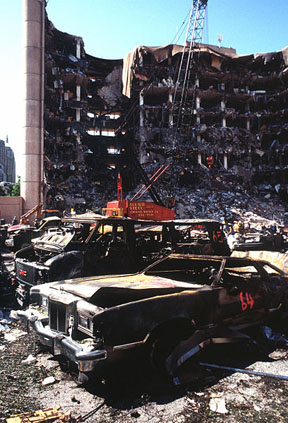
A new documentary about Timothy McVeigh, including never-before-heard audio of the terrorist, is stirring emotions even before it airs on msnbc to mark the 15th anniversary of the Oklahoma City bombing.

The audio, originally recorded by Buffalo News reporters Lou Michel and Dan Herbeck as part of interviews for the only authorized biography of the bomber, is likely to be received by audiences with mixed reactions.

In his own voice, McVeigh confesses to the bombings and recounts everything from his childhood in Buffalo, his time with the military during the Gulf War, his relationship with conspirator Terry Nichols, to the planning and execution of the attack that killed 168 lives and injured over 500 people.

The documentary, narrated by msnbc’s Rachel Maddow, has already provoked a strong discussion on Maddow’s blog, with viewers concerned that it might incite extremists.

“Some people will say they don’t want to hear anything about Timothy McVeigh and we respect their feelings on that,” says Herbeck. “But others are interested in hearing what made a terrorist tick.”

“[It’s an] oral blueprint of what turned one young man into one of the worst mass-murderers and terrorists in American history,” says Michel.

Michel and Herbeck received similar criticism after publishing the McVeigh biography “American Terrorist: Timothy McVeigh and the Oklahoma City Bombing” in 2001.

“A few of the victims were outraged by our book, and they went public with their feelings. They felt it was wrong to tell the story of a terrorist,” says Herbeck.

The authors considered releasing the interview audio to another film project at that time, but by then media interest and the national focus had changed in the aftermath of 9/11.

Maddow says she isn’t concerned that McVeigh will come across as a martyr to those who share his anti-government views. “McVeigh is profoundly unsympathetic — even repugnant —on his own terms, you don’t need to work to make him seem that way,” she says. “There’s a huge distance between the hero he is in his own mind, and how basely unheroic he seems to anyone hearing the tapes now. I personally am not a supporter of the death penalty… but hearing him talk, it’s hard not to wish him gone.”

“I was glad when he died. I will never forgive Timothy McVeigh,” says Janie Coverdale in the documentary. Coverdale lost her two grandsons, Aaron, 5, and Elijah, 2, in the building’s day care center.

Jennifer Rodgers, a first responder for the Oklahoma City Police Department in 1995, was interviewed for the documentary. She describes her feelings as “still raw… It just doesn’t seem like it was really that long ago.”

The documentary’s producer, Toby Oppenheimer, realizes he is touching a raw nerve in Oklahoma City and admits it was tough finding survivors to agree to be part of the msnbc film. “They understandably didn’t want to revisit the painful memories,” he says.

Maddow defended that this story is important now, on its own terms. “The Murrah Building bombing is the worst incident of domestic terrorism we’ve ever experienced as a nation,” she says. “ We owe pure remembrance of the date, and commemoration of the lives lost and changed. I think it’s also an appropriate occasion to talk about the threat of domestic terrorism. How strong is the threat now, 15 years after McVeigh? Are we heeding warning signs that may be out there now?”

Former President Bill Clinton, who oversaw the bombing’s recovery efforts and investigation, recently warned that there are frightening parallels between the current political tensions and the anti-government rage that preceded the 1995 attack.

Speaking on ABC’s “This Week” Sunday, he calls the demonization of government “dangerous” and says that some of the rhetoric legitimizes violence. “We can disagree with them [elected officials], we can harshly criticize them. But when we turn them into an object of demonization, we increase the number of threats.”

“There’s no question that the militia movement is on the rise again,” says Michel. “Some of the same factors that caused McVeigh to believe he had become disenfranchised from mainstream society are again in the mix: growing government regulations, lack of employment. Those are things McVeigh would cite if he were alive.”

Source: MSNBC

It’s Official – America Now Enforces Capital Controls | Zero Hedge

It couldn’t have happened to a nicer country. On March 18, with very little pomp and circumstance, president Obama passed the most recent stimulus act, the $17.5 billion Hiring Incentives to Restore Employment Act (H.R. 2487), brilliantly goalseeked by the administration’s millionaire cronies to abbreviate as HIRE. As it was merely the latest in an endless stream of acts destined to expand the government payroll to infinity, nobody cared about it, or actually read it.

Because if anyone had read it, the act would have been known as the Capital Controls Act, as one of the lesser, but infinitely more important provisions on page 27, known as Offset Provisions – Subtitle A—Foreign Account Tax Compliance, institutes just that. In brief, the Provision requires that foreign banks not only withhold 30% of all outgoing capital flows (likely remitting the collection promptly back to the US Treasury) but also disclose the full details of non-exempt account-holders to the US and the IRS.

And should this provision be deemed illegal by a given foreign nation’s domestic laws (think Switzerland), well the foreign financial institution is required to close the account. It’s the law. If you thought you could move your capital to the non-sequestration safety of non-US financial institutions, sorry you lose – the law now says so. Capital Controls are now here and are now fully enforced by the law. Read more…

Source: Zero Hedge

The Articles of Freedom | We the People Organization

This website uses the imagery of a fresco by italian artisan, Constantino Brumidi, created in 1865. The fresco was titled, “The Apotheosis of George Washington” or “Ascension of George Washington.”

Brumidi depicted George Washington rising to the heavens in glory, flanked by female figures representing Liberty and Victory/Fame. A rainbow arches at his feet, and thirteen maidens symbolizing the original states flank the three central figures. (The word “apotheosis” in the title means literally the glorification of a person as an ideal, or the raising of a person to the rank of a god; George Washington was honored as a national icon in the nineteenth century.)

This work is part of a larger fresco.

While the list is long of how a “fasci” or “fasces” or axe-blade has been used in symbolism by mankind throughout the Ages, and notably in America as well, (see wikipedia.org for an overview),  Brumidi used the axe-blade pictured here to depict the warrior power of The People.

This fresco is painted on the Ocula of the Rotunda of the Capitol Building. Suspended 180 feet above the Rotunda floor, the fresco covers an area of 4,664 square feet. The figures, up to 15 feet tall, were painted to be intelligible from close up as well as from 180 feet below.

It should be noted that the Continental Congress appointed Washington commander-in-chief of the American revolutionary forces in 1775. He later became the first President and some proposed he be made King. During President Washington’s second term, King George III asked what Washington would do next. The King was informed that Washington might return to his farm. After hearing this, King George III responded with, “If he does that, he will be the greatest man in the world.”

George Washington declined kingship, gave up command of the Continental Army and bowed out of a third term as President to return to his farm at Mount Vernon.

Source: We the People Organization

Exxon Valdez Anniversary: 20 Years Later, Oil Remains | National Geographic

BY CHRISTINE DELL-AMORE

Two decades after the worst oil spill in U.S. history, huge quantities of oil still coat Alaska‘s shores with a toxic glaze, experts say.

More than 21,000 gallons of crude oil remain of the 11 million gallons of crude oil that bled from the stranded tanker Exxon Valdez on the night of March 23, 1989.

The oil—which has been detected as far as 450 miles (724 kilometers) away from the spill site in Prince William Sound—continues to harm wildlife and the livelihoods of local people, according to conservation groups. (See an Alaska map.)

Dennis Takahashi-Kelso, who was on the ground at the Exxon Valdez disaster as Alaska’s commissioner of environmental conservation, remembers wading through knee-deep pools of bubbling, thick oil. The smell of the pure oil was intense and pungent, he said.

When he returned to the same beaches years later, he found “surprisingly fresh” oil just below the sand. (Related: “Alaska Oil Spill Fuels Concerns Over Arctic Wildlife, Future Drilling”.)

“The damage that [the spill] created is something beyond anyone’s imagination,” said Michel Boufadel, Temple University’s Civil and Environmental Engineering chair, who has just completed research on why the oil persists.

Oil-Munching Bacteria

An 11,000-person crew removed oil from the beaches until 1994, when government officials decided to end the clean up effort. At that time, what was left of the the oil was naturally disintegrating at a high rate, and experts predicted it would be gone within a few years. But they were wrong.

Oil naturally “disappears” through two processes: As the tide rises over an oil patch, the water sloughs off bits of oil, which then disperse into the ocean as tiny, less harmful droplets that can biodegrade easily.

Biodegradation occurs when bacteria or other microorganisms break down oil as part of their life cycle.

But Prince William Sound is what ecologists call a closed system—it’s not exposed to big, pounding waves, so the oil has time to seep into the sand, according to Margaret Williams, who oversees conservation in the Bering Sea for the nonprofit World Wildlife Fund (WWF). Read more…

Source: National Geographic

The Most Dangerous Man in America: Daniel Ellsberg and the Pentagon Papers (Film)

Co-winner of this years Freedom of Expression Award from the National Board of Review (and one of their Five Best Documentaries of the Year), Winner of the Special Jury Award at IDFA, and in contention for the years Best Documentary Oscar, The Most Dangerous Man in America tells the story of Daniel Ellsberg, a high-level Pentagon official and Vietnam War strategist, who in 1971 concluded that the war is based on decades of lies and leaks 7,000 pages of top secret documents to The New York Times, making headlines around the world.

A riveting story of how this one mans profound change of heart created a landmark struggle involving Americas newspapers, its president and Supreme Court. With Daniel Ellsberg, Patricia Ellsberg, Tony Russo, Howard Zinn, Hedrick Smith, John Dean, and, from the secret White House tapes, Richard Nixon and Henry Kissinger, who called Ellsberg the most dangerous man in America.