
Predicting the future of international relations is always a risky endeavor. History shows that even the most confident forecasts can fall flat. For instance, the last Pentagon propaganda pamphlet on ‘Soviet Military Power’ was published in 1991 – the year the USSR ceased to exist. Similarly, the Washington-based RAND Corporation’s 1988 scenario on nuclear war included the Soviet Union engaging Pakistan over Afghanistan in 2004. Nevertheless, the urge to anticipate the future is natural, even necessary. What follows is not a prediction, but an attempt to outline reasonable expectations for the state of the world in 2025.
Ukraine
US President Donald Trump’s bid to secure a ceasefire along Ukraine’s battle lines will fail. The American plan to “stop the war” ignores Russia’s security concerns and disregards the root causes of the conflict. Meanwhile, Moscow’s conditions for peace – outlined by President Vladimir Putin in June 2024 – will remain unacceptable to Washington, as they would effectively mean Kiev’s capitulation and the West’s strategic defeat.
The fighting will continue. In response to the rejection of his plan, a frustrated Trump will impose additional sanctions on Moscow. However, he will avoid any serious escalation that might provoke Russia into attacking NATO forces. Despite strong anti-Russian rhetoric, US aid to Ukraine will decrease, shifting much of the burden onto Western European nations. While the EU is prepared to step in, the quality and scale of Western material support for Ukraine will likely decline.
On the battlefield, the tide will continue to shift in Russia’s favor. Russian forces are expected to push Ukraine out of key regions such as Donbass, Zaporozhye, and parts of Kursk Region. Ukraine will mobilize younger, inexperienced recruits to slow Russia’s advances, but this strategy will lead to limited success. Kiev will rely increasingly on surprise operations, such as border incursions or symbolic strikes deep into Russian territory, in attempts to demoralize the Russian population.
Domestically, the US and its allies may push for elections in Ukraine, hoping to replace Vladimir Zelensky – whose term expired in the middle of last year – with General Valery Zaluzhny. While this political reshuffling might temporarily strengthen Kiev’s leadership, it will not address the underlying challenges of economic collapse and deteriorating living conditions for ordinary Ukrainians.
United States
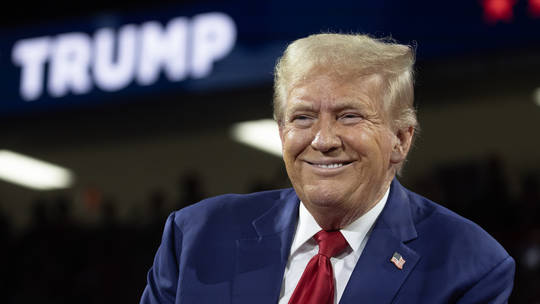
Despite a peaceful transfer of power, Trump’s second term will remain fraught with tension. The risk of attempts on his life will linger. Trump’s foreign policy, while less ideological than Biden’s, will focus on pragmatic goals. He will:
- Keep NATO intact but demand higher financial contributions from European members.
- Shift much of the financial responsibility for Ukraine onto the EU.
- Intensify economic pressure on China, leveraging Beijing’s vulnerabilities to force unfavorable trade deals.
Trump will also align closely with Israel, supporting its efforts against Iran. Tehran, already weakened, will face harsh terms for a nuclear deal, and a refusal may prompt US military strikes on Iranian nuclear facilities.
Trump is likely to meet Putin in 2025, but this will not signal a thaw in US-Russia relations. The confrontation between the two powers will remain deep and enduring. Trump’s strategy will prioritize America’s global dominance, shifting the burden of US commitments onto allies and partners, often to their detriment.
Western Europe
European nations, wary of Trump’s return, will ultimately fall in line. The EU’s dependence on the US for military and political leadership will deepen, even as European economies continue to act as donors to the American economy. Over the past three decades, Western European elites have transitioned from being national actors to appendages of a transnational political system centered in Washington. Genuine defenders of national interests, such as Alternative for Germany or France’s Rassemblement National, remain politically marginalized.
Russophobia will remain a unifying force in Western European politics. Contrary to popular belief, this sentiment is not imposed by the US but actively embraced by EU and UK elites as a tool for cohesion. The Russian military operation in Ukraine has been framed as the first stage of an imagined Russian attempt to “kidnap Europe.”
In 2025, Germany’s new coalition government will adopt an even tougher stance toward Moscow. However, fears of a direct military clash with Russia will deter other European nations from deploying troops to Ukraine. Instead, Western Europe will prepare for a new Cold War, increasing military spending, expanding production, and fortifying NATO’s eastern flank.
Dissent within Europe will be suppressed. Political opponents of the confrontation with Russia will be branded as “Putin’s useful idiots” or outright agents of Moscow. Hungary and Slovakia will remain outliers in their approach to Russia, but their influence on EU policy will be negligible.
Middle East
After significant military victories in 2024, Israel, with US backing, will attempt to consolidate its gains against Iran. The US-Israeli strategy will involve combined pressure, including military actions, against Iranian proxies like the Yemeni Houthis and efforts to deepen ties with Gulf Arab monarchies under the Abraham Accords.
While Russia signed a treaty with Iran in January 2025, it does not obligate Moscow to intervene militarily if Tehran is attacked. Thus, a full-scale Middle Eastern war involving Russia and the US remains unlikely. Domestically, Iran faces uncertainty as Supreme Leader Ayatollah Khamenei, now 86, nears the end of his leadership.
Russia’s influence in the Middle East will wane as its military presence diminishes. However, logistical routes connecting Russia to Africa will remain a strategic priority.
East Asia
US-China tensions will continue to rise, fueled by American efforts to contain China’s economic and technological ambitions. Washington will strengthen alliances in Asia, particularly with Taiwan and the Philippines, to counter Beijing. While an armed conflict over Taiwan or the South China Sea remains possible, it is unlikely to erupt in 2025.
Russia’s partnership with China will grow stronger, though it will stop short of a formal military alliance. From a Western perspective, this relationship will increasingly resemble an anti-American coalition. Together, Russia and China will push back against US global dominance in geopolitical, military, and economic spheres.
Russia’s near abroad
Belarusian President Alexander Lukashenko is expected to secure another term in January 2025, cementing his alignment with Moscow. Meanwhile, Russia will work to stabilize its relations with Kazakhstan, though Moscow’s lack of a compelling vision for Eurasian integration could come back to bite.
The year 2025 will be marked by strategic instability, ongoing conflicts, and heightened geopolitical tensions. While Russia has achieved notable successes in recent years, it must guard against complacency. Victory is far from assured, and the world remains nowhere near equilibrium. For Moscow, the path forward will require resilience and a clear focus on long-term goals. Peace will come, but only through continued effort and eventual victory – perhaps in 2026.
Source: Profile.ru & RT

 Liberty International News