
For over two decades, we have tirelessly advocated for two foundational pillars of true health freedom: nutritious, unadulterated food and a rational, risk-aware vaccine schedule. We often wondered if meaningful, systemic change was possible against the entrenched powers of Big Pharma and Big Agra. Today, thanks to the decisive leadership of President Donald J. Trump, that change is not just possible—it is the official policy of the United States government. By appointing Robert F. Kennedy Jr. as Secretary of Health and Human Services and giving him a clear mandate to dismantle the deep-state bureaucracy, President Trump has turned our long-held principles into national action. 😊
While other administrations talked about “draining the swamp,” when it comes to these two pillars, President Trump is authorizing the machinery to do it, and the Trump-Kennedy partnership is waging a decisive, domestic campaign for the sovereignty of the American body. Where past leaders turned a blind eye to corporate capture, this administration is seizing the moment to liberate our children’s bodies and our families’ plates. This is more than reform; it is a peaceful revolution in public health, made possible by a President who understands that true national strength begins with the health of its people.
The Real Food Pyramid: Reclaiming Our Nutritional Heritage
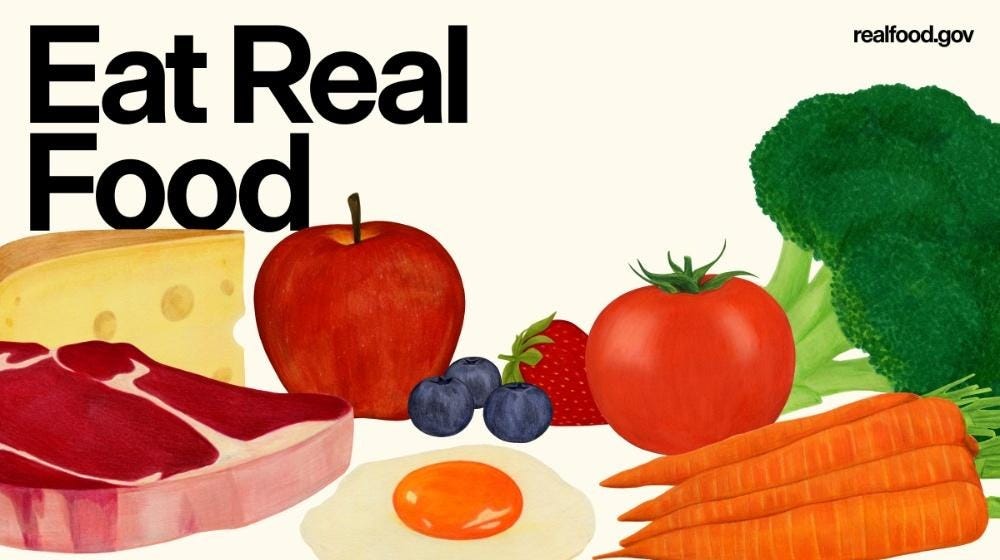
For generations, the USDA’s food pyramid stood as a monument to misguided science and Big Agra influence, promoting processed grains and sugars that fueled a pandemic of diabetes, obesity, and heart disease. Secretary Kennedy, in one of his first major acts, dismantled this corrupt edifice and introduced the Real Food Pyramid.

As you can see from the image above, taken from RealFood.gov, the previous food pyramid was upside down! RFK just turned it right side up! 😊 The new guidelines emphasize eating real food, defined as minimally processed foods “prepared with few ingredients and without added sugars, industrial oils, artificial flavors, or preservatives.”
This isn’t a minor adjustment; it’s a philosophical renaissance. What has been announced is nothing less than the structural and symbolic flipping of the pyramid. For decades, this inverted logic was an instrument of captured interests, placing refined carbohydrates at the base, labeling industrial seed oils as “heart healthy,” and pushing protein and traditional fats to the margins.
This created a vicious economic flywheel: weaponized food → metabolic dysfunction → chronic disease → sick-care dependency → lifelong pharmaceutical drugs to manage symptoms. Basically, a closed loop of profit and sickness.
The new pyramid emphasizes:
- Whole, nutrient-dense foods from regenerative and organic agriculture.
- Healthy, ancestral fats over industrially processed seed oils.
- Protein quality, prioritizing pasture-raised and wild-caught sources.
By flipping the pyramid, this administration is breaking a control architecture that has quietly governed public health for half a century. It is centering the foods humanity has always (until recently) eaten: high-quality protein, natural fats (including traditionally demonized saturated fats), and whole foods in their intact forms. It is finally displacing the industrial seed oils, ultra-processed carbohydrates, and food-like substances engineered for addiction and profit.
This isn’t nostalgia; it’s biological realism. Human physiology thrives on nutrient density and fats that stabilize our biology, and food itself contains gene-regulatory exosomes that literally “talk” to our cells. This correction interrupts the very feedback loop that feeds both the chronic disease epidemic and the drug industries built to manage it. When you flip the pyramid, you don’t just change what people eat—you change who benefits.
This policy directly aligns with the principles we’ve championed for years: that food is medicine, and that a corrupted food supply is a primary driver of chronic disease. At a White House press briefing, Kennedy called the changes the “most significant reset of federal nutrition policy in history.”
Kennedy said: “These guidelines replace corporate-driven assumptions with common-sense goals and gold-standard scientific integrity. These new guidelines will revolutionize our nation’s food culture and make America healthy again… For decades, Americans have grown sicker while healthcare costs have soared. The reason is clear: the hard truth is that our government has been lying to us to protect corporate profit-taking, telling us that these food-like substances were beneficial to public health… Federal policy promoted and subsidized highly processed foods and refined carbohydrates and turned a blind eye to the disastrous consequences. Today, the lies stop.”
This historic shift is being translated into operational reality across the government, including the U.S. Public Health Service Commissioned Corps and military health services. You cannot sustain national security, readiness, or operational capacity on ultra-processed food. A nation cannot be strong if those sworn to defend it are metabolically compromised. This is what it looks like when policy confronts the chronic disease epidemic at its root.
Kennedy’s move boldly rejects the lobbyist playbook and realigns federal policy with peer-reviewed science on metabolic health. This is a victory for every family farmer, every conscious consumer, and every parent seeking to nourish their children properly, a sentiment echoed in discussions of his broader plan to combat childhood chronic diseases.
A guideline is a blueprint. The real work is implementation: federal procurement shifting toward real food, school lunch reform accelerating, and medical institutions being forced by evidence to catch up. This is the beginning of a national reorientation away from symptom-management and toward true prevention. We now have a historic invitation: to eat real food, support the farmers who steward life, and build meals that restore metabolism and resilience. The tide is turning.

Restoring Sanity and Safety to Childhood Vaccines
For decades, the U.S. childhood immunization schedule has been presented not as a set of clinical recommendations, but as a non-negotiable mandate. This rigid, “one-size-fits-all” model was predicated on a flawed premise: that public health is best served by removing physician judgment and patient context from the equation. The truth is that this system was corrupted by perverse financial incentives that placed profit above individual care.
Previously, pediatricians were financially incentivized to meet aggressive vaccination quotas. Initiatives like the “Combo 10” benchmark—where practices received bonuses of $400 per child from insurers like Blue Cross Blue Shield for achieving a 63% vaccination rate across their entire patient base—transformed doctors from caregivers into commission-driven sales agents. Below is a video of RFK, Jr. and Dr. Sherri Tenpenny from our 2023 docu-series – REMEDY – elaborating on this topic.
These coercive pay-for-performance schemes are now being systematically dismantled by Kennedy’s HHS, which has directed the Centers for Medicare & Medicaid Services (CMS) to end financial incentives tied solely to vaccination rates.
The message was clear: the system valued blanket compliance over careful, individualized medical evaluation. As Kennedy stated on video in 2025, “Doctors are being paid to vaccinate, not to evaluate. They’re pressured to follow the money, not the science.”
The reforms enacted in January 2026 under the leadership of Robert F. Kennedy Jr. at the CDC represent a historic correction. This was not a reckless reduction but a scientifically grounded restoration of medical ethics. The schedule was revised from a bloated 18 universally recommended doses down to a core 11, moving vaccines for influenza, rotavirus, hepatitis A, and certain meningitis strains into a category of “shared clinical decision-making.” This shift explicitly gives parents a meaningful say in whether their child receives certain vaccines, requiring a conversation about risks and benefits rather than an automatic administration.
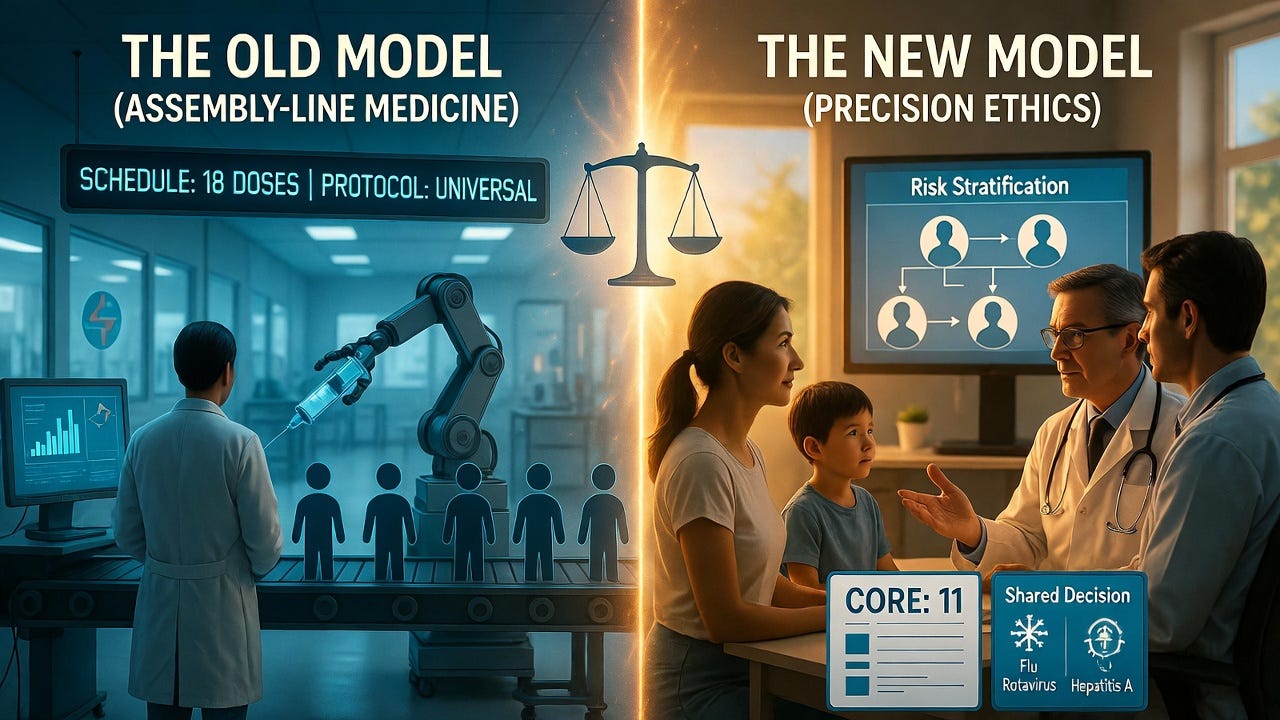
This long-overdue correction is grounded in a foundational, yet inconvenient, epidemiological truth: population risk is heterogeneous, not homogeneous. The reformed schedule finally moves away from the pseudoscientific, assembly-line model of medicine and toward a risk-stratified approach. It restores the physician’s role by empowering them to utilize clinical discretion—considering a child’s individual immune status, genetic predispositions, and actual environmental risk—rather than functioning as a rubber stamp for a coercive, profit-maximizing protocol. Re-categorizing vaccines for pathogens like COVID-19, RSV, and Hepatitis B to “high-risk only” status isn’t a reduction in care; it’s the precise application of medicine, reserving medical interventions for those who actually stand to benefit from them. This is how science is supposed to work, outside the boardrooms of pharmaceutical manufacturers.
The subsequent exodus of career bureaucrats from the CDC is not brain drain; it’s a parasite purge. Their resignations are a de facto admission that the agency’s old operating principle—serving as a marketing arm for Big Pharma—is no longer tenable. Good riddance. The institution can now be rebuilt on the pillars it long ago abandoned: rigorous, hypothesis-driven science, transparent and quantifiable risk-benefit disclosures, and the non-negotiable ethical standard of informed consent.
This reform exposes the central, vacuous mantra of the pro-mandate lobby. We are incessantly lectured by those with a vested financial or ideological interest—often with the scientific depth of a cable news chyron—that “vaccines save millions of lives and eradicate disease.” One such devotee of this faith-based immunology was Senator Maria Cantwell (D-Wash.), whose simplistic pronouncements on the matter Kennedy dismantled with factual precision in a rebuttal that should be mandatory viewing.
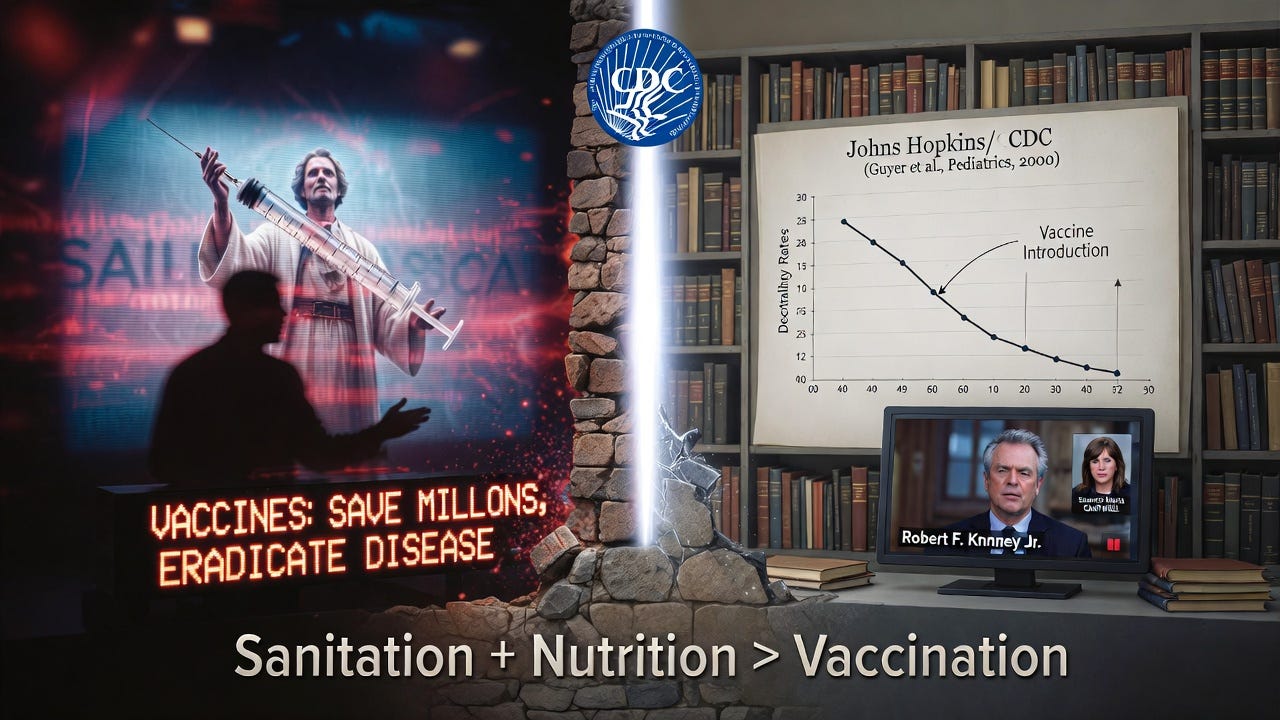
The historical data, curiously absent from their talking points, undermines their entire narrative. Consider the CDC’s own investment in truth: a study funded by the CDC and conducted by researchers at Johns Hopkins analyzed a century of U.S. mortality data. Its conclusion was empirically clear and devastating to the salvation myth of vaccination: nearly 90% of the decline in mortality from common infectious diseases occurred before the introduction of their corresponding vaccines.
The dramatic reduction was attributable to improved sanitation, nutrition, and living standards—facts the “vaccines or death” evangelists conveniently ignore. The 2026 reforms finally begin to align policy with this uncontested historical record, prioritizing real public health over pharmaceutical evangelism.
Transformative, Decisive Leadership
Robert F. Kennedy Jr. is demonstrating what transformative leadership looks like, and he is doing so with the essential backing of a President willing to break the old molds. President Trump, by supporting this agenda, has taken the very issues patriots have long held sacred—medical freedom, environmental purity, and untainted food—and created the political space for them to become national policy. This is not partisan politics; it is the restoration of foundational American values: liberty, informed consent, and sovereignty over our own bodies.
These historic accomplishments, made possible under this administration, provide a tangible, powerful reason for hope. They are a blueprint for a stronger, healthier, and more independent America. This is the work we voted for. This is the promise of “America First” applied to the most personal frontier of all: our health. Let us celebrate these victories, support the courageous leaders making them possible, and continue this essential journey toward reclaiming our nation’s vitality from the ground up.
Source: The Truth About Cancer Website



 Liberty International News