This is why Trump’s approach to Ukraine is so different | RT World News

By Fyodor Lukyanov

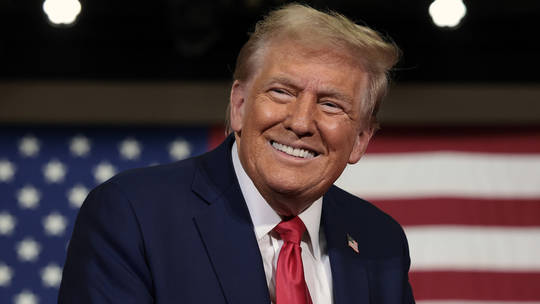
Donald Trump formulates his political course using memes. Strategies, programs and action plans are then drawn up by people around him. But the impetus comes from the main character’s pronouncements.

That’s why we hear the US president-elect promise to end the war in Ukraine in 24 hours. It sounds unrealistic, to say the least, but it reflects his desire. Which is obviously a conscious one. Which means it shouldn’t be dismissed out of hand.

It’s a pointless exercise to speculate on the basis of leaks and anonymous comments from people – supposedly – close to Trump about what he really has in mind. In all likelihood, he doesn’t yet know himself what he will do. What matters is something else: how Trump’s approach to Ukraine will differ from that of the current presidential administration, and whether he even understands rapprochement.

With regards to the first of these, the difference is stark. President Joe Biden and his team represent a cohort of politicians whose views were shaped by the end of the Cold War. America’s ideological and moral righteousness – and its unquestioned power superiority – determined not even the possibility, but rather the necessity of world domination. The emergence of rival powers that could challenge certain elements of the liberal world order has been met with fierce resistance.

That’s because this setup didn’t allow for any deviation from its basic principles and refused to allow for compromise on fundamental issues. Russia’s actions in Ukraine are seen as an encroachment on the very essence of the liberal order. Hence the call for Moscow’s “strategic defeat.”

Trump stands for a change in positioning. Instead of global dominance, there will a vigorous defense of specific American interests. Priority will be given to those that bring clear benefits (not in the long term, but now). Belief in the primacy of domestic over foreign policy, which has always characterized Trump’s supporters and has now spread throughout the Republican Party, means that the choice of international issues is going to be selective. Preserving the moral and political hegemony of the US is not an end in itself, but a tool. In such a system of priorities, the Ukrainian project loses the destiny it has in the eyes of the adherents of the liberal order. It becomes a pawn in a larger game.

Another peculiarity of the president-elect is that even his detractors largely admit that he doesn’t see war as an acceptable tool. Yes, he’ll use hard bargaining, muscle-flexing and coercive pressure (as practiced in his usual business). But not destructive armed conflict, because that is irrational. Trump doesn’t seem to have a twisted heart when he talks about the need to stop the bloodshed in Ukraine and Gaza.

Now let’s look at his methods. Trump’s previous term offers two examples of his approach to regional conflicts. One was the ‘Abraham Accords’, an agreement that facilitated formal relations between Israel and a number of Arab countries. The second was the meetings with Kim Jong-un, including a full-fledged summit in Hanoi.

The first was the result of shuttle diplomacy by Trump’s son-in-law Jared Kushner. The powerful financial interests of America, the Gulf monarchies and Israel led to a series of shady political deals. The current situation in the region is many times worse than it was then, but it cannot be said that the arrangements have collapsed. The framework is still in place. But such a foundation can hardly be considered a model. The system of relations in the Middle East is very special, and the scale of the Ukraine conflict is incomparably greater.

The second example is negative. Trump hastily tried to shift the systemic confrontation by resorting to a spectacle. The bet was on pleasing the ego of the interlocutor – the first North Korean leader to meet with a US president. It didn’t work, because beyond that there was no idea how to solve the real complex problems.

However, we can’t simply project the legacy of 2016-2020 onto the period ahead. Trump has gained some experience. His environment is different now, and his electoral mandate is what he could only have dreamed of back then. There is more room for maneuver than before, but not enough for the genuine concessions needed for a comprehensive agreement with Moscow.

It is in Russia’s interest to remain calm, and to refuse to react to any provocations. Yes, objectively the situation is changing. But now everyone will be talking about the fact that a window of opportunity has opened for a short time, and we must not miss this chance. In crises like the Ukrainian one, there are no simple solutions or easy “shortcuts.” Either this window is a gateway to new stable relations – and it cannot be forced open, but will need a careful approach. Or it’s a portal to an even more brutal struggle, because it births yet another disappointment.

Source: RT World News

The Unsustainability of Modern Capitalism | Information Clearing House

Daily Bell: Please treat this interview as if no one knew about you or your bestselling books. Give us some background on where you grew up and how you entered the CIA.

John Perkins: I grew up in New Hampshire and went to business school in Boston. At that time, I was approached by the National Security Agency (NSA), not the CIA, for a series of very sensitive tests including lie detector and personality test. They concluded I would make a good economic hit man, which is essentially a con artist with an economic background. They also said they found several weaknesses in my character that maybe they could use as hooks that would bring me into their game. Primarily, money, sex and power. Being that I was a young man, I was seduced by all of them.

Daily Bell: You were chief economist at a major international consulting firm; how did you gain that position?

John Perkins: After the NSA recruited me, I joined the Peace Corps. When I came out of the Peace Corps, Charles P. Maine hired me. It was a Boston consulting firm and the Sr. VP who hired me had very close ties to the NSA and the intelligence network of the United States in general. What I came to realize was it was all part of the scheme to turn me into an economic hit man. The first economic hit man, guys like Kermit Roosevelt, who overthrew the democratically elected President of Iran actually worked for the CIA.

But the weakness in that system was that if guys like Kermit Roosevelt had been discovered, the US government would have been in deep trouble. So very soon after that experience, they started to use private consultants, instead of actual government employees to do this work. Companies like Charles T. Main were brought in with legitimate contracts, working for the state department or the World Bank or the treasury department or USAID or other organizations and within these organizations were guys like me who did this special field of work.

Daily Bell: Interesting. You advised the World Bank, United Nations, IMF, U.S. Treasury Department, Fortune 500 corporations, and countries in Africa, Asia, Latin America, and the Middle East. What is your opinion of the World Bank?

John Perkins: The World Bank is a tool of economic hit men, there is no question about it. It’s the tool of big corporations, the IMF and most of what we call intelligence agencies of the United States, CIA and NSA. Essentially the job of all these organizations is to help what used to be just US businesses – now we call them multi-nationals – get themselves established around the world in positions where they can exploit the world’s resources, natural resources and human resources. All of these organizations are basically tools of what they call the corporatocracy. The men and a few women who run the biggest and most powerful corporations also run most of the government. Economic hit men help channel the resources of organizations like the World Bank and the IMF, the NSA and the CIA to support the larger agenda.

Daily Bell: The IMF?

John Perkins: It’s a servant of the corporatocracy, of economic hit men. One of my jobs as an economic hit man was to identify countries that had resources like oil and arrange huge loans for those countries from the World Bank and sister organizations. But the money would never go to the actual country; instead it would go to our own corporations to build infrastructure projects in that country like power plants and industrial parks; things that would benefit a few very wealthy families.

So then the people of the country would be left holding this huge debt that they couldn’t repay. We would come back and say, “well, since you can’t repay your debt, you have to restructure your loan.” That’s when the IMF comes in. So the World Bank makes the original loan and IMF shows up and says, “We’ll help you restructure your loan, but in order to do that you have to meet certain conditionalities. You have to sell your oil or whatever the coveted resource is at a cheap price, to the oil companies without restrictions.” Or they would suggest the country sell electric utilities, water and sewage, maybe even your schools and jails to private multi-national corporations. Or maybe allow military bases to be built; these sorts of things.

Daily Bell: The United Nations?

John Perkins: I think the United Nations has an important function that it should be performing. We need an organization like that in the world today. Unfortunately, the United Nations has been rendered basically impotent. The United Nations was very opposed to us going into Iraq, but the Bush administration totally ignored that and went in anyway. I think it’s very unfortunate that the United Nations has been emasculated by the United States.

Daily Bell: What do you think of the Bank for International Settlements? Is it true that it has worldwide and absolute immunity? Why does a central bank for central banks need sovereign immunity? How is that even enforceable?

John Perkins: It’s enforceable because that’s the way the laws are written in all the various countries that we inhabit. As long as the people who are running the banks and corporations also control politicians, which today they do around the world, then they get to write the laws. It’s interesting that during a lot of my lifetime in the United States, for example, our laws were written by elected officials, but today that is not the case. Today in the United States lobbyists write the laws; the elected officials are essentially owned by big corporations. That’s not true on all issues, but it’s true on the big issues that affect big corporations. We’ve reached a new geopolitical reality that we have never known before. This is a new situation. Read more…