Health Care Reform and the Supreme Court (Affordable Care Act) | The New York Times

By Adam Liptak

On March 26, the Supreme Court began three days of hearings on challenges to the constitutionality of the Affordable Care Act, the health care reform bill pushed by President Obama and passed by Congress in March 2010 over bitter Republican opposition.

It is one of the most significant cases heard by the court in decades, with implications for the presidential race as well as the future of health care coverage. The decision, due in late June, is also likely to be a major factor in shaping the legacy of Chief Justice John G. Roberts Jr., as well as Mr. Obama, whose signature domestic initiative is on the line.

Day Three

On the third day of health care arguments, the justices shifted their attention to a question with enormous practical implications: If they strike down a key provision of the sprawling law, what other provisions would have to fall along with it?

Justice Antonin Scalia said the whole law would have to go. “My approach would be to say that if you take the heart out of this statute,” he said, “the statute’s gone.”

Other justices considered a variety of possible approaches.

The issue took on practical urgency after some of the questioning the day before had suggested that the law’s core provision, often called the individual mandate, may be in peril. It requires most Americans to obtain insurance or pay a penalty.

Last year, the United States Court of Appeals for the 11th Circuit, in Atlanta, ruled that the mandate was unconstitutional, but it said the balance of the law survived.

The Obama administration argued for a middle ground: that if the mandate falls, two politically popular provisions must die with it — those that prohibit insurers from declining coverage or charging higher premiums because of pre-existing medical conditions.

The challengers to the law argued that the entire act must fall along with the what one lawyer called “its heart.’’ The court appointed an outside lawyer, H. Bartow Farr III, to argue the 11th Circuit’s position, that the mandate could fall alone.

The court separated the day’s arguments into two sessions. After the morning session, which focused on the effect of overturning the mandate, the afternoon’s hearing dealt with the law’s expansion of Medicaid, part of its attempt to reduce the number of Americans without health insurance.

In the second argument, the court’s more conservative justices expressed concern that the law’s Medicaid expansion was unduly coercive to states. The law would give states additional money to expand Medicaid – which covers largely lower-income households – and also add new rules about that coverage.

Justice Anthony M. Kennedy, often the swing vote on the court, wondered whether Medicaid created accountability problems because the federal government set the rules but the states operated it.

The court’s more liberal justices expressed surprise that the expanded program, financed largely with federal money, was at all questionable on constitutional grounds. Read more…

Oregon’s SB 1552 Analyzed – Mandatory Mediation Law (For Trust Deed Foreclosures) | Querin Law

By Phil Querin, Attorney

On March 5, 2012, the Oregon Legislature passed a sweeping series of changes to its trust deed foreclosure law, SB 1552.  Once signed by the Governor it will become effective 91 days hence.  What follows is a summary of (a) the new mandatory mediation law that, after the effective date, will apply to the non-judicial foreclosure of all residential trust deeds; and (b) some important changes to the existing laws governing judicial and non-judicial foreclosures.  Between now and the effective date, the Oregon Attorney General’s office will promulgate rules to implement the mediation program.  Until then, all we have for guidance is SB 1552 itself. This summary is for informational purposes only and should not be viewed as “legal advice”.  Those interested in seeing if the new law may apply to their particular situation should consult with their own legal counsel. Read more…

Indian Reservations as Sovereign Nations | Native Heritage Project

NativeHeritageProject

Did you know that Indian reservations are independent nations?  Indian Nations are allowed, within limits to govern themselves.  Many have their own police forces and courts.

Tribal sovereignty in the United States refers to the inherent authority of indigenous tribes to govern themselves within the borders of the United States of America. The federal government recognizes tribal nations as “domestic dependent nations” and has established a number of laws attempting to clarify the relationship between the federal, state, and tribal governments. The Constitution and later federal laws grant local sovereignty to tribal nations, yet do not grant full sovereignty equivalent to foreign nations, hence the term “domestic dependent nations”.

However, in times of war, all men, including Indians have to register.  In WWI, this caused some consternation.  Each registrar had to record the county name in which the registrant registered.  If they registered on an Indian Reservation, even if the reservation was located within a county, the reservation itself was not part of the county, as it is considered a separate Nation.

TribalLandsThis bureaucratic anomaly became apparent in New York in states East of the Mississippi.  In New York, Indians who registered on the reservation are listed in our old friend, Miscellaneous County.  In other places, Miscellaneous is a sign that someone is either hospitalized, institutionalized or returned a late registration after the county office had closed.  In this case, it’s not necessarily a sign of any of those things, but each return has to be looked at individually to determine the individual circumstance.  Just as I was about to decide that all New York entrants in Miscellaneous County were Reservation Indians, I found one who lived on a reservation, followed by someone of the same name, also an Indian, in prison.  No assumptions allowed.

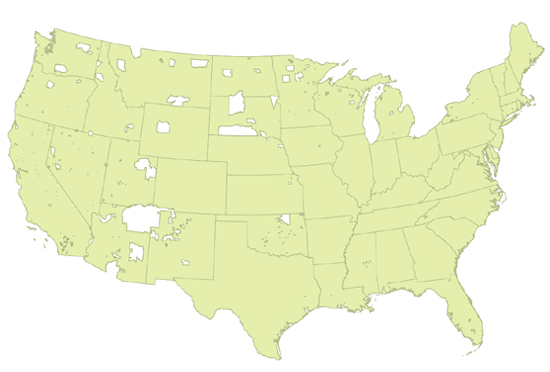
This map is a very different map of the US.  It’s a map of the US minus the sovereign Indian nations within the continental US.  Sort of looks like Swiss Cheese doesn’t it.  Some of these areas are much larger than one might expect.

Source: Native Heritage Project

An Auto Engine that runs on Air | Tata Motors

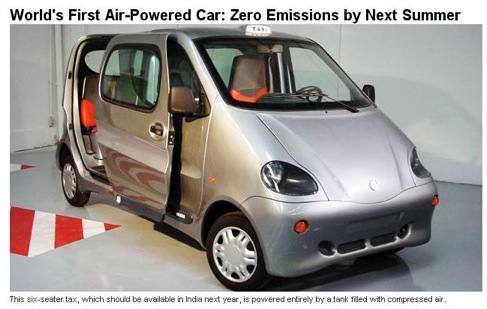
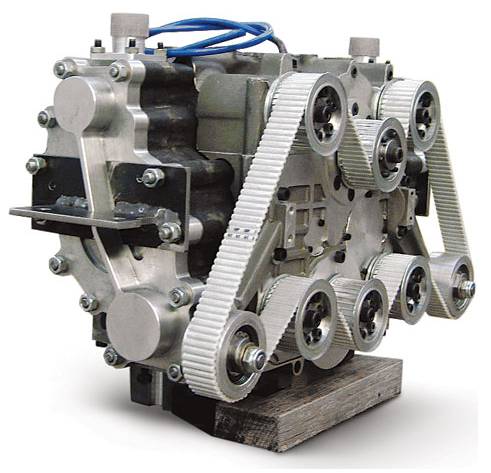
That’s right, Air not Gas, Diesel or  Electric but just the Air around us, take a look. The Air Car,  developed by ex-Formula One engineer Guy N. For Luxembourg-based MDI, uses Compressed Air to push its engine’s pistons and make the car go. The Air Car, called the “Mini CAT” could cost around 365,757 rupees in India  or $8,177 US. The Mini CAT  which is a simple, light urban car, with a tubular chassis, a body of  Fiberglass that is glued not welded and powered by Compressed  Air.

A Microprocessoris used to control all Electrical functions of the car, one tiny radio transmitter sends instructions to the lights, turn signals, etc. The temperature of the clean air expelled by the exhaust pipe is between 0-15  degrees below zero. This makes it suitable for use by the internal air conditioning system, with no need for gases or loss of power. There are no keys, just an Access  card which can be read by the car from your pocket. According to the designers, it costs  less than 50 rupees per 100 KM, that’s about a tenth the cost of a car running on gas. It’s mileage is about double that of the most advanced Electric car, a factor which makes it a perfect choice for city motorists.

The car has a top speed of 105 KM per hour or 60 mph and would have a range of around 300 km or 185 miles between refuels. Refilling the car will take place at adapted gas stations with special air compressors.

A fill up  will only take two to three minutes and costs approximately 100 rupees and  the car will be ready to go another 300 kilometers. This  car can also be filled at home with it’s on board compressor, and would  take 3-4 hours to refill the tank, but it can be done while you sleep. Because there is no combustion engine, changing the 1 liter of  vegetable oil is only necessary every 50,000 KM or 30,000  miles.

Source: Cascadian Resource Center