DNC Superdelegates Warn They Will Block Bernie Sanders at Convention and Spark Civil War Within the Democratic Party | Yahoo & The Independent

3a9343e22e675c07b8f8b4008e5a7ec3By Greg Graziosi

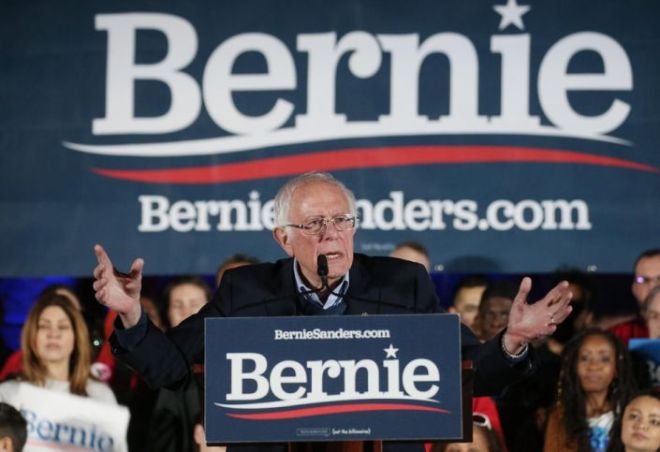
Senator Bernie Sanders’ issues with the Democratic establishment may continue past the nominating races and into the Democratic National Convention, according to a new report.

If Mr Sanders arrives at the convention with any less than a majority of delegates pledged to him, he may find himself with a wave of superdelegates voting against his nomination.

The New York Times reported Thursday that in interviews with 93 superdelegates, only nine said that Mr Sanders arriving at the convention with a plurality was reason enough to support him as nominee.

In the event that Mr Sanders does only win a plurality of pledged delegates, there could be a brokered convention and subsequent fight to choose a nominee.

The Times report was “based on interviews with the 93 superdelegates, out of 771 total, as well as party strategists and aides to senior Democrats about the thinking of party leaders.”

Those leaders apparently told the Times they anticipated a fight at the July nominating convention.

“A vast majority of those superdelegates – whose ranks include federal elected officials, former presidents and vice presidents and DNC members – predicted that no candidate would clinch the nomination during the primaries, and that there would be a brokered convention fight in July to choose a nominee.”

Politico reported similar findings. In interviews with 20 superdelegates, none of them expressed explicitly endorsement of Mr Sanders’ belief that whoever gets the most pledged delegates by the convention should get the nomination.

“No, no I think the rules are set and we ought to follow the rules. Especially when someone says follow the rules who’s not even a Democrat,” Congressman Jaun Vargas said. Mr Vargas has endorsed former New York City mayor Mike Bloomberg for nominee.

Thanks to a rule change limiting the powers of superdelegates – which largely came about due to criticism from Mr Sanders following the 2016 Democratic primary – they are now only allowed to vote if no candidate wins the 1,991 pledged delegates needed to reach a majority.

Congressman Anthony Brown, who has endorsed former South Bend, Indiana mayor Pete Buttigieg, said there is “going to be a fight no matter what the outcome is.”

Should Mr Sanders arrive at the convention with a strong plurality, any attempt by superdelegates to nominate someone else is likely to be seen by Mr Sanders’ supporters as the Democratic establishment gaming the system to nominate their preferred candidate. Such a move would likely damage the already tenuous coalition between establishment Democrats and progressive Democrats.

“It’s going to be pretty tough to take the nomination away from someone who’s got a strong plurality. If it’s neck and neck and close and everybody’s close, that’s one thing. But if there’s a clear winner, it’s hard to overturn,” Congressman John Larson said. “People can fantasize about a brokered convention but it’s going to be awfully hard to overturn the will of the people.”

Source: The Independent

The Best #Coronavirus News You’ve Heard All Month | Wireless Dangers Australia

Source: YouTube

Dr. Lawrence Palevsky Testimony: Unvaccinated Children Are “The Healthiest Children I’ve Ever Seen” | Collective Evolution

Screen-Shot-2020-02-18-at-7.51.11-AMIt’s always worrisome publishing an article about vaccine safety and posting it on Facebook. But why is that? One would think that discussions and concerns about vaccine safety would be encouraged. However, the opposite is true–Facebook has been cracking down on any information that they deem as “anti-vaccine.”

Does this mean that reporting on a study addressing the concerns of aluminum adjuvants in vaccines, for example, will be prevented from spreading and possibly even labelled as “fake news,” despite the fact that it’s been published in a peer-reviewed medical journal?

Does this mean that a paediatrician, like the one below, will also be censored for sharing his opinion based on his research and experience?

Dr. Heidi Larson’s Comments at WHO Summit

I’d like to point out that many scientists presented facts about vaccines and vaccine safety at the recent Global Health Vaccine Safety Summit hosted by the World Health Organization in Geneva, Switzerland. At the conference, Professor Heidi Larson, a Professor of Anthropology and the Risk and Decision Scientist Director at the Vaccine Confidence Project, emphasized that doctors and professionals should forego name-calling with ‘hostile language’ such as “anti-vax”.

She recommended encouraging people to ask questions about vaccine safety. After all, it makes sense–in order to make our vaccines safer and more effective, you would think everybody would be on board with constant questioning and examination. After all, that’s just good science, and it’s in everyone’s best interest. She also brought up the issue of confidence in vaccines:

Dr. Lawrence Palevsky

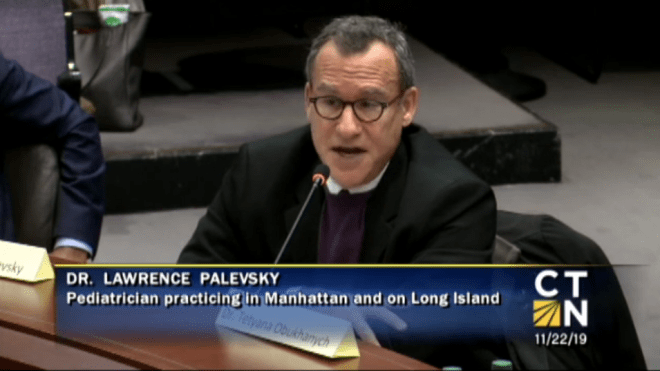
One of those doctors who is losing confidence in vaccines is Dr. Lawrence Palevsky, a practicing paediatrician trained at the NYU School of Medicine who did his residency at Mt. Sinai Hospital in New York. He spent the first nine years of his career working in emergency rooms running a neonatal intensive care unit. He recently spoke at a forum on vaccines in Connecticut, discussing the repeal of the religious exemption for childhood vaccines. In the video below, he provides a great summary as to why so many parents and physicians continue to become concerned about vaccine safety.

The parents that I work with in New York, that I see around the country are very concerned that their rights are being taken away, that their knowledge about the science is being pushed away by an agenda that only says, unvaccinated children are a problem.

No study has every been done in this country, appropriately, to address the health outcomes of children who are vaccinated versus the children who are unvaccinated. I have been seeing families in my practice for over 20 years, that have opted out of vaccination, they are the healthiest children I’ve ever seen.

Vaccine hesitancy among among health professionals is no longer a secret. A study published in the journal EbioMedicine outlines this point:

Over the past two decades several vaccine controversies have emerged in various countries, including France, inducing worries about severe adverse effects and eroding confidence in health authorities, experts, and science. These two dimensions are at the core of the vaccine hesitancy (VH) observed in the general population. VH is defined as delay in acceptance of vaccination, or refusal, or even acceptance with doubts about its safety and benefits, with all these behaviors and attitudes varying according to context, vaccine, and personal profile, despite the availability of vaccine services VH presents a challenge to physicians who must address their patients’ concerns about vaccines and ensure satisfactory vaccination coverage.

The Takeaway

The scientific community should never stop questioning, especially when it comes to medication. Based on the information that’s come out at the conference mentioned in this article, and the testimony shown above, it’s quite clear that there is a lot of room for improvement when it comes to the development of vaccines and vaccine safety overall. Discussion is always encouraging, as long as it’s peaceful and facts are presented in a proper manner.

It’s better to understand the reasons why a lot of people, parents, scientists and physicians are hesitant about vaccination and appropriately respond, instead of simply using ridicule and hatred, because that’s never effective and both parties cannot move forward that way. At the end of the day, scientists should never cease to question.

Source: Collective Evolution

To Tame Coronavirus, Mao-Style Social Control Blankets China | Economic Times/India Times

wuhan-11-ap

Johnny Liberty, Editor’s Note: This pandemic was likely created from a bioweapons lab in Wuhan and the Chinese Communist Party is showing their true colors in dealing with this humanitarian crisis. The entire world will suffer consequences from this debacle and a global economic slowdown and economic reset is inevitable.

The nation is battling the coronavirus outbreak with a grassroots mobilization reminiscent of former Communist Chairman Mao Zedong’s mass crusades, not seen in China in decades.

China has flooded cities and villages with battalions of neighborhood busybodies, uniformed volunteers and Communist Party representatives to carry out one of the biggest social control campaigns in history.

The goal: to keep hundreds of millions of people away from everyone but their closest kin.

The nation is battling the coronavirus outbreak with a grassroots mobilization reminiscent of former Communist Chairman Mao Zedong’s mass crusades, not seen in China in decades — esse ..

Housing complexes in some cities have issued the equivalents of paper hall passes to regulate how often residents leave their homes. Apartment buildings have turned away their own tenants if they have come from out of town. Train stations block people from entering cities if they cannot prove they live or work there. In the countryside, villages have been gated off with vehicles, tents and other improvised barriers.

Despite China’s arsenal of high-tech surveillance tools, the controls are mainly enforced by hundreds of thousands of workers and volunteers, who check residents’ temperature, log their movements, oversee quarantines and — most important — keep away outsiders who might carry the virus.

Residential lockdowns of varying strictness — from checkpoints at building entrances to hard limits on going outdoors — now cover at least 760 million people in China, or more than half the country’s population, according to a New York Times analysis of government announcements in provinces and major cities. Many of these people live far from the city of Wuhan, where the virus was first reported and which the government sealed off last month.

Throughout China, neighborhoods and localities have issued their own rules about residents’ comings and goings, which means the total number of affected people may be even higher. Policies vary widely, leaving some places in a virtual freeze and others with few strictures.

China’s top leader, Xi Jinping, has called for an all-out “people’s war” to tame the outbreak. But the restrictions have prevented workers from returning to factories and businesses, straining China’s giant economy. And with local officials exercising such direct authority over people’s movements, it is no surprise that some have taken enforcement to extremes.

Li Jing, 40, an associate professor of sociology at Zhejiang University in the eastern city of Hangzhou, was almost barred from taking her husband to a hospital recently after he choked on a fish bone during dinner. The reason? Her neighborhood allows only one person per family to leave the house, every other day.

“Once the epidemic was disclosed, the central government put huge pressure on local officials,” Li said. “That triggered competition between regions, and local governments turned from overly conservative to radical.

“Even when the situation is relieved or if the mortality rate turns out not to be high, the government machine is unable to change direction or tune down,” she added.

China’s prevention efforts are being led by its myriad neighborhood committees, which typically serve as a go-between for residents and local authorities. Supporting them is the government’s “grid management” system, which divides the country into tiny sections and assigns people to watch over each, ensuring a tight grip over a large population.

Zhejiang province, on China’s southeastern seaboard, has a population of nearly 60 million and has enlisted 330,000 “grid workers.” Hubei province, whose capital is Wuhan, has deployed 170,000. The southern province of Guangdong has called upon 177,000, landlocked Sichuan has 308,000, and the megacity of Chongqing has 118,000.

Authorities are also combining enormous manpower with mobile technology to track people who may have been exposed to the virus. China’s state-run cellular providers allow subscribers to send text messages to a hotline that generates a list of provinces they have recently visited.

At a high-speed rail station in the eastern city of Yiwu this past week, workers in hazmat suits demanded that passengers send the text messages that show their location data before being allowed to leave.

n app developed by a state-run maker of military electronics lets Chinese citizens enter their name and national ID number and be told whether they may have come in contact, on a plane, train or bus, with a carrier of the virus.

It is too early to say whether China’s strategy has contained the outbreak. With large numbers of new infections being reported every day, the government has clear reasons for minimizing human contact and domestic travel. But experts said that in epidemics, overbearing measures can backfire, scaring infected people into hiding and making the outbreak harder to control.

“Public health relies on public trust,” said Alexandra Phelan, a specialist in global health law at Georgetown University. “These community-level quarantines and the arbitrary nature in which they’re being imposed and tied up with the police and other officials is essentially making them into punitive actions — a coercive action rather than a public health action.”

In Zhejiang, one of China’s most developed provinces and home to Alibaba and other technology companies, people have written on social media about being denied entry to their own apartments in Hangzhou, the provincial capital. Coming home from out of town, they said, they were asked to produce documents from landlords and employers or be left on the street.

For Nada Sun, who was visiting family in Wenzhou, a coastal city in Zhejiang, a health scare turned into a mandatory quarantine.

When Sun, 29, complained of tightness in her chest this month, her mother told her to go to the hospital. She did not have a high fever, yet the hospital gave her a battery of checks. All came back negative for the virus.

Even so, when she returned to her apartment, she was told that she would be quarantined for two weeks. She was also added to a group on the WeChat messaging app with a local Communist Party secretary and other volunteers in which she has to submit her temperature and location twice a day.

“I’m worried they have too much information,” Sun said.

The lockdowns are not necessarily oppressive. Many people in China have been happy to wall themselves off, ordering groceries online and working from home if they can. Some neighborhood officials act with a humane touch.

Bob Huang, a Chinese-born American living in northern Zhejiang, said the volunteers at his complex had helped chase down a man who stayed out overnight to drink, in violation of rules about how often people can step outside. Yet they also delivered food from McDonald’s to a quarantined family.

Huang, 50, has been able to dodge the restrictions by using a special pass from the property manager, and he has been driving around delivering protective face masks to friends. Some building complexes don’t let him in. Others take down his information.

A nearby village took a less orthodox approach.

“They always start asking questions in the local dialect, and if you can respond in the local dialect, you are allowed to go in,” Huang said. Unable to speak the dialect, he had to wait, though the villagers were friendly. They gave him a folding chair, offered him a cigarette and didn’t ask for an ID.

Some parts of China have imposed other, often severe policies for fending off the epidemic.

Hangzhou has barred pharmacies from selling analgesics to force people with symptoms to seek treatment at hospitals. The eastern city of Nanjing requires anybody who takes a cab to show ID and leave contact information. Yunnan province wants all public places to display QR codes that people must scan with their phones whenever they enter or exit.

Many places have banned large gatherings. Police in Hunan province this month destroyed a mahjong parlor where they found more than 20 people playing the tile game.

With local governments deciding such policies largely on their own, China has become a vast patchwork of fiefs.

“It can be quite haphazard,” said Zhou Xun, a historian of modern China at the University of Essex in England. “A perfect plan on paper often turns into makeshift solutions locally.”

Officials seem to recognize that some local authorities have gone too far. This month, Chen Guangsheng, the deputy secretary-general of Zhejiang’s provincial government, called it “inappropriate” that some places had employed “simple and crude practices,” like locking people into their homes, to enforce quarantines.

National officials on Saturday urged towns and villages to remove unnecessary roadblocks and ensure the smooth transport of food and supplies.

Zhang Yingzi’s apartment complex in Hangzhou initially forbade anybody who had been out of town from entering. Later, the ban was adjusted to cover only people coming from Hubei province and the Zhejiang cities of Wenzhou and Taizhou, both of which have had many cases of the new virus.

“Banning everyone from out of town wasn’t realistic,” said Zhang, 29, an accountant. “There are so many of them, after all. Some needed to come back for work.”

Still, many in China are uneasy about loosening up virus controls too quickly.

Zhang Shu, 27, worries that her parents and neighbors are becoming cavalier about the virus, even as workers drive around her village near Wenzhou with loudspeakers telling people to stay home.

“Ordinary people are slowly starting to feel that the situation isn’t so horrible anymore,” she said. “They are restless.”

“The Marvelous Health of Unvaccinated Children” by Pediatrician Françoise Berthoud

535610_261076333985530_457706443_n“The Marvelous Health of Unvaccinated Children” by Pediatrician Françoise Berthoud https://healthwyze.org/reports/433-the-marvelous-health-of-unvaccinated-children

Dr. Berthoud speaks from his own experience and shares information from four other Countries showing that unvaccinated children are healthier than vaccinated children.  Any pediatrician anywhere can open their patient folders and come to the same conclusion.  When asked what the condition of his patients’ health were, one pediatrician was quoted as saying, “I have healthy patients and vaccinated patients.”

UNVACCINATED & HEALTHY!  http://tobtr.com/s/6109517 ~ This child was spared because of his grandmother’s determination to educate her daughter about vaccination (and everyone else too!). RESPECT!!! ~ Please listen and share to inspire.

“Neonatal Nurse on Vaccines: We are Destroying an Entire Generation of Children”
https://vaccineimpact.com/2019/neonatal-nurse-on-vaccines-we-are-destroying-an-entire-generation-of-children/

Another Pediatrician, Dr. Lawrence Palevsky testifies in Connecticut regarding removal of vaccine exemptions to attend school and clearly reveals the risks of vaccination in his statement to the legislature and even more so in addressing their questions.  He states from experience that the unvaccinated are the healthiest, partially vaccinated are less well and fully vaccinated are the sickest.

Notice that Dr. Philip Incao is stating that “a shocking 31% of children have chronic illness” in 1999, but as of 2011 it was up to 54%.  Now it is conservatively estimated at 70%!  This while the vaccine schedule keeps increasing in dosage and vaccine uptake is high.  Now the recommended schedule of vaccines is 72 doses through age 18!  Common components per the CDC are Aluminum, Formaldehyde, Mercury and MSG.  See more here:  Tinyurl.com/VaccineContents.

“Studies Outside the U.S. Show Unvaccinated Children Healthier than Vaccinated Children – Vaccine Impact” by Christina England https://vaccineimpact.com/2014/studies-outside-the-u-s-show-unvaccinated-children-healthier-than-vaccinated-children/

“Disease Rates of Vaccinated vs Unvaccinated Children” by Paul Fassa ~ “A German study involving several thousands of children, including newborns up to those 19 years of age, has found that vaccinated children have up to 5 times the rate of diseases and disorders compared to the same age group who has not been vaccinated.” https://alignlife.com/articles/immunity/disease-rates-of-vaccinated-vs-unvaccinated-children.  Graph:  https://www.vaccineinjury.info/images/stories/ias1992study.pdf.

US Representative Bill Posey, the lone member of Congress who cares about children and families sponsored legislation to conduct a vaccinated vs. unvaccinated study, which as of 2018 had no co-sponsors:  Tinyurl.com/HR3615.

The Unvaccinated vs. Vaccinated Studies had already been conducted by the CDC, but hidden so that no one would know the results.  The Children’s Health Defense secured this information through a Freedom of Information Act (FOIA) request: https://vaccinefreehealth.blogspot.com/2019/11/unvaccinated-vs-vaccinated-cdc-did.html

The vaccinated vs. unvaccinated study solely based in reality:  a dozen interviews with families who have both vaccinated and unvaccinated children: https://brightfuture83.wordpress.com/2016/12/19/the-real-vaccinated-vs-unvaccinated-study-on-the-mary-and-sallie-show/.

The next video indicates that while (conservatively speaking) 65% of vaccinated children have chronic illness, LESS THAN 1% of UNVACCINATED DO!  Listen to Joy Garner of TheControlGroup.org with Host Alfred Lambremont Webre of Exopolitics.com on this issue.

This blog update (Tinyurl.com/HealthyUnvaxxed) is In Memory of Erwin Alber who founded the Vaccination Information Network (VINE) and educated MILLIONS of families, many when it was too late (their children vaccine injured or dead from vaccination).  Erwin was a tireless researcher and advocate who delighted in sharing photos of healthy, sparkling-eyed, vaccine-free children.  He worked toward a “Vaccine Free World” as do I.  Please see this blog with endless resources for GOOD information including his website:  Tinyurl.com/VaccineFreeWorldErwin Alber is best known for this quote, “Vaccination is not disease prevention – it’s a particularly nasty form of organized crime in that it manipulates parents’ protective instincts to get them to submit their child into getting poisoned for profit under the guise of disease prevention.”  If you get nothing else from this blog, get that!

Please listen to many interviews with parents who decided to vaccinate, much to their dismay (only one interview among them wherein an INFORMED decision was made not to vaccinate):  http://www.whale.to/c/sallie_elkordy.html.  Then take your time and search John Scudamore’s entire site www.WHALE.to.  Make good use of his memes too!  Since the HPV vaccine has 100 known reactions, here is a blog dedicated to only that vaccine:  Tinyurl.com/LegacyHPV.

“Former “Vaccine Bully” Board-certified Pediatrician Now Claims Unvaccinated Children Are Healthiest” https://vaccineimpact.com/2017/former-vaccine-bully-board-certified-pediatrician-now-claims-unvaccinated-children-are-healthiest/

To all the healthcare workers whose jobs rely on their accepting vaccination(s), I dedicate this story.   Nurse becomes a Quadriplegic after receiving the Flu Shot, years of tests before they eliminated all other causes.  Constant excruciating nerve pain and stroke.  All the Doctors say it was a known reaction but no indication of this before she was given the shot.  Seven other people in the ICU were suffering extreme reactions to the flu shot while she was there.  Eight cases in one hospital’s ICU unit concurrently and none were reported to VAERS (hence no record of them).  They would have given her another flu shot and pneumonia shot too had her daughter not been there to prevent it even though by then her disability was known to have been caused by the shot!  Financially draining, although she has healthcare, pension and her daughter to help, she wouldn’t be alive today per her son-in-law without all that.  She can do nothing for herself, not sew nor croche, not even read.  Her daughter does everything for her.  She said as a nurse she gave shots but did not know the consequences of them. 

The pain was in her hands and feet and joint pain.  Her fingers don’t work.  When her entire body was in pain, even morphine would not help.  Pain is sometimes stabbing and other times aching and spasms.  The Doctor said it was very common but didn’t know what to do for it.  She had one major stroke and two smaller strokes after the shot and they did a lot of damage.  It was a bilateral stroke which is why both sides of her body are paralyzed.  Nurse used to be very active, was a hiker prior, and a gardener with good blood pressure readings.  Very expensive wheelchair which insurance didn’t pay for and is uncomfortable for her.  All she can do for herself is watch television.  Although not forced, this nurse took a flu shot for her health, which couldn’t have devastated her health more.  With 33 doses of vaccines in infants, TWO flu shots among them, just imagine what has happened and is happening to them:  Tinyurl.com/YellowVax.

If you are wondering, “WHY are vaccines offered, let alone administered?”, that is a great question!  Please do your own research and draw your own conclusions.  I always tell people to start by investigating the components in vaccines.  This is what the Centers for Disease Control publishes: Tinyurl.com/VaccineContents.  The recommended schedule is 72 doses through the age of 18 and if pregnant, another 4 doses.  No safety studies have been published for the multiple shots your child will receive in one visit.  No safety studies on vaccinating pregnant women.  No long term safety studies.  No studies on vaccines causing cancer, mutations nor impairment of fertility.

Pediatrician Dr. Franz won’t vaccinate with MMR until age 3 because she has seen too much Autism in children who get it prior to that age.  She will not administer Gardasil at all.  She is concerned with the cumulative affect of vaccine ingredients.  Dr. Franz would not vaccinate her own children because unvaccinated children are across the board healthier.  30 years ago she saw no autism (the doses of vaccines were 1/3 of what they are today).  She doesn’t want to make a lot of money by hurting children (vaccinating them).

Quotes from the Grande Dames of Vaccine Truth:

~ Dr. Viera Scheibner states plainly, “There is no evidence whatsoever of the ability of vaccines to prevent any diseases.

~ Dr. Rebecca Carley refers to vaccines as “Weapons of Mass Destruction” and has written the first SCIENTIFIC EXEMPTION to Vaccines: https://www.brighteon.com/0423daca-611d-4145-88f6-d9ab45b1eca2.

~ Dr. Ghis Lanctot’s remark, “Vaccination is ridiculous.” may appear to downplay the seriousness of vaccine reactions, but in truth Madame Ghis is spot on since it’s certainly ridiculous to inject people with poison and expect their health to flourish!

What can YOU do?  To fight off the current threat of forced inoculation (Tinyurl.com/FearVirus), I suggest everyone perform this simple action NOW:  Tinyurl.com/StopTheShot.  If our push-back is successful, please follow this 3 Step Plan to #SaveOurSpecies from extinction:  Tinyurl.com/2SaveOurSpecies.

Reject these studies, warnings, testimony and suggested actions at your peril.  I impart the words of Forrest Maready, “Good luck with your vaccines!“, but with over 270 vaccines in the pipeline (mostly for adults, with mandates becoming the norm), you’ll need more than luck… start praying, get active or both if you want to survive this onslaught!  TRUTH, over and out.

To your health!,

Sallie O. Elkordy, Child Survival Advocate (Tinyurl.com/VaccineFreeMedia)

P. S. Tinyurl.com/WHOblew & Tinyurl.com/WHOblew2

P. P. S. “99% of Parents who don’t vaccinate are completely happy with their decision.” -Augustina Ursino, Journalist with VacTruth.com.  Highly informative interview with Augustina.

Source: Bright Future


Does Voting No Longer Represent Our Power As Citizens To Impact The Actions of Government? | Collective Evolution

voteIN BRIEF

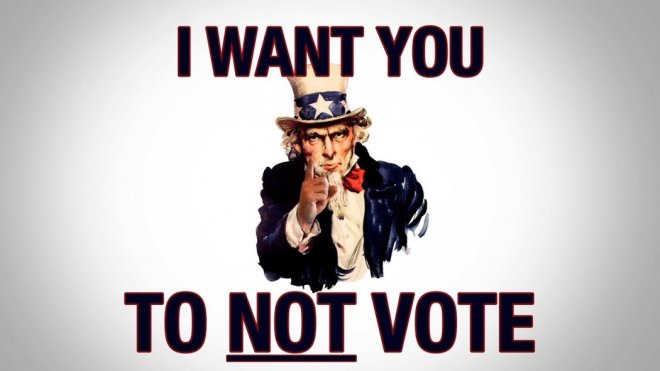
  • The Facts:Our vote no longer represents our power as individual citizens to have an impact on the actions of our government, but rather forces us to participate in a false dichotomy designed to keep us distracted from accessing the true source of our problems.
  • Reflect On:You never change things by fighting the existing reality. To change something, build a new model that makes the existing model obsolete.–Buckminster Fuller. If you do, why do you still continue to vote?

I’m about to take on one of great sacred cows that has endured throughout the history of our modern society: the notion that our ability to vote in our political elections symbolizes our freedom, and those unwilling to vote do not deserve a voice in the democratic process.

Indeed, there may be blood.

But if you are the type of reader that holds to the core values of open-mindedness and curiosity, then certainly you will be willing to read through this article to the end and reflect for a moment before casting a stone of harsh rebuke. And with that, let’s begin.

Not A Call For Inaction

First things first. When I exhort all those who believe in freedom to ‘stop voting’, I am not for a minute suggesting that we become apathetic or lazy about our responsibilities to impact the quality and nature of our own governance. Quite on the contrary, this is a call to action. But an action that is purposeful, in that it has the potential to eventually ensure rights and freedoms that are inherent to us as human beings.

I consider people who vote to be ‘people of action’—they believe that they have a role and a responsibility in preserving our democracy, and they are willing to take time and trouble to impact the way our country is run. My argument is that voting no longer serves as an expression of our power. It has been reduced to a tiresome exercise of taking sides in a never-ending struggle born out of a false dichotomy. This false dichotomy has been maintained both as a distraction and to provide us with the illusion of ‘choice.’

Left/Right Dichotomy

The basic mechanism being used by our governing authority has long been some form of the traditional Liberal/Conservative dichotomy. To participate in our democracy, one is prompted to self-identify as leaning towards one or the other polarity, and much of the ‘drive’ and ‘energy’ around political discourse gets reduced to bickering between two fundamental ideologies: one that would have us empower the brightest, richest and most successful among us to help them lead the entire society into prosperity; the other that would focus on empowering the less fortunate of the society so that they can experience a certain level of dignity and equality with all members of the collective.

Admittedly, it’s tempting to choose sides. That’s why this ruse has worked for so long. What should finally be dawning on us, though, is the obvious fact that these two ideologies need to work in balance to create the optimal level of harmony, prosperity, and fulfillment within a society.

House of Horrors

And getting these two ideologies to work in balance is supposed to be what our government legislatures were designed for. Serious, intelligent people coming together to engage in open-minded and open-hearted discourse, equipped with an understanding that there are multiple perspectives on any issue, each imbued with strengths and weaknesses that are to be respected. Their shared goal is to efficiently arrive at solutions to the nation’s most pressing problems in a way that is most beneficial to the common good. And this is exactly what the people in the US House of Representatives and the House of Commons in Canada are doing.

NOT. BIG NOT.

Have you been to a live session of our legislatures lately? An absolute farce and embarrassment of posturing, sarcasm, and petty bickering layered with a nauseating veneer of decorum. It has become a theatre of the absurd, a reality show to legitimize the enslavement of the majority of the citizens within a society.

It also provides a convenient distraction that prevents many of us from engaging in the real battle going on behind the scenes: the struggle between those who want to liberate humanity and those who would enslave them.

No Real Choice

These days, our choice of candidates seeking election is a choice between near and far left-leaning people who will maintain a system of enslavement for their masters, and near and far right-leaning people who will maintain a system of enslavement for their masters.

It’s no wonder that we are dealing with candidates that seem to have little character, that seem to be involved in some scandal or another, and that don’t really stand for anything that we believe in. Most of them have already sold themselves out to elite power just to get into the position they are in, and if not, they are soon co-opted into the fold to play out their mandates as puppets for the real controllers of society.

In our elections coming up here in Ontario, the choice of available candidates is bleak and uninspiring. None of the 3 main party leaders have the trust of more than 30% of residents of Ontario. Things are so bad that a mainstream news article was written entitled, “Ontarians who don’t like their options can decline to vote — here’s how,” wherein the following is explained:

It’s a form of protest that Ontario residents have the right to, according to Section 53 of the Ontario Election Act, which reads: “An elector who has received a ballot and returns it to the deputy returning officer declining to vote, forfeits the right to vote and the deputy returning officer shall immediately write the word ‘declined’ upon the back of the ballot and preserve it to be returned to the returning officer and shall cause an entry to be made in the poll record that the elector declined to vote.

Essentially, this puts on public record the number of people who went to the trouble of lining up at the polling station in order to voice their dissatisfaction with all of the candidates available. A record 29,442 people exercised this option in the 2014 Ontario elections. It’s a pretty good indication of how disgruntled and frustrated we are.

The Perils Of Working From Within

Some might think that this ‘protest vote’ is what I am advocating here. But it is not. To go through the trouble of registering such a protest is, in my mind, a waste of an hour that could have been spent doing something useful, like planting a tree. The problem with this ‘protest vote’ is that it is designed to quell our frustration and thus stop us from taking more purposeful action. Not only that, but by turning the candidates into scapegoats, the system continues to present itself as the arbiter of our grievances rather than the true and actual source from which our grievances originate.

I would say the same thing about the official doctrine of democratic  participation—writing a letter to your minister of parliament, congressperson or senator—as though they have any power at all to sway the massive ship of state, or even care about your concerns to any degree beyond ensuring their own re-election.

Sure, there are a few renegades within the political systems of our societies that are actively fighting with fiery and perhaps even sincere rhetoric to highlight threats to our freedom and other examples of governmental overreach—Nigel Farage in England comes to mind—but there is no getting around the fact that they still work within the system and their livelihood rests in keeping the system intact. They still must wait their turn, politely limit their speeches to the time allotted, and usually appear to be talking to a half-empty room of representatives, most of whom are busy chatting on their computers or about to fall asleep.

Unless and until these renegades are able to get themselves out of the system and continue to have a platform from which to air their grievances, their words and actions will continue to legitimize the very institution they are criticizing.

Waking Up

Freedom–and real democracy for that matter–are in some ways very foreign to us. We were born into this system. So it’s natural that we don’t expect much more than has been presented to us–although it’s becoming obvious that even the little we once had has started to be taken away. What are some of the things we could expect if we created a real democracy, and had true freedom? The end of secrecy and suppression of those inventions and technologies that could truly help us thrive. The implementation of policy on the part of our governing councils that completely made sense to us, and was generally consistent with our wishes and desires. The elimination of all involuntary tax, and a standard of living for ALL citizens of a nation that would rival that currently enjoyed by the upper class.

But in order to get there, we need to become clear about how our government and our ‘democracy’ have essentially been a tool of manipulation and self-interest at the hands of our world’s powerful corporate and financial elite.

And so, I will reiterate that if we truly want freedom the first step is to the wake up to the fact that voting is an endorsement of this current system that helps it maintain power. Making a conscious effort to disengage as ‘voter’ and completely ignore the unending mainstream polarization that characterizes political coverage is necessary. It will free us up to take a serene, clear-minded look at how we want to live as a collective and talk about alternative possibilities to the way we govern ourselves.

You never change things by fighting the existing reality. To change something, build a new model that makes the existing model obsolete. –Buckminster Fuller

It’s not so difficult for many of us to see that our archaic political system has indeed become obsolete. The ‘how’ and ‘what’ of building a new model is difficult and subtle, and I will be writing about this in a companion article that is coming soon. Suffice it to say, though, that I believe the first step is for all of us to ‘exit stage left’ from the tiresome political drama we have been subjected to, so that we can refocus our time, energy, intelligence and creativity into building a system that works for us all.

Source: Collective Evolution

The Mysterious Origin of the Wuhan Coronavirus | The Epoch Times

CHINA-HEALTH-VIRUSIt has been two months since the outbreak of the coronavirus in Wuhan and its spread has shown no signs of slowing down in China. More than 35 Chinese cities have been put on lockdown by Chinese authorities in an attempt to isolate confirmed and suspected cases. The lives of millions of people are in danger as the virus shows signs of spreading further in China as well as internationally.

There are significant gaps in the official investigations into the origins of the novel Coronavirus. In order to contain the virus, one first needs to understand how a virus that allegedly originated in animals found its way to humans. For this to happen, the Chinese authorities need to release their animal testing data and samples. Testing results from animal samples collected at epicenters would give important insights into what animals might serve as intermediate hosts for the new coronavirus.

This is critical to the containment of the epidemic. For example, if rats are the intermediate hosts for this virus, it would be futile to shut down the cities to restrict people’s movements while infected rats are still moving freely. Results from animal samples could also guide policy decisions that would reduce the risk of another outbreak.

An Animal Origin of the Virus

Scientific studies based on phylogenetic analysis have researched the sequence of the novel coronavirus, compared it to other coronavirus sequences, and found it likely originated in bats. Researchers from the Wuhan Institute of Virology found the genome in the virus found in patients was 96 percent identical to that of an existing bat coronavirus, according to a study published in the journal Nature. But there have been other theories as well. One Chinese study suggested, for example, that snakes were the source of transmission to humans. However, many scientists believe that reptiles are a less likely source and that mammals like rats and pigs, and some birds, have been the primary reservoir for coronaviruses.

With this in mind, phylogenetic studies of viral genome sequences need to be supported by animal studies to confirm the origin of the infection, as well as to determine whether there is an intermediate host.

It is not an easy task for a virus to establish zoonotic transmission, and coronaviruses rarely leap from animal to human infection with high transmissibility. There is even less chance to see a coronavirus leap directly from bats to humans. To infect new hosts, mutations need to occur with the viral surface proteins and/or envelope and structural genes, so that the mutated viruses can bind and enter the cells of new species, and efficiently complete the replication cycles in the new hosts.

Some scientists have argued that coronaviruses can jump directly to humans, without mutating or passing through an intermediate species. However, an intermediate host was clearly needed to establish zoonotic transmission to humans in the previous outbreaks of coronaviruses. Many studies suggested that the bat coronavirus jumped from its natural host bats to civets and then to humans during the 2003 SARS outbreak, and it jumped from bats to camels and then to humans for the MERS outbreak. So, civets and camels would serve as intermediate hosts for zoonotic transmission.

Because bats were not sold at the Huanan market in Wuhan—the epicenter of the infection—at the time of the outbreak, this suggests the existence of another intermediate animal host that may have transferred the virus to humans.

What is the most puzzling is that there have been no reports on the testing of animal samples collected in any epicenters in Wuhan, especially at the Huanan seafood market, to identify what animals might be the host or intermediate hosts of this novel Wuhan coronavirus.

Chinese scientists published a report in Lancet recently which stated that “the majority of the earliest cases included reported exposure to the Huanan Seafood Wholesale Market” and that patients could have been infected through zoonotic or environmental exposures. Another report on Lancet by Chinese CDC scientists claimed that “on the basis of current data, it seems likely that the 2019-nCoV causing the Wuhan outbreak might also be initially hosted by bats, and might have been transmitted to humans via currently unknown wild animal(s) sold at the Huanan seafood market.”

However, so far, no information was released about the amount, and species, of wild animals present at the Huanan seafood market upon closure; nor about how the animals were managed or disposed of when the market was closed on Jan. 1, 2020. And no information was released about how many animal samples were tested for SARS-CoV or Wuhan Coronavirus via viral nucleic acid testing methods.

Official Chinese state news agency Xinhua reported on Jan. 26 that 33 samples out of 585 environmental samples collected at the Huanan Seafood market were positive for nucleic acids from new Coronavirus, suggesting the virus originated from wild animals or stocks sold there. However, these samples were from the environment—not from animals.

It would be an ultimate failure of the Wuhan public health commission and Chinese CDC if no animal samples were collected and tested prior to, or at the time of, the shutting-down of the Huanan seafood market, where many animals were sold at the time of the outbreak. It would be similar to conducting an investigation on a food-borne disease outbreak without taking restaurant food samples related to the outbreak, and instead taking dining table surface swabs to test.

Background of the Huanan Seafood Market Closure

The 2019-nCoV has caused rapid infection in China and spread to other countries outside China, which has led to a global health crisis.

The Huanan seafood market is known to be a major outlet for the collection and distribution of live and dead wild animals. These included live wolves, hedgehogs, deer, birds, snakes, goats, hares, and boars that were sold and available in the east section of the seafood market.

A Wuhan medical and health committee identified multiple pneumonia cases associated with Huanan seafood market, which were announced on Dec. 31, 2019. The seafood market was closedby the Wuhan government on Jan. 1.

Chinese medical reporters visited the market on Dec. 31, 2019, the evening before its closure on Jan.1 where they observed poor hygiene, and wild animal bodies and organs disposed of in an unorganized manner. This suggested that a relatively large quantity of wild animals were still present at the market upon the forced closure.

No Information on Wild Animals at the Seafood Market Was Disclosed

Yet, no information was released about the amount, and species, of animals present upon closure, how many animals were tested for Coronavirus, and how the animals were managed or disposed of upon the closure of the market on Jan. 1. A Chinese media outlet, Yicai, inquired about the outcome of the wild animals sold at the market and confirmed that there was no disclosure from the Wuhan government.

Dr. Guan Yi, the current director (China affairs) of the State Key Laboratory for Emerging Infectious Diseases at the University of Hong Kong, visited Wuhan on Jan. 21 with the goal of identifying the animal source. He mentioned in a media interview that locals refused to cooperate with him. He pointed out that with the market now closed, it would be difficult to investigate the origin of the virus. He said the “Huanan seafood market was cleaned after the closure, ‘the crime scene’ was gone, and how can you solve a case without evidence?”

Gao Fu, director of the Chinese Center for Disease Control and Prevention stated, “it is clear that the source of infection was from wild animals, but we don’t know which species due to closure of the seafood market.”

The Huge Risks of Not Identifying the Original or Intermediate Animal Hosts

The U.S. Center for Disease Control (CDC) stated that “much is unknown about how 2019-nCoV, a new coronavirus, spreads.” So far the understanding is that the major pathway of 2019-nCoV infection is respiratory droplet transmission and contact from humans to humans.

Guan Yi and Kwok-yung Yuen of the University of Hong Kong (HKU) et. al. identified severe acute respiratory syndrome coronavirus (SARS-CoV) from caged palm civets from live animal markets in China in 2003. Their studies lead to the subsequent ban on selling civets and the closing of all wild animal markets in Guangdong and helped to confine the SARS epidemic.

Typically, if an animal is identified as host or source of spread of disease, authorities and the CDC would initiate prevention and control measures such as an awareness campaign, proper quarantine of sick animals and disposal of carcasses as well as monitoring the potential route for how the disease spread zoonotically.

Rodents are known to infest seafood markets. For example, tens of thousands of rodents are expected to be unleashed in Japan as one big fish market is closed.

Huanan seafood market is also infested by rodents. If rodents were elucidated as being a potential host for coronavirus, the risk of rats infesting beyond the current quarantine zone still persists. Given the fact that coronavirus was detected from feces from patients from Shenzhen and that bat SARS-like virus strains were isolated from bat feces, the possible fecal-oral route of 2019-nCoV transmission in addition to respiratory droplet transmission would lead to a reasonable warning for people to avoid contact with animals like rats. Thus, if rodents are indeed a source or host of the 2019-NCoV infection, then, rodent contamination of food or water is a potential way for the disease to spread, which needs to be brought to the awareness of the international community.

Similarly, if birds or other species were the hosts of 2019-nCoV in the seafood market, the information pertaining to the species, amount, virus type, biological reactions, and potential routes of spreading of the virus also need to be identified or reported to the world so that appropriate prevention measures could be taken.

It would be serious incompetence and malfeasance if Chinese authorities did not attempt to collect nasal, fecal, and blood samples from animals and birds sold at the seafood market. Testing animal samples would reveal very important information regarding the zoonotic transmission routes, the trends of viral mutations in this outbreak, and the loopholes in the current countermeasures.

Were There Other Epicenters Besides the Huanan Seafood Market?

The Chinese CDC did release data from environmental samples from the seafood market and suggested that “it is originated from wild animals with species uncertain.”

A team which included Dr. Feng from the Chinese CDC published a report titled “Early Transmission Dynamics in Wuhan, China, of Novel Coronavirus-Infected Pneumonia,” in the New England Journal of Medicine on Jan. 29, 2020. The paper stated that “Although the majority of the earliest cases were linked to the Huanan Seafood Wholesale Market and the patients could have been infected through zoonotic or environmental exposures…the majority of the earliest cases included reported exposure to the Huanan Seafood Wholesale Market, but there was an exponential increase in the number of nonlinked cases beginning in late December.”

The Possibility 2019-nCoV Originated From Bat SARS-Like Virus (Bat-SL-CoV)

One recent Lancet report on Jan. 29, 2020, titled “Genomic characterisation and epidemiology of 2019 novel coronavirus: implications for virus origins and receptor binding,” stated that “A Blast search of the complete genomes of 2019-nCoV revealed that the most closely related viruses available on GenBank were bat-SL-CoV-ZC45 (sequence identity 87.99%; query coverage 99%) and another SARS-like betacoronavirus of bat origin, bat-SL-CoV-ZXC21 (accession number MG772934;23 87.23%;” “Notably, the 2019-nCoV strains were less genetically similar to SARS-CoV (about 79%) and MERS-CoV (about 50%).”

This message might be interpreted as 2019-nCoV being biologically closer related to SARS-like betacoronavirus of Bat origin and bats may be the original host of this virus. However, the authors did not claim that the only host to 2019-nCoV is a bat.

The paper stated that “However, despite the importance of bats, several facts suggest that another animal is acting as an intermediate host between bats and humans. First, the outbreak was first reported in late December, 2019, when most bat species in Wuhan are hibernating. Second, no bats were sold or found at the Huanan seafood market, whereas various non-aquatic animals (including mammals) were available for purchase. Third, the sequence identity between 2019-nCoV and its close relatives bat-SL-CoVZC45and bat-SL-CoVZXC21 was less than 90%, which is reflected in the relatively long branch between them. Hence, bat-SL-CoVZC45 and bat-SL-CoVZXC21 are not direct ancestors of 2019-nCoV. Fourth, in both SARS-CoV and MERS-CoV, bats acted as the natural reservoir, with another animal (masked palm civet for SARS-CoV35 and dromedary camels for MERS-CoV) acting as an intermediate host, with humans as terminal hosts. Therefore, on the basis of current data, it seems likely that the 2019-nCoV causing the Wuhan outbreak might also be initially hosted by bats, and might have been transmitted to humans via currently unknown wild animal(s) sold at the Huanan seafood market.”

They mentioned that most bats in Wuhan are hibernating and no bats are sold at the Huanan seafood market. Thus, the chance of physical contact from bats to spread the virus to humans or animals at Wuhan is highly unlikely.

Studies From Wuhan Institute of Virology on Bat SARS-Like CoV.

Zheng-Li Shi and several other researchers at the Wuhan Institute of Virology published an article in Nature in 2013 titled “Isolation and characterization of a bat SARS-like coronavirus that uses the ACE2 receptor.”

In that study, their team harvested from anal swabs or fecal samples from bats and found 2 strains of sequences from Bat SARS-Like CoVthat termed as RsSHC014 and Rs3367. They process 95% nucleotide sequence identity with human SARS-CoV Tor2 strain.

Isolation of a new bat virus in a study published in the Journal of Virology on Dec. 30, 2015, titled “Isolation and Characterization of a Novel Bat Coronavirus Closely Related to the Direct Progenitor of Severe Acute Respiratory Syndrome Coronavirus,” found that the virus, named SL-CoV-WIV1, was almost identical to Rs3367 with 99.9% genome sequence identity. The researchers identified that WIV1 can use human ACE2 as an entry receptor and has the potential to infect human cells in this study. Subsequently, the same research group isolated another bat virus that can use ACE2 and infect human cell lines in the lab in 2015.

In addition, Dr. Shi’s group conducted another study in 2018 to address the question of whether some bat viruses can infect humans via using human ACE2, without the need of an intermediate host. But to the date of their study, “no direct transmission of SARS-Like CoVs from bats to people has been reported”.

They collected serum from 218 residents who live close to bat caves with bats carrying the viruses. Those caves were the places where the Shi group collected the virus samples. Then ELISA assays were conducted to detect antibodies to bat SARS-CoV, since antibody existence would suggest a prior exposure to the bat coronavirus. They found that only 6 out of 218 (2.7 %) subjects showed seropositivity, which suggested likely infections to bat SARS-CoVs or related viruses. No clinical symptoms have been manifested in the 6 positive persons in the past 12 months. As a control, they collected 240 samples from random blood donors in Wuhan, 1000 km away from Yunnan, none of the Wuhan blood samples showed any positivity to bat SARS-like CoV.

This data suggests that the chance of bat virus infecting humans is very low, <2.9% if possible, and with no obvious symptoms in human beings that live very close to the bat caves. No infection from a bat to a human has been reported in Wuhan as of 2018.

Track Record of Wuhan Institute of Virology on Engineering ‘Gain-of-Function’ Bat SARS-Like CoV.

Zhengli Shi’s group at the Institute of Virology at Wuhan was successful in isolating two infectious clones of bat SARS-Like CoV: SL-CoV-WIV1 and WIV16 from bats. In their further studies, they found out that these SL-CoV Spike protein (S protein) “[were] unable to use any of the three ACE2 molecules as its receptor; Second, the SL-CoV failed to enter cells expressing the bat ACE2; Third, the chimeric S covering the previously defined receptor-binding domain gained its ability to enter cells via human ACE2, albeit with different efficiencies for different constructs; Fourth, a minimal insert region ( Amino acids 310 to 518 ) was found to be sufficient to convert the SL-CoV S from non-ACE2 binding to human ACE2 binding.”

Therefore, Shi’s group found in a study published in the Journal of Virology in February 2008 that the natural bat coronavirus cannot use the human ACE2 receptor to infect humans. However, when inserted with some amino acids from position 310 to 518 for the bat CoV S protein sequence, the chimeric bat CoV can use the human ACE2 receptor.

Meanwhile, another research group led by Dr. Li published their finding in 2013 that 5 amino acid sites on CoV spike proteins are crucial in making the binding to human ACE2 on SARS virus (those positions are Y442, L472, N479, D480, T487). These 5 sites just lie in the region that the Shi group noted to be important above.

Later, Li and Shi jointly conducted a gain-of-function study published in the Journal of Virology in September 2015 on the MERS virus and a bat virus (strain HKU4) in 2015. Since MERS virus can enter human cells but HKU4 can not, they introduced 2 single mutations in the HKU4 spike protein and found that the new mutant S protein can enable HKU4 to enter human cells. If they mutated 2 sites in MERS spike, the resulting MERS pseudovirus (experimental virus) cannot enter human cells anymore.

Furthermore, Shi’s group joined an international group to generate a chimeric virus with the bat virus SHC014 they harvested in Yunnan. Since they know SHC014 is unlikely to bind to human ACE2, they “synthesized the SHC014 spike in the context of the replication competent, mouse-adapted SARS-CoV backbone”. So, that is a lab-engineered virus with SARS-CoV Mouse adapted backbone (MA15) but with SHC014 spike.

To their surprise, the chimeric virus (SHC014-MA15) can use SHC014 spike to bind to human ACE2 receptor and enter human cells. SHC014-MA15 can also cause disease in mice and cause death as well. Existing vaccines to SARS cannot protect animals from SHC014-MA15 infection. Therefore, these chimeric virus studies can lead to the generation of more pathogenic, more deadly CoV strains in mammalian models.

Due to the U.S. government-mandated pause on the gain-of-function (GOF) studies, this international research did not proceed further at that time. However, there is no evidence that Shi’s group in China stopped any further study on the track of introducing GOF mutations on the CoV. And it is clear that Shi’s group already mastered the reverse-engineering technology that is sufficient to introduce mutation in current SARS-CoV or SARS-Like CoV to create mutant infectious coronavirus.

Interestingly, Shi’s group published on bioRxiv on Jan. 23, 2020 that a new bat coronavirus that they detected in Yunnan, named BatCov RaTG13, shares 96.2 percent overall genome sequence identity with 2019-nCoV. However, this virus was never mentioned or published in their research before.

In the sequence information provided by them in the supplemental material and method section, 3 sequences are shared between the 2019-nCoV they collected and the RATG13 virus but not in any of the other SARS or Bat SARS-Like CoV families in the paper listed. The 3 sequences are located close to N terminus of the spike protein, they are GTNGTKR, NNKSWM, RSYLTPGD.

Possibilities of an Animal Host of 2019-nCoV at Huanan Seafood Market 

One recent Lancet paper titled “Genomic characterisation and epidemiology of 2019 novel coronavirus: implications for virus origins and receptor binding,” reported that “as a typical RNA virus, the average evolutionary rate for coronaviruses is roughly 10⁴nucleotide substitutions per site per year, with mutations arising during every replication cycle. It is, therefore, striking that the sequences of 2019-nCoV from different patients described here were almost identical, with greater than 99.9% sequence identity. This finding suggests that 2019-nCoV originated from one source within a very short period and was detected relatively rapidly.”

With mutations in every cycle, it is highly unlikely for different bats to host viruses with the same sequence. If bats alone are not enough for virus transmission, another animal is needed as the intermediate host, and the chance of the virus being identical is even slimmer. Since the seafood market is not the only source for the outbreak, it is reasonable to postulate that if another animal is the intermediate host for the virus, that animal needs to have contact with bats, allow bat coronavirus to proliferate in them, and, eventually, the animal needs to have the capacity to transmit viruses to human beings who may or may not have contact with the Huanan seafood market.

Therefore, there have been serious questions on whether this Wuhan coronavirus outbreak was due to a leak or mishandling of laboratory animals used in coronavirus studies. This is a reasonable public inquiry regarding the source of the outbreak and it warrants a transparent investigation from the Chinese authorities and foreign disease control and laboratory operation experts. This is not just about the accountability of medical ethics or laboratory safety operations, it is directly related to the current endeavors to contain the virus outbreak.

While the animal host of 2019-nCoV is yet to be identified, the data and information from possible animal hosts and potential zoonic infection is imperative for prevention and controlling disease on an international scale.

The Huanan seafood market has a high potential of harboring the animal host. Animal data and profiling results from the Huanan seafood market need to be disclosed immediately by Chinese authorities even if they are negative results. It is imperative for U.S. CDC and WHO officers to demand that Chinese authorities release the information about animal testing data.

If Chinese authorities refuse to disclose testing data for animal samples, it could imply an intentional cover-up of the true origin of the 2019-nCoV outbreak.

Source: The Epoch Times
James Woods Gives Interesting Prediction for Who Will Win the 2020 Dem Primary | Trending Politics

5e3f0f6bcbc90james-woodsJohnny Liberty, Editor’s Note: Watching the Democratic candidates wrestle with each other at the numerous debates we’ve come to the conclusion that none of them are qualified to be President. Also we often thought, as James Woods does, that Hillary is still orchestrating the Democratic Party behind the scenes and might just jump into the fray to “save the day” at the Convention. 
Conservative actor James Woods is back on Twitter and has a lot to say. Woods took a break from the social media platform after he was suspended multiple times by the liberal leaders at Twitter.

On Friday, Woods gave an interesting theory for who he thinks will win the Democratic primary race.

“Just for giggles, imagine this: the #IowaCauscuses were not a snafu, but an engineered ‘cluster muck’ to keep the #Democrat field wide open. The #ImpeachmentSham was a way to air Biden’s corruption. The chaos leads to a brokered convention. Guess which drunken hag saves the day?” Woods tweeted.

According to Woods, Hillary Clinton will swoop in and win the election.

“The #Clintons are like nuclear cockroaches. They can survive anything. Remember you read it here: #HillaryClinton has a solid chance at being the 2020 Democratic presidential nominee in a brokered convention. She’s the Terminator of American politics,” Woods tweeted.

Iowa was a disaster to say the least. So much so that the Associated Press couldn’t even declare a winner. “There is evidence the party has not accurately tabulated some of its results, including those released late Thursday that the party reported as complete. The AP’s tabulation of the party’s results are at 99% of precincts reporting, with data missing from one of 1,765 precincts, among other issues,” they reported.

Check out what the Daily Wire reported:

The results as they stand now show a virtual tie between former South Bend, Indiana, Mayor Pett Buttigieg and Vermont Democratic socialist Sen. Bernie Sanders, 26.2% to 26.1%. Sen. Elizabeth Warren came in third at 18% and former vice president Joe Biden fourth at 15.8%.

Woods’ theory — that Iowa was no accident and intended to keep the field “wide open” — has been voiced by others, especially Sanders’ supporters. They think the entire process is slanted against their candidate, who got aced out of the 2016 nomination by a biased system set up to ensure a Clinton win.

And on Biden, it’s not the first time speculation has swirled that the whole Ukraine-impeachment fiasco was really intended to take out Biden, not President Trump.

After the smoke cleared about Trump’s July 25 phone call to the Ukrainian president asking for a “favor,” it emerged that Biden’s son Hunter made hundreds of thousands of dollars through his employment with Burisma, the largest private gas company in Ukraine — despite having no known qualifications for the job. And when word spread that a prosecutor was looking into the matter, Biden demanded that the prosecutor be fired.

Biden is on tape discussing his push for the Ukrainian government to fire Viktor Shokin, bragging he had threatened to withhold $1 billion until Shokin was canned. “If the prosecutor is not fired, you’re not getting the money,” he says he told Ukrainian leaders. “Well son of a bitch, he got fired,” Biden says with a smile in the video clip.

Even though Team Trump and GOP lawmakers never called Biden or his son to testify in the Senate trial, their shady business dealings were front and center. And while Trump’s approval rating went up over the course of the trial, Biden’s plummeted, leading to his dismal fourth-place finish in Iowa.

What’s more, Woods’ theory about a brokered convention could well play out. Even though Clinton is not even in the race, there’s no clear front runner and few in the party are jazzed about their choices. Along the path to the nomination, delegates are distributed proportionally, meaning a candidate who wins 14% of the vote gets 14% of the delegates, and so on. With eight candidates still in the race, it may come down to no candidate winning a majority of the delegates, which means no one would be picked until the Democratic National Committee’s convention in July.

So Woods just might really be on to something here.

Source: Trending Politics

Nearly 6 in 10 Americans Say They’re Financially Better Off Now Than a Year Ago | Gallup Poll

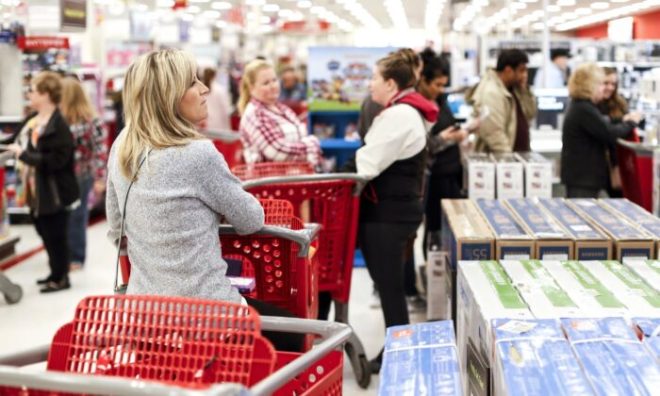
shoppers-700x420Americans’ levels of optimism about their current and future personal financial situation have reached or are near record highs, according to a recent Gallup poll.

Nearly 6 in 10, or 59 percent, Americans say they are financially better off now than they were a year ago, which is up from 50 percent last year, according to polling data released on Wednesday. The highest prior record for the same question was in January 1999, at 58 percent, during the dot-com boom where economic conditions were similar. Meanwhile, 20 percent of Americans say they are financially worse off now than a year ago, with 21 percent saying they are financially the same.

The pollster also noted that at least half of Americans rated their personal finances better than a year ago from 1998 to 2000 but this number fell under 50 percent from 2001 to 2018, with a low of 23 percent in May 2009, during the Great Recession.

The data also found that Americans have expressed optimism about their future financial situation, with nearly 3 in 4, or 74 percent, of Americans predicting that they will be better off financially a year from now. Gallup noted this is the highest reading for the question since the question has been asked since 1977. The highest previous record was in 1998 at 71 percent.

The findings align with many of President Donald Trump’s assertion that Americans are doing better under his presidency, Gallup notes. During his State of the Union address on Thursday, Trump touted the burgeoning U.S. economy, tax cuts, low unemployment rates for African Americans, Hispanic Americans, and Asian Americans, growing wages, and job creation through a focus on manufacturing.

“Three years ago, we launched the great American comeback. Tonight, I stand before you to share the incredible results,” Trump said. “In just three short years, we have shattered the mentality of American decline and we have rejected the downsizing of America’s destiny” and the United States is “moving forward at a pace that was unimaginable just a short time ago, and we are never going back,” he added.

The polling data also found that there was a partisan divide in the way Republicans and Democrats see their financial situations, with 76 percent of Republicans reporting that they are financially better off now than a year ago, while only 43 percent of Democrats reported the same. Meanwhile, 83 percent of Republicans expressed optimism about their future financial situation, compared to 60 percent of Democrats who said the same. The pollster found that Independents fell in between with 58 percent expressing optimism about their current personal finances, and 76 percent predicting they will be better off next year.

The data came from the recent Mood of the Nation poll, which was conducted by telephone between Jan. 2 and Jan. 15, with a random sample of 1,014 Americans over the age of 18 across the country. The margin of error for the poll is plus or minus 4 percentage points.

Source: The Epoch Times

Lessons From Leprosy For Coronavirus: Quarantine And Isolation Can Backfire | NPR

ap_5202240353_custom-411110ad4e887291bb9734e508582927c20cc275-s1400-c85Hundreds of people returning to the U.S. from Wuhan, China face mandatory two-week quarantines. And in China, the government is rounding up those who show signs of the deadly coronavirus, to be confined in massive quarantine centers.

Protecting public health is a delicate balance between the rights and freedom of individuals and the safety of society. But past efforts to isolate disease show that such moves — as well-intentioned as they might be — don’t always go as planned. And perhaps offer a cautionary lesson.

When my husband’s grandfather was diagnosed with leprosy in Connecticut in 1922, the first thing he did was run away. He packed his things that night and left his family and business behind to move to New York. It was the only state at the time that did not require those with this much-feared infectious disease to be sent to a remote hospital in Carville, La., and confined. By hiding from authorities, he could keep his freedom and presumably go on with his life.

He was not the only one to respond this way. When the U.S. government decided to establish a national leprosarium in 1917, it determined that the best way to contain the bacteria that caused leprosy was to segregate those infected. Since there was no cure at the time, that usually meant confinement for life. Patients were torn from their families and friends. They lost their freedom, as well as their livelihoods, civil rights and the respect of their fellow man. Women who gave birth at the hospital had their babies taken away.

Such dire consequences drove many who suspected, or knew, they had leprosy to conceal it from authorities. They avoided seeking medical assistance and failed to take steps to protect the people they loved from the remote possibility that they too might contract what we now know is a barely contagious disease.

When the federal government sought to identify all the leprosy cases in the country in the early 1900s, it found only 278. But public health investigators told Congress there likely were many more in hiding out of fear. The same year that my husband’s grandfather fled to New York, the assistant surgeon general announced that there were “1,200 lepers at large” in the country. He wanted Congress to give him the authority to round them up.

It turns out that the government’s solution was counterproductive. Instead of containing the disease, it only perpetuated it by discouraging treatment and the search for a cure. In the process, thousands of lives were disrupted and destroyed.

The current effort to contain the coronavirus differs in many ways from what happened to leprosy patients in the last century. Americans who might have been exposed to the virus in China will be quarantined for 14 days, not condemned to a lifetime of isolation. Medical treatment is much improved, and the chance for recovery is good. Still, coronavirus is much more contagious than leprosy, from which 95% of humans are naturally immune. Precautions certainly make sense.

But this latest outbreak raises similar questions to those health authorities grappled with decades ago. Are quarantines and isolation the most effective way to contain a disease? Do they make people more reluctant to identify themselves as potential victims?

“It backfires because people head for the hills,” Wendy Parmet, a professor of health law policy at Northeastern University told NPR’s Rob Stein. “People don’t call and seek health care… And health care providers become fearful of treating patients because they don’t want to get caught up in the quarantine.”

There are other questions too.

Will the U.S. decision to shut its borders to foreigners who have recently visited China do more harm than good? The World Health Organization thinks such travel bans might and has warned against any moves that instill panic and fear.

Perhaps more important, how will those believed to be potential carriers of the virus be treated by those around them? NPR’s Maria Godoy reports that some Asian Americans are already feeling some blowback. One student said she was told to leave a coffee shop and “take the coronavirus with her.”

When Americans feared a potential leprosy pandemic in the late 1800s, people of Asian descent were also unjustly stigmatized. A top Louisiana health official warned — falsely — that Chinese laundrymen were spreading the “loathsome” disease by spitting on their customer’s laundry before it was ironed. A racist labor leader, Denis Kearney, paraded a Chinese man with leprosy through the streets of San Francisco to make his case that “moon-eyed lepers” were a threat to the nation.

Throughout history, those believed to have leprosy, now called Hansen’s disease, were among the most reviled members of society, outcasts sometimes believed to be sinners who brought the illness upon themselves. Even today, the threat of leprosy is used to demonize immigrants and people living in homeless encampments as potential carriers of the disease — although there’s no evidence that’s true.

About 200,000 people around the world are diagnosed each year with Hansen’s disease. Many of them still prefer not to make their diagnosis public for fear of how they’ll be treated by the rest of society. Many delay seeking treatment even though the disease can be quickly cured with antibiotics. Those delays can lead to serious, lifelong disabilities, including the loss of limbs. It turns out that the stigma is still much more dangerous than the disease.

My husband’s grandfather was soon joined in New York City by his wife and children. He lived there for thirteen years before he got so sick that he was taken to the Carville leprosy hospital, the only place in the country that treated the disease. He died there three years later, in 1938. But it was decades before the truth came out. His wife and children were so afraid of the stigma of leprosy and how people would react, they kept his illness a secret for more than 60 years.

Source: NPR