Alexandria Ocasio-Cortez is already pulling back the curtain on the inner workings of Congress | CNBC

By Carmen Chapell

Alexandria Ocasio-Cortez is already pulling back the curtain on the inner workings of the Capitol.

The New York Democrat, along with other incoming freshman lawmakers, is trying to usher in a culture of openness that is enabled by a vast social media following. With nearly 3 million followers combined on Facebook, Instagram and Twitter, Ocasio-Cortez has used the platforms to involve her supporters during the transition period before she takes office.

Her enthusiastic and often pugnacious transparency campaign has earned her praise from inside and outside the Beltway. Yet it has also drawn criticism from several corners, including from President Donald Trump’s eldest son. Ocasio-Cortez hasn’t given any indication that she will let up, however.

In a series of pictures and videos on Instagram dubbed “Congress Camp,” she gave an inside look into new-member orientation, from choosing an office to voting for House leadership, while also showcasing the unique quirks of life on Capitol Hill.

“Guys, there are secret underground tunnels between all of these government buildings!” she whispers in one video. In another post, she polls her followers on whether she should choose an office with more space or one “close to our friends.”

But Ocasio-Cortez isn’t just focusing on the novelty of her experience. Last week, she tweeted sharp criticism of an orientation for new members of Congress hosted by Harvard. The event featured corporate CEOs but no labor representatives.

“Our ‘bipartisan’ Congressional orientation is cohosted by a corporate lobbyist group. Other members have quietly expressed to me their concern that this wasn’t told to us in advance,” she tweeted. “Lobbyists are here. Goldman Sachs is here. Where’s labor? Activists? Frontline community leaders?”

Fellow freshman member Rashida Tlaib, D-Mich., echoed her criticisms. Tlaib said that Gary Cohn, former chief economic advisor to President Donald Trump and former Goldman Sachs executive, told the new members at orientation that they don’t “know how the game is played.”

“No Gary, YOU don’t know what’s coming – a revolutionary Congress that puts people over profits,” Tlaib tweeted.

‘Those little things are very real’

Ocasio-Cortez rose to the spotlight after defeating longtime incumbent Joseph Crowley in the Democratic primary for New York’s 14th Congressional District, which encompasses parts of Queens and the Bronx. A self-identified Democratic socialist, she ran on a liberal platform and chose to emphasize her identity as a young woman of color. The 29-year-old’s victory in the general election anointed her as the youngest woman ever elected to Congress.

Ocasio-Cortez’s comments about her new role have also renewed longstanding debates on the financial challenges facing members of Congress and their staff. She has made it personal by revealing her own insecurities about her finances during the transition period.

“I have three months without a salary before I’m a member of Congress. So, how do I get an apartment? Those little things are very real,” she told The New York Times in an interview.

Many lawmakers struggle with the cost of living in Washington, D.C., even on the $174,000 congressional salary, going so far as to sleep in their offices to save on rent costs.

Ocasio-Cortez has also made it a point to talk about the economic conditions of congressional staff. Last week, she tweeted: “It is unjust for Congress to budget a living wage for ourselves, yet rely on unpaid interns & underpaid overworked staff just bc Republicans want to make a statement about ‘fiscal responsibility.'”

Low salaries as well as the prevalence of unpaid internships, which are often the first step to a full-time role, are seen as barriers to a more diverse congressional staff. Ocasio-Cortez pledged to pay her office’s interns $15 an hour, inspiring other lawmakers to make the same commitment.

She has also shared experiences that reveal the growing pains of an increasingly diverse Congress. “People keep giving me directions to the spouse and intern events instead of the ones for members of Congress,” she tweeted during orientation.

The changing face of Congress

Ocasio-Cortez is just one of the 42 women, 38 of them Democrats, part of Congress’ freshman class. They are being heralded as the faces of a new “Year of the Woman.” Ilhan Omar, D-Minn., and Michigan’s Tlaib are the first Muslim women elected to Congress, while Ayanna Pressley, a Democrat, is the first black woman elected to represent Massachusetts. Ocasio-Cortez posted a picture of the four women together on Instagram last month, captioning it “Squad.”

As a result of her high profile, Ocasio-Cortez’s unabashed takes on congressional life have frequently come under fire.

Eddie Scarry, a writer for the Washington Examiner, disputed Ocasio-Cortez’s account of her financial hardships based on her clothing choices.

“Hill staffer sent me this pic of Ocasio-Cortez they took just now,” Scarry tweeted. “I’ll tell you something: that jacket and coat don’t look like a girl who struggles.” The tweet has since been deleted after widespread backlash.

Rep. Sean Duffy, R-Wis., condemned the media for what he viewed as preferential treatment in coverage of Ocasio-Cortez. As a freshman congressman in 2011, Duffy received negative reactions after telling a constituent that he struggles to pay his bills.

“Hmm which headlines and article does media give to GOP and which to a Dem?” Duffy tweeted alongside screenshots of articles referencing himself and Ocasio-Cortez.

Last week, Donald Trump Jr., the president’s eldest son, shared a doctored image on Instagram in which Ocasio-Cortez asks, “Why are you so afraid of a socialist economy?” In the post, President Trump responds, “Because Americans want to walk their dogs, not eat them.” Trump Jr. captioned the meme “It’s funny cuz it’s true!!!”

Ocasio-Cortez fired back, tweeting: “Please, keep it coming Jr – it’s definitely a ‘very, very large brain’ idea to troll a member of a body that will have subpoena power in a month.” Democrats have made clear that they plan to use their new subpoena power in the House to further investigate potential Russian interference in the 2016 elections.

The representative-elect has also received praise for revealing parts of the political system that are typically left in the shadows.

Actress Kerry Washington, who stars in the political drama “Scandal,” commended Ocasio-Cortez’s behind-the-scenes revelations, tweeting, “@Ocasio2018 speaking truth to power. Sharing the NEEDED #BTS of our democracy at work. So grateful.”

“I’m learning more details about how the House actually works over the past two weeks than I ever did in the past 20 years,” one follower tweeted in reply to Ocasio-Cortez.

“Thank you so much for giving us the window into the inside baseball of Congress,” another follower said.

Paul Musgrave, assistant professor of political science at University of Massachusetts Amherst, praised Ocasio-Cortez on Twitter for “treating voters as neither super-sophisticated DC insiders, nor as people who can’t be trusted to make up their own minds, but rather as people who are curious and intelligent but who aren’t experts in DC process.”

“Sometimes,” he added, “you don’t need a new theory of politics to make change, just a willingness to state the obvious.”

Source: CNBC

Monsanto Bans GM Corn in Latest Win Against Monsanto & Big Ag | Occupy.com

By Joseph Mayton

Effective immediately, a ban on genetically-modified corn in Mexico has gone into action only days after thousands took to the streets in cities worldwide to protest against Monsanto and the GMO industry.

Companies such as Monsanto and DuPont Pioneer will no longer be allowed to plant or sell their genetically modified corn within the country’s borders, a Mexican judge ruled last week.

The decision, which came nearly two years after the Mexican government put Monsanto’s GE corn on hold, citing the need for more tests, makes Mexico a leading player in the global battle against genetically modified organisms.

According to Environmental Food and Justice, Judge Jaime Eduardo Verdugo J. of the Twelfth Federal District Court for Civil Matters of Mexico City ruled that the genetically engineered corn posed ”the risk of imminent harm to the environment.”

He also ordered Mexico’s Secretary of Agriculture and the Secretary of Environment and Natural Resources (SEMARNAT), which is equivalent to the U.S. EPA, to immediately “suspend all activities involving the planting of transgenic corn in the country and end the granting of permission for experimental and pilot commercial plantings.”

The ruling means Monsanto and other biotech companies must halt all activity in the country while collective action lawsuits initiated by citizens, farmers, scientists and other concerned parties work their way through the judicial system.

According to a local press release, the group Acción Colectiva, or Collective Action — which is led by Father Miguel Concha of the Human Rights Center Fray Francisco de Vittoria — aims to achieve an absolute federal declaration of the suspension of transgenic maize in all its forms, including experimental and pilot commercial plantings in the country considered “the birthplace of corn in the world.”

Rene Sanchez Galindo, the legal council for Acción Colectiva in the lawsuit, said the ruling by Judge Eduardo Verdugo “constitutes a milestone in the long struggle of citizen demands for a GMO-free country.”

Galindo added that the ruling “has serious enforcement provisions and includes the possibility of criminal charges for the authorities responsible for allowing the introduction of transgenic corn in Mexico.”

Rallies occurred in over 500 cities worldwide against GMOs in mid-October, and in San Francisco, Mexican activists came out in force to show their disgust for the way companies like Monsanto have dominated the market and pushed aside local farmers in favor of “big business.”

“I think what is happening is the beginning of a new way of thinking where people are able to show their concern for change,” said Oscar Hernandez, a Mexican former migrant worker who is now waiting for his green card. Hernandez had participated in the mass demonstration against Monsanto near the Golden Gate Bridge.

“This is a war that we have to win, and Mexico is showing that it can be a leader despite the misconceptions about the country,” he told Occupy.com. “This is true activism and I am proud to be a part of it.”

An official from Mexico’s Secretary of Agriculture, who was not authorized to give his name, told Occupy.com that the global movement against GMOs which has erupted in the past year was a major catalyst driving the ruling to ban GMO corn in the country.

“We believe in listening to the people and they are speaking loud and clear that they do not want GMOs on their plate, so this is a decision that will be supported by the people,” said the official.

Source:  Occupy.com

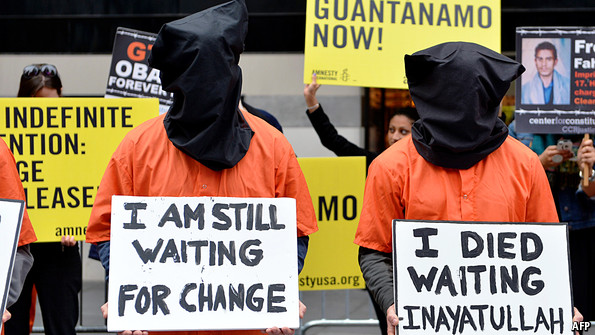
A desperate protest by prisoners at Guantánamo has shamed Barack Obama

GuantanamoHungerStrike“YOU have to hand it to some of these IRA boys,” Margaret Thatcher once remarked of the republican hunger-strikers who embarrassed her in 1981. “What a terrible waste of human life!” she said of the ten who died. Since some of the hunger-strikers at Guantánamo Bay are being force-fed through nasal tubes, Barack Obama may be spared Mrs Thatcher’s grief. But he has been shamed by their desperate gambit all the same. The protest is a reminder of one of his most glaring failures in office.

Officials count 100 hunger-strikers; lawyers for the detainees say there are 130; on any reckoning, a majority of the 166 remaining inmates are starving themselves. Through their lawyers, detainees complain of a rougher regime since the army took over guard duties from the navy last autumn. In particular they allege that their Korans were mistreated during an inspection in February, when the hunger-strike began (prison authorities vigorously deny that). A cell-block raid by guards on April 13th (provoked by the covering up of security cameras), during which some prisoners were shot with rubber pellets, hardened rather than broke the strikers.

But the underlying cause is simpler, and more personal. “The reason they’re willing to die”, says Carlos Warner, a federal defender who represents 11 of the detainees, “is President Obama.”

Mr Obama said this week that Guantánamo “hurts us in terms of our international standing.” That echoed the view he espoused when, on his second day in office in January 2009, he ordered the prison to be closed within a year. Its existence since 2002, he said, had “likely created more terrorists around the world than it ever detained”—an opinion eventually shared by assorted veterans of George W. Bush’s administration. And yet the only Guantánamo-related closure so far has been the shutting, in January this year, of the diplomatic office charged with resettling the inmates.

Mr Obama blames Congress—with some justification. It thwarted his original plan to transfer the detainees to a facility in Illinois. Then, either out of concern for national security, a yen to embarrass the president, or both, in clauses inserted into successive defence-spending bills Congress made it difficult for officials to transfer anyone anywhere. Difficult, but not impossible: Mr Obama can authorise transfers using a presidential waiver. He has chosen not to. (After a bomb plot with links to Yemen at the end of 2009, he also chose to halt transfers there—and most of the remaining prisoners are Yemeni.) He evidently calculated that, given the battles he is already waging with Congress, Guantánamo was one he could do without.

That stalemate has been an especial let-down for the 86 residual prisoners who, in 2010, were slated for transfer out of Guantánamo by a presidential review; some had already been designated for transfer under the previous administration. Many of these men claim to have committed no offence except being in the wrong place—Afghanistan—at the wrong time, or to have been sold to American forces for the bounties they offered. One such, and one of the hunger-strikers, is Shaker Aamer, a British resident picked up in Jalalabad in 2001 and allegedly tortured. His lawyer, Clive Stafford Smith, points out that the British government is well-equipped to monitor Mr Aamer should he be repatriated.

According to the review, many of these men were low-level fighters rather than total innocents. But none has been charged with a crime—and most have been at Guantánamo for over a decade. In fact, only seven of the 779 prisoners who have passed through the camp have been convicted by its military tribunals (and two of those verdicts have been challenged). Of those still there, only three have been convicted and only six currently face trial, including Khalid Sheikh Mohammed, the alleged mastermind of the September 11th attacks. Subject to multiple legal challenges, beset by scandals over hidden microphones and leaked defence documents, the tribunals are now regarded as a failure even by those untroubled by their dubious legal status. As Mr Obama pointed out, federal courts have proved a much more effective forum for prosecuting terrorists.

The result, at the camp, is near-total stasis. No new prisoner has arrived since 2008; none has left for over a year. Parole-style hearings planned for the group not designated for either trial or transfer have yet to begin. Prisoners have lawyers, but there is little the lawyers can do for them. This bleak situation, says Mr Stafford Smith, is worse than being on death row.

Last chance?

Beyond the feeling of personal betrayal by Mr Obama, the detainees also sense—correctly—that the attention of the foreign leaders, human-rights watchdogs and United Nations officials who once energetically protested at their predicament has wandered. The outrage that the manacled, blindfolded, jumpsuited figures first provoked has dimmed. Drone warfare has become a much bigger human-rights preoccupation. And yet, unpropitious as it might seem, the prisoners also fear that this may be their last chance to get out.

Mr Warner says that if, with the president’s views and legal background, Mr Obama “can’t get this done, I don’t know who could.” It is hard to see a future presidential candidate matching his troublesome pledge to shut the prison. And for Mr Obama as well, time is running out. Even if he chose to use his waiver powers, and leant on other governments to accept detainees, the diplomacy, including gathering the necessary assurances on security and humane treatment, would take time.

Meanwhile the Guantánamo authorities are seeking an extra $200m for refurbishments, on top of annual running costs that wildly exceed those for ordinary prisons. They are planning new medical facilities to care for elderly detainees.

This week Mr Obama vowed to re-engage with Congress. “I’m going to go back at this,” he promised. He should hurry. Once Guantánamo was a byword for an overmighty executive and the excesses of Mr Bush’s “war on terror”. Under Mr Obama it has become a victim and a symbol of the paralysing divisiveness of American politics. “It’s going to get worse,” he said this week. “It’s going to fester.”

Source: The Economist

Bruce Cockburn – Live On World Café

http://youtu.be/kJvgVJC7hBo

01 Thoughts On September 11
02 How I Spent My Fall Vacation
03 Bruce’s Sabbatical
04 Anything Anytime Anywhere
05 Bruce On Finding His Voice
06 Creation Dream
07 Instrumental
08 The Inspiration For ‘Celestial Horses’
09 Celestial Horses
10 Thoughts On Singer-Songwriters Today
11 The Trouble With Normal
12 What’s Next

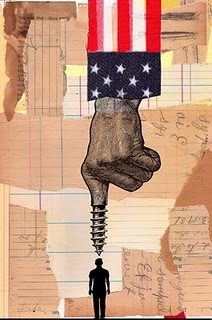
The Obama Administration’s War on Civil Liberties and Free Speech | Activist Post

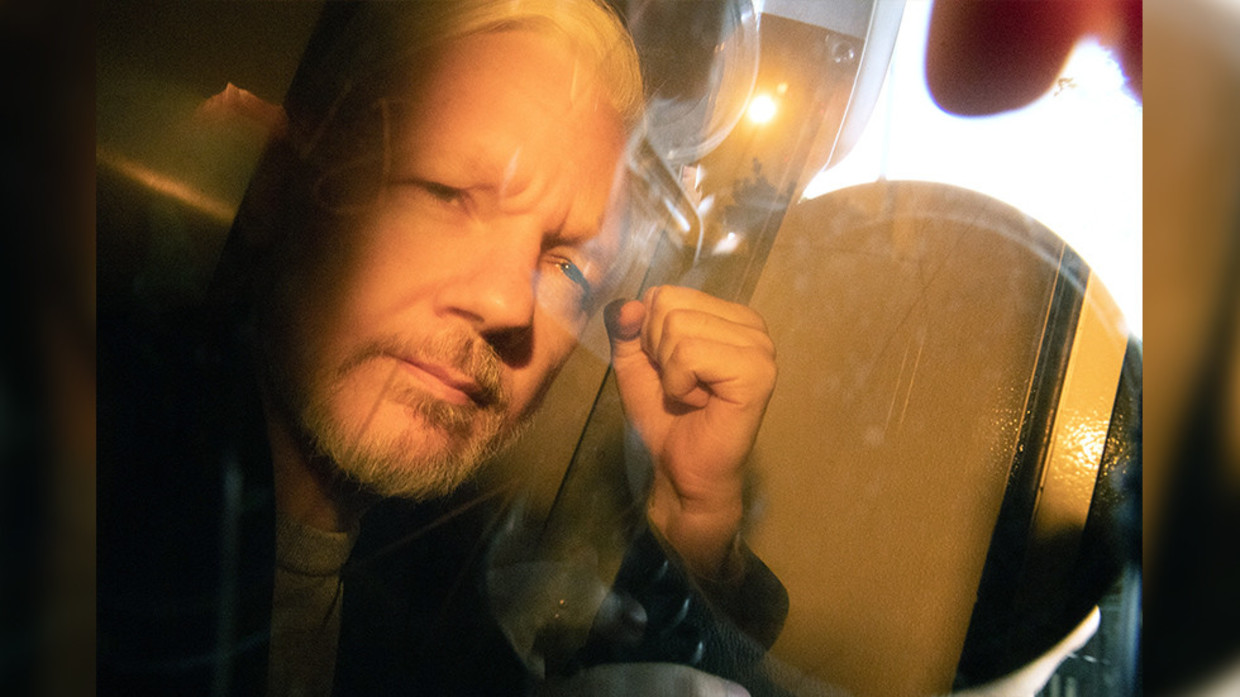
While Secretary of State Hillary Clinton was praising the role that the internet played in toppling oppressive regimes (ironically enough, close U.S. allies), the Justice Department was in court in Alexandria, Virginia seeking to invade the privacy and political rights of WikiLeaks supporters even as it shields well-connected “War on Terror” fraudsters.

Scarcely batting an eyelash, Madame Clinton told her audience at George Washington University that “the goal is not to tell people how to use the internet any more than we ought to tell people how to use any public square, whether it’s Tahrir Square or Times Square.”

Rich with rhetorical flourishes that should have evoked gales of laughter but didn’t (this is America, after all), Clinton averred that “together, the freedoms of expression, assembly, and association online comprise what I’ve called the freedom to connect. The United States supports this freedom for people everywhere, and we have called on other nations to do the same.”

Really?

Has the honorable Secretary attended a demonstration of late, or found herself on the receiving end of a police baton, a rubber bullet, a jolt from a taser or ear-piercing blast from a “nonlethal” sonic weapon?

Or perhaps Madame Clinton has been served with a National Security Letter that arrives with its own built-in, permanent gag order, had her organization infiltrated by provocateurs, been the focus of “spear phishing” attacks by a secret state agency, say the FBI or one of their private contractors, who’ve implanted surveillance software on her laptop or smart phone, or summoned by subpoena to appear before a Star Chamber-like grand jury?

I didn’t think so. Read more…