Iceland Forces Debt Forgiveness: Total US Media Blackout | True Democracy Party

Editor’s Note: If you have any other verifying stories please let us know via email or comment.

By Zeus Yiamouyiannis, Ph.D.

The government of Iceland has forgiven the mortgage debt for much of its population. This nation chose a very different way of stopping the crisis from the rest of European countries. It decided to hear the requests of the population and to put politicians and bankers on the bench of the accused three years after their financial excesses would sank one of the most prosperous economies in 2008.

Iceland Forgives Mortgage Debt for the Population. Putting Bankers and Politicians on “Bench of Accused” This is awesome. It shows when the people DO STAND UP they have more power and win against the corrupt bankers and politicians of a country. Iceland is forgiving and erasing the mortgage debt of the population. They are putting the bankers and politicians on the “Bench of the Accused.” Which means I assume they are putting them on trial for corruption.

Now the rest of people of the world need to start doing the same thing. We all need to stand up and against all the corruption and fraud of the banks and politicians that are puppets of the banks and corporations. The beauty of it is that they will have a load of cash to circulate into the economy and into service industries etc…instead of feeding it to the parasite bankers and out of the economy, great idea. If it was warmer I’d move to Iceland. Read more…

Oregon’s SB 1552 Analyzed – Mandatory Mediation Law (For Trust Deed Foreclosures) | Querin Law

By Phil Querin, Attorney

On March 5, 2012, the Oregon Legislature passed a sweeping series of changes to its trust deed foreclosure law, SB 1552.  Once signed by the Governor it will become effective 91 days hence.  What follows is a summary of (a) the new mandatory mediation law that, after the effective date, will apply to the non-judicial foreclosure of all residential trust deeds; and (b) some important changes to the existing laws governing judicial and non-judicial foreclosures.  Between now and the effective date, the Oregon Attorney General’s office will promulgate rules to implement the mediation program.  Until then, all we have for guidance is SB 1552 itself. This summary is for informational purposes only and should not be viewed as “legal advice”.  Those interested in seeing if the new law may apply to their particular situation should consult with their own legal counsel. Read more…

New York’s U.S. Bankruptcy Court Rules MERS’s Business Model Is Illegal | Huffington Post

By L Randall Wray

United States Bankruptcy Judge Robert Grossman has ruled that MERS’s business practices are unlawful. He explicitly acknowledged that this ruling sets a precedent that has far-reaching implications for half of the mortgages in this country. MERS is dead. The banks are in big trouble. And all foreclosures should be stopped immediately while the legislative branch comes up with a solution.

For some weeks I have been arguing that MERS is perpetrating foreclosure fraud all across the nation. Its business model makes it impossible to legally foreclose on any mortgaged property registered within its system — which includes half of the outstanding mortgages in the US. MERS was a fraud from day one, whose purpose was to evade property recording fees and to subvert five centuries of property law. Its chickens have come home to roost.

Wall Street wanted to transform America’s housing sector into the world’s biggest casino and needed to undermine property rights to make it easier to run the scam. The payoffs were bigger for lenders who could induce homeowners to take mortgages they could not possibly afford. The mortgages were packaged into securities sold-on to patsy investors who were defrauded by the “reps and warranties” falsely certifying the securities as backed by top grade loans. In fact the securities were not backed by mortgages, and in any case the mortgages were sure to go bad. Given that homeowners would default, the Wall Street banks that serviced the mortgages needed a foreclosure steamroller to quickly and cheaply throw families out of the homes so that they could be resold to serve as purported collateral for yet more gambling bets. MERS — the industry’s creation — stepped up to the plate to facilitate the fraud. The judge has ruled that its practices are illegal. MERS and the banks lose; investors and homeowners win.

Here’s MERS’s business model in brief. Real estate property sales and mortgages are supposed to be recorded in local recording offices, with fees paid. With the rise of securitization, each mortgage might be sold a dozen times before it came to rest as the collateral behind a mortgage backed security (MBS), and each of those sales would need to be recorded. MERS was created to bypass public recording; it would be listed in the county records as the “mortgagee of record” and the “nominee” of the holder of mortgage. Members of MERS could then transfer the mortgage from one to another without all the trouble of changing the local records, simply by (voluntarily) recording transactions on MERS’s registry.

A mortgage has two parts, the “note” and the “security” (not to be confused with the MBS) or “deed of trust” that is usually just called the “mortgage”. The idea behind MERS was that the “note” would be transferred from seller to purchaser, but the “mortgage” would be held by MERS. In fact, MERS recommended that the “note” be held by the mortgage servicer to facilitate foreclosures, but in practice it seems that the notes were often lost or destroyed (which is why all those Burger King Kids were hired to Robo-sign “lost note affidavits”).

At each transfer, the note and mortgage are supposed to be “assigned” to the new owner; MERS claimed that because it was the “mortgagee of record” and the “nominee” of both parties to every transaction, there was no need to assign the “mortgage” until foreclosure. And it argued that since the old adage is that the “mortgage follows the note” and that both parties intended to assign the notes (even if they did not get around to doing it), then the Bankruptcy Court should rule that the assignments did take place in some sort of “virtual reality” so that there is a clear chain of title that allows the servicers to foreclose.

The Judge rejected every aspect of MERS’s argument. The Court rejected the claim that MERS could be both holder of the mortgage as well as nominee of the “true” owner. It also found that “mortgagee of record” is a vague term that does not give one legal standing as mortgagee. Hence, at best, MERS is only a nominee. It rejected MERS’s claim that as nominee it can assign notes or mortgages — a nominee has limited rights and those most certainly do not include the right to transfer ownership unless there is specific written instruction to do so. In scarcely veiled anger, the Judge wrote:

“According to MERS, the principal/agent relationship among itself and its members is created by the MERS rules of membership and terms and conditions, as well as the Mortgage itself. However, none of the documents expressly creates an agency relationship or even mentions the word “agency.” MERS would have this Court cobble together the documents and draw inferences from the words contained in those documents.” Read more…

New York Sues 3 Big Banks Over Mortgage Database | Reuters

Attorney General Eric T. Schneiderman of New York sued three major banks on Friday, accusing them of fraud in their use of an electronic mortgage database that he said resulted in deceptive and illegal practices, including false documents in foreclosure proceedings.

Mr. Schneiderman, co-chairman of a new mortgage crisis unit under President Obama, filed a lawsuit against Bank of America, Wells Fargo and JPMorgan Chase in New York State Supreme Court in Brooklyn.

The database, called the Mortgage Electronic Registration System or MERS, was created in the mid-1990s for tracking mortgage ownership. It is a collaboration of top mortgage servicers, mortgage insurers and Fannie Mae and Freddie Mac, the government entities that hold many of the country’s mortgages.

“The mortgage industry created MERS to allow financial institutions to evade county recording fees, avoid the need to publicly record mortgage transfers and facilitate the rapid sale and securitization of mortgages en masse,” Mr. Schneiderman said.

“By creating this bizarre and complex end-around of the traditional public recording system,” Mr. Schneiderman’s lawsuit asserts, the banks saved $2 billion in recording fees.

More than 70 million mortgage loans, including millions of subprime loans, have been registered in the MERS system, rather than in local county clerks’ offices, according to the lawsuit.

The lawsuit asserts the database is inaccurate and seeks to stop the banks from filing foreclosure actions through MERS and executing false or defective mortgage assignments in New York foreclosure proceedings.

Mr. Schneiderman also is seeking all profits obtained through fraudulent and deceptive practices and other damages, including $5,000 for each violation of general business law.

Patrick Linehan, a JPMorgan spokesman, and Rick Simon, a Bank of America spokesman, declined to comment on the lawsuit. Ancel Martinez, a Wells Fargo spokesman, said the company was reviewing the lawsuit and did not have “anything to add at this time.” Janis L. Smith, a spokeswoman for Merscorp and its subsidiary, MERS, said in a statement that the firms complied with the law and mortgage regulations.

“Federal and state courts around the country have repeatedly upheld the MERS business model, and the validity of MERS as legal mortgagee and nominee for lenders,” the MERS statement said. “We refute the attorney general’s claims and will defend the case vigorously in court.”

Source: New York Times/Reuters

World Banker Makes Stunning Confession

Two years ago, the former President of the World Bank, James Wolfensohn, makes stunning confessions as he addresses graduate students at Stanford University. He reveals the inside hand of the world domination from past, to the present, and into the future. The speech was made January 11th, 2010. The next 19 minutes may open your mind to a very deliberate world.

He tells the grad students what’s coming, a “tectonic shift” in wealth from the west to the east. But he doesn’t tell the students that it is his institution, the World Bank, that’s directing and channeling these changes.

Wolfensohn’s own investment firm is in China, poised to profit from this “imminent shift” in global wealth.

Nevada Makes Illegal Foreclosures Felony | Housing Predictor

By Mike Colpitts

Responding to homeowner complaints, Nevada has become the first state in the nation to make illegally repossessing a home a felony, and  may send bankers to jail for doing such. The new law was enacted after tens of thousands of homeowners complained to lawmakers about their homes being foreclosed without proof of ownership.

The outcry of consumer complaints over illegal robo-signing tactics has produced a series of lawsuits against mortgage servicing companies and banks in Nevada, which has led the U.S. in foreclosures six straight years.

The Nevada law makes it a felony for a mortgage servicer or trustee of a mortgage to make false representations concerning a title such as claiming that they are an executive of a bank or mortgage servicer, which was the case in at least hundreds of thousands, perhaps millions of robo-signings. A $5,000 fine will also be assessed if fraud is found. The law requires mortgage companies to provide a new affidavit with the amount owed on the loan, the person who is in possession of the note and the individual with the authority to foreclose on the property.

Some 26 U.S. states conduct foreclosures through the courts, but the new law does not make Nevada a judicial foreclosure state. Foreclosures have been delayed in many cases since the law went into effect Oct. 1 st.

Cathe Cole, vice president of default for Trustee Corps., and foreclosure counsel in Nevada for Freddie Mac said as long as trustees can show a clear chain of title, including the named servicer of the mortgage there would be nothing for companies carrying out foreclosures to fear. “They just want to make sure we’re doing things correctly,” said Cole.

Nevada’s state attorney general is attempting to halt illegal foreclosure practices such as robo-signing with the new law, which they believe are still taking place. Proof of ownership title is critical to the chain of title. If the proof has been lost or never forwarded to a mortgage servicing company the foreclosing party may have no right to formally foreclose and take the real estate.

The Nevada law could provide an example for other states to follow implementing the new law. Homeowners throughout the U.S. have filed lawsuits against mortgage servicing companies alleging fraud in foreclosure proceedings used to formally repossess their homes after Mortgage Electronic Registration Systems (MERS) reportedly failed to provide the physical documents on foreclosures their electronic system was used for to provide foreclosures through. MERS ordered mortgage servicers and banks to halt foreclosures in its name earlier this year.

Source: Housing Predictor

A Banking Model That Works In The Badlands | The Daily Bail

By Wil Martindale

What’s The Big Deal About State Banks?  North Dakota Has The Answers

The only State in the Union chartered to be the primary depositor and guarantor of the deposits of its own bank is North Dakota.  All state funds are deposited into this bank (by law) and its deposit base becomes the capital reserve from which to create credit.

Our system of hopelessly insolvent mega banks across the nation has leveraged, gambled and lost it all in the insane derivatives casino.  Despite more than six months of massive taxpayer bailouts, credit markets are still frozen, the economy continues to collapse and 2.3 million more Americans have lost their jobs since Obama took office.

But North Dakota’s GNP has grown 56%, personal income has grown 43%, and wages have grown 34%.  The state not only has no funding issues, but this year it actually has a budget surplus of $1.2 billion, the largest it has ever had.

Why? Because of sound fiduciary oversight and proper management.

You see, the Bank of North Dakota does not employ 20,000 people at an average wage of $90,000 per year.  Employees do not receive $60,000 annual bonuses and executives do not take home $40,000,000 in compensation, bonuses and options.  The State Bank of North Dakota does not wager 1000 times it’s deposit base (as Goldman Sachs does with a credit exposure risk of 1056% to capital ratio) on the speculative derivatives casino in order to grossly reward the risk that brought down the world’s economies.

In point of fact:

The Bank of North Dakota (BND) was established by the state legislature in 1919 specifically to free farmers and small businessmen from the clutches of out-of-state bankers and railroad Barons.  By law, the State deposits all its funds in the bank, which pays a competitive interest rate to the State treasurer.  The State, rather than the FDIC, guarantees the bank’s deposits, which are re-invested back into the State in the form of loans.  The bank’s return on equity is about 25%, and it pays a hefty dividend to the State, which is expected to exceed $60 million this year.  In the last decade, the BND has turned back a third of a billion dollars to the State’s general fund, offsetting taxes.  The former president of the BND is now the State’s governor.

The BND avoids rivalry with private banks by partnering with them.  Most private sector lending is originated by a local bank.  The BND then comes in to participate in the loan, share risk, and buy down the interest rate.  The BND provides a secondary market for real estate loans, which it buys from local banks.  Its residential loan portfolio is now $500 billion to $600 billion.  Guarantees are also provided for entrepreneurial startups, and the BND has ample money to lend to students (over 184,000 outstanding loans).  It purchases municipal bonds from public institutions, and it backs loans at 1% interest.  The BND also has a well-funded disaster loan program, which helps explain how Fargo, when struck by a disastrous flood recently, managed to avoid the devastation suffered by New Orleans in hurricane Katrina.

North Dakota has also managed to avoid the credit freeze, through the simple expedient of creating its own credit.  It has led the nation in establishing state economic sovereignty.

That is the key — establishing economic sovereignty at the level of the States -that is the last vestige of hope for this country.  TAKE ACTION in your state to be part of the solution.

It truly must be obvious to anyone in America able to read and think for themselves that this federal government, bought and paid for by the economic Imperialists, with its ranks completely infiltrated by former Wall Street executives, simply DOES NOT HAVE the best interests of the average taxpayer in mind.

Not when we are being sucked dry by the continuing bailouts, which do nothing but place the middle class backbone of this country into a debtor’s prison of taxation, reduced social services, pay cuts, lost jobs, tighter credit, and with no end in sight to the greed and excess of the profit-obsessed, predatory money changers they serve.

This is why it’s so important to TAKE ACTION now.  Let the rest of the world deal with the White House.  Trust me, they will.  We the People must collectively take action at the level of the States, where politicians are still accessible and many still remember what it’s like to be true public servants.

If the pressure comes from the American taxpayer at the level of the States and the international pressure comes from the developed nation’s foreign governments, together, the real, hard – working people of the world can correct the problems on Capitol Hill, where neither body alone could.

TAKE ACTION in your state to be part of the solution now.

14,000 Coloradans move $100M into credit unions | The Colorado Independent

By Jon Collins

As the social media-sparked Bank Transfer Day approaches, the Credit Union National Association (CUNA) reports that over 650,000 people have joined credit unions in the last four weeks. In Colorado, the group reports 14,000 new accounts and $100 million in new deposits.

Credit unions nationally have added $4.5 billion in new accounts since the end of September, CUNA says, reporting that four out of every five credit unions affiliated with the group report that the increase is due to attempts by big banks to raise fees on customers or Bank Transfer Day, a movement birthed by social media that will take place tomorrow.

Bank Transfer Day organizer Kristen Christian explained the logic behind the movement on the group’s Facebook page.

“I started this because I felt like many of you do. I was tired—tired of the fee increases, tired of not being able to access my money when I need to, tired of them using what little money I have to oppress my brothers & sisters. So I stood up. I’ve been shocked at how many people have stood up alongside me.” Christian wrote. “Me closing my account all on my lonesome wouldn’t have made a difference to these fat cats. But each of you standing up with me…they can’t drown out the noise we’ll make.”

Big banks like Wells Fargo and U.S. Bank have also taken flak for attempting to impose additions fees on customers who use debt cards, although many of the banks have withdrawn their plans due to public outcry.

Credit unions are member-owned and non-profit; they typically have fewer fees than corporate banks. Credit unions across the country, including some in Minnesota, have been offering special promotions and extending hours in preparation for Bank Transfer Day, CUNA said. Minnesota’s Affinity Plus launched the aggressive “ditch your bank” campaign in early October,

“Our struggling economy is not the disease, it’s the symptom,” according to Affinity Plus’ campaign. ”There is mounting evidence to prove that big banks with their profit-at-all-costs agenda are actually making our collective disease worse by systematically making choices that undermine the efforts of regulators and ordinary people like us to make changes and get back to a state of health.”

Occupy Wall Street has also helped cement the focus on banks. In Minnesota, Occupy Wall Street has targeted big banks for a series of demonstrations focused largely on the banks’ role in the foreclosure crisis.

“We’re focused more on the needs of our clients and less on the bottom line,” said Joy Audet, director of corporate communications for the credit union association in Colorado.

Scot Kersgaard contributed to this article.

Source: The Colorado Independent

Endgame: When Debt is Fraud, Debt Forgiveness is the Last and Only Remedy | Endgame

By Zeus Yiamouyiannis, Ph.D.

Introduction

Finally serious economists are considering a position I have been maintaining and writing about since the 2008 financial meltdown. Whatever its name— erasure, repudiation, abolishment, cancellation, jubilee—debt forgiveness, will have to eventually emerge forefront in global efforts to solve an ongoing systemic financial crisis.

“On a grand scale the only way to erase counterfeit money and (counterfeit) assets of hundreds of trillions of dollars is to erase the debts associated with those fake assets. (Let me underscore again, these are not “toxic” assets, they are fake assets.)… Forgiveness in general, and forgiveness of debt in particular, stand as virtues if they free us up to acknowledge, address, and learn from our culpability, start anew, and create forward.” ( The Big Squeeze, Part 3: The Quiet Rebellion: Civil Disobedience, Local Markets, and Debt Erasure (January 29, 2011)

Debt forgiveness, therefore, accomplishes two important things. It eliminates the increasing and outsized portion of productive enterprise to pay off unproductive obligations, and it clears the ground for new opportunities, new thinking, invention, and entrepreneurialism. This is why the ability to declare bankruptcy is so essential in the pursuit of both happiness and innovation.

Currently we are mired in a “new normal” and calls for “austerity” which are nothing more than the delusional efforts of a status quo to avoid the consequences of its own error and fraud and to profit evermore. So bedazzled by the false wealth created by debt multiplication and its concomitant fantasy of ever-higher returns, this status quo continues to be stupidly amazed that people are not spending and that the economy is not picking up. But how could it be otherwise?

Productive wealth has been trapped in a web of parasitic theft, counterfeiting, liability evasion, non-regulation, and prosecutorial non-accountability. All the fundamental attributes of a functioning exchange economy have been warped to reward creative criminals. I spoke extensively about this in my posts from 2008. ( Imaginary Worth, Empire of Debt: How Modern Finance Created Its Own Downfall (October 15, 2008)

The unsustainable nature of debt

Two observations: 1) Fabricated/parasitic so-called “wealth” destroys value by diluting the value of productive wealth. 2) Debt/credit that cannot be paid back is never an asset and is always a hot-potato liability (needing to be foisted to a greater fool to garner “profit” and transaction fees):

“The models [modern debt are] based upon had no contact with reality. They assumed unlimited growth and ability to pay. When matched against the reality of people paying ten times their salary for mortgages that actually added more money owed to their principal (i.e. with negative amortization), required no money down, and set up “balloon payments,” large step-ups in payments after a few years) there is no possible way they could NOT default in a predictable span of time.” ( Part II: How the Credit Default Swap Scam Works (October 13, 2008)

Systemically, all debt that charges a percentage (“usury”) originates in delusion. Debt grows exponentially indefinitely, growth (income and otherwise) cannot. This leads to a widening condition where the fruits of productive “growth” devoted to interest payments increase until those fruits are entirely consumed. (The Elephant In The Room: Debt Grows Exponentially, While Economies Only Grow In An S-Curve (Washington’s Blog)

Once this happens, stores of wealth (hard assets) begin to be cannibalized to make up for the difference. You see this in Greece with its sale of public assets to private companies, and in middle-class America where people are liquidating retirement accounts to pay for their cost of living.

This problem is compounded by a private Federal Reserve that lends money into circulation at interest, and then allows the multiplication of this consumer debt-money liability through fractional reserve banking. The money in circulation today could pay only a small fraction of the total private and public debt. That fact alone is evidence of a kind of systemic fraud. “If you just work hard enough, save, and make sensible decisions, you can get out of debt” could only physically work for a bare fraction of the population, given the money-to-debt ratio. The rest would have to simply default to clear the boards.

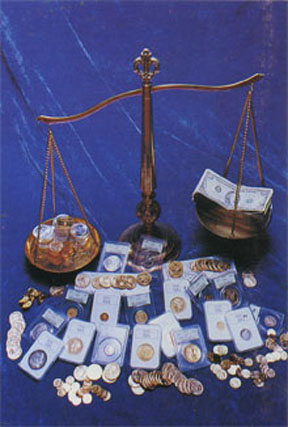
This is why debt forgiveness makes not only moral but rational, mathematical sense. Finances require balancing to be coherent. There must be some way to redress systemic imbalance. One has to be able to “zero the scales” to get an accurate weight of value and to re-establish healthy value creation. Read more…

Following the Debt Ceiling Drama | Pro Publica

By Braden Goyett

Congress has until August 2nd to raise the debt ceiling, the cap on the amount of money the Treasury can borrow to pay the government’s bills. As the clock keeps ticking, you may still have unanswered questions. How dire could the consequences of not raising the debt ceiling be? What are the possible solutions? Here’s a reading list to help you keep up.

Following the debt ceiling debate in real time:

Slate has an updating infographic that lets you see how much money the Treasury has in its bank account right now [2]. For the latest news and analysis, the Wall Street Journal has a frequently updated live blog [3]. The Economist is also doing daily debt ceiling updates [4]. Some good people to follow for updates on Twitter include CNBC’s @JimPethokoukis [5], TIME Magazine’s @MarkHalperin [6], CBS’s @NorahODonnell [7], NBC’s @LukeRussert [8] and @KellyO [9], Slate’s @daveweigel [10], Talking Points Memo’s @brianbeutler [11] and the Bipartisan Policy Center (@BPC_Bipartisan [12]). Today we’re curating tweets with debt ceiling news and analysis [13] on our homepage—check out the module in the top right. For breaking updates, Topsy can be a useful tool for finding the latest articles and tweets on the debt ceiling [14].

The basics on the debt ceiling (including where it comes from):

An earlier guide of ours answers basic questions about the debt ceiling [15], like “What is the debt ceiling, really?” and “Is the debt ceiling necessary?” The New York Times also has a useful FAQ that gets into some of the finer points of the history of the debt ceiling system [16]. Poynter has a guide to common misconceptions about the debt ceiling [17] that can help you cut through misleading coverage. It’s important to note, as Poynter does, that raising the debt ceiling doesn’t mean that we’re increasing spending, but that we’re letting the Treasury borrow money to pay for things we’ve already agreed to spend on. Here’s how NPR Correspondent Robert Smith explained the situation to Poynter:

“The way I put it is that Congress has already ordered the pizza. They approved the pepperoni. They called up and had someone deliver it,” Smith said via email. “Now the pizza guy is knocking at the door, and asking to get paid. If you don’t raise the debt ceiling, it’s like saying we didn’t want that pizza in the first place. Maybe he’ll go away if we don’t answer.”

The New York Times has a helpful chart that breaks down which policies have contributed to the national debt [18] over the Bush and Obama administrations. This chart, tweeted James Fallows at the Atlantic, “should accompany every story about the debt ceiling debate.” The White House released a more detailed chart breaking down the sources of the national debt [19] on Tuesday. Talking Points Memo explains that most of the U.S. national debt is actually owed to the United States [20]—it’s money that some government agencies have borrowed from each other. The Guardian’s data blog has a rundown of which foreign countries the United States owes, and how much we owe them [21]. If you want to go in-depth into the topic, there’s a compilation of academic research on the debt ceiling [22] up at Ezra Klein’s Washington Post blog.

What might happen if the debt limit isn’t raised:

Basically, anyone and anything that relies on federal government funds may not get paid, including members of the U.S. military and military contractors and people receiving Social Security checks. The New York Times has a story detailing what may happen to state governments if the debt ceiling doesn’t get extended [23]. Bloomberg has an interactive that lets you take on the role of the Treasury trying to decide which of its bills to pay [24].

The U.S. credit rating might get downgraded, which could raise the cost of borrowing and cause panic in financial markets and dumping of U.S. bonds. The IMF said today that a downgrade could be “extremely damaging” to the world economy [25]. Forbes has a piece weighing the potential consequences of a credit rating downgrade [26] and whether or not it’s inevitable. Read more…