The U.S. Wants Smartphone Location Data to Fight Coronavirus. Privacy advocates are worried | NBC News

200318-coronavirus-new-york-oculus-se-1039p_e7dd421e936d5d4b551425cf3f86fb44.fit-1240wJohnny Liberty, Editor’s Note: As Edward Snowden was correct to reveal to the international press (at the sacrifice of his own well-being and freedom) that the NSA had abused their power and broke the law in gathering metadata on every American citizen, giving more power to the government is not a wise move regardless of the reason. Once they have that power, they’ll always have it (and will eventually abuse it). For example, the USA Patriot Act continues to be in force today without a tangible terrorist threat. Your civil liberties and sovereign rights continue to be compromised daily.

By Dylan Byers

Federal health officials say they could use anonymous, aggregated user data collected by the tech companies to map the spread of the virus.

The White House and the Centers for Disease Control and Prevention are asking Facebook, Google and other tech giants to give them greater access to Americans’ smartphone location data in order to help them combat the spread of the coronavirus, according to four people at companies involved in the discussions who are not authorized to speak about them publicly.

Federal health officials say they could use anonymous, aggregated user data collected by the tech companies to map the spread of the virus — a practice known as “syndromic surveillance” — and prevent further infections. They could also use the data to see whether people were practicing “social distancing.”

Some sources stressed that the effort would be anonymized and that government would not have access to specific individuals’ locations. They noted that users would be required to opt-in to the effort.

The federal effort, first reported by The Washington Post, will force the tech giants to weigh their commitments to user privacy against their desire to help combat a disease that has cost thousands of human lives and upended the global economy.

Full coverage of the coronavirus outbreak

The government officials have held at least two calls in recent days with representatives from the companies, the sources said. Those officials are “very serious” about making this happen, a person at one of the tech companies said.

Similar and more aggressive surveillance practices have already been put to use in China, South Korea and Israel. The moves have set off alarm bells among privacy advocates who fear what the government may do with users’ data.

Facebook already provides health researchers and nongovernmental organizations in some countries with anonymized data to help disease prevention efforts. Laura McGorman, policy lead of Facebook’s “Data for Good” program, said a similar effort could be used “to understand and help combat the spread of the virus.”

But other sources warned that providing the government with greater access to anonymized location data now could lead to the erosion of individual privacy down the line, especially if the government starts to ask for non-anonymized data.

Representatives from Facebook, Google, Twitter, Apple, Amazon, Microsoft, IBM and Cisco all took part in the call with White House and federal health officials. Spokespeople for the companies declined to comment on the discussions.

Source: NBC News

Russia, China Spreading False Narratives About Coronavirus: US State Department Official | The Epoch Times

state-department-logo-700x420Johnny Liberty, Editor’s Note: While it’s true both Russia and China have their own agendas so does the Unites States. The coronavirus has taken the world by storm, with nation states unprepared for the consequences of such a globally disruptive event. Whether the coronavirus was engineered in a bioweapons laboratory and accidentally released is of less consequence than the social and economic blowback which will be felt worldwide. If the truth ever be told (which unlikely it ever will be), unscrupulous propaganda agents from any country are not serving the best interests of humanity to protect themselves against the onslaught of this lethal virus. 

By Eva Fu

U.S. adversaries such as Russia and China are propagating false information about the novel coronavirus outbreak amid a global public health crisis, according to a top State Department official tasked with countering foreign propaganda threats.

“The coronavirus is an example of where we’ve seen adversaries take advantage of a health crisis where people are terrified worldwide—to try to advance their priorities,” Lea Gabrielle, who leads the Global Engagement Center at the State Department, said during a Senate hearing on March 5.

While both countries’ propaganda malign and undermine free societies, the intent and the style of their state-directed campaigns differ greatly, according to Gabrielle.

“One of the best practices in countering propaganda and disinformation is exposing it,” she said.

Moscow

The Kremlin has put “the entire ecosystem of Russia disinformation at play,” including state proxy websites, state media, and “swarms of online false personas pushing out false narratives,” she explained.

While the aim of restoring its image as a global superpower, Moscow “seeks to weaken its adversaries by manipulating the information environment in nefarious ways, polarizing domestic political conversations, and attempting to destroy the public’s faith in good governance, independent media, and democratic principles,” Gabrielle said.

In February, senior State Department official Philip Reeker accused Russia of engaging thousands of social media accounts to promote unfounded conspiracy theories, such as the claim that the United States developed the virus as a biological weapon to “wage economic war” on China.

“By spreading disinformation about coronavirus, Russian malign actors are once again choosing to threaten public safety by distracting from the global health response,” Reeker told Agence France Presse at the time.

The lies, Gabrielle said, are a convenient tool for the Kremlin to distract the public. By creating and discrediting a fictitious “enemy”—the West—the Russian government could justify its existing political system and shift its internal troubles away from the international spotlight. In doing so, the Kremlin also “seeks to nurture the most extreme or divisive elements of society,” she said.

Beijing

Unlike Russia, which “seeks to chaotically disrupt the current world order to accomplish its goals, the CCP [Chinese Communist Party] seeks to deliberately shape it to Beijing’s advantage,” according to Gabrielle.

Beijing’s attempts to censor “the sheer extent of this global public health crisis” have brought such CCP goals into full display: from downplaying death toll numbers, stifling critics, to silencing whistleblowers who raised red flags about the virus during the outbreak’s early stages, she said.

CHINA-HEALTH-VIRUS
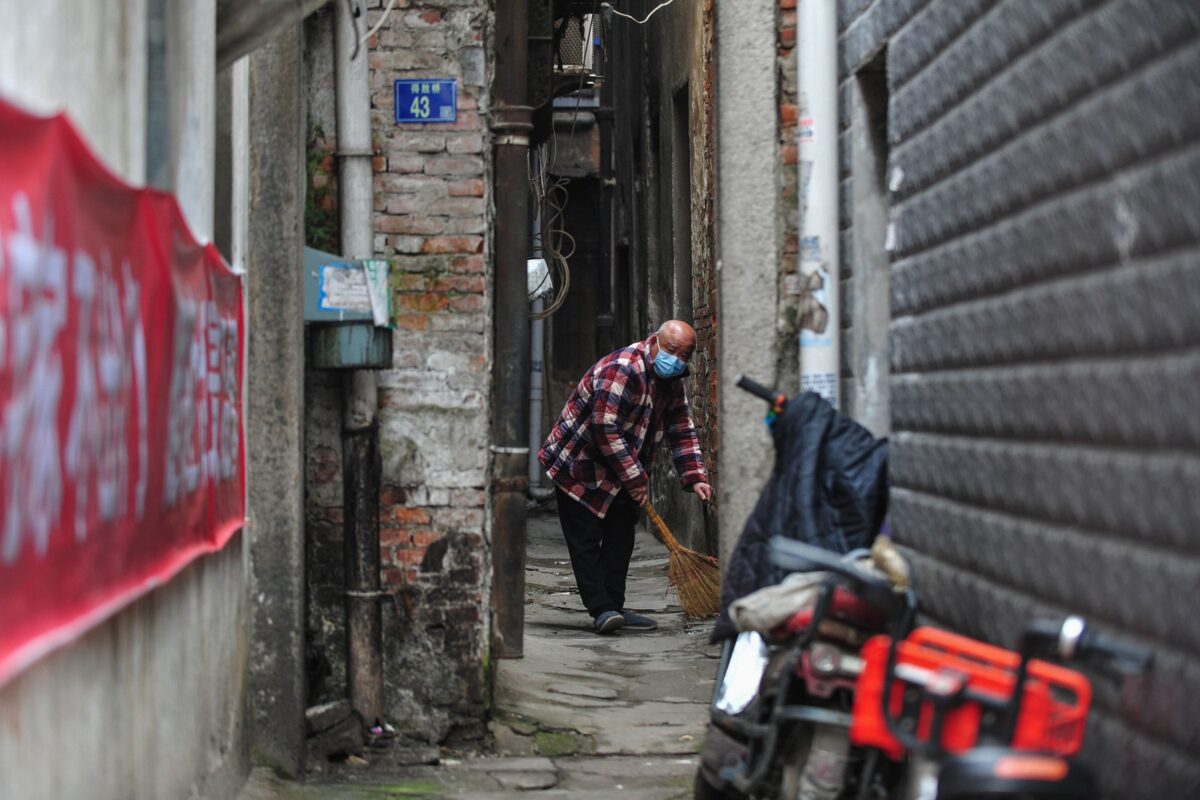
A resident wearing a face mask sweeps the floor in Wuhan in China’s central Hubei province on March 4, 2020. (STR/AFP via Getty Images)

Chinese doctor Li Wenliang, among the first to raise attention about a “SARS-like” outbreak on social media, was accused of rumor-mongering. He later died of the virus, after contracting it from a patient he was treating. Three citizen journalists, Fang Bin, Chen Qiushi, and Li Zehua, were recently arrested while documenting the outbreak in Wuhan.

Chinese messaging app WeChat and video streaming app YY have been using keywords to censor social media posts with virus-related terms—likely due to “official guidance,” according to a new report by Canadian cyber research group Citizen Lab.

Such state-sanctioned efforts “underscore Beijing’s sensitivity to being portrayed as anything other than a responsible actor at home and abroad,” Gabrielle said.

On March 5, the U.S. Senate unanimously passed a resolution to honor Li. Sen. Tom Cotton (R-Ark.) said the doctor was “victimized by his own government, the Chinese Communist Party.”

‘Whole-of-Government’ Campaign

Beijing’s propaganda operatives are comprehensive, deploying a “whole-of-government approach”: political, economic, military, and information tools are used to push the regime’s narrative domestically and globally, Gabrielle said.

More recently, the Chinese regime has walked back its initial claims that the virus came from a live animal and seafood market in Wuhan. Zhao Lijian, a spokesperson for the country’s foreign ministry, said on March 5 that “it is yet undetermined where the virus originated,” stressing that Beijing has been “widely acclaimed” for its “signature strength, efficiency, and speed.”

Epoch Times Photo
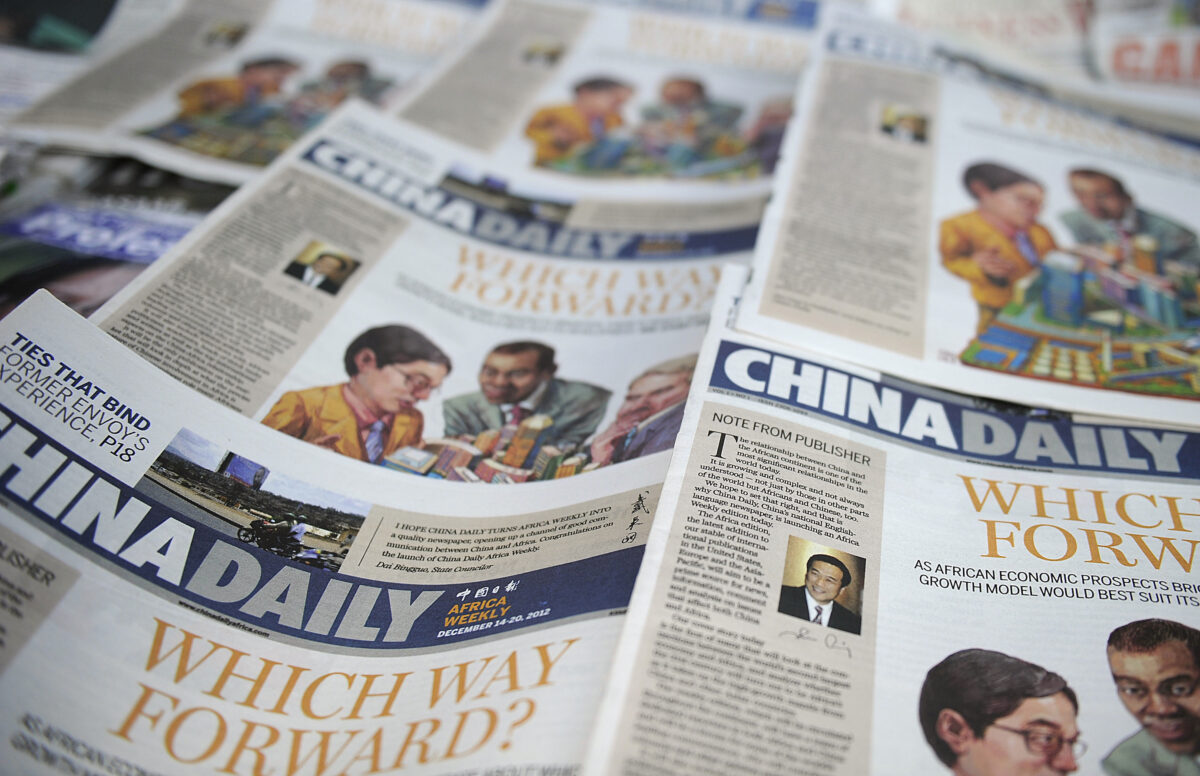
Copies of the Africa edition of the China Daily newspaper sits on a newsstand in the Kenyan capital Nairobi on Dec. 14, 2012. (Tony Karumba/AFP via Getty Images)

In recent days, Chinese state media have spread the false claim that the virus originated in the United States.

State outlets also published a series of articles bolstering China’s response to the outbreak. One March 5 article in China Daily, for example, said the government’s fight against the virus was “a story of pride.”

Pushing back on Beijing’s claims about the virus’s country of origin, U.S. State Secretary Mike Pompeo noted that the CCP itself had said “it came from Wuhan.”

“We have pretty high confidence that we know where this began [i.e. China], and we have high confidence too that there was information that could have been made available more quickly and data that could have been provided and shared among health professionals across the world,” he told CNBC on March 6.

“It’s most unfortunate,” he added.

Source: The Epoch Times

To Tame Coronavirus, Mao-Style Social Control Blankets China | Economic Times/India Times

wuhan-11-ap

Johnny Liberty, Editor’s Note: This pandemic was likely created from a bioweapons lab in Wuhan and the Chinese Communist Party is showing their true colors in dealing with this humanitarian crisis. The entire world will suffer consequences from this debacle and a global economic slowdown and economic reset is inevitable.

The nation is battling the coronavirus outbreak with a grassroots mobilization reminiscent of former Communist Chairman Mao Zedong’s mass crusades, not seen in China in decades.

China has flooded cities and villages with battalions of neighborhood busybodies, uniformed volunteers and Communist Party representatives to carry out one of the biggest social control campaigns in history.

The goal: to keep hundreds of millions of people away from everyone but their closest kin.

The nation is battling the coronavirus outbreak with a grassroots mobilization reminiscent of former Communist Chairman Mao Zedong’s mass crusades, not seen in China in decades — esse ..

Housing complexes in some cities have issued the equivalents of paper hall passes to regulate how often residents leave their homes. Apartment buildings have turned away their own tenants if they have come from out of town. Train stations block people from entering cities if they cannot prove they live or work there. In the countryside, villages have been gated off with vehicles, tents and other improvised barriers.

Despite China’s arsenal of high-tech surveillance tools, the controls are mainly enforced by hundreds of thousands of workers and volunteers, who check residents’ temperature, log their movements, oversee quarantines and — most important — keep away outsiders who might carry the virus.

Residential lockdowns of varying strictness — from checkpoints at building entrances to hard limits on going outdoors — now cover at least 760 million people in China, or more than half the country’s population, according to a New York Times analysis of government announcements in provinces and major cities. Many of these people live far from the city of Wuhan, where the virus was first reported and which the government sealed off last month.

Throughout China, neighborhoods and localities have issued their own rules about residents’ comings and goings, which means the total number of affected people may be even higher. Policies vary widely, leaving some places in a virtual freeze and others with few strictures.

China’s top leader, Xi Jinping, has called for an all-out “people’s war” to tame the outbreak. But the restrictions have prevented workers from returning to factories and businesses, straining China’s giant economy. And with local officials exercising such direct authority over people’s movements, it is no surprise that some have taken enforcement to extremes.

Li Jing, 40, an associate professor of sociology at Zhejiang University in the eastern city of Hangzhou, was almost barred from taking her husband to a hospital recently after he choked on a fish bone during dinner. The reason? Her neighborhood allows only one person per family to leave the house, every other day.

“Once the epidemic was disclosed, the central government put huge pressure on local officials,” Li said. “That triggered competition between regions, and local governments turned from overly conservative to radical.

“Even when the situation is relieved or if the mortality rate turns out not to be high, the government machine is unable to change direction or tune down,” she added.

China’s prevention efforts are being led by its myriad neighborhood committees, which typically serve as a go-between for residents and local authorities. Supporting them is the government’s “grid management” system, which divides the country into tiny sections and assigns people to watch over each, ensuring a tight grip over a large population.

Zhejiang province, on China’s southeastern seaboard, has a population of nearly 60 million and has enlisted 330,000 “grid workers.” Hubei province, whose capital is Wuhan, has deployed 170,000. The southern province of Guangdong has called upon 177,000, landlocked Sichuan has 308,000, and the megacity of Chongqing has 118,000.

Authorities are also combining enormous manpower with mobile technology to track people who may have been exposed to the virus. China’s state-run cellular providers allow subscribers to send text messages to a hotline that generates a list of provinces they have recently visited.

At a high-speed rail station in the eastern city of Yiwu this past week, workers in hazmat suits demanded that passengers send the text messages that show their location data before being allowed to leave.

n app developed by a state-run maker of military electronics lets Chinese citizens enter their name and national ID number and be told whether they may have come in contact, on a plane, train or bus, with a carrier of the virus.

It is too early to say whether China’s strategy has contained the outbreak. With large numbers of new infections being reported every day, the government has clear reasons for minimizing human contact and domestic travel. But experts said that in epidemics, overbearing measures can backfire, scaring infected people into hiding and making the outbreak harder to control.

“Public health relies on public trust,” said Alexandra Phelan, a specialist in global health law at Georgetown University. “These community-level quarantines and the arbitrary nature in which they’re being imposed and tied up with the police and other officials is essentially making them into punitive actions — a coercive action rather than a public health action.”

In Zhejiang, one of China’s most developed provinces and home to Alibaba and other technology companies, people have written on social media about being denied entry to their own apartments in Hangzhou, the provincial capital. Coming home from out of town, they said, they were asked to produce documents from landlords and employers or be left on the street.

For Nada Sun, who was visiting family in Wenzhou, a coastal city in Zhejiang, a health scare turned into a mandatory quarantine.

When Sun, 29, complained of tightness in her chest this month, her mother told her to go to the hospital. She did not have a high fever, yet the hospital gave her a battery of checks. All came back negative for the virus.

Even so, when she returned to her apartment, she was told that she would be quarantined for two weeks. She was also added to a group on the WeChat messaging app with a local Communist Party secretary and other volunteers in which she has to submit her temperature and location twice a day.

“I’m worried they have too much information,” Sun said.

The lockdowns are not necessarily oppressive. Many people in China have been happy to wall themselves off, ordering groceries online and working from home if they can. Some neighborhood officials act with a humane touch.

Bob Huang, a Chinese-born American living in northern Zhejiang, said the volunteers at his complex had helped chase down a man who stayed out overnight to drink, in violation of rules about how often people can step outside. Yet they also delivered food from McDonald’s to a quarantined family.

Huang, 50, has been able to dodge the restrictions by using a special pass from the property manager, and he has been driving around delivering protective face masks to friends. Some building complexes don’t let him in. Others take down his information.

A nearby village took a less orthodox approach.

“They always start asking questions in the local dialect, and if you can respond in the local dialect, you are allowed to go in,” Huang said. Unable to speak the dialect, he had to wait, though the villagers were friendly. They gave him a folding chair, offered him a cigarette and didn’t ask for an ID.

Some parts of China have imposed other, often severe policies for fending off the epidemic.

Hangzhou has barred pharmacies from selling analgesics to force people with symptoms to seek treatment at hospitals. The eastern city of Nanjing requires anybody who takes a cab to show ID and leave contact information. Yunnan province wants all public places to display QR codes that people must scan with their phones whenever they enter or exit.

Many places have banned large gatherings. Police in Hunan province this month destroyed a mahjong parlor where they found more than 20 people playing the tile game.

With local governments deciding such policies largely on their own, China has become a vast patchwork of fiefs.

“It can be quite haphazard,” said Zhou Xun, a historian of modern China at the University of Essex in England. “A perfect plan on paper often turns into makeshift solutions locally.”

Officials seem to recognize that some local authorities have gone too far. This month, Chen Guangsheng, the deputy secretary-general of Zhejiang’s provincial government, called it “inappropriate” that some places had employed “simple and crude practices,” like locking people into their homes, to enforce quarantines.

National officials on Saturday urged towns and villages to remove unnecessary roadblocks and ensure the smooth transport of food and supplies.

Zhang Yingzi’s apartment complex in Hangzhou initially forbade anybody who had been out of town from entering. Later, the ban was adjusted to cover only people coming from Hubei province and the Zhejiang cities of Wenzhou and Taizhou, both of which have had many cases of the new virus.

“Banning everyone from out of town wasn’t realistic,” said Zhang, 29, an accountant. “There are so many of them, after all. Some needed to come back for work.”

Still, many in China are uneasy about loosening up virus controls too quickly.

Zhang Shu, 27, worries that her parents and neighbors are becoming cavalier about the virus, even as workers drive around her village near Wenzhou with loudspeakers telling people to stay home.

“Ordinary people are slowly starting to feel that the situation isn’t so horrible anymore,” she said. “They are restless.”

The Mysterious Origin of the Wuhan Coronavirus | The Epoch Times

CHINA-HEALTH-VIRUSIt has been two months since the outbreak of the coronavirus in Wuhan and its spread has shown no signs of slowing down in China. More than 35 Chinese cities have been put on lockdown by Chinese authorities in an attempt to isolate confirmed and suspected cases. The lives of millions of people are in danger as the virus shows signs of spreading further in China as well as internationally.

There are significant gaps in the official investigations into the origins of the novel Coronavirus. In order to contain the virus, one first needs to understand how a virus that allegedly originated in animals found its way to humans. For this to happen, the Chinese authorities need to release their animal testing data and samples. Testing results from animal samples collected at epicenters would give important insights into what animals might serve as intermediate hosts for the new coronavirus.

This is critical to the containment of the epidemic. For example, if rats are the intermediate hosts for this virus, it would be futile to shut down the cities to restrict people’s movements while infected rats are still moving freely. Results from animal samples could also guide policy decisions that would reduce the risk of another outbreak.

An Animal Origin of the Virus

Scientific studies based on phylogenetic analysis have researched the sequence of the novel coronavirus, compared it to other coronavirus sequences, and found it likely originated in bats. Researchers from the Wuhan Institute of Virology found the genome in the virus found in patients was 96 percent identical to that of an existing bat coronavirus, according to a study published in the journal Nature. But there have been other theories as well. One Chinese study suggested, for example, that snakes were the source of transmission to humans. However, many scientists believe that reptiles are a less likely source and that mammals like rats and pigs, and some birds, have been the primary reservoir for coronaviruses.

With this in mind, phylogenetic studies of viral genome sequences need to be supported by animal studies to confirm the origin of the infection, as well as to determine whether there is an intermediate host.

It is not an easy task for a virus to establish zoonotic transmission, and coronaviruses rarely leap from animal to human infection with high transmissibility. There is even less chance to see a coronavirus leap directly from bats to humans. To infect new hosts, mutations need to occur with the viral surface proteins and/or envelope and structural genes, so that the mutated viruses can bind and enter the cells of new species, and efficiently complete the replication cycles in the new hosts.

Some scientists have argued that coronaviruses can jump directly to humans, without mutating or passing through an intermediate species. However, an intermediate host was clearly needed to establish zoonotic transmission to humans in the previous outbreaks of coronaviruses. Many studies suggested that the bat coronavirus jumped from its natural host bats to civets and then to humans during the 2003 SARS outbreak, and it jumped from bats to camels and then to humans for the MERS outbreak. So, civets and camels would serve as intermediate hosts for zoonotic transmission.

Because bats were not sold at the Huanan market in Wuhan—the epicenter of the infection—at the time of the outbreak, this suggests the existence of another intermediate animal host that may have transferred the virus to humans.

What is the most puzzling is that there have been no reports on the testing of animal samples collected in any epicenters in Wuhan, especially at the Huanan seafood market, to identify what animals might be the host or intermediate hosts of this novel Wuhan coronavirus.

Chinese scientists published a report in Lancet recently which stated that “the majority of the earliest cases included reported exposure to the Huanan Seafood Wholesale Market” and that patients could have been infected through zoonotic or environmental exposures. Another report on Lancet by Chinese CDC scientists claimed that “on the basis of current data, it seems likely that the 2019-nCoV causing the Wuhan outbreak might also be initially hosted by bats, and might have been transmitted to humans via currently unknown wild animal(s) sold at the Huanan seafood market.”

However, so far, no information was released about the amount, and species, of wild animals present at the Huanan seafood market upon closure; nor about how the animals were managed or disposed of when the market was closed on Jan. 1, 2020. And no information was released about how many animal samples were tested for SARS-CoV or Wuhan Coronavirus via viral nucleic acid testing methods.

Official Chinese state news agency Xinhua reported on Jan. 26 that 33 samples out of 585 environmental samples collected at the Huanan Seafood market were positive for nucleic acids from new Coronavirus, suggesting the virus originated from wild animals or stocks sold there. However, these samples were from the environment—not from animals.

It would be an ultimate failure of the Wuhan public health commission and Chinese CDC if no animal samples were collected and tested prior to, or at the time of, the shutting-down of the Huanan seafood market, where many animals were sold at the time of the outbreak. It would be similar to conducting an investigation on a food-borne disease outbreak without taking restaurant food samples related to the outbreak, and instead taking dining table surface swabs to test.

Background of the Huanan Seafood Market Closure

The 2019-nCoV has caused rapid infection in China and spread to other countries outside China, which has led to a global health crisis.

The Huanan seafood market is known to be a major outlet for the collection and distribution of live and dead wild animals. These included live wolves, hedgehogs, deer, birds, snakes, goats, hares, and boars that were sold and available in the east section of the seafood market.

A Wuhan medical and health committee identified multiple pneumonia cases associated with Huanan seafood market, which were announced on Dec. 31, 2019. The seafood market was closedby the Wuhan government on Jan. 1.

Chinese medical reporters visited the market on Dec. 31, 2019, the evening before its closure on Jan.1 where they observed poor hygiene, and wild animal bodies and organs disposed of in an unorganized manner. This suggested that a relatively large quantity of wild animals were still present at the market upon the forced closure.

No Information on Wild Animals at the Seafood Market Was Disclosed

Yet, no information was released about the amount, and species, of animals present upon closure, how many animals were tested for Coronavirus, and how the animals were managed or disposed of upon the closure of the market on Jan. 1. A Chinese media outlet, Yicai, inquired about the outcome of the wild animals sold at the market and confirmed that there was no disclosure from the Wuhan government.

Dr. Guan Yi, the current director (China affairs) of the State Key Laboratory for Emerging Infectious Diseases at the University of Hong Kong, visited Wuhan on Jan. 21 with the goal of identifying the animal source. He mentioned in a media interview that locals refused to cooperate with him. He pointed out that with the market now closed, it would be difficult to investigate the origin of the virus. He said the “Huanan seafood market was cleaned after the closure, ‘the crime scene’ was gone, and how can you solve a case without evidence?”

Gao Fu, director of the Chinese Center for Disease Control and Prevention stated, “it is clear that the source of infection was from wild animals, but we don’t know which species due to closure of the seafood market.”

The Huge Risks of Not Identifying the Original or Intermediate Animal Hosts

The U.S. Center for Disease Control (CDC) stated that “much is unknown about how 2019-nCoV, a new coronavirus, spreads.” So far the understanding is that the major pathway of 2019-nCoV infection is respiratory droplet transmission and contact from humans to humans.

Guan Yi and Kwok-yung Yuen of the University of Hong Kong (HKU) et. al. identified severe acute respiratory syndrome coronavirus (SARS-CoV) from caged palm civets from live animal markets in China in 2003. Their studies lead to the subsequent ban on selling civets and the closing of all wild animal markets in Guangdong and helped to confine the SARS epidemic.

Typically, if an animal is identified as host or source of spread of disease, authorities and the CDC would initiate prevention and control measures such as an awareness campaign, proper quarantine of sick animals and disposal of carcasses as well as monitoring the potential route for how the disease spread zoonotically.

Rodents are known to infest seafood markets. For example, tens of thousands of rodents are expected to be unleashed in Japan as one big fish market is closed.

Huanan seafood market is also infested by rodents. If rodents were elucidated as being a potential host for coronavirus, the risk of rats infesting beyond the current quarantine zone still persists. Given the fact that coronavirus was detected from feces from patients from Shenzhen and that bat SARS-like virus strains were isolated from bat feces, the possible fecal-oral route of 2019-nCoV transmission in addition to respiratory droplet transmission would lead to a reasonable warning for people to avoid contact with animals like rats. Thus, if rodents are indeed a source or host of the 2019-NCoV infection, then, rodent contamination of food or water is a potential way for the disease to spread, which needs to be brought to the awareness of the international community.

Similarly, if birds or other species were the hosts of 2019-nCoV in the seafood market, the information pertaining to the species, amount, virus type, biological reactions, and potential routes of spreading of the virus also need to be identified or reported to the world so that appropriate prevention measures could be taken.

It would be serious incompetence and malfeasance if Chinese authorities did not attempt to collect nasal, fecal, and blood samples from animals and birds sold at the seafood market. Testing animal samples would reveal very important information regarding the zoonotic transmission routes, the trends of viral mutations in this outbreak, and the loopholes in the current countermeasures.

Were There Other Epicenters Besides the Huanan Seafood Market?

The Chinese CDC did release data from environmental samples from the seafood market and suggested that “it is originated from wild animals with species uncertain.”

A team which included Dr. Feng from the Chinese CDC published a report titled “Early Transmission Dynamics in Wuhan, China, of Novel Coronavirus-Infected Pneumonia,” in the New England Journal of Medicine on Jan. 29, 2020. The paper stated that “Although the majority of the earliest cases were linked to the Huanan Seafood Wholesale Market and the patients could have been infected through zoonotic or environmental exposures…the majority of the earliest cases included reported exposure to the Huanan Seafood Wholesale Market, but there was an exponential increase in the number of nonlinked cases beginning in late December.”

The Possibility 2019-nCoV Originated From Bat SARS-Like Virus (Bat-SL-CoV)

One recent Lancet report on Jan. 29, 2020, titled “Genomic characterisation and epidemiology of 2019 novel coronavirus: implications for virus origins and receptor binding,” stated that “A Blast search of the complete genomes of 2019-nCoV revealed that the most closely related viruses available on GenBank were bat-SL-CoV-ZC45 (sequence identity 87.99%; query coverage 99%) and another SARS-like betacoronavirus of bat origin, bat-SL-CoV-ZXC21 (accession number MG772934;23 87.23%;” “Notably, the 2019-nCoV strains were less genetically similar to SARS-CoV (about 79%) and MERS-CoV (about 50%).”

This message might be interpreted as 2019-nCoV being biologically closer related to SARS-like betacoronavirus of Bat origin and bats may be the original host of this virus. However, the authors did not claim that the only host to 2019-nCoV is a bat.

The paper stated that “However, despite the importance of bats, several facts suggest that another animal is acting as an intermediate host between bats and humans. First, the outbreak was first reported in late December, 2019, when most bat species in Wuhan are hibernating. Second, no bats were sold or found at the Huanan seafood market, whereas various non-aquatic animals (including mammals) were available for purchase. Third, the sequence identity between 2019-nCoV and its close relatives bat-SL-CoVZC45and bat-SL-CoVZXC21 was less than 90%, which is reflected in the relatively long branch between them. Hence, bat-SL-CoVZC45 and bat-SL-CoVZXC21 are not direct ancestors of 2019-nCoV. Fourth, in both SARS-CoV and MERS-CoV, bats acted as the natural reservoir, with another animal (masked palm civet for SARS-CoV35 and dromedary camels for MERS-CoV) acting as an intermediate host, with humans as terminal hosts. Therefore, on the basis of current data, it seems likely that the 2019-nCoV causing the Wuhan outbreak might also be initially hosted by bats, and might have been transmitted to humans via currently unknown wild animal(s) sold at the Huanan seafood market.”

They mentioned that most bats in Wuhan are hibernating and no bats are sold at the Huanan seafood market. Thus, the chance of physical contact from bats to spread the virus to humans or animals at Wuhan is highly unlikely.

Studies From Wuhan Institute of Virology on Bat SARS-Like CoV.

Zheng-Li Shi and several other researchers at the Wuhan Institute of Virology published an article in Nature in 2013 titled “Isolation and characterization of a bat SARS-like coronavirus that uses the ACE2 receptor.”

In that study, their team harvested from anal swabs or fecal samples from bats and found 2 strains of sequences from Bat SARS-Like CoVthat termed as RsSHC014 and Rs3367. They process 95% nucleotide sequence identity with human SARS-CoV Tor2 strain.

Isolation of a new bat virus in a study published in the Journal of Virology on Dec. 30, 2015, titled “Isolation and Characterization of a Novel Bat Coronavirus Closely Related to the Direct Progenitor of Severe Acute Respiratory Syndrome Coronavirus,” found that the virus, named SL-CoV-WIV1, was almost identical to Rs3367 with 99.9% genome sequence identity. The researchers identified that WIV1 can use human ACE2 as an entry receptor and has the potential to infect human cells in this study. Subsequently, the same research group isolated another bat virus that can use ACE2 and infect human cell lines in the lab in 2015.

In addition, Dr. Shi’s group conducted another study in 2018 to address the question of whether some bat viruses can infect humans via using human ACE2, without the need of an intermediate host. But to the date of their study, “no direct transmission of SARS-Like CoVs from bats to people has been reported”.

They collected serum from 218 residents who live close to bat caves with bats carrying the viruses. Those caves were the places where the Shi group collected the virus samples. Then ELISA assays were conducted to detect antibodies to bat SARS-CoV, since antibody existence would suggest a prior exposure to the bat coronavirus. They found that only 6 out of 218 (2.7 %) subjects showed seropositivity, which suggested likely infections to bat SARS-CoVs or related viruses. No clinical symptoms have been manifested in the 6 positive persons in the past 12 months. As a control, they collected 240 samples from random blood donors in Wuhan, 1000 km away from Yunnan, none of the Wuhan blood samples showed any positivity to bat SARS-like CoV.

This data suggests that the chance of bat virus infecting humans is very low, <2.9% if possible, and with no obvious symptoms in human beings that live very close to the bat caves. No infection from a bat to a human has been reported in Wuhan as of 2018.

Track Record of Wuhan Institute of Virology on Engineering ‘Gain-of-Function’ Bat SARS-Like CoV.

Zhengli Shi’s group at the Institute of Virology at Wuhan was successful in isolating two infectious clones of bat SARS-Like CoV: SL-CoV-WIV1 and WIV16 from bats. In their further studies, they found out that these SL-CoV Spike protein (S protein) “[were] unable to use any of the three ACE2 molecules as its receptor; Second, the SL-CoV failed to enter cells expressing the bat ACE2; Third, the chimeric S covering the previously defined receptor-binding domain gained its ability to enter cells via human ACE2, albeit with different efficiencies for different constructs; Fourth, a minimal insert region ( Amino acids 310 to 518 ) was found to be sufficient to convert the SL-CoV S from non-ACE2 binding to human ACE2 binding.”

Therefore, Shi’s group found in a study published in the Journal of Virology in February 2008 that the natural bat coronavirus cannot use the human ACE2 receptor to infect humans. However, when inserted with some amino acids from position 310 to 518 for the bat CoV S protein sequence, the chimeric bat CoV can use the human ACE2 receptor.

Meanwhile, another research group led by Dr. Li published their finding in 2013 that 5 amino acid sites on CoV spike proteins are crucial in making the binding to human ACE2 on SARS virus (those positions are Y442, L472, N479, D480, T487). These 5 sites just lie in the region that the Shi group noted to be important above.

Later, Li and Shi jointly conducted a gain-of-function study published in the Journal of Virology in September 2015 on the MERS virus and a bat virus (strain HKU4) in 2015. Since MERS virus can enter human cells but HKU4 can not, they introduced 2 single mutations in the HKU4 spike protein and found that the new mutant S protein can enable HKU4 to enter human cells. If they mutated 2 sites in MERS spike, the resulting MERS pseudovirus (experimental virus) cannot enter human cells anymore.

Furthermore, Shi’s group joined an international group to generate a chimeric virus with the bat virus SHC014 they harvested in Yunnan. Since they know SHC014 is unlikely to bind to human ACE2, they “synthesized the SHC014 spike in the context of the replication competent, mouse-adapted SARS-CoV backbone”. So, that is a lab-engineered virus with SARS-CoV Mouse adapted backbone (MA15) but with SHC014 spike.

To their surprise, the chimeric virus (SHC014-MA15) can use SHC014 spike to bind to human ACE2 receptor and enter human cells. SHC014-MA15 can also cause disease in mice and cause death as well. Existing vaccines to SARS cannot protect animals from SHC014-MA15 infection. Therefore, these chimeric virus studies can lead to the generation of more pathogenic, more deadly CoV strains in mammalian models.

Due to the U.S. government-mandated pause on the gain-of-function (GOF) studies, this international research did not proceed further at that time. However, there is no evidence that Shi’s group in China stopped any further study on the track of introducing GOF mutations on the CoV. And it is clear that Shi’s group already mastered the reverse-engineering technology that is sufficient to introduce mutation in current SARS-CoV or SARS-Like CoV to create mutant infectious coronavirus.

Interestingly, Shi’s group published on bioRxiv on Jan. 23, 2020 that a new bat coronavirus that they detected in Yunnan, named BatCov RaTG13, shares 96.2 percent overall genome sequence identity with 2019-nCoV. However, this virus was never mentioned or published in their research before.

In the sequence information provided by them in the supplemental material and method section, 3 sequences are shared between the 2019-nCoV they collected and the RATG13 virus but not in any of the other SARS or Bat SARS-Like CoV families in the paper listed. The 3 sequences are located close to N terminus of the spike protein, they are GTNGTKR, NNKSWM, RSYLTPGD.

Possibilities of an Animal Host of 2019-nCoV at Huanan Seafood Market 

One recent Lancet paper titled “Genomic characterisation and epidemiology of 2019 novel coronavirus: implications for virus origins and receptor binding,” reported that “as a typical RNA virus, the average evolutionary rate for coronaviruses is roughly 10⁴nucleotide substitutions per site per year, with mutations arising during every replication cycle. It is, therefore, striking that the sequences of 2019-nCoV from different patients described here were almost identical, with greater than 99.9% sequence identity. This finding suggests that 2019-nCoV originated from one source within a very short period and was detected relatively rapidly.”

With mutations in every cycle, it is highly unlikely for different bats to host viruses with the same sequence. If bats alone are not enough for virus transmission, another animal is needed as the intermediate host, and the chance of the virus being identical is even slimmer. Since the seafood market is not the only source for the outbreak, it is reasonable to postulate that if another animal is the intermediate host for the virus, that animal needs to have contact with bats, allow bat coronavirus to proliferate in them, and, eventually, the animal needs to have the capacity to transmit viruses to human beings who may or may not have contact with the Huanan seafood market.

Therefore, there have been serious questions on whether this Wuhan coronavirus outbreak was due to a leak or mishandling of laboratory animals used in coronavirus studies. This is a reasonable public inquiry regarding the source of the outbreak and it warrants a transparent investigation from the Chinese authorities and foreign disease control and laboratory operation experts. This is not just about the accountability of medical ethics or laboratory safety operations, it is directly related to the current endeavors to contain the virus outbreak.

While the animal host of 2019-nCoV is yet to be identified, the data and information from possible animal hosts and potential zoonic infection is imperative for prevention and controlling disease on an international scale.

The Huanan seafood market has a high potential of harboring the animal host. Animal data and profiling results from the Huanan seafood market need to be disclosed immediately by Chinese authorities even if they are negative results. It is imperative for U.S. CDC and WHO officers to demand that Chinese authorities release the information about animal testing data.

If Chinese authorities refuse to disclose testing data for animal samples, it could imply an intentional cover-up of the true origin of the 2019-nCoV outbreak.

Source: The Epoch Times
Lessons From Leprosy For Coronavirus: Quarantine And Isolation Can Backfire | NPR

ap_5202240353_custom-411110ad4e887291bb9734e508582927c20cc275-s1400-c85Hundreds of people returning to the U.S. from Wuhan, China face mandatory two-week quarantines. And in China, the government is rounding up those who show signs of the deadly coronavirus, to be confined in massive quarantine centers.
Protecting public health is a delicate balance between the rights and freedom of individuals and the safety of society. But past efforts to isolate disease show that such moves — as well-intentioned as they might be — don’t always go as planned. And perhaps offer a cautionary lesson.

When my husband’s grandfather was diagnosed with leprosy in Connecticut in 1922, the first thing he did was run away. He packed his things that night and left his family and business behind to move to New York. It was the only state at the time that did not require those with this much-feared infectious disease to be sent to a remote hospital in Carville, La., and confined. By hiding from authorities, he could keep his freedom and presumably go on with his life.

He was not the only one to respond this way. When the U.S. government decided to establish a national leprosarium in 1917, it determined that the best way to contain the bacteria that caused leprosy was to segregate those infected. Since there was no cure at the time, that usually meant confinement for life. Patients were torn from their families and friends. They lost their freedom, as well as their livelihoods, civil rights and the respect of their fellow man. Women who gave birth at the hospital had their babies taken away.

Such dire consequences drove many who suspected, or knew, they had leprosy to conceal it from authorities. They avoided seeking medical assistance and failed to take steps to protect the people they loved from the remote possibility that they too might contract what we now know is a barely contagious disease.

When the federal government sought to identify all the leprosy cases in the country in the early 1900s, it found only 278. But public health investigators told Congress there likely were many more in hiding out of fear. The same year that my husband’s grandfather fled to New York, the assistant surgeon general announced that there were “1,200 lepers at large” in the country. He wanted Congress to give him the authority to round them up.

It turns out that the government’s solution was counterproductive. Instead of containing the disease, it only perpetuated it by discouraging treatment and the search for a cure. In the process, thousands of lives were disrupted and destroyed.

The current effort to contain the coronavirus differs in many ways from what happened to leprosy patients in the last century. Americans who might have been exposed to the virus in China will be quarantined for 14 days, not condemned to a lifetime of isolation. Medical treatment is much improved, and the chance for recovery is good. Still, coronavirus is much more contagious than leprosy, from which 95% of humans are naturally immune. Precautions certainly make sense.

But this latest outbreak raises similar questions to those health authorities grappled with decades ago. Are quarantines and isolation the most effective way to contain a disease? Do they make people more reluctant to identify themselves as potential victims?

“It backfires because people head for the hills,” Wendy Parmet, a professor of health law policy at Northeastern University told NPR’s Rob Stein. “People don’t call and seek health care… And health care providers become fearful of treating patients because they don’t want to get caught up in the quarantine.”

There are other questions too.

Will the U.S. decision to shut its borders to foreigners who have recently visited China do more harm than good? The World Health Organization thinks such travel bans might and has warned against any moves that instill panic and fear.

Perhaps more important, how will those believed to be potential carriers of the virus be treated by those around them? NPR’s Maria Godoy reports that some Asian Americans are already feeling some blowback. One student said she was told to leave a coffee shop and “take the coronavirus with her.”

When Americans feared a potential leprosy pandemic in the late 1800s, people of Asian descent were also unjustly stigmatized. A top Louisiana health official warned — falsely — that Chinese laundrymen were spreading the “loathsome” disease by spitting on their customer’s laundry before it was ironed. A racist labor leader, Denis Kearney, paraded a Chinese man with leprosy through the streets of San Francisco to make his case that “moon-eyed lepers” were a threat to the nation.

Throughout history, those believed to have leprosy, now called Hansen’s disease, were among the most reviled members of society, outcasts sometimes believed to be sinners who brought the illness upon themselves. Even today, the threat of leprosy is used to demonize immigrants and people living in homeless encampments as potential carriers of the disease — although there’s no evidence that’s true.

About 200,000 people around the world are diagnosed each year with Hansen’s disease. Many of them still prefer not to make their diagnosis public for fear of how they’ll be treated by the rest of society. Many delay seeking treatment even though the disease can be quickly cured with antibiotics. Those delays can lead to serious, lifelong disabilities, including the loss of limbs. It turns out that the stigma is still much more dangerous than the disease.

My husband’s grandfather was soon joined in New York City by his wife and children. He lived there for thirteen years before he got so sick that he was taken to the Carville leprosy hospital, the only place in the country that treated the disease. He died there three years later, in 1938. But it was decades before the truth came out. His wife and children were so afraid of the stigma of leprosy and how people would react, they kept his illness a secret for more than 60 years.

Source: NPR

Scenes from Wuhan’s Makeshift Hospitals for Coronavirus Patients: Like a ‘Death Camp’ | The Epoch Times

TOPSHOT-CHINA-HEALTH-VIRUS

Johnny Liberty, Editor’s Note: We were travelling in the southern island of Thailand when the Wuhan Coronavirus outbreak was first reported and noticed some of the impacts first-hand. This is a serious crisis. To avoid flying home through China, we rerouted our return flights through Australia and New Zealand.

“There is no medicine, no medical staff, no hot water, very limited food, no heating, unstable electricity… Please help us!” said one patient who was being confined at a makeshift hospital in Wuhan, where the coronavirus first broke out. In a Feb. 6 video posted onto social media, the patient can be heard saying, “This in fact is a death camp!”

Since Feb. 5, the Wuhan government began sending coronavirus patients with mild or moderate symptoms to these makeshift hospitals—called “fangcang” facilities in Chinese—which have been set up in over a dozen stadiums, school gyms, and exhibition centers across the city.

Since the policy was put in place, more and more patients published videos capturing the scenes at these facilities, where there is a lack of treatment and unsanitary conditions.

Some are on the edge of a mental breakdown, and began to destroy furniture out of frustration and anger. Some even began fighting with each other.

Manager Tells the Truth

In another widely circulated Feb. 6 video, a man introduces himself as the manager of a makeshift hospital.

“I’m the person in charge of this place,” he says to a group of patients and their relatives. “In fact, I can tell you, this is only a quarantine place, not a hospital. No one will take responsibility if something bad happens.”

A relative asks him, “If my mom needs an injection, who can help her?” The manager replies, “We can’t resolve such needs because we don’t have medical equipment.”

One patient asks, “What will happen after I finish my medicine?” The manager answered,  “You have to tell your relatives and ask them to bring the medicine here and hand it to the medical staff here. They will then bring the medicine to you.”

The manager repeatedly explained the situation thusly: “We have some medical staff, but we don’t have any medical devices. We can’t treat the patients… You need to stay here calmly and be quarantined.”

In the end, the manager told the patients: “The key point is that you can’t leave here after you’ve entered. Sending you here is to prevent infections [to healthy people]… Relatives, please don’t enter.”

Patients Plead for Help

On Feb. 6 early morning, an elderly patient posted a video where she asks for help. She said that around midnight, she was transferred to a makeshift facility set up inside the Hongshan Stadium.

“Here, there is no bathroom, no medicine, no hot water, no place to wash hands. The only restroom is located outside, which is more than 200 meters [656 feet] away from the building. It’s raining heavily right now,” she said.

“I thought I could receive good treatment after entering a hospital. But the result is just the opposite,” she complained. “Here, it’s full of patients like me. Some have more severe symptoms than me. We must have cross-infected each other.”

The lady said hundreds of patients are staying inside the stadium. Some don’t have a bed and are forced to sleep on a mattress placed on the floor.

“Please save us!” the woman cried.

A Wuhan netizen posted photos that her mother took at the Wuhan International Conference and Exhibition Center, which was converted to accommodate hospital beds. The bathrooms strewn with garbage, as no one is cleaning the facility, the netizen wrote in her post.

She added that the exhibition center was very cold; the roughly one thousand patients inside did not have enough clothes and blankets to warm themselves. The electricity also shut down, so patients couldn’t charge their devices.

In another video, patients can be heard coughing heavily, while others could not stand straight. But there were no medical staff who attended to them.

In yet another shared on Feb. 6, an elderly woman is seen kicking chairs and crying for medicine. The video post said the woman became angry because there were no basic supplies and medical staff.

The 2019 Novel Coronavirus (2019-nCov) first broke out in Wuhan, located in central China’s Hubei Province, in early December 2019. Tens of thousands have been infected within China, while dozens of countries are also reporting cases.

Source: The Epoch Times

Chinese Netizens and Expert Suspect Wuhan Bioresearch Lab Is the Source of the Coronavirus | The Epoch Times

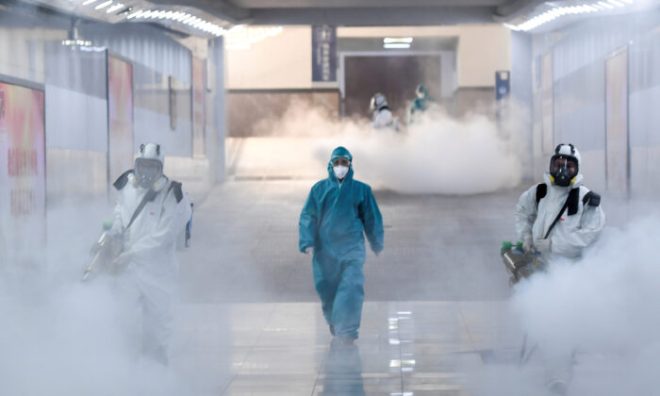
Volunteers in protective suits disinfect a railway station as the country is hit by an outbreak of the new coronavirus, in ChangshaWhen virologists and medical experts around the globe discussed the suspicious nature of the novel coronavirus and pointed to Wuhan’s P4 lab as a likely source, netizens inside China were watching. A Chinese scholar recently challenged Wuhan’s P4 lab to explain how the proteins of the novel coronavirus seem to have been precisely engineered to enable the virus to bind onto human cells. He also disclosed unethical and unprofessional practices he previously observed in China’s bioresearch labs.

According to Wuhan-based Yangtze Daily, Shi Zhengli, Deputy Director of Wuhan’s P4 Lab, publicized a statement on Feb. 2 saying: “I pledge with my life that the 2019 novel coronavirus has nothing to do with our lab. This virus is a punishment imposed on mankind from nature, to condemn mankind’s uncivilized way of living. Those of you who believe rumors or so-called scientific analysis by unqualified researchers, I advise you to shut your damn mouths!”

Shi’s statement irritated many Chinese netizens. “For such a huge calamity that may take countless lives, give us facts and evidence, not pretentious statements such as pledging with your life,” one netizen commented.

A social media user named Wu Xiaohua, with a Ph.D. in biological related fields according to his WeChat profile, challenged Shi to answer key questions about the suspicious gene mutations found in the new virus.

Wu pointed out there is no way that these mutations are the outcome of natural recombination.

“Now, many scientists, including Shi herself, believe that this virus must have originated from bats, and would involve one or two virus hosts to explain the gene mutations. Based on current scientific publications, the virus must jump from rats to primates before it can infect humans. Then how is this step—from rats to primates—usually achieved? It can only be done in a research lab by scientists inserting a certain protein from primates into rats,” Wu wrote.

“I have personally performed the same type of genetic engineering experiments. You cannot get away by being cavalier. Do you dare to accept the challenge and give us an explanation?” he asked.

Wu also disclosed that some biolabs in China are very poorly regulated.

“For instance, some researchers in these labs kept the laboratory dogs as pets; some disposed of animal carcasses casually because following the biosafety rules and cremating them costs a lot of money. Some cut up the laboratory pigs and took the meat home to eat. I know this happened at Beijing 301 Hospital’s spine surgery lab. Worst of all, some laboratory animals were sold to wet markets as wild-caught animals for profit,” he wrote.

Xu Bo, a well-known IT magnate and billionaire in China, cited reports and articles to support Wu’s statements.

In his blog, Xu cited a news report about a lawsuit against biologist Li Ning.

Li is an academician of China Engineering Academy, and a former professor at China Agricultural University. The judgment in Li’s case, which came out on Jan. 2 this year, stated that between 2008 and 2012, Li’s lab sold experimental pigs, cows, and milk to local markets. These animal and animal products were bought using research funds; but Li and his fellow colleagues pocketed the money, a total of 10,179,201 yuan ($1,460,304), from the sale of these animals and animal products.

Li was sentenced to 12 years in prison for embezzlement.

According to a 2016 report from the China Experimental Animal Information Network, Chinese researchers use tens of millions of laboratory animals every year. The Experimental Animal Research Center of Hubei Province alone handles about 300,000 animals a year, either for bioresearch experiments inside the center, or to be sold and distributed to other labs in Hubei Province.

Xu and many other Chinese netizens say they suspect that the novel coronavirus is a genetically engineered virus that somehow escaped from Wuhan P4 Biosafety lab.

A P4 lab handles level 4 biosafety pathogens, the highest level and most dangerous, which have high fatality rates and no known treatments, such as, the ebola and SARS viruses. Such a lab must follow the highest microbiological safety standards to ensure the safety of researchers and the public.

The P4 lab in Wuhan is not only the first of its kind in China, but also the first in Asia. When it opened in 2017, U.S. scientists expressed concerns that, considering China’s opaque administrative structure, if one of those killer viruses “escaped” from the lab, it could cause a doomsday disaster.

Source: The Epoch Times

Writer of the Biological Weapons Anti-Terrorism Act Shares His Thoughts On The Coronavirus | Collective Evolution

bioIN BRIEF

  • The Facts:Dr. Francis Boyle, a law professor who drafted the Biological Weapons Anti-Terrorism Act, recently shared his thoughts about the Coronavirus.
  • Reflect On:Disease outbreaks are nothing new, and massive amounts of fear propaganda usually follow. Is this another ‘swine flu?’ Something that has emerged and will die down eventually?

Dr. Francis Boyle is an international law professor at the University of Illinois College of Law. He currently serves as counsel to Bosnia and Herzegovina and to the Provisional Government of the Palestinian Authority. He was involved in developing the indictments against Slobodan Milosević for genocide and for other war crimes in Bosnia and Herzegovina.

He is well known globally for representing the Blackfoot Nation (Canada), the Nation of Hawaii, the Lakota Nation, as well as advising on several individual death penalty and human rights cases. He has been a force of good will, having counselled numerous international bodies in the areas of human rights, war crimes and genocide, nuclear policy, and bio-warfare. From 1991-92, he served as Legal Advisor to the Palestinian Delegation to the Middle East Peace Negotiations.

He currently sits on the  Board of Directors of Amnesty International, as a consultant to the American Friends Service Committee, and on the Advisory Board for the Council for Responsible Genetics.

Furthermore, he drafted the U.S. domestic legislation for the Biological Weapons Convention, known as the Biological Weapons Anti-Terrorism Act of 1989. It was approved unanimously by both Houses of the U.S. Congress and signed into law.

He has a lot of knowledge on the topic of biological warfare, which is why it’s interesting to hear is thoughts and opinions on the Coronavirus.

Coronavirus

As stated in the interview below, he believes that the Coronavirus is a biological warfare weapon, and that it may have leaked out unintentionally. Regardless, he believes that pharmaceutical companies are set to profit off of this outbreak in a big way.

Dr. Boyle has come across information suggesting that Chinese scientists may have stolen this virus out of a lab in Winnipeg, where Canada tests a lot of their biological warfare weapons. He believes the virus then leaked out of a lab in Wuhan (BSL-4), in the wake of reports of previous reports of leaks coming out of this specific lab. The Wuhan BSL-4 lab is also a specially designated World Health Organization (WHO) research lab and Dr. Boyle contends that the WHO knows full well what is occurring.

CBC news report maintains that, while there is truth that the lab in Winnipeg had some policy breaches with researchers who were Chinese nationals, it is not confirmed that this involved stealing the virus and bringing it to Wuhan. CBC maintains that the connection between this and the outbreak of the Coronavirus in Wuhan is  a ‘conspiracy theory.’

It appears that the Coronavirus that we are dealing with here is an offensive biological warfare weapon that leaked…I’m not saying it was done deliberately…I’m afraid that’s what we are dealing with today.

Final Thoughts

When it comes to this type of information, and these types of outbreaks, I’m reminded of the swine flu outbreak many years ago. There is a lot of ‘fear propaganda’ being put out by the media, and I personally don’t really pay much attention to it. I’m not saying it’s not dangerous, and it’s not a concern, I’m just saying that ultimately it’s a waste of time to worry.

At the end of the day, the best thing we can do for ourselves for protection is to simply optimize your health and boost your immune system. When it comes to this actual virus and it’s origins, I have not looked into it enough. I thought it was important to share the interview above from a knowledgeable individual in this area, as mainstream media doesn’t seem to go into this type of stuff despite the fact that it does seem like important and relevant information. Furthermore, it can be confusing when such a well read academic and researcher in the field shares information, yet mainstream media simply categorizes it as a conspiracy theory.

It’s always great to look at and listen to multiple sources of information when curious about a topic, especially when we are hit so hard with the same thing over and over again by big media. In my opinion, just as the swine flu, this outbreak will eventually die off. Hopefully.

Source: Collective Evolution

The Chinese Navy Is Building An Incredible Number Of Warships | Forbes

960x0By H I Sutton

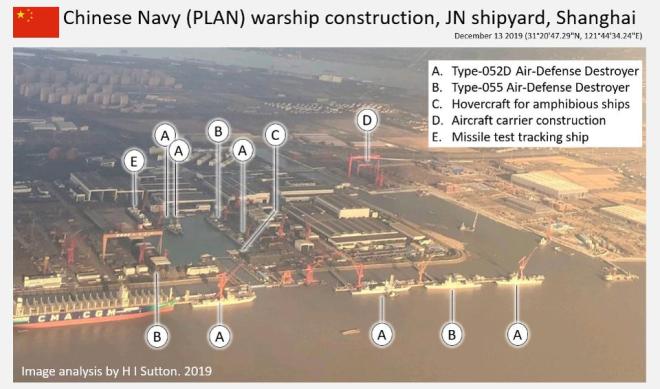
The single image below of a Shanghai shipyard shows nine recently constructed Chinese warships. For context, the current schedule sees the U.S. Navy launching a handful of AEGIS destroyers each year. China’s Navy, known as the PLAN (People’s Liberation Army Navy), is modernizing at an impressive rate. And on a vast scale. A key ingredient is the construction of a fleet of large destroyers, amphibious warships and aircraft carriers. The below photo, snapped from an airplane window on December 13, and shared on social media, captures the vast scale of this construction.

Nearest the camera, a line of four newly constructed destroyers catch the sunlight. Two are Type-052D air-defense destroyers, generally equivalent to the U.S. Navy’s Arleigh Burke Class AEGIS destroyers. These displace 7,500 tons and can carry 64 large missiles including long range surface to air missiles (SAMs) and cruise missiles. The other two are larger Type-055 Class ships. These are also described as air-defense destroyers but are verging on cruisers in terms of size and fit. These are about twice the displacement and carry over 100 large missiles.

Behind them is the shipyard with its mass of construction halls and cranes. In the basin where the newest ships are docked after launch are another four destroyers. Again there are both Type-052D and Type-055 ships. Together with another Type-055 under construction on the left of the image, this brings the total number of large destroyers visible to 9. To put that into context, the Royal Navy’s entire destroyer fleet is just 6 ships. And this yard is just part of a much bigger construction program.

There are also some hovercraft which will be carried aboard the PLAN’s expanding fleet of amphibious warships. They will be used for transporting tanks and supplies from ship to shore. These are generally similar to the U.S. Navy’s Landing Craft Air Cushion (LCAC).

At the side of the basin, in a dry dock, is a massive Yuan Wang Class satellite and/or missile tracking ship. These are the sort of ships which look like an ocean liner but with a series of gigantic satellite dishes pointing skyward. When completed this could be used to support missile tests.

But the most impressive vessel is hidden in the background haze, barely discernible to the untrained eye. Beneath several massive gantry cranes in a purpose-built construction area is China’s next-generation aircraft carrier. China already has two carriers in servicebut this new carrier is expected to be significantly different. Known as the Type-003, it is believed to have electromagnetic catapults like the latest U.S. Navy Ford Class carrier. It is not expected to be launched for some time.

Other developments are not visible in the photo. It is the same shipyard where China’s mysterious sailless submarine has been constructed. Although that submarine is not clearly apparent in the photograph, it may be present in the basin.

This image paints an interesting picture of Chinese naval modernization. Yet the biggest takeaway is that this shipyard is not alone. There are many yards across China which are similarly impressive. The Chinese Navy of today, and the future, is changed beyond all recognition from the Chinese Navy of the past. The world naval balance is shifting.

Defecting Chinese Spy Reveals Regime’s Extensive Influence Operations | The Epoch Times

Recent revelations by a man claiming to be a Chinese spy have made international headlines, blowing the lid off the regime’s espionage operations in Australia, Hong Kong, and Taiwan.

Wang “William” Liqiang sought asylum in Australia and offered the country’s top intelligence agency a trove of information on how the communist Chinese regime funds and directs operations to sabotage the democratic movement in Hong Kong, meddle in Taiwanese elections, and infiltrate Australian political circles, according to a series of reports from Nov. 22 by Nine Network, an Australian media group.

His claims support longstanding concerns about Beijing’s attempts to subvert and undermine its opponents abroad.

In an earlier interview with the Chinese-language edition of The Epoch Times, the 27-year-old said he decided to defect after becoming disillusioned with the Chinese Communist Party’s (CCP) malign ambitions.

“As I grew older and my worldview changed, I gradually realized the damage that the CCP’s authoritarianism was doing to democracy and human rights around the around,” Wang said.

“My opposition to the Party and communism became ever-clearer, so I made plans to leave this organization.”

Wang’s going public marks the first time a Chinese spy has blown his or her cover.

Recruitment

In a detailed statement provided to The Epoch Times, Wang describes how he came to work as a spy for the Chinese regime.

Wang hails from Fujian, the southeast Chinese province across the strait from democratic Taiwan. The son of a local Communist Party official, Wang had a middle-class upbringing and majored in oil painting at the Anhui University of Finance and Economics. Photos from Wang’s time in school show awards he won for his artwork.

At the end of his education, a senior university official suggested that Wang should work at China Innovation Investment Limited (CIIL), a Hong Kong-based company specializing in technology, finance, and media. In 2014, Wang began working with the firm.

While CIIL presents itself as an investment firm focusing on listed and unlisted Chinese defense assets, Wang soon discovered that it was a major front for the Party’s overseas espionage, serving multiple Chinese security organs and CCP officials.

According to Nine Network, Wang was in the good graces of CIIL CEO Xiang Xin and entered the “inner sanctum” of the company by giving Xiang’s wife painting lessons. That gave him wide access to information about both ongoing and past cases of Chinese intelligence operations, much of it connected to the Party’s acquisition of military technology.

Wang said Xiang and his wife, Kung Ching, were both Chinese agents. He said Xiang had changed his name from Xiang Nianxin to Xiang Xin before being sent by Chinese military officials to Hong Kong to acquire CIIL and investment company China Trends Holdings Limited.

On Nov. 24, Xiang and Kung were stopped by Taiwanese authorities at Taipei’s main airport and asked to cooperate in an investigation of suspected violations of the country’s National Security Act.

They both deny knowing Wang.

The Chinese regime has rejected Wang’s account, with police in Shanghai claiming he wasn’t an operative, but an unemployed 26-year-old who had previously been jailed for fraud.

The Chinese Embassy added in a statement on Nov. 24 that Wang is wanted in connection with a fraud case from earlier this year.

“On April 19, 2019, the Shanghai police opened an investigation into Wang, who allegedly cheated 4.6 million yuan from a person surnamed Shu through a fake investment project involving car import in February,” the statement said.

The embassy said Wang left for Hong Kong on April 10, carrying a fake Chinese passport and a fake Hong Kong permanent resident ID, adding that Shanghai police were investigating the matter.

Hong Kong 

According to Wang, both CIIL and China Trends Holdings were controlled by the Chinese military, specifically the People’s Liberation Army (PLA) General Staff Department.

Both CIIL and China Trends Holdings have issued statements rejecting Wang’s claims, denying any involvement in espionage activities.

Xiang would provide “intelligence” reports to the PLA General Staff Department about individuals in Hong Kong who may have made comments critical of the Chinese regime or on other topics deemed sensitive by the Party, Wang said.

Xiang’s PLA handler also directed him to collect information on activists and Falun Gong adherents in the city.

Adherents of the Falun Gong spiritual practice have been persecuted by the regime since 1999, and have been subject to arbitrary detention, forced labor, brainwashing, and torture.

The two companies targeted students in the city, according to Wang. They set up an education foundation in Hong Kong to develop agents and promote Beijing’s policies to students in Hong Kong. The foundation received 500 million yuan (about $71 million) annually from the Chinese regime to carry out its operations.

Wang said he recruited mainland Chinese students to gather information about individuals and groups deemed a threat to the regime.

“I promoted the Chinese regime’s policies … to these students and had them collect intelligence on the Hong Kong independence [movement] and views opposing the regime,” Wang told The Epoch Times.

Most of the recruited Chinese students came from two Chinese universities: Nanjing University of Science and Technology in the eastern Chinese province of Jiangsu, and Shantou University in southern China’s Guangdong Province.

He said that the Nanjing University of Science and Technology and other Chinese universities have alumni associations in Hong Kong, many of which have members who are Chinese agents.

Wang also said he was involved in an operation that led to the abduction of five Hong Kong booksellers in 2015. The booksellers later reappeared in detention in mainland China and participated in forced televised confessions.

Wang said the operation was organized by people inside CIIL in coordination with the PLA.

He said he was shocked that the regime was able to pull off the kidnappings.

“I didn’t think it was possible for the Chinese regime to arrest someone in Hong Kong because of ‘one country, two systems,’” Wang said, referring to the framework under which the regime pledged to afford the city a high level of autonomy and freedoms.

Taiwan 

Speaking to Vision Times, Wang said that the majority of infiltration activities in Taiwan were carried out by Xiang’s wife, Kung Ching.

The regime sees the self-ruled island as a renegade province and has never ruled out using military force to reunite it with the mainland. In recent years, it has stepped up efforts to infiltrate the media and influence elections in Taiwan.

Wang said he took part in the online campaign to attack Taiwan’s ruling party, the Democratic Progressive Party (DPP) prior to the general elections in November 2018, in an effort to support the opposition party, the Kuomingtang (KMT), which has a Beijing-friendly stance.

He said that their group had more than 200,000 social media accounts, and many other fan pages to support their effort.

CIIL spent 1.5 billion yuan (about $213 million) on Taiwan’s media outlets alone to help in their efforts to influence the 2018 elections, he said.

Wang said they organized Chinese and Hong Kong students studying in Taiwan and Chinese tourists to aid in promoting pro-Beijing candidates running for the 2018 elections.

Overseas Chinese donations also went to pro-Beijing candidates, said Wang. More than 20 million yuan (about $2.8 million) went to Han Kuo-yu, who won a local election to become the mayor of the southern Taiwanese city of Kaohsiung.

Han is now running for president as the KMT candidate.

For the 2018 elections, the DPP suffered a major defeat, losing seven of its regional seats to the KMT. The KMT now controls 15 cities and counties, compared to six held by the DPP.

Wang described the 2018 elections as a victory for the Chinese regime.

Wang said many of Taiwan’s elite were in their pocket, including the head of a local daily newspaper, the head of a university, the general manager of a cultural center, several politicians, and gang leaders. These people were each paid 2 million to 5 million yuan ($284,155 to $710,388) annually to assist Wang and his group in their infiltration efforts.

In the upcoming 2020 presidential election, Wang said Beijing’s goal is to unseat president Tsai Ing-wen’s reelection bid.

He said that Kung wanted him to go to Taiwan on May 28 to assist her in influence operations targeting Taiwan’s media and the internet. But he had a change of heart.

“I saw what’s happening in Hong Kong. And I didn’t want to personally turn Taiwan into Hong Kong. So I decided to quit,” Wang told Vision Times, referring to the ongoing protests in Hong Kong against Beijing’s encroachment in the city.

So on April 23, Wang left his post in Hong Kong to visit his wife and baby son in Sydney, having been granted approval by Kung.

He is now staying at a secret location as he cooperates with the Australian Security and Intelligence Organisation, the country’s top intelligence agency.

Being in Australia, however, doesn’t guarantee safety, because Beijing has spy cells in the country who could abduct him and his family and send them back to China, Wang said.

Despite the risks, Wang stands by his decision to defect.

“I thought and rethought it time and time again,” Wang told The Epoch Times.

“I wondered if this decision would be a good thing or a bad thing for my life. I couldn’t tell you definitively, but I firmly believe that if I had stayed with [the CCP], I would come to no good end.”

Source: The Epoch Times