What’s Possible, a New Film for World Leaders on the Urgency of Global Warming | Moyers & Company

More than 120 world leaders – including President Barack Obama – kicked off a one-day United Nations’ summit on climate change in New York City by viewing What’s Possible, a short film on the urgency of global warming.

Narrated by Morgan Freeman, the film’s images, some disturbing and some magnificent, are meant to remind them of what’s at stake: global warming will place our planet and all its inhabitants at destruction’s door unless our governments take immediate action.

The creators of the four-minute film, Lyn Davis Lear and Louie Schwartzberg, spoke with Bill about what they hope their film — translated into six languages and simulcast around the world — will achieve. “They have to focus on the fact that all of us together united add up to something significant,” Lear told Bill. “And the world leaders need to know there is a movement happening right now. People want this to happen.”

The film is not only meant to make an impact on world leaders but also on the world’s citizens. As Schwartzberg puts it: “We hope we can inspire them to take actions in their life that will allow life to be sustainable… And more importantly to elect leaders who share the same values.”

About the Filmmakers

Lyn Davis Lear is a producer, activist and philanthropist. She is one of the founders, along with her husband Norman Lear, of the Environmental Media Association. She is a recipient of the Global Green Millennium Award for Entertainment Industry Environmental Leadership, and was the executive producer of the documentary Cesar’s Last Fast, nominated for the Grand Jury Prize at this year’s Sundance Film Festival.

Louie Schwartzberg is acclaimed the world over for his remarkable work. He specializes in the creation of films that use time-lapse, high-definition and 3-D photography to reveal nature as it is seldom seen by the naked eye. He is founder of the studio Moving Art.

Source: Moyers & Company

Climate Change: ‘Abrupt,’ ‘Unpredictable,’ ‘Irreversible’ and ‘Highly Damaging’ | Bill Moyers

By John Light

CoastlineIn a rare move, the world’s largest scientific society released a report nudging the public to wake up to the scientifically sound and increasingly frightening reality of climate change.

“As scientists, it is not our role to tell people what they should do or must believe about the rising threat of climate change,” the American Association for the Advancement of Science (AAAS) wrote in the introduction to its new report, “What We Know.” “But we consider it to be our responsibility as professionals to ensure, to the best of our ability, that people understand what we know: human-caused climate change is happening, we face risks of abrupt, unpredictable and potentially irreversible changes and responding now will lower the risk and cost of taking action.”

“They are very clearly saying that we as the scientific community are completely convinced, based upon the evidence, that climate change is happening and human-caused,” said Dr. Anthony Leiserowitz, the director of the Yale Project on Climate Change Communication. “The more people understand that the experts have reached this agreement, the more they in turn decide, ‘well, then I think it’s happening, and I think it’s human-caused, and I think it’s a serious problem, and in turn it increases people’s support for policy.”

The report noted that even though 97 percent of experts agree climate change is happening and we humans are causing it, Americans remain under the impression that the question is still unsettled. According to a 2013 report by the Yale Project on Climate Change Communication, 33 percent of Americans said they believed there was widespread disagreement among scientists and four percent said that “most scientists think global warming is not happening.” Only 42 percent of Americans knew that “most scientists think global warming is happening.”

These numbers suggest that disinformation circulated by the fossil fuel industry, utility companies and their political and media allies has successfully confused the public about the truth of global warming. Spreading the perception that scientists are still undecided is key to their strategy.

Leiserowitz likened it to the campaign waged for decades by tobacco companies. “This in fact was [Big Tobacco’s] primary strategy — to sow doubt,” he said. “They literally wrote, ‘doubt is our product.’ As long as they could give people a false perception that the health community was still undecided about whether smoking caused human health problems, people would continue to smoke. They used that strategy very successfully to delay action on smoking for many years. And it’s been very well-documented that the groups that oppose climate action lifted chapter and verse the exact same strategy right out of the tobacco playbook.”

“That’s the backdrop to this particular statement — that is said very clearly by AAAS — and why it is so important.”

The evidence that human behavior — such as our economies’ reliance on fossil fuels — is causing our climate to change and putting our planet and society at increased risk is overwhelming, the report authors write. “[L]evels of greenhouse gases in the atmosphere are rising. Temperatures are going up. Springs are arriving earlier. Ice sheets are melting. Sea level is rising. The patterns of rainfall and drought are changing. Heat waves are getting worse as is extreme precipitation. The oceans are acidifying.”

Whether they link it to global warming or not, Americans already detect that something is changing. In 2013, the Yale Project on Climate Change Communication report found that 51 percent said weather in their local area had been worse over the past several years. That observation is in line with research. “These problems are very likely to become worse over the next 10 to 20 years and beyond,” the AAAS authors write. By becoming aware of the science behind global warming now, Americans will be better prepared to make “risk management” choices.

The AAAS says that “What We Know” will have an associated outreach campaign to scientists, economists, community leaders, policymakers and the public through media and meetings.

Source: Bill Moyers
NASA-Backed Study Says Humanity Is Pretty Much Screwed | Gizmodo

By Robert Sorokonitch

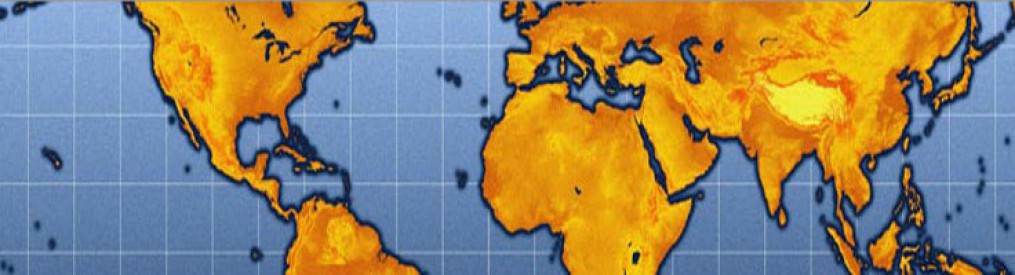
HotEarthHope you’ve enjoyed civilized life, folks. Because a new study sponsored by NASA’s Goddard Space Flight Center says the world’s industrial societies are poised to collapse under the weight of their own unsustainable appetites for resources. There goes the weekend . . . and everything after it for the rest of our lives.

NASA released a statement clarifying its involvement, saying this study “was not solicited, directed or reviewed by NASA. It is an independent study by the university researchers utilizing research tools developed for a separate NASA activity.”

The research article appears in the peer-reviewed scientific journal Ecological Economics, but Dr. Nafeez Ahmed, executive director of the Institute for Policy Research & Development, has a more understandable (but no less harrowing) summary over at The Guardian. Either way, the news isn’t good—as the researchers point out, history doesn’t seem to hold out any favor for advanced societies.

The fall of the Roman Empire, and the equally (if not more) advanced Han, Mauryan, and Gupta Empires, as well as so many advanced Mesopotamian Empires, are all testimony to the fact that advanced, sophisticated, complex, and creative civilizations can be both fragile and impermanent.

Who’s to blame? You. Me. Everyone walking around outside your window. Even the technology we invented to save us from ourselves is contributing to our decline.

Technological change can raise the efficiency of resource use, but it also tends to raise both per capita resource consumption and the scale of resource extraction, so that, absent policy effects, the increases in consumption often compensate for the increased efficiency of resource use.

Is there a way out? Of course. But you’re probably not gonna like it. Dr. Ahmed sums up the researchers’ suggestions:

The two key solutions are to reduce economic inequality so as to ensure fairer distribution of resources, and to dramatically reduce resource consumption by relying on less intensive renewable resources and reducing population growth.

Which is just as difficult and improbable as it sounds.

Seriously, you should read the whole rundown of what the research says. It’s eye-opening, and a serious call to action—if the crushing bleakness of what we’ve done to ourselves hasn’t already doomed you to abandon all hope. Here, watch a funny video to make you feel better. [The Guardian]

Source: Gizmodo

Amazon Deforestation Increases 28 Percent in One Year | EcoWatch

DeforestationBy Daniela Montalto

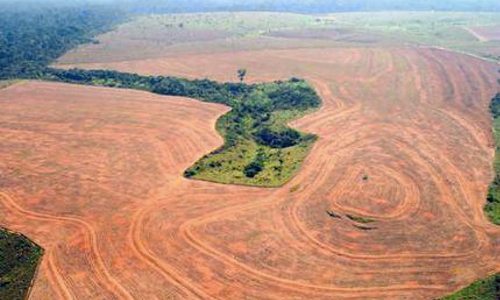
Last week, the Brazilian government released annual figures for deforestation in the Amazon and the news is not good. A total of 5,843 square kilometres are estimated lost between August 2012 and July 2013, an increase in deforestation of 28 percent compared to the previous year.

This sharp increase in deforestation in the Amazon is no surprise—all deforestation estimates released over the last year have shown we were headed in this direction. Last year, the government passed a new Forest Code, dramatically changing the environmental law that governs forest use in Brazil, including the Amazon.

A strong agribusiness influence in the Brazilian Congress lead to a massive weakening of the Forest Code—a law that once helped protect the Amazon. Those who believed the empty promises that the new Forest Code would bring governance to the Amazon, that amnesty granted to environmental criminals would not have consequences and that farmers in the Amazon would be moved by the spirit of Brazilian citizenship and legal compliance, can now see the reality of the impact of the new law in the forest. The ‘growth-at-all-costs’ model, based on the expansion of the agricultural frontier and the establishment of large infrastructure projects in the Amazon provides a sharp contrast to the image the government wants to sell.

Brazil can no longer hide behind the celebrated decrease in deforestation made in past years or the thinly veiled promises around the Forest Code. Brazil can hardly continue to claim leadership in sustainability and new models of development as all eyes turn to Brazil as hosts of the upcoming World Cup.

Corporate Responsibility

In 2009, the three largest slaughterhouses in Brazil signed the Cattle Agreement and pledged not to buy cattle from farms that were involved in new deforestation, slave labor or invasions into Indigenous land and protected areas in the Amazon. In 2006, the soy and cattle sector made commitments to move away from deforestation. The Soy Moratorium was signed by soy traders to stop the trade of soy coming from newly deforested land.

The Soy Moratorium is still in place today but it is set to expire in January 2014. If the industry fails to renew the moratorium without the proper safeguards and next steps in place, this could mean more bad news for the Amazon. We could see another dramatic increase in forest destruction as Soy expansion runs rampant through the forest.

Source: EcoWatch

US Gov’t: Alaska island “appears to show impacts from Fukushima” — “Significant cesium isotope signature” detected — Scientists anticipate more marine life to be impacted as ocean plume arrives | ENENEWS

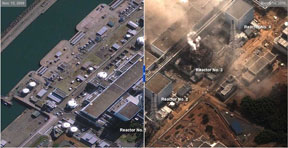
FukushimaDaiichi-BeforeAfter-288Amchitka Island, Alaska, Biological Monitoring Report 2011 Sampling Results
September 2013: To determine what [Fukushima Dai-ichi’s] direct release of radioactive materials into the atmosphere might have contributed to the background radiation on Amchitka and Adak Islands, semiquantitative gamma spectrometry measurements were made […] The results imply that Dolly Varden [a type of fish], rockweed, and to a lesser extent, Irish lord [a type of fish] appear to contain a significant cesium isotope signature from Fukushima Dai-ichi. The estimated 134Cs/137Cs activity ratios in pooled fauna samples at the time sampled ranged from <30 to about 60 percent. Observations of Fukushima-derived fallout impacting on this region are supported by findings of elevated levels of 134Cs (and 137Cs) in lichen and soil collected from both the Adak and Amchitka regions. […]

Lichen sample from mid-2011 expressed in picocuries/kilogram — Lichen on  the island had less than 70 pCi/kg of Cs-137 in 1997.

Department of Energy:
Biological Monitoring at Amchitka Appears to Show Impacts from Fukushima Dai-ichi Incident […] The U.S. Department of Energy Office Legacy Management (LM) has a long-term stewardship mission to protect human health and the environment from the legacy of underground nuclear testing conducted at Amchitka Island, Alaska, from 1965 to 1971. […] Atmospheric monitoring in the United States showed elevated cesium activities shortly after the [Fukushima] nuclear incident. LM scientists anticipated that atmospheric transport of cesium would potentially increase the cesium activities in the 2011 biological samples collected near Amchitka. Because cesium-134 has a relatively short half-life of 2 years and indicates leakage from a nuclear reactor, it is a clear indicator of a recent nuclear accident […] Because the Amchitka 2011 sampling event occurred soon after the Fukushima nuclear accident, the biota impacted by atmospheric precipitation showed the greatest impact (e.g., species that live in freshwater or shallow ocean waters) when compared to marine biota living in deeper water. This is because ocean currents are a slower transport process than wind currents. LM scientists anticipate that the marine biota will show the impacts of Fukushima during the next sampling event, currently scheduled to occur in 2016. […]

Source: ENENEWS

Fracking the American Dream: Drilling Decreases Property Value | EcoWatch

NAShaleBedsDrilling conflicts are almost always described in the context of their impacts on air, water and health. But increasingly, as the drilling boom sweeps the country, another part of the drilling story is starting to bubble up in drilling hotspots like Colorado, Pennsylvania, New York, Wyoming and Texas.

Increasingly, oil and gas development is butting up against, and often trampling, the bedrock American principles of property rights and the value of one’s home. The map below shows all the shale gas in play in North America.

Industry estimates peg the number new wells that will be drilled across the U.S. over the next decade at more than 200,000. In this rush to tap once unreachable deposits, oil and gas development is pushing the boundaries of drilling. Innovations like fracking and horizontal drilling mean nothing is out of reach. Once the province of wide open spaces, drilling rigs now regularly inch up and even into communities that never anticipated having to address problems like round-the-clock noise, storage tanks, drums of toxic chemicals, noxious fumes, and pipelines near homes, schools, playgrounds and parks.

This clash of large-scale industrial activity and communities has surfaced a deep rift in the American landscape, where the legal doctrine of split estates allows one party to own mineral rights and someone else to hold the rights to soil and surface. With the oil and gas industry showing little self-restraint in where drilling happens, and almost no regulatory or legal precedents to protect them from having industrial activity in their back yards, communities are fighting back. Increased truck traffic, chemicals, lights, noise, heavy equipment, noxious air emissions and water contamination are liabilities for landowners, to the point that communities in Colorado, New York and other states have taken matters into their own hands.

Feeling unprotected by weak state and oil and gas regulations—most of which were developed never contemplating drilling in urban and suburban landscapes—towns, cities and counties are instituting moratoria and bans on drilling within their borders. There are fracking-related ballot measures in at least four Colorado communities this year.

But it’s not just “not-in-my-back-yard”-ism driving this reactive opposition. The financial risks posed by drilling are real and substantial enough, for example, that banks and insurers are adopting guidelines that forbid mortgage loans or insurance coverage on properties affected by drilling. It’s a battle between oil and gas and the nest egg of countless Americans.

The following examples begin to piece together the ways in which the threats posed by drilling and the deep pockets of the oil and gas industry quite literally hit home. Taken together, they are a call for decision-makers to start quantifying data and asking tough questions about drilling vs. the American Dream. Read more…

Source: EcoWatch

Carbon Offsets Could Create Loophole for Industry to Pollute as Usual | EcoWatch

LoggingBy Maureen Nandini Mitra and Michael Stoll

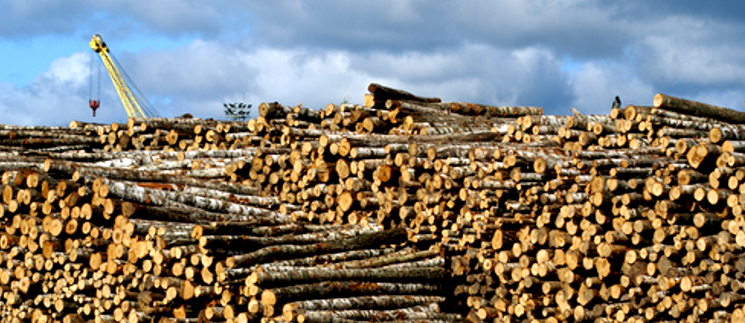
One hot day this spring John Buckley scrambled up a dusty slope of a patch of deforested land in the middle of California’s Stanislaus National Forest in the Sierra Nevada, five miles west of Yosemite National Park, and surveyed the bleak landscape: 20 acres of blackened tree stumps and the shriveled remains of undergrowth. On neighboring ridges, similar brown expanses dotted the green forest canopy. “This,” he said, spreading his arms wide, “is resource management.”

The denuded clearing is on a tract of private forestland owned by timber giant Sierra Pacific Industries that is close to being approved as a sort of carbon bank under California’s new cap-and-trade scheme. It will soon grow into a plantation of mostly Douglas fir, ponderosa pine and cedar.

Based on calculations of how much carbon the new and old trees in this forest area will remove from the atmosphere, the timber giant will soon be able to sell carbon credits, which regulators call “offsets,” to the largest California polluters so they can compensate for their greenhouse gas emissions. Looking to make a profit from their environmental practices, companies in forestry and other industries are rushing to meet the demand.

Buckley, an environmental activist from Tuolumne County, is dismayed that projects like these—that involve clearing out old, diverse forests and replanting the area with a handful of quick-growing timber varieties—are being considered as a means to enable California industries to emit more pollutants into the air.

Many environmentalists say that because it is notoriously difficult to prove that such projects actually reduce the state’s overall carbon footprint, California should proceed slowly in approving a vast expansion of the cap-and-trade market.

The plan is to start the Compliance Offset Program this summer. Sellers include some of the largest forestland owners in the U.S., dairy farms and companies that neutralize greenhouse effect-producing refrigerants. The program might also expand to other activities, such as methane capture from mining and rice farming.

Proponents say that by providing incentives to voluntarily reduce emissions and use new technology, the offset program could help California meet its legal requirement, set in 2006, to reduce its carbon footprint from all sources by about 16 percent by 2020, and even more in later years.

But critics call offsets a loophole that could undermine an effective cap-and-trade system. They say pledges of reductions that are not required by law often cannot be considered real, since companies might have made them anyway without the extra money from selling offsets. Left unchecked, the critics warn, poorly measured offsets could lead to an overall increase in California’s emissions. Read more…

Source: Earth Island Journal & EcoWatch