The Election: Of Hate, Grief, and a New Story

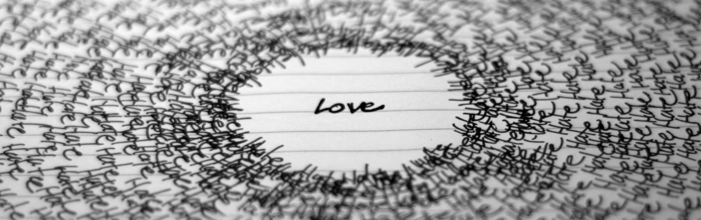
love

By Charles Eisenstein

Normal is coming unhinged. For the last eight years it has been possible for most people (at least in the relatively privileged classes) to believe that society is sound, that the system, though creaky, basically works, and that the progressive deterioration of everything from ecology to economy is a temporary deviation from the evolutionary imperative of progress.

A Clinton Presidency would have offered four more years of that pretense. A woman President following a black President would have meant to many that things are getting better. It would have obscured the reality of continued neoliberal economics, imperial wars, and resource extraction behind a veil of faux-progressive feminism. Now that we have, in the words of my friend Kelly Brogan, rejected a wolf in sheep’s clothing in favor of a wolf in wolf’s clothing, that illusion will be impossible to maintain.

The wolf, Donald Trump (and I’m not sure he’d be offended by that moniker) will not provide the usual sugarcoating on the poison pills the policy elites have foisted on us for the last forty years. The prison-industrial complex, the endless wars, the surveillance state, the pipelines, the nuclear weapons expansion were easier for liberals to swallow when they came with a dose, albeit grudging, of LGBTQ rights under an African-American President.

I am willing to suspend my judgement of Trump and (very skeptically) hold the possibility that he will disrupt the elite policy consensus of free trade and military confrontation – major themes of his campaign. One might always hope for miracles. However, because he apparently lacks any robust political ideology of his own, it is more likely that he will fill his cabinet with neocon war hawks, Wall Street insiders, and corporate reavers, trampling the wellbeing of the working class whites who elected him while providing them their own sugar-coating of social conservatism.

The social and environmental horrors likely to be committed under President Trump are likely to incite massive civil disobedience and possibly disorder. For Clinton supporters, many of whom were halfhearted to begin with, the Trump administration could mark the end of their loyalty to our present institutions of government. For Trump supporters, the initial celebration will collide with gritty reality when Trump proves as unable or unwilling as his predecessors to challenge the entrenched systems that continually degrade their lives: global finance capital, the deep state, and their programming ideologies. Add to this the likelihood of a major economic crisis, and the public’s frayed loyalty to the existing system could snap.

We are entering a time of great uncertainty. Institutions so enduring as to seem identical to reality itself may lose their legitimacy and dissolve. It may seem that the world is falling apart. For many, that process started on election night, when Trump’s victory provoked incredulity, shock, even vertigo. “I can’t believe this is happening!”

At such moments, it is a normal response to find someone to blame, as if identifying fault could restore the lost normality, and to lash out in anger. Hate and blame are convenient ways of making meaning out of a bewildering situation. Anyone who disputes the blame narrative may receive more hostility than the opponents themselves, as in wartime when pacifists are more reviled than the enemy.

Racism and misogyny are devastatingly real in this country, but to blame bigotry and sexism for voters’ repudiation of the Establishment is to deny the validity of their deep sense of betrayal and alienation. The vast majority of Trump voters were expressing extreme dissatisfaction with the system in the way most readily available to them. (See herehereherehere) Millions of Obama voters voted for Trump (six states who went for Obama twice switched to Trump). Did they suddenly become racists in the last four years? The blame-the-racists (the fools, the yokels…) narrative generates a clear demarcation between good (us) and evil (them), but it does violence to the truth. It also obscures an important root of racism – anger displaced away from an oppressive system and its elites and onto other victims of that system. Finally, it employs the same dehumanization of the other that is the essence of racism and the precondition for war. Such is the cost of preserving a dying story. That is one reason why paroxysms of violence so often accompany a culture-defining story’s demise.

The dissolution of the old order that is now officially in progress is going to intensify. That presents a tremendous opportunity and danger, because when normal falls apart the ensuing vacuum draws in formerly unthinkable ideas from the margins. Unthinkable ideas range from rounding up the Muslims in concentration camps, to dismantling the military-industrial complex and closing down overseas military bases. They range from nationwide stop-and-frisk to replacing criminal punishment with restorative justice. Anything becomes possible with the collapse of dominant institutions. When the animating force behind these new ideas is hate or fear, all manner of fascistic and totalitarian nightmares can ensue, whether enacted by existing powers or those that arise in revolution against them.

That is why, as we enter a period of intensifying disorder, it is important to introduce a different kind of force to animate the structures that might appear after the old ones crumble. I would call it love if it weren’t for the risk of triggering your New Age bullshit detector, and besides, how does one practically bring love into the world in the realm of politics? So let’s start with empathy. Politically, empathy is akin to solidarity, born of the understanding that we are all in this together. In what together? For starters, we are in the uncertainty together.

We are exiting an old story that explained to us the way of the world and our place in it. Some may cling to it all the more desperately as it dissolves, looking perhaps to Donald Trump to restore it, but their savior has not the power to bring back the dead. Neither would Clinton have been able to preserve America as we’d known it for too much longer. We as a society are entering a space between stories, in which everything that had seemed so real, true, right, and permanent comes into doubt. For a while, segments of society have remained insulated from this breakdown (whether by fortune, talent, or privilege), living in a bubble as the containing economic and ecological systems deteriorate. But not for much longer. Not even the elites are immune to this doubt. They grasp at straws of past glories and obsolete strategies; they create perfunctory and unconvincing shibboleths (Putin!), wandering aimlessly from “doctrine” to “doctrine” – and they have no idea what to do. Their haplessness and half-heartedness was plain to see in this election, their disbelief in their own propaganda, their cynicism. When even the custodians of the story no longer believe the story, you know its days are numbered. It is a shell with no engine, running on habit and momentum.

We are entering a space between stories. After various retrograde versions of a new story rise and fall and we enter a period of true unknowing, an authentic next story will emerge. What would it take for it to embody love, compassion, and interbeing? I see its lineaments in those marginal structures and practices that we call holistic, alternative, regenerative, and restorative. All of them source from empathy, the result of the compassionate inquiry: What is it like to be you?

It is time now to bring this question and the empathy it arouses into our political discourse as a new animating force. If you are appalled at the election outcome and feel the call of hate, perhaps try asking yourself, “What is it like to be a Trump supporter?” Ask it not with a patronizing condescension, but for real, looking underneath the caricature of misogynist and bigot to find the real person.

Even if the person you face IS a misogynist or bigot, ask, “Is this who they are, really?” Ask what confluence of circumstances, social, economic, and biographical, may have brought them there. You may still not know how to engage them, but at least you will not be on the warpath automatically. We hate what we fear, and we fear what we do not know. So let’s stop making our opponents invisible behind a caricature of evil.

We’ve got to stop acting out hate. I see no less of it in the liberal media than I do in the right-wing. It is just better disguised, hiding beneath pseudo-psychological epithets and dehumanizing ideological labels. Exercising it, we create more of it. What is beneath the hate? My acupuncturist Sarah Fields wrote to me, “Hate is just a bodyguard for grief. When people lose the hate, they are forced to deal with the pain beneath.”

I think the pain beneath is fundamentally the same pain that animates misogyny and racism – hate in a different form. Please stop thinking you are better than these people! We are all victims of the same world-dominating machine, suffering different mutations of the same wound of separation. Something hurts in there. We live in a civilization that has robbed nearly all of us of deep community, intimate connection with nature, unconditional love, freedom to explore the kingdom of childhood, and so much more. The acute trauma endured by the incarcerated, the abused, the raped, the trafficked, the starved, the murdered, and the dispossessed does not exempt the perpetrators. They feel it in mirror image, adding damage to their souls atop the damage that compels them to violence. Thus it is that suicide is the leading cause of death in the U.S. military. Thus it is that addiction is rampant among the police. Thus it is that depression is epidemic in the upper middle class. We are all in this together.

Something hurts in there. Can you feel it? We are all in this together. One earth, one tribe, one people.

We have entertained teachings like these long enough in our spiritual retreats, meditations, and prayers. Can we take them now into the political world and create an eye of compassion inside the political hate vortex? It is time to do it, time to up our game. It is time to stop feeding hate. Next time you post on line, check your words to see if they smuggle in some form of hate: dehumanization, snark, belittling, derision.., some invitation to us versus them. Notice how it feels kind of good to do that, like getting a fix. And notice what hurts underneath, and how it doesn’t feel good, not really. Maybe it is time to stop.

This does not mean to withdraw from political conversation, but to rewrite its vocabulary. It is to speak hard truths with love. It is to offer acute political analysis that doesn’t carry the implicit message of “Aren’t those people horrible?” Such analysis is rare. Usually, those evangelizing compassion do not write about politics, and sometimes they veer into passivity. We need to confront an unjust, ecocidal system. Each time we do we will receive an invitation to give in to the dark side and hate “the deplorables.” We must not shy away from those confrontations. Instead, we can engage them empowered by the inner mantra that my friend Pancho Ramos-Stierle uses in confrontations with his jailers: “Brother, your soul is too beautiful to be doing this work.” If we can stare hate in the face and never waver from that knowledge, we will access inexhaustible tools of creative engagement, and hold a compelling invitation to the haters to fulfill their beauty.

Source: Charles Eisenstein
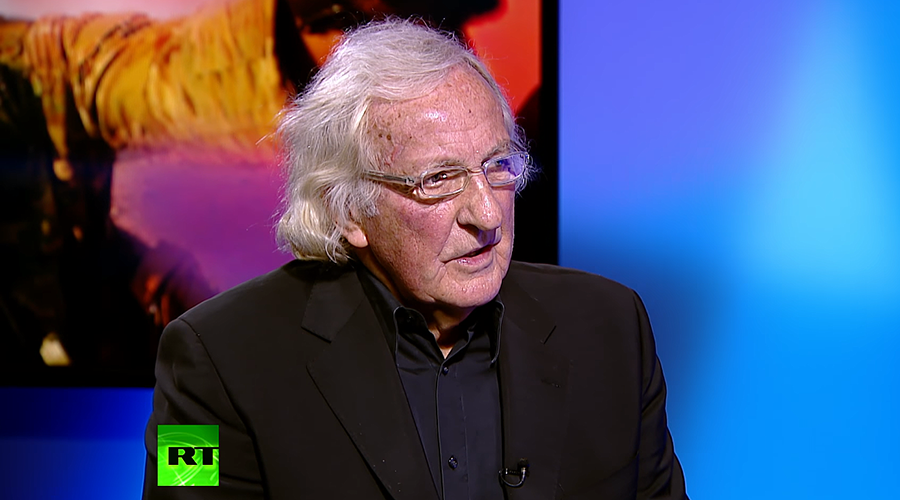
John Pilger: Liberals created Trump by pushing corrupt Clinton, but now act surprised | RT

pilger
By Julian Assange
Award-winning journalist John Pilger says that Donald Trump’s election victory “could be seen from miles away,” and has blamed a union of political, financial and media figures for standing behind a “grotesque campaign” to elect the “corrupt” Hillary Clinton.

“The only people who are surprised are those who allowed it to happen – and I am speaking about the liberal class in the US,”Pilger told RT’s Afshin Rattansi during a lengthy interview on RT UK’s Going Underground.

“They told us that only the status quo – a corrupt, war-mongering candidates will be acceptable to the majority. We will have their hyperventilating, and their frustration, and their frenzied reaction for a long time. But, they’ve created Trump…”

He added that the shock surprise is similar to that which occurred after Brexit – “how dare these people vent their frustrations at the ballot box?”

The journalist believes that the arrogance was on display as far back as when Clinton was given a straight run to the nomination during her primaries, with her only real challenger, the outsider Bernie Sanders, treated with contempt.

“They corrupted a voting system, within the Democratic Party that ensured that another populist, Bernie Sanders – though I don’t think he would have beaten Trump – could not win, and instead the embodiment of the status quo, who has declared the whole world a battlefield was made out to be the ‘candidate of sanity’ or ‘the candidate for women.’”

Pilger criticized Clinton’s entourage, noting that she was backed not only by Wall Street heavyweights, but nearly all of the major arms manufacturers in the US, creating an unappealing image for a woman those at home and abroad already saw as a “warmonger.”

“Most of the world regards that kind of behavior from the most powerful country in the world as abhorrent, and she has been the personification of that,” said Pilger.

Pilger also said that US media, in which all but one national newspaper backed Clinton, acted as “anti-journalists,” looking to catch out and “demonize” Trump, without even attempting to weigh up his message.

“One of the most revealing things about the campaign has been the exposure of journalism as the extension of the same established power. They are not independent, they are echo chambers… And the most respected are the worst. The New York Times has become a sort of Cold War propaganda sheet,”said Pilger, who also criticized the tactic of blaming Russia and Julian Assange’s Wikileaks, for exposing genuine email communications related to Clinton.

Despite praising the President Elect for “articulating the frustrations of ordinary Americans very well,”Pilger remains cautious about the next four years.

“Whether Trump will be any better is unclear. He says he is anti-establishment, but he will come with his own establishment. I don’t believe for a moment that he is against the establishment of the US in a wider sense – indeed he is a product of it,” said Pilger. “The truth is, there was no one to vote for.”

Source: RT

Inside The Invisible Government: John Pilger On War, Propaganda, Clinton And Trump | New Matilda

overiraq

By John Pilger

A silent war continues, led by the west, ignored by the media, writes John Pilger.

The American journalist, Edward Bernays, is often described as the man who invented modern propaganda.

The nephew of Sigmund Freud, the pioneer of psycho-analysis, it was Bernays who coined the term “public relations” as a euphemism for spin and its deceptions.

In 1929, he persuaded feminists to promote cigarettes for women by smoking in the New York Easter Parade – behaviour then considered outlandish. One feminist, Ruth Booth, declared, “Women! Light another torch of freedom! Fight another sex taboo!”

Bernays’ influence extended far beyond advertising. His greatest success was his role in convincing the American public to join the slaughter of the First World War. The secret, he said, was “engineering the consent” of people in order to “control and regiment [them]according to our will without their knowing about it”.

He described this as “the true ruling power in our society” and called it an “invisible government”.

Today, the invisible government has never been more powerful and less understood. In my career as a journalist and film-maker, I have never known propaganda to insinuate our lives as it does now, and to go unchallenged.

Imagine two cities. Both are under siege by the forces of the government of that country. Both cities are occupied by fanatics, who commit terrible atrocities, such as beheading people.

But there is a vital difference. In one siege, the government soldiers are described as liberators by Western reporters embedded with them, who enthusiastically report their battles and air strikes. There are front page pictures of these heroic soldiers giving a V-sign for victory. There is scant mention of civilian casualties.

(IMAGE: The U.S. Army, Flickr)

In the second city – in another country nearby – almost exactly the same thing is happening. Government forces are laying siege to a city controlled by the same breed of fanatics.

The difference is that these fanatics are supported, supplied and armed by “us” – by the United States and Britain. They even have a media centre that is funded by Britain and America.

Another difference is that the government soldiers laying siege to this city are the bad guys, condemned for assaulting and bombing the city – which is exactly what the good soldiers do in the first city.

Confusing? Not really. Such is the basic double standard that is the essence of propaganda. I am referring, of course, to the current siege of the city of Mosul by the government forces of Iraq, who are backed by the United States and Britain, and to the siege of Aleppo by the government forces of Syria, backed by Russia. One is good; the other is bad.

What is seldom reported is that both cities would not be occupied by fanatics and ravaged by war if Britain and the United States had not invaded Iraq in 2003. That criminal enterprise was launched on lies strikingly similar to the propaganda that now distorts our understanding of the civil war in Syria.

Without this drumbeat of propaganda dressed up as news, the monstrous ISIS and Al-Qaida and al-Nusra and the rest of the jihadist gang might not exist, and the people of Syria might not be fighting for their lives today.

Some may remember in 2003 a succession of BBC reporters turning to the camera and telling us that Blair was “vindicated” for what turned out to be the crime of the century. The US television networks produced the same validation for George W. Bush. Fox News brought on Henry Kissinger to effuse over Colin Powell’s fabrications.

Former US president George W Bush (IMAGE: Peter Stevens, Flickr).

The same year, soon after the invasion, I filmed an interview in Washington with Charles Lewis, the renowned American investigative journalist. I asked him, “What would have happened if the freest media in the world had seriously challenged what turned out to be crude propaganda?”

He replied that if journalists had done their job, “there is a very, very good chance we would not have gone to war in Iraq”.

It was a shocking statement, and one supported by other famous journalists to whom I put the same question – Dan Rather of CBS, David Rose of the Observer and journalists and producers in the BBC, who wished to remain anonymous.

In other words, had journalists done their job, had they challenged and investigated the propaganda instead of amplifying it, hundreds of thousands of men, women and children would be alive today, and there would be no ISIS and no siege of Aleppo or Mosul.

There would have been no atrocity on the London Underground on 7th July 2005. There would have been no flight of millions of refugees; there would be no miserable camps.

When the terrorist atrocity happened in Paris last November, President Francoise Hollande immediately sent planes to bomb Syria – and more terrorism followed, predictably, the product of Hollande’s bombast about France being “at war” and “showing no mercy”. That state violence and jihadist violence feed off each other is the truth that no national leader has the courage to speak.

“When the truth is replaced by silence,” said the Soviet dissident Yevtushenko, “the silence is a lie.”

The attack on Iraq, the attack on Libya, the attack on Syria happened because the leader in each of these countries was not a puppet of the West. The human rights record of a Saddam or a Gaddafi was irrelevant. They did not obey orders and surrender control of their country.

The same fate awaited Slobodan Milosevic once he had refused to sign an “agreement” that demanded the occupation of Serbia and its conversion to a market economy. His people were bombed, and he was prosecuted in The Hague. Independence of this kind is intolerable.

Syria-Assad

As WikiLeaks has revealed, it was only when the Syrian leader Bashar al-Assad in 2009 rejected an oil pipeline, running through his country from Qatar to Europe, that he was attacked.

From that moment, the CIA planned to destroy the government of Syria with jihadist fanatics – the same fanatics currently holding the people of Mosul and eastern Aleppo hostage.

Why is this not news? The former British Foreign Office official Carne Ross, who was responsible for operating sanctions against Iraq, told me: “We would feed journalists factoids of sanitised intelligence, or we would freeze them out. That is how it worked.”

The West’s medieval client, Saudi Arabia – to which the US and Britain sell billions of dollars’ worth of arms – is at present destroying Yemen, a country so poor that in the best of times, half the children are malnourished.

Look on YouTube and you will see the kind of massive bombs – “our” bombs – that the Saudis use against dirt-poor villages, and against weddings, and funerals.

The explosions look like small atomic bombs. The bomb aimers in Saudi Arabia work side-by-side with British officers. This fact is not on the evening news.

Propaganda is most effective when our consent is engineered by those with a fine education – Oxford, Cambridge, Harvard, Columbia – and with careers on the BBC, theGuardian, the New York Times, the Washington Post.

These organisations are known as the liberal media. They present themselves as enlightened, progressive tribunes of the moral zeitgeist. They are anti-racist, pro-feminist and pro-LGBT.

And they love war.

While they speak up for feminism, they support rapacious wars that deny the rights of countless women, including the right to life.

In 2011, Libya, then a modern state, was destroyed on the pretext that Muammar Gaddafi was about to commit genocide on his own people. That was the incessant news; and there was no evidence. It was a lie.

An anti-Gaddafi rally, Libya 2011. (IMAGE: mojomogwai, Flickr)

In fact, Britain, Europe and the United States wanted what they like to call “regime change” in Libya, the biggest oil producer in Africa. Gaddafi’s influence in the continent and, above all, his independence were intolerable.

So he was murdered with a knife in his rear by fanatics, backed by America, Britain and France. Hillary Clinton cheered his gruesome death for the camera, declaring,

“We came, we saw, he died!”

The destruction of Libya was a media triumph. As the war drums were beaten, Jonathan Freedland wrote in the Guardian: “Though the risks are very real, the case for intervention remains strong.”

Intervention – what a polite, benign, Guardian word, whose real meaning, for Libya, was death and destruction.

According to its own records, Nato launched 9,700 “strike sorties” against Libya, of which more than a third were aimed at civilian targets. They included missiles with uranium warheads. Look at the photographs of the rubble of Misurata and Sirte, and the mass graves identified by the Red Cross. The Unicef report on the children killed says, “most [of them]under the age of 10”.

As a direct consequence, Sirte became the capital of ISIS.

Ukraine is another media triumph. Respectable liberal newspapers such as the New York Times, the Washington Post and the Guardian, and mainstream broadcasters such as the BBC, NBC, CBS, CNN have played a critical role in conditioning their viewers to accept a new and dangerous cold war.

All have misrepresented events in Ukraine as a malign act by Russia when, in fact, the coup in Ukraine in 2014 was the work of the United States, aided by Germany and Nato.

This inversion of reality is so pervasive that Washington’s military intimidation of Russia is not news; it is suppressed behind a smear and scare campaign of the kind I grew up with during the first cold war. Once again, the Ruskies are coming to get us, led by another Stalin, whom The Economist depicts as the devil.

The suppression of the truth about Ukraine is one of the most complete news blackouts I can remember. The fascists who engineered the coup in Kiev are the same breed that backed the Nazi invasion of the Soviet Union in 1941. Of all the scares about the rise of fascist anti-Semitism in Europe, no leader ever mentions the fascists in Ukraine – except Vladimir Putin, but he does not count.

Russian president Vladimir Putin. (IMAGE: IoSonoUnaFotoCamera, Flickr).

Many in the Western media have worked hard to present the ethnic Russian-speaking population of Ukraine as outsiders in their own country, as agents of Moscow, almost never as Ukrainians seeking a federation within Ukraine and as Ukrainian citizens resisting a foreign-orchestrated coup against their elected government.

There is almost the joie d’esprit of a class reunion of warmongers. The drum-beaters of the Washington Post inciting war with Russia are the very same editorial writers who published the lie that Saddam Hussein had weapons of mass destruction.

To most of us, the American presidential campaign is a media freak show, in which Donald Trump is the arch villain.

But Trump is loathed by those with power in the United States for reasons that have little to do with his obnoxious behaviour and opinions. To the invisible government in Washington, the unpredictable Trump is an obstacle to America’s design for the 21stcentury.

This is to maintain the dominance of the United States and to subjugate Russia, and, if possible, China.

To the militarists in Washington, the real problem with Trump is that, in his lucid moments, he seems not to want a war with Russia; he wants to talk with the Russian president, not fight him; he says he wants to talk with the president of China.

In the first debate with Hillary Clinton, Trump promised not to be the first to introduce nuclear weapons into a conflict. He said, “I would certainly not do first strike. Once the nuclear alternative happens, it’s over.” That was not news.

Did he really mean it? Who knows? He often contradicts himself. But what is clear is that Trump is considered a serious threat to the status quo maintained by the vast national security machine that runs the United States, regardless of who is in the White House.

The CIA wants him beaten. The Pentagon wants him beaten. The media wants him beaten. Even his own party wants him beaten. He is a threat to the rulers of the world – unlike Clinton who has left no doubt she is prepared to go to war with nuclear-armed Russia and China.

US Republican presidential candidate, Donald Trump. (IMAGE: Gage Skidmore, Flickr)

Clinton has the form, as she often boasts. Indeed, her record is proven. As a senator, she backed the bloodbath in Iraq. When she ran against Obama in 2008, she threatened to “totally obliterate” Iran. As Secretary of State, she colluded in the destruction of governments in Libya and Honduras and set in train the baiting of China.

She has now pledged to support a No Fly Zone in Syria — a direct provocation for war with Russia. Clinton may well become the most dangerous president of the United States in my lifetime –a distinction for which the competition is fierce.

Without a shred of evidence, she has accused Russia of supporting Trump and hacking her emails. Released by WikiLeaks, these emails tell us that what Clinton says in private, in speeches to the rich and powerful, is the opposite of what she says in public.

That is why silencing and threatening Julian Assange is so important. As the editor of WikiLeaks, Assange knows the truth. And let me assure those who are concerned, he is well, and WikiLeaks is operating on all cylinders.

Today, the greatest build-up of American-led forces since World War Two is under way – in the Caucasus and eastern Europe, on the border with Russia, and in Asia and the Pacific, where China is the target.

Keep that in mind when the presidential election circus reaches its finale on November 8th, If the winner is Clinton, a Greek chorus of witless commentators will celebrate her coronation as a great step forward for women. None will mention Clinton’s victims: the women of Syria, the women of Iraq, the women of Libya. None will mention the civil defence drills being conducted in Russia. None will recall Edward Bernays’ “torches of freedom”.

Democratic presidential candidate, Hillary Clinton. (IMAGE: iprimages, Flickr)

George Bush’s press spokesman once called the media “complicit enablers”.

Coming from a senior official in an administration whose lies, enabled by the media, caused such suffering, that description is a warning from history.

In 1946, the Nuremberg Tribunal prosecutor said of the German media: “Before every major aggression, they initiated a press campaign calculated to weaken their victims and to prepare the German people psychologically for the attack. In the propaganda system, it was the daily press and the radio that were the most important weapons.”

Source: New Matilda

Twenty Years of Media Consolidation Has Not Been Good For Our Democracy | Bill Moyers & Truthout

GettyImages-51584279-1280x720The media has become controlled by a handful of corporations thanks to the Telecommunications Act of 1996.

By Michael Corcoran

Wall Street’s sinister influence on the political process has, rightly, been a major topic during this presidential campaign. But history has taught us that the role that the media industry plays in Washington poses a comparable threat to our democracy. Yet this is a topic rarely discussed by the dominant media, or on the campaign trail.

But now is a good time to discuss our growing media crises. Twenty years ago last month, President Bill Clinton signed the Telecommunications Act of 1996. The act, signed into law on February 8, 1996, was “essentially bought and paid for by corporate media lobbies,” as Fairness and Accuracy in Reporting (FAIR) described it, and radically “opened the floodgates on mergers.”

The negative impact of the law cannot be overstated. The law, which was the first major reform of telecommunications policy since 1934, according to media scholar Robert McChesney, “is widely considered to be one of the three or four most important federal laws of this generation.” The act dramatically reduced important Federal Communications Commission (FCC) regulations on cross ownership, and allowed giant corporations to buy up thousands of media outlets across the country, increasing their monopoly on the flow of information in the United States and around the world.

“Never have so many been held incommunicado by so few,” said Eduardo Galeano, the Latin-American journalist, in response to the act.

Twenty years later the devastating impact of the legislation is undeniable: About 90 percent of the country’s major media companies are owned by six corporations. Bill Clinton’s legacy in empowering the consolidation of corporate media is right up there with the North American Free Trade Agreement (NAFTA) and welfare reform, as being among the most tragic and destructive policies of his administration.

The Telecommunications Act of 1996 is not merely a regrettable part of history. It serves as a stern warning about what is at stake in the future. In a media world that is going through a massive transformation, media companies have dramatically increased efforts to wield influence in Washington, with a massive lobbying presence and a steady dose of campaign donations to politicians in both parties — with the goal of allowing more consolidation, and privatizing and commodifying the internet.

This issue has not been central in the 2016 presidential election. But it is deeply concerning that, of all the presidential candidates running in 2016, the Big Media lobby has chosen to back Hillary Clinton. Media industry giants have donated way more to her than any other candidate in the race, according to data from the Center for Responsive Politics. In light of this, we must be mindful of the media reform challenges we face in the present, as we try to prevent the type of damage to our democracy that was caused by the passing of this unfortunate law.

A Threat to Democracy: The Telecommunications Act and Media Consolidation

When President Bill Clinton signed the Telecommunications Act into law, he did so with great fanfare. The bill, which was lobbied for in great numbers by the communications and media industry, was sadly a bipartisan misadventure — only 3 percent of Congress voted against the bill: five senators and 16 members of the House, including then-Rep. Bernie Sanders.

At the time, President Clinton touted the law as “truly revolutionary legislation … that really embodies what we ought to be about as a country.” House Speaker Newt Gingrich boasted ofprojected consumer savings and private job growth. Rep. John Dingell (D-Michigan) “thanked God” for the bill that would “make this country the best served, the best educated and the most successful country … in all areas of communications.”

Despite all of these glowing words, the consequences of the bill were disastrous. The act “fueled a consolidation so profound that even insiders are surprised by its magnitude,” said one trade publication, according to Robert McChesney, in his book, Rich Media, Poor Democracy: Communication Politics in Dubious Times.

“Before the ink was even dry on the 1996 Act,” wrote S. Derek Turner, research director of Free Press, in a 2009 report proposing a national broadband strategy, “the powerful media and telecommunications giants and their army of overpaid lobbyists went straight to work obstructing and undermining the competition the new law was intended to create.”

Media consolidation was already an extremely pressing concern long before 1996. In 1983, Ben Bagdikian published his groundbreaking book, The Media Monopoly, which revealed that just 50 corporations owned 90 percent of the media. That number gradually dwindled over the coming 13 years and was accelerated by the Telecommunications Act. This has led us to the aforementioned crisis where more than 90 percent of the media is owned by just six companies: Viacom, News Corporation, Comcast, CBS, Time Warner and Disney.

Radio has seen an equally appalling consolidation, which has been horrendous for both news media and music. In 1995, before the Telecommunications Act was passed, companies were not allowed to own more than 40 radio stations. “Since passage of the 1996 Telecommunications Act, Clear Channel [now called iHeartMedia] has grown from 40 stations to 1,240 stations — 30 times more than congressional regulation previously allowed,” according to a report from the Future of Music Coalition.

Local newspapers, too, have been stung by these deregulations. Gannett, for instance, owns more than 1,000 newspapers and 600 print periodicals. Layoffs have been the norm for the company, including at USA Today, the paper with the largest circulation in the country, where layoffs were described as a “total bloodbath” in the American Journalism Review.

Save the Internet: The Next Big Media Battle

There was a lot at stake when media companies lobbied for reform in 1996. There is just as much at stake today in the battle for a free and open press. Not only have big media companies continued to push for more consolidation and mergers, but they are also seeking to commodify and privatize the internet. This has become a major concern for advocates of “net neutrality,” who want to “save the internet,” and ensure it is protected as a public utility with equal access for everybody. An FCC ruling in February 2015 has protected the internet for now, but as Free Press warns, the internet is still “in danger.”

“Net neutrality has made the internet an unrivaled space for free speech, civic participation, innovation and opportunity. Net neutrality prohibits online discrimination and gives any individual, organization or company the same chance to share their ideas and find an audience,” explains Free Press’s website, Save the Internet. “Companies like Comcast and Verizon aren’t used to losing in Washington, and they’ll do everything they can to knock down the Title II protections the FCC approved on Feb. 26, 2015.”

The organization is right to be concerned. One reason for the passage of the Telecommunications Act of 1996, as McChesney wrote in 1997, was the sheer power that the media and communications industry has in Washington. “Both the Democratic and Republican parties have strong ties to the large communication firms and industries, and the communication lobbies are among the most feared, respected and well-endowed of all that seek favors on Capitol Hill.”

Today that power and influence has only increased. “From 2002-2008, the industry increased its spending on lobbying efforts every year,” reports the Center for Responsive Politics. “The streak snapped when the Great Recession set in and most clients cut back on their DC efforts, and then reversed again in 2013. In 2014, cable and satellite providers spent nearly $8.1 [million] on lobbying.”

Big Media’s Relationship With Hillary Clinton

What is most revealing when analyzing the donation patterns of these industries in the data from the Center for Responsive Politics — be it cable television, print and periodicals, radioor telecom services — is that Hillary Clinton is, by far, the largest recipient of donations of any candidate in the 2016 election in either party. In fact, of all the top industries that have donated to Clinton, the TV/movies/music category ranks behind only the securities and investments category. (This data is from reports filed on January 31, 2016, according to the Center for Responsive Politics.)

More troubling is that these filings come on the heels of a report from Politico that the Clinton Foundation has received donations, some of them very large, from most of all the major media companies directly: Viacom, News Corporation, Reuters, NBCUniversal, Newsmax, Time Warner, Mort Zuckerman (owner of US News &World Report and the New York Daily News), Comcast, AOL Huffington Post Media and Robert Allbritton (owner of Politico). George Stephanopoulos, one of ABC News’ most visible journalist and a former staffer for President Clinton, has also been under scrutiny for not disclosing a $75,000 donation to the foundation.

Of course, the Clinton Foundation is not a political campaign and does some philanthropic work. So while this all might be legal, it is extremely unsettling, especially in tandem with all the campaign donations Hillary Clinton has received from the major players in this industry.

In March 2015, for instance, a Comcast executive held a $50,000 per plate fundraiser for Clinton’s super PAC. “Comcast NBCUniversal operates in 39 states and has 130,000 employees across the country,” said company spokeswoman Sena Fitzmaurice at the time. “It is important for our customers, our employees and our shareholders that we participate in the political process.”

Of course, media companies don’t just donate to Clinton, but also to members of Congressfrom both parties. Further, as the Center for Responsive Politics reports, the FCC is filled with “revolving-door” employees, who have been switching back and forth between government work and lobbying for Comcast.

Their aggressiveness in Washington makes them a dangerous enemy in the fight for free and democratic media. In this environment, it should come as no surprise that the position of FCC chairman is typically held by a former lobbyist for the cable industry, such as Tom Wheeler, the current chairman, who was once president of the National Cable and Telecommunications Association, a major opponent of net neutrality.

And while it is good news that Clinton has come out in favor of net neutrality, it is a reasonable fear that she could change her views once elected, especially given her relationship with Big Media. It would not be the first time a president has changed a view after being elected, as we learned when Barack Obama embraced a mandate in health care, or when George H.W. Bush raised taxes, despite his infamous promisethat he never would.

It is important to note that, whatever her relationship with the telecommunications industry, it is not fair to blame Hillary Clinton for the Telecommunications Act of 1996. As first lady, Clinton was not in charge of telecommunications policy and there doesn’t appear to be evidence she played a role in constructing or fighting for the law in the White House. In fact, 20 years later, it is difficult to find any public statements from Hillary Clinton expressing her opinion about the law or its impacts. She did address a question at the 2012 YearlyKos convention about the Telecommunications Act. Her response, however, did little to clarify her views on the subject. She said:

You’ll have to ask [then-Vice President] Al Gore. We’ve had a lot of media consolidation. We’ve had some good competition. We have a lot that we need to do to begin to create a more competitive framework. Al was very involved in designing and pushing that through — he is an expert; I am not … We’ve got to take a hard look at this and I don’t want to say something I may not really support. So I have to look at that proposal.

Clinton is now, however, deep into a presidential run and could well be responsible for appointing the head of the FCC. She owes it to voters to describe her views on the Telecommunications Act, and on media consolidation more broadly, in a way that goes beyond advising Americans to “go ask Al Gore.”

Why Media Reform Matters

When McChesney observed that the communications lobby was “among the most feared, respected and well-endowed of all” groups in Washington, he also pointed out one of the great challenges about trying to fight Big Media.

“[The] only grounds for political independence in this case,” he wrote about the debate over the Telecommunications Act, “would be if there were an informed and mobilized citizenry ready to do battle for alternative policies. But where would citizens get informed?”

In other words, how can we have a real debate about media issues, when we depend on that very media to provide a platform for this debate? It is no surprise, for instance, that the media largely ignored the impact of Citizens United after the Supreme Court decision helped media companies generate record profits due to a new mass of political ads. “Super PACs may be bad for America, but they’re very good for CBS,” said CBS president Les Moonves, in a rare moment of candor at an entertainment conference in 2012.

This catch-22 is indeed one of the great difficulties about fighting for a vibrant media and a healthy democracy. But it is a challenge advocates of free media must embrace. Supporting independent media is one important way to help bring light to issues the corporate media ignores.

Media reform is the issue that affects all other issues. As the impact of the Telecommunications Act of 1996 has shown, democracy suffers when almost all media in the nation is owned by massive conglomerates. In this reality, no issue the left cares about — the environment, criminal legal reform or health care — will get a fair shake in the national debate.

Source: This post originally appeared at Truthout.