5 Minute Speech that Got Judge Napolitano Fired from Fox News | YouTube

Asking questions as Judge Andrew Napolitano did in a recent broadcast on his now cancelled daily show may very well be the reason behind his recent dismissal from Fox. Though specific details are hard to come by because the Judge has yet to give any interviews on the matter, it’s believed that his refusal to bow to commonly manufactured media narratives is among one of several key reasons he is no longer with the network.

The following 5-Minute Speech that Got Napolitano Fired from Fox News is one that should not only be forwarded and shared with every single man, woman and child in this country, but taught and expounded upon in every social studies, civics and government class from first grade through college.

Source: YouTube

Students Told They Can’t Pass Out Constitution on Constitution Day | The Washington Free Beacon

Washington ConstitutionBy

Administrators and campus security told students at California’s Modesto Junior College that they could not hand out copies of the Constitution to fellow students on Constitution Day.

The attempt by Megan Rainwater and Robert Van Tuinen to hand out copies of the Constitution was shut down on Tuesday by campus officials. They were told they would only be able to pass out the Constitution in the college’s free speech zone, and only after scheduling it ahead of time.

In the exchange that was captured on video, a campus police officer approaches the students and tells them to stop handing out the Constitution.

“Why are there rules tied to my free speech?” Van Tuinen asks the officer.

The officer responds that there is a “process” he has to go through.

Both Van Tuinen and the officer then proceed to the Student Center. He is then told by an administrator that the college has a “time, place, and manner.”

“And that’s the free speech area, and the free speech area is over there in front of the student center, in that little cement area. That’s the time, place, and manner free speech area for anybody that’s going to be on campus, which comes through my office, and they would need to fill out an application,” she told Van Tuinen.

The administrator then said she would need a photo of his ID, and he would need to read the guidelines and procedures. “We’re not telling you you can’t, you just need to follow the guidelines,” the administrator says.

Van Tuinen was then was referred to the vice president of Student Services.

Van Tuinen said he was “very surprised” at being told he couldn’t hand out copies of the Constitution this week.

“The Constitution is the highest law in the land—it allows me to talk to fellow students,” he said.

According to Van Tuinen, he gave away around 50 copies before he was shut down. He said he “didn’t know” about the restrictions nor did he “plan to get shut down.” He indicated that he didn’t fill out the paperwork because he thought it applied to holding events, and he was just handing out copies.

“The idea that I can’t pass out Constitutions is really ridiculous,” Van Tuinen said. Other students he has spoken to and who have seen the video are confused about the college’s actions, according to Van Tuinen.

“What the school did is just plain wrong,” he said.

The Foundation for Individual Rights in Education agreed with Van Tuinen.

“The video of Modesto Junior College police and administrators stubbornly denying a public college student’s right to freely pass out pamphlets to fellow students—copies of the Constitution, no less!—should send a chill down the spine of every American,” said Robert Shibley, senior vice president of FIRE.

The organization has written to Modesto Junior College President Jill Stearns demanding the school’s policy be rescinded immediately.

“That students at MJC, a public institution bound by the First Amendment, were prohibited from distributing copies of the Constitution on campus—on a day created to celebrate the Constitution, no less—is profoundly offensive to the First Amendment and shocking to the conscience,” the letter states.

FIRE’s letter told Stearns that the college’s actions are unconstitutional.

“To be clear: MJC’s requirement that students request permission to distribute printed materials on campus is unconstitutional. Its requirement that such requests be submitted a minimum of five business days in advance is unconstitutional. Finally, its exile of all approved campus expression to a single small area of the campus is unconstitutional,” the letter stated.

Stearns did not respond to a request for comment.

Shibley said Modesto Junior College is clearly in the wrong. “Your right to engage in free speech in this country is not contingent on the contents of some bureaucrat’s binder, and the fact that two people on campus are currently speaking their minds doesn’t mean you can’t,” said Shibley.

“Virtually everything that Modesto Junior College could do wrong, it did do wrong. It sent police to enforce an unconstitutional rule, said that students could not freely distribute literature, placed a waiting period on free speech, produced an artificial scarcity of room for free speech with a tiny ‘free speech area,’ and limited the number of speakers on campus to two at a time,” Shibley said.

Calling it “outrageous from start to finish,” Shibley said, “every single person at Modesto responsible for enforcing this policy should have known better.”

Van Tuinen said he doesn’t foresee handing out any other material for a while but does plan on forming a chapter of Young Americans for Liberty at the college.

Source:  The Washington Free Beacon

Supreme Court Health Care Decision: Individual Mandate Survives | Huffington Post

Editor’s Note: This U.S. Supreme Court decision comes as yet another shocking departure from previous constitutional cases limiting federal authority in the states and over it’s respective Citizens. This wrong-headed, political decision expands even further the idea that the U.S. Congress and Executive Branch can decide for all Americans what they can and cannot do with their lives. I have lived healthy and free for over sixty years without health insurance, medicare, medicaid or any other insurance program. I for one will not be purchasing any health insurance under this government mandate. If this means I will no longer pay any federal taxes or file any returns to avoid the “penalties” the IRS will administer then so be it.

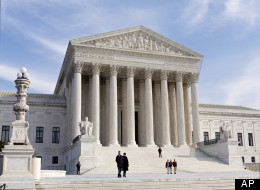
WASHINGTON – The individual health insurance mandate is constitutional, the Supreme Court ruled Thursday, upholding the central provision of President Barack Obama’s signature Affordable Care Act.

The controlling opinion, written by Chief Justice John Roberts, upheld the mandate as a tax, although concluded it was not valid as an exercise of Congress’ commerce clause power. Justices Ruth Bader Ginsburg, Stephen Breyer, Sonia Sotomayor and Elena Kagan joined in the outcome.

The decision in National Federation of Independent Business v. Sebelius comes as something of a surprise after the generally hostile reception the law received during the six hours of oral arguments held over three days in March. But by siding with the court’s four Democratic appointees, Chief Justice Roberts avoided the delegitimizing taint of politics that surrounds a party-line vote while passing Obamacare’s fate back to the elected branches. GOP candidates and incumbents will surely spend the rest of the 2012 campaign season running against the Supreme Court and for repeal of the law.

Five justices concluded that the mandate, which requires virtually all Americans to obtain minimum health insurance coverage or pay a penalty, falls within Congress’ power under the Constitution to “lay and collect taxes.”

“The individual mandate cannot be upheld as an exercise of Congress’s power under the Commerce Clause,” Roberts wrote. “That Clause authorizes Congress to regulate interstate commerce, not to order individuals to engage in it. In this case, however, it is reasonable to construe what Congress has done as increasing taxes on those who have a certain amount of income, but choose to go without health insurance. Such legislation is within Congress’s power to tax.”

Ginsburg, writing separately for the four liberals, said they would have upheld the mandate under the commerce clause too. “Unlike the market for almost any other product or service, the market for medical care is one in which all individuals inevitably participate,” she wrote. “Virtually every person residing in the United States, sooner or later, will visit a doctor or other health care professional.”

Justices Antonin Scalia, Anthony Kennedy, Clarence Thomas and Samuel Alito joined in a dissent. Together, Roberts’ controlling opinion, Ginsburg’s concurrence, the four-justice dissent and Thomas’ own dissent add up to 187 pages.

In a nod to the importance of the health care cases, Roberts, Ginsburg and Kennedy all chose to read summaries of their opinions from the bench.

In a section of his opinion joined by the liberal justices, Roberts noted that the conservative dissenters contend that the mandate cannot be upheld as a tax “because Congress did not ‘frame’ it as such. In effect, they contend that even if the Constitution permits Congress to do exactly what we interpret this statute to do, the law must be struck down because Congress used the wrong labels.”

But the majority was not persuaded by that argument. Roberts wrote that the mandate provision “need not be read to do more than impose a tax. That is sufficient to sustain it.”

On Medicaid expansion, the court upheld the expansion but with a critical caveat: The federal government may not threaten the states that don’t comply with the loss of their existing funding. Essentially, the Medicaid expansion is now optional for the states.

“As for the Medicaid expansion, that portion of the Affordable Care Act violates the Constitution by threatening existing Medicaid funding,” Roberts wrote. “Congress has no authority to order the States to regulate according to its instructions. Congress may offer the States grants and require the States to comply with accompanying conditions, but the States must have a genuine choice whether to accept the offer. The States are given no such choice in this case: They must either accept a basic change in the nature of Medicaid, or risk losing all Medicaid funding. The remedy for that constitutional violation is to preclude the Federal Government from imposing such a sanction.”

For their part, the dissenters were not impressed with Roberts’ parsing of the law. “The Court regards its strained statutory interpretation as judicial modesty. It is not. It amounts instead to a vast judicial overreaching,” wrote the four other conservatives.

They then looked to the political future: The majority’s decision, they argued, “creates a debilitated, inoperable version of health-care regulation that Congress did not enact and the public does not expect. It makes enactment of sensible health-care regulation more difficult, since Congress cannot start afresh but must take as its point of departure a jumble of now senseless provisions, provisions that certain interests favored under the Court’s new design will struggle to retain. And it leaves the public and the States to expend vast sums of money on requirements that may or may not survive the necessary congressional revision.”

Summarizing his delicate decision from the bench, Roberts reminded his listeners that it is “not our job to save the people from the consequences of their political choices.” Still, the decision appeared to do just that.

By narrowing Congress’ commerce and spending powers, Roberts moved the law in a decidedly conservative direction. Yet by invoking the taxing power, he saved not only the people but also Congress, the president and the Supreme Court itself from the consequences of their political choices that had seemed so evident at oral argument three months ago.

Careful legal parsing aside, the bottom line is: The Affordable Care Act has survived.

Source: Huffington Post

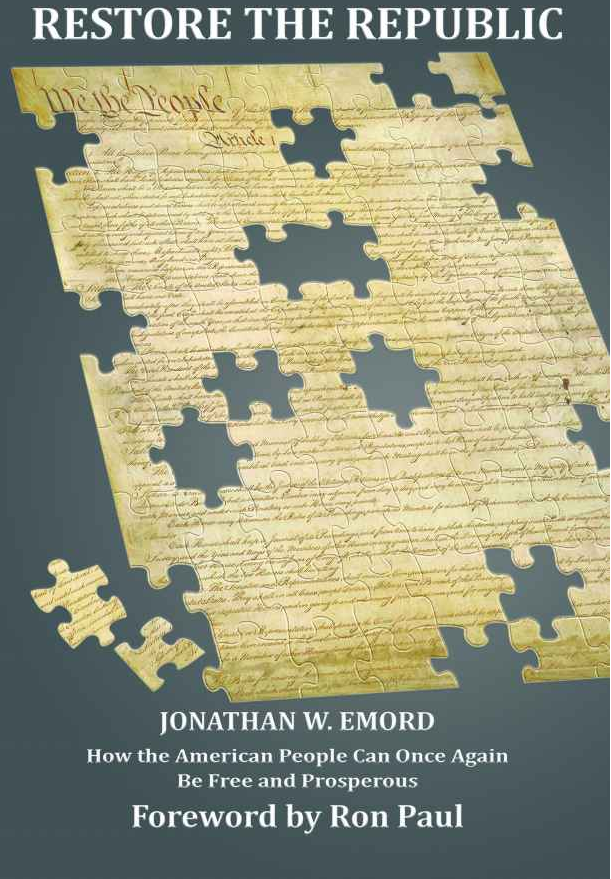
Restore the Republic by Jonathan Emord

Editor’s Note: We attended this year’s “Health Freedom Expo” near Chicago, Illinois this month and met the author during a presentation based on the title of his book. His insights illuminated how America has strayed from the constitutional republic the founders left us two hundred and forty years ago through extreme departures from the rule of law.

As the nation drowns in a sea of debt and over-regulation and as government offers no clear solutions, constitutional lawyer Jonathan Emord presents a bold plan to restore the republic. Drawing from law, history, and economics, Emord explains that each obstacle to power and arbitrary will that the Founding Fathers placed in the Constitution has been abandoned, transforming the limited federal republic defined by the Constitution (protective of individual liberty and sovereignty) into an unlimited bureaucratic oligarchy antithetical to the Constitution.

It is that transformation which created the seeds that have grown into limitless government, corruption, regulation of all aspects of life, destruction of free enterprise, planned economies, and a deprivation of economic and civil liberty. Having identified precisely why and how the United States has lost its foundational principles and its rights basis, Emord then charts a bold course to resurrect power limiting doctrines, eliminate excess government, and restore individual sovereignty and liberty.

Indeed, Emord offers a detailed plan for deregulating markets and weaning Americans from entitlements (including Social Security and Medicare), without leaving dependents destitute. In his foreword, Ron Paul describes Restore the Republic as “. . . an invaluable explanation of how constitutional bulwarks against big government were eroded-and how we can rebuild them,” concluding that the book is “highly recommended” for all “interested in regaining our lost liberties and restoring our republic.”

How to Fix Congress – Start the 28th Amendment!

“If you want something in your life you’ve never had before, be prepared to do something you’ve never done before.”

Whether you agree fully or partially, or not at all,…please consider forwarding this on so that concerned voters can see this and decide for themselves to act, to forward or not.   Please read & thanks very much !

The 26th amendment (granting the right to vote for 18 year-olds) took only 3 months & 8 days to be ratified!  Why?  Simple!  The people demanded it.  That was in 1971…before computers, before e-mail, before cell phones, etc.

Of the 27 amendments to the Constitution, seven (7) took 1 year or less to become the law of the land…all because of public pressure.

I’m asking each addressee to forward this email to a minimum of twenty people on their address list; in turn ask each of those to do likewise.

In three days, most people in The United States of America will have the message.  This is one idea that really should be passed around.

CONGRESSIONAL REFORM ACT OF 2011

1. Term Limits. 12 years only, one of the possible options below..

A. Two Six-year Senate terms
B. Six Two-year House terms
C. One Six-year Senate term and three Two-Year House terms

2.  No Tenure / No Pension. A Congressman collects a salary while in office and receives no pay when they are out of office.

3.  Congress (past, present & future) participates in Social Security.

All funds in the Congressional retirement fund move to the Social Security system immediately.  All future funds flow into the Social Security system, and Congress participates with the American people.

4. Congress can purchase their own retirement plan, just as all Americans do.

5. Congress will no longer vote themselves a pay raise. Congressional pay will rise by the lower of CPI or 3%

6. Congress loses their current health care system and participates in the same health care system as the American people.

7. Congress must equally abide by all laws they impose on the American people.

8. All contracts with past and present Congressmen are void effective 10-1-11

The American people did not make this contract with Congressmen. Congressmen made all these contracts for themselves. Serving in Congress is an honor, not a career.  The Founding Fathers envisioned citizen legislators, so ours should serve their term(s), then go home and back to work.

If each person contacts a minimum of twenty people then it will only take three days for most people (in the U.S. ) to receive the message.  Maybe it is time.

THIS IS HOW YOU FIX CONGRESS!

545 vs. 300,000,000 People | Orlando Sentinel

By Charlie Reese
Orlando Sentinel


Politicians are the only people in the world who create problems and then campaign against them.

 Have you ever wondered, if both the Democrats and the Republicans are against deficits, WHY do we have deficits?

 Have you  ever wondered, if all the politicians are against  inflation and high taxes, WHY do we have inflation and high taxes?

You and I don’t propose a federal budget. The President does.

You and I don’t have the Constitutional authority to vote on appropriations. The House of Representatives does.

You and I don’t write the tax code, Congress does.

You and I don’t set fiscal policy, Congress does.

You and I don’t control monetary policy, the Federal Reserve Bank does.

CONGRESS, PRESIDENT & SUPREME COURT

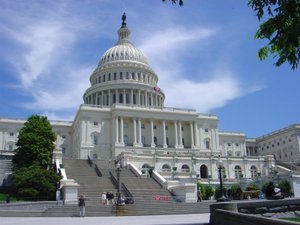
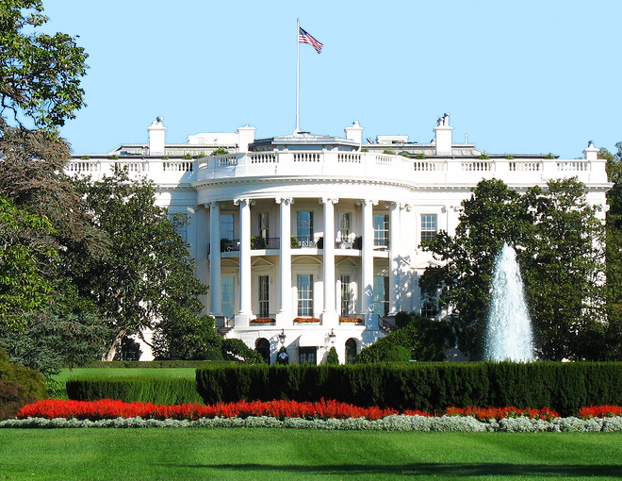
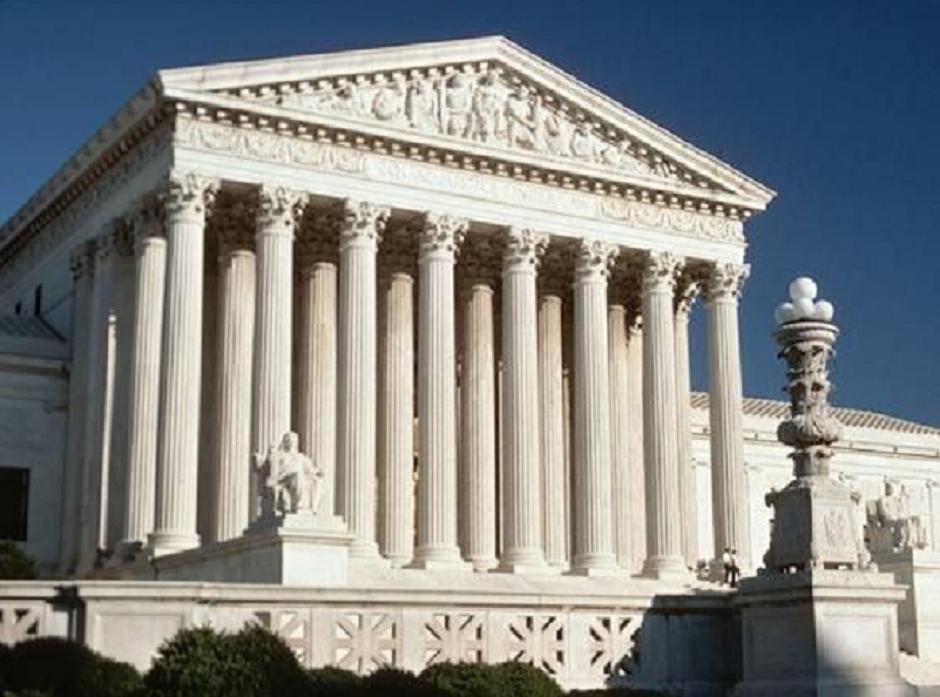
One hundred senators, 435 congressmen, one President, and nine Supreme Court justices equates to 545 human beings out of the 300 million are directly, legally, morally, and individually responsible for the domestic problems that plague this country.

 I excluded the members of the Federal Reserve Board because that problem was created by the Congress.

In 1913, Congress delegated its Constitutional duty to provide a sound currency to a federally chartered, but private, central bank.  

I  excluded all the special interests and lobbyists for a sound reason. They have no legal authority. They have no ability to coerce a senator, a congressman, or a President to do one cotton-picking thing. I don’t care if they offer a politician $1 million dollars in cash. The  politician has the power to accept or reject it.  No matter what the lobbyist promises, it is the legislator’s responsibility to determine how he votes.

Those 545 human beings spend much of their energy convincing you that what they did is not their fault. They cooperate in this common con regardless of party. 

What separates a  politician from a normal human being is an excessive amount of gall.  No normal human being would have the gall of a Speaker, who stood  up and criticized the President for creating deficits.

The President can only propose a budget. He cannot force the Congress to accept it.

 The Constitution, which is the supreme law of the land, gives sole responsibility to the House of Representatives for originating and approving appropriations and taxes.

Who is the Speaker of the House? John Boehner. He is the leader of the majority party. He and fellow House members, not the President, can approve any budget they want. If the President vetoes it, they can pass it over his veto if they agree to.

 It seems inconceivable to me that a nation of 300 million cannot replace 545 people who stand convicted — by present facts — of incompetence and irresponsibility.

I can’t think of a single domestic problem that is not traceable  directly to those 545 people. When you fully grasp the plain truth that 545 people exercise the power of the federal government, then it must follow that what exists is what they want to exist.

If the tax code is unfair, it’s because they want it unfair. 

If the budget is in the red, it’s because they want it in the red. 

If the Army & Marines are in Iraq and Afghanistan it’s because they want them in Iraq and Afghanistan. If they do not receive social security but are on an elite retirement plan not available to the people, it’s because they want it that way.

There are no insoluble government problems.

 Do not let these 545 people shift the blame to bureaucrats, whom they hire and whose jobs they can abolish; to  lobbyists, whose gifts and advice they can reject; to regulators, to whom they give the power to regulate and from whom they can take this power.

Above all, do not let them con you into the belief that there exists disembodied mystical forces like “the economy,””inflation,” or “politics” that prevent them from doing what they take an oath to do.

 Those 545 people, and they  alone, are responsible.

 They, and they alone, have the power.

 They, and they alone, should be held accountable by the people who are their bosses.

 Provided the voters have the gumption to manage their own employees.

We should vote all of them out of office and clean up their mess!

Citizens Rising for the Constitution – Liberty Gets a Lobby | We the People

THE GREAT SEARCH IS ON: WILL YOU ANSWER THE CALL?

WE THE PEOPLE OF EACH STATE TO ESTABLISH A NON-POLITICAL CONSTITUTION LOBBY IN EACH STATE WITH THE SOLE PURPOSE OF HOLDING ELECTED OFFICIALS ACCOUNTABLE TO THEIR LOCAL, STATE AND FEDERAL CONSTITUTIONS.

Most of us know now that Individuals and Small Groups cannot prevail. Our Rights are being taken away. Millions of Freedom-Loving Americans must come together.

A CONSTITUTION LOBBY, OF THE PEOPLE, BY THE PEOPLE, FOR THE PEOPLE WHICH RESTORES THE POWER WHERE IT IS MEANT TO RESIDE IN THE FIRST PLACE – WHICH PROVIDES THE ORGANIZATION, FUNDING AND POWER TO BE A RECOGNIZED, RESPECTED FORCE – A NON-POLITICAL “WATCH-DOG” OF MILLIONS OF FREEDOM KEEPERS, WHOSE MEMBERS ENSURE GOVERNMENT WILL NO LONGER AND NEVER AGAIN BE ABLE TO STEP BEYOND THE BOUNDARIES DRAWN AROUND THEM BY OUR CONSTITUTIONS.

Not to be viewed as a NEW organization or NEW group, but a Coalition of like-minded Pro-Constitutional groups, organizations and individuals who merge their expertise and their passion for Liberty and come together to do what we cannot do alone or in an un-organized manner.

“The People are the only sure reliance for the preservation of liberty.”
“The price of freedom is eternal vigilance.” – Thomas Jefferson

“No matter how many pro-freedom politicians we elect to office, the only way to guarantee constitutional government is through an educated and activist public devoted to the ideals of the liberty [sic].” – Ron Paul

AMERICA SHALL BE FREE.
– Bob Schulz & Judith Whitmore
We The People Foundation

TSA lies about the Constitution | Tenth Amendment Center

By Michael Boldin

Round two of the battle for travel freedom is well underway.

The first round, which garnered national attention in the fall of 2010, focused primarily on the TSA implementing new procedures…pat downs, body scanners….and the public outcry against it….boycotts, protests, calling congress to demand change.

But, as the public response failed to stop the scanners and searches, round two has moved to state legislatures around the country. Most prominently, Texas, where the state house just passed a bill banning TSA searches without probable cause. Click here to read the Tenth Amendment Center’s report on the bill.

This time, the TSA is on the defensive, and published an official statement about the Texas bill on their blog:

What’s our take on the Texas House of Representatives voting to ban the current TSA pat-down? Well, the Supremacy Clause of the U.S. Constitution (Article. VI. Clause 2) prevents states from regulating the federal government.

The problem here? The statement is false. Ignorance from the TSA is unlikely, so I’ll call a spade a spade. They’re lying.

The supremacy clause says nothing of the sort. Here’s the full text:

This Constitution, and the Laws of the United States which shall be made in pursuance thereof; and all treaties made, or which shall be made, under the authority of the United States, shall be the supreme law of the land; and the judges in every state shall be bound thereby, anything in the constitution or laws of any state to the contrary notwithstanding.

So, in simple terms, what does the supremacy clause mean? Just what it says. The constitution is supreme. And any federal laws made in line with the constitution is supreme. Nothing more, nothing less.

Notice there’s not one single word in the actual text that says anything about states regulating the federal government as the TSA claims. They’re just making things up as they go. Read more…

The 28th Amendment: Fact or Fiction? | Snopes

Proposed 28th Amendment to the United States Constitution:

“Congress shall make no law that applies to the citizens of the United States that does not apply equally to the Senators and Representatives; and, Congress shall make no law that applies to the Senators and Representatives that does not apply equally to the citizens of the United States.”Q: Does this text represent the actual 28th Amendment to the U.S. Constitution?

A: No. The U.S. Constitution has only 27 amendments, the last of which (a limit on Congressional pay increases) was ratified in 1992.

Q: Does this text represent a proposed 28th Amendment?

A: This item is a “proposed 28th amendment” only in the very loose sense that any change to the U.S. Constitution suggested since the ratification of the 27th Amendment is a “proposed 28th Amendment.” However, when this piece hit the Internet back in 2009 it was just a bit of online politicking, not something that had been introduced or proposed as a potential amendment by any member of Congress.

In August 2013, nearly four years after this item began making the rounds on the Internet, two Congressmen (Ron DeSantis of Florida and Matt Salmon of Arizona) did introduce a joint resolution (H.J.RES.55) similar to one of its elements, proposing an amendment to the Constitution stating that “Congress shall make no law respecting the citizens of the United States that does not also apply to the Senators and Representatives.” That bill died in committee, and it is exceedingly unlikely that any such broadly worded amendment could ever pass muster in Congress without the underlying idea being subject to a good many qualifications.

Q: Could this amendment be passed without Congress’ voting on it?

A: Possibly, not not likely. Article 5 of the U.S. Constitution specifies two procedures for amendments. One method is for two-thirds of states legislatures to call for a constitutional convention at which new amendments may be proposed, subject to ratification by three-fourths of the states. The constitutional convention method allows for the Constitution to be amended by the actions of states alone and cuts Congress out of the equation — no Congressional vote or approval is required. However, not once in the history of the United States have the states ever called a convention for the purpose of proposing new constitutional amendments.

The other method for amending the Constitution (the one employed with every amendment so far proposed or enacted) requires that the proposed amendment be approved by both houses of Congress (i.e., the Senate and the House of Representatives) by a two-thirds majority in each, and then ratified by three-fourths of the states. It’s probably safe to speculate that the odds that a supermajority of both houses of Congress would pass an amendment which placed such restrictions upon them are very low indeed.

Q: Can members of Congress retire with full pay after serving only a single term?

A: No. This is a long-standing erroneous rumor which we have covered in detail in a separate article.

Q: Are members of Congress exempt from paying into Social Security?

A: No. As noted in our article about Congressional pensions, although Congress initially participated in the Civil Service Retirement System (CSRS) rather than Social Security, since 1984 all members of Congress have been required to pay into the Social Security fund.

Q: Are members of Congress exempt from prosecution for sexual harassment?

A: No. The passage of Public Law 104-1 (the Congressional Accountability Act of 1995, also known as CAA) made a variety of laws related to civil rights and workplace regulations applicable to the legislative branch of the federal government. Section 1311(a) of the CAA specifically prohibits sexual harassment (as well as harassment on the basis of race, color, religion, or national origin).

Q: Are members of Congress exempt from the Patient Protection and Affordable Care Act (i.e., “Obamacare”) health care legislation?

A: No. One of the provisions of the Patient Protection and Affordable Care Act passed by Congress is a requirement that lawmakers give up the insurance coverage previously provided to them through the Federal Employees Health Benefits Program and instead purchase health insurance through the online exchanges that the law created:

An August 2013 ruling by the federal Office of Personnel Management (OPM) was widely and inaccurately reported as exempting members of Congress from the requirement that they give up their Federal Employees Health Benefits Program coverage and instead purchase health insurance through online exchanges. That reporting was incorrect: Lawmakers are still required to purchase health insurance through government-created exchanges; what the OPM’s ruling actually declared was that members of Congress and their staffs did not have to give up the federal subsidies covering part of the costs of their insurance premiums which they had previously been receiving (and which are afforded to millions of other federal workers).

An October 2011 variant of this item is prefaced by a statement made by Warren Buffett: “‘I could end the deficit in 5 minutes. You just pass a law that says that anytime there is a deficit of more than 3% of GDP, all sitting members of Congress are ineligible for re-election.’” This quote came from a 7 July 2011 CNBC interview in which the Oracle of Omaha addressed the then-current issue of raising the debt limit. The rest of the message however, has nothing to do with Warren Buffett.

Some versions of this item include a statement asserting that the children and staffers of U.S. Congressmen are exempt from paying back student loan obligations. That statement is false.

Later versions of this item have been prefaced with the statement that “Governors of 35 states have filed suit against the Federal Government for imposing unlawful burdens upon them. It only takes 38 (of the 50) States to convene a Constitutional Convention.” Actually, only 34 states are required to convene such a convention.

Source: Snopes

Johnny Liberty’s “Are You Sovereign” Presentation | Granada Forum (1995) | YouTube Videos

Additional Videos