Why 2025 is going to be more dangerous than you think | RT

By Dmitry Trenin

Predicting the future of international relations is always a risky endeavor. History shows that even the most confident forecasts can fall flat. For instance, the last Pentagon propaganda pamphlet on ‘Soviet Military Power’ was published in 1991 – the year the USSR ceased to exist. Similarly, the Washington-based RAND Corporation’s 1988 scenario on nuclear war included the Soviet Union engaging Pakistan over Afghanistan in 2004. Nevertheless, the urge to anticipate the future is natural, even necessary. What follows is not a prediction, but an attempt to outline reasonable expectations for the state of the world in 2025.

Ukraine

US President Donald Trump’s bid to secure a ceasefire along Ukraine’s battle lines will fail. The American plan to “stop the war” ignores Russia’s security concerns and disregards the root causes of the conflict. Meanwhile, Moscow’s conditions for peace – outlined by President Vladimir Putin in June 2024 – will remain unacceptable to Washington, as they would effectively mean Kiev’s capitulation and the West’s strategic defeat. 

The fighting will continue. In response to the rejection of his plan, a frustrated Trump will impose additional sanctions on Moscow. However, he will avoid any serious escalation that might provoke Russia into attacking NATO forces. Despite strong anti-Russian rhetoric, US aid to Ukraine will decrease, shifting much of the burden onto Western European nations. While the EU is prepared to step in, the quality and scale of Western material support for Ukraine will likely decline.

On the battlefield, the tide will continue to shift in Russia’s favor. Russian forces are expected to push Ukraine out of key regions such as Donbass, Zaporozhye, and parts of Kursk Region. Ukraine will mobilize younger, inexperienced recruits to slow Russia’s advances, but this strategy will lead to limited success. Kiev will rely increasingly on surprise operations, such as border incursions or symbolic strikes deep into Russian territory, in attempts to demoralize the Russian population.

Domestically, the US and its allies may push for elections in Ukraine, hoping to replace Vladimir Zelensky – whose term expired in the middle of last year – with General Valery Zaluzhny. While this political reshuffling might temporarily strengthen Kiev’s leadership, it will not address the underlying challenges of economic collapse and deteriorating living conditions for ordinary Ukrainians.

United States

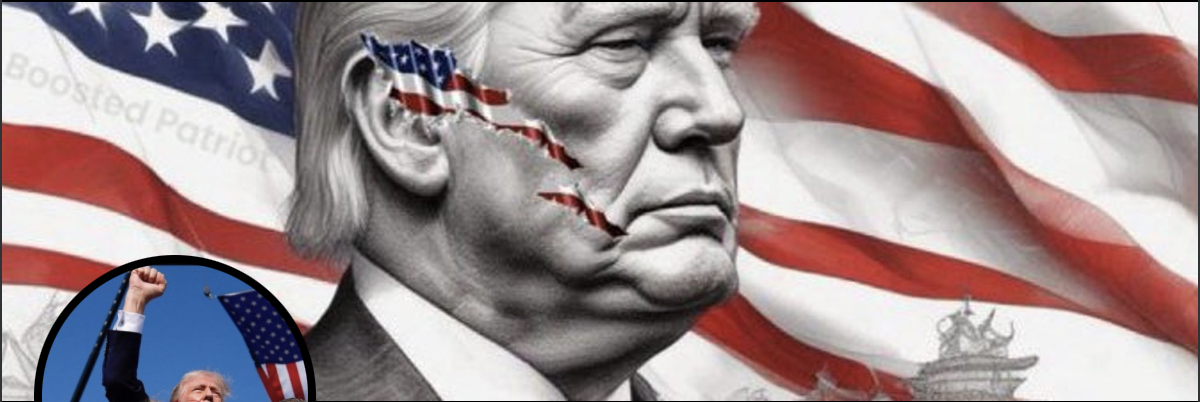
Despite a peaceful transfer of power, Trump’s second term will remain fraught with tension. The risk of attempts on his life will linger. Trump’s foreign policy, while less ideological than Biden’s, will focus on pragmatic goals. He will:

  • Keep NATO intact but demand higher financial contributions from European members.
  • Shift much of the financial responsibility for Ukraine onto the EU.
  • Intensify economic pressure on China, leveraging Beijing’s vulnerabilities to force unfavorable trade deals. 

Trump will also align closely with Israel, supporting its efforts against Iran. Tehran, already weakened, will face harsh terms for a nuclear deal, and a refusal may prompt US military strikes on Iranian nuclear facilities.

Trump is likely to meet Putin in 2025, but this will not signal a thaw in US-Russia relations. The confrontation between the two powers will remain deep and enduring. Trump’s strategy will prioritize America’s global dominance, shifting the burden of US commitments onto allies and partners, often to their detriment.

Western Europe

European nations, wary of Trump’s return, will ultimately fall in line. The EU’s dependence on the US for military and political leadership will deepen, even as European economies continue to act as donors to the American economy. Over the past three decades, Western European elites have transitioned from being national actors to appendages of a transnational political system centered in Washington. Genuine defenders of national interests, such as Alternative for Germany or France’s Rassemblement National, remain politically marginalized.

Russophobia will remain a unifying force in Western European politics. Contrary to popular belief, this sentiment is not imposed by the US but actively embraced by EU and UK elites as a tool for cohesion. The Russian military operation in Ukraine has been framed as the first stage of an imagined Russian attempt to “kidnap Europe.” 

In 2025, Germany’s new coalition government will adopt an even tougher stance toward Moscow. However, fears of a direct military clash with Russia will deter other European nations from deploying troops to Ukraine. Instead, Western Europe will prepare for a new Cold War, increasing military spending, expanding production, and fortifying NATO’s eastern flank.

Dissent within Europe will be suppressed. Political opponents of the confrontation with Russia will be branded as “Putin’s useful idiots” or outright agents of Moscow. Hungary and Slovakia will remain outliers in their approach to Russia, but their influence on EU policy will be negligible. 

Middle East 

After significant military victories in 2024, Israel, with US backing, will attempt to consolidate its gains against Iran. The US-Israeli strategy will involve combined pressure, including military actions, against Iranian proxies like the Yemeni Houthis and efforts to deepen ties with Gulf Arab monarchies under the Abraham Accords.

While Russia signed a treaty with Iran in January 2025, it does not obligate Moscow to intervene militarily if Tehran is attacked. Thus, a full-scale Middle Eastern war involving Russia and the US remains unlikely. Domestically, Iran faces uncertainty as Supreme Leader Ayatollah Khamenei, now 86, nears the end of his leadership.

Russia’s influence in the Middle East will wane as its military presence diminishes. However, logistical routes connecting Russia to Africa will remain a strategic priority.

East Asia

US-China tensions will continue to rise, fueled by American efforts to contain China’s economic and technological ambitions. Washington will strengthen alliances in Asia, particularly with Taiwan and the Philippines, to counter Beijing. While an armed conflict over Taiwan or the South China Sea remains possible, it is unlikely to erupt in 2025. 

Russia’s partnership with China will grow stronger, though it will stop short of a formal military alliance. From a Western perspective, this relationship will increasingly resemble an anti-American coalition. Together, Russia and China will push back against US global dominance in geopolitical, military, and economic spheres.

Russia’s near abroad

Belarusian President Alexander Lukashenko is expected to secure another term in January 2025, cementing his alignment with Moscow. Meanwhile, Russia will work to stabilize its relations with Kazakhstan, though Moscow’s lack of a compelling vision for Eurasian integration could come back to bite.

The year 2025 will be marked by strategic instability, ongoing conflicts, and heightened geopolitical tensions. While Russia has achieved notable successes in recent years, it must guard against complacency. Victory is far from assured, and the world remains nowhere near equilibrium. For Moscow, the path forward will require resilience and a clear focus on long-term goals. Peace will come, but only through continued effort and eventual victory – perhaps in 2026.

Source: Profile.ru & RT

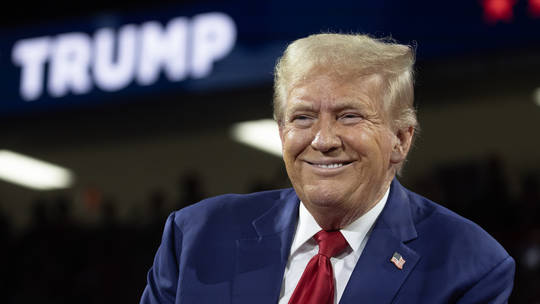
Trump Dream Team 2025 – 2028

Donald J. Trump, 45th & 47th President of the United States

Donald John Trump (born June 14, 1946) is an American politician, media personality, and businessman who served as the 45th president of the United State from 2017 to 2021. He won the 2024 election as the nominee of the Republican Party and is now the president-elect of the United States. He is scheduled to begin his second term on January 20, 2025, as the nation’s 47th president and will be the second president in American history to serve nonconsecutive terms, with Grover Cleveland being the first.

• Mission to Make America Great Again (MAGA)

JD Vance, Vice President

James David Vance (born James Donald Bowman;[a] August 2, 1984) is an American politician, attorney, author, and former United States Marine who is the vice president-elect of the United States. A member of the Republican Party, he has served since 2023 as the junior United States senator from Ohio. He was Donald Trump‘s running mate in the 2024 presidential election.

Susie Wiles, Chief of Staff

Susan Wiles (née Summerall; born May 14, 1957) is an American political consultant who served as co-chair of Donald Trump‘s 2024 presidential campaign, having previously worked on his 2016 campaign, as well as Ronald Reagan‘s 1980 campaign. She was chosen by president-elect Trump to serve as the 32nd White House chief of staff in the second Trump administration, set to begin in January 2025. She will be the first woman to hold the position.

Stephen Miller, Deputy Chief of Staff

Stephen Miller (born August 23, 1985)[1] is an American political advisor who served as a senior advisor for policy and White House director of speechwriting to President Donald Trump.[2]  He was previously the communications director for then-Senator Jeff Sessions. He was also a press secretary for U.S. representatives Michele Bachmann and John Shadegg.

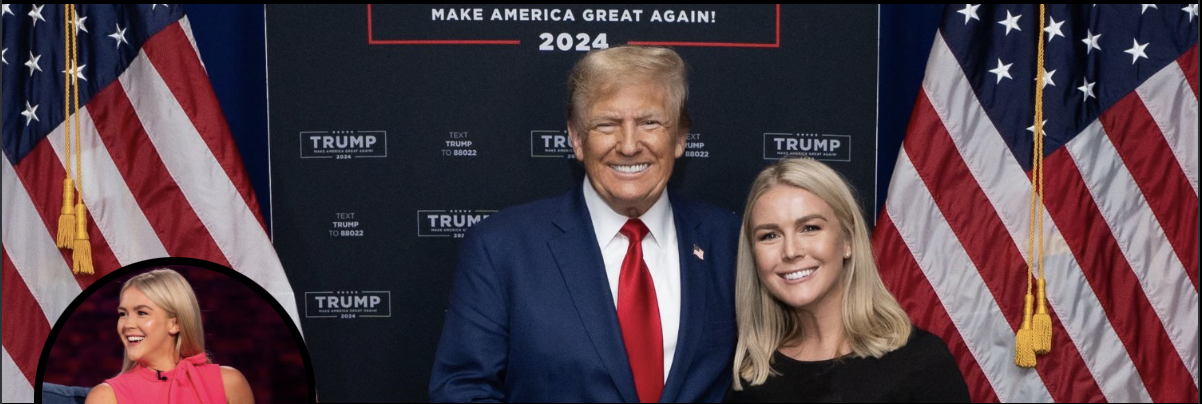
Karoline Leavitt, White House Press Secretary

Karoline Claire Leavitt (born August 24, 1997)[1] is an American political aide currently serving as the national press secretary for Donald Trump’s 2024 presidential campaign.[2] She previously served as an assistant press secretary and presidential writer during the first Donald Trump administrationas well as a spokesperson for MAGA Inc., a pro-Trump Super PAC. In 2022, she ran for the U.S. House of Representatives in New Hampshire’s 1st district, becoming the second member of Generation Z to win a congressional primary. She lost the general election to incumbent Chris Pappas.[3] On November 15, 2024, president-elect Donald Trump chose Leavitt as his White House press secretary to succeed Karine Jean-Pierre.[4] She will be the youngest press secretary in United States history.[5]:

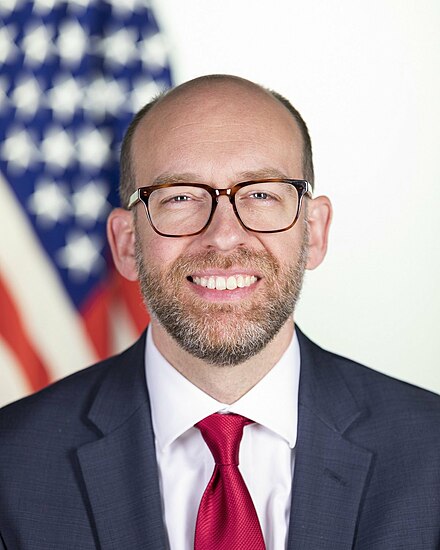
Russell Vought, White House Budget Office

Russell Thurlow Vought (born March 26, 1976), or Russ Vought is an American former government official who was the director of the Office of Management and Budget from July 2020 to January 2021. He was previously deputy director of the OMB for part of 2018, and acting director from 2019 to 2020.

Sebastian Gorka & Alex Wong, Senior National Security Staff

Sebastian Lukács Gorka (HungarianGorka Sebestyén Lukács; born October 22, 1970)[2] is a British-Hungarian-American media host and commentator, currently affiliated with Salem Radio Network and NewsMax TV, and a former United States government official. He served in the first Trump administration as a Deputy Assistant to the President for seven months, from January until August 2017.[3][4][5][6]

Pete Hegseth, Secretary of Defense

Peter Brian Hegseth (/ˈhɛɡsɛθ/; born June 6, 1980) is an American television presenter, author, and former Army National Guard officer who has been announced as the forthcoming nominee for United States Secretary of Defense in Donald Trump‘s second cabinet. A political commentator for Fox News since 2014 and weekend co-host of Fox & Friends from 2017 to 2024, he was previously the executive director of Vets for Freedom and Concerned Veterans for America.

Doug Collins, Secretary of Veteran’s Administration (VA)

Paul Douglas Collins (born July 28, 1951) is an American basketballexecutive, former player, coach and television analyst in the National Basketball Association (NBA). He played in the NBA from 1973 to 1981 for the Philadelphia 76ers, earning four NBA All-Star selections. He then became an NBA coach in 1986, and had stints coaching the Chicago BullsDetroit PistonsWashington Wizards and Philadelphia 76ers. Collins also served as an analyst for various NBA-related broadcast shows.[1] He is a recipient of the Curt Gowdy Media Award. In April 2024, Collins was elected to the Naismith Memorial Basketball Hall of Fame class of 2024 by the Contributors Committee.[2]

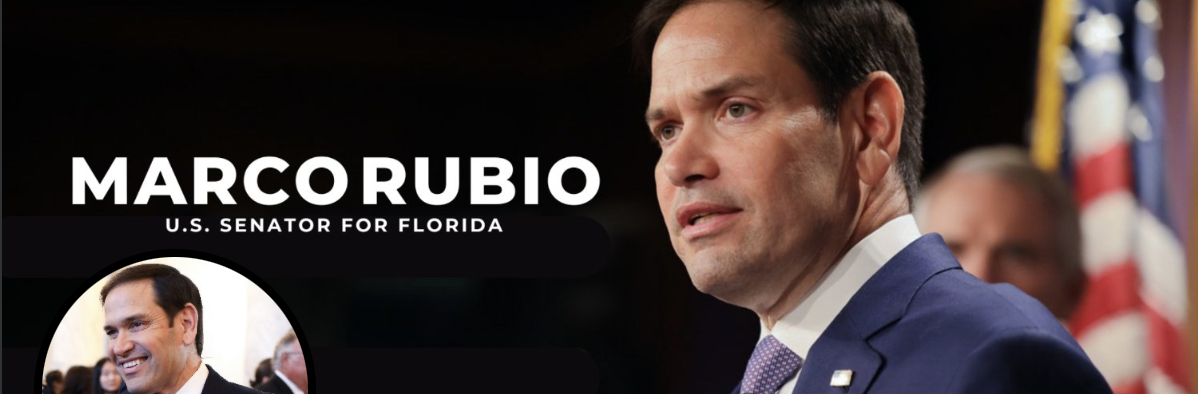
Marco Rubio, Secretary of State

Marco Antonio Rubio (/ˈruːbioʊ/; born May 28, 1971) is an American politician and lawyer serving as the senior United States senator from Florida, a seat he has held since 2011. A member of the Republican Party, he served as Speaker of the Florida House of Representatives from 2006 to 2008. Rubio sought the Republican nomination for president of the United States in 2016, winning the presidential primaries in Minnesota, the District of Columbia, and Puerto Rico, but was ultimately unsuccessful.

Kristi Noem, Secretary of Homeland Security

Kristi Lynn Noem (/noʊm/ NOHM;[1] née Arnold; born November 30, 1971) is an American politician who has served since 2019 as the 33rd governor of South Dakota. A member of the Republican Party, she was the U.S. representative for South Dakota’s at-large congressional district from 2011 to 2019, and a member of the South Dakota House of Representatives for the 6th district from 2007 to 2011.

Tom Homan, Border Czar

Thomas Douglas Homan[1] is an American former police officer, immigration official, and political commentator who served during the Obama administration, and will have served in both Trump administrations. He served as acting director of the U.S. Immigration and Customs Enforcement (ICE) from January 30, 2017, to June 29, 2018.[2] Homan advocates deportation of illegal immigrants and opposes sanctuary city policies. Within the government, he was among the most strident proponents of separating children from their parents as a means of deterring illegal entry into the country.[3] After 2018, he began contributing to Fox News as a commentator.[4] In November 2024, Trump announced that Homan will serve as “border czar” during his second presidency.[5]

Pam Bondi, Attorney General, Department of Justice (DOJ)

Pamela Jo Bondi[1] (born November 17, 1965) is an American attorney, lobbyist, and politician. A member of the Republican Party, she served as Florida attorney general from 2011 to 2019, the first woman elected to the office. In 2020, Bondi was one of President Donald Trump‘s defense lawyers during his first impeachment trial. By 2024, she led the legal arm of the Trump-aligned America First Policy Institute. On November 21, 2024, president-elect Trump announced she would be nominated for United States attorney general after previous nominee Matt Gaetz withdrew.

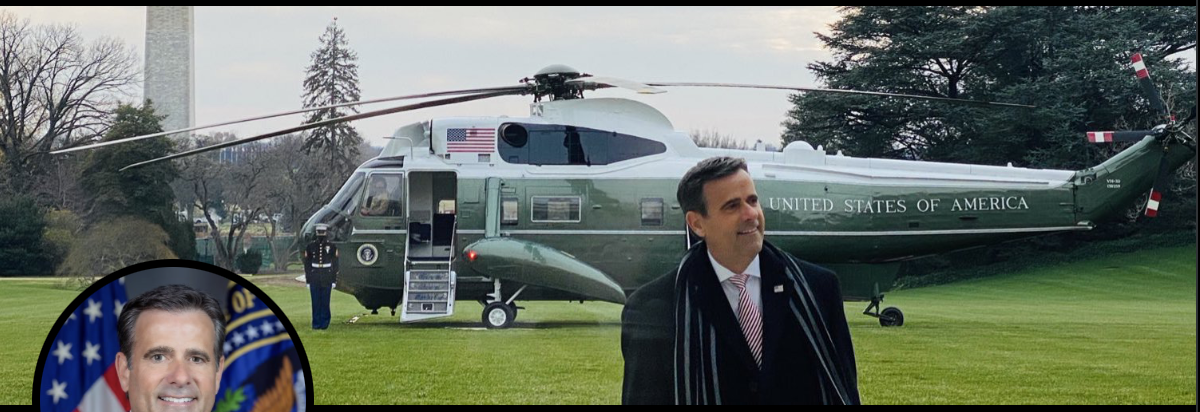
John Ratcliffe, Director of the CIA

John Lee Ratcliffe[5] (born October 20, 1965) is an American politician and attorney who served as the director of national intelligence from 2020 to 2021. He previously served as the U.S. representative for Texas‘s 4th districtfrom 2015 to 2020. During his time in Congress, Ratcliffe was regarded as one of the most conservative members.[6][7] Ratcliffe also served as mayor of Heath, Texas, from 2004 to 2012 and acting United States attorney for the Eastern District of Texas from May 2007 to April 2008.

President Donald Trump announced on July 28, 2019, that he intended to nominate Ratcliffe to replace Dan Coats as director of national intelligence.[8][9] Ratcliffe withdrew after Republican senators raised concerns about him, former intelligence officials said he might politicize intelligence, and media revealed Ratcliffe’s embellishments regarding his prosecutorial experience in terrorism and immigration cases.[10][11][12][13]

Tulsi Gabbard, Director of National Intelligence (DNI)

Tulsi Gabbard (/ˈtʌlsi ˈɡæbərd/ TUL-see GAB-ərd; born April 12, 1981) is an American politician and military officer serving as a Lieutenant colonel in the U.S. Army Reserve[2][3] since 2021, having previously served in Hawaii Army National Guard from 2003 to 2020.[3][4] In November 2024, President-electTrump selected Gabbard for the position of Director of national intelligence in his second term, starting January 2025.[2][5] A former Congresswoman, Gabbard served as U.S. Representative for Hawaii’s 2nd congressional district from 2013 to 2021. She was the first Samoan-American member of Congress.[6] She was a candidate in the 2020 Democratic presidential primaries.[7][8] She left the Democratic Party in 2022 to become an independent. In 2024, she joined the Republican Party.[9][10][11]

Author For Love of Country

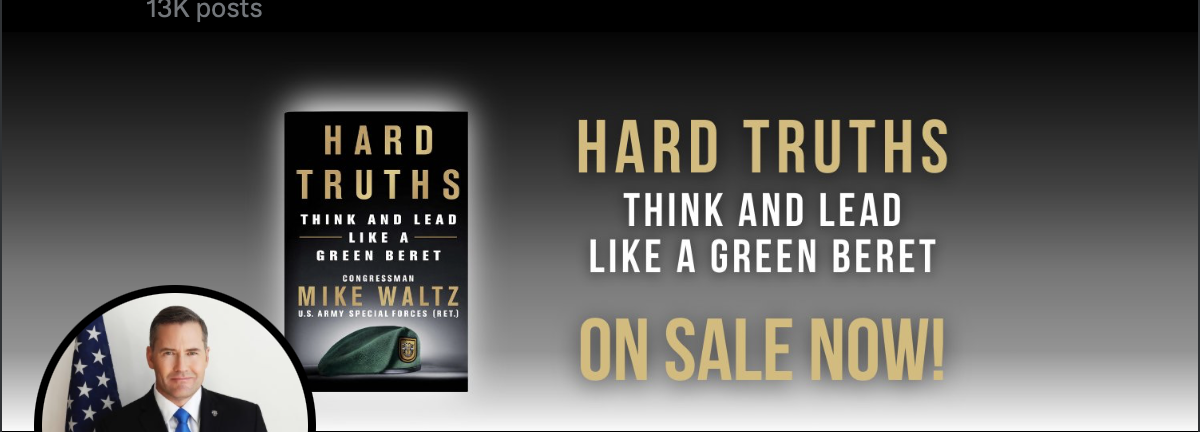
Mike Waltz, National Security Advisor

Michael George Glen Waltz (born January 31, 1974) is an American politician and a colonel in the United States Army serving as the U.S. representative for Florida’s 6th congressional district. A member of the Republican Party, he was first elected in 2018 and succeeded Ron DeSantis, who went on to be elected the 46th governor of Florida in 2018. On November 12, 2024, President-elect Donald Trump announced he will appoint Waltz to serve as his national security advisor.

Author of Hard Truths: Think & Lead Like A Green Beret

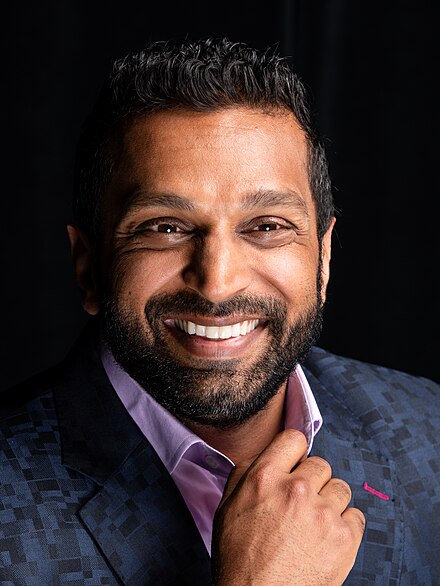
Kash Patal, Director of the FBI

Kashyap Pramod Vino “Kash” Patel (born February 25, 1980)[1] is an American attorney and former government official. He served as a U.S. National Security Council official, senior advisor to the acting Director of National Intelligence, and chief of staff to the acting United States secretary of defense during the Trump presidency.[2][3][4] A member of the Republican Party, Patel previously worked as a senior aide to congressman Devin Nuneswhen he chaired the House Intelligence Committee.[5] He was previously a federal public defender, a federal prosecutor working on national security cases, and a legal liaison to the United States Armed Forces.[6]

• Does Christopher Wray Has To Resign First?

Scott Bessent, Secretary of Treasury

Scott Kenneth Homer Bessent (/ˈbɛsənt/ BEH-sənt; born August 1962) is an American hedge fund manager. He was a partner at Soros Fund Management and the founder of Key Square Group, a global macro investment firm.[1][2] Bessent has been a major fundraiser and donor for Donald Trump. He was an economic advisor for Trump’s 2024 presidential campaign. In November 2024, President-elect Trump named Bessent his nominee for Secretary of the Treasury.[3]

Is Bessent Compromised By Association with Soros & Rockefellers?
• Scott Bessent, who will lead the Treasury Department, previously worked at George Soros Fund Management from 1991 to 2000, and then again as Chief Investment Officer from 2011 to 2015. During this period, he made a significant bet against the British pound, contributing to Soros’ famous “breaking of the Bank of England” and earning billions for the firm. The London office was led by Peter Soros, George Soros’ nephew, who has been named by Epstein’s former butler, Alfred Rodriguez, as having been involved in Epstein’s s*x trafficking activities. Bessent is also on the Board of Trustees at Rockefeller University, alongside prominent figures in the globalist establishment. ~ Shadow of Era

Howard Lutnick, Secretary of Commerce

Howard William Lutnick (/ˈlʌtnɪk/; born July 14, 1961[1]) is an American businessman, who succeeded Bernard Gerald Cantor as the head of Cantor Fitzgerald. Lutnick is the chairman and CEO of Cantor Fitzgerald and BGC Group. After losing 658 employees, including his brother, in the September 11 attacks, Lutnick also survived the subsequent collapse of the towers on the ground, and has since become known for his charity efforts through the Cantor Fitzgerald Relief Fund, which helps to aid families of victims of the attacks and natural disasters. He was a fundraiser for Donald Trump’s 2020 and 2024 presidential campaigns, as well as a vocal proponent of Trump’s proposal to implement broad tariffs. In November 2024, President-elect Trump announced that he intended to nominate Lutnick as secretary of commerce. He was also co-founder of DOGE.

To Be Determined, Administrator of the SBA

Image Here…

Wikipedia:

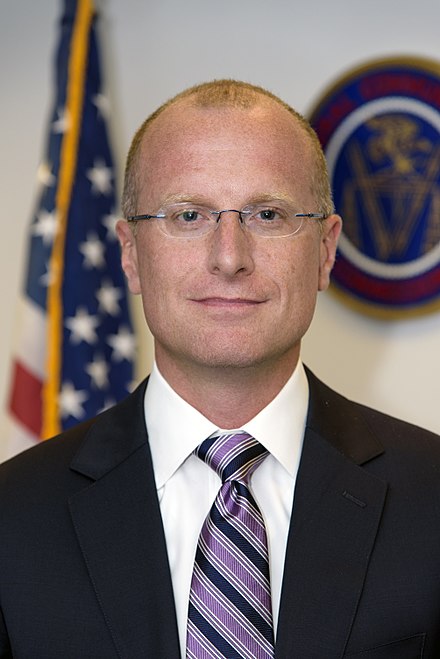
Brendon Carr, Commissioner of the Federal Communications Commission (FCC)

Brendan Thomas Carr (born January 5, 1979) is an American lawyer who has served as a member of the Federal Communications Commission (FCC) since 2017.[7] Appointed to the position by Donald Trump, Carr previously served as the agency’s general counsel and as an aide to FCC commissioner Ajit Pai. In private practice, Carr formerly worked as a telecommunications attorney at Wiley Rein.[8]

Carr supports changes to Section 230 of the Communications Decency Actand opposes net neutrality protections.[9][10] Carr is noted for his support for banning TikTok on national security grounds.[11][12] He is an opponent of content moderation on digital platforms, saying he would seek to “dismantle the censorship cartel and restore free speech rights.”[13][14] He authored a chapter in Mandate for Leadership: The Conservative Promise, the blueprint document of Heritage Foundation‘s Project 2025, which outlines proposed policies for a future Donald Trump administration. In office, Carr has been noted for being unusually vocal about public policy issues for a regulatory appointee, accusing House Intelligence Committee chair Adam Schiff of overseeing a “secret and partisan surveillance machine”.[15]

Restore Net Neutrality & Equalize the Internet Playing Field

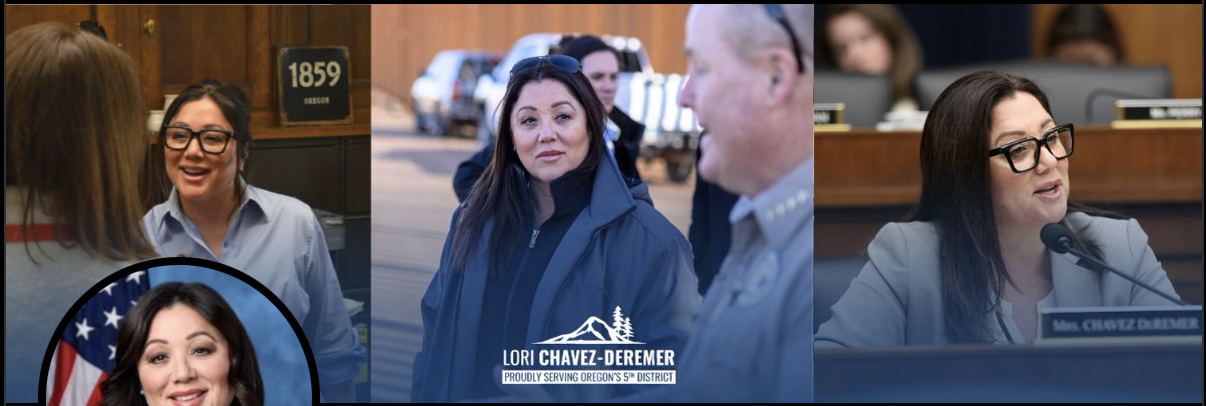
Lori Chavez-DeRemer, Secretary of Labor

Lori Michelle Chávez-DeRemer (/ˈtʃɑːvɛzdəˈriːmər/; born April 7, 1968)[1] is an American politician serving as the U.S. Representative for Oregon’s 5th congressional district since 2023.[2] A member of the Republican Party, Chavez-DeRemer served as mayor of Happy Valley, Oregon, from 2011 to 2019. She is the first Republican woman to represent Oregon in the House. Additionally, she is one of the first two Hispanic women (alongside Andrea Salinas) elected to the United States Congressfrom Oregon. Chavez-DeRemer served one term in the House before being defeated in 2024 by Democrat Janelle Bynum. On November 22, 2024, President-elect Donald Trump nominated Chavez-DeRemer as his. Secretary of Labor.[3]

Scott Turner, Secretary of Housing & Urban Development

Eric Scott Turner (born February 26, 1972) is an American businessman, motivational speaker, politician, and former professional football player, who previously served as the executive director of the White HouseOpportunity and Revitalization Council.[1]Turner formerly served as a Texas state representative for the 33rd District, which includes part of Collin County and all of Rockwall County. Before entering politics, Turner was an American football cornerbackwho played in the National Football League(NFL) for nine seasons. In November 2024, Trump announced his intention to name Turner as the Secretary of Housing and Urban Development in his second administration.[2]

Robert F. Kennedy, Secretary of Health & Human Services

Robert Francis Kennedy Jr. (born January 17, 1954), also known by his initials RFK Jr., is an American politician, environmental lawyeranti-vaccine activist and conspiracy theorist whom President-elect Donald Trump has nominated to serve as United States secretary of health and human services.[1] Kennedy is the chairman and founder of Children’s Health Defense, an anti-vaccine advocacy group and proponent of COVID-19 vaccine misinformation.[2][3] He was on the ballot in some states as an independentcandidate in the 2024 United States presidential election.[4] A member of the Kennedy family, he is a son of United States Attorney General and senator Robert F. Kennedy, and a nephew of U.S. president John F. Kennedy and senator Ted Kennedy.

• Mission to Make America Healthy Again (MAHA)

Dr. Mehmet Oz, Administrator of the Centers for Medicare and Medicaid Services (CMS)

Mehmet Cengiz Öz[a] (/məˈmɛt ˈdʒɛŋɡɪz ɒz/meh-MET JENG-gihz oz; Turkish: [mehˈmetdʒeɲˈɟiz øz]; born June 11, 1960),[2] also known as Dr. Oz (/ɒz/), is a Turkish-American television personality, physician, author, professor emeritus of cardiothoracic surgery at Columbia University,[3] and former political candidate.[4]

Dr. Jay Bhattacharya, MD, Ph.D., Director of the National Institutes of Health (NIH)

Jayanta “Jay” Bhattacharya (born 1968) is an American professor of medicine, economics, and health research policy at Stanford University. He is the director of Stanford’s Center for Demography and Economics of Health and Aging. His research focuses on the economics of health care.[2][3][4] In 2021, Bhattacharya was opposed to lockdowns and mask mandates as a response to the COVID-19 pandemic.[5][6] With Martin Kulldorff and Sunetra Gupta, he was a co-author in 2020 of the Great Barrington Declaration, which advocated lifting COVID-19restrictions on lower-risk groups to develop herd immunity through widespread infection, while promoting the fringe notion that vulnerable people could be simultaneously protected from the virus.[7][8][9] The declaration was criticized as being unethical and infeasible by Tedros Adhanom Ghebreyesus, the director-general of the World Health Organization.[10]

• Co-Author of The Great Barrington Declaration

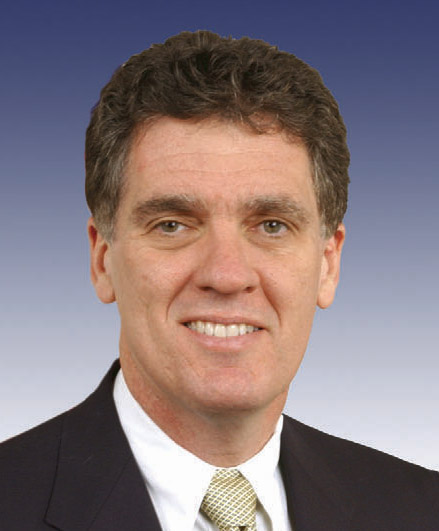
Dr. Dave Weldon, Director of the Centers for Disease Control (CDC)

David Joseph Weldon (born August 31, 1953) is an American politician and physician. He was a Republican member of the United States House of Representatives, representing Florida’s 15th congressional district, and was an unsuccessful candidate for the Republican nomination in Florida’s 2012 U.S. Senate race. In November 2024, Donald Trump named Weldon as the director of the Centers for Disease Control and Prevention.[1]

• Mission to Restoring Truth & Transparency

Marty Makary MD, MPH, Commissioner of the Food & Drug Administration (FDA)

Martin Adel Makary (/məˈkæri/) is a British-American surgeon, professor, author, and medical commentator. He practices surgical oncology and gastrointestinal laparoscopic surgery at the Johns Hopkins Hospital, is Mark Ravitch Chair in Gastrointestinal Surgery at Johns Hopkins School of Medicine, and teaches public health policy as Professor of Surgery and Public Health at the Johns Hopkins Bloomberg School of Public Health.  Makary is an advocate for disruptive innovationin medicine and physician-led initiatives, such as The Surgical Checklist, which he developed at Johns Hopkins and which was later popularized in Atul Gawande’s best-selling book The Checklist Manifesto.[1] \

Makary was named one of the most influential people in healthcare by HealthLeader magazine in 2013.[2]In 2018, Makary was elected to the National Academy of Medicine.[3] During the COVID-19 pandemic, Makary was an early advocate for universal masking to control the pandemic and recommended vaccines for adults.[4] However, he was an outspoken opponent of broad COVID-19 vaccine mandates and, in late 2021 and early 2022, non-pharmaceutical interventions meant to reduce transmission in schools and universities.[5][6] In November 2024, President-Elect Donald Trump announced Makary would be his nominee to head the FDA as the commissioner of Food and Drugs.[7]

Mission to Examine the Causes of Chronic Illness
• “The greatest perpetrator of misinformation during the COVID pandemic has been the United States government … Public health officials were intellectually dishonest. They lied to the American people.” ~ Marty Makary, MD, MPH
Author of Blind Spots

Dr. Janette Nesheiwat, US Surgeon General

Janette Nesheiwat (born 25 August 1980) is an American physician who is the nominee for United States surgeon general.[2] Nesheiwat has served as an assistant medical director of CityMD[3] and is currently a medical contributor on Fox News.[4]

• Getting Flak for Her Previous Vaccine/COVID Positions. ~ Dr. Simone Gold
• Trump’s pick for Surgeon General, Janette Nesheiwat, praised Facebook for censoring anti-vaccine information & accounts like mine and RFK’s specifically, adding that she will “hope and pray” other social media companies do the same. Pick someone else. ~ Elizabeth Health Nut News

Doug Burgum, Secretary of the Interior

Douglas James Burgum (/bɜːrɡəm/ BUR-gəm;[1] born August 1, 1956) is an American businessman and politician serving since 2016 as the 33rd governor of North Dakota.[2][3] He is among the richest politicians in the United States and has an estimated net worth of at least $1.1 billion. He is a member of the Republican Party.[4] Burgum was born and raised in Arthur, North Dakota.

After graduating from North Dakota State University in 1978 with a bachelor’s degree in university studies and earning an MBA from Stanford University two years later,[5]he mortgaged inherited farmland in 1983 to invest in Great Plains Software in Fargo. Becoming its president in 1984, he took the company public in 1997. Burgum sold the company to Microsoft for $1.1 billion in 2001. While working at Microsoft, he managed Microsoft Business Solutions. He has served as board chairman for Australian software company Atlassian and SuccessFactors.

Burgum is the founder of Kilbourne Group, a Fargo-based real-estate development firm, and also is the co-founder of Arthur Ventures, a software venture capital group. Burgum won the 2016 North Dakota gubernatorial election in a landslide. He was reelected by a wide margin in 2020.[6] In June 2023, Burgum launched a campaign for the 2024 Republican presidential nomination. He ended his candidacy in early December 2023,[7]and became an advisor on the Trump campaign‘s energy policy.[8] On November 14, 2024, President-elect Trump announced his intention to nominate Burgum as the United States Secretary of the Interior.[9]

Kelly Loeffler, Secretary of Agriculture

Kelly Lynn Loeffler (/ˈlɛflər/ LEF-lər; born November 27, 1970) is an American businesswoman and politician who served as a United States senator from Georgia from 2020 to 2021. Loeffler was chief executive officer(CEO) of Bakkt, a subsidiary of commodity and financial service provider Intercontinental Exchange, of which her husband, Jeffrey Sprecher, is CEO. She is a former co-owner of the Atlanta Dream of the Women’s National Basketball Association (WNBA).[1] 

Loeffler is a member of the Republican Party. Brian Kemp, the Republican governor of Georgia, appointed Loeffler to the U.S. Senate in December 2019 after Senator Johnny Isakson resigned for health reasons. Loeffler ran in the 2020 Georgia U.S. Senate special election, seeking to hold the seat until January 2023. She finished second in the November 3 election, advancing to a runoff with DemocratRaphael Warnock held on January 5, 2021, where she lost.[2] That same day, her fellow Georgia senator David Perdue also lost his bid for re-election.

When Perdue’s term ended on January 3, 2021, Loeffler ascended to be the senior senator from Georgia, a position she held for just under three weeks until Warnock was sworn in. Loeffler aligned with President Donald Trump in her time in the Senate, touting a “100 percent Trump voting record” during her campaigns.[3][4] After the November 2020 election, Loeffler and Perdue claimed without evidence that there had been unspecified failures in the 2020 U.S. presidential election, and called for the resignation of Georgia secretary of state Brad Raffensperger, who rejected the accusations.

She later supported a lawsuit by Trump allies seeking to overturn the election results,[5] and also announced her intention to object to the certification of the Electoral College results in Congress.[6] After the attack on the U.S. Capitol on January 6, 2021, Loeffler announced that she would withdraw her objection to the certification of the electoral votes and later voted to certify. Loeffler was chosen by president-elect Trump to co-chair his inaugural committee in his upcoming second presidency, along with Steve Witkoff.

Brooke Rollins, Department of Agriculture (USDA)

Brooke Leslie Rollins (born April 10, 1972)[1]is an American attorney who is the president and CEO of the America First Policy Institute. She previously served as the acting director of the United States Domestic Policy Councilunder President Donald Trump. Prior to assuming that role, Rollins oversaw the White House Office of American Innovation. Rollins was president and CEO of the Texas Public Policy Foundation, an Austin-based fossil fuels and school voucher supporting think tank, from 2003 through 2018.[2] During her tenure at TPPF, the think tank grew from having a staff of 3 to a staff of 100.[3] Rollins previously served as deputy general counsel, ethics advisor, and policy director to Texas Governor Rick Perry.[4] She is an advocate of criminal justice reform.[5] On November 23, 2024, President-elect Trump selected Rollins to be secretary of agriculture.[6]

Lee Zeldin, Administrator of the Environmental Protection Agency (EPA)

Lee Michael Zeldin (born January 30, 1980) is an American attorney, politician, and officer in the United States Army Reserve. A member of the Republican Party, he represented New York’s 1st congressional district in the United States House of Representatives from 2015 to 2023. He represented the eastern two-thirds of Suffolk County, including most of Smithtown, all of BrookhavenRiverheadSoutholdSouthamptonEast HamptonShelter Island, and a small part of Islip. From 2011 to 2014, Zeldin served as a member of the New York State Senate from the 3rd Senate district. During Donald Trump‘s presidency, Zeldin was a Trump ally.

He prominently defended Trump during his first impeachment hearingsconcerning the Trump–Ukraine scandal. In April 2021, Zeldin announced his candidacy for governor of New York in 2022.[1] He defeated three challengers in the Republican primary, becoming the nominee of the Republican Party and the Conservative Party. Zeldin lost the election to incumbent governor Kathy Hochulwhile receiving the highest percentage of the vote for a Republican gubernatorial nominee since 2002 and the highest raw vote total for a Republican gubernatorial nominee since 1970.[2] In November 2024, CNN reported that Zeldin was Trump’s nominee for Administrator of the Environmental Protection Agency.[3]

Chris Wright, Secretary of Energy (DOE)

Christopher Allen Wright[1] (born 1965) is an American businessman who is the CEO of Liberty Energy, North America’s second largest hydraulic fracturing company. He is the presumptive nominee for United States Secretary of Energy under Donald Trump‘s second presidency. He is a board member of Oklo Inc., a nuclear technology company, and EMX Royalty, a royalty payment company for mineral rights and mining rights.[2]

Sean Duffy, Secretary of Transportation

Sean Patrick Duffy (born October 3, 1971) is an American politician, prosecutor, lobbyist, and reality television personality who is currently a co-host of The Bottom Line on Fox Business, as well as a contributor on Fox News. A member of the Republican Party, he served as the U.S. representative for Wisconsin’s 7th congressional district from 2011 to 2019. After resigning from Congress, he became a lobbyist.[1] He first gained fame as a cast member on The Real World: Boston, 1998’s Road Rules: All Stars and 2002’s Real World/Road Rules Challenge: Battle of the Seasons, before going on to serve as district attorney of Ashland County, Wisconsin. In November 2024, Donald Trump named Duffy as his nominee for Secretary of Transportationin his second presidency.[2]

Linda McMahon, Secretary of Education

Linda Marie McMahon (/məkˈmæn/née Edwards; born October 4, 1948) is an American politician, business executive and retired professional wrestler. She was the 25th administrator of the Small Business Administration from 2017 to 2019. McMahon has been nominated to lead the Department of Education under the second Trump administration.

McMahon, along with her husband, Vince McMahon, founded sports entertainment company Titan Sports, Inc. (later World Wrestling Entertainment, Inc.) where she worked as the president and later CEO from 1980 to 2009. During this time, the company grew from a regional business in the northeast to a large multinational corporation. Among other things, she initiated the company’s civic programs, Get R.E.A.L. and SmackDown! Your Vote. She made occasional on-screen performances, most notably in a feud with her husband that culminated at WrestleMania X-Seven.

On April 15, she was named chairwoman of America First Action, a pro-Trump Super PAC. On November 19, 2024, McMahon was nominated by Donald Trump to serve as Secretary of Education.[2]

Vivek Ramaswamy, Department of Government Efficiency (DOGE)

Vivek Ganapathy Ramaswamy (/vɪˈveɪkrɑːməˈswɑːmiː/;[1][2] vih-VAYK rah-mə-SWAH-mee; born August 9, 1985) is an American entrepreneur. He founded Roivant Sciences, a pharmaceutical company, in 2014. In February 2023, Ramaswamy declared his candidacy for the Republican Party nomination in the 2024 United States presidential election. He suspended his campaign in January 2024, after finishing fourth in the Iowa caucuses and endorsed Trump.[3] On November 12, 2024, President-elect Donald Trump announced that Ramaswamy and businessman Elon Musk had been tasked to lead the newly proposed Department of Government Efficiency.[4] Ramaswamy was born in Cincinnati to Indian immigrant parents. He graduated from Harvard University with a bachelor’s degree in biology and later earned a degree from Yale Law School. Ramaswamy worked as an investment partner at a hedge fund before founding Roivant Sciences. He also co-founded an investment firm, Strive Asset Management. Ramaswamy sees the United States in the middle of a national identity crisis precipitated by what he calls “new secular religions like COVID-ism, climate-ism, and gender ideology”.[5] He is also a critic of environmental, social, and corporate governance initiatives (ESG).[6]In January 2024, Forbes estimated Ramaswamy’s net worth at more than $960 million; his wealth comes from biotechand financial businesses.[7][8]

Mission to Dismantle the Regulatory State & Cut Wasteful Spending

Elon Musk, Department of Government Efficiency (DOGE)

Elon Reeve Musk FRS (/ˈiːlɒn/; born June 28, 1971) is a businessman known for his key roles in the space company SpaceX and the automotive company Tesla, Inc. His other involvements include ownership of X Corp., the company that operates the social media platform X (formerly Twitter), and his role in the founding of the Boring CompanyxAINeuralink, and OpenAI. In November 2024, United States president-elect Donald Trumpappointed Musk as the co-chair of the proposed Department of Government Efficiency (DOGE) in the second Trump administration. Musk is the wealthiest individual in the world; as of November 2024, Forbes estimates his net worth to be US$304 billion.[2]

Musk was born in Pretoria, South Africa, and briefly attended the University of Pretoria before immigrating to Canada at the age of 18, acquiring citizenship through his Canadian-born mother. Two years later, he matriculated at Queen’s University at Kingston in Canada. Musk later transferred to the University of Pennsylvania and received bachelor’s degreesin economics and physics. He moved to California in 1995 to attend Stanford University, but never enrolled in classes, and with his brother Kimbal co-founded the online city guidesoftware company Zip2. The startup was acquired by Compaq for $307 million in 1999. That same year, Musk co-founded X.com, a direct bank. X.com merged with Confinity in 2000 to form PayPal. In 2002, Musk acquired US citizenship, and that October eBay acquired PayPal for $1.5 billion. Using $100 million of the money he made from the sale of PayPal, Musk founded SpaceX, a spaceflight services company, in 2002. 

In 2004, Musk was an early investor in electric-vehicle manufacturer Tesla Motors, Inc. (later Tesla, Inc.), providing most of the initial financing and assuming the position of the company’s chairman. He later became the product architect and, in 2008, the CEO. In 2006, Musk helped create SolarCity, a solar energy company that was acquired by Tesla in 2016 and became Tesla Energy. In 2013, he proposed a hyperloop high-speed vactrain transportation system. In 2015, he co-founded OpenAI, a nonprofit artificial intelligenceresearch company. The following year Musk co-founded Neuralink, a neurotechnology company developing brain–computer interfaces, and The Boring Company, a tunnel construction company.

In early 2024, Musk became active in American politics as a vocal and financial supporter of Donald Trump, becoming Trump’s second-largest individual donor in October 2024. In November 2024, Trump announced that he had chosen Musk along with Vivek Ramaswamyto co-lead the Department of Government Efficiency (DOGE), a new advisory board which aims to improve government efficiency through measures such as slashing “excess regulations” and cutting “wasteful expenditures”.

Mission to Dismantle the Regulatory State & Cut Wasteful Spending

AMERICA FIRST AGENDA BY EXECUTIVE ORDER

  • Restore Border Security & Immigration Including Mass Deportation of Illegal Aliens
  • Declare War on Drug Cartels (Including Big Pharma & Global Actors)
  • Declare War on Child Trafficking & Establish Death Penalty for Convicted Human Traffickers
  • Halt Federal Funds for Any State or Local Government Defying Federal Immigration Law (End Sanctuary Cities)
  • Halt Federal Funds for Inappropriate Curricula Including Critical Race Theory, DEI, Transgender & Anti-American Political Content Taught in Schools
  • End Mutilation of Youth Through Gender Transitions; Cease Funding Any Sex & Gender Transition
  • Halt Federal Funding for Any Abortion Procedure or Organ Harvesting of New-Born Infants
  • Private Right of Action for Victims to Sue Doctors; Civil Rights Violations; Cease Funding to School Districts
  • End Electric Vehicle Mandates; Making Them Voluntary Not Mandatory
  • Restore Fundamental Protection of Free Speech & All Constitutional Rights; Prohibit Any Future Collusion Between Government & Private Sector to Deprive Citizens of Rights
  • Dismantle Needless Bureaucracy & Regulations
  • Dismantle or Overhaul All Weaponized Government Agencies Via Schedule F (Firing Incompetent or Corrupt Staff By Executive Order)
  • Clean Out All Corrupt Actors in National Security, Defense & Intelligence Apparatus

ESTABLISHING NEW GOVERNMENT PROGRAMS & LEGISLATION

  • Founding Department of Government Efficiency (DOGE)with Mission to Dismantle the Regulatory State & Cut Wasteful Spending)
  • Restore Economic Prosperity for All
  • Restore Energy Independence By All Means Necessary Including Fracking, Drilling & Green Energy
  • Restore Tax Incentives for Small Businesses
  • Cap Credit Card Rates at 10%
  • Founding The American Academy (Full Spectrum of Human Knowledge for Free Online; Bachelor’s Degree Available)
  • Department of Education Appoints New Accreditors for All Colleges/Universities to Qualify for Federal Funding (Restore Meritocracy in Our Educational Institutions)
  • Eliminate the Federal Income Tax & Replace with Tariffs On Imports
  • Allow IRS Deduction Up to $10k Towards Homeschooling Per Child
  • Become #1 Energy Producer in the World & Restore Energy Independence
  • Repeal of the 1986 Vaccine Injury Act
  • Restore FAIR Act for Equal Time in Broadcasting
  • Revoke Licenses & Funding for Propaganda Media (Including NPR)
  • Reintroduce 28th Amendment with Required That All Laws Applied Equally to Citizens & Congress
  • Propose ? Amendment for Term-Limits on Elected Officials in Congress
  • Restore Net Neutrality To Equalize the Internet Playing Field Once Again
  • Restore Restricted Regulations for GMO’s in Food & Medicine: https://www.centerforfoodsafety.org/press-releases/6417/conservationists-and-farmers-sue-over-trump-administration-removal-of-most-genetically-engineered-organism-regulation
  • Restore Accountability in the Judicial System & Fire Judicial Activists Who Violate Their Oath of Allegiance to the U.S. Constitution & Bill of Rights
  • Review US Supreme Court’s Citizens United Ruling Which Removed Limits to Corporate Funding/Lobbyists Thereby Corrupting Election Officials

Sources: X.com & Wikipedia

Genocide Historian Omer Bartov on Israel and Gaza | Antiwar.com

By William Astore

Reprinted from Bracing Views with the author’s permission.

Omer Bartov is a historian who specializes in German military history and genocide studies. I have three of his books: “The Eastern Front, 1941-45, German Troops and the Barbarisation of Warfare”; “Hitler’s Army: Soldiers, Nazis, and War in the Third Reich”; and “Germany’s War and the Holocaust: Disputed Histories.” He has studied the Holocaust closely; as a young man, he served in the Israeli Defense Forces and now teaches at Brown University. He is uniquely placed to judge what’s happening in Gaza and he’s quite clear about his conclusion. It’s a genocide.

I highly recommend watching this entire interview of Omer Bartov by LTC Danny Davis.

A few points from the interview:

  •  The IDF in Gaza is showing the effects of brutalization similar to that of the Wehrmacht in World War II. IDF soldiers are looting, killing, and showing similar manifestations of barbaric indiscipline, and they are almost never held accountable for their war crimes.
  •  The Israeli people are being encouraged to show no empathy toward Palestinian suffering. Zionism has increasingly morphed into a racist form of Jewish supremacism in which Palestinian lives and suffering simply don’t matter.
  • U.S. politicians are enabling genocide in Gaza.
  • What Bibi Netanyahu wants is a “Greater Israel” that is largely free of Palestinians. U.S. talk of a “two-state solution” is nonsensical in the face of Bibi’s ruthless goal.
  • Israel is obviously pursuing a military solution to the Palestinian question. That “solution” involves mass killing, massive destruction of infrastructure, and deliberate efforts to promote starvation while doing little to prevent the spread of disease. The goal of forcing Palestinians to flee from their land, or to die if they choose to remain and fight, marks this as a genocide under international law, ironically law that was enacted in the aftermath of the Holocaust by Germany against European Jews during World War II.
  • The U.S. is playing Bibi’s game. Bibi will keep going with this genocide because to stop it with a ceasefire would likely mean that he will be called to account for October 7th (failing to prevent the attacks) as well as crimes he’s previously been indicted for.
  • Instead of the U.S. being the “best friend” of Israel, it is encouraging the worst impulses within Israel, setting the stage for further Middle East conflict and a possible war with Iran. It is also, let’s always remember, enabling the mass slaughter of innocent Palestinians.

Bartov suggests Netanyahu would prefer Donald Trump to be reelected as president, but he notes a Kamala Harris presidency would likely change little, since Netanyahu will bring all pressure to bear against Democrats to continue the current policy. Harris has already stated she supports Israel’s right to defend itself and is against any weapons embargo. If she wins, it’s likely she’ll continue current practices.

Bartov sees this as a disaster not only for the Palestinians but also ultimately for Israel in the long term.

William J. Astore is a retired lieutenant colonel (USAF). He taught history for fifteen years at military and civilian schools. He writes at Bracing Views

Source: Anti-War.com

Scott Ritter’s On the Most Important Events of 2023 | RT.com

The year 2023 was a banner year for change, underscoring the reality of a world transforming away from American hegemony toward the uncertainty of a yet-to-be-defined multilateral reality. This transformation was marked by many events – here are the five most important ones.

The failed Ukrainian counteroffensive

Perhaps the most-hyped event of the year, Ukraine’s much-anticipated spring/summer counteroffensive was NATO’s version of the German Ardennes offensive of December 1944 – a last-gasp effort to throw all remaining reserves into a desperate attempt to score a knock-out blow against an opponent who had seized the strategic initiative. Any sound military analyst could have predicted the inevitability of a Ukrainian defeat – one cannot responsibly speak of launching a frontal assault on a heavily defended, well-prepared defensive position using forces who are neither equipped, organized, or trained for the task.

The amount of delusion surrounding Ukrainian and NATO expectations only underscores the desperation that underpinned their cause – the West’s support of Ukraine was always of a superficial nature, where domestic politics trumped global reality. The ignorance of those who believed Ukraine could pierce the Russian defenses was easily matched by those who thought that a Moscow Maidan movement could be created through the combined impact of economic sanctions and a forever war against Ukraine.

The counteroffensive is the manifestation of the Russophobia that has gripped the collective West, where ignorance trumps fact, and delusion supersedes reality. The failed NATO/Ukrainian counteroffensive, far from weakening Russia, proved to be the incubator for the birth of a more powerful, confident, and resilient Russia that will no longer allow itself to be classified as a second-class citizen in the world community.

On October 6, 2023, Israel was sitting on top of the world. It had cowed the administration of US President Joe Biden into forgetting about a two-state solution to the Palestinian problem. Instead, it embraced the vision of a greater Israel, which glossed over the continued theft of Palestinian land through unchecked support for illegal Israeli settlements by focusing on the broader geopolitical benefits of normalized relations between Israel and the Gulf Arab states. The Israel Defense Forces were the best military in the region, backed by an intelligence and security establishment possessing a legendary reputation for knowing everything about all potential enemies.

October 7: The Israel-Hamas war

Then came October 7 and the Hamas surprise attack.

All talk of Israeli-Arab normalization is finished. The IDF is being embarrassed by Hamas and defeated by Hezbollah. The Israeli intelligence service has been exposed as an empty shell whose greatest accomplishment is an AI-assisted targeting system that facilitates the killing of Palestinian civilians.

The new reality of the Middle East is now shaped by two related issues – the necessity of a Palestinian state and the inevitability of a strategic Israeli defeat. The paths toward resolving each of these issues will not be easy ones to follow, and they may unfold over the span of years rather than months, but one thing is certain – this new geopolitical reality would not have been possible without the events of October 7.

Africa: The Sahel revolt

In the span of three years, Françafrique, or the post-colonial French-dominated sphere of influence in the Sahel region of Africa, has gone from serving as the springboard for the projection of French-led American and EU efforts to project military power in an attempt to defeat the forces of Islamic insurgency, to being humiliated and defeated at the hands of nationalists who overthrew traditional pro-French governments and replacing them with anti-French military juntas. Starting with Mali in 2021, then Burkina Faso in 2022, and finally Niger in 2023, the collapse of the Sahel component of Françafrique has been as dramatic as it has been decisive. There was seemingly nothing France nor its supporters could do to reverse the tide of anti-French sentiment in the region. In the end, the threat of outside military intervention to change the July 2023 coup in Niger collapsed in the face of a unified collective defense posture taken by the three former French colonies.

The dramatic eviction of France from the region was matched by the emergence of a new regional power – Russia. The rise of the new tripartite regional alliance between Mali, Burkina Faso, and Niger coincided with a more assertive Russian foreign policy, which looked to form common cause with an Africa still straining from the bonds of post-colonial existence manifested in geopolitical relationships like those formed under Françafrique. The Russian approach was borne out in the success of last summer’s Russian-African Summit, held in St. Petersburg, and the growing economic and security relationships between Russia and many African states – including Mali, Burkina Faso, and Niger, that have emerged since. The Russian tricolor flag, it seems, has replaced that of France as the most influential symbol of foreign involvement in that region.

BRICS

In 2022, China hosted the 14th Summit of the Brazil, Russia, India, China, and South African economic forum best known by the acronym formed from the first letters of its five-nation membership – BRICS. At that summit, BRICS aspired to greatness but was unable to accomplish anything more than talk about the creation of a so-called “currency basket” designed to challenge the global supremacy of the US dollar and speak wistfully about the possibility of opening its membership to other nations.

Then came the 15th BRICS Summit, held in South Africa. From a forum possessing unrealized potential, BRICS exploded upon the international scene as a multi-lateral competitor to the American singularity, a viable challenger to the US-imposed “rules-based international order” that had dominated global geopolitical discourse since the end of the Second World War. The events that helped propel BRICS front and center on the stage of global relevance represented a perfect storm, so to speak, of geopolitical calamity – the defeat of the collective West at the hands of Russia in Ukraine, the collapse of Françafrique in the Sahel, and the increasing dominance of China on the global economic reality.

The South African-hosted BRICS Summit proved to be the perfect counterpoint to the combined pathos of the G-7 Summit in Hiroshima, Japan, and the NATO Summit in Vilnius, Lithuania. In Japan and Lithuania, western impotence was on full display for the world to see. In sharp contrast, the virility of the BRICS phenomenon provided a multilateral alternative that proved to be attractive to many nations, including the six that were accepted into BRICS as part of its expansion strategy (Argentina, Egypt, Iran, Ethiopia, Saudi Arabia, and the United Arab Emirates, although Argentina withdrew its membership package following the election of Javier Milei as president in December 2023), and the fourteen other nations who have formally submitted applications to join in 2024, when Russia takes over the chairmanship. BRICS has surpassed the G7 in terms of collective economic clout, and the geopolitical influence of its collective membership is such that it will exceed both the G7 and NATO forums in terms of overall international relevance in the years to come.

The US: The Naked Emperor

The United States spends nearly $1 trillion a year on its defense – more than the combined defense expenditures of its ten closest rivals for the top spot. This money funds the strategic nuclear deterrence force and the conventional military power projection potential of the US. Given the enormous sums involved, one would anticipate that the dominance of US military power worldwide would be unmatched. Curiously, this is not the case.

By spending a fraction of what the US does for similar services, Russia has overtaken the United States when it comes to strategic nuclear forces. The US needs a major upgrade to its nuclear triad – the land-based and submarine-launched ballistic missiles and manned bombers – that comprise its nuclear strike capabilities. While replacement systems are in the works, it will take more than a decade to get these systems online, and the cost of doing this will run into the hundreds of billions of dollars – or more, given the history of US defense industry inefficiencies and cost overruns.

Russia, meanwhile, has begun putting advanced missiles into service – missiles designed to defeat US missile defenses, along with new submarines and manned bombers. Traditional venues used by the US to offset Russian strategic advances, such as arms control, are no longer available due to short-sighted US policies that rejected arms control for the potential of achieving a strategic nuclear advantage. The script, so to speak, has been flipped, and it’s now the US that finds itself on the short end of the atomic power equation. This disadvantageous position will be even further exacerbated by the growth of China’s strategic nuclear force, which is in the process of expanding from possessing some 400 nuclear weapons to matching the US and Russia’s 1,500 deployed warheads.

The US used to maintain a conventional military force structure capable of fighting two-and-one-half wars simultaneously – one in Europe, one in Asia, and a holding action in the Middle East until victory was achieved in one of the first two theaters, and forces could be redeployed. Today, the US, by trying to maintain a global presence that mirrors that of the Cold War, is unable to fight and win a single major conflict. It has maxed out its conventional potential in Europe, deploying some 100,000 troops in support of NATO, which has allowed its combined military combat potential to atrophy to the point that no NATO nation has a viable military capability. The collective impotence of NATO is on display in Ukraine, where a Russian army is in the process of defeating a NATO-trained and equipped Ukrainian military.

In the Pacific, the US is facing the fact that it lacks sufficient military power to defend Taiwan in the face of any potential Chinese military operation. There have been advances in the accuracy and lethality of Chinese stand-off weapons, including new advanced hypersonic missiles, which, in theory at least, could overcome US air defense systems that protect the centerpiece of American power projection – the aircraft carrier battlegroup. This weakness is not just limited to any potential conflict with China—the US Navy has deployed carrier battlegroups off the coast of Lebanon, in the Persian Gulf, and to the Red Sea, where they have been prevented from engaging in any decisive military intervention out of fear that missiles fired by Hezbollah, Iran, and the Houthi of Yemen could damage or sink the most visible symbol of American military power today.

With a budget of nearly $1 trillion, one would expect the US to be parading itself worldwide via a military second to none in terms of capabilities and lethality. Instead, the US has been exposed as an emperor with no clothes whose nakedness is a source of embarrassment on a global stage that had grown accustomed to the finery and pageantry of American military power. The humiliation of the US Navy at the hands of the Houthi is but the most recent manifestation of a trend exposing US military weakness. This trend will only expand in 2024.

Source: RT.com

A Threshold Crossed: Israeli Authorities and the Crimes of Apartheid and Persecution | Human Rights Watch

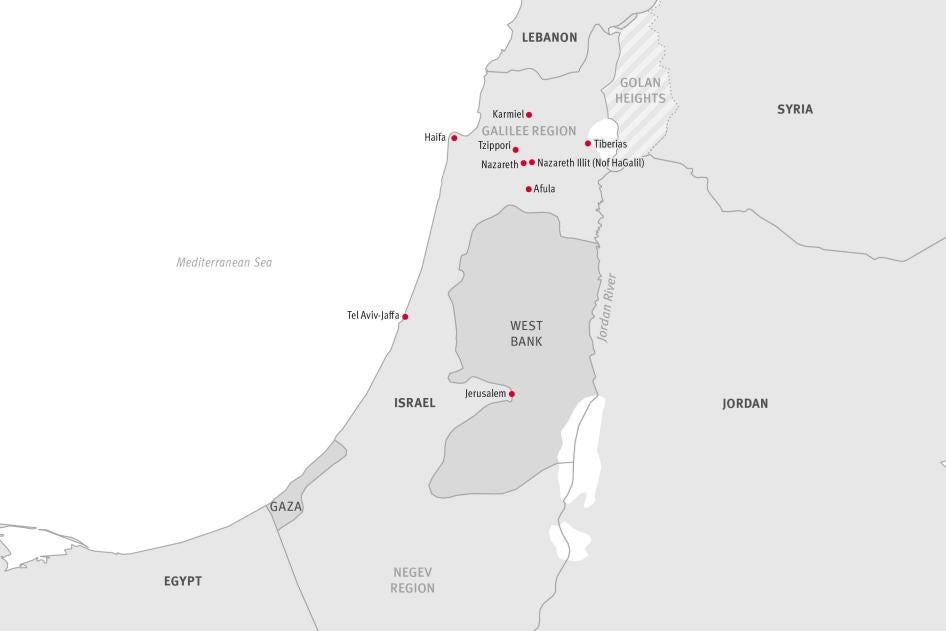
Map of Israel and Occupied Palestinian Territories

Summary

Several widely held assumptions, including that the occupation is temporary, that the “peace process” will soon bring an end to Israeli abuses, that Palestinians have meaningful control over their lives in the West Bank and Gaza, and that Israel is an egalitarian democracy inside its borders, have obscured the reality of Israel’s entrenched discriminatory rule over Palestinians. Israel has maintained military rule over some portion of the Palestinian population for all but six months of its 73-year history. It did so over the vast majority of Palestinians inside Israel from 1948 and until 1966. From 1967 until the present, it has militarily ruled over Palestinians in the OPT, excluding East Jerusalem. By contrast, it has since its founding governed all Jewish Israelis, including settlers in the OPT since the beginning of the occupation in 1967, under its more rights-respecting civil law.

Overview map of Israel and Palestine
Israel and the Israeli-occupied Palestinian Territory, made up of the West Bank, including East Jerusalem, and the Gaza Strip, as well as the Israeli-occupied Golan Heights © 2021 Human Rights Watch

For the past 54 years, Israeli authorities have facilitated the transfer of Jewish Israelis to the OPT and granted them a superior status under the law as compared to Palestinians living in the same territory when it comes to civil rights, access to land, and freedom to move, build, and confer residency rights to close relatives. While Palestinians have a limited degree of self-rule in parts of the OPT, Israel retains primary control over borders, airspace, the movement of people and goods, security, and the registry of the entire population, which in turn dictates such matters as legal status and eligibility to receive identity cards.

A number of Israeli officials have stated clearly their intent to maintain this control in perpetuity and backed it up through their actions, including continued settlement expansion over the course of the decades-long “peace process.” Unilateral annexation of additional parts of the West Bank, which the government of Prime Minister Benjamin Netanyahu has vowed to carry out, would formalize the reality of systematic Israeli domination and oppression that has long prevailed without changing the reality that the entire West Bank is occupied territory under the international law of occupation, including East Jerusalem, which Israel unilaterally annexed in 1967.

International criminal law has developed two crimes against humanity for situations of systematic discrimination and repression: apartheid and persecution. Crimes against humanity stand among the most odious crimes in international law.

The international community has over the years detached the term apartheid from its original South African context, developed a universal legal prohibition against its practice, and recognized it as a crime against humanity with definitions provided in the 1973 International Convention on the Suppression and Punishment of the Crime of Apartheid (“Apartheid Convention”) and the 1998 Rome Statute of the International Criminal Court (ICC).

The crime against humanity of persecution, also set out in the Rome Statute, the intentional and severe deprivation of fundamental rights on racial, ethnic, and other grounds, grew out of the post-World War II trials and constitutes one of the most serious international crimes, of the same gravity as apartheid.

The State of Palestine is a state party to both the Rome Statute and the Apartheid Convention. In February 2021, the ICC ruled that it has jurisdiction over serious international crimes committed in the entirety of the OPT, including East Jerusalem, which would include the crimes against humanity of apartheid or persecution committed in that territory. In March 2021, the ICC Office of Prosecutor announced the opening of a formal investigation into the situation in Palestine.

The term apartheid has increasingly been used in relation to Israel and the OPT, but usually in a descriptive or comparative, non-legal sense, and often to warn that the situation is heading in the wrong direction. In particular, Israeli, Palestinian, US, and European officials, prominent media commentators, and others have asserted that, if Israel’s policies and practices towards Palestinians continued along the same trajectory, the situation, at least in the West Bank, would become tantamount to apartheid.[1] Some have claimed that the current reality amounts to apartheid.[2] Few, however, have conducted a detailed legal analysis based on the international crimes of apartheid or persecution.[3]

In this report, Human Rights Watch examines the extent to which that threshold has already been crossed in certain of the areas where Israeli authorities exercise control.

Definitions of Apartheid and Persecution

The prohibition of institutionalized discrimination, especially on grounds of race or ethnicity, constitutes one of the fundamental elements of international law. Most states have agreed to treat the worst forms of such discrimination, that is, persecution and apartheid, as crimes against humanity, and have given the ICC the power to prosecute these crimes when national authorities are unable or unwilling to pursue them. Crimes against humanity consist of specific criminal acts committed as part of a widespread or systematic attack, or acts committed pursuant to a state or organizational policy, directed against a civilian population.

The Apartheid Convention defines the crime against humanity of apartheid as “inhuman acts committed for the purpose of establishing and maintaining domination by one racial group of persons over any other racial group of persons and systematically oppressing them.” The Rome Statute of the ICC adopts a similar definition: “inhumane acts… committed in the context of an institutionalized regime of systematic oppression and domination by one racial group over any other racial group or groups and committed with the intention of maintaining that regime.” The Rome Statute does not further define what constitutes an “institutionalized regime.”

The crime of apartheid under the Apartheid Convention and Rome Statute consists of three primary elements: an intent to maintain a system of domination by one racial group over another; systematic oppression by one racial group over another; and one or more inhumane acts, as defined, carried out on a widespread or systematic basis pursuant to those policies.

Among the inhumane acts identified in either the Convention or the Rome Statute are “forcible transfer,” “expropriation of landed property,” “creation of separate reserves and ghettos,” and denial of the “the right to leave and to return to their country, [and] the right to a nationality.”

The Rome Statute identifies the crime against humanity of persecution as “the intentional and severe deprivation of fundamental rights contrary to international law by reason of the identity of the group or collectivity,” including on racial, national, or ethnic grounds. Customary international law identifies the crime of persecution as consisting of two primary elements: (1) severe abuses of fundamental rights committed on a widespread or systematic basis, and (2) with discriminatory intent.

Few courts have heard cases involving the crime of persecution and none the crime of apartheid, resulting in a lack of case law around the meanings of key terms in their definitions. As described in the report, international criminal courts have over the last two decades evaluated group identity based on the context and construction by local actors, as opposed to earlier approaches focused on hereditary physical traits. In international human rights law, including the International Convention on the Elimination of All Forms of Racial Discrimination (ICERD), race and racial discrimination have been broadly interpreted to include distinctions based on descent, and national or ethnic origin, among other categories.

Application to Israel’s Policies towards Palestinians

Two primary groups live today in Israel and the OPT: Jewish Israelis and Palestinians. One primary sovereign, the Israeli government, rules over them.

Intent to Maintain Domination

A stated aim of the Israeli government is to ensure that Jewish Israelis maintain domination across Israel and the OPT. The Knesset in 2018 passed a law with constitutional status affirming Israel as the “nation-state of the Jewish people,” declaring that within that territory, the right to self-determination “is unique to the Jewish people,” and establishing “Jewish settlement” as a national value. To sustain Jewish Israeli control, Israeli authorities have adopted policies aimed at mitigating what they have openly described as a demographic “threat” that Palestinians pose. Those policies include limiting the population and political power of Palestinians, granting the right to vote only to Palestinians who live within the borders of Israel as they existed from 1948 to June 1967, and limiting the ability of Palestinians to move to Israel from the OPT and from anywhere else to Israel or the OPT. Other steps are taken to ensure Jewish domination, including a state policy of “separation” of Palestinians between the West Bank and Gaza, which prevents the movement of people and goods within the OPT, and “Judaization” of areas with significant Palestinian populations, including Jerusalem as well as the Galilee and the Negev in Israel. This policy, which aims to maximize Jewish Israeli control over land, concentrates the majority of Palestinians who live outside Israel’s major, predominantly Jewish cities into dense, under-served enclaves and restricts their access to land and housing, while nurturing the growth of nearby Jewish communities.

Systematic Oppression and Institutional Discrimination

To implement the goal of domination, the Israeli government institutionally discriminates against Palestinians. The intensity of that discrimination varies according to different rules established by the Israeli government in Israel, on the one hand, and different parts of the OPT, on the other, where the most severe form takes place.

In the OPT, which Israel has recognized as a single territory encompassing the West Bank and Gaza, Israeli authorities treat Palestinians separately and unequally as compared to Jewish Israeli settlers. In the occupied West Bank, Israel subjects Palestinians to draconian military law and enforces segregation, largely prohibiting Palestinians from entering settlements. In the besieged Gaza Strip, Israel imposes a generalized closure, sharply restricting the movement of people and goods—policies that Gaza’s other neighbor, Egypt, often does little to alleviate. In annexed East Jerusalem, which Israel considers part of its sovereign territory but remains occupied territory under international law, Israel provides the vast majority of the hundreds of thousands of Palestinians living there with a legal status that weakens their residency rights by conditioning them on the individual’s connections to the city, among other factors. This level of discrimination amounts to systematic oppression.

In Israel, which the vast majority of nations consider being the area defined by its pre-1967 borders, the two tiered-citizenship structure and bifurcation of nationality and citizenship result in Palestinian citizens having a status inferior to Jewish citizens by law. While Palestinians in Israel, unlike those in the OPT, have the right to vote and stand for Israeli elections, these rights do not empower them to overcome the institutional discrimination they face from the same Israeli government, including widespread restrictions on accessing land confiscated from them, home demolitions, and effective prohibitions on family reunification.

The fragmentation of the Palestinian population, in part deliberately engineered through Israeli restrictions on movement and residency, furthers the goal of domination and helps obscure the reality of the same Israeli government repressing the same Palestinian population group, to varying degrees in different areas, for the benefit of the same Jewish Israeli dominant group.

Inhumane Acts and Other Abuses of Fundamental Rights

Pursuant to these policies, Israeli authorities have carried out a range of inhumane acts in the OPT. Those include sweeping restrictions on the movement of 4.7 million Palestinians there; the confiscation of much of their land; the imposition of harsh conditions, including categorical denial of building permits in large parts of the West Bank, which has led thousands of Palestinians to leave their homes under conditions that amount to forcible transfer; the denial of residency rights to hundreds of thousands of Palestinians and their relatives, largely for being abroad when the occupation began in 1967, or for long periods during the first few decades of the occupation, or as a result of the effective freeze on family reunification over the last two decades; and the suspension of basic civil rights, such as freedom of assembly and association, depriving Palestinians of the opportunity to have a voice in a wide range of affairs that most affect their daily lives and futures. Many of these abuses, including categorical denials of building permits, mass residency revocations or restrictions, and large-scale land confiscations, have no legitimate security justifications; others, such as the extent of restrictions on movement and civil rights, fail any reasonable balancing test between security concerns and the severity of the underlying rights abuse.

Since the founding of the state of Israel, the government also has systematically discriminated against and violated the rights of Palestinians inside the state’s pre-1967 borders, including by refusing to allow Palestinians access to the millions of dunams of land (1000 dunams equals 100 hectares, about 250 acres or 1 square kilometer) that were confiscated from them. In one region—the Negev—these policies make it virtually impossible for tens of thousands of Palestinians to live lawfully in the communities they have lived in for decades. In addition, Israeli authorities refuse to permit the more than 700,000 Palestinians who fled or were expelled in 1948, and their descendants, to return to Israel or the OPT, and impose blanket restrictions on legal residency, which block many Palestinian spouses and families from living together in Israel.

Report Findings

This report examines Israeli policies and practices towards Palestinians in the OPT and Israel and compares them to the treatment of Jewish Israelis living in the same territories. It is not an exhaustive evaluation of all types of international human rights and humanitarian law violations. Rather, it surveys consequential Israeli government practices and policies that violate the basic rights of Palestinians and whose purpose is to ensure the domination of Jewish Israelis, and assesses them against the definitions of the crimes against humanity of apartheid and persecution.

The report draws on years of research and documentation by Human Rights Watch and other rights organizations, including fieldwork conducted for this report. Human Rights Watch also reviewed Israeli laws, government planning documents, statements by officials, and land records. This evidentiary record was then analyzed under the legal standards for the crimes of apartheid and persecution. Human Rights Watch also wrote in July 2020 to Israeli Prime Minister Benjamin Netanyahu, soliciting the government’s perspectives on the issues covered, but, as of publication, had not received a response.

The report does not set out to compare Israel with South Africa under apartheid or to determine whether Israel is an “apartheid state”—a concept that is not defined in international law. Rather, the report assesses whether specific acts and policies carried out by Israeli authorities today amount in particular areas to the crimes of apartheid and persecution as defined under international law.

Each of the report’s three main substantive chapters explores Israel’s rule over Palestinians: the dynamics of its rule and discrimination, looking in turn at Israel and the OPT, the particular rights abuses that it commits there, and some of the objectives that motivate these policies. It does so in terms of the primary elements of the crimes of apartheid and persecution, as outlined above. Human Rights Watch evaluates the dynamics of Israeli rule in each of these areas, keeping in mind the different legal frameworks that apply in the OPT and Israel, which are the two legally recognized territorial entities, each with a different status under international law. While noting significant factual differences among subregions in each of these two territories, the report does not make separate subregional determinations.

On the basis of its research, Human Rights Watch concludes that the Israeli government has demonstrated an intent to maintain the domination of Jewish Israelis over Palestinians across Israel and the OPT. In the OPT, including East Jerusalem, that intent has been coupled with systematic oppression of Palestinians and inhumane acts committed against them. When these three elements occur together, they amount to the crime of apartheid.

Israeli officials have also committed the crime against humanity of persecution. This finding is based on the discriminatory intent behind Israel’s treatment of Palestinians and the grave abuses carried out in the OPT that include the widespread confiscation of privately owned land, the effective prohibition on building or living in many areas, the mass denial of residency rights, and sweeping, decades-long restrictions on the freedom of movement and basic civil rights. Such policies and practices intentionally and severely deprive millions of Palestinians of key fundamental rights, including to residency, private property, and access to land, services, and resources, on a widespread and systematic basis by virtue of their identity as Palestinians.

Seeking Maximal Land with Minimal Palestinians

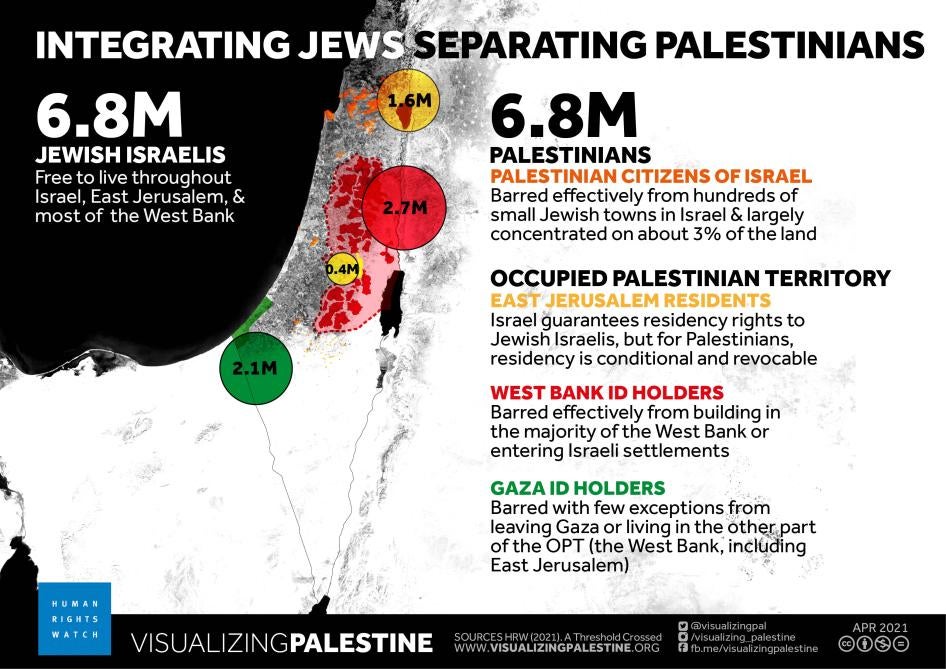
Israeli policy has sought to engineer and maximize the number of Jews, as well as the land available to them, in Israel and the portions of the OPT coveted by the Israeli government for Jewish settlement. At the same time, by restricting the residency rights of Palestinians, Israeli policy seeks to minimize the number of Palestinians and the land available to them in those areas. The level of repression is most severe in the OPT, although often less severe aspects of similar policies can be found within Israel.

202104mena_israelpalestine_separatingpalestinians

In the West Bank, authorities have confiscated more than 2 million dunams of land from Palestinians, making up more than one-third of the West Bank, including tens of thousands of dunams that they acknowledge are privately owned by Palestinians. One common tactic they have used is to declare territory, including privately-owned Palestinian land, as “state land.” The Israeli group Peace Now estimates that the Israeli government has designated about 1.4 million dunams of land, or about a quarter of the West Bank, as state land. The group has also found that more than 30 percent of the land used for settlements is acknowledged by the Israeli government as having been privately owned by Palestinians. Of the more than 675,000 dunams of state land that Israeli authorities have allocated for use by third parties in the West Bank, they have earmarked more than 99 percent for use by Israeli civilians, according to government data. Land grabs for settlements and the infrastructure that primarily serves settlers effectively concentrate Palestinians in the West Bank, according to B’Tselem, into “165 non-contiguous ‘territorial islands.’”

Israeli authorities have also made it virtually impossible in practice for Palestinians in Area C, the roughly 60 percent of the West Bank that the Oslo Accords placed under full Israeli control, as well as those in East Jerusalem, to obtain building permits. In Area C, for example, authorities approved less than 1.5 percent of applications by Palestinians to build between 2016 and 2018—21 in total—a figure 100 times smaller than the number of demolition orders it issued in the same period, according to official data. Israeli authorities have razed thousands of Palestinian properties in these areas for lacking a permit, leaving thousands of families displaced. By contrast, according to Peace Now, Israeli authorities began construction on more than 23,696 housing units between 2009 and 2020 in Israeli settlements in Area C. Transfer of an occupying power’s civilian population to an occupied territory violates the Fourth Geneva Convention.

These policies grow out of longstanding Israeli government plans. For example, the 1980 Drobles Plan, which guided the government’s settlement policy in the West Bank at the time and built on prior plans, called for authorities to “settle the land between the [Arab] minority population centers and their surroundings,” noting that doing so would make it “hard for Palestinians to create territorial contiguity and political unity” and “remove any trace of doubt about our intention to control Judea and Samaria forever.”

In Jerusalem, the government’s plan for the municipality, including both the west and occupied east of the city, sets the goal of “maintaining a solid Jewish majority in the city” and a target demographic “ratio of 70% Jews and 30% Arabs”—later adjusted to a 60:40 ratio after authorities acknowledged that “this goal is not attainable” in light of “the demographic trend.”

The Israeli government has also carried out discriminatory seizures of land inside Israel. Authorities have seized through different mechanisms at least 4.5 million dunams of land from Palestinians, according to historians, constituting 65 to 75 percent of all land owned by Palestinians before 1948 and 40 to 60 percent of the land that belonged to Palestinians who remained after 1948 and became citizens of Israel. Authorities in the early years of the state declared land belonging to displaced Palestinians as “absentee property” or “closed military zones,” then took it over, converted it to state land, and built Jewish communities there. Authorities continue to block Palestinian citizen landowners from accessing land that was confiscated from them. A 2003 government-commissioned report found that “the expropriation activities were clearly and explicitly harnessed to the interests of the Jewish majority” and that state lands, which constitute 93 percent of all land in Israel, effectively serve the objective of “Jewish settlement.” Since 1948, the government has authorized the creation of more than 900 “Jewish localities” in Israel, but it has allowed only a handful of government-planned townships and villages for Palestinians, created largely to concentrate previously displaced Bedouin communities living in the Negev.

Land confiscations and other discriminatory land policies in Israel hem in Palestinian municipalities inside Israel, denying them opportunities for natural expansion enjoyed by Jewish municipalities. The vast majority of Palestinian citizens, who make up around 19 percent of the Israeli population, live in these municipalities, which have an estimated jurisdiction over less than 3 percent of all land in Israel. While Palestinians in Israel can move freely, and some live in “mixed cities,” such as Haifa, Tel Aviv-Jaffa, and Acre, Israeli law permits small towns to exclude prospective residents based on their asserted incompatibility with the town’s “social-cultural fabric.” According to a study by a professor at Technion-Israel Institute of Technology in Haifa, there are more than 900 small Jewish towns, including kibbutzim, across Israel that can restrict who lives there. None of them have any Palestinians living among them.

In the Negev in Israel, Israeli authorities have refused to legally recognize 35 Palestinian Bedouin communities, making it impossible for their  90,000 or so residents to live lawfully in the communities they have lived in for decades. Instead, authorities have sought to concentrate Bedouin communities in larger recognized townships in order, as expressed in governmental plans and statements by officials, to maximize the land available for Jewish communities. Israeli law considers all buildings in these unrecognized villages to be illegal, and authorities have refused to connect most to the national electricity or water grids or to provide even basic infrastructure such as paved roads or sewage systems. The communities do not appear on official maps, most have no educational facilities, and residents live under constant threat of having their homes demolished. Israeli authorities demolished more than 10,000 Bedouin homes in the Negev between 2013 and 2019, according to government data. They razed one unrecognized village that challenged the expropriation of its lands, al-Araqib, 185 times.

Authorities have implemented these policies pursuant to government plans since the early years of the state that called for restricting Bedouin communities in order to secure land suitable for settling Jews. Several months before becoming prime minister in December 2000, Ariel Sharon declared that Bedouins in the Negev “are gnawing at the country’s land reserves,” which he described as “a demographic phenomenon.” As prime minister, Sharon went on to pursue a multi-billion-dollar plan that transparently sought to boost the Jewish population in the Negev and Galilee regions of Israel, areas that have significant Palestinian populations. His deputy prime minister, Shimon Peres, later described the plan as a “battle for the future for the Jewish people.”

Sharon’s push to Judaize the Negev, as well as the Galilee, developed against the backdrop of the government’s decision to withdraw Jewish settlers from Gaza. After ending Jewish settlement there, Israel began to treat Gaza effectively as a territorial jurisdiction whose population it could consider as outside the demographic calculus of Jews and Palestinians who live in Israel and in the vast majority of the OPT—the West Bank including East Jerusalem—that Israel intends to retain. Israeli officials at the time acknowledged the demographic objectives behind the move. Amid the push to withdraw settlers from Gaza, Sharon said in an August 2005 address to Israelis, “Gaza cannot be held onto forever. Over one million Palestinians live there and they double their numbers with every generation.” Peres said the same month, “We are disengaging from Gaza because of demography.”

Despite withdrawing its settlers and ground troops, Israel has remained in critical ways the supreme power in Gaza, dominating through other means and hence maintaining its legal obligations as an occupying power, as the International Committee of the Red Cross (ICRC) and the United Nations (UN), among others, have determined. Most significantly, Israel bans Palestinians living there (with only narrow exceptions) from leaving through the Erez Passenger Crossing it controls and instituted a formal “policy of separation” between Gaza and the West Bank, despite Israel having recognized within the framework of the Oslo Accords these two parts of the OPT as collectively forming a “single territorial unit.” The generalized travel ban, which has remained in place since 2007 and reduced travel out of Gaza to a fraction of what it was two decades ago, is not based on an individualized security assessment and fails any reasonable test of balancing security concerns against the right to freedom of movement for over two million people.

Authorities have also sharply restricted the entry and exit of goods to and from Gaza, which, alongside Egypt often shutting its border, effectively seals it off from the outside world. These restrictions have contributed to limiting access to basic services, devastating the economy, and making 80 percent of the population reliant on humanitarian aid. Families in Gaza in recent years have had to make do without centrally provided electricity for between 12 and 20 hours per day, depending on the period. Water is also critically scarce; the UN considers more than 96 percent of the water supply in Gaza “unfit for human consumption.”

Within the West Bank as well, Israeli authorities prohibit Palestinian ID holders from entering areas such as East Jerusalem, lands beyond the separation barrier, and areas controlled by settlements and the army, unless they secure difficult-to-obtain permits. They have also erected nearly 600 permanent obstacles, many between Palestinian communities, that disrupt daily life for Palestinians. In sharp contrast, Israeli authorities allow Jewish settlers in the West Bank to move freely within the majority of the West Bank under its exclusive control, as well as to and from Israel, on roads built to facilitate their commutes and integrate them into every facet of Israeli life.

Demographic considerations factor centrally in Israel’s separation policy between Gaza and the West Bank. In particular, in the rare cases when they allow movement between the two parts of the OPT, Israeli authorities permit it predominantly in the direction of Gaza, thereby facilitating population flow away from the area where Israel actively promotes Jewish settlement. The Israeli army’s official policy states that while a West Bank resident can apply “for permanent resettlement in the Gaza Strip for any purpose that is considered humanitarian (usually family reunification),” Gaza residents can settle in the West Bank only “in the rarest cases,” usually related to family reunification. In these cases, authorities are mandated to aim to resettle the couple in Gaza. Official data shows that Israel did not approve a single Gaza resident to resettle in the West Bank, outside of a handful who filed Supreme Court petitions between 2009 and March 2017, while permitting several dozen West Bank residents to relocate to Gaza on the condition that they sign a pledge not to return to the West Bank.

Beyond the closure policy, Israeli authorities have often used oppressive and indiscriminate means during hostilities and protests in Gaza. Since 2008, the Israeli army has launched three large-scale military offensives in Gaza in the context of hostilities with armed Palestinian groups. As described in the report, those offensives have included apparently deliberate attacks on civilians and civilian infrastructure and killed well over 2,000 civilians. In addition, Israeli forces have regularly fired on Palestinian demonstrators and others who have approached fences separating Gaza and Israel in circumstances when they did not pose an imminent threat to life, killing 214 demonstrators in 2018 and 2019 alone and maiming thousands. These practices stem from a decades-long pattern of using excessive and vastly disproportionate force to quell protests and disturbances, at great cost to civilians. Despite the frequency of such incidents over the years, Israeli authorities have failed to develop law enforcement tactics that comport with international human rights norms.

Discriminatory Restrictions on Residency and Nationality

Palestinians face discriminatory restrictions on their rights to residency and nationality to varying degrees in the OPT and Israel. Israeli authorities have used their control over the population registry in the West Bank and Gaza—the list of Palestinians they consider lawful residents for purposes of issuing legal status and identity cards—to deny residency to hundreds of thousands of Palestinians. Israeli authorities refused to register at least 270,000 Palestinians who were outside the West Bank and Gaza when the occupation began in 1967 and revoked the residency of nearly 250,000, mostly for being abroad for too long between 1967 and 1994. Since 2000, Israeli authorities have largely refused to process family reunification applications or requests for address changes by Palestinians in the West Bank and Gaza. The freeze effectively bars Palestinians from acquiring legal status for spouses or relatives not already registered and makes illegal, according to the Israeli army, the presence in the West Bank of thousands of Gaza residents who arrived on temporary permits and now live there, since they effectively cannot change their address to one in the West Bank. These restrictions have the effect of limiting the Palestinian population in the West Bank.

Authorities regularly deny entry into the West Bank to non-registered Palestinians who had lived in the West Bank but left temporarily (to study, work, marry, or for other reasons) and to their non-registered spouses and other family members.

When Israel annexed East Jerusalem in 1967, it applied its 1952 Law of Entry to Palestinians who lived there and designated them as “permanent residents,” the same status afforded to a non-Jewish foreigner who moves to Israel. The Interior Ministry has revoked this status from at least 14,701 Palestinians since 1967, mostly for failing to prove a “center of life” in the city. A path to Israeli citizenship exists, but few apply and most who did in recent years were not granted citizenship. By contrast, Jewish Israelis in Jerusalem, including settlers in East Jerusalem, are citizens who do not have to prove connections to the city to maintain their status.

Inside Israel, Israel’s Proclamation of Independence affirms the “complete equality” of all residents, but a two-track citizenship structure contradicts that vow and effectively regards Jews and Palestinians separately and unequally. Israel’s 1952 Citizenship Law contains a separate track exclusively for Jews to obtain automatic citizenship. That law grows out of the 1950 Law of Return which guarantees Jewish citizens of other countries the right to settle in Israel. By contrast, the track for Palestinians conditions citizenship on proving residency before 1948 in the territory that became Israel, inclusion in the population registry as of 1952, and a continuous presence in Israel or legal entry in the period between 1948 and 1952. Authorities have used this language to deny residency rights to the more than 700,000 Palestinians who fled or were expelled in 1948 and their descendants, who today number more than 5.7 million. This law creates a reality where a Jewish citizen of any other country who has never been to Israel can move there and automatically gain citizenship, while a Palestinian expelled from his home and languishing for more than 70 years in a refugee camp in a nearby country, cannot.

The 1952 Citizenship Law also authorizes granting citizenship based on naturalization. However, in 2003, the Knesset passed the Citizenship and Entry into Israel Law (Temporary Order), which bars granting Israeli citizenship or long-term legal status to Palestinians from the West Bank and Gaza who marry Israeli citizens or residents. With few exceptions, this law, renewed every year since and upheld by the Israeli Supreme Court, denies both Jewish and Palestinian citizens and residents of Israel who choose to marry Palestinians the right to live with their partner in Israel. This restriction, based solely on the spouse’s identity as a Palestinian from the West Bank or Gaza, notably does not apply when Israelis marry non-Jewish spouses of most other foreign nationalities. They can receive immediate status and, after several years, apply for citizenship.

Commenting on a 2005 renewal of the law, the prime minister at the time, Ariel Sharon, said: “There’s no need to hide behind security arguments. There’s a need for the existence of a Jewish state.” Benjamin Netanyahu, who was then the finance minister, said during discussions at the time: “Instead of making it easier for Palestinians who want to get citizenship, we should make the process much more difficult, in order to guarantee Israel’s security and a Jewish majority in Israel.” In March 2019, this time as prime minister, Netanyahu declared, “Israel is not a state of all its citizens,” but rather “the nation-state of the Jewish people and only them.”

International human rights law gives broad latitude to governments in setting their immigration policies. There is nothing in international law to bar Israel from promoting Jewish immigration. Jewish Israelis, many of whom historically migrated to Mandatory Palestine or later to Israel to escape anti-Semitic persecution in different parts of the world, are entitled to protection of their safety and fundamental rights. However, that latitude does not give a state the prerogative to discriminate against people who already live in that country, including with respect to rights concerning family reunification, and against people who have a right to return to the country. Palestinians are also entitled to protection of their safety and fundamental rights.

Israeli Justifications of Policies and Practices

Israeli authorities justify many of the policies documented in this report as responses to Palestinian anti-Israeli violence. Many policies, though, like the denial of building permits in Area C, East Jerusalem, and the Negev in Israel, residency revocations for Jerusalemites, or expropriation of privately owned land and discriminatory allocation of state lands, have no legitimate security justification. Others, including the Citizenship and Entry into Israel Law and freeze of the OPT population registry, use security as a pretext to advance demographic objectives.

Israeli authorities do face legitimate security challenges in Israel and the OPT. However, restrictions that do not seek to balance human rights such as freedom of movement against legitimate security concerns by, for example, conducting individualized security assessments rather than barring the entire population of Gaza from leaving with only rare exceptions, go far beyond what international law permits. Even where security forms part of the motivation behind a particular policy, that does not give Israel a carte blanche to violate human rights en masse. Legitimate security concerns can be present among policies that amount to apartheid, just as they can be present in a policy that sanctions the use of excessive force or torture.

Officials sometimes claim that measures taken in the OPT are temporary and would be rescinded in the context of a peace agreement. From former Prime Minister Levi Eshkol, of the Labor Party, declaring in July 1967 that “I see only a quasi-independent region [for Palestinians], because the security and land are in Israeli hands,” to Netanyahu of the Likud in July 2019 stating that “Israeli military and security forces will continue to rule the entire territory, up to the Jordan [River],” a range of officials have made clear their intent to maintain overriding control over the West Bank in perpetuity, regardless of what arrangements are in place to govern Palestinians. Their actions and policies further dispel the notion that Israeli authorities consider the occupation temporary, including the continuing of land confiscation, the building of the separation barrier in a way that accommodated anticipated growth of settlements, the seamless integration of the settlements’ sewage system, communication networks, electrical grids, water infrastructure and a matrix of roads with Israel proper, as well as a growing body of laws applicable to West Bank Israeli settlers but not Palestinians. The possibility that a future Israeli leader might forge a deal with Palestinians that dismantles the discriminatory system and ends systematic repression does not negate the intent of current officials to maintain the current system, nor the current reality of apartheid and persecution.

Recommendations

The Israeli government should dismantle all forms of systematic domination and oppression that privilege Jewish Israelis and systematically repress Palestinians, and end the persecution of Palestinians. In particular, authorities should end discriminatory policies and practices with regards to citizenship and residency rights, civil rights, freedom of movement, allocation of land and resources, access to water, electricity, and other services, and granting of building permits.

The findings that the crimes of apartheid and persecution are being committed do not deny the reality of Israeli occupation or erase Israel’s obligations under the law of occupation, any more than would a finding that other crimes against humanity or war crimes have been carried out. As such, Israeli authorities should cease building settlements and dismantle existing ones and otherwise provide Palestinians in the West Bank and Gaza with full respect of their human rights, using as a benchmark the rights that it grants Israeli citizens, as well as the protections that international humanitarian law grants them.

The Palestinian Authority (PA) should end forms of security coordination with the Israeli army that contribute to facilitating the crimes against humanity of apartheid and persecution.

The finding of crimes against humanity should prompt the international community to reevaluate its approach to Israel and Palestine. The US, which for decades has largely failed to press the Israeli government to end its systematic repression of Palestinians, has in some instances in recent years signaled its support for serious abuses such as the building of settlements in the occupied West Bank. Many European and other states have built close ties with Israel, while supporting the “peace process,” building the capacity of the PA, and distancing themselves from and sometimes criticizing specific abusive Israeli practices in the OPT. This approach, which overlooks the deeply entrenched nature of Israeli discrimination and repression of Palestinians there, minimizes serious human rights abuses by treating them as temporary symptoms of the occupation that the “peace process” will soon cure. It has enabled states to resist the sort of accountability that a situation of this gravity warrants, allowing apartheid to metastasize and consolidate. After 54 years, states should stop assessing the situation through the prism of what might happen should the languishing peace process one day be revived and focus instead on the longstanding reality on the ground that shows no signs of abating.

Crimes against humanity can serve as the basis for individual criminal liability in international fora, as well as in domestic courts outside of Israel and the OPT under the principle of universal jurisdiction.

In light of the decades-long failure by Israeli authorities to rein in serious abuses, the International Criminal Court’s Office of the Prosecutor should investigate and prosecute individuals credibly implicated in the crimes against humanity of apartheid or persecution. The ICC has jurisdiction over, and the prosecutor has opened an investigation into, serious crimes committed in the OPT. In addition, all governments should investigate and prosecute those credibly implicated in these crimes, under the principle of universal jurisdiction and in accordance with national laws.

Beyond criminality, Human Rights Watch calls on states to establish through the UN an international commission of inquiry to investigate systematic discrimination and repression based on group identity in the OPT and Israel. The inquiry should be mandated to establish and analyze the facts; identify those responsible for serious crimes, including apartheid and persecution, with a view to ensuring that the perpetrators are held accountable; as well as collect and preserve evidence related to abuses for future use by credible judicial institutions.

States should also establish through the UN a position of UN global envoy for the crimes of persecution and apartheid with a mandate to mobilize international action to end persecution and apartheid worldwide.

States should issue statements expressing concern about Israel’s practice of apartheid and persecution. They should vet agreements, cooperation schemes, and all forms of trade and dealing with Israel to screen for those directly contributing to the commission of the crimes of apartheid and persecution against Palestinians, mitigate the human rights impacts, and, where not possible, end the activities and funding found to facilitate these serious crimes.

The implications of the findings of this report for businesses are complex and beyond the scope of this report. At a minimum, businesses should cease activities that directly contribute to the commission of the crimes of apartheid and persecution. Companies should assess whether their goods or services contribute to the commission of the crimes of apartheid and persecution, such as equipment used in the unlawful demolition of Palestinian homes, and cease providing goods and services that will likely be used for such purposes, in accordance with the UN Guiding Principles on Business and Human Rights.

States should impose individual sanctions, including travel bans and asset freezes, against officials and individuals responsible for the continued commission of these serious crimes and condition arms sales and military and security assistance to Israel on Israeli authorities taking concrete and verifiable steps towards ending their commission of the crimes of apartheid and persecution.

The international community has for too long explained away and turned a blind eye to the increasingly transparent reality on the ground. Every day a person is born in Gaza into an open-air prison, in the West Bank without civil rights, in Israel with an inferior status by law, and in neighboring countries effectively condemned to lifelong refugee status, like their parents and grandparents before them, solely because they are Palestinian and not Jewish. A future rooted in the freedom, equality, and dignity of all people living in Israel and the OPT will remain elusive so long as Israel’s abusive practices against Palestinians persist.

Source: Human Rights Watch

Soleimani is no anti-imperialist hero | Al Jazeera

Johnny Liberty, Editor’s Note:Middle Eastern politics is extremely complicated, a tapestry of hatred, vengeance, and generally unneighborly violence that has been perpetuated for centuries. These young protesters with manufactured signs seem clueless as to what they’re protesting. ‘Tis a great party though. This article may shed some light and give the reader an interesting perspective.

By Malak Chabkoun

Immediately after news broke of the assassination of Iranian General Qassem Soleimani and Iraqi militia commander Abu Mahdi al-Muhandis, some left-wing circles in the West proclaimed with great confidence – yet again – that World War III was around the corner. Previously, these same warnings of global doom were evoked when US President Donald Trump ordered rather toothless strikes on empty military targets in Syria and escalated his rhetoric against North Korea’s Kim Jong Un.

And just as a world war did not break out on these previous occasions, it will not break out now either.

Much of the left in the West (the same ones who describe themselves as progressives) also viciously attacked people in the Middle East who celebrated the deaths of Soleimani and al-Muhandis. While it is wrong to praise Trump’s decision to assassinate the two commanders as a “noble deed”, framing what happened within the old, tired left-wing narrative of US imperialism erases the regional context and the suffering of millions of people in the Middle East at the hands of other powers.

Indeed, it is important to expose Trump’s recklessness and political opportunism, but it is inexcusable to ignore the crimes of Soleimani and al-Muhandis and those whom they served.  

Trump’s motives

With an upcoming impeachment trial in the Senate, more Americans disapproving than approving of his presidency, and an election coming up, Trump is trying to cement his position in US politics and play to his base. His term has been marked by no clear domestic or foreign policy agendas, frequent golfing trips that prompt ethical questions about how federal dollars are being spent, and Twitter meltdowns that often do not have anything to do with reality. In short, when Trump ordered the assassinations, his presidency would not necessarily be described as successful.

While it is clear the US president was motivated by domestic considerations, in the aftermath of the attack, he claimed that he ordered it in the name of fighting global “terrorism” and that Soleimani’s assassination meant his reign of “terror” was over.

This rhetoric might help him improve his ratings in advance of his re-election bid in November, but it is simply a lie that Soleimani’s assassination will make the world a safer place. In fact, none of Trump’s interventions in the Middle East has been of any consequence to the security of the region, contrary to what many on the right have claimed.

People in Yemen, Iraq, Syria, Lebanon and elsewhere where Soleimani’s Quds Force has been active will continue to suffer the consequences of Iran’s foreign interference. Al-Muhandis’ death and the limited attacks the United States has carried out on the Popular Mobilisation Forces (PMFs) will not disband the militia, which is heavily entrenched in Iraq.

Similarly, the killing of Abu Bakr al-Baghdadi, the leader of the ISIL (ISIS) group did not make the region any safer from “terrorism”. ISIL attacks have continued, and Russia and the Syrian regime have also continued to use the excuse of “anti-terror operations” to step up their military campaigns against civilians opposed to Bashar al-Assad’s rule, killing hundreds and displacing hundreds of thousands.

Trump’s 2017 and 2018 air raids on Syrian regime targets did nothing to prevent the sustained campaign of extermination Damascus has led against its own population. They also did not result in World War III or war with Russia that some left-wing pundits were predicting on social media.

In fact, throughout his term, Trump has been playing both camps – the right-wing hawks and the left-wing “anti-war” crusaders – with his constant shift of rhetoric between withdrawal and disengagement from the Middle East and aggressive action.

He “pulled out” of Syria, but sent back troops to “guard the oil”. He promised tough action on Iran after attacks in the Gulf but did not retaliate the way his allies wanted.

It is about time that both sides admit Trump makes domestic and foreign policy decisions based on his ego and what suits him, not based on standing up for “our people” or some diabolic imperialistic plot.

Regional reactions in context

The assassinations of Soleimani and al-Muhandis gave some Middle East residents a sense of relief that they have finally been rid of two militia commanders who have brought much suffering to their communities.

But when Syrians, Iraqis, Yemenis and other Arabs posted celebratory comments on the assassinations of two commanders they perceive as war criminals, Iran’s defenders immediately criticised these people, resorting to insisting they didn’t know anything about their own countries, claiming they are pro-imperialism.

In so doing, these self-identified leftists and “anti-war” activists once again downplayed the deaths of hundreds of thousands of people in the region. For them, the only civilian deaths that can be acknowledged are those caused by the military intervention of the US, Israel or their allies.

However, it is hard to cover up the crimes Iran and its regional proxies have committed over the past 10 years. Iran has backed and even advised on the brutal crackdown by the Syrian regime on opposition protests and later the mass killing of civilians through areal bombardment and merciless sieges; it has also sent Afghan refugee children to fight on its behalf in Syria. It has sent military equipment and personnel to the Houthis in Yemen, who just like their enemies, the Saudis and the Emiratis, have been accused of committing war crimes in the Yemeni conflict. In Iraq, they have supported and directed militias which have committed various crimes against Iraqi civilians.

In this sense, it is hardly surprising that Syrians who have gone through the trauma of losing friends and family in the siege of Aleppo and the insult of seeing images of Soleimani marching through their city (which they may never be able to return to) are celebrating his demise. It is also hardly surprising that Iraqi protesters, who have had to drag the bodies of friends shot in the head with Iranian military-grade gas grenades during attacks by Iranian-backed militias on their demonstrations, would now be cheering the demise of al-Muhandis who had been accused of directing the crackdown.

These same left-wing people who proclaim concern about foreign intervention, refuse to acknowledge the Iranian intervention in Syria, Yemen and Iraq when the people of those countries rebelled against authoritarianism, corruption, sectarianism, and socioeconomic collapse. When protests broke out in 2018 and 2019 in Iran against the Iranian authorities, they once again framed them in the foreign-sponsored regime-change narrative.

The constant need to defend the Iranian government, even against the protests of Iranian people who have suffered under this government, is an exercise in mental gymnastics. This is the same left-wing segment that equates criticism of Iran with being an ally of Israel, which is highly problematic given Iran and Israel are committing the same crimes in the Middle East.

Only US imperialism exists?

There has been much noise about US’s breach of Iraqi sovereignty, but there has been little said of Iranian and Russian actions violating sovereignty in the region. The constant presence of Soleimani in Iraq to issue orders to Iraqi officials and forces is just one of many signs of Iran’s lack of respect for Iraq’s sovereignty. By the admission of these same leftists, Soleimani was intervening in Iraq to “fight” US intervention.

In Syria, what these self-proclaimed anti-war activists see as Iranian and Russian deployment at the invitation of a legitimate president, Syrians see as an occupation allowed by a dictator who they never elected in free and fair elections.

The debate around Soleimani and al-Muhandis’ assassinations has served to illustrate, once again, the inconsistent perception by a segment of the “progressive” left of what constitutes “imperialism”. They readily brand US and Israeli actions as imperialist; yet aggression by others – whether Russia, China, Iran or their allies – which causes equal damage and civilian deaths, is ignored, downplayed, or wrapped in “anti-terror” narratives (rather similar to the ones the US and Israel use).

Thus, US and Israeli attacks on the Iranian forces or the Assad regime have been decried as acts of imperialism while the mass killings of Syrian civilians by occupying powers Iran and Russia have been ignored, questioned or presented as “terrorist” deaths.

Criticising the US and Israel while ignoring the crimes of others, however, does no good for the people on the ground bearing the brunt of geopolitical battles between these global and regional powers. Crying “World War III is coming” every time the US engages in aggression also ignores the fact that millions of people in the Middle East and elsewhere, where US, Israeli and also Iranian, Russian and Chinese intervention have stirred conflict, are already living the realities of such a war.

Being truly anti-war would mean opposing aggression by all and condemning all those accused of war crimes – whether Qassem Soleimani or Eddie Gallagher.

Source: Al Jazeera

Study touts planting 1 trillion trees as most effective climate change solution | The Hill

Healthy green trees in a forest of old spruce, fir and pine trees in wilderness of a national park. Sustainable industry, ecosystem and healthy environment concepts and background.

The cheapest way to halt the effects of climate change could be planting 1 trillion trees, according to a new study.

The study in the journal Science, first reported by The Associated Press, found that planting trees could be the most effective way to remove carbon from the atmosphere, but cautioned that it would have little effect without a reduction of emissions around the globe.

“This is by far — by thousands of times — the cheapest climate change solution” study co-author Thomas Crowther, an ecologist at the Swiss Federal Institute of Technology, said.

“It’s certainly a monumental challenge, which is exactly the scale of the problem of climate change,” he added.

Though, Crowther cautioned, “None of this works without emissions cuts.”

Scientists with the United Nations have called for a major reduction in carbon emissions over the next decade to stave off the worst effects of climate change, including rising sea levels and dangerous weather phenomena.

Lawmakers around the world have debated on how to address the issue, and in 2017 the U.S. withdrew from a major accord meant to battle climate change due to President Trump‘s opposition to the pact.

Democratic candidates for president, including former Vice President Joe Biden, have called for the U.S. to rejoin the agreement. Progressives are pushing an ambitious plan to cut U.S. carbon emissions, the Green New Deal, introduced earlier this year by Sen. Ed Markey (D-Mass.) and Rep. Alexandria Ocasio-Cortez (D-N.Y.).

If enacted, the Green New Deal calls for the transition of America’s energy grid away from fossil fuels to renewable energy.

Source: The Hill

US Has Killed More Than 20 Million People in 37 “Victim Nations” Since World War II | Global Research

war-on-terror

By James A Lucas

After the catastrophic attacks of September 11 2001 monumental sorrow and a feeling of desperate and understandable anger began to permeate the American psyche. A few people at that time attempted to promote a balanced perspective by pointing out that the United States had also been responsible for causing those same feelings in people in other nations, but they produced hardly a ripple. Although Americans understand in the abstract the wisdom of people around the world empathizing with the suffering of one another, such a reminder of wrongs committed by our nation got little hearing and was soon overshadowed by an accelerated “war on terrorism.”

But we must continue our efforts to develop understanding and compassion in the world. Hopefully, this article will assist in doing that by addressing the question “How many September 11ths has the United States caused in other nations since WWII?” This theme is developed in this report which contains an estimated numbers of such deaths in 37 nations as well as brief explanations of why the U.S. is considered culpable.

The causes of wars are complex. In some instances nations other than the U.S. may have been responsible for more deaths, but if the involvement of our nation appeared to have been a necessary cause of a war or conflict it was considered responsible for the deaths in it. In other words they probably would not have taken place if the U.S. had not used the heavy hand of its power. The military and economic power of the United States was crucial.

This study reveals that U.S. military forces were directly responsible for about 10 to 15 million deaths during the Korean and Vietnam Wars and the two Iraq Wars. The Korean War also includes Chinese deaths while the Vietnam War also includes fatalities in Cambodia and Laos.

The American public probably is not aware of these numbers and knows even less about the proxy wars for which the United States is also responsible. In the latter wars there were between nine and 14 million deaths in Afghanistan, Angola, Democratic Republic of the Congo, East Timor, Guatemala, Indonesia, Pakistan and Sudan.

But the victims are not just from big nations or one part of the world. The remaining deaths were in smaller ones which constitute over half the total number of nations. Virtually all parts of the world have been the target of U.S. intervention.

The overall conclusion reached is that the United States most likely has been responsible since WWII for the deaths of between 20 and 30 million people in wars and conflicts scattered over the world.

To the families and friends of these victims it makes little difference whether the causes were U.S. military action, proxy military forces, the provision of U.S. military supplies or advisors, or other ways, such as economic pressures applied by our nation. They had to make decisions about other things such as finding lost loved ones, whether to become refugees, and how to survive.

And the pain and anger is spread even further. Some authorities estimate that there are as many as 10 wounded for each person who dies in wars. Their visible, continued suffering is a continuing reminder to their fellow countrymen.

It is essential that Americans learn more about this topic so that they can begin to understand the pain that others feel. Someone once observed that the Germans during WWII “chose not to know.” We cannot allow history to say this about our country. The question posed above was “How many September 11ths has the United States caused in other nations since WWII?” The answer is: possibly 10,000.

Comments on Gathering These Numbers

Generally speaking, the much smaller number of Americans who have died is not included in this study, not because they are not important, but because this report focuses on the impact of U.S. actions on its adversaries.

An accurate count of the number of deaths is not easy to achieve, and this collection of data was undertaken with full realization of this fact. These estimates will probably be revised later either upward or downward by the reader and the author. But undoubtedly the total will remain in the millions.

The difficulty of gathering reliable information is shown by two estimates in this context. For several years I heard statements on radio that three million Cambodians had been killed under the rule of the Khmer Rouge. However, in recent years the figure I heard was one million. Another example is that the number of persons estimated to have died in Iraq due to sanctions after the first U.S. Iraq War was over 1 million, but in more recent years, based on a more recent study, a lower estimate of around a half a million has emerged.

Often information about wars is revealed only much later when someone decides to speak out, when more secret information is revealed due to persistent efforts of a few, or after special congressional committees make reports

Both victorious and defeated nations may have their own reasons for underreporting the number of deaths. Further, in recent wars involving the United States it was not uncommon to hear statements like “we do not do body counts” and references to “collateral damage” as a euphemism for dead and wounded. Life is cheap for some, especially those who manipulate people on the battlefield as if it were a chessboard.

To say that it is difficult to get exact figures is not to say that we should not try. Effort was needed to arrive at the figures of 6six million Jews killed during WWI, but knowledge of that number now is widespread and it has fueled the determination to prevent future holocausts. That struggle continues.

The author can be contacted at jlucas511@woh.rr.com

37 VICTIM NATIONS

Afghanistan

The U.S. is responsible for between 1 and 1.8 million deaths during the war between the Soviet Union and Afghanistan, by luring the Soviet Union into invading that nation. (1,2,3,4)

The Soviet Union had friendly relations its neighbor, Afghanistan, which had a secular government. The Soviets feared that if that government became fundamentalist this change could spill over into the Soviet Union.

In 1998, in an interview with the Parisian publication Le Novel Observateur, Zbigniew Brzezinski, adviser to President Carter, admitted that he had been responsible for instigating aid to the Mujahadeen in Afghanistan which caused the Soviets to invade. In his own words:

According to the official version of history, CIA aid to the Mujahadeen began during 1980, that is to say, after the Soviet army invaded Afghanistan on 24 December 1979. But the reality, secretly guarded until now, is completely otherwise. Indeed, it was July 3, 1979 that President Carter signed the first directive for secret aid to the opponents of the pro-Soviet regime in Kabul. And that very day, I wrote a note to the President in which I explained to him that in my opinion this aid was going to induce a Soviet military intervention. (5,1,6)

Brzezinski justified laying this trap, since he said it gave the Soviet Union its Vietnam and caused the breakup of the Soviet Union. “Regret what?” he said. “That secret operation was an excellent idea. It had the effect of drawing the Russians into the Afghan trap and you want me to regret it?” (7)

The CIA spent 5 to 6 billion dollars on its operation in Afghanistan in order to bleed the Soviet Union. (1,2,3) When that 10-year war ended over a million people were dead and Afghan heroin had captured 60% of the U.S. market. (4)

The U.S. has been responsible directly for about 12,000 deaths in Afghanistan many of which resulted from bombing in retaliation for the attacks on U.S. property on September 11, 2001. Subsequently U.S. troops invaded that country. (4)

Angola

An indigenous armed struggle against Portuguese rule in Angola began in 1961. In 1977 an Angolan government was recognized by the U.N., although the U.S. was one of the few nations that opposed this action. In 1986 Uncle Sam approved material assistance to UNITA, a group that was trying to overthrow the government. Even today this struggle, which has involved many nations at times, continues.

U.S. intervention was justified to the U.S. public as a reaction to the intervention of 50,000 Cuban troops in Angola. However, according to Piero Gleijeses, a history professor at Johns Hopkins University the reverse was true. The Cuban intervention came as a result of a CIA – financed covert invasion via neighboring Zaire and a drive on the Angolan capital by the U.S. ally, South Africa1,2,3). (Three estimates of deaths range from 300,000 to 750,000 (4,5,6)

Argentina: See South America: Operation Condor

Bangladesh: See Pakistan

Bolivia

Hugo Banzer was the leader of a repressive regime in Bolivia in the 1970s. The U.S. had been disturbed when a previous leader nationalized the tin mines and distributed land to Indian peasants. Later that action to benefit the poor was reversed.

Banzer, who was trained at the U.S.-operated School of the Americas in Panama and later at Fort Hood, Texas, came back from exile frequently to confer with U.S. Air Force Major Robert Lundin. In 1971 he staged a successful coup with the help of the U.S. Air Force radio system. In the first years of his dictatorship he received twice as military assistance from the U.S. as in the previous dozen years together.

A few years later the Catholic Church denounced an army massacre of striking tin workers in 1975, Banzer, assisted by information provided by the CIA, was able to target and locate leftist priests and nuns. His anti-clergy strategy, known as the Banzer Plan, was adopted by nine other Latin American dictatorships in 1977. (2) He has been accused of being responsible for 400 deaths during his tenure. (1)

Also see: See South America: Operation Condor
Brazil: See South America: Operation Condor

Cambodia

U.S. bombing of Cambodia had already been underway for several years in secret under the Johnson and Nixon administrations, but when President Nixon openly began bombing in preparation for a land assault on Cambodia it caused major protests in the U.S. against the Vietnam War.

There is little awareness today of the scope of these bombings and the human suffering involved.

Immense damage was done to the villages and cities of Cambodia, causing refugees and internal displacement of the population. This unstable situation enabled the Khmer Rouge, a small political party led by Pol Pot, to assume power. Over the years we have repeatedly heard about the Khmer Rouge’s role in the deaths of millions in Cambodia without any acknowledgement being made this mass killing was made possible by the the U.S. bombing of that nation which destabilized it by death , injuries, hunger and dislocation of its people.

So the U.S. bears responsibility not only for the deaths from the bombings but also for those resulting from the activities of the Khmer Rouge – a total of about 2.5 million people. Even when Vietnam latrer invaded Cambodia in 1979 the CIA was still supporting the Khmer Rouge. (1,2,3)

Also see Vietnam

Chad

An estimated 40,000 people in Chad were killed and as many as 200,000 tortured by a government, headed by Hissen Habre who was brought to power in June, 1982 with the help of CIA money and arms. He remained in power for eight years. (1,2)

Human Rights Watch claimed that Habre was responsible for thousands of killings. In 2001, while living in Senegal, he was almost tried for crimes committed by him in Chad. However, a court there blocked these proceedings. Then human rights people decided to pursue the case in Belgium, because some of Habre’s torture victims lived there. The U.S., in June 2003, told Belgium that it risked losing its status as host to NATO’s headquarters if it allowed such a legal proceeding to happen. So the result was that the law that allowed victims to file complaints in Belgium for atrocities committed abroad was repealed. However, two months later a new law was passed which made special provision for the continuation of the case against Habre.

Chile

The CIA intervened in Chile’s 1958 and 1964 elections. In 1970 a socialist candidate, Salvador Allende, was elected president. The CIA wanted to incite a military coup to prevent his inauguration, but the Chilean army’s chief of staff, General Rene Schneider, opposed this action. The CIA then planned, along with some people in the Chilean military, to assassinate Schneider. This plot failed and Allende took office. President Nixon was not to be dissuaded and he ordered the CIA to create a coup climate: “Make the economy scream,” he said.
What followed were guerilla warfare, arson, bombing, sabotage and terror. ITT and other U.S. corporations with Chilean holdings sponsored demonstrations and strikes. Finally, on September 11, 1973 Allende died either by suicide or by assassination. At that time Henry Kissinger, U.S. Secretary of State, said the following regarding Chile: “I don’t see why we need to stand by and watch a country go communist because of the irresponsibility of its own people.” (1)

During 17 years of terror under Allende’s successor, General Augusto Pinochet, an estimated 3,000 Chileans were killed and many others were tortured or “disappeared.” (2,3,4,5)

Also see South America: Operation Condor

China An estimated 900,000 Chinese died during the Korean War. For more information, See: Korea.
Colombia

One estimate is that 67,000 deaths have occurred from the 1960s to recent years due to support by the U.S. of Colombian state terrorism. (1)

According to a 1994 Amnesty International report, more than 20,000 people were killed for political reasons in Colombia since 1986, mainly by the military and its paramilitary allies. Amnesty alleged that “U.S.- supplied military equipment, ostensibly delivered for use against narcotics traffickers, was being used by the Colombian military to commit abuses in the name of “counter-insurgency.” (2) In 2002 another estimate was made that 3,500 people die each year in a U.S. funded civilian war in Colombia. (3)

In 1996 Human Rights Watch issued a report “Assassination Squads in Colombia” which revealed that CIA agents went to Colombia in 1991 to help the military to train undercover agents in anti-subversive activity. (4,5)

In recent years the U.S. government has provided assistance under Plan Colombia. The Colombian government has been charged with using most of the funds for destruction of crops and support of the paramilitary group.

Cuba

In the Bay of Pigs invasion of Cuba on April 18, 1961 which ended after 3 days, 114 of the invading force were killed, 1,189 were taken prisoners and a few escaped to waiting U.S. ships. (1) The captured exiles were quickly tried, a few executed and the rest sentenced to thirty years in prison for treason. These exiles were released after 20 months in exchange for $53 million in food and medicine.

Some people estimate that the number of Cuban forces killed range from 2,000, to 4,000. Another estimate is that 1,800 Cuban forces were killed on an open highway by napalm. This appears to have been a precursor of the Highway of Death in Iraq in 1991 when U.S. forces mercilessly annihilated large numbers of Iraqis on a highway. (2)

Democratic Republic of Congo (formerly Zaire)

The beginning of massive violence was instigated in this country in 1879 by its colonizer King Leopold of Belgium. The Congo’s population was reduced by 10 million people over a period of 20 years which some have referred to as “Leopold’s Genocide.” (1) The U.S. has been responsible for about a third of that many deaths in that nation in the more recent past. (2)

In 1960 the Congo became an independent state with Patrice Lumumba being its first prime minister. He was assassinated with the CIA being implicated, although some say that his murder was actually the responsibility of Belgium. (3) But nevertheless, the CIA was planning to kill him. (4) Before his assassination the CIA sent one of its scientists, Dr. Sidney Gottlieb, to the Congo carrying “lethal biological material” intended for use in Lumumba’s assassination. This virus would have been able to produce a fatal disease indigenous to the Congo area of Africa and was transported in a diplomatic pouch.

Much of the time in recent years there has been a civil war within the Democratic Republic of Congo, fomented often by the U.S. and other nations, including neighboring nations. (5)

In April 1977, Newsday reported that the CIA was secretly supporting efforts to recruit several hundred mercenaries in the U.S. and Great Britain to serve alongside Zaire’s army. In that same year the U.S. provided $15 million of military supplies to the Zairian President Mobutu to fend off an invasion by a rival group operating in Angola. (6)

In May 1979, the U.S. sent several million dollars of aid to Mobutu who had been condemned 3 months earlier by the U.S. State Department for human rights violations. (7) During the Cold War the U.S. funneled over 300 million dollars in weapons into Zaire (8,9) $100 million in military training was provided to him. (2) In 2001 it was reported to a U.S. congressional committee that American companies, including one linked to former President George Bush Sr., were stoking the Congo for monetary gains. There is an international battle over resources in that country with over 125 companies and individuals being implicated. One of these substances is coltan, which is used in the manufacture of cell phones. (2)

Dominican Republic

In 1962, Juan Bosch became president of the Dominican Republic. He advocated such programs as land reform and public works programs. This did not bode well for his future relationship with the U.S., and after only 7 months in office, he was deposed by a CIA coup. In 1965 when a group was trying to reinstall him to his office President Johnson said, “This Bosch is no good.” Assistant Secretary of State Thomas Mann replied “He’s no good at all. If we don’t get a decent government in there, Mr. President, we get another Bosch. It’s just going to be another sinkhole.” Two days later a U.S. invasion started and 22,000 soldiers and marines entered the Dominican Republic and about 3,000 Dominicans died during the fighting. The cover excuse for doing this was that this was done to protect foreigners there. (1,2,3,4)
East Timor

In December 1975, Indonesia invaded East Timor. This incursion was launched the day after U.S. President Gerald Ford and Secretary of State Henry Kissinger had left Indonesia where they had given President Suharto permission to use American arms, which under U.S. law, could not be used for aggression. Daniel Moynihan, U.S. ambassador to the UN. said that the U.S. wanted “things to turn out as they did.” (1,2) The result was an estimated 200,000 dead out of a population of 700,000. (1,2)

Sixteen years later, on November 12, 1991, two hundred and seventeen East Timorese protesters in Dili, many of them children, marching from a memorial service, were gunned down by Indonesian Kopassus shock troops who were headed by U.S.- trained commanders Prabowo Subianto (son in law of General Suharto) and Kiki Syahnakri. Trucks were seen dumping bodies into the sea. (5)

El Salvador

The civil war from 1981 to1992 in El Salvador was financed by $6 billion in U.S. aid given to support the government in its efforts to crush a movement to bring social justice to the people in that nation of about 8 million people. (1)
During that time U.S. military advisers demonstrated methods of torture on teenage prisoners, according to an interview with a deserter from the Salvadoran army published in the New York Times. This former member of the Salvadoran National Guard testified that he was a member of a squad of twelve who found people who they were told were guerillas and tortured them. Part of the training he received was in torture at a U.S. location somewhere in Panama. (2)

About 900 villagers were massacred in the village of El Mozote in 1981. Ten of the twelve El Salvadoran government soldiers cited as participating in this act were graduates of the School of the Americas operated by the U.S. (2) They were only a small part of about 75,000 people killed during that civil war. (1)

According to a 1993 United Nations’ Truth Commission report, over 96 % of the human rights violations carried out during the war were committed by the Salvadoran army or the paramilitary deaths squads associated with the Salvadoran army. (3)

That commission linked graduates of the School of the Americas to many notorious killings. The New York Times and the Washington Post followed with scathing articles. In 1996, the White House Oversight Board issued a report that supported many of the charges against that school made by Rev. Roy Bourgeois, head of the School of the Americas Watch. That same year the Pentagon released formerly classified reports indicating that graduates were trained in killing, extortion, and physical abuse for interrogations, false imprisonment and other methods of control. (4)

Grenada

The CIA began to destabilize Grenada in 1979 after Maurice Bishop became president, partially because he refused to join the quarantine of Cuba. The campaign against him resulted in his overthrow and the invasion by the U.S. of Grenada on October 25, 1983, with about 277 people dying. (1,2) It was fallaciously charged that an airport was being built in Grenada that could be used to attack the U.S. and it was also erroneously claimed that the lives of American medical students on that island were in danger.

Guatemala

In 1951 Jacobo Arbenz was elected president of Guatemala. He appropriated some unused land operated by the United Fruit Company and compensated the company. (1,2) That company then started a campaign to paint Arbenz as a tool of an international conspiracy and hired about 300 mercenaries who sabotaged oil supplies and trains. (3) In 1954 a CIA-orchestrated coup put him out of office and he left the country. During the next 40 years various regimes killed thousands of people.

In 1999 the Washington Post reported that an Historical Clarification Commission concluded that over 200,000 people had been killed during the civil war and that there had been 42,000 individual human rights violations, 29,000 of them fatal, 92% of which were committed by the army. The commission further reported that the U.S. government and the CIA had pressured the Guatemalan government into suppressing the guerilla movement by ruthless means. (4,5)

According to the Commission between 1981 and 1983 the military government of Guatemala – financed and supported by the U.S. government – destroyed some four hundred Mayan villages in a campaign of genocide. (4)
One of the documents made available to the commission was a 1966 memo from a U.S. State Department official, which described how a “safe house” was set up in the palace for use by Guatemalan security agents and their U.S. contacts. This was the headquarters for the Guatemalan “dirty war” against leftist insurgents and suspected allies. (2)

Haiti

From 1957 to 1986 Haiti was ruled by Papa Doc Duvalier and later by his son. During that time their private terrorist force killed between 30,000 and 100,000 people. (1) Millions of dollars in CIA subsidies flowed into Haiti during that time, mainly to suppress popular movements, (2) although most American military aid to the country, according to William Blum, was covertly channeled through Israel.

Reportedly, governments after the second Duvalier reign were responsible for an even larger number of fatalities, and the influence on Haiti by the U.S., particularly through the CIA, has continued. The U.S. later forced out of the presidential office a black Catholic priest, Jean Bertrand Aristide, even though he was elected with 67% of the vote in the early 1990s. The wealthy white class in Haiti opposed him in this predominantly black nation, because of his social programs designed to help the poor and end corruption. (3) Later he returned to office, but that did not last long. He was forced by the U.S. to leave office and now lives in South Africa.

Honduras

In the 1980s the CIA supported Battalion 316 in Honduras, which kidnapped, tortured and killed hundreds of its citizens. Torture equipment and manuals were provided by CIA Argentinean personnel who worked with U.S. agents in the training of the Hondurans. Approximately 400 people lost their lives. (1,2) This is another instance of torture in the world sponsored by the U.S. (3)

Battalion 316 used shock and suffocation devices in interrogations in the 1980s. Prisoners often were kept naked and, when no longer useful, killed and buried in unmarked graves. Declassified documents and other sources show that the CIA and the U.S. Embassy knew of numerous crimes, including murder and torture, yet continued to support Battalion 316 and collaborate with its leaders.” (4)

Honduras was a staging ground in the early 1980s for the Contras who were trying to overthrow the socialist Sandinista government in Nicaragua. John D. Negroponte, currently Deputy Secretary of State, was our embassador when our military aid to Honduras rose from $4 million to $77.4 million per year. Negroponte denies having had any knowledge of these atrocities during his tenure. However, his predecessor in that position, Jack R. Binns, had reported in 1981 that he was deeply concerned at increasing evidence of officially sponsored/sanctioned assassinations. (5)

Hungary

In 1956 Hungary, a Soviet satellite nation, revolted against the Soviet Union. During the uprising broadcasts by the U.S. Radio Free Europe into Hungary sometimes took on an aggressive tone, encouraging the rebels to believe that Western support was imminent, and even giving tactical advice on how to fight the Soviets. Their hopes were raised then dashed by these broadcasts which cast an even darker shadow over the Hungarian tragedy.“ (1) The Hungarian and Soviet death toll was about 3,000 and the revolution was crushed. (2)

Indonesia

In 1965, in Indonesia, a coup replaced General Sukarno with General Suharto as leader. The U.S. played a role in that change of government. Robert Martens,a former officer in the U.S. embassy in Indonesia, described how U.S. diplomats and CIA officers provided up to 5,000 names to Indonesian Army death squads in 1965 and checked them off as they were killed or captured. Martens admitted that “I probably have a lot of blood on my hands, but that’s not all bad. There’s a time when you have to strike hard at a decisive moment.” (1,2,3) Estimates of the number of deaths range from 500,000 to 3 million. (4,5,6)
From 1993 to 1997 the U.S. provided Jakarta with almost $400 million in economic aid and sold tens of million of dollars of weaponry to that nation. U.S. Green Berets provided training for the Indonesia’s elite force which was responsible for many of atrocities in East Timor. (3)

Iran

Iran lost about 262,000 people in the war against Iraq from 1980 to 1988. (1) See Iraq for more information about that war.

On July 3, 1988 the U.S. Navy ship, the Vincennes, was operating withing Iranian waters providing military support for Iraq during the Iran-Iraq war. During a battle against Iranian gunboats it fired two missiles at an Iranian Airbus, which was on a routine civilian flight. All 290 civilian on board were killed. (2,3)

Iraq

A. The Iraq-Iran War lasted from 1980 to 1988 and during that time there were about 105,000 Iraqi deaths according to the Washington Post. (1,2)

According to Howard Teicher, a former National Security Council official, the U.S. provided the Iraqis with billions of dollars in credits and helped Iraq in other ways such as making sure that Iraq had military equipment including biological agents This surge of help for Iraq came as Iran seemed to be winning the war and was close to Basra. (1) The U.S. was not adverse to both countries weakening themselves as a result of the war, but it did not appear to want either side to win.

B: The U.S.-Iraq War and the Sanctions Against Iraq extended from 1990 to 2003.

Iraq invaded Kuwait on August 2, 1990 and the U.S. responded by demanding that Iraq withdraw, and four days later the U.N. levied international sanctions.

Iraq had reason to believe that the U.S. would not object to its invasion of Kuwait, since U.S. Ambassador to Iraq, April Glaspie, had told Saddam Hussein that the U.S. had no position on the dispute that his country had with Kuwait. So the green light was given, but it seemed to be more of a trap.

As a part of the public relations strategy to energize the American public into supporting an attack against Iraq the daughter of the Kuwaiti ambassador to the U.S. falsely testified before Congress that Iraqi troops were pulling the plugs on incubators in Iraqi hospitals. (1) This contributed to a war frenzy in the U.S.

The U.S. air assault started on January 17, 1991 and it lasted for 42 days. On February 23 President H.W. Bush ordered the U.S. ground assault to begin. The invasion took place with much needless killing of Iraqi military personnel. Only about 150 American military personnel died compared to about 200,000 Iraqis. Some of the Iraqis were mercilessly killed on the Highway of Death and about 400 tons of depleted uranium were left in that nation by the U.S. (2,3)

Other deaths later were from delayed deaths due to wounds, civilians killed, those killed by effects of damage of the Iraqi water treatment facilities and other aspects of its damaged infrastructure and by the sanctions.

In 1995 the Food and Agriculture Organization of the U.N. reported that U.N sanctions against on Iraq had been responsible for the deaths of more than 560,000 children since 1990. (5)

Leslie Stahl on the TV Program 60 Minutes in 1996 mentioned to Madeleine Albright, U.S. Ambassador to the U.N. “We have heard that a half million children have died. I mean, that’s more children than died in Hiroshima. And – and you know, is the price worth it?” Albright replied “I think this is a very hard choice, but the price – we think is worth it.” (4)

In 1999 UNICEF reported that 5,000 children died each month as a result of the sanction and the War with the U.S. (6)

Richard Garfield later estimated that the more likely number of excess deaths among children under five years of age from 1990 through March 1998 to be 227,000 – double those of the previous decade. Garfield estimated that the numbers to be 350,000 through 2000 (based in part on result of another study). (7)

However, there are limitations to his study. His figures were not updated for the remaining three years of the sanctions. Also, two other somewhat vulnerable age groups were not studied: young children above the age of five and the elderly.

All of these reports were considerable indicators of massive numbers of deaths which the U.S. was aware of and which was a part of its strategy to cause enough pain and terror among Iraqis to cause them to revolt against their government.

C: Iraq-U.S. War started in 2003 and has not been concluded

Just as the end of the Cold War emboldened the U.S. to attack Iraq in 1991 so the attacks of September 11, 2001 laid the groundwork for the U.S. to launch the current war against Iraq. While in some other wars we learned much later about the lies that were used to deceive us, some of the deceptions that were used to get us into this war became known almost as soon as they were uttered. There were no weapons of mass destruction, we were not trying to promote democracy, we were not trying to save the Iraqi people from a dictator.

The total number of Iraqi deaths that are a result of our current Iraq against Iraq War is 654,000, of which 600,000 are attributed to acts of violence, according to Johns Hopkins researchers. (1,2)

Since these deaths are a result of the U.S. invasion, our leaders must accept responsibility for them.

Israeli-Palestinian War

About 100,000 to 200,000 Israelis and Palestinians, but mostly the latter, have been killed in the struggle between those two groups. The U.S. has been a strong supporter of Israel, providing billions of dollars in aid and supporting its possession of nuclear weapons. (1,2)

Korea, North and South

The Korean War started in 1950 when, according to the Truman administration, North Korea invaded South Korea on June 25th. However, since then another explanation has emerged which maintains that the attack by North Korea came during a time of many border incursions by both sides. South Korea initiated most of the border clashes with North Korea beginning in 1948. The North Korea government claimed that by 1949 the South Korean army committed 2,617 armed incursions. It was a myth that the Soviet Union ordered North Korea to attack South Korea. (1,2)

The U.S. started its attack before a U.N. resolution was passed supporting our nation’s intervention, and our military forces added to the mayhem in the war by introducing the use of napalm. (1)

During the war the bulk of the deaths were South Koreans, North Koreans and Chinese. Four sources give deaths counts ranging from 1.8 to 4.5 million. (3,4,5,6) Another source gives a total of 4 million but does not identify to which nation they belonged. (7)

John H. Kim, a U.S. Army veteran and the Chair of the Korea Committee of Veterans for Peace, stated in an article that during the Korean War “the U.S. Army, Air Force and Navy were directly involved in the killing of about three million civilians – both South and North Koreans – at many locations throughout Korea…It is reported that the U.S. dropped some 650,000 tons of bombs, including 43,000 tons of napalm bombs, during the Korean War.” It is presumed that this total does not include Chinese casualties.

Another source states a total of about 500,000 who were Koreans and presumably only military. (8,9)

Laos

From 1965 to 1973 during the Vietnam War the U.S. dropped over two million tons of bombs on Laos – more than was dropped in WWII by both sides. Over a quarter of the population became refugees. This was later called a “secret war,” since it occurred at the same time as the Vietnam War, but got little press. Hundreds of thousands were killed. Branfman make the only estimate that I am aware of , stating that hundreds of thousands died. This can be interpeted to mean that at least 200,000 died. (1,2,3)

U.S. military intervention in Laos actually began much earlier. A civil war started in the 1950s when the U.S. recruited a force of 40,000 Laotians to oppose the Pathet Lao, a leftist political party that ultimately took power in 1975.

Also See Vietnam

Nepal

Between 8,000 and 12,000 Nepalese have died since a civil war broke out in 1996. The death rate, according to Foreign Policy in Focus, sharply increased with the arrival of almost 8,400 American M-16 submachine guns (950 rpm) and U.S. advisers. Nepal is 85 percent rural and badly in need of land reform. Not surprisingly 42 % of its people live below the poverty level. (1,2)

In 2002, after another civil war erupted, President George W. Bush pushed a bill through Congress authorizing $20 million in military aid to the Nepalese government. (3)

Nicaragua

In 1981 the Sandinistas overthrew the Somoza government in Nicaragua, (1) and until 1990 about 25,000 Nicaraguans were killed in an armed struggle between the Sandinista government and Contra rebels who were formed from the remnants of Somoza’s national government. The use of assassination manuals by the Contras surfaced in 1984. (2,3)

The U.S. supported the victorious government regime by providing covert military aid to the Contras (anti-communist guerillas) starting in November, 1981. But when Congress discovered that the CIA had supervised acts of sabotage in Nicaragua without notifying Congress, it passed the Boland Amendment in 1983 which prohibited the CIA, Defense Department and any other government agency from providing any further covert military assistance. (4)

But ways were found to get around this prohibition. The National Security Council, which was not explicitly covered by the law, raised private and foreign funds for the Contras. In addition, arms were sold to Iran and the proceeds were diverted from those sales to the Contras engaged in the insurgency against the Sandinista government. (5) Finally, the Sandinistas were voted out of office in 1990 by voters who thought that a change in leadership would placate the U.S., which was causing misery to Nicaragua’s citizenry by it support of the Contras.

Pakistan

In 1971 West Pakistan, an authoritarian state supported by the U.S., brutally invaded East Pakistan. The war ended after India, whose economy was staggering after admitting about 10 million refugees, invaded East Pakistan (now Bangladesh) and defeated the West Pakistani forces. (1)

Millions of people died during that brutal struggle, referred to by some as genocide committed by West Pakistan. That country had long been an ally of the U.S., starting with $411 million provided to establish its armed forces which spent 80% of its budget on its military. $15 million in arms flowed into W. Pakistan during the war. (2,3,4)

Three sources estimate that 3 million people died and (5,2,6) one source estimates 1.5 million. (3)

Panama

In December, 1989 U.S. troops invaded Panama, ostensibly to arrest Manuel Noriega, that nation’s president. This was an example of the U.S. view that it is the master of the world and can arrest anyone it wants to. For a number of years before that he had worked for the CIA, but fell out of favor partially because he was not an opponent of the Sandinistas in Nicaragua. (1) It has been estimated that between 500 and 4,000 people died. (2,3,4)

Paraguay: See South America: Operation Condor

Philippines

The Philippines were under the control of the U.S. for over a hundred years. In about the last 50 to 60 years the U.S. has funded and otherwise helped various Philippine governments which sought to suppress the activities of groups working for the welfare of its people. In 1969 the Symington Committee in the U.S. Congress revealed how war material was sent there for a counter-insurgency campaign. U.S. Special Forces and Marines were active in some combat operations. The estimated number of persons that were executed and disappeared under President Fernando Marcos was over 100,000. (1,2)

South America: Operation Condor

This was a joint operation of 6 despotic South American governments (Argentina, Bolivia, Brazil, Chile, Paraguay and Uruguay) to share information about their political opponents. An estimated 13,000 people were killed under this plan. (1)

It was established on November 25, 1975 in Chile by an act of the Interamerican Reunion on Military Intelligence. According to U.S. embassy political officer, John Tipton, the CIA and the Chilean Secret Police were working together, although the CIA did not set up the operation to make this collaboration work. Reportedly, it ended in 1983. (2)

On March 6, 2001 the New York Times reported the existence of a recently declassified State Department document revealing that the United States facilitated communications for Operation Condor. (3)

Sudan

Since 1955, when it gained its independence, Sudan has been involved most of the time in a civil war. Until about 2003 approximately 2 million people had been killed. It not known if the death toll in Darfur is part of that total.

Human rights groups have complained that U.S. policies have helped to prolong the Sudanese civil war by supporting efforts to overthrow the central government in Khartoum. In 1999 U.S. Secretary of State Madeleine Albright met with the leader of the Sudan People’s Liberation Army (SPLA) who said that she offered him food supplies if he would reject a peace plan sponsored by Egypt and Libya.

In 1978 the vastness of Sudan’s oil reservers was discovered and within two years it became the sixth largest recipient of U.S, military aid. It’s reasonable to assume that if the U.S. aid a government to come to power it will feel obligated to give the U.S. part of the oil pie.

A British group, Christian Aid, has accused foreign oil companies of complicity in the depopulation of villages. These companies – not American – receive government protection and in turn allow the government use of its airstrips and roads.

In August 1998 the U.S. bombed Khartoum, Sudan with 75 cruise míssiles. Our government said that the target was a chemical weapons factory owned by Osama bin Laden. Actually, bin Laden was no longer the owner, and the plant had been the sole supplier of pharmaceutical supplies for that poor nation. As a result of the bombing tens of thousands may have died because of the lack of medicines to treat malaria, tuberculosis and other diseases. The U.S. settled a lawsuit filed by the factory’s owner. (1,2)

Uruguay: See South America: Operation Condor

Vietnam

In Vietnam, under an agreement several decades ago, there was supposed to be an election for a unified North and South Vietnam. The U.S. opposed this and supported the Diem government in South Vietnam. In August, 1964 the CIA and others helped fabricate a phony Vietnamese attack on a U.S. ship in the Gulf of Tonkin and this was used as a pretext for greater U.S. involvement in Vietnam. (1)

During that war an American assassination operation,called Operation Phoenix, terrorized the South Vietnamese people, and during the war American troops were responsible in 1968 for the mass slaughter of the people in the village of My Lai.

According to a Vietnamese government statement in 1995 the number of deaths of civilians and military personnel during the Vietnam War was 5.1 million. (2)

Since deaths in Cambodia and Laos were about 2.7 million (See Cambodia and Laos) the estimated total for the Vietnam War is 7.8 million.

The Virtual Truth Commission provides a total for the war of 5 million, (3) and Robert McNamara, former Secretary Defense, according to the New York Times Magazine says that the number of Vietnamese dead is 3.4 million. (4,5)

Yugoslavia

Yugoslavia was a socialist federation of several republics. Since it refused to be closely tied to the Soviet Union during the Cold War, it gained some suport from the U.S. But when the Soviet Union dissolved, Yugoslavia’s usefulness to the U.S. ended, and the U.S and Germany worked to convert its socialist economy to a capitalist one by a process primarily of dividing and conquering. There were ethnic and religious differences between various parts of Yugoslavia which were manipulated by the U.S. to cause several wars which resulted in the dissolution of that country.

From the early 1990s until now Yugoslavia split into several independent nations whose lowered income, along with CIA connivance, has made it a pawn in the hands of capitalist countries. (1) The dissolution of Yugoslavia was caused primarily by the U.S. (2)

Here are estimates of some, if not all, of the internal wars in Yugoslavia. All wars: 107,000; (3,4)

Bosnia and Krajina: 250,000; (5) Bosnia: 20,000 to 30,000; (5) Croatia: 15,000; (6) and

Kosovo: 500 to 5,000. (7)

Source & Footnotes: Global Research
The Idea of Enemies is Killing Us | Baltimore Chronicles

By Deb Reich

“In a globally internetworked world, we are all going to learn to work together because there’s no viable alternative.”

Consider this: The “enemies paradigm” and the perspective it represents are obsolete. We humans on this Earth are in the process of moving onward, beyond that worldview, into a different era. In the new era, there will still be groups of people we may see as our adversaries, but they will not be enemies. There will still be bad problems, but we will solve them more ably, working together with the people we used to think of as our enemies. In a globally internetworked world, we are all going to learn to do this because there’s no viable alternative. It begins with adopting a different mental map.

The organizing principle of the new mental map is the idea of No More Enemies. It belongs to everyone on the planet. It’s a simple idea, really. The concept of “enemies” is no longer serving humanity. It has, demonstrably, become very destructive and is overdue for retirement. The old enemies-oriented worldview is being displaced by emergent new paradigms of partnership, shared responsibility, and co-evolving. Humanity is struggling to redesign itself, using new tools. New technologies of medical imaging, for instance, give us a crucial biofeedback loop to evaluate the impact of our own thoughts and cultural habits on our health, our behavior, our society, our planet. That gives us new information to help us co-redesign our way of understanding and interacting with our world. The evidence is there in plain sight…we just have to connect the dots.

“We, the people, are not the problem. The problem is the paradigm: the enemies paradigm.”

As a Jewish American Israeli woman who has spent years living and working with Muslim and Christian Arabs in Israel/Palestine, I know what I’m talking about. We, the people, are not the problem. The problem is the paradigm: the enemies paradigm.

Many of us have already discarded the enemies-based map of reality. We know that we have like-minded partners elsewhere in the Middle East, and far beyond. Our shared mantra, from Rela Mazali: We refuse to be enemies. We are trying to swing the regional momentum away from violence and fear and toward pluralism and equality. But history, the educational system, industry, army, religious extremism and government are all against us (so far). What we mainly have is our vision of a different way: No More Enemies.

“In Israel, successive governments have built a gigantic wall of brutality in the vain hope of protecting the folks on one side from the aspirations on the other side: never a sustainable strategy.”

In Israel, successive governments have built a gigantic wall of brutality in the vain hope of protecting the folks on one side from the aspirations on the other side: never a sustainable strategy. Our wall is like all such walls: constructed and funded by successive regimes, meant to keep at bay those whom the authorities wish to exclude, and to intimidate those who dissent. This wall is made of cement and electronic sensors and barbed wire, but the mortar binding it is made of powerful existential anxieties, of memories of historical suffering and injustice, and of continuing bloodshed mixed with fear, fear, fear.

And now—inevitably—there is this global picket line that has sprung up around Israel in response. BDS (boycott, divestment, sanctions), the Palestinian-led boycott movement is a call for equal rights for every person in this land and is supported worldwide by hundreds of thousands of people across a broad political spectrum. Most of them can agree on little else; oppression often makes strange bedfellows. Although not a boycott enthusiast, I have publicly supported this one as a nonviolent way of leveraging policy change here—because the alternative (business as usual) will be much worse for everyone concerned, long-term.

Clearly, things in Israel and Palestine have gone horribly wrong over the years. There has been heroism, and barbarism, on every side (all exhaustively documented). A vast river of self-righteous rhetoric has flowed under the bridge. None of that has mended what’s wrong here, and the situation is surely not going to fix itself. By rejecting Wallmania and working together, however, we can transform this scenario and get a life for us and our neighbors. The dissidents next door are equally committed. Maybe you’ve seen some of them on TV recently. This is deep change coming, which is why it evokes a backlash. We say: No fear. No more enemies.

“Palestinian nonviolence is not new.”

Did you know that the nonviolent Palestinian independence movement is not new? It is not new but it has been successfully smothered for decades, both by the somewhat discredited romance with “armed struggle” and by Israeli government repression. No longer. As its leaders are jailed, harassed, and even killed, this movement only grows stronger. In recent years, significant segments of Palestinian civil society, including young people, have indeed renounced violence. They have renounced it in English, Hebrew, and Arabic. They have done so sincerely, authentically, publicly, and repeatedly until, right now, there may be more Palestinians than Israelis deeply committed to nonviolent change. And—despite the militants who get all the headlines—the Palestinian people’s commitment to nonviolence seems to be increasing, week by week, while the trend in Israel, sadly, seems to be going the other way.

“The world finally seems to be waking up to the fact that justice for Palestinians is an urgent existential necessity—for Palestinians, for Israelis, maybe for the planet.”

The Israeli elite (like other entrenched elites hereabouts) is frightened, and that is dangerous. It’s important for people abroad not to demonize ordinary Israelis now, now that the world finally seems to be waking up to the fact that justice for Palestinians is an urgent existential necessity—for Palestinians, for Israelis, maybe for the planet. The Israeli people need your tough love, not your condemnation. The Israeli legislature, seemingly lacking any imaginative scheme for a different and more constructive shared future with the neighbors, is working hard to criminalize domestic dissent here. And the harder it works to do that, the more unequivocally we who dissent are obliged to declare where we stand.

We stand with all our Palestinian and Israeli sisters and brothers who refuse to be enemies. We stand with the Jewish, Christian and Muslim traditions of compassion. We stand with the peaceful protestors and nonviolent demonstrators and former combatants who have laid down their guns and are risking their lives for a different future, unarmed. We stand with Palestinians in refugee camps and in the diaspora who have waited for two or three generations now, for a chance to come back home. They are people, people like us, and they are homesick. Why do so many Israelis and Jews abroad insist on seeing them as a threat? They are a huge, untapped resource of vibrant human energy waiting to be allowed the chance to contribute to a more beautiful, more egalitarian, and more sustainable community in Israel/Palestine.

The song humanity needs to be singing now, in our region and elsewhere, is called No More Enemies. The history it will celebrate has only just begun to unfold. This is the new Exodus. As it moves us out of the old landscape of enemies and into new and unknown territory, maybe the right troubadour will appear who can find the words and melody for this song, and help us sing it. In harmony.

Source: Baltimore Chronicle

Gaza Freedom March

By Yusif Barakat

I am in Cairo, as of December 24th, and will return on January 18, 2010 (see below).

During the “Reign of the Goddess”, the compassionate nurturer, and the procreator of life—there was peace.  When the Hebrews converted to the male God image (the warrior) we have had wars for thousands of years.  Throughout history women have promoted peace and at times refused conjugal favors until their men put down their weapons.  Unfortunately, modern women (especially American) have been conscripted and have bought into the male macho slogans: “might makes right” and “the end justifies the means”.

Fortunately, some women have remained true to the Goddess image and have maintained a vigil for Peace.  An example of this is the women who established Code Pink and are sponsoring the Gaza Freedom March.  For more information see www.gazafreedommarch.org.

There have been many men who have championed the Goddess concept as well and have promoted peace, such as, Mahatma Gandhi and Dr. Martin Luther King, Jr.  One such person that I know personally is Father Peter Dougherty, who just won the International Gandhi Award.  I met Father Dougherty 20 years ago when I first got arrested for civil disobedience while protesting nuclear weapons at Williams International.

Father Dougherty is the founder of the Michigan Peace Team (formerly known as the Michigan Faith & Resistance Peace Team).   I served 10 years on the MPT Board and remain a trainer for their training in non-violent resistance in areas of conflict.   I am proud to be on a delegation from the Michigan Peace Team, along with 5 women to participate in the Gaza Freedom March.

Attached are two press releases, one from the national Code Pink and one from Michigan Peace Team.  We must break the death grip that Israel has on the Gaza Strip and all of Palestine!  View this 5 minute You-Tube video by Marice Jacobsen to see for yourself what is going on in Gaza and the Gaza Freedom March plans: www.vimeo.com/7956625.

Our intention is to raise awareness amongst the international community and inform Americans, who spend billions of dollars supporting the Israeli genocide of Palestinians.

Please forward this e-mail to your friends and participate in any way you can to create a moral awareness around the death grip Israel has on Palestine!

Hubb Wa Salaam

Yusif

P.S. I’m also attaching an article about me, titled “Jogger”, which will give you an idea of my dedication & passion for peace, along with the 2 press releases.  Please excuse any duplication of this message that you may receive as a result of my amateur attempt at computer communication.