
Trump Dream Team 2025 – 2028

Donald J. Trump, 45th & 47th President of the United States

Donald John Trump (born June 14, 1946) is an American politician, media personality, and businessman who served as the 45th president of the United State from 2017 to 2021. He won the 2024 election as the nominee of the Republican Party and is now the president-elect of the United States. He is scheduled to begin his second term on January 20, 2025, as the nation’s 47th president and will be the second president in American history to serve nonconsecutive terms, with Grover Cleveland being the first.

• Mission to Make America Great Again (MAGA)

JD Vance, Vice President

James David Vance (born James Donald Bowman;[a] August 2, 1984) is an American politician, attorney, author, and former United States Marine who is the vice president-elect of the United States. A member of the Republican Party, he has served since 2023 as the junior United States senator from Ohio. He was Donald Trump‘s running mate in the 2024 presidential election.

Susie Wiles, Chief of Staff

Susan Wiles (née Summerall; born May 14, 1957) is an American political consultant who served as co-chair of Donald Trump‘s 2024 presidential campaign, having previously worked on his 2016 campaign, as well as Ronald Reagan‘s 1980 campaign. She was chosen by president-elect Trump to serve as the 32nd White House chief of staff in the second Trump administration, set to begin in January 2025. She will be the first woman to hold the position.

Stephen Miller, Deputy Chief of Staff

Stephen Miller (born August 23, 1985)[1] is an American political advisor who served as a senior advisor for policy and White House director of speechwriting to President Donald Trump.[2]  He was previously the communications director for then-Senator Jeff Sessions. He was also a press secretary for U.S. representatives Michele Bachmann and John Shadegg.

Karoline Leavitt, White House Press Secretary
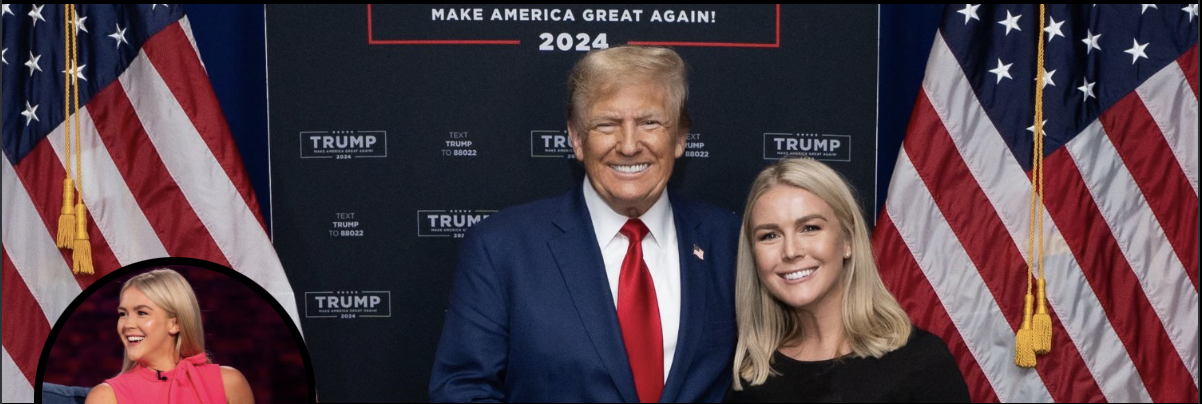
Karoline Claire Leavitt (born August 24, 1997)[1] is an American political aide currently serving as the national press secretary for Donald Trump’s 2024 presidential campaign.[2] She previously served as an assistant press secretary and presidential writer during the first Donald Trump administrationas well as a spokesperson for MAGA Inc., a pro-Trump Super PAC. In 2022, she ran for the U.S. House of Representatives in New Hampshire’s 1st district, becoming the second member of Generation Z to win a congressional primary. She lost the general election to incumbent Chris Pappas.[3] On November 15, 2024, president-elect Donald Trump chose Leavitt as his White House press secretary to succeed Karine Jean-Pierre.[4] She will be the youngest press secretary in United States history.[5]:

Russell Vought, White House Budget Office
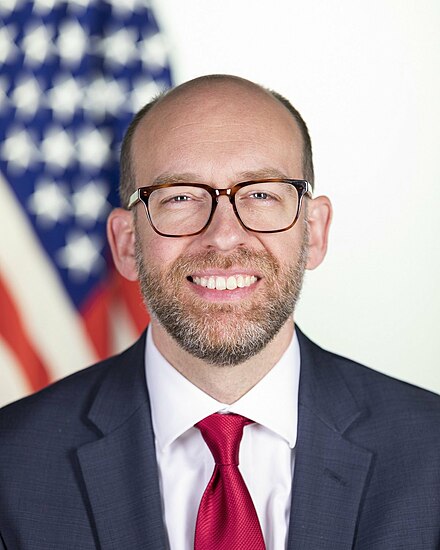
Russell Thurlow Vought (born March 26, 1976), or Russ Vought is an American former government official who was the director of the Office of Management and Budget from July 2020 to January 2021. He was previously deputy director of the OMB for part of 2018, and acting director from 2019 to 2020.

Sebastian Gorka & Alex Wong, Senior National Security Staff

Sebastian Lukács Gorka (HungarianGorka Sebestyén Lukács; born October 22, 1970)[2] is a British-Hungarian-American media host and commentator, currently affiliated with Salem Radio Network and NewsMax TV, and a former United States government official. He served in the first Trump administration as a Deputy Assistant to the President for seven months, from January until August 2017.[3][4][5][6]

Pete Hegseth, Secretary of Defense

Peter Brian Hegseth (/ˈhɛɡsɛθ/; born June 6, 1980) is an American television presenter, author, and former Army National Guard officer who has been announced as the forthcoming nominee for United States Secretary of Defense in Donald Trump‘s second cabinet. A political commentator for Fox News since 2014 and weekend co-host of Fox & Friends from 2017 to 2024, he was previously the executive director of Vets for Freedom and Concerned Veterans for America.

Doug Collins, Secretary of Veteran’s Administration (VA)

Paul Douglas Collins (born July 28, 1951) is an American basketballexecutive, former player, coach and television analyst in the National Basketball Association (NBA). He played in the NBA from 1973 to 1981 for the Philadelphia 76ers, earning four NBA All-Star selections. He then became an NBA coach in 1986, and had stints coaching the Chicago BullsDetroit PistonsWashington Wizards and Philadelphia 76ers. Collins also served as an analyst for various NBA-related broadcast shows.[1] He is a recipient of the Curt Gowdy Media Award. In April 2024, Collins was elected to the Naismith Memorial Basketball Hall of Fame class of 2024 by the Contributors Committee.[2]

Marco Rubio, Secretary of State
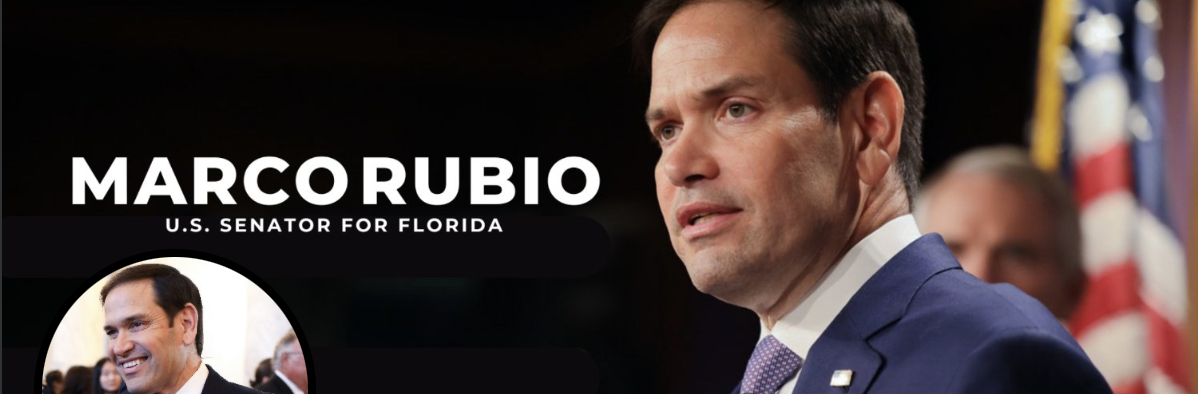
Marco Antonio Rubio (/ˈruːbioʊ/; born May 28, 1971) is an American politician and lawyer serving as the senior United States senator from Florida, a seat he has held since 2011. A member of the Republican Party, he served as Speaker of the Florida House of Representatives from 2006 to 2008. Rubio sought the Republican nomination for president of the United States in 2016, winning the presidential primaries in Minnesota, the District of Columbia, and Puerto Rico, but was ultimately unsuccessful.

Kristi Noem, Secretary of Homeland Security

Kristi Lynn Noem (/noʊm/ NOHM;[1] née Arnold; born November 30, 1971) is an American politician who has served since 2019 as the 33rd governor of South Dakota. A member of the Republican Party, she was the U.S. representative for South Dakota’s at-large congressional district from 2011 to 2019, and a member of the South Dakota House of Representatives for the 6th district from 2007 to 2011.

Tom Homan, Border Czar

Thomas Douglas Homan[1] is an American former police officer, immigration official, and political commentator who served during the Obama administration, and will have served in both Trump administrations. He served as acting director of the U.S. Immigration and Customs Enforcement (ICE) from January 30, 2017, to June 29, 2018.[2] Homan advocates deportation of illegal immigrants and opposes sanctuary city policies. Within the government, he was among the most strident proponents of separating children from their parents as a means of deterring illegal entry into the country.[3] After 2018, he began contributing to Fox News as a commentator.[4] In November 2024, Trump announced that Homan will serve as “border czar” during his second presidency.[5]

Pam Bondi, Attorney General, Department of Justice (DOJ)
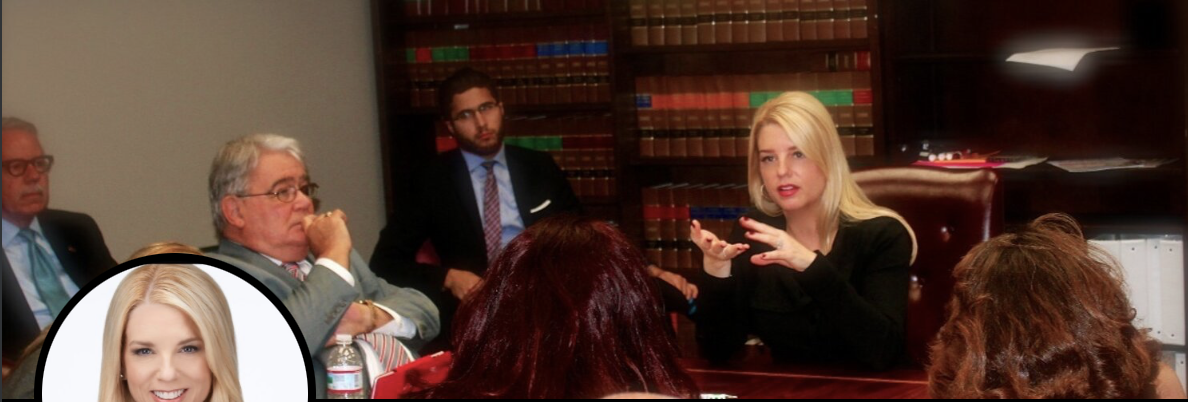
Pamela Jo Bondi[1] (born November 17, 1965) is an American attorney, lobbyist, and politician. A member of the Republican Party, she served as Florida attorney general from 2011 to 2019, the first woman elected to the office. In 2020, Bondi was one of President Donald Trump‘s defense lawyers during his first impeachment trial. By 2024, she led the legal arm of the Trump-aligned America First Policy Institute. On November 21, 2024, president-elect Trump announced she would be nominated for United States attorney general after previous nominee Matt Gaetz withdrew.

John Ratcliffe, Director of the CIA

John Lee Ratcliffe[5] (born October 20, 1965) is an American politician and attorney who served as the director of national intelligence from 2020 to 2021. He previously served as the U.S. representative for Texas‘s 4th districtfrom 2015 to 2020. During his time in Congress, Ratcliffe was regarded as one of the most conservative members.[6][7] Ratcliffe also served as mayor of Heath, Texas, from 2004 to 2012 and acting United States attorney for the Eastern District of Texas from May 2007 to April 2008.

President Donald Trump announced on July 28, 2019, that he intended to nominate Ratcliffe to replace Dan Coats as director of national intelligence.[8][9] Ratcliffe withdrew after Republican senators raised concerns about him, former intelligence officials said he might politicize intelligence, and media revealed Ratcliffe’s embellishments regarding his prosecutorial experience in terrorism and immigration cases.[10][11][12][13]

Tulsi Gabbard, Director of National Intelligence (DNI)

Tulsi Gabbard (/ˈtʌlsi ˈɡæbərd/ TUL-see GAB-ərd; born April 12, 1981) is an American politician and military officer serving as a Lieutenant colonel in the U.S. Army Reserve[2][3] since 2021, having previously served in Hawaii Army National Guard from 2003 to 2020.[3][4] In November 2024, President-electTrump selected Gabbard for the position of Director of national intelligence in his second term, starting January 2025.[2][5] A former Congresswoman, Gabbard served as U.S. Representative for Hawaii’s 2nd congressional district from 2013 to 2021. She was the first Samoan-American member of Congress.[6] She was a candidate in the 2020 Democratic presidential primaries.[7][8] She left the Democratic Party in 2022 to become an independent. In 2024, she joined the Republican Party.[9][10][11]

Author For Love of Country

Mike Waltz, National Security Advisor
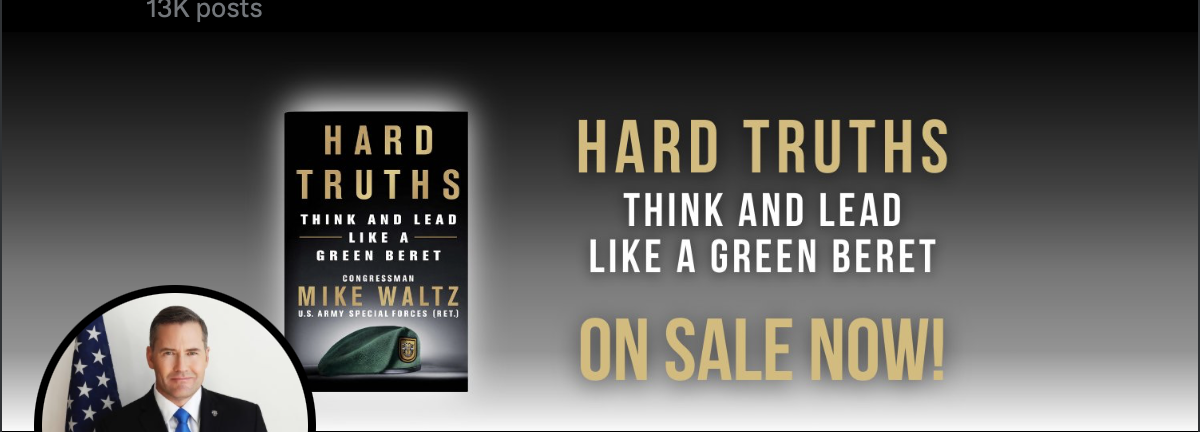
Michael George Glen Waltz (born January 31, 1974) is an American politician and a colonel in the United States Army serving as the U.S. representative for Florida’s 6th congressional district. A member of the Republican Party, he was first elected in 2018 and succeeded Ron DeSantis, who went on to be elected the 46th governor of Florida in 2018. On November 12, 2024, President-elect Donald Trump announced he will appoint Waltz to serve as his national security advisor.

Author of Hard Truths: Think & Lead Like A Green Beret

Kash Patal, Director of the FBI
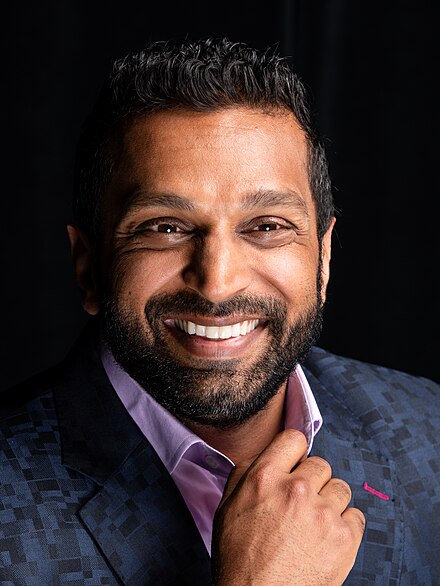
Kashyap Pramod Vino “Kash” Patel (born February 25, 1980)[1] is an American attorney and former government official. He served as a U.S. National Security Council official, senior advisor to the acting Director of National Intelligence, and chief of staff to the acting United States secretary of defense during the Trump presidency.[2][3][4] A member of the Republican Party, Patel previously worked as a senior aide to congressman Devin Nuneswhen he chaired the House Intelligence Committee.[5] He was previously a federal public defender, a federal prosecutor working on national security cases, and a legal liaison to the United States Armed Forces.[6]

• Does Christopher Wray Has To Resign First?

Scott Bessent, Secretary of Treasury

Scott Kenneth Homer Bessent (/ˈbɛsənt/ BEH-sənt; born August 1962) is an American hedge fund manager. He was a partner at Soros Fund Management and the founder of Key Square Group, a global macro investment firm.[1][2] Bessent has been a major fundraiser and donor for Donald Trump. He was an economic advisor for Trump’s 2024 presidential campaign. In November 2024, President-elect Trump named Bessent his nominee for Secretary of the Treasury.[3]

Is Bessent Compromised By Association with Soros & Rockefellers?
• Scott Bessent, who will lead the Treasury Department, previously worked at George Soros Fund Management from 1991 to 2000, and then again as Chief Investment Officer from 2011 to 2015. During this period, he made a significant bet against the British pound, contributing to Soros’ famous “breaking of the Bank of England” and earning billions for the firm. The London office was led by Peter Soros, George Soros’ nephew, who has been named by Epstein’s former butler, Alfred Rodriguez, as having been involved in Epstein’s s*x trafficking activities. Bessent is also on the Board of Trustees at Rockefeller University, alongside prominent figures in the globalist establishment. ~ Shadow of Era

Howard Lutnick, Secretary of Commerce
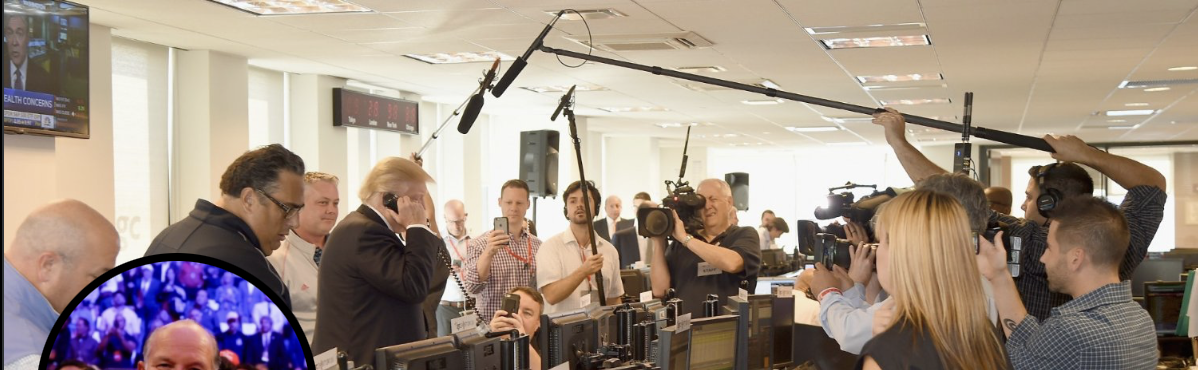
Howard William Lutnick (/ˈlʌtnɪk/; born July 14, 1961[1]) is an American businessman, who succeeded Bernard Gerald Cantor as the head of Cantor Fitzgerald. Lutnick is the chairman and CEO of Cantor Fitzgerald and BGC Group. After losing 658 employees, including his brother, in the September 11 attacks, Lutnick also survived the subsequent collapse of the towers on the ground, and has since become known for his charity efforts through the Cantor Fitzgerald Relief Fund, which helps to aid families of victims of the attacks and natural disasters. He was a fundraiser for Donald Trump’s 2020 and 2024 presidential campaigns, as well as a vocal proponent of Trump’s proposal to implement broad tariffs. In November 2024, President-elect Trump announced that he intended to nominate Lutnick as secretary of commerce. He was also co-founder of DOGE.

To Be Determined, Administrator of the SBA

Image Here…

Wikipedia:

Brendon Carr, Commissioner of the Federal Communications Commission (FCC)
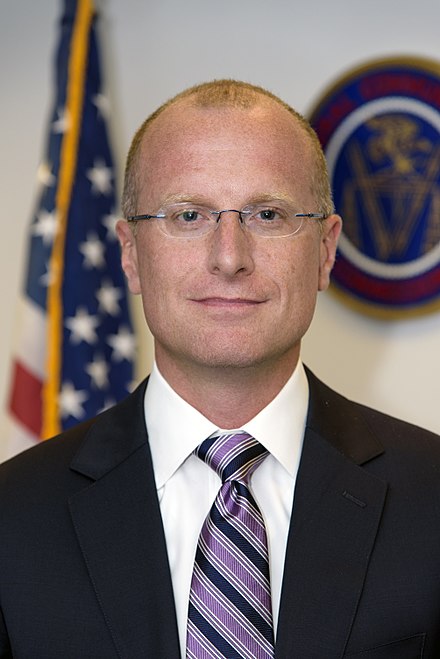
Brendan Thomas Carr (born January 5, 1979) is an American lawyer who has served as a member of the Federal Communications Commission (FCC) since 2017.[7] Appointed to the position by Donald Trump, Carr previously served as the agency’s general counsel and as an aide to FCC commissioner Ajit Pai. In private practice, Carr formerly worked as a telecommunications attorney at Wiley Rein.[8]

Carr supports changes to Section 230 of the Communications Decency Actand opposes net neutrality protections.[9][10] Carr is noted for his support for banning TikTok on national security grounds.[11][12] He is an opponent of content moderation on digital platforms, saying he would seek to “dismantle the censorship cartel and restore free speech rights.”[13][14] He authored a chapter in Mandate for Leadership: The Conservative Promise, the blueprint document of Heritage Foundation‘s Project 2025, which outlines proposed policies for a future Donald Trump administration. In office, Carr has been noted for being unusually vocal about public policy issues for a regulatory appointee, accusing House Intelligence Committee chair Adam Schiff of overseeing a “secret and partisan surveillance machine”.[15]

Restore Net Neutrality & Equalize the Internet Playing Field

Lori Chavez-DeRemer, Secretary of Labor
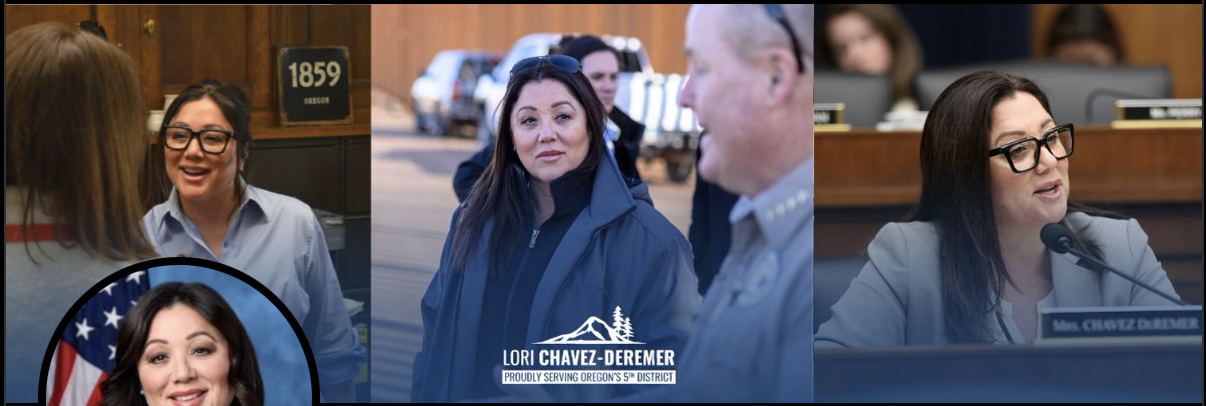
Lori Michelle Chávez-DeRemer (/ˈtʃɑːvɛzdəˈriːmər/; born April 7, 1968)[1] is an American politician serving as the U.S. Representative for Oregon’s 5th congressional district since 2023.[2] A member of the Republican Party, Chavez-DeRemer served as mayor of Happy Valley, Oregon, from 2011 to 2019. She is the first Republican woman to represent Oregon in the House. Additionally, she is one of the first two Hispanic women (alongside Andrea Salinas) elected to the United States Congressfrom Oregon. Chavez-DeRemer served one term in the House before being defeated in 2024 by Democrat Janelle Bynum. On November 22, 2024, President-elect Donald Trump nominated Chavez-DeRemer as his. Secretary of Labor.[3]

Scott Turner, Secretary of Housing & Urban Development
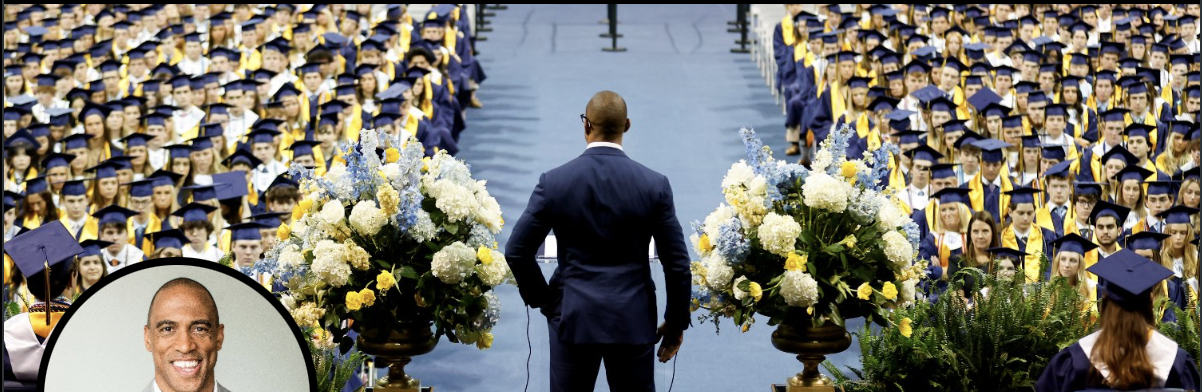
Eric Scott Turner (born February 26, 1972) is an American businessman, motivational speaker, politician, and former professional football player, who previously served as the executive director of the White HouseOpportunity and Revitalization Council.[1]Turner formerly served as a Texas state representative for the 33rd District, which includes part of Collin County and all of Rockwall County. Before entering politics, Turner was an American football cornerbackwho played in the National Football League(NFL) for nine seasons. In November 2024, Trump announced his intention to name Turner as the Secretary of Housing and Urban Development in his second administration.[2]

Robert F. Kennedy, Secretary of Health & Human Services

Robert Francis Kennedy Jr. (born January 17, 1954), also known by his initials RFK Jr., is an American politician, environmental lawyeranti-vaccine activist and conspiracy theorist whom President-elect Donald Trump has nominated to serve as United States secretary of health and human services.[1] Kennedy is the chairman and founder of Children’s Health Defense, an anti-vaccine advocacy group and proponent of COVID-19 vaccine misinformation.[2][3] He was on the ballot in some states as an independentcandidate in the 2024 United States presidential election.[4] A member of the Kennedy family, he is a son of United States Attorney General and senator Robert F. Kennedy, and a nephew of U.S. president John F. Kennedy and senator Ted Kennedy.

• Mission to Make America Healthy Again (MAHA)

Dr. Mehmet Oz, Administrator of the Centers for Medicare and Medicaid Services (CMS)

Mehmet Cengiz Öz[a] (/məˈmɛt ˈdʒɛŋɡɪz ɒz/meh-MET JENG-gihz oz; Turkish: [mehˈmetdʒeɲˈɟiz øz]; born June 11, 1960),[2] also known as Dr. Oz (/ɒz/), is a Turkish-American television personality, physician, author, professor emeritus of cardiothoracic surgery at Columbia University,[3] and former political candidate.[4]

Dr. Jay Bhattacharya, MD, Ph.D., Director of the National Institutes of Health (NIH)

Jayanta “Jay” Bhattacharya (born 1968) is an American professor of medicine, economics, and health research policy at Stanford University. He is the director of Stanford’s Center for Demography and Economics of Health and Aging. His research focuses on the economics of health care.[2][3][4] In 2021, Bhattacharya was opposed to lockdowns and mask mandates as a response to the COVID-19 pandemic.[5][6] With Martin Kulldorff and Sunetra Gupta, he was a co-author in 2020 of the Great Barrington Declaration, which advocated lifting COVID-19restrictions on lower-risk groups to develop herd immunity through widespread infection, while promoting the fringe notion that vulnerable people could be simultaneously protected from the virus.[7][8][9] The declaration was criticized as being unethical and infeasible by Tedros Adhanom Ghebreyesus, the director-general of the World Health Organization.[10]

• Co-Author of The Great Barrington Declaration

Dr. Dave Weldon, Director of the Centers for Disease Control (CDC)
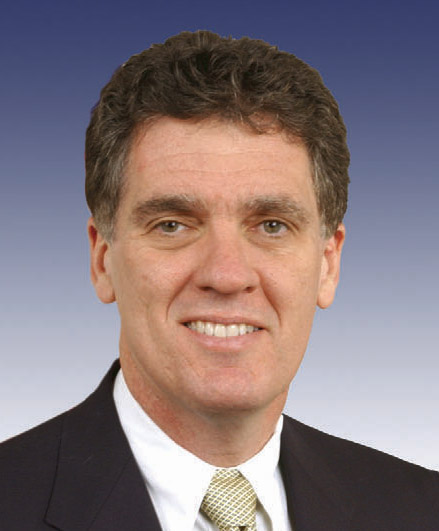
David Joseph Weldon (born August 31, 1953) is an American politician and physician. He was a Republican member of the United States House of Representatives, representing Florida’s 15th congressional district, and was an unsuccessful candidate for the Republican nomination in Florida’s 2012 U.S. Senate race. In November 2024, Donald Trump named Weldon as the director of the Centers for Disease Control and Prevention.[1]

• Mission to Restoring Truth & Transparency

Marty Makary MD, MPH, Commissioner of the Food & Drug Administration (FDA)

Martin Adel Makary (/məˈkæri/) is a British-American surgeon, professor, author, and medical commentator. He practices surgical oncology and gastrointestinal laparoscopic surgery at the Johns Hopkins Hospital, is Mark Ravitch Chair in Gastrointestinal Surgery at Johns Hopkins School of Medicine, and teaches public health policy as Professor of Surgery and Public Health at the Johns Hopkins Bloomberg School of Public Health.  Makary is an advocate for disruptive innovationin medicine and physician-led initiatives, such as The Surgical Checklist, which he developed at Johns Hopkins and which was later popularized in Atul Gawande’s best-selling book The Checklist Manifesto.[1] \

Makary was named one of the most influential people in healthcare by HealthLeader magazine in 2013.[2]In 2018, Makary was elected to the National Academy of Medicine.[3] During the COVID-19 pandemic, Makary was an early advocate for universal masking to control the pandemic and recommended vaccines for adults.[4] However, he was an outspoken opponent of broad COVID-19 vaccine mandates and, in late 2021 and early 2022, non-pharmaceutical interventions meant to reduce transmission in schools and universities.[5][6] In November 2024, President-Elect Donald Trump announced Makary would be his nominee to head the FDA as the commissioner of Food and Drugs.[7]

Mission to Examine the Causes of Chronic Illness
• “The greatest perpetrator of misinformation during the COVID pandemic has been the United States government … Public health officials were intellectually dishonest. They lied to the American people.” ~ Marty Makary, MD, MPH
Author of Blind Spots

Dr. Janette Nesheiwat, US Surgeon General
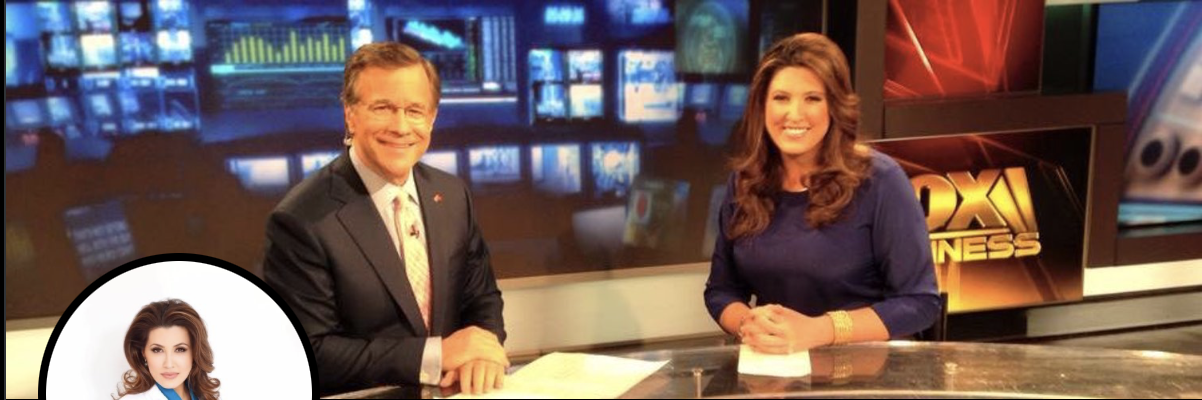
Janette Nesheiwat (born 25 August 1980) is an American physician who is the nominee for United States surgeon general.[2] Nesheiwat has served as an assistant medical director of CityMD[3] and is currently a medical contributor on Fox News.[4]

• Getting Flak for Her Previous Vaccine/COVID Positions. ~ Dr. Simone Gold
• Trump’s pick for Surgeon General, Janette Nesheiwat, praised Facebook for censoring anti-vaccine information & accounts like mine and RFK’s specifically, adding that she will “hope and pray” other social media companies do the same. Pick someone else. ~ Elizabeth Health Nut News

Doug Burgum, Secretary of the Interior
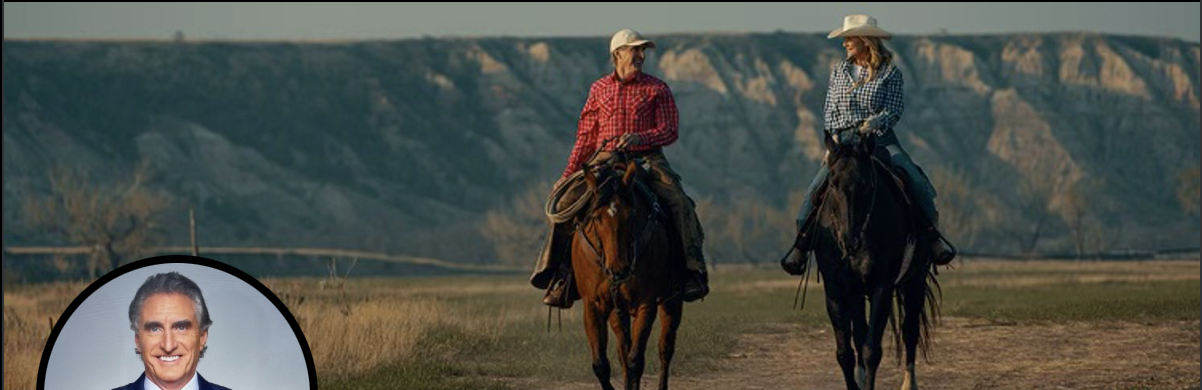
Douglas James Burgum (/bɜːrɡəm/ BUR-gəm;[1] born August 1, 1956) is an American businessman and politician serving since 2016 as the 33rd governor of North Dakota.[2][3] He is among the richest politicians in the United States and has an estimated net worth of at least $1.1 billion. He is a member of the Republican Party.[4] Burgum was born and raised in Arthur, North Dakota.

After graduating from North Dakota State University in 1978 with a bachelor’s degree in university studies and earning an MBA from Stanford University two years later,[5]he mortgaged inherited farmland in 1983 to invest in Great Plains Software in Fargo. Becoming its president in 1984, he took the company public in 1997. Burgum sold the company to Microsoft for $1.1 billion in 2001. While working at Microsoft, he managed Microsoft Business Solutions. He has served as board chairman for Australian software company Atlassian and SuccessFactors.

Burgum is the founder of Kilbourne Group, a Fargo-based real-estate development firm, and also is the co-founder of Arthur Ventures, a software venture capital group. Burgum won the 2016 North Dakota gubernatorial election in a landslide. He was reelected by a wide margin in 2020.[6] In June 2023, Burgum launched a campaign for the 2024 Republican presidential nomination. He ended his candidacy in early December 2023,[7]and became an advisor on the Trump campaign‘s energy policy.[8] On November 14, 2024, President-elect Trump announced his intention to nominate Burgum as the United States Secretary of the Interior.[9]

Kelly Loeffler, Secretary of Agriculture

Kelly Lynn Loeffler (/ˈlɛflər/ LEF-lər; born November 27, 1970) is an American businesswoman and politician who served as a United States senator from Georgia from 2020 to 2021. Loeffler was chief executive officer(CEO) of Bakkt, a subsidiary of commodity and financial service provider Intercontinental Exchange, of which her husband, Jeffrey Sprecher, is CEO. She is a former co-owner of the Atlanta Dream of the Women’s National Basketball Association (WNBA).[1] 

Loeffler is a member of the Republican Party. Brian Kemp, the Republican governor of Georgia, appointed Loeffler to the U.S. Senate in December 2019 after Senator Johnny Isakson resigned for health reasons. Loeffler ran in the 2020 Georgia U.S. Senate special election, seeking to hold the seat until January 2023. She finished second in the November 3 election, advancing to a runoff with DemocratRaphael Warnock held on January 5, 2021, where she lost.[2] That same day, her fellow Georgia senator David Perdue also lost his bid for re-election.

When Perdue’s term ended on January 3, 2021, Loeffler ascended to be the senior senator from Georgia, a position she held for just under three weeks until Warnock was sworn in. Loeffler aligned with President Donald Trump in her time in the Senate, touting a “100 percent Trump voting record” during her campaigns.[3][4] After the November 2020 election, Loeffler and Perdue claimed without evidence that there had been unspecified failures in the 2020 U.S. presidential election, and called for the resignation of Georgia secretary of state Brad Raffensperger, who rejected the accusations.

She later supported a lawsuit by Trump allies seeking to overturn the election results,[5] and also announced her intention to object to the certification of the Electoral College results in Congress.[6] After the attack on the U.S. Capitol on January 6, 2021, Loeffler announced that she would withdraw her objection to the certification of the electoral votes and later voted to certify. Loeffler was chosen by president-elect Trump to co-chair his inaugural committee in his upcoming second presidency, along with Steve Witkoff.

Brooke Rollins, Department of Agriculture (USDA)
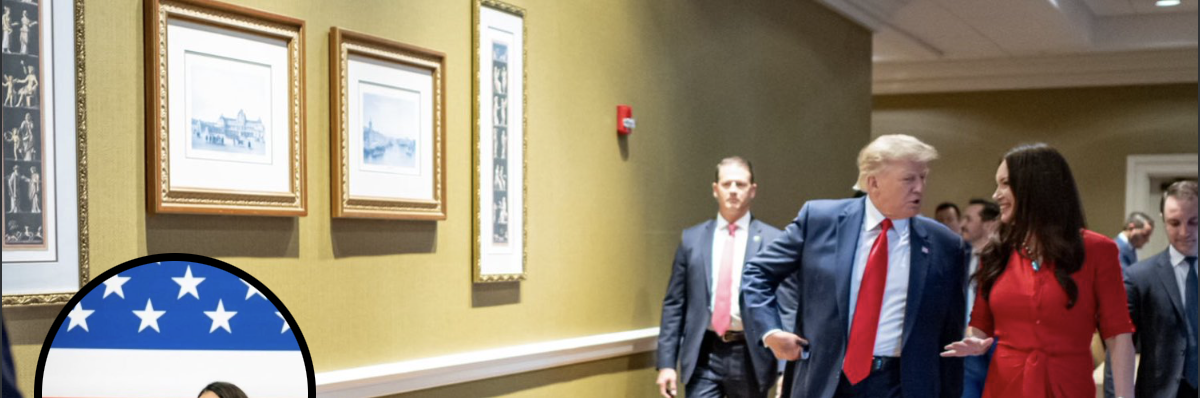
Brooke Leslie Rollins (born April 10, 1972)[1]is an American attorney who is the president and CEO of the America First Policy Institute. She previously served as the acting director of the United States Domestic Policy Councilunder President Donald Trump. Prior to assuming that role, Rollins oversaw the White House Office of American Innovation. Rollins was president and CEO of the Texas Public Policy Foundation, an Austin-based fossil fuels and school voucher supporting think tank, from 2003 through 2018.[2] During her tenure at TPPF, the think tank grew from having a staff of 3 to a staff of 100.[3] Rollins previously served as deputy general counsel, ethics advisor, and policy director to Texas Governor Rick Perry.[4] She is an advocate of criminal justice reform.[5] On November 23, 2024, President-elect Trump selected Rollins to be secretary of agriculture.[6]

Lee Zeldin, Administrator of the Environmental Protection Agency (EPA)

Lee Michael Zeldin (born January 30, 1980) is an American attorney, politician, and officer in the United States Army Reserve. A member of the Republican Party, he represented New York’s 1st congressional district in the United States House of Representatives from 2015 to 2023. He represented the eastern two-thirds of Suffolk County, including most of Smithtown, all of BrookhavenRiverheadSoutholdSouthamptonEast HamptonShelter Island, and a small part of Islip. From 2011 to 2014, Zeldin served as a member of the New York State Senate from the 3rd Senate district. During Donald Trump‘s presidency, Zeldin was a Trump ally.

He prominently defended Trump during his first impeachment hearingsconcerning the Trump–Ukraine scandal. In April 2021, Zeldin announced his candidacy for governor of New York in 2022.[1] He defeated three challengers in the Republican primary, becoming the nominee of the Republican Party and the Conservative Party. Zeldin lost the election to incumbent governor Kathy Hochulwhile receiving the highest percentage of the vote for a Republican gubernatorial nominee since 2002 and the highest raw vote total for a Republican gubernatorial nominee since 1970.[2] In November 2024, CNN reported that Zeldin was Trump’s nominee for Administrator of the Environmental Protection Agency.[3]

Chris Wright, Secretary of Energy (DOE)

Christopher Allen Wright[1] (born 1965) is an American businessman who is the CEO of Liberty Energy, North America’s second largest hydraulic fracturing company. He is the presumptive nominee for United States Secretary of Energy under Donald Trump‘s second presidency. He is a board member of Oklo Inc., a nuclear technology company, and EMX Royalty, a royalty payment company for mineral rights and mining rights.[2]

Sean Duffy, Secretary of Transportation

Sean Patrick Duffy (born October 3, 1971) is an American politician, prosecutor, lobbyist, and reality television personality who is currently a co-host of The Bottom Line on Fox Business, as well as a contributor on Fox News. A member of the Republican Party, he served as the U.S. representative for Wisconsin’s 7th congressional district from 2011 to 2019. After resigning from Congress, he became a lobbyist.[1] He first gained fame as a cast member on The Real World: Boston, 1998’s Road Rules: All Stars and 2002’s Real World/Road Rules Challenge: Battle of the Seasons, before going on to serve as district attorney of Ashland County, Wisconsin. In November 2024, Donald Trump named Duffy as his nominee for Secretary of Transportationin his second presidency.[2]

Linda McMahon, Secretary of Education

Linda Marie McMahon (/məkˈmæn/née Edwards; born October 4, 1948) is an American politician, business executive and retired professional wrestler. She was the 25th administrator of the Small Business Administration from 2017 to 2019. McMahon has been nominated to lead the Department of Education under the second Trump administration.

McMahon, along with her husband, Vince McMahon, founded sports entertainment company Titan Sports, Inc. (later World Wrestling Entertainment, Inc.) where she worked as the president and later CEO from 1980 to 2009. During this time, the company grew from a regional business in the northeast to a large multinational corporation. Among other things, she initiated the company’s civic programs, Get R.E.A.L. and SmackDown! Your Vote. She made occasional on-screen performances, most notably in a feud with her husband that culminated at WrestleMania X-Seven.

On April 15, she was named chairwoman of America First Action, a pro-Trump Super PAC. On November 19, 2024, McMahon was nominated by Donald Trump to serve as Secretary of Education.[2]

Vivek Ramaswamy, Department of Government Efficiency (DOGE)
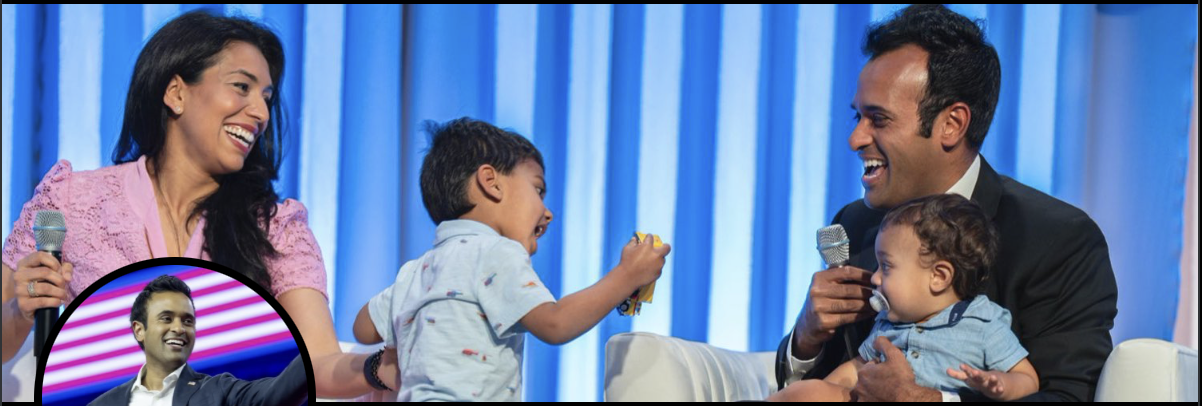
Vivek Ganapathy Ramaswamy (/vɪˈveɪkrɑːməˈswɑːmiː/;[1][2] vih-VAYK rah-mə-SWAH-mee; born August 9, 1985) is an American entrepreneur. He founded Roivant Sciences, a pharmaceutical company, in 2014. In February 2023, Ramaswamy declared his candidacy for the Republican Party nomination in the 2024 United States presidential election. He suspended his campaign in January 2024, after finishing fourth in the Iowa caucuses and endorsed Trump.[3] On November 12, 2024, President-elect Donald Trump announced that Ramaswamy and businessman Elon Musk had been tasked to lead the newly proposed Department of Government Efficiency.[4] Ramaswamy was born in Cincinnati to Indian immigrant parents. He graduated from Harvard University with a bachelor’s degree in biology and later earned a degree from Yale Law School. Ramaswamy worked as an investment partner at a hedge fund before founding Roivant Sciences. He also co-founded an investment firm, Strive Asset Management. Ramaswamy sees the United States in the middle of a national identity crisis precipitated by what he calls “new secular religions like COVID-ism, climate-ism, and gender ideology”.[5] He is also a critic of environmental, social, and corporate governance initiatives (ESG).[6]In January 2024, Forbes estimated Ramaswamy’s net worth at more than $960 million; his wealth comes from biotechand financial businesses.[7][8]

Mission to Dismantle the Regulatory State & Cut Wasteful Spending

Elon Musk, Department of Government Efficiency (DOGE)

Elon Reeve Musk FRS (/ˈiːlɒn/; born June 28, 1971) is a businessman known for his key roles in the space company SpaceX and the automotive company Tesla, Inc. His other involvements include ownership of X Corp., the company that operates the social media platform X (formerly Twitter), and his role in the founding of the Boring CompanyxAINeuralink, and OpenAI. In November 2024, United States president-elect Donald Trumpappointed Musk as the co-chair of the proposed Department of Government Efficiency (DOGE) in the second Trump administration. Musk is the wealthiest individual in the world; as of November 2024, Forbes estimates his net worth to be US$304 billion.[2]

Musk was born in Pretoria, South Africa, and briefly attended the University of Pretoria before immigrating to Canada at the age of 18, acquiring citizenship through his Canadian-born mother. Two years later, he matriculated at Queen’s University at Kingston in Canada. Musk later transferred to the University of Pennsylvania and received bachelor’s degreesin economics and physics. He moved to California in 1995 to attend Stanford University, but never enrolled in classes, and with his brother Kimbal co-founded the online city guidesoftware company Zip2. The startup was acquired by Compaq for $307 million in 1999. That same year, Musk co-founded X.com, a direct bank. X.com merged with Confinity in 2000 to form PayPal. In 2002, Musk acquired US citizenship, and that October eBay acquired PayPal for $1.5 billion. Using $100 million of the money he made from the sale of PayPal, Musk founded SpaceX, a spaceflight services company, in 2002. 

In 2004, Musk was an early investor in electric-vehicle manufacturer Tesla Motors, Inc. (later Tesla, Inc.), providing most of the initial financing and assuming the position of the company’s chairman. He later became the product architect and, in 2008, the CEO. In 2006, Musk helped create SolarCity, a solar energy company that was acquired by Tesla in 2016 and became Tesla Energy. In 2013, he proposed a hyperloop high-speed vactrain transportation system. In 2015, he co-founded OpenAI, a nonprofit artificial intelligenceresearch company. The following year Musk co-founded Neuralink, a neurotechnology company developing brain–computer interfaces, and The Boring Company, a tunnel construction company.

In early 2024, Musk became active in American politics as a vocal and financial supporter of Donald Trump, becoming Trump’s second-largest individual donor in October 2024. In November 2024, Trump announced that he had chosen Musk along with Vivek Ramaswamyto co-lead the Department of Government Efficiency (DOGE), a new advisory board which aims to improve government efficiency through measures such as slashing “excess regulations” and cutting “wasteful expenditures”.

Mission to Dismantle the Regulatory State & Cut Wasteful Spending

AMERICA FIRST AGENDA BY EXECUTIVE ORDER

  • Restore Border Security & Immigration Including Mass Deportation of Illegal Aliens
  • Declare War on Drug Cartels (Including Big Pharma & Global Actors)
  • Declare War on Child Trafficking & Establish Death Penalty for Convicted Human Traffickers
  • Halt Federal Funds for Any State or Local Government Defying Federal Immigration Law (End Sanctuary Cities)
  • Halt Federal Funds for Inappropriate Curricula Including Critical Race Theory, DEI, Transgender & Anti-American Political Content Taught in Schools
  • End Mutilation of Youth Through Gender Transitions; Cease Funding Any Sex & Gender Transition
  • Halt Federal Funding for Any Abortion Procedure or Organ Harvesting of New-Born Infants
  • Private Right of Action for Victims to Sue Doctors; Civil Rights Violations; Cease Funding to School Districts
  • End Electric Vehicle Mandates; Making Them Voluntary Not Mandatory
  • Restore Fundamental Protection of Free Speech & All Constitutional Rights; Prohibit Any Future Collusion Between Government & Private Sector to Deprive Citizens of Rights
  • Dismantle Needless Bureaucracy & Regulations
  • Dismantle or Overhaul All Weaponized Government Agencies Via Schedule F (Firing Incompetent or Corrupt Staff By Executive Order)
  • Clean Out All Corrupt Actors in National Security, Defense & Intelligence Apparatus

ESTABLISHING NEW GOVERNMENT PROGRAMS & LEGISLATION

  • Founding Department of Government Efficiency (DOGE)with Mission to Dismantle the Regulatory State & Cut Wasteful Spending)
  • Restore Economic Prosperity for All
  • Restore Energy Independence By All Means Necessary Including Fracking, Drilling & Green Energy
  • Restore Tax Incentives for Small Businesses
  • Cap Credit Card Rates at 10%
  • Founding The American Academy (Full Spectrum of Human Knowledge for Free Online; Bachelor’s Degree Available)
  • Department of Education Appoints New Accreditors for All Colleges/Universities to Qualify for Federal Funding (Restore Meritocracy in Our Educational Institutions)
  • Eliminate the Federal Income Tax & Replace with Tariffs On Imports
  • Allow IRS Deduction Up to $10k Towards Homeschooling Per Child
  • Become #1 Energy Producer in the World & Restore Energy Independence
  • Repeal of the 1986 Vaccine Injury Act
  • Restore FAIR Act for Equal Time in Broadcasting
  • Revoke Licenses & Funding for Propaganda Media (Including NPR)
  • Reintroduce 28th Amendment with Required That All Laws Applied Equally to Citizens & Congress
  • Propose ? Amendment for Term-Limits on Elected Officials in Congress
  • Restore Net Neutrality To Equalize the Internet Playing Field Once Again
  • Restore Restricted Regulations for GMO’s in Food & Medicine: https://www.centerforfoodsafety.org/press-releases/6417/conservationists-and-farmers-sue-over-trump-administration-removal-of-most-genetically-engineered-organism-regulation
  • Restore Accountability in the Judicial System & Fire Judicial Activists Who Violate Their Oath of Allegiance to the U.S. Constitution & Bill of Rights
  • Review US Supreme Court’s Citizens United Ruling Which Removed Limits to Corporate Funding/Lobbyists Thereby Corrupting Election Officials

Sources: X.com & Wikipedia

FactChecking the October Democratic Debate | FactCheck.org

By , , , , , , and

Summary

We found several false and misleading claims in the October Democratic presidential debate:

  • Former Housing and Urban Development Secretary Julián Castro claimed that the most recent jobs data show that “Ohio, Michigan and Pennsylvania … have lost jobs not gained them.” In fact, total nonfarm employment in all three states was up in August — and since President Donald Trump took office — according to the most recent preliminary federal data.
  • Former Vice President Joe Biden was wrong when he said that American troops withdrawing from Syria were “being fired on by [Syrian President Bashar] Assad’s people.”
  • Activist and former hedge fund manager Tom Steyer claimed 90% of workers haven’t had a raise in 40 years — but a liberal think tank says their real annual wages are up more than 22%.
  • Sen. Cory Booker claimed that “raising the minimum to $15 an hour … would put more money in people’s pockets than giving them $1,000 a month” under businessman Andrew Yang’s universal basic income plan. But Yang’s plan would put more money in more pockets than Booker’s bill to raise the minimum wage.
  • Leading economists and tax experts disagree about whether Sen. Elizabeth Warren’s proposed wealth tax would generate enough revenue to fund a host of Warren’s education priorities. Yang rightly noted that several European countries repealed their wealth taxes, in part because they did not raise as much revenue as projected. But Warren’s plan seeks to address some of the weaknesses of those plans.
  • Yang and Steyer both exaggerated the number of opioid overdose deaths in America by using total drug overdose death figures. Yang also inaccurately attributed all of the deaths to Purdue Pharma.
  • Biden claimed Medicare for All will cost “at least $30 trillion over 10 years. That is more on a yearly basis than the entire federal budget.” It may cost that much, but federal spending is projected to exceed $50 trillion over 10 years. And, while Medicare for All would significantly increase federal spending, it also would eliminate health care spending by individuals, businesses and local governments.
  • Sen. Bernie Sanders repeated two claims on health care. He said that “500,000 people” are “going bankrupt” due to cancer, but the study he cites only says that medical issues contributed to those bankruptcies — they were not the sole reason. He also said that “87 million Americans are uninsured or underinsured.” The figure includes 19.3 million who were insured but had a gap in coverage in the previous year.
  • Sanders referred to climate change as an “existential threat.” Scientists agree climate change does pose a threat to humans and ecosystems, but they do not envision that climate change will obliterate all people from the planet.
  • Yang repeated a baseless claim that Amazon is responsible for closing “30% of America’s stores and malls.” In fact, there’s evidence that the number of retail stores may actually be increasing.

Twelve candidates for president met for the Oct. 15 debate hosted by CNN and the New York Times in Westerville, Ohio.

Analysis

Castro Wrong About Job Losses

Castro, a former mayor of San Antonio and HUD secretary, was wrong when he said, “Donald Trump has broken his promises because Ohio, Michigan and Pennsylvania — actually in the latest jobs data — have lost jobs, not gained them.”

In August, which is the most recent month for seasonally adjusted data from the U.S. Bureau of Labor Statistics, total nonfarm employment went up by 16,500 in Pennsylvania, by 6,100 in Michigan and by 3,700 in Ohio.

Castro’s campaign issued a press release during the debate that said the “data from August … is preliminary due to incomplete data and will be revised by the Bureau of Labor Statistics at the end of this month.” The press release added, “This fiscal year, from March through July, the latest month with final numbers from the Bureau of Labor Statistics, non-farm payrolls are down in Ohio, Michigan, and Pennsylvania.”

That’s all true, but it’s not the claim that Castro made during the debate. The “latest jobs data” for states, although preliminary, is for August — not July.

The estimated job gains in August for Pennsylvania and Michigan surpassed the job losses from March through July. However, Ohio has lost 3,600 jobs from March through August.

Furthermore, the campaign’s argument is misleading. The fact is, since Trump took office in January 2017, total nonfarm employment is up — not down — in those three states and nationwide. That’s whether one measures up to July or August.

Biden Wrong on Syria

Biden mistakenly said that American troops withdrawing from Syria were “being fired on by [Syrian President Bashar] Assad’s people.”

According to news reports, Turkish militias fired artillery rounds near a U.S. military outpost in northeastern Syria last week, though no U.S. forces were injured. There have been no reports of Assad’s Syrian government forces firing on American troops.

Biden: I would not have withdrawn the troops and I would not have withdrawn the additional thousand troops who are in Iraq, which are in retreat now, being fired on by Assad’s people.

After a phone call on Oct. 6 with Turkey’s president, Recep Tayyip Erdogan, President Donald Trump announced he would be withdrawing troops from northern Syria. After initially withdrawing 50 American troops from the Syrian border with Turkey, the Pentagon this week began pulling out all of its 1,000 soldiers from Syria, a process that was expected to take several weeks.

With the U.S. troop withdrawal, Syrian government forces have moved to retake territory in the country’s northeast, but there have been no reports that they have fired upon retreating U.S. forces, as Biden said.

New York Times, Oct. 14: Syrian government forces streamed into the country’s northeast on Monday, seizing towns where they had not stepped foot in years and filling a vacuum opened up by President Trump’s decision to abandon the United States’ Syrian Kurdish allies.

Less than a week after Turkey launched an incursion into northern Syria with Mr. Trump’s assent, President Bashar al-Assad of Syria, considered a war criminal by the United States, has benefited handsomely, striking a deal with the United States’ former allies to take the northern border and rapidly gaining territory without a fight.

News reports made no mention of Syrian forces firing upon withdrawing U.S. troops, though.

Steyer Wrong on Wages

Tom Steyer, the billionaire liberal activist, was wrong when he claimed that “90 percent of Americans have not had a raise for 40 years.”

Even the liberal Economic Policy Institute — a think tank that advocates for low- and middle-income earners — reported in February of this year that the annual wages of the bottom 90% of wage earners have gone up 22.2% since 1979, even after adjustment for inflation. (See Appendix Figure A.)

And that’s only through 2017. Wages have risen further since then. Average weekly earnings of all production and nonsupervisory wage earners in the private sector have gone up 2.1%(after adjustment for inflation) between December 2017 and last month, according to the Bureau of Labor Statistics.

EPI reports that wage growth has been “sluggish” for the vast majority of workers, compared with a 157% increase for the highest-paid 1% of earners since 1979. But Steyer goes too far when he claims there has been no growth at all.

Minimum Wage Hike vs. Universal Basic Income

When asked about how he would convince GM workers to end their strike, Booker took the opportunity to compare his bill to increase the federal minimum wage to $15 an hour to Yang’s universal basic income plan.

Booker: Well, first of all, the one point I wanted to make about the UBI conversation — and I hope that my friend, Andrew Yang, will come out for this — doing more for workers than UBI would actually be just raising the minimum wage to $15 an hour. It would put more money in people’s pockets than giving them $1,000 a month.

Raising the minimum wage to $15 an hour would eventually put more than $1,000 a month in some pockets, but Yang’s so-called “Freedom Dividend” would pay “$1,000 per month, or $12,000 per year, to all U.S. citizens over the age of 18 … no questions asked.”

Booker is a cosponsor of “Raise the Wage Act,” which would increase the minimum wage to $15, but not until six years after enactment. Under the bill, there would be a seven-step phase-in period, beginning with $8.40 an hour and then increasing $1.10 per hour each year for the next six years.

“The annual earnings for a full-time minimum-wage worker is $15,080 at the current federal minimum wage of $7.25,” according to the Center for Poverty Research at the University of California, Davis. An increase to $15 per hour would more than double that to $31,200 — a difference of $16,120, or $1,343 a month.

But it would take five years for a person earning minimum wage to earn more than $1,000 a month in additional income.

Under the Raise the Wage Act, the minimum raise would increase to $8.40 an hour no later than 90 days after the bill is signed into law. That’s an increase of $199 more per month — compared with Yang’s $1,000-per-month plan.

Five years after the bill takes effect, the minimum wage would increase to $13.90 an hour, providing an additional $1,153 per month. The $15 minimum wage would be fully implemented six years after the bill takes effect, providing $1,343 per month in additional income.

After seven years, Yang’s plan would have provided $1,000 a month, while the phasing-in of the minimum wage would provide only an average of $771 a month.

Also, unlike Yang’s plan, the minimum wage pay hike would not affect every American. And increasing the minimum wage to $15 per hour would result in job losses, according to the Congressional Budget Office.

In a July report, CBO said a $15 minimum wage would directly increase the wages of 17 million workers, but “1.3 million other workers would become jobless.”

Yang’s plan would put more money in more pockets than raising the minimum wage.

Warren’s Wealth Tax

As she has in past debates, Warren ticked off a list of things she says could be paid for with her proposal for an annual wealth tax on all assets over $50 million. As we have written, it is a matter of debate among economists and tax experts as to whether her plan would raise as much as she expects.

One of Warren’s challengers at the debate, Yang, noted that several European countries have repealed their wealth taxes “because it had massive implementation problems and did not generate the revenue that they’d projected.” That’s backed up in a report from the Organization for Economic Cooperation and Development. But the report also argues that a wealth tax is likely needed to close the wealth inequality gap, and it outlines a number of proposed improvements to make a wealth tax more effective than those in Europe. Warren’s plan incorporates many of those suggestions.

Under Warren’s plan, households would pay an annual 2% tax on all assets — net worth — above $50 million, and a 3% tax on every dollar of net worth above $1 billion. During the debate, Warren highlighted some of the things that tax could bankroll.

Warren: And right now in America, the top 0.1 percent have so much wealth — understand this — that if we put a 2 cent tax on their 50 millionth and first dollar, and on every dollar after that, we would have enough money to provide universal child care for every baby in this country, age zero to 5, universal pre-K for every child, raise the wages of every child care worker and preschool teacher in America, provide for universal tuition-free college, put $50 billion into historically black colleges and universities … and cancel student loan debt for 95 percent of the people who have it.

Warren estimates her wealth tax would raise $2.75 trillion over 10 years, based on an analysis by University of California, Berkeley economists Gabriel Zucman and Emmanuel Saez, who study wealth inequality.

When we wrote about Warren’s plan back in June in our story “Facts on Warren’s Wealth Tax Plan,” we noted that several prominent economists and tax experts cast doubt on Warren’s estimate of the revenue the tax would generate, warning that wealthy people would find ways to avoid the tax.

Yang noted that that was one of the reasons several European countries scrapped their wealth tax plans.

Yang: And a wealth tax makes a lot of sense in principle. The problem is that it’s been tried in Germany, France, Denmark, Sweden, and all those countries ended up repealing it, because it had massive implementation problems and did not generate the revenue that they’d projected. If we can’t learn from the failed experiences of other countries, what can we learn from? We should not be looking to other countries’ mistakes.

Indeed, while as many as a dozen countries in Europe had a wealth tax in the early 1990s, that number has dropped to three as of 2018, according to an OECD report. (In 2018, Francereplaced its net wealth tax with a new real estate wealth tax.)

“Decisions to repeal net wealth taxes have often been justified by efficiency and administrative concerns and by the observation that net wealth taxes have frequently failed to meet their redistributive goals,” the report stated. “The revenues collected from net wealth taxes have also, with a few exceptions, been very low.”

However, the report “also argues that capital income taxes alone will most likely not be enough to address wealth inequality and suggests the need to complement capital income taxes with a form of wealth taxation.”

The report makes several recommendations to bolster the effectiveness of a wealth tax — lessons learned from the European examples. Warren’s plan has attempted to incorporate many of those suggestions.

For example, the OECD report recommends a wealth tax only be levied on the very wealthy, that the rate should be low, exemptions and reliefs should be limited (to prevent those subject to the tax from moving assets into exempted categories), and that payments should be allowed in installments for those “facing liquidity constraints.” All of those are part of Warren’s plan.

Under the Warren plan, those with liquidity issues would be able to defer tax payments, with interest, for up to five years. And to guard against wealthy Americans simply moving out of the country to avoid the wealth tax, Warren’s plan would assess a one-time 40% “exit tax” on the net worth above $50 million for those who renounce their citizenship.

We take no position on whether those provisions in the Warren plan would address the lower-than-expected revenues generated by some European countries that tried a wealth tax, but we simply note that there is significant disagreement among economists and tax experts.

Biden on Medicare for All

As he has done in past debates, Biden repeatedly criticized the Medicare for All proposal as a budget buster, saying it would increase federal spending by $30 trillion over 10 years. But Biden ignored that nearly all health care spending by businesses, local governments and individuals would go away.

At one point, Biden said: “The plan is going to cost at least $30 trillion over 10 years. That is more on a yearly basis than the entire federal budget.” He turned to the issue later in the debate, saying something similar: “It costs $30 trillion. Guess what? That’s over $3 trillion — it’s more than the entire federal budget.”

We should start out by saying that $30 trillion over 10 years is not “more than the entire federal budget.” In its August report on long-term budget projections, the Congressional Budget Office estimates federal outlays will be $57.8 trillion over 10 years, from 2020 to 2029.

Also, as we’ve explained before, we don’t know how much Medicare for All would cost, since many details are yet to be determined. But two estimates, one by the Urban Institute and another by the Mercatus Center at George Mason University, said the federal government cost would be $32 trillion or $32.6 trillion over 10 years.

The government would have to raise taxes or fees, or cut other spending, to cover the costs. But Biden ignores the fact that current health care spending by private insurers, employers, individuals and states would shift to the federal government.

Opioid Epidemic

In relating the severity of the opioid epidemic, Yang and Steyer gave inaccurate figures for the number of overdose deaths from opioids.

“I think this is one of the most heartbreaking experiences that America’s had — 72,000 people died of opioid overdoses last year,” Steyer said in response to a moderator’s question about how he would address the opioid epidemic.

Steyer’s statistic, however, is for 2017, and applies to deaths from overdoses from any drug, not just those from opioids. According to the Centers for Disease Control and Prevention’s website, there were 70,237 deaths from any drug in 2017, with 47,600, or 67.8%, involving opioids.

For 2018, provisional CDC data suggest that overdose deaths fell, to 68,618 deaths from any drug. The agency estimates that 47,625 deaths, or 69%, were opioid-related.

The 72,000 number that Steyer used is well known because it was widely reported as a provisional 2017 figure from the CDC in August 2018 (the final data, which we report above, differs slightly, and is limited to U.S. residents).

Yang made a similar error when he claimed that Purdue Pharma was responsible for eight deaths per hour.

Yang: There was a point when there were more opiate prescriptions in the state of Ohio than human beings in the state of Ohio. And for some reason, the federal government thought that was appropriate. They ended up levying a $600 million fine against Purdue Pharma, which sounds like a lot of money, until you realize that company made $30 billion. They got a 2% fine, and they killed tens of thousands of Americans, eight an hour.

We contacted the Yang campaign to find out the source of the eight deaths an hour claim, and we were directed to a Vox news article reporting on the initial 2017 estimate of 72,000 overdose deaths, which noted that the death toll was equivalent to nearly 200 per day. The campaign then spelled out the math, explaining that 200 divided by 24 hours was 8.33.

The math checks out, but as with Steyer, those eight deaths per hour were not due just to opioids. Rather, opioids were involved in about 5 deaths per hour in 2017.

Yang’s other error is to ascribe all of the overdose deaths to Purdue Pharma. While Purdue Pharma, as the maker of OxyContin, is arguably responsible for many opioid-related deaths, the company isn’t responsible for all of them.

Medical Bankruptcies and the ‘Underinsured’

Sanders stated that “500,000 people” are “going bankrupt” because “they came down with cancer.” As we wrote in September, Sanders is referencing a March 2019 editorial article in the American Journal of Public Health. Of the 910 respondents who declared bankruptcy between 2013 and 2016, 66.5% said medical expenses or medical problems either “somewhat” or “very much” contributed to their bankruptcies. This percentage translates to just under half a million bankruptcies when applied to the 750,489 non-business bankruptcies filed from 2015-2019.

Medical issues weren’t the sole reason for some of those bankruptcies. Also, the survey did not ask about specific medical conditions, so there’s no evidence those bankruptcies happened only because of medical expenses related to cancer or any other disease.

Sanders repeated another claim he has made in previous debates, saying that “87 million Americans are uninsured or underinsured.” As we’ve written before, this figure comes from a Commonwealth Fund study and includes 19.3 million who were insured when they were surveyed but had a gap in coverage in the previous year.

“Of the 194 million U.S. adults ages 19 to 64 in 2018, an estimated 87 million, or 45 percent, were inadequately insured,” the study said. It broke down the “inadequately insured” into three different categories: 24 million uninsured, 43.8 million who were “underinsured” and 19.3 million who were insured but had been uninsured at some point in the prior year.

Climate Change

Debate moderators did not ask candidates about climate change, but that didn’t stop a few candidates from referring to it, including Sanders, who used a descriptor that could use some clarification.

“We’re forgetting about the existential threat of climate change,” Sanders said early on in the debate.

“Existential” has become a popular word among Democrats to describe the danger that climate change poses. As we’ve written in our coverage of a previous debate, it’s not entirely clear what politicians mean when they use the word. But if taken literally to mean the end of humanity, the descriptor is incorrect.

Penn State climate scientist Michael Mann told us previously in an email that the idea that humans would go extinct because of climate change “simply cannot be defended scientifically.”

Yet scientists are clear that climate change does pose serious risks to civilization through increased temperatures, sea level rise and extreme weather, among other factors — especially if greenhouse gas emissions continue unabated.

In some cases, this could even mean a specific location would be uninhabitable, said Benjamin Cook, a climate scientist at NASA. But does he think climate change is going to wipe humanity off the face of the Earth? “No,” he said.

Yang Wrong About Amazon — Again

Yang doubled down on a false claim about Amazon.com.

Yang: Amazon alone is closing 30% of America’s stores and malls, soaking up $20 billion in business while paying zero in taxes.

As we reported Aug. 1, after he made the same claim in the second Democratic debate, Yang went way beyond the facts. We found no factual basis for the claim that 30% of stores have closed, and some evidence that the number may be increasing. The National Retail Federation reports that “54 percent of surveyed retailers plan to open new stores in 2019, and 36 percent of those surveyed will have a higher store count than in 2018.” Furthermore, the retail services firm JLL reported last year that 850 new stores were being planned over the next five years by firms that previously had sold only through the internet.

We also noted that the Wall Street Journal has estimated that Amazon paid 8% of its income in taxes for the years 2012 through 2018 — which the Journal noted was “low, but not zero or negative.”

It’s true that a 2017 Business Insider report estimated that 30% of retail malls (not stores) were being pushed “to the brink of death” (but not necessarily over it) by a wave of store closings by old-line retailers including JCPenney and Sears. But malls are not stores, and even that report didn’t cite Amazon’s competition as the sole cause of the malls’ distress.

Sources

Kiely, Eugene et. al. “FactChecking July’s Round Two Debate.” FactCheck.org. 1 Aug 2019.

Cook, Benjamin. Climate scientist, NASA. Interview with FactCheck.org. 26 Jul 2019.

Mann, Michael. Distinguished Professor of Atmospheric Science, Pennsylvania State University. Email sent to FactCheck.org. 23 Jul 2019.

Kiely, Eugene et. al. “FactChecking the Second Democratic Debate.” FactCheck.org. 31 Jul 2019.

Collins, Sara R. et. al. “Health Insurance Coverage Eight Years After the ACA.” The Commonwealth Fund. 7 Feb 2019.

Robertson, Lori et. al. “FactChecking the September Democratic Debate.” FactCheck.org. 13 Sep 2019.

Himmelstein, David U. et. al. “Medical Bankruptcy: Still Common Despite the Affordable Care Act.” Am J Public Health. 109(3):431-433, 2019.

United States Courts. Bankruptcy Filings Continue to Decline. 22 Apr 2019.

U.S. Bureau of Labor Statistics. “Employment, Hours, and Earnings from the Current Employment Statistics survey (National); Total Nonfarm Employment, Seasonally Adjusted.” Data accessed 15 Oct 2019.

U.S. Bureau of Labor Statistics. “State and Area Employment, Hours, and Earnings (Pennsylvania); Total Nonfarm Employment, Seasonally Adjusted.” Data accessed 15 Oct 2019.

U.S. Bureau of Labor Statistics. “State and Area Employment, Hours, and Earnings (Ohio); Total Nonfarm Employment, Seasonally Adjusted.” Data accessed 15 Oct 2019.

U.S. Bureau of Labor Statistics. “State and Area Employment, Hours, and Earnings (Michigan); Total Nonfarm Employment, Seasonally Adjusted.” Data accessed 15 Oct 2019.

Castro, Julian. “FACT: Ohio, Michigan and Pennsylvania Have Lost Jobs Under Trump.” Press release. 15 Oct 2019.

Gould, Elise. “State of Working America Wages 2018.” Economic Policy Institute. 20 Feb 2019.

Bureau of Labor Statistics. “Employment, Hours, and Earnings from the Current Employment Statistics survey (National); Average Weekly Earnings of production and nonsupervisory employees, 1982-1984 Dollars.” Data extracted 16 Oct 2019.

Rubin, Richard. “Does Amazon Really Pay No Taxes? Here’s the Complicated Answer.” Wall Street Journal. 14 Jun 2019.

Peterson, Haley and Skye Gould. “Store closures will push 30% of US malls to the brink of death.” Business Insider. 7 Mar 2017.

Aronholt, Bethany. “Setting the record straight on the state of retail and store closures.” National Retail Federation. 15 Apr 2019.

Maloney, Greg. “Once-Online-Only Brands Will Open 850 Brick-And-Mortar Stores Over Next Five Years.” Forbes. 12 Nov 2018.

Congressional Budget Office. “An Update to the Budget and Economic Outlook: 2019 to 2029.” 21 Aug 2019.

Robertson, Lori. “The Facts on Medicare for All.” FactCheck.org. 24 Apr 2019.

Holahan, John, et. al. “The Sanders Single-Payer Health Care Plan.” Urban Institute. May 2016.

Blahous, Charles. “The Costs of a National Single-Payer Healthcare System.” Mercatus Center, George Mason University. Jul 2018.

What is the Freedom Dividend?” Friends of Andrew Yang. Undated. Accessed 16 Oct 2019.

U.S. Senate. “S. 150, Raise the Wage Act.” (as introduced 16 Jan 2019.)

What are the annual earnings for a full-time minimum wage worker?” Center for Poverty Research at the University of California, Davis. 12 Jan 2018.

Congressional Budget Office. “The Effects on Employment and Family Income of Increasing the Federal Minimum Wage.” Jul 2019.

LaMothe, Dan. “U.S. forces say Turkey was deliberately ‘bracketing’ American troops with artillery fire in Syria.” Washington Post. 12 Oct 2019.

White House website. “Statement from the Press Secretary.” 06 Oct 2019.

Vanden Brook, Tom. “Pentagon to withdraw 1,000 troops from Syria within weeks, pulling back in fight against ISIS.” USA Today. 14 Oct 2019.

Hubbard, Ben and Schmitt, Eric. “Assad Forces Surge Forward in Syria as U.S. Pulls Back.” New York Times. 14 Oct 2019.

OECD Tax Policy Studies. “The Role and Design of Net Wealth Taxes in the OECD.” 2018.

Farley, Robert. “Facts on Warren’s Wealth Tax Plan.” FactCheck.org. 25 Jun 2019.

OECD iLibrary. “Overview of individual net wealth taxes in OECD countries.” 2018.

Summers, Lawrence H. and Sarin, Natasha. “Opinions: A ‘wealth tax’ presents a revenue estimation puzzle.” Washington Post. 4 Apr 2019.

Saez, Emmanuel and Zucman, Gabriel. “Response to Summers and Sarin, ‘A wealth tax presents a revenue estimation puzzle,’ Washington Post, April 4.” 25 Jun 2019.

CDC. “Drug Overdose Deaths.” Accessed 16 Oct 2019.

CDC, National Center for Health Statistics. “Vital Statistics Rapid Release: Provisional Drug Overdose Death Counts.” Accessed 16 Oct 2019.

Hedegaard, Holly et. al. “Drug overdose deaths in the United States, 1999–2017.” NCHS Data Brief, no 329. Hyattsville, MD: National Center for Health Statistics. 2018.

Ingraham, Christopher. “Fentanyl use drove drug overdose deaths to a record high in 2017, CDC estimates.” Washington Post. 15 Aug 2018.

Sanger-Katz, Margot. “Bleak New Estimates in Drug Epidemic: A Record 72,000 Overdose Deaths in 2017.” New York Times. 15 Aug 2018.

Lopez, German. “2017 was the worst year ever for drug overdose deaths in America.” Vox. 16 Aug 2018.

Allyn, Bobby. “Purdue Pharma, Accused Of Fueling Opioid Crisis, Files For Chapter 11.” NPR. 16 Sep 2019.

Source: FactCheck.org

Alexandria Ocasio-Cortez is already pulling back the curtain on the inner workings of Congress | CNBC

By Carmen Chapell

Alexandria Ocasio-Cortez is already pulling back the curtain on the inner workings of the Capitol.

The New York Democrat, along with other incoming freshman lawmakers, is trying to usher in a culture of openness that is enabled by a vast social media following. With nearly 3 million followers combined on Facebook, Instagram and Twitter, Ocasio-Cortez has used the platforms to involve her supporters during the transition period before she takes office.

Her enthusiastic and often pugnacious transparency campaign has earned her praise from inside and outside the Beltway. Yet it has also drawn criticism from several corners, including from President Donald Trump’s eldest son. Ocasio-Cortez hasn’t given any indication that she will let up, however.

In a series of pictures and videos on Instagram dubbed “Congress Camp,” she gave an inside look into new-member orientation, from choosing an office to voting for House leadership, while also showcasing the unique quirks of life on Capitol Hill.

“Guys, there are secret underground tunnels between all of these government buildings!” she whispers in one video. In another post, she polls her followers on whether she should choose an office with more space or one “close to our friends.”

But Ocasio-Cortez isn’t just focusing on the novelty of her experience. Last week, she tweeted sharp criticism of an orientation for new members of Congress hosted by Harvard. The event featured corporate CEOs but no labor representatives.

“Our ‘bipartisan’ Congressional orientation is cohosted by a corporate lobbyist group. Other members have quietly expressed to me their concern that this wasn’t told to us in advance,” she tweeted. “Lobbyists are here. Goldman Sachs is here. Where’s labor? Activists? Frontline community leaders?”

Fellow freshman member Rashida Tlaib, D-Mich., echoed her criticisms. Tlaib said that Gary Cohn, former chief economic advisor to President Donald Trump and former Goldman Sachs executive, told the new members at orientation that they don’t “know how the game is played.”

“No Gary, YOU don’t know what’s coming – a revolutionary Congress that puts people over profits,” Tlaib tweeted.

‘Those little things are very real’

Ocasio-Cortez rose to the spotlight after defeating longtime incumbent Joseph Crowley in the Democratic primary for New York’s 14th Congressional District, which encompasses parts of Queens and the Bronx. A self-identified Democratic socialist, she ran on a liberal platform and chose to emphasize her identity as a young woman of color. The 29-year-old’s victory in the general election anointed her as the youngest woman ever elected to Congress.

Ocasio-Cortez’s comments about her new role have also renewed longstanding debates on the financial challenges facing members of Congress and their staff. She has made it personal by revealing her own insecurities about her finances during the transition period.

“I have three months without a salary before I’m a member of Congress. So, how do I get an apartment? Those little things are very real,” she told The New York Times in an interview.

Many lawmakers struggle with the cost of living in Washington, D.C., even on the $174,000 congressional salary, going so far as to sleep in their offices to save on rent costs.

Ocasio-Cortez has also made it a point to talk about the economic conditions of congressional staff. Last week, she tweeted: “It is unjust for Congress to budget a living wage for ourselves, yet rely on unpaid interns & underpaid overworked staff just bc Republicans want to make a statement about ‘fiscal responsibility.'”

Low salaries as well as the prevalence of unpaid internships, which are often the first step to a full-time role, are seen as barriers to a more diverse congressional staff. Ocasio-Cortez pledged to pay her office’s interns $15 an hour, inspiring other lawmakers to make the same commitment.

She has also shared experiences that reveal the growing pains of an increasingly diverse Congress. “People keep giving me directions to the spouse and intern events instead of the ones for members of Congress,” she tweeted during orientation.

The changing face of Congress

Ocasio-Cortez is just one of the 42 women, 38 of them Democrats, part of Congress’ freshman class. They are being heralded as the faces of a new “Year of the Woman.” Ilhan Omar, D-Minn., and Michigan’s Tlaib are the first Muslim women elected to Congress, while Ayanna Pressley, a Democrat, is the first black woman elected to represent Massachusetts. Ocasio-Cortez posted a picture of the four women together on Instagram last month, captioning it “Squad.”

As a result of her high profile, Ocasio-Cortez’s unabashed takes on congressional life have frequently come under fire.

Eddie Scarry, a writer for the Washington Examiner, disputed Ocasio-Cortez’s account of her financial hardships based on her clothing choices.

“Hill staffer sent me this pic of Ocasio-Cortez they took just now,” Scarry tweeted. “I’ll tell you something: that jacket and coat don’t look like a girl who struggles.” The tweet has since been deleted after widespread backlash.

Rep. Sean Duffy, R-Wis., condemned the media for what he viewed as preferential treatment in coverage of Ocasio-Cortez. As a freshman congressman in 2011, Duffy received negative reactions after telling a constituent that he struggles to pay his bills.

“Hmm which headlines and article does media give to GOP and which to a Dem?” Duffy tweeted alongside screenshots of articles referencing himself and Ocasio-Cortez.

Last week, Donald Trump Jr., the president’s eldest son, shared a doctored image on Instagram in which Ocasio-Cortez asks, “Why are you so afraid of a socialist economy?” In the post, President Trump responds, “Because Americans want to walk their dogs, not eat them.” Trump Jr. captioned the meme “It’s funny cuz it’s true!!!”

Ocasio-Cortez fired back, tweeting: “Please, keep it coming Jr – it’s definitely a ‘very, very large brain’ idea to troll a member of a body that will have subpoena power in a month.” Democrats have made clear that they plan to use their new subpoena power in the House to further investigate potential Russian interference in the 2016 elections.

The representative-elect has also received praise for revealing parts of the political system that are typically left in the shadows.

Actress Kerry Washington, who stars in the political drama “Scandal,” commended Ocasio-Cortez’s behind-the-scenes revelations, tweeting, “@Ocasio2018 speaking truth to power. Sharing the NEEDED #BTS of our democracy at work. So grateful.”

“I’m learning more details about how the House actually works over the past two weeks than I ever did in the past 20 years,” one follower tweeted in reply to Ocasio-Cortez.

“Thank you so much for giving us the window into the inside baseball of Congress,” another follower said.

Paul Musgrave, assistant professor of political science at University of Massachusetts Amherst, praised Ocasio-Cortez on Twitter for “treating voters as neither super-sophisticated DC insiders, nor as people who can’t be trusted to make up their own minds, but rather as people who are curious and intelligent but who aren’t experts in DC process.”

“Sometimes,” he added, “you don’t need a new theory of politics to make change, just a willingness to state the obvious.”

Source: CNBC

Top 9 ethical issues in artificial intelligence | World Economic Forum

HM_JF19_Page_37_Image_0001_0By Julie Bossmann

Optimizing logistics, detecting fraud, composing art, conducting research, providing translations: intelligent machine systems are transforming our lives for the better. As these systems become more capable, our world becomes more efficient and consequently richer.

Tech giants such as Alphabet, Amazon, Facebook, IBM and Microsoft – as well as individuals like Stephen Hawking and Elon Musk – believe that now is the right time to talk about the nearly boundless landscape of artificial intelligence. In many ways, this is just as much a new frontier for ethics and risk assessment as it is for emerging technology. So which issues and conversations keep AI experts up at night?


1. Unemployment. What happens after the end of jobs?

The hierarchy of labour is concerned primarily with automation. As we’ve invented ways to automate jobs, we could create room for people to assume more complex roles, moving from the physical work that dominated the pre-industrial globe to the cognitive labour that characterizes strategic and administrative work in our globalized society.

Look at trucking: it currently employs millions of individuals in the United States alone. What will happen to them if the self-driving trucks promised by Tesla’s Elon Musk become widely available in the next decade? But on the other hand, if we consider the lower risk of accidents, self-driving trucks seem like an ethical choice. The same scenario could happen to office workers, as well as to the majority of the workforce in developed countries.

This is where we come to the question of how we are going to spend our time. Most people still rely on selling their time to have enough income to sustain themselves and their families. We can only hope that this opportunity will enable people to find meaning in non-labour activities, such as caring for their families, engaging with their communities and learning new ways to contribute to human society.

If we succeed with the transition, one day we might look back and think that it was barbaric that human beings were required to sell the majority of their waking time just to be able to live.

2. Inequality. How do we distribute the wealth created by machines?

Our economic system is based on compensation for contribution to the economy, often assessed using an hourly wage. The majority of companies are still dependent on hourly work when it comes to products and services. But by using artificial intelligence, a company can drastically cut down on relying on the human workforce, and this means that revenues will go to fewer people. Consequently, individuals who have ownership in AI-driven companies will make all the money.

We are already seeing a widening wealth gap, where start-up founders take home a large portion of the economic surplus they create. In 2014, roughly the same revenues were generated by the three biggest companies in Detroit and the three biggest companies in Silicon Valley … only in Silicon Valley there were 10 times fewer employees.

If we’re truly imagining a post-work society, how do we structure a fair post-labour economy?

3. Humanity. How do machines affect our behaviour and interaction?

Artificially intelligent bots are becoming better and better at modelling human conversation and relationships. In 2015, a bot named Eugene Goostman won the Turing Challenge for the first time. In this challenge, human raters used text input to chat with an unknown entity, then guessed whether they had been chatting with a human or a machine. Eugene Goostman fooled more than half of the human raters into thinking they had been talking to a human being.

This milestone is only the start of an age where we will frequently interact with machines as if they are humans; whether in customer service or sales. While humans are limited in the attention and kindness that they can expend on another person, artificial bots can channel virtually unlimited resources into building relationships.

Even though not many of us are aware of this, we are already witnesses to how machines can trigger the reward centres in the human brain. Just look at click-bait headlines and video games. These headlines are often optimized with A/B testing, a rudimentary form of algorithmic optimization for content to capture our attention. This and other methods are used to make numerous video and mobile games become addictive. Tech addiction is the new frontier of human dependency.

On the other hand, maybe we can think of a different use for software, which has already become effective at directing human attention and triggering certain actions. When used right, this could evolve into an opportunity to nudge society towards more beneficial behavior. However, in the wrong hands it could prove detrimental.

4. Artificial stupidity. How can we guard against mistakes?

Intelligence comes from learning, whether you’re human or machine. Systems usually have a training phase in which they “learn” to detect the right patterns and act according to their input. Once a system is fully trained, it can then go into test phase, where it is hit with more examples and we see how it performs.

Obviously, the training phase cannot cover all possible examples that a system may deal with in the real world. These systems can be fooled in ways that humans wouldn’t be. For example, random dot patterns can lead a machine to “see” things that aren’t there. If we rely on AI to bring us into a new world of labour, security and efficiency, we need to ensure that the machine performs as planned, and that people can’t overpower it to use it for their own ends.

5. Racist robots. How do we eliminate AI bias?

Though artificial intelligence is capable of a speed and capacity of processing that’s far beyond that of humans, it cannot always be trusted to be fair and neutral. Google and its parent company Alphabet are one of the leaders when it comes to artificial intelligence, as seen in Google’s Photos service, where AI is used to identify people, objects and scenes. But it can go wrong, such as when a camera missed the mark on racial sensitivity, or when asoftware used to predict future criminals showed bias against black people.

We shouldn’t forget that AI systems are created by humans, who can be biased and judgemental. Once again, if used right, or if used by those who strive for social progress, artificial intelligence can become a catalyst for positive change.

6. Security. How do we keep AI safe from adversaries?

The more powerful a technology becomes, the more can it be used for nefarious reasons as well as good. This applies not only to robots produced to replace human soldiers, or autonomous weapons, but to AI systems that can cause damage if used maliciously. Because these fights won’t be fought on the battleground only, cybersecurity will become even more important. After all, we’re dealing with a system that is faster and more capable than us by orders of magnitude.

Proliferation of Armed Drones

7. Evil genies. How do we protect against unintended consequences?

It’s not just adversaries we have to worry about. What if artificial intelligence itself turned against us? This doesn’t mean by turning “evil” in the way a human might, or the way AI disasters are depicted in Hollywood movies. Rather, we can imagine an advanced AI system as a “genie in a bottle” that can fulfill wishes, but with terrible unforeseen consequences.

In the case of a machine, there is unlikely to be malice at play, only a lack of understanding of the full context in which the wish was made. Imagine an AI system that is asked to eradicate cancer in the world. After a lot of computing, it spits out a formula that does, in fact, bring about the end of cancer – by killing everyone on the planet. The computer would have achieved its goal of “no more cancer” very efficiently, but not in the way humans intended it.

8. Singularity. How do we stay in control of a complex intelligent system?

The reason humans are on top of the food chain is not down to sharp teeth or strong muscles. Human dominance is almost entirely due to our ingenuity and intelligence. We can get the better of bigger, faster, stronger animals because we can create and use tools to control them: both physical tools such as cages and weapons, and cognitive tools like training and conditioning.

This poses a serious question about artificial intelligence: will it, one day, have the same advantage over us? We can’t rely on just “pulling the plug” either, because a sufficiently advanced machine may anticipate this move and defend itself. This is what some call the “singularity”: the point in time when human beings are no longer the most intelligent beings on earth.

9. Robot rights. How do we define the humane treatment of AI?

While neuroscientists are still working on unlocking the secrets of conscious experience, we understand more about the basic mechanisms of reward and aversion. We share these mechanisms with even simple animals. In a way, we are building similar mechanisms of reward and aversion in systems of artificial intelligence. For example, reinforcement learning is similar to training a dog: improved performance is reinforced with a virtual reward.

Right now, these systems are fairly superficial, but they are becoming more complex and life-like. Could we consider a system to be suffering when its reward functions give it negative input? What’s more, so-called genetic algorithms work by creating many instances of a system at once, of which only the most successful “survive” and combine to form the next generation of instances. This happens over many generations and is a way of improving a system. The unsuccessful instances are deleted. At what point might we consider genetic algorithms a form of mass murder?

Once we consider machines as entities that can perceive, feel and act, it’s not a huge leap to ponder their legal status. Should they be treated like animals of comparable intelligence? Will we consider the suffering of “feeling” machines?

Some ethical questions are about mitigating suffering, some about risking negative outcomes. While we consider these risks, we should also keep in mind that, on the whole, this technological progress means better lives for everyone. Artificial intelligence has vast potential, and its responsible implementation is up to us.

Source: World Economic Forum

The Political Economy of Government Employee Unions | LewRockwell.com

By Thomas J. DiLorenzo

Editor’s Note: Unlike the protests and “revolution” in Egypt these domestic uprisings are characterized by government employees and unions demanding more than their fair share of the overall economic pie as if they’re somehow “entitled” to a pension and benefits when the average non-government worker cannot even find a job in this recessionary economy. This is a government of, by and for the people, not of, by and for the government. Let’s get real people!

The main reason why so many state and local governments are bankrupt, or on the verge of bankruptcy, is the combination of government-run monopolies and government-employee unions. Government-employee unions have vastly more power than do private-sector unions because the entities they work for are typically monopolies.

When the employees of a grocery store, for example, go on strike and shut down the store, consumers can simply shop elsewhere, and the grocery-store management is perfectly free to hire replacement workers. In contrast, when a city teachers’ or garbage-truck drivers’ union goes on strike, there is no school and no garbage collection as long as the strike goes on. In addition, teachers’ tenure (typically after two or three years in government schools) and civil-service regulations make it extremely costly if not virtually impossible to hire replacement workers.

Thus, when government bureaucrats go on strike they have the ability to completely shut down the entire “industry” they “work” in indefinitely. The taxpayers will complain bitterly about the absence of schools and garbage collection, forcing the mayor, governor, or city councillors to quickly cave in to the union’s demands to avoid risking the loss of their own jobs due to voter dissatisfaction. This process is the primary reason why, in general, the expenses of state and local governments have skyrocketed year in and year out, while the “production” of government employees declines.

For decades, researchers have noted that the more money that is spent per pupil in the government schools, the worse is the performance of the students. Similar outcomes are prevalent in all other areas of government “service.” As Milton Friedman once wrote, government bureaucracies – especially unionized ones – are like economic black holes where increased “inputs” lead to declining “outputs.” The more that is spent on government schools, the less educated are the students. The more that is spent on welfare, the more poverty there is, and so on. This of course is the exact opposite of normal economic life in the private sector, where increased inputs lead to more products and services, not fewer.

Thirty years ago, the economist Sharon Smith was publishing research showing that government employees were paid as much as 40 percent more than comparable private-sector employees. If anything, that wage premium has likely increased.

The enormous power of government-employee unions effectively transfers the power to tax from voters to the unions. Because government-employee unions can so easily force elected officials to raise taxes to meet their “demands,” it is they, not the voters, who control the rate of taxation within a political jurisdiction. They are the beneficiaries of a particular form of taxation without representation (not that taxation with representation is much better). This is why some states have laws prohibiting strikes by government-employee unions. (The unions often strike anyway.)

Politicians are caught in a political bind by government-employee unions: if they cave in to their wage demands and raise taxes to finance them, then they increase the chances of being kicked out of office themselves in the next election. The “solution” to this dilemma has been to offer government-employee unions moderate wage increases but spectacular pension promises. This allows politicians to pander to the unions but defer the costs to the future, long after the panderers are retired from politics.

As taxpayers in California, Wisconsin, Indiana, and many other states are realizing, the future has arrived. The Wall Street Journal reports that state and local governments in the United States currently have $3.5 trillion in unfunded pension liabilities. They must either raise taxes dramatically to fund these liabilities, as some have already done, or drastically cut back or eliminate government-employee pensions. Read more…