Snowden (Film Review) | The Guardian

Review By Wendy Ide

For a director who customarily tackles subjects with the approach of a gorilla playing American football, Oliver Stone’s take on whistleblower Edward Snowden seems curiously muted. Audiences who are already familiar with Citizenfour, Laura Poitras’s exemplary documentary on the same subject, will be struck by the fact that, in dramatising Snowden’s story, Stone seems to have leached out much of the drama. The aim was clearly to create an All the President’s Men for the age of cyber-surveillance. But somehow the sense of peril is downplayed, diluted by too much inert exposition and pacing that could be tighter.

Playing Edward Snowden, Joseph Gordon-Levitt is one of the film’s main assets. His character’s ferocious intelligence is signposted with cheap details – he is forever fiddling with a Rubik’s cube and has a nerd’s enthusiasm for arcane enciphering equipment. But Snowden’s intellect is most effectively conveyed in Gordon-Levitt’s eyes – watchful, sober and clouded by doubt, they are a window into his impossible ethical quandary.

Melissa Leo is somewhat underused as Poitras. And playing Guardian reporter Glenn Greenwald, Zachary Quinto is tonally jarring. It feels as though Stone realised that some of the scenes were flagging, so got Quinto to shout angrily at random moments, to keep the audience on their toes.

There are some fun elements, many involving Rhys Ifans’s ruthlessly unprincipled CIA trainer Corbin O’Brian (the fact the character shares a surname with the villain of Orwell’s Nineteen Eighty-Four is no accident). I particularly enjoyed a scene in which O’Brian’s massive glowering face is beamed into a conference room to berate Snowden. His carnivorous snarl fills the immense screen; he looks like a malevolent version of the Wizard of Oz. There’s a playful visual flair to this moment that is sadly lacking elsewhere in the film.

Source: The Guardian

Snowden: Stop Putting So Much Faith (and Fear) in Presidents | RT

snowden

By Jon Miltimore

Whistleblower and former NSA contractor Edward Snowden remains a fugitive at large, but that didn’t stop him from popping up and chiming in on the recent presidential election.

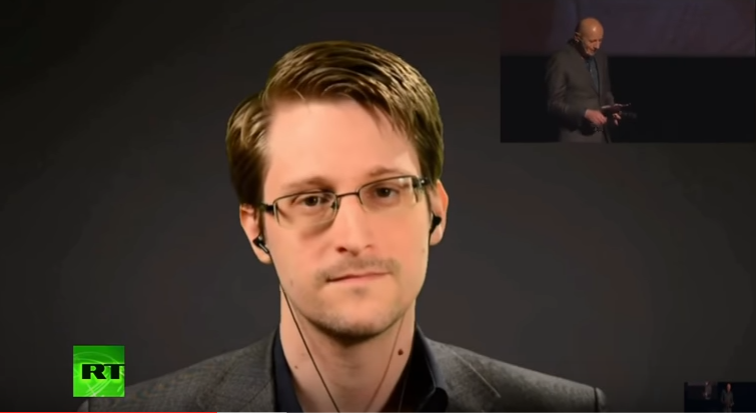
Snowden, who in 2013 blew the lid on the NSA’s massive covert surveillance program, recently appeared on camera via livestream to talk about privacy in an event hosted by StartPage.

Naturally the topic of Donald Trump came up a few times. At one point Snowden was asked “if the outcome [of the election] was better or worse for your case.” (I presume the question was referring to Snowden’s prospect of receiving a presidential pardon.)

Snowden deflected the part of the question that spoke to a possible pardon, saying the election was not about him. But as he continued his response got interesting.

After criticizing the authoritarian tone of the campaign, Snowden said people should stop focusing so much on presidents.

This is the thing I think we begin to forget when we focus too much on a single candidate. The current president of the United States, President Barack Obama, campaigned on a platform of ending mass surveillance in the United States. He said no more warrantless wiring tapping. He said he’d investigate and end criminal activities that had occurred under the prior administration….And we all put a lot of hope in him because of this. Not just people in [the United States]…but people in Europe and elsewhere around the world. It was a moment where we believed that because the right person got into office everything would change. But unfortunately, once he took that office we saw that he actually didn’t fulfill those campaign promises.

Snowden highlighted Obama’s failure to close Guantanamo Bay and end mass warrantless surveillance as specific broken campaign promises. Snowden said he was bringing up these points simply to drive home a larger message.

“We should be cautious about putting too much faith or fear into elected officials,” said Snowden. “At the end of the day, this is just a president.”

He said if people want to change the world, they should look to themselves instead of putting their hopes or fears in a single person. “This can only be the work of the people,” Snowden said. “If we want to have a better world we can’t hope for an Obama, and we should not fear a Donald Trump, rather we should build it ourselves.”

The crowd erupted in applause following Snowden’s monologue.

Snowden makes a great point, and I found his choice of words interesting.

He says people are putting too much “faith” in politicians. Faith. It has occurred to me on more than one occasion that people increasingly treat politics as a religion and political leaders like gods or demigods. Modern man looks to political leaders for hope and sustenance, and often blames them (in their hearts, if not in words) for their pain and misfortune.

Would America not be a better place if people more often looked inward instead of putting their hopes and fears in some distant leader? Would we not be better people if we did so?

Source: RT

Vote all you want. The secret government won’t change | Boston Globe

By Jordan Michael Smith

DoubleGovernment The voters who put Barack Obama in office expected some big changes. From the NSA’s warrantless wiretapping to Guantanamo Bay to the Patriot Act, candidate Obama was a defender of civil liberties and privacy, promising a dramatically different approach from his predecessor.

But six years into his administration, the Obama version of national security looks almost indistinguishable from the one he inherited. Guantanamo Bay remains open. The NSA has, if anything, become more aggressive in monitoring Americans. Drone strikes have escalated. Most recently it was reported that the same president who won a Nobel Prize in part for promoting nuclear disarmament is spending up to $1 trillion modernizing and revitalizing America’s nuclear weapons.

Why did the face in the Oval Office change but the policies remain the same? Critics tend to focus on Obama himself, a leader who perhaps has shifted with politics to take a harder line. But Tufts University political scientist Michael J. Glennon has a more pessimistic answer: Obama couldn’t have changed policies much even if he tried.

Though it’s a bedrock American principle that citizens can steer their own government by electing new officials, Glennon suggests that in practice, much of our government no longer works that way. In a new book, “National Security and Double Government,” he catalogs the ways that the defense and national security apparatus is effectively self-governing, with virtually no accountability, transparency, or checks and balances of any kind. He uses the term “double government”: There’s the one we elect, and then there’s the one behind it, steering huge swaths of policy almost unchecked. Elected officials end up serving as mere cover for the real decisions made by the bureaucracy.

RELATED: Coverage of the 2014 midterm elections

Glennon cites the example of Obama and his team being shocked and angry to discover upon taking office that the military gave them only two options for the war in Afghanistan: The United States could add more troops, or the United States could add a lot more troops. Hemmed in, Obama added 30,000 more troops.

Glennon’s critique sounds like an outsider’s take, even a radical one. In fact, he is the quintessential insider: He was legal counsel to the Senate Foreign Relations Committee and a consultant to various congressional committees, as well as to the State Department. “National Security and Double Government” comes favorably blurbed by former members of the Defense Department, State Department, White House, and even the CIA. And he’s not a conspiracy theorist: Rather, he sees the problem as one of “smart, hard-working, public-spirited people acting in good faith who are responding to systemic incentives”—without any meaningful oversight to rein them in.

How exactly has double government taken hold? And what can be done about it? Glennon spoke with Ideas from his office at Tufts’ Fletcher School of Law and Diplomacy. This interview has been condensed and edited.

IDEAS: Where does the term “double government” come from?

GLENNON:It comes from Walter Bagehot’s famous theory, unveiled in the 1860s. Bagehot was the scholar who presided over the birth of the Economist magazine—they still have a column named after him. Bagehot tried to explain in his book “The English Constitution” how the British government worked. He suggested that there are two sets of institutions. There are the “dignified institutions,” the monarchy and the House of Lords, which people erroneously believed ran the government. But he suggested that there was in reality a second set of institutions, which he referred to as the “efficient institutions,” that actually set governmental policy. And those were the House of Commons, the prime minister, and the British cabinet.

IDEAS: What evidence exists for saying America has a double government?

GLENNON:I was curious why a president such as Barack Obama would embrace the very same national security and counterterrorism policies that he campaigned eloquently against. Why would that president continue those same policies in case after case after case? I initially wrote it based on my own experience and personal knowledge and conversations with dozens of individuals in the military, law enforcement, and intelligence agencies of our government, as well as, of course, officeholders on Capitol Hill and in the courts. And the documented evidence in the book is substantial—there are 800 footnotes in the book.

IDEAS: Why would policy makers hand over the national-security keys to unelected officials?

GLENNON: It hasn’t been a conscious decision….Members of Congress are generalists and need to defer to experts within the national security realm, as elsewhere. They are particularly concerned about being caught out on a limb having made a wrong judgment about national security and tend, therefore, to defer to experts, who tend to exaggerate threats. The courts similarly tend to defer to the expertise of the network that defines national security policy.

The presidency itself is not a top-down institution, as many people in the public believe, headed by a president who gives orders and causes the bureaucracy to click its heels and salute. National security policy actually bubbles up from within the bureaucracy. Many of the more controversial policies, from the mining of Nicaragua’s harbors to the NSA surveillance program, originated within the bureaucracy. John Kerry was not exaggerating when he said that some of those programs are “on autopilot.”

RELATED: Answers sought on CIA role in ‘78 JFK probe

IDEAS: Isn’t this just another way of saying that big bureaucracies are difficult to change?

GLENNON: It’s much more serious than that. These particular bureaucracies don’t set truck widths or determine railroad freight rates. They make nerve-center security decisions that in a democracy can be irreversible, that can close down the marketplace of ideas, and can result in some very dire consequences.

IDEAS: Couldn’t Obama’s national-security decisions just result from the difference in vantage point between being a campaigner and being the commander-in-chief, responsible for 320 million lives?

GLENNON: There is an element of what you described. There is not only one explanation or one cause for the amazing continuity of American national security policy. But obviously there is something else going on when policy after policy after policy all continue virtually the same way that they were in the George W. Bush administration.

IDEAS: This isn’t how we’re taught to think of the American political system.

GLENNON: I think the American people are deluded, as Bagehot explained about the British population, that the institutions that provide the public face actually set American national security policy. They believe that when they vote for a president or member of Congress or succeed in bringing a case before the courts, that policy is going to change. Now, there are many counter-examples in which these branches do affect policy, as Bagehot predicted there would be. But the larger picture is still true—policy by and large in the national security realm is made by the concealed institutions.

IDEAS: Do we have any hope of fixing the problem?

GLENNON: The ultimate problem is the pervasive political ignorance on the part of the American people. And indifference to the threat that is emerging from these concealed institutions. That is where the energy for reform has to come from: the American people. Not from government. Government is very much the problem here. The people have to take the bull by the horns. And that’s a very difficult thing to do, because the ignorance is in many ways rational. There is very little profit to be had in learning about, and being active about, problems that you can’t affect, policies that you can’t change.

Source: Boston Globe
Cut a Deal for the Whistleblower: NYT Goes to Bat for Snowden | Common Dreams

snowden_newTaking a break from being a sometimes mouthpiece for the National Security Agency or acting in a too deferential manner towards government claims, the New York Times Editorial Board on Tuesday took a strikingly clear position on the case of former intelligence contractor Edward Snowden by declaring his leaks of internal NSA documents the act of a “whistle-blower” and called on the United States to offer him “a plea bargain or some form of clemency that would allow him to return home” without the threat of decades or life in prison.

“Considering the enormous value of the information he has revealed, and the abuses he has exposed, Mr. Snowden deserves better than a life of permanent exile, fear and flight,” the editorial states. “He may have committed a crime to do so, but he has done his country a great service.”

Though progressive supporters have considered Snowden a whistleblower from the outset—an argument his defenders see bolstered by each successive revelation—the weight of the New York Times Editorial Board makes the development significant in terms of wider public opinion and in the halls of more elite power where the paper holds sway.

To defend its call for clemency or a plea agreement, the Times argues that “Mr. Snowden was clearly justified in believing that the only way to blow the whistle on this kind of intelligence-gathering was to expose it to the public” and cataloged “just a few” of the violations by the NSA his revelations brought to light and some of the legal challenges they’ve already provoked:

■ The N.S.A. broke federal privacy laws, or exceeded its authority, thousands of times per year, according to the agency’s own internal auditor.

■ The agency broke into the communications links of major data centers around the world, allowing it to spy on hundreds of millions of user accounts and infuriating the Internet companies that own the centers. Many of those companies are now scrambling to install systems that the N.S.A. cannot yet penetrate.

■ The N.S.A. systematically undermined the basic encryption systems of the Internet, making it impossible to know if sensitive banking or medical data is truly private, damaging businesses that depended on this trust.

■ His leaks revealed that James Clapper Jr., the director of national intelligence, lied to Congress when testifying in March that the N.S.A. was not collecting data on millions of Americans. (There has been no discussion of punishment for that lie.)

■ The Foreign Intelligence Surveillance Court rebuked the N.S.A. for repeatedly providing misleading information about its surveillance practices, according to a ruling made public because of the Snowden documents. One of the practices violated the Constitution, according to the chief judge of the court.

■ A federal district judge ruled earlier this month that the phone-records-collection program probably violates the Fourth Amendment of the Constitution. He called the program “almost Orwellian” and said there was no evidence that it stopped any imminent act of terror.

Additionally, the Times editorial recognizes those critics who charge Snowden with woefully damaging U.S. interests by revealing some of these tactics, but points out that none of these critics—either inside of outside of government—have “presented the slightest proof that his disclosures really hurt the nation’s security.”

Glenn Greenwald, one of the journalists who has worked most closely with Snowden and publicly defended the whistleblower’s actions since his name entered the public domain, called the Times editorial “remarkable.”

The Nation’s Greg Mitchell, who has followed the Snowden case closely, including the way its been handled by U.S. media, began his review of the Times editorial by admitting: “Well, I didn’t see this coming.”

Source: Common Dreams

NSA reportedly planted spyware on electronics equipment | CNET

By Dan Farber

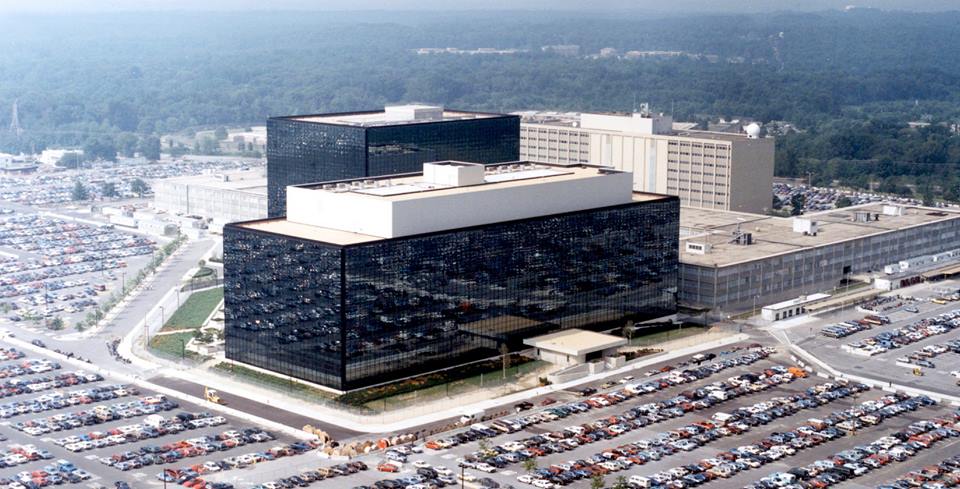
NSAA new report from Der Spiegel, based on internal National Security Agency documents, reveals more details about how the spy agency gains access to computers and other electronic devices to plant backdoors and other spyware.

The Office of Tailored Access Operations, or TAO, is described as a “squad of digital plumbers” that deals with hard targets — systems that are not easy to infiltrate. TAO has reportedly been responsible for accessing the protected networks of heads of state worldwide, works with the CIA and FBI to undertake “sensitive missions,” and has penetrated the security of undersea fiber-optic cables. TAO also intercepts deliveries of electronic equipment to plant spyware to gain remote access to the systems once they are delivered and installed.

Der Spiegel: Inside TAO -Documents Reveal Top NSA Hacking Unit

Der Spiegel: Shopping for Spy Gear – Catalog Advertises NSA Toolbox

According to the report, the NSA has planted backdoors to access computers, hard drives, routers, and other devices from companies such as Cisco, Dell, Western Digital, Seagate, Maxtor, Samsung, and Huawei. The report describes a 50-page product catalog of tools and techniques that an NSA division called ANT, which stands for Advanced or Access Network Technology, uses to gain access to devices.

This follows a report that the security firm RSA intentionally allowed the NSA to create a backdoor into its encryption tokens.

“For nearly every lock, ANT seems to have a key in its toolbox. And no matter what walls companies erect, the NSA’s specialists seem already to have gotten past them,” the report said. The ANT department prefers targeting the BIOS, code on a chip on the motherboard that runs when the machine starts up. The spyware infiltration is largely invisible to other security programs and can persist if a machine is wiped and a new operating system is installed.

With the exception of Dell, the companies cited in the report and contacted by Der Spiegel claimed they had no knowledge of any NSA backdoors into their equipment.

In a blog post Sunday, a Cisco spokesperson wrote:

At this time, we do not know of any new product vulnerabilities, and will continue to pursue all avenues to determine if we need to address any new issues. If we learn of a security weakness in any of our products, we will immediately address it. As we have stated prior, and communicated to Der Spiegel, we do not work with any government to weaken our products for exploitation, nor to implement any so-called security ‘back doors’ in our products.

The NSA declined to comment on the report but said the TAO was key for national defense.

“Tailored Access Operations (TAO) is a unique national asset that is on the front lines of enabling NSA to defend the nation and its allies,” the agency said in a statement. “We won’t discuss specific allegations regarding TAO’s mission, but its work is centered on computer network exploitation in support of foreign intelligence collection.”

The end does not appear to be in sight for the revelations from the documents obtained by Edward Snowden, according to Glenn Greenwald, the journalist who first collaborated with Snowden to publish the material. In a speech delivered by video to the Chaos Communication Congress (CCC) in Hamburg on Friday, he said, “There are a lot more stories to come, a lot more documents that will be covered. It’s important that we understand what it is we’re publishing, so what we say about them is accurate.”

Source: CNET