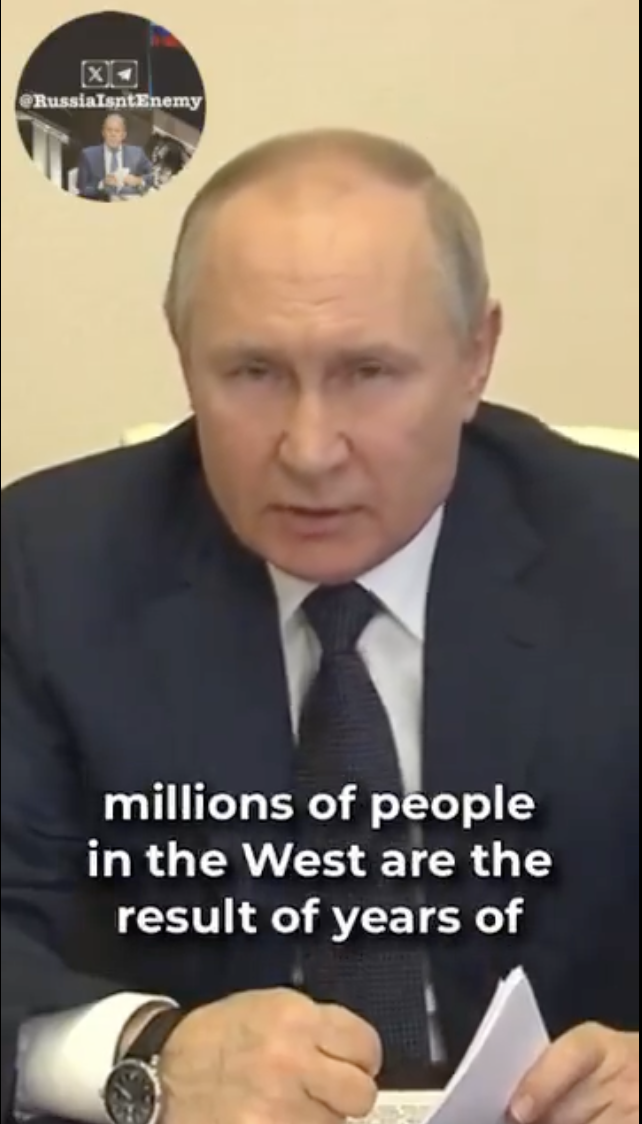
“I want to be heard by ordinary Western citizens: you are now being persistently persuaded that all of the difficulties you faced are the result of some hostile actions of Russia, that you should pay for the fight against the mythical Russian threat out of your own wallet. It is a lie. The truth is that current problems of Western citizens are the result of years of mistakes and ambitions of ruling elites. These elites are not thinking about you, how to improve your live, they are obsessed with their selfish interests and super-profits” – President Putin.
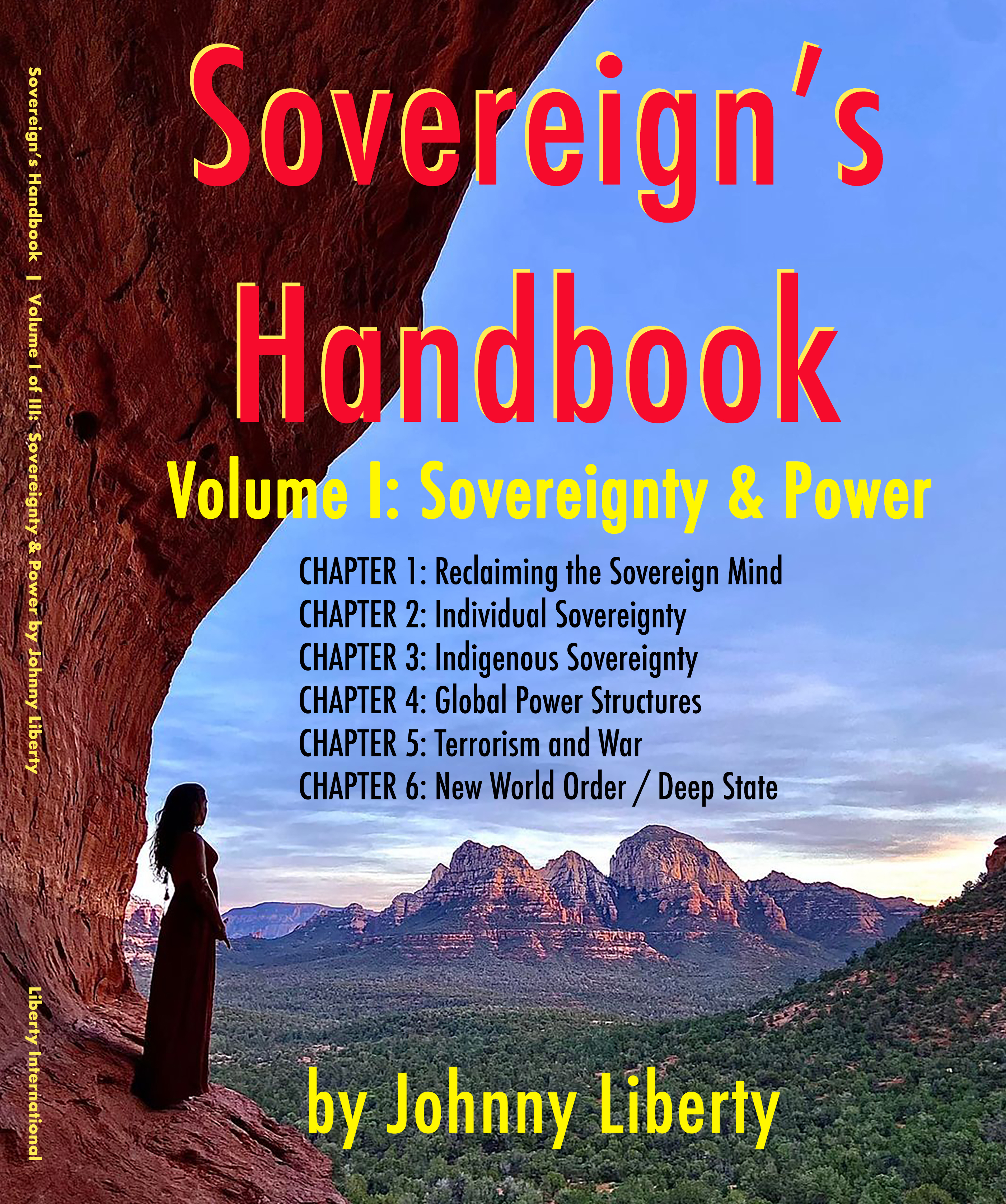
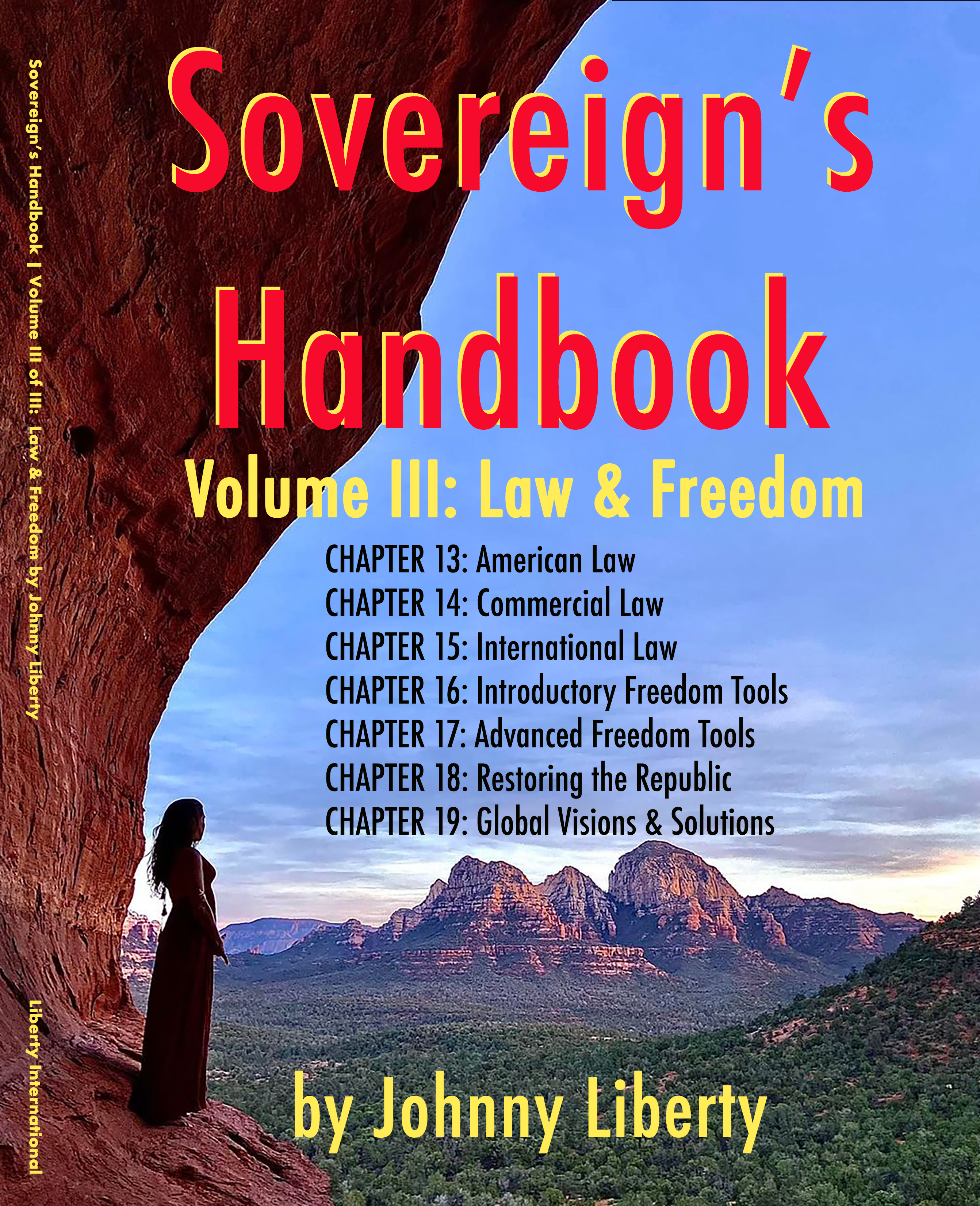
Sovereign’s Handbook by Johnny Liberty (30th Anniversary Edition) (3-Volume Printed, Bound Book or PDF)
A three-volume, 750+ page tome with an extensive update of the renowned underground classic ~ the Global Sovereign’s Handbook. Still after all these years, this is the most comprehensive book on sovereignty, economics, law, power structures and history ever written. Served as the primary research behind the best-selling Global One Audio Course. Available Now!
Dawning of the Corona Age: Navigating the Pandemic by Johnny Freedom (3rd Edition) (Printed, Bound Book or PDF)
This comprehensive book, goes far beyond the immediate impact of the “pandemic”, but, along with the reader, imagines how our human world may be altered, both positively and negatively, long into an uncertain future. Available Now!
Sovereign’s Handbook by Johnny Liberty (30th Anniversary Edition) (3-Volume Printed, Bound Book or PDF)
A three-volume, 750+ page tome with an extensive update of the renowned underground classic ~ the Global Sovereign’s Handbook. Still after all these years, this is the most comprehensive book on sovereignty, economics, law, power structures and history ever written. Served as the primary research behind the best-selling Global One Audio Course. Available Now!
Dawning of the Corona Age: Navigating the Pandemic by Johnny Freedom (3rd Edition) (Printed, Bound Book or PDF)
This comprehensive book, goes far beyond the immediate impact of the “pandemic”, but, along with the reader, imagines how our human world may be altered, both positively and negatively, long into an uncertain future. Available Now!
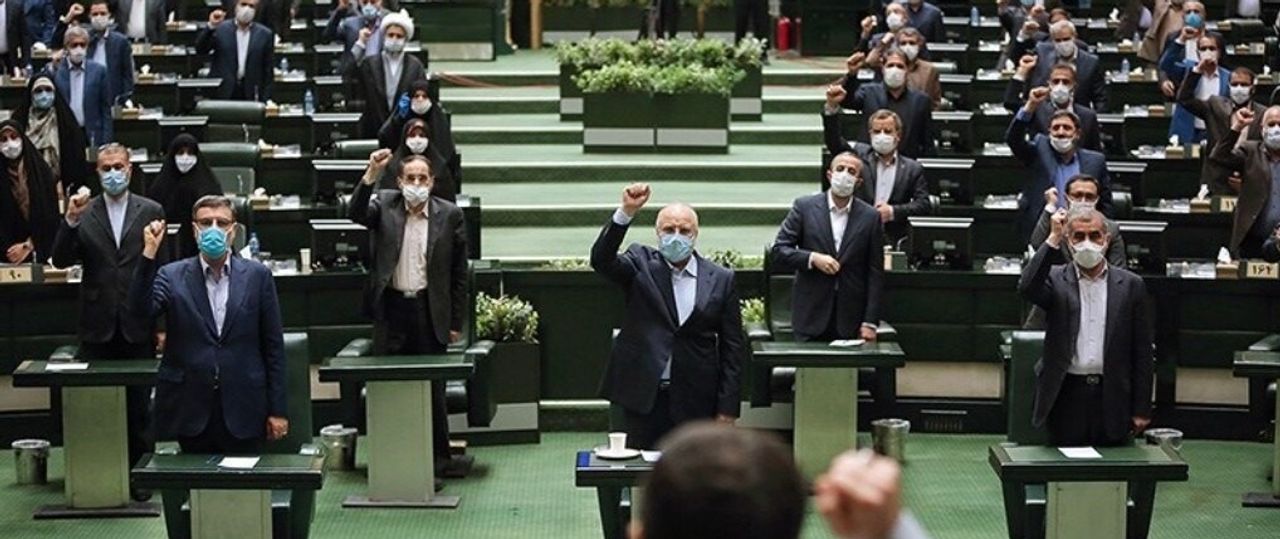
A group of 227 parliament members in Iran has called on the Judiciary to issue death sentences for people arrested during the ongoing antigovernment protests.
The parliament, elected in a non-competitive election in February 2020, is packed with hardliners and Revolutionary Guard officers.
In a statement that was read out in the parliament on Sunday, the lawmakers called the protesters ‘mohareb’ — which literally means warrior in Arabic, but in Islamic law or sharia it means ‘enemy of God’ that carries the death penalty. They also compared the protesters to members of ISIS, who “attack people’s lives and property…”
The Iranian regime has so far charged several people with ‘moharebeh,’ “corruption on earth,” “assembly and collusion against national security” and “confrontation with the Islamic Republic” for participating in the protests.
Describing the current wave of popular protests as “riots,” the MPs claimed that “the US and other enemies” are inciting violence, organizing rallies, and providing financial support and weaponry to commandeer the protests. They also said “thugs and mobs” have killed tens of people and disrupted the security of the country.
Echoing the Islamic Republic’s propaganda line, the lawmakers said that “the enemies have been defeated in Iraq, Syria, Palestine, Lebanon and Yemen” therefore they organized the “riots” as a reaction to “victories of the Islamic Republic.”
Without mentioning any individuals or groups, the hardline lawmakers also asked the judiciary to take legal actions against “the politicians who incited the rioters.”
Earlier in the parliament session, Speaker Mohammad Bagher Ghalibaf (Qalibaf) said that main elements of Mossad, CIA and their allied groups are behind the unrest in the country.
Late in October, hardliner MP Mohammad Esmail Kowsari, also a high ranking IRGC officer, implicitly threatened that the government will respond differentlyto the ongoing protests from now on.
While protests continue across Iran, the Islamic Republic’s Judiciary has also announced that it has indicted over 1,000 people who were arrested during the demonstrations.
Authorities have been claiming that “separatists” and “instigators” are behind the efforts to overthrow the government and break Iran into areas controlled by ethnic groups, a claim routinely denied by Iranians on streets and social media.
President Ebrahim Raisi on October 25 accused “enemies of the Islamic Republic” of fomenting the protests, echoing what Khamenei said a day earlier. Parliament Speaker Mohammad-Bagher Ghalibaf in turn vowed that parliament would take action to change the ways of the morality police in a bid to calm the protesters.
“Death sentences against people for exercising their right to freedom of expression, after the killings of peaceful protesters, abductions and gunning down children, and other atrocities, indicate a government that is out of control and willing to quash protests at any cost,” said a statement by Center for Human Rights in Iran.
The Norway-based human rights organization also expressed concern regarding the fate of the detained protesters saying, “dozens of them have been charged with the security-related charges of ‘moharebeh’ and ‘corruption on earth’ which carry the death penalty.”
The Islamic Republic’s history and current evidence indicate that they intend to use the death penalty as a tool of political repression to intimidate their opposition.
Earlier in November, 40 Iranian lawyers issued a statement saying most people no longer want the Islamic Republicand called on their peers to speak up and defend the people.
Iran has been gripped by protests since the death in custody of Mahsa Amini, a 22-year-old Iranian of Kurdish origin who had been arrested on September 13 for allegedly breaching the Islamic dress code and died three days later from severe head trauma. Protests spread fueled by public outrage over a crackdown that led to the deaths of other young men, women, and children. Now in their seventh week, the protests show no sign of ending.
Sovereign’s Handbook by Johnny Liberty (30th Anniversary Edition) (3-Volume Printed, Bound Book or PDF)
A three-volume, 750+ page tome with an extensive update of the renowned underground classic ~ the Global Sovereign’s Handbook. Still after all these years, this is the most comprehensive book on sovereignty, economics, law, power structures and history ever written. Served as the primary research behind the best-selling Global One Audio Course. Available Now!
Dawning of the Corona Age: Navigating the Pandemic by Johnny Freedom (3rd Edition) (Printed, Bound Book or PDF)
This comprehensive book, goes far beyond the immediate impact of the “pandemic”, but, along with the reader, imagines how our human world may be altered, both positively and negatively, long into an uncertain future. Available Now!
Let’s focus on the future, and fix the problems we still need to solve.
In April 2020, with nothing else to do, my family took an enormous number of hikes. We all wore cloth masks that I had made myself. We had a family hand signal, which the person in the front would use if someone was approaching on the trail and we needed to put on our masks. Once, when another child got too close to my then-4-year-old son on a bridge, he yelled at her “SOCIAL DISTANCING!”
These precautions were totally misguided. In April 2020, no one got the coronavirus from passing someone else hiking. Outdoor transmission was vanishingly rare. Our cloth masks made out of old bandanas wouldn’t have done anything, anyway. But the thing is: We didn’t know.
I have been reflecting on this lack of knowledge thanks to a class I’m co-teaching at Brown University on COVID. We’ve spent several lectures reliving the first year of the pandemic, discussing the many important choices we had to make under conditions of tremendous uncertainty.
Some of these choices turned out better than others. To take an example close to my own work, there is an emerging (if not universal) consensus that schools in the U.S. were closed for too long: The health risks of in-school spread were relatively low, whereas the costs to students’ well-being and educational progress were high. The latest figures on learning loss are alarming. But in spring and summer 2020, we had only glimmers of information. Reasonable people—people who cared about children and teachers—advocated on both sides of the reopening debate.
Another example: When the vaccines came out, we lacked definitive data on the relative efficacies of the Johnson & Johnson shot versus the mRNA options from Pfizer and Moderna. The mRNA vaccines have won out. But at the time, many people in public health were either neutral or expressed a J&J preference. This misstep wasn’t nefarious. It was the result of uncertainty.
Obviously some people intended to mislead and made wildly irresponsible claims. Remember when the public-health community had to spend a lot of time and resources urging Americans not to inject themselves with bleach? That was bad. Misinformation was, and remains, a huge problem. But most errors were made by people who were working in earnest for the good of society.
Given the amount of uncertainty, almost every position was taken on every topic. And on every topic, someone was eventually proved right, and someone else was proved wrong. In some instances, the right people were right for the wrong reasons. In other instances, they had a prescient understanding of the available information.
The people who got it right, for whatever reason, may want to gloat. Those who got it wrong, for whatever reason, may feel defensive and retrench into a position that doesn’t accord with the facts. All of this gloating and defensiveness continues to gobble up a lot of social energy and to drive the culture wars, especially on the internet. These discussions are heated, unpleasant and, ultimately, unproductive. In the face of so much uncertainty, getting something right had a hefty element of luck. And, similarly, getting something wrong wasn’t a moral failing. Treating pandemic choices as a scorecard on which some people racked up more points than others is preventing us from moving forward.
We have to put these fights aside and declare a pandemic amnesty. We can leave out the willful purveyors of actual misinformation while forgiving the hard calls that people had no choice but to make with imperfect knowledge. Los Angeles County closed its beaches in summer 2020. Ex post facto, this makes no more sense than my family’s masked hiking trips. But we need to learn from our mistakes and then let them go. We need to forgive the attacks, too. Because I thought schools should reopen and argued that kids as a group were not at high risk, I was called a “teacher killer” and a “génocidaire.” It wasn’t pleasant, but feelings were high. And I certainly don’t need to dissect and rehash that time for the rest of my days.
Moving on is crucial now, because the pandemic created many problems that we still need to solve.
Student test scores have shown historic declines, more so in math than in reading, and more so for students who were disadvantaged at the start. We need to collect data, experiment, and invest. Is high-dosage tutoring more or less cost-effective than extended school years? Why have some states recovered faster than others? We should focus on questions like these, because answering them is how we will help our children recover.
Many people have neglected their health care over the past several years. Notably, routine vaccination rates for children (for measles, pertussis, etc.) are way down. Rather than debating the role that messaging about COVID vaccines had in this decline, we need to put all our energy into bringing these rates back up. Pediatricians and public-health officials will need to work together on community outreach, and politicians will need to consider school mandates.
The standard saying is that those who forget history are doomed to repeat it. But dwelling on the mistakes of history can lead to a repetitive doom loop as well. Let’s acknowledge that we made complicated choices in the face of deep uncertainty, and then try to work together to build back and move forward.
Sovereign’s Handbook by Johnny Liberty (30th Anniversary Edition) (3-Volume Printed, Bound Book or PDF)
A three-volume, 750+ page tome with an extensive update of the renowned underground classic ~ the Global Sovereign’s Handbook. Still after all these years, this is the most comprehensive book on sovereignty, economics, law, power structures and history ever written. Served as the primary research behind the best-selling Global One Audio Course. Available Now!
Dawning of the Corona Age: Navigating the Pandemic by Johnny Freedom (3rd Edition) (Printed, Bound Book or PDF)
This comprehensive book, goes far beyond the immediate impact of the “pandemic”, but, along with the reader, imagines how our human world may be altered, both positively and negatively, long into an uncertain future. Available Now!
Western hegemony should be replaced with an actual order respectful of all, the Russian leader said.
The world is entering a decade of tumult as the pursuit of a more just world order clashes with the arbitrary hegemony of the collective West, Russian President Vladimir Putin said on Thursday, addressing the annual meeting of the Valdai Discussion Club.
Putin’s speech ranged from biodiversity to “cancel culture,” the nature of what the West has to offer and Russia’s response, followed by hours of answering audience questions. Here are six key points from his opening remarks.
The West stokes conflict to preserve hegemony
From inciting conflict in Ukraine and provocations around Taiwan to destabilizing the world food and energy markets, the US and its allies have been escalating tensions around the globe in recent years and especially in recent months, Putin said.
“Ruling the world is what the so-called West has staked in this game, which is certainly dangerous, bloody and – I would say – dirty. It denies the sovereignty of countries and peoples, their identity and uniqueness, and disregards any interests of other states,” the Russian president explained. In their so-called “rules-based world order,” only those making the “rules” have any agency, while everyone else must simply obey.
However, the West has “no constructive ideas and positive development, they simply have nothing to offer the world except the preservation of their dominance.”
Rules for thee but not for me
The West insists its culture and worldview should be universal, Putin said. While not saying it outright, they behave as if these values must be unconditionally accepted by everyone else.
Yet when some other countries, notably China, began benefiting from globalization, the West “immediately changed or completely canceled” many of the rules it long insisted were set in stone and sacred, Putin said, with free trade, economic openness, fair competition and even property rights “suddenly forgotten at once, completely.”
“As soon as something becomes profitable for themselves, they change the rules immediately, on the go, in the course of the game.”
“Cancel culture” and canceling culture
Believing themselves infallible, the rulers of the West desire to destroy – or “cancel” – those they dislike. Where Nazis burned books, the Western “guardians of liberalism and progress” now ban Dostoevsky and Tchaikovsky, Putin said. Liberal democracy has transformed into something unrecognizable, declaring any alternative viewpoint as propaganda or a threat, he added. The so-called “cancel culture” destroys anything that is alive and creative, preventing any freedom of thought in culture, economics or politics alike.
“History, of course, will put everything in its place,” Putin said, adding that the the self-conceit of those who seek to cancel them is off the charts, “but no one will even remember their names in a few years, while Dostoevsky and Tchaikovsky and Pushkin will endure.”
Russia does not seek domination
Russia is an “independent, original civilization” and “has never considered itself an enemy of the West,”Putin said. Since antiquity, it has had ties with the West of traditional Christian and Muslim values, freedom, patriotism, and a rich culture. There is another West, however – “an aggressive, cosmopolitan, neocolonialist, acting as a tool of neoliberal elites,” Putin said, “whose dictates Russia will never accept.”
Even so, Russia is not throwing a gauntlet to the elites of that West, but “simply defends its right to exist and develop freely. At the same time, we ourselves are not seeking to become some kind of new hegemon,” Putin said.
Western hegemony is ending
“We are standing at a historic milestone, ahead of what is probably the most dangerous, unpredictable and at the same time important decade since the end of World War II. The West is not able to single-handedly manage humanity, but is desperately trying to do it, and most of the peoples of the world no longer want to put up with it,” Putin said.
Conflicts arising from this tumult are threatening the entire humanity, and constructively resolving them is the principal challenge ahead, according to the Russian leader.
No one can sit out the coming storm, which has acquired a global character, Putin said. Humanity has two choices, “either to continue to accumulate a burden of problems that will inevitably crush us all, or to try together to find solutions, albeit imperfect, but working, capable of making our world safer and more stable.”
What multipolar world should look like
In a truly democratic multipolar world, any society, culture and civilization should have the right to choose its own path and socio-political system. If the US and Europe have that right, so should everyone else. Russia also has it, “and no one will ever be able to dictate to our people what kind of society we should build and on what principles.”
The biggest threat to the political, economic, and ideological monopoly of the West is that alternative social models may arise in the world – and would be more effective and more attractive.
“Above all, we believe that the new world order should be based on law and justice, be free, authentic and fair,” the Russian president said.
“The future world order is being formed before our eyes. And in this world order, we must listen to everyone, take into account every point of view, every nation, society, culture, every system of worldviews, ideas and religious beliefs, without imposing a single truth on anyone, and only on this basis, understanding our responsibility for the fate of our peoples and the planet, to build a symphony of human civilization.”
Sovereign’s Handbook by Johnny Liberty (30th Anniversary Edition) (3-Volume Printed, Bound Book or PDF)
A three-volume, 750+ page tome with an extensive update of the renowned underground classic ~ the Global Sovereign’s Handbook. Still after all these years, this is the most comprehensive book on sovereignty, economics, law, power structures and history ever written. Served as the primary research behind the best-selling Global One Audio Course. Available Now!
Dawning of the Corona Age: Navigating the Pandemic by Johnny Freedom (3rd Edition) (Printed, Bound Book or PDF)
This comprehensive book, goes far beyond the immediate impact of the “pandemic”, but, along with the reader, imagines how our human world may be altered, both positively and negatively, long into an uncertain future. Available Now!
If you have ever heard talk or been to a seminar about “sovereignty”, then very likely those conversations were influenced by the foundational research of the author and educator.
His research and educational journey reaching millions of people worldwide began in 1992 and culminated in 2022 with the 3-Volume book release – his final word on the subject.
At the turn of the millennium his books and audio courses facilitated in part – a sovereignty and tax-honesty movement that involved millions of Americans.
This 3 Volume series comprises the life’s work of Johnny Liberty filled with comprehensive insights into the last few hundred years of history, law, economics, money, citizenship and governance.
These books show how it is supposed to be done in a constitutional Republic.
How did We the People get to where we are today?
What can we do to reclaim our inherent sovereignty and natural rights?
Many of the answers may be found within these revolutionary pages. Available as a paperback, E-Book (PDF) or an Amazon Kindle format. Thank you for supporting the author.
Sincerely,
With Freedom For All, ~ Johnny Liberty
Sovereign’s Handbook by Johnny Liberty (30th Anniversary Edition)
A three-volume, 750 page tome with an extensive update of the renowned underground classic ~ the Global Sovereign’s Handbook.
Still after all these years, it is the most comprehensive book on sovereignty, economics, law, power structures and history ever written.
Served as the primary research behind the best-selling Global One Audio Course.
The 3 Volume Sovereign’s Handbook by Johnny Liberty is textbook material for everyone including educators/teachers, homeschoolers, historians, activists, leaders/politicians, attorneys/judges/law schools, police officers, and state Citizens/Nationals.
Sovereign’s Handbook by Johnny Liberty (30th Anniversary Edition) (3-Volume Printed, Bound Book or PDF)
A three-volume, 750+ page tome with an extensive update of the renowned underground classic ~ the Global Sovereign’s Handbook. Still after all these years, this is the most comprehensive book on sovereignty, economics, law, power structures and history ever written. Served as the primary research behind the best-selling Global One Audio Course. Available Now!
Dawning of the Corona Age: Navigating the Pandemic by Johnny Freedom (3rd Edition) (Printed, Bound Book or PDF)
This comprehensive book, goes far beyond the immediate impact of the “pandemic”, but, along with the reader, imagines how our human world may be altered, both positively and negatively, long into an uncertain future. Available Now!
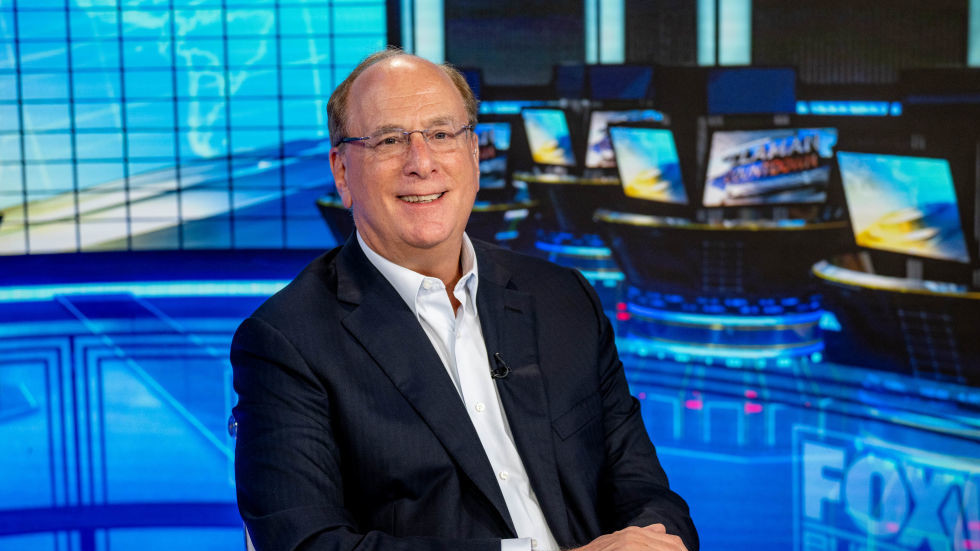
BlackRock CEO Larry Fink, whose firm oversees investments equivalent to about half of US GDP, has predicted that efforts to punish Russia over its invasion of Ukraine would lead to the unraveling of globalism as decision-makers reconsider their foreign vulnerabilities.
“The Russian invasion of Ukraine has put an end to the globalization we have experienced over the last three decades,” Fink said on Thursday in a letter to investors. “We had already seen connectivity between nations, companies and even people strained by two years of the pandemic. It has left many communities and people feeling isolated and looking inward. I believe this has exacerbated the polarization and extremist behavior we are seeing across society today.”
Western nations responded to the Ukraine crisis by launching an “economic war” against Moscow, including the unprecedented step of barring the Russian central bank from deploying its foreign currency reserves, Fink noted. Capital markets, financial institutions and other businesses have gone beyond the sanctions imposed by their governments, cutting off their Russian ties and operations.
“Russia’s aggression in Ukraine and its subsequent decoupling from the global economy is going to prompt companies and governments worldwide to re-evaluate their dependencies and re-analyze their manufacturing and assembly footprints – something that COVID-19 had already spurred many to start doing,” Fink said. As a result, he added, companies will move more operations to their home countries or to neighboring nations, leading to higher costs and prices.
The Russia-Ukraine conflict has “upended the world order” that has been in place since the Cold War ended and will require BlackRock to adjust to “long-term structural changes,” such as deglobalization and higher inflation, Fink said. He added that central banks will have to either accept increased inflation – even beyond the 40-year high that was set last month in the US – or reduced economic activity and employment.
New York-based BlackRock handles $10 trillion in assets, making it the world’s largest money manager, so Fink’s views are closely watched by investors. In fact, the billionaire wields so much financial clout that his thoughts can be self-fulfilling, to some degree. Among other implications, he said he sees the Ukraine crisis accelerating the development of digital currencies and speeding the shift away from fossil fuels.
“The ramifications of this war are not limited to Eastern Europe,” Fink said. “They are layered on top of a pandemic that has already had profound effects on political, economic and social trends. The impact will reverberate for decades to come in ways we can’t yet predict.”
Although Fink and Russian leaders don’t see eye-to-eye on the Ukraine conflict – the money manager blames Moscow for causing the crisis – they agree that the world order is changing. Russian President Vladimir Putin said last week that sanctions against Moscow mark the end of an era, portending an end to the West’s “global dominance” both politically and economically. Ex-President Dmitry Medvedev echoed those comments this week, saying, “The unipolar world has come to an end.”
The Russian president says the “myth of the Western welfare state, of the so-called golden billion, is crumbling”
Russian President Vladimir Putin has opined that the latest rounds of unprecedented sanctions imposed on Russia by the US and its allies over the Kremlin’s military campaign in Ukraine, mark the end of an era. According to Putin, from now on the West will be losing its “global dominance” both politically and economically.
Speaking on Wednesday, the Russian head of state proclaimed that the “myth of the Western welfare state, of the so-called golden billion, is crumbling.” Moreover, it is the “whole planet that is having to pay the price for the West’s ambitions, and its attempts to retain its vanishing dominance at any cost,” Putin said.
The president predicted food shortages across the world as Western sanctions against Russia are adversely affecting the entire global economy.
Touching on the decision by several Western powers to freeze Russia’s central bank assets, Putin claimed that this would only serve to irreparably undermine trust in those nations, and make other countries think twice before placing their reserves in the care of those countries. According to him, nearly half of Moscow’s assets were “simply stolen” by the West.
Addressing people in the West, the Russian leader said the massive sanctions imposed on Russia were already backfiring on the US and Europe themselves, with governments there trying hard to convince their citizens that Russia was to blame.
Putin warned ordinary people in the West that attempts to portray Moscow as the primary source of all their woes were lies, with a lot of those issues being the direct result of the Western governments’ “ambitions” and “political short-sightedness.”
The Western elites, according to Putin, have turned their countries into an “empire of lies,” but Russia will keep on presenting its own position to the whole world, no matter what.



 Liberty International News