Snowden (Film Review) | The Guardian

Review By Wendy Ide

For a director who customarily tackles subjects with the approach of a gorilla playing American football, Oliver Stone’s take on whistleblower Edward Snowden seems curiously muted. Audiences who are already familiar with Citizenfour, Laura Poitras’s exemplary documentary on the same subject, will be struck by the fact that, in dramatising Snowden’s story, Stone seems to have leached out much of the drama. The aim was clearly to create an All the President’s Men for the age of cyber-surveillance. But somehow the sense of peril is downplayed, diluted by too much inert exposition and pacing that could be tighter.

Playing Edward Snowden, Joseph Gordon-Levitt is one of the film’s main assets. His character’s ferocious intelligence is signposted with cheap details – he is forever fiddling with a Rubik’s cube and has a nerd’s enthusiasm for arcane enciphering equipment. But Snowden’s intellect is most effectively conveyed in Gordon-Levitt’s eyes – watchful, sober and clouded by doubt, they are a window into his impossible ethical quandary.

Melissa Leo is somewhat underused as Poitras. And playing Guardian reporter Glenn Greenwald, Zachary Quinto is tonally jarring. It feels as though Stone realised that some of the scenes were flagging, so got Quinto to shout angrily at random moments, to keep the audience on their toes.

There are some fun elements, many involving Rhys Ifans’s ruthlessly unprincipled CIA trainer Corbin O’Brian (the fact the character shares a surname with the villain of Orwell’s Nineteen Eighty-Four is no accident). I particularly enjoyed a scene in which O’Brian’s massive glowering face is beamed into a conference room to berate Snowden. His carnivorous snarl fills the immense screen; he looks like a malevolent version of the Wizard of Oz. There’s a playful visual flair to this moment that is sadly lacking elsewhere in the film.

Source: The Guardian

Europe Drops Charges Against Edward Snowden, Offers Asylum And Protection | Filming Cops

fcsnowdenBy John Vibes | The Free Thought Project

The European Parliament voted to offer Edward Snowden asylum and protection and drop all criminal charges against him.

When at one time most of the world was bullied by the US government into pressing charges against Snowden and forcing him into exile, the entire European continent has now officially given him a pass.

Thursday’s 285 – 281 vote officially recognized Snowden as an “international human rights defender” and ensured that he would be free from arrest within European borders.

The final resolution mentioned that “too little has been done to safeguard citizens’ fundamental rights following revelations of electronic mass surveillance.”

Snowden is currently living in asylum in Russia and is wanted in the United States for charges under the federal Espionage Act, but Russia has declined to extradite him.

He has been unable to leave due to the fear of being kidnapped by the US military when he left the country, but now it may be possible for him to travel to Europe.

Snowden posted on his Twitter page that this could be a good sign of a shift in attitude towards his cause.

Earlier this year, it was reported that a federal appeals court ruled that the controversial NSA spy program which collects phone records is actually illegal. Snowden recently joined Twitter, making himself more visible and approachable to the general population than ever before.

Within a day of opening his first social media account since leaking information about the NSA spy program, Snowden gained over one million subscribers.

However, there was only one account that he decided to follow, the NSA.

The whistleblower’s first tweet read, “Can you hear me now?

John Vibes is an author, researcher and investigative journalist who takes a special interest in the counter-culture and the drug war. In addition to his writing and activist work, he organizes a number of large events including the Free Your Mind Conference, which features top caliber speakers and whistle-blowers from all over the world. You can contact him and stay connected to his work at his Facebook page. You can find his 65 chapter Book entitled “Alchemy of the Timeless Renaissance” at bookpatch.com.

Source: Filming Cops

‘Citizenfour’: Documentary with Edward Snowden Released | RT

Edward Snowden is not “skulking” in a secret Russian bunker but is living an ordinary life in Moscow with his longtime girlfriend, Lindsay Mills. “Citizenfour,” a documentary about the whistleblower, premiered Friday at the New York Film Festival.

It has been three months since Lindsay Mills, whom Snowden had to leave behind in Hawaii in May 2013, was reunited with him in Moscow in July, “Citizenfour” reveals. The documentary was directed by investigative journalist and filmmaker Laura Poitras, an associate of former Guardian reporter Glenn Greenwald, who has been Snowden’s primary media contact throughout the NSA revelations campaign.

Source: Russia Today

Russia’s New Ability To Evade NSA Surveillance Is Either A Crazy Coincidence Or Something Much Worse | Business Insider

By Michael Kelley

Snowden1U.S. officials think that Russia recently obtained the ability to evade U.S. eavesdropping equipment while commandeering Crimea and amassing troops near Ukraine’s border.The revelation reportedly has the White House “very nervous,” especially because it’s unclear how the Kremlin hid its plans from the National Security Agency’s snooping on digital and electronic communications.

One interesting fact involved is the presence of Edward Snowden in Russia, where he has been living since flying to Moscow from Hong Kong on June 23.

In July, primary Snowden source Glenn Greenwald told The Associated Press that Snowden “is in possession of literally thousands of documents that contain very specific blueprints that would allow somebody who read them to know exactly how the NSA does what it does, which would in turn allow them to evade that surveillance or replicate it.”

So it’s either a coincidence that the Russians figured out how to evade NSA surveillance while hosting the NSA-trained hacker, or else it implies that Snowden may have provided the Russians with access to the NSA’s blueprint.

Snowden told James Risen of The New York Times that he gave all of the classified documents he had taken from the NSA’s internal systems to the journalists he met in Hong Kong and kept no copies himself. However, there are clear issues with that claim and it is still unknown when he gave up access to the cache.

It is also unclear how many documents Snowden ended up taking — officials say he accessed 1.7 million files — or whether the “vast majority” of the intel he took is related to military operations (as opposed to strictly surveillance).

One official told The Wall Street Journal that the Russian camouflage in Ukraine situation is “uncharted territory,” and that a primary concern now is the question of whether Russia could cloak their next move by shielding more communications from the U.S.

Snowden’s detractors seem to have made up their minds about how Russia learned to evade the NSA leading up to and during the invasion of Crimea.

Source: Business Insider

Sunshine Week: Transparency issues persist with Obama administration | Washington Post

By Josh Hicks

ObamaLipsSunday marked the start of Sunshine Week, a time when government-transparency advocates promote their cause and issue reports gauging the openness of federal agencies.

The findings have never been great for the current administration, which promised to be the most transparent in history on the day President Obama took office. In recent years, most agencies have not fully complied with Freedom of Information Act (FOIA) requirements.

This year’s reports show improvement in some areas, but still much to be desired by news organizations and open-government groups such as the Center for Effective Government and the National Security Archive.

An Associated Press analysis of federal data found that the Obama administration has grown more secretive over time, last year censoring or outright denying FOIA access to government files more than ever since Obama took office.

The administration has also cited more legal exceptions to justify withholding materials and refused to turn over newsworthy files quickly, and most agencies took longer to answer records requests, according to the AP study.

A separate report this week from the National Security Archives found that 54 percent of all agencies have ignored directives that Obama and Attorney General Eric Holder issued in 2009 calling for a “presumption of disclosure” with FOIA requests. The good news: That number is down from about 70 percent of agencies last year.

The National Security Archives also found that nearly half of all federal agencies have not updated their FOIA regulations to comply with 2007 amendments Congress made to the law. The changes require agencies to cooperate with a new FOIA ombudsman in the Office of Government Information Services and report specific data on FOIA output, among other provisions.

The National Security Archive, which claims to file more FOIA requests than any other group, gathers and publishes declassified U.S. government files, with a focus on U.S. foreign policy documents.

In a third analysis, the Center for Effective Government released its annual government-transparency report card on Monday, handing out failing grades to seven of the 15 agencies it reviewed. The scores are based on three metrics: processing requests for information, establishing rules for answering requests and creating user-friendly Web sites.

The White House has put forward an action plan that could help the administration improve its marks by creating one core FOIA regulation and a common set of practices to help requesters and federal agencies better understand the guidelines.

In Congress, the House has passed a bipartisan bill that would require agencies to update their regulations within 180 days.

Source: Washington Post

Sen. Paul announces ‘historic’ class-action suit over NSA spying | Fox News

RandPaulSen. Rand Paul on Wednesday announced what he described as one of the largest class-action lawsuits in history, taking President Obama and top intelligence officials to court over National Security Agency surveillance.

“This, we believe, will be a historic lawsuit,” the Kentucky Republican said. The suit, joined by conservative advocacy group FreedomWorks, was filed in U.S. District Court in the District of Columbia.

It alleges that the NSA program that sweeps up and stores massive amounts of telephone “metadata” — which includes where and when calls are made, but not the contents of the calls — violates the Fourth Amendment. The suit asks the court to rule the program unconstitutional and forbid the government from continuing it.

“There’s a huge and growing swell of protest in this country of people who are outraged that their records would be taken without suspicion, without a judge’s warrant and without individualization,” Paul said, at a press conference in Washington.

He said hundreds of thousands of people have joined, and predicted the suit could “conceivably represent hundreds of millions of people who have phone lines in this country.”

The administration has insisted that Americans’ privacy is protected under NSA programs, and Obama recently announced a set of proposed reforms to rein in NSA surveillance.

“We remain confident that the program is legal, as at least 15 judges have previously found,” a Justice Department spokesperson said Wednesday, referring to prior court decisions in separate cases.

But the lawsuit argues that the bulk metadata that is routinely collected nevertheless “reveals a wealth of detail” about Americans’ personal and professional associations “that are ordinarily unknown to the government.”

The suit named Obama, Director of National Intelligence James Clapper, NSA Director Keith Alexander, and FBI Director James Comey.

Source: Fox News

Panel to NSA: Change your ways — or else | Cowboybyte

NSALawmakers bluntly warned the administration it will lose its sweeping surveillance powers if major changes aren’t made at the National Security Agency (NSA).

Members of the House Judiciary Committee said Section 215 of the Patriot Act, which is set to expire next summer, will be dissolved unless the administration proposes broad changes to the NSA’s collection of phone records.

Rep. James Sensenbrenner Jr. (R-Wis.), who wrote the Patriot Act and its two reauthorizations, told Deputy Attorney General James Cole that the administration was on the hook to find a workable alternative.

Source: Cowboybyte

Cut a Deal for the Whistleblower: NYT Goes to Bat for Snowden | Common Dreams

snowden_newTaking a break from being a sometimes mouthpiece for the National Security Agency or acting in a too deferential manner towards government claims, the New York Times Editorial Board on Tuesday took a strikingly clear position on the case of former intelligence contractor Edward Snowden by declaring his leaks of internal NSA documents the act of a “whistle-blower” and called on the United States to offer him “a plea bargain or some form of clemency that would allow him to return home” without the threat of decades or life in prison.

“Considering the enormous value of the information he has revealed, and the abuses he has exposed, Mr. Snowden deserves better than a life of permanent exile, fear and flight,” the editorial states. “He may have committed a crime to do so, but he has done his country a great service.”

Though progressive supporters have considered Snowden a whistleblower from the outset—an argument his defenders see bolstered by each successive revelation—the weight of the New York Times Editorial Board makes the development significant in terms of wider public opinion and in the halls of more elite power where the paper holds sway.

To defend its call for clemency or a plea agreement, the Times argues that “Mr. Snowden was clearly justified in believing that the only way to blow the whistle on this kind of intelligence-gathering was to expose it to the public” and cataloged “just a few” of the violations by the NSA his revelations brought to light and some of the legal challenges they’ve already provoked:

■ The N.S.A. broke federal privacy laws, or exceeded its authority, thousands of times per year, according to the agency’s own internal auditor.

■ The agency broke into the communications links of major data centers around the world, allowing it to spy on hundreds of millions of user accounts and infuriating the Internet companies that own the centers. Many of those companies are now scrambling to install systems that the N.S.A. cannot yet penetrate.

■ The N.S.A. systematically undermined the basic encryption systems of the Internet, making it impossible to know if sensitive banking or medical data is truly private, damaging businesses that depended on this trust.

■ His leaks revealed that James Clapper Jr., the director of national intelligence, lied to Congress when testifying in March that the N.S.A. was not collecting data on millions of Americans. (There has been no discussion of punishment for that lie.)

■ The Foreign Intelligence Surveillance Court rebuked the N.S.A. for repeatedly providing misleading information about its surveillance practices, according to a ruling made public because of the Snowden documents. One of the practices violated the Constitution, according to the chief judge of the court.

■ A federal district judge ruled earlier this month that the phone-records-collection program probably violates the Fourth Amendment of the Constitution. He called the program “almost Orwellian” and said there was no evidence that it stopped any imminent act of terror.

Additionally, the Times editorial recognizes those critics who charge Snowden with woefully damaging U.S. interests by revealing some of these tactics, but points out that none of these critics—either inside of outside of government—have “presented the slightest proof that his disclosures really hurt the nation’s security.”

Glenn Greenwald, one of the journalists who has worked most closely with Snowden and publicly defended the whistleblower’s actions since his name entered the public domain, called the Times editorial “remarkable.”

The Nation’s Greg Mitchell, who has followed the Snowden case closely, including the way its been handled by U.S. media, began his review of the Times editorial by admitting: “Well, I didn’t see this coming.”

Source: Common Dreams

NSA reportedly planted spyware on electronics equipment | CNET

By Dan Farber

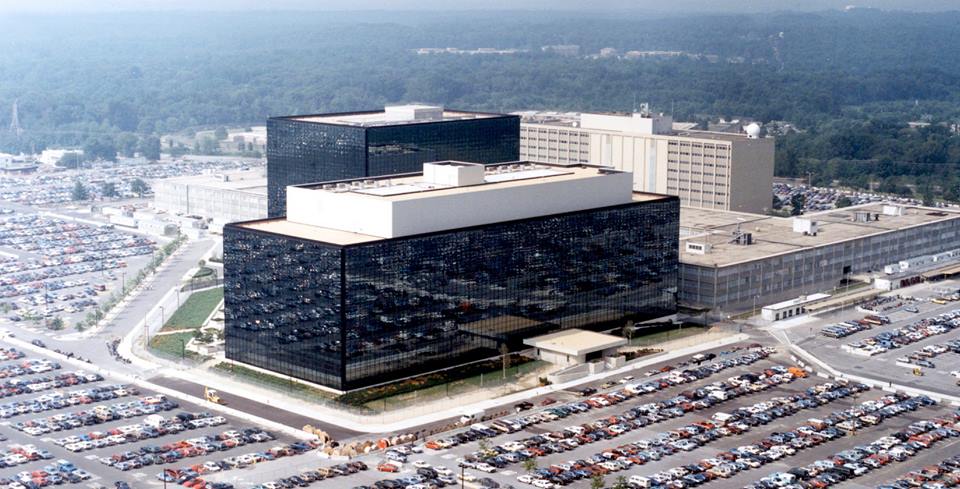
NSAA new report from Der Spiegel, based on internal National Security Agency documents, reveals more details about how the spy agency gains access to computers and other electronic devices to plant backdoors and other spyware.

The Office of Tailored Access Operations, or TAO, is described as a “squad of digital plumbers” that deals with hard targets — systems that are not easy to infiltrate. TAO has reportedly been responsible for accessing the protected networks of heads of state worldwide, works with the CIA and FBI to undertake “sensitive missions,” and has penetrated the security of undersea fiber-optic cables. TAO also intercepts deliveries of electronic equipment to plant spyware to gain remote access to the systems once they are delivered and installed.

Der Spiegel: Inside TAO -Documents Reveal Top NSA Hacking Unit

Der Spiegel: Shopping for Spy Gear – Catalog Advertises NSA Toolbox

According to the report, the NSA has planted backdoors to access computers, hard drives, routers, and other devices from companies such as Cisco, Dell, Western Digital, Seagate, Maxtor, Samsung, and Huawei. The report describes a 50-page product catalog of tools and techniques that an NSA division called ANT, which stands for Advanced or Access Network Technology, uses to gain access to devices.

This follows a report that the security firm RSA intentionally allowed the NSA to create a backdoor into its encryption tokens.

“For nearly every lock, ANT seems to have a key in its toolbox. And no matter what walls companies erect, the NSA’s specialists seem already to have gotten past them,” the report said. The ANT department prefers targeting the BIOS, code on a chip on the motherboard that runs when the machine starts up. The spyware infiltration is largely invisible to other security programs and can persist if a machine is wiped and a new operating system is installed.

With the exception of Dell, the companies cited in the report and contacted by Der Spiegel claimed they had no knowledge of any NSA backdoors into their equipment.

In a blog post Sunday, a Cisco spokesperson wrote:

At this time, we do not know of any new product vulnerabilities, and will continue to pursue all avenues to determine if we need to address any new issues. If we learn of a security weakness in any of our products, we will immediately address it. As we have stated prior, and communicated to Der Spiegel, we do not work with any government to weaken our products for exploitation, nor to implement any so-called security ‘back doors’ in our products.

The NSA declined to comment on the report but said the TAO was key for national defense.

“Tailored Access Operations (TAO) is a unique national asset that is on the front lines of enabling NSA to defend the nation and its allies,” the agency said in a statement. “We won’t discuss specific allegations regarding TAO’s mission, but its work is centered on computer network exploitation in support of foreign intelligence collection.”

The end does not appear to be in sight for the revelations from the documents obtained by Edward Snowden, according to Glenn Greenwald, the journalist who first collaborated with Snowden to publish the material. In a speech delivered by video to the Chaos Communication Congress (CCC) in Hamburg on Friday, he said, “There are a lot more stories to come, a lot more documents that will be covered. It’s important that we understand what it is we’re publishing, so what we say about them is accurate.”

Source: CNET

Edward Snowden, after months of NSA revelations, says his mission’s accomplished | The Washington Post

By Barton Gellman

Snowden1MOSCOW — The familiar voice on the hotel room phone did not waste words.

“What time does your clock say, exactly?” he asked. He checked the reply against his watch and described a place to meet. “I’ll see you there,” he said.

Edward Joseph Snowden emerged at the appointed hour, alone, blending into a light crowd of locals and tourists. He cocked his arm for a handshake, then turned his shoulder to indicate a path. Before long he had guided his visitor to a secure space out of public view.

During more than 14 hours of interviews, the first he has conducted in person since arriving here in June, Snowden did not part the curtains or step outside. Russia granted him temporary asylum on Aug. 1, but Snowden remains a target of surpassing interest to the intelligence services whose secrets he spilled on an epic scale.

Late this spring, Snowden supplied three journalists, including this one, with caches of top-secret documents from the National Security Agency, where he worked as a contractor. Dozens of revelations followed, and then hundreds, as news organizations around the world picked up the story. Congress pressed for explanations, new evidence revived old lawsuits and the Obama administration was obliged to declassify thousands of pages it had fought for years to conceal.

Taken together, the revelations have brought to light a global surveillance system that cast off many of its historical restraints after the attacks of Sept. 11, 2001. Secret legal authorities empowered the NSA to sweep in the telephone, Internet and location records of whole populations. One of the leaked presentation slides described the agency’s “collection philosophy” as “Order one of everything off the menu.”

Six months after the first revelations appeared in The Washington Post and Britain’s Guardian newspaper, Snowden agreed to reflect at length on the roots and repercussions of his choice. He was relaxed and animated over two days of nearly unbroken conversation, fueled by burgers, pasta, ice cream and Russian pastry. Read more…

Source: The Washington Post